
Dormer Loft Conversion: Why It Takes Longer Than You Think (and Where the Time Actually Goes)
If you’re dreaming of a dormer loft conversion because you want an extra bedroom/office/bathroom/”please let me have one quiet room” space… I’m excited for you.
But I also need to lovingly warn you: the part where people are actually building is often the shortest part. The real timeline thief is the pre-construction waiting game design, engineering, permits, scheduling, and that one magical window you thought you could order “real quick” that turns out to be a 6 week lead time.
A typical dormer build might take 4-12 weeks once it starts. But the stretch before anyone even touches your roof can be 8-24 weeks. Yes, months. No, you’re not being dramatic. This is just how it goes.
So let’s talk about why your calendar looks like that and how to keep your project from slowly oozing into next year.
The timeline is basically two separate projects
I want you to picture your dormer conversion in two chunks:
1) The “Waiting Phase” (aka: The Paperwork & Planning Olympics)
Roughly 2-6 months depending on your area and how complex your project is.
This is where you do the design, structural checks, permit/zoning stuff, book a contractor, and order materials. It feels like nothing is happening… but behind the scenes, your future loft is being decided by drawings, emails, and a queue at the building department.
2) The “Building Phase” (aka: Dust, Noise, and Progress)
Roughly 4-12 weeks depending on what kind of dormer you’re doing.
This is the part everyone imagines when they say “It’ll only take 6 weeks!” (Spoiler: they’re usually talking about only this chunk.)
First, a tiny glossary so you don’t get bamboozled
Contractors and building departments love a good term. Here are the ones that matter:
- Building permit: Permission to build it safely (structure, fire safety, stairs, insulation, etc.).
- Zoning approval: Permission to change the outside/roofline legally (this varies a lot by location).
- Rough in: Plumbing/electrical/HVAC work done before the walls get closed up.
- Egress: Your code required escape route (usually affects window size/placement).
That’s enough to get you through 90% of conversations without nodding politely while panicking internally.
“What timeline should I expect?” (Realistic, not fantasy)
Here’s the general vibe:
- Simple rear dormer: about 3-4 months total
- Standard dormer with a normal permit process: about 4-5 months total
- More complex (L shaped, major roof changes, zoning approval): about 5-6 months total
Those totals include design + permits + construction + final inspection.
If someone tells you they’ll do your whole conversion in six weeks, ask: “Six weeks of what, exactly… because I enjoy living in reality.”
Your dormer style matters more than you think
Dormer style is one of the biggest drivers of build time because creating space with internal dormers changes how much you’re messing with the roof structure.
Here’s a very general, real world range for the building phase:
- Standard rear dormer: 4-6 weeks (the most common “let’s add a room” option)
- Hip to gable: 6-8 weeks (bigger roofline change = more structure + more scrutiny)
- L shaped dormer: 8-12 weeks (more sections, more sequencing, more chances to slow down)
- Mansard: 10-12 weeks (you’re basically doing roof gymnastics, but the space gain is chef’s kiss)
And yes if you’re doing a “skylight only” conversion (no major roof changes), it can be under 4 weeks. But it’s also more like “finished attic” than “wow, this is an actual new floor of my house.”
The pre-construction phase: where time quietly disappears
This is the part no one posts on Instagram because it’s just… emails. But if you want your project to move, this is where you win or lose time.
Design + structural assessment (usually 2-4 weeks)
An architect/designer measures, draws plans, and a structural engineer checks what you’re working with.
Older homes especially can hide surprises. I’ve seen “quick conversions” get derailed because the joists needed reinforcing or there was damage lurking in the roof. You want to know that before you’re mid build and everyone is staring at each other like, “So… now what?”
Permits (usually 4-8 weeks, sometimes longer)
Some building departments are speedy. Others move at the pace of a sleepy sloth on a Sunday.
My best advice: call your local building department early and ask:
- What drawings do you need?
- Typical approval time?
- How are inspections scheduled?
- Any common reasons plans get rejected?
Because if your plans get kicked back for revisions, you can lose another 4-6 weeks per round.
Contractor scheduling (usually 2-12 weeks)
Spring and summer are the renovation hunger games. The good contractors are booked out.
- Peak season (roughly April-August): expect 8-12 weeks to get on the schedule
- Off peak: you might get a start date in 2-4 weeks
Materials (the sneaky one)
This is where people get burned because it feels like shopping, not a dormer conversion budget guide.
- Custom windows: often 4-6 weeks
- Stairs (especially custom): often 8-12 weeks
If you order late, your build can stall mid stream, which is the renovation equivalent of your phone dying at 1% while you’re trying to pull up directions.
What construction actually looks like (so you don’t panic on Day 3)
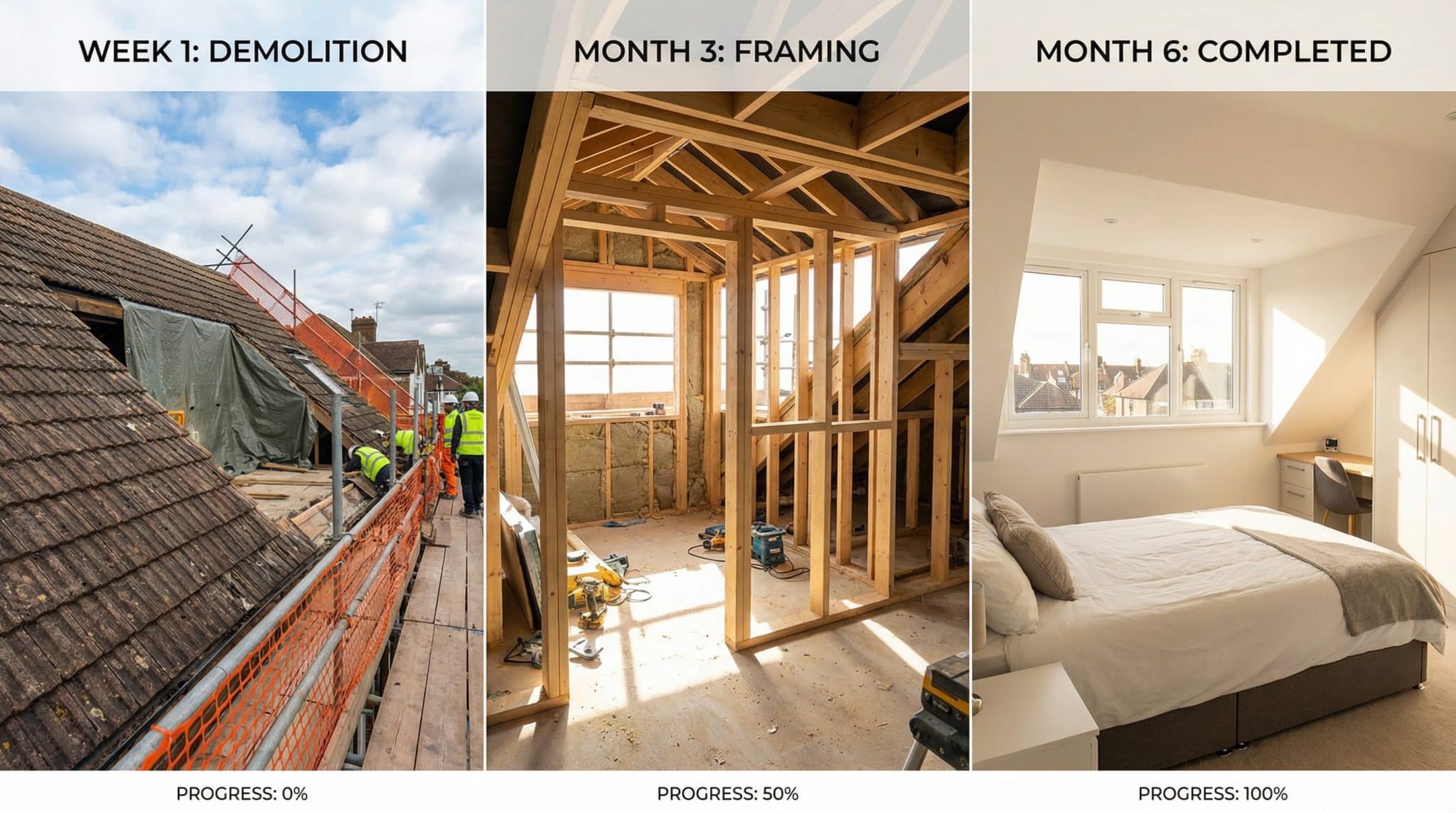
Every project varies, but a standard dormer often follows this rhythm:
Weeks 1-2: Loud, messy, “why did I do this?”
Roof gets opened, structure goes in (steel, reinforcements), scaffolding/tarps should be up fast. This phase is disruptive, and yes, your house will sound like it’s being attacked by a polite but determined herd of tools.
Weeks 3-4: Framing + getting watertight
Dormer takes shape, windows go in, roofing gets sorted. The big milestone here is watertight once the roof is properly sealed, weather delays usually calm down.
Weeks 5-7: The “behind the walls” phase
Electrical, plumbing rough in (if you’re adding a bathroom), HVAC, insulation, drywall. It looks unimpressive for a bit because it’s all infrastructure, but it’s major progress.
Weeks 8-10: Finishes (the fun part)
Trim, doors, flooring, paint, fixtures. This is when you go from “construction zone” to “ohhh I can see the room!”
Weeks 11-12: Inspections + punch list (if it’s a bigger project)
Inspector sign off, little fixes, final details. This is also when you’ll notice every tiny thing (normal) and start saying sentences like, “Is that outlet… slightly crooked?” (also normal)
The delays that get everyone (and how to avoid them)
Permit/zoning hiccups
A quick pre-submission chat with the building department can prevent a lot of rejections. And if you need zoning variances (sometimes required for roofline changes), you can add 4-8 weeks thanks to notifications and hearings.
Inspection failures
Failed inspections often cost 1-2 weeks each time. Common issues are things like egress requirements, stair/handrail dimensions, or fire rated assemblies.
This is where hiring someone who actually knows the rules pays off. “My cousin can do it” is not the vibe when an inspector shows up.
Weather
If your roof is open and a storm rolls in, the schedule can wobble. Even with good scaffolding protection, heavy rain/snow can add 2-4 weeks during the structural stage.
Mid project “Wait, what if we…”
Changing your mind mid build can trigger permit amendments and serious delays (4-8 weeks per major change isn’t unusual).
My rule: make your big decisions early layout, windows, bathroom yes/no. Save your “we’ll decide later” energy for throw pillows.
Adding a bathroom
Worth it? Often yes. But expect 2-4 extra weeks for plumbing, extra inspections, and more finishing work.
When should you start? (Season matters)
- April-September: generally smoother (better weather for an open roof, longer daylight, fewer soggy surprises)
- October-February: easier to book contractors, but timelines can run 15-30% longer in cold/wet climates
If you live somewhere rainy or snowy, I’d avoid starting in late fall unless you’re okay with a schedule that might stretch.
Quick questions I get all the time
Do you need a permit for a dormer conversion?
Almost always, yes. You’re changing structure, stairs, insulation, fire safety… it’s permit city.
Do you have to move out?
Usually no. But if you have tiny kids, work nights, or simply value your sanity, consider leaving just for the first 1-2 weeks (the loudest phase).
Do older homes take longer?
Often, yes. Budget extra time because you may need reinforcement and depending on age, there’s also a higher chance of things like deterioration or asbestos being discovered and needing proper handling.
If you want this to go faster, do this first
If you do nothing else this week (besides, you know, living your life), do this:
- Call your local building department and ask about permits/zoning and typical review times.
- Start design + structural assessment early. That’s where surprises get found.
- Talk to contractors before you’re “ready.” Good ones book out.
- Order long lead items ASAP once plans are approved (windows, stairs).
Because the biggest lie in loft conversions isn’t “it’ll be dust free” (lol). It’s thinking the timeline starts when construction starts.
It starts way before that and now you get to be the person who’s prepared, not the person rage refreshing their email waiting on permit approval.