
Attic Permits: What Most Homeowners Get Wrong (and How Not to Regret Everything Later)
If you’ve ever looked up at your attic and thought, “That could be a cute little bedroom/home office/escape from my family nook,” you’re in excellent company. The attic is basically the siren song of extra square footage.
And then reality shows up in steel toe boots holding a clipboard: permits.
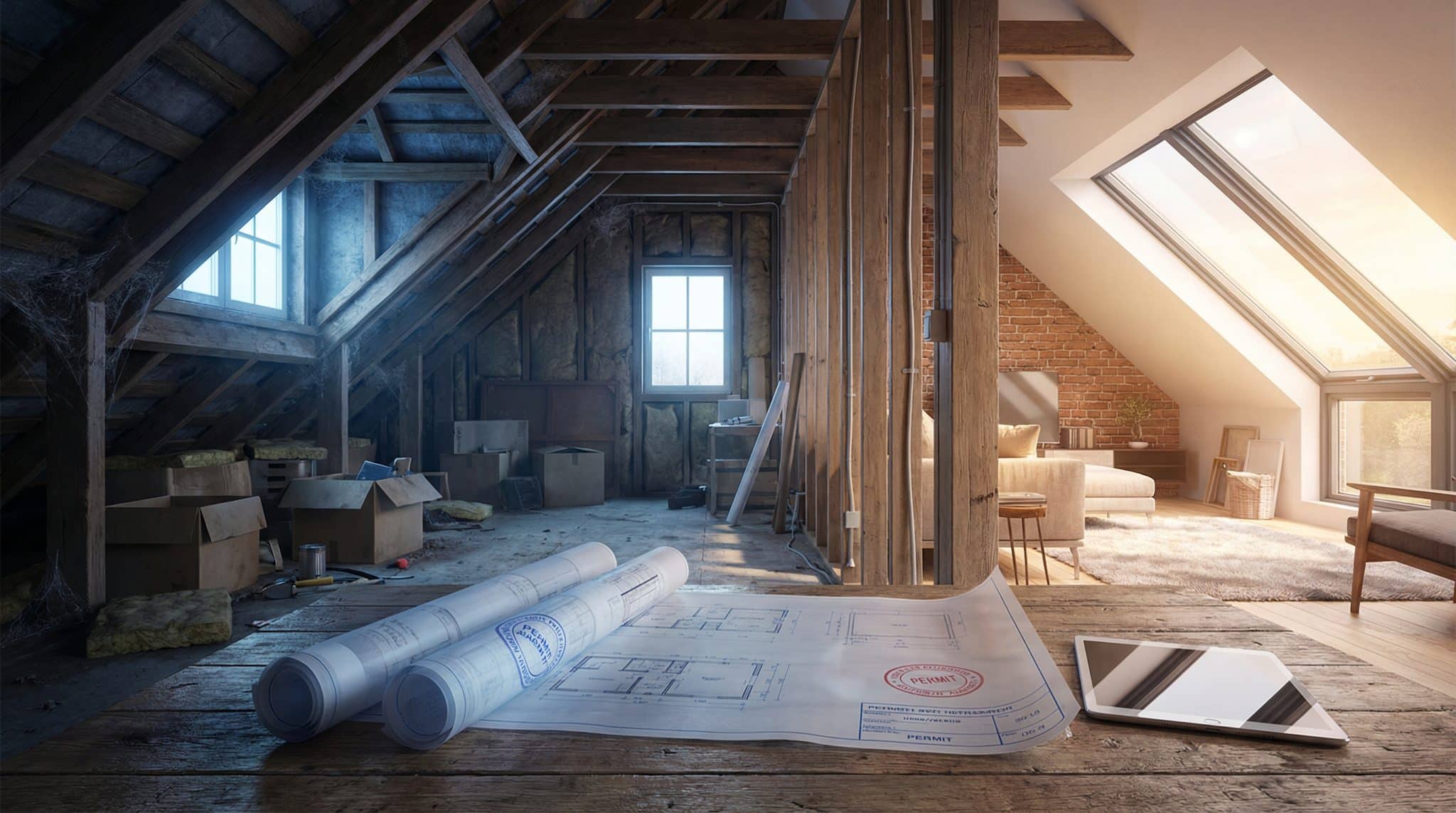
Here’s the thing most homeowners get wrong: “The space already exists, so the permit must be optional.” Nope. Your city does not care that the attic has been up there, quietly holding Christmas decorations, since 1978. The second you turn it into habitable space (aka people regularly live/work/sleep up there), you’re playing in permit land.
And skipping permits? It’s one of those “it’s fine until it’s very much not fine” situations usually during a sale, refinance, or insurance claim. (Ask me how I know. Actually don’t. I still get hives.)
Let’s make this simple, so you can move forward without accidentally creating a pricey, uninsurable loft of doom.
First: Do You Actually Need a Permit?
If your “attic project” is basically cosmetic and the attic is already a legal finished space, you might be able to skip permits for things like:
- painting
- swapping flooring (without structural changes)
- freestanding shelves/storage
- replacing a light fixture with another similar fixture
But and this is a big but most attic “conversions” aren’t cosmetic. They usually involve some combo of wiring, insulation, HVAC, stairs, windows, and “surprise! these floor joists were designed for a few boxes of wrapping paper, not a whole human life.”
So here’s the cheat code:
If you’re doing any of this, assume permits are required:
- finishing an unfinished attic into a bedroom/office/bonus room
- adding or moving electrical (new circuits, outlets, lights)
- adding HVAC (ducts, vents, mini split, bath fan ventilation)
- adding plumbing (bathroom, wet bar… attic spa, I guess)
- changing structure (dormers, beams, load bearing stuff)
- adding/changing egress windows
- building new stairs or significantly changing existing stairs
If a contractor tells you, “We don’t need permits,” I want you to hear my voice in your head: Step away from the guy who treats building codes like suggestions.
Zoning vs. Building Permits (Annoying But Important)
There are usually two buckets of red tape:
1) Zoning review (the “are you allowed to do that here?” question)
You’re more likely to trigger zoning review if you:
- add a bedroom (some areas tie occupancy/parking to bedroom count)
- run into ADU rules (localities get spicy about this)
- change the roofline/height or bump into setback rules
- live in a historic district or special overlay zone
If any of that is you, call your zoning desk before you fall in love with a floor plan.
2) Building permits (the “will it be safe?” question)
This is the big one. Building permits generally cover structure, fire safety, electrical, mechanical/HVAC, plumbing, egress, stairs, insulation the whole “please don’t build a trap” package.
And yes, you may end up pulling separate permits (building + electrical + mechanical + plumbing). Super fun. Love that for us.
Before You Do Anything: Make Sure Your Attic Can Even Become Legal Living Space
Do this before you start collecting Pinterest screenshots like you’re curating an attic museum.
1) Ceiling height: measure it like you mean it
Grab a tape measure and check the height at the highest point (usually near the ridge).
A common rule of thumb in many codes: you need about 7 feet of ceiling height over at least 50% of the finished floor area.
Also: space under 5 feet typically doesn’t count toward usable area.
And here’s the gut punch no one tells you: once you add flooring + insulation + drywall, you can lose a few inches. So if you’re sitting at something like 6’8″ now, you might end up below minimum after finishing. (This is how dormer loft layouts and “raise the roof” plans are born… along with crying.)
2) Figure out your roof framing: rafters vs. trusses
Look up:
- Old school rafters/joists (often pre-1960s): usually easier to work with.
- Trusses (lots of triangles, often post 1960s): triangles everywhere = trusses.
If it’s trusses, you can’t just cut members out because you want “open space.” Trusses are engineered systems. Modifying them usually means bringing in an engineer and often adding significant structural support (yes, it can add $10k-$30k+ in some cases, depending on the plan).
Not trying to scare you just trying to save you from budgeting like it’s a cute weekend project.
The Code Stuff That Trips People Up (Because Attics Love Chaos)
Codes vary by location, so don’t tattoo these on your body. But these are the usual deal breakers inspectors care about:
Minimum room basics (common requirements)
- Ceiling height: around 7 feet over a big chunk of the space (often 50%)
- Minimum area: often 70 sq ft
- Minimum width: often 7 feet in any direction
Stairs (pull down ladders don’t count, sorry)
If you’re thinking “we’ll just do a ladder,” no. For habitable space, you typically need real stairs with specs like:
- minimum width: commonly 36 inches
- headroom: commonly 6’8″
- treads: commonly 9 inches+
- riser height: maximum can vary (often around 7 3/4″, sometimes higher depending on local code your building department will tell you)
Also: stairs have a lot of picky requirements because uneven steps are how ankles go to die.
Egress windows (if it’s a bedroom, you need a way out)
Typical egress window requirements in many areas include:
- net clear opening: 5.7 sq ft minimum
- minimum width: 20 inches
- minimum height: 24 inches
- max sill height: 44 inches from finished floor
Translation: you can’t call it a bedroom if the only exit is “hope the smoke alarm works.”
Floor strength (the sneaky expensive one)
Most attics were built for light storage not a room with furniture and humans doing human things. A common comparison:
- Attic storage floors: roughly 10 psf
- Habitable space: often 30-40 psf live load
So yes, reinforcing joists is common. No, it’s not always cheap. Yes, it’s still worth doing correctly if you want the room to feel solid (and not like a trampoline over your kitchen).
Okay, So How Do You Actually Get Permits Without Losing Your Mind?
Here’s the real world flow:
- Call or visit your local building department (and zoning if you’re adding bedrooms/altering exterior/ADU adjacent)
- Submit drawings/plans showing things like:
- ceiling heights and room dimensions
- stairs layout
- egress windows
- insulation/ventilation plan
- electrical/mechanical/plumbing locations
- any structural changes (dormers, beams, etc.)
- Plan review (they may kick it back for revisions don’t take it personally, it’s basically their love language)
- Inspections during the build: framing, rough electrical/plumbing, insulation, final
What it might cost (very general ballpark)
- Building permit: often $500-$2,000
- Trade permits (electrical/plumbing/mechanical): often $50-$300 each
- Engineer consult (if needed): often $500-$2,000
And timing? Some places are quick (2-4 weeks). Some places move at the pace of a sleepy sloth (2-4 months). Plan accordingly.
“But What If I Just… Don’t?” (The Hidden Cost of Unpermitted Work)
Unpermitted work usually gets discovered because life forces it out into the open, like a cat hacking up a hairball on a white rug.
Common moments it surfaces:
- selling your house (inspection/appraisal)
- refinancing
- insurance claims after damage
- tax reassessments
- neighbor complaints (they’re not all bad, but some are… enthusiastic)
And the consequences can be brutal:
- retroactive permits cost more (and may require opening finished walls)
- fines can stack up while you “correct violations”
- worst case: you’re told to remove non-compliant work
- insurance may deny claims related to the space
- the square footage may not count in appraisals (so you paid to build it but can’t “sell” it on paper)
So yes, permits are annoying. But they’re cheaper than a forced demo.
My No Drama Attic Conversion Checklist
If you do nothing else, do these four things:
- Measure the attic today
Ceiling height and rough floor area. Ten minutes. No commitment. Just information. - Figure out rafters vs. trusses
If it’s trusses, assume you’ll need an engineer if you want major changes. - Call your building department (and zoning if needed)
Ask: “What permits do I need to convert an attic to habitable space, and what drawings/inspections are required?” - Vet contractors like you’re hiring a babysitter
Red flags:- “We don’t need permits.”
- won’t show insurance
- no attic conversion experience
- wants more than 50% upfront
- gets weirdly offended by basic questions (sir, it’s my roof)
Final Thoughts (Because I Want You to Enjoy Your Attic, Not Fear It)
Permits aren’t there to ruin your fun they’re there to make sure your “cozy attic retreat” isn’t secretly a code violation with a cute rug.
If you handle the boring stuff up front height, structure, stairs, egress, load capacity you’ll save yourself so much money and stress later. And you’ll end up with a space you can actually use, insure, sell, and brag about without whispering, “But don’t tell the city.”
If you’re in the daydream stage: go measure your attic. Just go. It’s the fastest way to find out if you’re planning a fun upgrade… or auditioning for an engineering reality show.