
Hooton House Prices: What Buyers Actually Pay (Not What the Internet Yells)
If you’ve been house hunting in Hooton and you’ve tried to “just get a quick idea of prices,” you’ve probably ended up with three tabs open, one saying £300k, another saying £400k, and a third making you question whether numbers mean anything anymore.
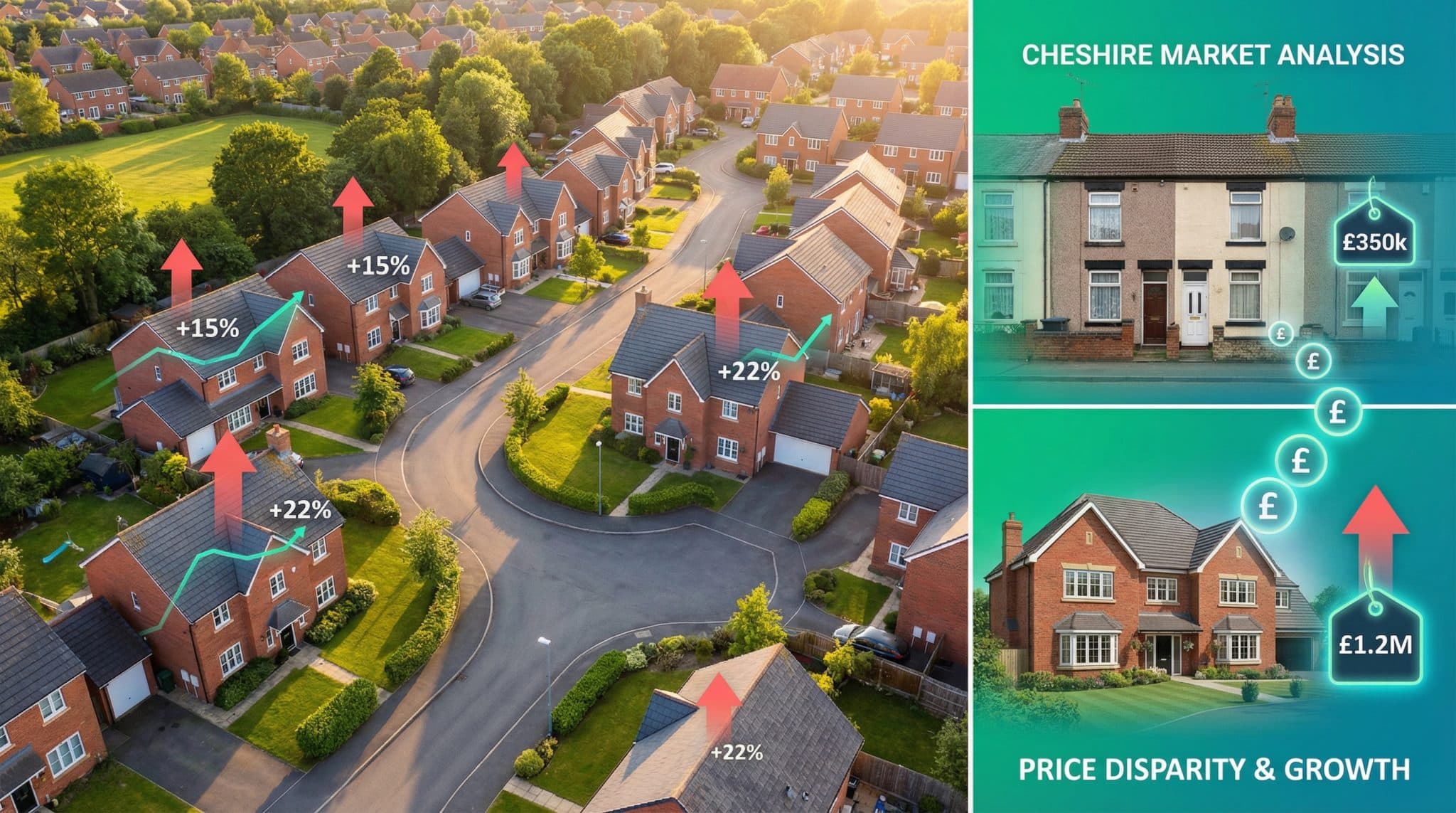
Here’s the thing: Hooton is small, and it’s got a weirdly wide mix of homes little terraced cottages and conversions on one end, chunky detached family houses on the other. When websites mush those together into one “average,” it’s like averaging the price of a cup of tea and a kitchen extension. Technically possible. Not emotionally helpful.
So let’s talk about what buyers are actually paying by home type plus how to check sold prices yourself (without needing a spreadsheet degree).
The “Average” Price (Useful-ish, But Don’t Marry It)
As of January 2026, the average house price in Hooton sits around £317,050.
But the range is doing cartwheels:
- ~£60,000 for small terraced properties (often tiny, sometimes quirky, occasionally “hmm… is this even a house?”)
- Up to ~£550,000 for larger detached homes
Hooton also isn’t exactly a bargain compared to nearby averages. It’s running about:
- 18.7% above the wider Cheshire West and Chester average (£267,000)
- Nearly 48% above the North West England average (£214,000)
So yes, you’re paying a premium. No, you’re not imagining it.
The Metric I Actually Like: Price Per Square Metre
If you want a sanity check number that’s less “vibes” and more “math,” look at price per m².
In Hooton, homes typically sell for around £2,821-£2,950 per m².
So (very roughly) a 100 m² home often lands around £282,000-£295,000.
And before anyone runs off waving a calculator: this is a benchmark, not a prophecy. Condition, layout, plot size, parking, and “this kitchen last saw a sponge in 2009” all matter.
Why Online Price Data Can Be Super Misleading Here
Hooton doesn’t have a huge volume of sales. That means the “average” can get pushed around by a couple of unusual transactions.
Imagine there are only a handful of sales in a quarter and one of them is a £550k detached. Suddenly the average shoots up and your perfectly normal semi looks “cheap,” even though it’s… just normal.
Also: sold prices don’t always show up instantly. They often appear 6-8 weeks after completion, and early figures can get revised. So treat any single headline number as a guide, not gospel.
The fix is simple: stop comparing everything to one average and look at property type.
What Homes Actually Cost in Hooton (By Type)
This is where it gets real. Here are the typical averages by property type:
- Detached: ~£422,500 (premium family homes, often the “ooh this is nice” category)
- Semi-detached: ~£277,700 (the market anchor and the most common type)
- Terraced: ~£92,000 (entry level, often smaller cottages/conversions/flats-ish situations)
That’s roughly a 4.6x spread from the low end to the high end. Which is why two people can both say, “I’m looking in Hooton,” and one means £90k and the other means £450k. Same village. Different planets.
A quick note on those low terraced numbers
That £92k terraced average looks wild next to the wider Cheshire terraced average (around £205,000). And sometimes it is a bargain… but sometimes it’s because what’s selling in that category is:
- very small (1-2 bed)
- a conversion flat
- leasehold with service charges that quietly nibble away at the “deal”
Basically: don’t fall in love with the number until you’ve looked at what the number is attached to.
What’s Been Going On Recently? (The Rollercoaster Bit)
Hooton hit a peak around £419,403 in 2022, then took a proper dip.
Prices fell about 24% as mortgage rates jumped and the whole market got that “nervous laugh” energy.
Right now the vibe is: recovering, but not sprinting.
- ~2% year on year growth recently (more “steadying itself” than “booming”)
- Wider Cheshire West and Chester rose ~4.1% over the same period
And here’s the part that makes people swear at property websites: it’s not even one market inside Hooton.
One area that outperformed was CH66, which rose from £371,000 to £410,000 about 10.5% annual growth. That’s why street by street research matters. (Yes, it’s annoying. Yes, it’s also reality.)
Why Hooton Costs More (AKA: The “Convenient Life” Tax)
A lot of the premium comes down to one word: commuting.
You’ve got:
- Hooton Merseyrail station with direct trains to Liverpool and Chester
- Easy driving via M53 and A540
- Cheshire Oaks nearby (which is great if you like shopping… or deeply hate it but still need shoes)
Also, the buyer mix matters. In Cheshire West and Chester:
- First time buyers average around £221,000
- Home movers average around £319,000
That gap tells you who you’re competing against in areas like Hooton: more “next step” buyers with bigger budgets.
And if you’re eyeing new homes in Hooton: brace yourself.
Across Cheshire, new builds tend to sell for 27% to 38.8% more than older homes and it helps to know the developer collapse background (roughly £389k-£395k vs £307k-£309k). Translation: if your budget is around £300k, an established semi is usually the realistic “get me in the area” route.
How to Check Sold Prices Yourself (In 10 Minutes, Promise)
If you do one thing from this post, do this. Asking prices are basically the opening bid sold prices are the truth.
Use HM Land Registry Price Paid Data (or a reputable site that mirrors it).
Here’s my no fuss method:
- Make sure you’ve got the exact right location
Search the street name + “Hooton” and confirm the postcode (because the UK loves repeating street names like it’s a hobby). - Pull the most recent sold prices nearby
Aim for the latest 3-10 relevant sales. Note price, date, property type, tenure (freehold/leasehold), and any size clues (beds, floor area if listed). - Treat low volume like a warning label
If there are only one or two sales in a year, don’t crown them “the going rate.” Use them as a signal, not a verdict. - Widen your net if you need to
No good matches? Expand to 24-36 months and include nearby streets with similar homes. Always compare like with like. - Then look back at the averages
Once you’ve got comps, the headline averages become context rather than the boss of you.
So… When’s the “Best” Time to Buy or Sell?
I can’t predict the future (if I could, I’d be writing this from my heated tiled kitchen), but here’s what the numbers suggest:
- National forecasts are around 4-5% growth for 2026
- North West cumulative gains through 2029 are forecast around 24.3%
Mortgage rates are also doing something slightly less horrifying than they were:
- Two year fixed rates have dropped from about 6% to 3.8%
- A £250,000 mortgage went from roughly £1,610/month to £1,292/month
That’s about £318/month back in people’s pockets which is exactly how buyers suddenly reappear.
A sensible timing window (based on current conditions) is mid-2026 through early 2027: early enough that you’re not waiting forever, late enough that you can see whether rate cuts actually stick.
If you’re looking as an investor, do the boring but important rent maths too:
- Average rent in Cheshire West and Chester: £946/month
- Semi-detached: £1,070/month
- Detached: £1,339/month
- Rents rose ~7.6% year on year
What I’d Do Next If I Were You
- Pick your “lane” first (detached vs semi vs terrace). In Hooton, this matters more than almost anything else.
- Run the Land Registry check on the exact streets you like.
- Use price per m² as a sniff test for anything that seems weirdly high or suspiciously low.
And if you’re working with an estate agent, bring your comps. A buyer who can say, “Three similar semis nearby sold for X, Y, and Z,” gets taken seriously (and is harder to fob off with fluff).
Final reminder: because Hooton has lower transaction volume, patience is part of the process. The right house might not show up every week but when it does, you’ll be ready to move without panicking and overpaying out of sheer adrenaline.