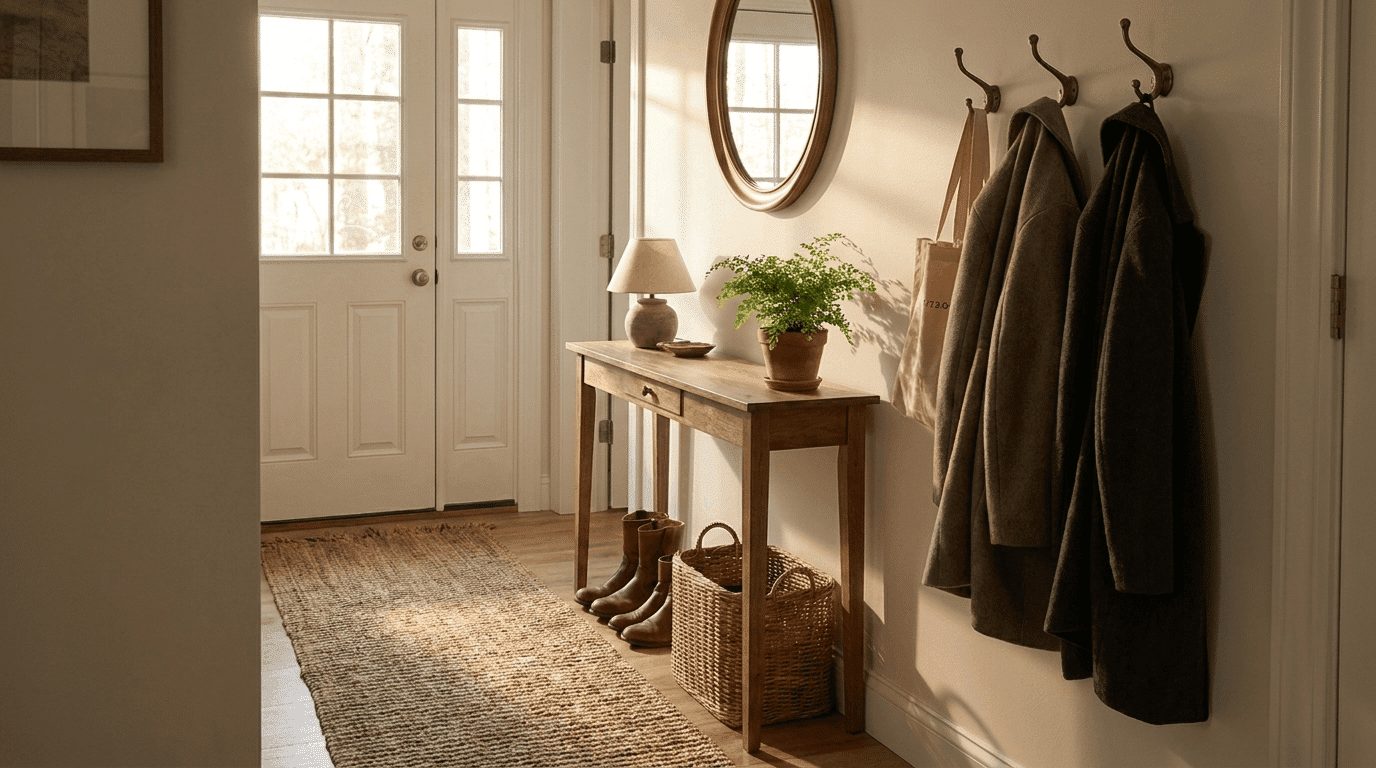

The front door opens, and the first thing anyone sees is chaos.
Shoes kicked sideways, coats draped over a stair rail, keys lost under a pile of post. Most people’s response is to walk past it faster.
The entryway is the only space in the house that has to work for everyone, every day, in both directions. Coming in and going out.
It handles the full household load: coats, shoes, school bags, dog leads, and umbrellas. It still has to make a decent first impression.
And many homes don’t even have a proper one.
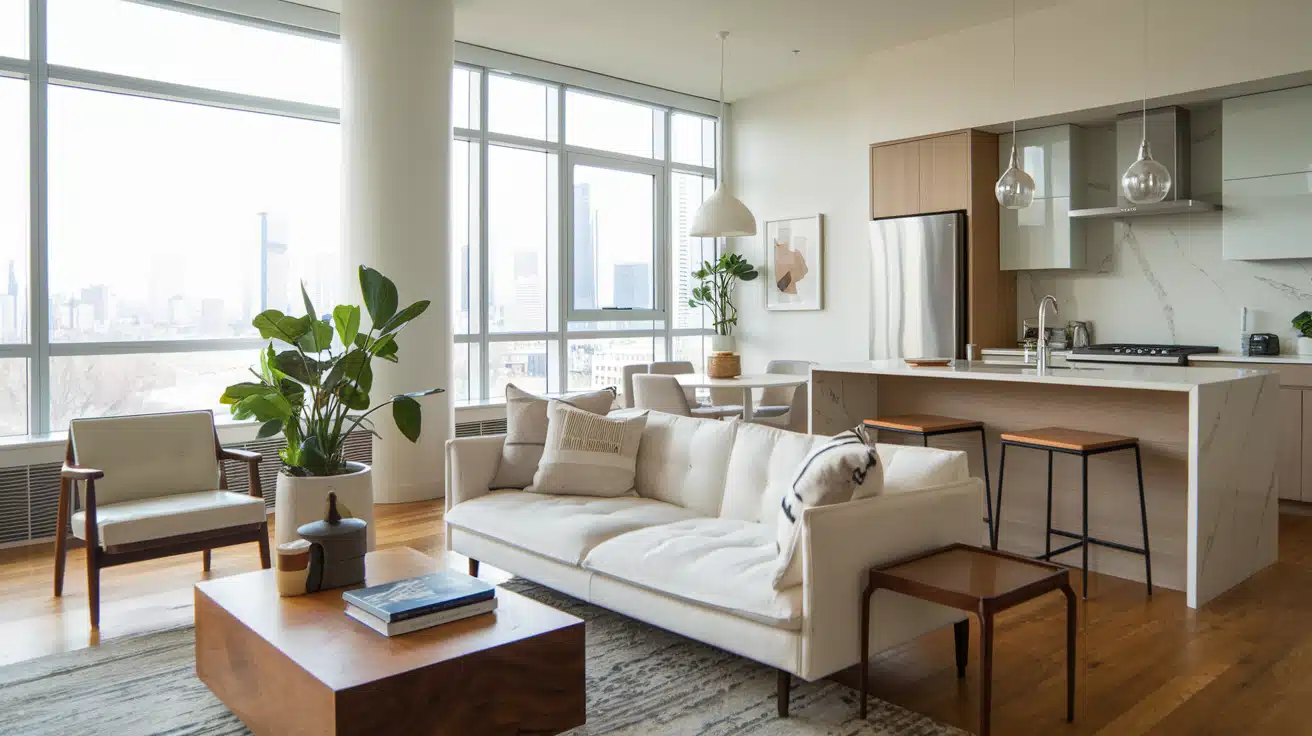
Many apartments and open-plan houses have no entry zone at all. The front door opens straight into the living room. That is a specific problem that needs specific solutions.
These ideas cover every version of the small entryway. The open-plan home has no foyer. The tiny vestibule. The family entry that doubles as a mudroom. The rental does not allow permanent changes.
The Entryway vs. The Hallway: Two Different Problems
These two spaces get treated as the same thing. They are not, and the distinction matters before you spend any money.
The entryway is the immediate zone at the front door. It can be a formal foyer or just the flooring inside the door of an open-plan flat. Its job is first impressions and daily function: coats, shoes, and bags on the way in and out.
The hallway is the corridor that leads away from the entry into your home. Its job is to flow and the sense of connection between rooms. Some hallway ideas can be used for entry, but don’t get confused between these two.
This post covers the entry zone only: the first five feet inside the front door.
17 Ways to Style a Compact Entryway
These tips focus on making small entryways feel organized, welcoming, and functional, showing practical solutions that maximize space without compromising style.
When You Don’t Have a Dedicated Entryway
This is the most common problem. No architecture to work with, just a front door and a living room. These ideas create the function and feel of an entryway from nothing, without touching any structural walls.
1. Define the Drop Zone with a Rug Boundary
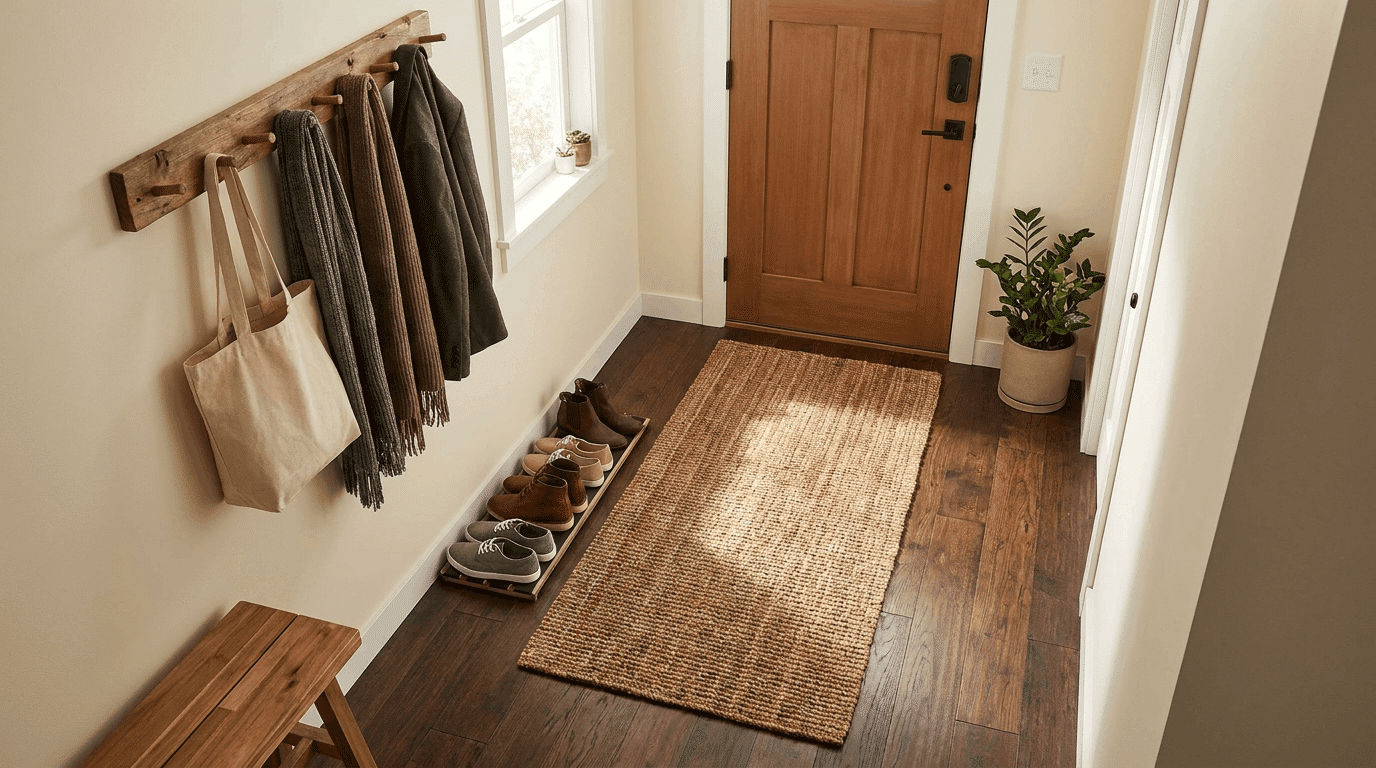
A rug at the front door is the lowest-cost way to tell the eye, “This is the entryway.”
Size matters more than pattern here. Too small and it reads as a doormat. The rug needs to define a zone. Typically, 3×5 or 4×6 works for an open-plan space.
The visual separation between the entry area and the living room comes from the rug, not a wall.
One specific detail most guides skip: orient the rug perpendicular to the front door, not parallel to the wall. Perpendicular creates a zone that reads as distinct.
Parallel just blends into the room behind it.
2. Use a Low Bookshelf as a Room Divider
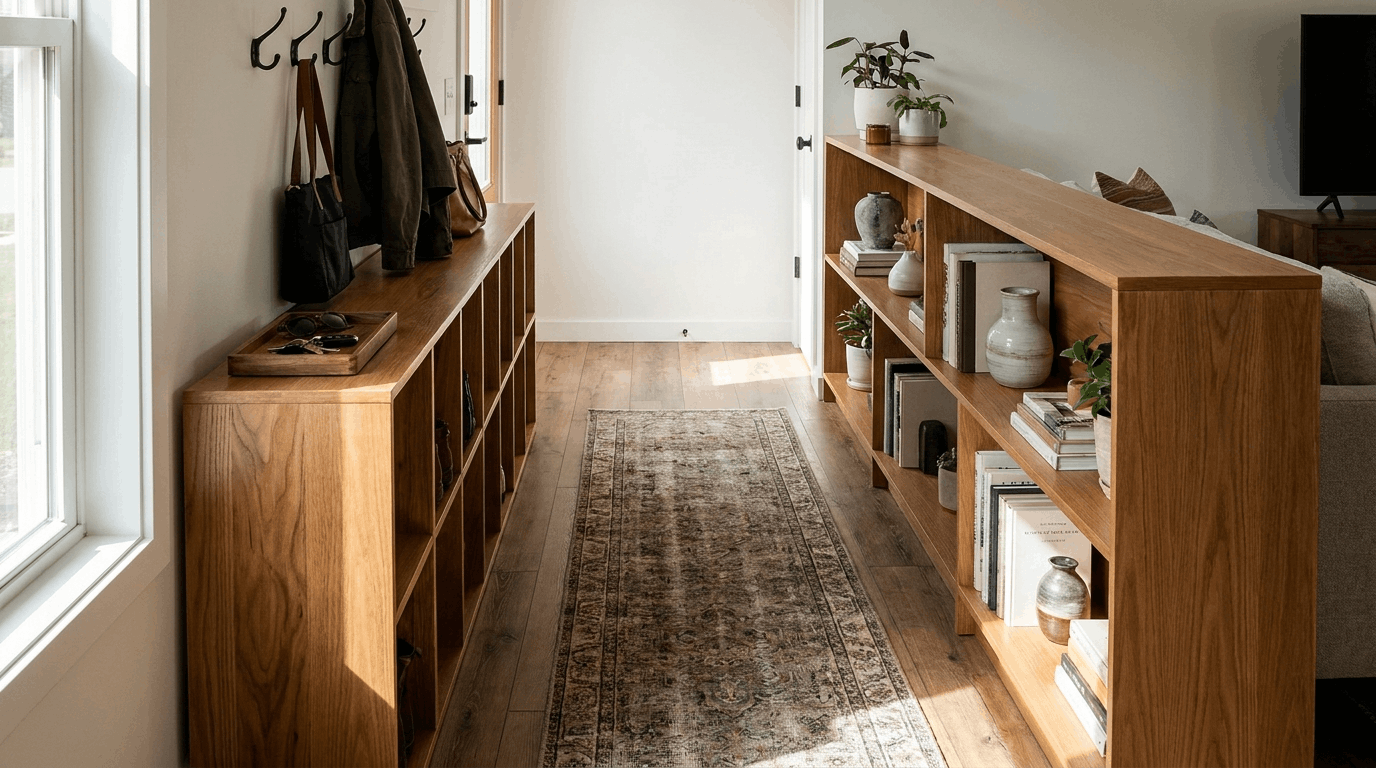
A low open bookshelf or slim credenza placed with its back toward the living room creates a visual divider without any structural change.
The entry-facing side handles hooks, a small tray for keys, and daily bags. The living room-facing side works as a bookshelf or display surface. The top surface serves both sides.
This gives an open-plan flat an actual dividing line between the entry and main living space. No wall, no permission needed, and no permanent commitment. Just furniture placed with intention.
3. Mount a Fold-Down Wall Shelf
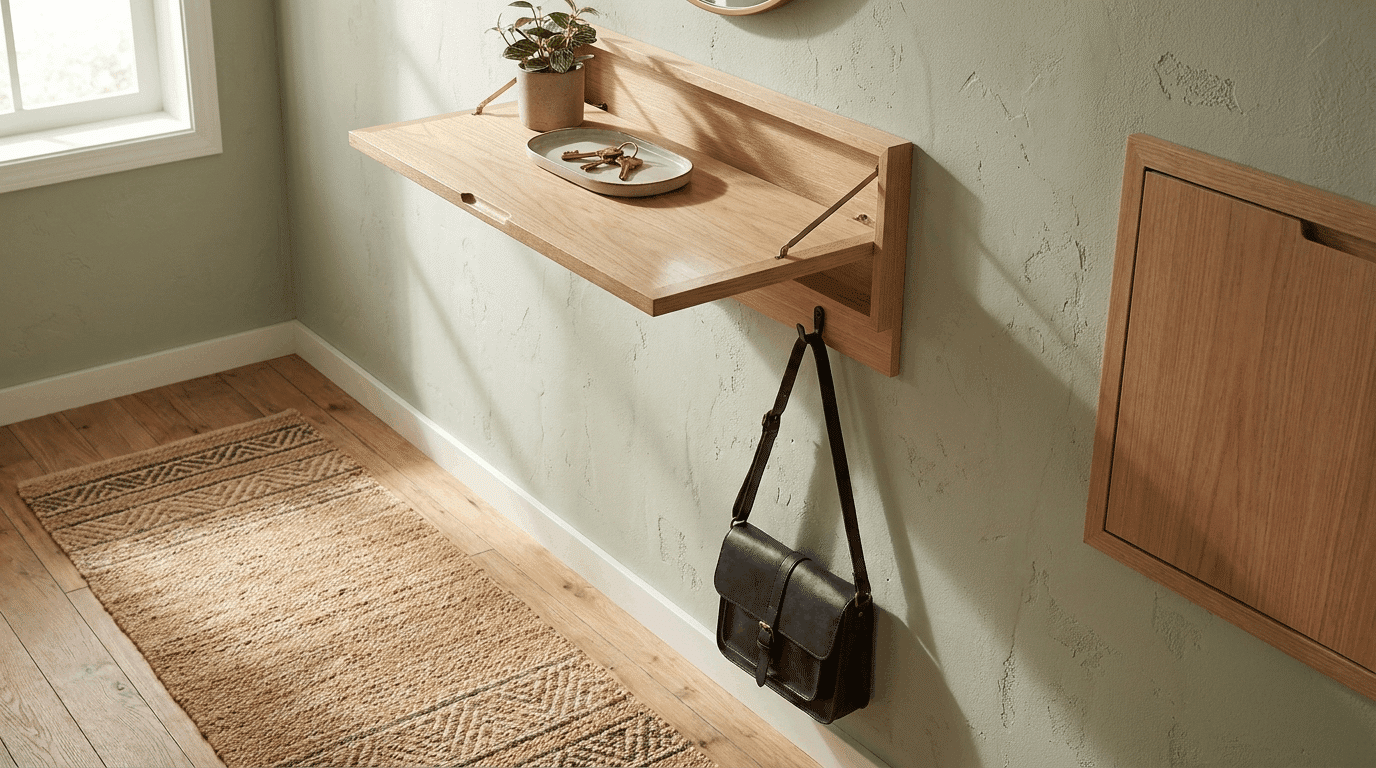
In spaces where even a slim console table takes up too much room, a wall-mounted fold-down shelf does the job.
When open, it provides a real landing surface for keys, a post, and a small tray. When closed, it folds flat against the wall and disappears. Zero floor space used either way.
Install it at around 36 inches from the floor, which is counter height, for comfortable daily use. Add a single hook below it for the bag that otherwise ends up on the floor every single night.
4. Anchor the Zone with a Pendant Light
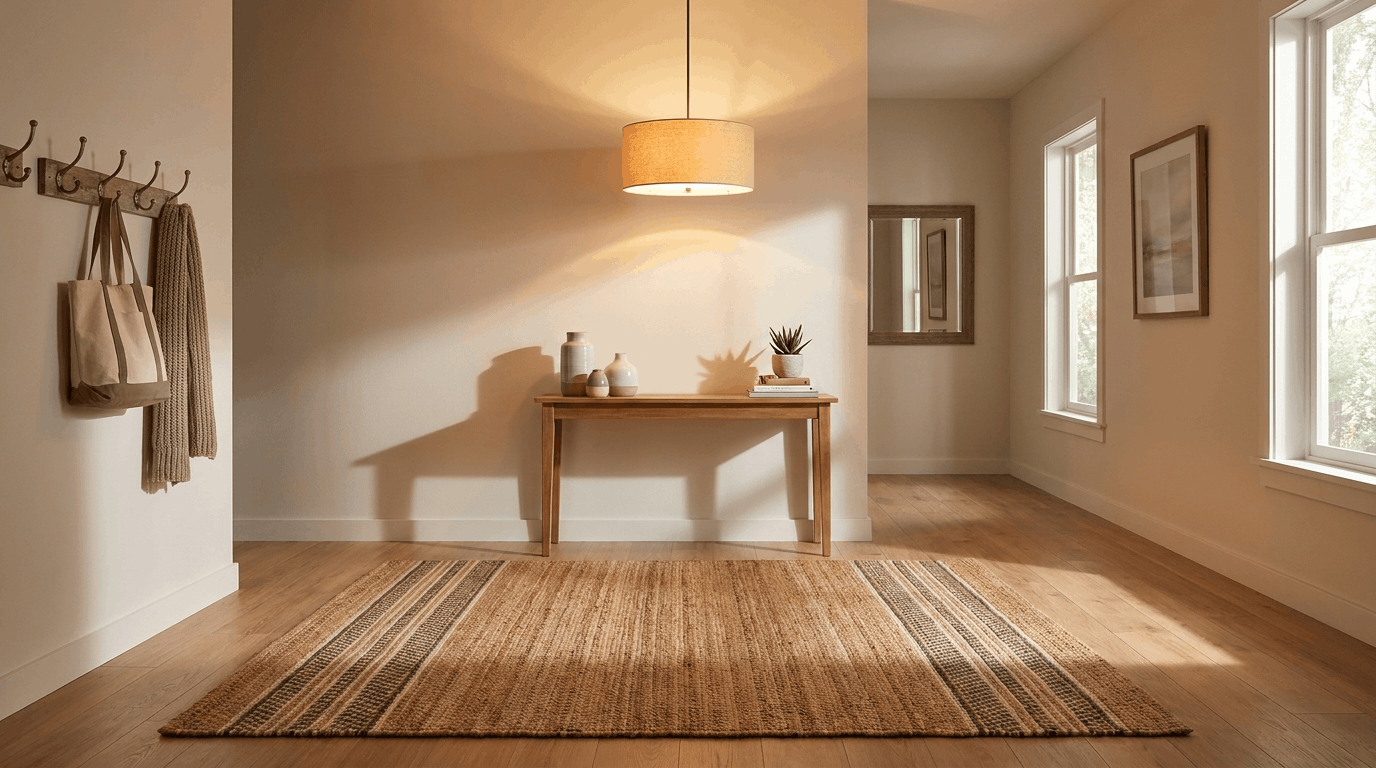
In an open-plan space with no ceiling breaks, a pendant light above the entry zone tells the eye where the “room” starts.
The fixture creates the architectural signal. It does not need to be elaborate. A single pendant, centered above the rug, clearly marks the territory.
Battery-operated rechargeable pendant lights are a genuine option for renters now. The design quality has moved well past the craft-store look of a few years ago.
Small Entryway Flooring Ideas
The floor is the first surface anyone looks down at in a small entry. A distinctive floor does more for the space than most wall treatments. No other post in this series has covered flooring.
5. Lay a Checkerboard or Herringbone Tile Pattern
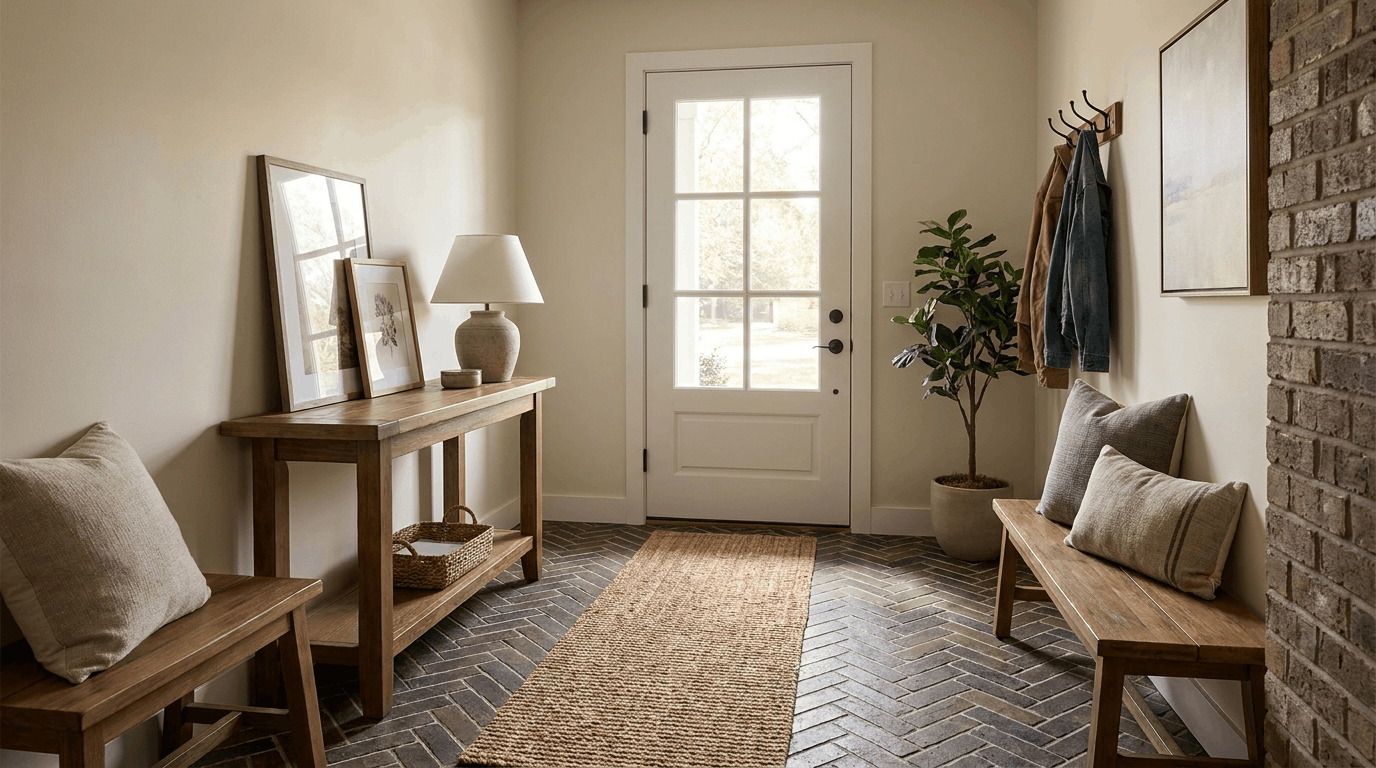
A two-color tile pattern makes a small entry look considered rather than default.
The black-and-white checkerboard is the most widely recognized version. Herringbone in natural brick tones adds warmth. Both create genuine visual interest in a space that might otherwise just be plain flooring.
Smaller tiles generate more pattern in a small space. Larger tiles read cleaner and more open. Both choices are valid. It depends on whether the goal is character or the impression of more space.
For renters or anyone not ready to commit, peel-and-stick floor tiles have improved in quality. They are reversible on smooth surfaces.
6. Try Peel-and-Stick Floor Tiles
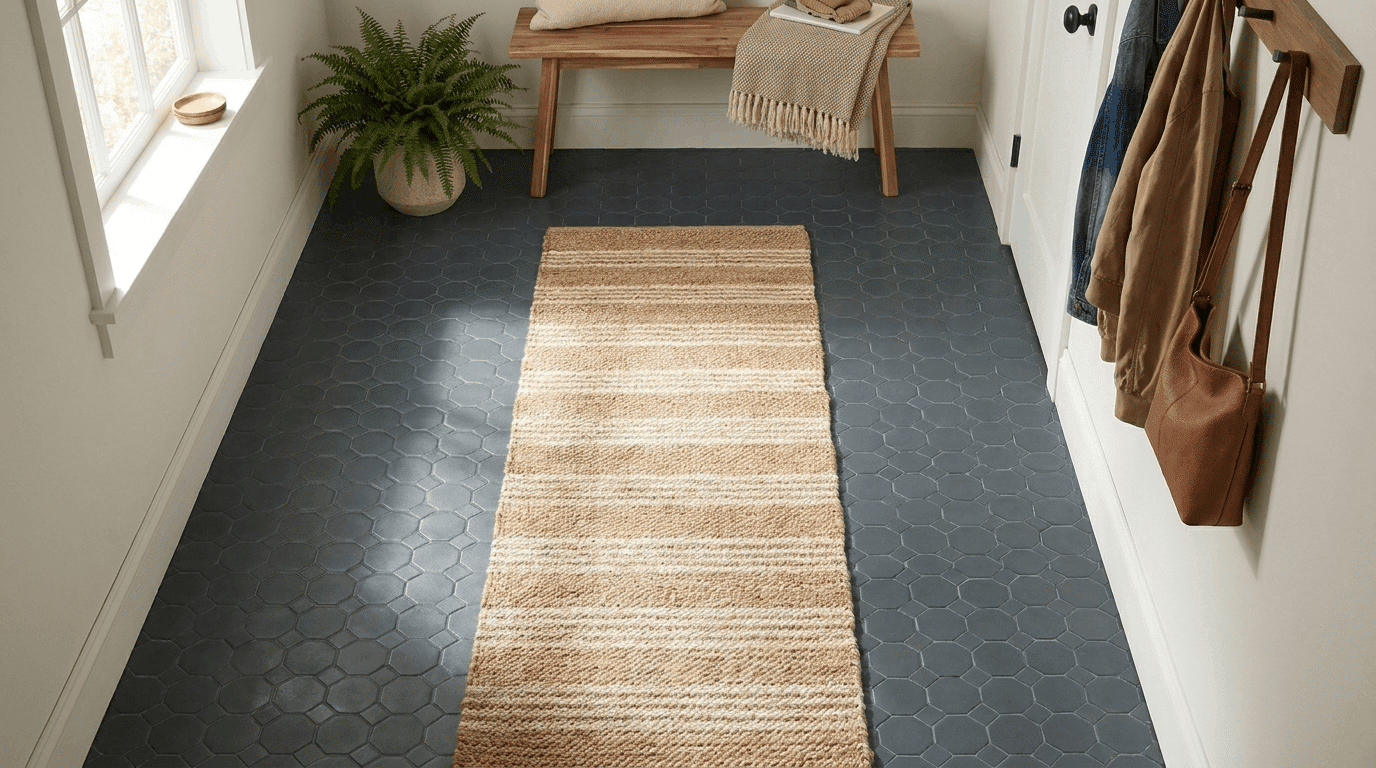
This is a real home improvement product now, not a weekend craft.
Premium peel-and-stick tiles withstand front-door traffic for 12 to 18 months when applied correctly. They work best over smooth existing tile or sealed concrete. Textured vinyl or uneven flooring causes early lifting at the edges.
Apply to a test patch near the door first. That’s the highest-traffic area and will show adhesion quality faster than anywhere else in the space.
Popular patterns for small entries: penny tile, mini hexagon, and diagonal square grid.
7. Layer Two Rugs for Depth and Separation
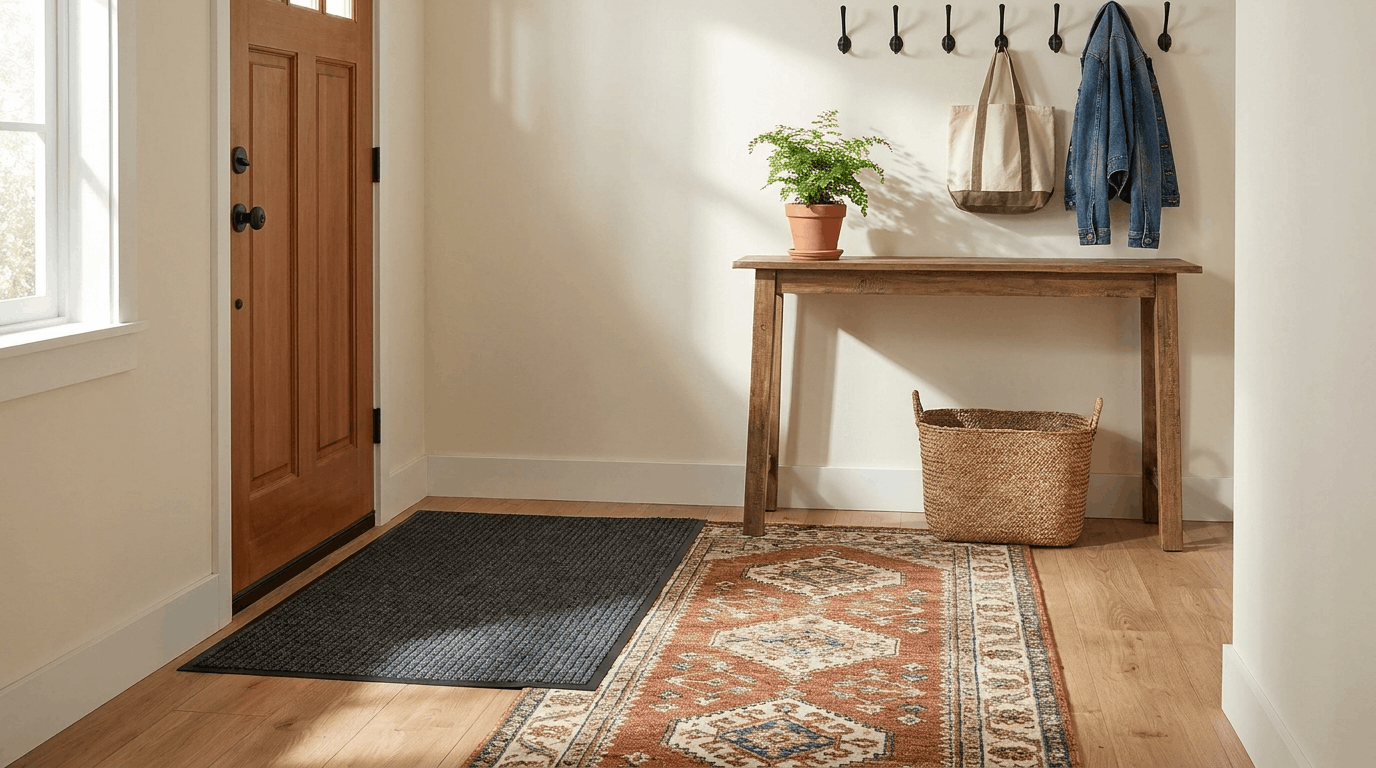
A flat utility mat at the door for wiping feet, plus a decorative rug behind it, creates two distinct zones inside one small entry.
The utility mat handles the practical work. The decorative rug carries the color and character of the space. Together, they define more territory than a single rug would on its own.
One rule that matters: the decorative rug should not extend under the front door swing. If the door catches the rug on opening, it will bunch, trip people, and need constant straightening.
Oriental, geometric flat-loop, and vintage-style rugs layer well over tile or hardwood. Thick-pile rugs don’t layer cleanly and bunch at the edges.
Small Entryway Furniture and Storage Ideas
Good furniture in a small entryway earns its floor space by doing more than one job. A single multi-purpose piece beats three separate pieces squeezed together.
8. Invest in a Hall Tree
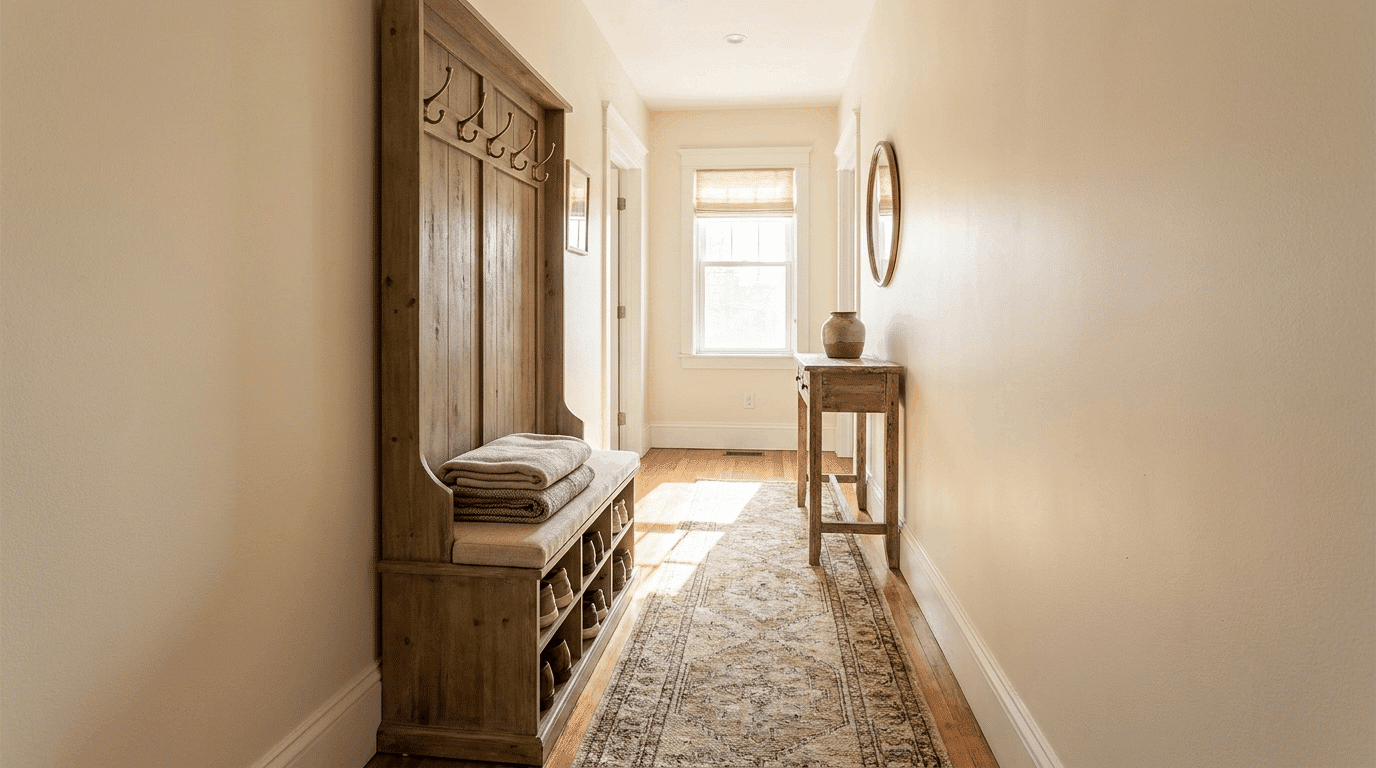
A hall tree combines coat hooks, a bench or shoe shelf, and sometimes a mirror into one freestanding unit. It is the most space-efficient piece of furniture a small entry can have.
Standard sizes start at around 18 inches wide and 16 inches deep. That fits most tight foyers.
The configuration matters. A hall tree with a top shelf handles hats, scarves, and seasonal items. The bench at the base handles shoe changing and storage. The hooks in the middle take coats and bags. Nothing else required.
Best for: entries that handle multiple coats and bags daily, or families with children. It corrals the daily load into a single unit rather than scattering it across hooks, a bench, and a floor rack.
9. Use Half-Height Lockers or Cubbies
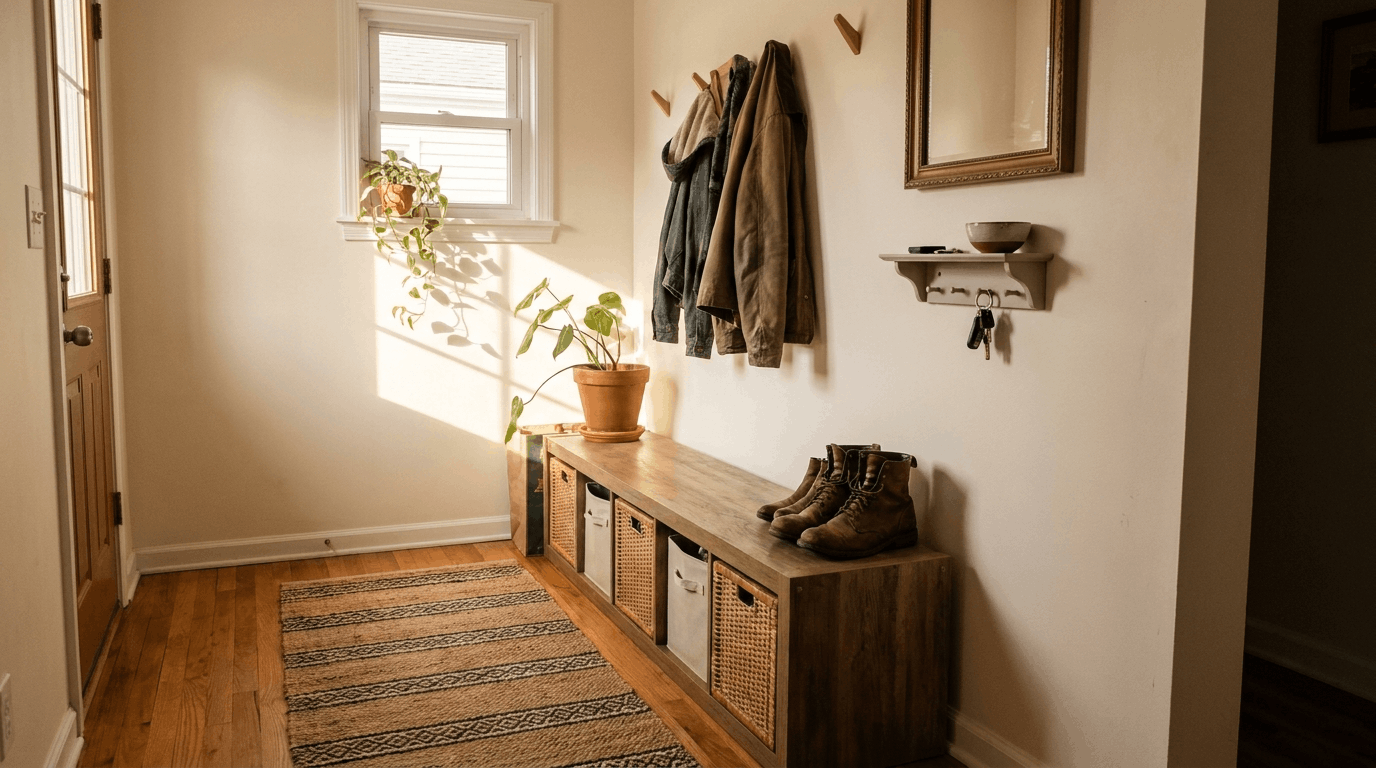
A low locker or cubby unit, around 36 to 40 inches tall, works as a mini mudroom in a small entry.
Each section gets assigned to one person. One cubby per family member handles their coats, shoes, and bags. The flat-top surface becomes the shared drop zone for keys, posts, and household items.
IKEA KALLAX units configured horizontally work well for this at low cost. Each cube is 13 inches square. One pair of shoes, one folded jacket, or one basket fits in each section.
The 36 to 40-inch height also means children can reach their own section without help. That detail matters for daily after-school routines.
10. Add a Console Tray
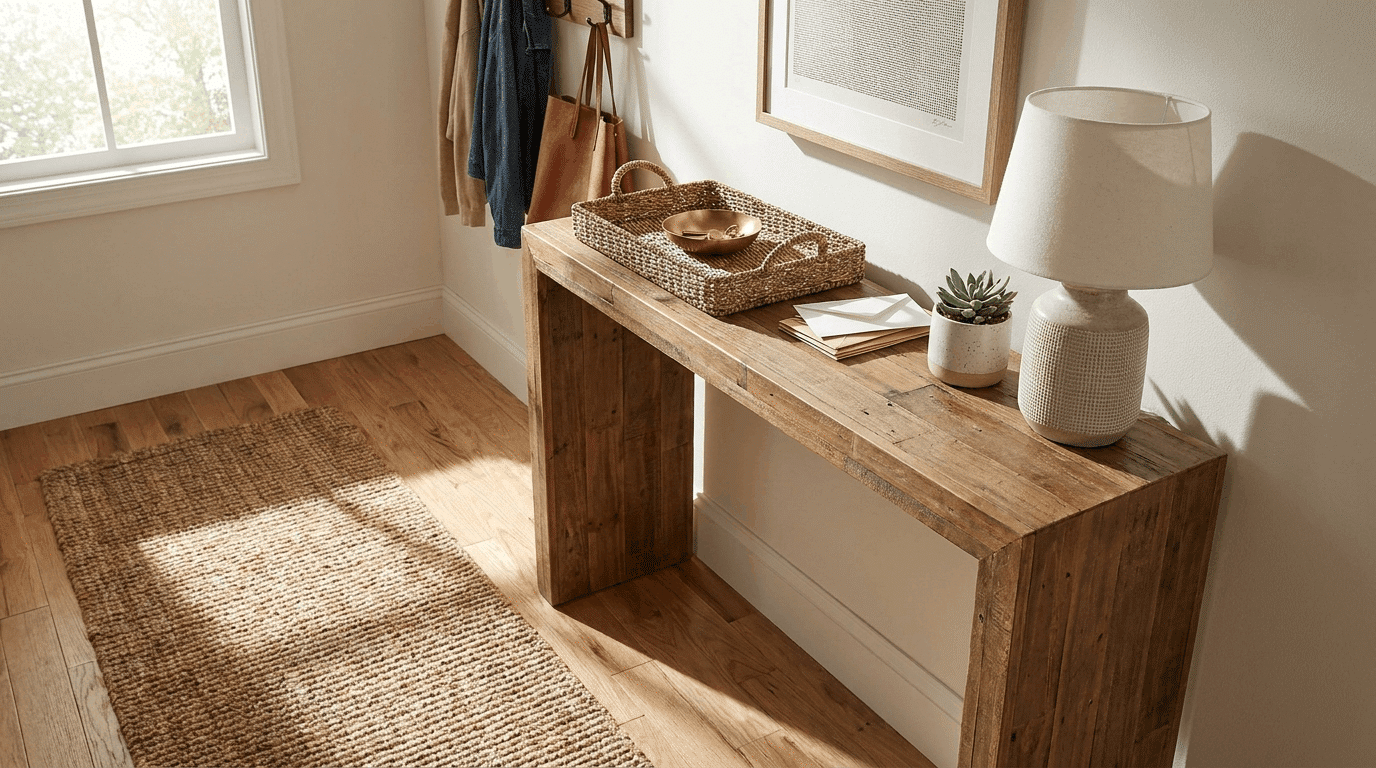
The most common mistake in a small entryway is too many objects on the console surface. Five small things look messier than two considered ones.
The edit rule: one tray on the surface, and everything lives inside the tray or off the console entirely. Inside the tray: one key bowl or hook, one small plant or candle. Nothing else.
The tray contains the items and contains the visual noise.
No stacked post. No random chargers. No items “just for now.” Everything outside the tray needs a proper home elsewhere.
This is about restraint, not budget. The formula works whether the console costs $30 or $300.
11. Choose One Vintage or Statement Piece
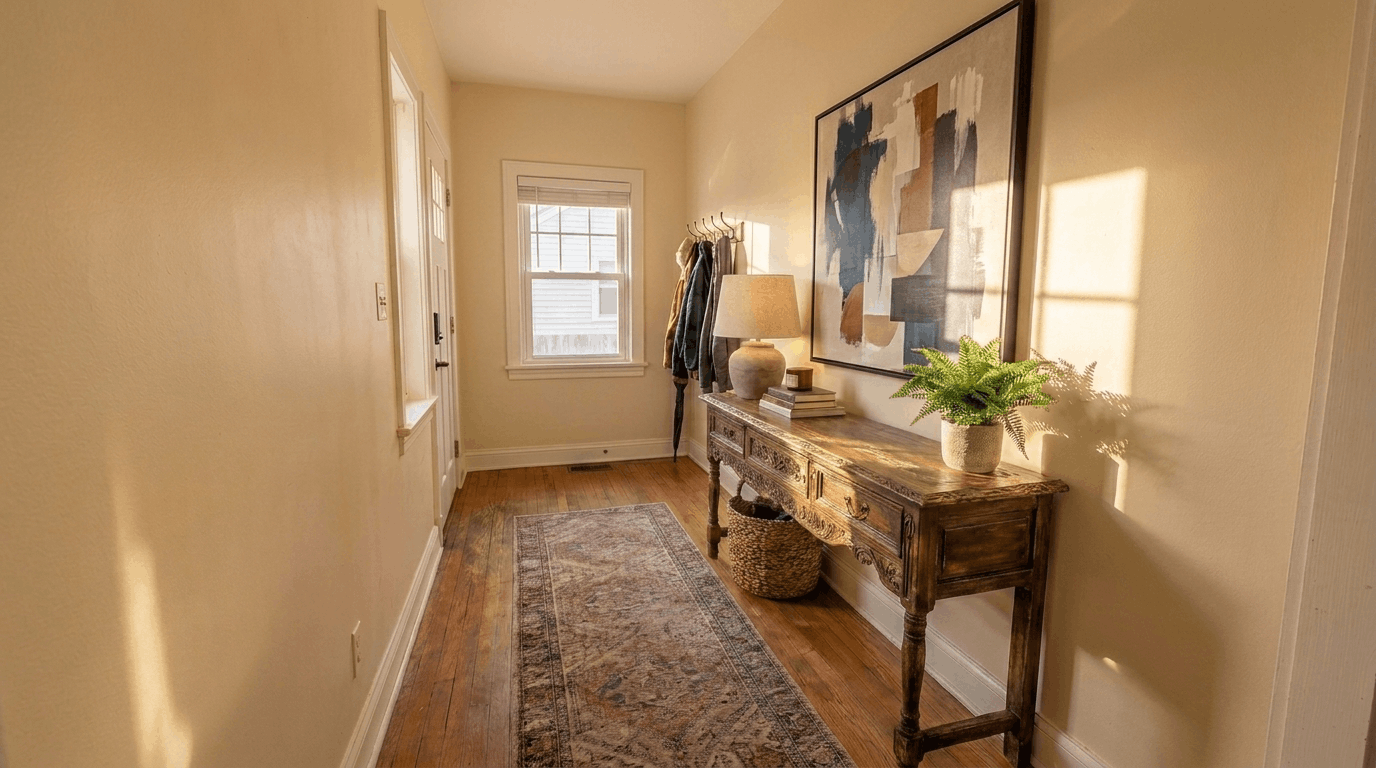
A single interesting piece gives a small entryway more character than any amount of standard storage furniture.
Think of an antique console table, a painted chest, a ceramic umbrella stand, or a distinctive mirror frame. than any amount of standard storage furniture.
The piece becomes the focal point. The eye goes to it first rather than reading the space as small or cluttered. One strong choice changes how the whole entry feels.
Charity shops, estate sales, and Facebook Marketplace regularly turn up narrow console tables and interesting mirrors.
The best finds have proportions that modern furniture rarely does: genuinely slim, genuinely tall, and distinctive.
Style and Atmosphere Ideas for Small Entryways
Practical storage is half the job. These ideas cover what people actually feel in the first seconds after walking through the door.
12. Color-Drench the Whole Space
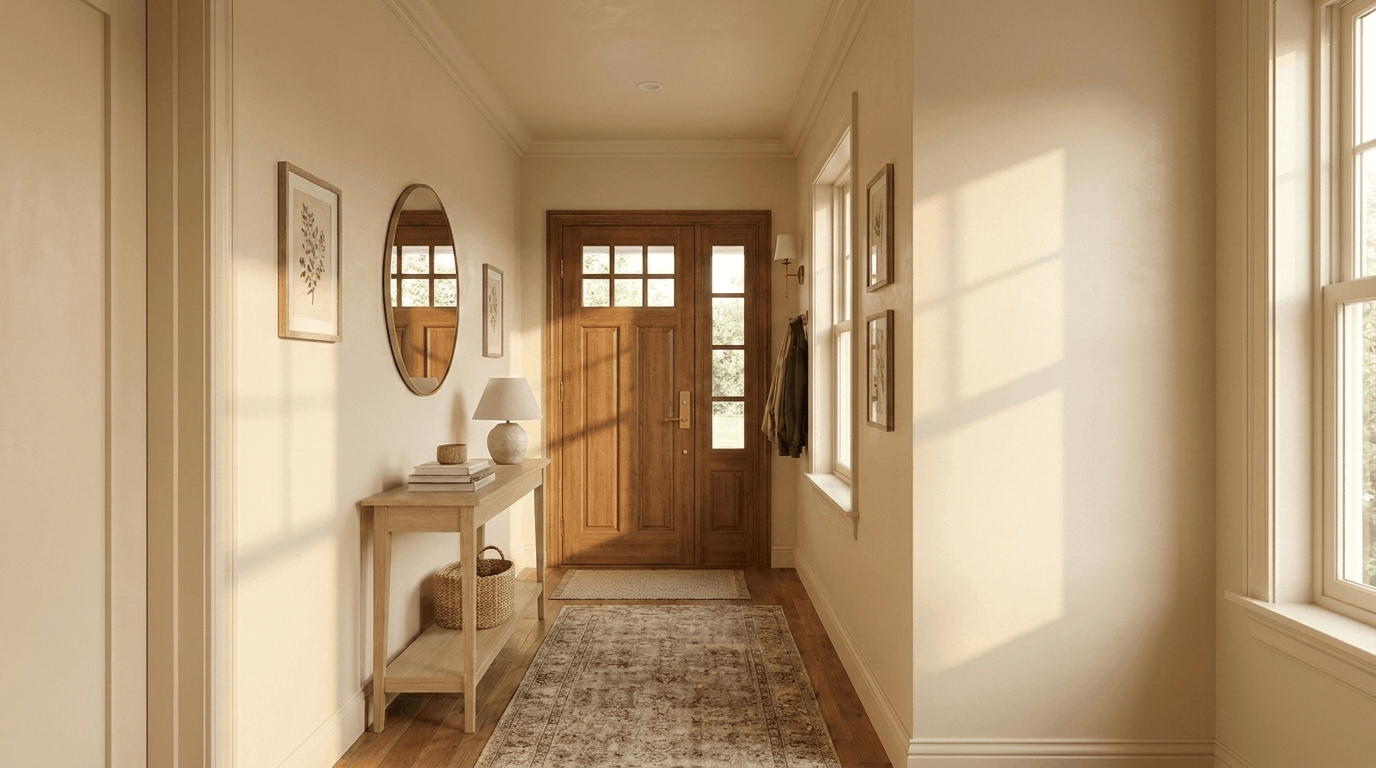
In a small entry, this is the most surprising idea in this list and one of the most effective.
It works because it removes all the color-break lines. Edges between wall and ceiling, wall and trim, and trim and door all read as the boundaries of a small space. Remove the contrast, and the boundaries disappear.
Deep, saturated colors work particularly well. Navy, forest green, terracotta, and dark plum make the space feel deliberate rather than small. Light neutrals produce the same effect more quietly.
One practical note: use the same paint finish across all surfaces. A matte wall next to a gloss trim still creates a visual break even if the color matches. A consistent eggshell or satin finish on everything reads as fully drenched.
13. Use 2700K Bulbs Specifically
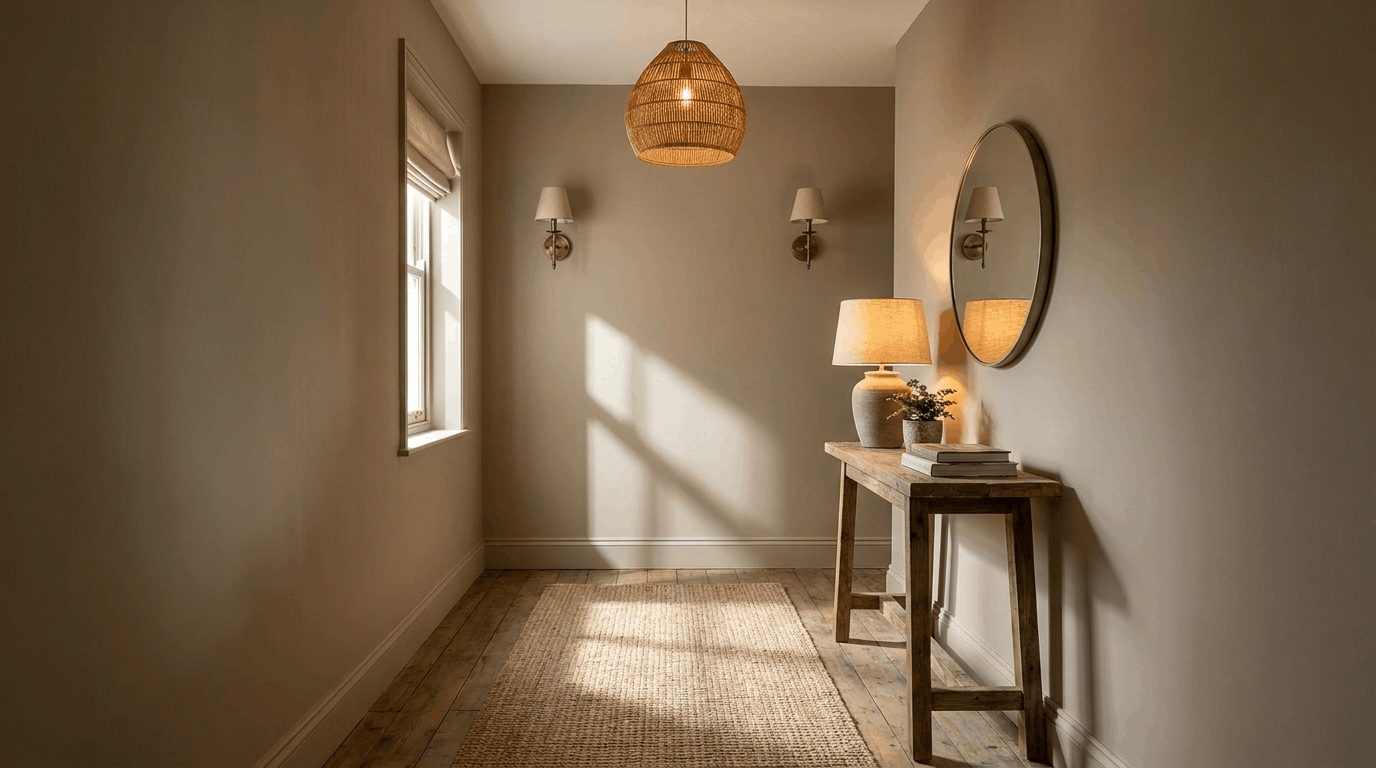
Most entryways default to whatever bulb came in the packet, usually 4000K to 5000K daylight or neutral. Warm bulbs at 2700K change the entry’s character from functional to welcoming.
The first impression of any home forms within seconds of stepping through the door. Warm light sets that impression before anyone sees a single piece of furniture.
The number matters: 2700K is the sweet spot. Above 3000K, the light starts to feel institutional. Below 2500K, everything takes on an orange cast that works against most color schemes.
This is one of the cheapest changes in this entire list. A pack of warm LED bulbs costs under $15.
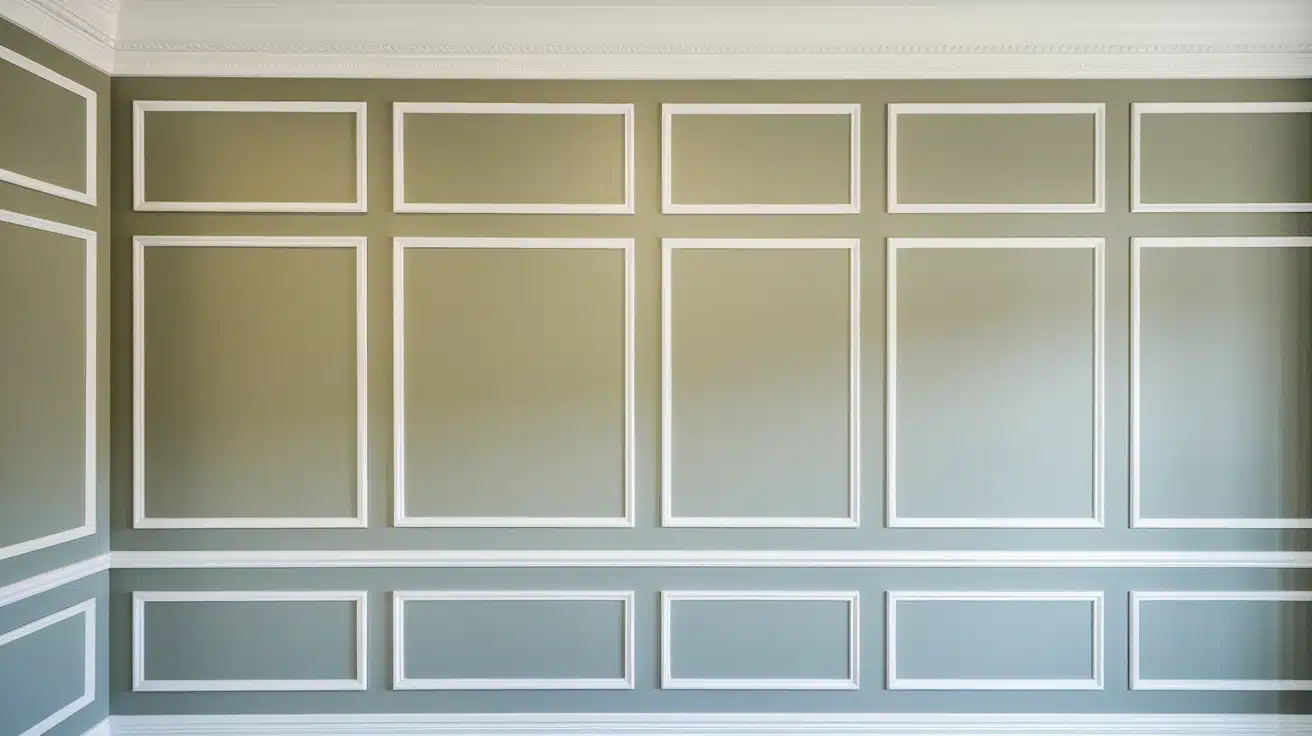
14. Add Board and Batten Wainscoting
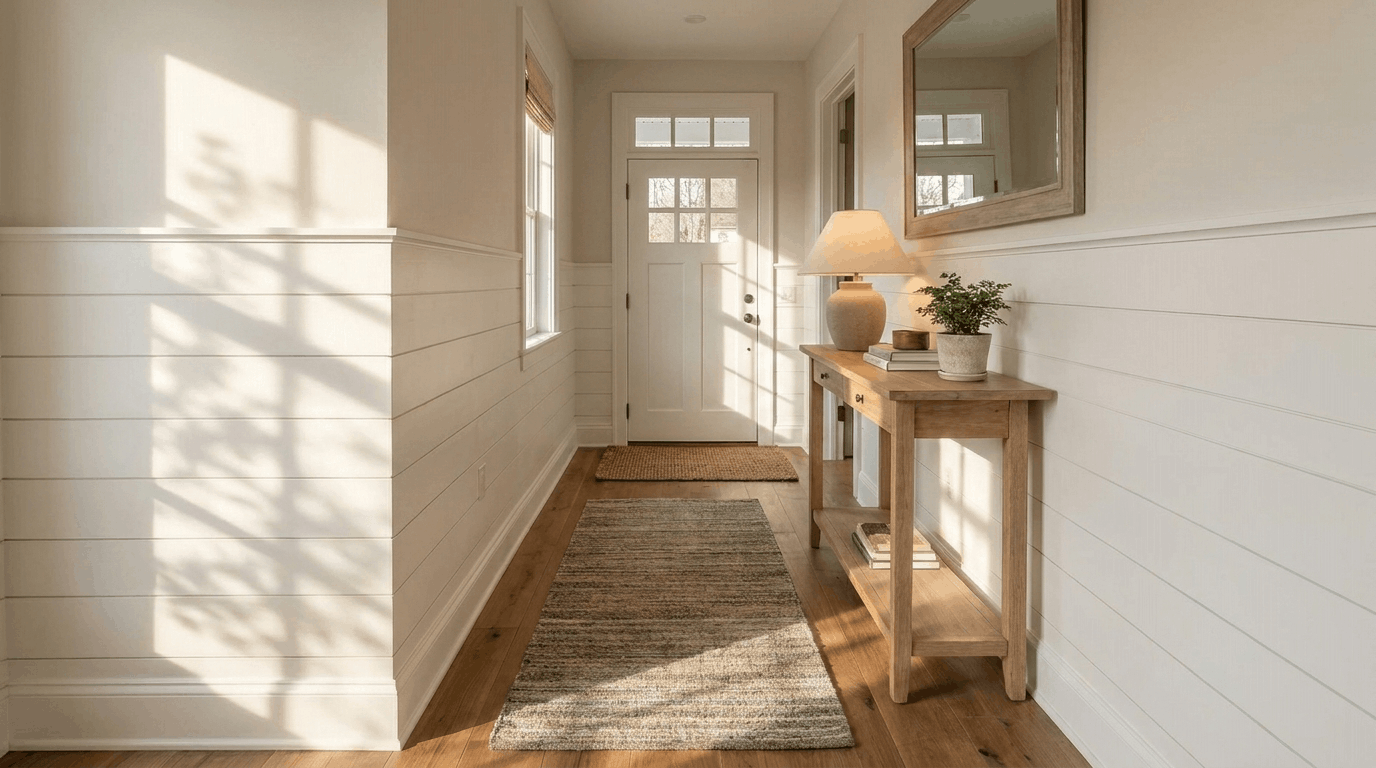
Board and batten takes up no floor space and adds architectural character that paint alone cannot replicate.
The standard height is 36 to 42 inches above the floor. Paint the battens the same color as the wall for a quieter, tonal look. Paint them a contrasting color for a more structured effect.
In entries that open directly into an open-plan living space, wainscoting on the entry-zone walls physically marks the boundary. It provides visible detail that reads as a distinct space without any structural work.
Material cost for a small entry typically comes in under $100: boards, a brad nailer, wood filler, and paint.
15. Build a Seasonal Entry System
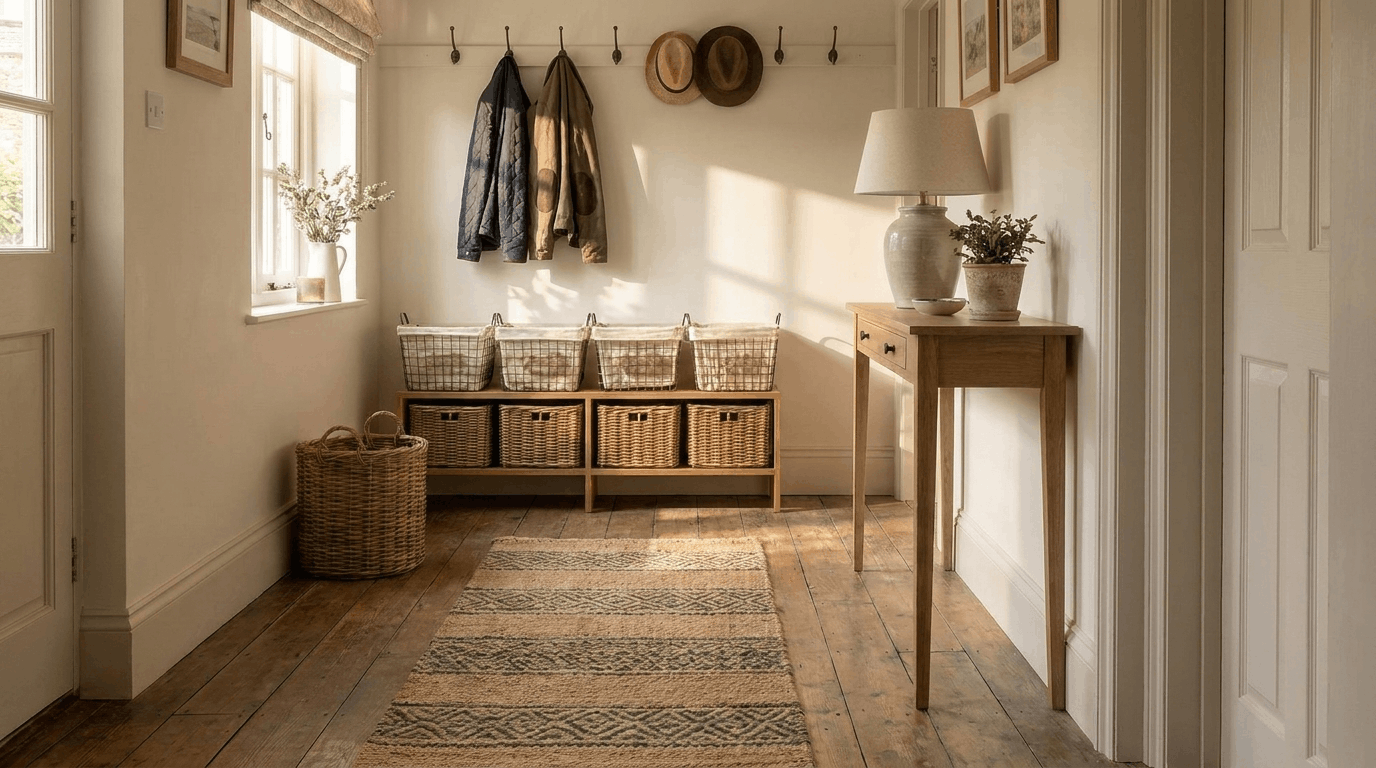
It is the one that stops a small entry from quietly failing by February.
Most small entries are set up for one season. Hooks designed for heavy winter coats, a shoe rack for boots. Spring arrives, and there is no room for lighter jackets, and the umbrella that lives by the door all summer.
The fix is two states.
- Active state: current-season gear near the door in all available hooks and storage.
- Stored state: previous-season gear packed into a labeled basket or vacuum bag in a bedroom wardrobe.
Swap twice a year: autumn and spring. The entry only ever holds what the household needs right now. That is the only reliable way to keep a tight space from accumulating two full seasons of gear at once.
Small Entryway Ideas for Families
A family entry has a specific challenge: multiple people with different gear, arriving and leaving at the same time, often under time pressure. Standard decorating advice largely ignores this.
16. Give Every Person Their Own Hook and Basket
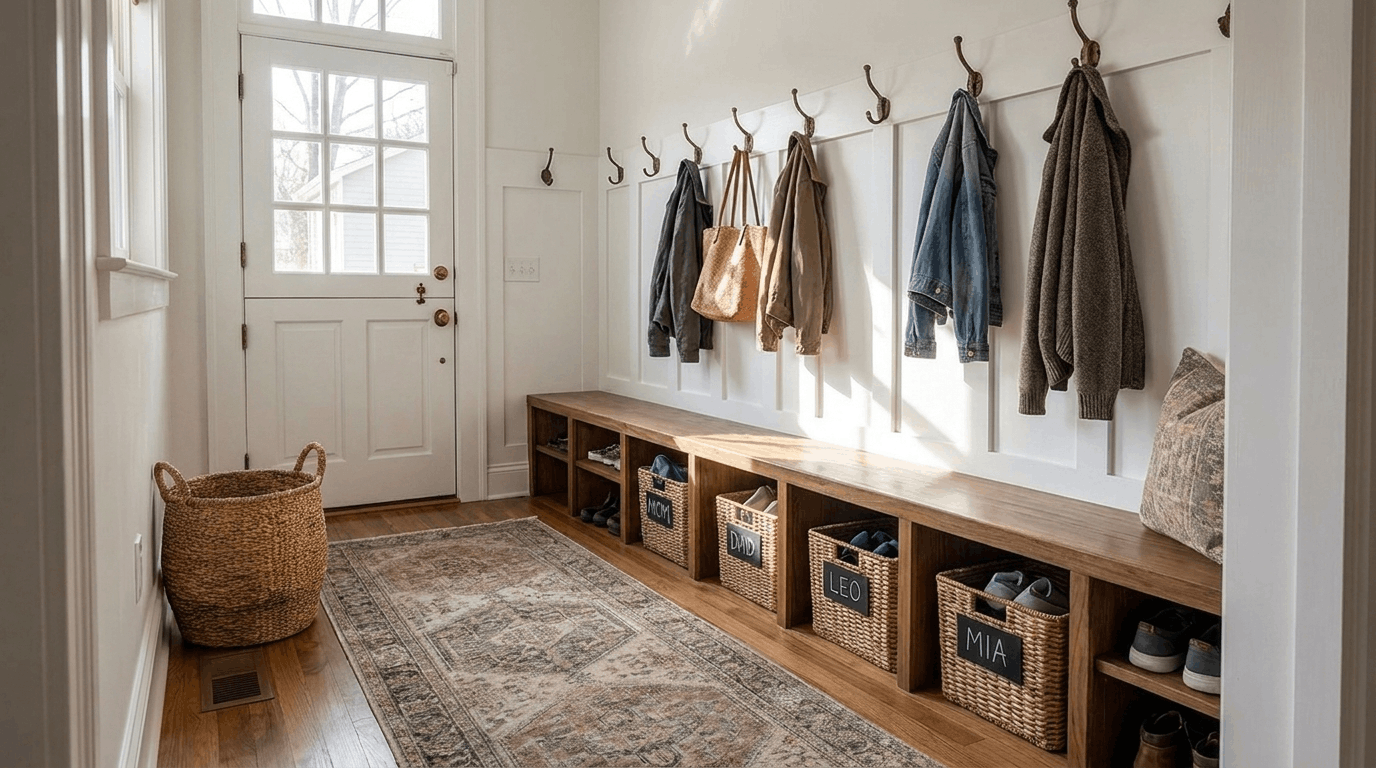
One hook and one basket per person, at the right height for that person.
Adults’ hooks at 60-66 inches. Children’s hooks at 48-54 inches for primary-school-age children. Low enough to reach without help. High enough to keep bags off the floor.
Each person’s basket on the floor below their hook handles the week’s shoes. The system distributes responsibility: each person manages their own section rather than contributing to a shared pile.
Labeling helps more than most people expect. A name tag, a colored dot, or a small photo indicates that children use the system independently. They stop putting their bag on whoever’s hook is nearest.
17. Add Low Cubbies for After-School Gear
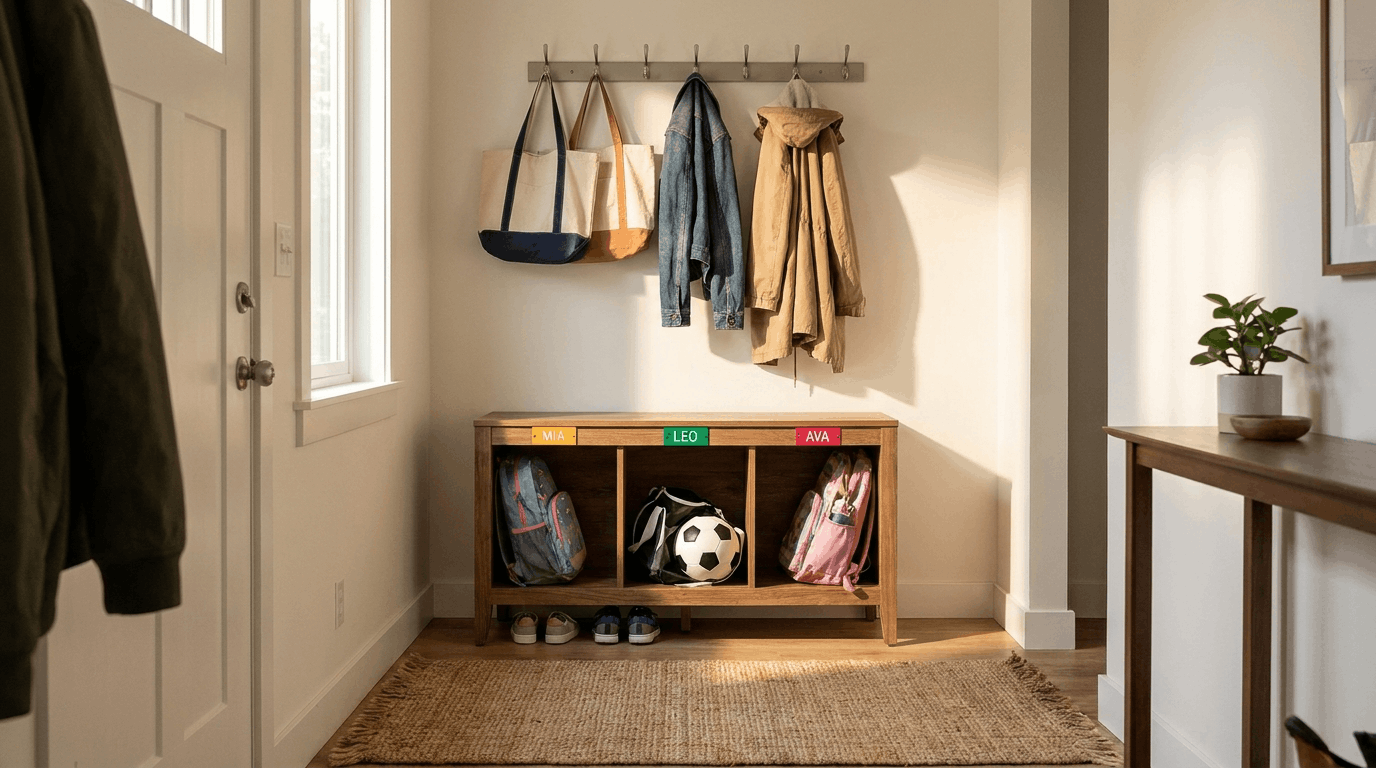
Backpacks, sports bags, and after-school clutter are the most common causes of small family entries collapsing.
A low cubby unit with one section per child gives after-school gear a specific home. The backpack hangs on a small hook inside or next to the cubby. Shoes drop in the base. The top of the cubby is not a storage surface.
Keep a separate hooks-only strip at adult height above the cubby for adult coats and bags. The two systems sit side by side without competing.
Clear labels or color-coding on each child’s section means the system runs without daily reminders. A five-year-old who knows exactly which cubby is theirs will use it.
Once the entryway works as a proper zone, the hallway and staircase leading away from it deserve the same level of thought. Your next focus should be decorating your landing and stairs.
Conclusion
A small entryway works when it handles the daily load without the floor disappearing under shoes and coats by Tuesday morning.
These entryway ideas cover every version of that problem.
Open-plan flats with no foyer. Tight vestibules. Family entries that have been quietly failing for years. Most cost under $100. The cheapest ones are often the most effective.
Pick the idea that matches your actual situation, not the one that photographs well. A seasonal rotation system and a hall tree do more for a family entry than any amount of new paint.
What type of entryway are you working with? Tell us in the comments which of these you’re trying first.
Frequently Asked Questions
How Do You Make a Very Small Entryway Feel Bigger?
Use a large rug to define the zone without shrinking it. Warm lighting enhances the first impression, a single-legged piece of furniture keeps the floor visible, and color-drenching removes visual edges.
What is the Difference Between an Entryway and A Foyer?
A foyer is an enclosed architectural entry room, often with doors at both ends. An entryway is any area near the front door, including spaces without clear architectural definition.
What is the Best Single Piece of Furniture for A Small Entryway?
A hall tree combines coat hooks, bench seating, and shoe storage in one footprint. For very tight spaces, a fold-down wall shelf with a single hook efficiently meets daily needs.
How Do You Handle Wet Coats and Umbrellas in A Tight Entry?
Install a dedicated hook for wet items near the door. Use a slim, tall umbrella stand to keep dripping umbrellas off the floor and away from the main storage area.