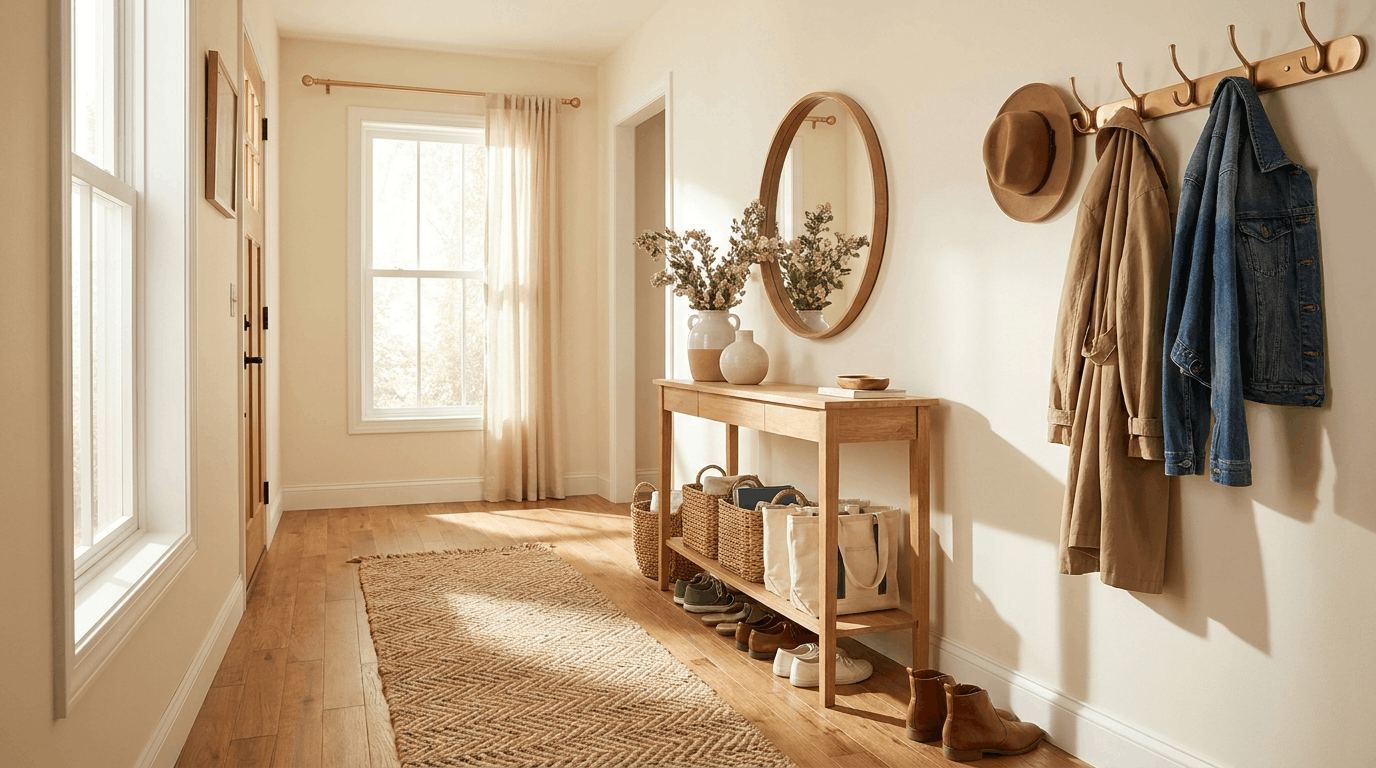

Your hallway gets more foot traffic than any other room in the house.
Most people walk through it a dozen times a day. And yet it tends to be the last space anyone actually decorates.
That’s a problem when it’s the first thing guests see.
It’s also a problem when shoes pile up by the door. Coats end up on the floor. The whole thing feels like a storage cupboard by October.
These ideas are organized by what your space actually needs.
Some are about making it feel bigger. Some fix the clutter problem. Some give it personality. And four of them are specifically for renters who can’t paint, drill, or make permanent changes.
Is Your Hallway Small or Narrow?
This distinction changes which ideas actually help, so it’s worth getting clear before spending any money.
- Small means compact overall. Short, possibly wide, but not much floor space. It collects clutter quickly and feels tight even without furniture.
- Narrow means long and thin. The tunnel effect sets in. Some furniture that works in a compact entry will make a narrow hall worse, not better.
Most of the ideas below work in both types. A few are tagged for one or the other. Knowing what you’re dealing with helps you pick the right fix.
Some small entryway ideas can offer inspiration for your hallway, but be careful not to confuse the two spaces.
Transform Your Small Hallway with These 19 Ideas
These ideas focus on making hallways feel larger, brighter, and more functional, with practical styling tips that maximize space without compromising on design.
Space-Expanding Small Hallway Ideas
These changes alter how the space reads. No structural work. No major spend. They create the impression of more room without moving a single wall.
1. Position a Mirror to Double the Light
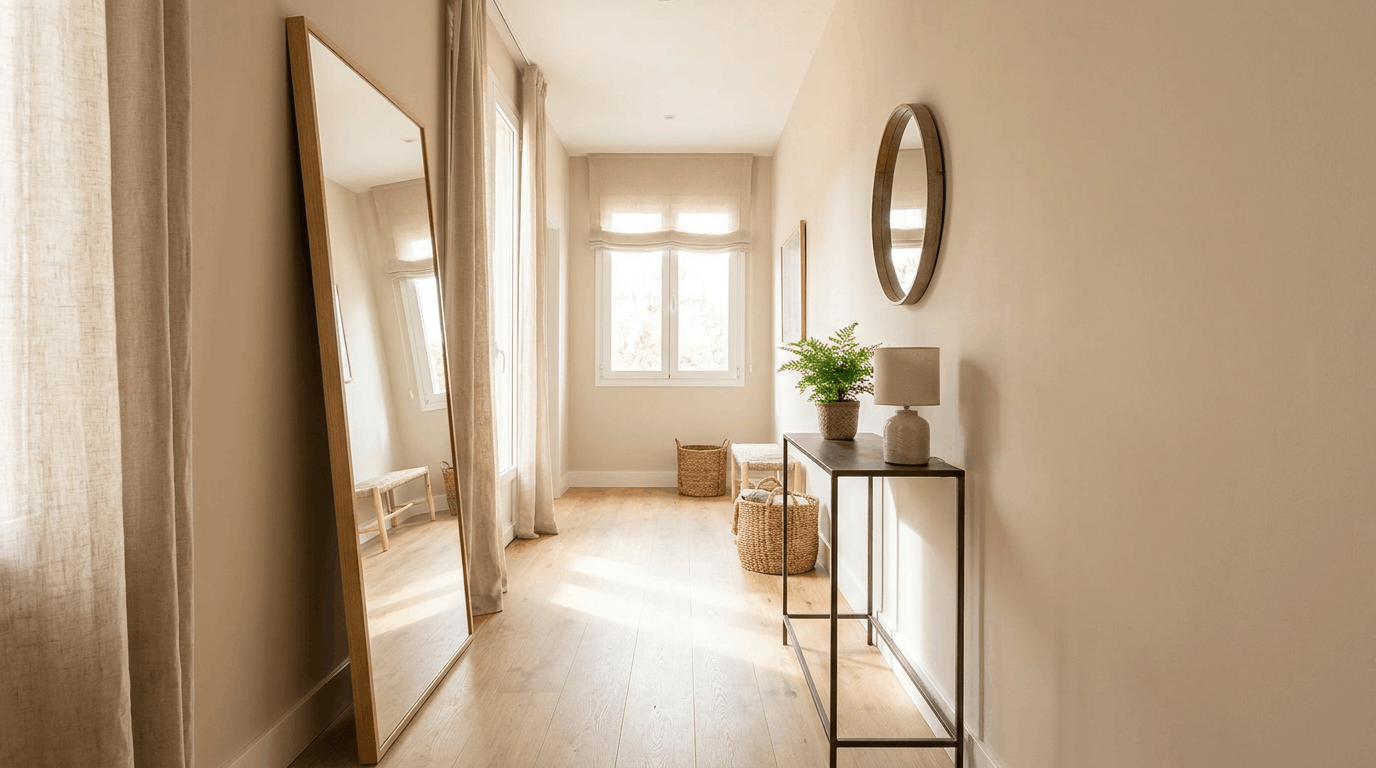
A full-length mirror at the end of a hallway draws the eye forward.
It extends the corridor visually and makes it feel longer than it is. A round mirror above a console adds softness in a compact entry without the same depth effect.
The tip that actually makes a difference: angle it slightly toward the nearest window. It bounces natural light further into the space rather than just reflecting the opposite wall back at you.
For renters: lean a full-length mirror in a corner instead of hanging. It reads as considered rather than makeshift and needs no wall fixings.
2. Paint the Ceiling and Walls the Same Color
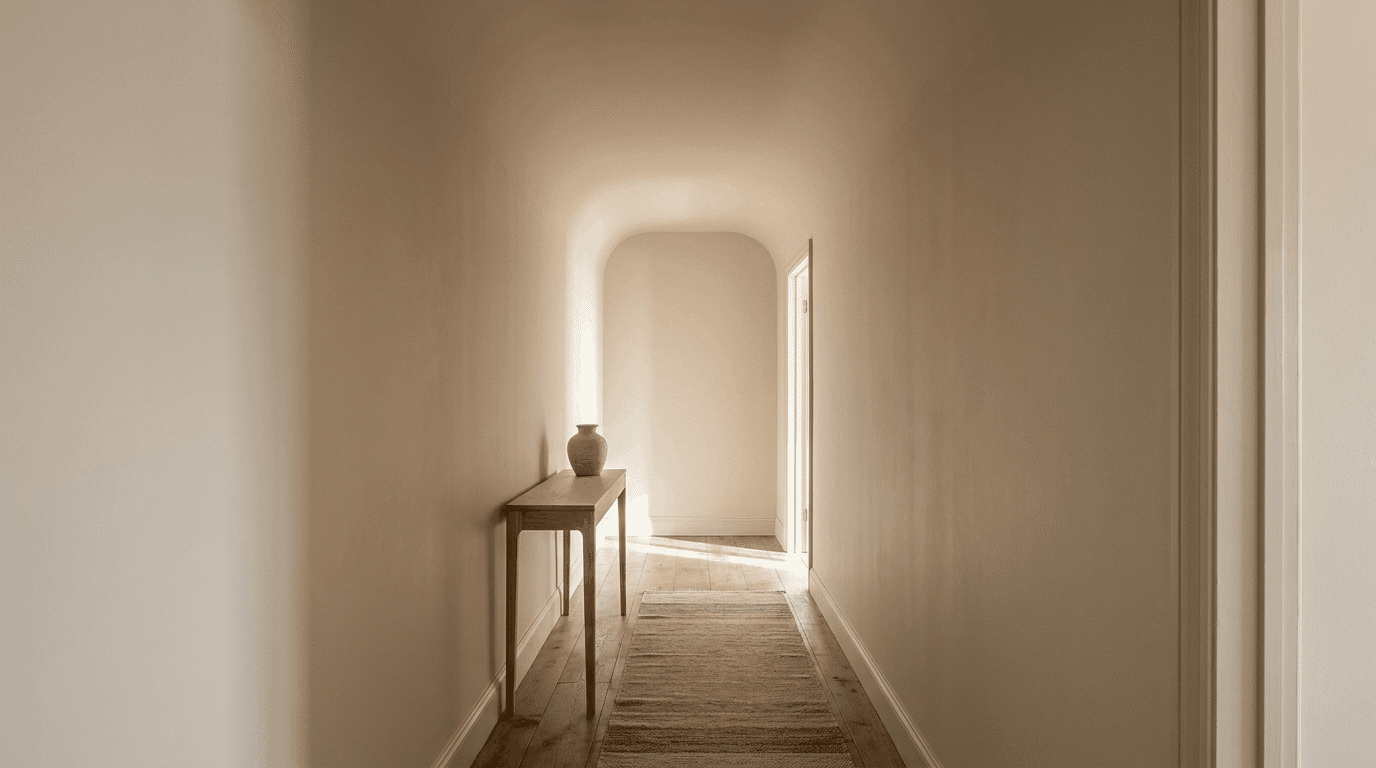
Most small hallways feel cramped because the ceiling acts like a lid. Painting it the same color as the walls removes that visual boundary.
The space reads as taller and more continuous. It works best with soft neutrals and warm whites. Stark white looks clinical. Mid-tones make the space feel flat without adding warmth.
Good tone-on-tone options: off-white, warm stone, soft sage, dusty taupe. The specific color matters less than the principle of removing the ceiling line entirely.
3. Use Vertical Paneling or Wallpaper to Add Height
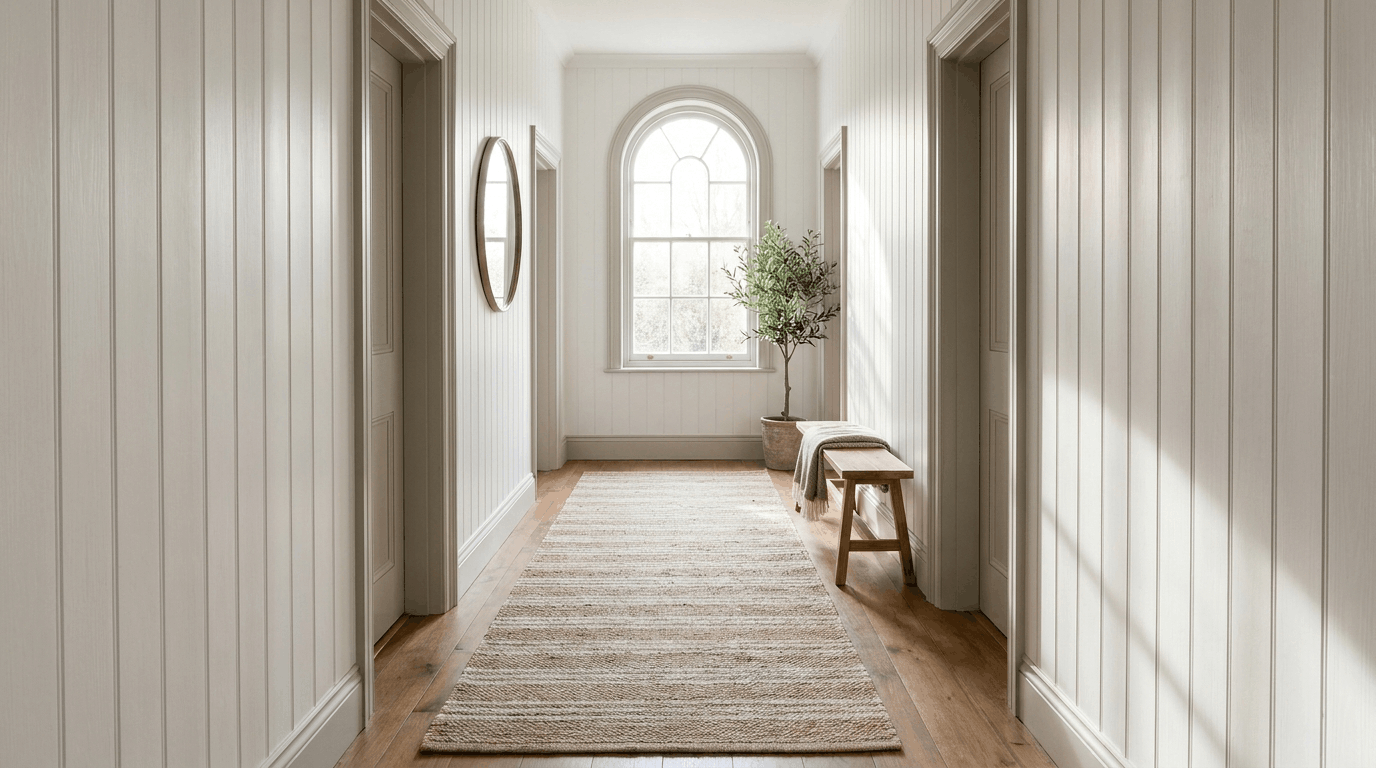
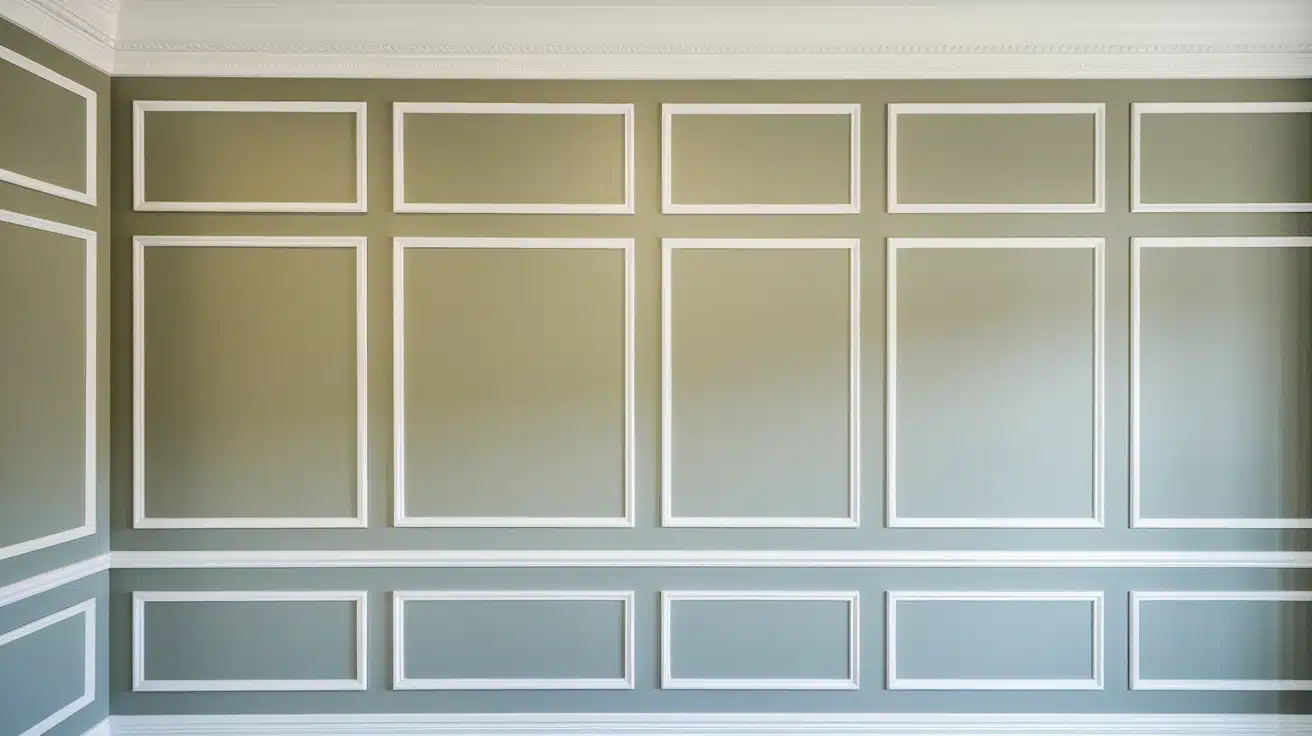
Vertical lines pull the eye upward. That’s why paneling changes how a small hallway feels.
Shiplap, V-groove, or wainscoting directs attention up the wall rather than across the floor. Wallpaper with a vertical repeat does the same job without any carpentry.
Contrasting painted door frames also help. They trick the eye into reading a more defined structure between the doors. It costs a few hours and a small can of trim paint.
4. Replace a Solid Door with a Glazed Internal Door
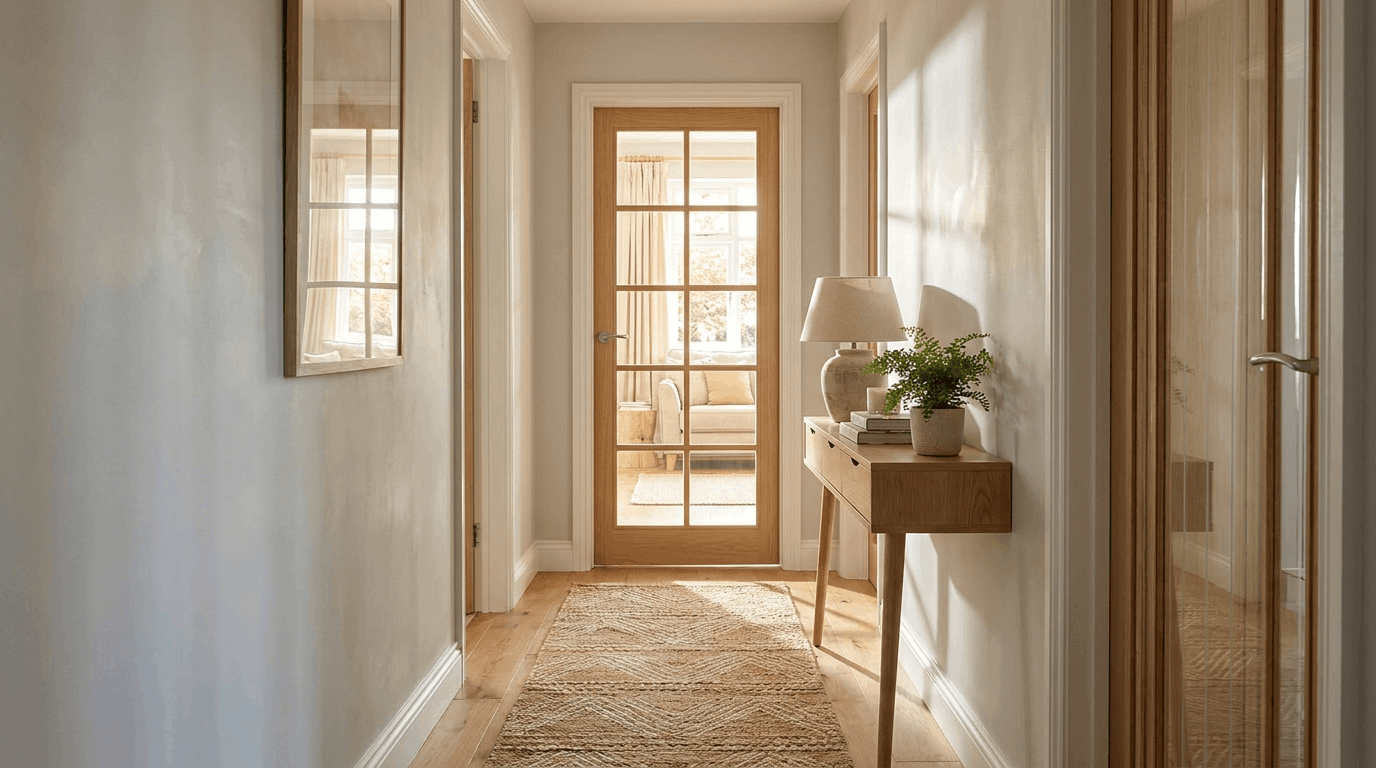
This is the single highest-impact fix for a genuinely dark hallway. It’s also the one no competitor mentions.
A glazed internal door lets light from adjacent rooms in.
If the hallway has no natural daylight, replacing a solid internal door with a glazed panel changes everything. Light arrives from the next room, but the hallway feels it.
Most glazed internal doors are standard sizes. They swap in on existing hinges with no structural change.
5. Lay a Long Narrow Runner Rug
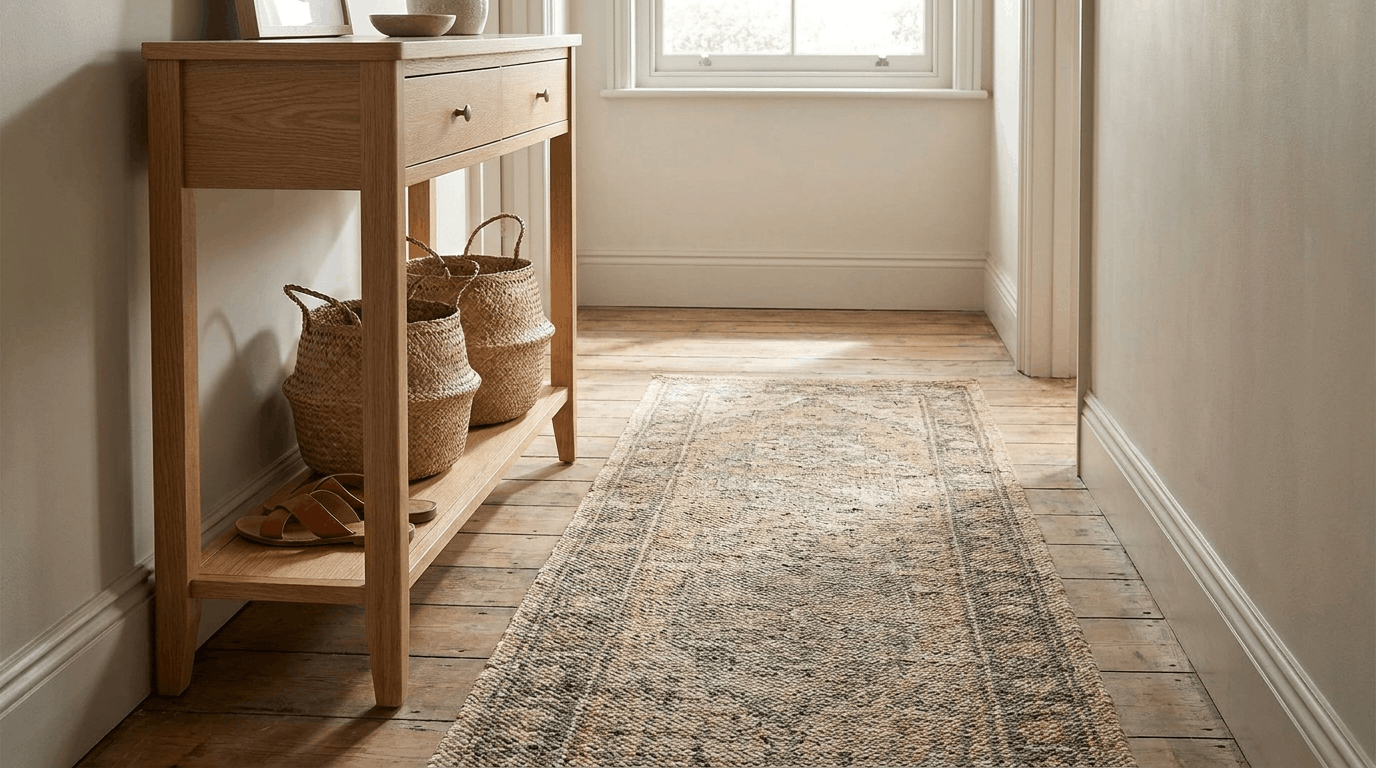
A runner makes a narrow hallway feel finished. Without one, the corridor looks unresolved.
Pattern direction does real work here. Stripes running lengthways visually extend the space. Crosswise stripes add perceived width to a very narrow hall.
Go low-pile. Deep pile rugs shift and bunch in high-traffic areas. A flat-loop or low-pile woven runner holds its position and stays tidier day to day.
Best for: narrow hallways. In a compact square entry, a small doormat works better. A runner who stops halfway down a short space just looks awkward.
Small Hallway Storage Ideas
The most common small hallway problem is not decoration. It’s shoes, coats, keys, and post building up by the door every single day. These five ideas fix the underlying cause.
6. Fit a Slim Console Table with a Drawer
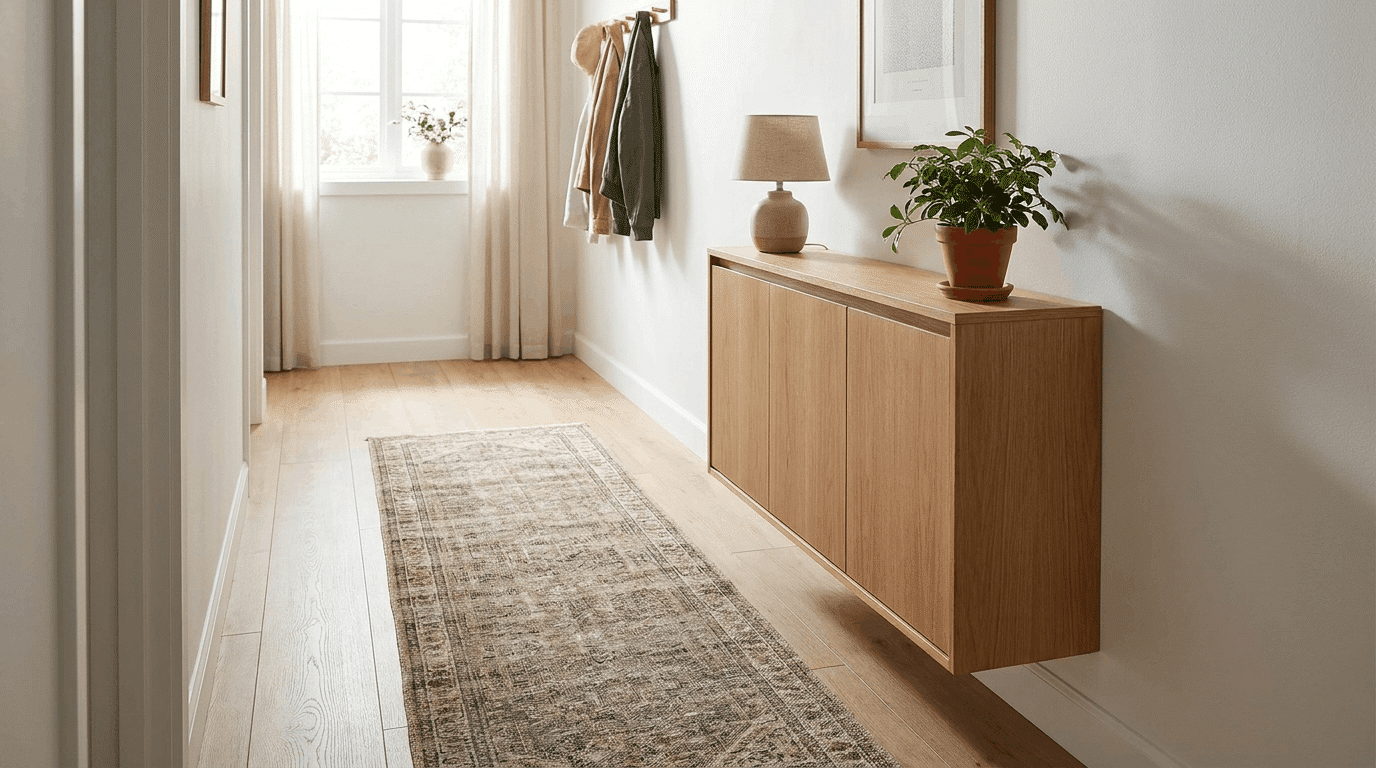
A console table is the most useful piece of furniture a small hallway can have. It provides a surface, hides daily clutter in a drawer, and handles shoes or baskets underneath.
Sizing is the bit most people get wrong. In a narrow hall, stay at a depth of 10 to 12 inches. Anything wider blocks the walkway. In a compact but wider entry, 14 to 16 inches gives more surface without feeling bulky.
Choose one with legs rather than a solid base. The visible floor underneath keeps the space looking open.
7. Mount Wall Hooks at Two Heights
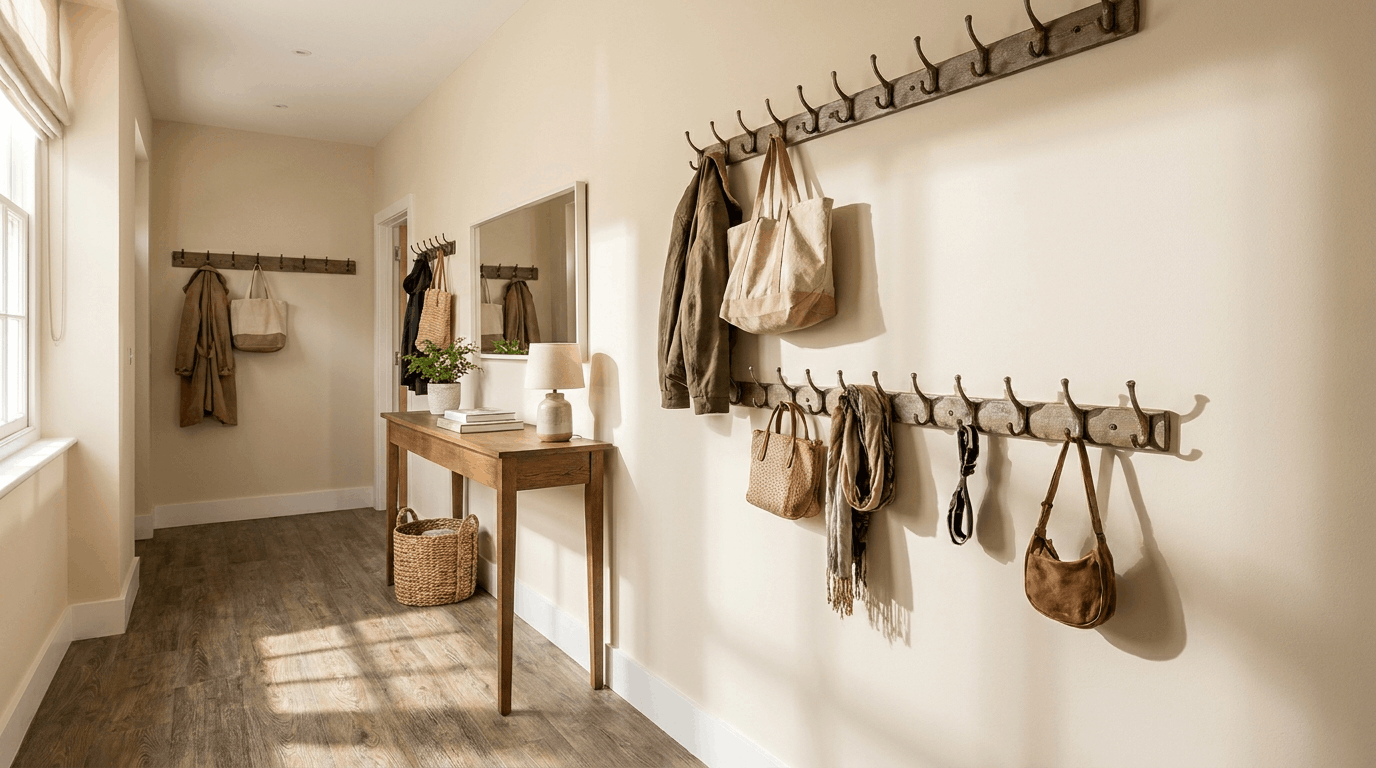
A single row of hooks fills up in a week. Two heights double the capacity without adding wall space.
High hooks for coats, bags, and other bulky items. Lower hooks for keys, scarves, kids’ items, and the bag you use every day. The varying heights look more purposeful than a uniform row.
Keeping the floor clear is the single biggest visual improvement in a cluttered hallway. Hooks achieve that better than any other storage solution.
8. Use a Bench with Under-Seat Storage
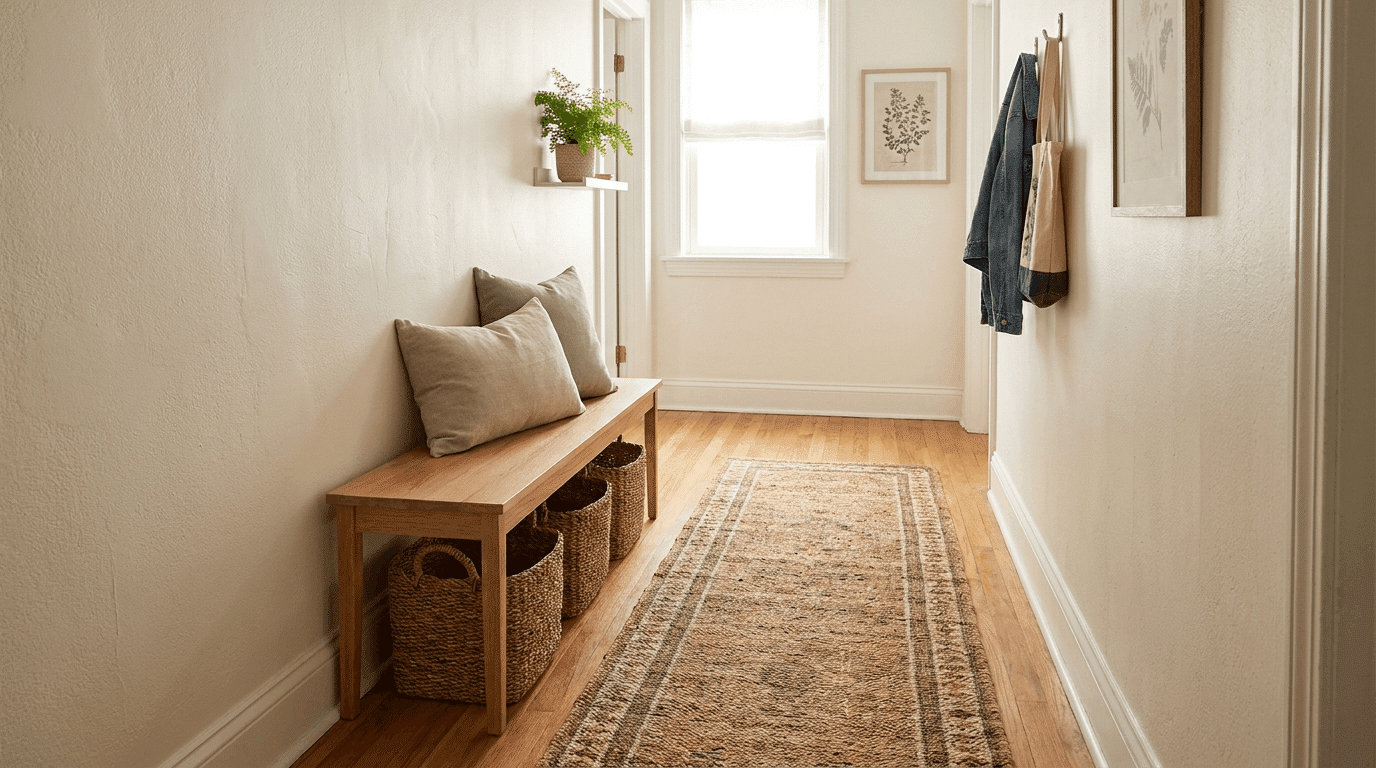
A bench solves two problems at once. It gives you somewhere to sit while changing shoes. The space underneath handles shoes, bags, and seasonal items in baskets.
Slim designs start at 14 inches deep, which fits most hallways. For very narrow halls, a wall-mounted fold-down bench takes zero floor space when folded up.
Combine it with the hooks above, and you have a complete coat-and-shoe station in about 30 inches of wall space.
9. Float a Shelf Above Door Height
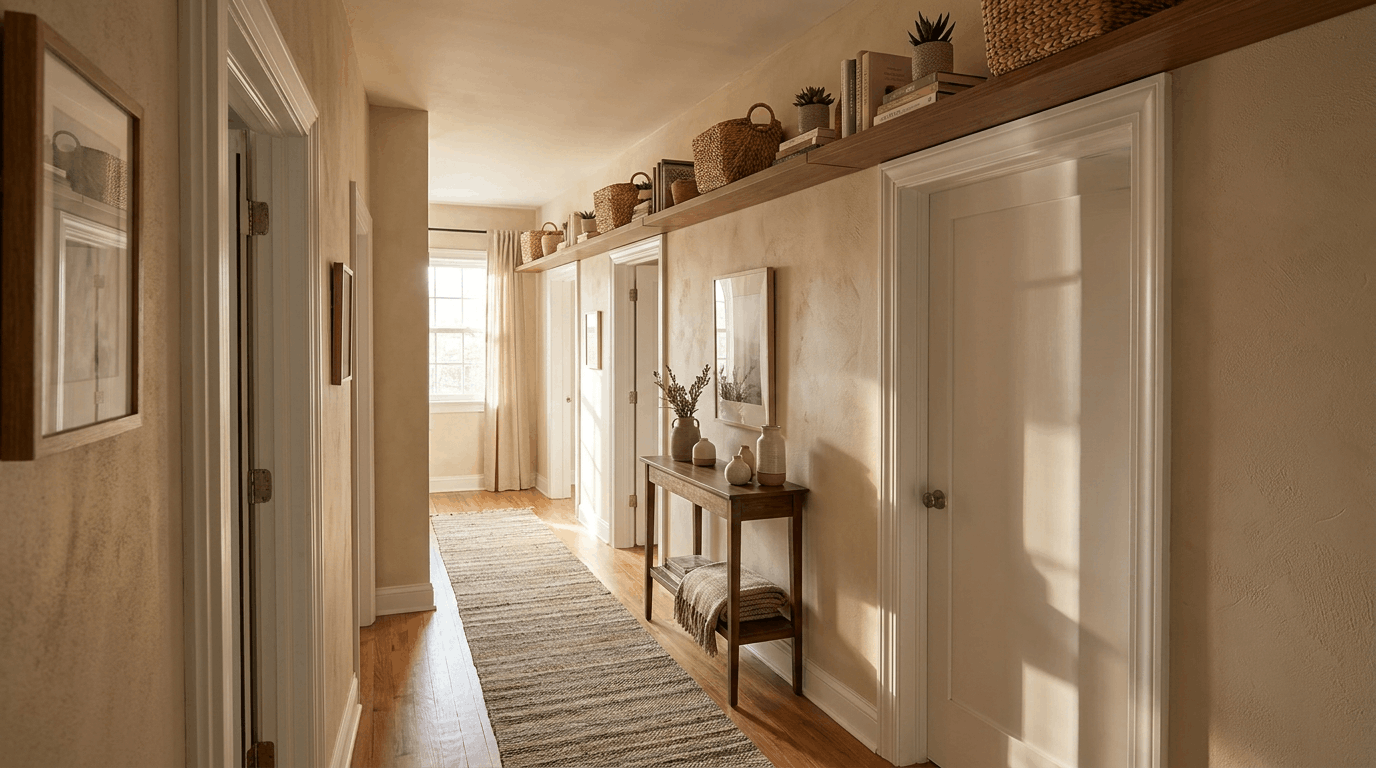
Most hallways waste the 18 to 24 inches of wall space above the door frames. A continuous shelf at around 7 feet handles seasonal items, spare bags, and storage baskets.
Keep it uncluttered. A few well-spaced baskets look better than a packed shelf. Bulky objects stored at height make ceilings feel lower, not higher, so edit down what goes up there.
This works best in compact hallways. By that point, the wall space below door height is already taken by hooks and furniture.
10. Choose a Shoe Cabinet Over an Open Rack
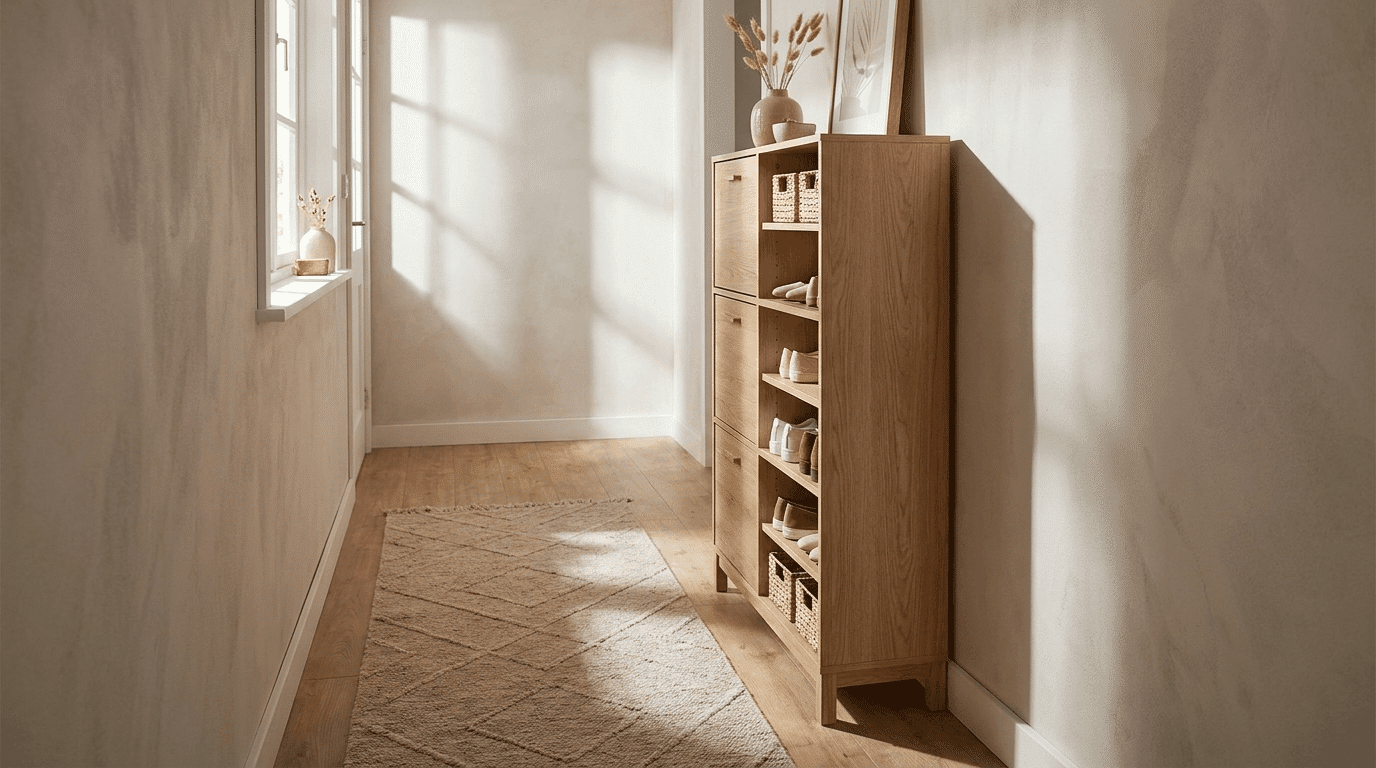
An open shoe rack looks chaotic within 24 hours. Shoes get kicked sideways, pairs separate, and the floor looks messy even when everything is technically put away.
A slim shoe cabinet hides all of that. It doubles as a surface for keys, a small plant, or a lamp. Internally angled shoe storage holds more pairs per inch of floor space than flat racks do.
Most narrow hallways fit a cabinet 8 to 10 inches deep and 30 to 35 inches tall. It won’t block the path.
Style and Personality Ideas for Small Hallways
Once the space functions well, these are the ideas that make it look like someone actually thought about it. A hallway that works but looks like nothing is still a missed opportunity.
11. Create a Gallery Wall on the Longest Wall
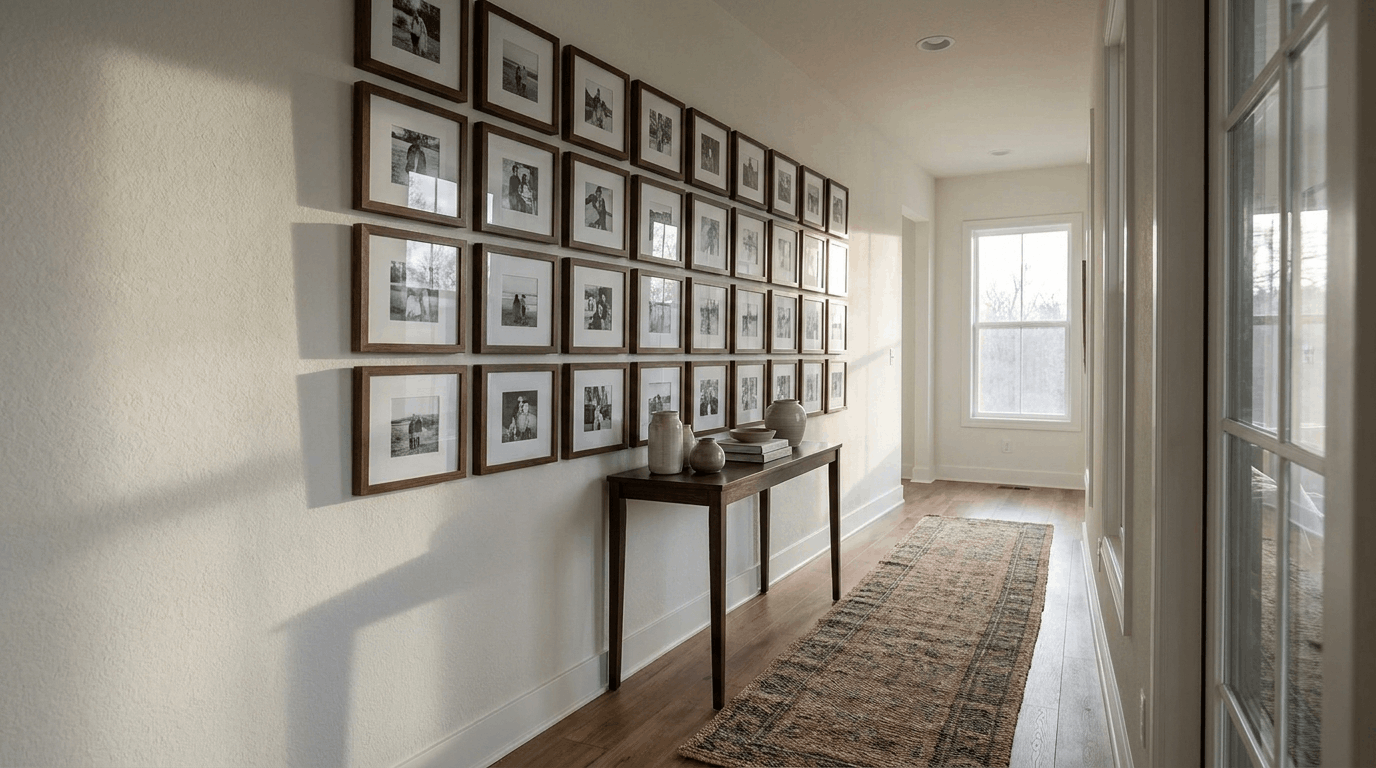
Small frames in a tight grid work better than large scattered frames in a narrow space. A grid reads as deliberate. Scattered frames look like overflow from the living room.
Use same-color frames for a quieter look. Mix the content for personality.
Before hanging anything, lay the whole arrangement on the floor and photograph it. That photo becomes your hanging template.
One specific tip: align the bottom edge of every frame to one consistent height. Deliberate. Frames at random heights look accidental.
12. Wallpaper the End Wall
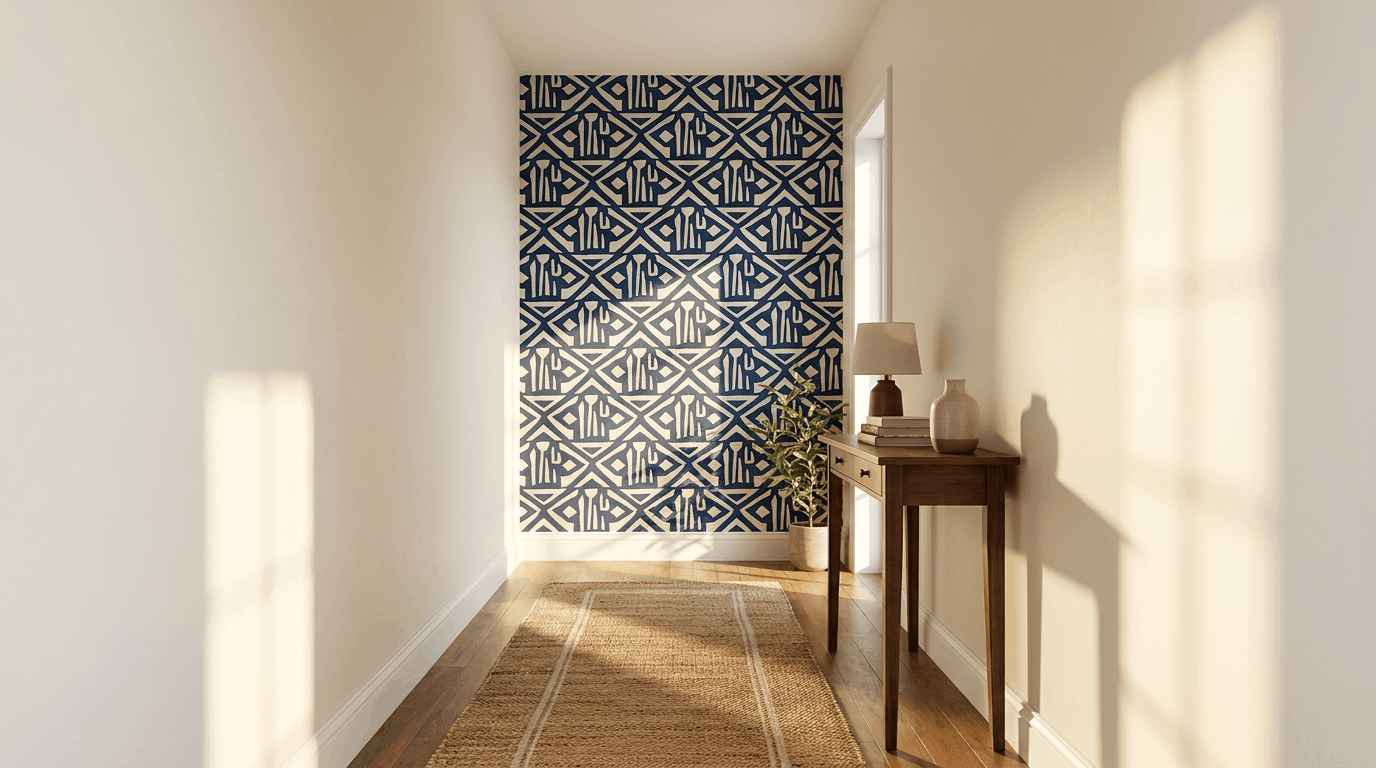
The wall at the far end of a hallway is its natural focal point. It’s what the eye lands on when you walk in.
Bold wallpaper on that one wall reads as confident rather than overwhelming when it’s contained to a single surface. It gives the hallway a destination. Without it, the end wall is just a wall.
Peel-and-stick options have improved a lot. Major brands now leave no residue on smooth painted walls. Test a small strip behind a door frame first on older plaster.
13. Swap Out the Ceiling Light
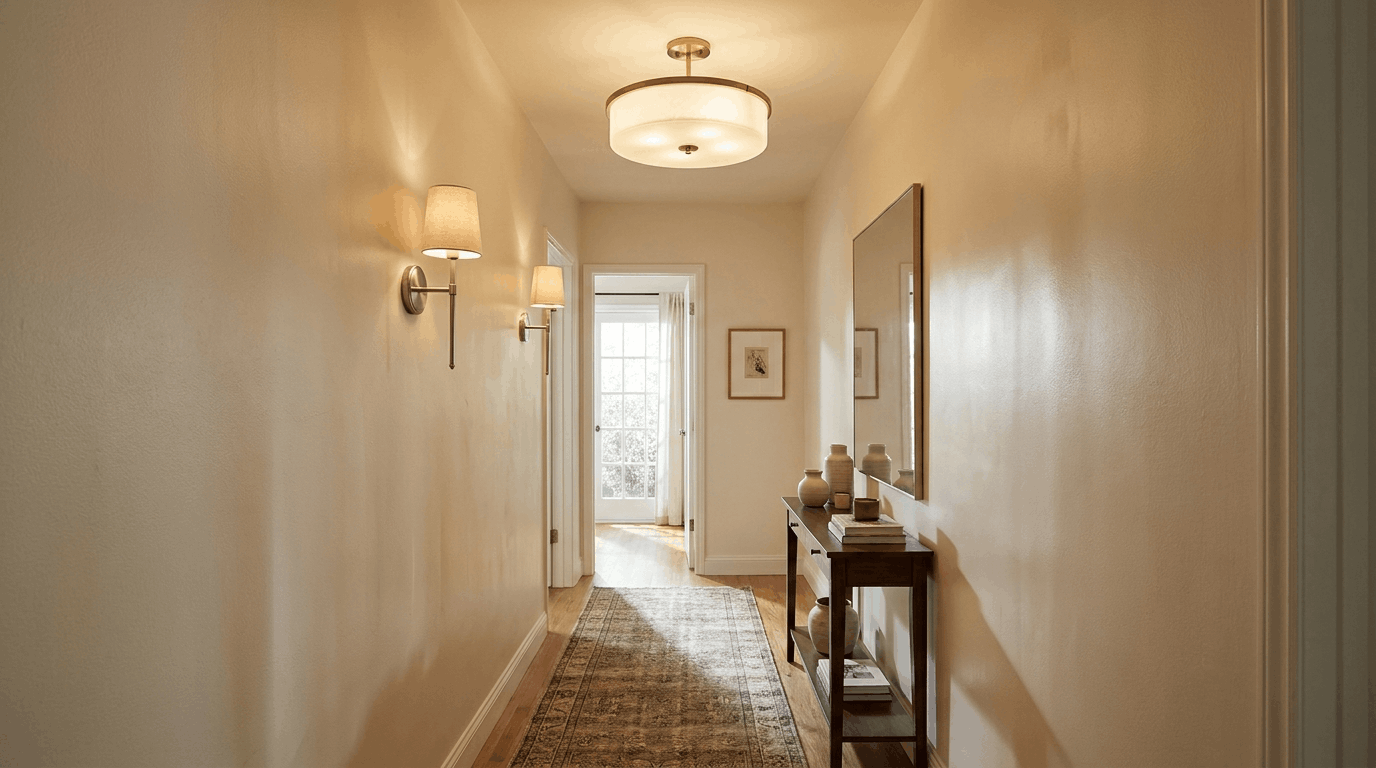
Hallways typically get the least attention when it comes to fittings in the house.
A flat flush mount that throws cold, flat light downward. Replacing it changes the room’s character more than a coat of paint does.
For low ceilings: a semi-flush pendant with a decorative diffuser, not a bare bulb.
For narrow halls: wall sconces instead of a ceiling light. Side lighting makes a corridor feel warmer and less like a passageway.
Battery-operated LED sconces are a real option here. They look identical to wired versions and work well in rental hallways where rewiring is off the table.
14. Add a Lamp to the Console Table
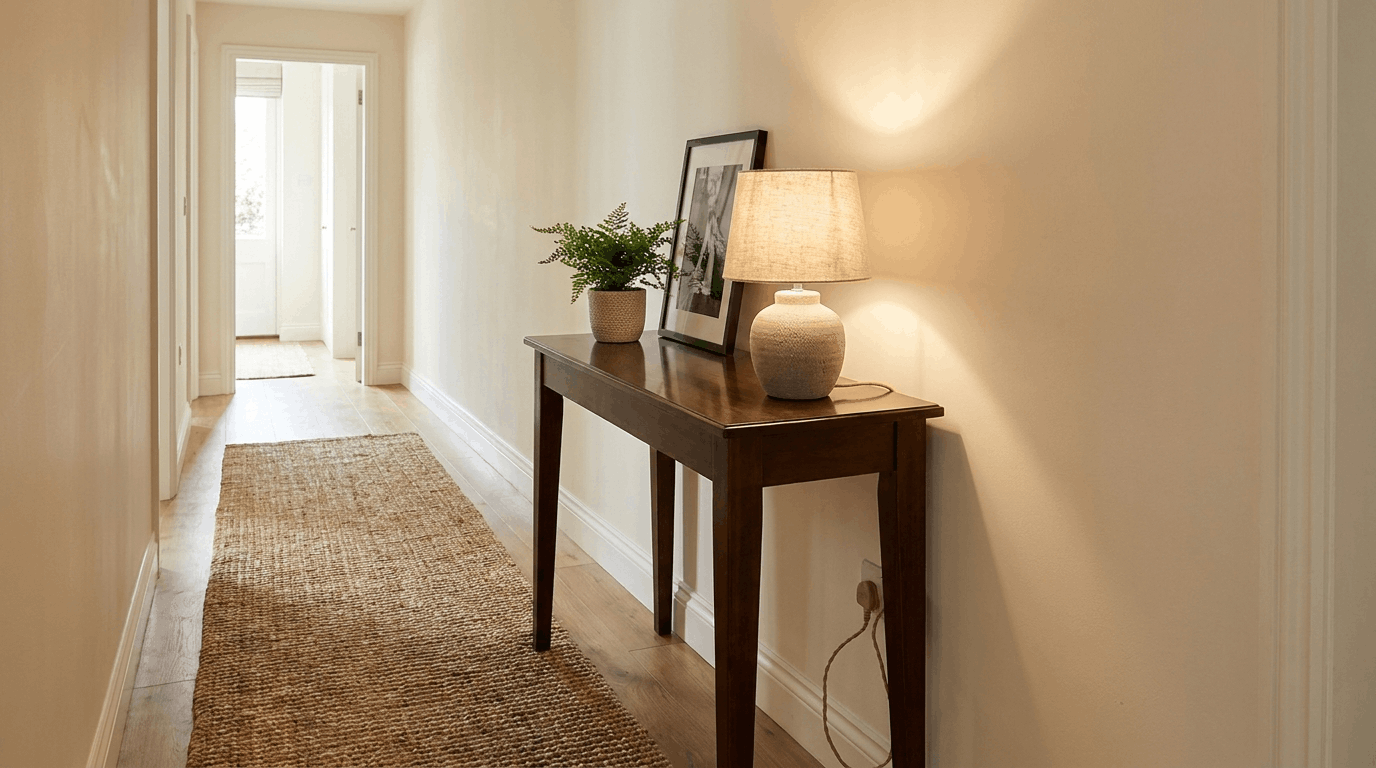
Overhead lighting in a hallway tends to be harsh. A table lamp on the console changes the character from flat to warm.
No nearby outlet? Battery-operated LED table lamps now look convincingly real and cost under $40. Some have touch dimming.
A complete hallway vignette needs only 18 inches of wall space. Slim table, lamp, mirror above, and one small plant or object. That’s it.
That combination does more for the space than almost any other change.
15. Paint the Inside of the Front Door a Bold Color
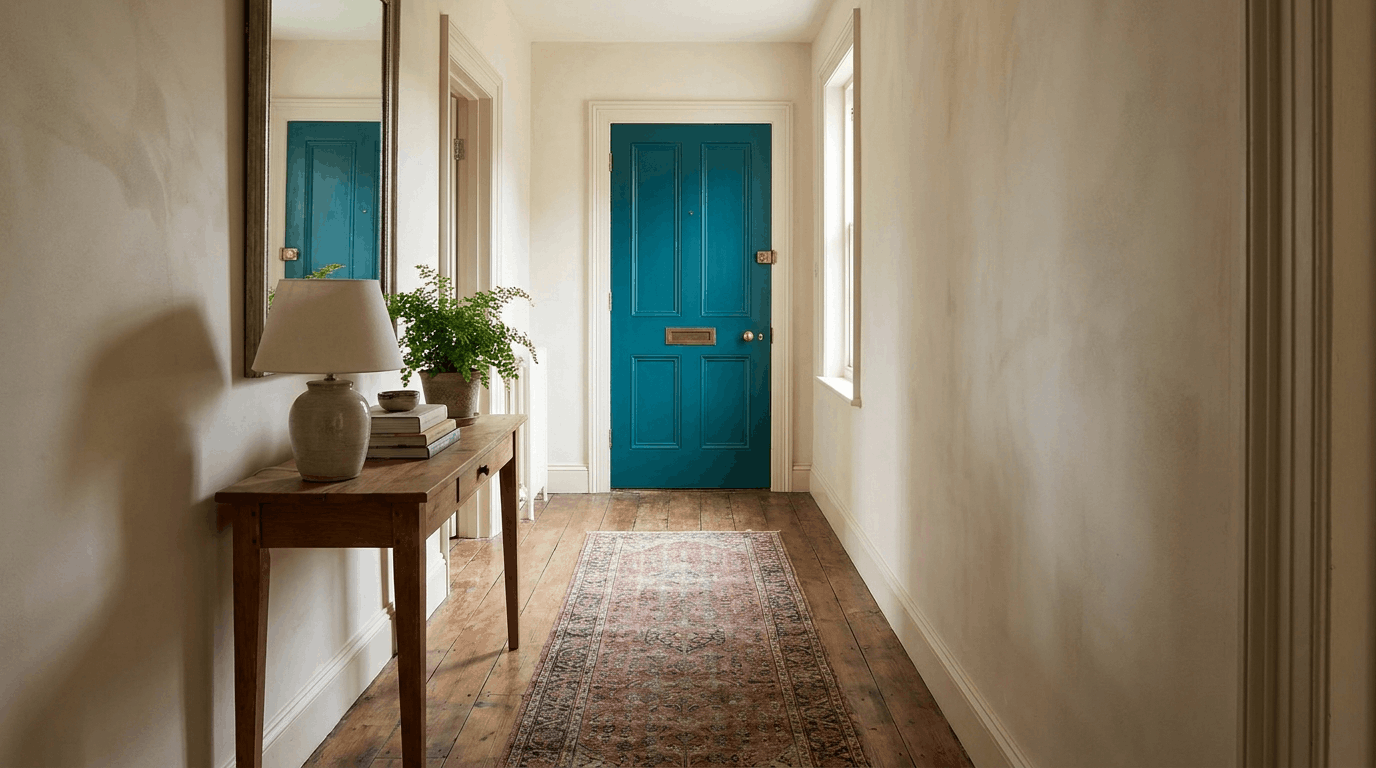
Most people ignore the internal face of the front door. It’s the largest single surface in the hallway, and it gets treated like a non-decision.
A bold, dark, or unexpected color on the door anchors the whole space. It makes everything else look planned. Navy, forest green, charcoal, and deep terracotta work well against most hallway neutrals.
You don’t have to match the exterior. Interior door color is a separate decision and a separate paint.
Renter-Friendly Small Hallway Ideas
Renters face real constraints: no painting, no drilling, no permanent changes. These four ideas work inside those limits without looking like a workaround.
16. Build a Coat Station Using Command Hooks
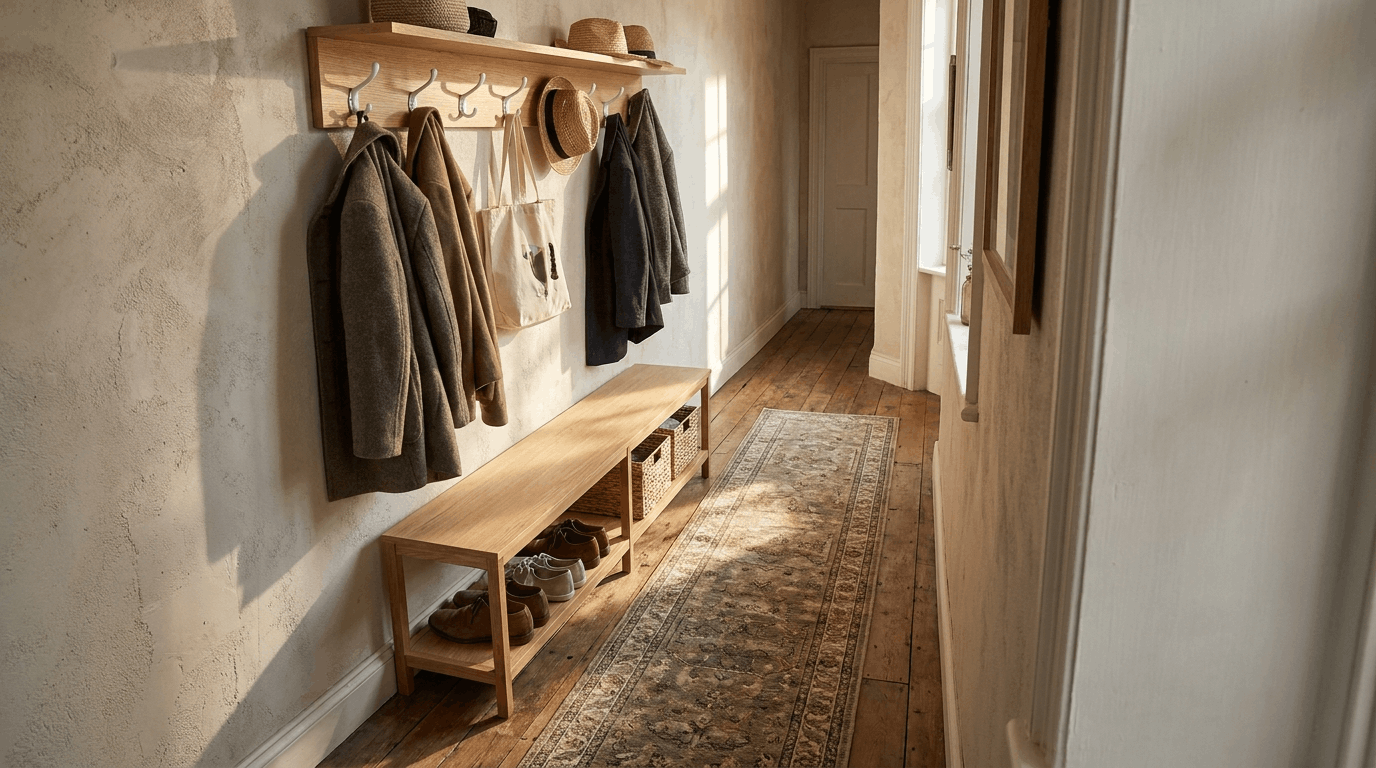
3M Command hooks rated for coats hold up to 7.5 lbs each. A row of four or five at the same height looks installed. Not temporary.
Command picture-hanging strips hold lightweight mirrors, small frames, and shallow shelves without damaging walls. They come off cleanly from most painted surfaces.
One practical note: stick to the weight ratings. Command hooks fail when overloaded, not because the adhesive is poor.
17. Lean a Full-Length Mirror Rather Than Hang One
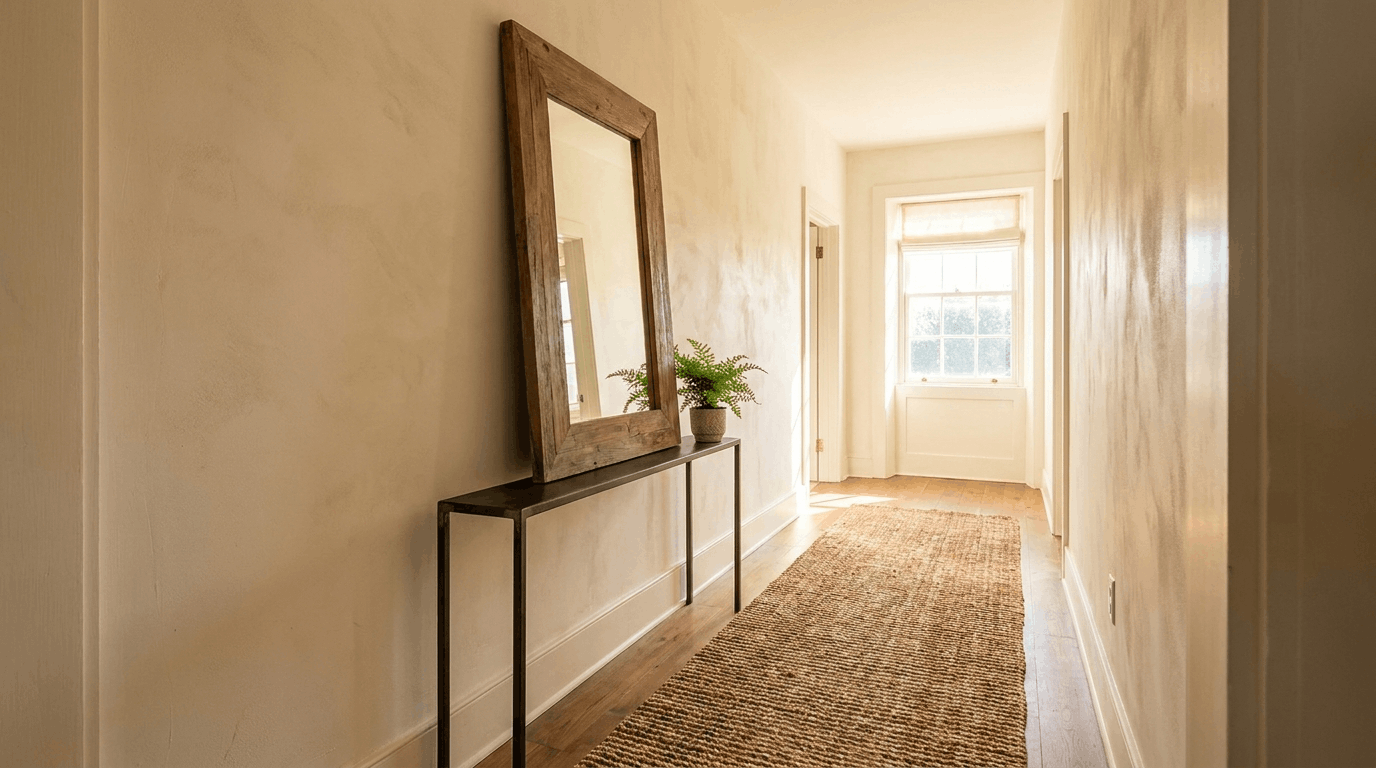
A leaned mirror is not a compromise. It’s a style choice.
Lean it in a corner, angle it slightly forward, or position it against the end wall. Fix an anti-tip furniture strap from the base to the baseboard for safety. No wall penetration. No damage. Completely secure.
This works well anywhere; hanging a large mirror is off limits.
18. Use Peel-and-Stick Wallpaper on the End Wall
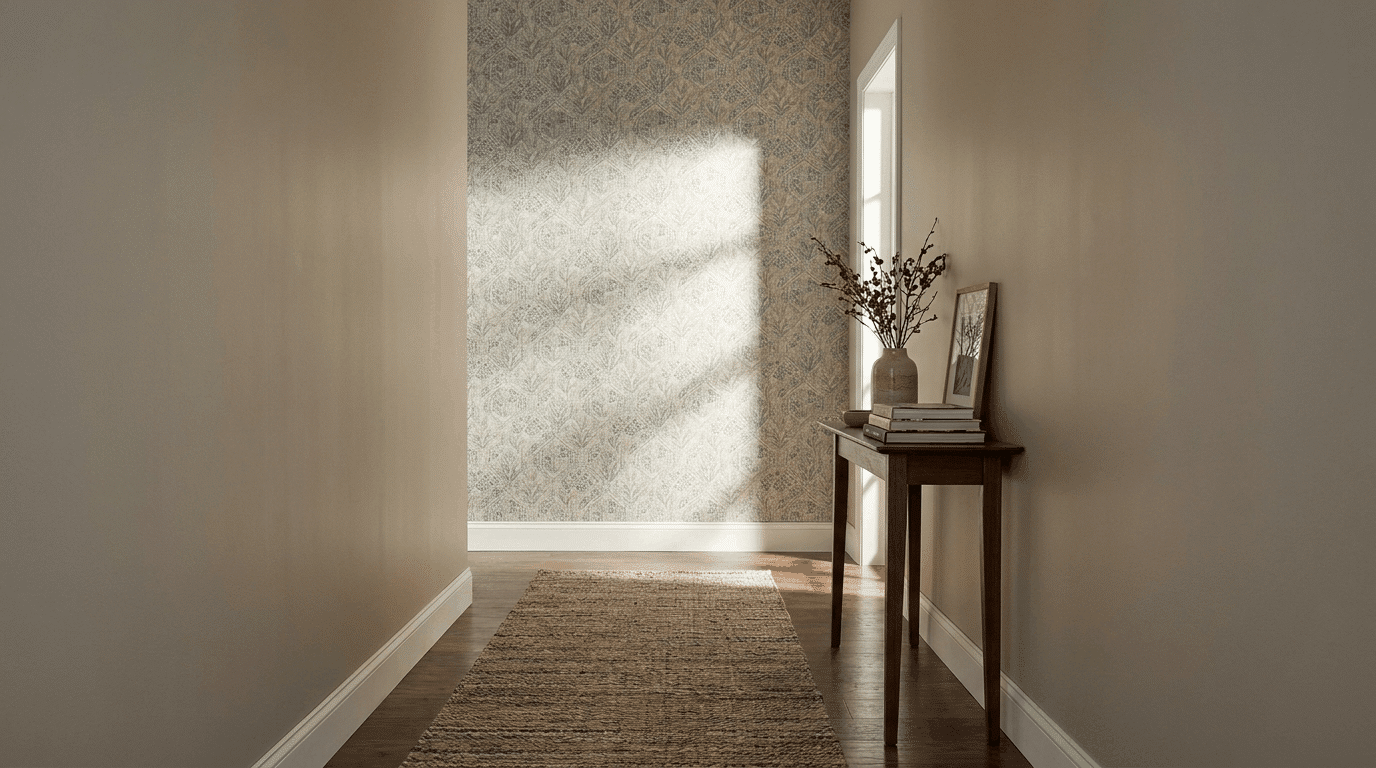
Removable wallpaper is a genuine product now, not a craft project. Brands like IKEA stock removable options that leave no residue on smooth painted walls.
One wall. One afternoon. The result reads the same as permanent wallpaper.
Test a small strip somewhere inconspicuous first. Older flat matte paint sometimes grabs more than expected.
19. Use a Freestanding Storage Unit
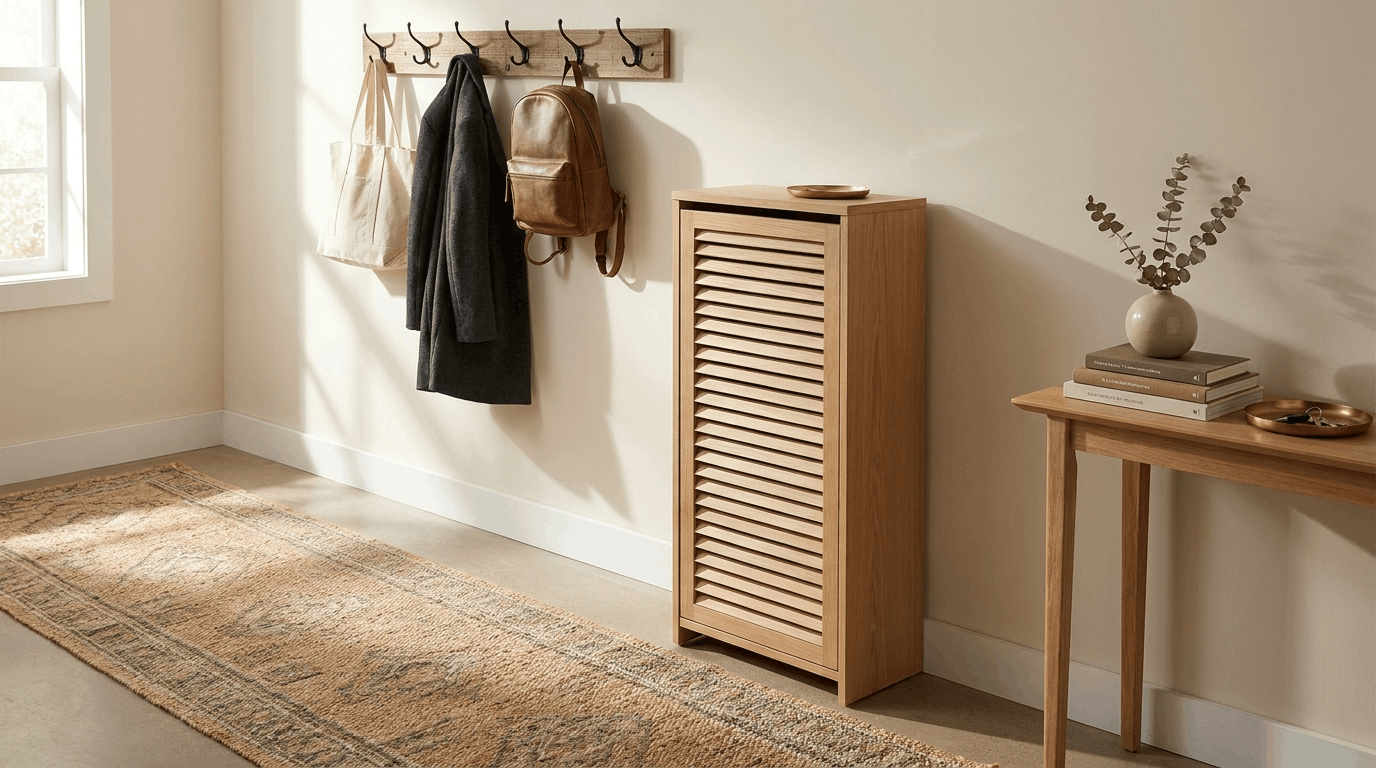
No fixing. No drilling. Moves with you when the lease ends.
A slim open shelving unit, 30cm deep or less, sits against one wall without blocking the flow. Style the lower shelves with baskets to hide shoes and bags. A small plant on top finishes it.
For narrow halls, a pegboard on a freestanding frame handles hooks, shelves, and small accessories in one unit. Fully customizable. Fully removable.
What NOT to Put in a Small Hallway
Avoiding the wrong choices saves as much space as the right ones do.
A briefing on the most common mistakes:
- A freestanding coat stand takes floor space and looks overloaded within days. Wall hooks do the same job without touching the floor.
- A large area rug: in a short, compact entry, an oversized rug shrinks the perceived space. Use a runner in a narrow hall or a small defined mat at the door.
- Dark paint without a plan: it can work, but only with strong artificial lighting and a large mirror. Without both, a dark, small hallway just feels smaller.
- An oversized console table: anything deeper than 16 inches eats into a standard hallway walkway. Measure before buying.
- Too many objects on the floor: floor-level clutter reduces perceived space more than wall clutter does. The floor should be as clear as possible.
Once the hallway is arranged, attention naturally moves to decorating stairs and landings, ensuring the space flows cohesively and feels balanced throughout.
Conclusion
A small hallway works when it does three things: it feels open, it handles the daily clutter, and it looks like someone thought about it.
Most of these 19 small hallway ideas cost under $100. Several cost nothing at all.
Mirrors, tone-on-tone paint, and a clear floor make the biggest difference. They’re also the cheapest changes.
Start with whatever frustrates you most right now. Is it the clutter? The darkness? The feeling of wasted space? Pick one idea from that section and try it before committing to anything bigger.
Which of these are you tackling first? Tell us in the comments.
Frequently Asked Questions
What Color Works Best in A Small Hallway?
Soft neutrals and warm whites perform best for brightness. Dark colors can work, but they need strong lighting and a large mirror. Mid-tones are the ones to avoid. They look flat without adding warmth or depth.
What Furniture Actually Fits in A Small Hallway?
A slim console at 10 to 12 inches deep, a bench with under-seat storage, and wall hooks. Choose pieces with legs rather than solid bases. The visible floor space underneath keeps the hallway feeling open.
How Do You Decorate a Hallway with No Windows?
Light paint, a large mirror, and layered lighting work together. A ceiling light plus a table lamp completely change the feel. A glazed internal door borrows light from an adjacent room without any structural work.
What Can You Put at the End of A Hallway Wall?
A mirror draws the eye and adds depth. Bold wallpaper creates a focal point. A console table with a lamp gives the space a styled finish. The end wall is the focal point of any hallway. Leaving it blank is a missed opportunity.