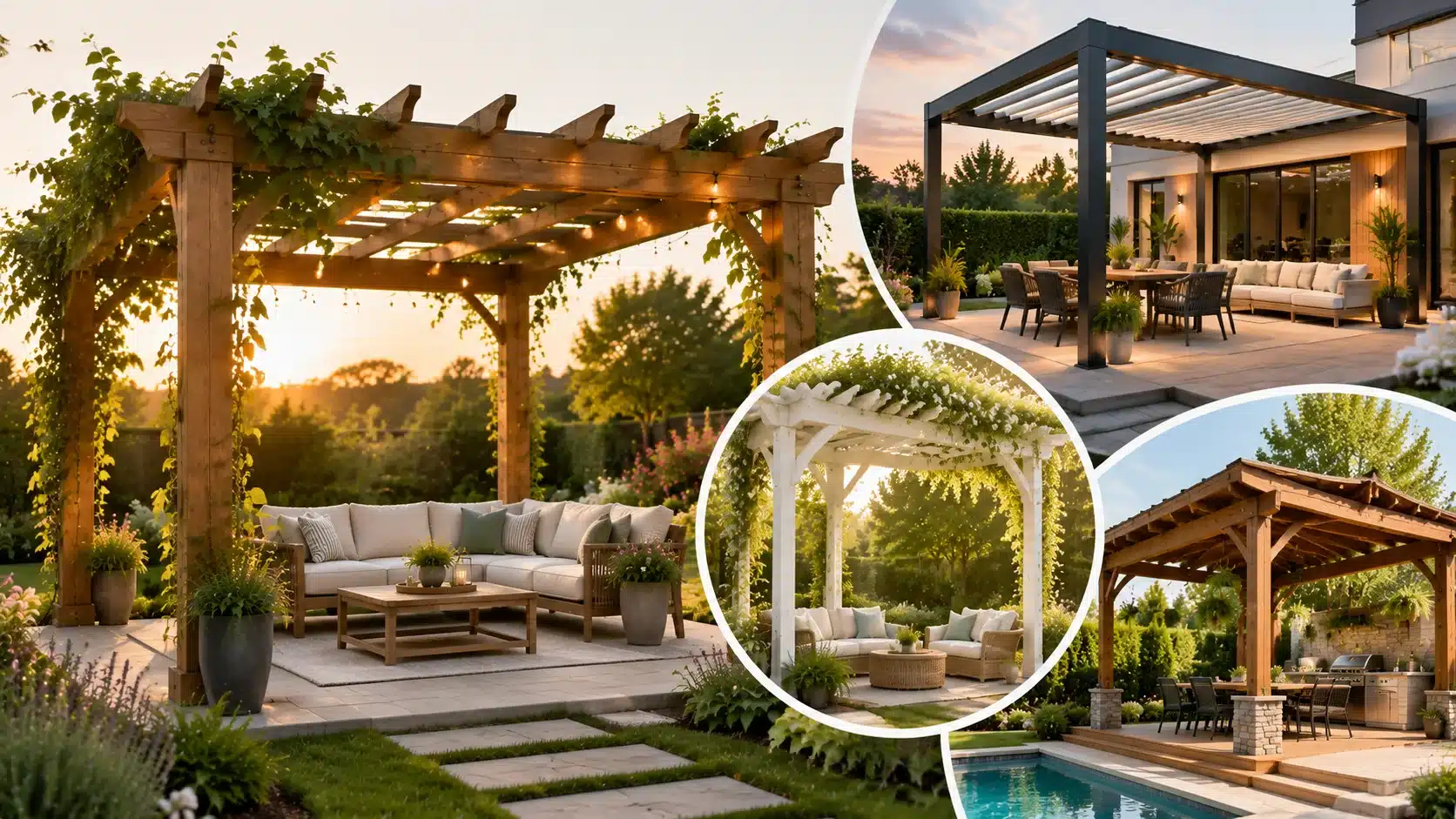

A pergola is an outdoor structure. It has vertical posts. These posts hold up an open-beam roof. It creates an outdoor living space. Sunlight and air still pass through the open roof.
More owners now add pergolas to their backyards. They add shade, shape, and style to any garden or patio.
Unlike a fully closed structure, a pergola keeps your yard feeling open. It marks out a space without shutting out the sky, the breeze, or the view of your garden.
This blog covers types, materials, costs, and design ideas, and what it takes to keep one in good shape for years to come.
What Is a Pergola?
A pergola is a simple garden structure. It uses posts, beams, and rafters to form an open frame that stands over a patio, deck, or walkway.
The roof does not fully close. It uses a lattice pattern instead, so light, air, and some rain still pass through.
Landscape designers use pergolas to mark out a space. One can define a dining area, a seating nook, or a garden path, all without closing the yard in.
The reason why this structure works so well because a pergola sits between a bare patio and a fully enclosed room.
It gives your yard shape and a sense of direction, while keeping the open feel people want outdoors.
What Is the Purpose of a Pergola?
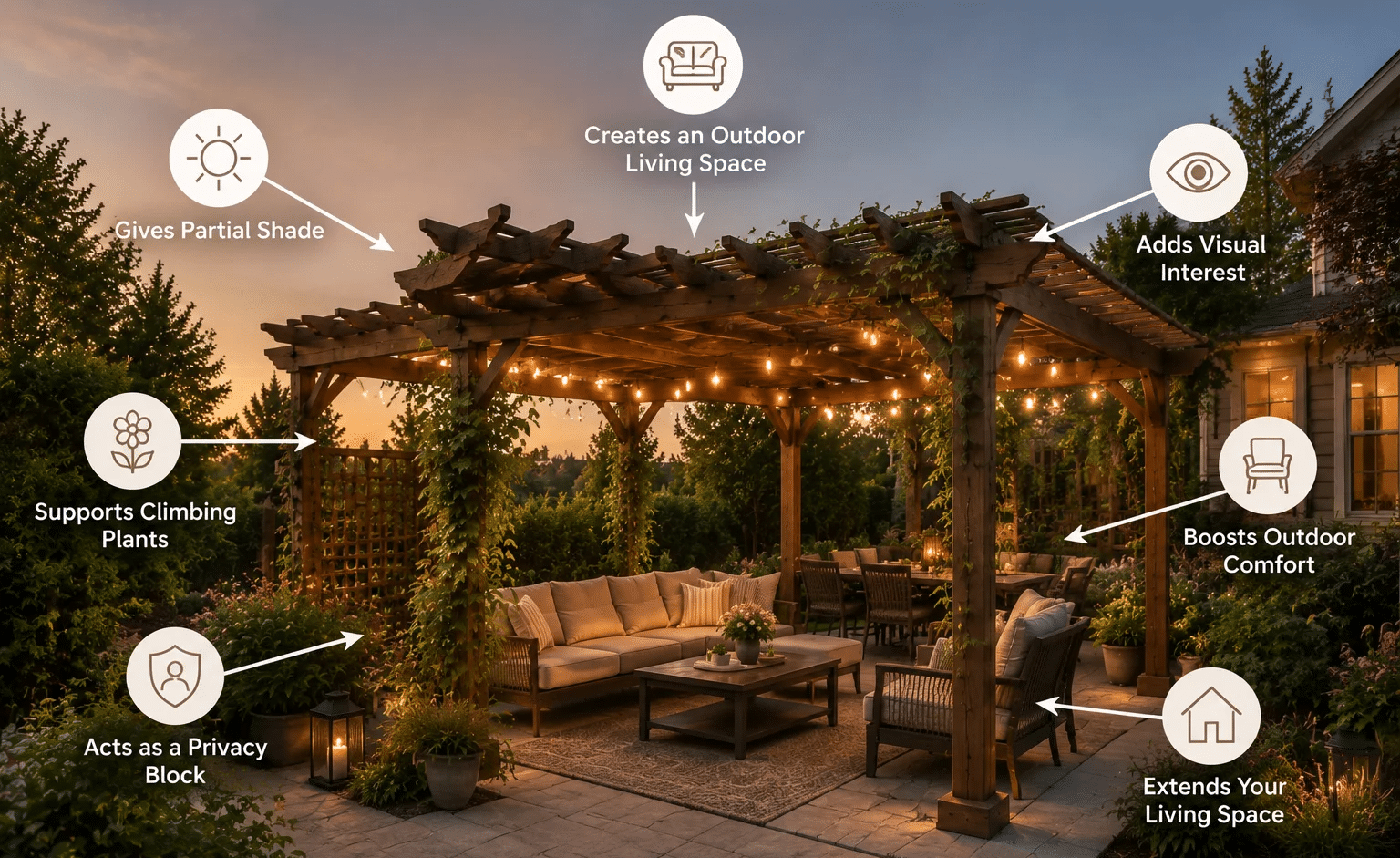
The purpose of a pergola is to define an outdoor space while keeping it open to light and air. It also serves real, daily uses in a backyard.
- Creates an Outdoor Living Space: It works well for dining tables, lounge chairs, or a small bar area.
- Gives Partial Shade: The open roof blocks some sun. Add a canopy, curtain, or climbing plant for more shade
- Supports Climbing Plants: Roses, jasmine, wisteria, and grapevines grow well on a pergola frame, along with fast-growing evergreen climbers if you want coverage year-round.
- Adds Visual Interest:A pergola gives a backyard a clear focal point.
- Boosts Outdoor Comfort: It turns a plain yard corner into a place people want to sit in.
- Acts as a Privacy Block. A pergola with lattice or plants blocks some view from neighbors or the street. Pair it with other garden privacy ideas for more coverage.
- Extends Your Living Space: It gives you an extra “room” for guests, kids, or pets without adding to your home.
Parts of a Pergola Explained
Understanding each part helps before you buy or build one. Every piece plays a specific role in keeping the structure sturdy and functional. Here’s a quick breakdown.
| Part | Purpose |
|---|---|
| Posts | Hold up the structure and carry its full weight |
| Beams | Rest on the posts and carry the roof frame across |
| Rafters | Cross the beams to form the overhead pattern and spacing |
| Lattice | Adds shade and gives climbing plants something to grow on |
| Footings | Anchor the pergola to the ground and keep it stable in the wind |
Different Types of Pergolas
Not all pergolas look or work the same. Pick a type based on your space and how you plan to use it.
1. Freestanding Pergola
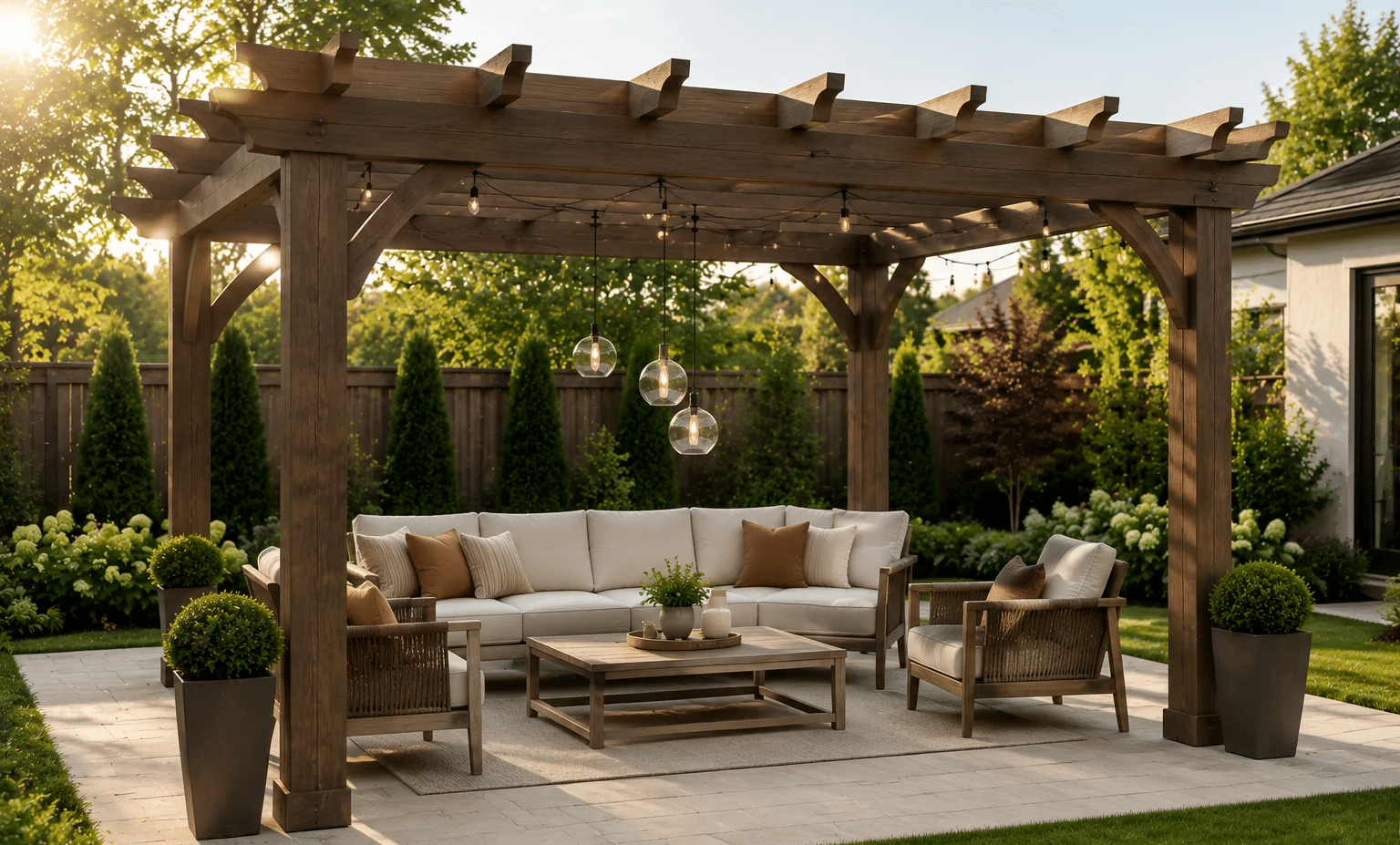
Stands on its own in the yard, with no connection to the house. Works well near a pool, garden, or open patio, and gives you full freedom to place it anywhere in the yard.
You can move or reposition it later if your landscaping changes, since it doesn’t rely on the house structure for support.
2. Attached Pergola
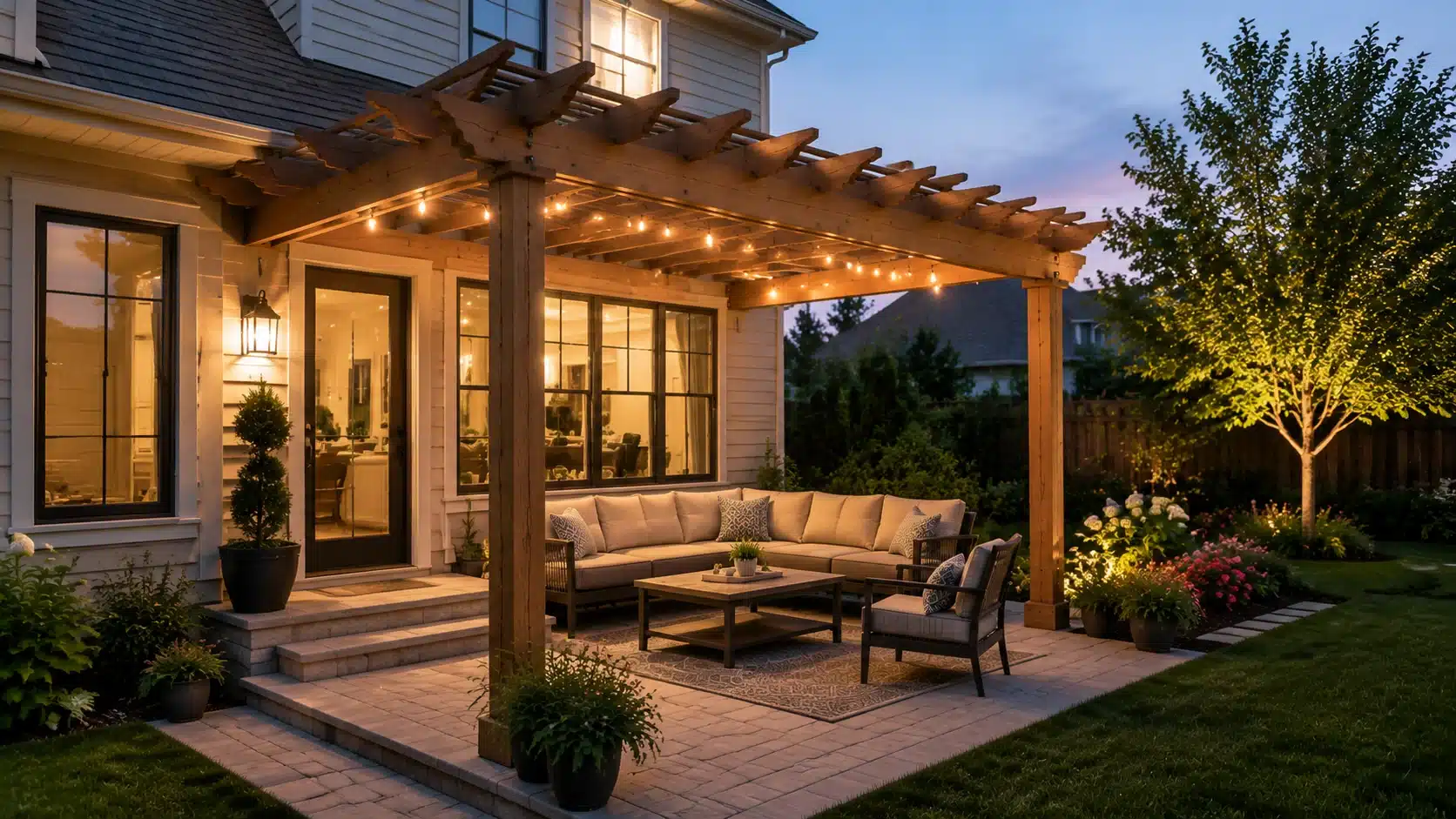
Connects directly to an exterior wall of the house, using that wall for one side of support instead of a fourth line of posts.
Works well over a patio, deck, or door leading straight out from the kitchen or living room.
It extends your indoor living space outward and often costs less to build, since the house carries part of the load. Check that your wall can bear the extra weight before attaching one.
3. Retractable Roof Pergola
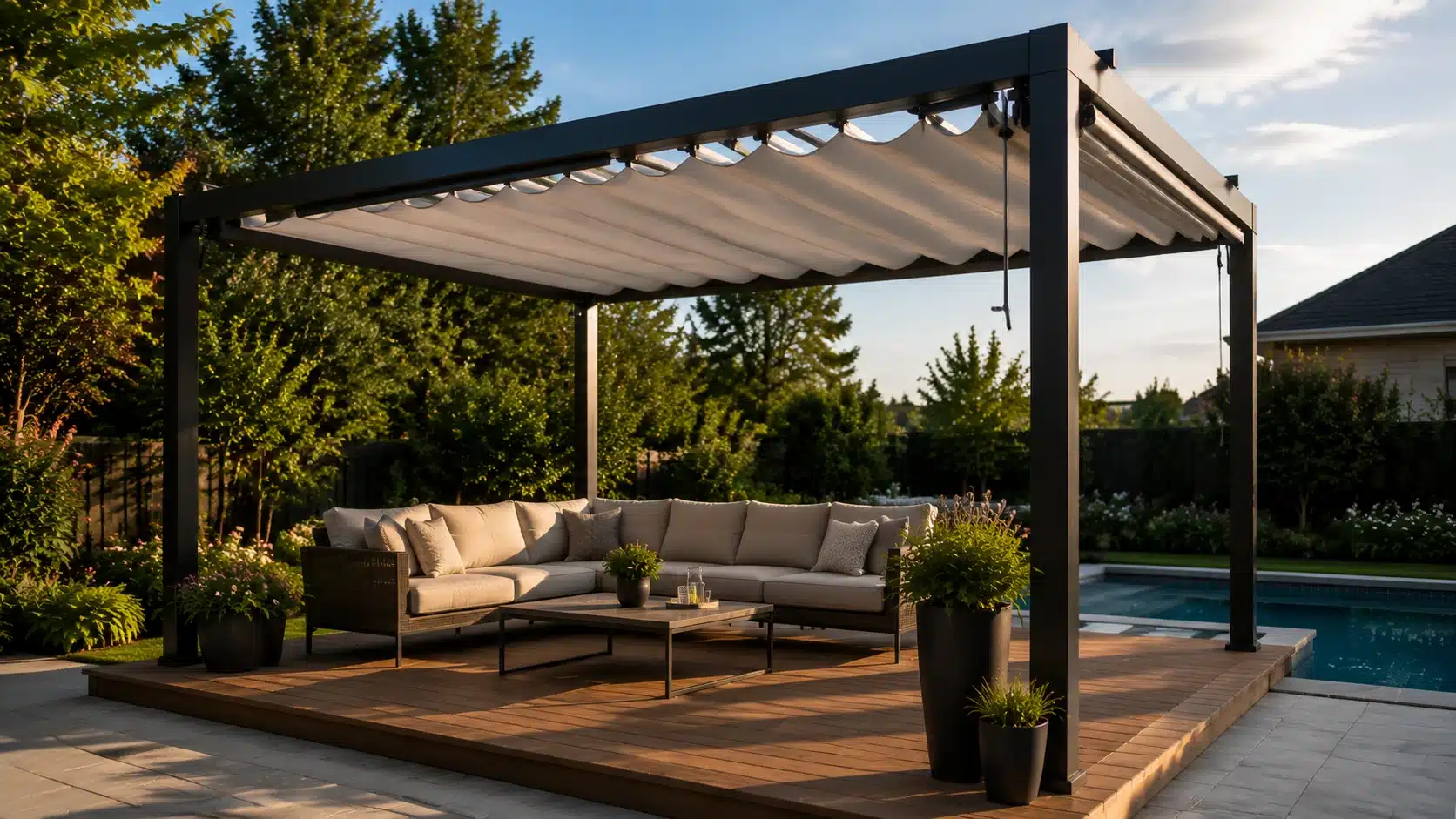
Has a roof you can open or close, usually by hand or with a motor. Gives you control over shade and weather, so you can adjust it as conditions change through the day.
This flexibility makes it a great choice for unpredictable weather, where sunshine and rain can change quickly. It helps to stay comfortable and prepared no matter what the sky throws our way.
4. Modern Pergola
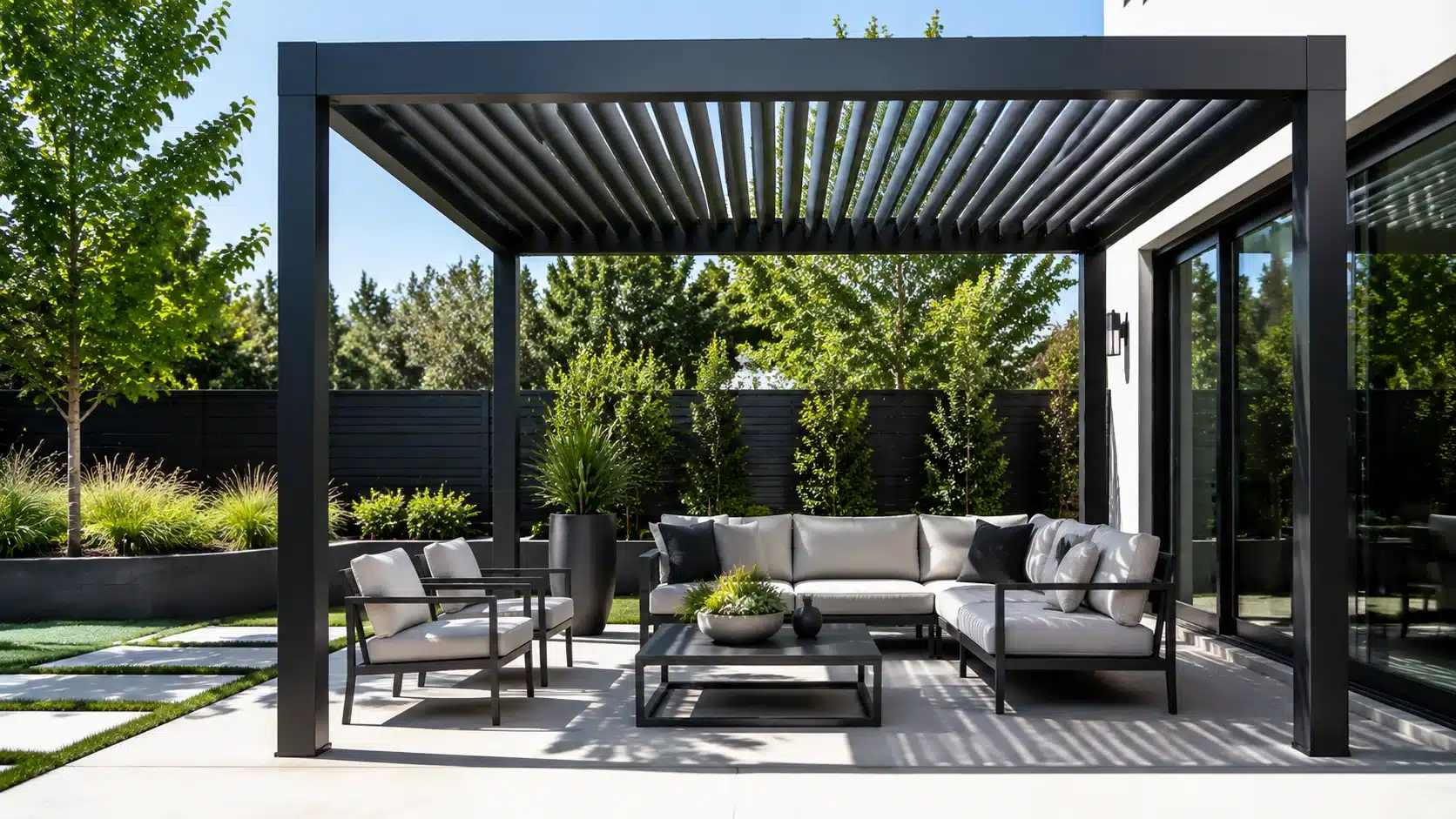
Uses clean lines and aluminum frames, often paired with minimalist furniture. Fits newer home styles and works well for homeowners who want a sleek, low-maintenance look.
It also tends to hold up well against rust and fading, which makes it a popular pick for coastal or humid regions.
5. Traditional Wooden Pergola
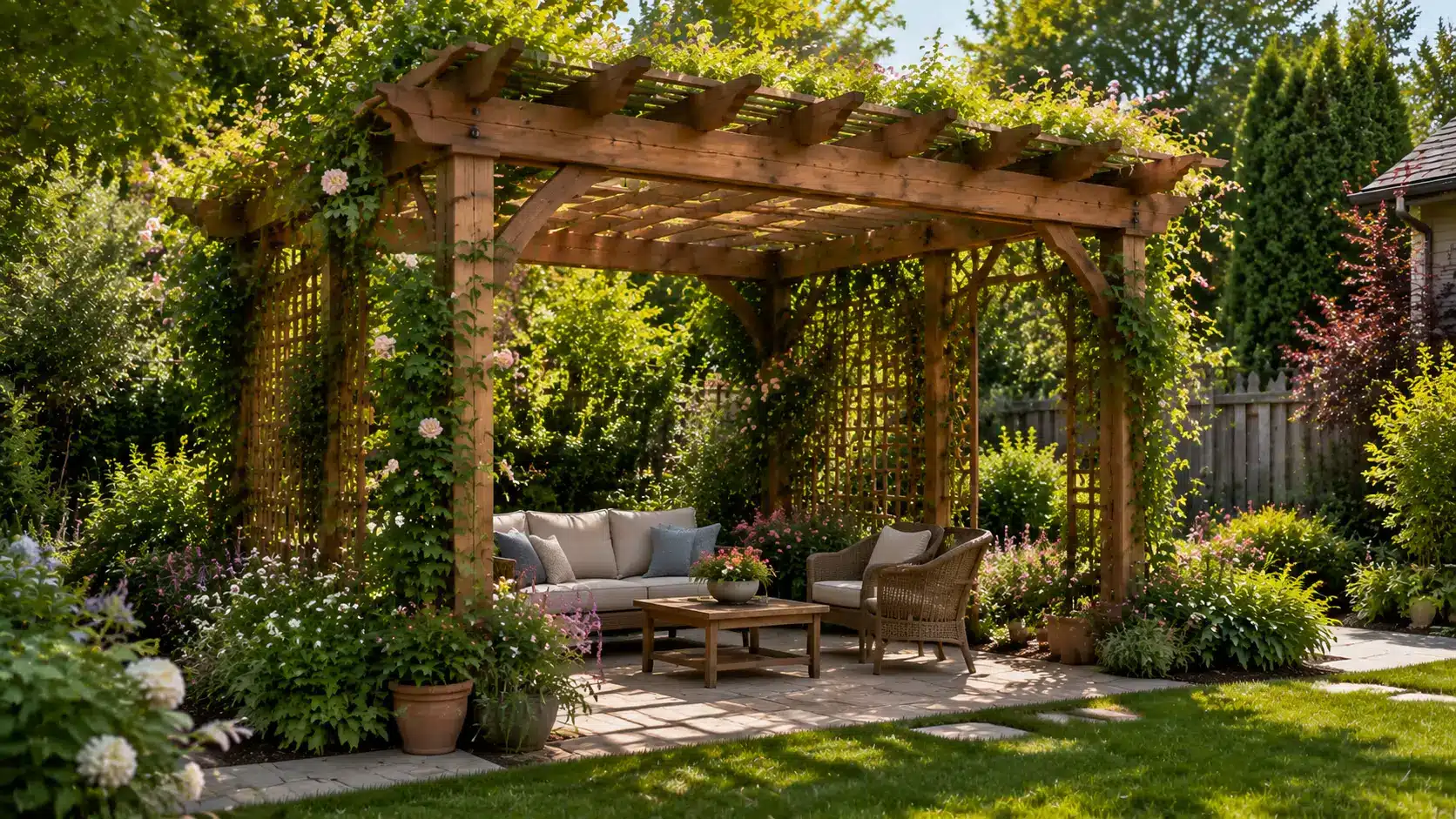
Has a classic, natural look that ages well with the right care. Common in cottage-style gardens and pairs nicely with climbing plants like roses or jasmine.
It offers the most flexibility in custom stains and finishes, allowing homeowners to match the wood tone to their existing deck or fence.
6. Louvered Pergola
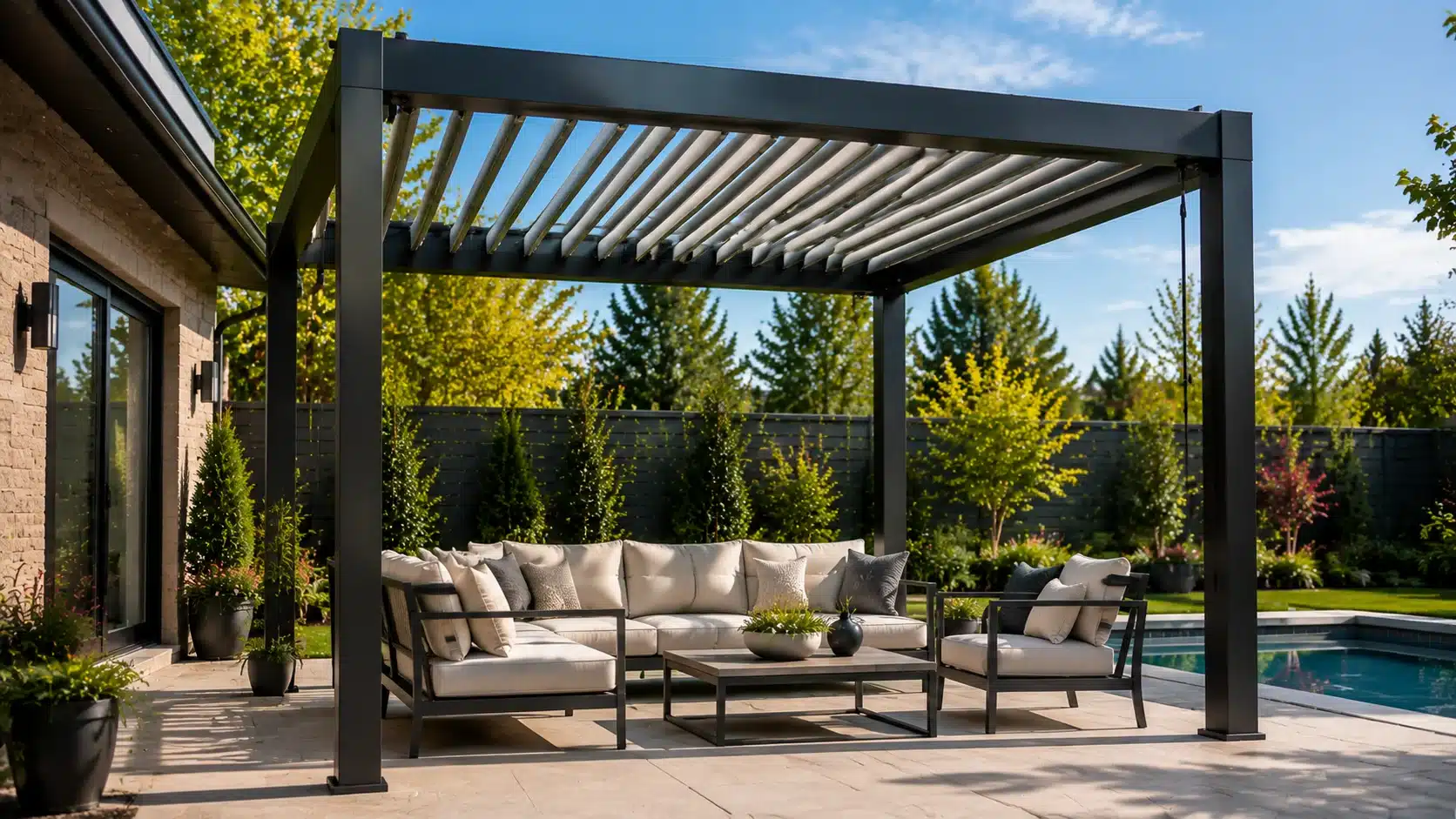
Has adjustable slats you can rotate open or closed. Gives more control over sun and rain than a fixed roof, making it a good pick for changeable climates.
Many models can be adjusted with a remote or wall switch, so you rarely need to leave your seat to change the setting.
7. Gabled Pergola
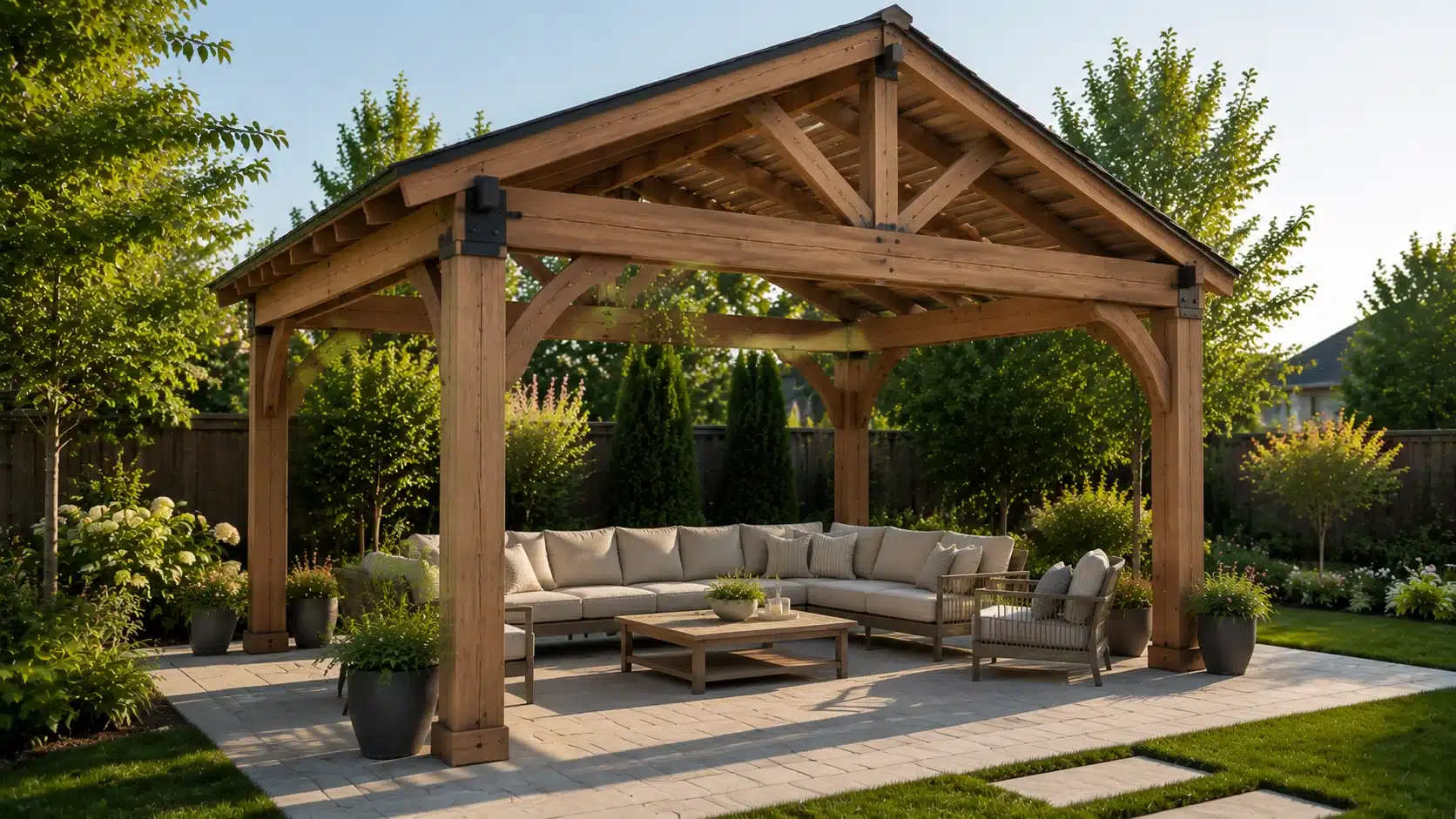
Has a peaked, triangular roofline instead of a flat one. Adds a taller, more dramatic look and sheds rain better than flat designs.
It works especially well as a focal point in larger yards, where its added height helps it stand out against surrounding fences, trees, or garden beds.
8. Vinyl Pergola
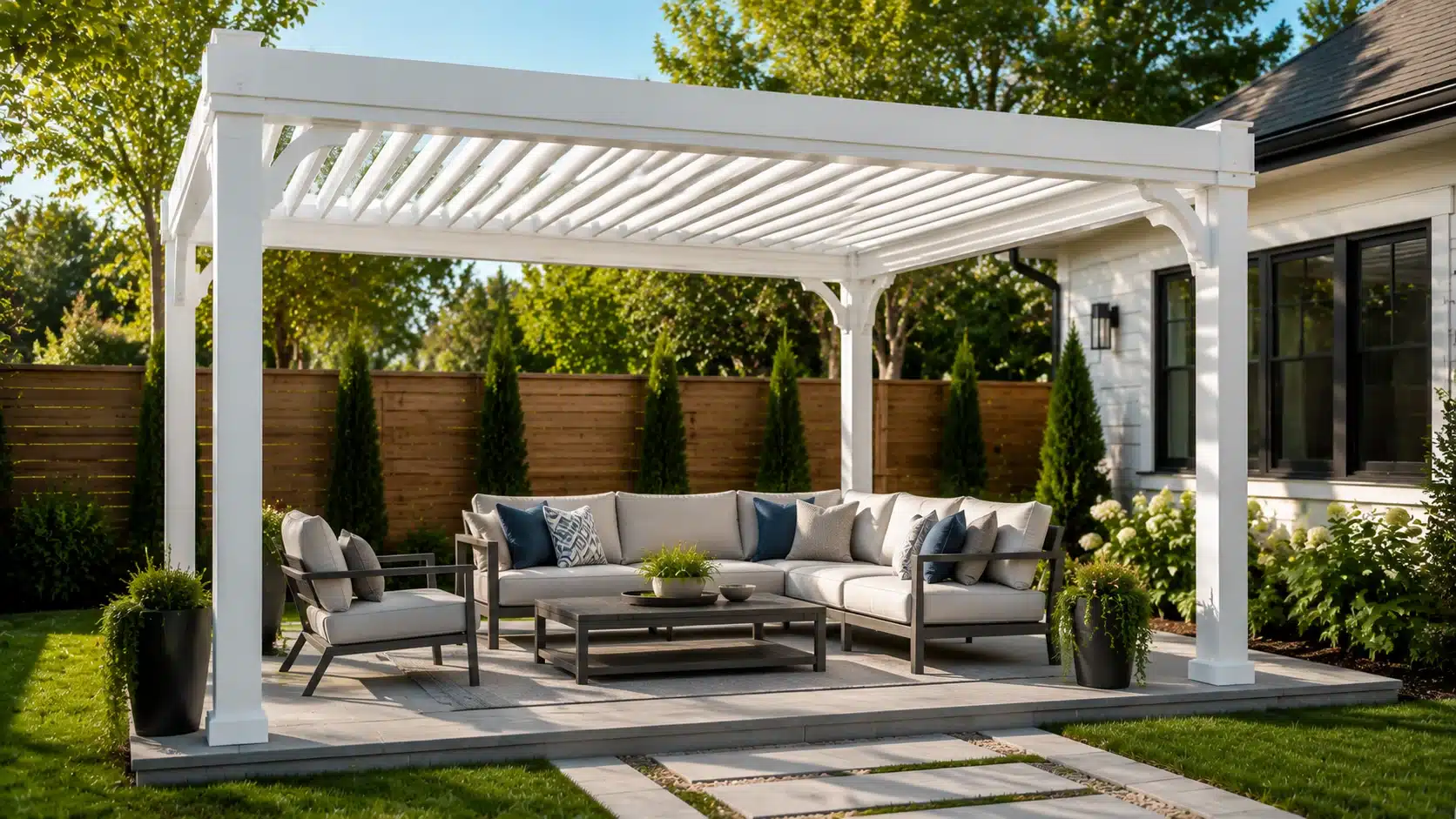
Made from PVC or similar plastic. Resists rot and insects. Needs little upkeep over time, making it a strong choice for busy homeowners.
It also holds its color well, even after years in direct sun, so it rarely needs repainting or refinishing the way wood eventually does.
Pergola Materials: Which One Is Best?
The material you pick affects cost, upkeep, and how long the pergola lasts.
| Material | Pros | Cons | Best For |
|---|---|---|---|
| Wood | Natural look, can be customized | Needs regular care | Traditional gardens |
| Aluminum | Low upkeep, lasts long | Costs more upfront | Modern homes |
| Vinyl | Easy to clean, budget-friendly | Fewer style choices | Budget projects |
| Fiberglass | Strong, long-lasting | Higher price | High-end builds |
Climate Note: Choose a pergola material that matches your local climate to improve durability and reduce long-term maintenance.
Pergola vs. Other Outdoor Structures
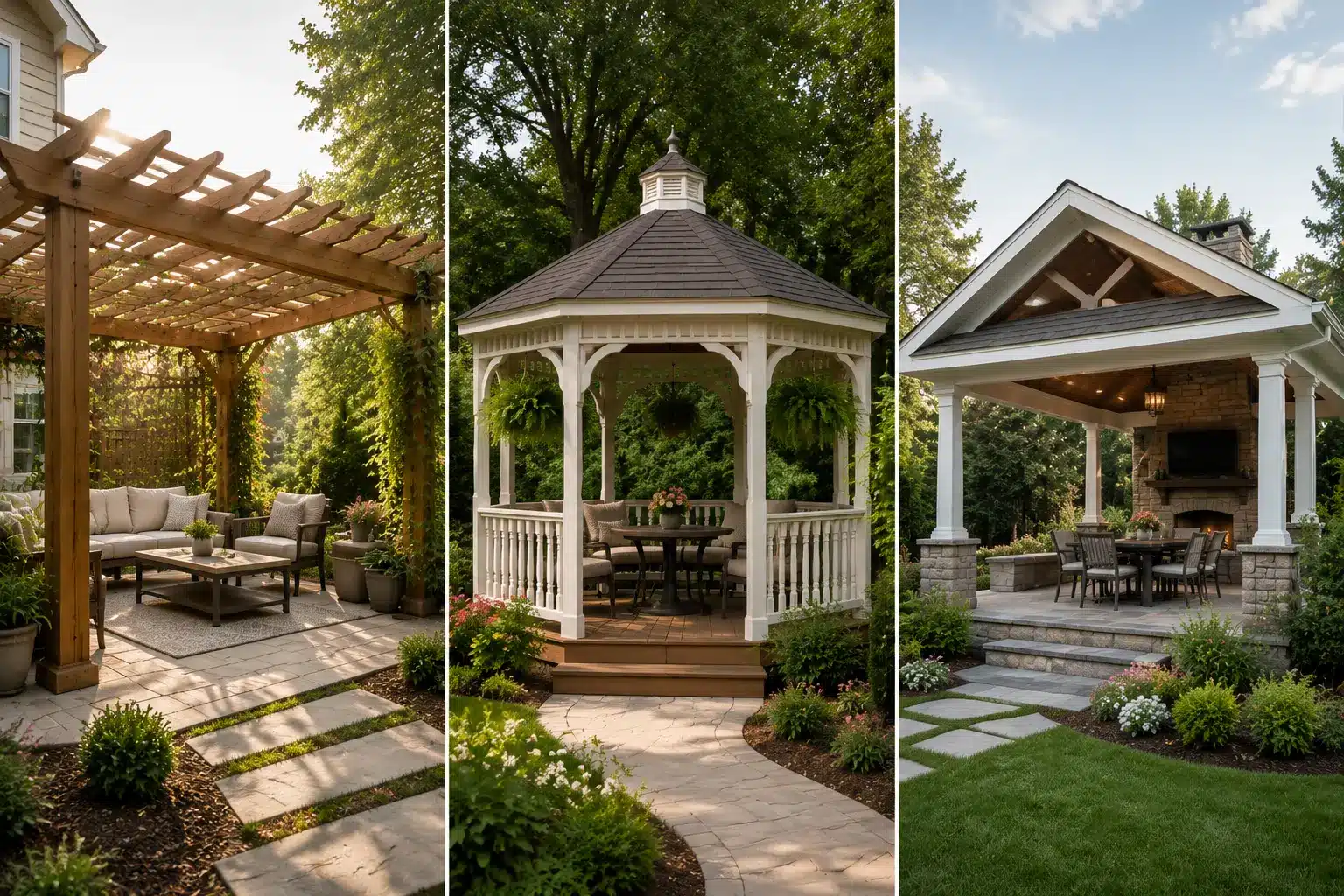
These outdoor structures may look similar, but they serve different purposes. This comparison makes it easy to choose the right one for your space.
| Structure | Roof | Size / Design | Best For |
|---|---|---|---|
| Pergola | Open, slatted lattice | Large, open-sided | Outdoor dining, lounging, and defining a patio or garden space |
| Gazebo | Solid, fully covered | Freestanding with open sides, often railings | Full protection from sun and rain |
| Pavilion | Solid roof | Large, open-sided structure | Outdoor kitchens, events, and large gatherings |
| Arbor | Arched or peaked lattice | Small, 2–4 posts | Garden entrances, walkways, and climbing plants |
| Pagoda | Curved, multi-tiered roof | Tall, decorative structure | Architectural focal point inspired by Asian design |
| Pergoda | Solid or partially slatted timber roof | Similar size to a pergola | More shade and weather protection than a pergola while keeping an open feel |
Do Pergolas Provide Shade?
Yes, but not full shade. A standard pergola provides filtered shade, with sunlight passing through the open roof. The amount of coverage depends on its design and any shade features you add.
- Roof design and orientation: Beam spacing, pergola direction, height, and the time of day all affect how much shade it creates.
- Add a retractable canopy: A fabric canopy provides adjustable shade and can be opened or closed as needed.
- Install curtains or shade screens: Outdoor curtains, shade cloth, or bamboo roll-up screens increase sun protection and privacy.
- Grow climbing plants: Vines such as wisteria or grapevines create natural shade while adding greenery.
- Choose a louvered roof: Adjustable louvers let you control sunlight and provide more consistent shade throughout the day.
How Much Does a Pergola Cost?
Pergolas typically cost $500 to $15,000+, depending on the material, size, roof style, and whether you install it yourself or hire a professional.
| Pergola Option | Estimated Cost |
|---|---|
| DIY Pergola Kit | $500–$3,000+ |
| Wood Pergola | $1,500–$5,000 |
| Vinyl Pergola | $2,000–$6,000 |
| Aluminum Pergola | $3,000–$8,000 |
| Fiberglass Pergola | $4,000–$9,000 |
| Professional Installation | $3,000–$10,000+ |
| Retractable or Louvered Pergola | $6,000–$15,000+ |
What Affects the Price
Several factors influence the total cost of a pergola, from the materials you choose to the complexity of the installation.
Understanding these cost drivers can help you plan your budget and avoid unexpected expenses.
- Size of the structure
- Material used
- Design complexity
- Foundation work needed
- Labor rates
- Extra features, like lighting or a motorized roof
A basic wood pergola costs less than a custom aluminum one with a motorized roof.
How to Install a Pergola: Step-by-Step
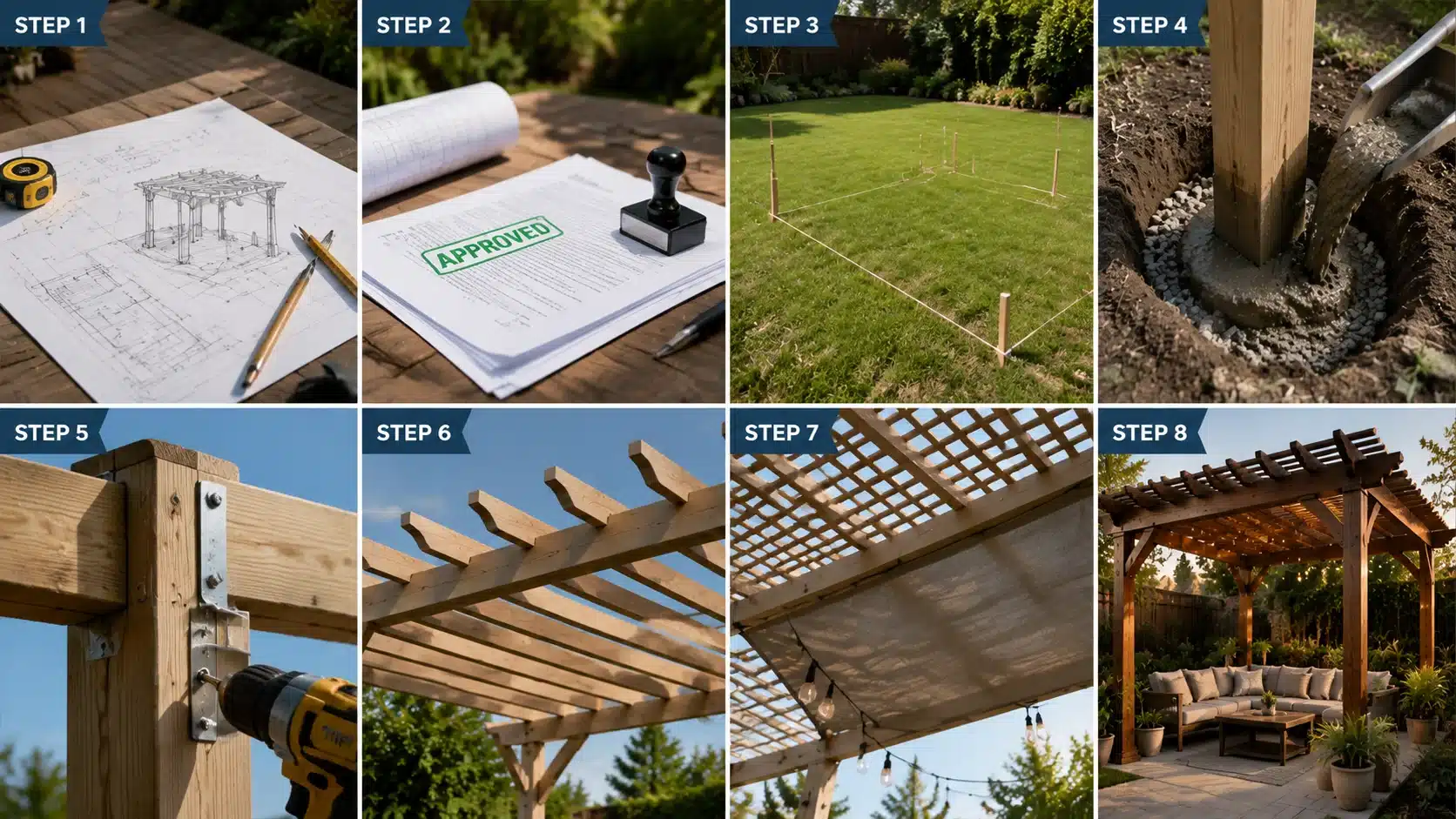
Building one yourself takes planning, but the steps stay fairly simple.
Step 1: Plan the Layout
Measure your space carefully before you buy any materials.
Decide whether a freestanding or attached pergola suits your yard best, and check how much clearance you have from fences, trees, and existing structures.
Think about how the sun moves across your yard, since this affects where shade will fall once the pergola is built. A clear plan now saves time and mistakes later.
Step 2: Check Local Rules
Rules for garden structures vary by area, so larger or attached pergolas may need a permit before you start building.
Call your local council before you start digging, since rules vary widely between regions and even between neighborhoods.
Skipping this step can lead to fines or a forced teardown later, so it’s worth the short phone call upfront to confirm what applies to your specific property and size of build.
Step 3: Mark Post Locations
Use stakes and string to mark exactly where each post will go before digging.
Double-check spacing, angles, and measurements so the finished frame is square and level.
Small errors at this stage tend to grow larger as you build upward, so take your time here. A carpenter’s square and tape measure will help you confirm everything lines up correctly before you commit to digging.
Step 4: Dig and Set the Footings
Dig holes deep enough for your climate, going below the frost line in colder regions to prevent shifting.
Set each post in concrete and let it cure fully, usually for two to three days, before adding any weight on top.
Rushing this step risks a wobbly or uneven structure later. Solid, well-cured footings are the foundation for a pergola that stays sturdy for years.
Step 5: Attach the Beams
Once the posts are solid and fully cured, bolt or screw the horizontal beams across the top of each post.
Use a level at every connection point to keep the frame even from end to end.
Uneven beams will throw off everything built above them, including the rafters and any roof extras, so take extra care and double-check each measurement before moving forward with the build.
Step 6: Add the Rafters
Space the rafters evenly across the beams to create a balanced, symmetrical look overhead.
Closer spacing gives you more shade underneath, while wider spacing lets in more light and creates a more open, airy feel.
Consider your climate and how much sun exposure you want before settling on final spacing, since this choice shapes the everyday comfort of the finished space.
Step 7: Add the Lattice or Roof Extras
Add lattice strips, a shade cloth, or a retractable cover depending on the design you chose earlier in the planning stage.
This is also the ideal time to run any wiring for outdoor lighting or fans, since access is easiest before the structure is fully finished.
Plan these extras carefully now to avoid tearing into a completed pergola later for upgrades.
Step 8: Finish and Seal
Stain or seal wood pergolas to protect against moisture, sun damage, and eventual rot.
Check all bolts, screws, and joints for tightness, since normal weather exposure can loosen hardware over the first few months.
Plan to recheck these connections once a year in the future. A finished, properly sealed pergola will hold up far longer against sun, rain, and everyday wear.
Following these steps in order helps you avoid rework later. A little extra care at the footing and beam stages pays off in a sturdier pergola.
Pergola Design Ideas for Different Outdoor Spaces
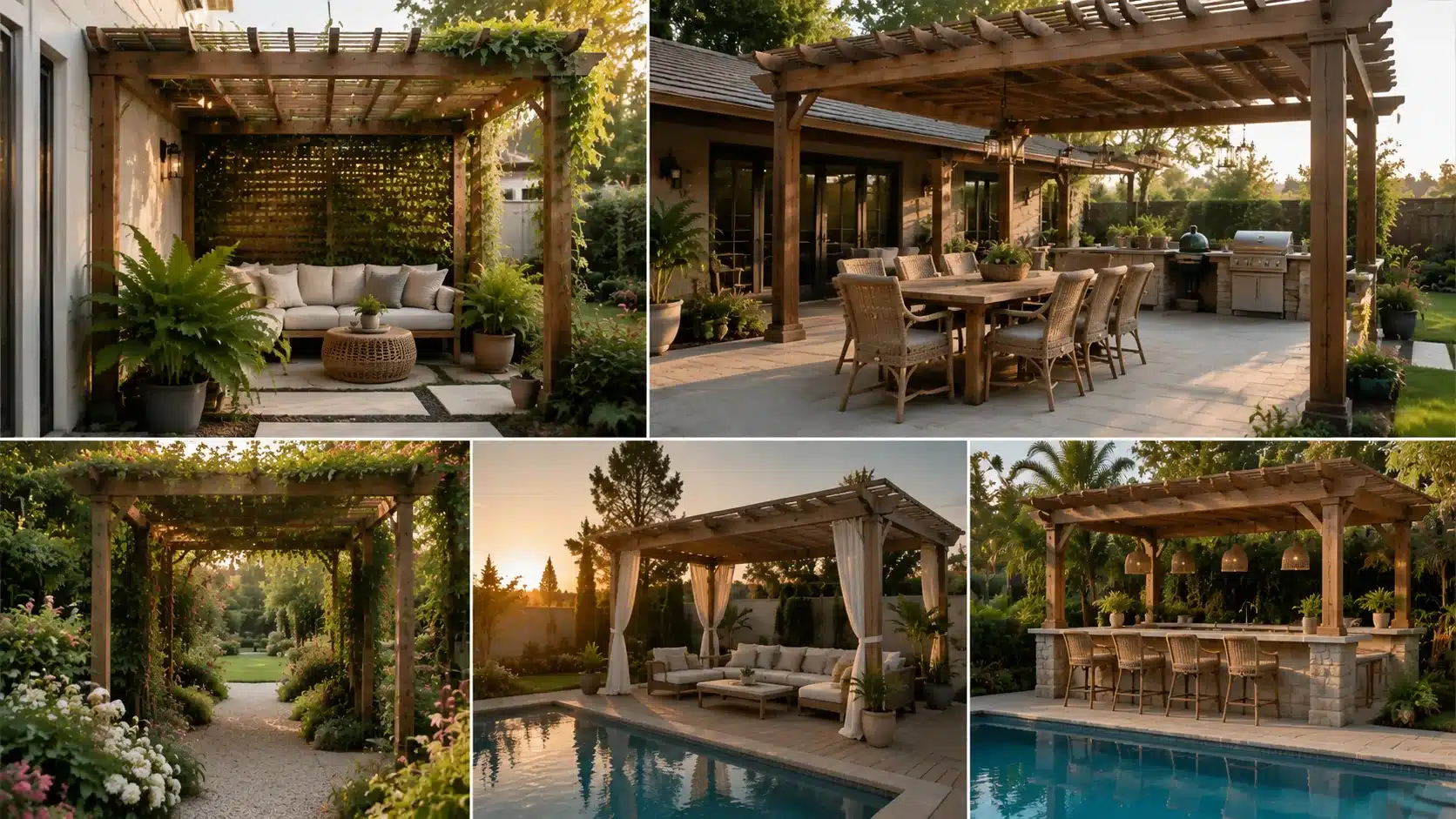
Your space and how you use it should guide the design you pick. Here are ideas for different types of yards.
- Small Backyard Ideas: Try a compact seating nook, a wall-mounted pergola, or a corner build. These options save floor space while still giving you a defined shaded spot.
- Patio Ideas: Add a dining set, an outdoor kitchen cover, or a lounge zone. A pergola over a patio ties the space together and makes it feel like an extra room.
- Garden Ideas: Build a flower-covered walkway or try one of these garden path designs. This works well if you want the pergola to blend into the greenery rather than stand out.
- Poolside Ideas: Set up a shaded lounge area or an outdoor bar. A pergola near the pool gives swimmers a break from direct sun without leaving the area.
- No matter your yard size, there’s a pergola style that fits. Start with how you plan to use the space, then pick the layout that matches.
Are Pergolas Worth It?
Yes, a pergola is worth it if you want an affordable way to define your yard without blocking the sky. If you need full weather protection, a gazebo or pavilion fits better.
| When a Pergola Makes Sense | When to Consider Alternatives |
|---|---|
| You want a defined outdoor space | You need full weather cover |
| You want extra visual appeal | You need complete shade |
| You’re fine with light, partial shade | You want a space usable all year, in any weather |
| You want support for climbing plants | You need a fully enclosed structure |
Alternatives include a covered patio, a gazebo, or a pavilion.
If you value an open, natural feel over full protection, a pergola is likely the right fit for your yard.
How to Maintain a Pergola
The maintenance your pergola needs depends on its material, but regular care helps extend its lifespan and keeps it looking its best.
- Wood: Seal or stain every 1–2 years, check for rot around the posts, tighten hardware, sand rough spots, and treat for insects if needed.
- Aluminum: Wash occasionally with mild soap and water, inspect for loose or rusty hardware, touch up scratches, and keep drainage channels clear.
- Vinyl: Clean with mild soap and water, inspect for cracks after extreme weather, avoid harsh cleaners, and remove mold or mildew promptly.
Conclusion
A pergola gives your backyard a defined, attractive space to enjoy. It offers partial shade and adds shape to your garden or patio.
Your choice of material, style, and spot will shape how well it works for you.
If you want an open, natural feel with a bit of shade and structure, a pergola is a solid pick for your yard.
Have a pergola project in mind? Share your ideas in the comments below.
Frequently Asked Questions
What’s The Difference Between A Gazebo And A Pergola?
A gazebo has a solid, fully enclosed roof that completely blocks the sun and rain. A pergola has an open roof that provides light and filtered shade.
What Is A Pergola With A Roof Called?
A pergola with a fully solid roof is usually called a pavilion or covered patio. One with adjustable, rotating slats is known as a louvered pergola.
Do I Need Permission To Put A Pergola In My Garden?
Most garden pergolas don’t need planning permission under permitted development rules, but it’s still wise to check carefully with your local council beforehand.
Can My Neighbor Build A Pergola Next To My Fence?
Yes, your neighbor can usually build one right beside your fence if it stays entirely on their property and complies with local planning rules.
How Long Does A Pergola Last?
A well-built pergola can typically last 15 to 30 years, depending on the material used and how consistently you keep up with regular maintenance.
What Is The Best Wood For A Pergola?
Western red cedar resists rot and insects naturally and lasts 20 to 30 years. Pressure-treated pine costs less but needs more upkeep and won’t last as long.