
Most people want a plant that looks good and stays alive without much effort. That is a fair ask.
But the benefits of the spider plant go well beyond just filling an empty corner. This plant cleans the air you breathe every day. It adds moisture to dry rooms in winter.
It stays completely safe around kids and pets. And it grows new plants on its own, saving you money without trying.
The best part? It does all of this while asking for very little in return.
In this guide, you will learn what the spider plant does for your home and health, where to place it, and how to care for it the right way.
What Is a Spider Plant?
The spider plant, known scientifically as Chlorophytum comosum, is a leafy indoor plant that originated in the tropical and subtropical regions of Africa.
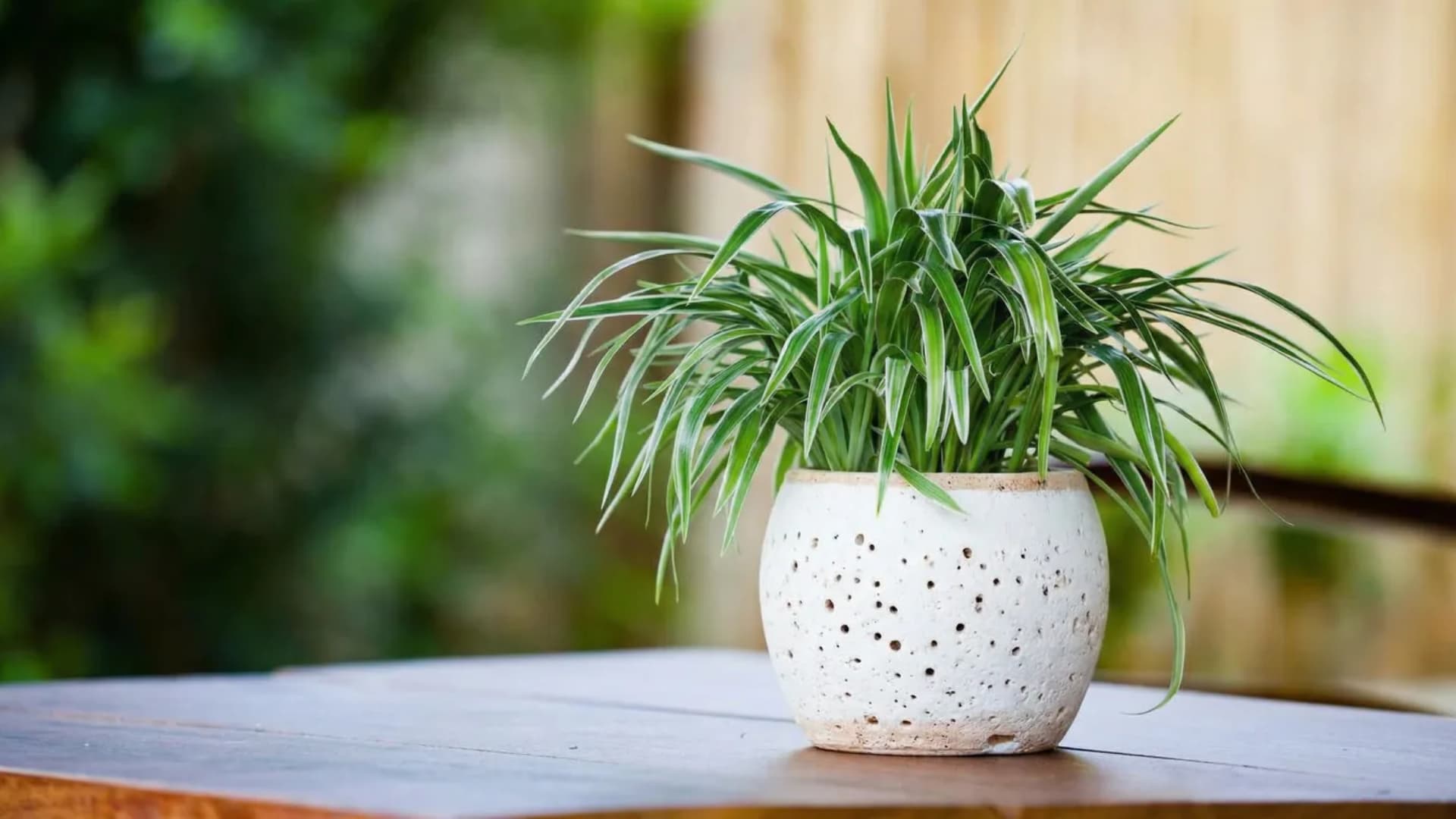
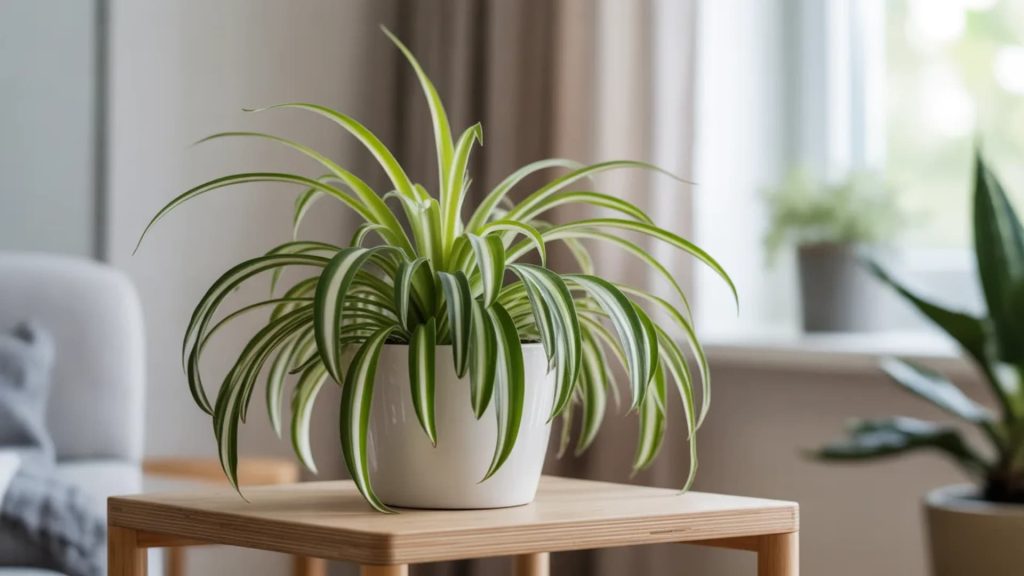
It gets its name from the small baby plants, called spiderettes, that hang down from long stems like spiders on a web. The leaves are long, arching, and come in solid green or striped green-and-white varieties.
What makes it stand out is how well it adapts. It grows in low light. It survives irregular watering. It fits in a hanging basket, on a shelf, or on a windowsill.
Quick Info Box: Spider Plant at a Glance
|
Popular Varieties of Spider Plants
While the classic green-and-white look is iconic, there are several distinct cultivars that vary in color, size, and even leaf shape.
1. The Variegated Classics
-
Vittatum: This is the most common variety. It features green leaves with a broad white stripe running down the center.
-
Variegatum: Often called the “Reverse” Spider Plant, this variety has white edges with a solid green stripedown the center of the leaf.
2. The Solids
-
Green Bonnie: A pure, deep green variety. It’s perfect for those who prefer a more minimalist, lush forest look without the white highlights.
-
Shamrock: A compact, all-green variety that produces fewer spiderettes, making it ideal for smaller tabletops.
3. The “Curly” Spider Plant
-
Bonnie (Curly): This is a fan favorite. It has the same variegation as the Vittatum, but the leaves curl and swirlin circles rather than growing straight. It stays more compact and looks great in small hanging pots.
The real question most people have is simple. What does it actually do?
Top Benefits of Spider Plant for Your Home and Health
The spider plant is not just easy to own. It actively works to make your home a better place. Here are the top benefits that make it worth keeping.
1. Cleans Indoor Air Naturally
Spider plants absorb harmful chemicals from the air inside your home. These include formaldehyde, xylene, benzene, and carbon monoxide.
These chemicals come from everyday items like furniture, paint, and cleaning products. They work best as a natural addition alongside good ventilation in your home.
2. Adds Moisture to Dry Rooms
Spider plants release moisture into the air through a process called evapotranspiration. This naturally increases the humidity level in dry indoor spaces.
A study published in the HortTechnology shows that three large spider plants in a 10-inch pot can raise the humidity in a single room by a noticeable amount.
This makes them especially useful in winter or in air-conditioned rooms, where dry air can cause skin irritation and breathing discomfort.
3. Safe for Kids and Pets
The American Society for the Prevention of Cruelty to Animals confirms that spider plants are non-toxic to cats and dogs.
They are also safe around children. Accidental contact or mild ingestion does not cause serious harm.
This makes the spider plant one of the few houseplants you can keep at home without worrying about the safety of those around you.
4. Helps You Feel Calm and Less Stressed
Research published in the Journal of Physiological Anthropology shows that being around indoor plants can lower blood pressure and reduce stress levels.
Spider plants, with their soft arching leaves, create a calm atmosphere in any room. People who work or live in spaces with plants report lower fatigue and better focus.
Adding a spider plant to your bedroom or workspace is a simple way to support your mental well-being every day.
5. Brightens Up Any Room
Spider plants bring natural color and life to indoor spaces.
Their long, green-and-white striped leaves add visual interest without taking up much space. When placed in a hanging basket, the trailing spiderettes create a striking display.
They work well in living rooms, bedrooms, kitchens, and bathrooms. No bold flowers or complex arrangements needed. The plant does the work on its own.
6. Gives You Free Plants Forever
Once a spider plant matures, it grows long stems with small plantlets at the ends.
These spiderettes can be cut and placed in soil or water to grow into full plants. You can fill your home with new plants or give them away to friends and family.
One plant can produce dozens of new ones over its lifetime, all without spending an extra penny.
7. Saves You Money Without Trying
Spider plants cost very little to buy and even less to maintain.
They need no special soil, no expensive fertilizer, and no fancy equipment. A basic pot, indirect light, and weekly watering are all they need.
Given its ability to self-propagate, the spider plant is one of the most cost-effective green additions you can make to your home.
Now that you know what this plant can do, let us look at exactly where to place it in your home to get the most out of it.
Where to Place a Spider Plant in Your Home?
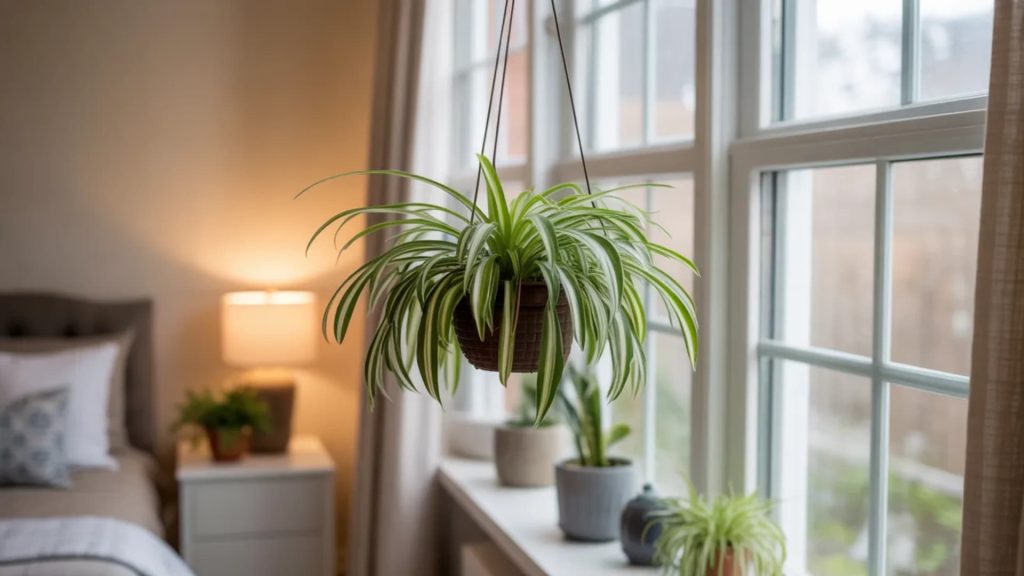
Placement matters more than most people think. The right spot helps your spider plant grow well and gives you the most benefit.
- Living Room: Place it near a window with bright, indirect light. A hanging basket works well here and lets the spiderettes trail down freely.
- Bedroom: Place one on a nightstand or shelf. It helps filter some airborne chemicals and adds a touch of green to your sleep space.”
- Kitchen: Set it on a countertop or open shelf. It helps filter cooking fumes and adds a natural touch to the space.
- Bathroom: Hang it near a window. The natural humidity from showers keeps the leaves healthy without extra watering.
- Home Office: Place one on your desk or a nearby shelf. Research published in the Journal of Physiological Anthropology shows that plants in workspaces help reduce fatigue and improve focus.
One rule applies to all rooms. Keep your spider plant away from direct sunlight. It can scorch the leaves and slow down growth.
Good placement is just the start. A few basic care habits will keep it growing strong for years.
How to Care for a Spider Plant?
The spider plant is one of the easiest plants to keep alive. A few simple habits are all it takes to help it grow well.
| Care Factor | What To Do |
|---|---|
| Light | Keep it in bright, indirect light. A spot near a window works well. Direct sunlight can burn the leaves. |
| Watering | Water once a week or when the top inch of soil feels dry. Do not let the roots sit in standing water. |
| Soil | Use well-draining potting soil. This stops water from collecting at the bottom and causing root rot. |
| Humidity | The plant enjoys a little moisture in the air. A bathroom or kitchen location works naturally for this. |
| Fertilizer | Feed it with a balanced liquid fertilizer every two to three weeks during the growing season. Skip this in winter. |
| Repotting | Repot every two years or when roots start pushing out of the drainage holes. |
One thing to keep in mind. Spider plants are sensitive to fluoride in tap water. Using rainwater or distilled water helps prevent brown leaf tips.
Even with the right care, things can go wrong. Here is what to watch for.
Common Spider Plant Problems and Easy Fixes
Even the toughest plants run into trouble sometimes. Here is what to watch for and how to fix it fast.
- Yellow Leaves: This is almost always a sign of too much water sitting in the soil. Pull the plant out, trim any soft roots, and let the soil dry out fully before watering again.
- No Spiderettes Growing: If your plant is not producing baby plants, it likely needs longer periods of darkness at night. Spider plants produce spiderettes in response to shorter days and long uninterrupted nights of at least three weeks.
- Drooping Leaves: Drooping usually means the roots have outgrown the pot. Check if roots are pushing through the drainage holes and move the plant to a slightly larger pot if they are.
- Pests: Scale insects and mealybugs are the most common pests on spider plants. Wipe the leaves down with a damp cloth and treat with a mild insecticidal soap if the problem persists.
Fixing problems is easy when you have the right information. The same goes for clearing up what is not true.
Spider Plant Myths vs. Facts
There is a lot of misinformation about what spider plants can and cannot do. Here is the truth.
| Myth | Fact |
|---|---|
| Spider plants can fully purify the air in your home. | They do filter certain toxins, but you would need dozens of plants per room to match a mechanical air purifier. They work best alongside proper ventilation, not as a replacement. |
| Spider plants produce enough oxygen to make a real difference. | They do release oxygen through photosynthesis, but the amount is modest. Your home’s ventilation does most of the heavy lifting. |
| Spider plants cure respiratory conditions like asthma. | They can help reduce some airborne triggers that irritate the lungs, but they do not treat or cure any respiratory condition. Always speak to a doctor first. |
| Spider plants need a lot of attention to stay healthy. | Spider plants are one of the most forgiving houseplants you can own. They bounce back from neglect far better than most other indoor plants. |
| Spider plant babies grow back if you cut them off. | Once a spiderette is cut and successfully rooted, it becomes its own independent plant, and the original stem does not regrow another one from the same point. |
Now that the facts are clear, see how the spider plant holds up against other popular indoor plants.
Spider Plant vs. Other Popular Indoor Plants
Not all indoor plants are equal. Here is how the spider plant stacks up against four other popular choices.
| Feature | Spider Plant | Pothos | Peace Lily | Snake Plant | Aloe Vera |
|---|---|---|---|---|---|
| Air Filtering | Yes | Yes | Yes | Yes | Yes |
| Pet Safe | Yes | No | No | No | No |
| Low Light Tolerance | Yes | Yes | Yes | Yes | No |
| Humidity Boost | Yes | No | Yes | No | No |
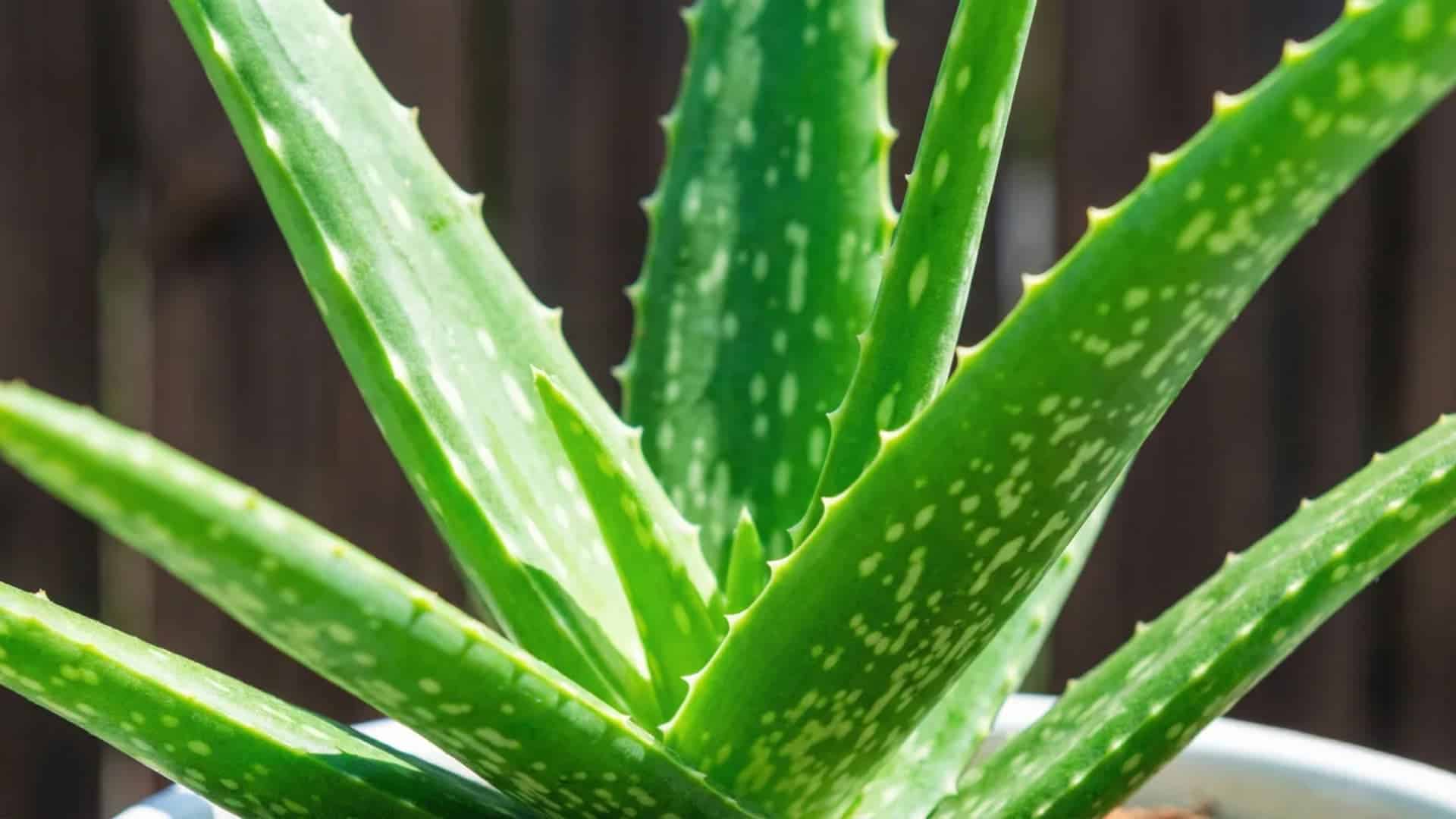
| Self-Propagates | Yes | Yes | No | No | No |
| Beginner Friendly | Yes | Yes | Moderate | Yes | Yes |
| Safe for Children | Yes | No | No | No | No |
The spider plant is the only one on this list that is pet-safe, child-safe, humidity-boosting, and self-propagating all at once.
The choice is clear. Here is how to make the most of it.
Conclusion
The benefits of the spider plant make it one of the smartest additions you can bring into your home.
It filters harmful chemicals from the air. It adds moisture to dry rooms. It stays safe around kids and pets. It calms your space, brightens any corner, and grows new plants on its own without costing you a thing.
Most houseplants ask for a lot. This one does not.
You do not need a big home, a green thumb, or an expensive setup to make it work. A bright corner, a basic pot, and water once a week is genuinely all it takes.
Start with one plant. Place it somewhere you spend the most time. You will notice the difference sooner than you think.
Frequently Asked Questions
What Is a Spider Plant Good For?
Beyond health and decor, spider plants are great teaching tools. Their visible growth and easy propagation make them ideal for introducing children to plant care.
Is the Spider Plant Lucky for the Home?
In Feng Shui, spider plants symbolize stability and growth. Their long, sturdy leaves are believed to bring positive energy and balance to the spaces they occupy.
What Are the Spiritual Benefits of Spider Plants?
Many cultures associate spider plants with positive energy and good fortune. They are believed to create a sense of calm and renewal in shared living spaces.