Walking into a room that feels right is something most people recognize instantly, even if they can’t explain why.
The furniture seems to suit the space, colors flow naturally from one surface to another, and nothing jumps out as wrong or misplaced.
That sense of ease and connection comes from harmony in interior design, a principle that quietly holds a room together.
Harmony isn’t about matching everything or following a single strict formula. It’s the result of thoughtful decisions about color, shape, texture, and arrangement that help a space seem settled and welcoming.
When harmony is present, a setting stops looking like a collection of separate objects and starts becoming a unified whole.
Knowing how to create and maintain this quality transforms how any space looks and functions every day.
What Does Harmony Mean in Interior Design?
Harmony in interior design is the way different elements work together to create a space that feels complete and comfortable. When a setting has harmony, nothing stands out as jarring or out of place.
The colors, furniture, textures, and shapes all relate to one another in a way that makes sense.
Think of harmony as visual agreement. It’s closely tied to other design principles like balance, which creates stability, and rhythm, which guides the eye smoothly through a space.
Unity also plays a role, bringing everything together under a shared theme or mood.
A harmonious interior doesn’t need to be boring or too matchy. It simply needs a thread of connection running through it, so every piece looks like it belongs.
Harmony and the Core Principles of Interior Design
Harmony doesn’t exist in isolation. It works hand in hand with other foundational design principles that shape how an interior looks and what feeling it brings.
Understanding these connections makes it easier to build spaces that seem cohesive and calm.
1. Balance
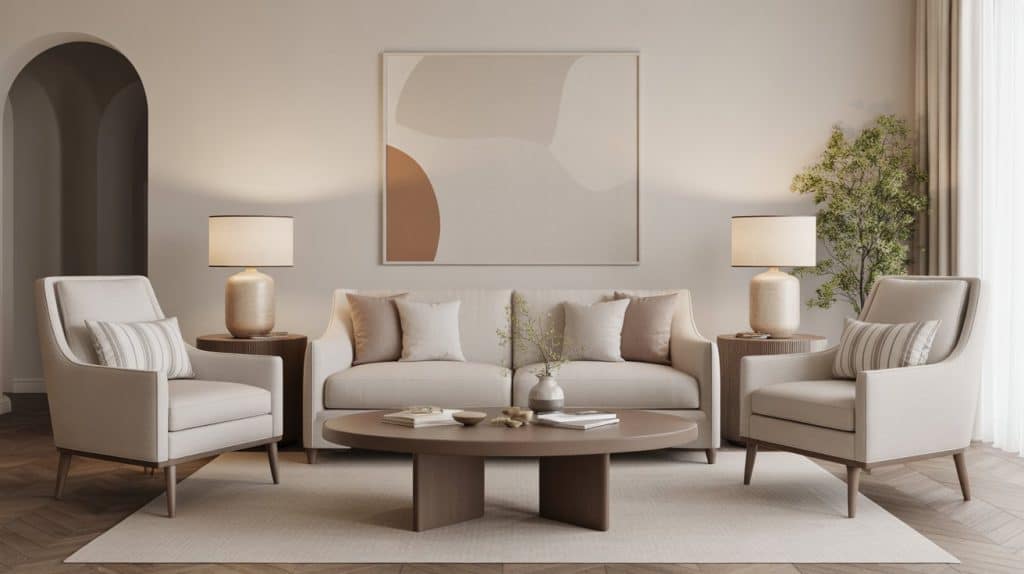
Balance ensures that no single side of a room looks too heavy or empty. Symmetrical balance mirrors elements on both sides, while asymmetrical balance uses different items with equal visual weight.
When balance is right, harmony follows naturally.
2. Unity

Unity ties everything together with a common thread, like a color scheme, material choice, or design style.
This shared story helps furniture, decor, and finishes feel like they are a part of the same space, supporting overall harmony.
3. Rhythm
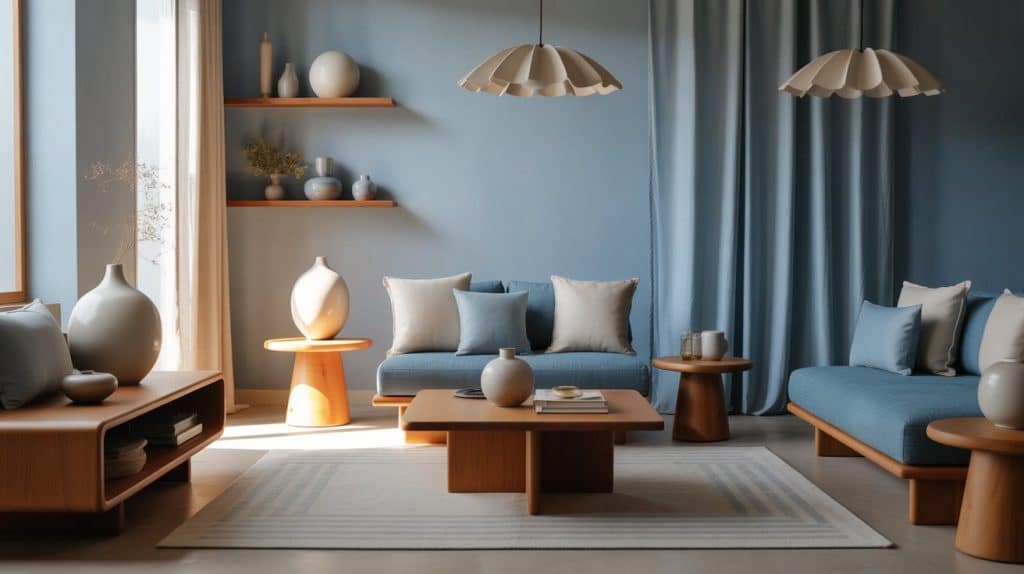
Rhythm creates flow by repeating colors, shapes, or patterns throughout a space.
It might be the same wood tone appearing in different furniture pieces or a geometric pattern echoed in pillows and artwork.
This repetition builds a visual path that feels comfortable and connected.
4. Scale, Proportion, and Visual Weight
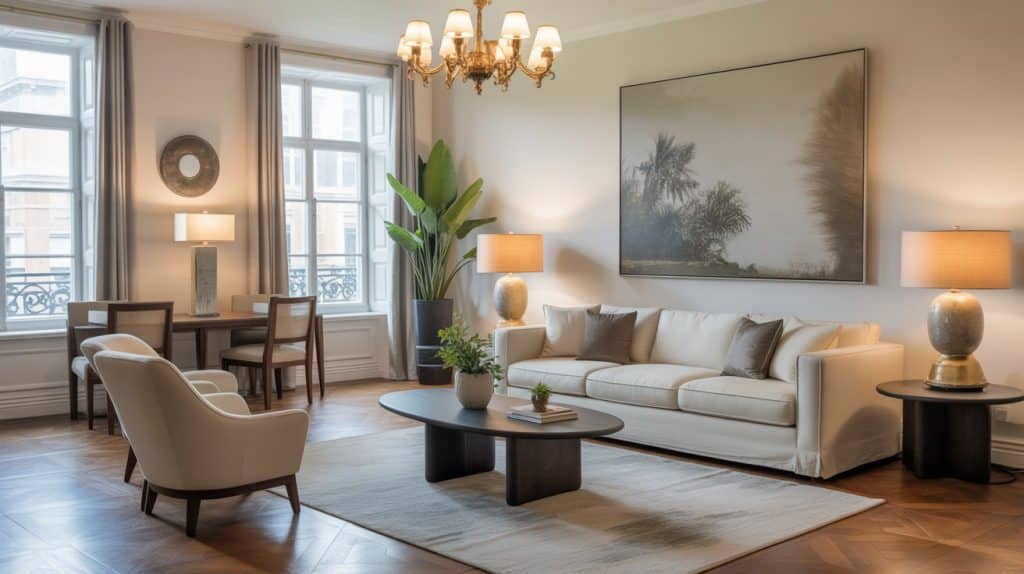
Scale refers to how objects relate to the area size, while proportion is about how parts relate to each other.
A tiny lamp on a large table or a bulky piece in a small environment can shift the whole space off balance. Getting these right prevents awkward mismatches that disrupt harmony.
5. Contrast, Emphasis, and Focal Points
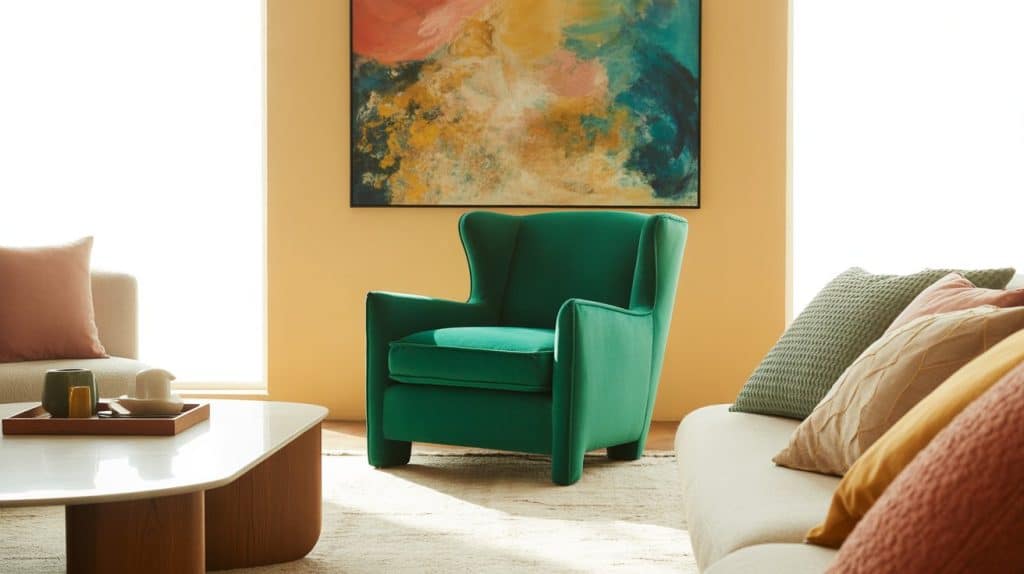
Contrast adds interest without creating chaos. A bold focal point, like a statement chair or piece of art, gives the eye a place to land while the rest of the room quietly supports it.
Together, these ideas form the quiet structure behind every well-balanced setting, making it easier to bring harmony to everyday living spaces.
How to Create Harmony in Interior Design at Home
Creating harmony doesn’t require a complete redesign or a big budget. It’s about making intentional choices that help everything feel connected.
Small adjustments to color, layout, and repetition can shift a space from chaotic to calm. Here’s how to build and protect that sense of harmony in any environment.
1. Start With a Simple, Cohesive Color Palette
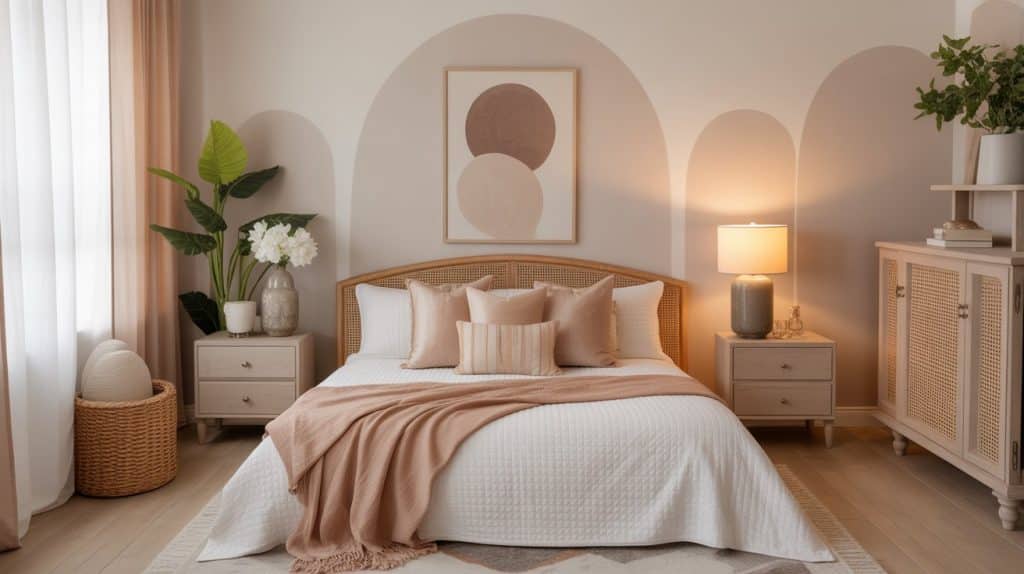
Choose a base palette of three to five colors and stick with it throughout the space. This might include neutral walls, a main accent color, and supporting tones that appear in textiles, artwork, and accessories.
When colors relate to each other, the room naturally feels more pulled together.
2. Arrange Furniture to Support Natural Flow
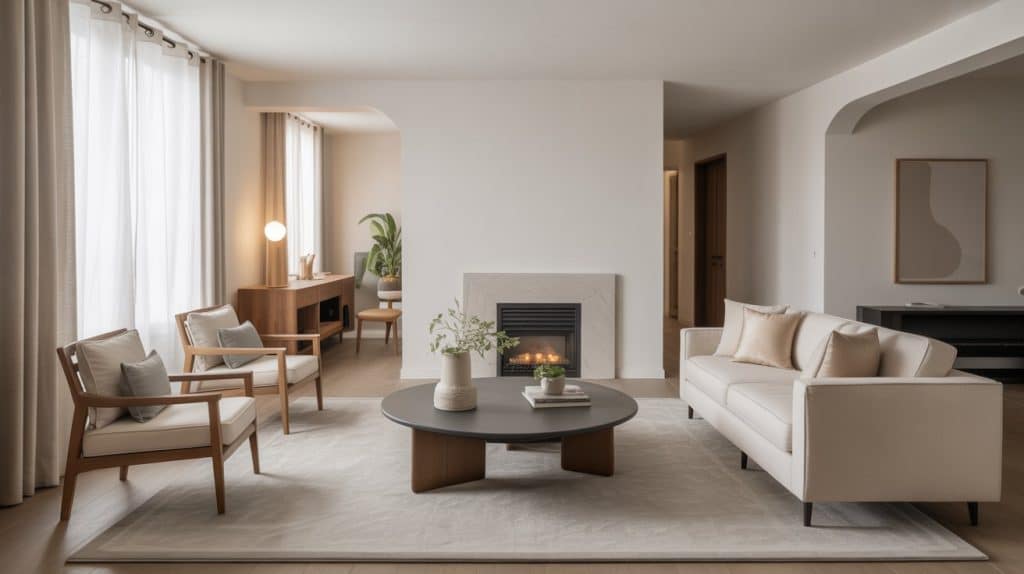
Furniture placement affects how people move through a space and how the eye travels across it.
Arrange seating to encourage conversation, keep pathways clear, and position pieces so they relate to each other rather than floating awkwardly.
Good flow supports harmony by making the space feel intentional.
3. Repeat Shapes, Lines, and Materials
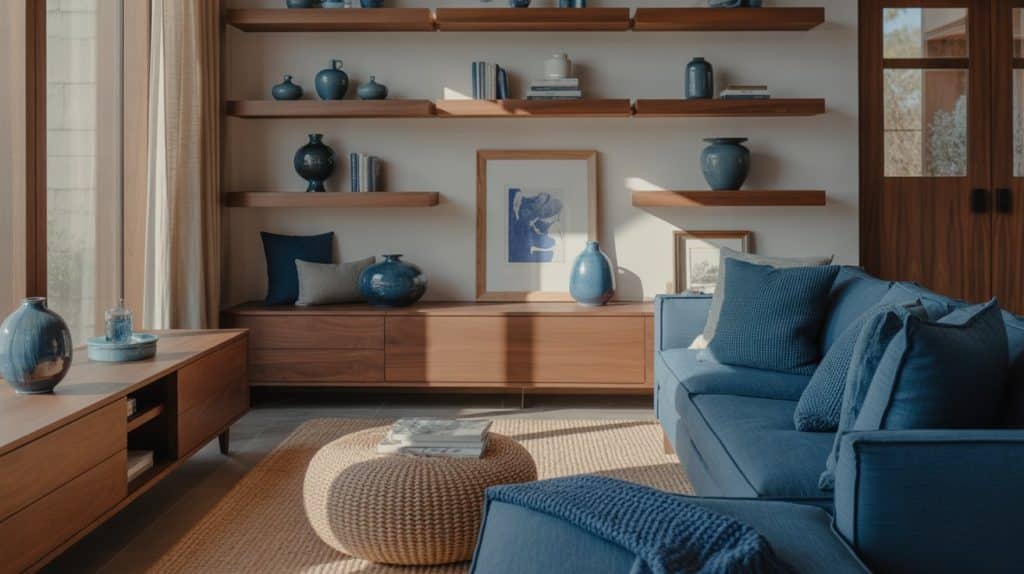
Look for opportunities to echo design elements. If the coffee table has curved edges, bring in rounded mirrors or circular artwork. If wood appears in the dining table, let it show up again in shelving or photo frames.
These subtle connections create visual threads that tie the place together.
4. Layer Textures for Calm Depth Without Clutter
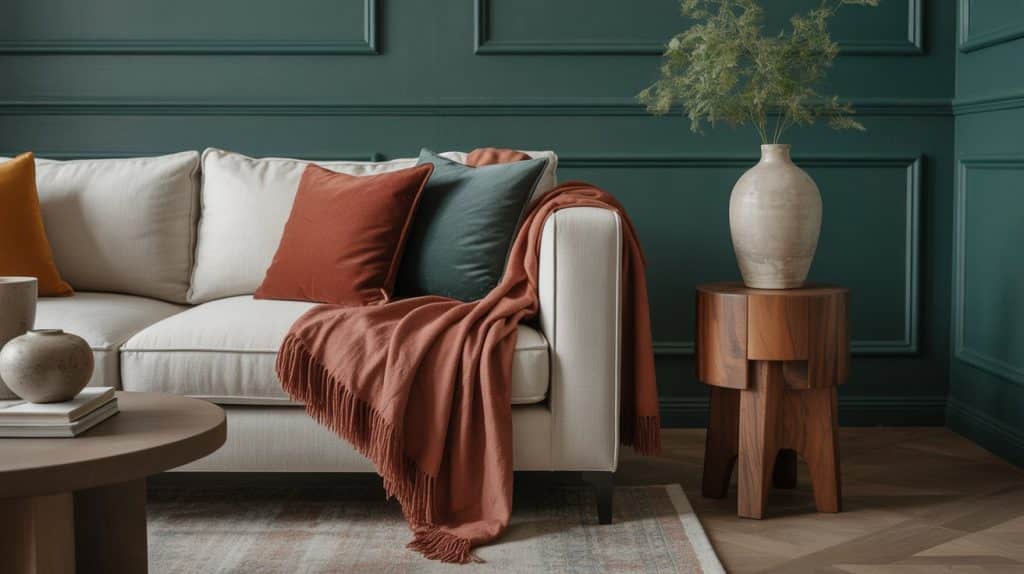
Mix smooth and rough, soft and hard surfaces to add interest without overwhelming the senses. A linen sofa, wool throw, ceramic vase, and wooden side table bring variety while staying cohesive.
The key is keeping the mix controlled so textures complement rather than compete.
5. Use Lighting to Bring the Space Together
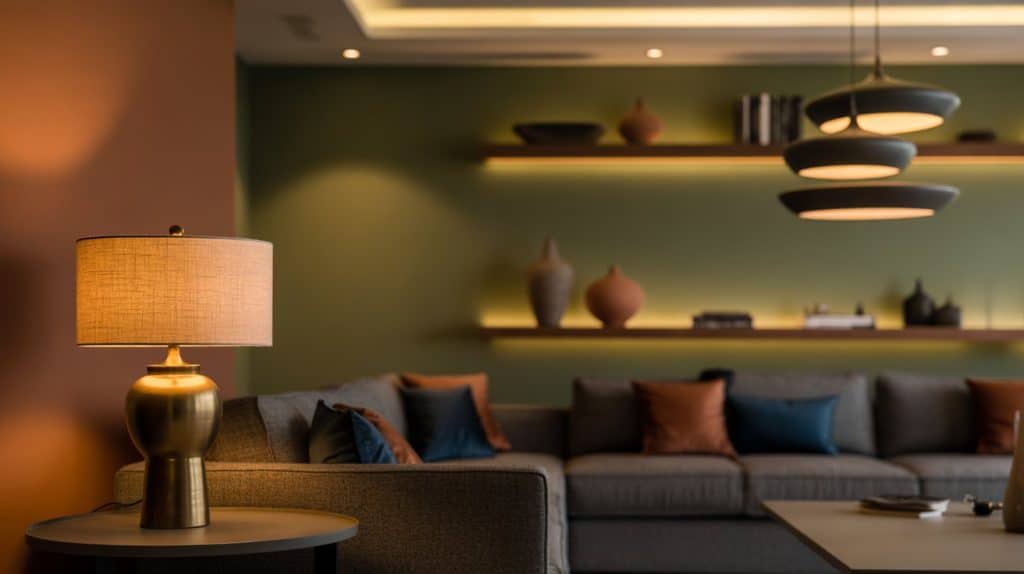
Lighting shapes how a room feels. Combine ambient, task, and accent lighting at different heights to create layers that work together.
Consistent fixture finishes, like all brass or all matte black, strengthen visual harmony throughout the space.
6. Mistakes That Break Harmony, and How to Fix Them
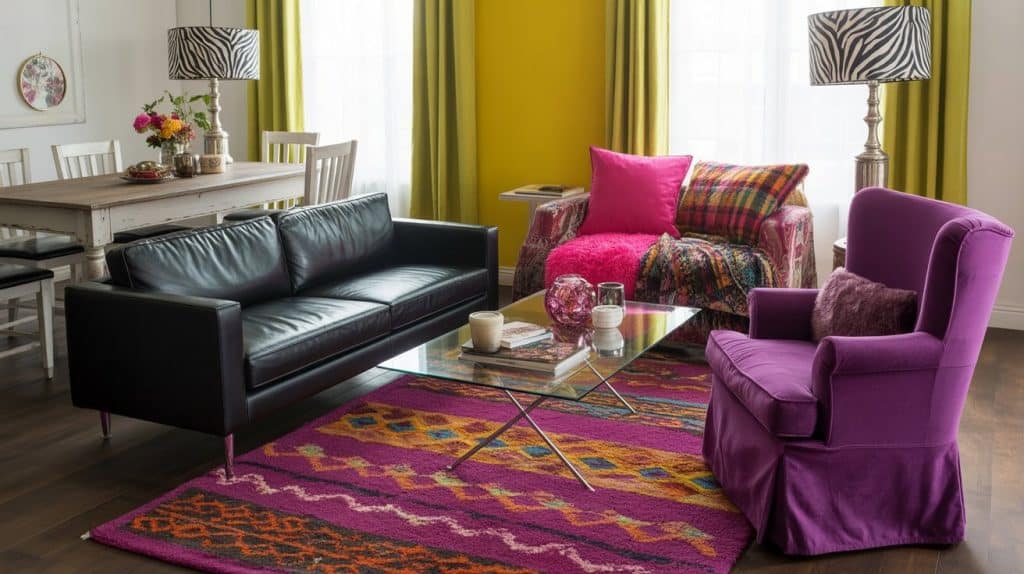
Mixing too many clashing styles without a unifying element creates confusion.
A modern sofa, farmhouse table, and bohemian rug might work if they share a color or material, but thrown together randomly, they fight for attention.
Ignoring size and fit is another common issue. Furniture that’s too large crowds a room, while pieces that are too small look lost. Visual clutter from too many accessories or competing patterns disrupts calm.
Finally, forgetting to establish a clear center of attention leaves the eye wandering with nowhere to rest. Fix these by editing down, choosing one dominant style, and making sure everything has a reason to be there.
Once these habits fall into place, maintaining harmony becomes far easier and the whole room starts to feel naturally settled.
Quick Harmony Checklist for Any Room
Use this simple checklist to assess any space and spot opportunities to strengthen harmony.
- Does the color palette stay consistent with three to five related tones?
- Do furniture pieces relate in style, scale, and proportion?
- Are shapes, lines, or materials repeated throughout the living space?
- Does the layout support natural movement and clear sightlines?
- Is there a mix of textures that adds depth without overwhelming?
- Do lighting layers work together with coordinated finishes?
- Is there one clear focal point that anchors the space?
- Has visual clutter been edited down to what truly matters?
- Do all elements feel like they belong in the same space?
Run through these questions when something feels off, but the problem isn’t obvious. However, a checklist and best intentions aren’t enough to solve a design challenge that feels too complex or overwhelming.
When a room still feels unsettled despite thoughtful adjustments, a fresh set of trained eyes can make an immediate difference.
When a Design Expert Can Make a Difference?
If harmony still feels out of reach after trying these approaches, working with an interior designer can provide clarity. Designers bring trained eyes that spot issues quickly and offer solutions based on experience with real spaces.
They understand how principles work together and can create a plan that fits a specific home, budget, and lifestyle.
For major renovations, whole-house projects, or rooms that simply aren’t coming together, professional guidance saves time and frustration.
A designer can also help avoid costly mistakes by getting scale, layout, and material choices right from the start.
Sometimes an outside perspective is exactly what a space needs to finally feel harmonious.
Conclusion
Harmony in interior design isn’t about perfection or following strict formulas. It’s about making spaces where everything connects, where nothing jars the senses or demands attention for the wrong reasons.
Small shifts make a real difference, like refining colors, repeating a few key shapes, or clearing away what no longer serves the purpose.
Building this kind of cohesion takes time and thoughtful attention, but the outcome is worth every adjustment. A harmonious space wraps around daily life with comfort and ease.
It draws people in and invites them to settle. With patience and intention, any space can become somewhere that truly feels complete.
This isn’t a goal with a finish line. It’s the gentle rhythm that makes a house feel lived in, cared for, and genuinely like home.