Your snapdragons were full of color in spring. Then July arrived. Now the stems are limp, the blooms are gone, and the plant looks done.
You gave them the sun. You watered them. So what went wrong?
Here is the truth: Do snapdragons need full sun? Yes. But the full answer is more specific than that, and getting it wrong is exactly why most snapdragons underperform.
Snapdragons need the right kind of sun, at the right time of day, in the right season. Too much sun burns them. Too little sun starves their blooms.
This guide covers the Snapdragon sun needs in full. How many hours do they need, what too much sun does, and what too little sun costs you in blooms?
What Full Sun Really Means for Snapdragons?
That little tag on your snapdragon plant says “full sun.” But full sun in a garden center and full sun in your backyard are two very different things.
Getting this wrong from the start is one of the most common reasons snapdragons fail to flower.
Here is exactly what each light level means for your snapdragons:
- Full sun: 6 or more hours of direct sunlight per day. This is what snapdragons prefer for strong stems and heavy blooms.
- Partial shade: 3 to 5 hours of direct sunlight per day. Snapdragons can survive here, but will produce fewer flowers.
- Full shade: Less than 3 hours of direct sunlight per day. Snapdragons will not flower in full shade. Growth slows, and the plant becomes more prone to disease.
The minimum threshold for snapdragons to bloom well is 6 hours of direct sun daily. Anything below that and your plant will grow, but it will not perform.
One important clarification: the number of hours matters, but so does the quality of those hours. Not all sunlight snapdragons receive is equal, and that is exactly what the next section breaks down.
Real Cost of Less Sun for Snapdragons
Many gardeners assume partial shade is a safe middle ground for snapdragons. It is not a bad choice, but it comes with real trade-offs you need to know before picking a planting spot.
Here is what changes between full sun and partial shade:
- Bloom count: Snapdragons in full sun produce significantly more flowers than those in partial shade. Less light means the plant puts less energy into flowering.
- Color vibrancy: Full sun brings out richer, deeper color in snapdragon blooms. In partial shade, colors tend to look washed out and dull.
- Stem strength: Snapdragons grown in full sun develop thicker, stronger stems. Partial shade causes stems to stretch and weaken as the plant reaches for more light.
- Bloom duration: Full sun snapdragons tend to flower longer into the season. Partial shade noticeably shortens the bloom window.
- Plant health: Full sun with well-drained soil keeps snapdragons healthier overall. Partial shade increases moisture retention, which raises the risk of fungal disease.
If you want the most flowers, the most color, and the strongest plant, full sun is the better choice. Partial shade works in specific situations, but it always comes at a cost.
Morning Sun vs. Afternoon Sun
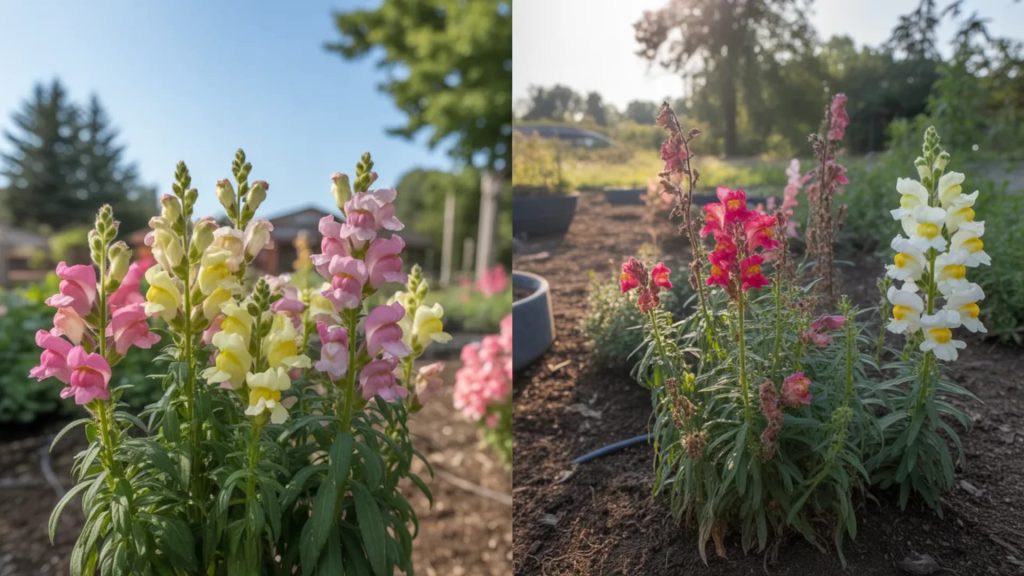
Six hours of sun is six hours of sun. Or so most people think.
Morning sun runs cooler. Snapdragons handle it well and use it to grow strong. Afternoon sun in summer brings heat.
That heat is what actually damages snapdragons, not the light itself. A plant sitting in direct sun at 2 pm in July is fighting to survive, not soaking up energy.
Two gardens can both receive six hours of sun and still get completely different results. One thrives. One burns out by July. The only difference is when those hours fall.
Pro Tip: Always aim for a spot where your snapdragons catch the sun before noon and get natural shade from 1 pm onward. This one change can extend your bloom season by weeks.
Here is what each garden position means for your snapdragons:
- East-facing: Morning sun, afternoon shade. The best position for snapdragons is in warm and hot climates. Blooms stay strong well into summer.
- West-facing: Shade in the morning, full afternoon sun. The hardest position for snapdragons. Heat stress sets in fast during the summer months.
- South-facing: Long stretches of sun across the full day. Works in cooler climates. In hot regions, afternoon shade must be added, or the plant will stop blooming.
- North-facing: Least sun of all four positions. Snapdragons will not reach the 6-hour minimum needed to flower properly.
If your garden lacks a naturally shaded spot in the afternoon, there are simple ways to create one.
Your snapdragon does not need the same sun in October as it does in April. The season changes everything
Snapdragon Sun Needs by Season
Snapdragons are cool-season plants. What works in spring stops working by July. Then fall gives you a second chance. Each season asks something different from both you and the plant.
| Season | Sun Requirement | Temperature Range | What to Expect |
|---|---|---|---|
| Spring | Full sun, 6 or more hours daily | 50°F to 75°F | Peak blooming season. Plants are at their strongest. |
| Early Summer | Full sun with afternoon shade from late June | 75°F to 85°F | Growth slows. Watch for heat stress. Shade helps. |
| Midsummer | Partial shade, especially from noon onward | Above 90°F | Blooming stops. Keep the plant alive and wait it out. |
| Fall | Full sun returns, 6 or more hours daily | 50°F to 70°F | Second bloom begins. Often as strong as spring. |
The biggest mistake gardeners make is pulling snapdragons out in July when blooming stops. That pause is not the end. It is the plant conserving energy until cooler temperatures return. Leave it, shade it, water it, and fall will reward you.
Most gardeners pick a snapdragon by color. The ones that get the longest bloom season are picked by group number.
The 4 Snapdragon Groups and Light
Snapdragons come in four groups. Each group is bred to bloom under a specific type of light and at a specific time of year. Buying the wrong group for your season is like planting a winter crop in August and wondering why nothing grows.
Think of it this way. Some snapdragons are built for short, cool days. Others need long, bright days to even start flowering. The group number on your seed packet tells you exactly which one you have.
| Group | When It Blooms | Sun It Needs | Plant It In |
|---|---|---|---|
| Group 1 | Winter and Early Spring | Low light, short days | Fall |
| Group 2 | Early Spring and Fall | Low to medium light | Late Summer or Fall |
| Group 3 | Spring through Fall | Medium to bright light | Early Spring |
| Group 4 | Late Spring and Summer | Bright light, long days | Spring |
A simple rule to remember: the higher the group number, the more sun and the longer the day it needs to bloom.
The best way to use this is to plant two or three groups at the same time. When one group finishes, the next one picks up. Your garden stays colorful for months, not just weeks.
Knowing what your snapdragons need is one thing. Knowing when something has gone wrong is another.
Signs Your Snapdragons Are Getting Too Much Sun
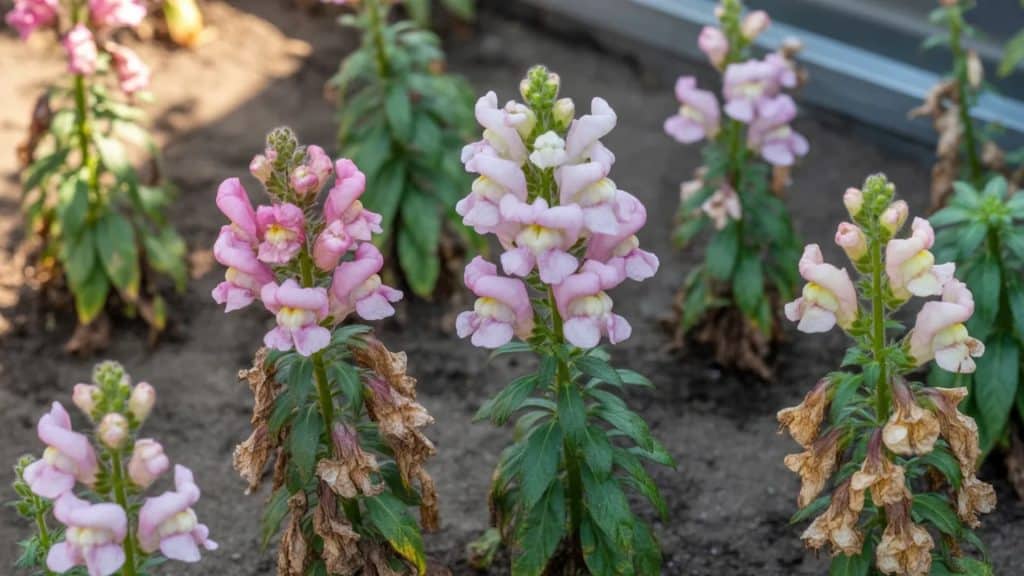
Most gardeners see these symptoms and immediately water more. That is the wrong move. Too much sun and too little water can look almost identical on a snapdragon. Before you reach for the hose, check these first.
- Leaf edges turning brown and crispy: The browning starts at the outer edges of leaves and works inward. It looks like drought damage, but watering alone will not stop it.
- Faded or washed-out bloom color: Flowers that were once deep red or bright yellow start looking pale and dull. Intense afternoon sun bleaches the color out of snapdragon blooms faster than most gardeners expect.
- Wilting in the afternoon despite wet soil: If your snapdragons droop every afternoon but the soil is still moist, heat stress is the cause. The plant is shutting down to protect itself.
- Flowers dropping before fully opening: Buds that fall off or shrivel before they open are a sign the plant is too stressed to complete the bloom cycle. This happens most in west-facing spots that take the hardest afternoon sun.
Spot any of these early, and your plant still has a strong chance. Wait too long, and recovery becomes much harder.
Too much sun gets most of the attention. But too little sun quietly does just as much damage, and it is far easier to miss.
Signs Your Snapdragons Are Not Getting Enough Sun
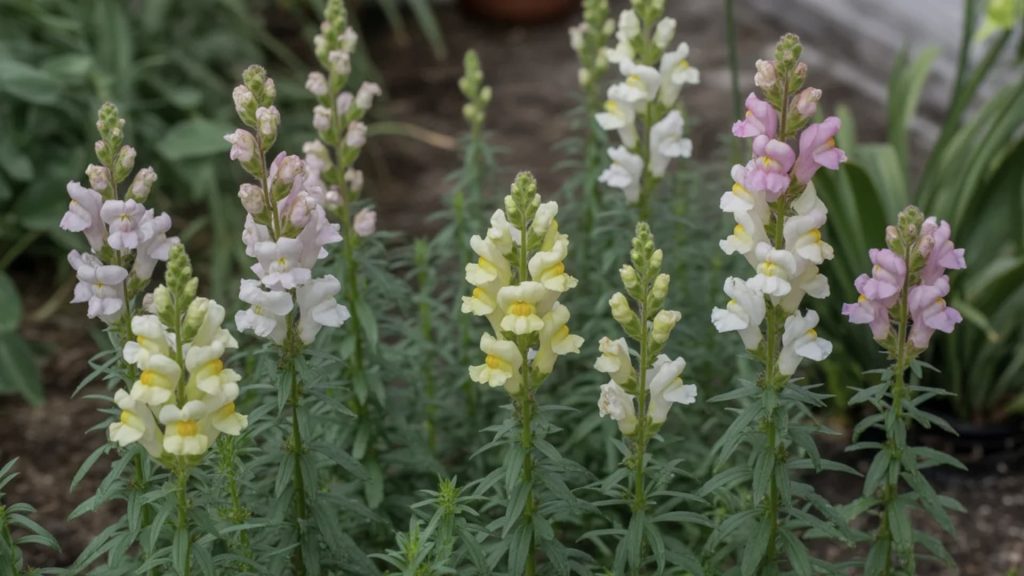
No wilting. No browning. No obvious drama. The plant just sits there looking perfectly alive while producing almost nothing. That is what too little sun does to snapdragons. It does not kill them. It just makes them useless.
If your snapdragons have been in the ground for weeks and something feels off, check for these:
- Tall, thin stems with wide gaps between leaves: Snapdragons stretch upward when they cannot find enough light. The stems grow long and weak instead of short and strong. Gardeners often mistake this for healthy growth. It is the opposite.
- Very few blooms or none at all: A snapdragon in low light puts almost no energy into flowering. Weeks in the ground with barely a bloom is not a slow plant. It is a light-starved one.
- Yellowing leaves starting from the bottom: When the plant cannot produce enough energy through photosynthesis, the lower leaves go yellow first. It moves upward the longer the problem is ignored.
- Pale, washed-out foliage: Snapdragons in good sun have deep, rich green leaves. Plants sitting in too little light look drained. The color never quite develops.
The real danger with too little sun is how slowly it shows up. By the time the signs are obvious, most of the bloom season is already gone.
You have spotted the problem. Now here is how to fix it.
How to Fix Sun Problems in Snapdragons?
Most gardeners assume fixing a sun problem means starting over. It does not. Whether your snapdragons are getting scorched or sitting in too little light, the fix is simpler than you think.
When the Sun Is Too Strong
Plant a taller companion to the west of your snapdragons. A larger shrub, tall grass, or climbing plant on a trellis will cast natural afternoon shade without blocking morning light. You get the protection without rearranging your garden.
If you want a faster solution, a 30 to 40 percent shade cloth on a simple frame does the job in minutes. It blocks the harshest afternoon rays, costs very little, and comes off just as easily when the season cools down.
Container growers have the easiest fix of all. Move the pot to an east-facing wall or under a structure overhang from noon onward. No tools, no replanting, no effort.
Working With a Shaded Garden
Start with your trees and shrubs. Overhanging branches are the most overlooked cause of low light in home gardens. Trimming just a few back can add one to two hours of direct sun to your snapdragons every single day.
If trimming is not an option, use what you already have around you. A white wall, a light-colored fence, or a reflective garden panel placed behind your snapdragons bounces extra light onto the plant without needing any direct sun at all. It is one of the most underused tricks in small garden growing.
Container growers, move your pots within three feet of the brightest outdoor spot available. The difference a few feet makes is larger than most people expect.
Fix the light, and the plant does the rest. But there is one more thing most gardeners never connect to the sun at all.
Sun and Watering Are Not Separate
Change the sun, and you have to change the water. Most gardeners do not realize this until something goes wrong.
A snapdragon in full summer sun on a 90-degree day needs water far sooner than one sitting in morning light at 65 degrees. Treating both the same is where the problem starts.
A fixed watering routine sounds organized. For snapdragons, it is often the reason they fail quietly without an obvious cause.
Let your sun conditions set the schedule, not the calendar:
- Full sun in spring: Soil dries at a moderate rate. Checking the top inch every two days is enough. Water when it feels dry to the touch.
- Full sun in midsummer: Soil can dry out within 24 hours on the hottest days. Container plants lose moisture faster and need checking every single morning.
- Partial shade in summer: Soil stays moist far longer. Overwatering is a bigger risk than underwatering here. Wait until the top inch is completely dry before adding more water.
- After moving a plant to more shade: The soil rhythm changes immediately. Gardeners who keep watering at the same rate after reducing sun exposure often cause root rot without ever suspecting the sun change triggered it.
Everything covered so far applies to outdoor growing. Indoor snapdragons face a completely different set of light challenges.
Growing Snapdragons Indoors
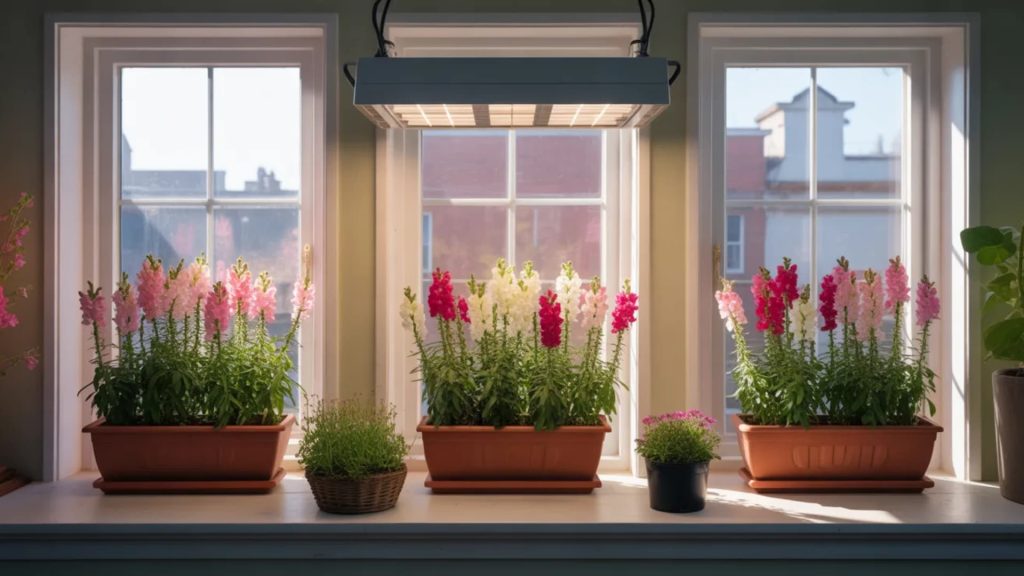
East-facing windows are the best option. Soft morning light comes through for several hours with no heat buildup against the glass. The plant gets what it needs without the stress.
South-facing windows offer strong, consistent light and work well through winter and early spring. In summer, the intensity through the glass builds up fast. A thin curtain takes the edge off without blocking too much.
West-facing windows deliver afternoon light, but the heat that comes with it through glass is harder on snapdragons than the same sun would be outdoors.
North-facing windows simply do not provide enough light for snapdragons to flower. No amount of care makes up for that deficit.
If no window in your home gives 6 hours of quality light, a full-spectrum LED grow light placed 6 to 12 inches above the plant running for 14 to 16 hours daily is a reliable and affordable fix.
Final Thoughts
Do snapdragons need full sun? Yes. But the real answer goes deeper than that.
They need morning sun over afternoon sun. They need more light in spring and less in peak summer. They need a group number that matches the season. And they need a watering routine that shifts every time the light does.
Most gardeners get one of those things right and wonder why results stay average. Snapdragons are not difficult. They are specific. Now you know exactly what they need.
Start with one thing this week. Check which direction your snapdragons face. That single change can shift your results faster than anything else in this guide.
If this helped, share it or leave your question in the comments below.
Frequently Asked Questions
What Soil pH Do Snapdragons Prefer?
Snapdragons grow best in slightly acidic to neutral soil with a pH between 6.2 and 7.0. Testing your soil before planting helps avoid nutrient problems that slow growth.
Can Snapdragons Survive Frost?
Yes. Snapdragons can tolerate light frost and temperatures as low as 25 degrees Fahrenheit. This makes them one of the few flowering plants that perform well in late fall and early spring.
Do Snapdragons Attract Pollinators?
Snapdragons attract bees, butterflies, and hummingbirds. Their unique flower shape forces pollinators to push open the bloom to reach the nectar, making them especially useful for supporting garden biodiversity.