I know how frustrating it can be to stare at that awkward space under your stairs and wonder what to do with it.
You want to add a toilet there, but the cramped area feels impossible to style properly. The slanted ceiling, limited floor space, and odd angles make it seem like a design nightmare.
But here’s what I’ve learned after years of working with small spaces: that tiny under-stairs area can become one of the most charming spots in your home.
With the right approach, you can change it into a functional and beautiful powder room that guests will remember.
I’ll share some practical, small under-stairs toilet ideas that work in real homes in this blog.
From space-saving layouts to clever storage solutions, you’ll see exactly how to make the most of every square inch.
Why Add a Toilet Under the Stairs?
Adding a toilet under your stairs is one of the smartest home improvements you can make.
The under-stairs location works perfectly because it’s centrally located but private. You’re not taking up valuable living space, and the area feels naturally separated from the main rooms.
Here’s why this small change makes such a big difference:
- Guest comfort becomes your top priority – When friends visit, they don’t need to ask where the bathroom is upstairs. This saves everyone from awkward moments during parties.
- You’re using dead space that serves no purpose – Most under-stair areas collect dust or old boxes. Converting this space gives your home an extra room without expanding your footprint.
- Your property value gets a real boost – Real estate agents tell me that homes with additional bathrooms sell faster and for higher prices. Even a small powder room can add thousands to your home’s worth.
- Elderly family members benefit greatly. Climbing stairs can be challenging for some people. Having a ground-floor toilet means everyone feels comfortable in your home.
- Small homes finally get breathing room – If you only have one bathroom upstairs, morning routines become stressful. Adding a second toilet downstairs reduces family conflicts.
How to Maximize the Small Space?
Working with a tiny under-stairs area requires smart thinking. Every inch counts when you’re dealing with slanted ceilings and limited floor space.
I’ve learned that the key is making the room feel bigger than it actually is through clever design choices. Some of the choices that make a huge difference are given below:
1. Wall Mount Everything
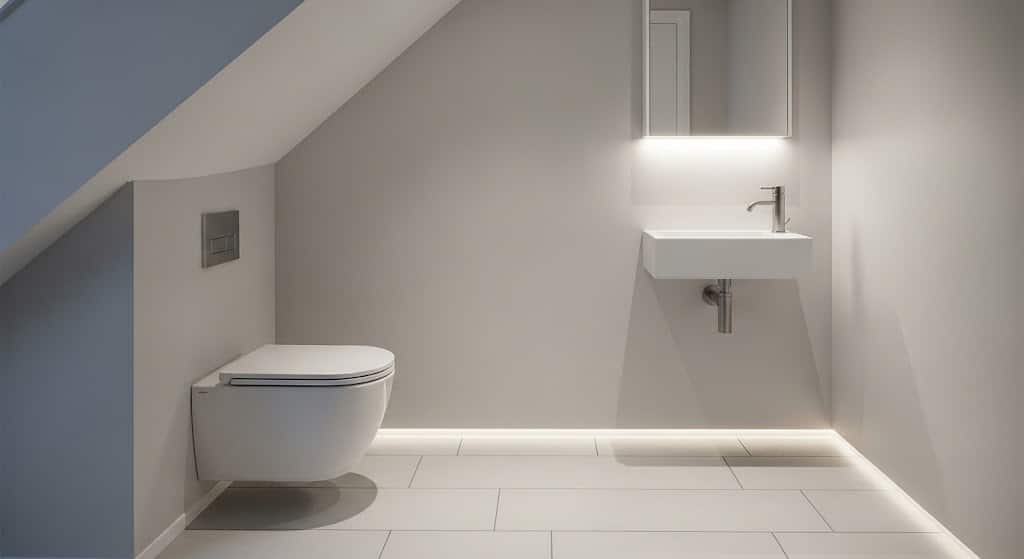
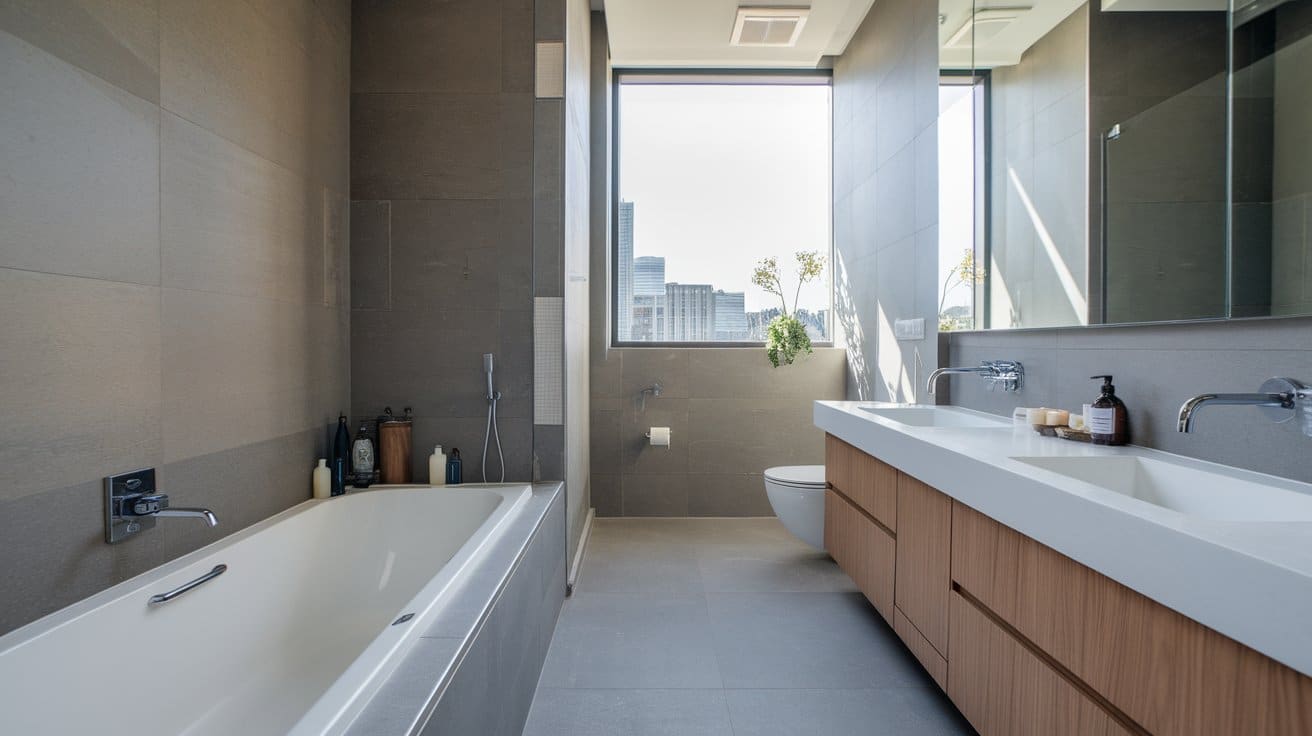
Remove your toilet, sink, and storage items completely from the floor. Wall-mounted fixtures create the illusion of more space by showing continuous flooring underneath.
This simple trick makes even the tiniest powder room feel less cramped and easier to clean.
2. Use Large Tiles for Visual Continuity
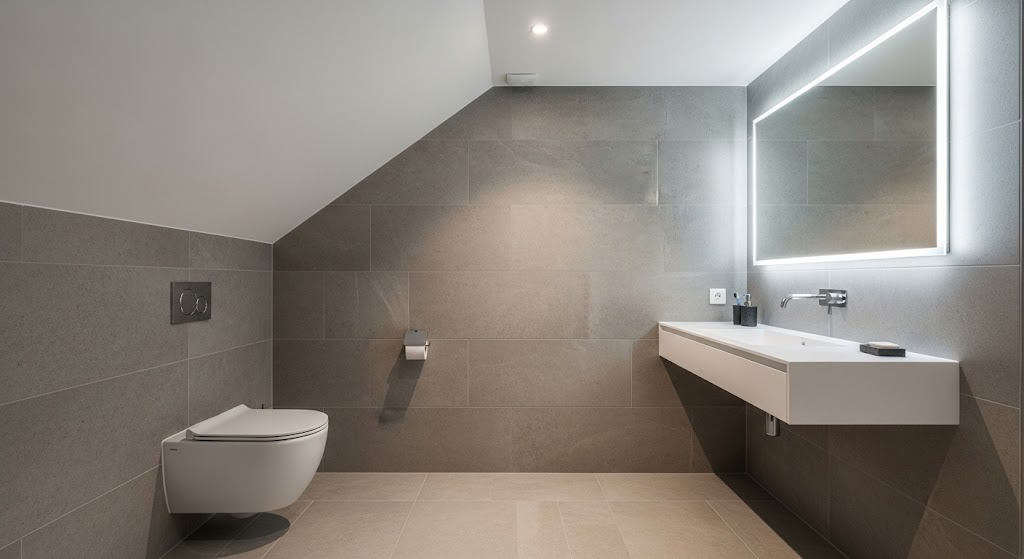
Small tiles create busy patterns that make spaces feel choppy and smaller. Large format tiles with minimal grout lines create smooth, uninterrupted surfaces.
Choose tiles that are at least 12×12 inches or larger to keep the eye moving smoothly around the room.
3. Light-Colored Materials
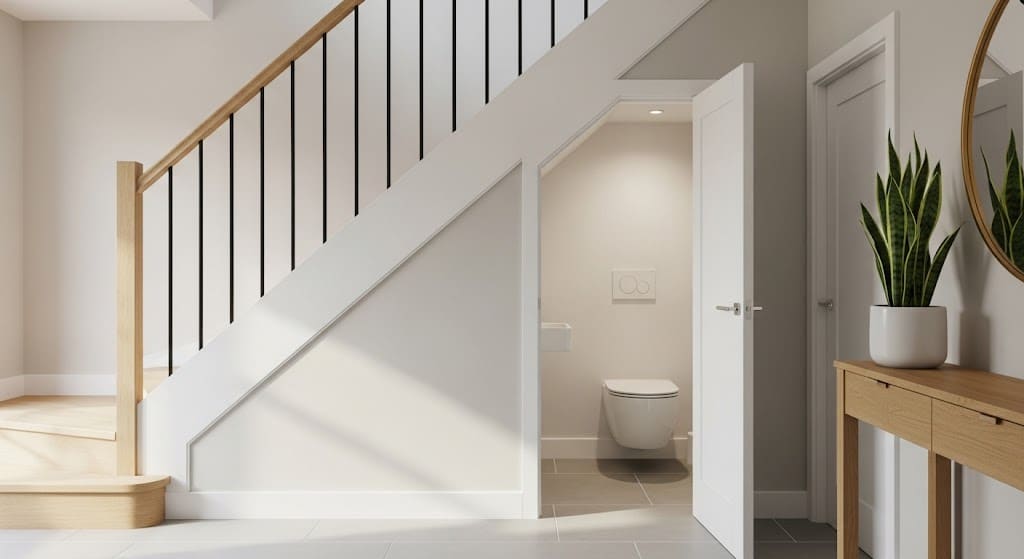
White, cream, and pale gray reflect light, instantly opening up tight spaces. Dark colors absorb light and make walls feel like they’re closing in.
Stick to light neutrals for walls, floors, and fixtures to create a light and airy feel.
4. Avoid Clutter – Hidden Storage Only
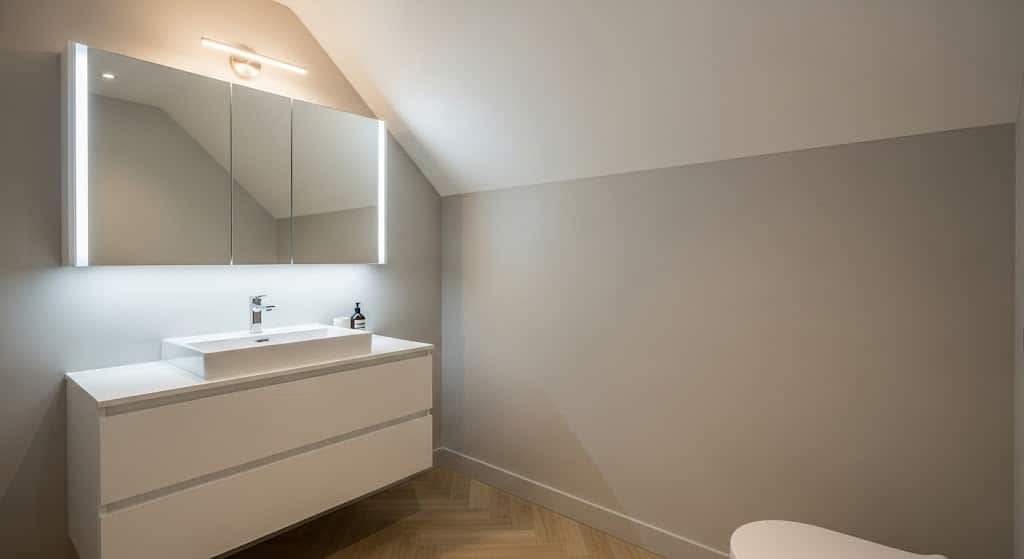
Visible items on counters or shelves make small spaces feel chaotic. Install recessed shelving, medicine cabinets, or storage behind mirrors instead.
Keep surfaces completely clear to maintain the clean, spacious look you’re working hard to create.
5. Use Vertical Space for Shelves or Art
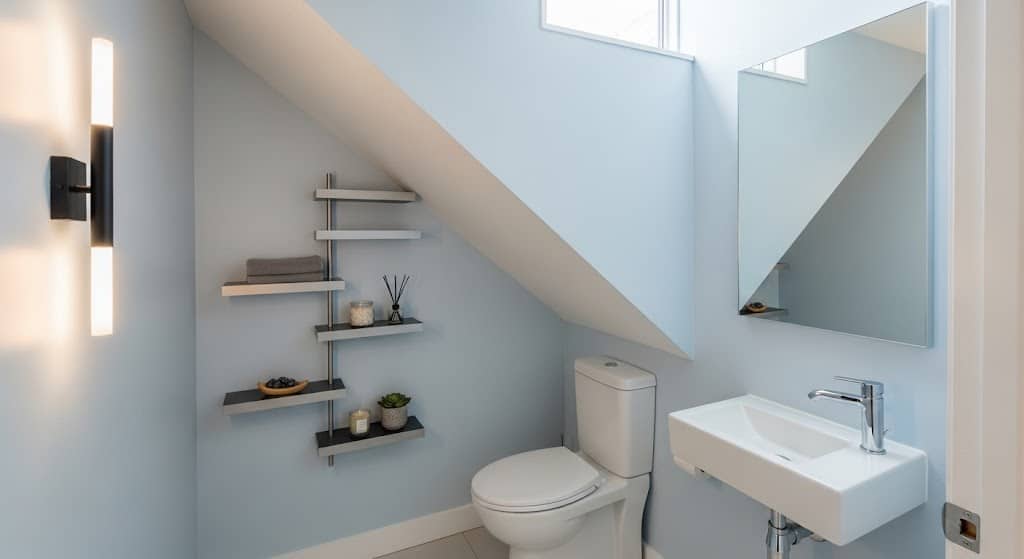
Think of something to do when you can’t go out. Install floating shelves near the ceiling or hang artwork higher than normal. This draws the eye upward, making the ceiling feel taller than it actually is.
Next, I’ll guide you through various under-stair toilet ideas to incorporate into your space, helping you design and decide on the best pattern for your small areas.
25 Small Under-Stairs Toilet Ideas to Consider
Here are my favorite small under-stairs toilet ideas that actually work in real homes. I’ve organized them by style, storage, and special features to help you find the perfect approach for your space.
1. Vintage Charm with Patterned Tiles
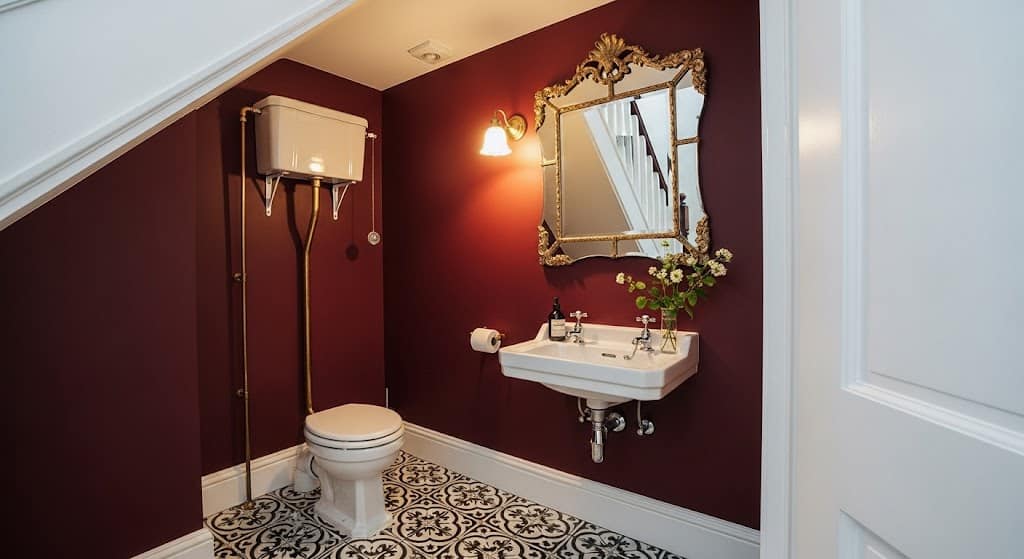
Use geometric or floral floor tiles to create character in your small space. Pair them with a simple white suit to let the patterns shine.
Vintage-style tiles work especially well because they add personality without overwhelming the room.
2. Bold Wallpapered Powder Rooms
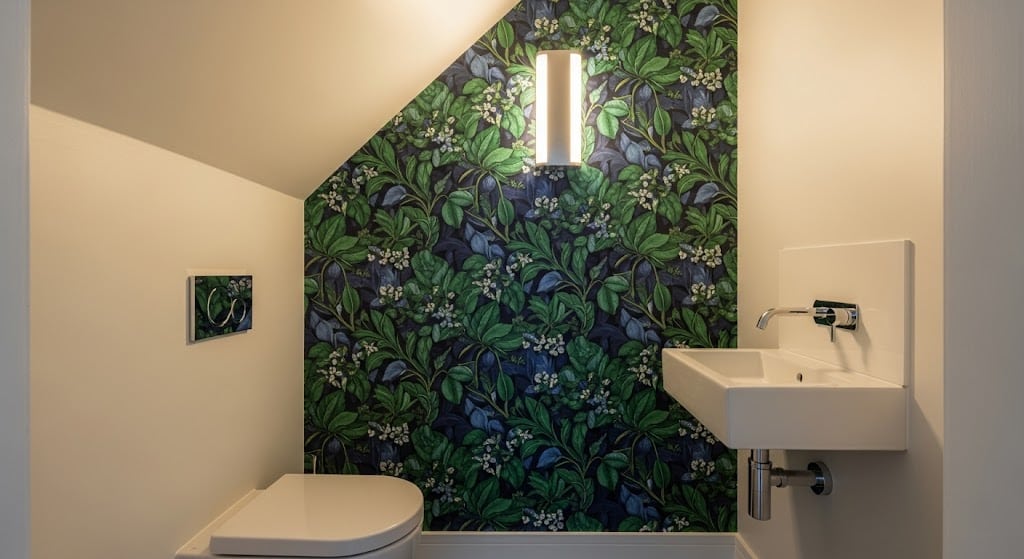
Choose one accent wall for dramatic wallpaper – it won’t overpower the space like covering all walls would. Go for large-scale patterns or rich colors that make a statement. Keep the other walls neutral to balance the look.
3. Japandi Minimalism
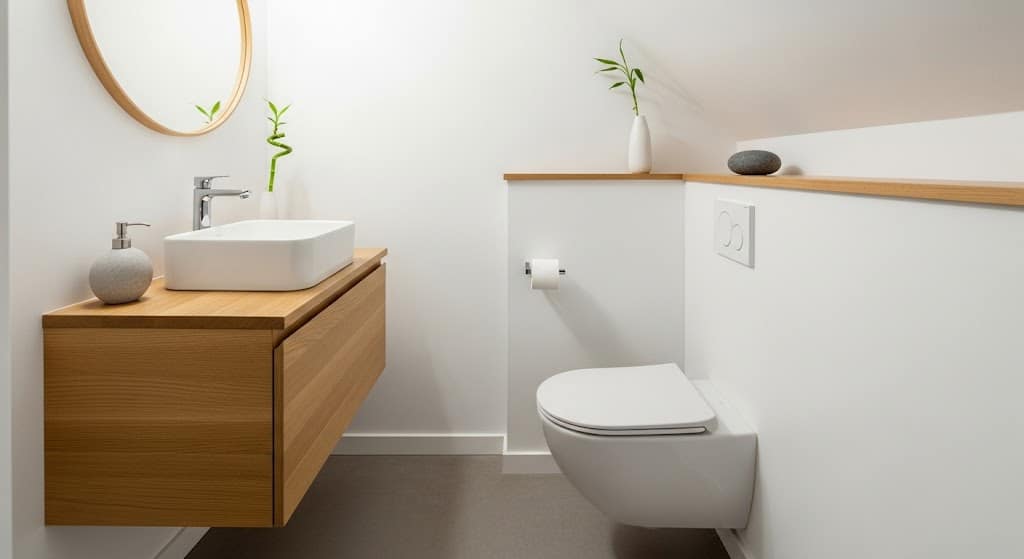
Combine natural wood elements with clean white walls for a calm, spa-like feel. Add simple bamboo accessories and keep surfaces completely clear.
This style works perfectly in tiny spaces because it focuses on quality over quantity.
4. Rustic Wood Accents
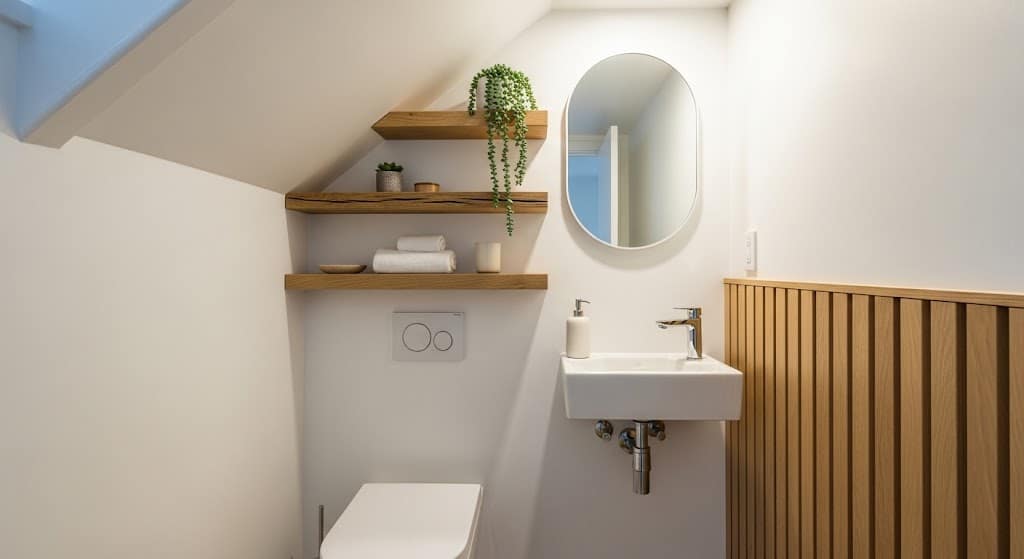
Install reclaimed wood shelving or a wood accent wall to bring warmth to the space. Choose light oak or pine to keep the room feeling bright. Wood adds texture without taking up any floor space.
5. Coastal Light and Airy Feel
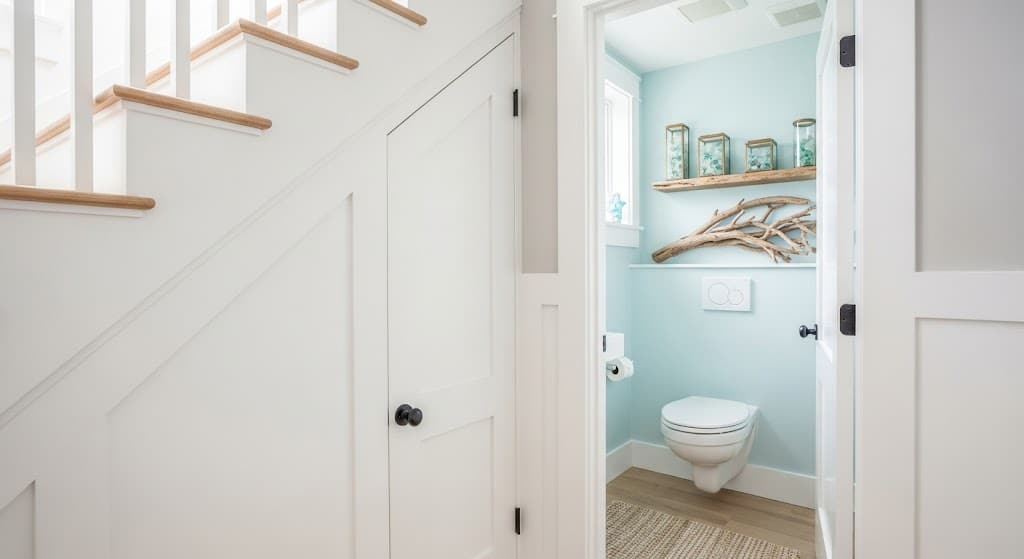
Use soft blues, whites, and natural textures like rope or wicker accessories. Add a small piece of driftwood or sea glass as decor. Light colors and beach-inspired elements make small spaces feel more open and relaxed.
6. All-White to Make It Feel Larger
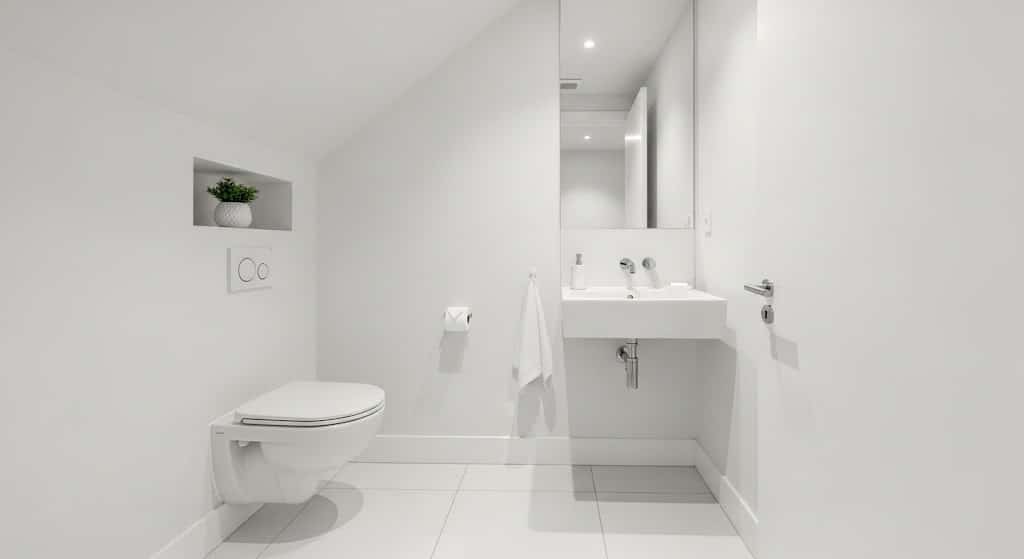
Paint walls, ceiling, and trim in the same bright white for maximum light reflection. Choose white fixtures and add texture through towels or a small plant. This monochrome approach creates the illusion of much more space.
7. Dark Walls with Gold Accents
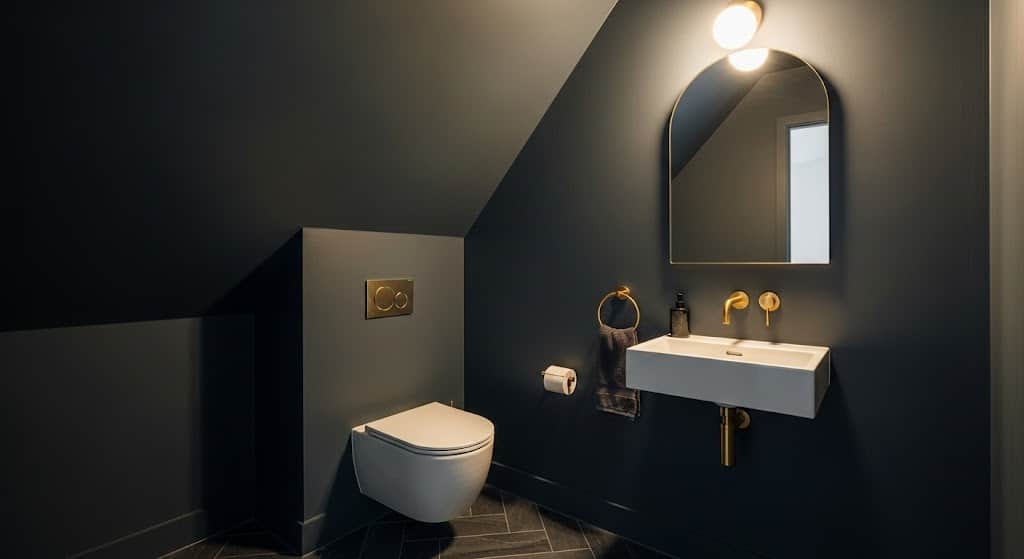
Paint walls in deep navy or charcoal and add gold tapware or light fixtures for luxury. Dark colors can actually make small spaces feel cozy rather than cramped when done right. The gold accents add richness and warmth.
8. Soft Pastels for a Welcoming Touch
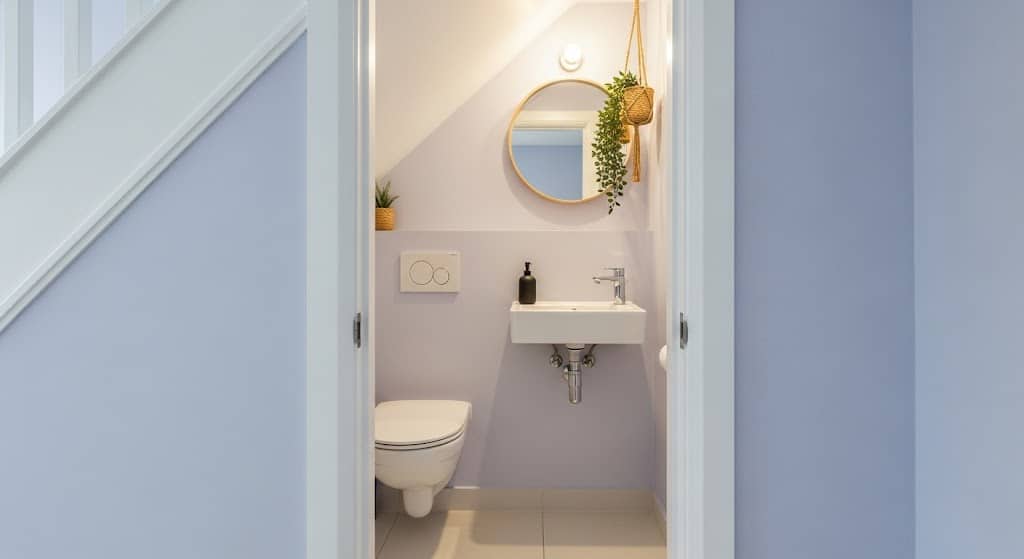
Choose pale pink, mint green, or lavender for a gentle, welcoming atmosphere. Pastels reflect light well while adding more personality than stark white.
Keep the rest of the palette neutral to avoid overwhelming the small space.
9. Moody Greys with Crisp Trims
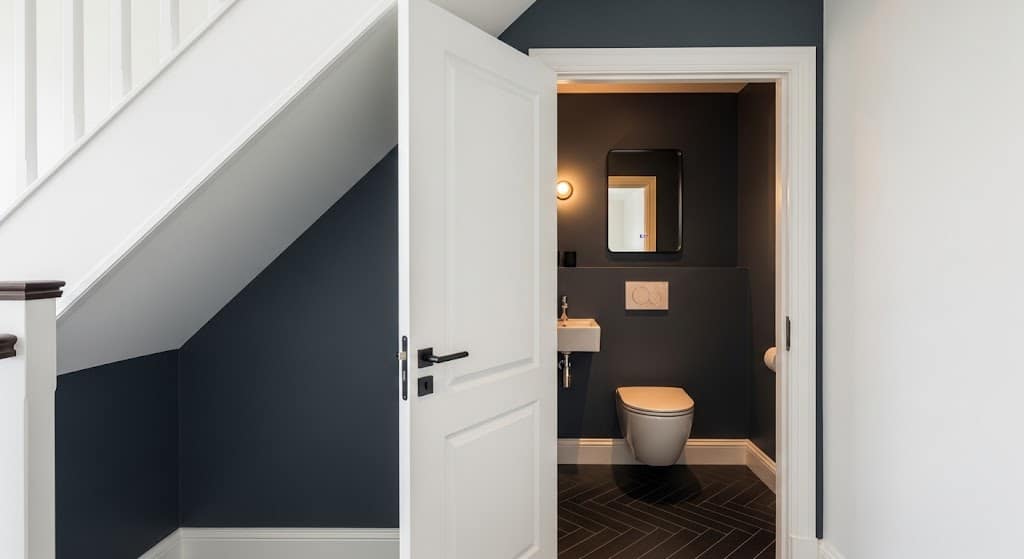
Use charcoal or slate gray walls with bright white trim for a modern, sophisticated look. This high-contrast approach adds depth and makes architectural details pop.
The dark walls hide any imperfections while white trim keeps things fresh.
10. High-Contrast Monochrome Palette
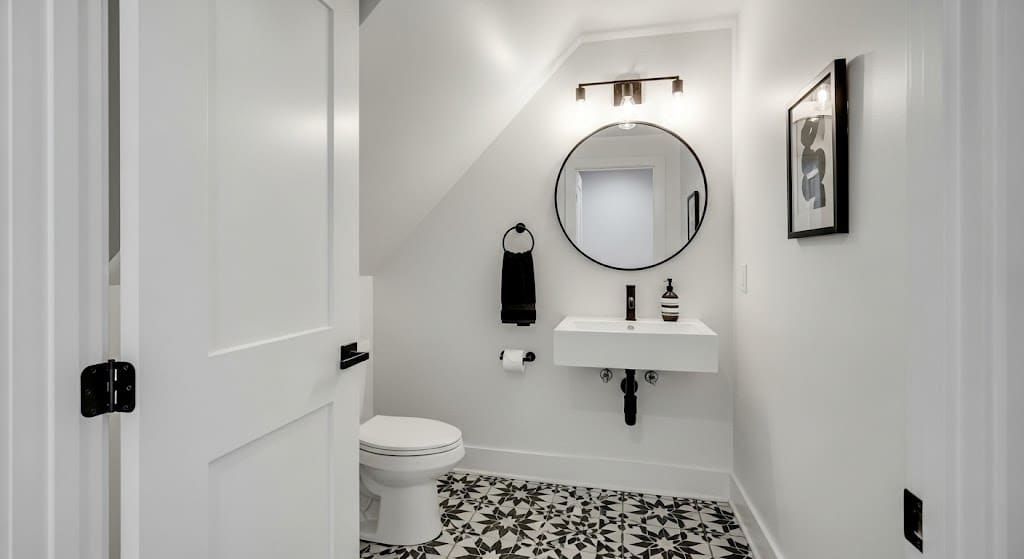
Stick to pure black and white for a timeless, graphic look that never goes out of style. Use black accessories against white walls or vice versa for maximum impact.
This approach works especially well with geometric tiles or bold patterns.
11. Compact Built-in Bench or Perch Shelf
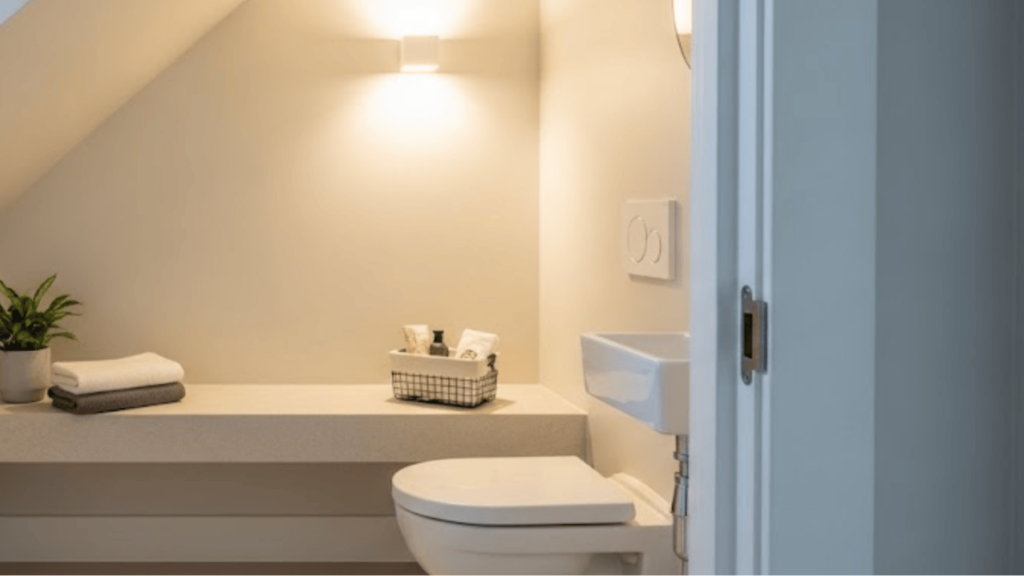
Install a small built-in bench or floating shelf beneath the sloped ceiling to utilize low-clearance areas that cannot accommodate fixtures.
This can serve as a convenient spot to set down a bag, store guest essentials, or display folded hand towels and a small plant.
12. Decorative Non-Slip Flooring
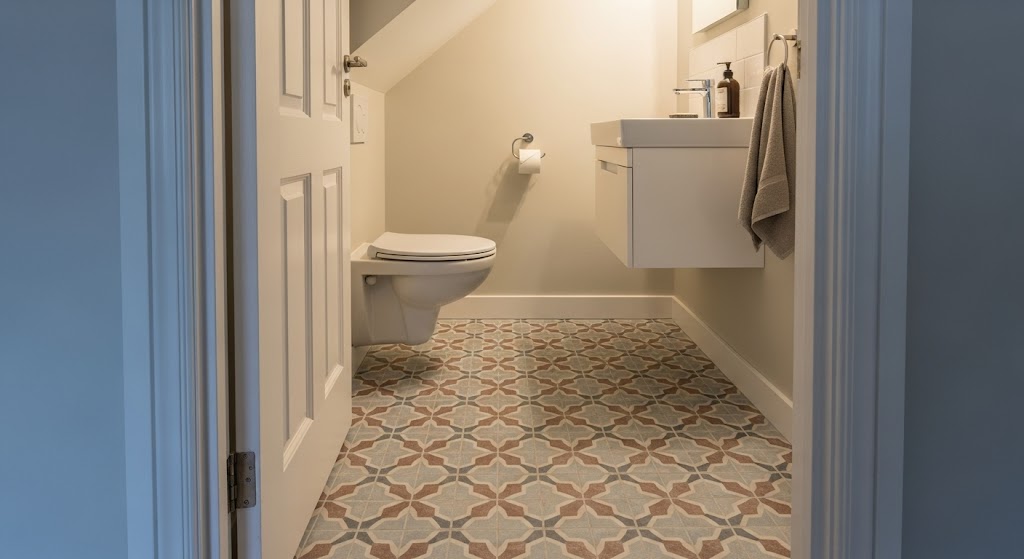
Choose eye-catching non-slip flooring that’s both stylish and safe, especially important in small spaces where water splashes easily.
Look for patterned encaustic tiles, textured vinyl, or matte-finish porcelain tiles that provide grip without sacrificing design.
13. Curved or Arched Feature Built Into the Stair Angle
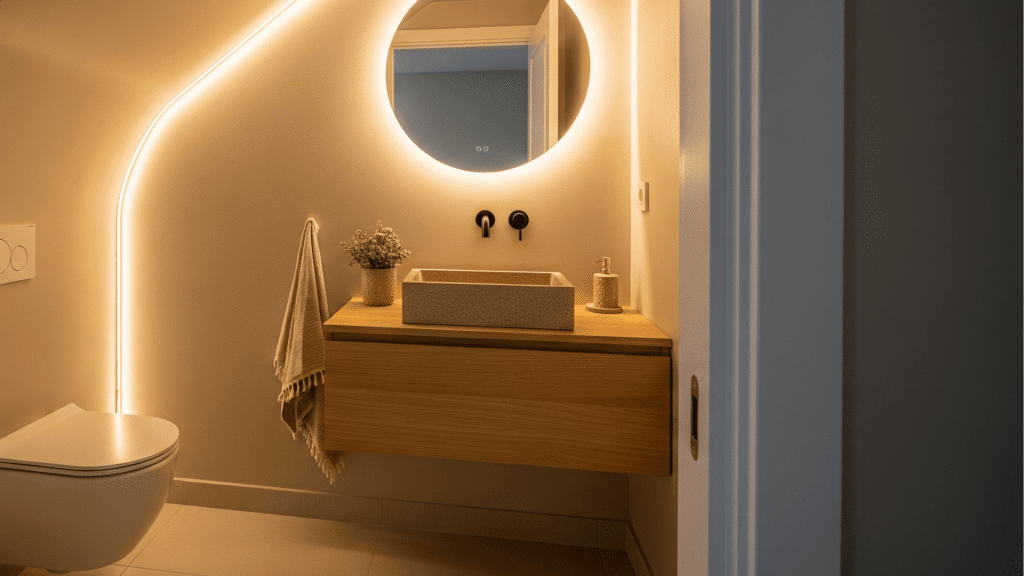
Instead of working against the sharp diagonal of the staircase, soften it visually by installing a curved trim detail or mini arch where the ceiling slope begins.
The curve visually eases the harsh line, making the room feel more organic and cozy.
14. Recessed Shelves in The Walls
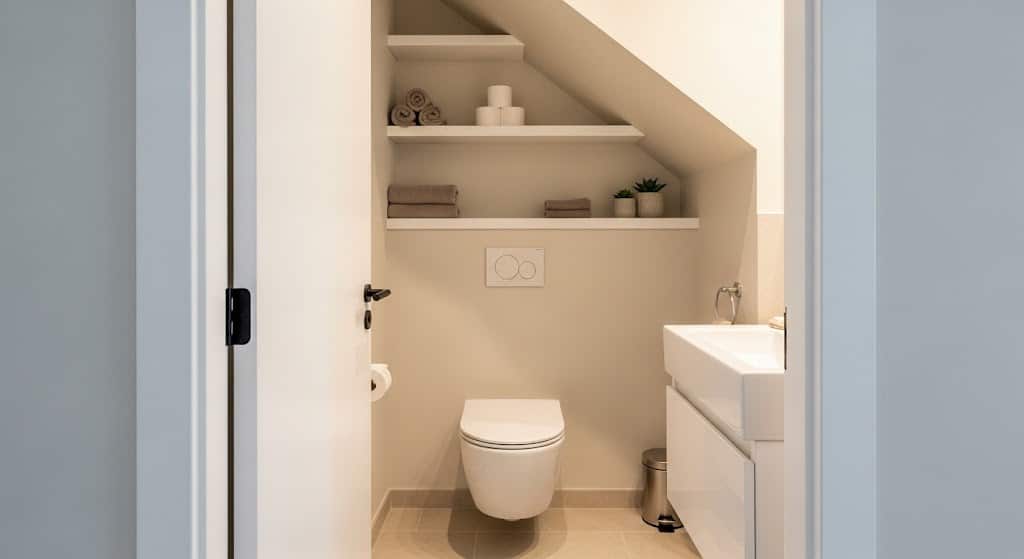
Cut shallow niches into wall studs for built-in storage that doesn’t stick out.
These work great for toilet paper, hand towels, or small decor items. Frame them with tile or trim to make them look intentional and finished.
15. Floor-to-Ceiling Mirrors to Expand Visual Space
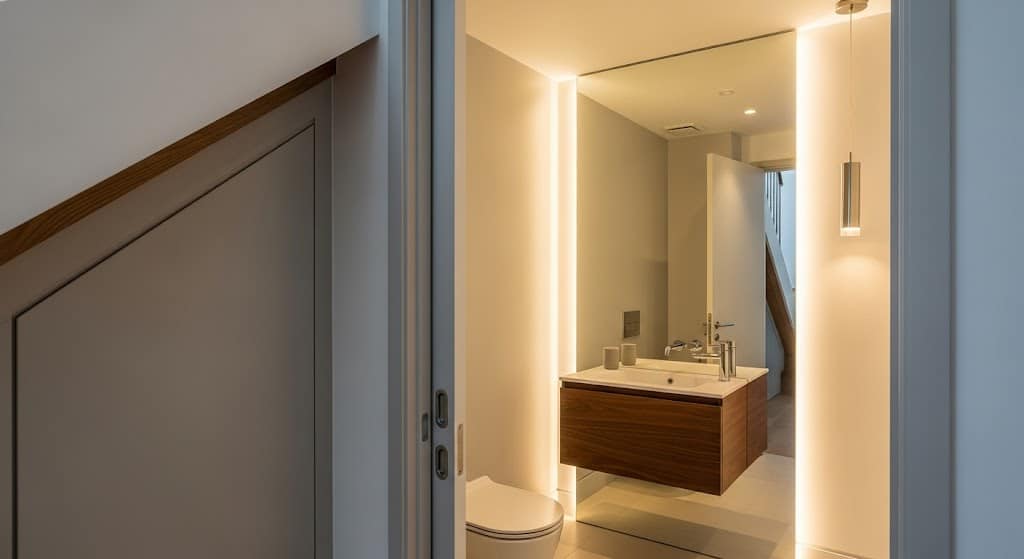
Install mirrors from floor to ceiling on one wall to double the apparent size of your room. This trick works especially well on the wall opposite the door. Make sure the mirror is properly secured, given the limited ceiling height.
16. Corner Sinks to Save Space
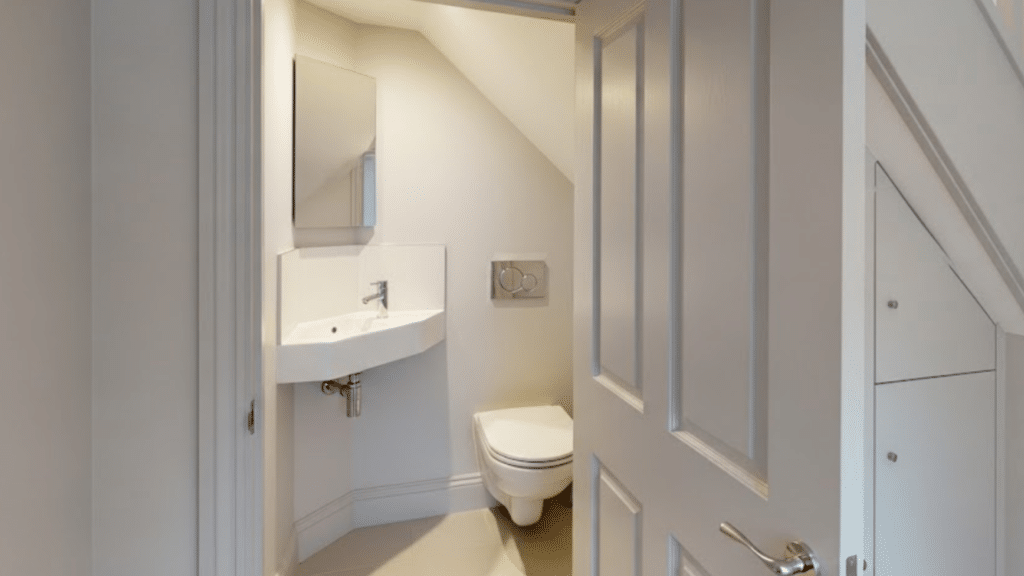
Choose a triangular corner sink that fits snugly into tight spaces without blocking walkways. These work well when your toilet takes up most of the straight wall space.
Pair with a corner-mounted faucet for maximum space efficiency.
17. Mini Pedestal Basins
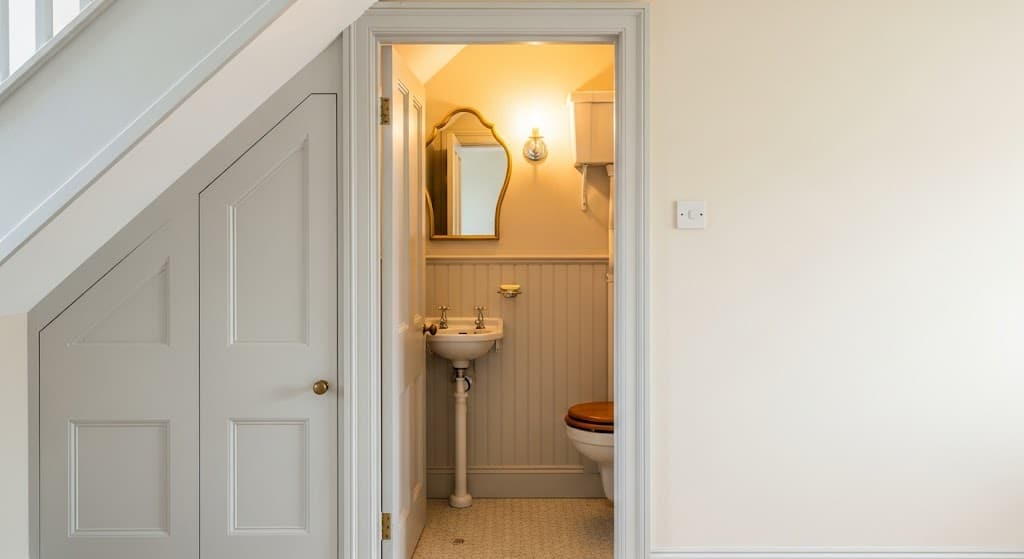
Install a compact pedestal sink that takes up minimal floor space but still looks proportional. Choose one with a narrow base that won’t crowd the toilet. These work well in traditional or vintage-style powder rooms.
18. Bold Tapware in Brass or Matte Black
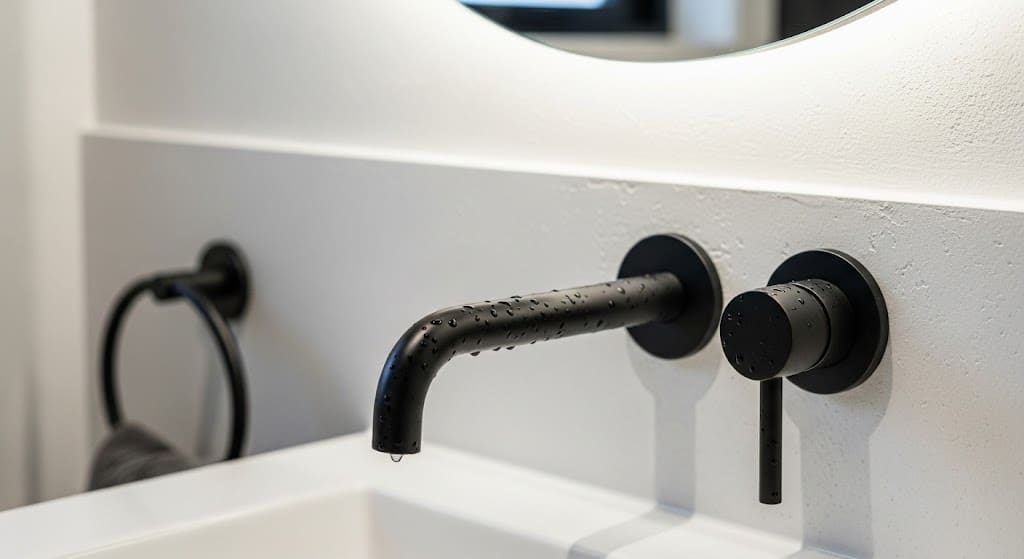
Choose statement faucets and fixtures that add personality without taking up space. Brass brings warmth while matte black adds modern sophistication.
Quality hardware makes even the smallest powder room feel expensive and well-designed.
19. Backlit LED Mirrors
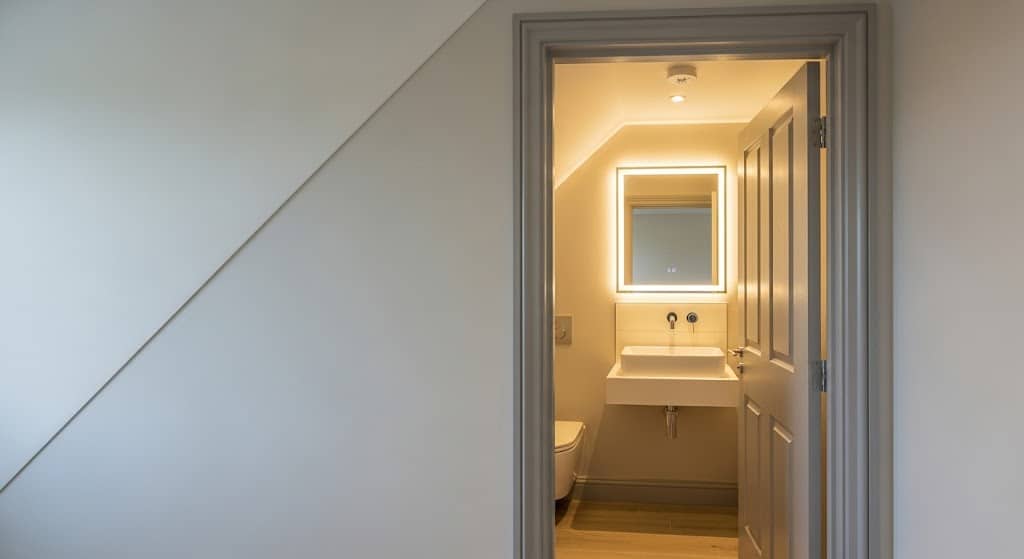
Install mirrors with built-in LED lighting for even, flattering illumination. This eliminates the need for separate light fixtures and creates a spa-like atmosphere.
Choose warm white LEDs to make the space feel welcoming rather than clinical.
20. Wall-Hung Towel Warmers
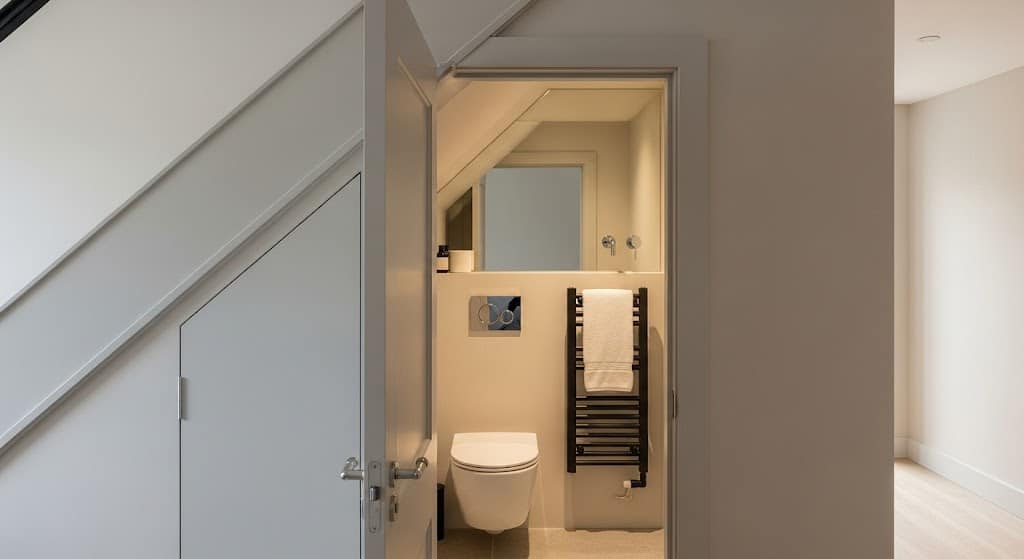
Add a compact heated towel rail that doubles as both storage and a luxury feature. Choose a slim vertical model that fits beside the sink or toilet. This adds comfort and prevents towels from taking up precious counter space.
21. Gallery Wall for Personality
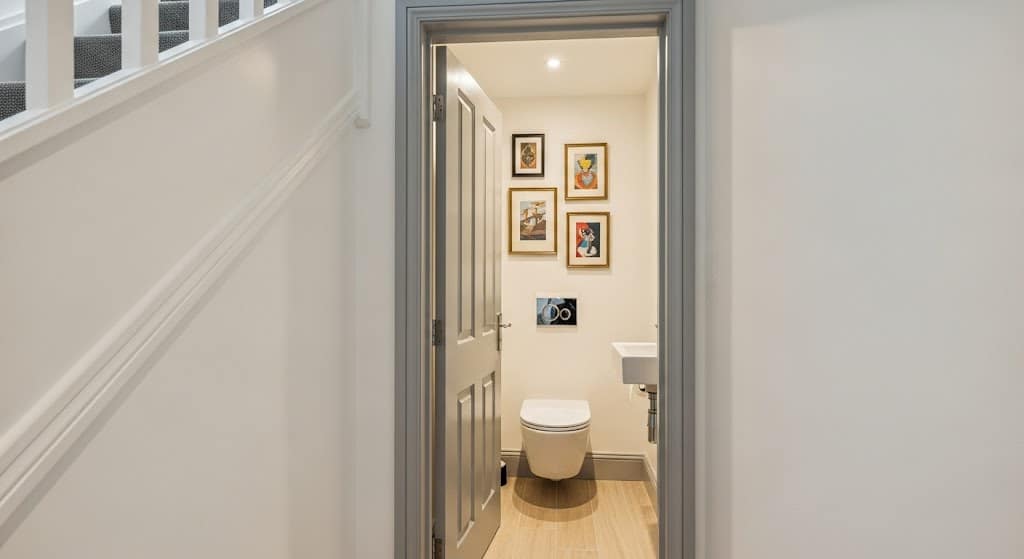
Create a small collection of framed art or photos on one wall for character. Choose pieces in similar frames or colors to keep it cohesive. A gallery wall adds personality without taking up any floor space.
22. Moody Lighting with Dimmers
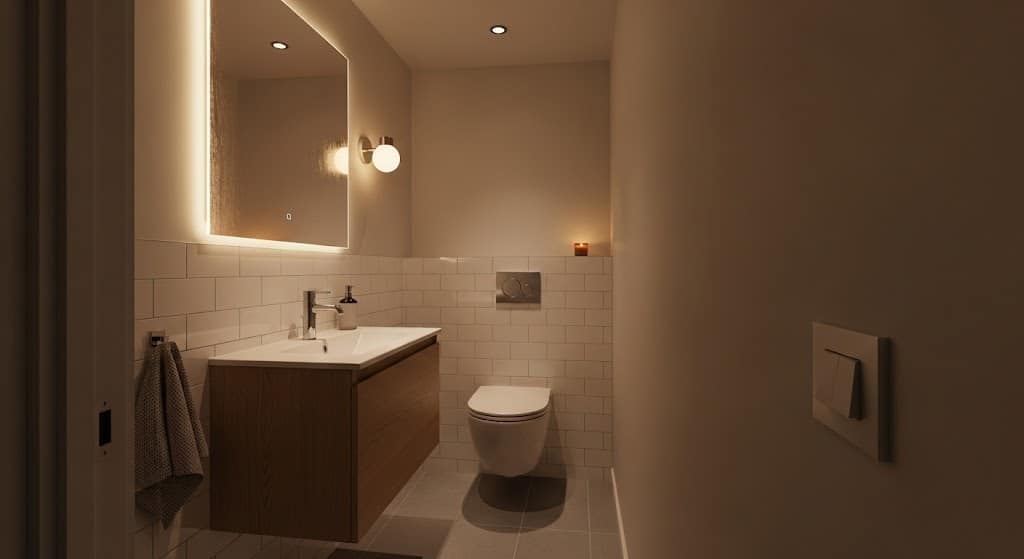
Install dimmer switches to adjust the lighting for different times of day.
Soft lighting in the evening creates a cozy and relaxing atmosphere. Brighter lighting during the day helps the small space feel more open.
23. Spa-Like Scent Diffusers
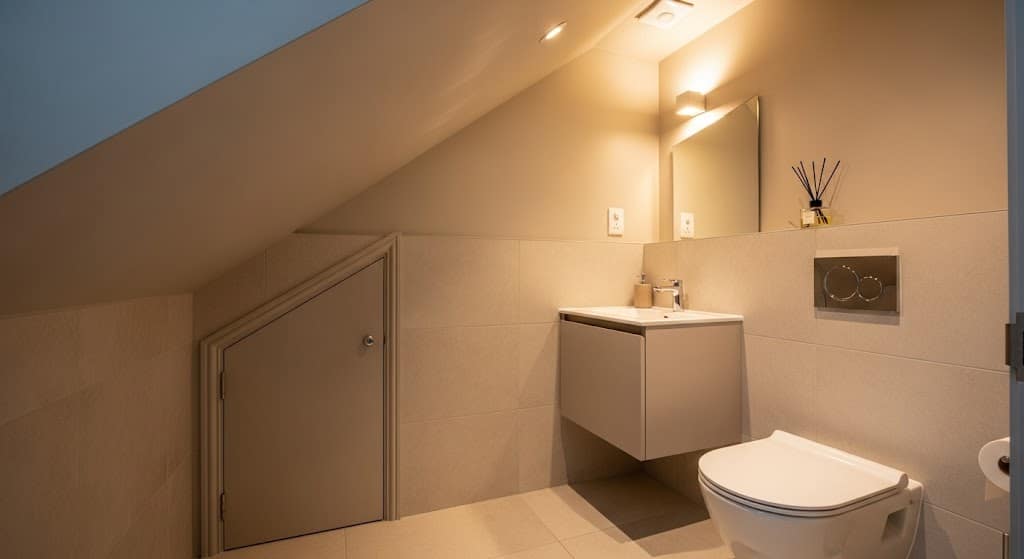
Add a small reed diffuser or wall-mounted scent dispenser for a luxury hotel feel. Choose fresh scents like eucalyptus or lavender that make the space feel larger.
Good smells make guests remember your powder room positively.
24. Skylights or Borrowed Light
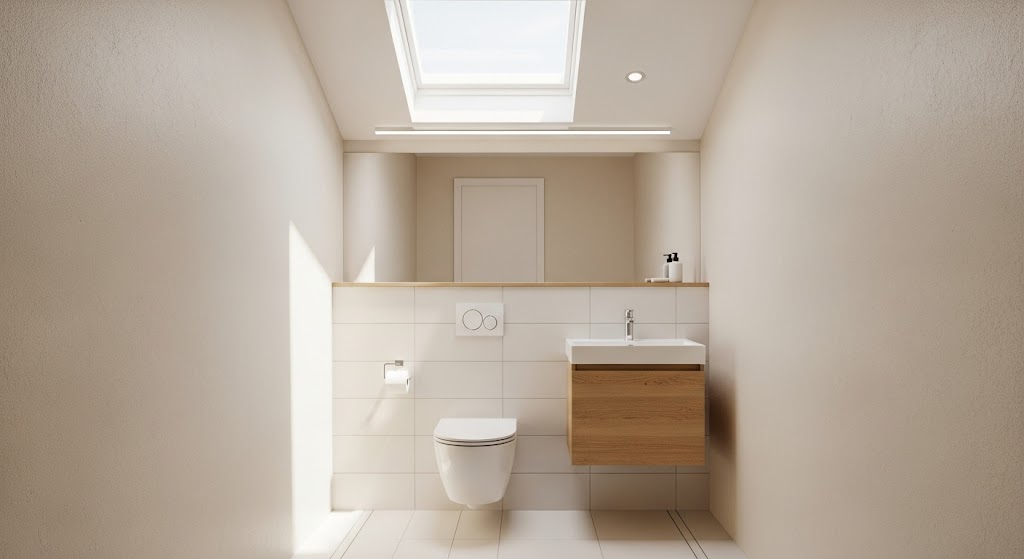
Install a small skylight if possible, or borrow light from adjacent rooms through glass panels. Natural light makes any small space feel larger and more welcoming.
Even a small amount of daylight transforms the atmosphere completely.
25. Stair-Inspired Wall Paneling or Trim
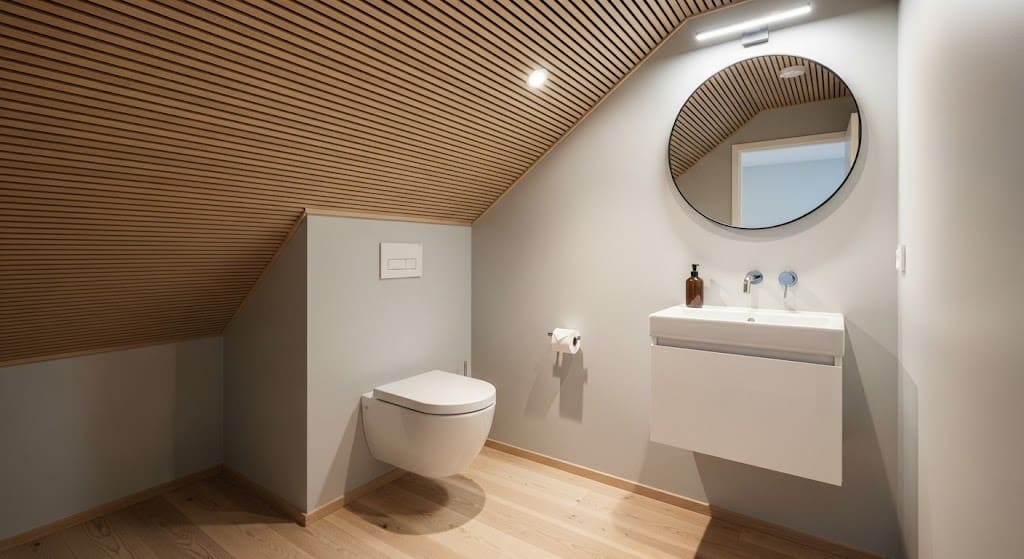
Echo the angle of your staircase inside the powder room with wall paneling or trim that follows the slope.
Use materials like V-groove panels, board-and-batten, or thin wood slats to create a custom feature wall that mirrors the architectural shape above. It’s a stylish way to lean into the angles instead of hiding them.
Conclusion
Your under-stairs toilet doesn’t have to be an afterthought. With these ideas, you can create a powder room that guests will actually enjoy using.
The key is choosing the right combination of space-saving fixtures, smart storage, and style elements that reflect your home’s personality.
Remember that even the tiniest spaces can pack a punch when designed thoughtfully.
Begin with your layout, prioritizing light colors and wall-mounted fixtures, and then incorporate your personal touches through colors, textures, or artwork.
Your future guests (and your family) will thank you for turning dead space into something truly functional and beautiful.
What’s your favorite idea from this list? Let me know in the comments below!