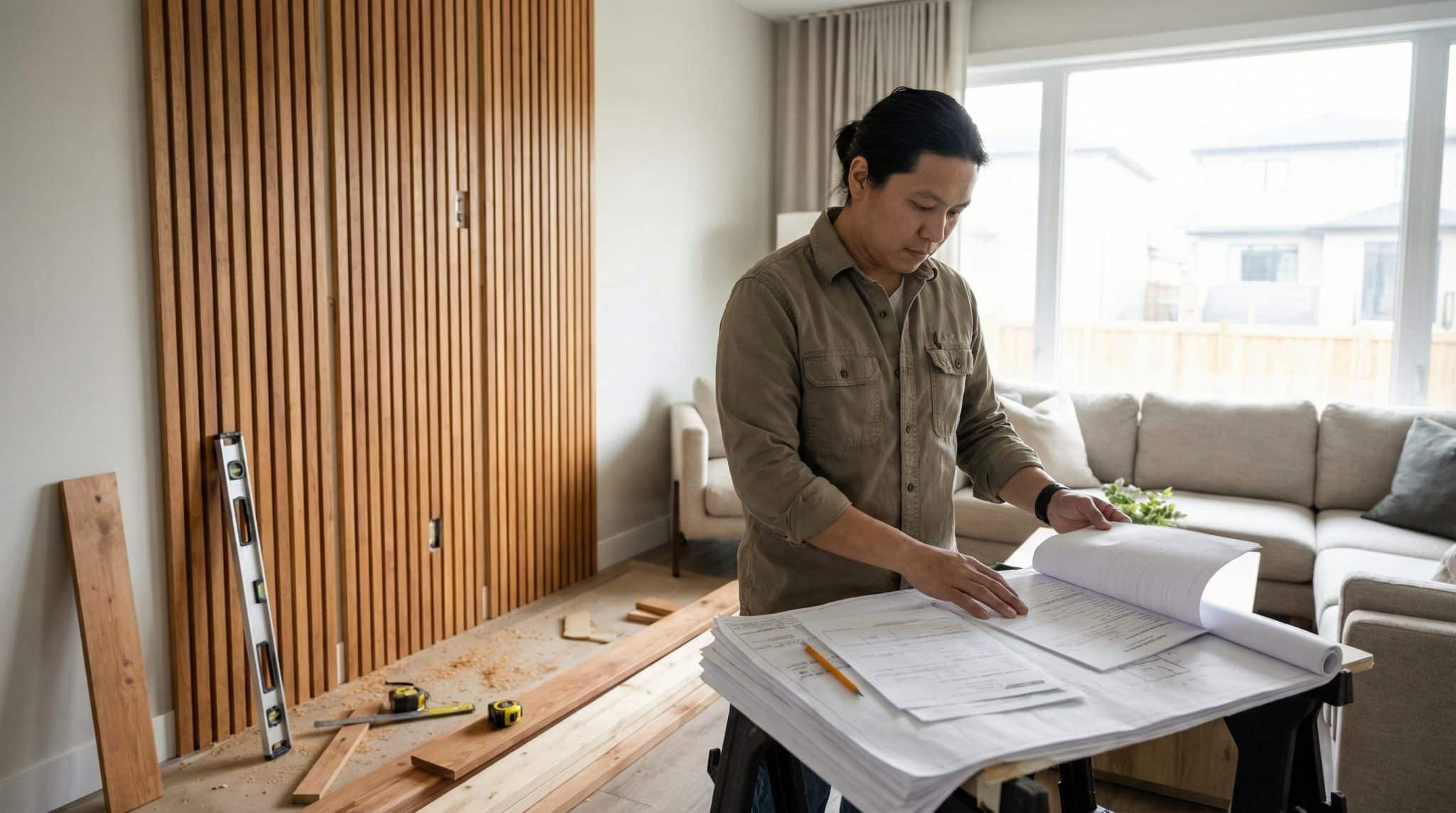
Media Wall Materials Most DIYers Miss (AKA: the boring stuff that keeps your TV from landing on your toes)
You know that dreamy Pinterest media wall? The one with the perfectly centered TV, the hidden wires, the glowy fireplace, and not a single sign that a human being lives there?
Yeah. The reason a lot of DIY media walls go sideways has nothing to do with talent or taste. It’s materials. The unsexy stuff. The “nobody photographed this part” part.
Skip the right lumber, backing, blocking, and in wall cable rules and you’re looking at the greatest hits album of regret: cracked drywall, a wobbly TV mount, shelves that sag like a sad taco, and (my personal favorite) an inspector giving you The Look.
So let’s talk about the materials most people don’t buy but should.
First: what are you actually building?
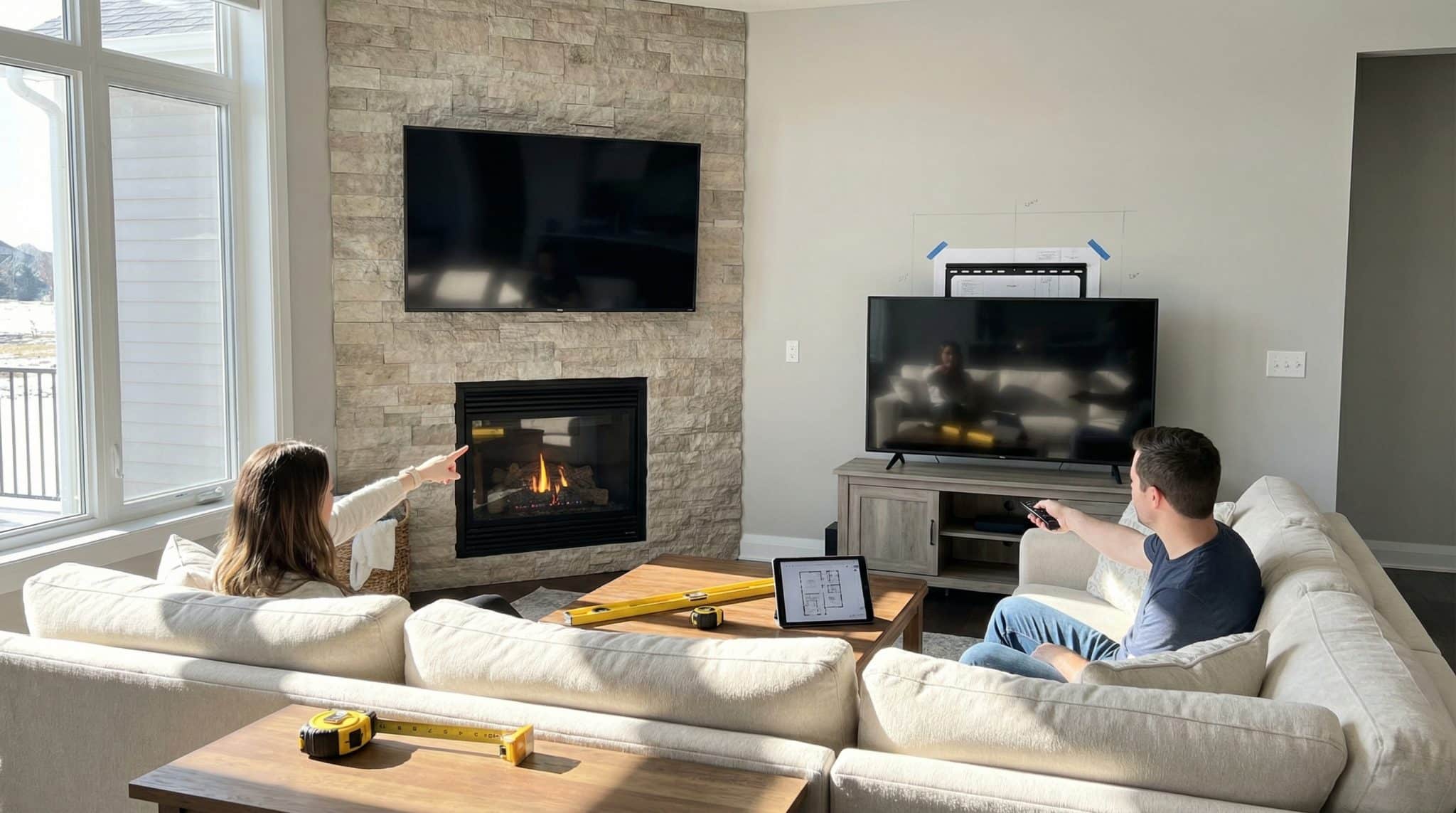
A “media wall” is basically a built out feature wall that holds a wall mounted TV and hides the cords. Sometimes it also includes:
- an electric fireplace insert (pretty, but needs rules)
- shelves or cabinets (also needs rules, just fewer fire ones)
- a recessed TV look (very sleek, very “I planned my life”)
Before you buy a single screw, decide which category you’re in:
- TV only (simplest)
- TV + electric fireplace insert (still DIY-able, but code/manual matters)
- TV + shelves/storage (blocking becomes your best friend)
And now the most important question…
The one measurement that bosses your whole project: depth
Depth is the difference between “clean, flush, custom” and “why does my TV look like it’s wearing a backpack?”
Grab your tape measure and figure out how far you want the media wall to come out from your existing wall. That number decides your stud size, whether a fireplace will fit, where cords can run everything.
Here’s the quick and realistic breakdown:
- 4-6 inches deep: shallow build, typically TV only. Think “I just want wires hidden.”
- 10-14 inches deep: the sweet spot for most people. Enough space for a flush-ish TV look and/or a modest electric fireplace and shelves.
- 14-20 inches deep: now you’re talking recessed fireplace cavity, deeper storage, and room to route things without swearing.
If you’re wondering where depth goes, it gets eaten up by:
- the TV bracket (often 3-6 inches depending on mount)
- cable clearance (2-3 inches if you want your cords not crushed)
- a backing layer (plywood = 3/4 inch)
- your finish surface (drywall/MDF = 1/2-3/4 inch)
Most “I want it to look built in” walls land around 12-16 inches deep.
Lumber: please don’t buy the twisty stuff
For framing, your basic bestie is:
- Kiln dried 2x4s, #2 grade (look for the “KD” stamp)
KD lumber matters because wet framing lumber loves to dry out and twist later… which means your nice smooth wall can crack like it’s auditioning for a haunted house.
Could you use 2x3s for a super shallow build? Sure. Would I trust a big TV mount on a “barely there” frame without serious blocking/backing? Not with my own television, and I’m not even emotionally attached to it.
One important note: only use pressure treated lumber if your bottom plate is sitting on concrete. Don’t frame the whole thing with PT “because it’s stronger.” It’s not the flex you think it is (and it can be annoyingly wet/warpy).
Blocking: the part everyone “forgets” until the TV mount is in their hand
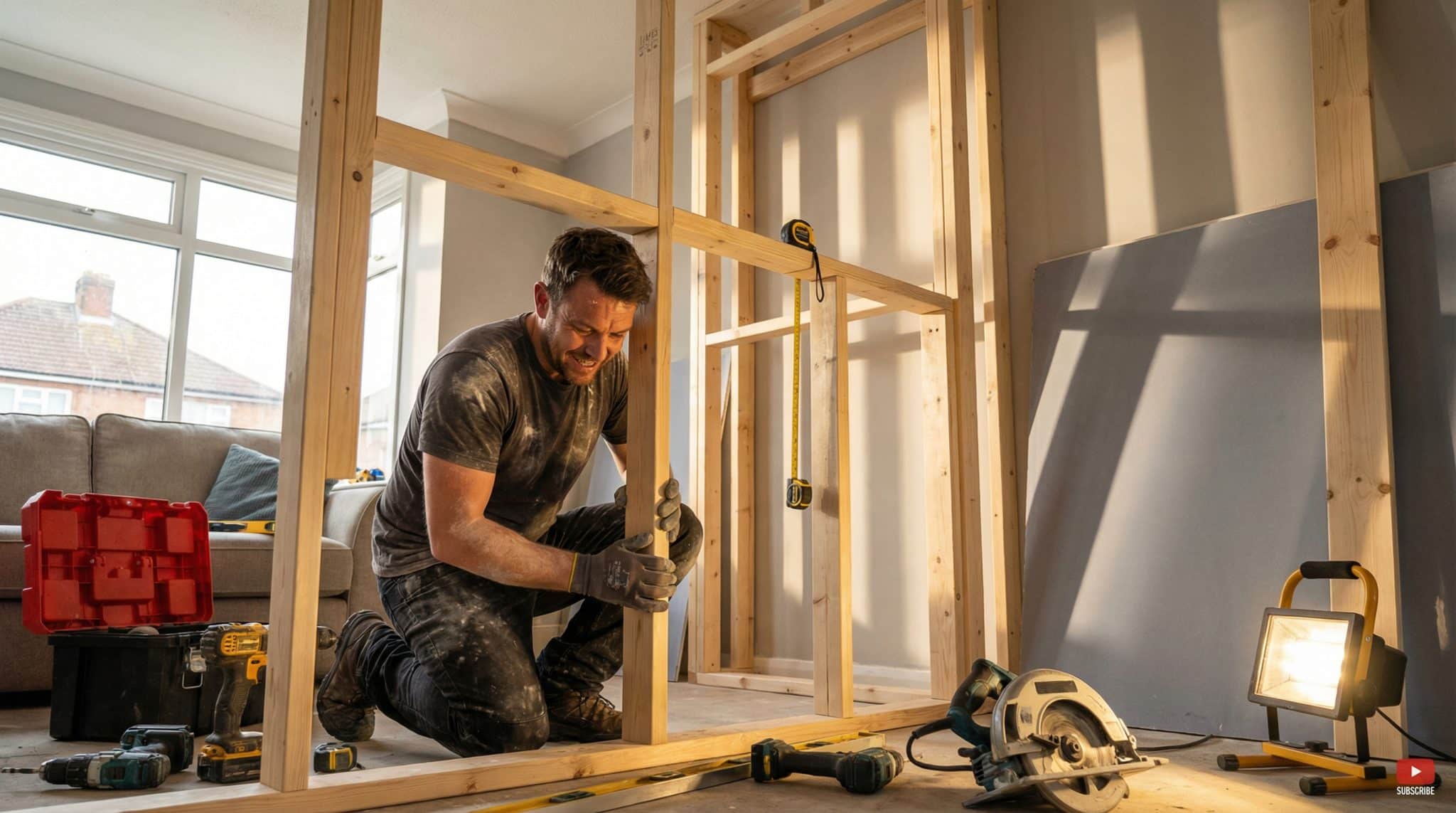
Blocking is just horizontal pieces of wood between studs. It’s not optional. It’s what your TV mount and shelf brackets actually grab onto.
If you do nothing else “extra,” do this:
- Add blocking at your TV mount height
- Add blocking anywhere shelves will attach
- If you’re doing a fireplace opening, frame it properly (sides + header per the insert specs)
I once helped a friend troubleshoot a “mystery wobbly TV.” Spoiler: the mount was basically bolted into vibes and drywall. Drywall is not structural. Drywall is decorative paper mush. It does not deserve that kind of responsibility.
The invisible hero layer: plywood backing behind the TV
If you want a mount that feels rock solid (and doesn’t slowly loosen over time), add 3/4 inch plywood behind the drywall where the TV goes.
Personally, I like a piece big enough that you’re not playing “hit the stud” later when you choose a different mount. If you can, extend the plywood beyond where you think the bracket will land.
Attach it securely to the studs with construction adhesive + screws. Then your lag bolts bite into something that isn’t… hopes and gypsum.
Drywall vs MDF (and when you MUST think about fire ratings)
For the face of the wall, most DIYers choose one of these:
Option 1: Regular drywall
- Cheapest, standard, paints great
- Downside: mudding/taping is a whole personality trait (and it takes time)
Option 2: Type X (fire rated) drywall
- Heavier, usually required when an electric fireplace insert manual or local code says so
- If your fireplace instructions call for it, don’t argue. The manual wins.
Option 3: MDF
- Smooth and pretty, and you can avoid a lot of drywall finishing
- BUT: it’s heavy, edges drink paint unless you prime them properly, and it is not fire rated
My opinion: drywall is the easiest “normal house” finish and the most forgiving long term. MDF can look amazing, but only if you’re willing to prime like your life depends on it and you’re not using it where heat clearances/fire ratings matter.
If you’re doing stove fireplace surrounds: read the fireplace manual and follow local code. This is not a “wing it and caulk it” moment.
Fasteners: don’t build a media wall with optimism and a nail gun
Here’s what actually works without loosening over time:
- Framing: 3″ structural screws (GRK/SPAX/Simpson style)
Nails can work, sure, but screws are more DIY friendly and less prone to working loose in a build out. - Hanging drywall: drywall screws (length depends on board thickness)
- Mounting the TV bracket: lag bolts into studs/plywood (follow your mount’s requirements)
And please, for the love of your future self, don’t mount a TV bracket with random “misc screws I found in a jar.” That jar is cursed.
Cable management: the in wall rules people accidentally break
This is where the “pretty” projects get spicy.
1) Not all cables can go inside a wall
Regular HDMI cords often aren’t rated for in wall use. You want in wall rated cables (look for ratings like CL2/CL3 for certain low voltage runs).
2) Use conduit if you want future proofing
Running low voltage cables through ENT flexible conduit (the blue “smurf tube”) is one of those annoying steps that feels unnecessary until you upgrade your TV or add something later. Then you feel like a genius.
3) Keep power and low voltage separated
Don’t run power and HDMI/Ethernet all cuddled up together. Keep them separated (your local inspector may have specifics). This isn’t just code fussiness running them together can cause signal issues that will make you question reality at 10:30 pm.
Brush plates and recessed low voltage boxes make everything look finished and keep your cords from dangling like sad spaghetti behind the TV.
Electrical: when I’d tap out and call an electrician
Low voltage (HDMI/Ethernet/speaker wire) is often DIY territory.
But if you’re adding new 120V outlets or a dedicated circuit for an electric fireplace, that’s usually electrician + permit territory, depending on where you live.
Also, electric fireplaces commonly pull serious wattage. Many need their own circuit so you’re not blowing breakers every time you turn on the heat and the microwave at the same time (ask me how I know actually don’t, it’s embarrassing).
If you’re adding an electric fireplace: the manual is the boss
I’m going to say it again because it matters:
Your fireplace manual and local code override everything you read on the internet (including me).
Clearances to combustibles, required drywall type, opening size, where the outlet can be these are model specific.
Rule of thumb-ish things exist, but this is not the place to freestyle.
For the opening, you’ll typically frame it slightly larger than the unit to allow for trim and heat expansion again, check your specific install specs.
My “don’t overthink it” shopping list (the basics)
If you’re doing a pretty standard TV only or TV+shelves build, you’re typically looking at:
- kiln dried 2x4s (studs + plates + blocking)
- 3/4″ plywood backing where the TV mount goes
- drywall (or Type X if required)
- structural screws for framing
- drywall screws
- lag bolts (as required by your mount)
- low voltage boxes + brush plates
- in wall rated cables + conduit (optional but smart)
Costs and common pitfalls vary wildly by size and features, but a basic materials run for a simple build often lands in the few hundred dollar range then electrical/fireplace add ons can jump it up fast.
The quick plan so you don’t end up making 14 trips to the hardware store
- Pick your build type (TV only, fireplace, shelves)
- Decide your depth (this drives everything)
- Sketch your stud layout + blocking locations
- Plan plywood backing behind the TV
- Plan cable paths (and conduit if you want to be smug later)
- Confirm electrical/fireplace requirements before you close up the wall
Do those steps and you won’t be standing in your living room holding a TV mount, whispering “now what?” into the void.
If you want, tell me your TV size, whether you’re adding a fireplace, and how deep you can build out and I’ll tell you what I’d frame it with and what I’d put on the shopping list.