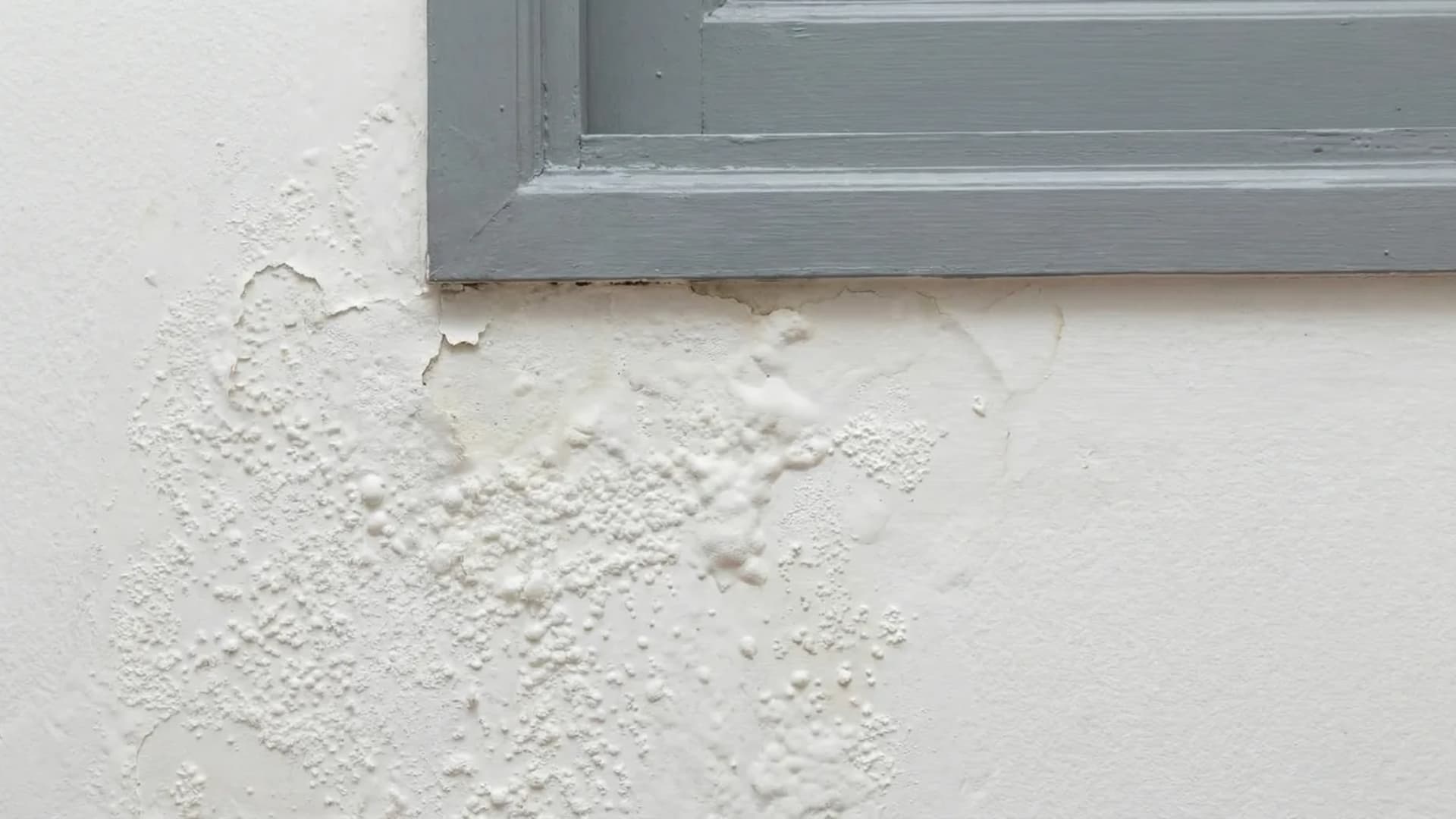
You move a chair. You open a drawer. And something stops you cold. A dark patch spreading across the wood. A musty smell that has no business being there.
Your stomach drops. Is the furniture ruined? Is it safe to breathe near?
That reaction is real, and it hits more homeowners than you’d expect. But here’s what 15 years of dealing with fungi and plant diseases has taught me: mold on wood furniture is fixable. In most cases, you can handle it yourself with the right approach and a few household supplies.
This guide walks you through what mold looks like on wood, how to remove mold from wood furniture based on your exact wood type, and how to keep it from coming back. You found it. Now let’s fix it.
What Does Mold on Wood Furniture Look Like?
Not every dark spot on wood is mold. And not every mold patch looks the same. Knowing what to look for saves you from treating the wrong thing.
Mold on wood furniture usually shows up in one of these forms:
- Color: Black, green, gray, or white patches are the most common. Some mold appears as a dusty or powdery layer. Others look fuzzy or slightly raised.
- Texture: If a spot feels soft, furry, or powdery when you brush near it, that’s a strong sign of mold. A simple stain lies flat and smooth.
- Smell: This is the one people miss. A musty, damp, earthy smell near a piece of furniture often means mold is present, even before you see anything.
- Location: Check spots that stay damp or dark. The back of furniture against a wall, the underside of cushioned seats, inside drawers, and joints where wood meets wood are common hiding spots.
- The stain test: Press a drop of water on the spot. A stain won’t change. Mold may darken slightly or feel different when wet.
I’ve spent years identifying fungal growth on plant material and wood in the field. One pattern I see constantly: homeowners mistake mineral deposits, water stains, or even dried paint drips for mold. The quickest field test I use?
Lightly dab the spot with a cotton swab dipped in household bleach. If the spot lightens within a minute or two, it’s likely biological (mold or mildew). If it stays the same, you’re probably looking at a stain.
The EPA recommends treating any visible mold growth promptly, regardless of the species, since prolonged exposure to any indoor mold can cause health effects.
What Is the Difference Between Mold and Mildew on Wood Furniture?
Many people confuse mold and mildew. They are both fungi. But they behave very differently on wood, and they require different cleaning approaches.
| Feature | Mold | Mildew |
|---|---|---|
| Color | Black, green, blue, gray | White or light gray |
| Texture | Fuzzy, slimy, or velvety | Flat and powdery |
| Depth | Grows into the wood fibers | Stays on the surface only |
| Smell | Strong musty odor | Mild or no odor |
| Health Risk | Higher | Lower |
| Difficulty in Cleaning | Harder needs targeted cleaning | Easier, basic soap and water often work |
Mildew stays on the surface. It is easier to remove. A simple dish soap and warm water solution usually handles it well.
Mold is more serious. It grows deep into wood fibers. It can weaken the structure of your furniture over time. It also poses a greater health risk than mildew.
Pro Tip: If the spot brushes off easily and has no strong smell, it is likely mildew. If it keeps coming back or smells strong, treat it as mold.
What Are the Common Types of Mold Found on Wood Furniture?
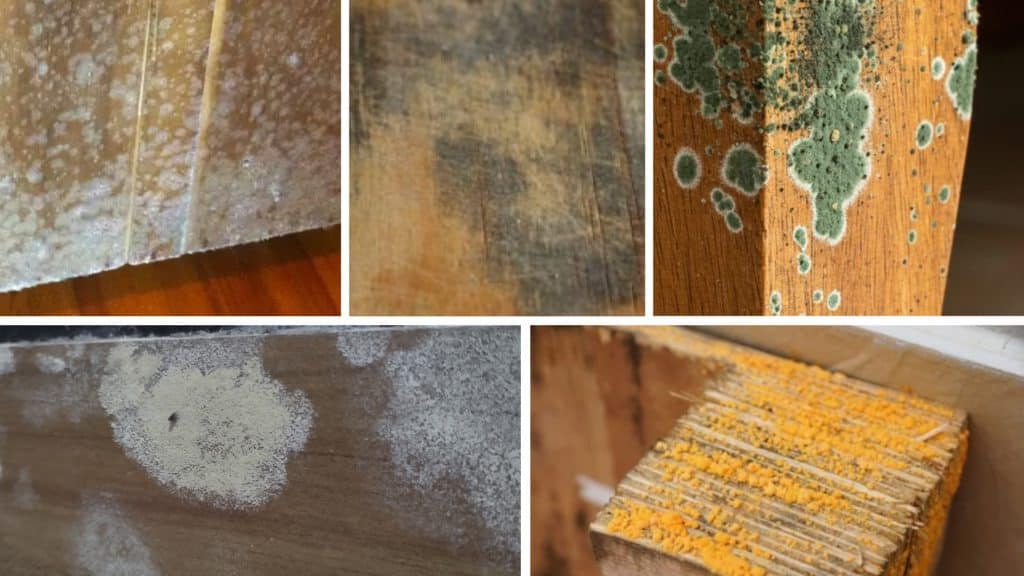
The type of mold you have changes everything. It affects how quickly it spreads, how deeply it penetrates, and how much risk it poses. Cleaning the wrong type the wrong way can make things worse.
1. White Mold
White mold is usually the first to appear on wood furniture. It grows in cool, low-light spaces and stays close to the surface. That makes it the easiest type to treat when caught early.
White mold on wood is often associated with species such as Sclerotinia or certain Aspergillus strains. It typically looks powdery or stringy and can be mistaken for dust or efflorescence.
While not as dangerous as black mold, white mold still releases spores that irritate the lungs, so protective gear is a must during cleanup.
2. Black Mold
Black mold takes weeks to develop. It needs wood that has stayed wet for a long time. It carries the highest health risk of all the types listed here.
People with asthma, allergies, or weak immune systems react more strongly to it. Do not clean it yourself if anyone in your home is already showing symptoms.
The species most people worry about is Stachybotrys chartarum, which can produce mycotoxins. These toxins can trigger respiratory issues, skin irritation, and chronic fatigue with prolonged exposure.
That said, the CDC notes that all indoor molds should be treated seriously, not only black mold.
3. Green Mold
Green mold spreads faster than most other types. It thrives in warm, damp spaces and can move from the surface deep into the wood fibers within days. Furniture stored near bathroom walls or in poorly ventilated basements is most at risk.
Green mold on furniture is often caused by Penicillium or Cladosporium species. It’s more common than most homeowners realize, and while it’s less toxic than black mold, it still triggers allergic reactions and can worsen asthma.
4. Gray Mold
Gray mold grows slowly in circular patches. It most often appears on older or unfinished wood that has absorbed moisture over the course of months. It is one of the more common types found on antique pieces stored away.
Gray mold grows slowly in circular patches. It typically appears on older or unfinished wood that has absorbed moisture over several months. It’s one of the more common types found on antique furniture stored in attics, garages, or climate-uncontrolled spaces.
5. Yellow or Orange Mold
This is the least common type found on wood furniture.
It grows on raw, untreated wood that has been exposed to food spills or standing water for a long time. Kitchen and dining furniture left in damp conditions without regular cleaning are the most common targets.
It rarely spreads as fast as green or black mold, but it still needs to be treated promptly.
Pro Tip: You do not always need to identify the exact type before acting. If the mold covers a small area and no one in your home has breathing problems, start with the cleaning steps below. If the patch is large or someone is already feeling unwell, call a professional first.
Why Mold Grows on Wood Furniture?
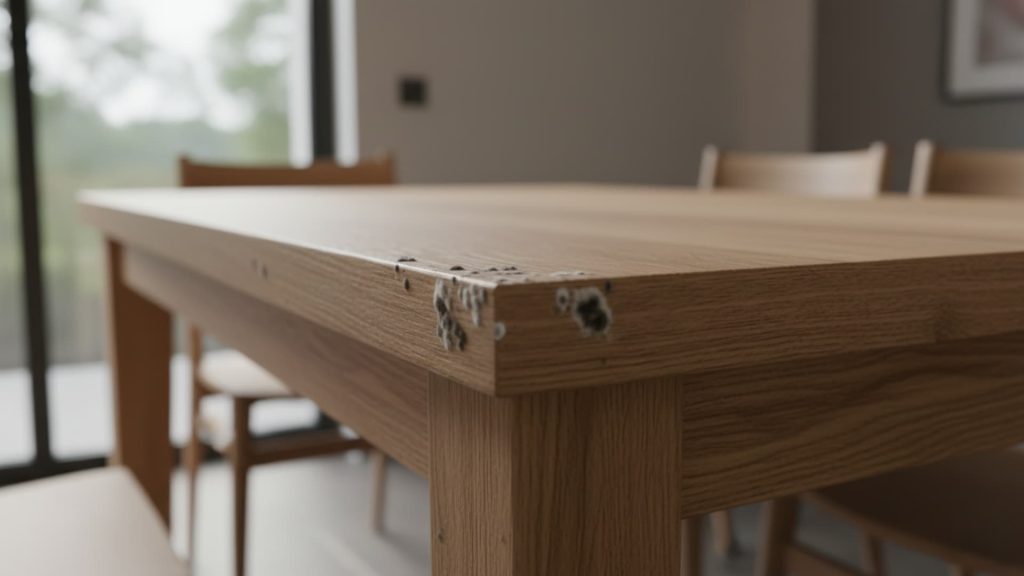
Mold doesn’t appear randomly. It shows up when the conditions are right. And wood gives mold almost everything it needs to grow.
Wood is porous. It pulls in moisture and holds it. That trapped dampness, sitting inside the fibers of your furniture, is exactly what mold feeds on.
Three things create that condition:
- Moisture: A spill that was not fully dried. A leaky pipe nearby. Rain is coming through an open window. It does not take much to get started.
- High humidity: When indoor humidity exceeds 60%, wood can remain damp even without a visible water source. Basements, bathrooms, and closed-off rooms are where this hits hardest.
- Poor airflow: Furniture pushed tight against a wall traps air. That air holds moisture. Mold settles in quietly and spreads for weeks before you see a single spot.
Most people only notice the mold. The real problem is always the condition that caused it. Fix that first, and cleaning actually works.
After 15 years in integrated pest management, one thing I tell every homeowner: fungi (mold included) don’t pick random targets. They go where the moisture is.
I’ve walked into homes where the mold was on one dresser in the entire house, and it always traced back to the same thing: that piece was parked against a cold exterior wall with zero air gap.
The wall condensed moisture overnight, and the back panel of the dresser soaked it up for months. Move it three inches out, and the problem stops.
There’s a fourth factor most guides skip: food source. Wood contains cellulose, and cellulose is organic matter that mold feeds on directly. Combine that with trapped moisture, and you’ve given mold everything it needs to colonize and spread. Finished or sealed wood resists this better because the sealant blocks moisture absorption and cuts off that food supply.
How to Remove Mold from Wood Furniture?
Do not touch anything yet. The order you follow here matters. One wrong move can spread spores to nearby clean surfaces.
What You Need Before You Start Cleaning:
| Safety Gear | Cleaning Tools | Cleaning Solutions |
|---|---|---|
| Rubber gloves (wrist-length) | HEPA filter vacuum | White vinegar |
| N95 respirator or face mask | Spray bottle | Hydrogen peroxide (3%) |
| Safety goggles | Microfiber cloths | Mild dish soap + warm water |
| Soft-bristled scrub brush | Denatured alcohol (antique wood only) | |
| Sealed plastic bags |
Gather everything before you touch the furniture. Stopping mid-clean to find a supply can spread spores to previously clean areas. You may also want baking soda on hand.
Mixed into a paste (three parts baking soda to one part water), it works well on light surface mold and won’t damage most finishes.
Step 1: Protect Yourself
Wear rubber gloves, a face mask, and safety goggles. Open every window and door. Move the furniture outside if you can.
The EPA recommends that homeowners handle mold cleanup themselves only if the affected area is smaller than about 10 square feet (roughly a 3×3-foot patch). Anything larger warrants a professional.
Step 2: Vacuum First
Use a HEPA filter vacuum on the surface. A regular vacuum pushes spores into the air. Seal the vacuum bag in a plastic bag and throw it away right after.
Step 3: Identify Your Wood Type
Check the surface before you pick a cleaning solution. The wrong one can damage the finish or push mold deeper into the wood.
| Surface Feels Like | Wood Type |
|---|---|
| Smooth and coated | Finished or sealed |
| Has a painted layer | Painted wood |
| Rough with no coating | Raw or unfinished |
| Old or restored piece | Antique wood |
Step 4: Clean the Right Way
Each wood type needs a different cleaning solution. Using the wrong one can strip the finish or leave mold behind. Find your wood type below and follow only those steps.
Finished or Sealed Wood
- Mix one part white vinegar with three parts water
- Wipe the area with a damp microfiber cloth
- Let it sit for one hour, then wipe it dry
- Still seeing mold? Use dish soap in warm water with a soft brush
Painted Wood
- Mix one teaspoon of dish soap into warm water
- Scrub gently with a soft sponge, rinsing it often
- Wipe with a clean, damp cloth and dry the surface right away
Raw or Unfinished Wood
- Apply white vinegar directly and let it sit for one hour
- Wipe away with a damp cloth
- Still seeing mold? Apply a bleach and water solution with a stiff brush
- Let it air-dry fully without rinsing
- Sand with 100-grit sandpaper only if staining remains, then reseal
Alternative to raw wood: Mix 1 tablespoon of borax with 1 cup of water. Apply with a soft-bristled brush, scrub the mold away, and leave the borax solution on the wood (don’t rinse). Point a fan at the surface to speed drying. Borax is a safer alternative to bleach and leaves a residue that helps resist future growth.
Antique or Vintage Wood
- Test denatured alcohol on a hidden spot first and wait ten minutes
- If the finish holds, apply it carefully to the moldy area
- Skip vinegar entirely. It damages old finishes like shellac
- Is the mold still deep, or is it already lifting? Call a restoration professional
Step 5: Dry Completely
Place the furniture in direct sunlight for a few hours. Sunlight draws out remaining moisture and kills any remaining spores. No sunlight? Point a fan at the piece and leave it in a well-ventilated spot. Do not move it back until the surface feels fully dry.
Pro Tip: Run your hand across the cleaned area after a few hours. If it still feels cool or damp, give it more time. Moving furniture back too soon brings the mold straight back.
What Mistakes Should You Avoid When Cleaning Mold Off Wood?
Most cleaning mistakes don’t show up right away. The wood looks fine. Then the mold comes back in two weeks. Or the finish is gone. Here’s what causes that.
- Do not soak the wood: More liquid does not mean better cleaning. Wood absorbs water fast. A soaking wet cloth pushes moisture deeper into the fibers and feeds the next round of mold growth.
- Do not mix cleaning solutions: This one can actually hurt you. Bleach and ammonia together produce toxic fumes. Bleach and vinegar together cancel each other out and create a corrosive gas. Stick to one solution at a time, and wipe the surface dry before switching to another.
- Do not skip drying: Wiping the mold away and moving on is the most common mistake people make. If the wood remains damp after cleaning, mold will return. Always dry the surface completely before putting the furniture back in place.
- Do not sand active mold: Sanding feels like the obvious fix for stubborn spots. But sanding active mold releases thousands of spores into the air at once. Sand only as a last resort, and only after the mold has been treated and the surface is fully dry.
- Do not use bleach on finished wood: Bleach can strip stain, varnish, and paint. It’s also less effective on porous surfaces than most people assume because it doesn’t penetrate deep enough to reach mold roots in the grain. Save bleach for raw, unfinished wood only, and even then, test a hidden spot first.
Pro Tip: After cleaning, place the furniture in direct sunlight for a few hours if you can. Sunlight kills leftover spores and pulls remaining moisture out of the wood naturally. It’s the simplest finishing step most people skip.
How to Stop Mold from Coming Back?
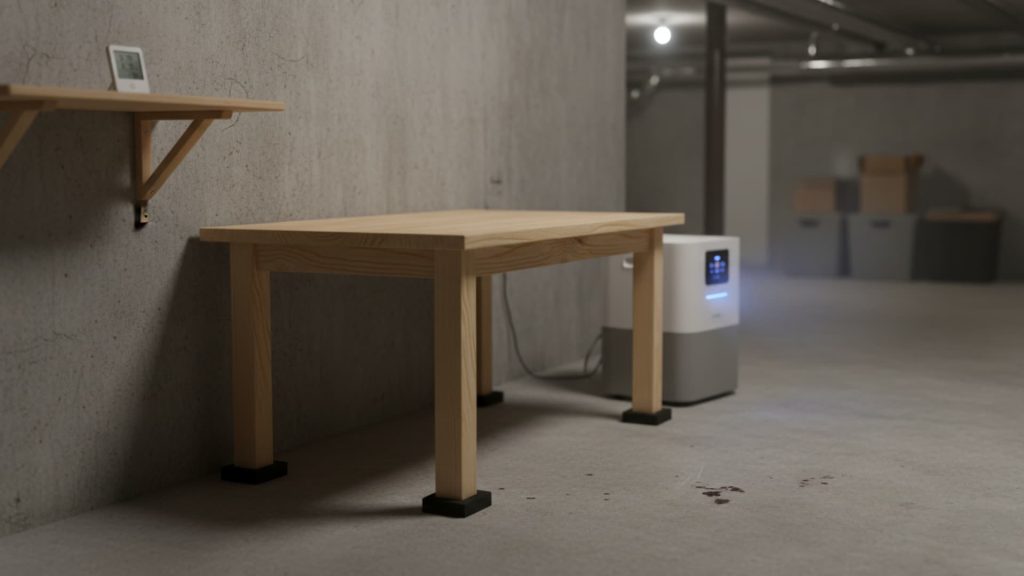
Mold came back because the condition that caused it was never fixed. The cleaning worked. The environment did not change. That is the cycle most people get stuck in.
| Action | Why It Works |
|---|---|
| Keep indoor humidity below 50% | Mold starts growing when humidity rises above 60%. Staying at 50% gives you a safe buffer. |
| Pull furniture a few inches from the walls | That gap lets air move freely and stops moisture from building up in the spots mold targets first. |
| Fix leaks as soon as you spot them | A slow drip from a pipe or window keeps wood permanently damp. Moisture problems do not fix themselves. |
| Wipe down wood furniture regularly | Dust and grime give mold spores something to feed on. A dry cloth once a week removes that food source. |
| Seal raw or unfinished wood | Bare wood absorbs moisture with no resistance. A coat of varnish, sealant, or wood wax slows that absorption. |
| Use a dehumidifier in damp rooms | Basements and bathrooms hold more moisture than any other room. Run one year-round in those spaces. |
For outdoor wood furniture: Apply a mold-resistant varnish or sealant each season. Outdoor wood faces rain, humidity, and temperature shifts. Regular sealing is the best way to keep moisture out.
Pro Tip: Use a basic hygrometer to check humidity levels in each room. They cost very little and are available at most hardware stores.
Which Wood Types Resist Mold Best?
Not all wood reacts the same way to moisture. If you’re buying new furniture for a damp-prone room, the wood species matters:
Teak is the standout. Its natural oils and dense grain make it highly resistant to moisture and fungal growth. It’s a strong pick for both indoor and outdoor use.
Cedar contains natural oils that repel moisture and resist decay. It’s commonly used for closets and outdoor furniture for this reason.
Oak is durable but has an open grain that absorbs moisture if left unsealed. Keep it sealed and it performs well.
Pine and poplar are softer, more porous, and absorb water quickly. They’re the most vulnerable to mold and need a quality sealant coat to hold up in humid conditions.
If you already own furniture made from softer woods, sealing it with polyurethane or marine-grade varnish goes a long way toward preventing mold.
When to Call a Professional?
If the mold covers more than ten square feet, stop. That’s not a DIY job. At that size, spores have likely spread beyond what you can see, and cleaning the surface won’t be enough.
Mold that keeps coming back after you’ve cleaned it is another clear sign. If you’ve removed it twice and it returns within weeks, the moisture source is deeper than you can reach. A professional can find it.
Black mold deserves special attention. It can look similar to other mold types but may cause stronger reactions in people with allergies, asthma, or weakened immune systems. If you’re unsure what type of mold you’re dealing with and someone in your home is already showing symptoms, don’t guess.
Check the wood itself before you decide. Press on the affected area gently. If the wood feels soft, spongy, or gives under light pressure, it has started to rot.
Cleaning won’t reverse structural damage. At that point, the conversation is restoration or replacement.
Pro Tip: When you call a professional, ask specifically for an IICRC-certified mold remediation technician. This certification means they follow a recognized standard for mold removal and won’t just clean the surface and leave.
Finally, if the mold is on a piece with real value, whether financial or personal, don’t risk it. A furniture restoration professional can assess the damage properly and give you options before anything is lost for good.
Conclusion
Mold on wood furniture isn’t the end of a piece you love. It’s a moisture problem with a real, practical fix.
You now know how to spot it, what causes it, which cleaning method matches your wood type, and how to keep it from returning. Most homeowners either throw out a piece that’s perfectly salvageable or wipe the surface and hope for the best. Neither gets the job done.
Treat the right wood the right way. Fix the moisture source behind it. Give the wood time to fully dry before you move it back.
That dark patch on your favorite bookshelf or dining table doesn’t mean it’s over. It means it’s time to act, and now you know exactly how.
If this guide helped, pass it along to someone dealing with the same problem.
Frequently Asked Questions
What Kills Mold Permanently on Wood?
White vinegar or 3% hydrogen peroxide effectively kills mold on wood. Permanent results require fixing the moisture source too. Without that step, mold returns every time.
How Harmful Is Mold on Wood?
Mold exposure can cause coughing, sneezing, itchy eyes, and breathing difficulty. People with asthma, allergies, or weakened immune systems face higher health risks from prolonged contact.
Can You Fix Moldy Wood Furniture?
Yes, most moldy wood furniture is fixable. Clean it using the correct solution for your wood type, dry it fully, then seal. If the wood feels soft, call a restoration professional.
Should You Throw Away Furniture with Mold?
Not always. Surface mold on solid wood is usually cleanable. Discard the piece if mold has deeply penetrated, the wood is soft or crumbling, or the item is upholstered and heavily contaminated.
Does Vinegar Kill Mold on Wood?
Yes. White vinegar kills roughly 82% of mold species. Apply it undiluted, let it sit for one hour, then wipe clean. It works best on surface-level and moderate mold growth.
Can Mold on Furniture Make You Sick?
Yes. Mold spores trigger coughing, sneezing, eye irritation, and respiratory issues. People with asthma, allergies, or compromised immunity are most vulnerable. Remove mold promptly to reduce exposure risk.