Are you tired of boring hedges that look scraggly half the year and offer zero personality to your garden?
Meet Prunus lusitanica ‘Myrtifolia’ – the compact Portuguese laurel that’s quietly becoming every gardener’s secret weapon. This isn’t your typical hedge plant.
With glossy evergreen leaves, fragrant white flowers that bees love, and the ability to handle everything from drought to freezing temperatures, this shrub transforms ordinary spaces into stunning year-round displays.
Plus, it’s perfect for topiary shapes, privacy screens, or simply creating that polished garden look you’ve been wanting.
Ready to add some serious style to your outdoor space?
Let’s explore everything you need to know about growing and caring for this award-winning plant that could be exactly what your garden has been missing.
What Is Prunus Lusitanica ‘Myrtifolia’?
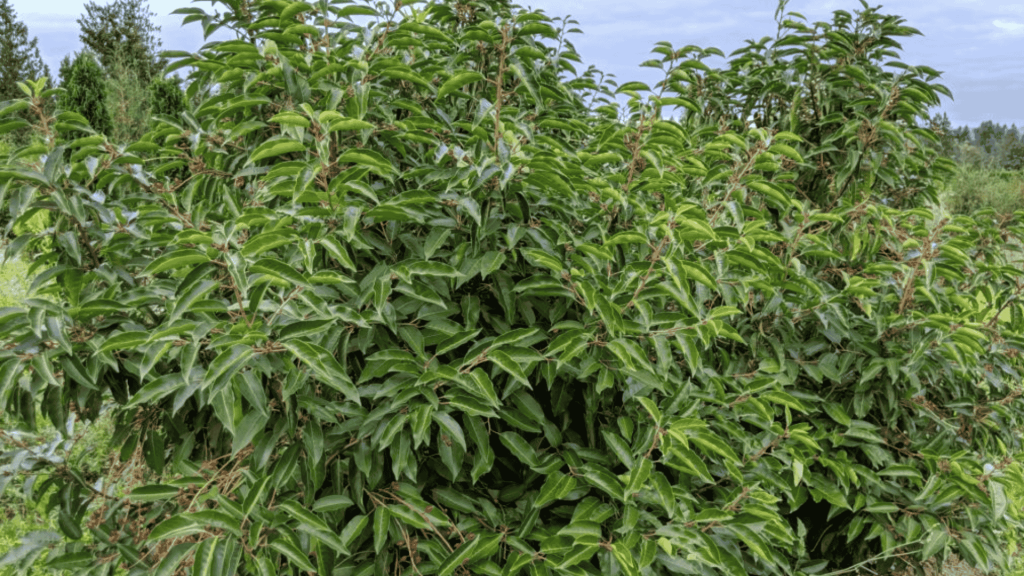
Prunus lusitanica ‘Myrtifolia’ is a smaller, neater cousin of the Portuguese laurel, a shrub from places like Spain, Portugal, and Morocco.
The name “Myrtifolia” comes from its small, glossy leaves that look a bit like myrtle’s. Here’s the lowdown on what makes it special:
-
Origins: Native to the Iberian Peninsula and parts of North Africa; a cultivated variety prized for its compact growth.
-
Appearance: Grows into a dense, bushy shape think cone or pyramid with smooth, dark grey bark and cool wine-red stems.
-
Size: Reaches 3–5 meters tall (10–16 feet) and spreads about the same, though it can hit 6 meters over time in perfect conditions.
-
Compared to the Regular Laurel: Myrtifolia has narrower, smaller leaves and a tidier growth habit, making it ideal for smaller spaces or fancy shaping.
Its evergreen leaves keep your garden vibrant all year, and in late spring to early summer (May–June), it pops out tiny, fragrant white flowers in long clusters that bees adore.
By fall, you’ll see small cherry-like fruits that go from green or reddish to dark purple or black.
Quick note: These berries can be toxic to humans if they taste bitter (they contain cyanide), but birds love them when they’re ripe and sweet.
Ideal Growing Conditions for Prunus Lusitanica ‘Myrtifolia’
This shrub is pretty chill about where it grows, but it does have some preferences. Here’s a handy table to break down what it needs to thrive:
|
Condition |
Details |
|---|---|
|
Climate |
Hardy in USDA zones 6–9; handles cold down to -25°C (-13°F) and heat, wind, or drought once established. |
|
Soil |
Loves any well-drained soil; not picky but hates waterlogged spots. In pots, keep soil moist but not soggy. |
|
Sunlight |
Full sun to partial shade; light shade is best in hot climates. Can handle dry shade if planted small. |
|
Watering |
New plants need regular water (e.g., two buckets every three days in hot spells). Established plants are drought-tolerant. |
With these conditions, your Myrtifolia will settle in and grow like a champ.
Benefits of Prunus Lusitanica ‘Myrtifolia’ in Your Garden

Why should you plant Prunus lusitanica ‘Myrtifolia’? Because it’s like the MVP of garden shrubs! Here’s why it’s so awesome:
-
Versatile Landscaping: Perfect for dense hedges (plant 60 cm apart), privacy screens, topiary shapes (cones, spirals, you name it), or as a small garden tree.
-
Wildlife Magnet: Its spring flowers draw bees, and the berries are a hit with birds, boosting your garden’s ecosystem.
-
Year-Round Beauty: Glossy evergreen leaves and fragrant blooms make it a stunning backdrop for colorful flowers.
-
Award-Winner: Snagged the RHS Award of Garden Merit, so you know it’s a crowd-pleaser.
-
Urban-Friendly: Thrives in city gardens and handles tough conditions like a pro.
One thing to watch: in some areas (like parts of the US or New Zealand), birds can spread its seeds, making it a bit invasive. Just keep an eye on those berries if you’re in one of those regions.
Care and Maintenance Tips
Taking care of Myrtifolia is a breeze if you follow a few simple steps. Here’s how to keep it happy:
-
Planting: Plant it so the trunk’s base is slightly above ground for a nice look and healthy roots. Clear a 1-meter weed-free zone around the base for the first three years using mulch or weed killer. Stake bigger plants to keep them steady.
-
Pruning: Trim in late spring (April to mid-May) or late summer (after mid-July) to shape it. Skip June to avoid shot hole disease, which makes leaves look spotty. Use clean secateurs for topiary and sterilize them between plants.
-
Propagation: Grow new plants from cuttings (easiest for home gardeners) or seeds, which birds often spread naturally.
-
Fertilizing: Add some slow-release fertilizer in spring and mulch to lock in moisture and keep weeds at bay.
With a little TLC, this shrub will reward you with lush, green growth for years.
Common Problems and Solutions
Myrtifolia is pretty low-maintenance, but no plant is perfect. Here’s what might come up and how to handle it:
|
Issue |
Symptoms |
Solution |
|---|---|---|
|
Pests |
Rabbits, deer, or squirrels nibble young plants. |
Use guards or fencing to protect new shrubs. |
|
Shot Hole Fungus |
Discolored leaves with holes, especially after pruning. |
Avoid pruning in June; clean up fallen leaves. |
|
Powdery Mildew |
White residue on leaves. |
Spray with a fungicide like myclobutanil; remove affected parts. |
|
Toxicity |
Leaves and unripe berries contain cyanide. |
Keep pets/kids away; handle carefully, especially when burning clippings. |
Also, if your new plant isn’t thriving, grass might be stealing its water. Keep that weed-free zone clear. In some regions, Myrtifolia can spread too much via bird-dropped seeds, so snip off berries if needed.
Final Thoughts
Prunus lusitanica ‘Myrtifolia’ proves that sometimes the best garden choices are the ones that work behind the scenes. This compact Portuguese laurel delivers consistent beauty without demanding constant attention from you.
From its glossy evergreen foliage to fragrant spring blooms, it creates the perfect backdrop for your garden’s seasonal stars.
Whether you’re shaping it into formal topiary or letting it grow as a natural privacy screen, this award-winning shrub adapts to your vision.
The real magic happens over time. While other plants struggle through harsh winters or summer droughts, your Myrtifolia keeps looking fresh and healthy. It’s the kind of reliable plant that makes gardening feel effortless.
So why settle for high-maintenance plants when you can have lasting beauty with minimal fuss?