Small front gardens get overlooked. Most people focus on backyards and interiors, leaving that narrow strip between the street and front door neglected.
But this compact space holds serious power. It’s the first thing guests see, sets the mood in your home, and instantly shapes curb appeal.
Changing a small front garden doesn’t require big budgets or major renovations. Simple updates like vertical planters, gravel paths, or seasonal flowers create impact fast.
This guide walks you through practical small-front-garden ideas. You’ll see how to maximize tight spaces with layered planting, smart materials, and modern design tricks.
Plus, learn which mistakes to avoid and get design tips that actually work. Let’s turn that overlooked entrance into your home’s best feature.
What to Know Before Designing Your Small Front Garden
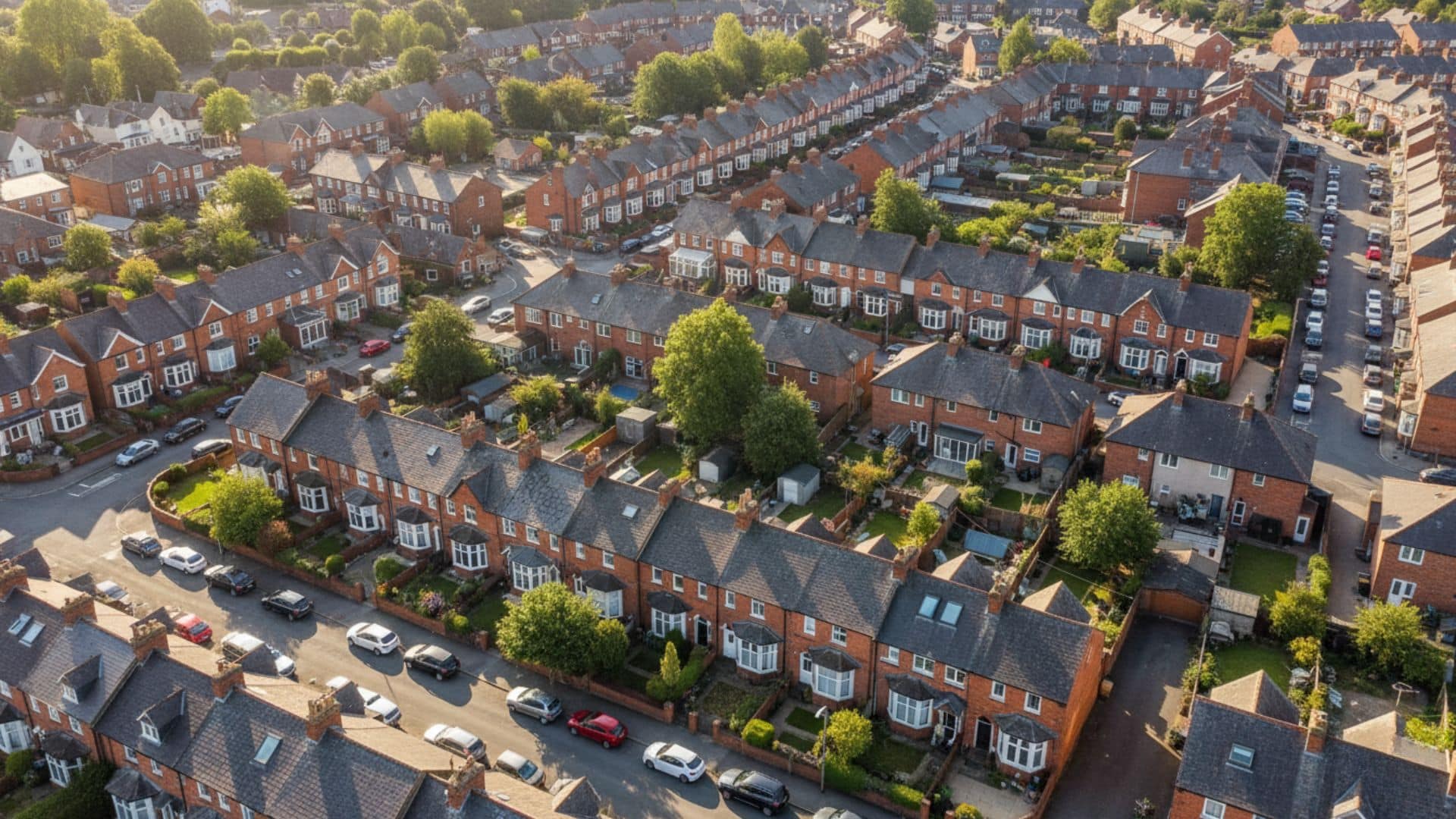
A small front garden is the space between your home’s entrance and the street. This compact area shapes first impressions, boosts curb appeal, and welcomes guests before they even knock.
You don’t need a large budget or extensive space to create impact. Smart planning and the right choices make all the difference.
Key Things to Consider:
- Space limitations – Measure your area to understand what fits realistically
- Maintenance level – Choose plants and materials that match your available time
- Style consistency – Pick one design direction (modern, cottage, minimalist) and stick with it
- Functionality first – Ensure clear pathways and proper lighting for safety
- Climate suitability – Select plants that thrive in your local weather conditions
- Budget priorities – Start with essentials (path, lighting, key plants) before adding extras
Getting these basics right sets you up for success. Once you understand your space and needs, the design choices become much clearer.
29 Easy Small Front Garden Ideas
Let’s explore practical solutions that fit tight spaces and busy schedules. Each idea includes clear features to help you decide what works best
1. Vertical Trellises
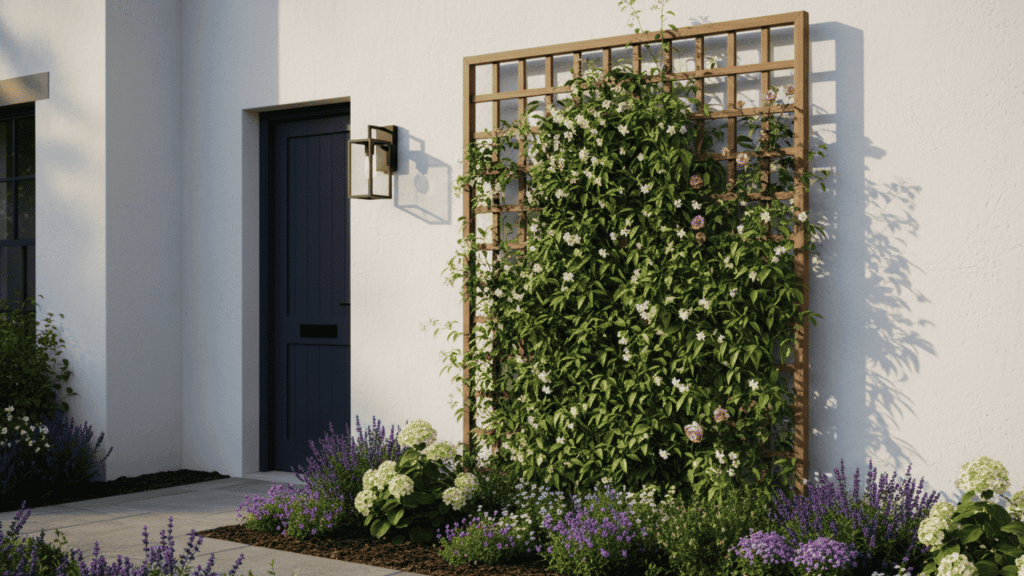
Use tall trellises along walls or fences to lift plants upward. This technique saves space on the ground while adding height and structure to your garden. Climbing plants like jasmine, ivy, or roses work well on trellises and create a lush green backdrop.
Main Features:
- Maximizes vertical space – Grows plants upward instead of outward
- Adds architectural interest – Creates visual height and frames the entrance
- Works with various styles – Fits modern, cottage, or traditional garden designs
2. Gravel Pathway With Stepping Stones

Combine gravel with large stepping stones to build a clean, modern walkway. This look feels intentional and requires minimal upkeep. The contrast between smooth stones and textured gravel adds visual appeal.
Main Features:
- Low maintenance – No mowing or watering needed like grass paths
- Modern appearance – Creates clean lines and a contemporary style
- Easy installation – Simple DIY project that changes the entry quickly
3. Tall Slim Planters
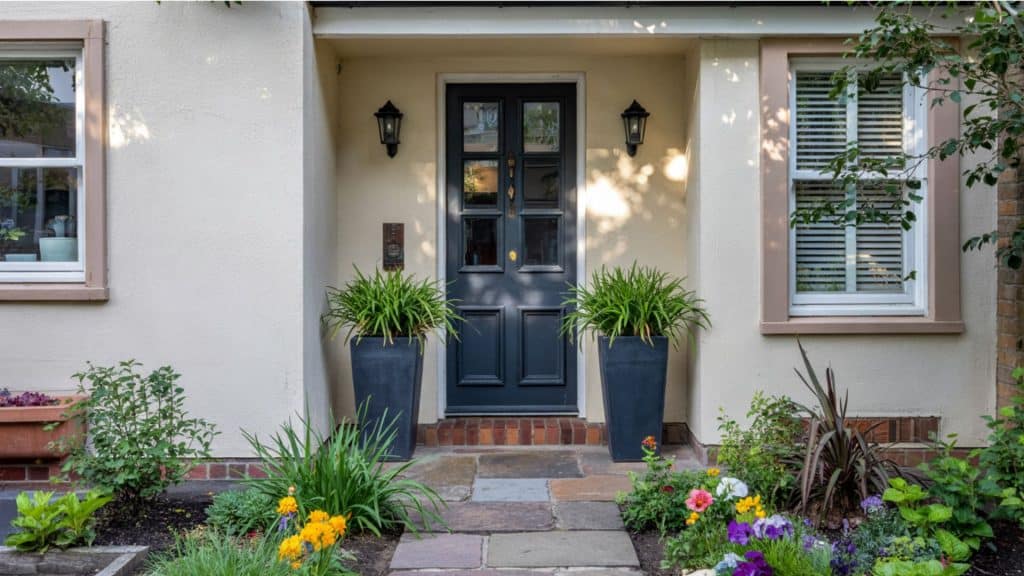
Frame your entry with narrow, tall planters on either side. These planters add height and symmetry without taking up much floor space. Fill them with structured plants like boxwoods, grasses, or small evergreens.
Main Features:
- Creates symmetry – Balances the entrance with matching planters
- Space-efficient – Takes up minimal ground area while adding height
- Easy to update – Swap plants seasonally for a fresh look
4. Wall-Mounted Planters
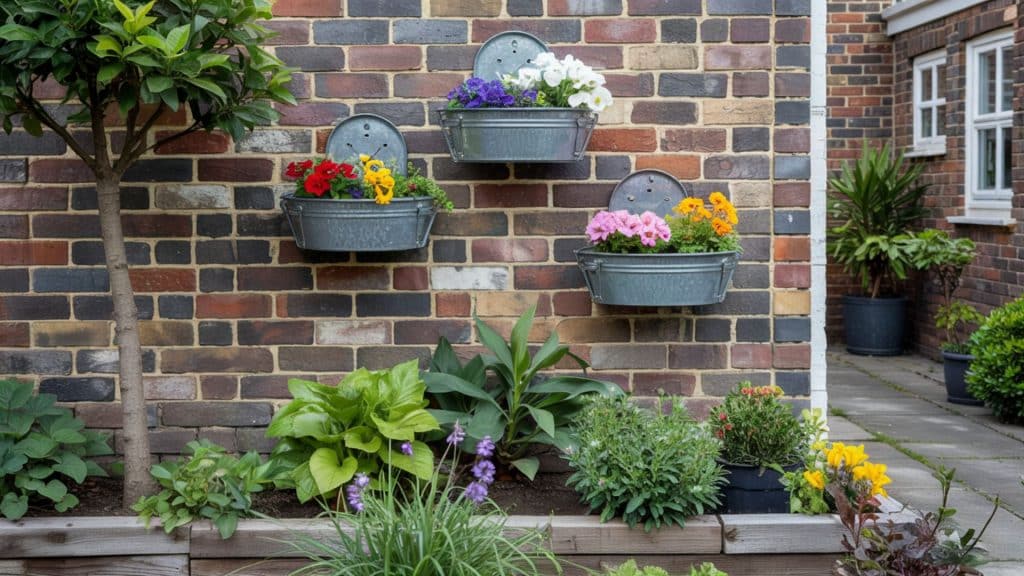
Add wall-mounted pots to brighten blank walls and keep the ground clear. These planters work great for herbs, succulents, or trailing flowers. They bring greenery to eye level and make small spaces feel fuller.
Main Features:
- Saves floor space – Plants grow on walls instead of the ground
- Adds vertical interest – Draws the eye upward and makes walls feel alive
- Versatile planting options – Perfect for herbs, flowers, or decorative foliage
5. Slim Raised Bed

Install a narrow raised bed along your path or fence line. This keeps plantings organized and makes the garden look neat. Raised beds also improve drainage and make planting easier on your back.
Main Features:
- Organized planting area – Contains plants in a defined, tidy space
- Better soil control – Fill with quality soil for healthier plants
- Easier maintenance – Reduces bending and keeps weeds manageable
6. Compact Shrubs
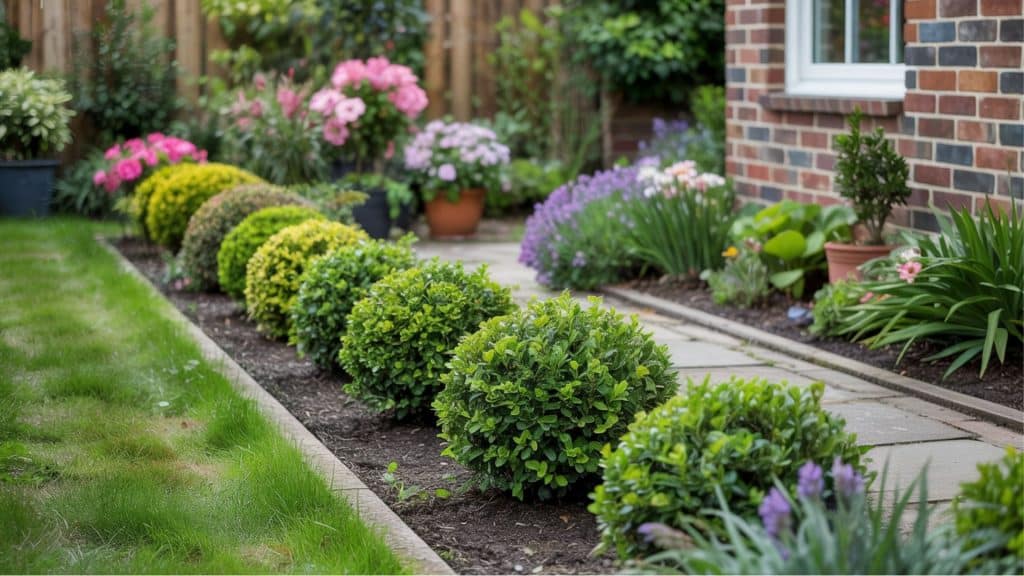
Choose dwarf shrubs that stay small and structured. Varieties such as dwarf boxwood, Japanese holly, and compact azaleas keep the garden tidy. These shrubs require less pruning and won’t overtake your space.
Main Features:
- Low maintenance – Grows slowly and needs minimal trimming
- Year-round structure – Provides consistent shape in all seasons
- Space-appropriate – Stays small without overwhelming the area
7. Layered Planting
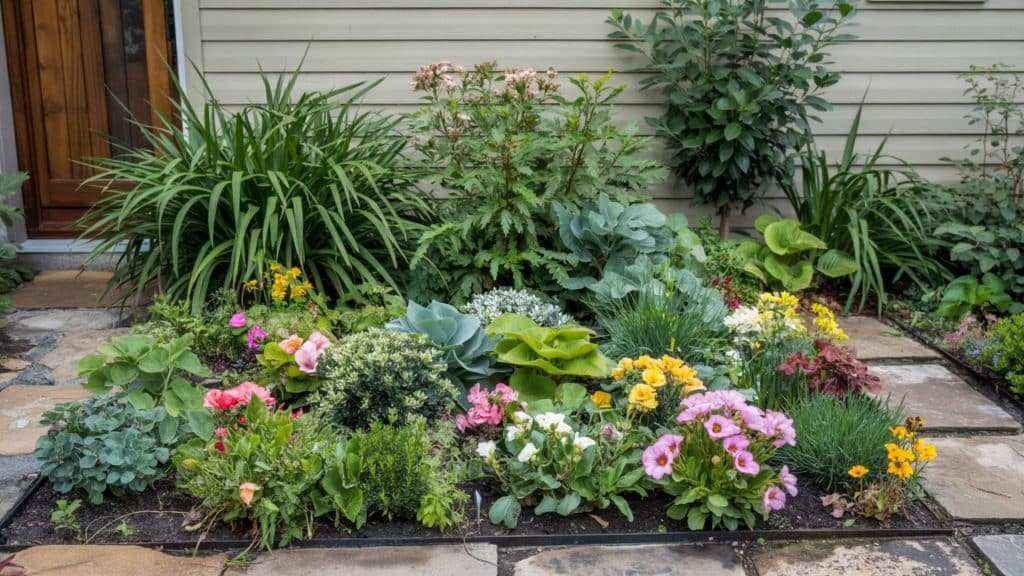
Place low plants upfront with medium and taller plants behind. This layering creates depth and makes the garden feel bigger. Use ground covers in front, perennials in the middle, and shrubs or grasses at the back.
Main Features:
- Creates visual depth – Makes small spaces appear larger
- Better plant visibility – Each plant gets seen and appreciated
- Natural flow – Guides the eye smoothly through the garden
8. Modern Slatted Fencing
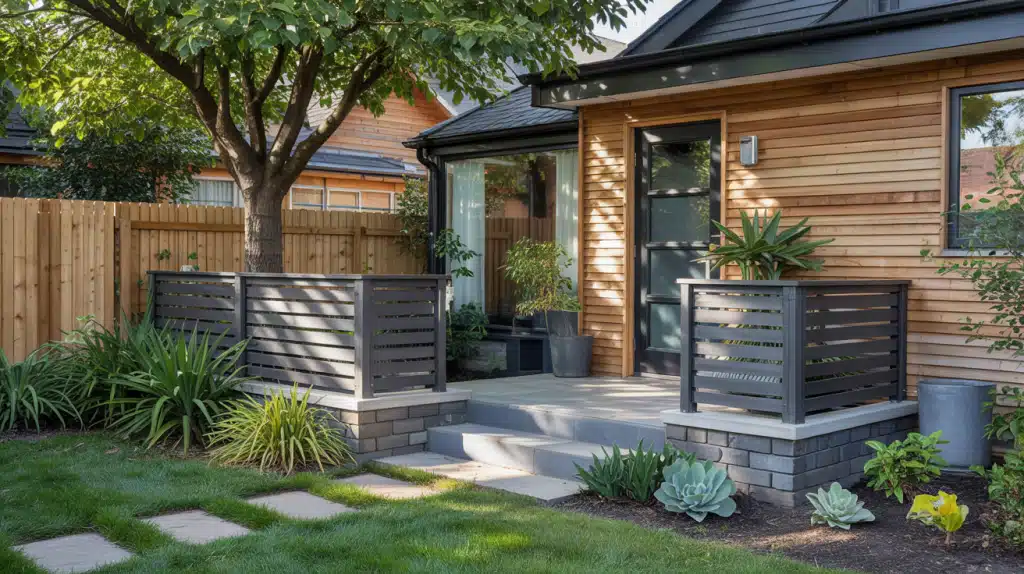
Use horizontal slats for a contemporary backdrop. This style adds privacy without feeling heavy or closed off. Painted in dark gray, black, or natural wood tones, slatted fencing complements modern homes.
Main Features:
- Contemporary look – Creates a sleek, modern boundary
- Partial privacy – Blocks views while allowing light and air through
- Versatile design – Works with metal, wood, or composite materials
9. Solar Pathway Lights
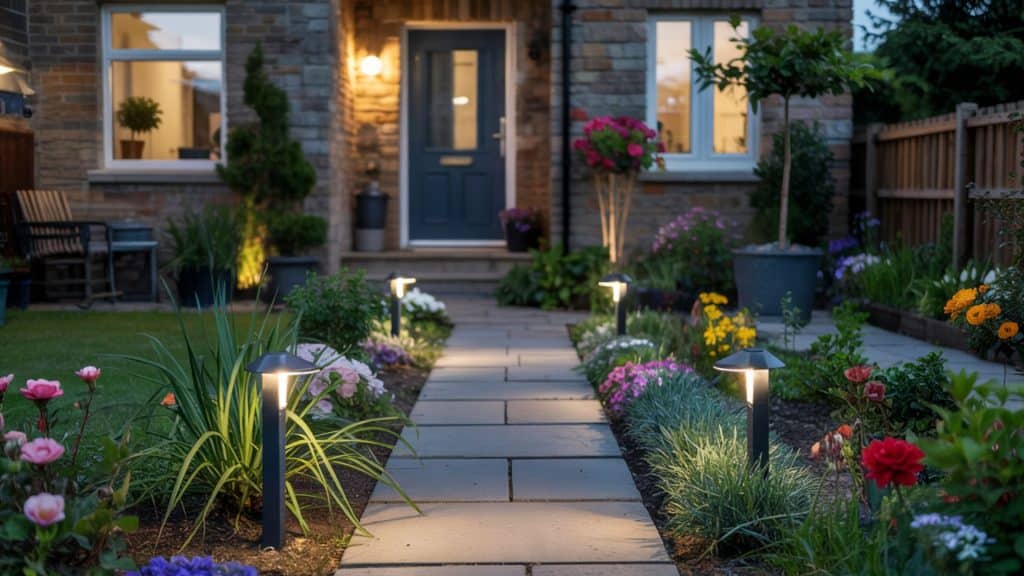
Line your walkway with warm solar lights. These lights improve visibility at night and add a welcoming glow. Solar-powered options save energy and install easily without wiring.
Main Features:
- Energy efficient – Charges during the day, lights up at night automatically
- Easy installation – No electrical work or wiring required
- Enhances safety – Makes pathways visible after dark
10. Narrow Feature Tree
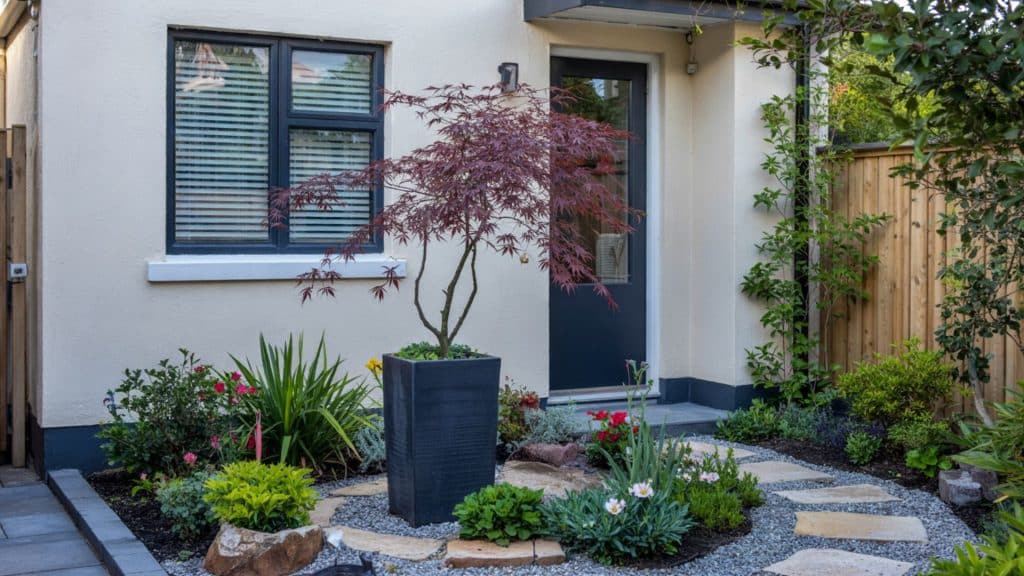
Use a slender ornamental tree as a focal point. Trees like Japanese maple, columnar hornbeam, or upright birch grow tall but stay narrow. Plant in the ground or use a large slim planter.
Main Features:
- Creates a focal point – Draws attention and adds height
- Compact footprint – Grows upward instead of spreading wide
- Seasonal interest – Offers changing colors, flowers, or bark texture
11. Mini Rock Garden
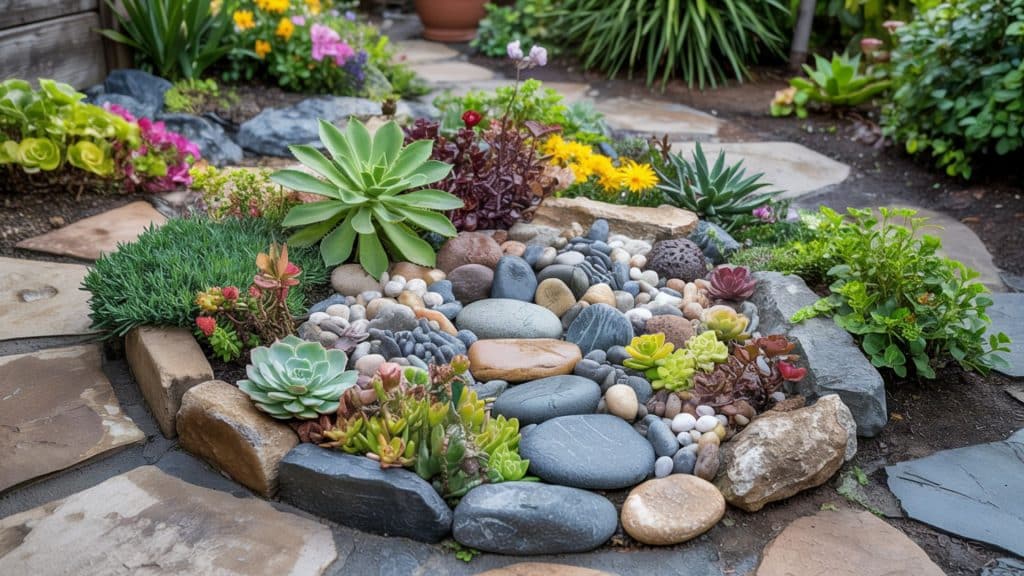
Group stones and drought-tolerant plants in one section. This creates a modern, textured area that needs little water. Use succulents, sedums, or alpine plants between the rocks.
Main Features:
- Low water needs – Perfect for dry climates or busy schedules
- Modern texture – Rocks add contrast and visual weight
- Minimal upkeep – Requires very little weeding or maintenance
12. Small Herb Garden
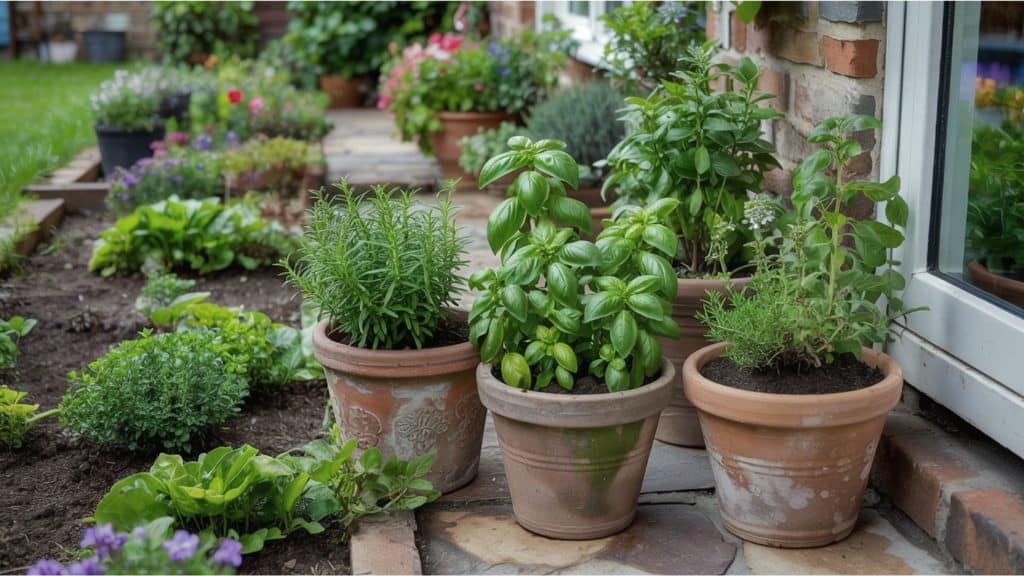
Grow herbs in compact pots near your front door. Basil, rosemary, thyme, and mint grow well in containers. You get fresh herbs for cooking, plus greenery and fragrance.
Main Features:
- Practical and pretty – Combines function with visual appeal
- Fresh fragrance – Herbs smell wonderful when brushed or touched
- Easy access – Step outside and pick fresh herbs for meals
13. Gravel and Greenery Mix
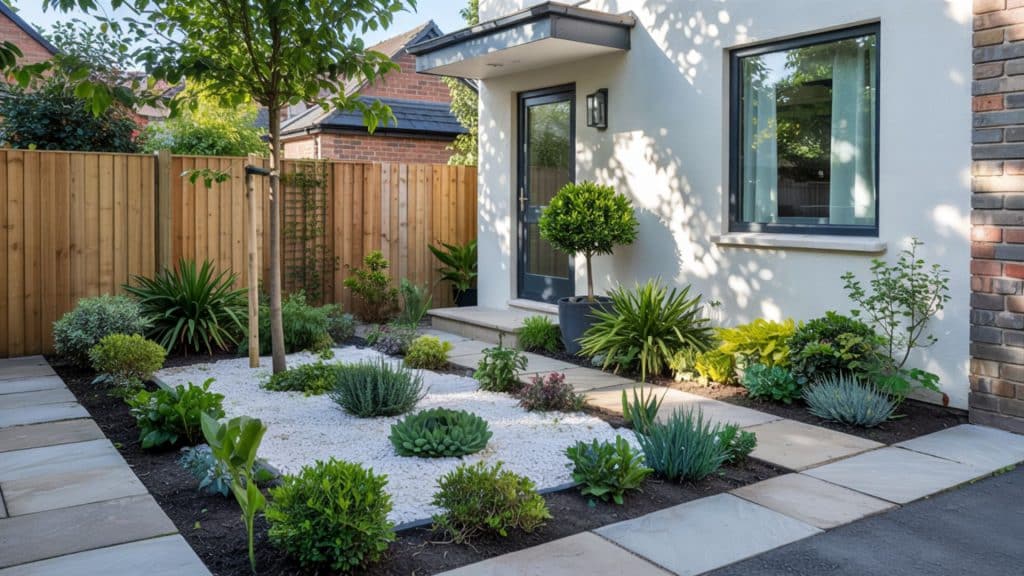
Blend gravel areas with planted borders for contrast. Gravel provides a clean base while plants soften the edges. This combination looks modern and is easy to maintain.
Main Features:
- Clean modern look – Gravel creates a neat, structured base
- Low maintenance – Less weeding than traditional beds
- Good drainage – Gravel prevents water pooling around plants
14. Seasonal Flower Clusters
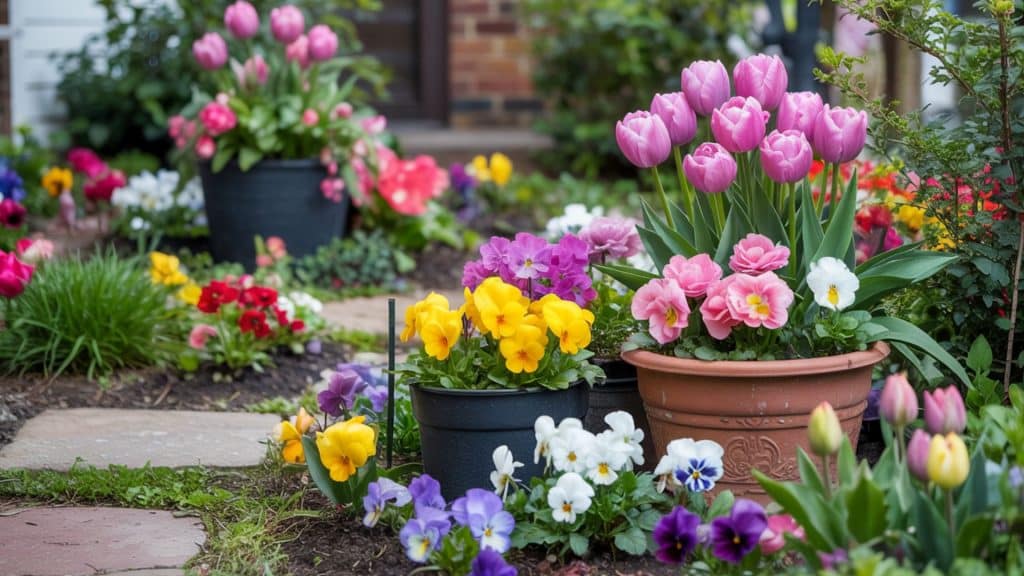
Use small clusters of seasonal flowers in pots or beds. Spring bulbs, summer annuals, or fall mums add bursts of color. Rotate plants with the seasons to keep the garden fresh.
Main Features:
- Colorful accents – Adds pops of bright color without overwhelming
- Seasonal variety – Change flowers to match the time of year
- Flexible design – Easy to move pots or replant beds
15. Compact Modern Bench
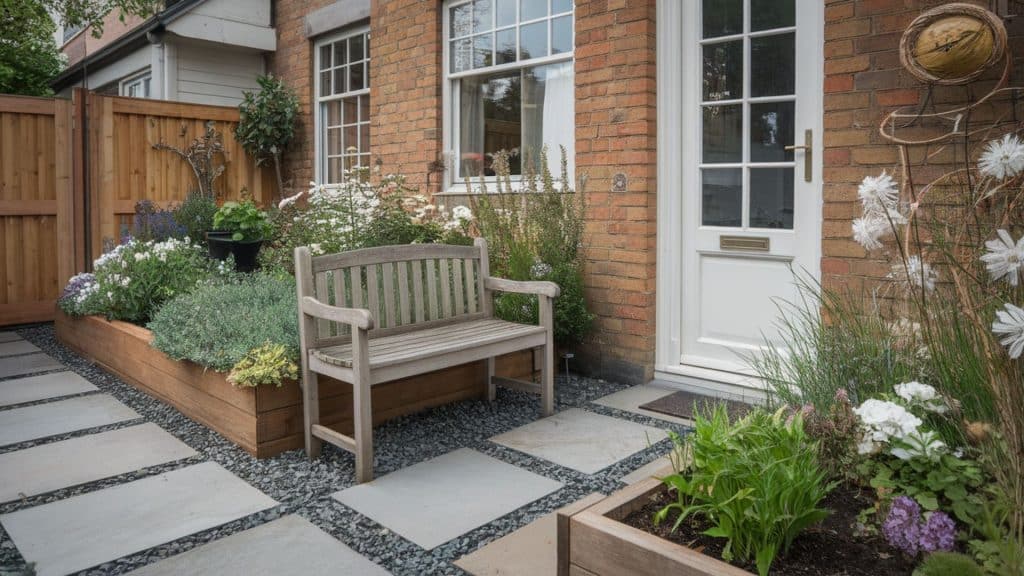
Place a slim bench near the entrance. Choose a simple design in metal, wood, or concrete. A bench adds character and gives you a spot to sit while putting on shoes or waiting.
Main Features:
- Functional seating – Provides a place to rest or set items down
- Adds character – Bench becomes a design feature, not just furniture
- Doesn’t crowd – Slim designs fit tight spaces without blocking paths
16. Bowl-Style Water Feature
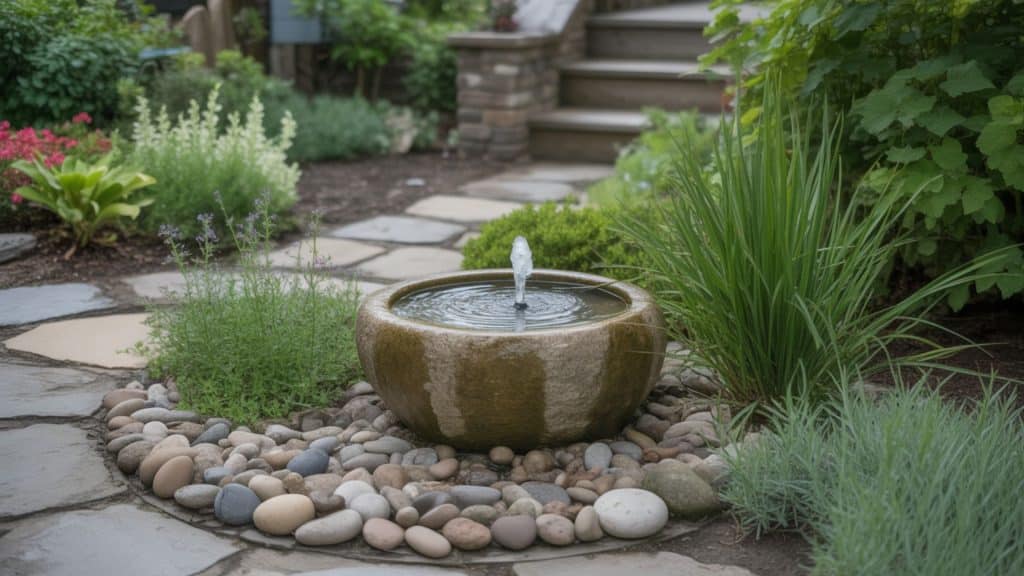
A small bowl fountain brings gentle sound and style. Water features create a calm atmosphere and mask street noise. Choose self-contained fountains that recirculate water.
Main Features:
- Soothing sound – Running water creates a peaceful mood
- Compact size – Fits on patios, in corners, or near seating
- Easy setup – Many models plug in and require no plumbing
17. Evergreen Structure
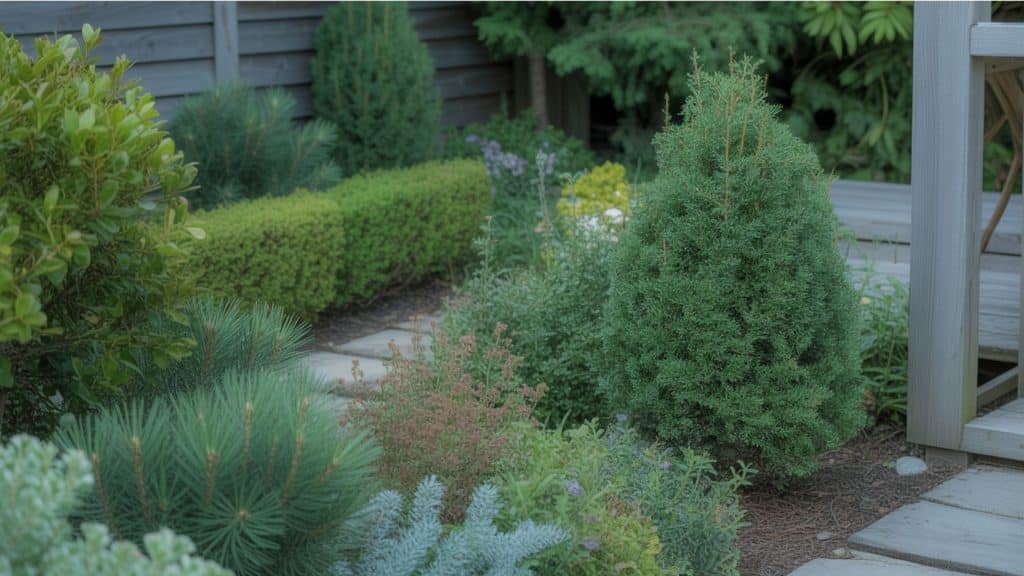
Evergreens provide year-round shape and color. Boxwoods, hollies, yews, or dwarf conifers stay green through winter. They form the backbone of your garden design.
Main Features:
- Year-round interest – Looks good in every season
- Provides structure – Creates shape even when other plants die back
- Low seasonal maintenance – No fall cleanup of leaves
18. Painted Front Door
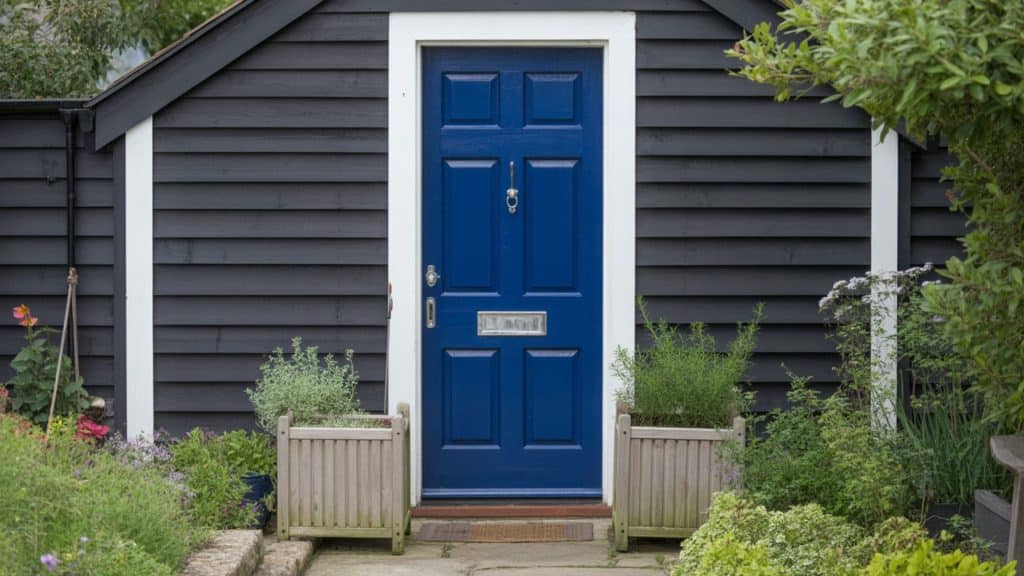
Refresh your front door with a bold color. Navy, forest green, bright red, or sunny yellow instantly update the entrance. A new door color costs little but makes a big impact.
Main Features:
- Instant curb appeal – Changes the whole look immediately
- Low-cost update – Paint is affordable compared to major renovations
- Shows personality – Color choice reflects your style
19. Geometric Paving
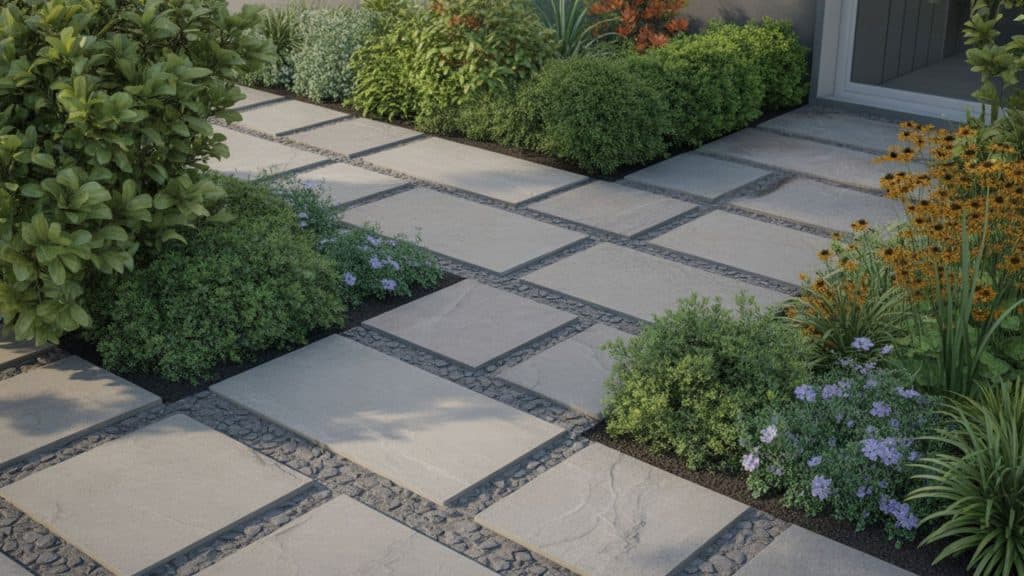
Use rectangular or square pavers in a grid pattern. Geometric layouts create clean lines and make spaces feel organized. Light-colored pavers can also make the area seem larger.
Main Features:
- Modern clean lines – Creates an organized, contemporary look
- Visual expansion – Patterns can make spaces appear bigger
- Durable surface – Pavers last long and handle foot traffic well
20. Slim Pergola or Arch
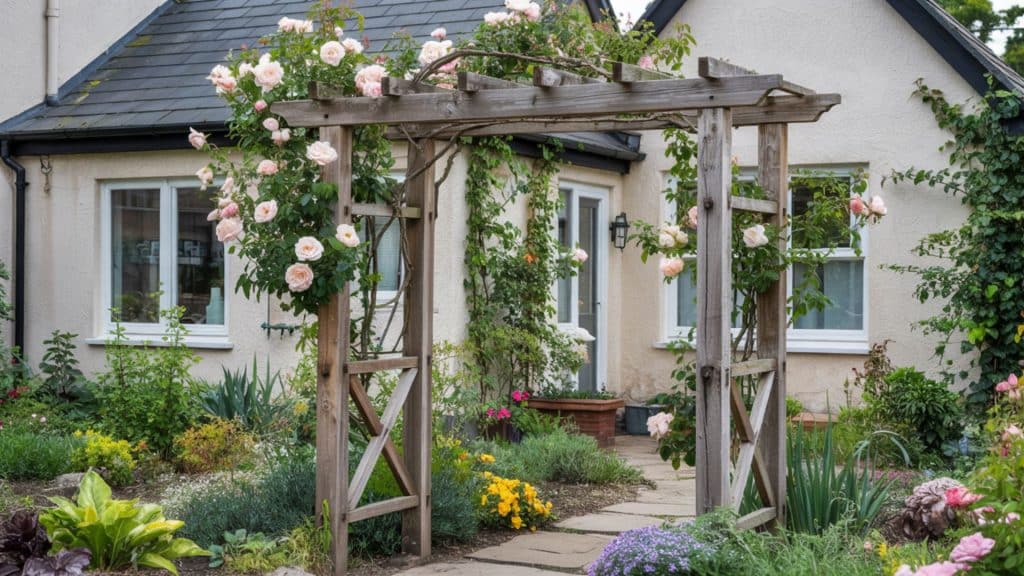
Install a narrow arch or pergola over your pathway. This adds height and architectural interest. Train climbing plants over it for a living, green entryway.
Main Features:
- Adds vertical dimension – Creates height and frames the entrance
- Supports climbing plants – Roses, clematis, or wisteria grow beautifully
- Architectural feature – Functions as a garden structure and design element
21. Symmetrical Planters
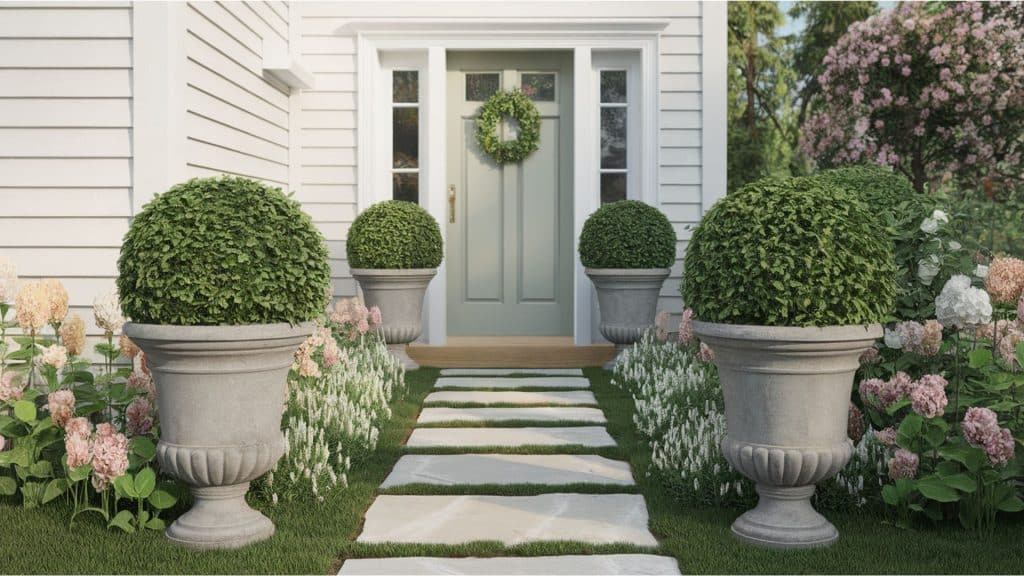
Place matching planters on each side of your path or door. Symmetry creates balance and makes entrances feel formal and welcoming. Use the same plants in each for unity.
Main Features:
- Creates balance – Symmetry is naturally pleasing to the eye
- Formal appearance – Adds a polished, intentional look
- Easy to design – Simply mirror one side on the other
22. Hanging Baskets
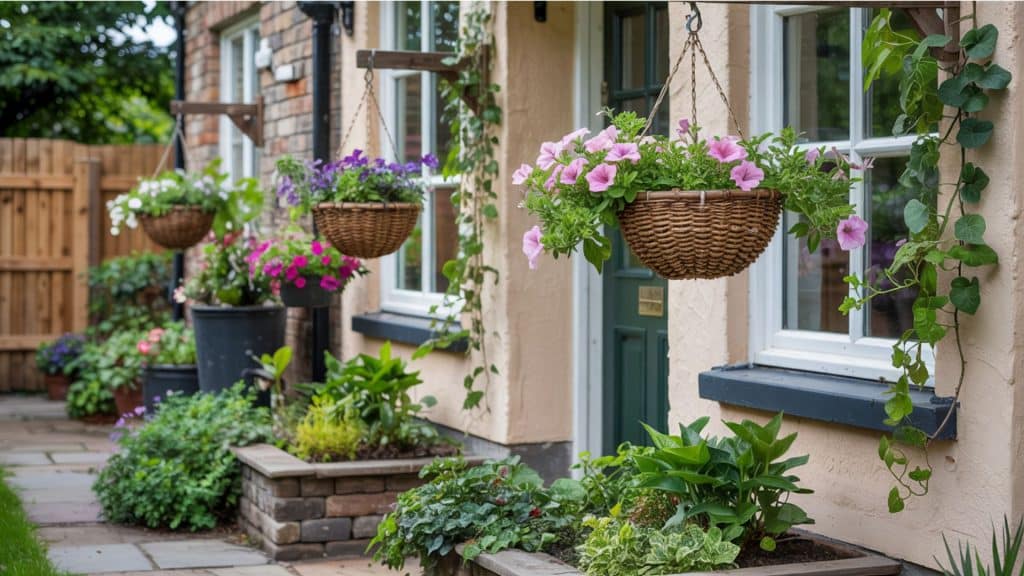
Hang baskets from porch ceilings, hooks, or brackets. Fill them with trailing flowers like petunias, fuchsias, or ivy. Hanging baskets add lushness without narrowing walkways.
Main Features:
- Saves ground space – Plants hang overhead instead of blocking paths
- Eye-level beauty – Brings flowers up where they’re easily seen
- Seasonal flexibility – Swap out plants as seasons change
23. Japanese-Inspired Minimalism
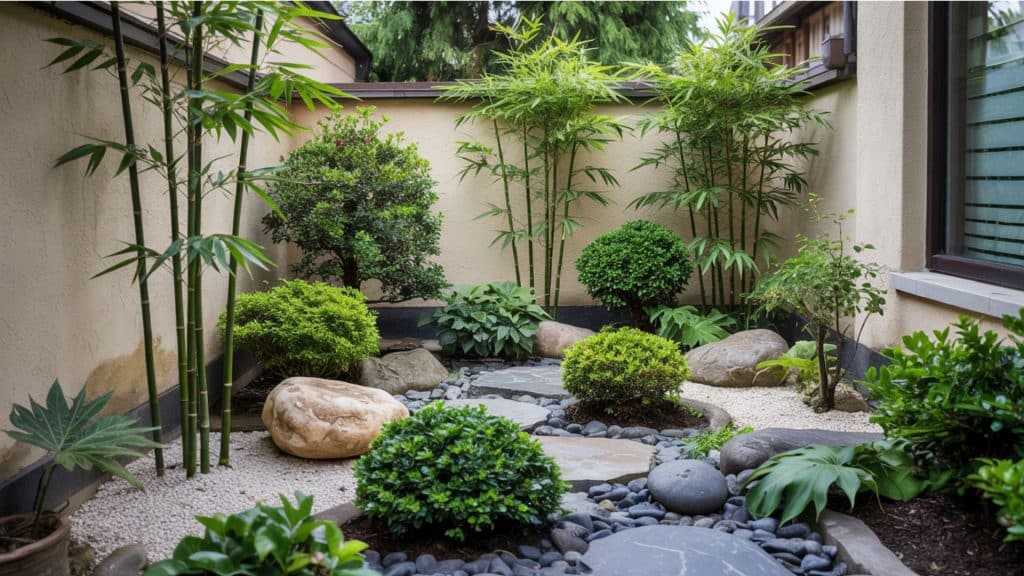
Use simple plants, smooth stones, and clean layouts. Japanese-style gardens focus on balance and calm. Include elements like bamboo, gravel, and carefully placed rocks.
Main Features:
- Calm atmosphere – Creates a peaceful, Zen-like feeling
- Simple maintenance – Fewer plants mean less upkeep
- Timeless design – Never goes out of style
24. Bold Foliage Plants

Choose plants with striking leaves, such as cordylines, ferns, or hostas. Bold foliage adds texture and drama without relying on flowers. These plants often look good for months.
Main Features:
- Long-lasting interest – Foliage looks good longer than flowers
- Textural variety – Interesting leaves add visual depth
- Low effort color – No deadheading or constant bloom management
25. Decorative Garden Screens
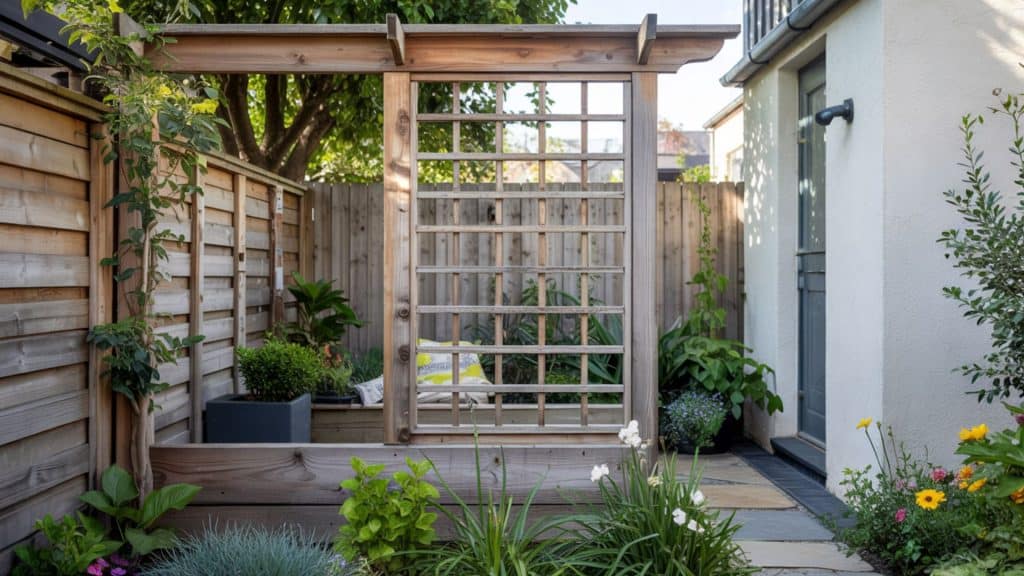
Introduce wooden or metal screens for privacy and style. Screens block sightlines from the street while staying lightweight. They also create backdrops for plants.
Main Features:
- Adds privacy – Screens unwanted views without solid walls
- Decorative element – Panels come in many attractive patterns
- Lightweight feel – Doesn’t make spaces feel enclosed or heavy
26. Window Boxes

Install window boxes beneath front-facing windows. These add color at eye level without using ground space. Fill them with seasonal flowers, herbs, or trailing plants that spill over the edges.
Main Features:
- No ground space needed – Mounts directly to windows or walls
- Seasonal flexibility – Swap plants easily as seasons change
- Softens hard surfaces – Breaks up plain walls with greenery and color
27. Mixed Planter Heights
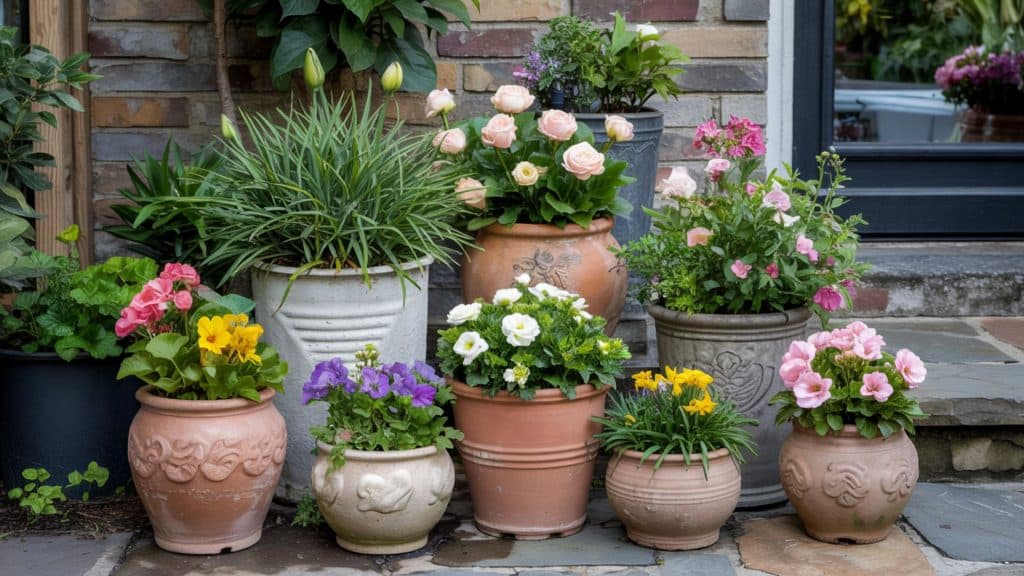
Group planters at different heights to create depth. Use tall, medium, and short containers together. This layering adds visual interest and makes displays more dynamic.
Main Features:
- Creates depth – Varying heights prevent flat, boring arrangements
- Visual movement – Eye travels through different levels
- Flexible design – Easy to rearrange pots as needed
28. Monochrome Palette
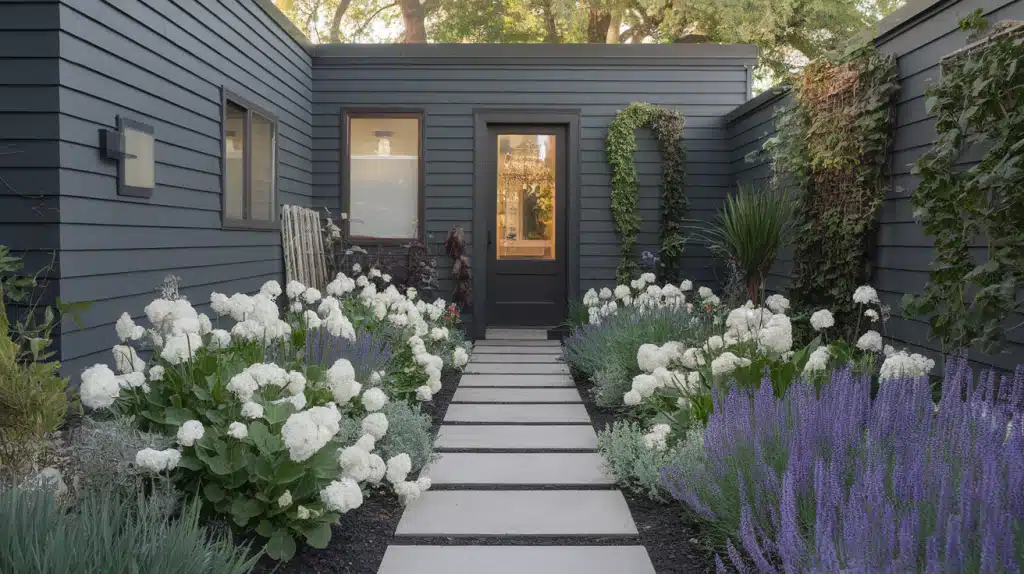
Stick to one color scheme in your plantings. All-white flowers, all-green foliage, or shades of purple create cohesion. Monochrome gardens look modern and refined.
Main Features:
- Cohesive appearance – Single color scheme prevents visual clutter
- Modern feel – Looks intentional and designer-curated
- Easy coordination – No worrying about colors clashing
29. Gravel Instead of Grass
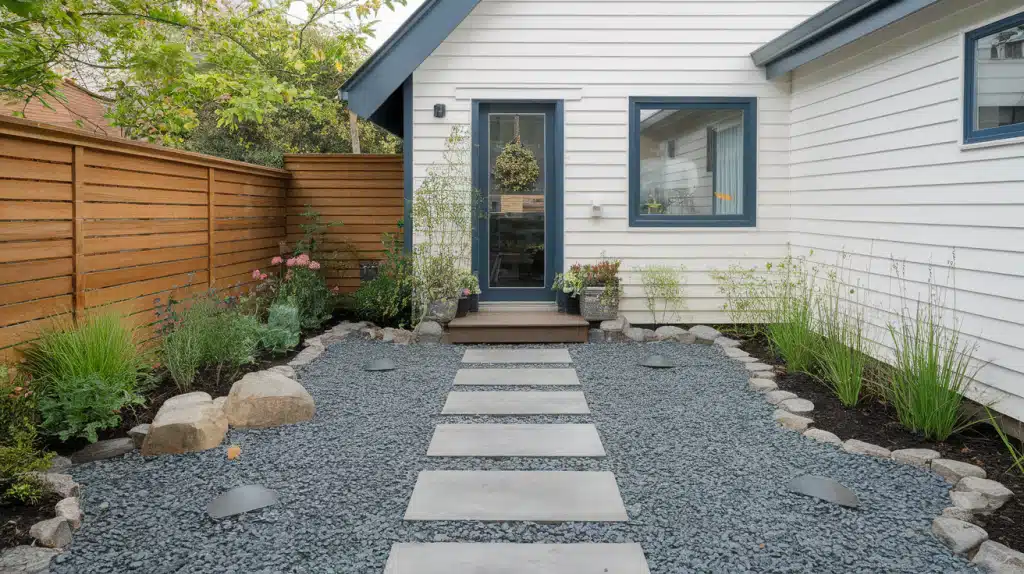
Replace grass with gravel to reduce maintenance. Gravel needs no mowing, watering, or fertilizing. It creates a clean, modern base for plants and garden décor.
Main Features:
- Zero mowing – Eliminates lawn care entirely
- Water conservation – Saves water compared to grass lawns
- Modern base – Provides a clean backdrop for plants and features
What to Do and What to Avoid in Small Front Gardens
Now that you have design ideas, let’s cover the practical side. These quick tips help you make smart choices and dodge typical mistakes.
| Change to Make | What to Do | Mistake to Avoid |
|---|---|---|
| Remove clutter | Keep only key plants and décor | Overfilling a small space |
| Update plants | Choose compact or vertical plants | Using oversized shrubs |
| Improve layout | Add a clear, simple pathway | Confusing or narrow walkways |
| Add modern elements | Use gravel, pavers, or fresh planters | Mixing too many materials |
| Add lighting | Use soft solar or pathway lights | Harsh or mismatched lighting |
Small changes make big differences. Avoid common mistakes, and your front garden will look better, feel more open, and be easier to maintain.
Pro tip: Focus on one or two changes at a time. Small improvements add up without overwhelming your budget or schedule.
Suggestions for Designing a Small Front Garden
Before you start planting and paving, consider these key design principles. They’ll help you make choices that look intentional and stay easy to maintain.
- Keep the Layout Simple: A clean path and defined planting zones make any small garden feel more open and organized. Avoid cramming too many features into one area. Let each element breathe.
- Stick to One Design Style: Using consistent materials and colors keeps the space looking polished and cohesive. Choose modern, cottage, or minimalist style and carry it through your choices.
- Focus on Vertical Features: Trellises, wall planters, and tall pots help you add greenery without reducing walkway space. Growing upward instead of outward maximizes your limited square footage.
- Choose Low-Maintenance Plants: Compact shrubs, perennials, and evergreens help your garden look neat with minimal upkeep. Select plants that suit your climate and require less watering and pruning.
- Balance Hardscape and Softscape: Use a mix of pavers, gravel, and plants to add structure and texture without visual clutter. Too much hardscape feels cold; too many plants feel messy. Find the middle ground.
- Highlight the Entryway: Your front door is the focal point; use lighting, planters, or color to make it shine. This is where visitors focus first, so make it count.
Pro Tip: Start with the essentials (pathway, entry plants, lighting) before adding decorative touches. Build your design in phases to stay within budget and avoid overwhelming the space.
Final Thoughts
Your small front garden doesn’t need a complete overhaul to look great.
Start with one or two ideas from this listmaybe solar lights along your pathway, a fresh coat of paint on your front door, or tall planters flanking your entrance. Small updates create big visual impact.
The beauty of a compact front garden is that changes happen fast. You can refresh the space in a weekend without breaking your budget.
Ready to get started? Pick your favorite idea and take action this weekend. Your front entrance sets the tone for your entire home. Make it count.
What’s your go-to small front garden style? Share your thoughts in the comments below.