
That secondhand dresser looks perfect. The price is right. The wood feels solid. But something invisible might already be living deep inside it.
Bed bugs do not just hide in mattresses. They squeeze into wood cracks, joints, screw holes, and hollow legs. They stay hidden for weeks without a single trace. By the time you spot them, they have already spread through your home.
Most people bring them in without knowing. One used furniture piece is all it takes. And once they are inside, getting them out is a long, expensive process.
Knowing the signs of bed bugs in wood furniture puts you ahead of the problem. This guide covers every warning sign, every hiding spot, and every step you need to take before an infestation takes hold.
JUMP TO SIGNS YOU HAVE BED BUGS
Can Bed Bugs Really Live in Wood Furniture?
Yes. They can, and they do.
Bed bugs are not picky about where they live. They need two things: a dark place to hide and a host nearby to feed on. Wood furniture gives them both.
Wood is full of natural cracks, joints, and hollow spaces. These spots let bed bugs stay hidden during the day. They come out at night to feed. Then they go straight back before you wake up.
Bed frames, dressers, nightstands, and wardrobes are the most common pieces. They sit close to where people sleep. The closer the furniture is to a sleeping area, the higher the risk.
Pressed wood and older furniture with worn finishes carry even more risk. Damaged surfaces give bed bugs more entry points.
What Do Bed Bugs Look Like?
Many people spot signs before they ever see a live bug. But knowing what to look for helps you confirm an infestation fast.
Adult bed bugs:
- Oval-shaped, flat body when unfed
- Reddish-brown in color
- About 5–7 mm long, roughly the size of an apple seed
- Six legs and short antennae
- Turn darker and more swollen after feeding
Young bed bugs (nymphs):
- Smaller, around 1.5–4.5 mm
- Almost clear or whitish when they have not eaten
- Turn pinkish-red after a blood meal
Eggs:
- About 1 mm long, roughly the size of a pinhead
- Pearl-white and oval-shaped
- Sticky coating helps them cling to wood surfaces
- Often found in clusters
7 Signs of Bed Bugs in Wood Furniture
Bed bugs are small. But they always leave something behind. The problem is that most people do not know what they are looking for until it is too late. These signs show up long before you ever see a live bug.
Some are visible to the naked eye. Others require a flashlight and a close look. Learning to recognize each one early can be the difference between a quick fix and a full-blown infestation.
Here is exactly what to look for.
1. Dark Fecal Spots
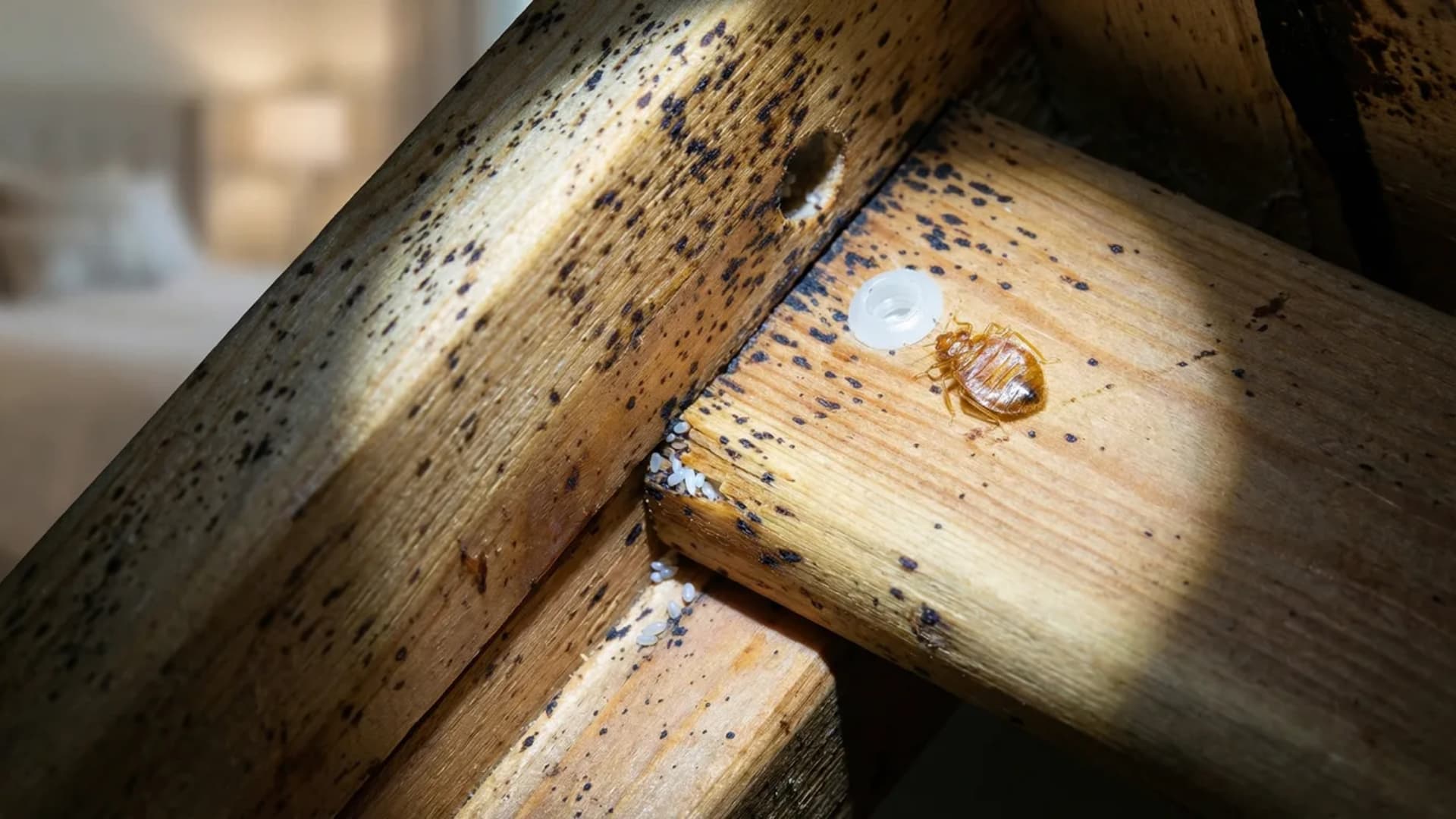
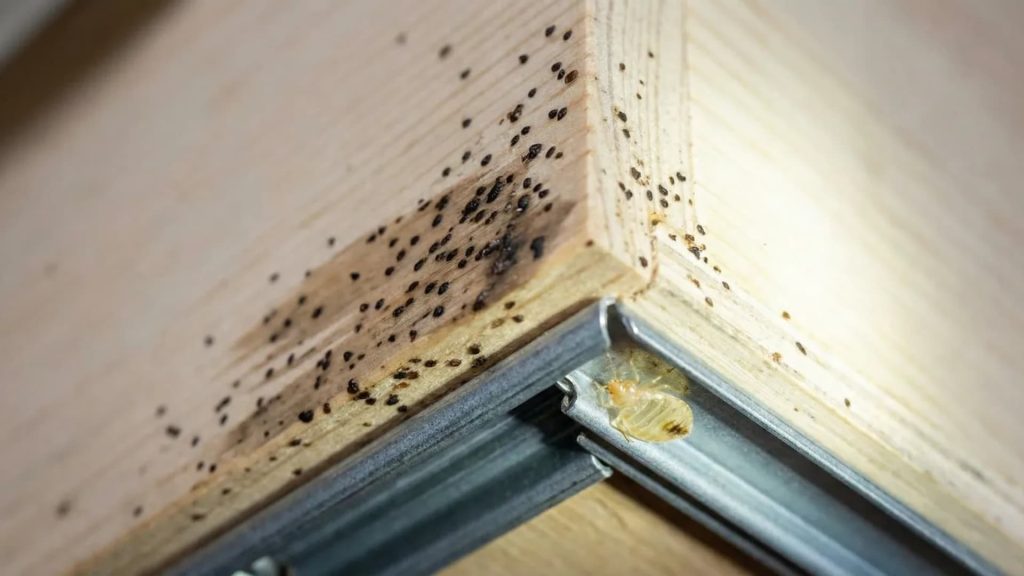
These look like tiny black or brown dots on the wood surface. You will usually find them along cracks, joints, and edges. They do not wipe off easily. If you press a damp cloth on them, they smear like a marker stain.
A cluster of these spots in one area is a strong warning sign that bed bugs are actively living nearby.
2. Shed Skins
Bed bugs shed their outer skin as they grow. These shed skins are pale yellow and paper-thin. They collect in corners, inside drawer tracks, and along wood joints.
They look almost like a hollow version of the bug itself. Finding even one shed skin is enough to warrant a closer inspection of the entire piece of furniture.
3. Tiny White Eggs
Bed bug eggs are small, sticky, and cream or white in color. They are roughly the size of a pinhead. Females lay them in tight, hidden spaces, such as screw holes, wood joints, and the backs of drawers.
They are difficult to spot with the naked eye, but a flashlight aimed at a low angle can help you catch them in hidden corners.
4. Small Blood Stains
These appear as rust-colored spots on wood surfaces or nearby fabric. They happen when a bed bug gets crushed after feeding on a host.
You will often find them on the underside of furniture legs, along the back panels of drawers, and on the inner sides of bed frames. Fresh stains look red while older ones turn brown over time.
5. Live or Dead Bed Bugs
Adult bed bugs are reddish-brown and roughly the size of an apple seed. Younger ones are smaller and much lighter in color. Place a white sheet under the furniture and tap it hard against the floor a few times.
If anything falls out onto the sheet, examine it closely with a magnifying glass. This simple trick is one of the most reliable ways to confirm an infestation.
6. Raised Bumps or Blisters on the Wood
This is a sign most people overlook completely. Small raised areas or blisters on a wood surface can indicate that bed bugs or their eggs are just beneath the surface.
Run your hand slowly along flat surfaces and feel for anything uneven or out of place. Pay extra attention to areas near joints, screw holes, and the undersides of shelves.
7. A Sweet, Musty Smell
Bed bugs release a chemical when they feel threatened. In large numbers, this builds into a sweet, musty odor that is hard to describe but easy to notice once you know what it is.
If a piece of wooden furniture smells off with no clear reason, do not ignore it. This smell is one of the earliest clues that a serious infestation is already present inside the wood.
Knowing the signs is only half the work. The other half is knowing exactly where on the furniture to look.
Where Exactly Do Bed Bugs Hide in Wooden Furniture?
Bed bugs do not just sit on the surface of wood. They go deep. They look for dark, tight spots near where people sleep. The tricky part is that these spots are not always obvious. Most people check the top and sides of a piece of furniture and stop there.
But bed bugs are almost never in plain sight. They pick the spots that are hardest to reach and easiest to miss. Knowing where to look gives you a real advantage during any inspection.
1. Wood Joints and Connecting Points
This is the number one hiding spot. Every place where two pieces of wood meet creates a small gap. Bed bugs squeeze into these gaps and stay there during the day.
Check every corner, every connecting point, and every place where a panel meets a frame. These areas are warm, tight, and almost never disturbed.
2. Screw Holes and Nail Points
Screw holes are small but deep enough for bed bugs to settle inside. A single screw hole can hold eggs, shed skins, and even live bugs. Use a flashlight and look directly into each hole.
If you see dark residue or pale material inside, that is a serious red flag that warrants further investigation.
3. Drawer Tracks and Undersides
The tracks that drawers slide along are rarely cleaned and almost never inspected. Bed bugs love this area because it is dark, undisturbed, and close to where people sleep. Pull each drawer out completely.
Check the track, the underside of the drawer, and the back panel. These three spots together are among the most common places to find early signs.
4. Hollow Furniture Legs
Many wooden furniture pieces have hollow legs. Bed bugs can climb in through the base and live inside the leg without ever being seen.
Turn the furniture upside down if you can. Shine a flashlight into the opening at the bottom of each leg. Even a small infestation inside a hollow leg can spread quickly to the rest of the room.
5. Back Panels of Wardrobes and Dressers
The back panel of a wardrobe or dresser is almost always pressed up against a wall. This creates a hidden, undisturbed space that bed bugs treat as a safe zone.
Pull the furniture away from the wall and inspect the entire back panel. Pay close attention to the edges where the panel meets the frame, as this is where signs tend to cluster.
6. Cracks and Worn Finish Areas
Any place where the wood surface is chipped, cracked, or worn down becomes a potential entry point. Older furniture and pieces with damaged finishes carry a much higher risk for this reason.
Run your flashlight slowly across the surface at a low angle. This lighting angle makes cracks and surface damage far easier to spot than direct overhead light.
Now that you know where to look, it helps to understand which type of wood puts you at greater risk before you bring any piece into your home.
Solid Wood vs. Pressed Wood: Which One Carries More Risk?
Not all wooden furniture carries the same level of risk. The type of wood matters more than most people realize. Solid wood and pressed wood behave very differently when it comes to bed bug infestations. One is easier to inspect and treat.
The other gives bed bugs far more places to hide, making removal much harder. Before you buy any piece of wooden furniture, new or used, understanding this difference can save you a lot of trouble.
| Factor | Solid Wood | Pressed Wood |
|---|---|---|
| Surface texture | Smooth with fewer natural gaps | Rough, porous, and more likely to break apart over time |
| Number of hiding spots | Fewer, mostly at joints and screw holes | More, due to the layered construction and interior gaps |
| Crack and damage risk | Lower, holds shape well over time | Higher, edges chip and separate easily |
| Ease of inspection | Easier to check thoroughly | Harder, inner layers are not visible |
| Ease of treatment | Responds well to heat and steam | Absorbs moisture, making steam treatment risky |
| How far bugs can travel inside | Limited to surface cracks and joints | Can move deep into inner layers |
| Overall bed bug risk | Lower | Higher |
Pressed wood is made by compressing wood chips, fibers, and adhesives together. This creates small internal gaps throughout. Bed bugs can move into these gaps and stay completely out of reach.
Solid wood is denser. It has fewer entry points. It is far easier to clean and treat if an infestation is found.
This does not mean solid wood is completely safe. It still has joints, screw holes, and cracks. But if you have a choice between the two, solid wood is always the lower-risk option.
How to Inspect Secondhand Wood Furniture for Bed Bugs?
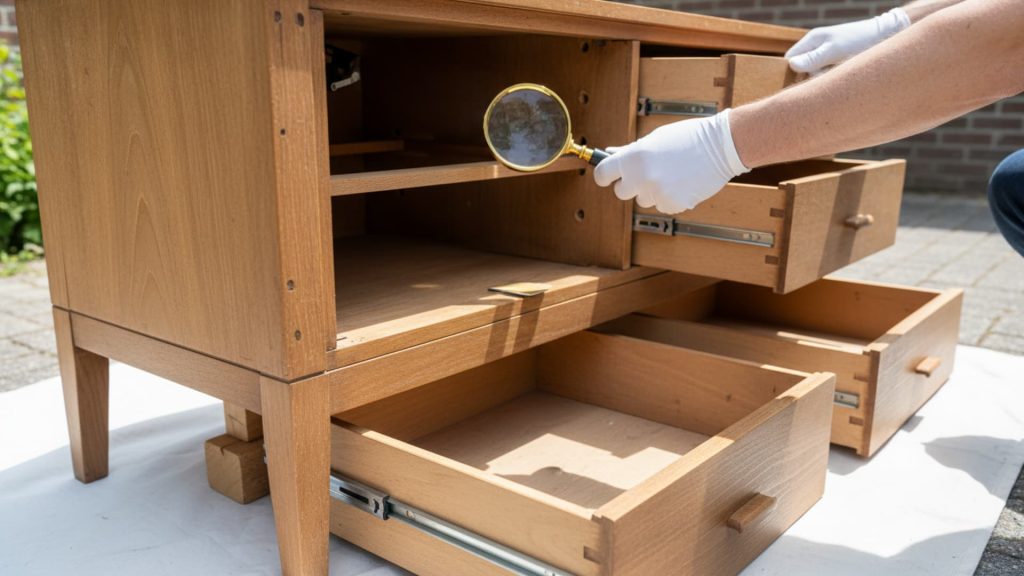
Buying secondhand wood furniture is a good way to save money. But it comes with real risk if you skip the inspection. A proper look takes time, the right tools, and a clear process.
Tools to bring:
- Flashlight
- Magnifying glass
- White gloves
- White sheet
- A flat card (credit card or similar)
Inspection steps:
- Ask the seller first. Find out if the piece was stored in a storage unit. Storage units are a common source of bed bug infestations.
- Inspect outside your home. Never bring a used piece inside before you check it. Do the inspection in a driveway or garage.
- Lay a white sheet underneath. Tap the piece firmly on the ground several times. Check the sheet for any bugs or shed skins that fall out.
- Run a flat card along every joint. This disturbs any bugs hiding in the gap. Watch for movement.
- Shine your flashlight into every screw hole. Look for dark residue or pale material inside.
- Pull out all drawers. Check the tracks, undersides, and back panels of each one.
- Flip the furniture over. Shine your light into the base of every leg.
- Feel along flat surfaces. Use your gloved hand. Feel for raised bumps or blisters.
- Even one shed skin is enough reason to walk away. Do not take chances.
- Never pick up furniture from the roadside or a dumpster. You have no way of knowing why it was thrown out. A quick look on the spot is not enough.
If you decide to buy the piece after inspection, keep it in a garage for a few days first. Place interceptor traps under each leg before bringing it inside.
How to Get Rid of Bed Bugs in Wood Furniture?
Finding bed bugs in a piece of wood furniture is stressful. But acting fast and acting smart is what stops them from spreading further.
The wrong move, like dragging the piece through your home, makes things worse. So does tossing it out without containment. Every step below matters. Follow them in order.
Step 1: Stop Moving the Furniture
Keep the piece exactly where it is. Do not push it against other furniture. Do not carry it through any room. Each time an infested piece moves, bugs drop off and hide in new spots.
Step 2: Seal It in Plastic
Wrap the entire piece in a large plastic sheet or heavy-duty garbage bags. Tape every opening shut. This stops bugs from escaping while you treat the problem. If the piece is in a garage or outside, leave it there.
Step 3: Vacuum Every Surface
Use a vacuum with a hose attachment. Go over every crack, joint, screw hole, drawer track, back panel, and leg base. After you finish, seal the vacuum bag in a plastic bag and take it straight outside.
Never empty the vacuum bag inside your home.
Step 4: Use Heat
Heat is one of the most reliable treatment methods. But the temperature must be high enough — and held long enough.
- Adult bed bugs die at around 48°C (119°F)
- Eggs are harder to destroy. They need at least 52°C (125°F) to be fully killed
For smaller pieces, place them in a black plastic bag and expose them to direct sunlight. Keep them there for at least 3 hours. Check that the inside of the bag reaches the right temperature before assuming the treatment is done.
For larger pieces, professional heat treatment gives the most reliable result.
Step 5: Apply a Bed Bug Spray
Use a bed bug-specific spray directly into cracks, joints, screw holes, and drawer tracks. Pyrethrin and pyrethroid-based sprays work well on contact. Read the product label carefully. Let the piece dry fully before use.
Step 6: Call a Professional for Large Infestations
If you find live bugs in multiple spots or signs spread across the whole piece, get professional help. A certified pest control expert can assess the full extent of the infestation, apply targeted treatment, and follow up.
Expect one to four visits, depending on the situation.
Getting rid of bed bugs is one part of the solution. Making sure they never come back is the other.
How to Prevent Bed Bugs in Wood Furniture?
Prevention is far cheaper and easier than treatment. A few simple habits can keep your home safe from bed bugs for good.
- Be careful with secondhand pieces: Always inspect used furniture before it comes inside. Keep it in a garage for a few days first.
- Use furniture covers and interceptors: Place leg interceptors under furniture legs to trap bugs. Check them once a week.
- Reduce clutter around furniture: Keep the area around beds and dressers clear. Fewer hiding spots mean faster detection.
- Inspect after travel: Check your luggage before bringing it into the bedroom. Wash all clothing in hot water right away.
- Seal cracks in older furniture: Fill surface cracks and worn areas with a wood sealant. Fewer cracks mean fewer entry points.
- Check regularly: Once a month, shine a flashlight into joints and screw holes. Look for dark spots or shed skins.
You now have a full plan, from spotting the signs to removing the bugs and stopping them from coming back.
Conclusion
Bed bugs in wood furniture are a real problem. They hide in spots most people never think to check. They spread fast. And they are costly to remove once they settle in.
The signs are there if you know what to look for. Dark fecal spots, shed skins, tiny white eggs, and that sweet musty smell are all red flags.
Knowing where they hide, which wood carries more risk, and how to inspect before you buy puts you in a strong position.
You do not have to bring bed bugs home. A careful look before you buy is all it takes.
Found a piece you are unsure about? Contact a pest control professional before it comes through your door.
Frequently Asked Questions
How Long Does It Take Bed Bugs To Infest A Couch?
Bed bugs can infest a couch within days of introduction. A full infestation can develop in just a few weeks if left unchecked.
Can Vacuuming Spread Bed Bugs?
Yes, it can if the vacuum bag is not sealed right away. Always seal the bag in a plastic bag and dispose of it outside immediately after vacuuming.
Do Bed Bugs Stay In Pillows?
Bed bugs can hide in pillows but prefer hard surfaces near sleeping areas. Wash pillowcases in hot water regularly to reduce the risk.