Are you walking away from potentially perfect properties because of foundation concerns? Smart investors know that house underpinning isn’t a red flag; it’s often a green light to exceptional value.
While most buyers flee at the first mention of foundation work, savvy property investors understand that underpinned homes often offer superior structural integrity at prices below the market.
The fear surrounding foundation issues has created a massive opportunity gap in today’s competitive real estate market.
However, many of these homes, once properly reinforced, become some of the most structurally sound investments available.
This guide was created to bridge the knowledge gap between foundation fear and foundation opportunity, transforming what most see as a liability into your competitive advantage in property investment and homeownership.
What is Underpinning a House?
Underpinning a house involves strengthening and stabilizing the foundation when it becomes weak or starts to fail.
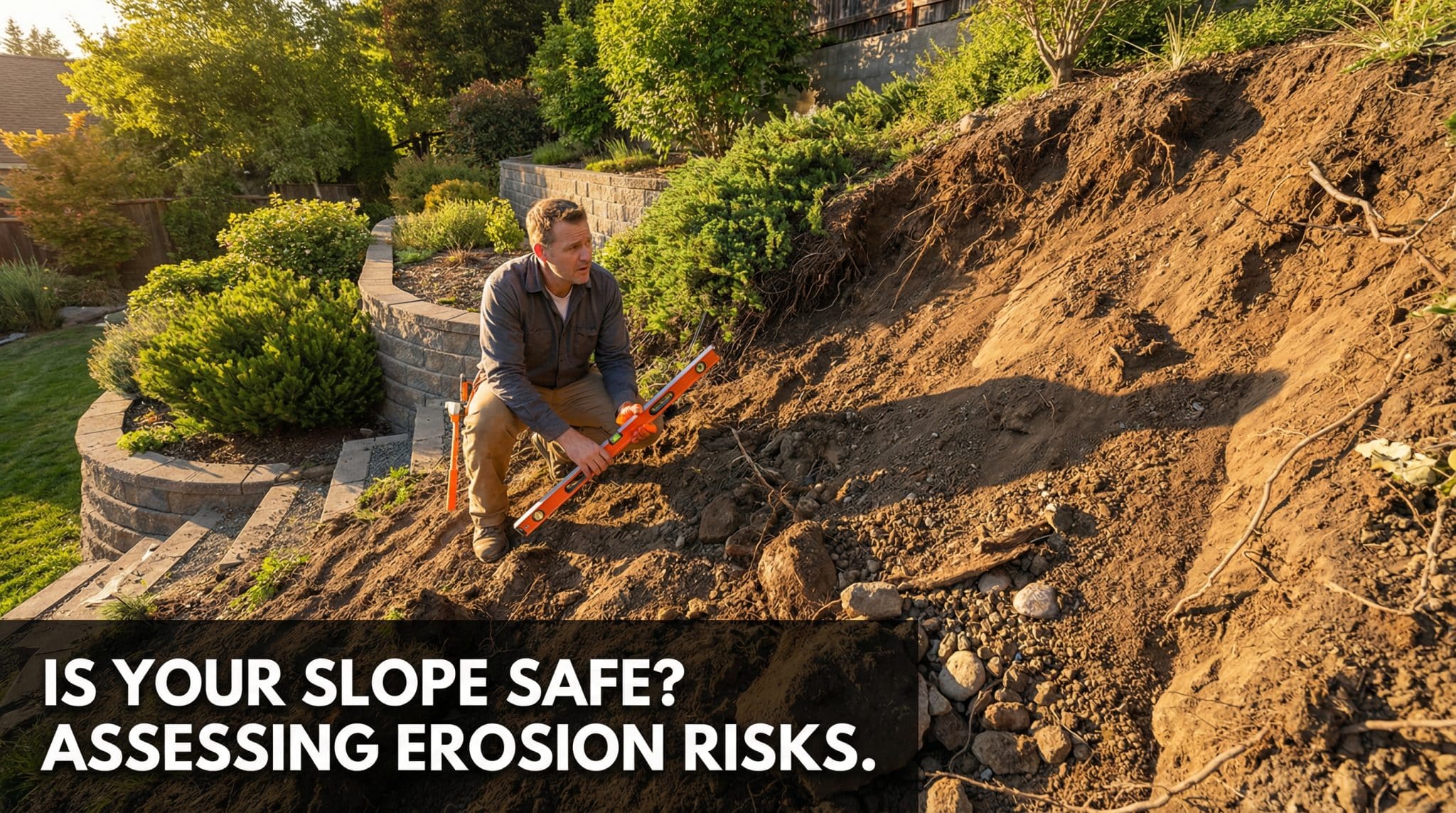
Foundations can weaken over time due to soil movement, poor construction, or environmental changes, such as drought or heavy rainfall.
When the ground beneath a home shifts or erodes, the foundation may settle unevenly, leading to structural problems.
Underpinning reinforces the foundation by extending it to a deeper, more stable layer of soil or rock. This process helps redistribute the building’s weight and prevents further settling or movement.
What Underpinning Does for a Building

Buildings need solid ground to stand on. Without it, they sink, crack, or collapse. Underpinning fixes weak foundations. It adds strength where soil has failed or where structures need to carry more weight.
- Prevents structural damage – Stops cracks from spreading through walls and floors
- Protects your investment – Saves you from costly repairs down the road
- Keeps people safe – Ensures buildings remain stable and secure
- Allows expansions – Makes adding floors or rooms possible
- Solves soil problems – Works even when ground conditions change
Old buildings often settle over time. New construction sometimes needs deeper support. Both situations call for underpinning.
Signs you might need it include doors that stick, uneven floors, or visible cracks in walls. These warnings shouldn’t be ignored.
The right foundation work can add decades to a building’s life. It turns risky structures into safe ones.
Understanding this process helps you make smart decisions about property repairs. It also helps you spot problems before they become serious.
Good foundations mean peace of mind. That’s what underpinning delivers.
Common Underpinning Methods Explained
There are several underpinning techniques, each suited to different types of foundation problems:
1. Mass Concrete Underpinning
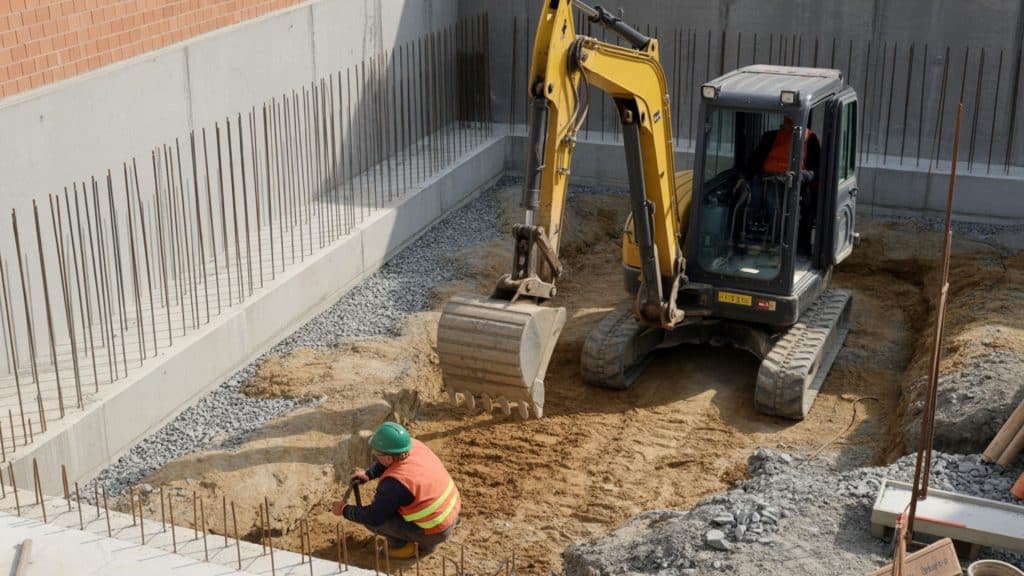
This is the most traditional and widely used method. It involves excavating sections below the existing foundation and pouring new concrete footings to extend the base deeper into stable soil.
The process is done in stages to avoid compromising the building’s stability.
2. Mini Piled Underpinning
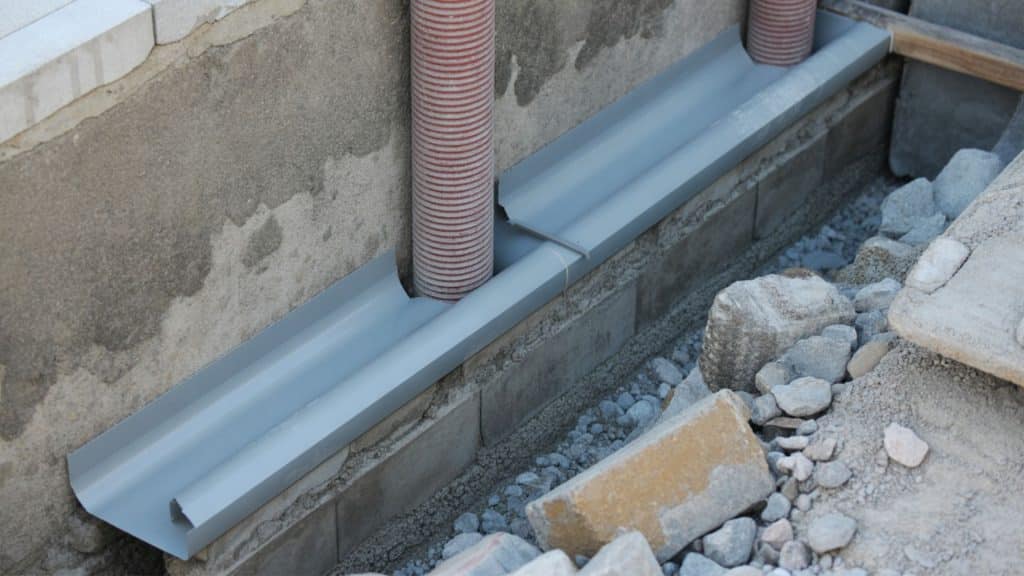
Used when the stable soil is very deep, mini piles are long steel rods driven deep into the ground to transfer the load away from unstable soil.
This method is more complex and usually more expensive, but it is effective for difficult ground conditions.
3. Beam and Base Underpinning
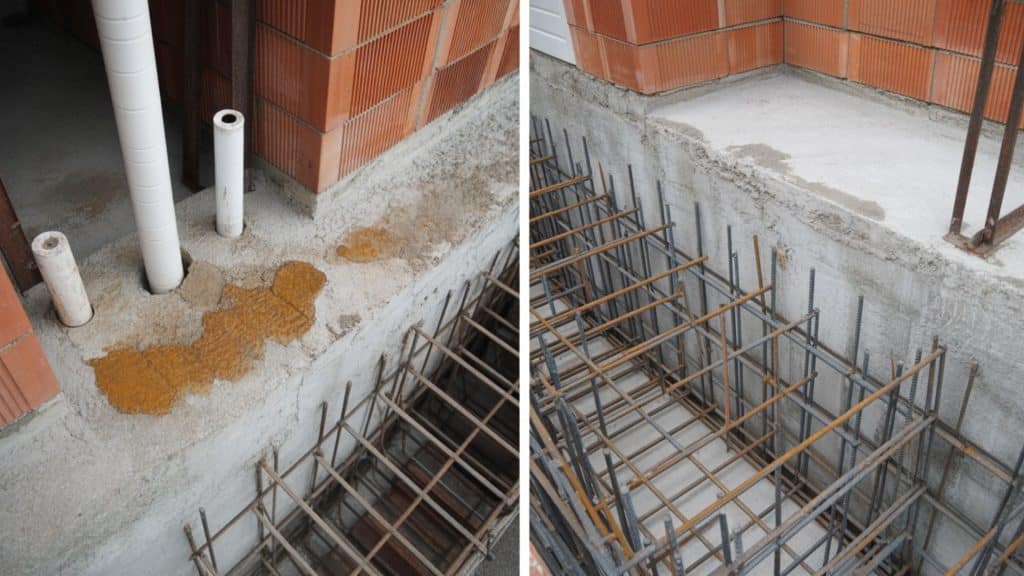
This technique uses a reinforced concrete beam to distribute the load across a larger area supported by concrete bases.
It’s ideal when the soil is moderately unstable, providing strong support without the need for extensive excavation.
What Owners Can Expect While Underpinning a House?
Understanding the steps involved can make the process less intimidating:
-
Inspection and Assessment: A structural engineer inspects the foundation and tests soil conditions.
-
Planning: A detailed underpinning plan is drawn up, selecting the most suitable method and estimating costs.
-
Excavation: Small sections beneath the foundation are carefully excavated in phases.
-
Pouring Concrete or Installing Mini Piles: New footings or piles are installed to reinforce the foundation.
-
Curing and Monitoring: The new supports cure (harden), and the structure is monitored to ensure stability.
-
Finishing Touches: Excavated areas are filled, and any affected walls or floors are repaired.
Typically, underpinning takes several weeks, depending on the extent of work needed.
How Much Does Underpinning Cost?
Costs vary widely based on the home size, underpinning method, soil conditions, and geographic location.
| Home Size | Foundation Perimeter | Low-End Cost | High-End Cost | Average Cost |
|---|---|---|---|---|
| Small Home (800-1,200 sq ft) | 120-140 linear feet | $8,000 – $12,000 | $24,000 – $42,000 | $16,000 – $27,000 |
| Medium Home (1,200-2,000 sq ft) | 140-180 linear feet | $10,000 – $18,000 | $28,000 – $54,000 | $19,000 – $36,000 |
| Large Home (2,000-3,000 sq ft) | 180-220 linear feet | $14,000 – $22,000 | $36,000 – $66,000 | $25,000 – $44,000 |
| Very Large Home (3,000+ sq ft) | 220-300+ linear feet | $18,000 – $30,000 | $44,000 – $90,000+ | $31,000 – $60,000 |
Factors influencing cost include:
-
Depth of underpinning required
-
Accessibility of the site
-
Type of underpinning method
-
Additional repairs (e.g., cracks, drainage issues)
Although it can seem expensive, underpinning is a valuable investment that protects your home’s value and safety.
Legal and Safety Considerations For Underpinning a House
Underpinning is a heavily regulated structural work that requires strict compliance with building codes and safety protocols.
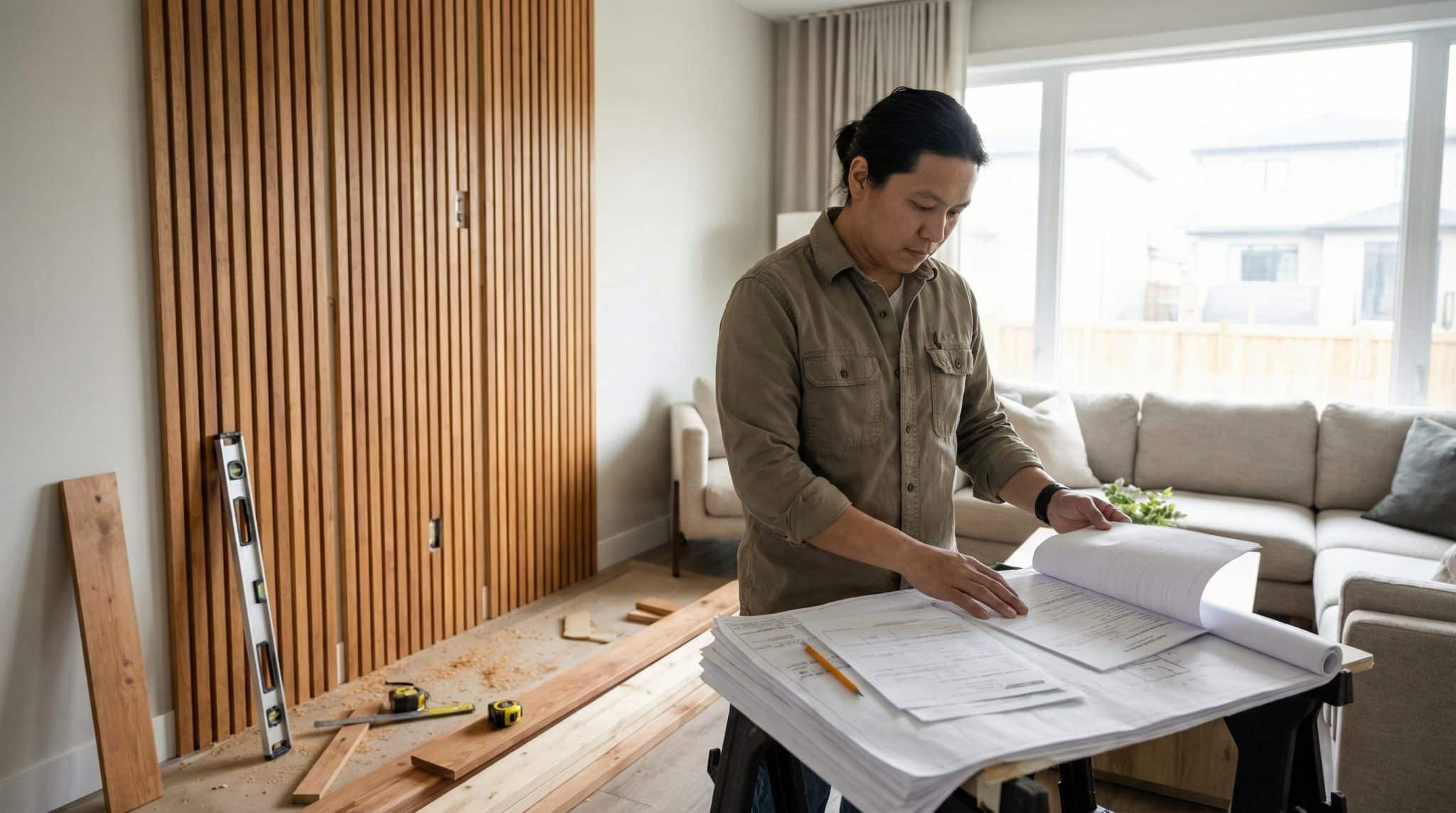
Most areas classify underpinning as major structural work needing permits. Required documentation:
- Structural engineering plans
- Soil analysis reports
- Construction drawings
- Work timeline and inspection schedule
- Permit fees (hundreds to thousands of dollars)
Building codes typically require meeting current standards, not just the original requirements, often upgrading your foundation beyond the minimum specifications.
Is It Safe to Buy a House That Has Been Underpinned?
Yes, buying an underpinned house can be safe and smart if done properly. An underpinned house is structurally sound and stable, unlike a subsiding house, which isn’t. The key is thorough due diligence.
Why Underpinned Houses Can Be Better Investments?
A house that’s underpinned is a better bet than one that hasn’t in the same location. It’s been monitored. Properly underpinned houses often outlast neighboring properties that haven’t addressed underlying soil issues.
The foundation is now securely connected to stable soil or bedrock, providing permanent support.
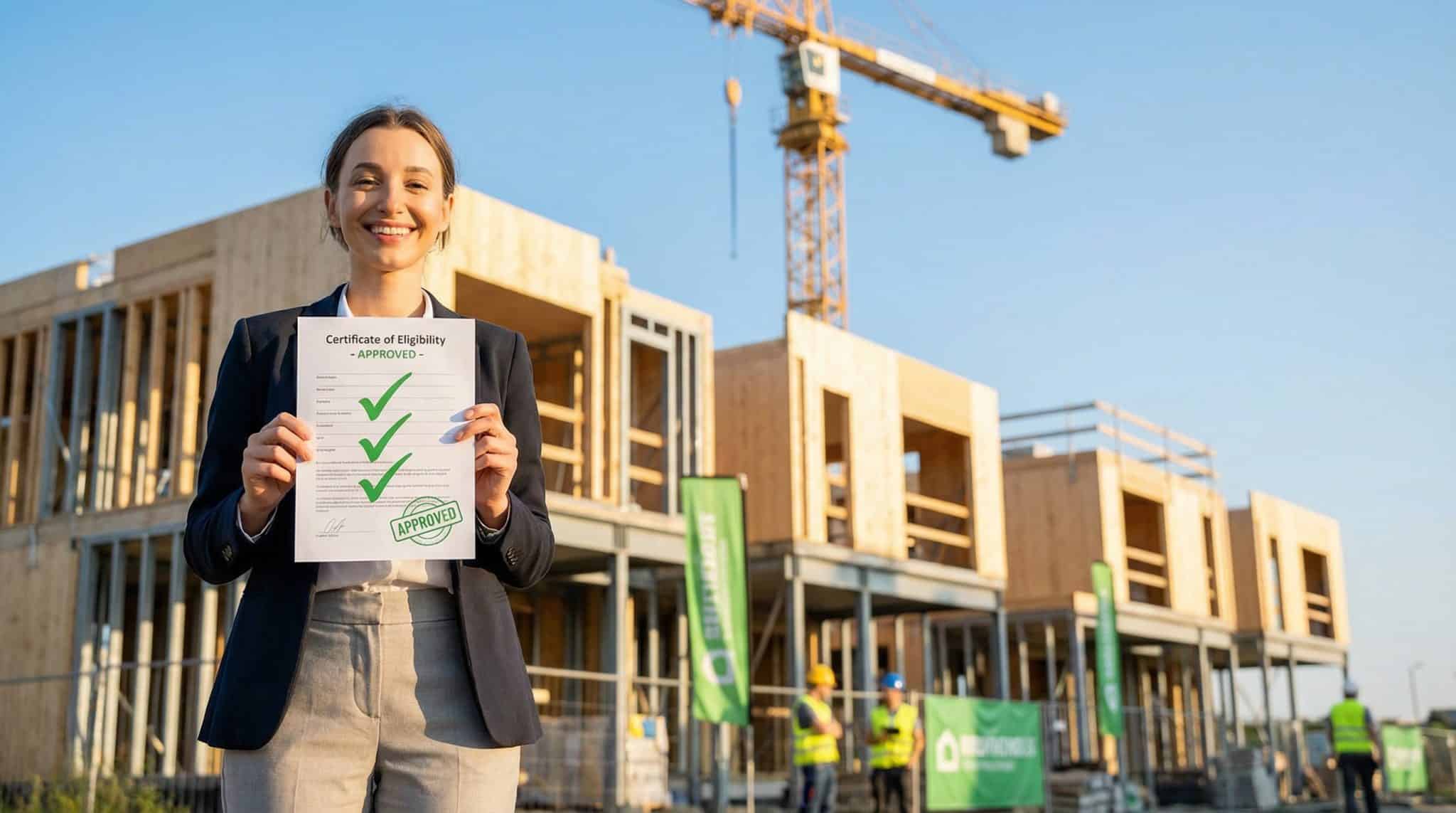
Essential Documentation Required
- Certificate of Structural Adequacy (CSA)
- Building Regulations Completion Certificate
- Transferable contractor warranty
- Structural engineer’s reports (before and after work)
- Insurance claim documentation
Get a Professional Structural Survey
Never buy a property without a thorough structural inspection by a qualified engineer; standard surveys are insufficient. They’ll assess the underpinning quality and check for ongoing movement.
Houses underpinned 20 years or more ago, with no movement, are typically very strong investments.
Preventing Future Foundation Problems
After underpinning, regular maintenance helps extend your home’s foundation life:
-
Maintain proper drainage around your home to avoid water pooling near the foundation.
-
Keep gutters clean and direct downspouts away from the house.
-
Avoid planting large trees too close to the foundation, as roots can cause soil shifts.
-
Schedule annual foundation inspections to identify and address issues early.
Conculsion
Foundation knowledge separates successful property investors from those who miss golden opportunities.
You now understand that underpinning isn’t a warning sign; it’s often a competitive advantage hiding in plain sight.
While others flee from foundation concerns, you recognize properties with superior structural stability selling at discount prices.
Armed with this comprehensive understanding of methods, costs, and quality indicators, you’re positioned to capitalize on opportunities others overlook.
Underpinned homes frequently outlast neighboring properties that haven’t addressed underlying soil issues, making them smarter long-term investments.
Ready to convert your property investment strategy?
Start inspecting your current properties for early warning signs. Research qualified underpinning contractors before you need them.