
Every owner I talk to spends months choosing cabinet color and countertops.
The splashback gets a week, and whatever budget is left. That’s a mistake. After years working on residential kitchens, I can tell you the splashback makes or breaks the room.
It sits at eye level, right where you look from the sink. Get it right, and the kitchen feels finished.
Getting it wrong can make things feel off, but these kitchen splashback ideas suit every style and budget.
Kitchen Splashback Ideas Worth Knowing About
Not every material works in every kitchen, and the options have expanded well beyond white tile.
Here is a full run-through of the best kitchen splashback ideas available right now, with honest notes on what each one costs you in maintenance, money, and installation effort.
1. Subway Tile Kitchen Splashback
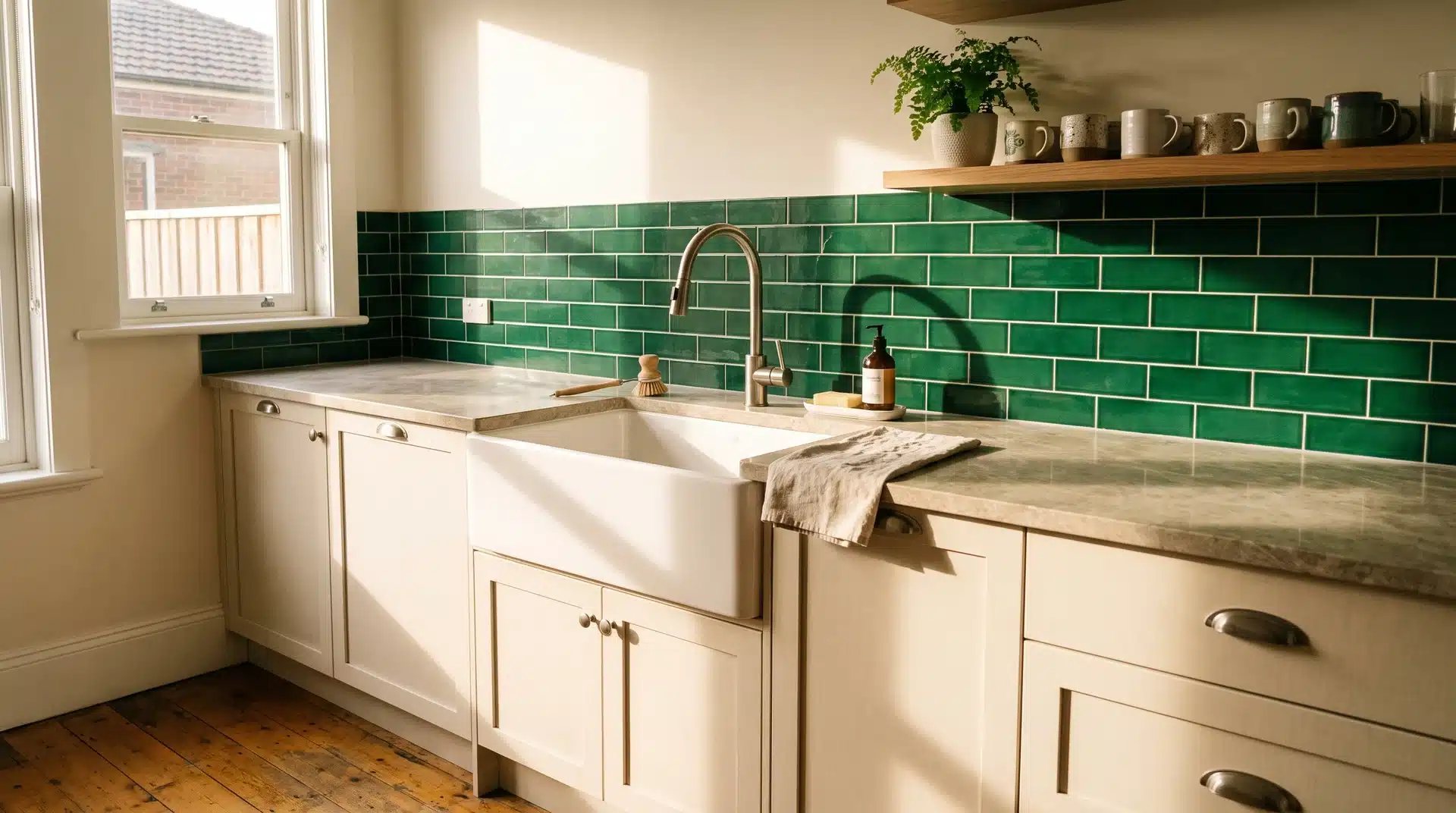
Subway tile has been running kitchens since 1904, when it first appeared on New York City subway walls.
It moved into residential kitchens in the 1920s and never left. That kind of staying power comes down to proportion.
The 3×6-inch rectangle works with nearly every cabinet style and countertop material because it doesn’t compete with either.
2. Glass Kitchen Splashback
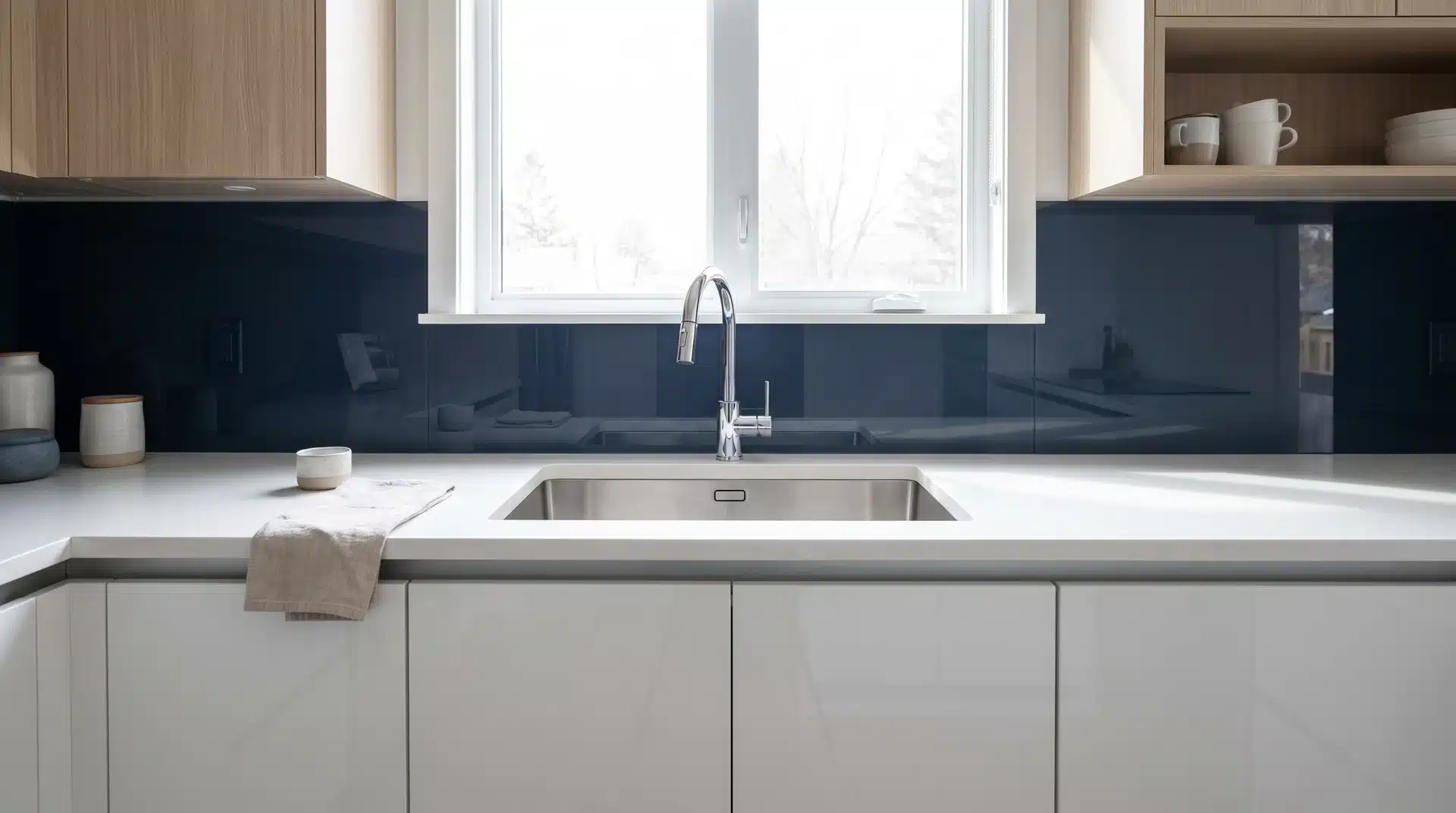
Glass looks pricier than it is and cleans up fast, since the surface is non-porous and a damp cloth handles most spills.
Back-painted glass comes in a single color matched to any shade, pulling the exact tone from your cabinetry and reflecting it back.
That cohesive, built-in look is hard to achieve with any other material.
3. Modern Kitchen Splashback
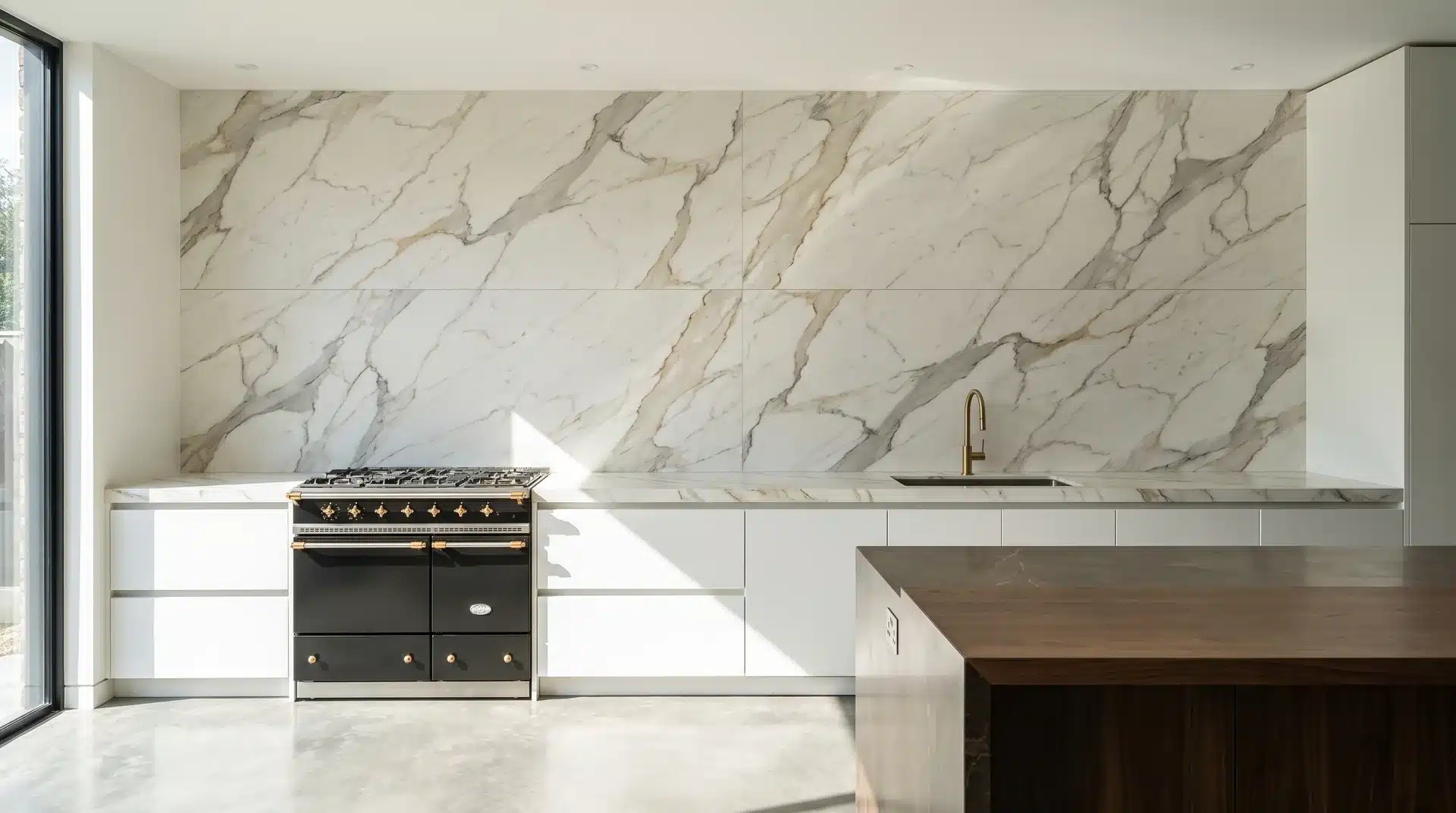
Glass looks pricier than it is and cleans up fast, since the surface is non-porous and a damp cloth handles most spills.
Back-painted glass comes in a single color matched to any shade, pulling the exact tone from your cabinetry and reflecting it back.
That cohesive, built-in look is hard to achieve with any other material.
4. Handmade Ceramic Tile Splashback
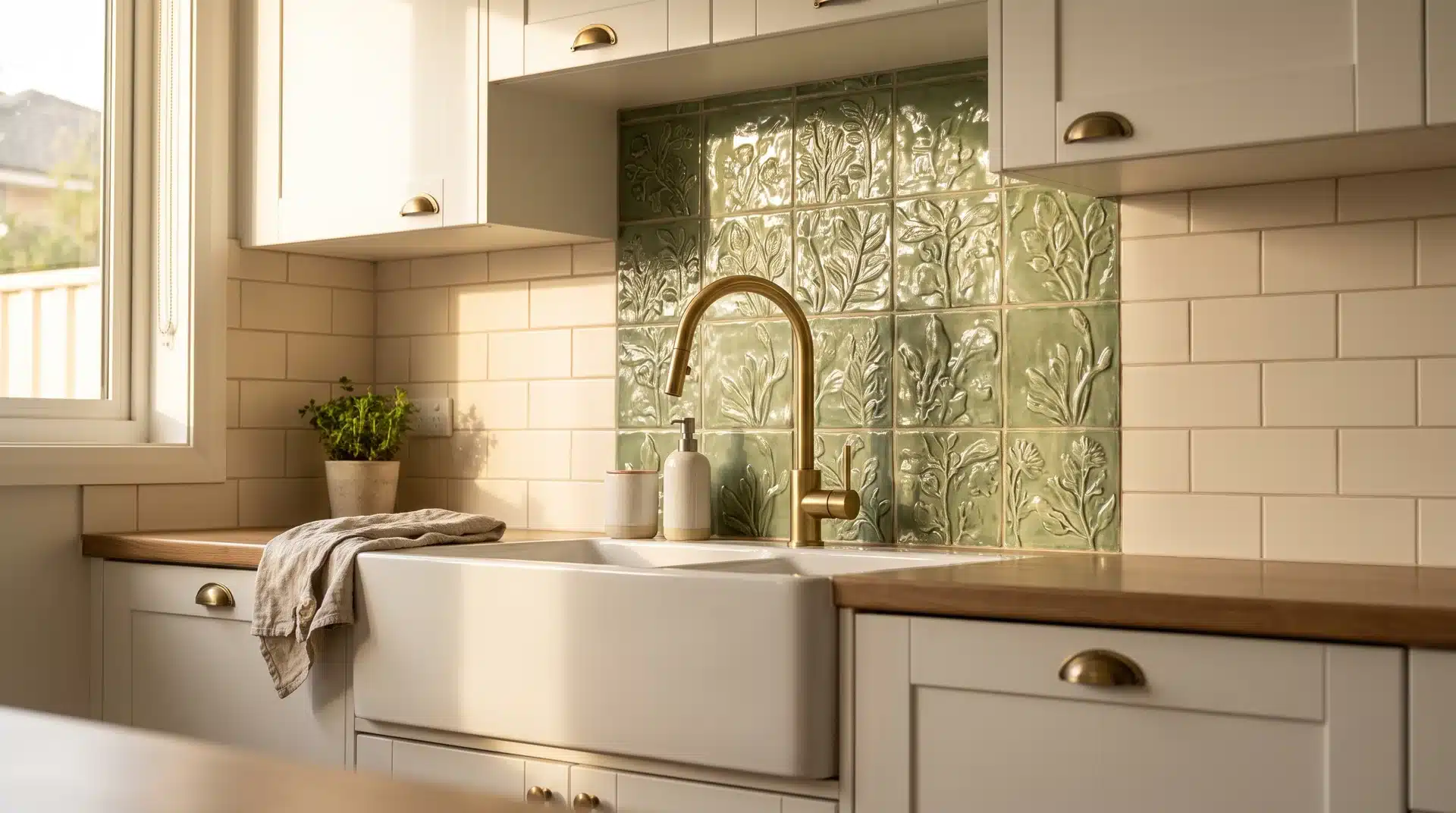
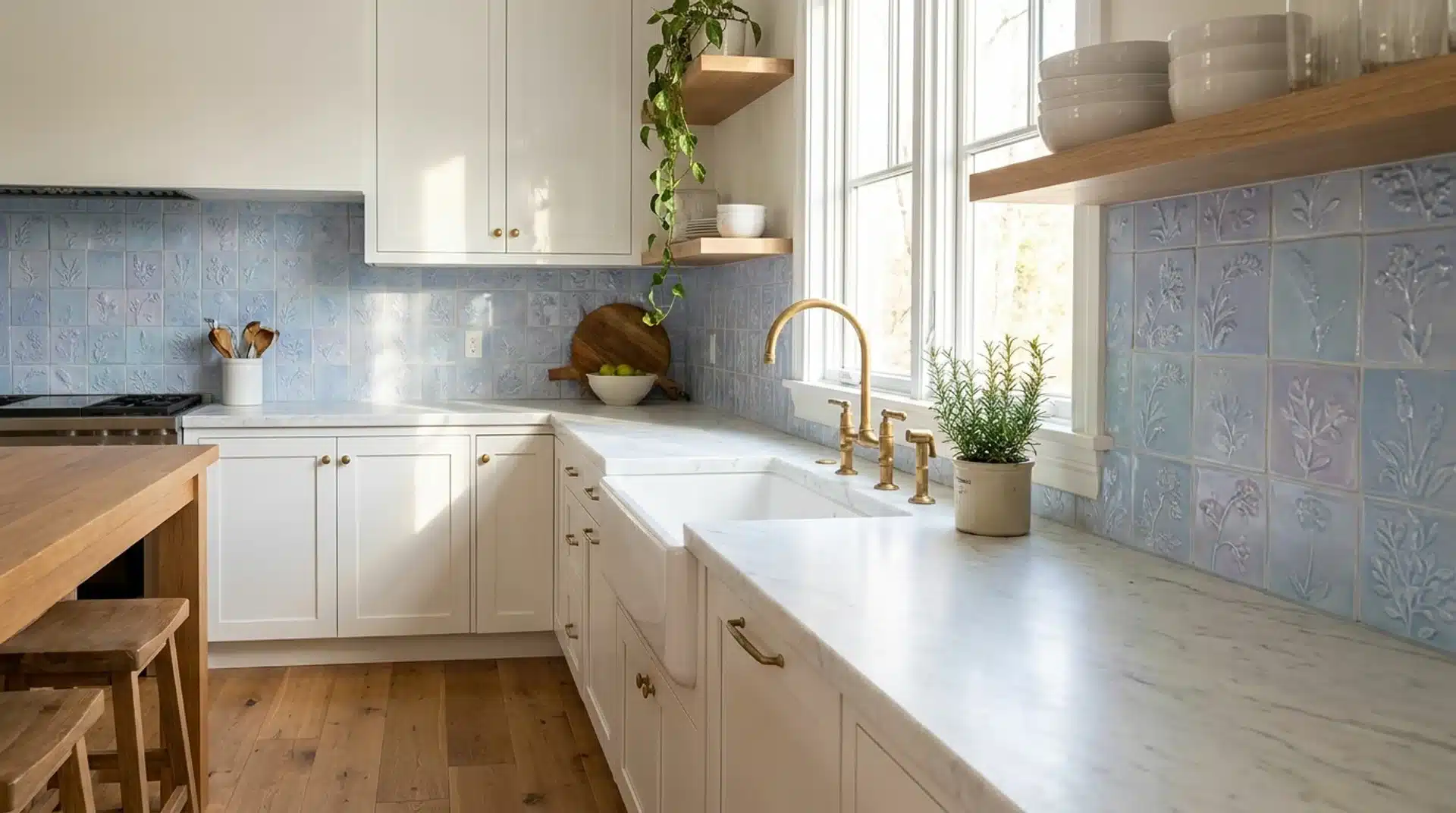
Handmade ceramic tile shows the glaze variation and slight texture only a human hand can create, unlike mass-produced tile, which you can’t replicate with printing.
Relief tiles work best as a feature panel rather than a full-width run. Behind the range, framed by plain field tile, a section of hand-pressed relief draws the eye and holds it.
5. Copper and Brass Kitchen Splashback
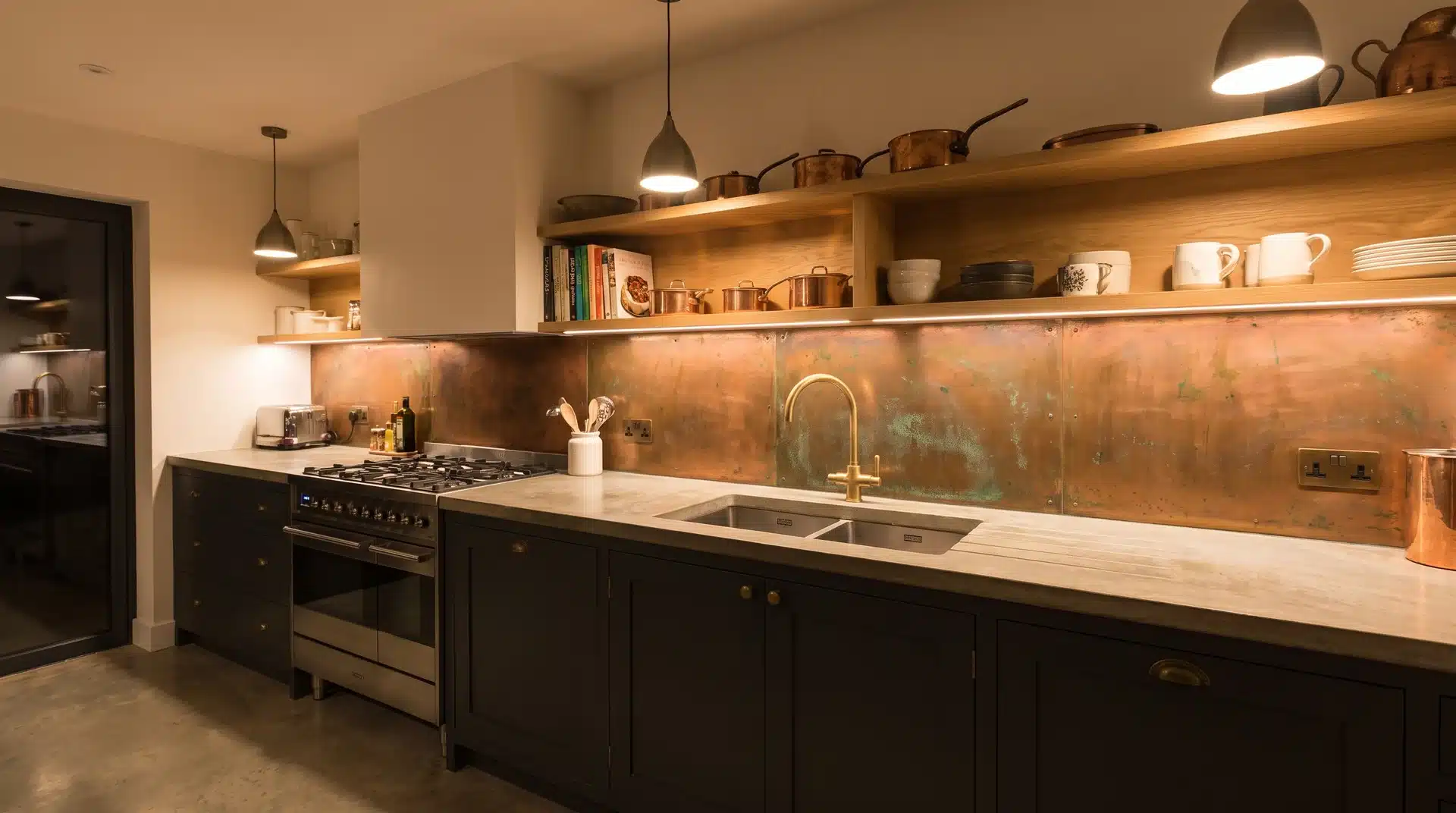
Copper and brass splashbacks are sheet metal, custom-cut and fitted, not tile, glass, or stone, and they age in a way no other material does.
Copper builds a natural patina that suits some kitchens and not others.
Polished copper needs regular attention, while brushed or aged copper hides fingerprints and daily grease far better. Brass runs warmer in tone.
6. Mosaic Tile Backsplash Ideas
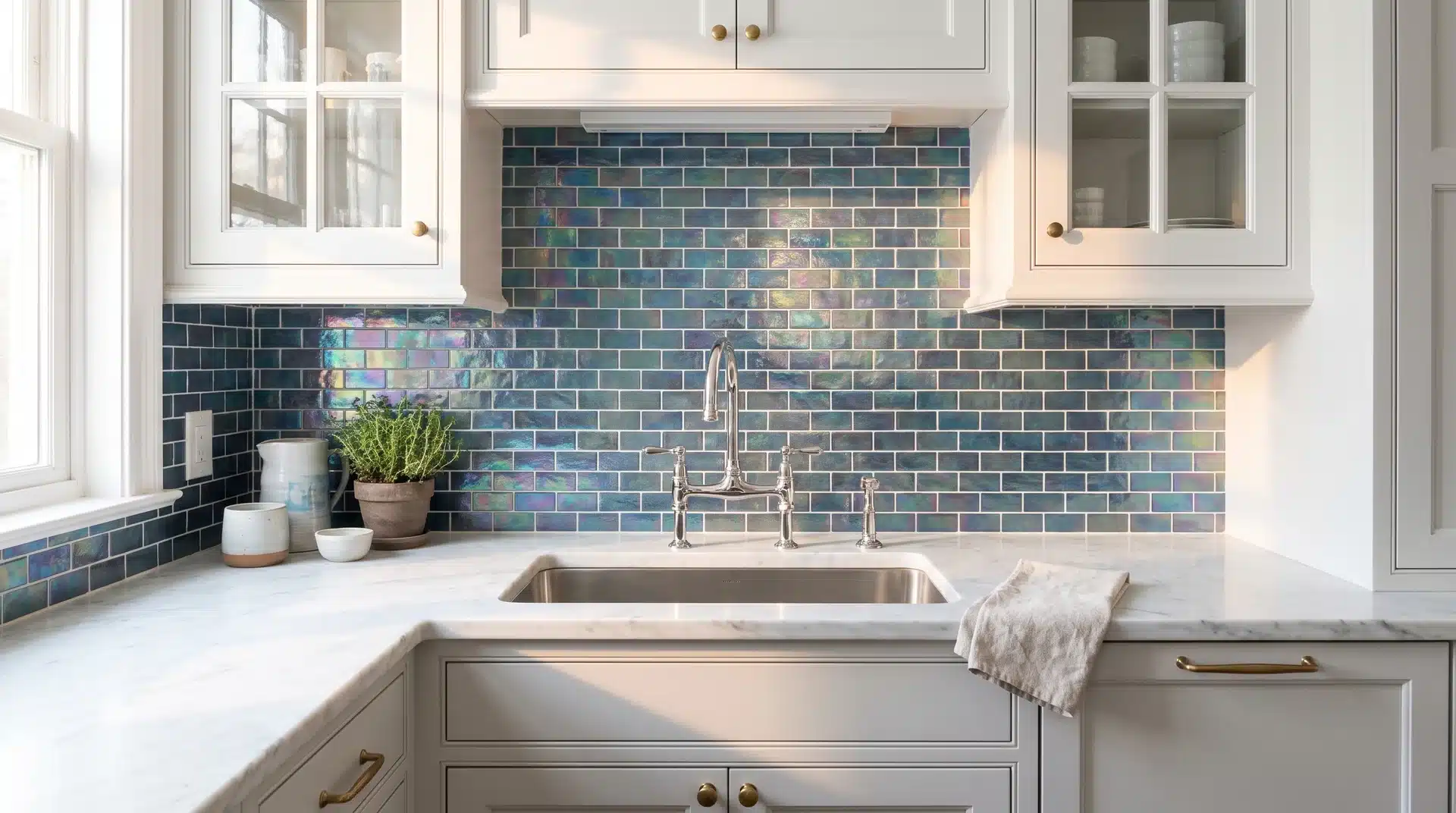
Mosaic tile adds more visual texture and more grout lines than almost anything else in the kitchen, so you need to accept both before committing.
Iridescent glass mosaic catches light and adds movement in kitchens that feel flat or dim.
Natural stone mosaic in travertine or slate reads earthier, warmer, and less decorative. Both work best behind the hob rather than across a full wall.
7. Acrylic Kitchen Splashback
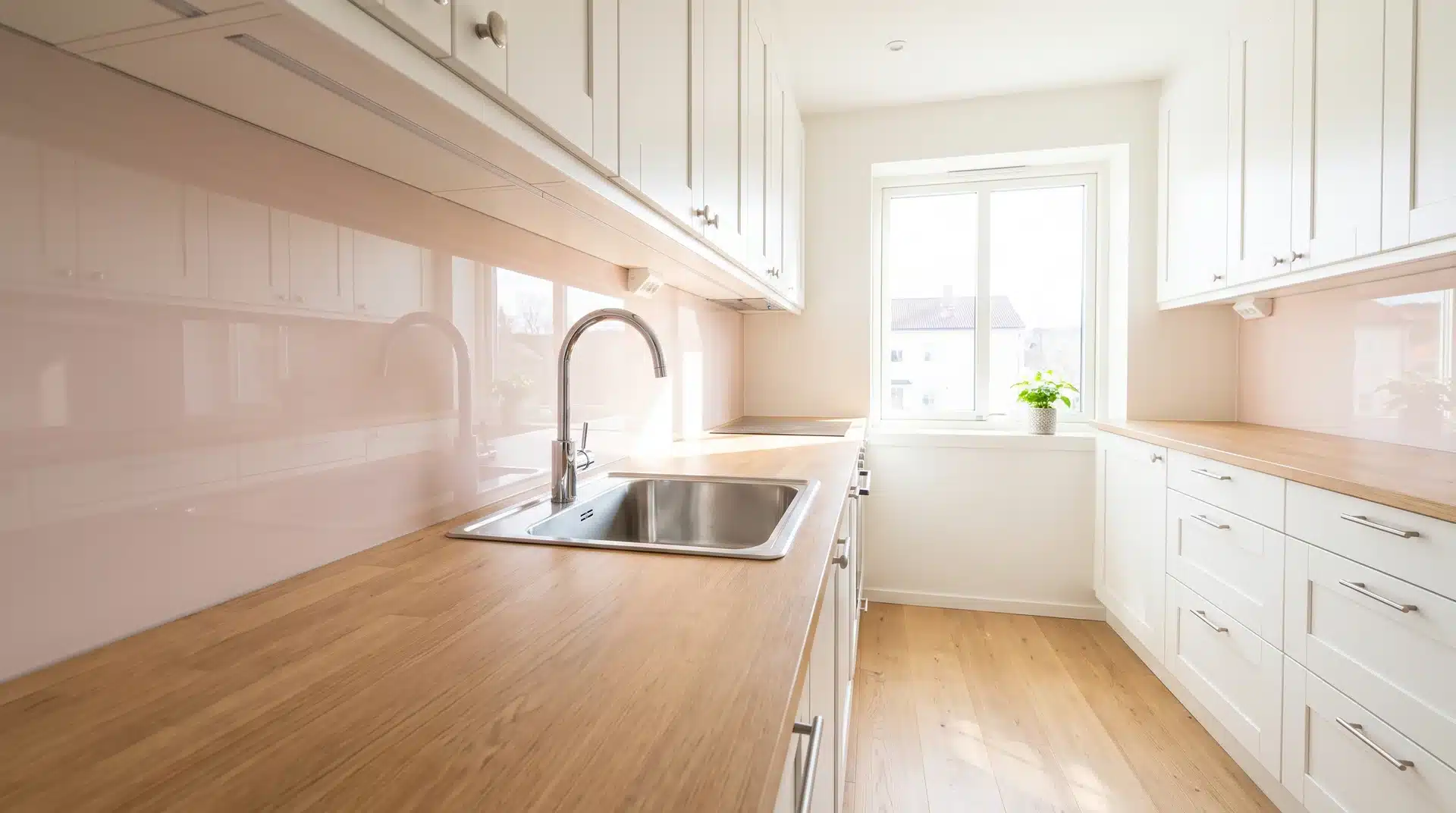
Acrylic gives a glossy, non-porous finish for about a third of the cost of glass. It cuts to size at home and often installs without a professional, which suits budget renovations.
The catch is heat: acrylic isn’t heat-resistant like glass or tile, so check the manufacturer’s spec before fitting it behind a gas hob. Within those limits, it performs well and looks the part.
8. Brick Effect and Textured Tile Kitchen Splashback
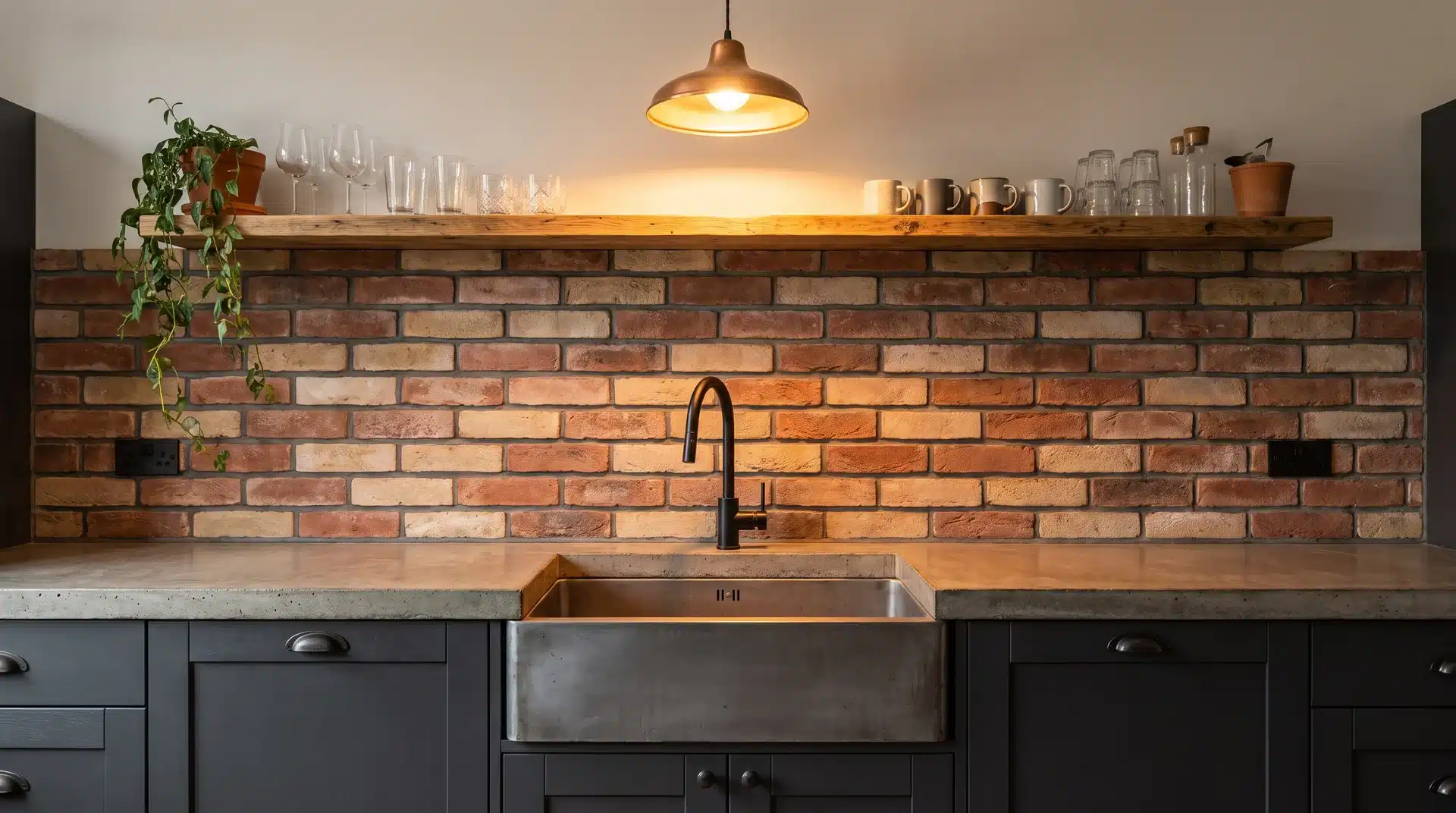
Brick-effect ceramic tile and real brick slips look different up close. Kiln-fired brick slips have the density and texture that printed ceramic can’t copy.
For an industrial or rustic kitchen, the real thing earns its higher cost.
Tumbled marble, riven slate, and rough travertine bring that same honesty to warmer, Mediterranean-style kitchens. Grout color does most of the remaining work.
9. Geometric and Hexagonal Tile
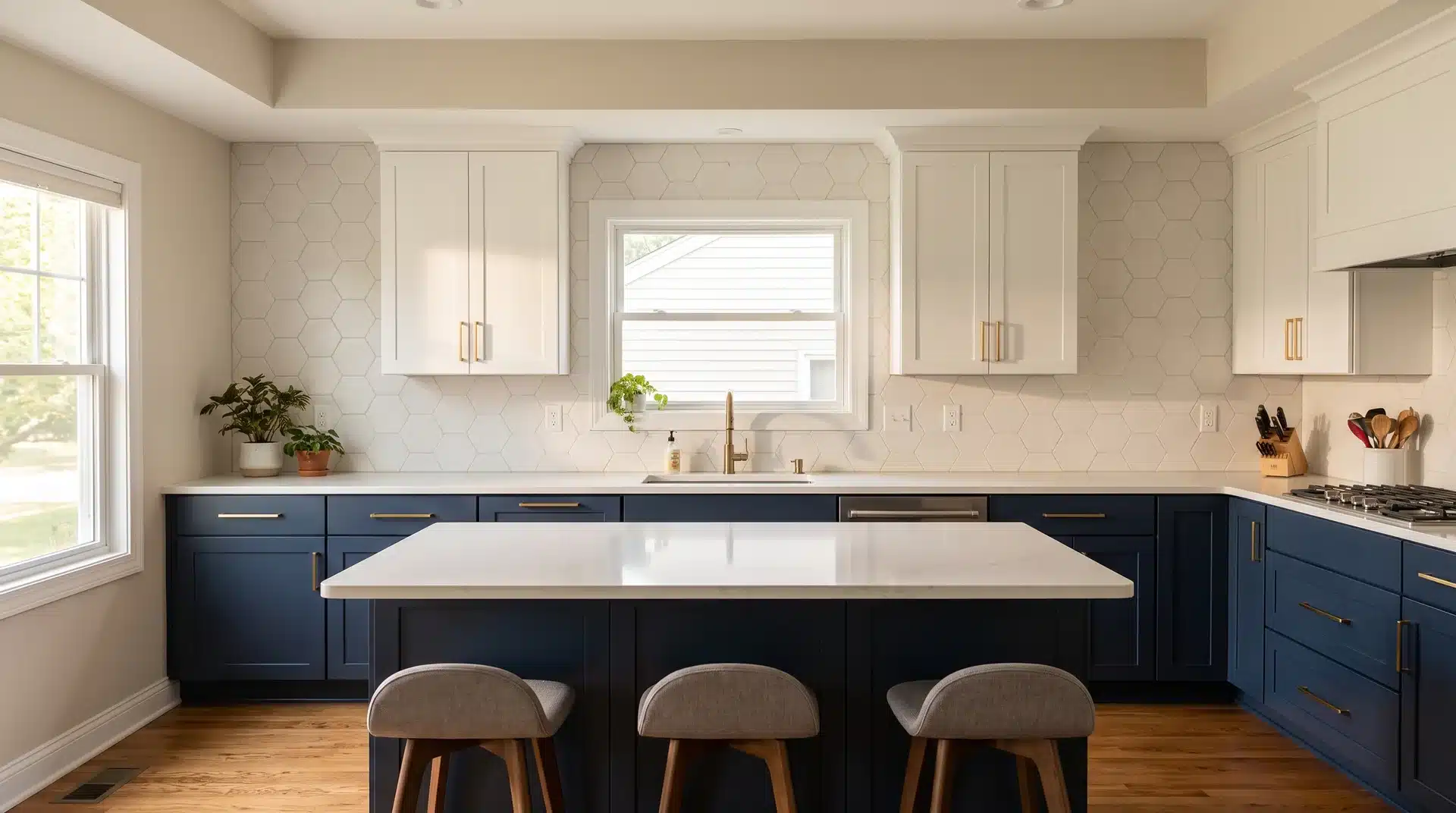
Scale changes everything with geometric tile. A 12mm hexagonal mosaic reads as soft and detailed. A 200mm hexagon reads as bold and architectural.
Both are hexagons, and they produce entirely different kitchens.
Penny tiles work in vintage-style and café-adjacent kitchens where the tight, rhythmic pattern fits the overall character. Fish scale tile, also called scallop tile, has been growing steadily over the past two years.
10. Mirrored and Metallic Tile Kitchen Splashback
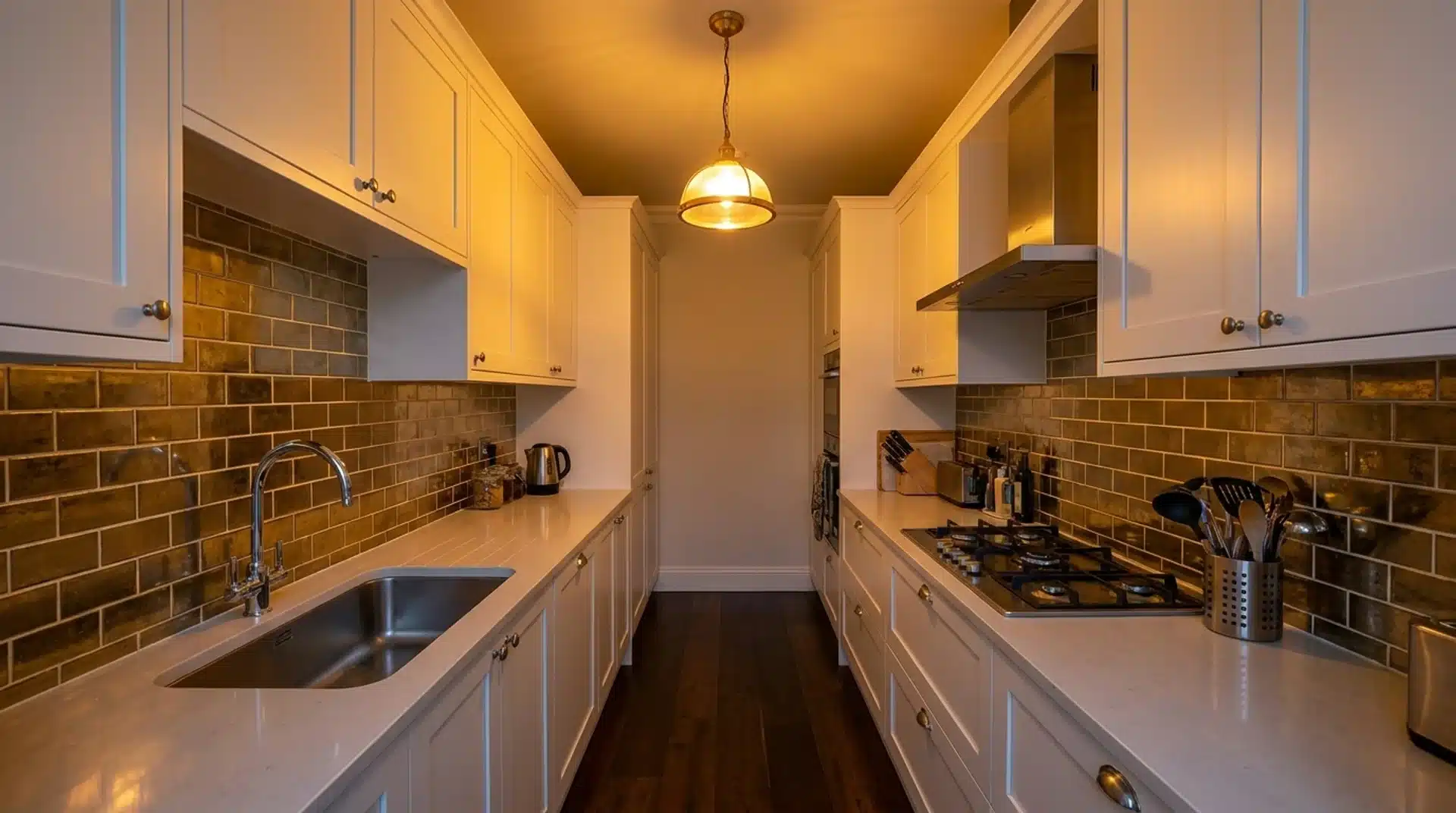
Metallic tile is a smart pick for a narrow or north-facing kitchen.
Antiqued mercury glass, high-gloss gold subway tile, and silver mosaic all multiply light without adding a fixture, which matters in narrow galley kitchens with limited windows.
The tradeoff is cleaning, since reflective surfaces show splatter fast. A matte finish gives the same light boost with fewer visible marks.
11. Natural Stone Kitchen Splashback
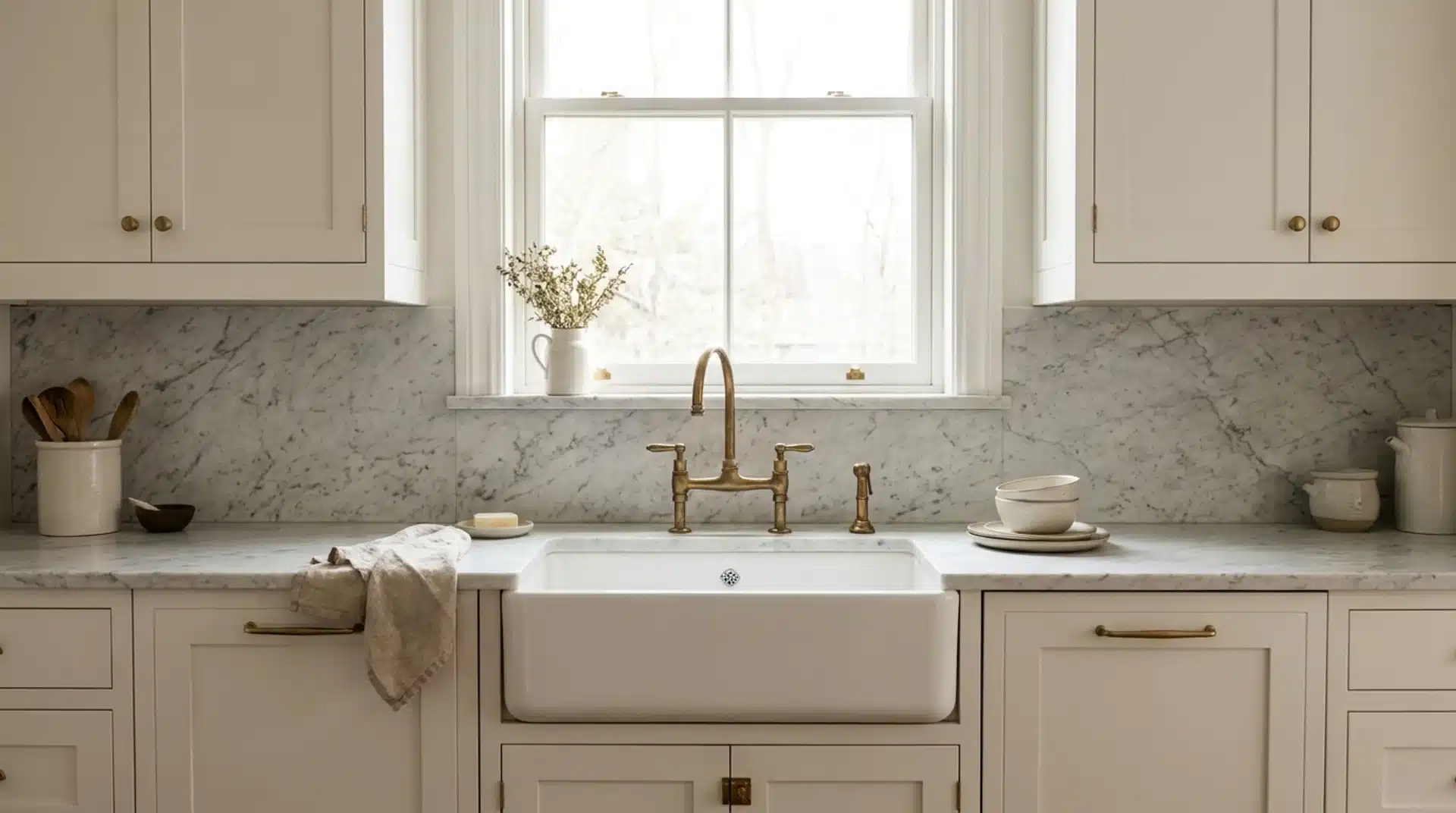
Natural stone takes more thought than most splashback materials, but it brings real depth and warmth no manufactured product matches.
Marble is porous and needs sealing before use, and then yearly after.
Honed marble hides daily marks better than polished marble and suits family kitchens, since it reads more casual and holds up to everyday cooking.
12. Vinyl Peel-and-Stick Splashback
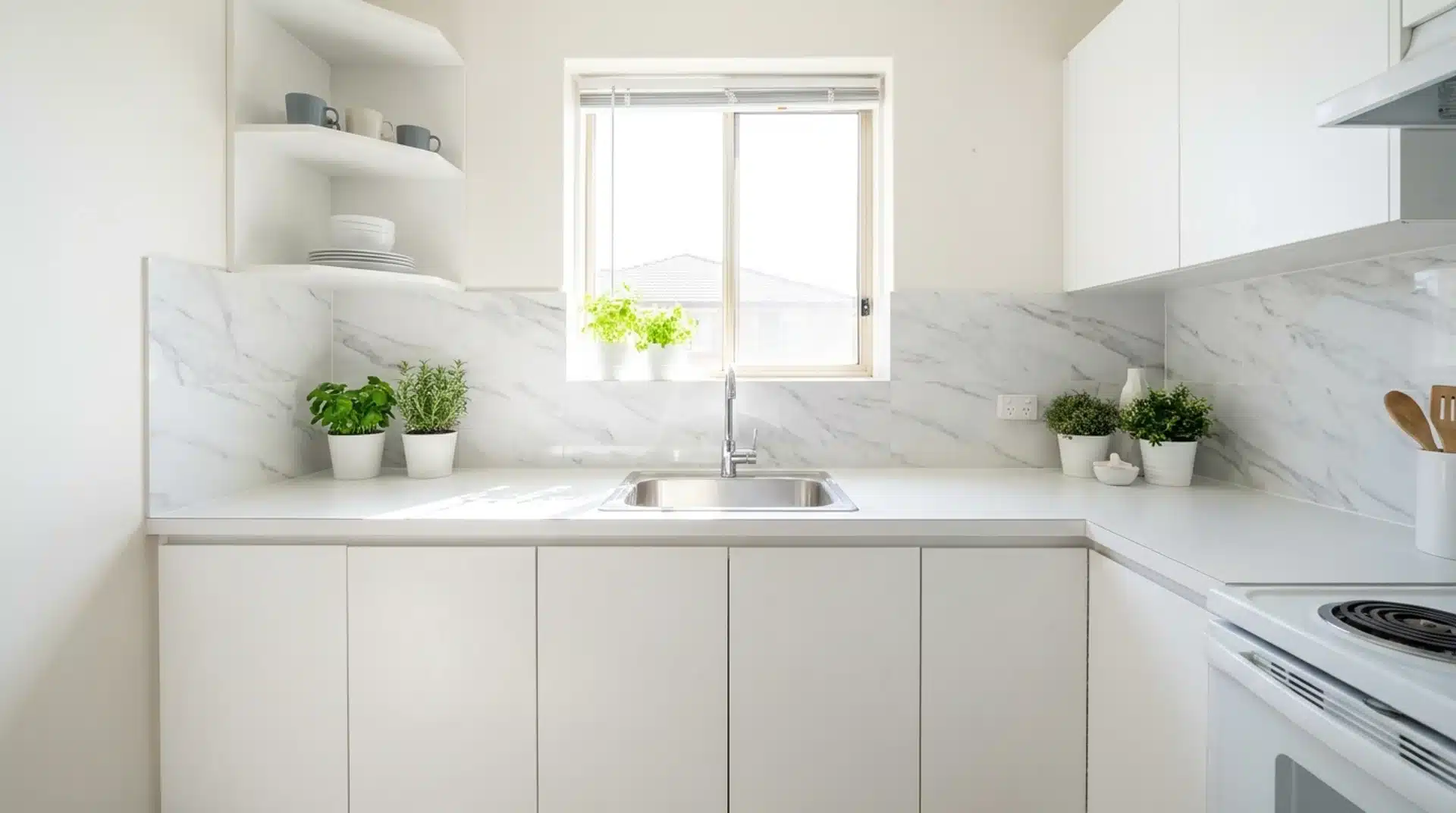
Peel-and-stick vinyl splashback panels have improved considerably in the past five years.
The better versions now replicate subway tile, marble, and concrete with enough accuracy that the difference is not obvious from across the room.
For renters who cannot make permanent changes or homeowners who want to test a look before committing to tile, they are a practical option.
13. Stainless Steel Kitchen Splashback
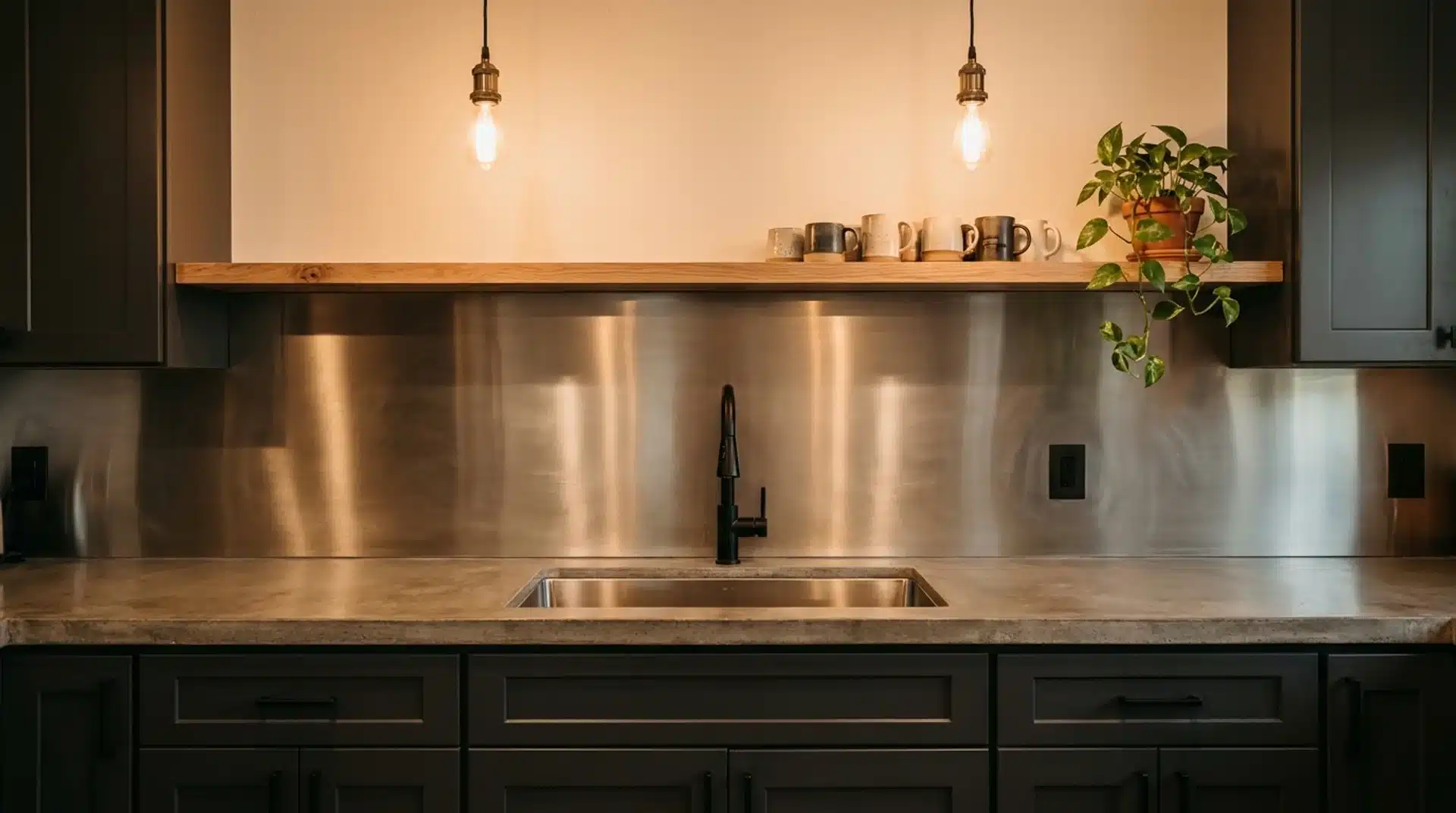
Stainless steel is the material professional kitchens have used for decades, since it handles heat, moisture, and heavy daily use without complaint.
In a residential kitchen, that same durability means a splashback that never needs sealing, never stains permanently, and wipes clean in seconds, even after a busy dinner service.
The finish matters too, since brushed stainless hides fingerprints better than polished.
14. Zellige Tile Kitchen Splashback
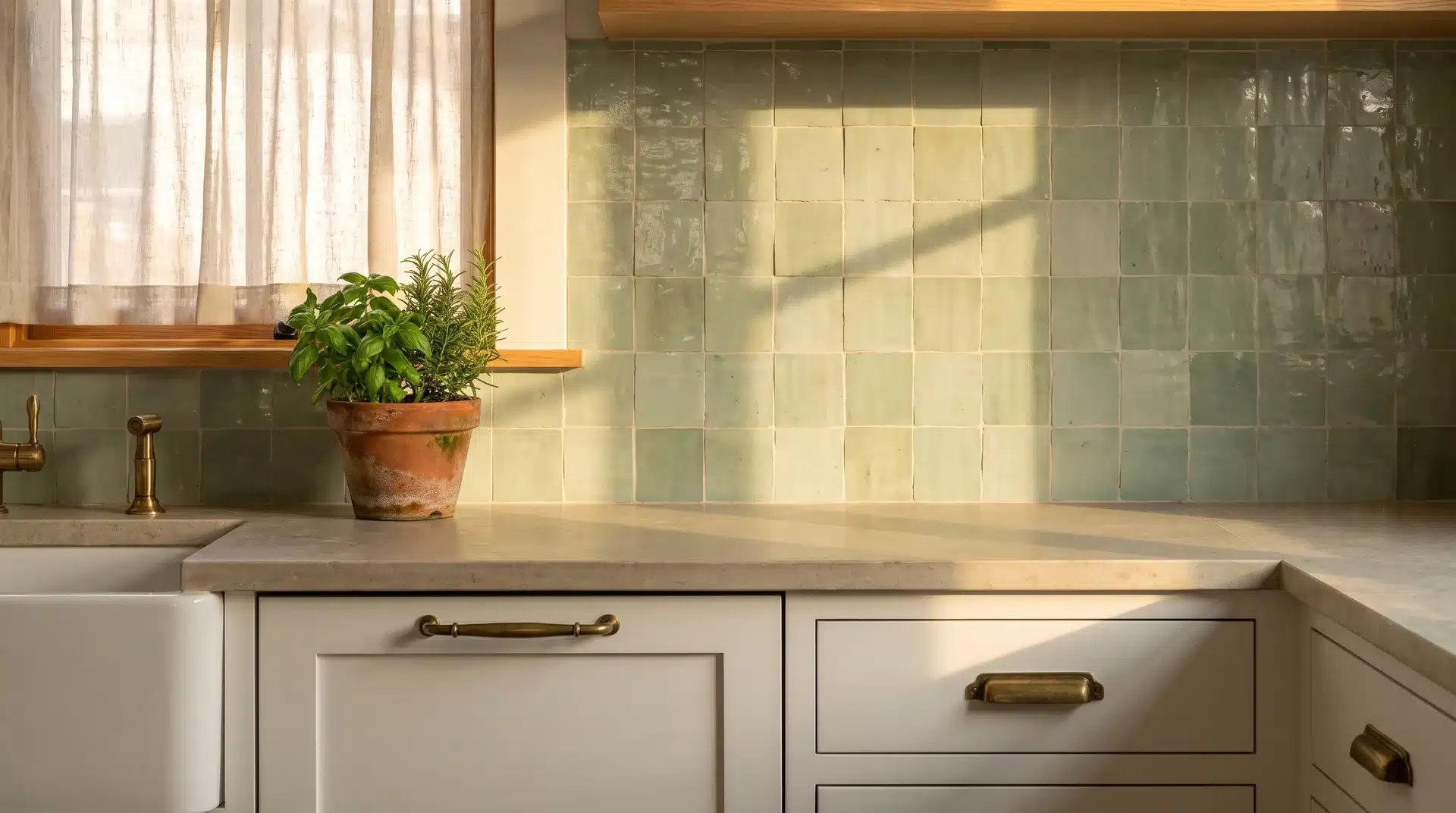
Zellige is a handmade Moroccan clay tile, fired at low heat, so no two tiles look the same, and that’s the entire point.
Colors range from soft sage and oyster white to deep cobalt and burnt terracotta.
Against shaker cabinetry or unpainted wood, it reads quietly artisanal, adding just the right amount of impe
15. Microcement Kitchen Splashback
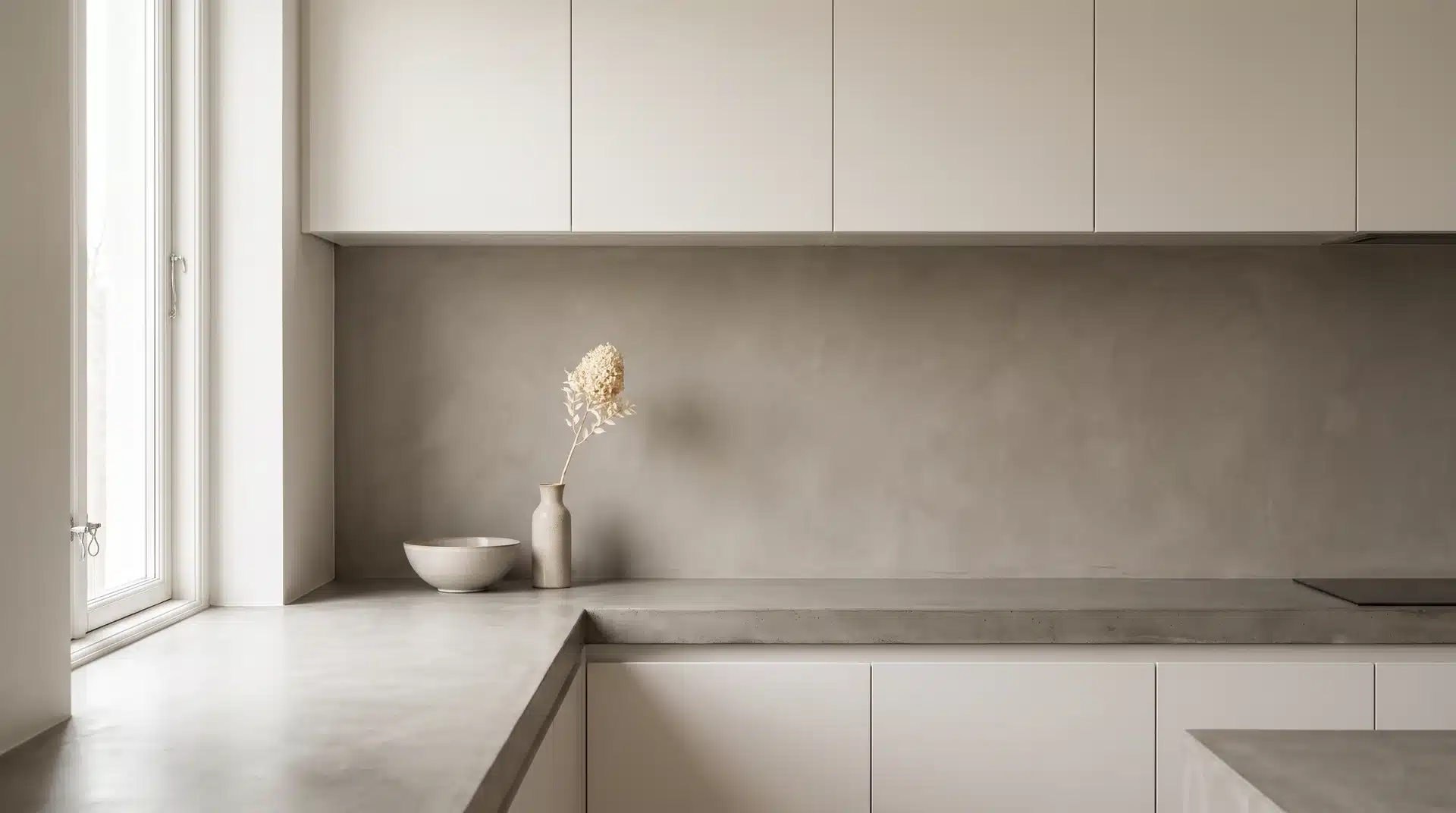
Microcement is applied as a thin coat directly over existing tile, plaster, or board, which makes it a strong option for renovations where removing the old splashback isn’t practical.
The finish has no seams: no grout lines, no tile edges, no visual break. It comes in pigmented tones from warm concrete gray to deep charcoal.
16. Terrazzo Tile Kitchen Splashback
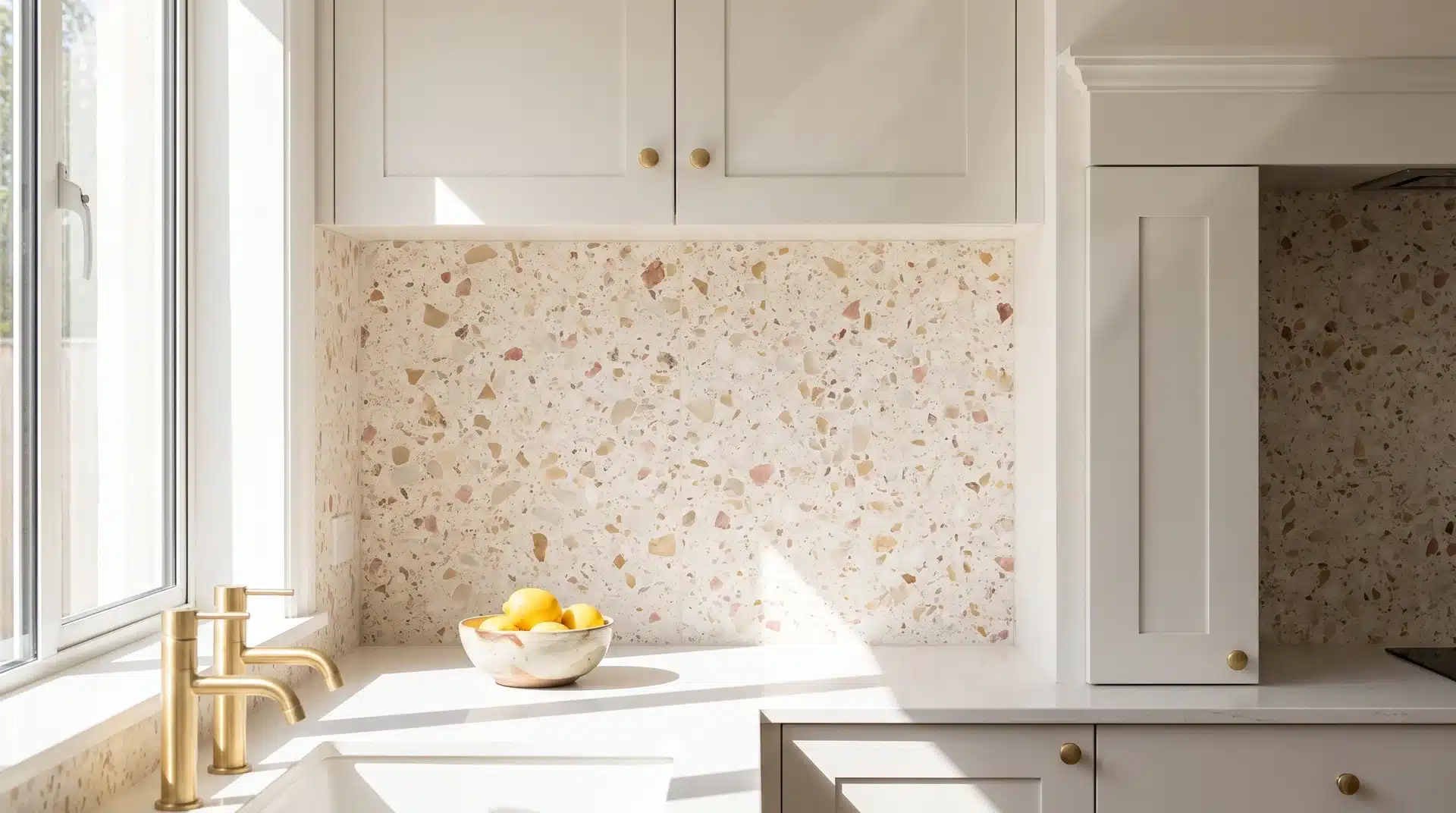
Terrazzo tile brings the aggregate pattern of traditional floor terrazzo to the wall, using chips of marble, glass, or granite set in a cement or resin base to create real visual depth.
Pale terrazzo with white aggregate reads fresh, while darker bases with contrasting chips read more dramatic, and no two installations look the same.
Match the grout to the base color so it doesn’t compete.
17. Encaustic Cement Tile
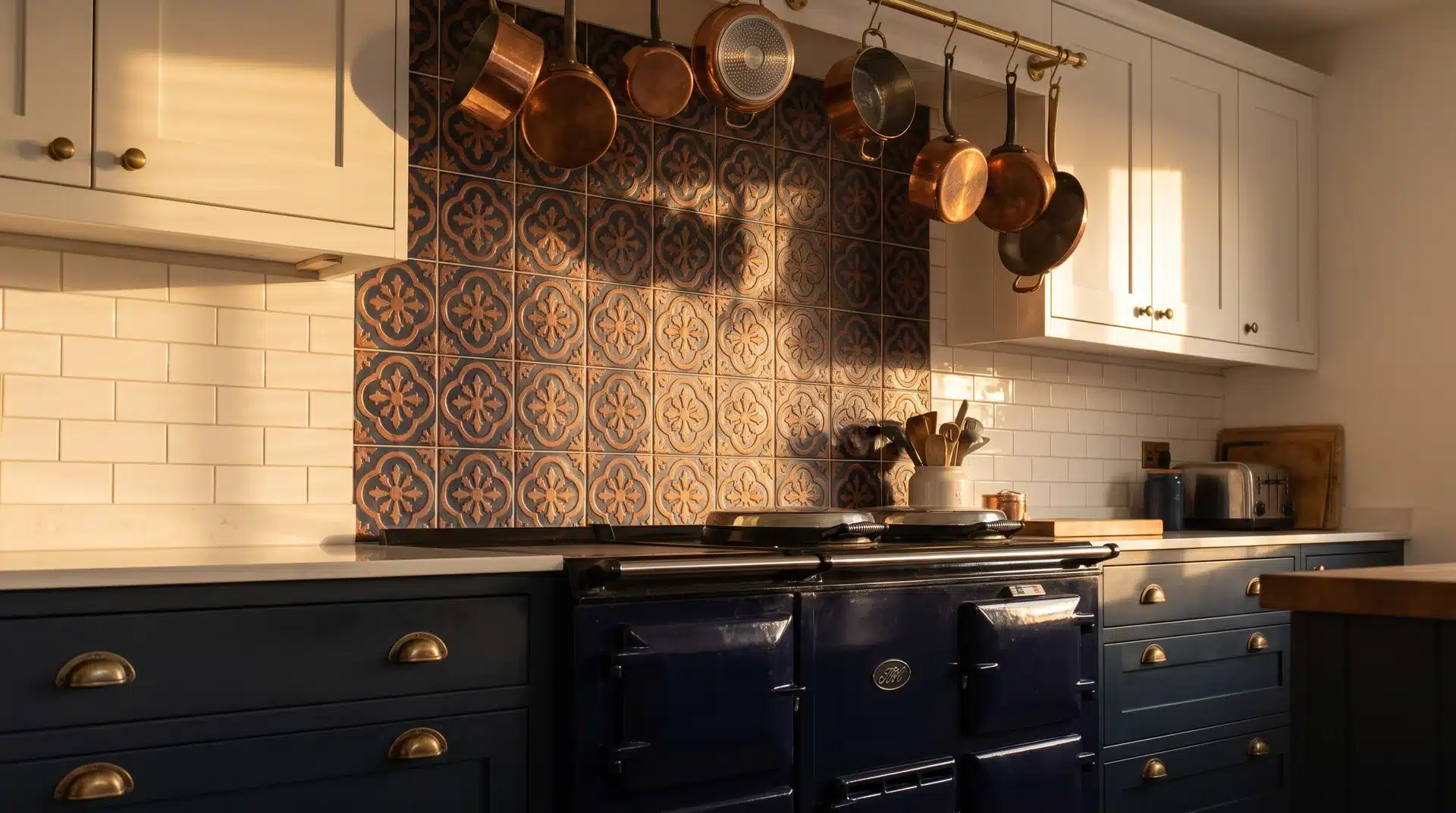
Fluted tile has a ridged surface rather than a flat face, so vertical channels catch light differently through the day.
In matte white, it reads soft and textural; in satin glaze, it turns more reflective and graphic.
It works well where cabinetry and countertop already carry the visual interest, adding texture without competing. Scale matters too: narrow flutes read delicate, wider channels read bold.
18. Fluted Ceramic Tile
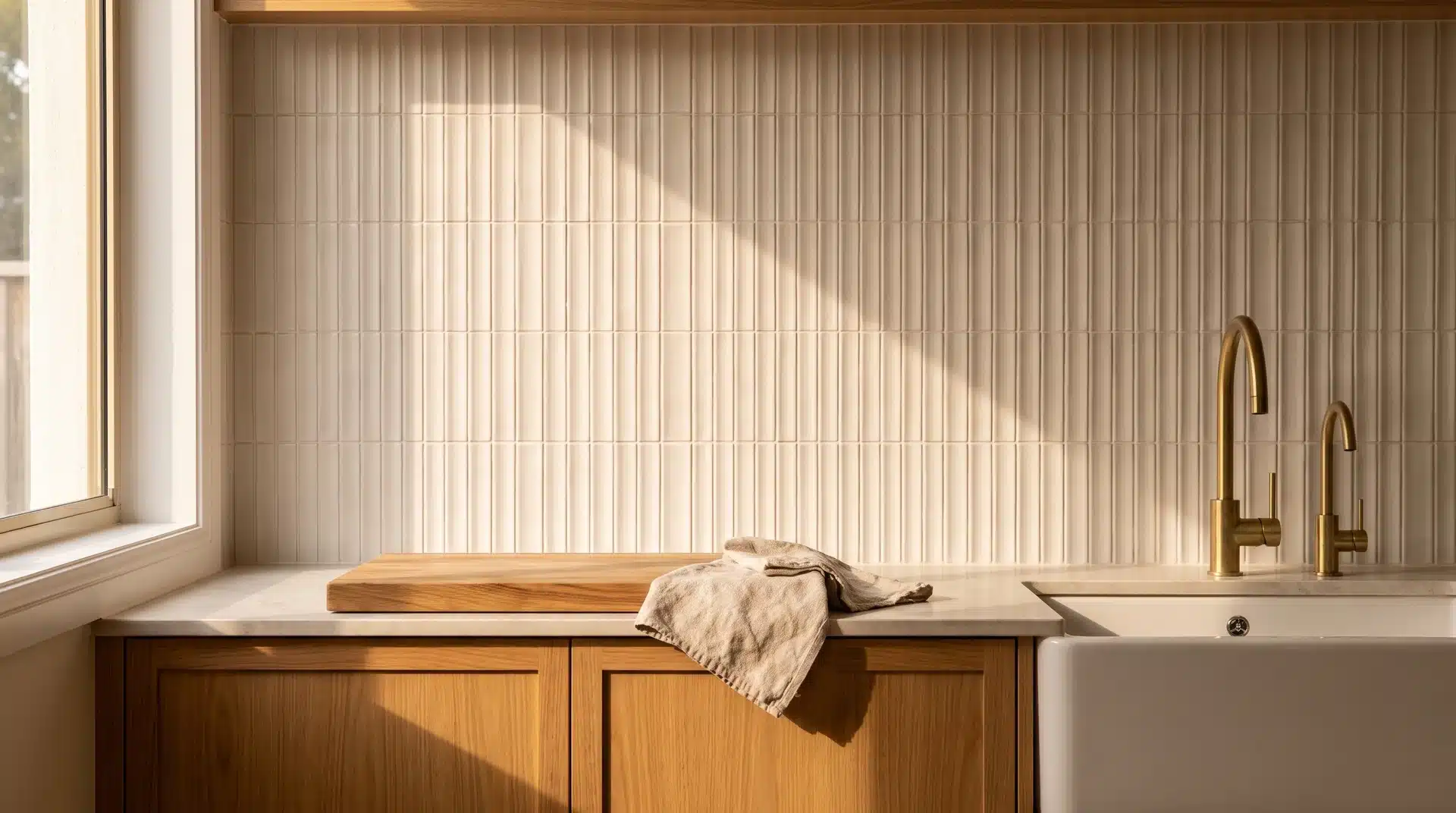
Fluted tile has a ridged surface profile rather than a flat face. The vertical channels catch light differently throughout the day, creating a gentle movement on the wall without adding color or pattern.
In matte white or off-white, fluted tile reads soft and textural. In a satin glaze, it becomes more reflective and graphic.
The format works well in kitchens where the cabinetry and countertop are already carrying most of the visual interest, and the splashback needs to add texture without competing.
19. Venetian Plaster Kitchen Splashback
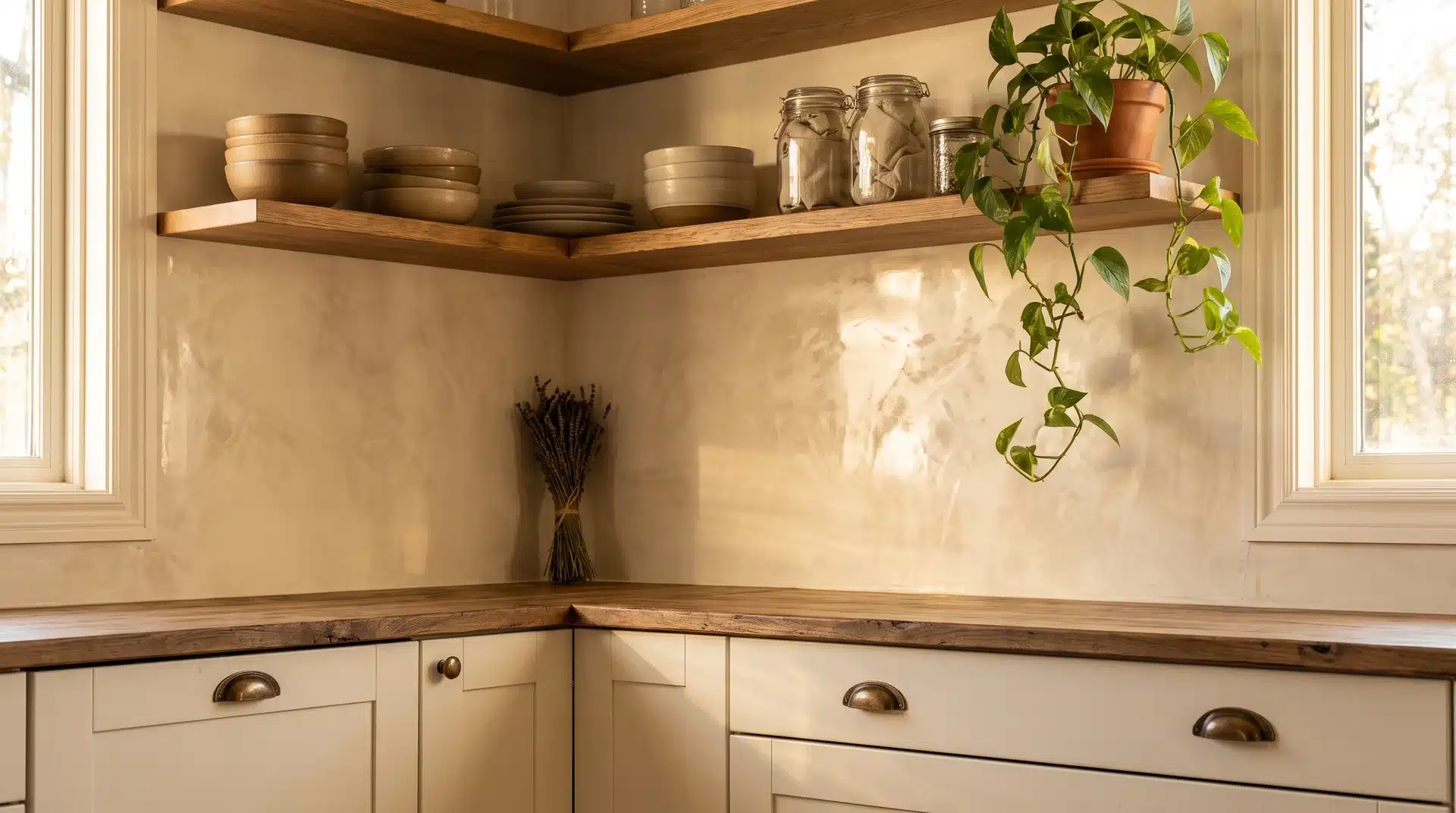
Venetian plaster goes on in thin coats, burnished between each one, giving depth and movement without any pattern, and it looks like polished stone but feels warmer.
It works best away from the cooking zone, such as behind open shelving or near a window. Directly behind a hob, it needs a sealant rated for heat and grease.
20. Limewash Paint Kitchen Splashback
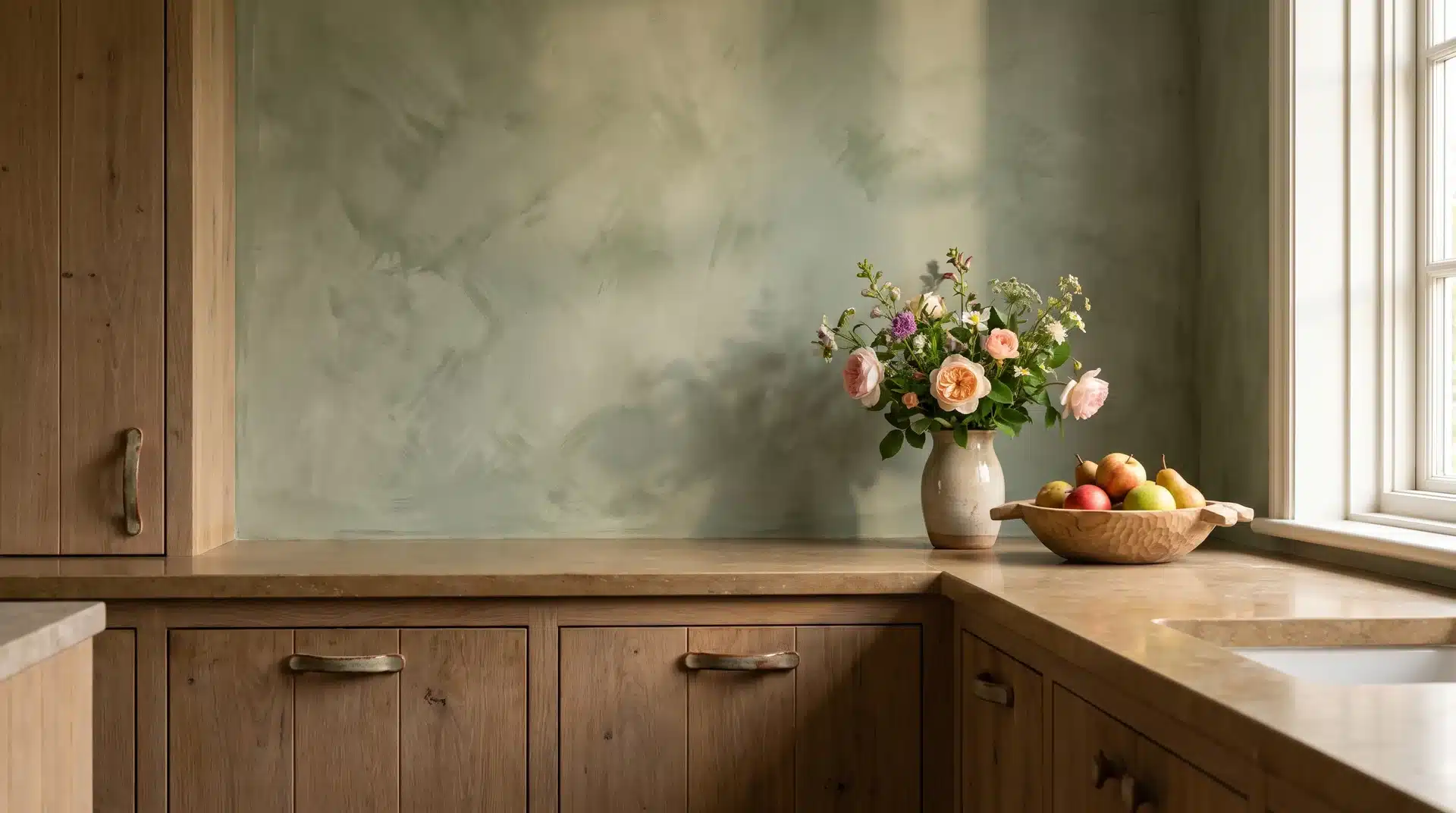
Limewash is one of the few painted finishes that works in a kitchen.
The calcium carbonate base produces a matte, slightly chalky surface with natural variation that photographs beautifully and ages in the right direction.
The color range skews toward warm neutrals, dusty pinks, sage greens, and soft ochres, which makes it a natural fit for kitchens with unpainted timber cabinetry or warm stone countertops.
21. Quartzite Stone Splashback
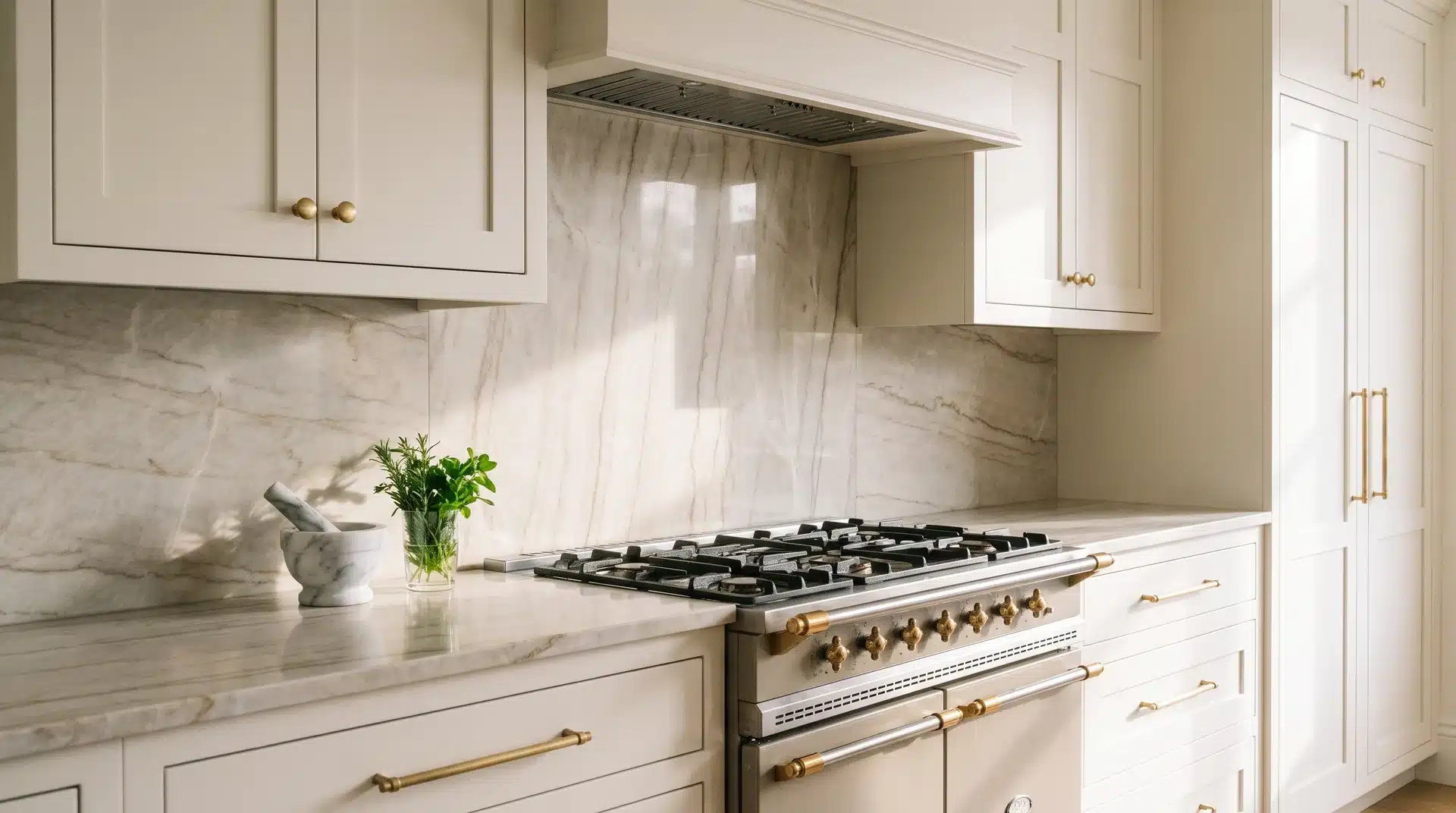
Quartzite is harder than marble and resists etching and staining better, making it a practical natural stone option without losing the movement and veining stone lovers want.
White quartzite with gray veining resembles Calacatta marble from a distance.
Super White and Taj Mahal are the most common picks in US kitchens. Both seal well and hold up behind a hob with proper care.
22. Onyx Slab Kitchen Splashback
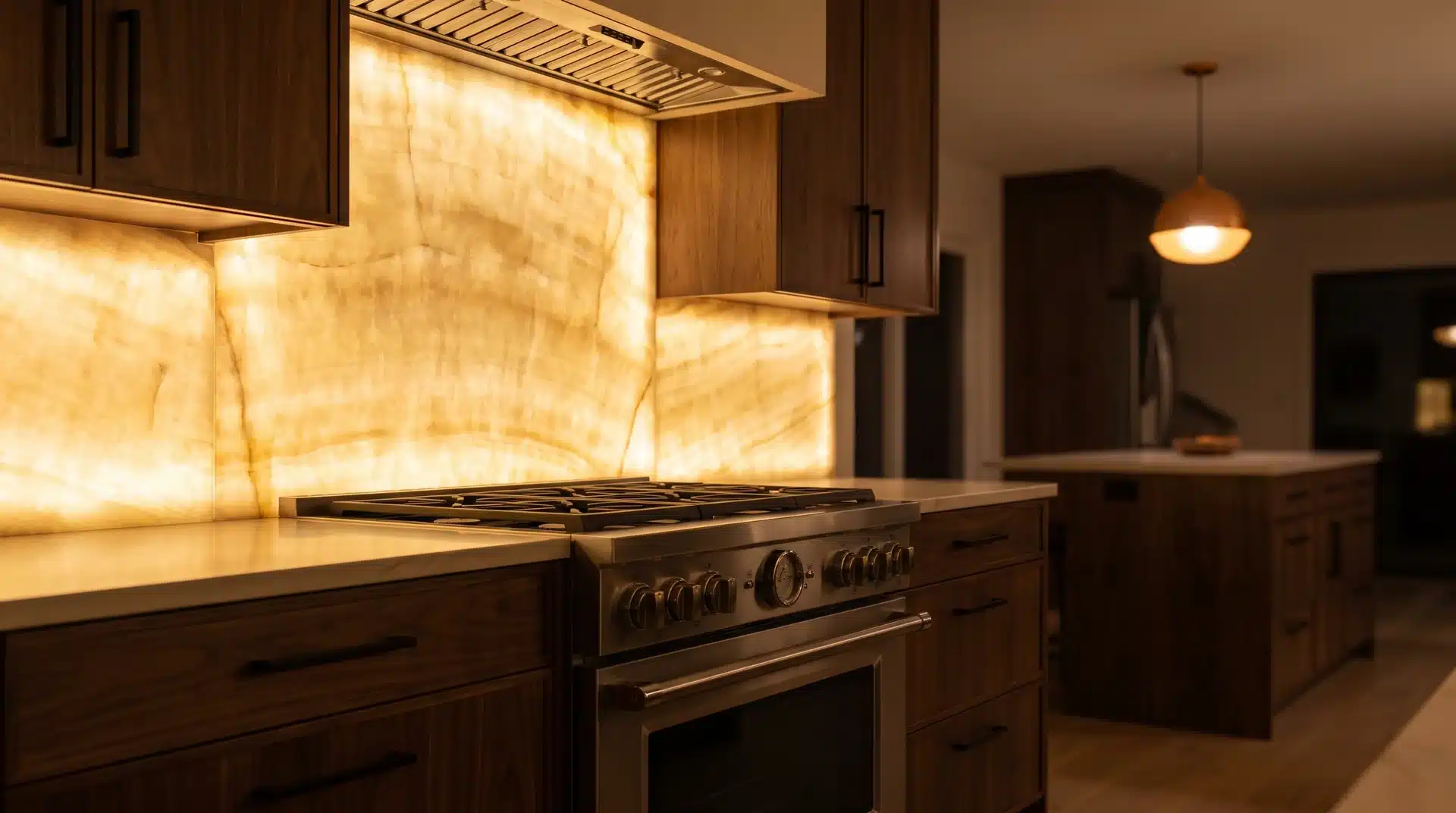
Onyx is the most dramatic and demanding natural stone on this list. Its translucency means it can be backlit for a glow no other stone matches.
Honey onyx lit behind a range, framed by darker cabinetry, suits a very particular kitchen. It isn’t subtle, and it isn’t meant to be.
Onyx is also soft and porous, so it needs careful sealing and gentle cleaning.
23. Reclaimed Wood Splashback
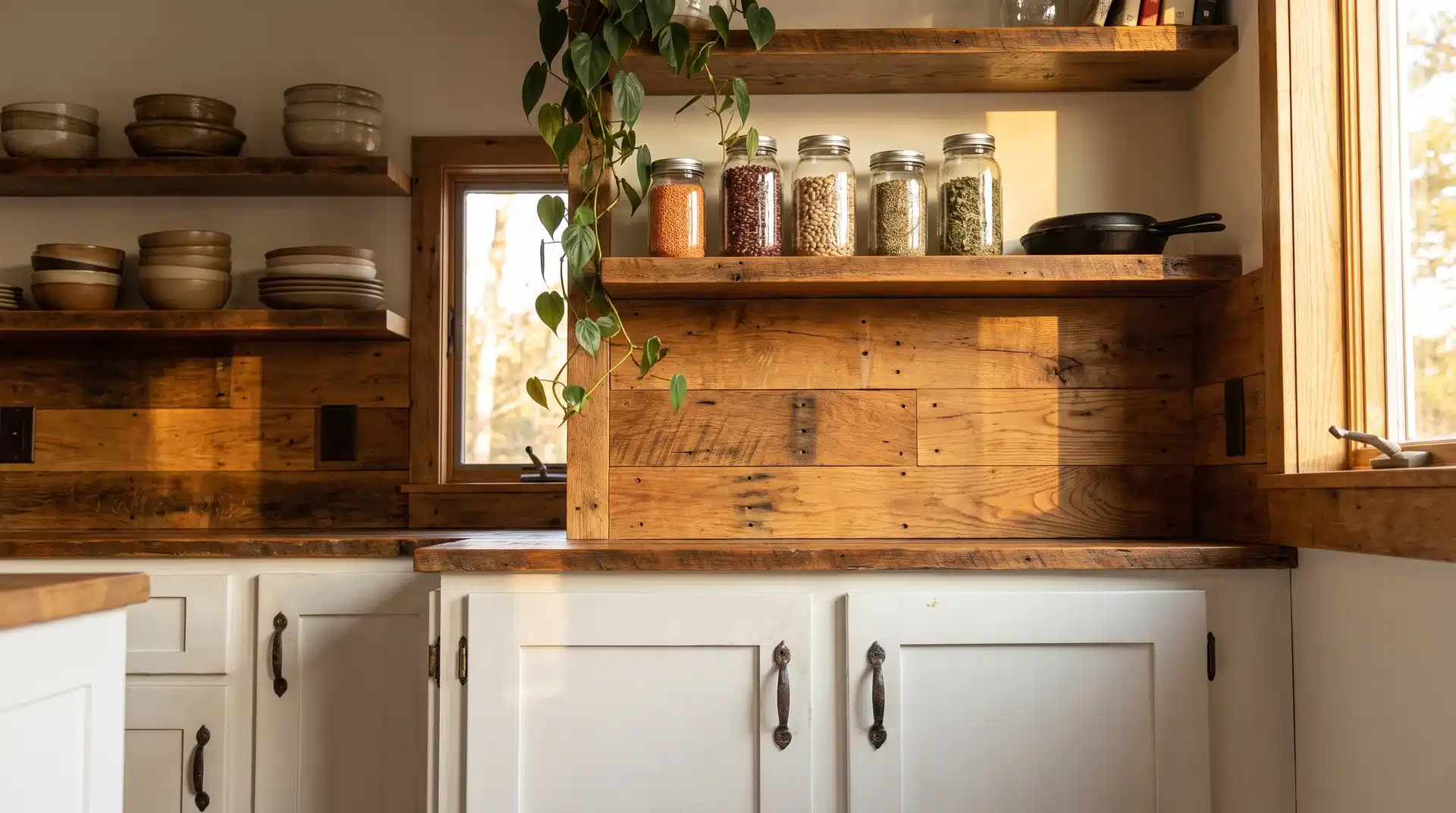
Reclaimed timber behind a kitchen countertop requires proper treatment to handle the moisture and grease exposure that a working kitchen produces.
Ship-lapped reclaimed boards in a horizontal run behind an open shelving area read warm and considered. Vertical planks behind a range cooker read more formal.
The character comes from the existing marks in the timber: nail holes, saw marks, age cracks.
24. Pressed Metal Tile Splashback
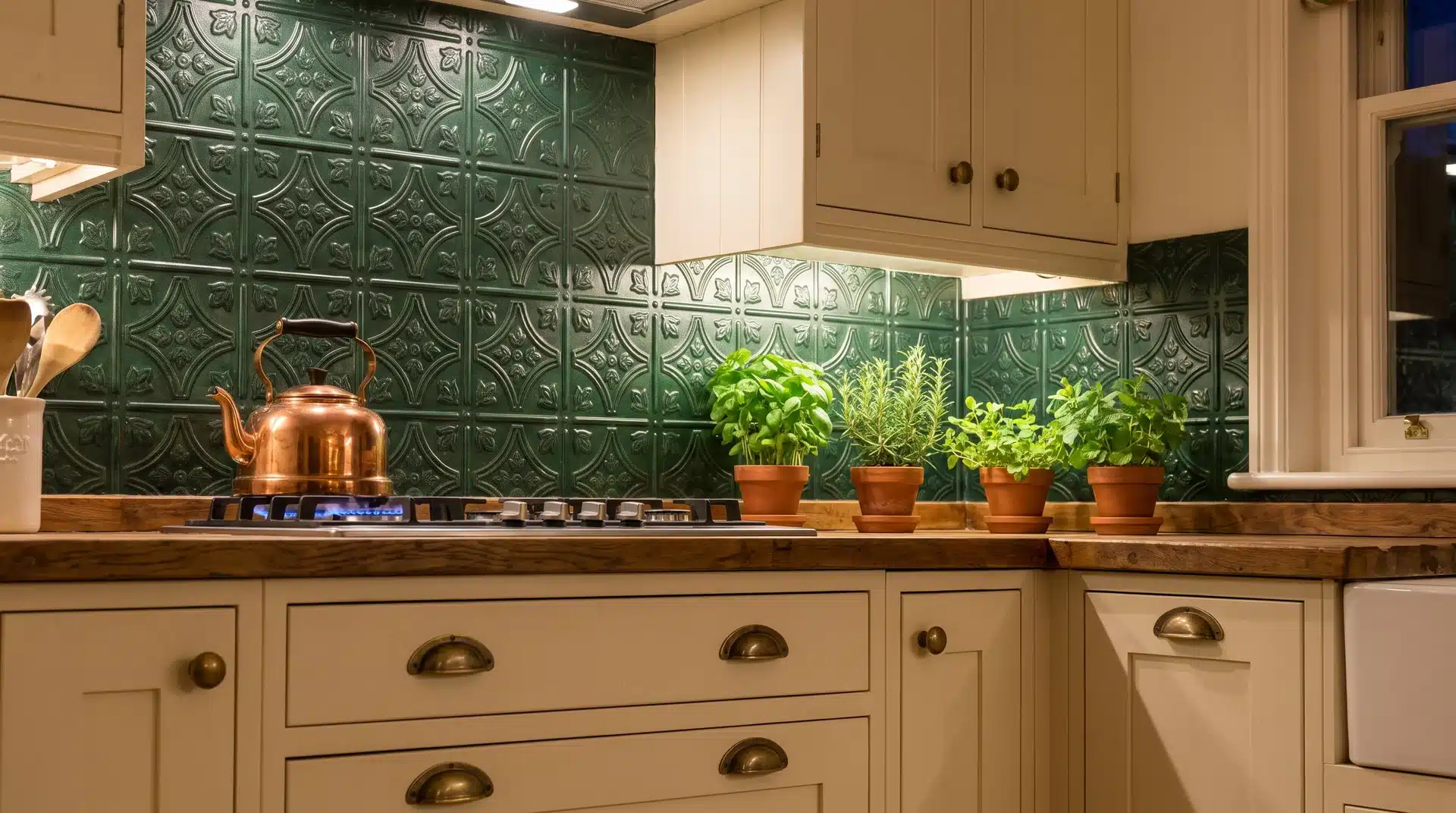
Pressed metal ceiling panels are showing up as splashbacks for a Victorian, industrial, or heritage look.
The embossed pattern and matte or painted finish pack in more visual detail than almost any other option.
Aluminum panels are lighter and easier to install than steel panels, and raw metal finishes require a clear sealer to prevent oxidation.
25. Fluted Glass Panel Splashback
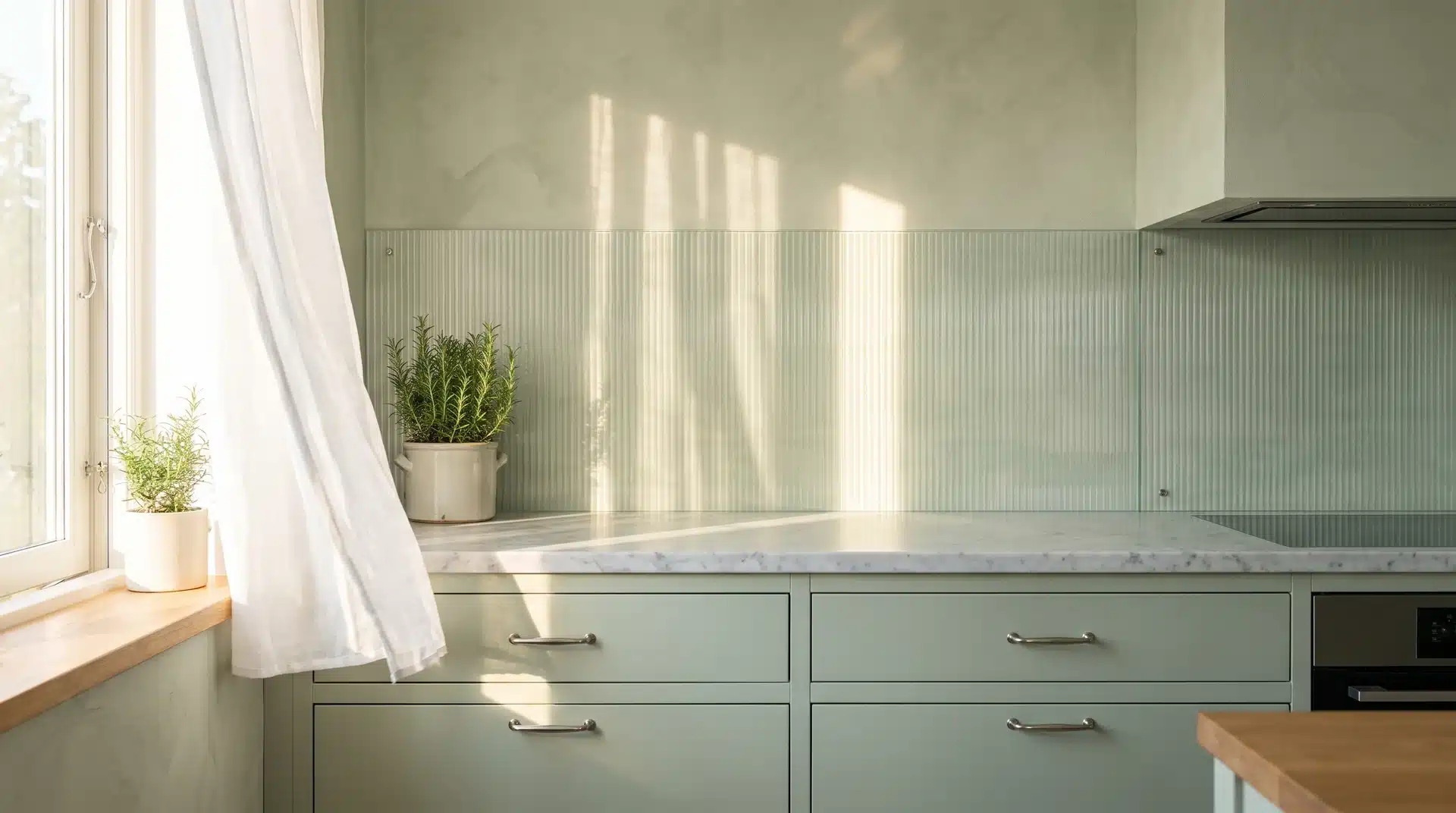
Fluted glass refracts light instead of reflecting it flat, unlike standard back-painted glass. The ridged surface gives a soft, changing play of light across the wall through the day.
Clear fluted glass reads airy and works well in kitchens with limited natural light.
Frosted fluted glass adds privacy without losing that effect. Colored versions in sage or dusty pink read more decorative.
26. Soapstone Kitchen Splashback
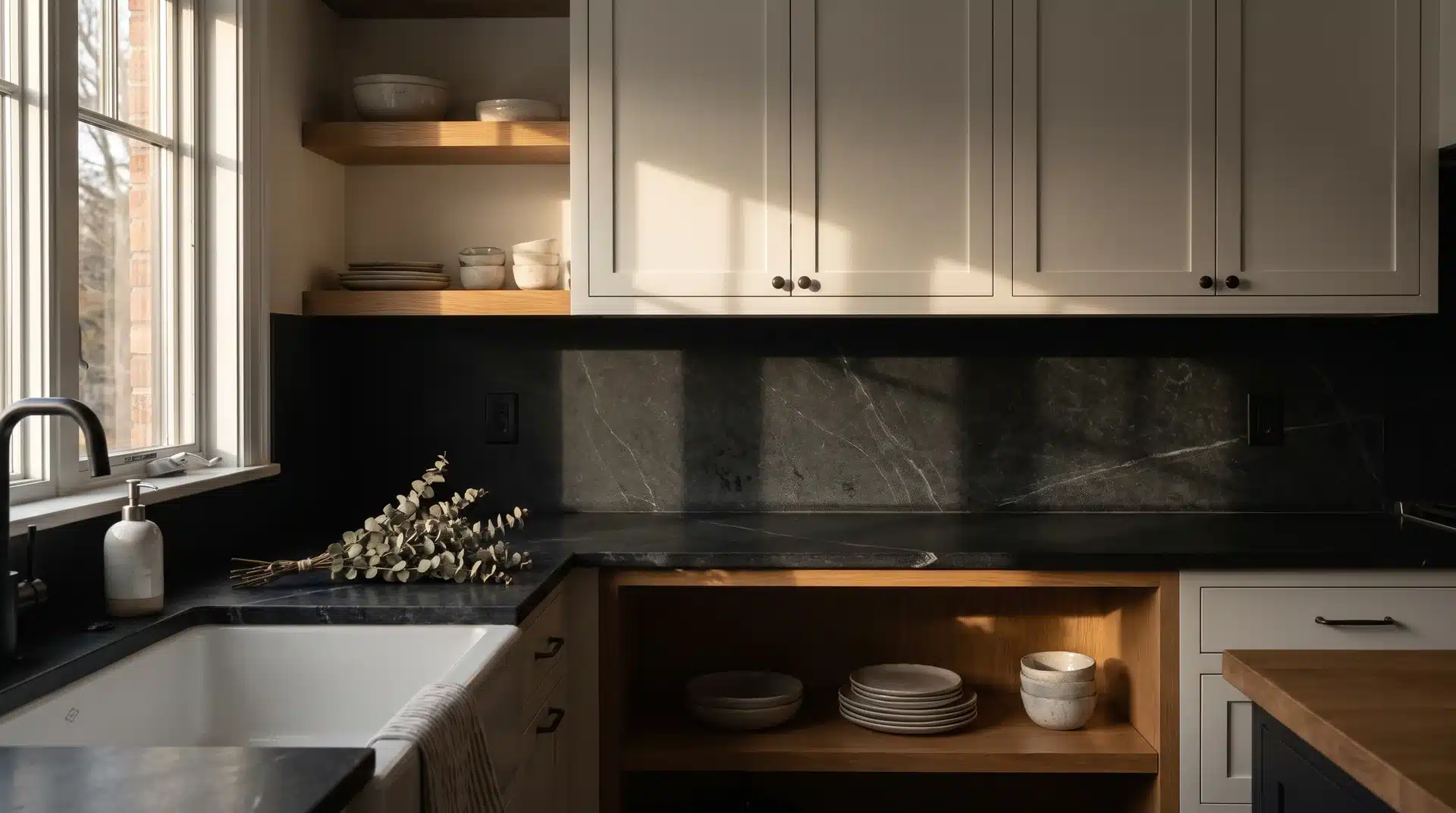
Soapstone is an underused natural stone in US kitchens. It’s non-porous, so it skips the sealing marble and quartzite need, and it naturally resists bacteria, making it practical for a food-prep wall.
The color range is narrow, dark gray to black, which pairs strikingly with dark cabinetry for a tone-on-tone look. Scratches and sand out or buff away with mineral oil over time.
27. Stacked Ledger Stone Splashback
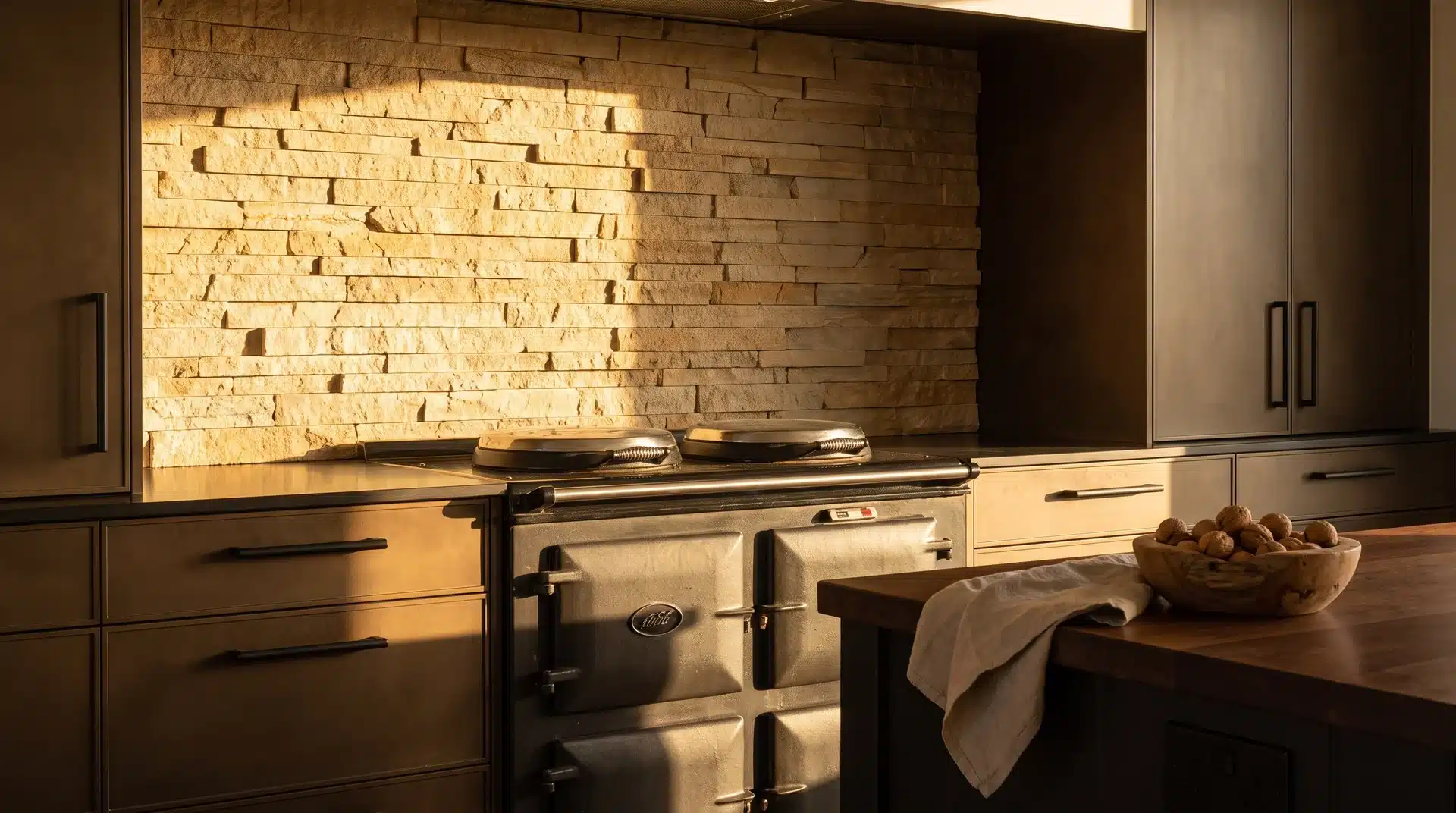
Ledger stone panels are thin slices of natural stone, stacked and adhered to a mesh backing, and installed like a large-format tile.
The result is a textured, three-dimensional stone wall without the structural requirements of full-depth stone.
Quartzite, slate, and travertine are the most common materials. The shadow lines between individual pieces add depth that flat tile cannot produce.
28. Resin Panel Kitchen Splashback
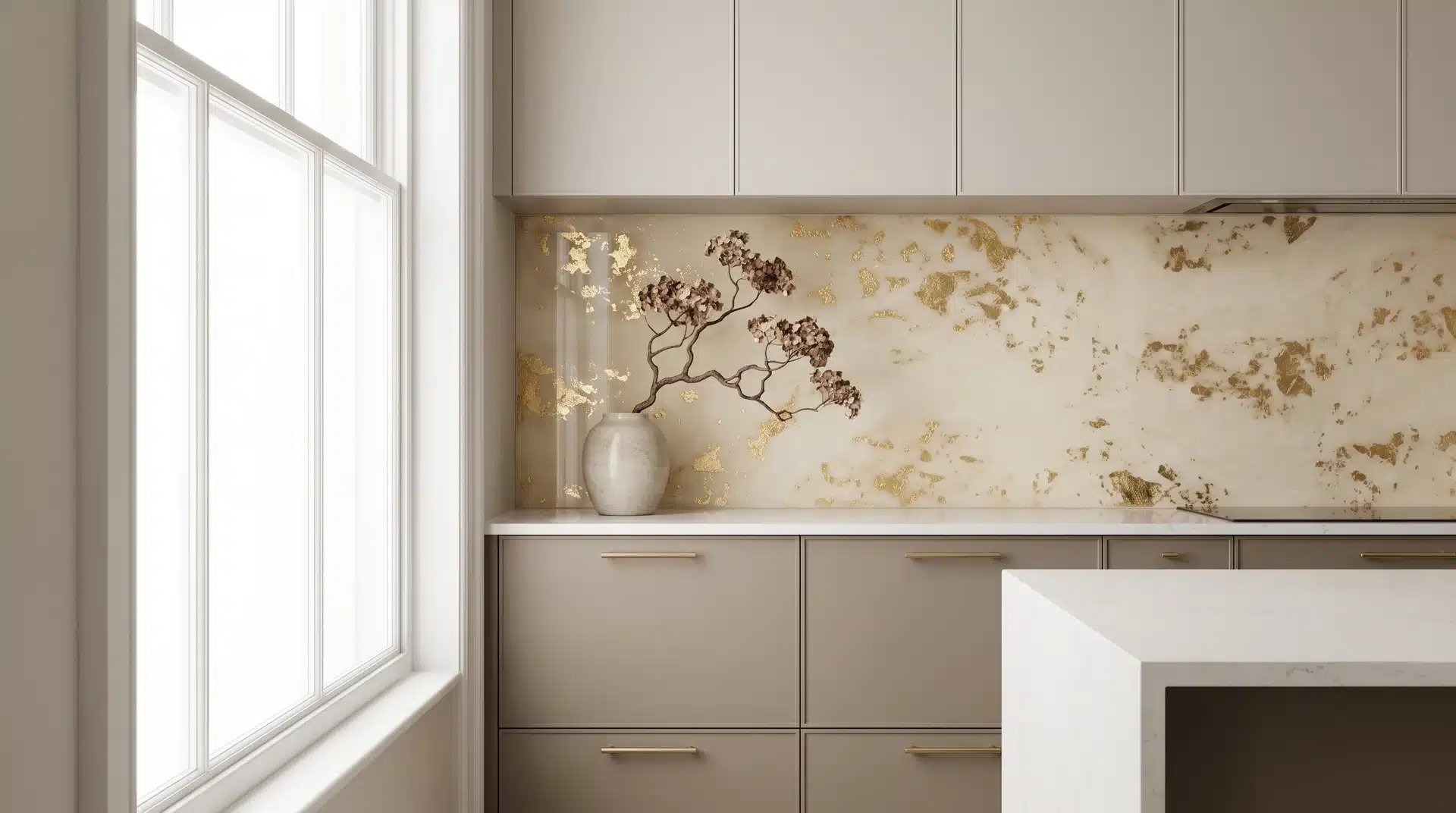
Cast resin panels can incorporate objects, pigments, and textures into the material, opening up design options no other splashback category offers.
Embedded botanicals, metallic leaf, and colored pigment swirls are all achievable.
The surface is non-porous, heat-tolerant within limits, and unbroken across large spans, with easy color matching to cabinetry or countertop. Cheap panels yellow over time, so ask for UV-stable resin.
29. Cork Tile Splashback
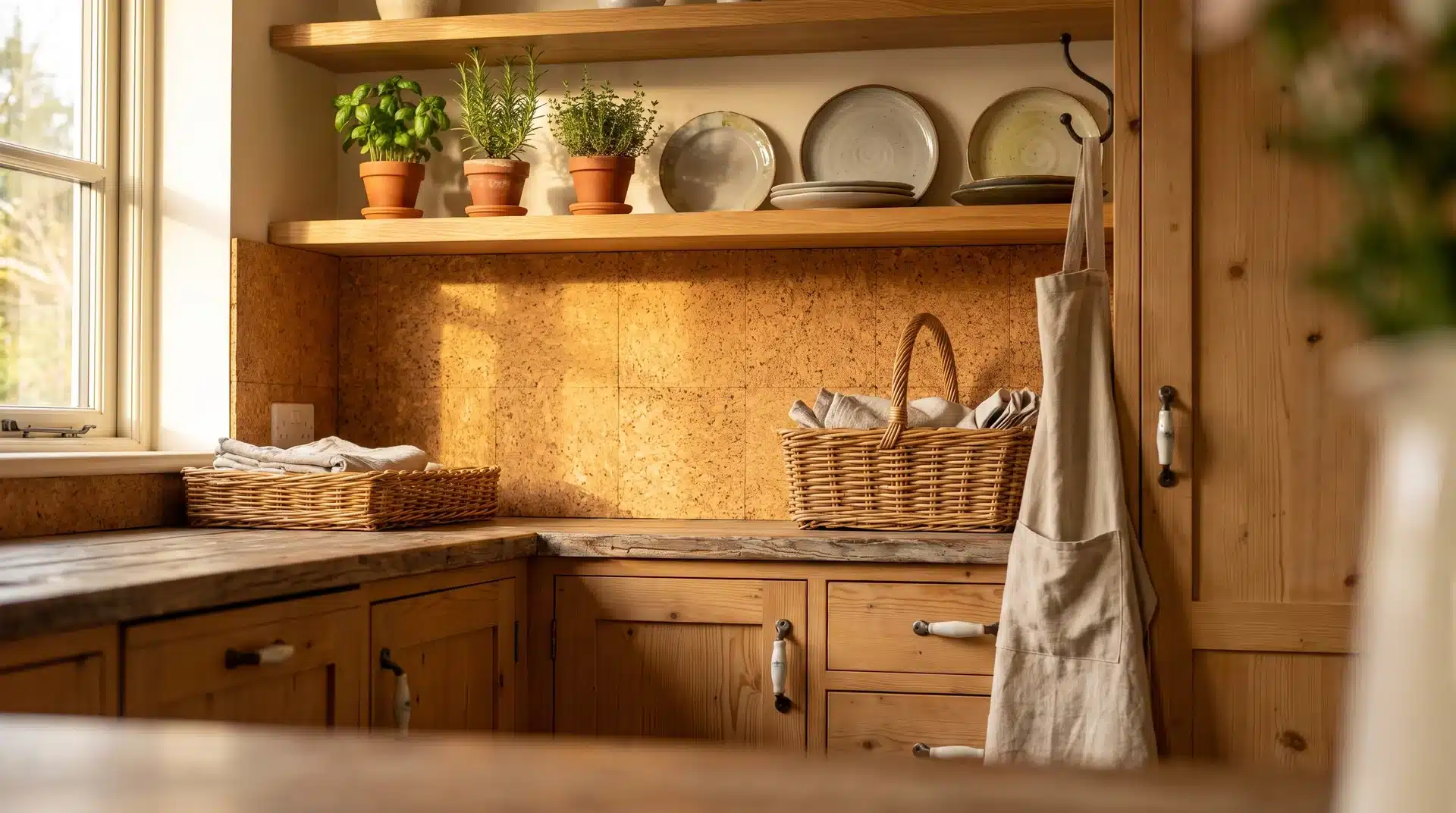
Cork is an unusual choice for a kitchen splashback, and it works best where warmth, texture, and sound absorption matter more than maximum wipe-down practicality.
Sealed cork tile handles light splatter from a countertop prep area without difficulty, though it’s less practical directly behind an active cooking zone, such as a hob.
Its thermal properties also keep the wall warmer, cutting condensation.
30. Chalkboard Splashback
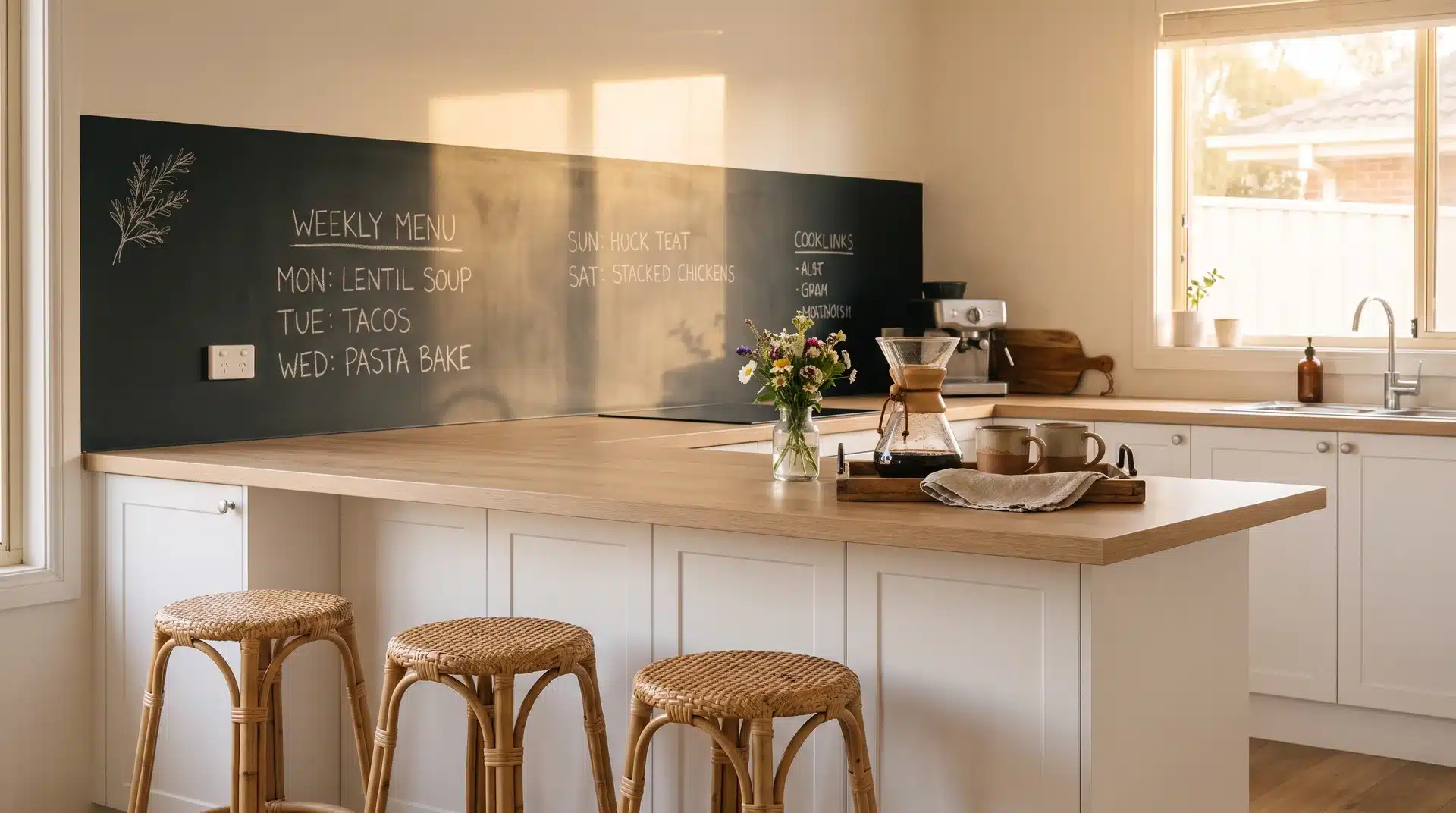
Chalkboard paint applied to the wall behind a kitchen counter works in kitchens where function and flexibility matter more than permanence.
Shopping lists, recipes, measurements, and notes live on the wall rather than a separate board, and the surface wipes clean.
It is not a cooking-zone material. The texture of chalkboard paint traps grease and does not wipe clean the way a non-porous surface does.
31. Basketweave Tile Splashback
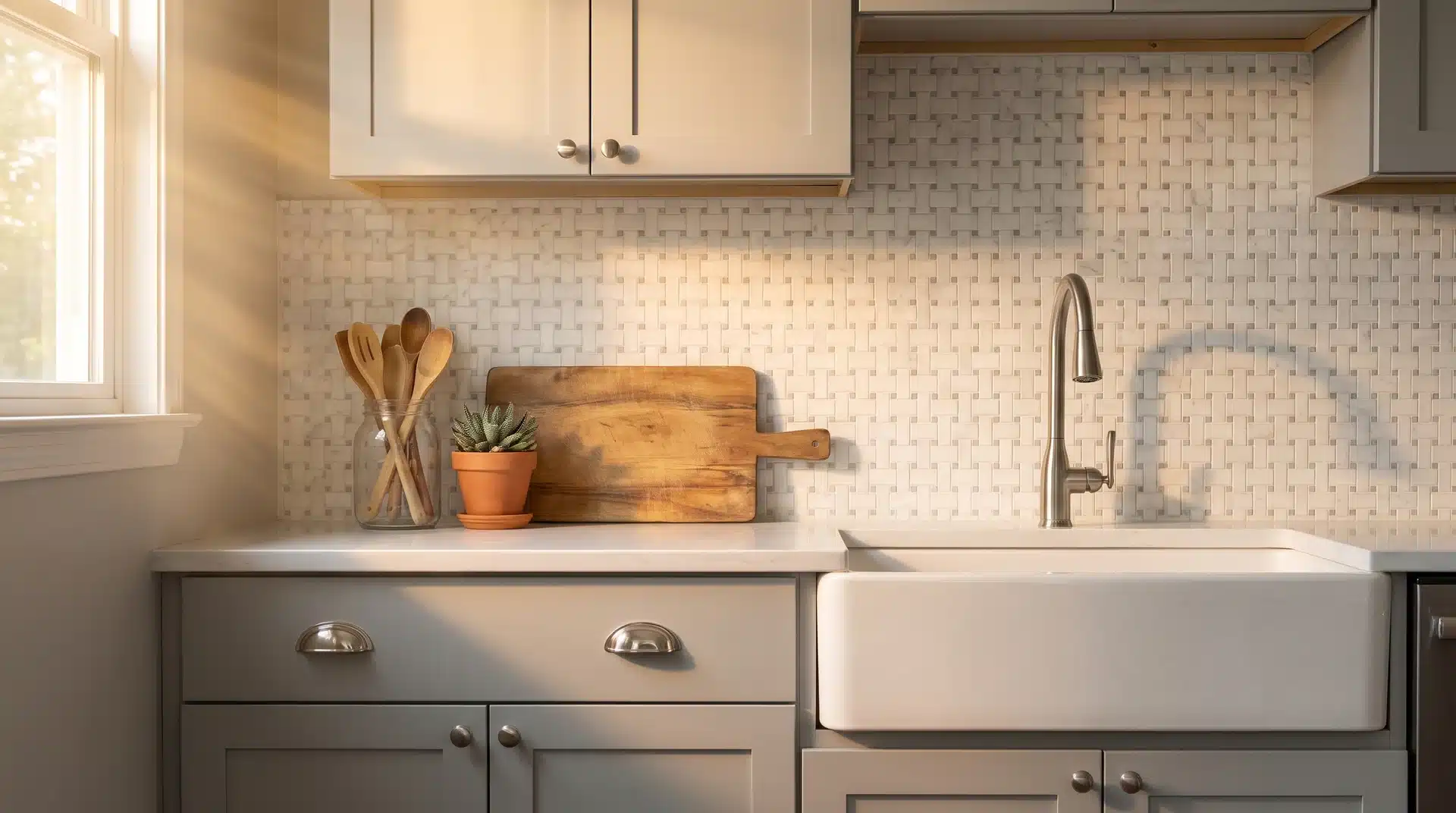
Basketweave uses interlocking rectangular tiles to add visual rhythm without the strong direction of herringbone or chevron.
Classic basketweave in white marble mosaic tiles reads traditional. The same pattern in matte-black ceramic reads as contemporary.
32. Japanese Ceramic Tile Splashback
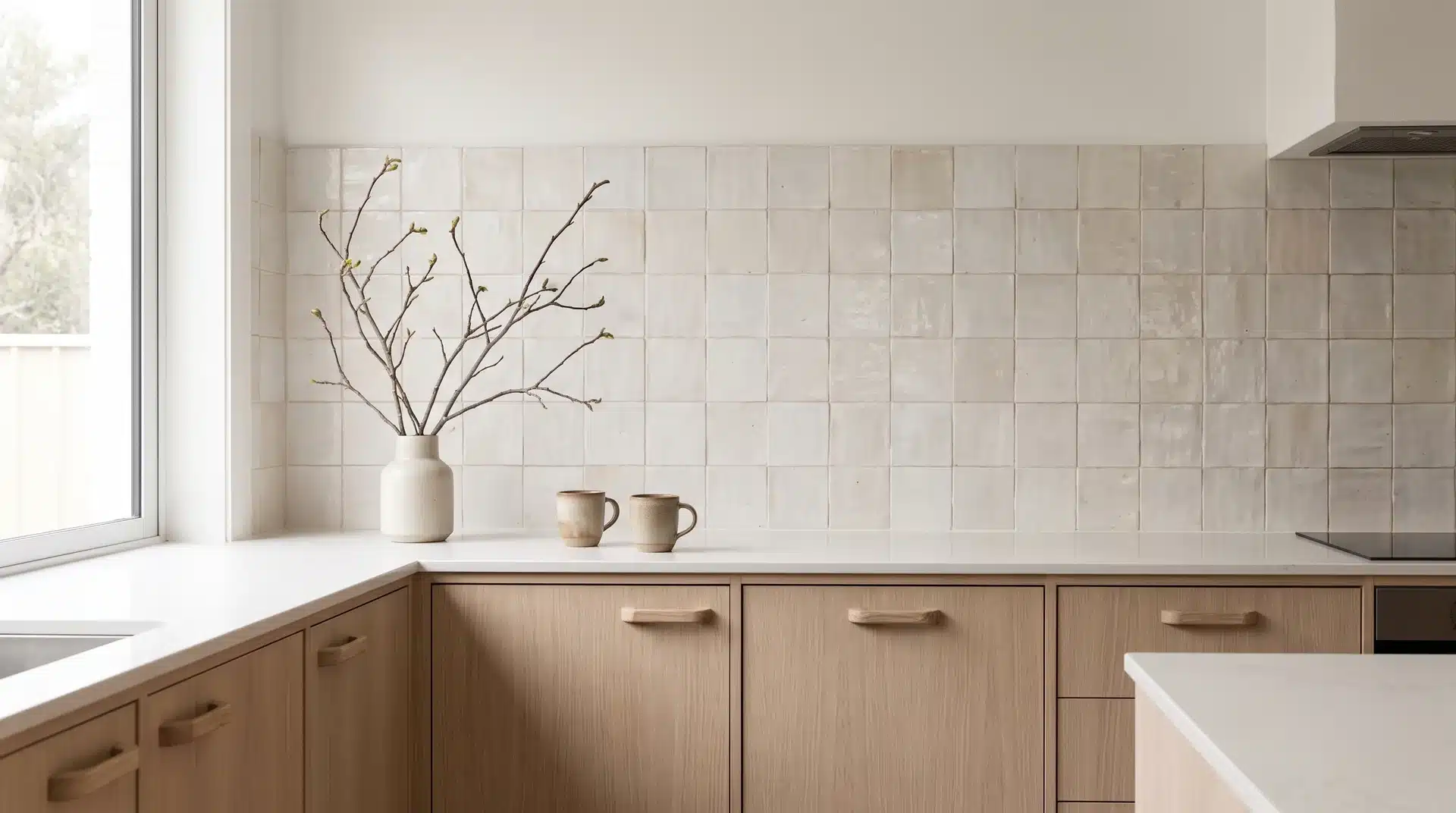
Japanese ceramic tile, especially from the Hasami and Kyushu regions, offers restraint and material honesty to kitchen surfaces that are hard to match with Western tile.
The glaze irregularity is intentional. The slightly uneven surfaces, the color shifts within a single tile, and the visible evidence of the kiln process are part of the design.
33. Painted Brick Splashback
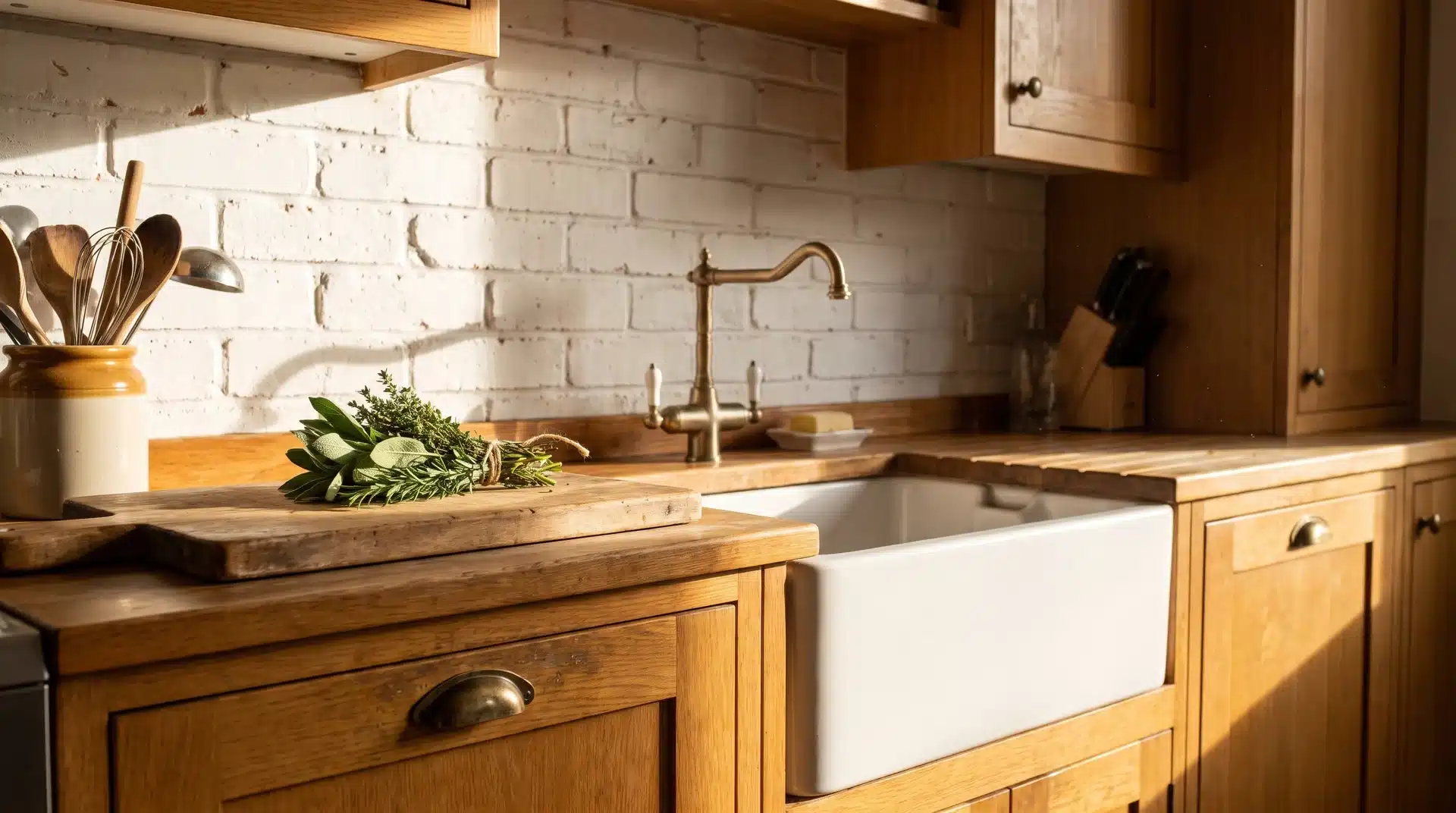
Existing brick or brick slip behind a countertop takes paint well, and the result reads completely differently from raw brick or brick-effect tile.
White-painted brick with warm timber cabinets creates a light, relaxed rustic look.
The paint needs to be breathable masonry paint applied to properly cleaned brick. Standard wall paint on brick peels.
34. Thin Stone Veneer Splashback
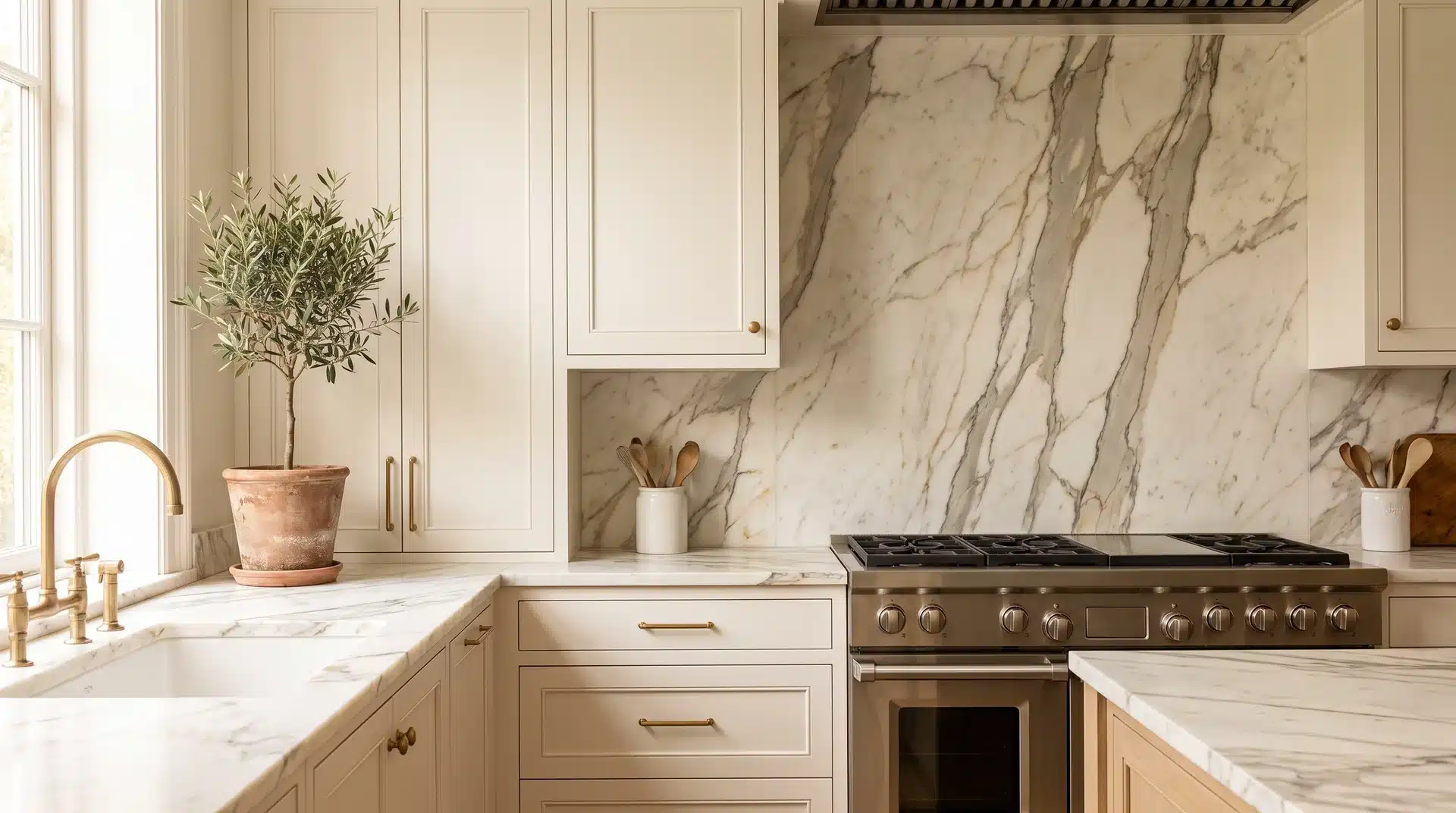
Stone veneer panels are cut to 3- 5 mm thick and bonded to a lightweight backing, so they work where full-thickness stone would be too heavy for the wall.
At a normal viewing distance, the result looks just like full-thickness stone, which suits older homes with limited wall load capacity. Marble, quartzite, slate, and onyx are all available as veneers.
35. Penny Round Tile Splashback
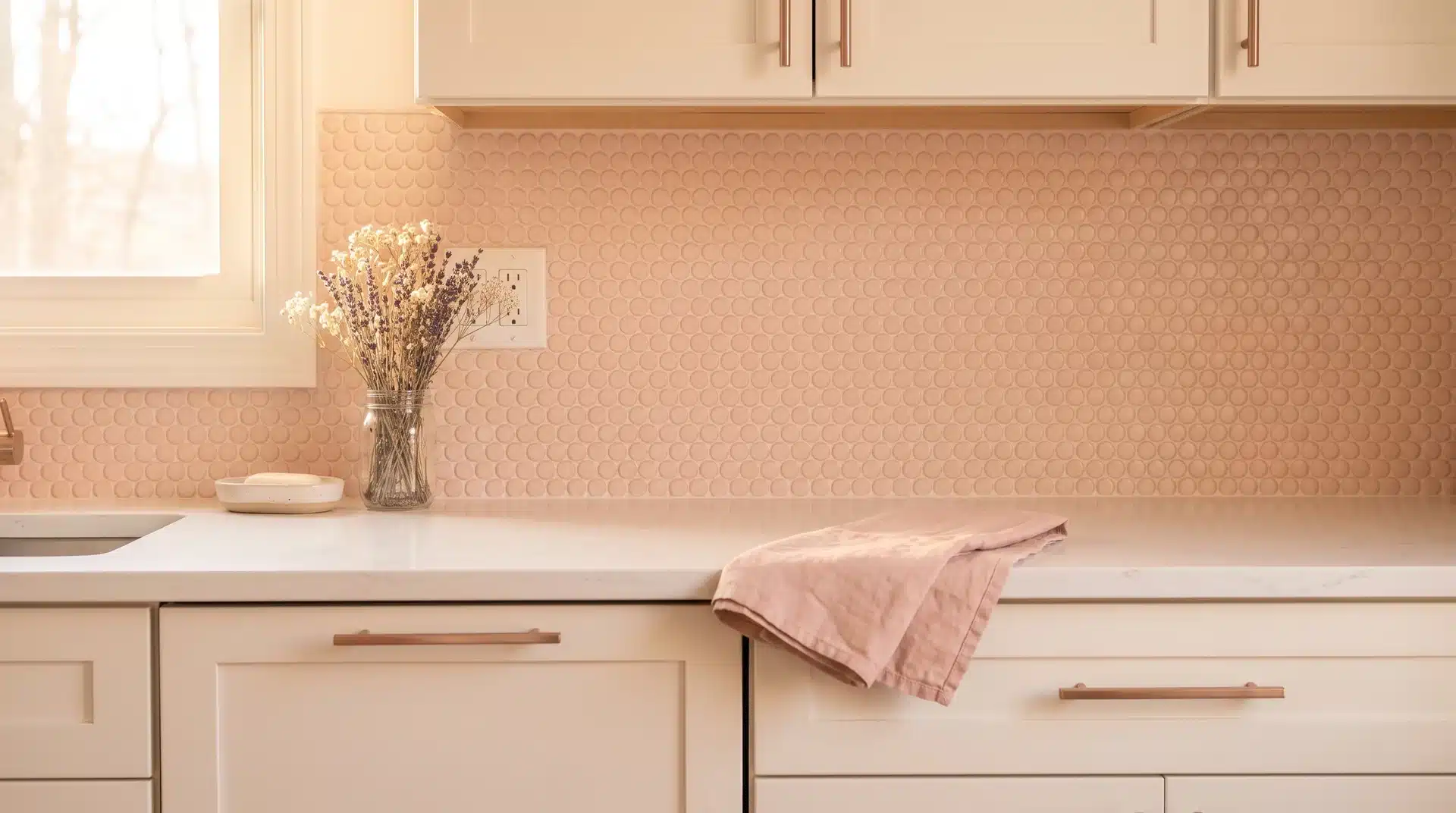
Penny rounds are among the smallest tile formats for a kitchen splashback, and their tight, circular pattern reads more like a textile than tile at first glance.
White penny rounds on white grout read as subtle texture, while dark grout turns the same tile graphic and suits café or vintage kitchens.
Colored penny rounds in pale green or blush read more decorative.
36. Concrete Block Splashback
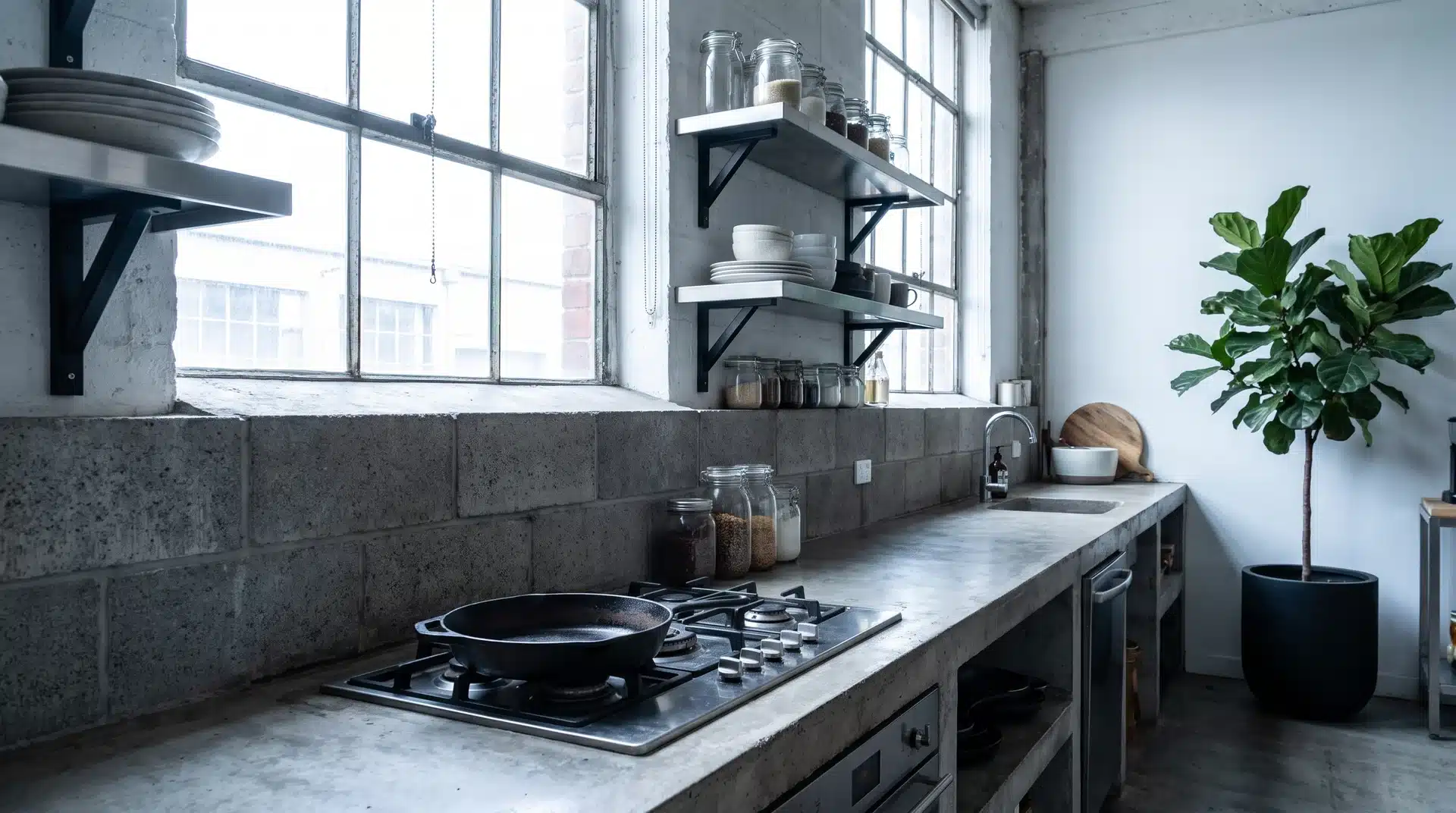
Exposed concrete block, left raw or sealed, is one of the more industrial splashback approaches on this list.
In a kitchen with stainless steel appliances, concrete countertops, and open shelving, raw block behind the counter reads as a deliberate material choice rather than an unfinished wall.
A penetrating concrete sealer handles the porosity and keeps cleaning simple.
37. Scallop Tile Splashback
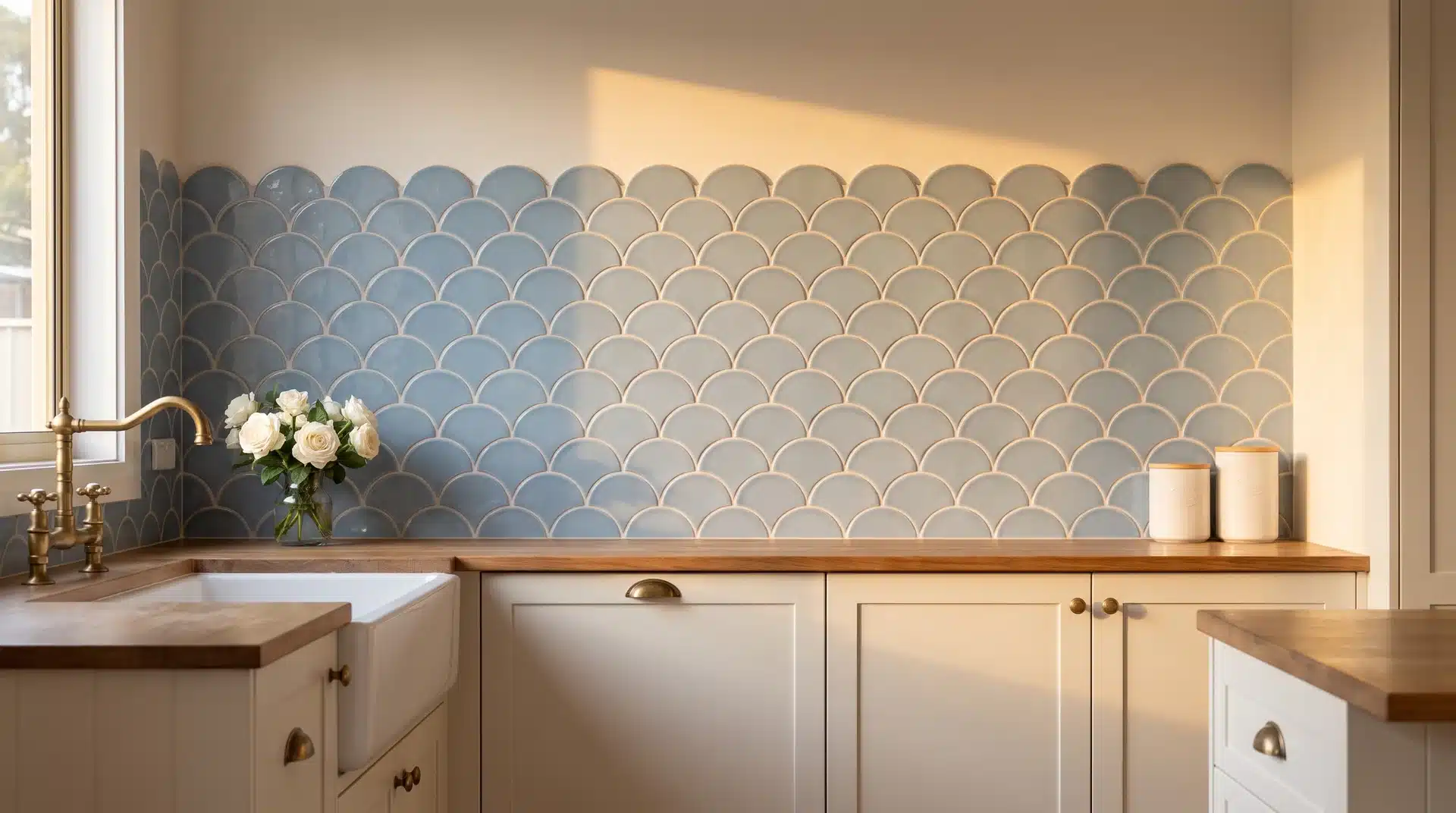
Fish scale, or scallop tile, has gained momentum in US kitchens over the past several years.
The curved lower edge of each tile breaks the grid and reads as organic rather than geometric, making long runs easier to sustain visually than most patterned tiles do.
In soft sage, dusty blue, or warm white glaze, it works across a full splashback without becoming restless.
How to Pick the Right Kitchen Splashback for Your Space
Most people get tripped up on undertone, contrast, and height, three decisions that have nothing to do with which material you choose and everything to do with whether it looks right once it’s up.
Use this table as a quick reference before you order samples.
| Decision | Situation | Best Approach |
|---|---|---|
| Undertone: Warm | Cream, olive, or wood-tone cabinets | Choose copper, terracotta, warm stone, or off-white tiles, as cool gray can make the kitchen feel mismatched. |
| Undertone: Cool | White, navy, or gray cabinets | Match undertones across marble-effect tile, cool glass, or white subway tile. |
| Contrast: High | Dark splashback behind white cabinets, or vice versa | Reads graphic and deliberate. A strong choice when it is made on purpose. |
| Contrast: Unintentional | Slightly warm cabinets, slightly warm tile, slightly warm countertop | None of it coordinates. Land somewhere decisively or keep everything in the same tonal family. |
| Height: Standard | Most kitchens with upper cabinets | 450 to 600mm between countertop and upper cabinet. Covers the working wall without competing with the rest of the room. |
| Height: Extended | Behind the range cooker | Extend the splashback to the ceiling for a stronger impact and better wall protection. |
| Height: Full | Open-plan kitchens, no upper cabinets | Full-height splashbacks work best with glass or large porcelain tiles for a smooth, low-grout finish. |
Conclusion
The splashback is usually the last decision made and the first thing anyone notices at the island. That gap is why so many kitchens almost land but never quite do.
These kitchen splashback ideas work best when you test them first.
Get physical samples before you buy. Hold three or four against your cabinet doors at different times of day, since morning and evening light tell different stories.
The one that keeps pulling your eye back is the right call. Order your samples this week.
Frequently Asked Questions
Do I Need a Splashback or an Upstand?
Use a splashback for full protection behind hobs and sinks. Upstands suit lower-splash areas, and many kitchens combine both instead of stacking one on the other.
Does a Kitchen Splashback Add Value to a Home?
A well-chosen splashback makes the kitchen feel finished and considered, which adds perceived value at resale. Natural stone and large-format slab options tend to resonate most with buyers.
Should the Splashback Run Behind the Extractor Hood?
Yes, run the splashback up to the underside of the extractor hood for a clean line that stops grease from marking the wall.