
I’ve put together enough backyard retaining wall ideas over the years to know a good one does more than hold back soil.
The right one reshapes an entire backyard, adding structure, style, and room for planting, seating, and outdoor living you didn’t have before.
The design you choose depends on your layout, the material you’re drawn to, and the features you want built in.
You’ll find a style below that actually fits your space.
Natural Stone Backyard Retaining Wall Ideas
Natural stone remains a popular choice because every piece has its own texture, shape, and color. It creates a backyard feature that feels connected to nature rather than placed on top of it.
Stone works well with gardens, patios, pathways, and landscapes that already use natural materials.
1. Rustic Stone Retaining Wall With Plants
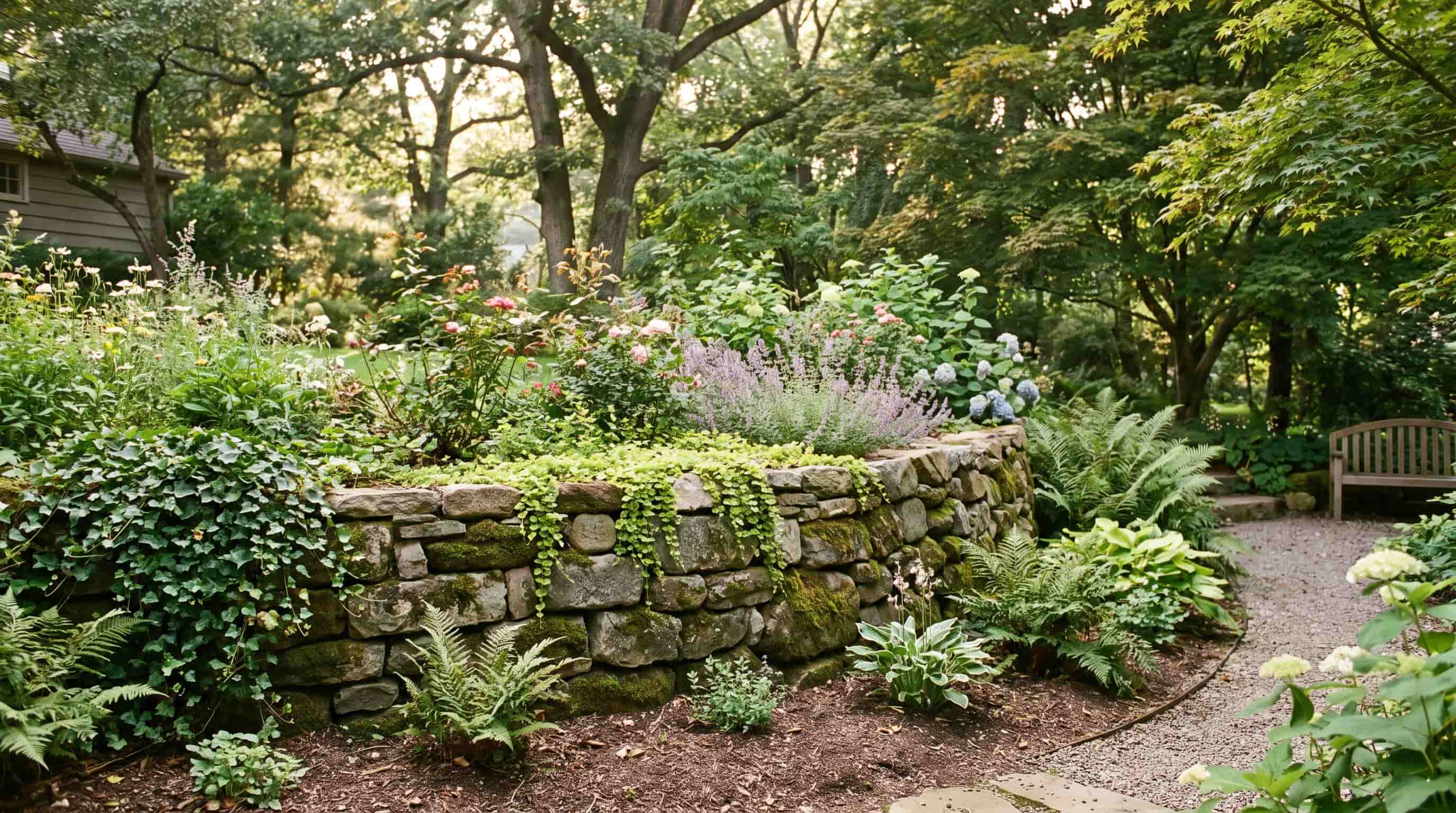
This design uses uneven stones arranged in a relaxed pattern to create a natural, organic appearance.
The irregular shapes blend beautifully with trees, greenery, and cottage or woodland landscapes.
Adding flowers or trailing plants along the edges softens the wall further, helping it feel like a natural part of the surrounding yard.
2. Dry Stack Stone Retaining Wall
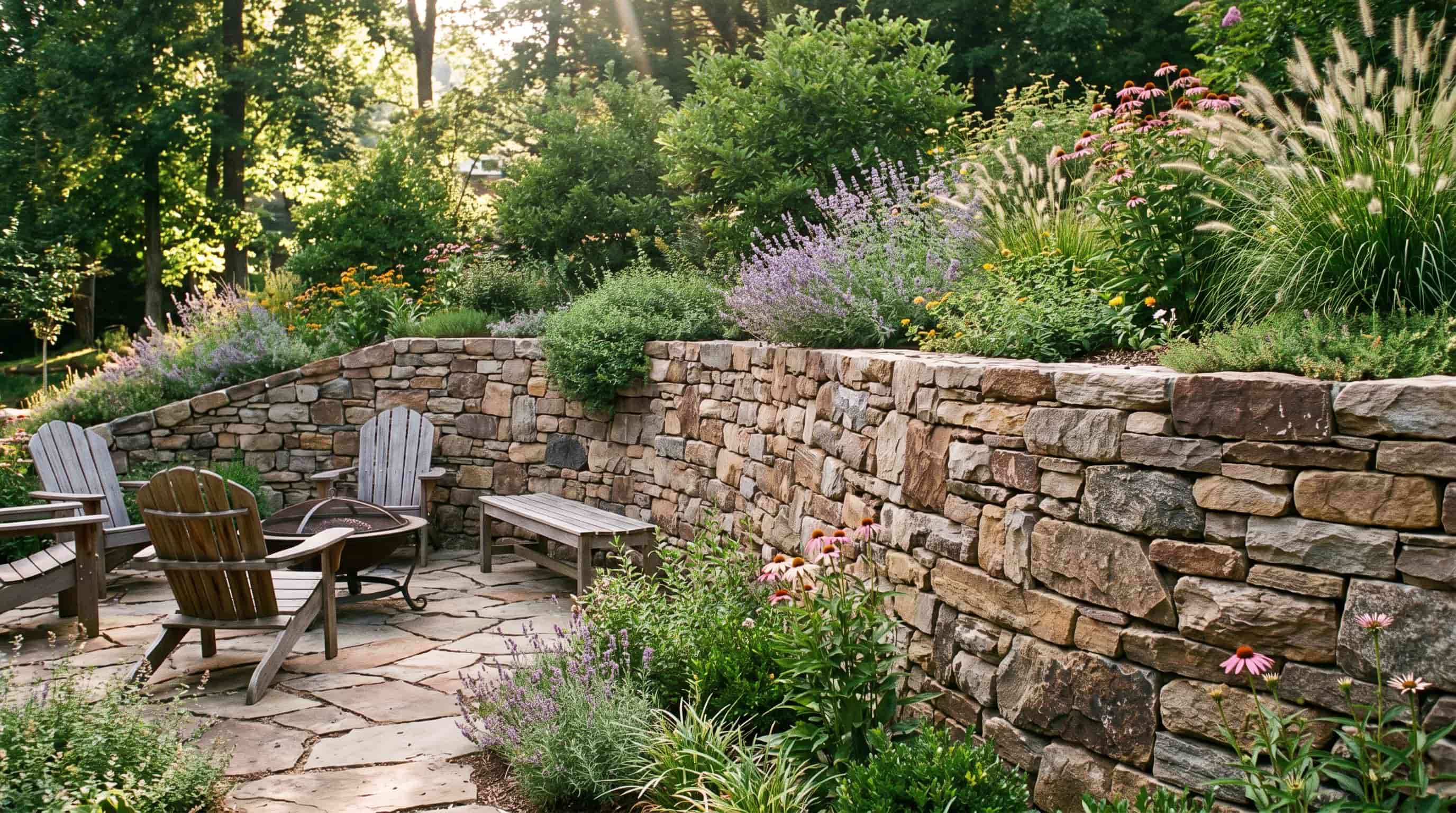
Dry stack walls use carefully placed stones without visible mortar, creating a traditional handcrafted look with natural texture.
This style works well for informal garden designs where you want the retaining wall to blend easily with the surrounding landscape.
Its organic appearance makes it feel like a natural part of the yard rather than a separate structure.
3. Boulder Retaining Wall Design
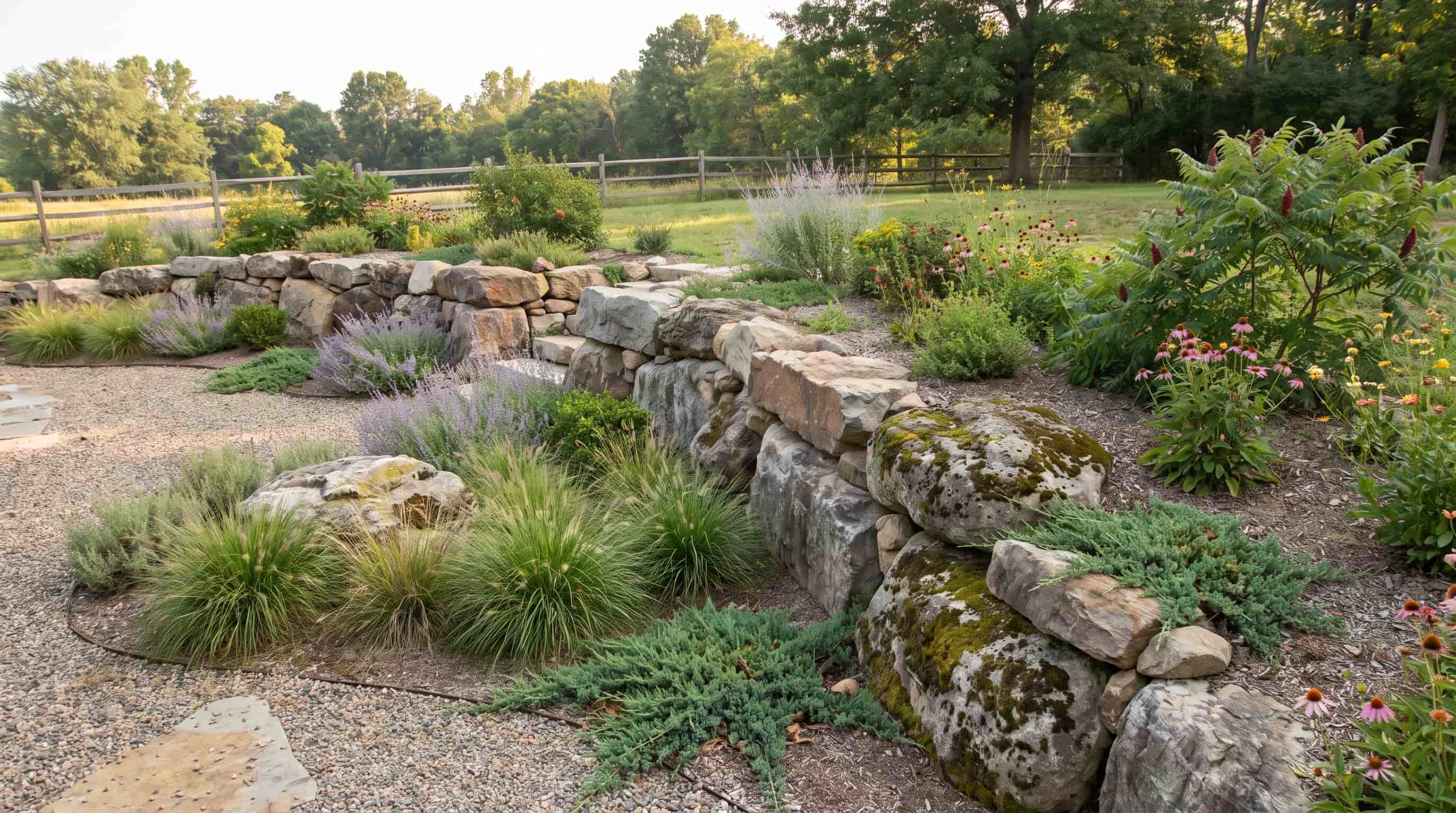
Large boulders create a bold natural feature, especially in spacious backyards and sloped landscapes.
Their rugged shapes and varied textures add depth while blending naturally with native plants, gravel paths, and other organic landscaping elements.
This style works well when you want the retaining wall to feel like an extension of the land rather than a built structure, creating a landscape that feels grounded and connected to its surroundings.
Modern Retaining Wall Designs for Contemporary Backyards
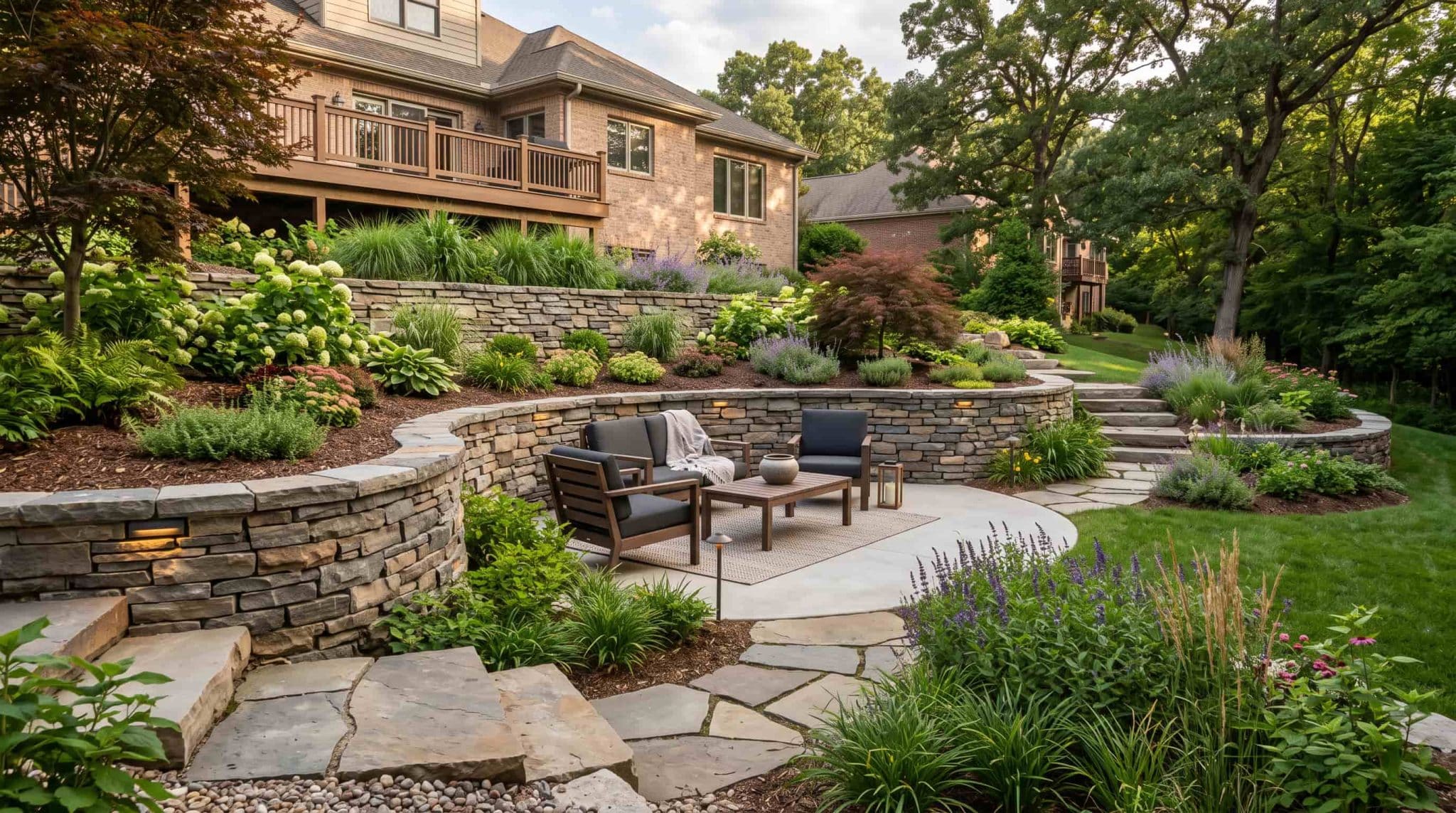
Modern retaining walls focus on clean shapes, simple materials, and a strong connection with the home’s architecture.
4. Smooth Concrete Retaining Wall
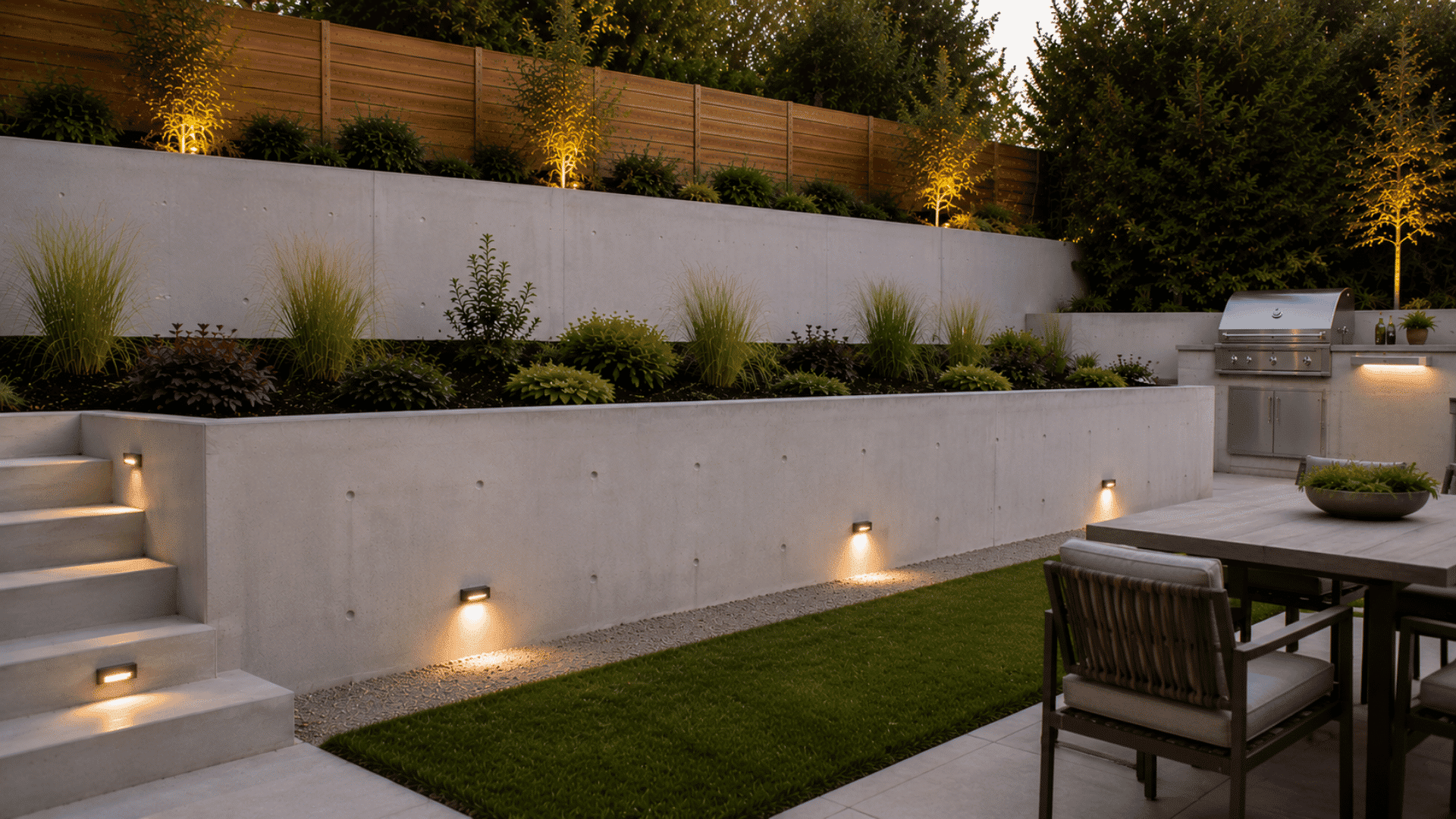
A smooth concrete wall creates a clean, structured appearance with simple lines and a refined finish.
This style works well with modern homes, patios, and outdoor kitchens where a minimal look is preferred.
Its sleek surface provides a subtle backdrop for plants, furniture, and other outdoor features while helping the landscape feel organized and contemporary.
5. Interlocking Concrete Block Retaining Wall
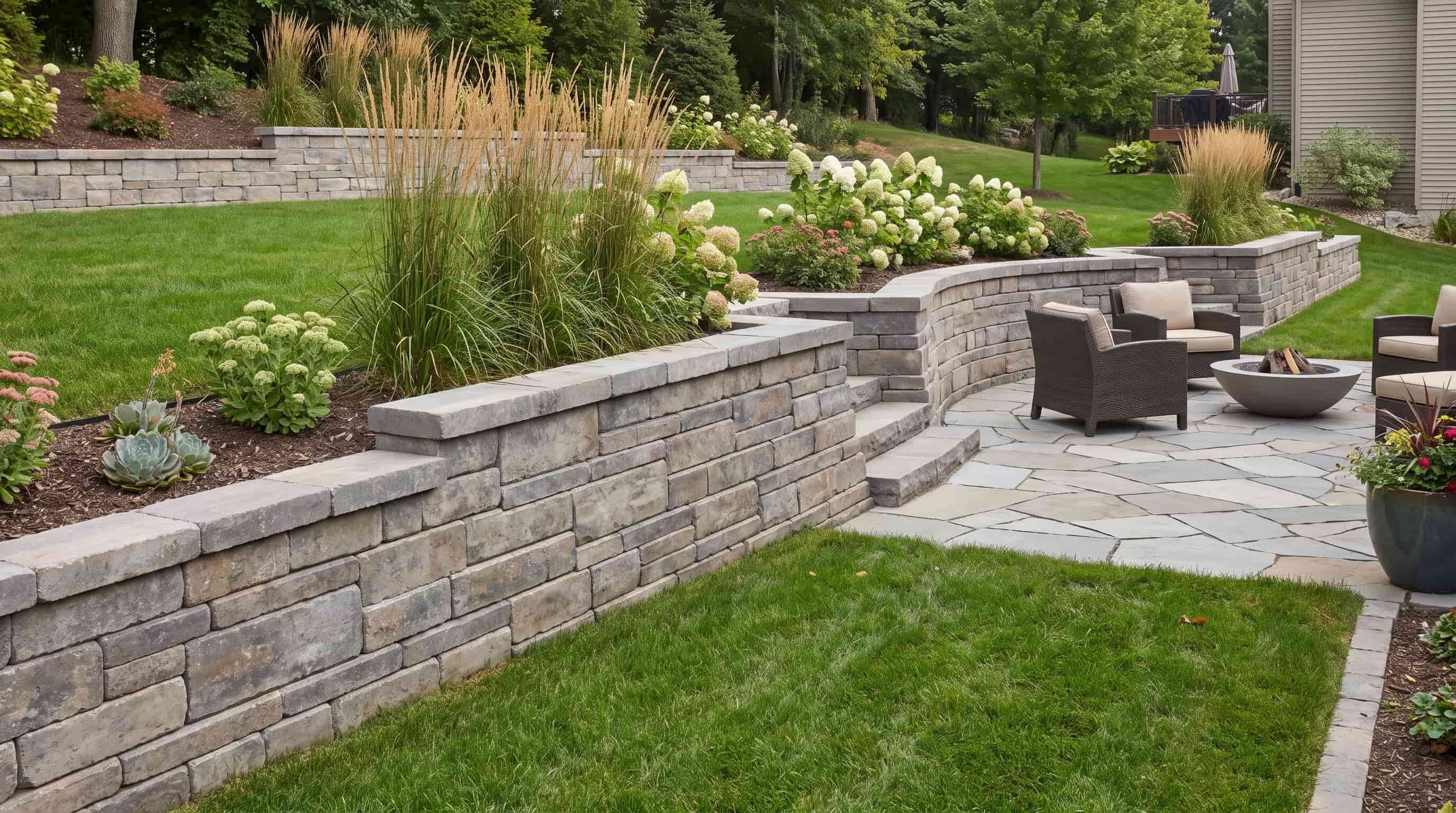
Interlocking blocks are a practical choice for structured backyard designs because they offer flexibility in shape, color, and texture.
They work well for both straight and curved retaining wall layouts, making it easier to create designs that match different outdoor spaces.
Their uniform appearance gives the landscape a neat, organized feel while blending well with patios, gardens, and other hardscape features.
6. Concrete Block Wall With Built-In Planters
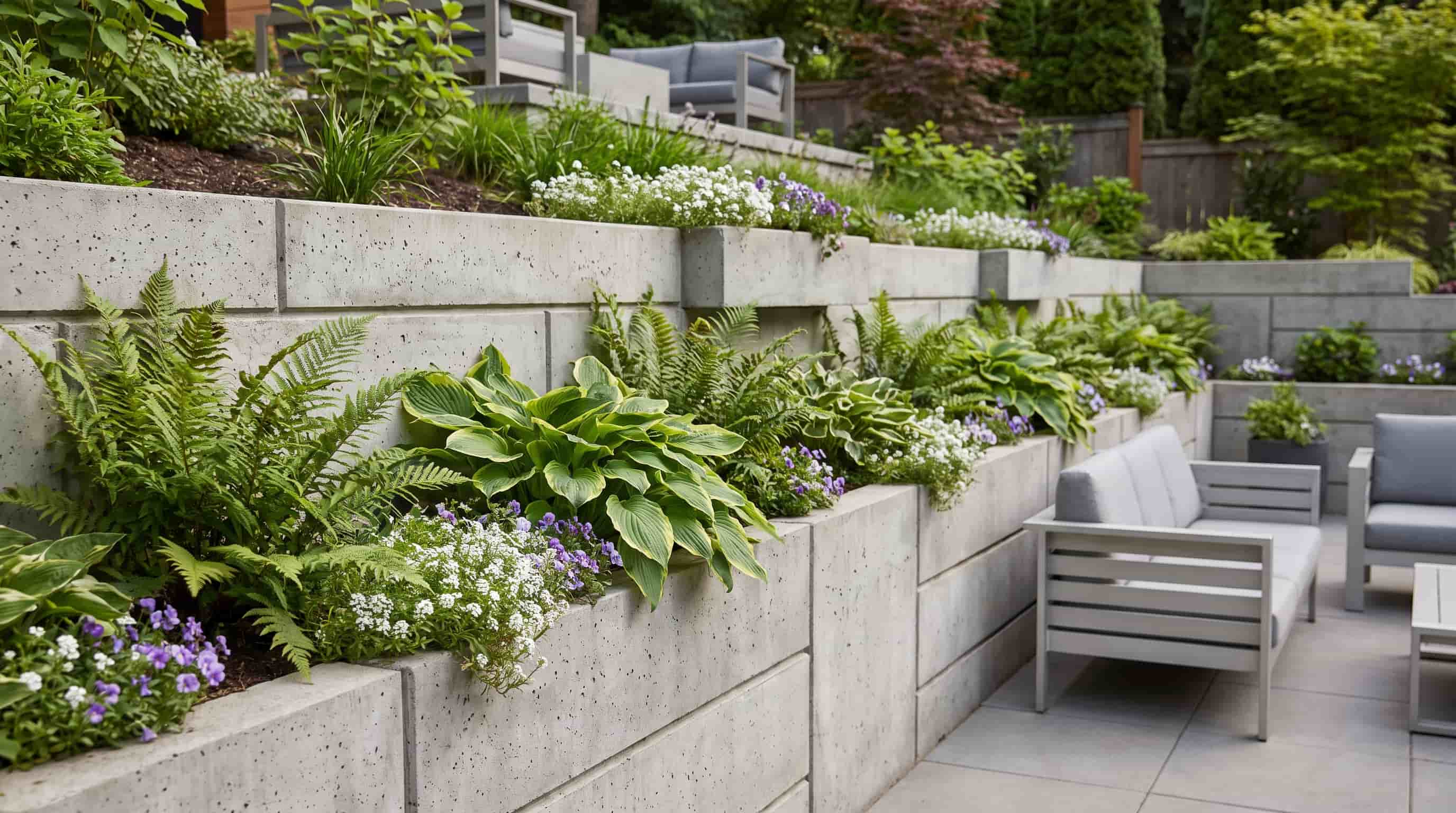
Concrete blocks can feel more natural and inviting when paired with greenery and planted areas.
Built-in planting spaces soften the hard edges of the wall while adding color, texture, and contrast to the landscape.
This style works especially well in small modern yards where every element needs to serve both a functional and decorative purpose.
7. Dark Retaining Wall With Lighting
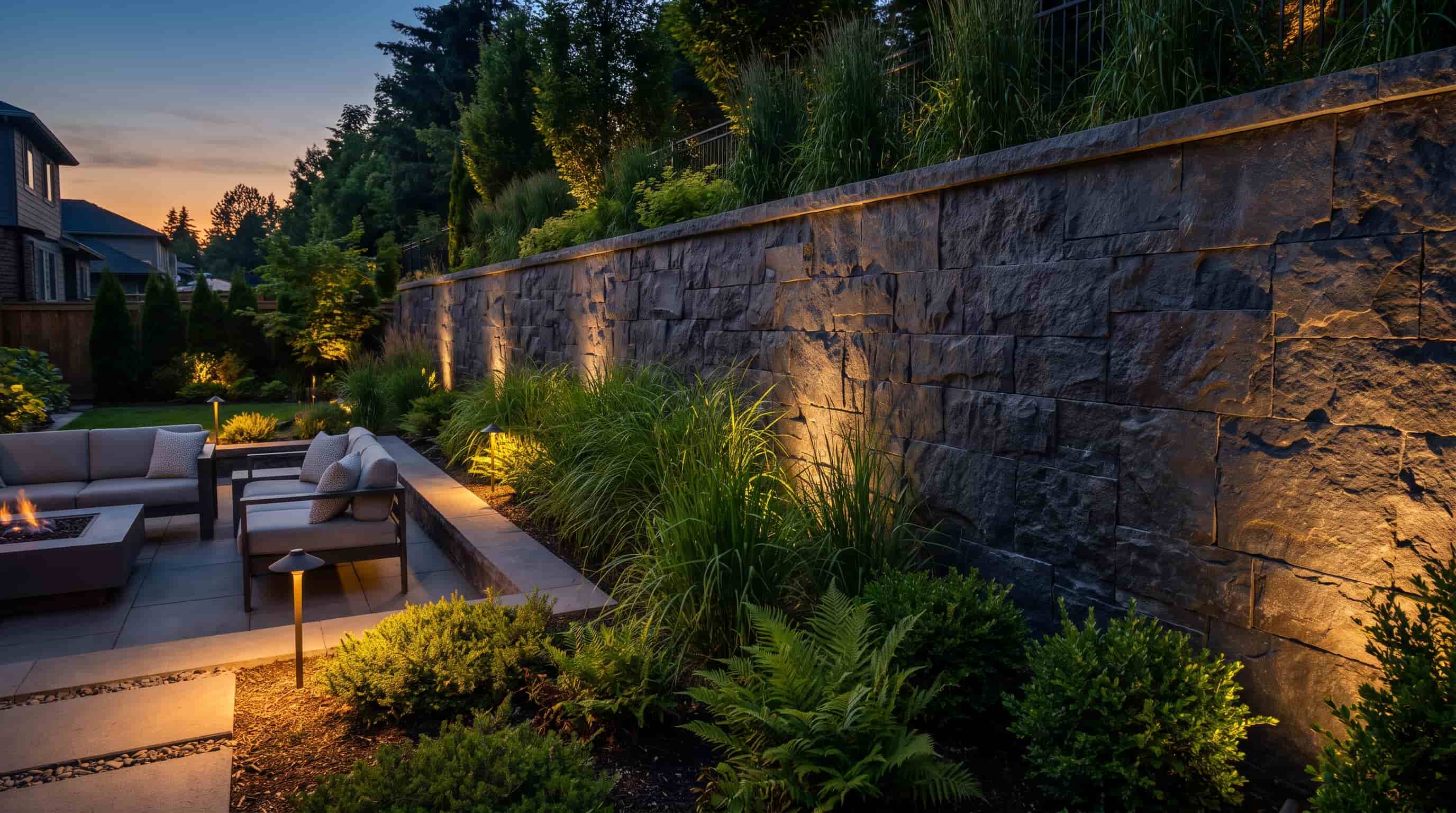
A dark-colored retaining wall creates contrast and adds depth, especially after sunset.
It highlights textures and materials while pairing beautifully with green plants and outdoor lighting to create a striking backyard feature.
Pairing it with the right garden lights makes the texture pop even more once the sun goes down.
Tiered Retaining Wall Ideas for Sloped Backyards
A sloped backyard does not have to remain unused. Tiered retaining walls create multiple levels that make the space easier to enjoy.
Seeing a real sloped backyard makeover play out before and after can also help you decide how many tiers make sense for your yard.
8. Multi-Level Garden Retaining Walls
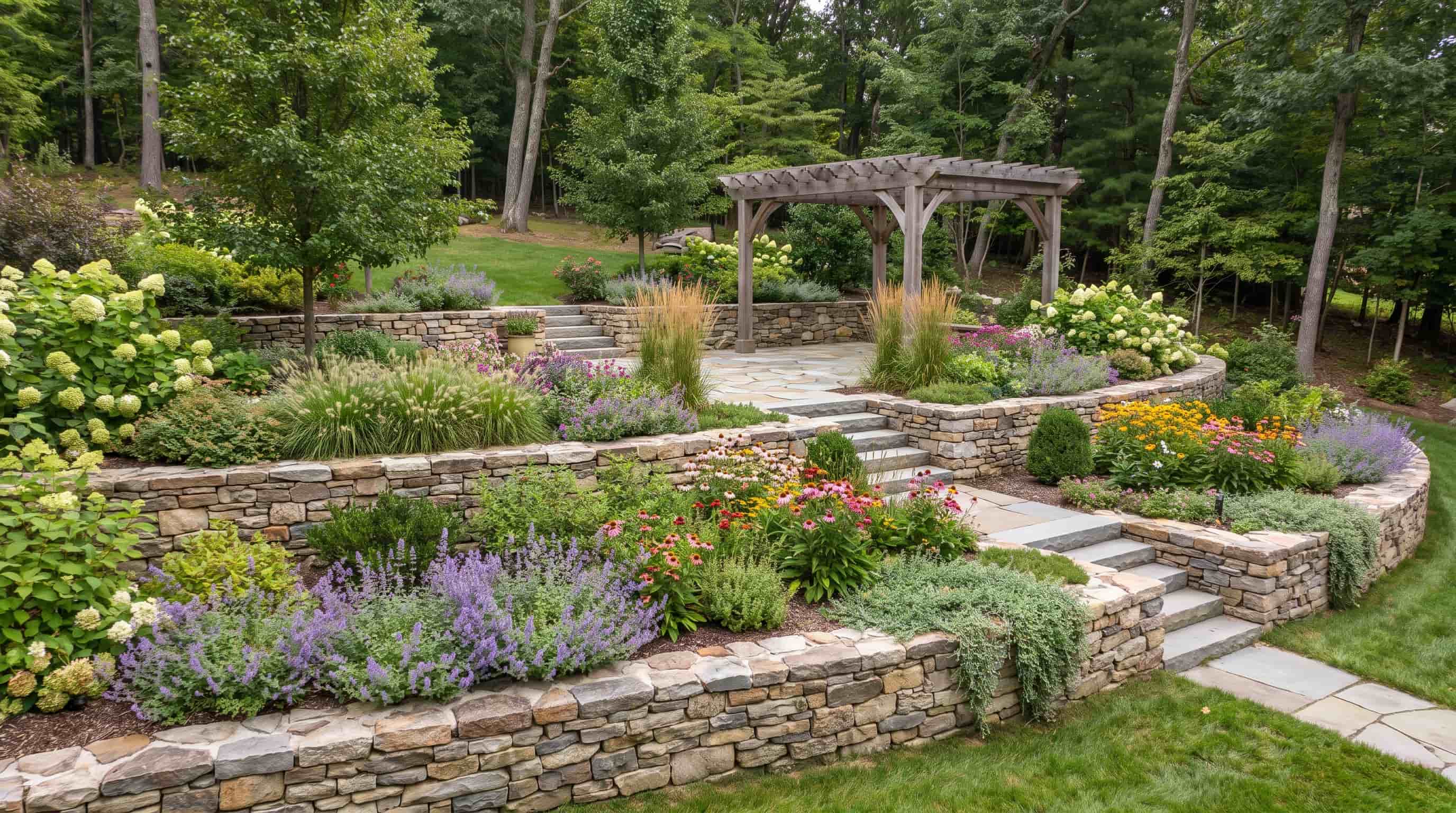
Multiple wall levels help break up sloped landscapes into separate sections, creating defined planting areas and adding visual depth.
This design makes uneven yards more usable by transforming difficult slopes into organized garden spaces with better structure and flow.
The layered approach also creates opportunities for different plants, pathways, and outdoor features across each level.
9. Terraced Retaining Wall With Steps
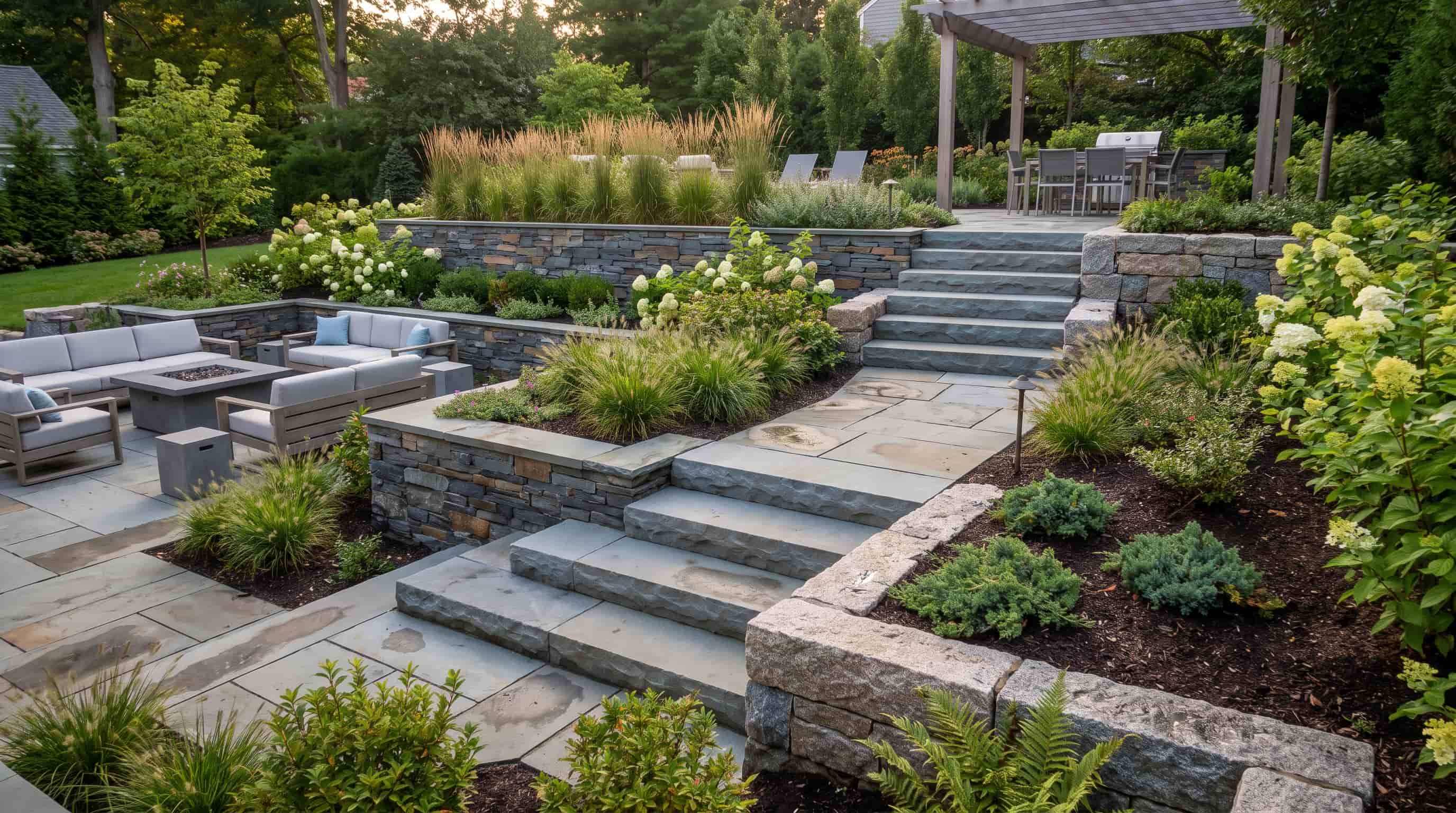
Adding steps between retaining wall levels creates a more connected backyard layout while making movement between different areas easier.
This design works especially well for larger landscapes with multiple zones, helping patios, gardens, and seating areas feel linked together.
The combination of walls and steps adds structure to sloped yards while improving both accessibility and visual flow.
10. Tiered Walls With Shrubs and Ground Covers
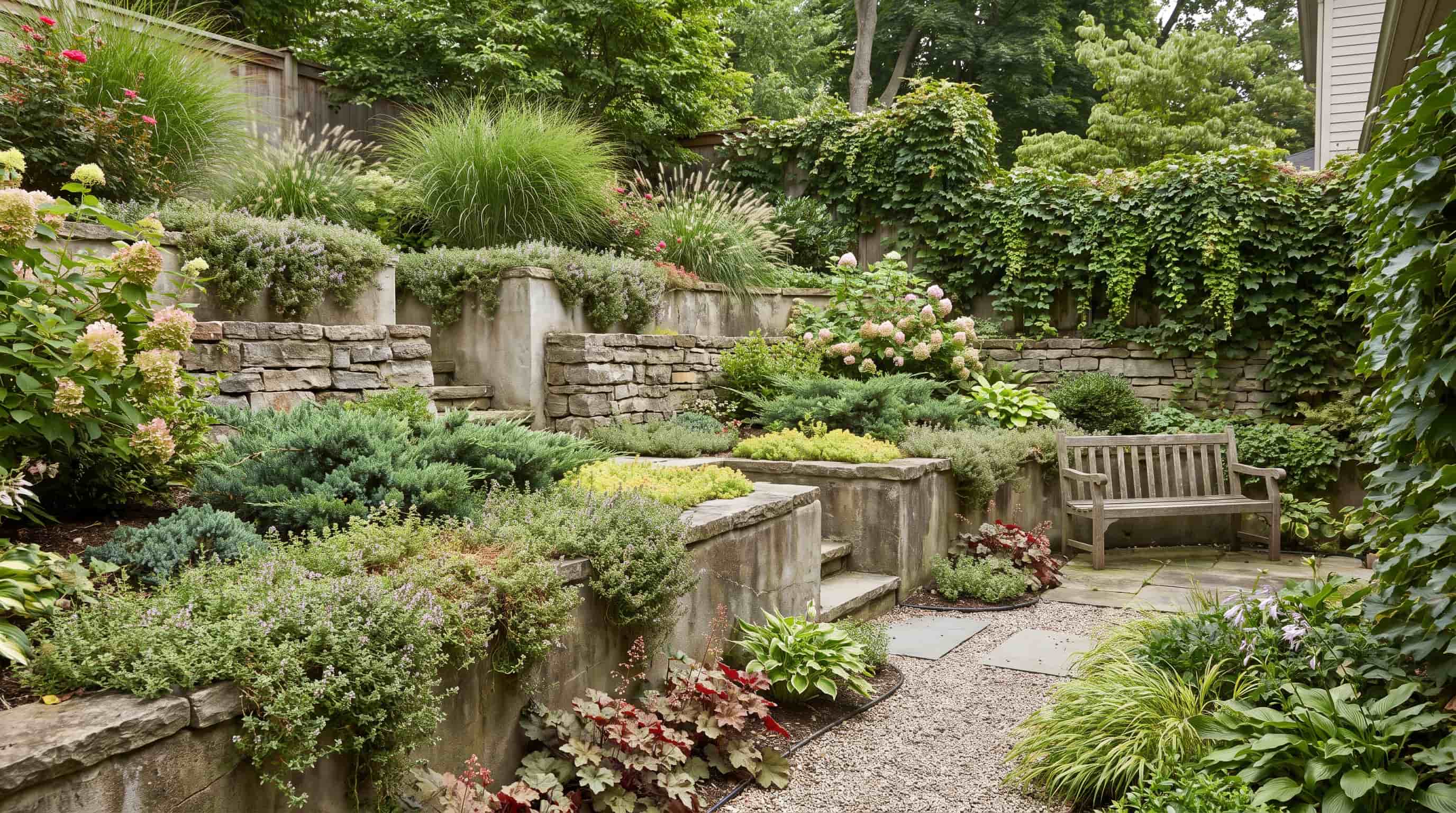
Plants help soften the look of stacked retaining walls by adding natural texture and breaking up the hard surfaces of the structure.
Layered greenery creates a fuller garden appearance while helping each wall level blend more naturally with the surrounding landscape.
This approach works well for creating a more established outdoor space where the retaining walls feel like part of the garden rather than separate features.
Small Backyard Retaining Wall Ideas
Small yards benefit from retaining walls that add structure without overwhelming the space.
11. Low Retaining Wall Around Garden Borders
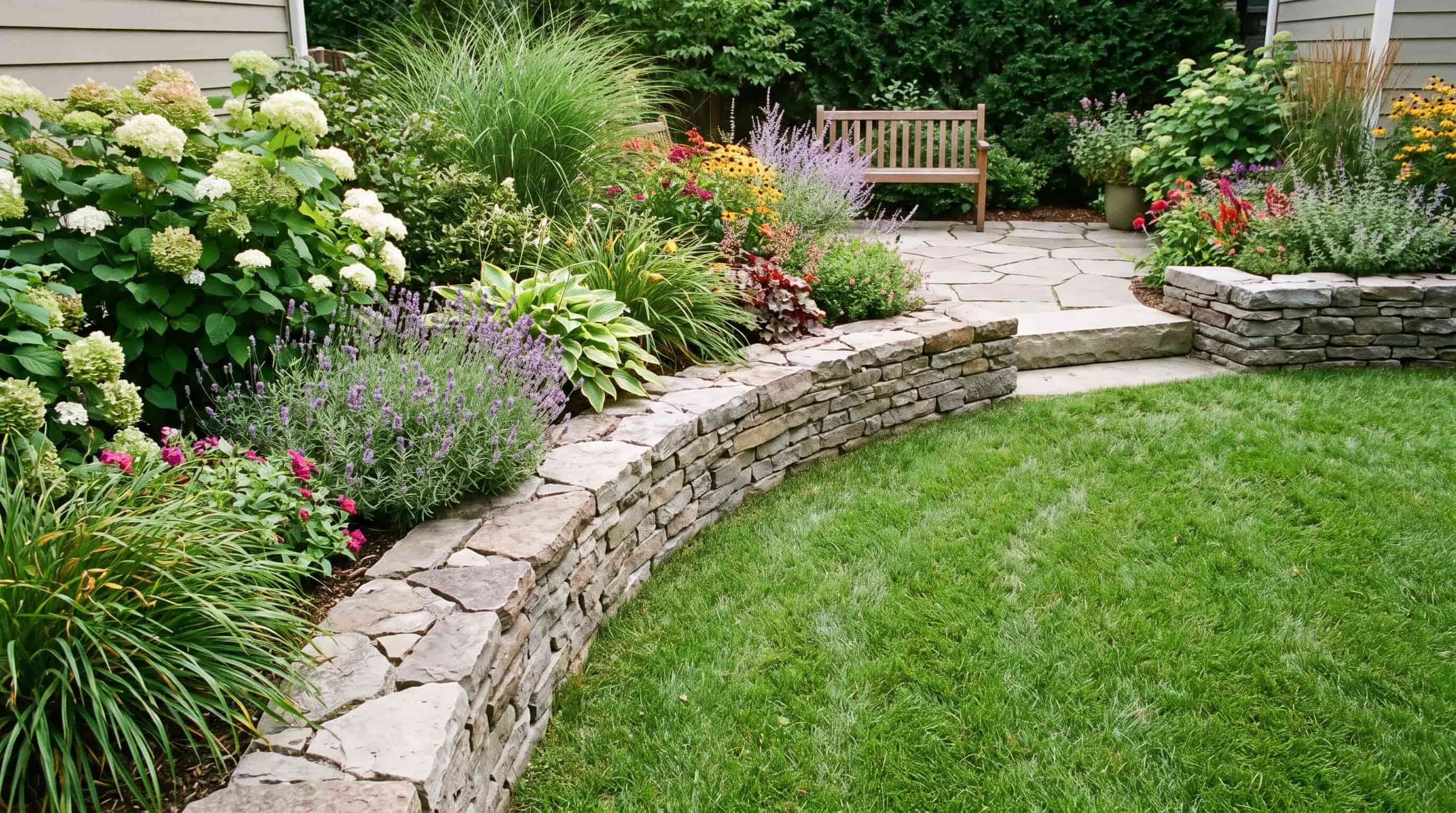
Short retaining walls do more than define boundaries; they add structure and visual interest to smaller outdoor spaces.
They create clean edges around gardens, separate lawn areas, and help organize different parts of the yard.
This design adds function and style to compact landscapes without making the space feel closed in or crowded.
12. Raised Garden Bed Retaining Wall
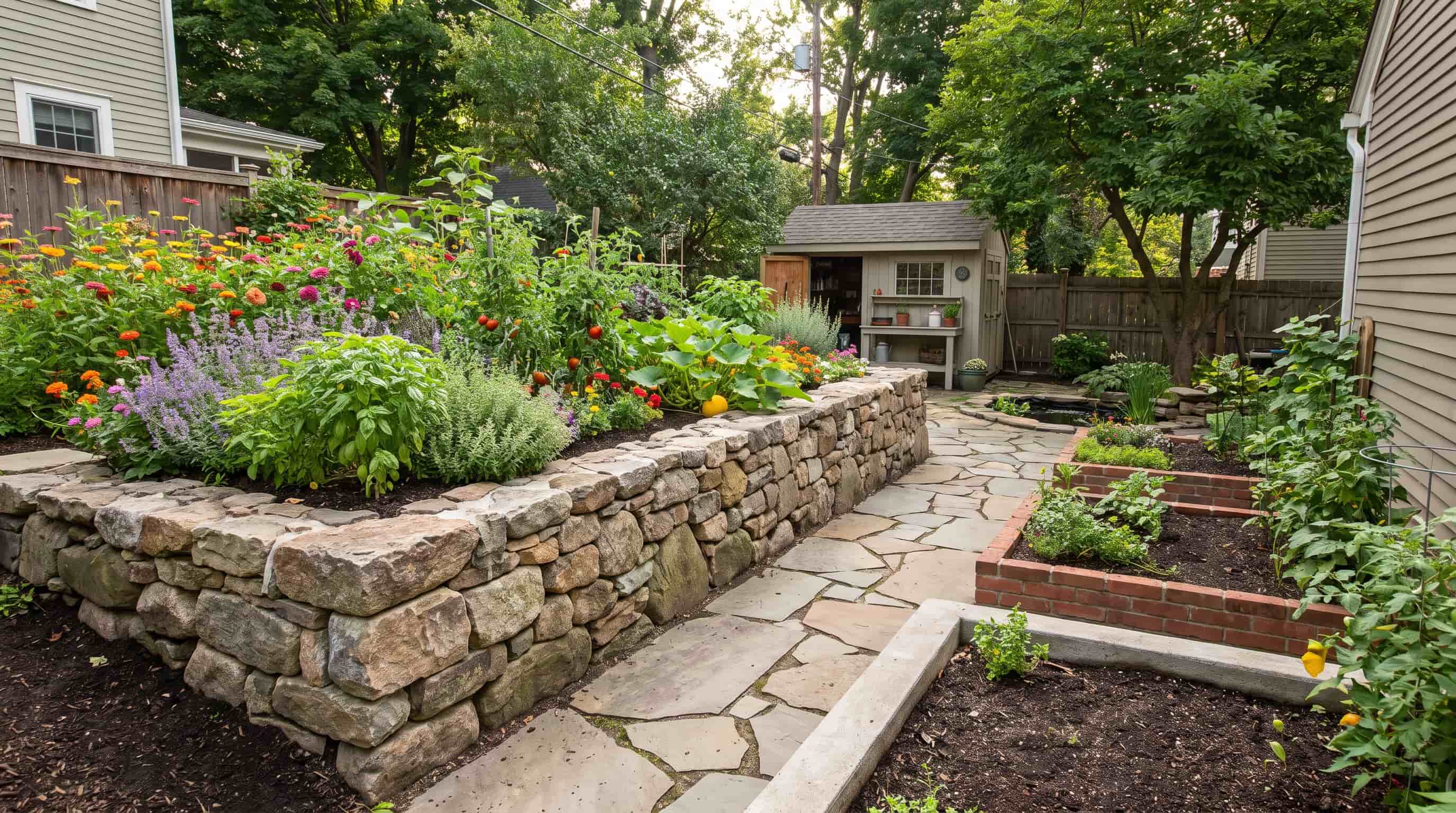
A raised bed adds valuable growing space while also acting as a simple retaining structure for your yard.
It makes planting easier by keeping soil contained and improving drainage. This creates a defined backyard feature that’s easy to maintain and access.
If you’re growing flowers, herbs, or vegetables, a raised bed brings structure and purpose to any outdoor space.
13. Fence-Line Retaining Wall
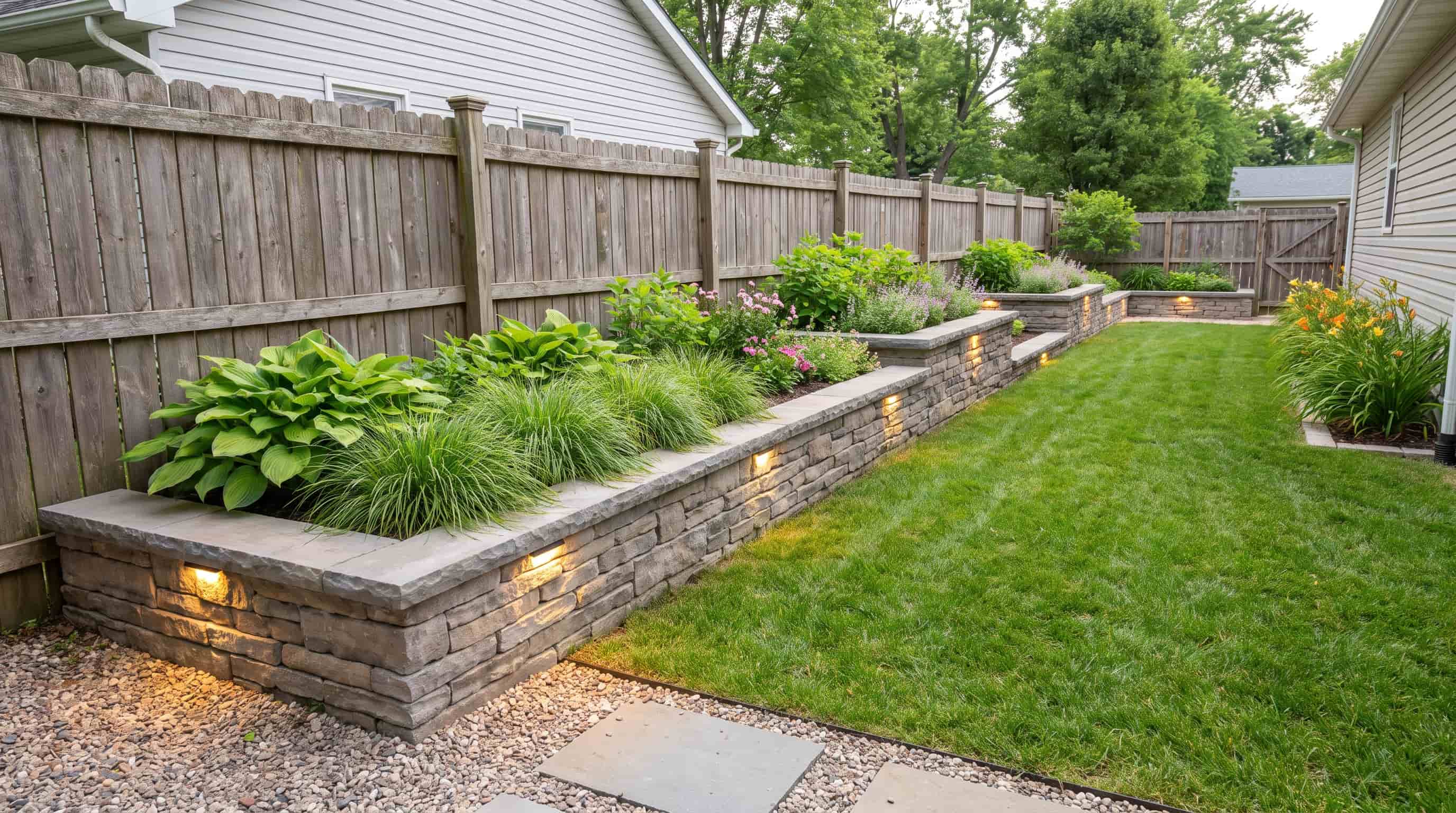
Unused fence areas can become attractive garden zones with the right mix of plants, containers, and lighting.
Climbing vines, potted plants, and vertical planters add greenery while making plain fence lines feel more purposeful.
These simple additions help transform narrow or overlooked areas into inviting outdoor spaces with character and function.
Retaining Wall Ideas Around Patios, Pools, and Outdoor Areas
Retaining walls do more than manage slopes near patios and pools; they can define the space and add a polished, finished look. The right design turns a functional structure into a key part of your outdoor living area.
14. Seating Retaining Wall Around a Patio
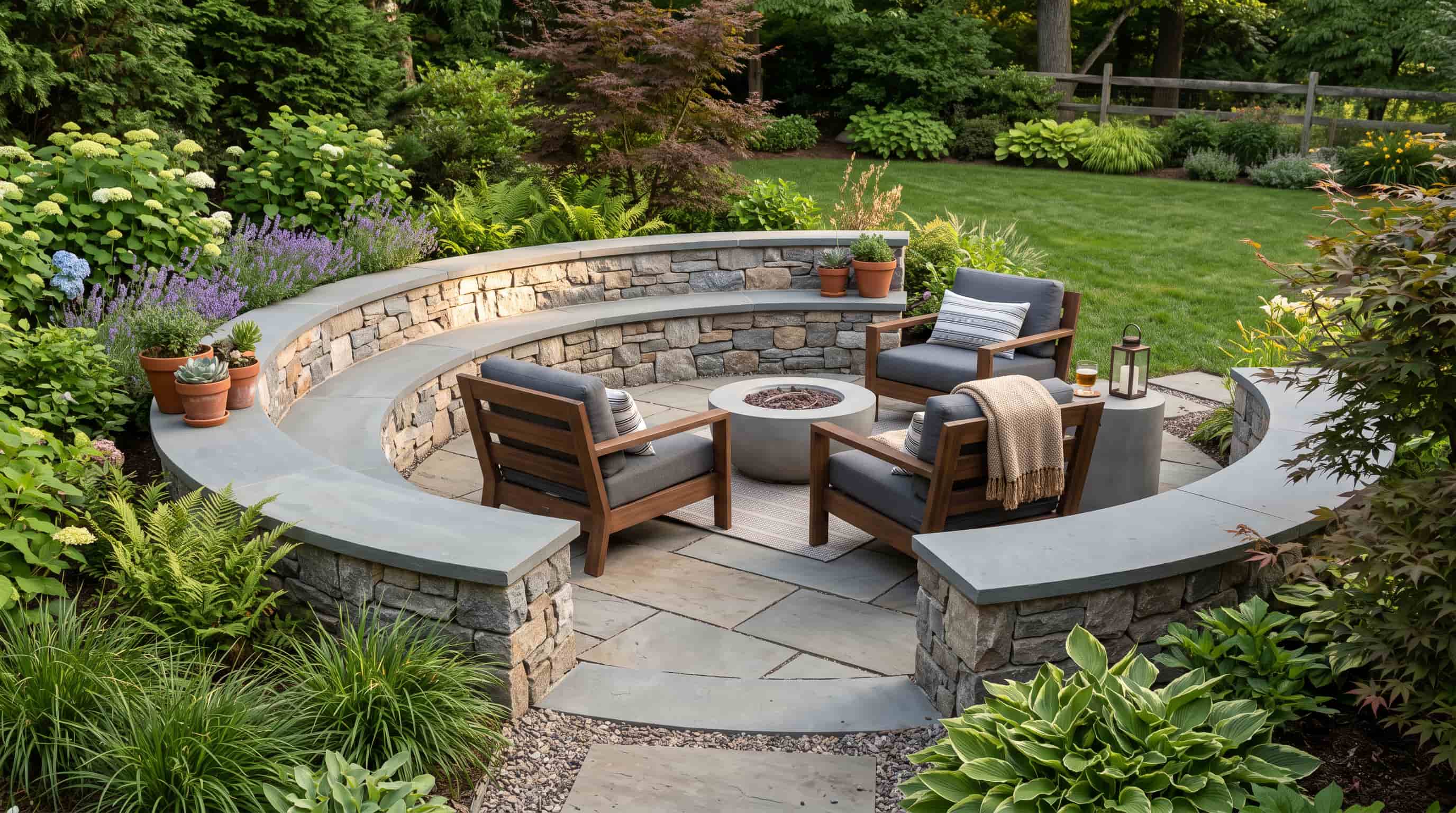
A wall built at seating height can double as a permanent bench while adding function to outdoor spaces.
It provides extra seating, saves valuable patio space, and creates a built-in feature that blends with the landscape design.
This layout works especially well for smaller patios where traditional furniture may limit usable space.
15. Fire Pit Area With Retaining Wall Border
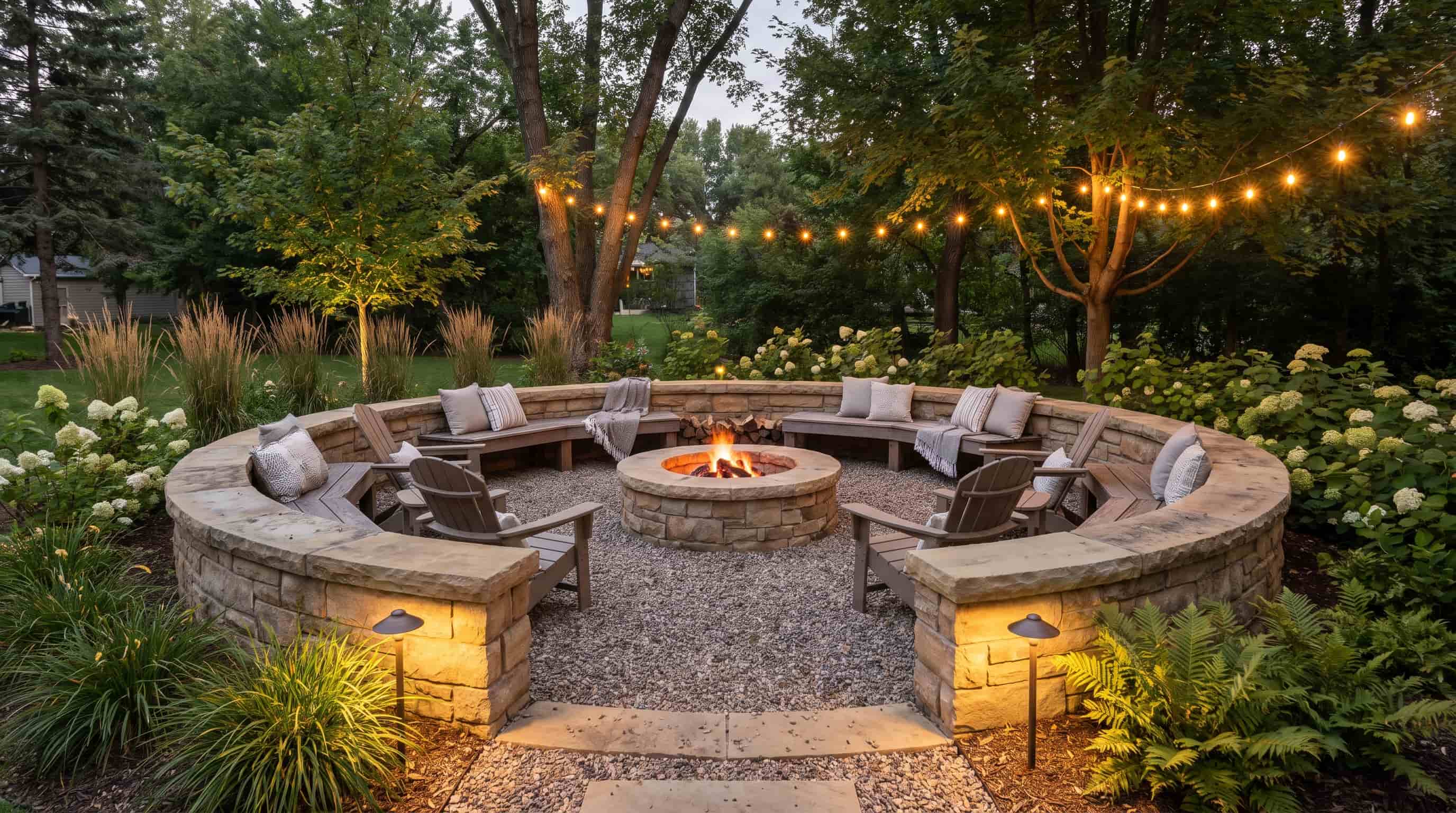
A low retaining wall can help define a fire pit area while adding practical value to the yard.
It creates a dedicated gathering space, provides extra seating, and gives the outdoor area a more finished appearance.
This design also helps separate the fire feature from surrounding landscaping while keeping the space organized and easy to use.
16. Poolside Retaining Wall With Plants
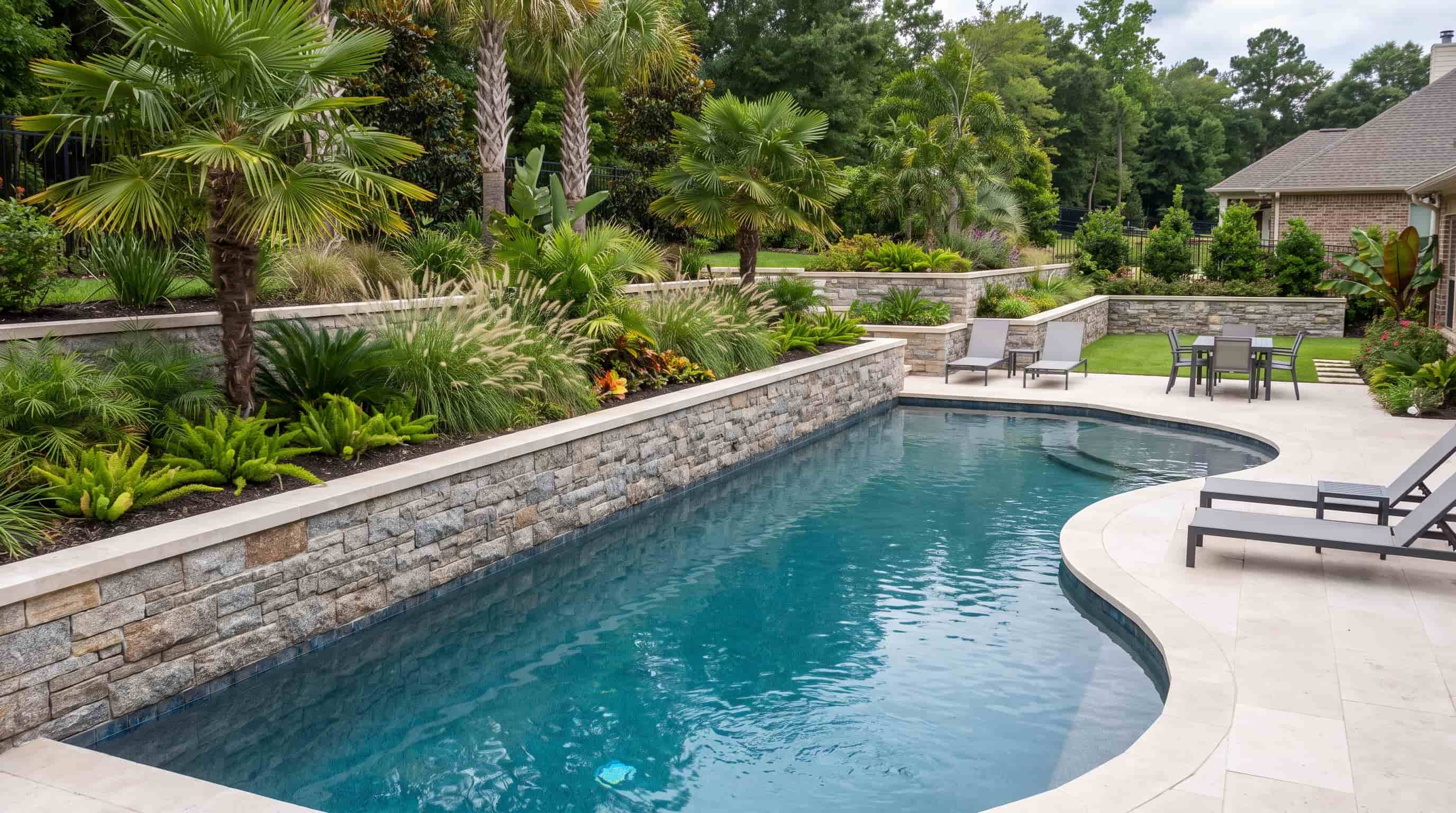
Retaining walls can improve pool landscaping by creating raised planting areas and adding more depth around the space.
They help introduce greenery along pool edges, separate different levels, and create a more structured outdoor layout.
The added height softens hard pool surfaces while making the surrounding area feel more inviting and connected.
17. Retaining Wall Waterfall Feature
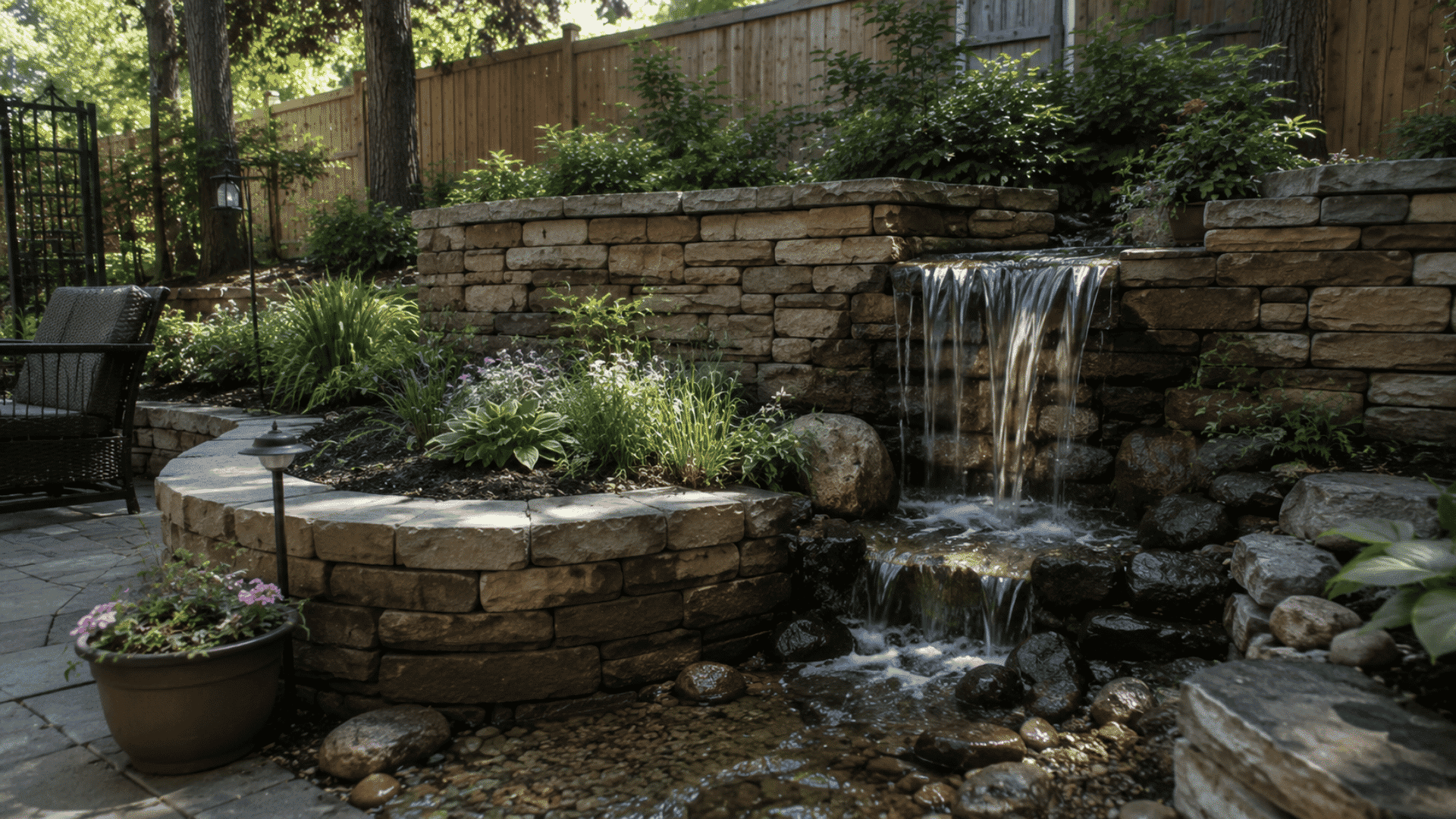
A retaining wall can serve as a backdrop for a small waterfall or water feature, adding movement and soothing sounds to the yard.
It creates a natural focal point while blending beautifully with stone finishes, plants, and other landscape elements.
This design works especially well with natural stone retaining walls where the water feature feels like a seamless part of the surrounding outdoor space.
18. Outdoor Kitchen Retaining Wall
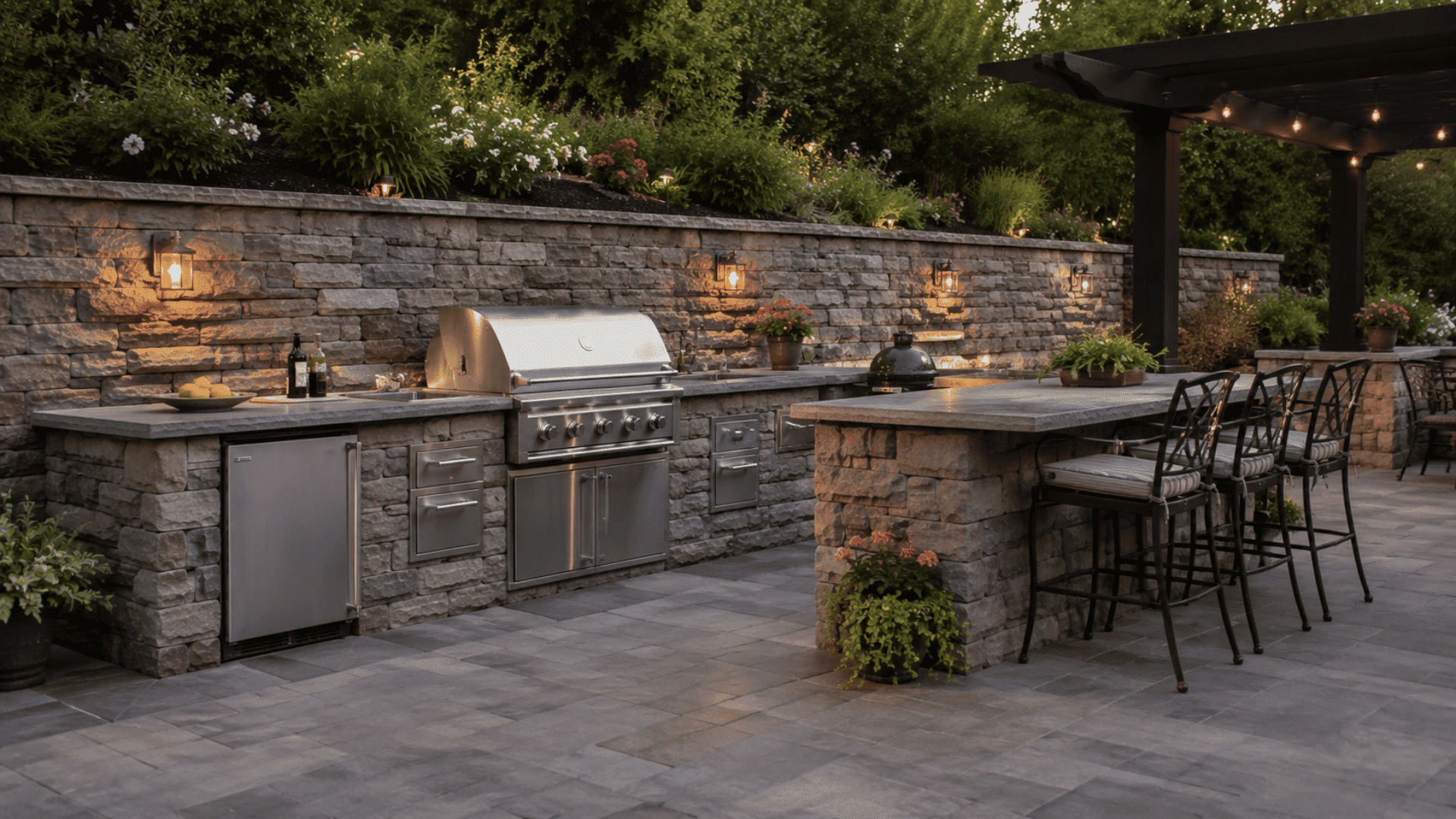
A retaining wall can help define an outdoor cooking area by creating a structured backdrop for counters, grills, and seating spaces.
It adds visual interest to entertainment areas while helping organize the layout of the backyard.
This design pairs well with stone or concrete finishes, creating a durable feature that blends with the surrounding outdoor design.
19. Pergola Seating Area With Retaining Wall
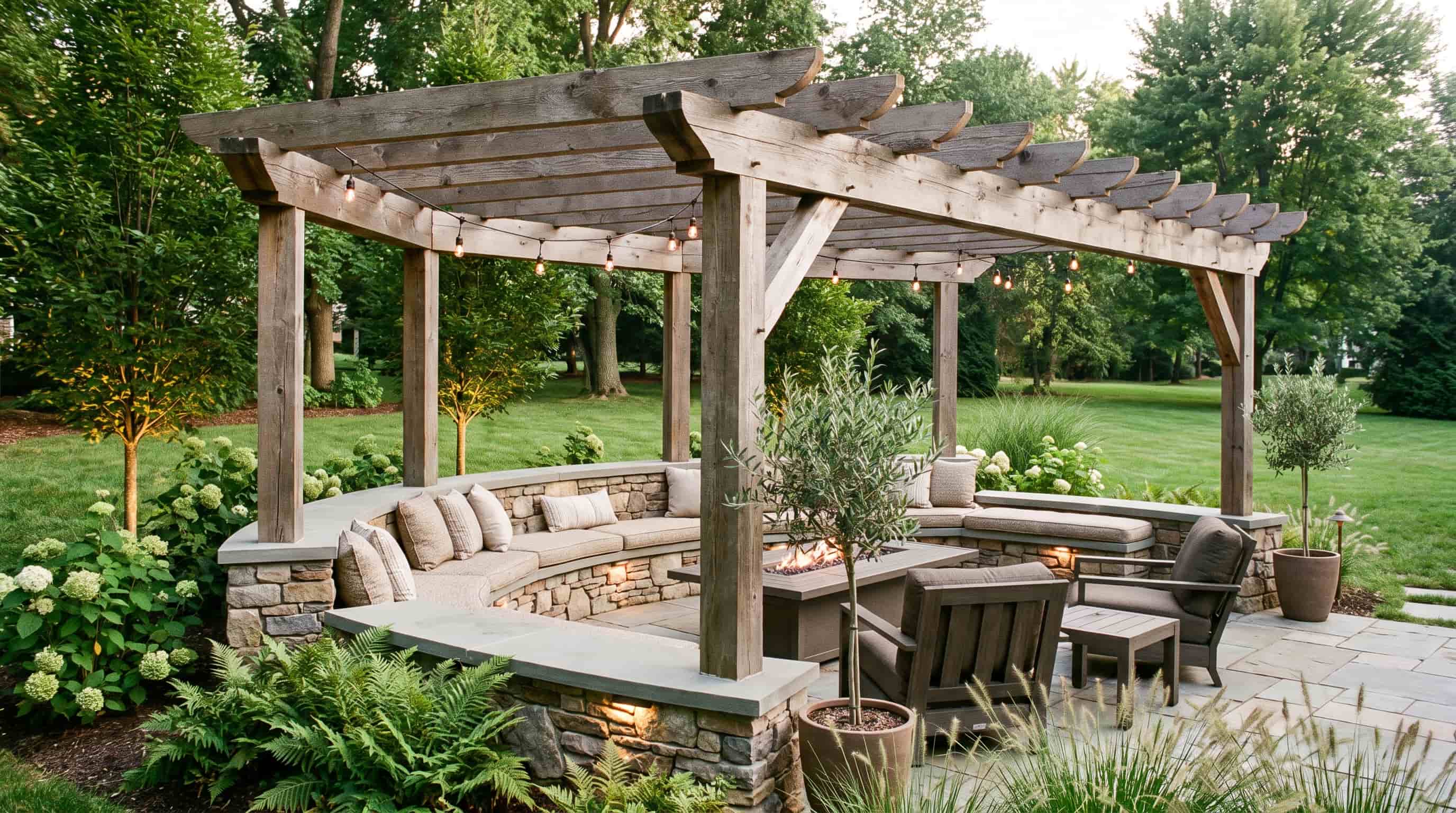
Combining a retaining wall with a pergola creates a comfortable outdoor retreat for relaxing and entertaining.
The wall can provide built-in seating while helping define the area and create a more organized layout.
This design works especially well in larger backyards where a dedicated gathering space can add both function and visual appeal.
Creative Retaining Wall Shapes and Layout Ideas
A retaining wall doesn’t have to be a straight, uniform line; creative shapes and layouts can turn a functional structure into a standout landscape feature.
The right design adds visual interest while still managing slopes and soil effectively.
20. Curved Retaining Wall Design
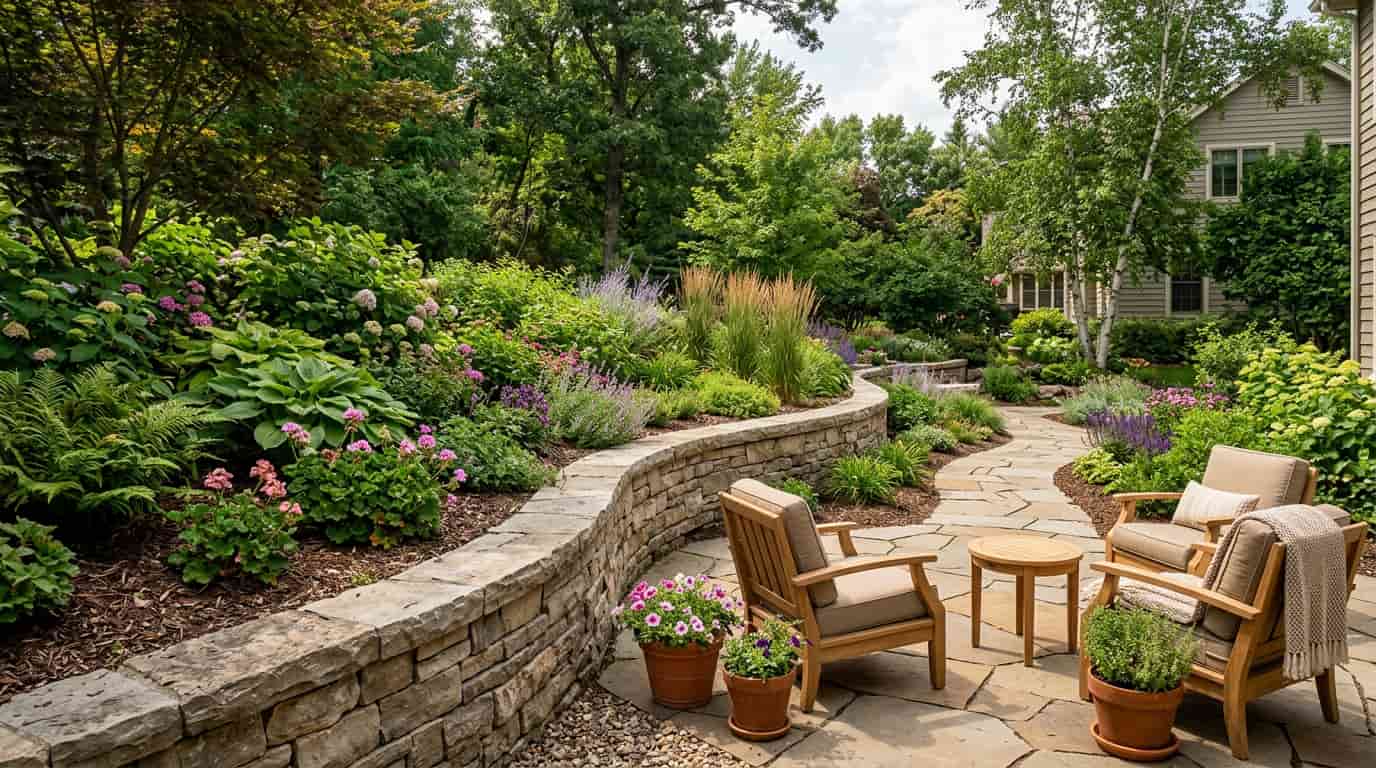
Curved retaining walls create softer lines and a more natural flow compared with straight wall designs.
They work well around gardens, patios, and seating areas by helping outdoor spaces feel more open and connected.
The rounded shape adds visual interest while creating a landscape layout that feels less rigid and more organic.
21. Circular Retaining Wall Around a Tree
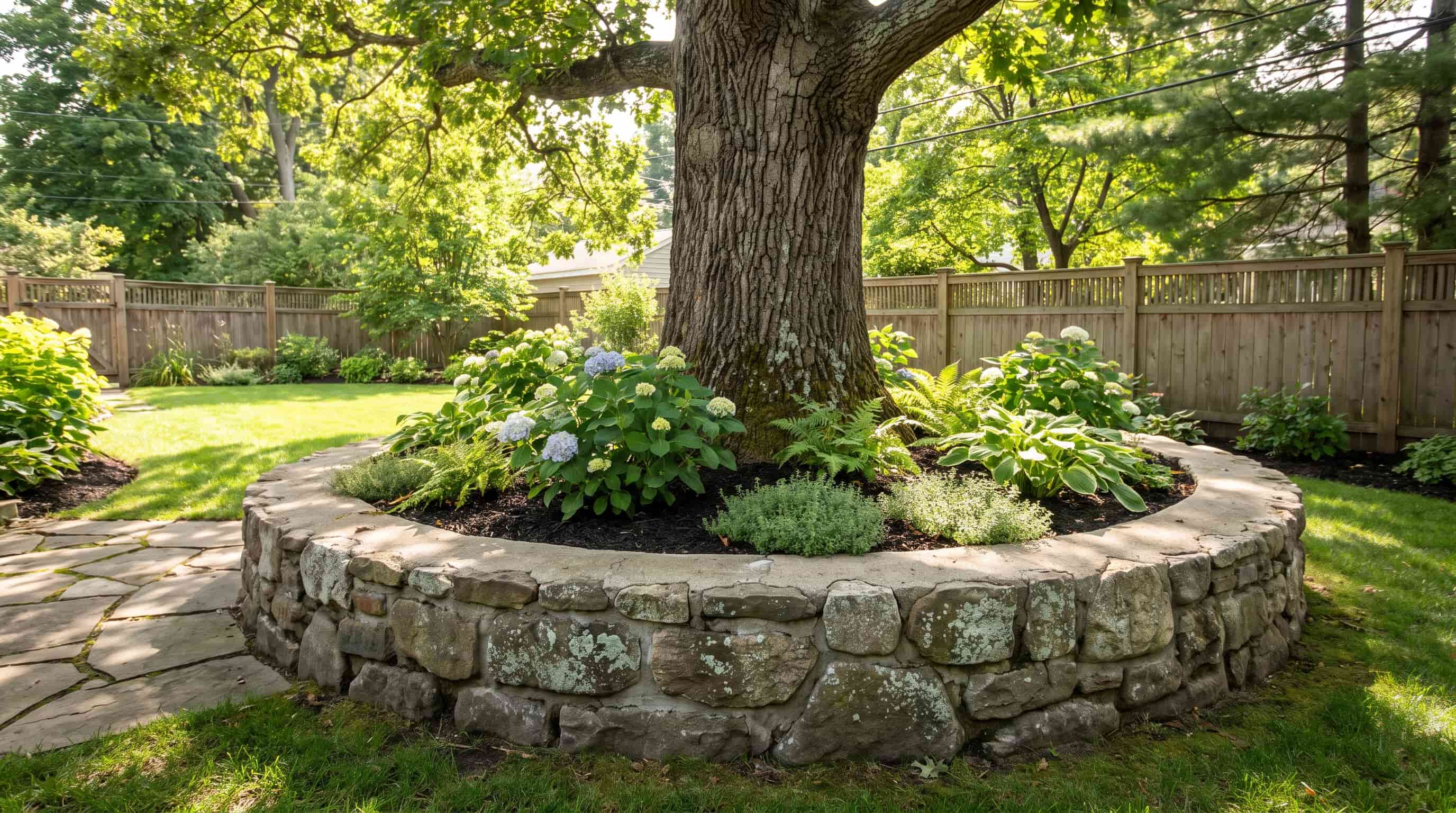
A circular retaining wall can highlight existing trees or planting areas while adding protection around roots and garden beds.
It creates a decorative focal point that brings structure to natural features without taking away from their appearance.
This design works well for creating defined planting spaces while keeping the landscape layout balanced and visually connected.
Backyard Retaining Wall Ideas by Material
Retaining wall materials come in a variety of styles, each offering a different look, level of maintenance, and suitability for specific landscapes.
It’s worth considering how each wall type handles soil pressure before picking a material, since the structure underneath determines how long the finish on top actually holds up.
| Material | Style | Best For | Maintenance |
|---|---|---|---|
| Natural Stone | Rustic and organic | Gardens, slopes, and natural landscapes | Low |
| Concrete | Modern and flexible | Contemporary yards | Low |
| Timber | Warm and natural | Farmhouse and cottage styles | Medium |
| Brick | Traditional | Classic homes and garden borders | Low |
| Gabion | Industrial and rustic | Unique landscape designs | Low |
| Interlocking Blocks | Structured and versatile | Residential landscapes | Low |
How to Choose the Right Backyard Retaining Wall Design
Choosing the right retaining wall design depends on more than just appearance. The best option should fit your home style, work with your backyard layout, and match the level of maintenance you are comfortable with.
- Match the Wall With Your Home Exterior: Choose materials, colors, and finishes that connect your retaining wall with your home’s architecture and outdoor space.
- Consider Your Backyard Layout: Consider your backyard’s size, existing features, and elevation changes before choosing a retaining wall design. The right layout should complement the space while working naturally with trees, patios, and slopes.
- Think About Maintenance Needs: Different materials need different levels of maintenance to stay in good condition. Timber may need regular sealing, while stone requires minimal upkeep and concrete provides long-lasting durability.
Frequently Asked Questions
What Is the Most Popular Retaining Wall Style?
Natural stone, concrete, and timber are popular because they suit different backyard themes. The best option depends on your home’s style, landscape, and desired appearance.
How Do You Decorate a Retaining Wall?
Plants, lighting, pathways, gravel, and outdoor features can help a retaining wall blend into the overall backyard design.
What Is the Cheapest Retaining Wall Design?
Simple timber walls and basic block designs are usually more affordable options, especially for smaller landscaping projects.
What Plants Look Good Around Retaining Walls?
Ground covers, trailing flowers, shrubs, and drought-resistant plants can soften retaining wall edges and complement different materials.
Are Curved Retaining Walls Better Than Straight Walls?
Curved walls create softer, more natural lines, while straight walls suit modern landscapes. The better option depends on the backyard layout and overall design style.
Wrapping It Up
In my experience, backyard retaining walls do more than manage a slope.
The right design adds texture, creates outdoor rooms, and turns wasted space into a feature you actually use.
If you lean toward natural stone, timber, modern concrete, or a tiered garden, the best backyard retaining wall ideas come down to your yard’s size, your home’s style, and the atmosphere you want outside your back door.
Start with the space you already have, then pick a design that feels like it grew out of your landscape. Tell me in the comments which style you’re leaning toward; I’d love to hear about your project.