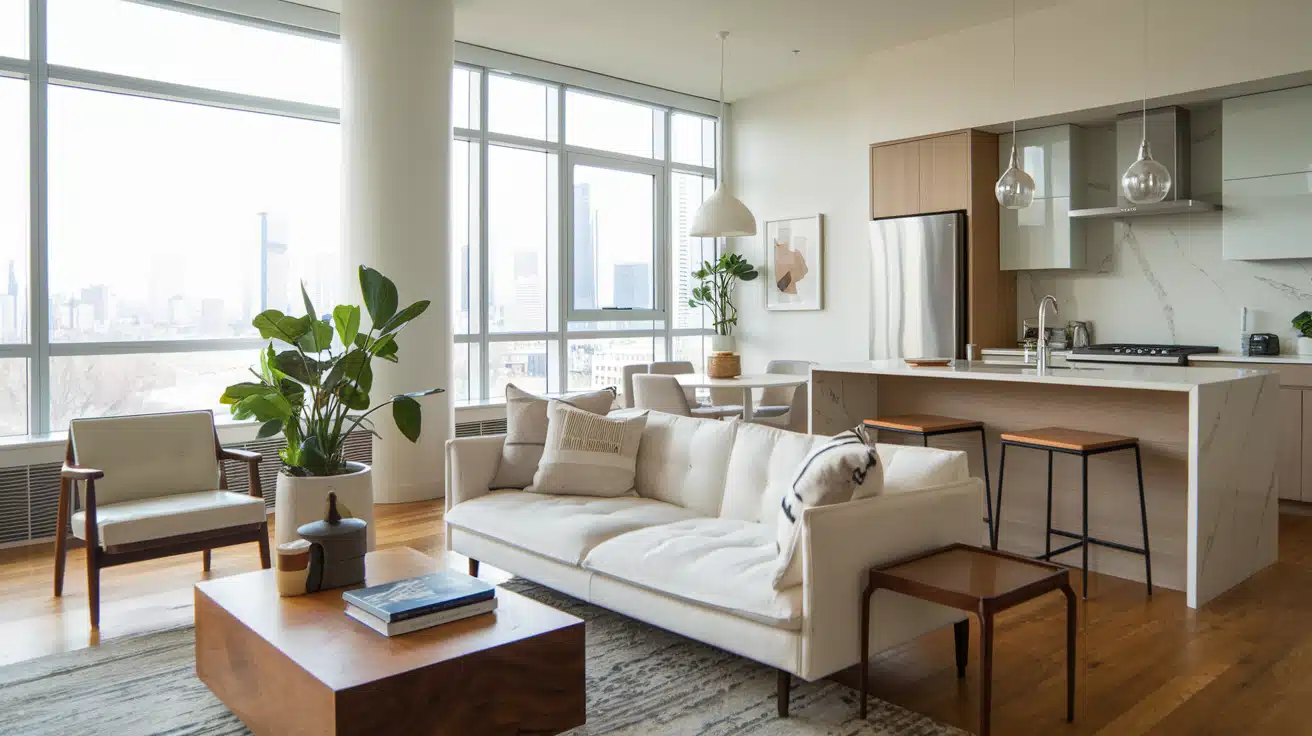

I’ve styled dozens of living rooms where a plain wall with a mounted TV felt unfinished, and a media wall almost always fixed it.
In my own projects, combining the TV with storage, lighting, decorative finishes, and architectural details turns that flat wall into a real focal point that also hides cables and improves organization.
If you want a sleek minimalist setup, a cozy fireplace feature, or custom built-ins, these media wall ideas cover every style and room size, plus the planning tips and common mistakes I always flag with clients first.
Why Are Media Walls Trending?
Media walls have gone from a niche request to one of the most requested living room upgrades in the last few years, and social feeds full of sleek built-in TV walls have only sped that up.
The bigger draw is practical: a media wall hides the cables, boxes, and consoles that pile up under a wall-mounted screen, and it gives the room a real focal point instead of a bare TV on a bare wall.
Pairing it with an electric fire adds warmth without the upkeep of a traditional hearth, and in open-plan homes, a media wall can double as a divider between living and dining zones.
I’ve also had clients ask for one specifically because it’s flexible: the same basic structure adapts to a small flat, a large open-plan lounge, or a period home with alcoves already built in.
Media Wall Ideas
The best media wall ideas combine attractive finishes with practical layouts that suit your lifestyle.
If you prefer clean contemporary interiors, cozy rustic spaces, or luxurious statement walls, these ideas offer inspiration for creating a feature wall that feels both stylish and functional.
1. Minimalist Floating Media Wall
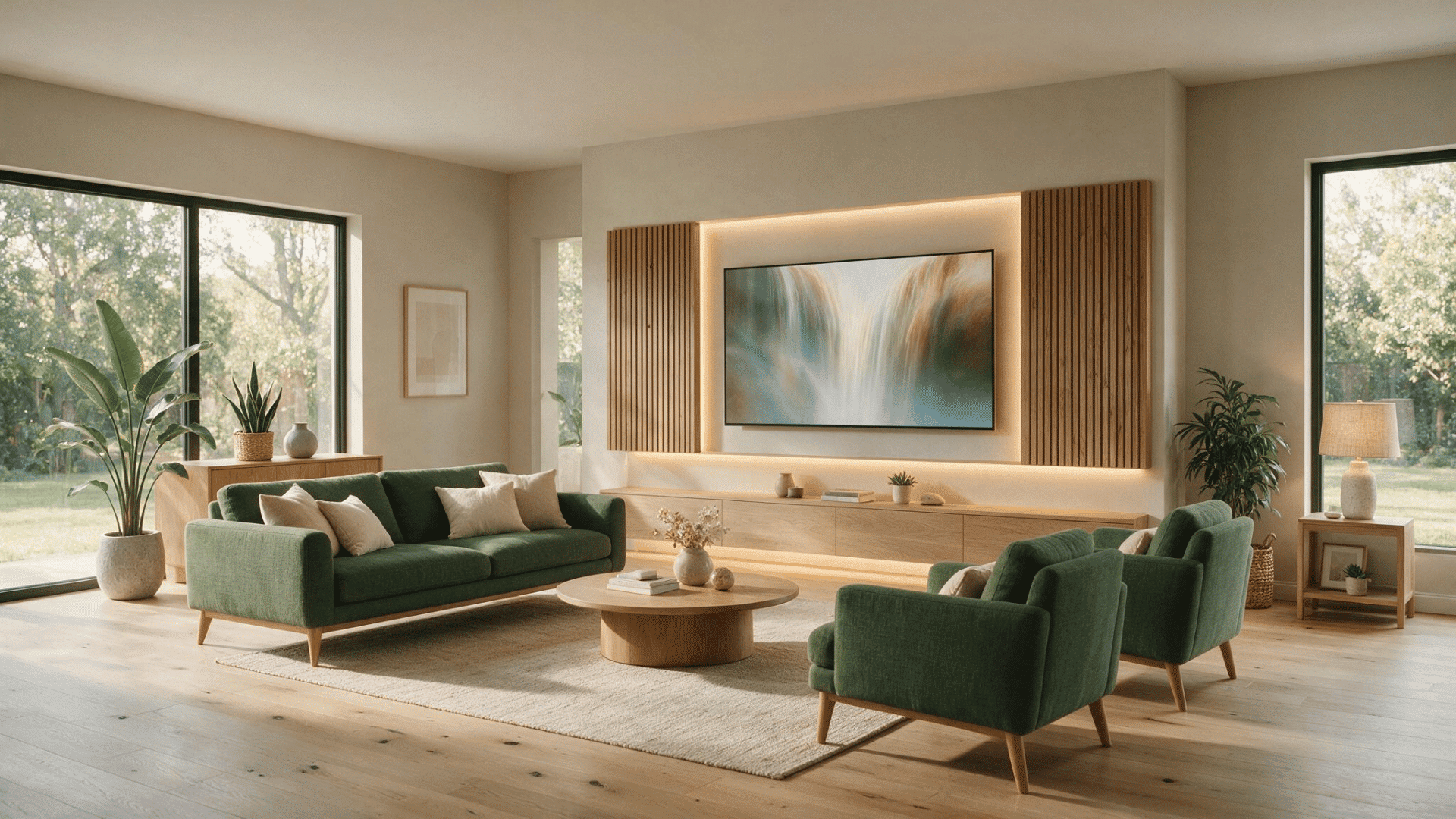
A floating media wall uses wall-mounted, handleless cabinets, light wood finishes, and warm LED lighting for a clean, spacious look with concealed storage.
- Key feature: Floating cabinetry with concealed storage and integrated lighting
- Cost: Mid-range ($800–$2,000)
- Best for: Small to mid-size living rooms and modern apartments where floor space matters
2. Sleek Black Accent Media Wall
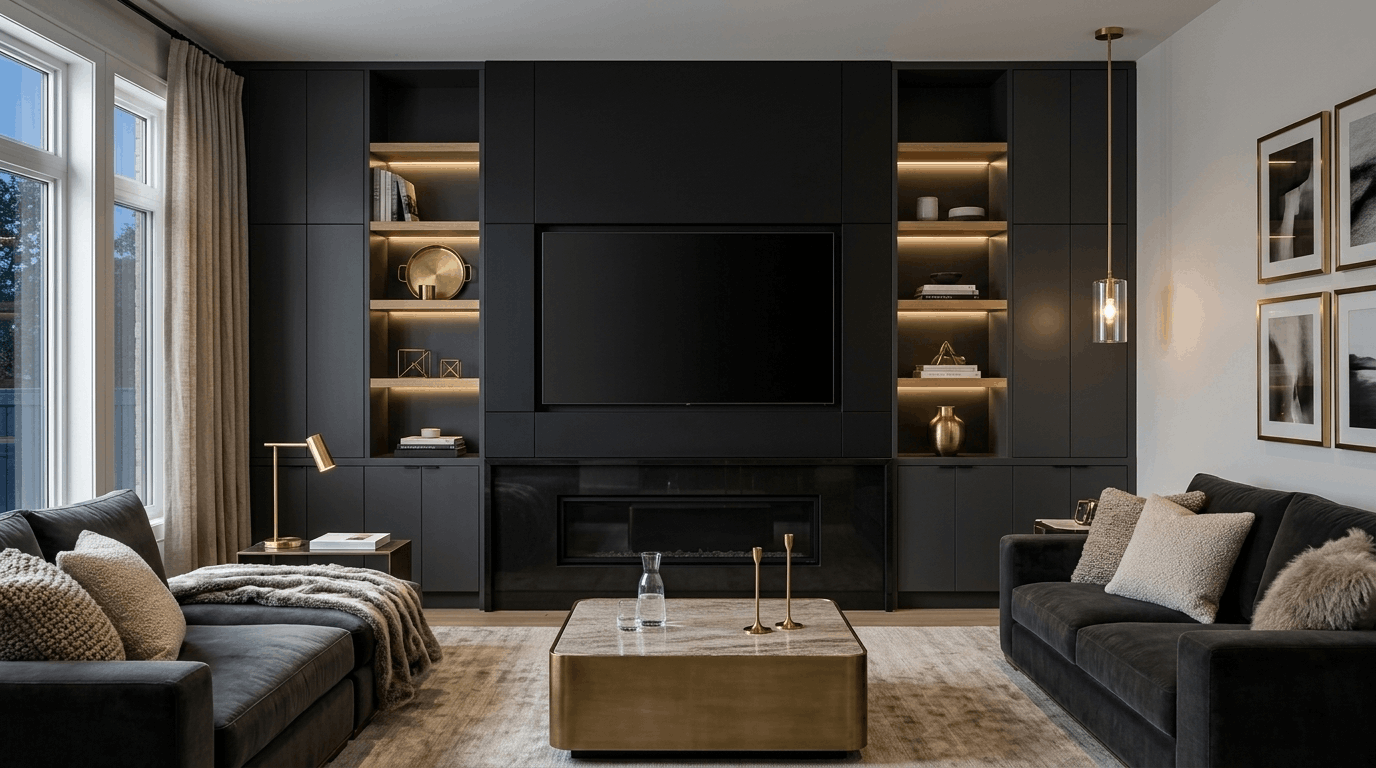
A black media wall helps the television blend into the background while creating a bold, cohesive focal point, with brass accents and warm lighting keeping the room from feeling too dark.
- Key feature: Dark finishes that visually integrate the television
- Cost: Mid-range to premium ($1,500–$4,500)
- Best for: Bold, modern living rooms that want the TV to disappear into the wall
3. White Contemporary Media Wall
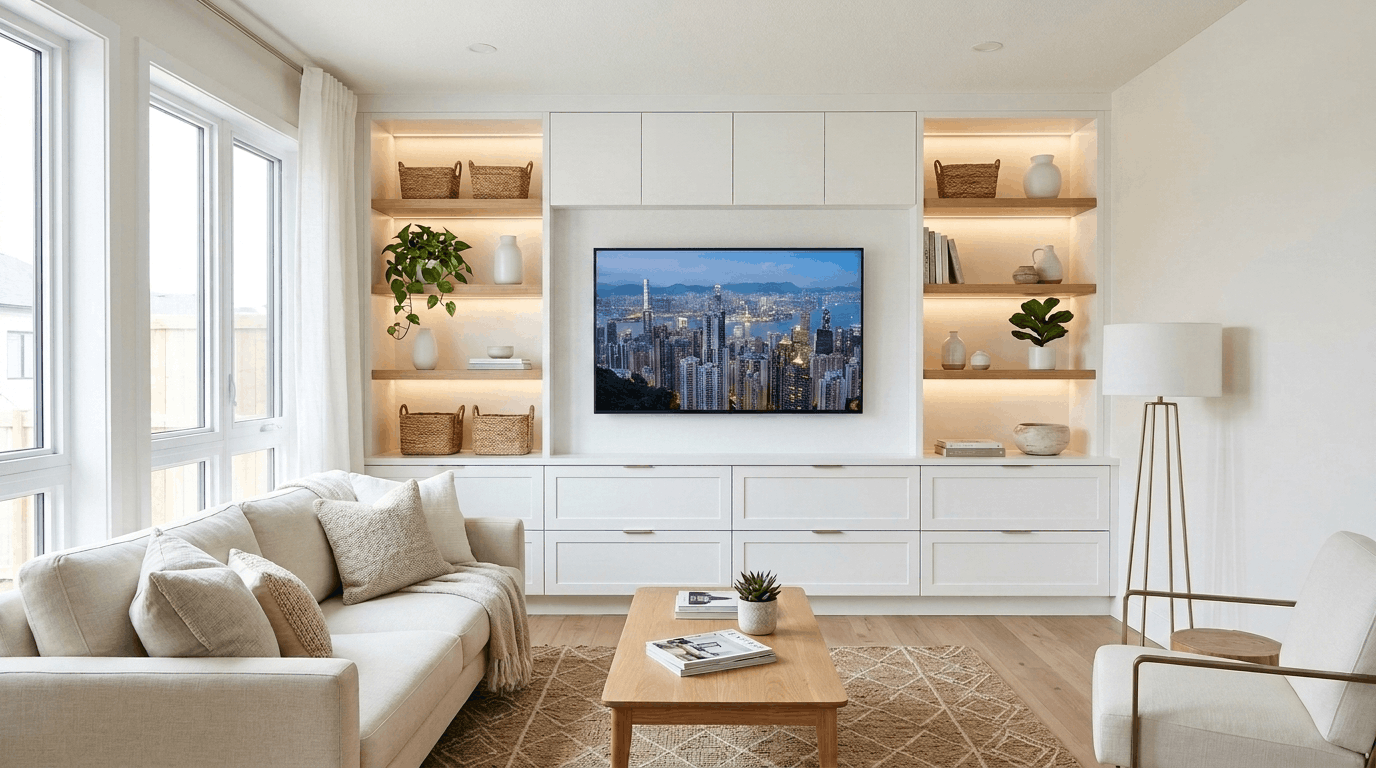
A white media wall brightens compact living spaces and makes the television feel less dominant, with crisp cabinetry and natural wood accents adding warmth.
- Key feature: Bright cabinetry with integrated shelving and warm natural accents
- Cost: Mid-range ($800–$2,000)
- Best for: Small or dim living rooms that need brightening
4. Concrete Finish Media Wall
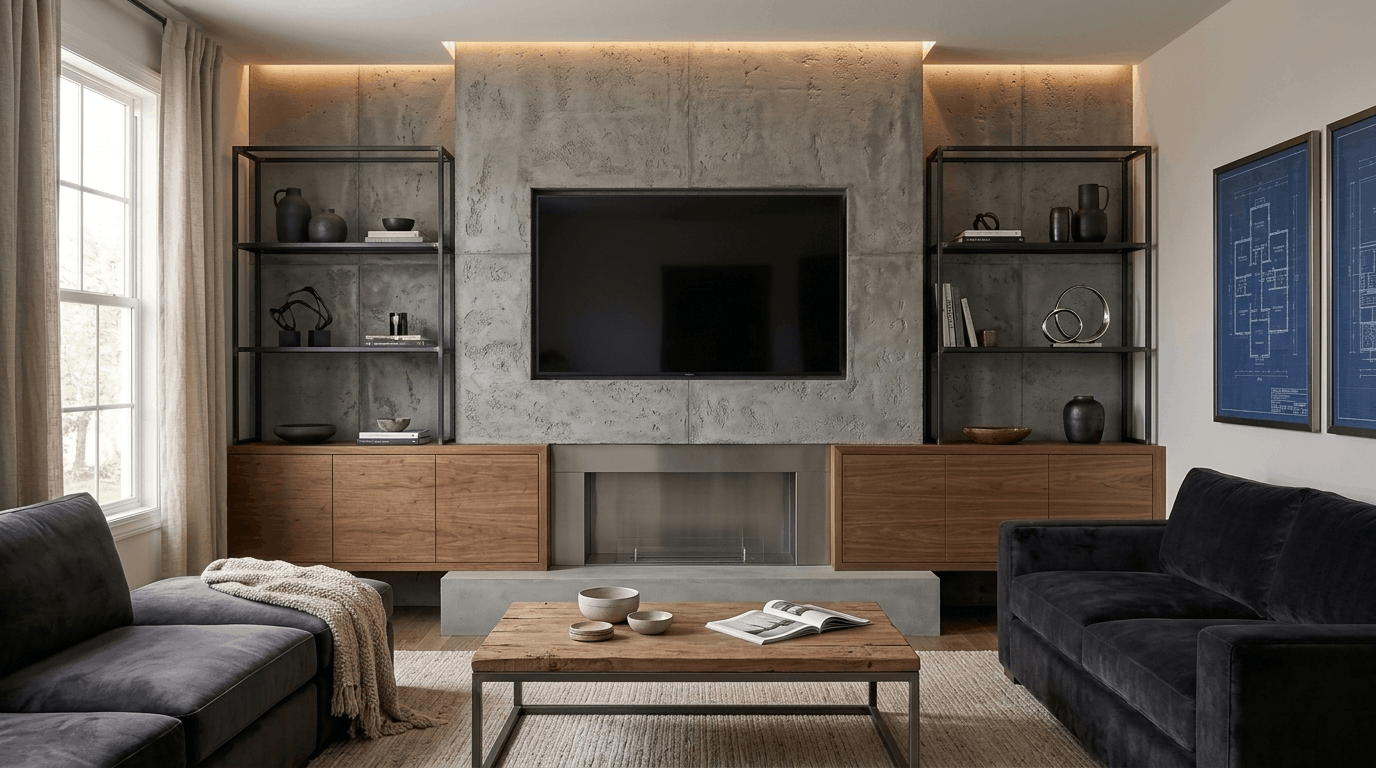
Concrete-effect panels add modern industrial character and a textured, neutral backdrop for the television, paired well with floating timber cabinets.
- Key feature: Textured concrete-effect panels with timber and black metal accents
- Cost: Mid-range ($800–$2,000)
- Best for: Loft-style, industrial, or minimalist contemporary interiors
5. Fluted Wood Media Wall
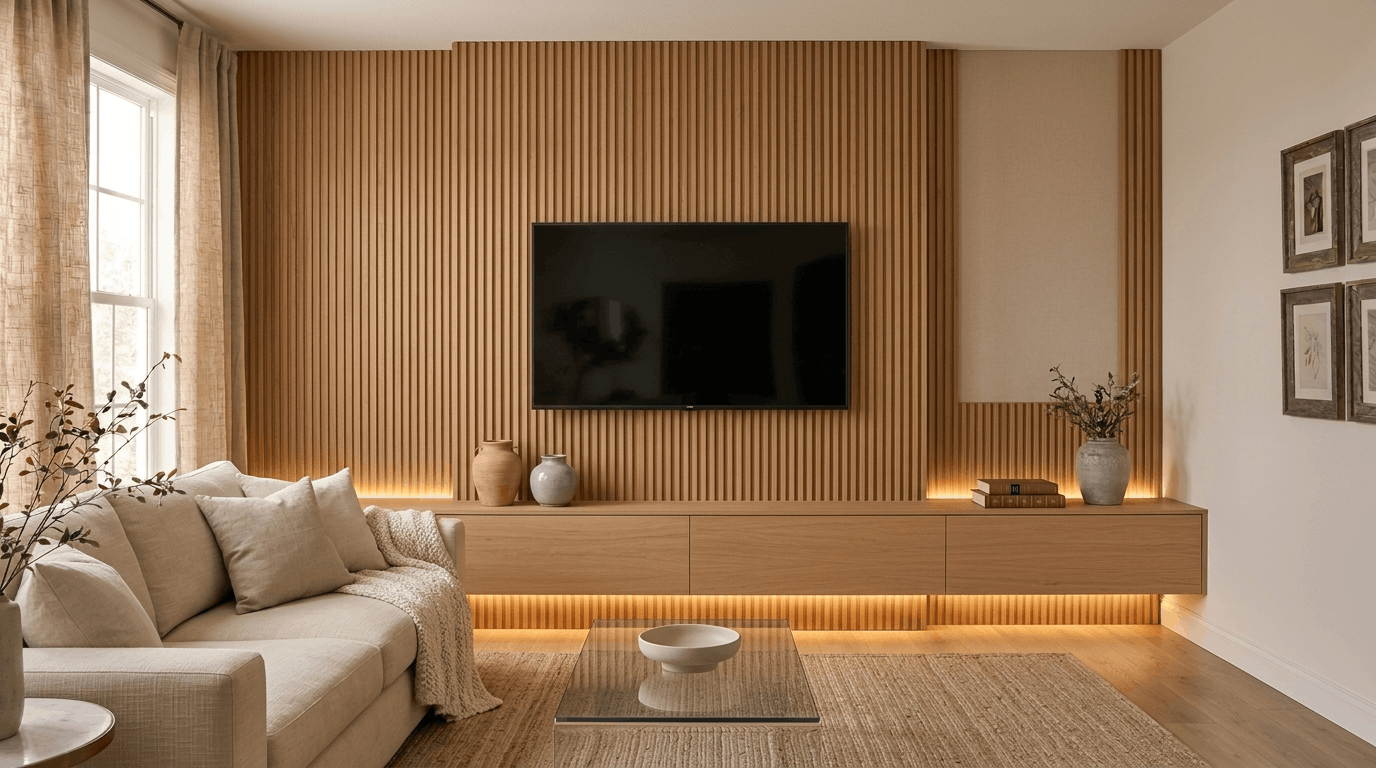
Fluted wood panels add warmth, texture, and architectural interest while softening the appearance of a large television.
- Key feature: Vertical fluted wood panels with concealed lighting
- Cost: Mid-range to premium ($1,500–$4,500)
- Best for: Modern and transitional living rooms wanting texture without heavy pattern
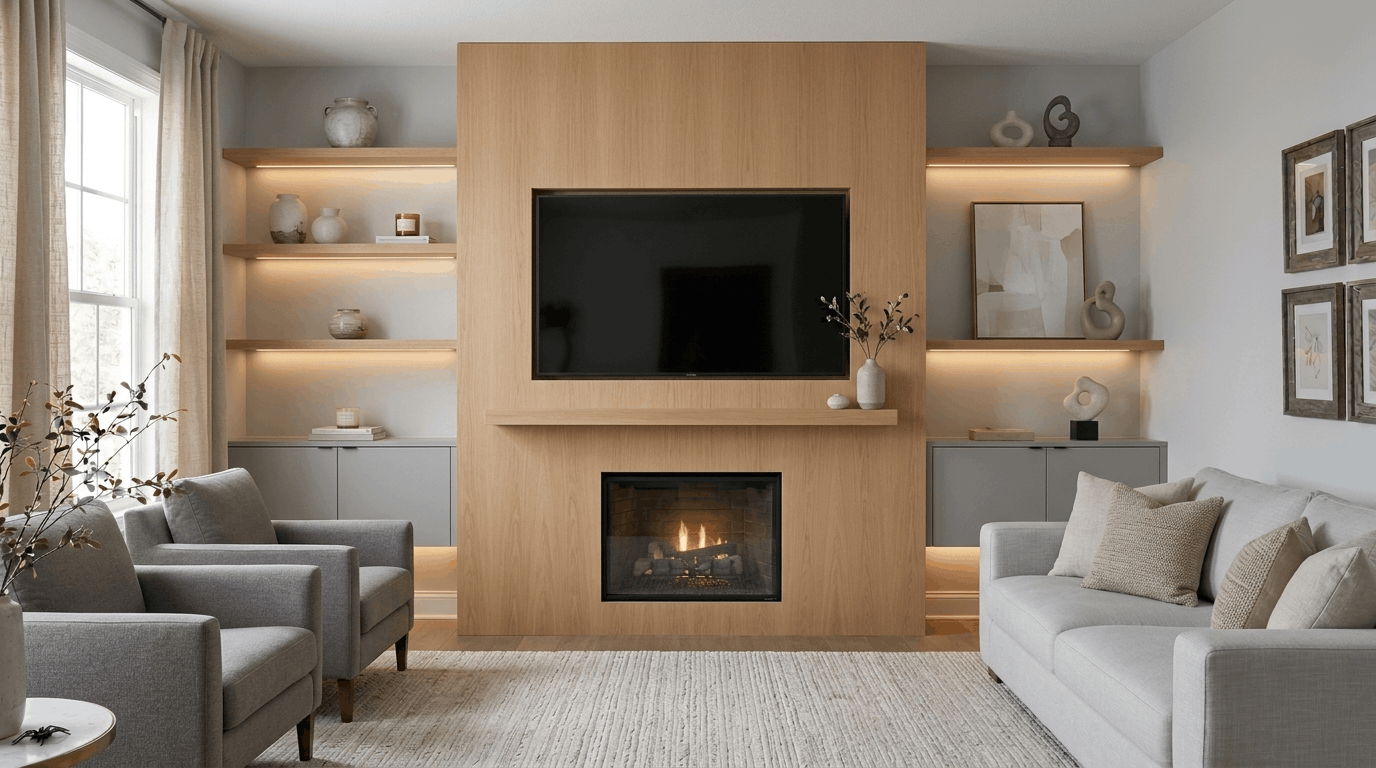
6. TV Above an Electric Fireplace
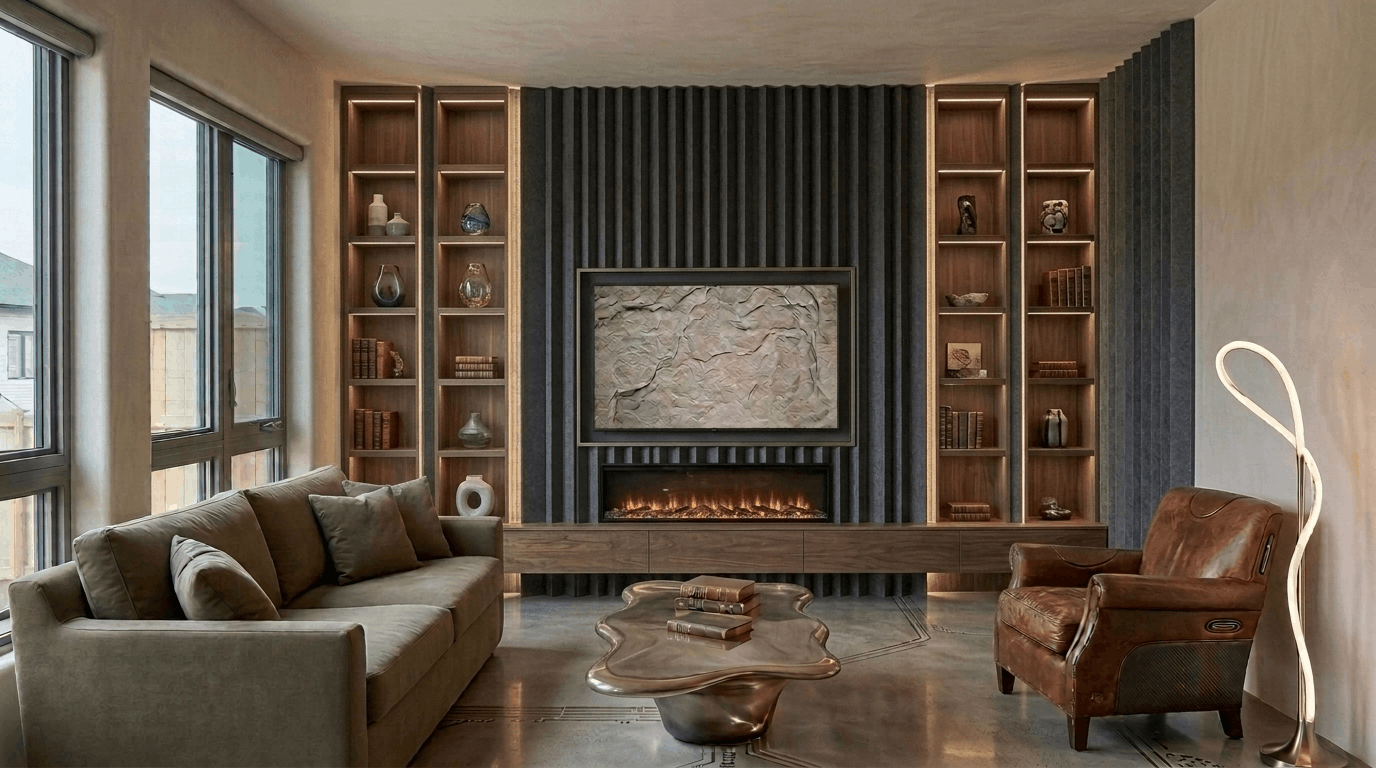
A slim electric fireplace positioned beneath the television creates a clean, symmetrical, hotel-inspired focal point.
- Key feature: Television and linear electric fireplace arranged in a balanced layout
- Cost: Mid-range to premium ($1,500–$4,500)
- Best for: Living rooms with a clear seating wall wanting a hotel-style focal point
7. Stone Fireplace Media Wall
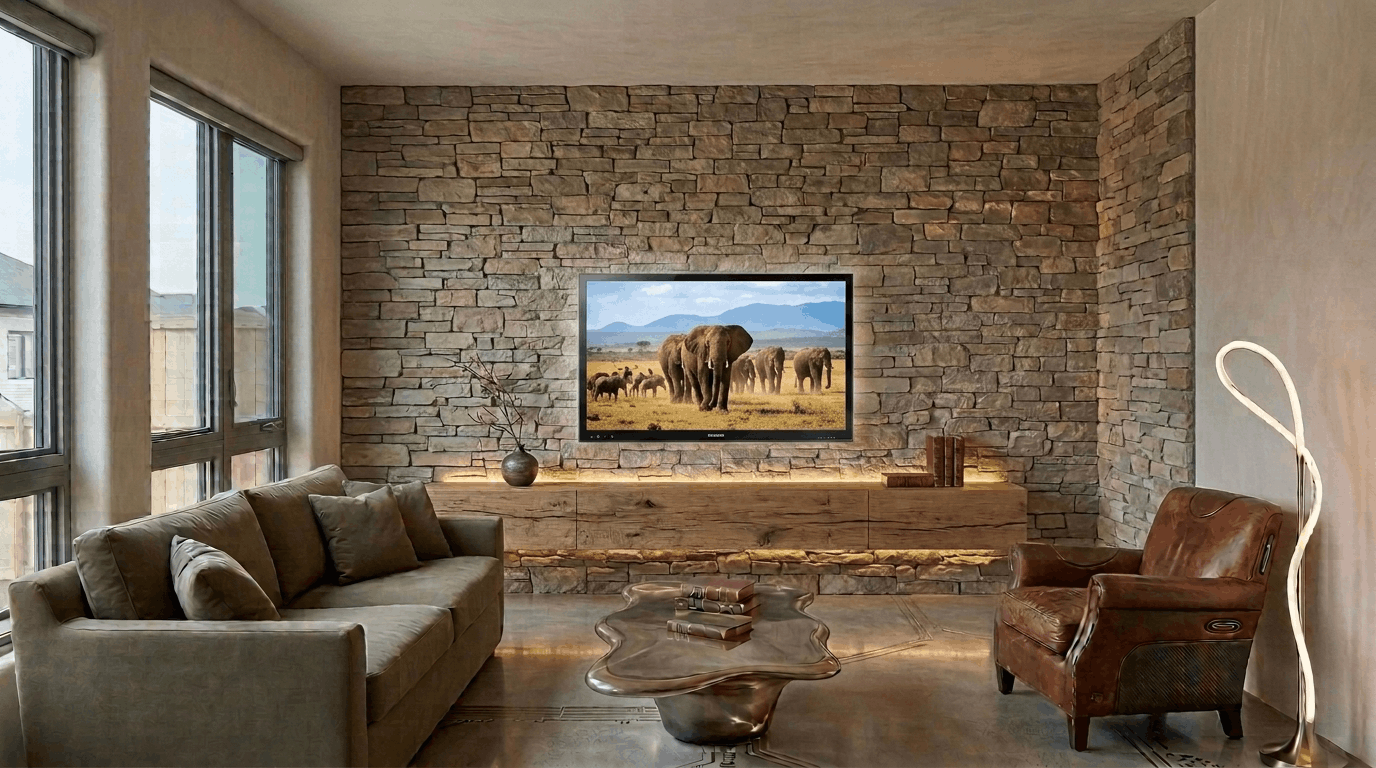
Natural stone gives a media wall a timeless, high-end appearance while helping the television blend into its surroundings.
- Key feature: Textured stone surface paired with warm timber cabinetry
- Cost: Premium ($4,000–$10,000+)
- Best for: Larger living rooms going for a high-end, classic look
8. Marble Fireplace Feature Wall
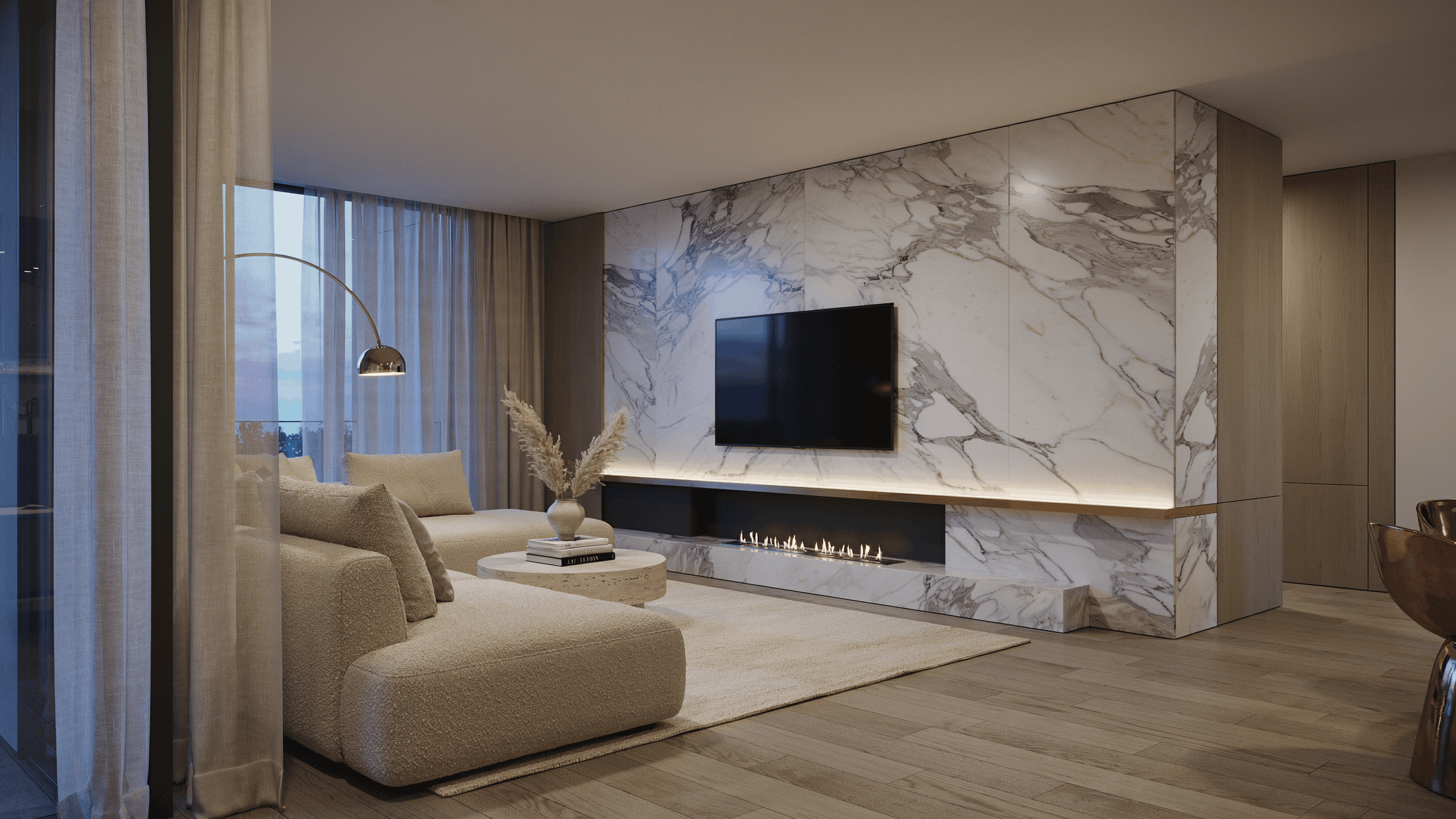
Large-format marble or marble-look porcelain slabs create a unified media wall with subtle veining and refinement.
- Key feature: Large marble-effect slabs with subtle veining and minimal joints
- Cost: Premium ($4,000–$10,000+)
- Best for: Formal or luxury living rooms wanting a statement fireplace wall
9. Linear Fireplace With Floating Shelves
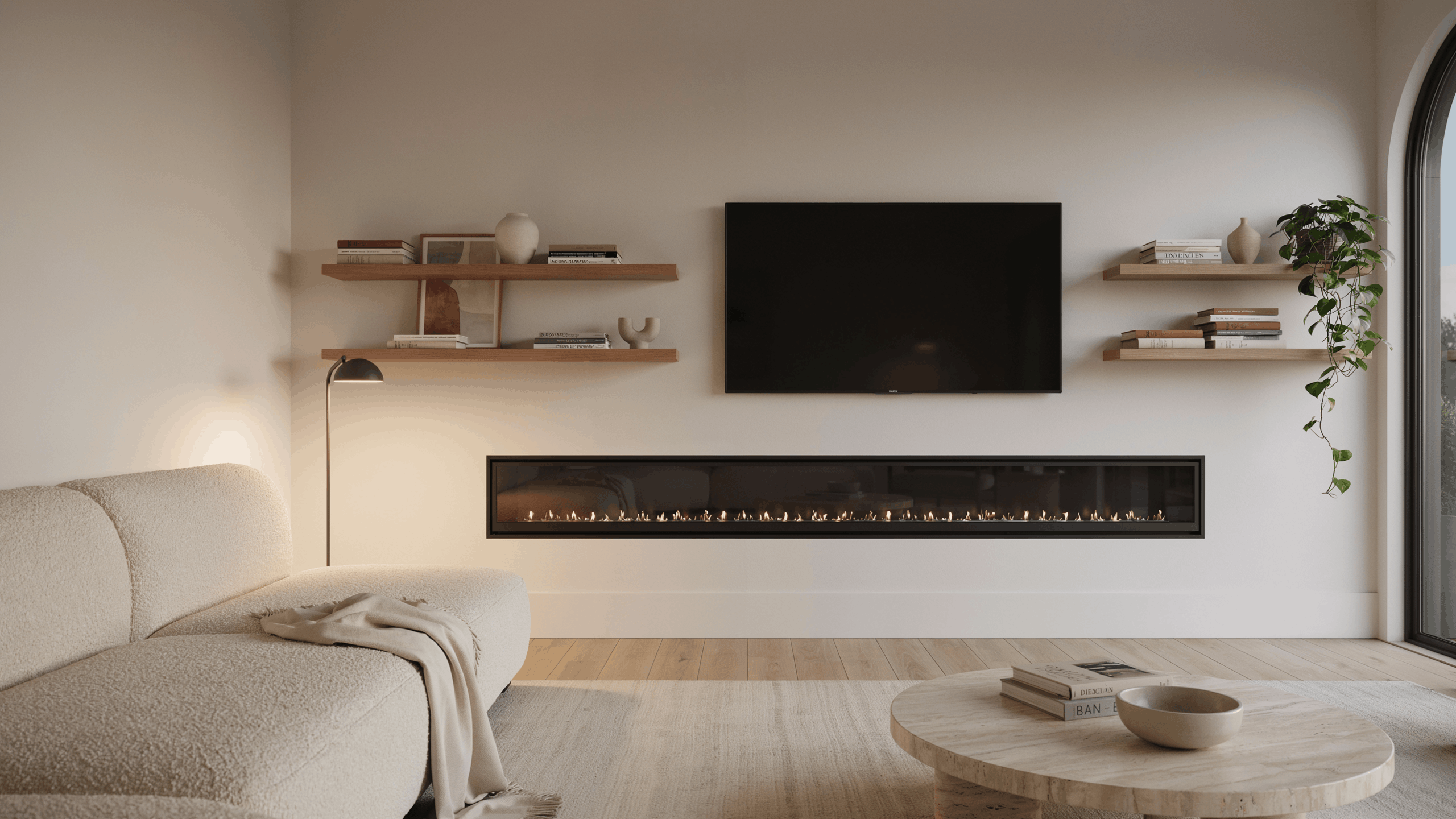
A long horizontal fireplace beneath the television, framed by floating shelves, creates a balanced arrangement that can make the room appear wider.
- Key feature: Linear fireplace framed by balanced floating shelves
- Cost: Mid-range to premium ($1,500–$4,500)
- Best for: Wider walls where you want display space on both sides of the fire
10. Wood Slat Fireplace Media Wall
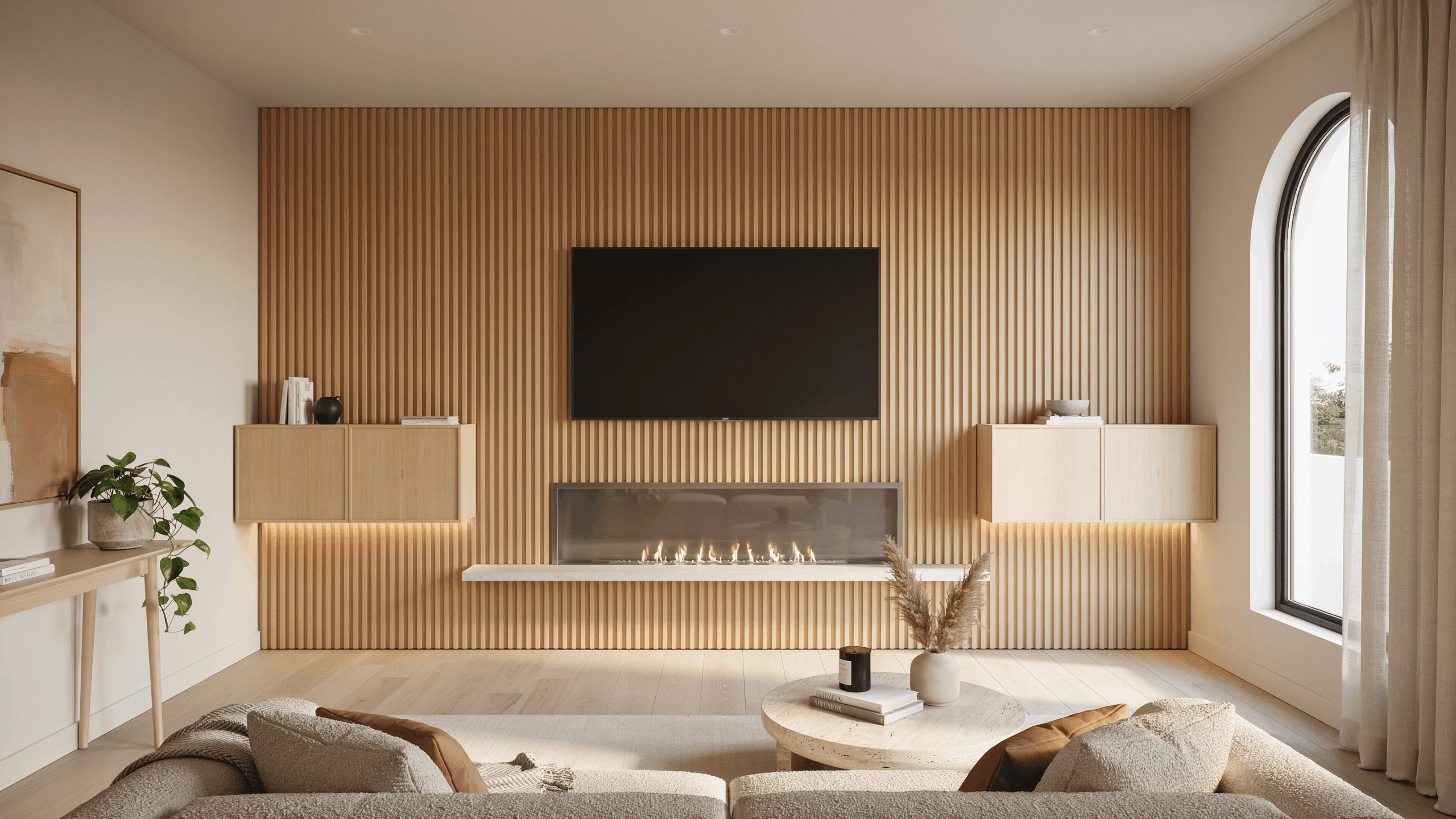
Vertical wood slats paired with a linear fireplace create a warm architectural focal point that softens the television’s look and makes the ceiling feel taller.
- Key feature: Vertical timber slats combined with a linear fireplace
- Cost: Mid-range to premium ($1,500–$4,500)
- Best for: Rooms with low ceilings that need a taller, warmer feel
11. Floor-to-Ceiling Built-In Cabinets
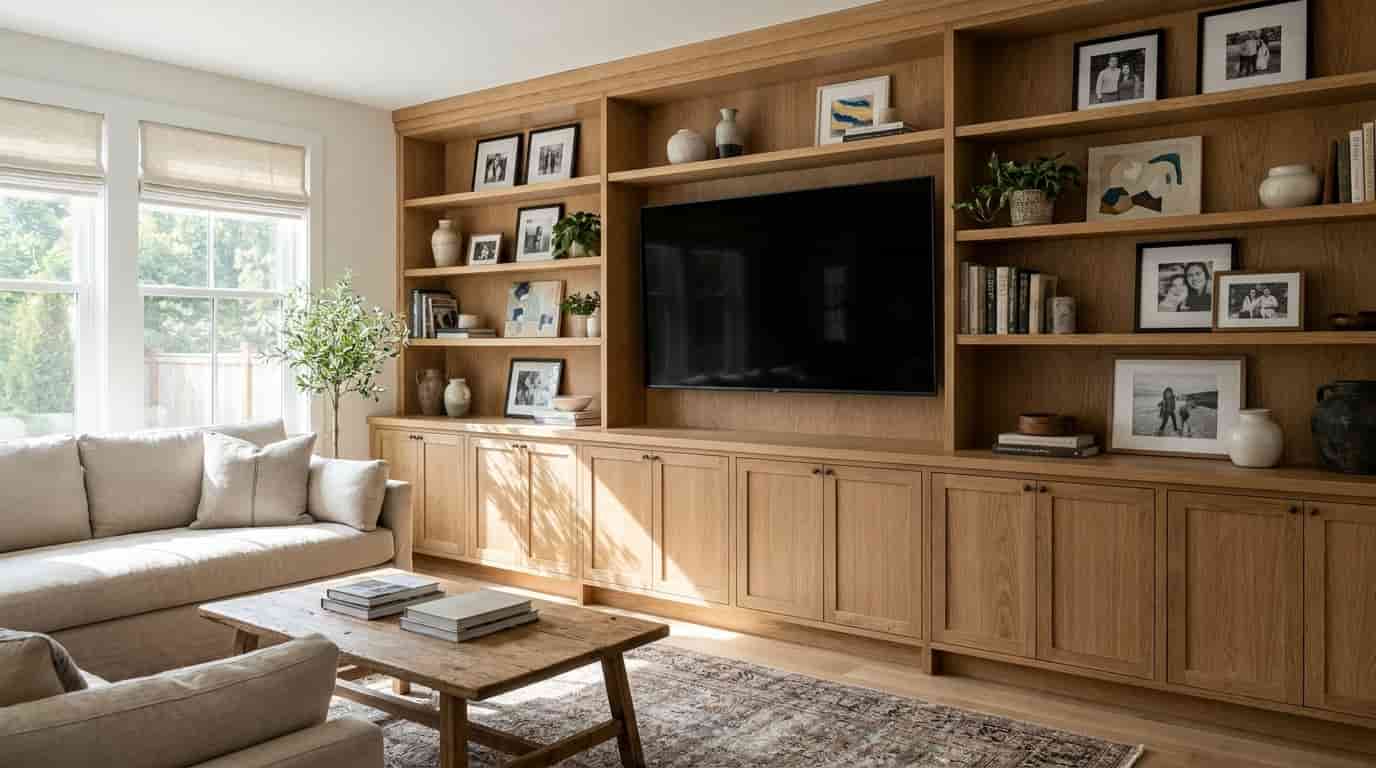
Floor-to-ceiling cabinetry turns a television wall into a strong architectural feature while maximizing storage, with enclosed lower cabinets hiding electronics and open upper shelves for display.
- Key feature: Full-height cabinetry combining concealed storage and open display shelves
- Cost: Premium ($4,000–$10,000+)
- Best for: Larger living rooms with high ceilings that need serious storage
12. Symmetrical Entertainment Wall
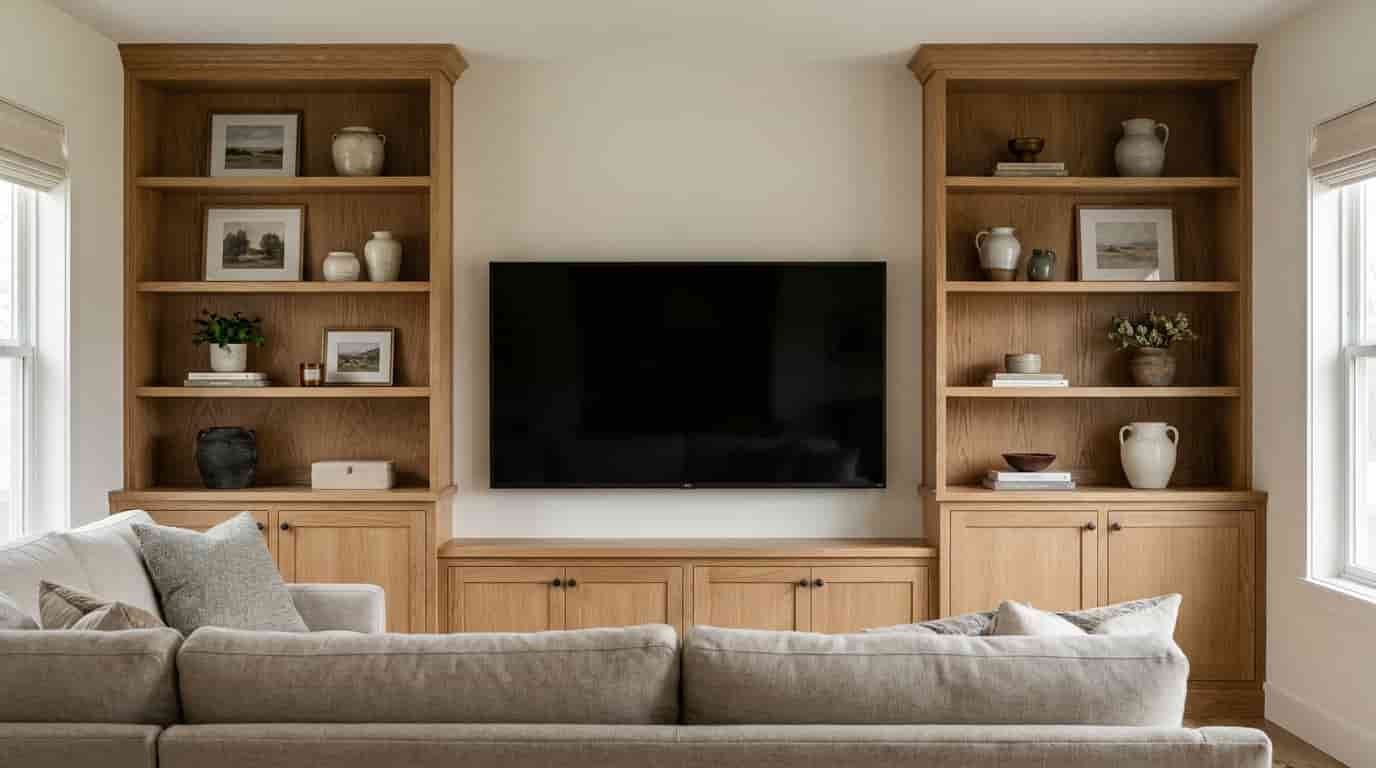
A symmetrical entertainment wall positions the television at the center with matching shelving or cabinetry on each side for visual balance.
- Key feature: Centered television framed by matching storage on both sides
- Cost: Mid-range to premium ($1,500–$4,500)
- Best for: Traditional or formal living rooms with a clear central wall
13. Open Shelving Media Wall
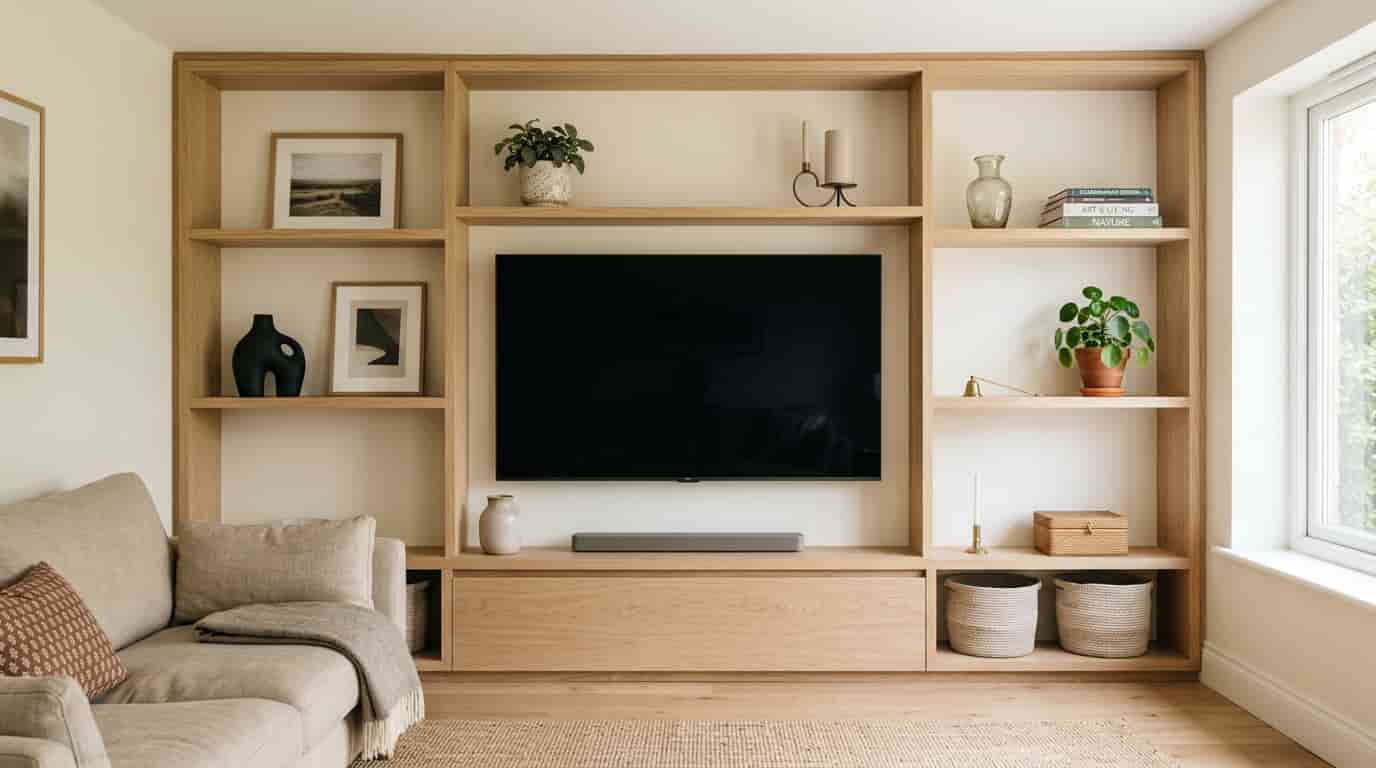
Open shelving gives a media wall a light, personal look, with room for ceramics, framed artwork, candles, and plants.
- Key feature: Lightly styled open shelves with varied decorative objects
- Cost: Budget-friendly to mid-range ($300–$1,200)
- Best for: Anyone who wants to display a personal collection instead of hiding everything away
14. Hidden Storage Media Wall
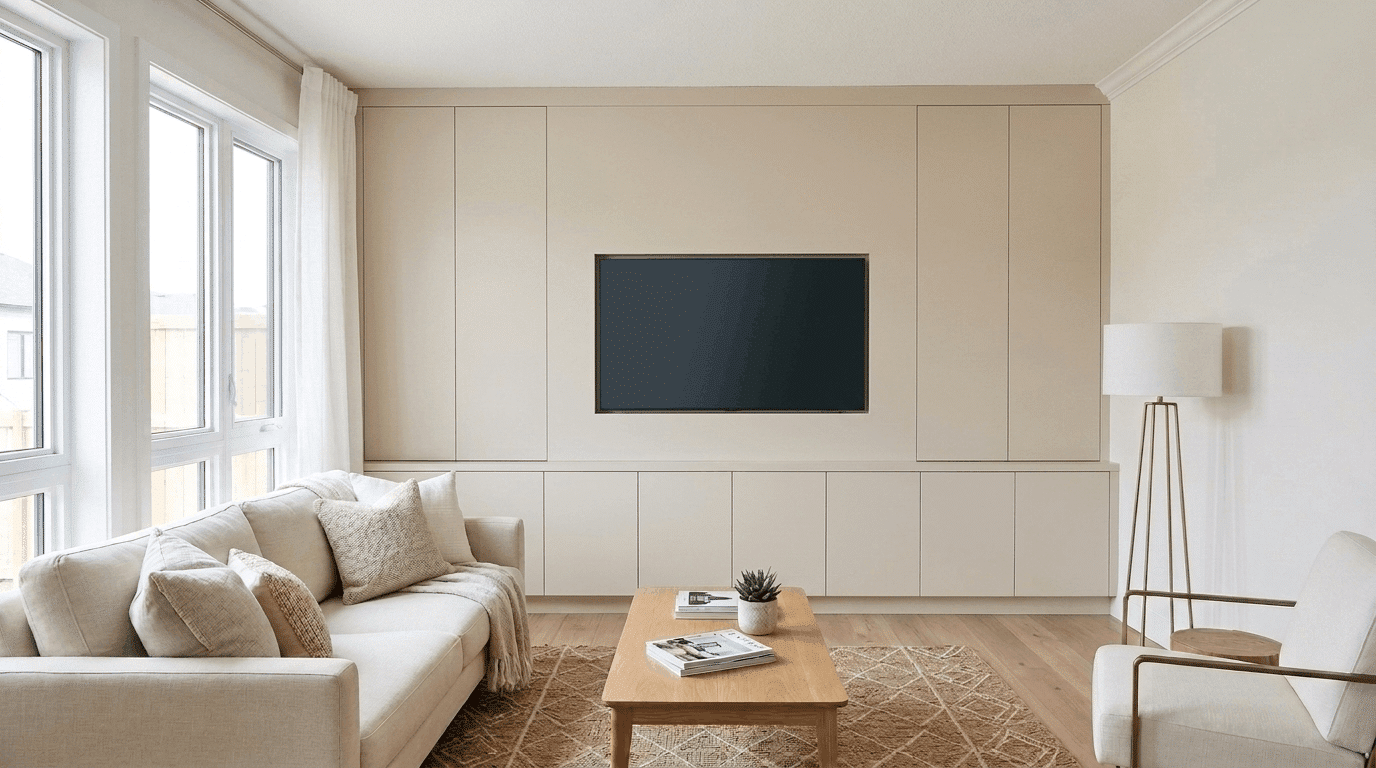
Handleless cabinets conceal gaming consoles, routers, speakers, and everyday accessories, helping the media wall stay clean-looking.
- Key feature: Handleless cabinets that conceal electronics and accessories
- Cost: Mid-range to premium ($1,500–$4,500)
- Best for: Households with gaming consoles, routers, or clutter to hide
15. Library Style Media Wall
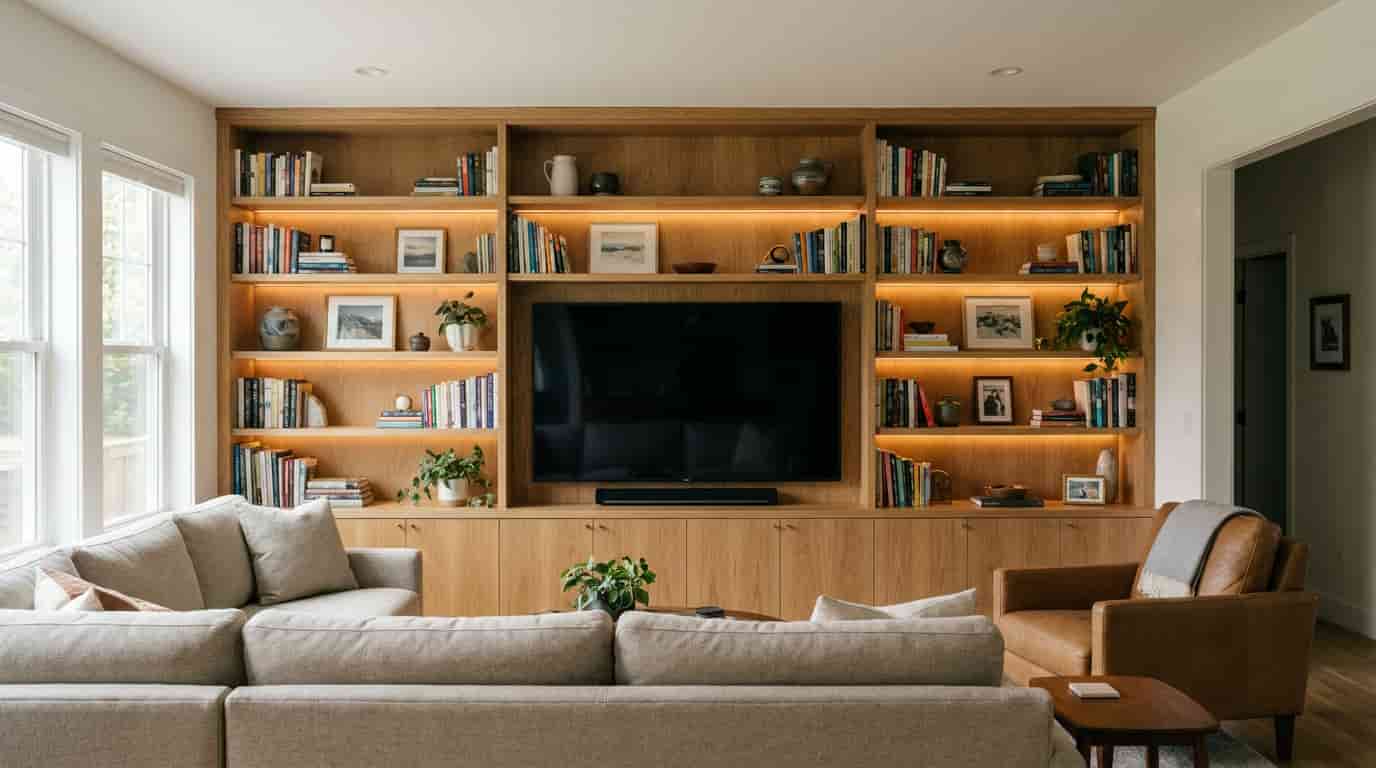
A library-style media wall surrounds the television with floor-to-ceiling shelving, creating generous storage and a sophisticated focal point.
- Key feature: Floor-to-ceiling bookshelves arranged around the television
- Cost: Mid-range to premium ($1,500–$4,500)
- Best for: Larger living rooms, home libraries, or multifunctional spaces
16. Floating TV Unit
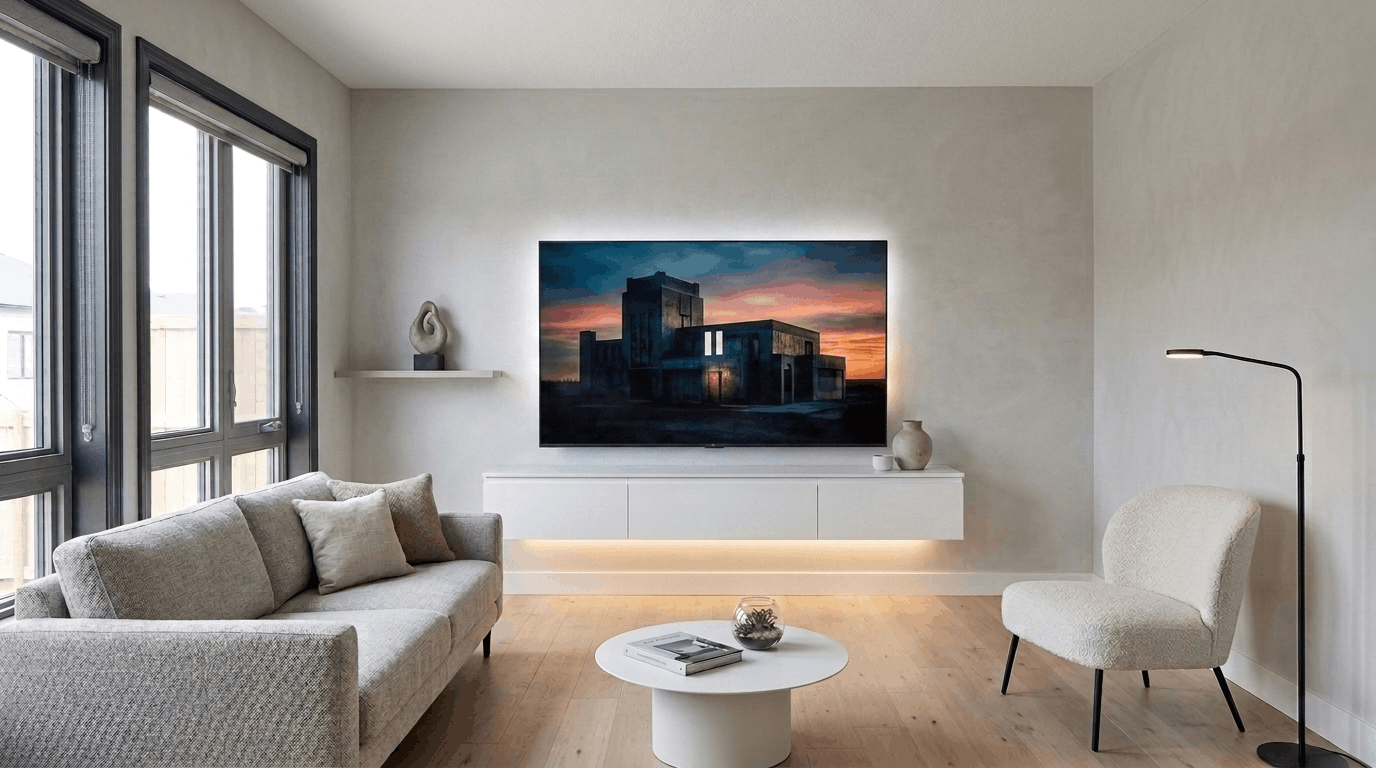
A floating TV unit keeps the floor visible, helping a small living room feel open while providing concealed storage for media devices.
- Key feature: Wall-mounted cabinetry that preserves visible floor space
- Cost: Budget-friendly to mid-range ($300–$1,200)
- Best for: Small living rooms that need to feel open and uncluttered
17. Corner Media Wall
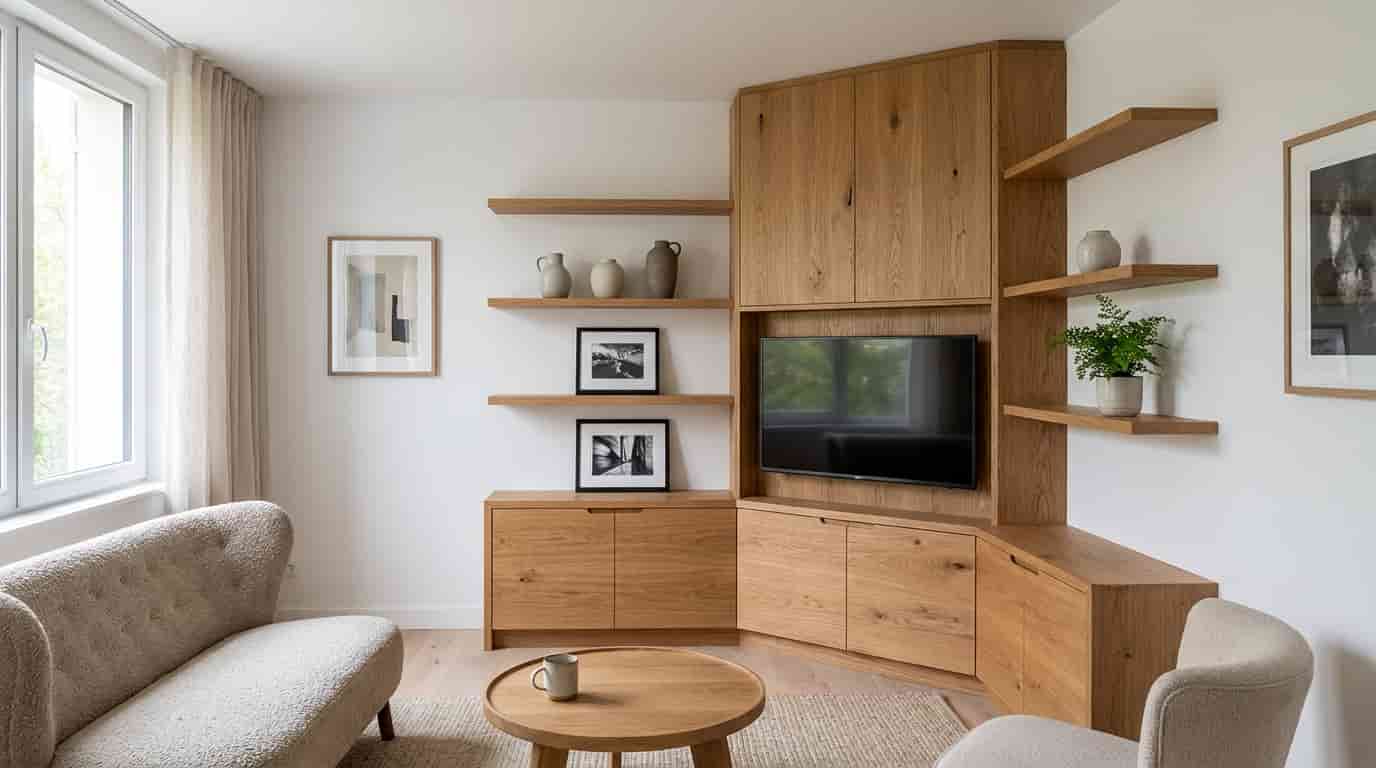
A custom corner media wall turns overlooked space into a practical entertainment area while freeing up the main walls for seating or artwork.
- Key feature: Angled cabinetry designed to use an unused corner
- Cost: Mid-range to premium ($1,500–$4,500)
- Best for: Apartments and smaller homes with an awkward, unused corner
18. Slim Built-In Design
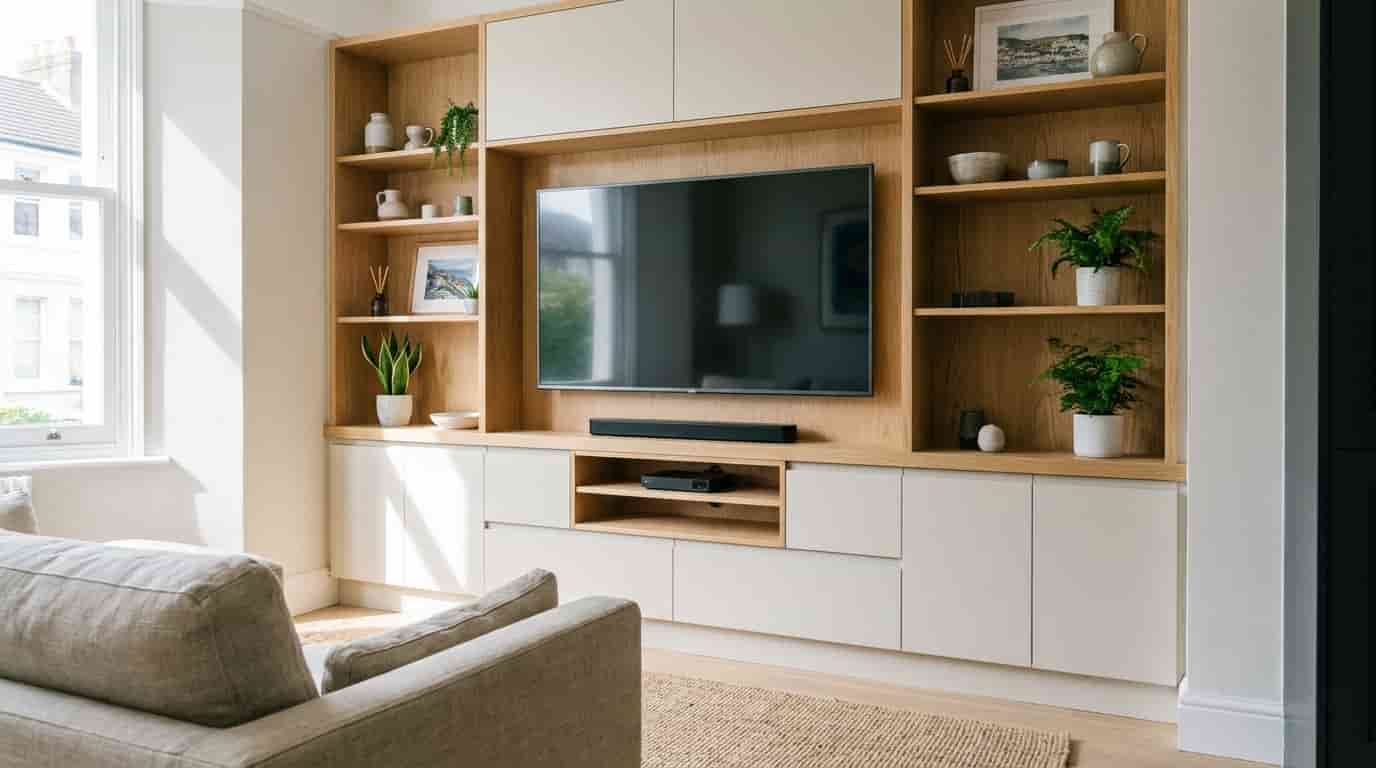
A slim built-in media wall uses shallow cabinetry and recessed shelving to provide storage without taking up valuable floor space.
- Key feature: Shallow cabinetry with space-saving recessed shelves
- Cost: Mid-range to premium ($1,500–$4,500)
- Best for: Rooms where floor space is tight but you still want built-in storage
19. Vertical Storage Media Wall
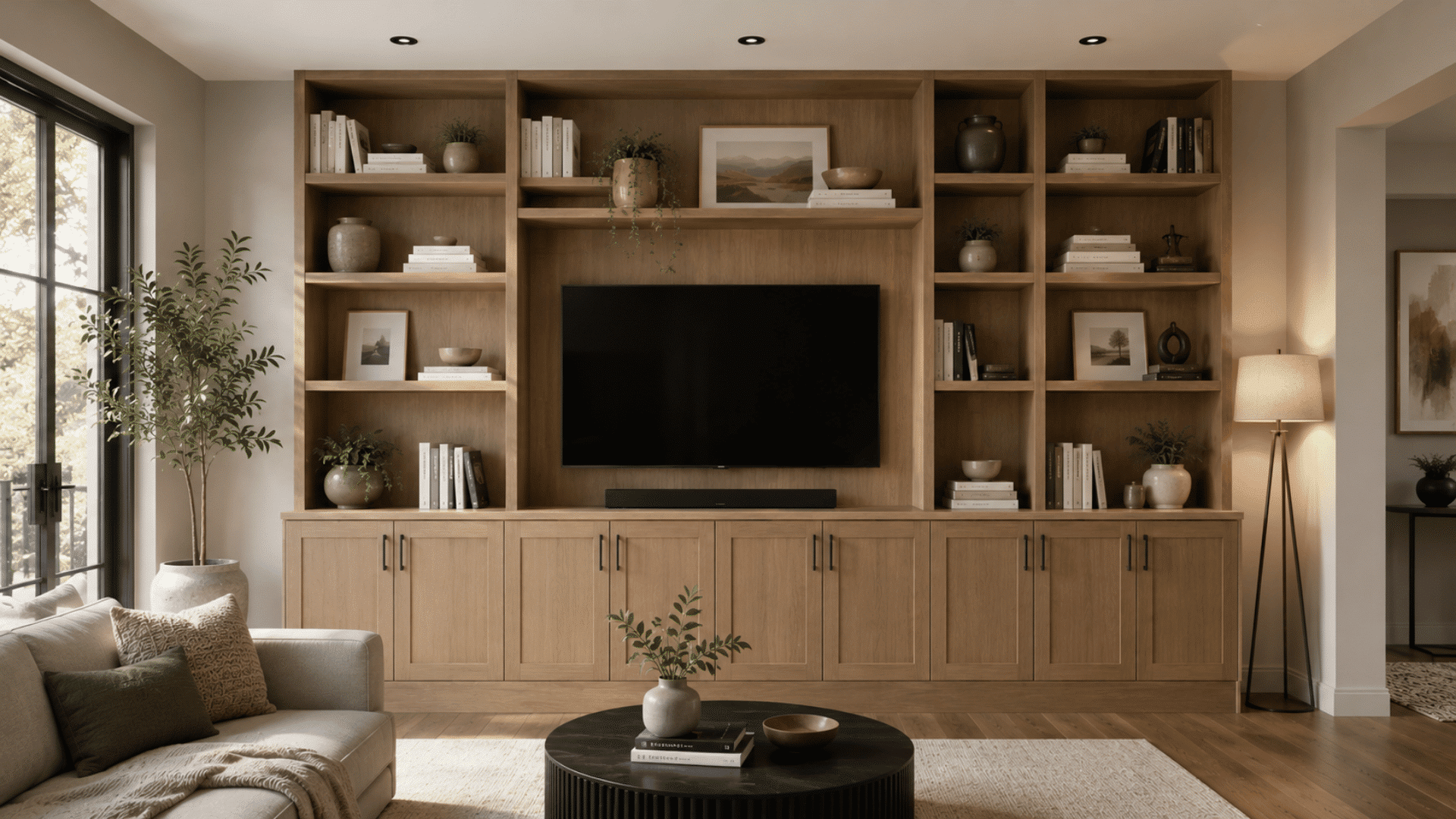
Floor-to-ceiling shelving uses available wall height to provide generous storage while making the ceiling appear taller.
- Key feature: Full-height shelving with enclosed lower storage
- Cost: Mid-range to premium ($1,500–$4,500)
- Best for: Rooms with limited floor space but generous wall height
20. Space-Saving Apartment Media Wall
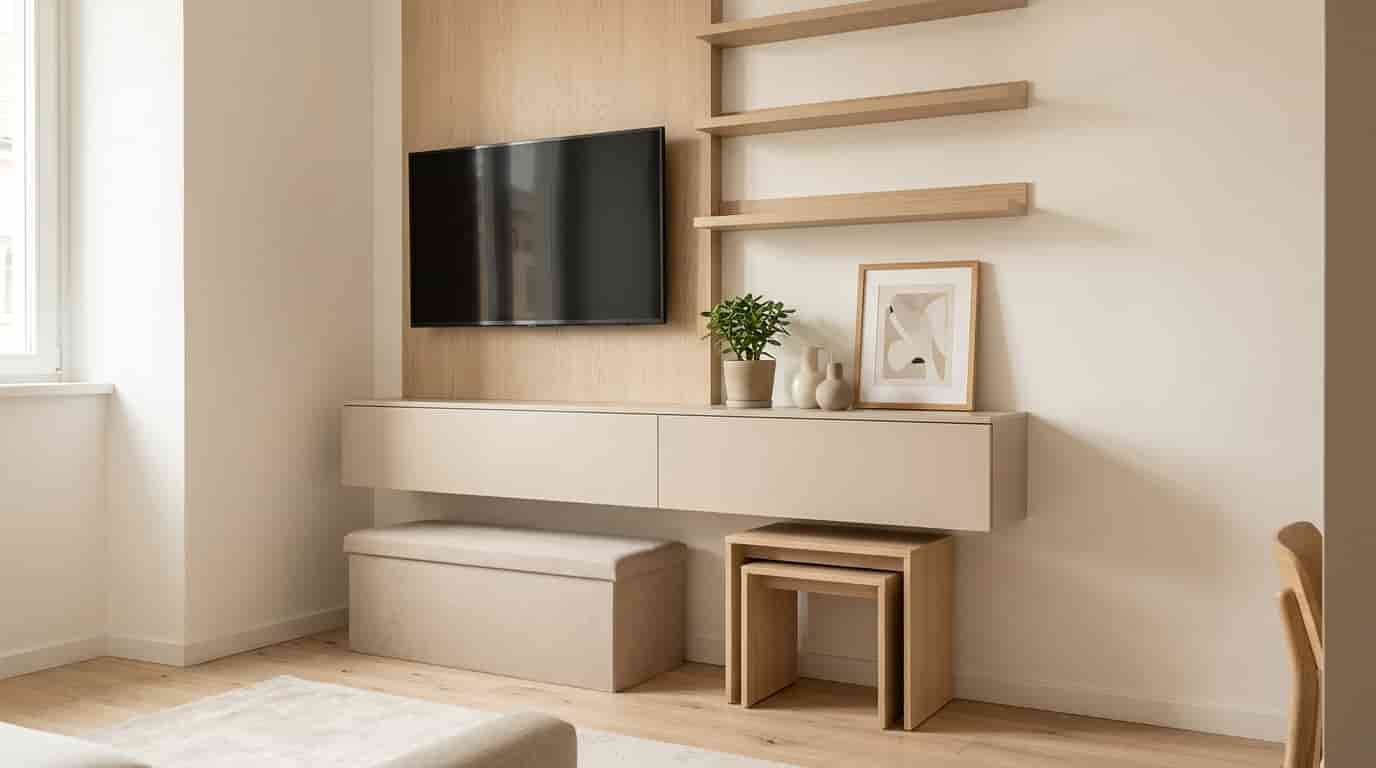
Compact floating cabinets, open shelving, and multifunctional furniture create an organized entertainment area without using excessive floor space.
- Key feature: Compact, flexible storage that preserves an airy layout
- Cost: Budget-friendly to mid-range ($300–$1,200)
- Best for: Small apartments that need flexible, multifunctional storage
21. Backlit Marble Media Wall
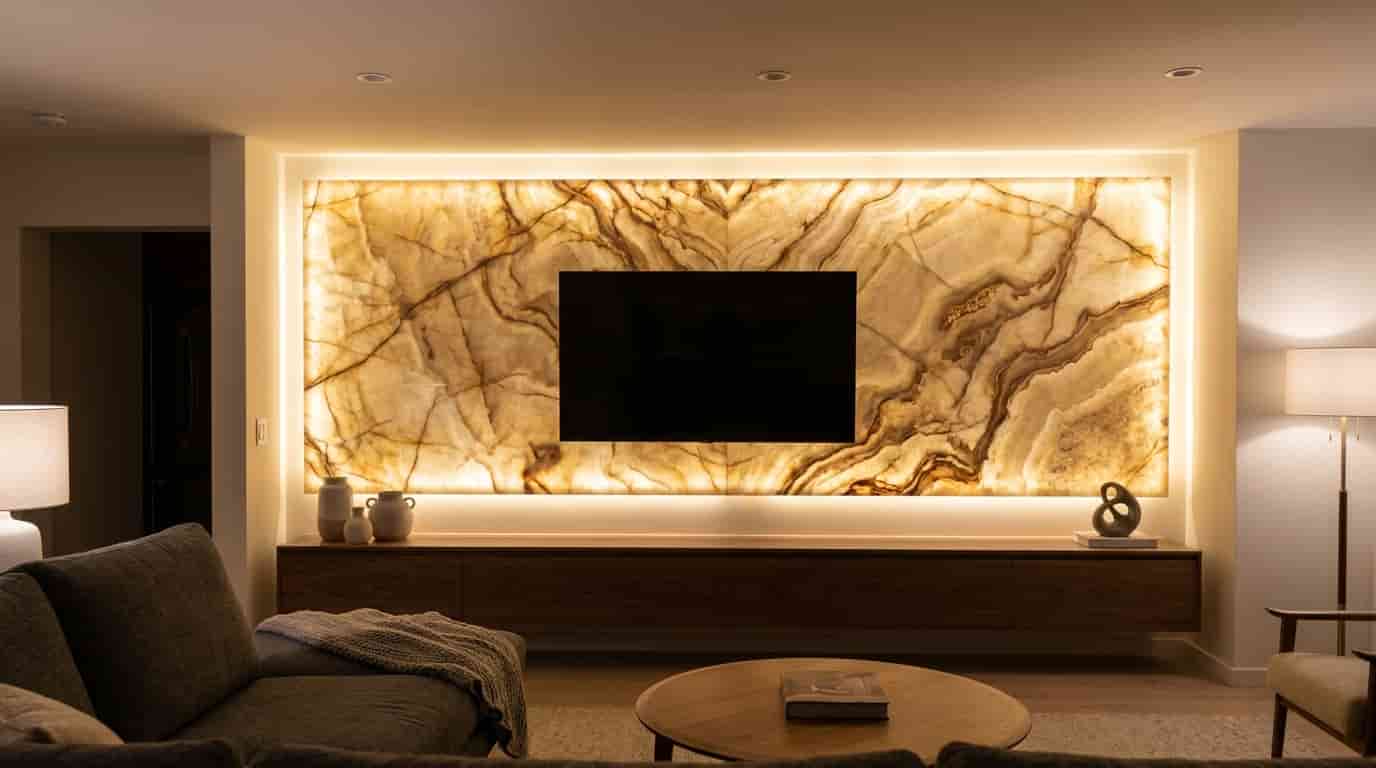
Backlit marble creates a refined focal point by using concealed LED lighting to highlight the stone’s natural veining.
- Key feature: Marble panels illuminated from behind to emphasize natural veining
- Cost: Premium ($4,000–$10,000+)
- Best for: Evening entertaining spaces where you want a dramatic lit feature
22. High-Gloss Entertainment Wall
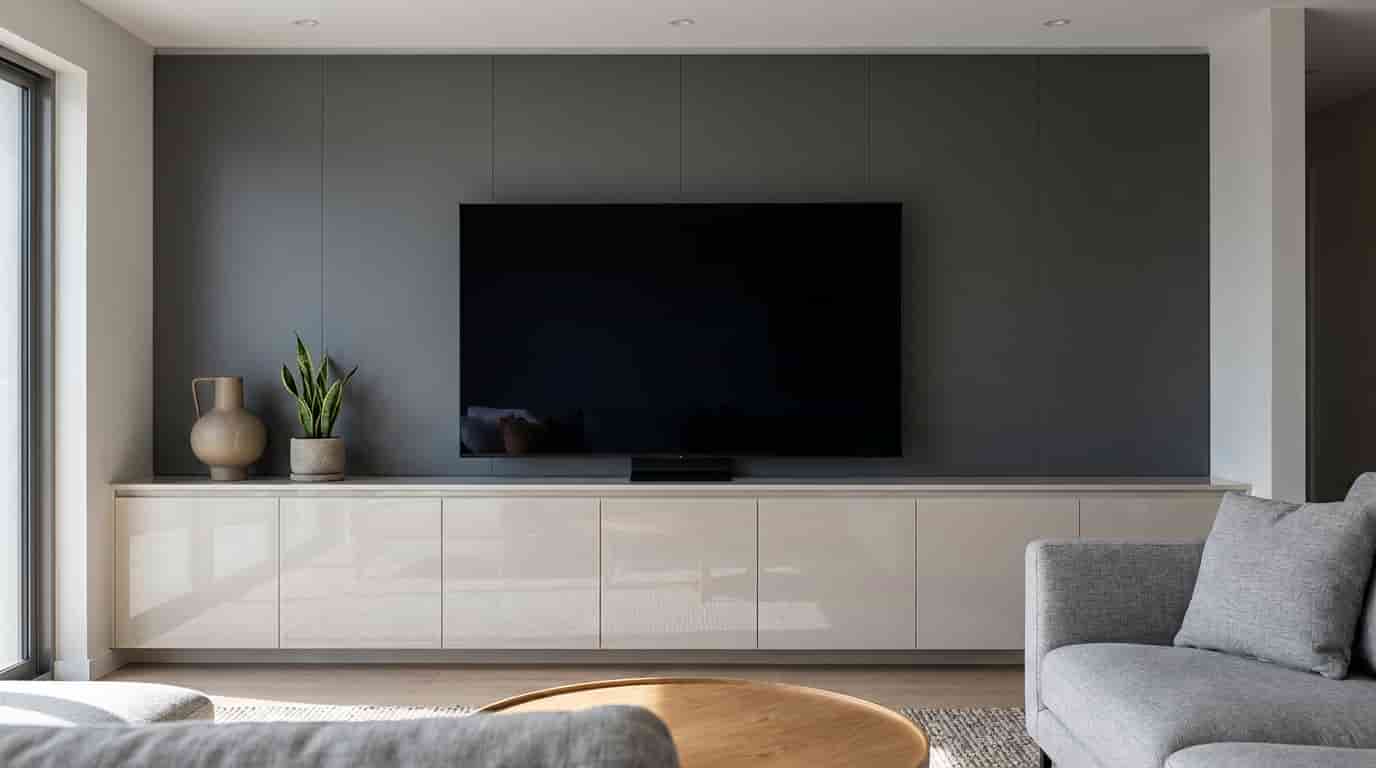
Gloss-finished cabinetry reflects natural and artificial light, giving the entertainment wall a sleek, contemporary appearance.
- Key feature: Reflective cabinetry contrasted with smooth matte wall panels
- Cost: Mid-range to premium ($1,500–$4,500)
- Best for: Modern interiors that want extra light bounced around the room
23. Floor-to-Ceiling Stone Panels
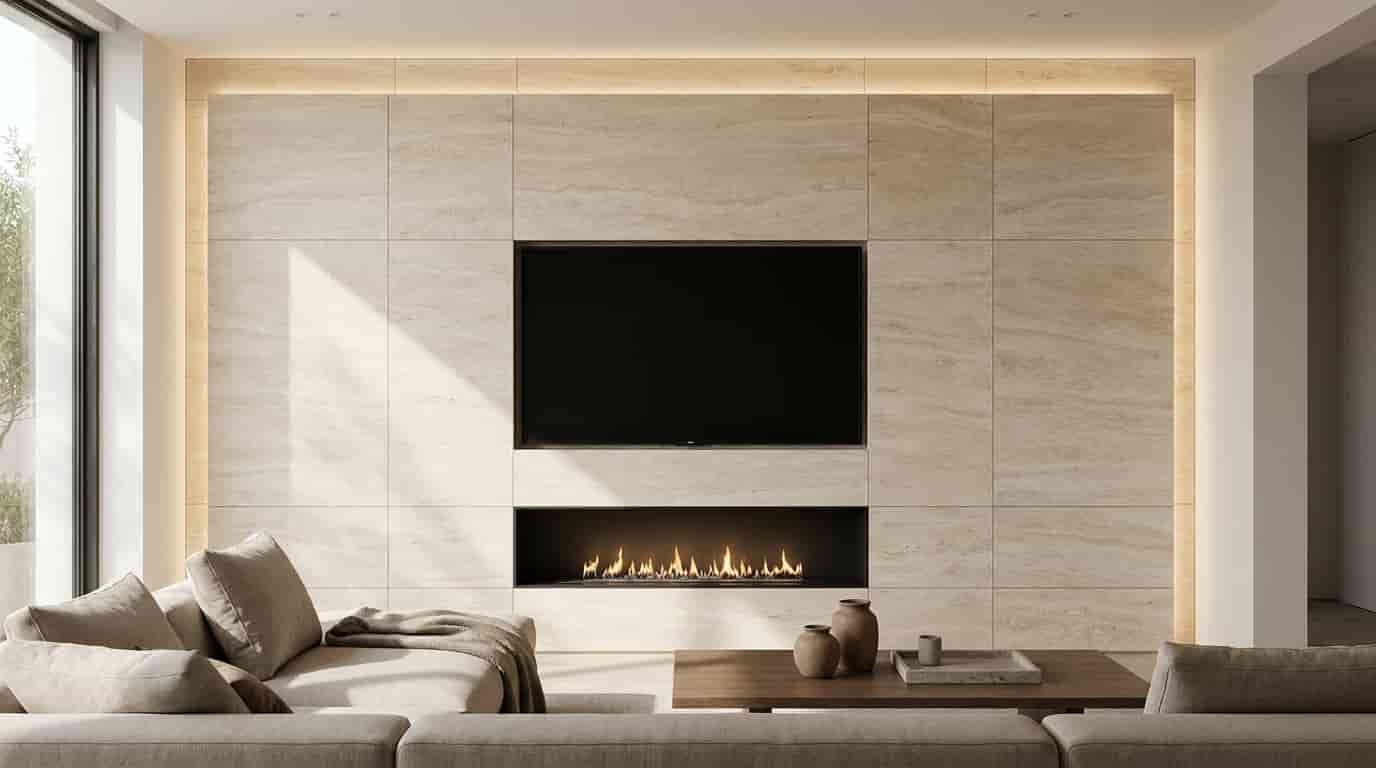
Large-format stone or porcelain panels create a continuous feature wall with minimal visible joints and natural texture.
- Key feature: Large-format panels with minimal joints and natural texture
- Cost: Premium ($4,000–$10,000+)
- Best for: Statement walls in larger, modern living rooms
24. LED Feature Media Wall
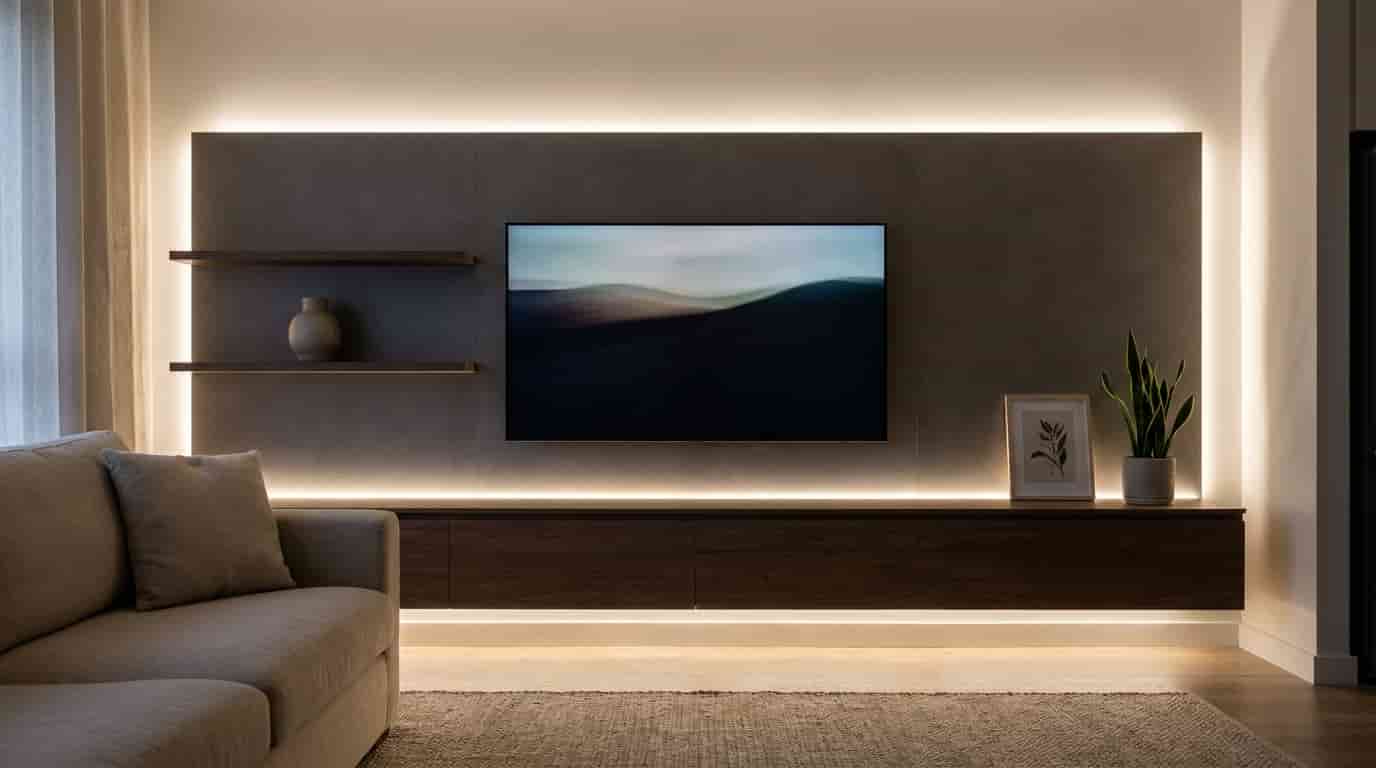
Integrated LED lighting adds depth and architectural interest to the entertainment area without dominating the space.
- Key feature: Concealed LED lighting behind layered wall elements
- Cost: Mid-range to premium ($1,500–$4,500)
- Best for: Movie and TV rooms where ambient lighting matters as much as the screen
25. Hotel-Inspired Luxury Design
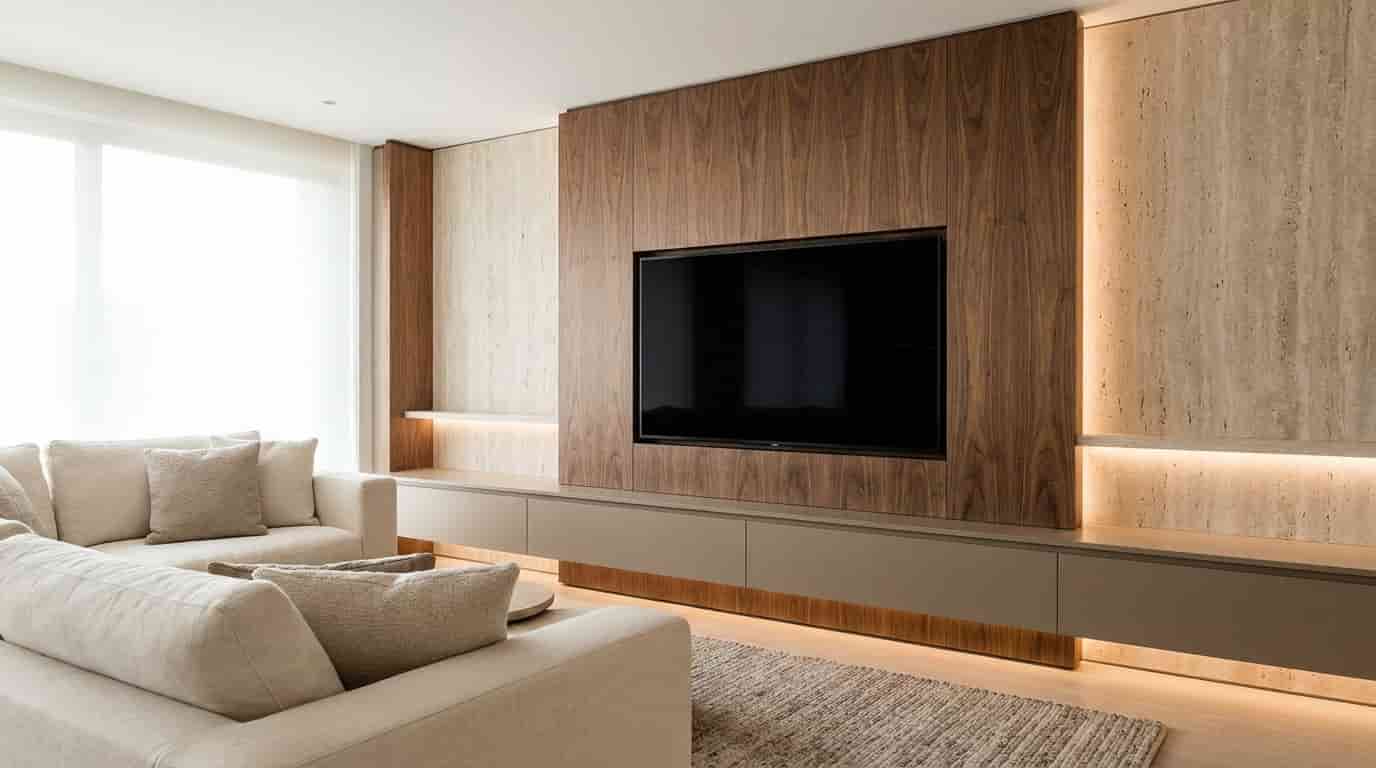
Wood veneer, stone finishes, concealed storage, and subtle lighting create a calm entertainment area inspired by luxury hotels.
- Key feature: Premium wood and stone finishes with concealed storage
- Cost: Premium ($4,000–$10,000+)
- Best for: Homeowners after a calm, high-end, hotel-suite feel
26. Shiplap Media Wall
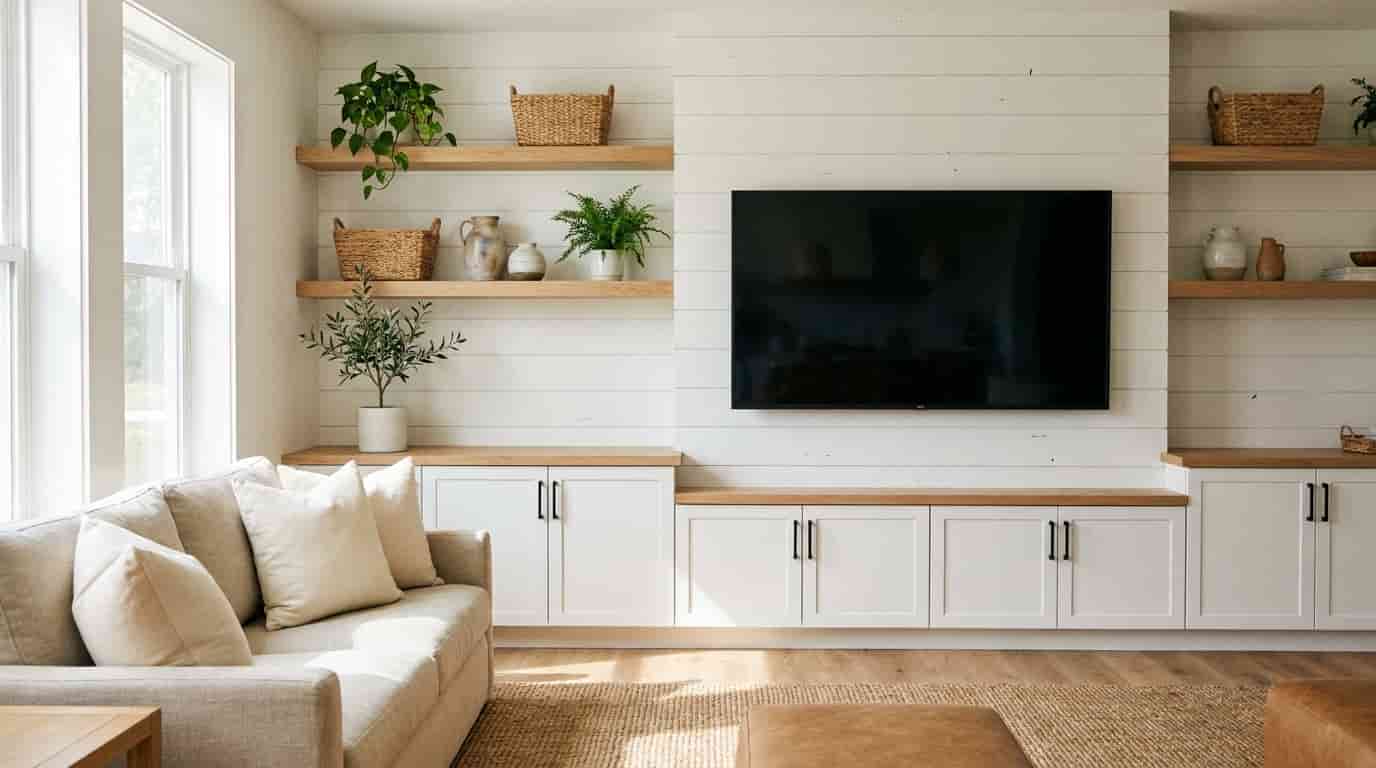
White-painted shiplap adds subtle texture while keeping the entertainment wall bright, airy, and classic farmhouse in feel.
- Key feature: White horizontal shiplap paired with natural wood accents
- Cost: Budget-friendly to mid-range ($300–$1,200)
- Best for: Farmhouse and coastal-style living rooms
27. Reclaimed Wood Feature Wall
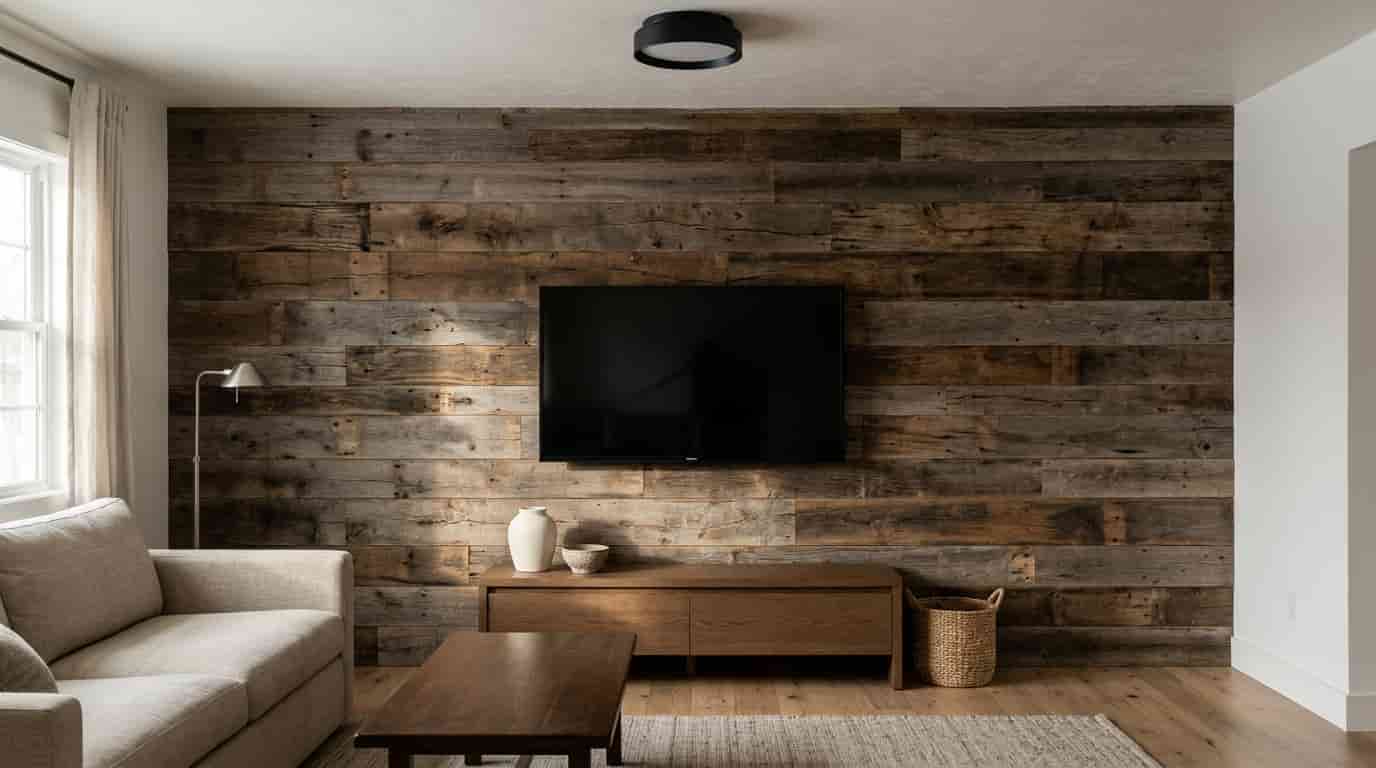
Reclaimed timber adds warmth through varied grain patterns, weathered textures, and natural color differences that new materials can’t replicate.
- Key feature: Unique reclaimed timber boards with naturally aged textures
- Cost: Mid-range to premium ($1,500–$4,500)
- Best for: Rustic or eclectic interiors that want a one-of-a-kind finish
28. Brick Fireplace Media Wall
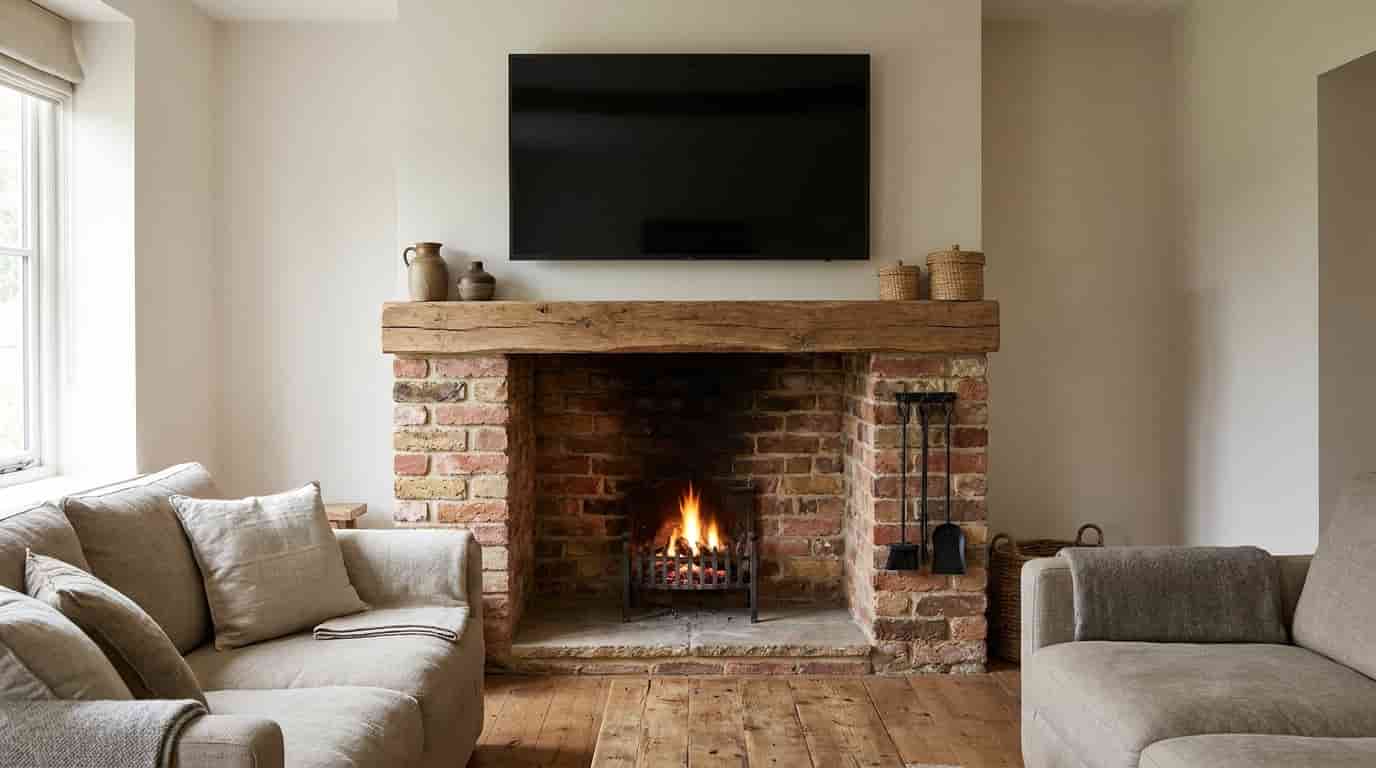
Exposed brick or realistic brick veneer creates a warm, textured backdrop around the television and fireplace.
- Key feature: Textured brick surrounding a fireplace and television
- Cost: Mid-range to premium ($1,500–$4,500)
- Best for: Cozy, rustic, or industrial living rooms
29. Rustic Floating Shelves
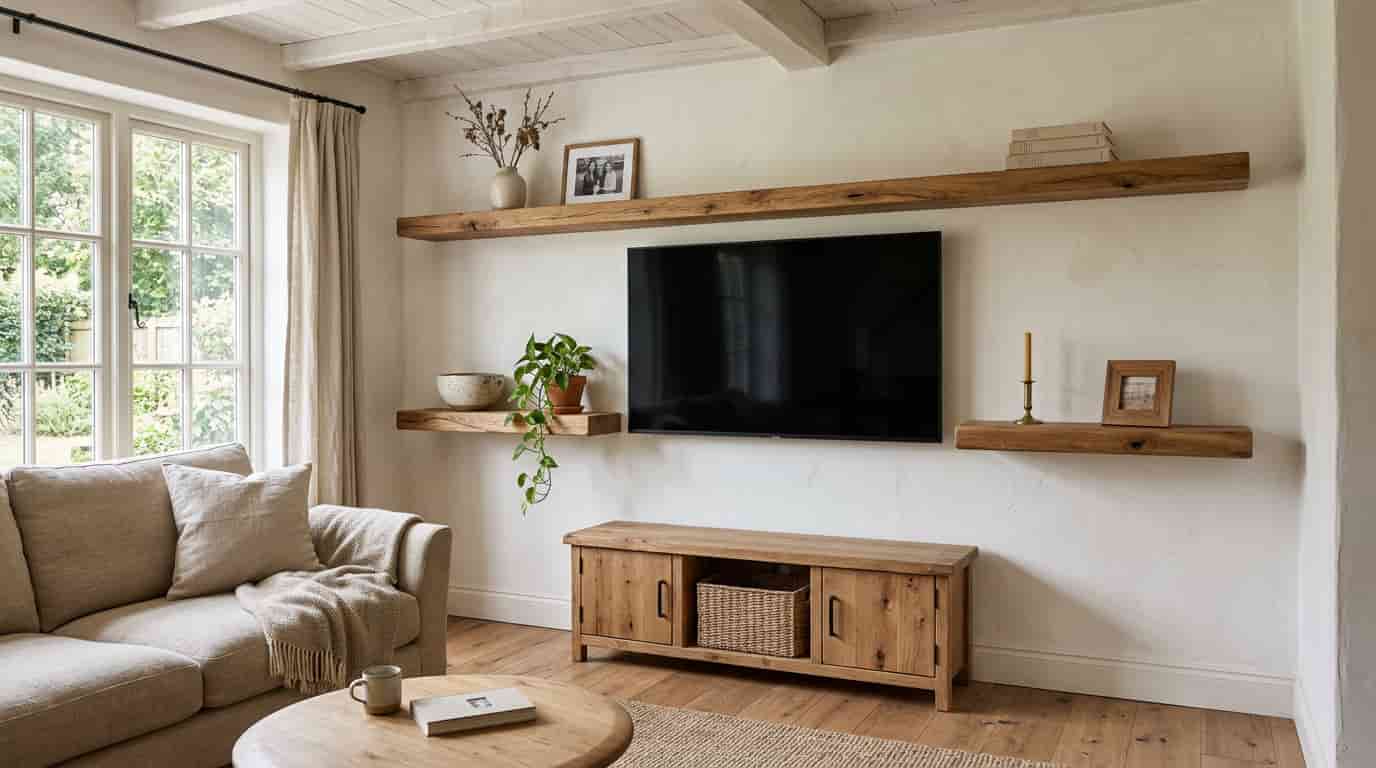
Thick wooden floating shelves soften the appearance of a wall-mounted television while providing practical, farmhouse-style display space.
- Key feature: Thick timber shelves with simple farmhouse styling
- Cost: Budget-friendly to mid-range ($300–$1,200)
- Best for: Farmhouse living rooms that want a softer, lived-in feel
30. Traditional Mantel Media Wall
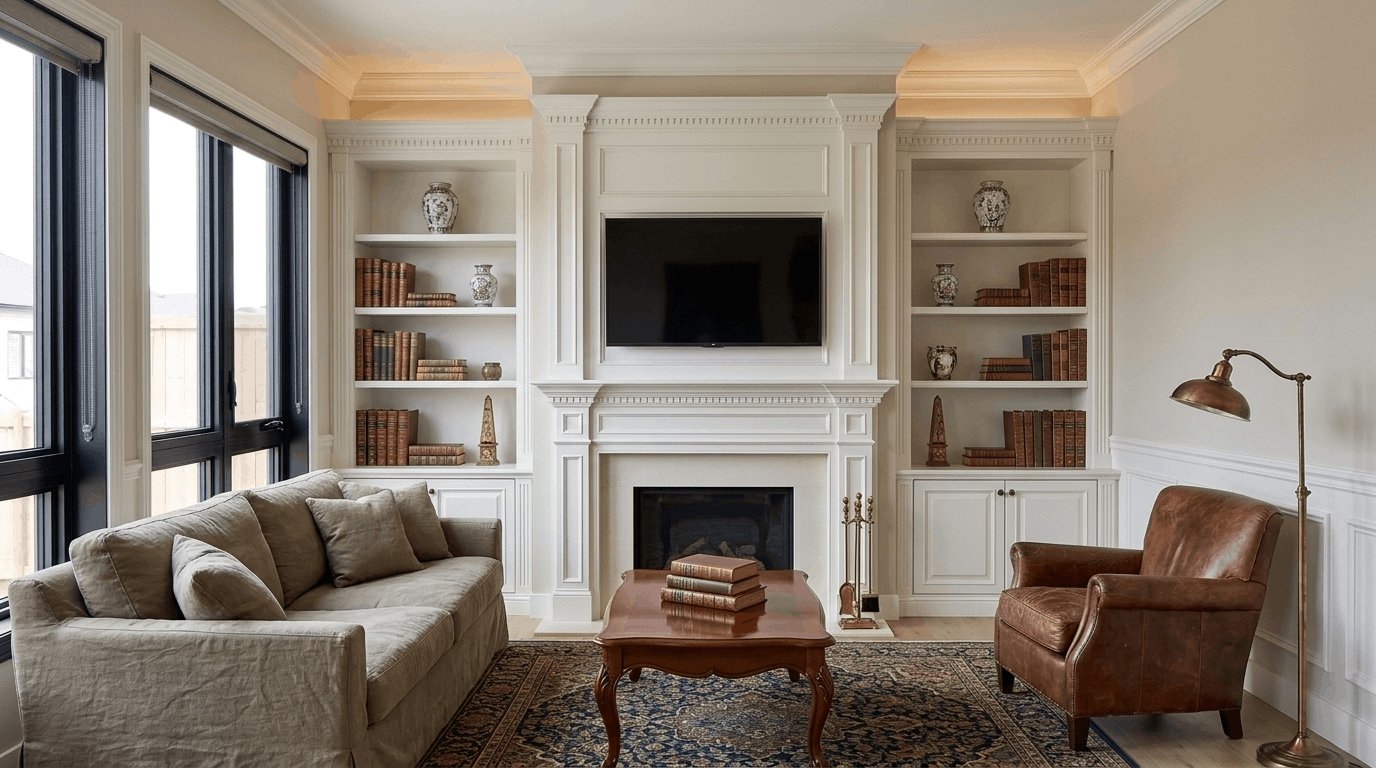
A classic mantel adds classic architectural character while framing the fireplace beneath the television.
- Key feature: Fireplace mantel framed by balanced built-in cabinetry
- Cost: Mid-range to premium ($1,500–$4,500)
- Best for: Traditional and transitional living rooms with period features
31. Curved Media Wall
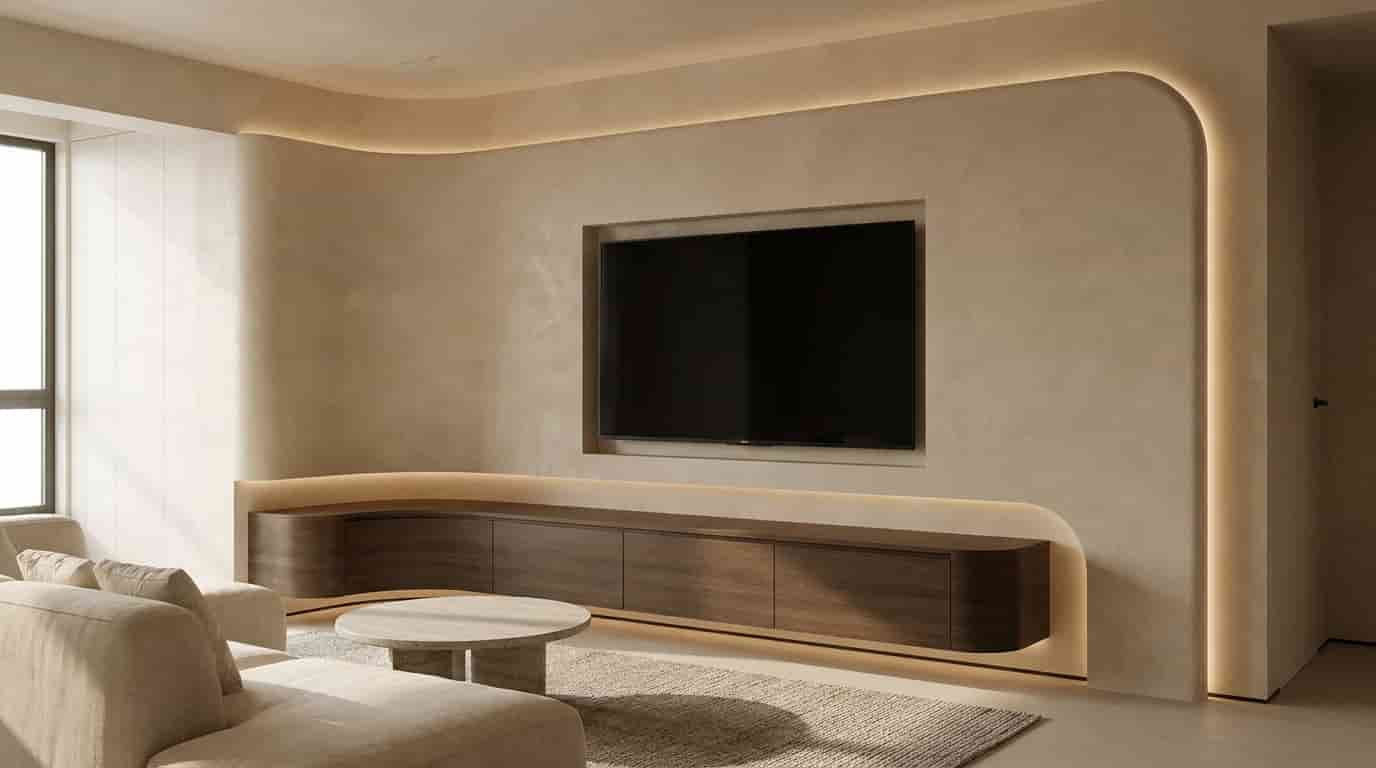
A curved media wall softens the straight lines of modern interiors while creating a sculptural focal point.
- Key feature: Sculptural curved panels enhanced by concealed lighting
- Cost: Premium ($4,000–$10,000+)
- Best for: Modern interiors that want a sculptural, less boxy feature
32. Gallery Wall Around the TV
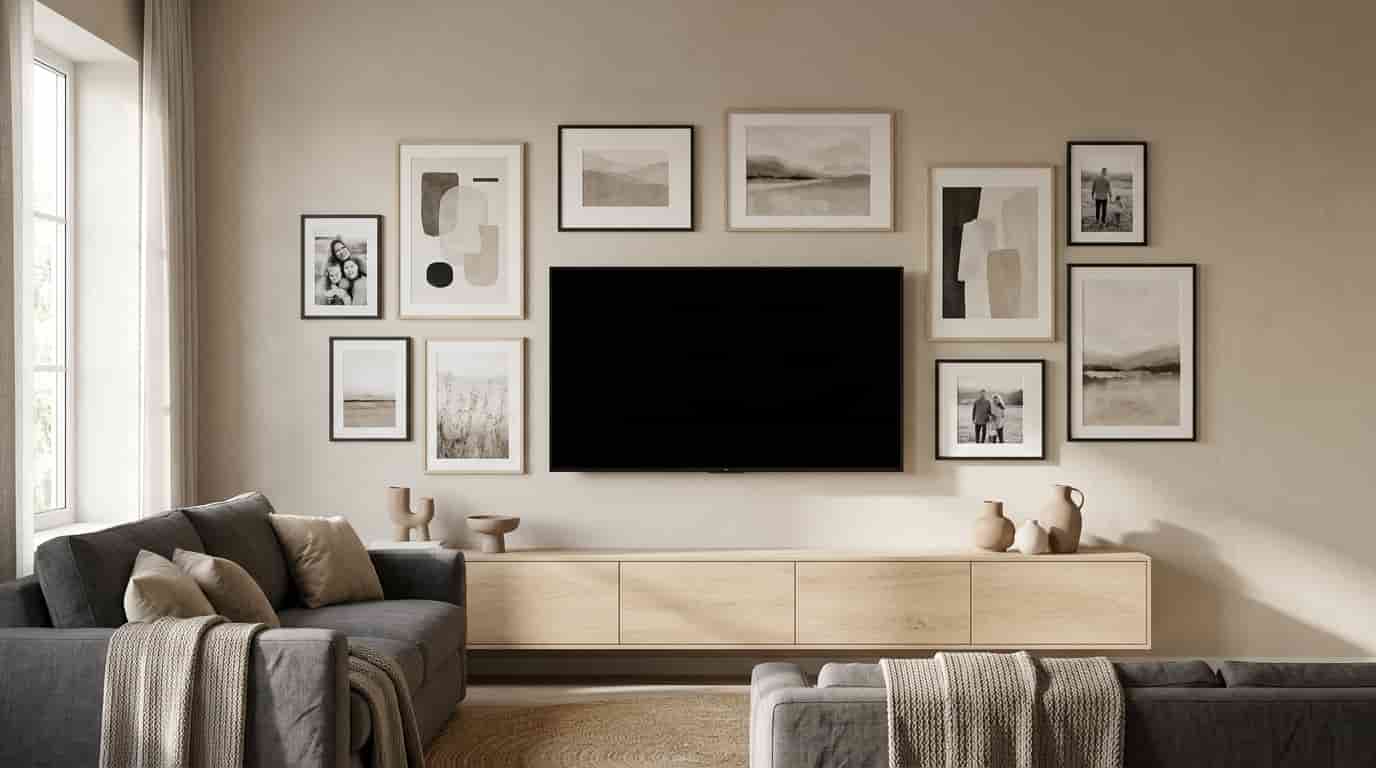
Surrounding the television with framed artwork helps it become part of the room’s décor rather than the dominant feature.
- Key feature: Television integrated within a balanced framed-art display
- Cost: Budget-friendly to mid-range ($300–$1,200)
- Best for: Living rooms where you want the TV to disappear into the decor
33. Hidden TV Cabinet
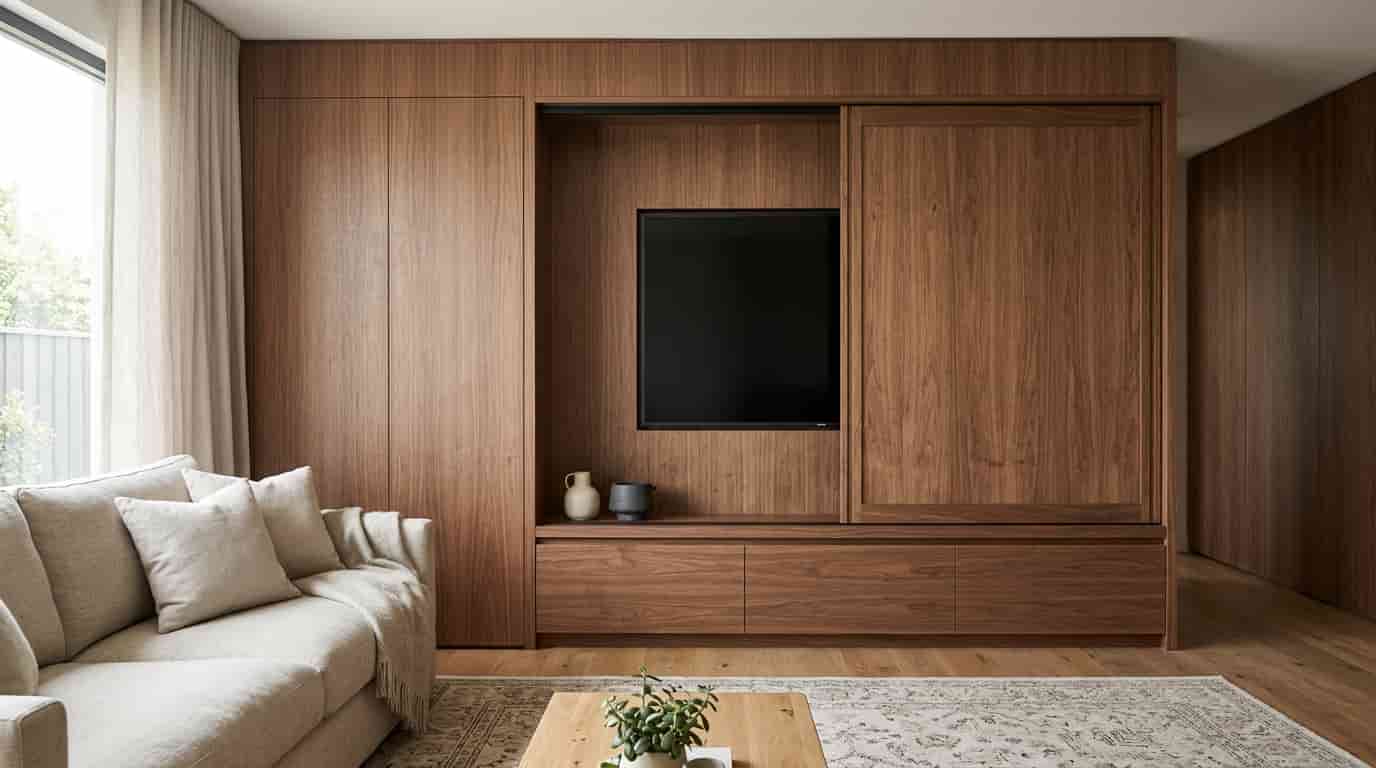
Sliding or motorized panels conceal the television when it’s not in use, letting artwork or decorative panels take over visually.
- Key feature: Sliding or motorized panels that conceal the television
- Cost: Mid-range to premium ($1,500–$4,500)
- Best for: Formal living rooms or multipurpose spaces where the screen should stay out of sight
34. Mixed Material Media Wall
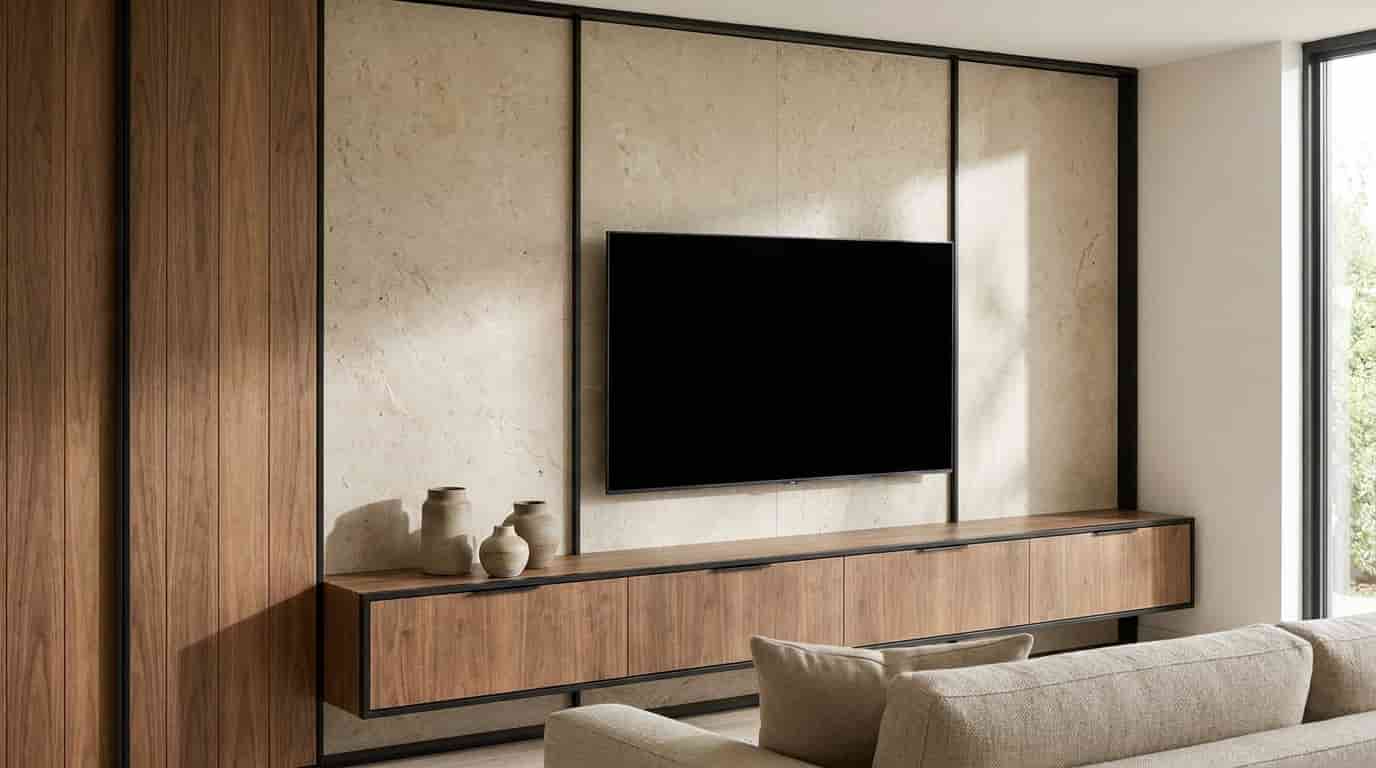
Combining wood, stone, metal, or textured panels adds depth to a media wall without requiring bold colors.
- Key feature: A coordinated combination of contrasting materials and textures
- Cost: Mid-range to premium ($1,500–$4,500)
- Best for: Homeowners who want depth and contrast without using bold color
35. Textured Panel Feature Wall
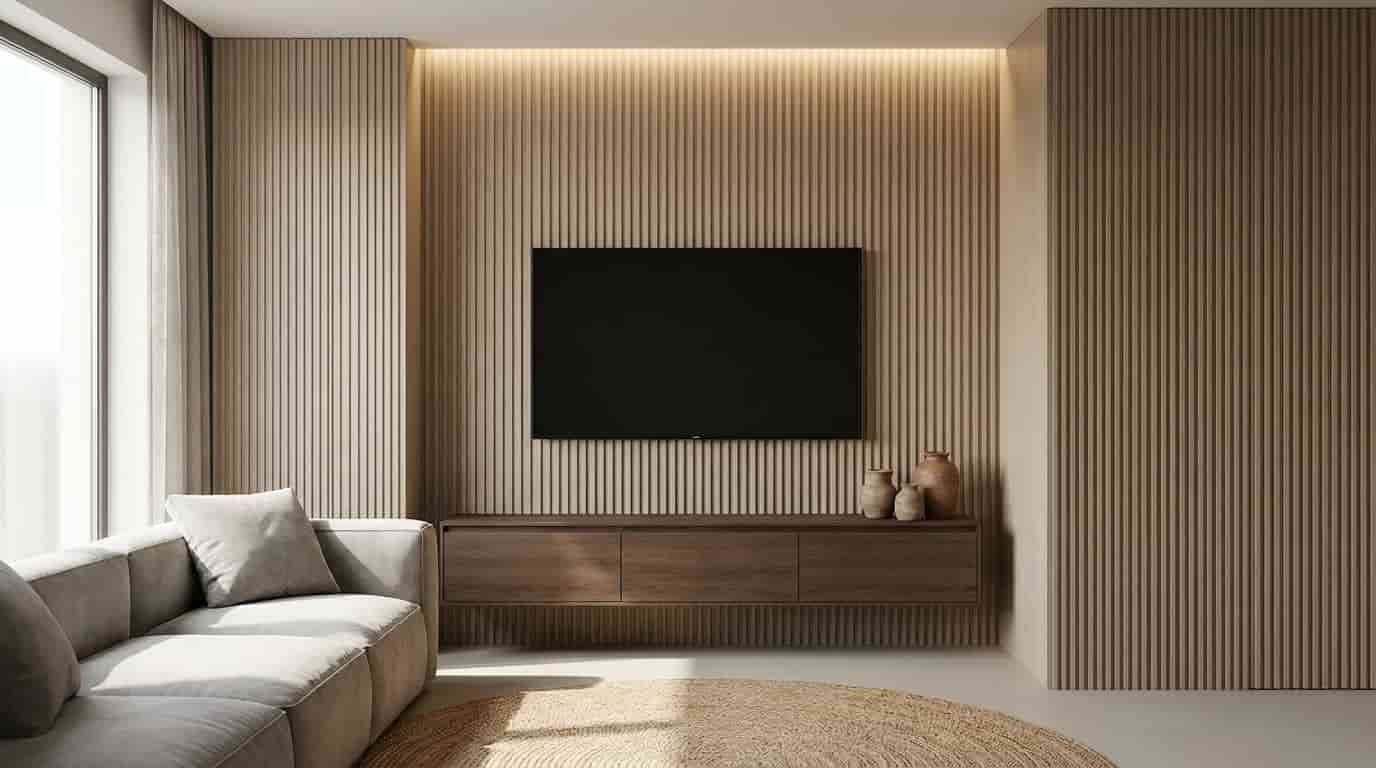
Decorative wall panels add subtle depth behind the television, helping the screen blend into the overall arrangement.
- Key feature: Dimensional decorative panels surrounding the television
- Cost: Mid-range to premium ($1,500–$4,500)
- Best for: Clean, modern living rooms that want subtle depth behind the screen
Media Wall Color Ideas
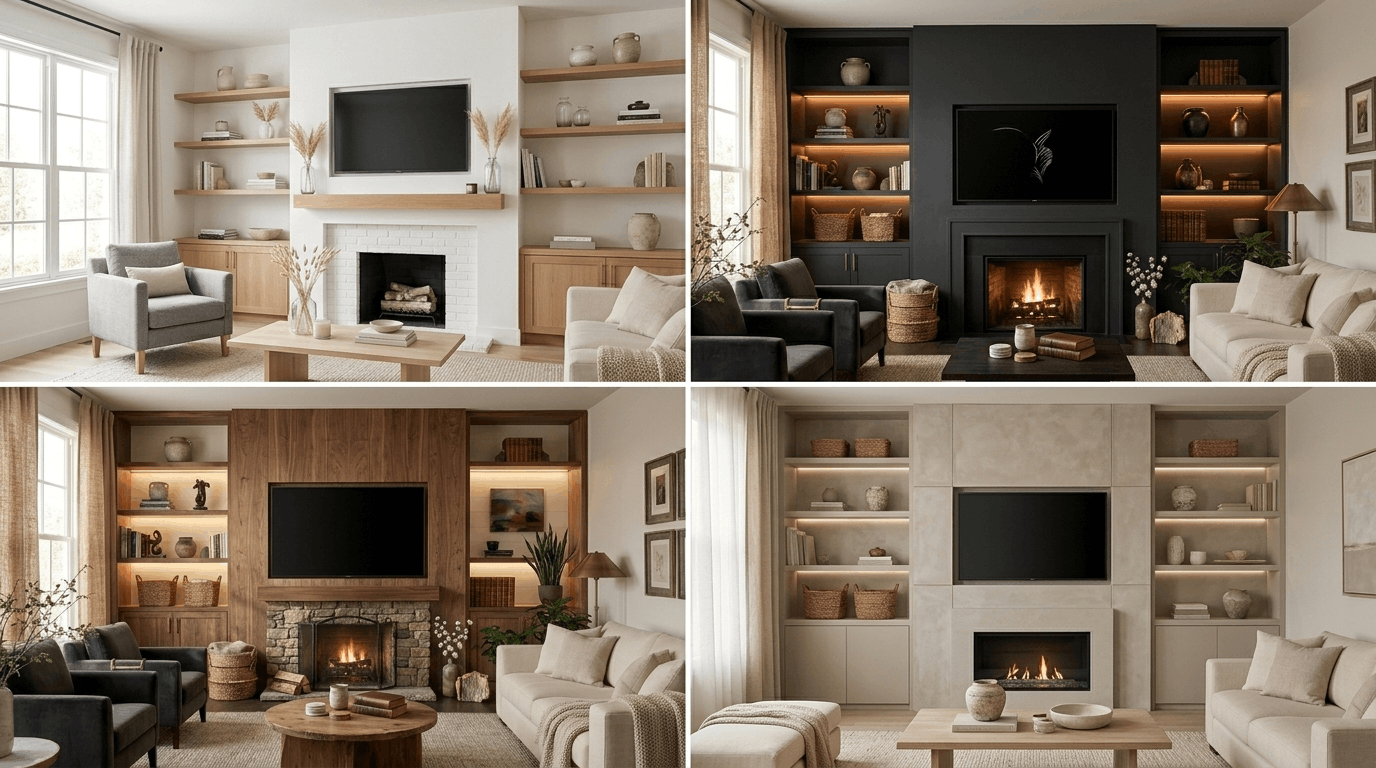
Choosing the right media wall color can help the TV blend in or become a focal point. Compare these popular shades to find one that suits your room, lighting, and interior style.
| Media Wall Color | Best For | Design Pairings |
|---|---|---|
| White | Small or bright living rooms | Oak details, warm LED lighting, light flooring |
| Black | Modern rooms where the TV should blend in | Timber finishes, metallic accents, indirect lighting |
| Oak | Warm, Scandinavian-style interiors | White cabinetry, neutral fabrics, soft lighting |
| Walnut | Richer, darker interior schemes | Cream tones, brass details, warm lighting |
| Greige & Beige | Neutral and timeless living spaces | Textured panels, natural wood, warm accessories |
| Charcoal Gray | A softer alternative to black | Stone finishes, floating shelves, warm lighting |
Things to Consider Before Designing a Media Wall
A little planning helps your media wall look great and stay practical every day.
- Choose the Right Wall: Pick a spot with clear sightlines that doesn’t block windows or walkways.
- Measure Your TV and Viewing Distance: Match screen size to seating distance, measured from where you sit, not the wall’s midpoint.
| TV Size | Recommended Viewing Distance |
|---|---|
| 55-inch | 7–11 ft |
| 65-inch | 8–13 ft |
| 75-inch | 9–15 ft |
| 85-inch | 10–17 ft |
-
Plan Around a Fireplace: Leave 300mm (12 inches) between the fire and TV, and check the manufacturer’s clearance guide before finalizing your layout.
-
Hide Cables and Electronics: Plan concealed cable routes and outlets before installation for a cleaner finish
Common Media Wall Design Mistakes to Avoid
Even the most beautiful media wall can lose its impact if you overlook a few basic design principles.
Weighing the specific drawbacks of media wall installations against the benefits early on also helps you avoid costly changes later.
Avoiding these common mistakes will help create a feature wall that’s both stylish and practical.
- Using Too Much Open Shelving: Balance open shelves with closed cabinets to display decorative pieces while keeping everyday items out of sight.
- Overcrowding the Wall: Leave enough space around the TV and décor to create a balanced, uncluttered appearance.
- Not Allowing Ventilation: Ensure cabinets include proper airflow so gaming consoles, streaming devices, and media equipment stay cool during use.
- Following Short-Lived Trends: Choose timeless materials such as wood, stone, and neutral finishes that can easily be refreshed with new décor over time.
Wrapping It Up
These media wall ideas are meant to spark your imagination, not hand you someone else’s floor plan as it is.
I always tell clients to pick two or three favorites, sketch them on your own wall, and see what actually fits your TV, your seating, and your budget.
Mix finishes, add real lighting, and let one personal shelf make the space feel like yours instead of a showroom; it can even add value to your home down the line.
Ready to start planning your own feature wall? Save the ideas you liked, grab a tape measure, and start mapping out your wall this weekend.
Frequently Asked Questions
What is the best material for a media wall?
Wood slats add warmth, MDF works for painted built-ins, and stone or marble panels give a more luxurious finish.
How deep should a media wall be?
Most media walls run 10 to 18 inches deep, with floating designs needing less space than built-in cabinetry.
Are media walls suitable for small living rooms?
Yes. Floating cabinets, slim built-ins, and light finishes help maximize storage while making compact rooms feel larger.
Should you put a TV above the fireplace?
Many designers avoid it since fire clearance often pushes the screen above eye level; leave at least 12 inches of gap either way.
Does a media wall increase home value?
It can, especially in homes without an existing focal point, since buyers often see it as a modern upgrade.