
You sprayed it. You waited. It’s still sticky.
That feeling is beyond frustrating. You set aside time for your project, followed the steps, and now the paint refuses to cooperate. It looks wrong, feels wrong, and you have no idea why.
Most people think spray paint drying is simple. Spray it, wait a bit, and move on. But that’s rarely how it works. The type of paint, the surface, the weather, and how you applied it all change the drying time completely.
This guide tells you exactly how long spray paint takes to dry across different paint types and surfaces. More importantly, it explains why your paint may still be tacky and offers a clear fix.
Before you check the clock, you need to understand what “dry” actually means for spray paint.
The 4 Stages of Spray Paint Drying
Most people treat spray paint drying as one single event. It is not. There are four separate stages, and each one means something different. Skipping ahead of any stage is where most projects go wrong.
Here is what each stage looks like:
- Surface dry: The solvent on the top layer starts to evaporate. The paint may feel dry if you barely graze it. But press even lightly, and it will smear. This happens within 10 to 30 minutes for most paints.
- Touch dry: You can now touch the surface without leaving a mark. But the paint is still soft underneath. It is not ready for a second coat or any handling yet. This stage usually arrives between 30 minutes and one hour.
- Hard dry: The paint has stopped feeling tacky. You can handle the object without damaging the surface. Most paints reach this stage within two to four hours under good conditions.
- Fully cured: This is when the paint reaches its full hardness and bonds completely to the surface. It takes anywhere from 24 to 48 hours, depending on the paint type and conditions.
Here is the mistake most people make. They feel the surface after 30 minutes, think the job is done, and move on. But dry to the touch is not the same as fully cured.
Handling or recoating too early causes bubbling, peeling, and wrinkling. Waiting for the right stage saves you from redoing the entire project.
Now that you know the four stages, here is how long each paint type takes to complete them.
How Long Does Spray Paint Take to Dry by Paint Type?
The type of spray paint you use is the single biggest factor in drying time. Two cans sprayed on the same surface in the same conditions can dry at completely different speeds. Here is what to expect from each type:
| Paint Type | Touch Dry | Fully Cured | Best Used For |
|---|---|---|---|
| Acrylic | 20 to 30 minutes | 24 hours | Indoor projects, most surfaces |
| Enamel | 1 to 2 hours | 24 to 48 hours | Outdoor surfaces, high-traffic areas |
| Lacquer | 10 to 15 minutes | Up to 3 hours | Fast projects, wood and metal |
| Oil-based | 2 to 4 hours | Up to 48 hours | Durable finishes, exterior use |
| Rust-preventive / Epoxy | 2 to 4 hours | Up to 7 days | Metal, industrial surfaces |
Choosing the right paint type for your timeline matters just as much as applying it correctly. If you are on a tight schedule, lacquer or acrylic will serve you better than oil-based or epoxy options.
If durability is the priority, enamel and rust-preventive paints are worth the longer wait. Paint type sets the baseline. But the surface you spray on can push that timeline in either direction.
How Long Does Spray Paint Take to Dry by Surface?
The material beneath the paint affects how quickly it absorbs and holds the paint. Porous surfaces soak up the paint quickly, which can speed up drying.
Smooth, non-porous surfaces do not absorb paint the same way, which means they often take longer to fully cure. Here is how drying times break down across the most common surfaces:
| Surface | Touch Dry | Fully Cured | Key Thing to Know |
|---|---|---|---|
| Wood | 30 minutes to 1 hour | 24 hours | Porous surface absorbs paint well, but often needs multiple coats |
| Metal | 10 to 30 minutes | Up to 48 hours | Dries fast to the touch but takes longer to fully bond |
| Plastic | 20 to 30 minutes | 24 hours | Non-porous surface, use a plastic-specific formula for best results |
| Rubber | Several hours | 24 hours | Highly porous, absorbs heavily, and takes longer to touch dry |
| Vinyl | 10 minutes | 24 hours | Fast to touch dry, but still needs a full day to cure |
| Glass | 15 minutes | 24 hours | Very smooth surface, paint sits on top rather than absorbing into it |
| Wicker / Cardboard | 20 minutes | 1 hour | Light and porous, among the fastest surfaces to fully dry |
Knowing how long each surface takes is only half the battle. The other half is knowing how to cut that time down without ruining the finish.
How to Make Spray Paint Dry Faster?
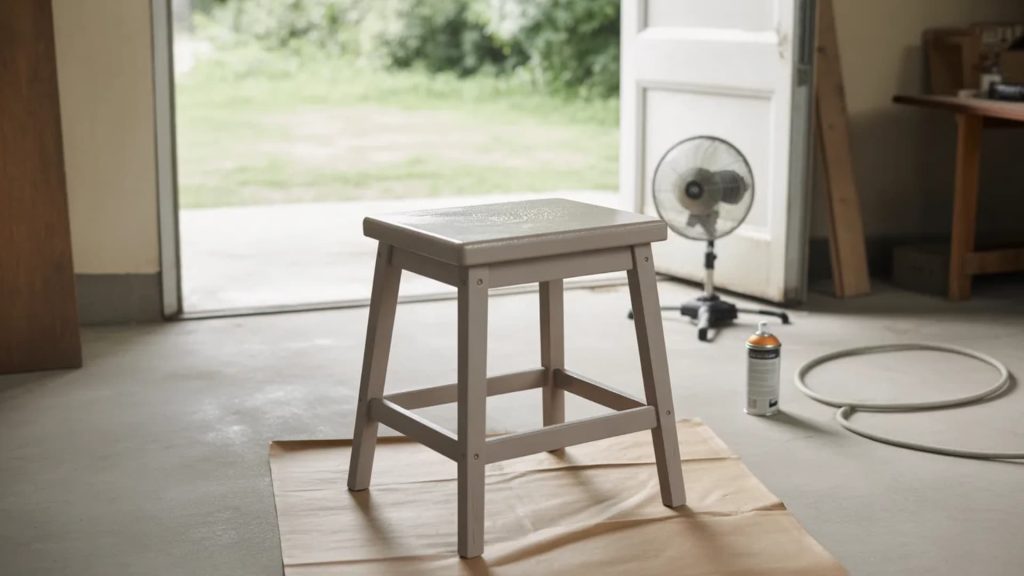
Getting spray paint to dry faster is not about rushing the process. It is about setting up the right conditions before you even pick up the can. These tips work across all paint types and surfaces:
- Apply thin coats: Thick layers trap solvents underneath the surface. This is one of the most common reasons paint stays wet for hours longer than expected. Light, even coats let each layer breathe and dry properly.
- Hold the can at the right distance: Keep the can between 8 and 12 inches from the surface. Too close creates heavy buildup. Too far causes the paint to dry mid-air before it even lands, which leaves a rough, uneven texture.
- Use a fan or open windows: Moving air speeds up solvent evaporation. Set up a fan nearby or open windows to keep air circulating around the painted surface.
- Warm the space up: A warmer room helps paint dry faster. Aim for a temperature between 65 and 85 degrees Fahrenheit. Avoid direct heat sources like hair dryers or heat guns, as these cause blistering.
- Use a dehumidifier: High moisture in the air slows drying significantly. Running a dehumidifier in the room brings humidity down to the ideal range of 40 to 50 percent.
- Pick a fast-dry formula: Many brands now offer fast-dry versions of their paints. These are formulated to cut touch dry time down to under 15 minutes, which is useful when you are working against the clock.
Small adjustments to your setup can cut drying time in half. The goal is to create conditions where the solvent has every reason to leave the paint as quickly as possible.
Setting up the right conditions prevents most problems. But if your paint is already dry and still feels wrong, something specific went wrong along the way.
Spray Paint Still Tacky or Sticky?
This is the section most blogs skip entirely. Your paint looks dry but feels soft, sticky, or gummy. That is a sign of a specific problem, and each one has a fix.
Applying paint too thickly is the most common cause. The top layer seals over before the paint underneath dries out. Let it sit untouched for at least 24 more hours in a warm, well-ventilated space. Do not add another coat on top.
High humidity traps moisture inside the paint film as it dries. This leaves the surface feeling soft and wet even hours later. Move the object indoors and run a dehumidifier for at least 24 additional hours.
Cold temperatures slow solvent evaporation dramatically. Paint applied below 50 degrees Fahrenheit can stay tacky for days. Bring the object into a warmer room and let it recover gradually.
Some paints do not bond well with certain materials without proper preparation. Spray paint on bare plastic or untreated metal stays tacky because there is nothing for it to grip onto. Sand the surface lightly once dry, apply a primer, and repaint with the right formula.
Old spray paint loses its chemical balance over time and stops drying properly. There is no way to save it. Let it dry completely, sand it down, and start fresh with a new can.
Pro Tip: Check the expiry date on your spray can before starting any project. Most cans last two to three years from the manufacture date printed on the bottom. Using an old can is one of the least obvious reasons paint stays tacky for days.
Getting the paint to dry right is one challenge. Knowing exactly when to go back in with a second coat is another.
When Can You Add a Second Coat of Spray Paint?
Most people either recoat too soon or wait so long that the window closes entirely. Both create problems that are hard to fix after the fact.
Recoating too soon is the more damaging mistake. When you spray overpaint that has not hardened enough, the fresh coat dissolves into the layer beneath it.
This causes wrinkling, bubbling, and an uneven finish. As a general rule, wait until the first coat reaches the hard dry stage before adding another. That means at least two to four hours, depending on the paint type.
Pro Tip: Always recoat in thin layers, even on the second or third coat. Thick recoats cause the same problems as thick first coats.
Waiting too long creates a different problem. Most spray paints have a recoat window printed on the can. If you miss that window, the existing coat becomes too hard for the new layer to bond with properly.
The result is peeling and poor adhesion. If you have already missed the recoat window, wait a full week before adding another coat and let the existing layer cure completely.
Every paint type has a general drying range. But specific brands often behave differently from those averages in real conditions.
Popular Spray Paint Brand Drying Times at a Glance
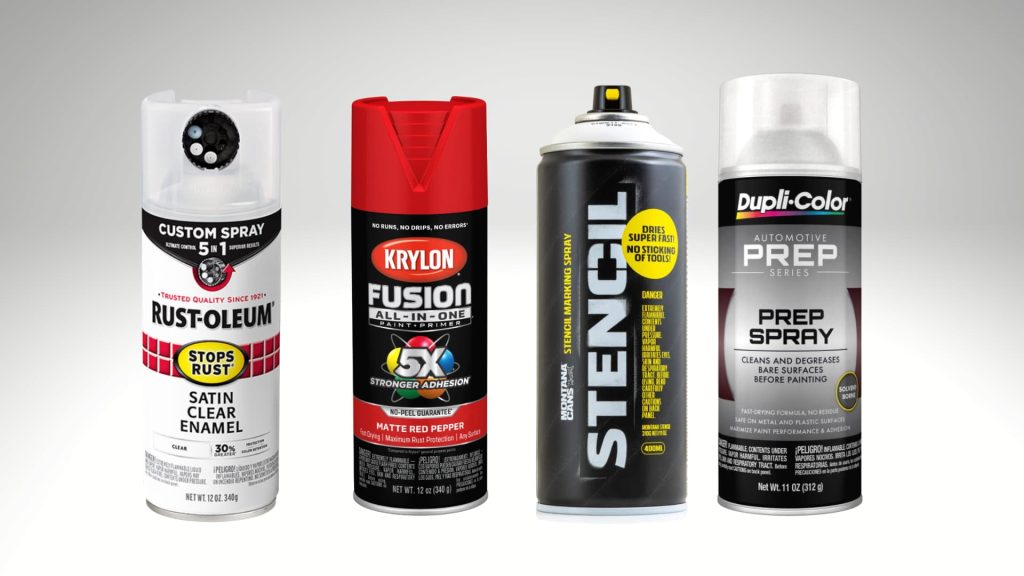
Different brands use different formulas, solvents, and additives. This means two acrylic paints from two different brands can have noticeably different drying times. Here is how the most widely used brands compare:
| Brand | Touch Dry | Recoat Window | Fully Cured |
|---|---|---|---|
| Rust-Oleum | 20 to 30 minutes | Within 1 hour or after 48 hours | 24 to 48 hours |
| Krylon | 10 to 15 minutes | Within 1 hour or after 48 hours | 24 hours |
| Montana | 15 to 20 minutes | 30 minutes to 1 hour | 24 hours |
| Dupli-Color | 20 to 30 minutes | Within 30 minutes or after 48 hours | 48 hours |
Always treat the times in this table as a starting point. Humidity, temperature, and surface condition in your specific space will shift these numbers.
The recoat window column is the most important one to follow closely. Missing it is where most second coat problems begin.
Conclusion
Spray paint drying time is never one-size-fits-all. The type of paint, the surface, and the conditions in your space all decide how long you wait. Get those three things right, and the process becomes far more predictable.
Touch dry is not the finish line. Fully cured is. Rushing past that point is the fastest way to ruin a project you spent hours on. The four drying stages exist for a reason, and working with them instead of against them makes all the difference.
Take your time. Follow the instructions on the can. Set up the right conditions before you even pick it up. Do those three things, and spray painting will rarely give you trouble again.
Got a spray paint project coming up? Drop your surface and paint type in the comments, and we will help you figure out the right drying time.
Frequently Asked Questions
Will Spray Paint Dry Faster in the Sun?
No. Direct sunlight can actually cause the paint to dry unevenly, crack, or blister. Shade with good airflow works better.
Does the Color of Spray Paint Affect Drying Time?
Yes. Darker colors contain more pigment and can take slightly longer to dry than lighter shades, especially on porous surfaces.
Can You Apply a Clear Coat Before Spray Paint Fully Cures?
No. Applying a clear coat too early traps solvents underneath. Always wait for the paint to reach the hard dry stage first.