
You cook in it. You clean it. You practically live in it. Your kitchen deserves a countertop that keeps up.
But with so many options out there, picking the best countertops for your kitchen can feel overwhelming. Do you go for something tough? Something affordable? Or something that looks great every single day?
The truth is, there is no one-size-fits-all answer.
The right choice depends on your cooking habits, your budget, and how much time you want to spend on upkeep. This guide breaks it all down so you can make a smart, confident choice.
How to Choose the Best Countertops for the Kitchen?
Choosing the right countertop comes down to a few practical factors. A beautiful surface is important, but durability, maintenance, and cost often matter more in daily use. The wrong choice can cost you more time and money in the long run.
Things to Consider
- Budget: How much are you willing to spend upfront and over time?
- Maintenance requirements: Some surfaces need regular sealing or special cleaners.
- Heat and scratch resistance: High-traffic kitchens need tougher materials.
- Kitchen usage frequency: Daily cooking puts more wear on surfaces.
- Installation complexity: Some materials require professional fitting, which adds to the cost.
Keep these points in mind before exploring the most popular countertop materials below.
13Best Kitchen Countertops Compared
Picking the right countertop starts with knowing your options. Here are the 13 best kitchen countertop materials to consider.
1. Quartz Countertops
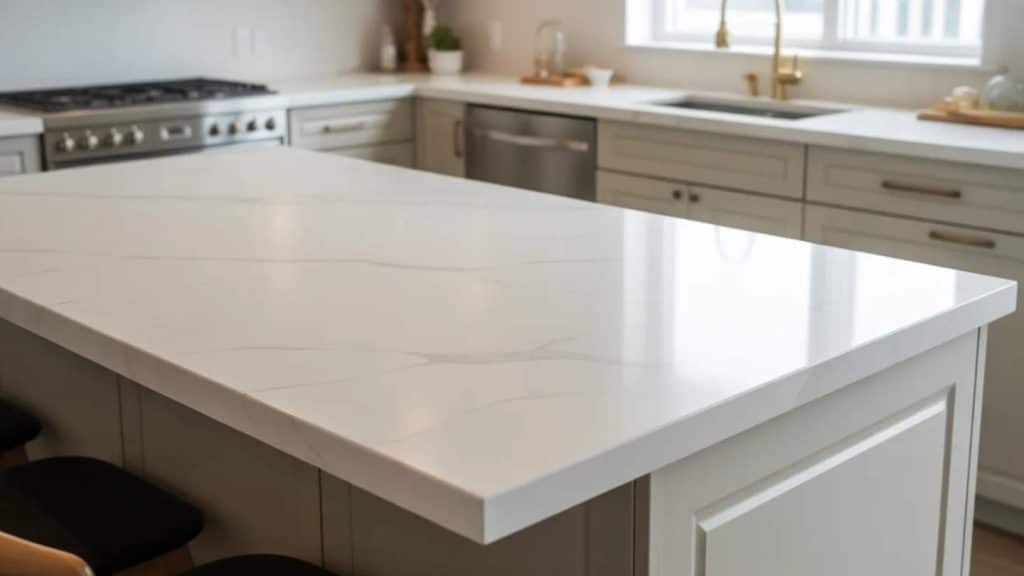
Quartz is a non-porous, engineered stone that needs no sealing. It comes in a wide range of finishes from marble-look to solid colors, with a consistent pattern across the whole slab.
It resists stains well and holds up well to daily wear, though it is not completely scratch-proof. Hot pans can still cause damage, so trivets are recommended. A great fit for a busy, modern kitchen
| Pros | Cons |
|---|---|
| No sealing required | Edges can chip under heavy impact |
| Stain and scratch-resistant | Not ideal for direct heat |
| Wide range of styles | It can cost more than granite |
Installation & Cost
- Requires professional installation due to weight and seam precision
- Installed cost ranges from $50 to $150 per square foot
2. Granite Countertops
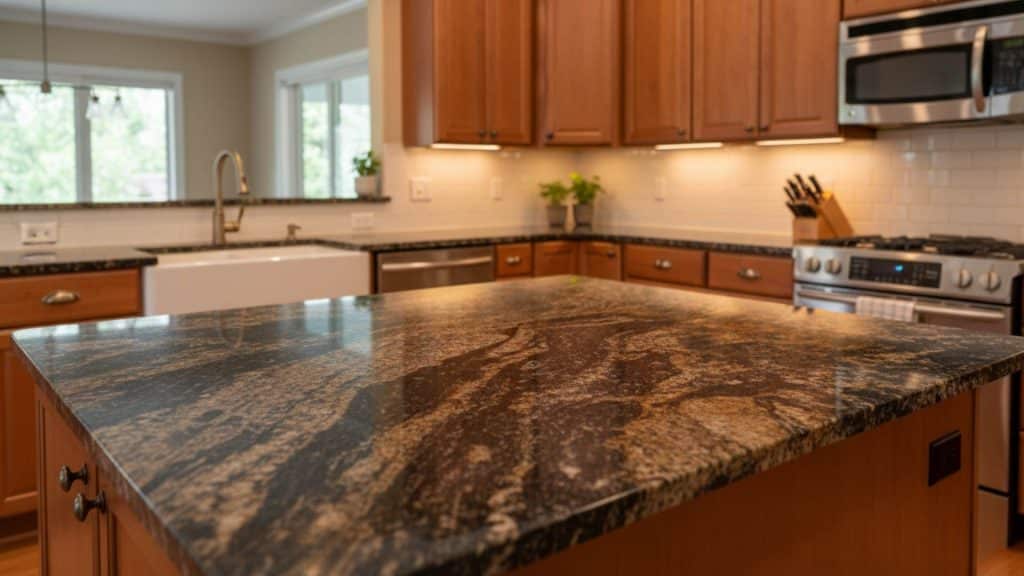
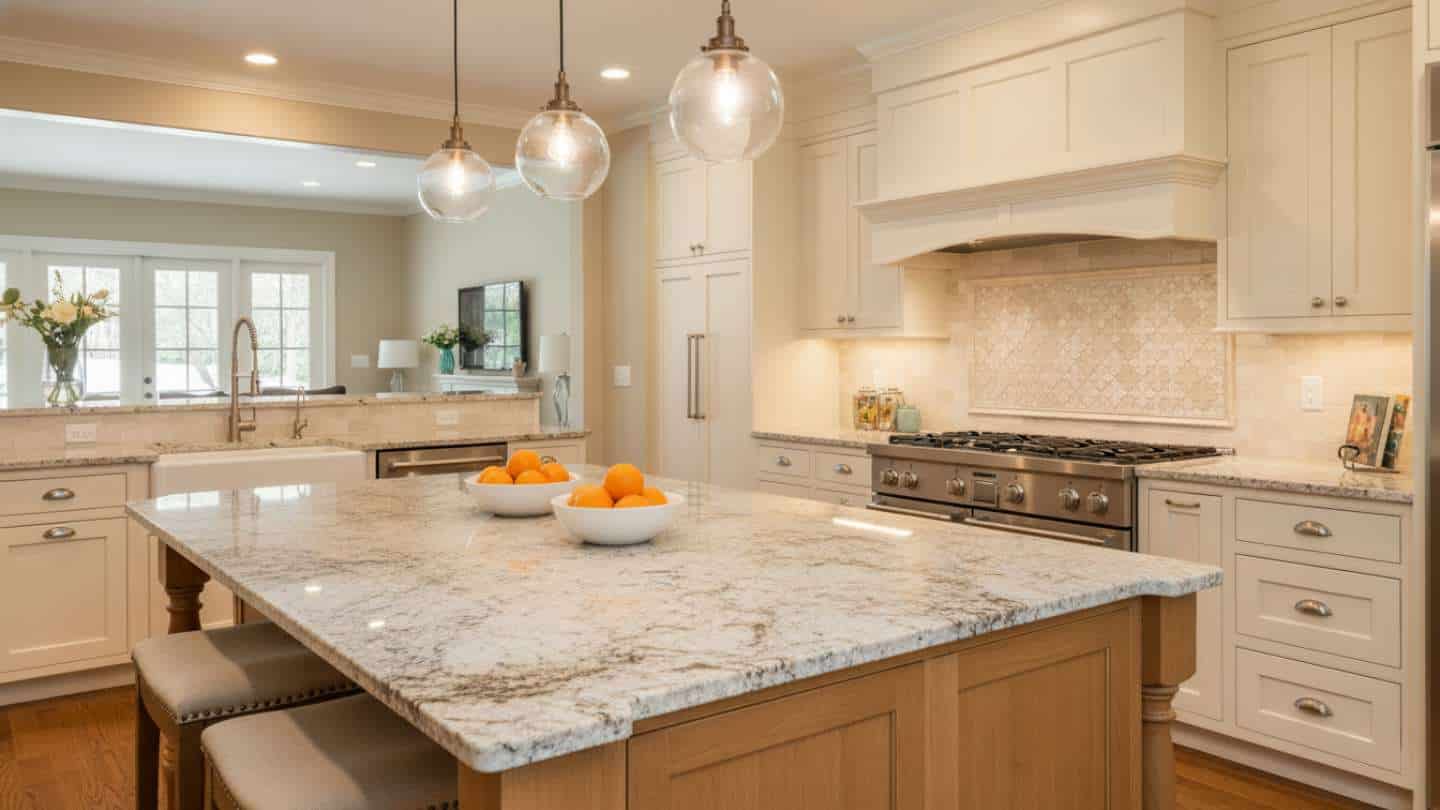
Granite is a natural stone with unique veining on every slab. No two pieces look the same. It handles heat well and holds up strongly under daily use.
Periodic sealing is needed to keep stains out. It works best in classic, transitional, and upscale kitchens and adds real visual depth to any space.
| Pros | Cons |
|---|---|
| Strong heat resistance | Needs periodic sealing |
| Unique natural beauty | Porous compared to quartz |
| Long-lasting surface | Seam pattern matching is tricky |
Installation & Cost
- Professional installation required due to slab weight
- Installed cost ranges from $40 to $120 per square foot
3. Marble Countertops
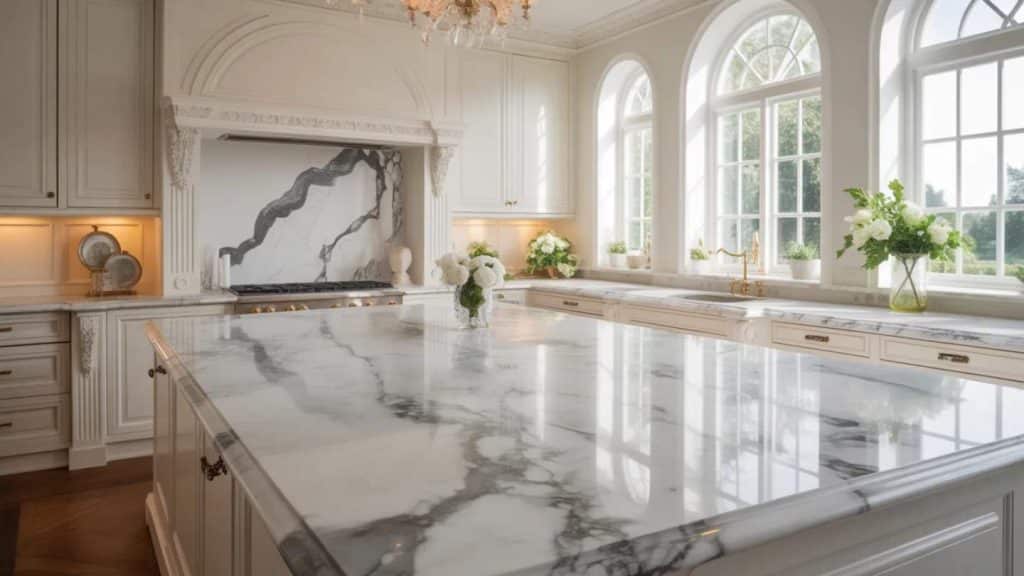
Marble has a soft, timeless look with natural veining that brightens any kitchen. Its cool surface makes it ideal for baking. However, it is porous and prone to staining and etching.
Acidic foods can dull the surface over time. It suits style-focused homeowners more than those who want a low-maintenance surface.
| Pros | Cons |
|---|---|
| Premium visual appeal | Porous and stains easily |
| Cool surface, great for baking | Needs more care than quartz or granite |
| Adds home value | Acidic foods cause surface damage |
Installation & Cost
- Needs skilled installation and careful slab selection
- Installed cost ranges from $60 to $200 per square foot
4. Butcher Block Countertops
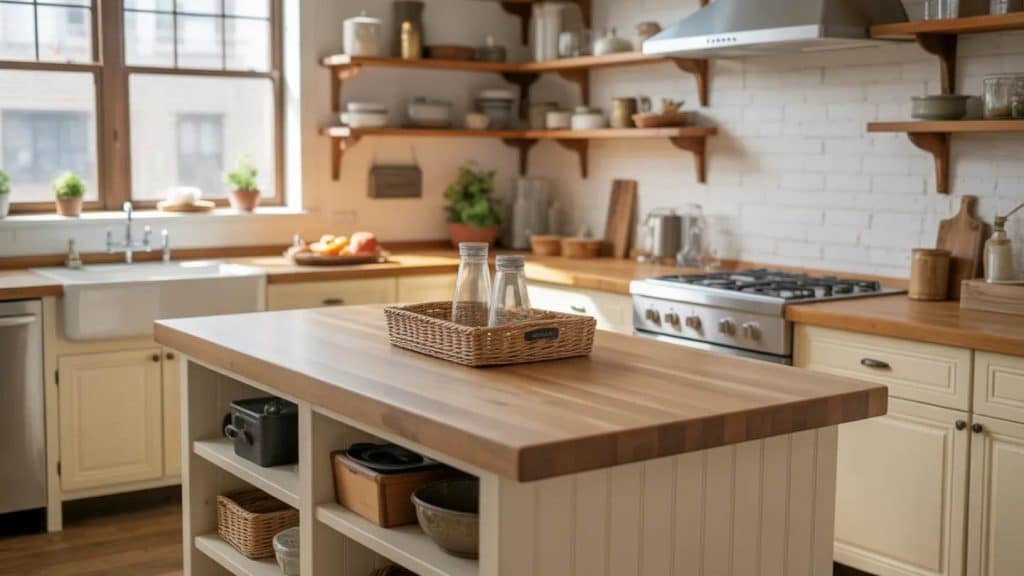
Butcher block has a warm, natural wood look that works well in farmhouse and cottage kitchens. It can be sanded and refreshed when scratched, giving it a longer visual life than many expect.
However, it needs frequent oiling or sealing to stay protected. It is vulnerable to moisture and heavy spills.
| Pros | Cons |
|---|---|
| Warm, natural appearance | Needs frequent sealing or oiling |
| Can be sanded and refreshed | Vulnerable to moisture and stains |
| Great natural prep surface | Not ideal for high-humidity kitchens |
Installation & Cost
- Easier to install than stone but sealing is important
- Installed cost ranges from $40 to $100 per square foot
5. Laminate Countertops
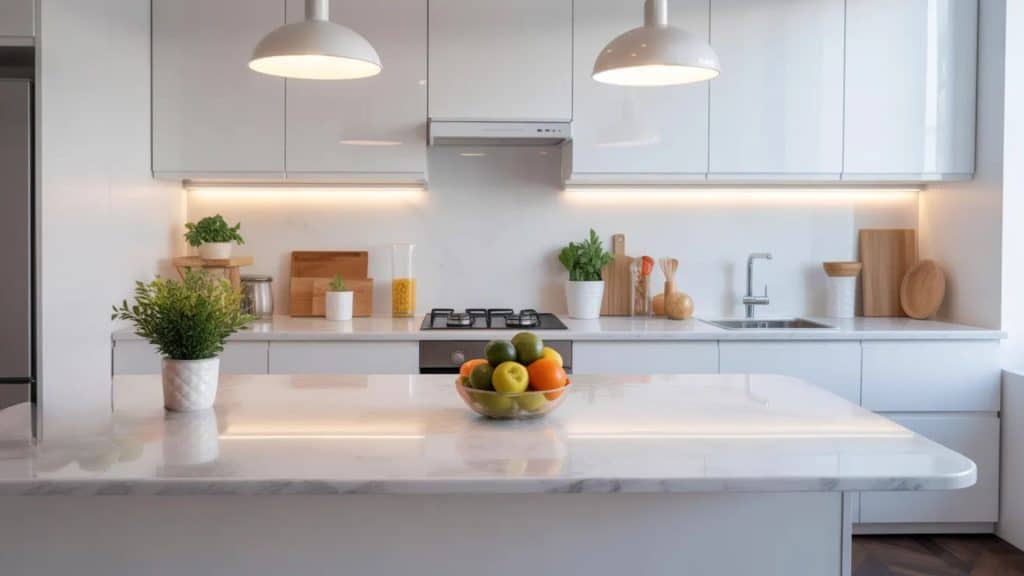
Laminate is the most budget-friendly countertop option available. It comes in a wide range of colors and patterns that can closely mimic stone or wood.
It is lightweight and easy to work with. However, it has weaker heat and scratch resistance than stone and a shorter lifespan overall.
| Pros | Cons |
|---|---|
| Very affordable upfront | Weaker heat and scratch resistance |
| Wide range of styles | Shorter lifespan than stone |
| Lightweight and easy to handle | Hard to repair once damaged |
Installation & Cost
- DIY installation possible; professional install improves finish
- Installed cost ranges from $20 to $50 per square foot
6. Concrete Countertops
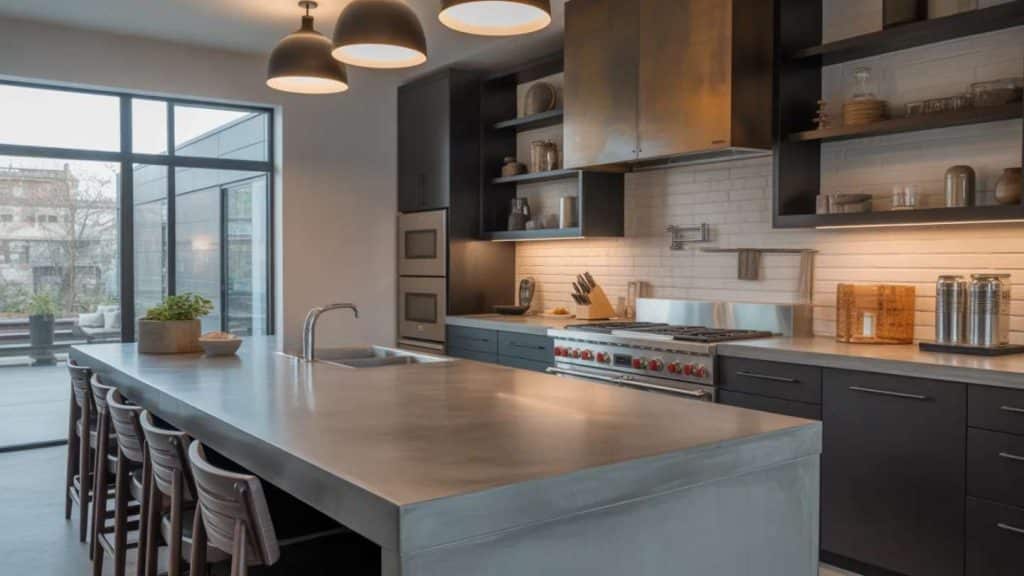
Concrete is a fully custom countertop option that suits bold, modern kitchens. It can be shaped, colored, and finished to match any design.
It is heat-resistant but needs regular sealing to stay protected. Hairline cracks can develop over time. It is best for style-conscious homeowners who are willing to accept some ongoing upkeep.
| Pros | Cons |
|---|---|
| Fully customizable look | Needs regular sealing |
| Heat-resistant surface | May develop hairline cracks |
| One-of-a-kind finish | Higher upkeep than most expect |
Installation & Cost
- Requires professional installation and proper curing
- Installed cost ranges from $70 to $150 per square foot
7. Solid Surface Countertops
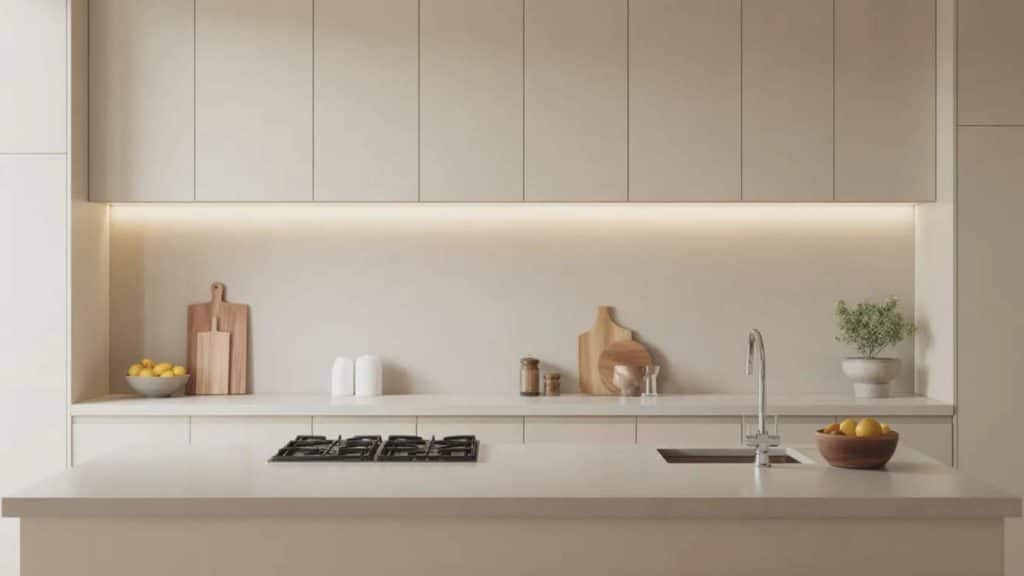
Solid surface countertops offer a smooth, understated look that works well in clean and practical kitchens. Seamless joints give a finished appearance, and the surface can be repaired if scratched.
It is less heat-resistant than stone but easier to maintain. Integrated sink options make it a practical all-in-one choice.
| Pros | Cons |
|---|---|
| Seamless, clean appearance | Less heat-resistant than stone |
| Repairable if scratched | Can look less premium |
| Integrated sink options available | Sharp objects leave visible marks |
Installation & Cost
- Professional installation recommended for seamless joints
- Installed cost ranges from $50 to $120 per square foot
8. Quartzite Countertops
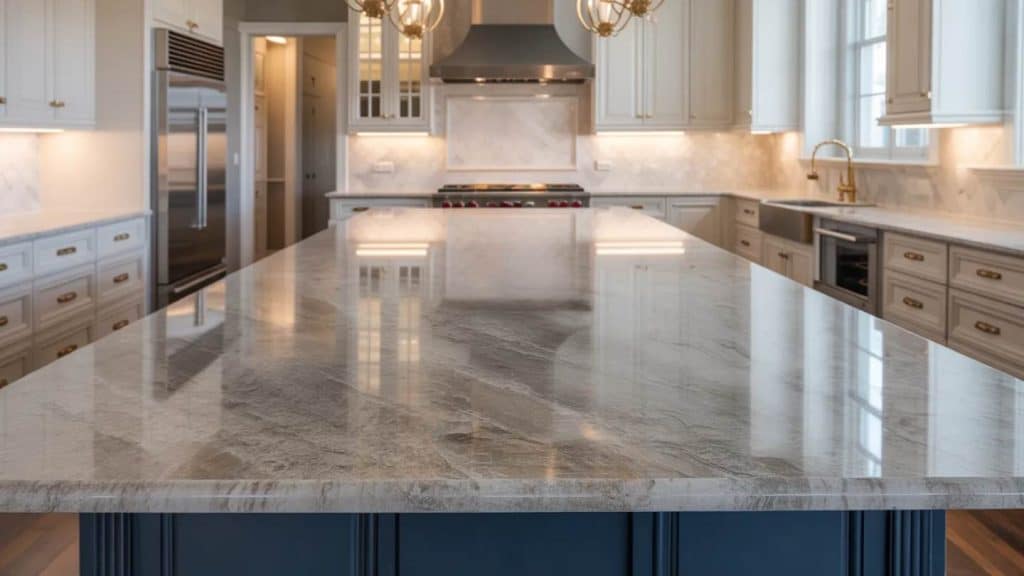
Quartzite is a natural stone that resembles marble but is significantly harder and more durable. It has soft, flowing veining with a polished finish that works well in upscale and transitional kitchens.
Unlike marble, it holds up better against scratches and daily wear. It does need periodic sealing to stay stain-free.
| Pros | Cons |
|---|---|
| Harder and more durable than marble | Needs periodic sealing |
| Natural beauty with unique veining | Can be confused with marble at purchase |
| Heat-resistant surface | Higher cost than many stone options |
Installation & Cost
- Requires professional handling and cutting
- Installed cost ranges from $60 to $150 per square foot
9. Soapstone Countertops
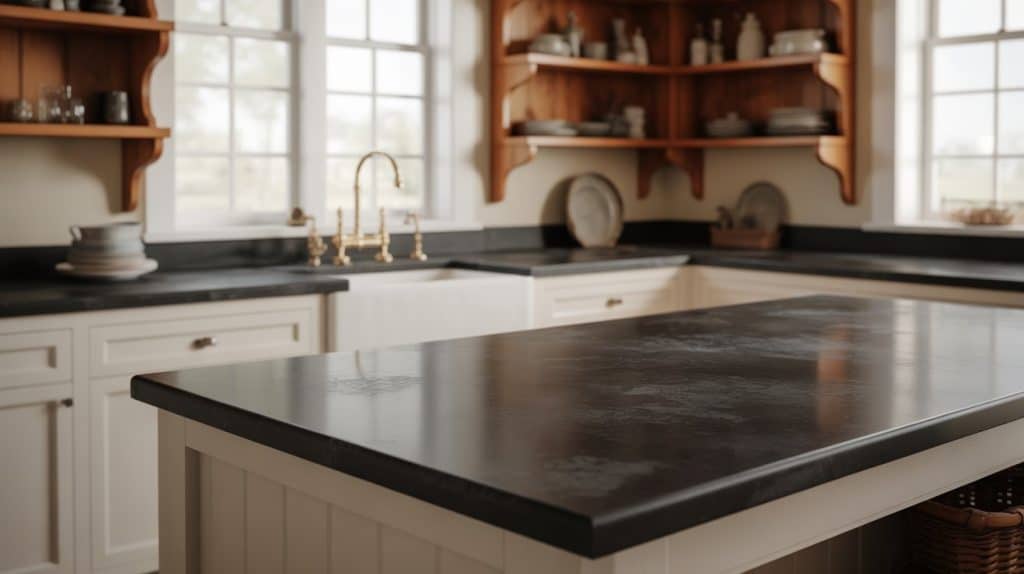
Soapstone is a smooth, natural stone with a soft, matte finish that becomes richer and darker over time. It develops a natural patina that many homeowners find adds character to the kitchen.
It is a popular choice in farmhouse and classic kitchen styles. It is non-porous, so it does not need sealing, though regular oiling enhances its appearance.
| Pros | Cons |
|---|---|
| Non-porous, no sealing needed | It can be scratched more easily than granite |
| Develops a rich patina over time | Limited color range, mostly grey tones |
| Heat-resistant surface | Needs regular oiling to maintain its look |
Installation & Cost
- Professional installation recommended
- Installed cost ranges from $70 to $120 per square foot
10. Stainless Steel Countertops
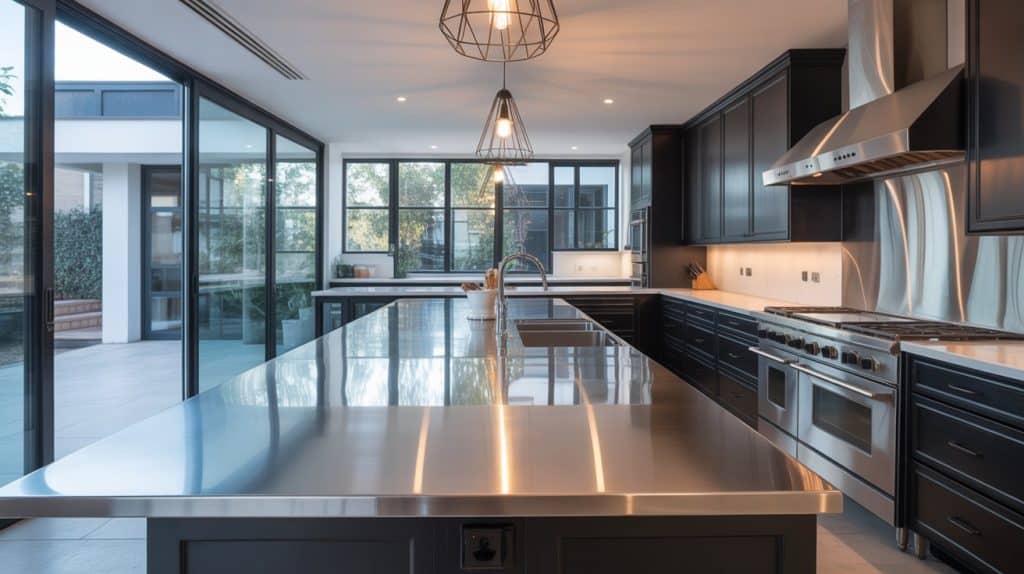
Stainless steel is the go-to surface in professional kitchens for good reason. It is heat-resistant, hygienic, and easy to clean. It gives any kitchen a sharp, modern, or industrial look.
However, it scratches easily, and fingerprints show up quickly. Over time, it develops a natural brushed look that many homeowners actually prefer.
| Pros | Cons |
|---|---|
| Highly heat-resistant | Scratches and dents easily |
| Hygienic and easy to clean | Fingerprints show up quickly |
| Great fit for modern kitchens | Can feel cold and loud in use |
Installation & Cost
- Custom fabrication and professional installation required
- Installed cost ranges from $80 to $200 per square foot
11. Recycled Glass Countertops
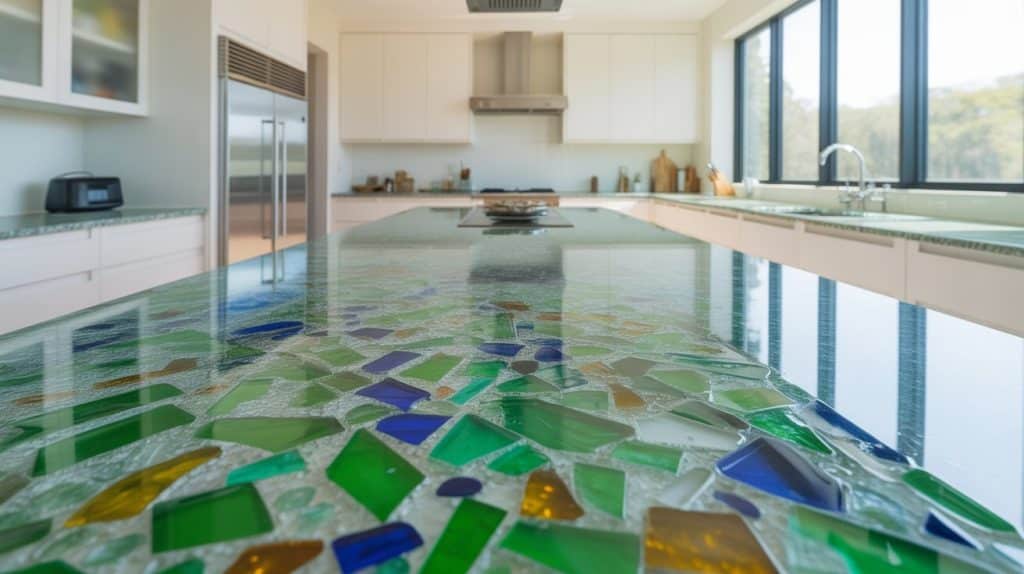
Recycled glass countertops are made from crushed glass pieces set in resin or cement. Each surface is unique in color and pattern.
They are an environmentally friendly choice for homeowners who want something different. The surface is non-porous when resin-based, making it stain-resistant. Cement-based versions may need sealing.
| Pros | Cons |
|---|---|
| Unique, colorful appearance | Cement-based versions need sealing |
| Environmentally friendly material | Can chip if hit with a heavy impact |
| Non-porous when resin-based | Limited availability compared to stone |
Installation & Cost
- Professional installation required for proper fitting
- Installed cost ranges from $60 to $140 per square foot
12. Porcelain Slab Countertops
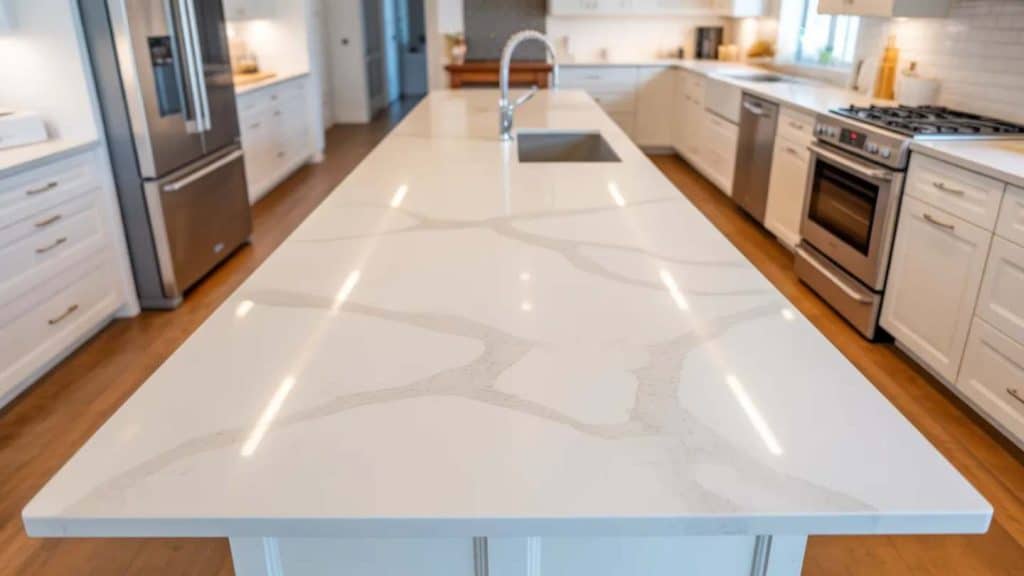
Porcelain slab countertops are ultra-thin yet very strong. They resist heat, scratches, and stains better than many natural stone options.
They come in modern stone-like patterns that closely mimic marble and granite. The surface does not need to be sealed and is very easy to clean, making it a strong fit for modern, low-maintenance kitchens.
| Pros | Cons |
|---|---|
| Resists heat, scratches, and stains | Can crack under heavy impact |
| No sealing required | Difficult to repair if chipped |
| Modern stone-like patterns are available | Professional cutting is essential |
Installation & Cost
- Professional installation required due to thin slabs
- Installed cost ranges from $60 to $150 per square foot
13. Tile Countertops
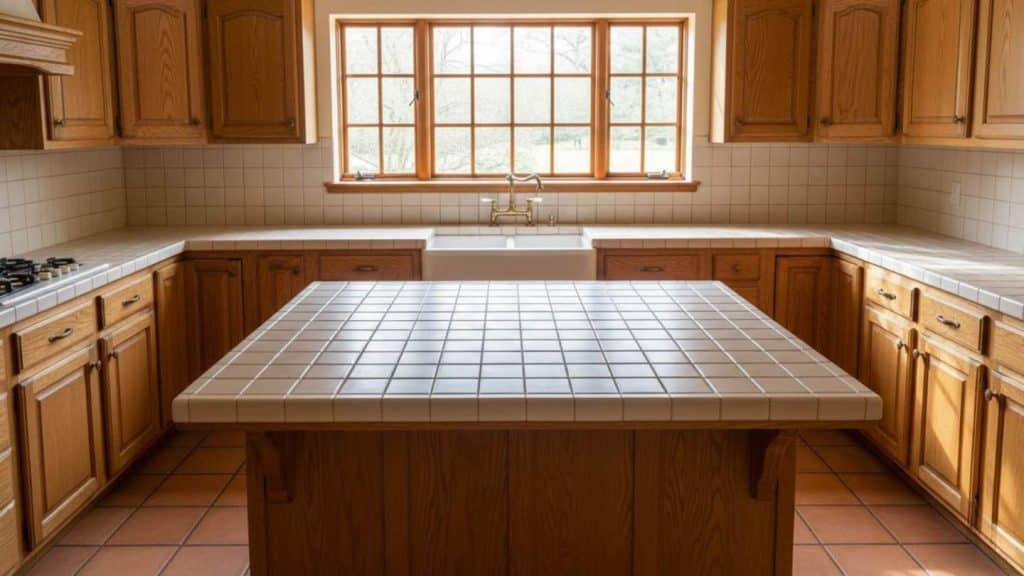
Tile countertops use ceramic or porcelain tiles installed over a countertop base. They offer a wide range of colors, patterns, and styles at a very affordable price.
Individual tiles can be replaced if damaged, which makes repairs easy. However, grout lines can collect dirt and stains over time, requiring regular cleaning.
| Pros | Cons |
|---|---|
| Very affordable option | Grout lines collect dirt and stains |
| Easy to replace individual tiles | Uneven surface compared to stone slabs |
| Wide range of colors and patterns | Grout needs regular sealing and cleaning |
Installation & Cost
- DIY possible; professional install improves finish
- Installed cost ranges from $15 to $40 per square foot
Which Countertop Should You Choose for Your Kitchen?
The right countertop depends on what matters most to you. If easy upkeep is your top priority, quartz is the most practical choice; it requires no sealing and cleans up quickly.
For a natural stone look, granite or quartzite both deliver beauty and strength that holds up over time.
If luxury is what you are after, marble is hard to match for visual appeal, but working with a tight budget? Laminate or tile gives you plenty of style without the heavy price tag.
For a warm, natural feel, butcher block adds character and charm that stone cannot. And if your kitchen leans modern or industrial, concrete or stainless steel makes a bold, sharp statement that stands out right away.
Conclusion
There is no single best countertop for every kitchen. The right choice is the one that fits your life.
Want something easy to maintain? Quartz is a reliable, low-fuss option. Love the look of natural stone? Granite delivers beauty and strength in equal measure.
Working with a tight budget? Laminate gets the job done without the heavy price tag. Want pure luxury? Marble is hard to beat on that front.
But at the end of the day, the best kitchen countertop is the one that matches how you actually use your kitchen. Think first about your daily habits, and the right material will follow.
Frequently Asked Questions
What Type of Countertop Has the Least Maintenance?
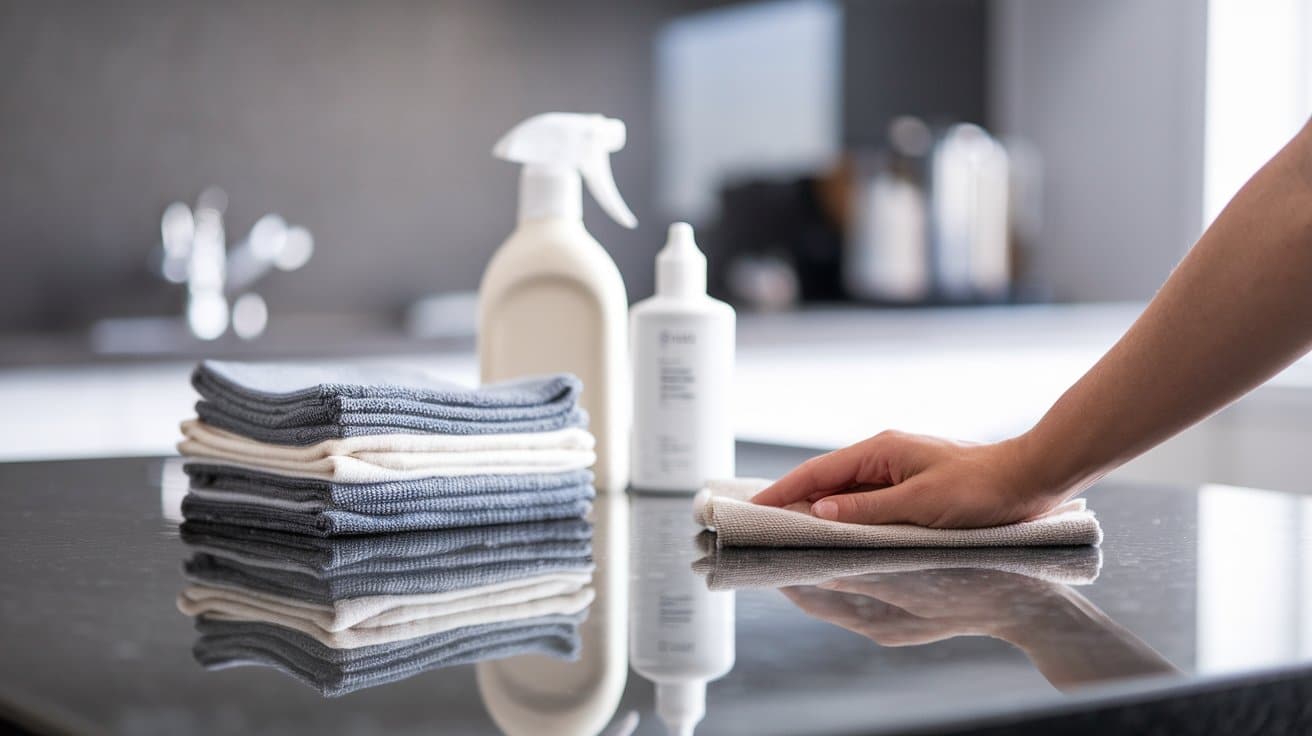
Quartz countertops require the least maintenance. They are non-porous, need no sealing, and clean up with just a wipe.
What Lasts Longer, Quartz or Granite?
Both the last decades with proper care. Granite is harder naturally, but quartz resists stains and daily wear more consistently.
What Is the Newest Trend in Countertops?
Porcelain slab countertops are a growing trend. They are thin, strong, and offer modern stone-like patterns with very low maintenance.