
You found the perfect vanity. The finish is right. The price works. It arrives. Then it sticks out too far into the room.
This happens all the time. Most people measure width and height. Depth gets ignored. That one oversight turns a good purchase into a frustrating fix.
Based on my experience with clients on residential projects, bathroom vanity depth often leads to post-installation regret. Incorrect depth affects the entire bathroom layout.
This guide covers standard sizes, measurement steps, clearance rules, and how to match vanity depth to your bathroom type.
What Is Standard Bathroom Vanity Depth?
The standard bathroom vanity depth is 21 inches. This measurement runs from the back of the cabinet to the front edge, not including the countertop.
Most vanities are 20 to 21 inches deep, the industry standard for fitting average bathrooms and providing enough storage.
Here is the full depth range you will come across while shopping:
| VANITY DEPTH | SIZE CATEGORY | BEST USE CASE |
|---|---|---|
| 12 to 16 inches | Very Shallow | Ideal for powder rooms and tight spaces |
| 17 to 19 inches | Shallow | Good for small bathrooms with limited floor space |
| 20 to 21 inches | Standard | Fits most average-sized bathrooms comfortably |
| 22 to 24 inches | Deep | Best for large bathrooms and double vanities |
One thing you might miss: the countertop usually overhangs the cabinet by about one inch on the front. So a 21-inch cabinet can sit closer to 22 inches at countertop level. Always factor that in when measuring.
The 21-inch standard works for most homes, but the right bathroom depth depends on your space, storage needs, and daily usage.
One rule I follow in every space planning consultation: do not choose depth based on how a vanity looks in a showroom. A showroom has no walls, no doors, and no toilet three feet away; your bathroom does.
The question is, which depth range actually fits your situation?
How to Measure Your Bathroom Before You Buy?
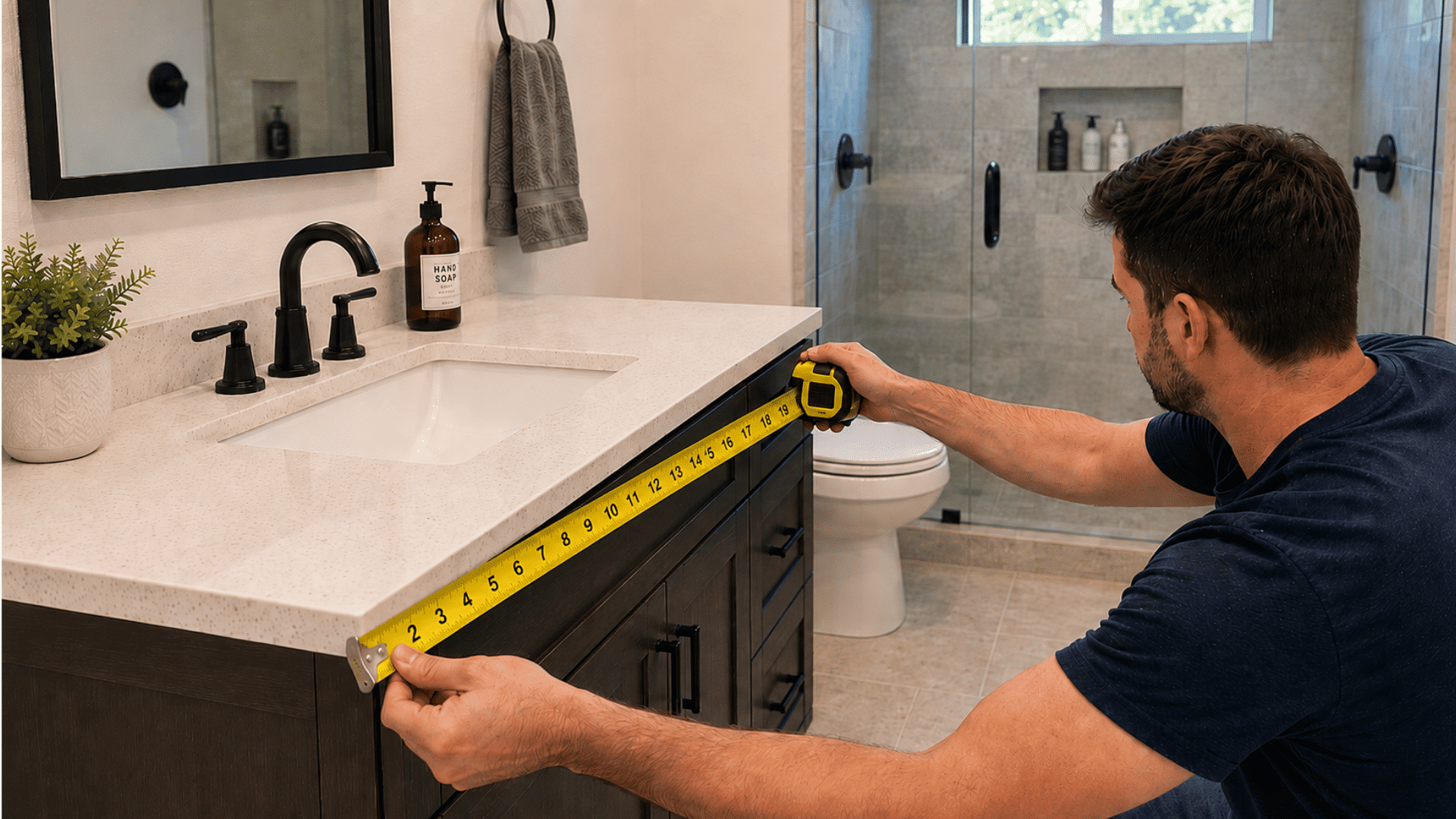
Most people grab a tape measure, check the width, and stop there. That is where the trouble starts.
Measuring for bathroom vanity depth takes five specific steps. Skip any one of them, and you risk buying the wrong size.
| Step | What to Measure | What to Watch For |
|---|---|---|
| 1. Available Depth | Back wall to the point where the vanity ends | This is your maximum depth, not your target depth |
| 2. Baseboard Allowance | Thickness of the baseboard at floor level | Subtract 0.5 to 1 inch from your available depth |
| 3. Door Swings | Every door near the vanity area | Entry doors, shower doors, and cabinet doors all need clear swing space |
| 4. Front Clearance | Front edge of vanity space to the nearest fixture across from it | You need at least 30 inches of open floor space |
| 5. Painter’s Tape Test | Full vanity footprint marked on the floor | Walk around it, open doors, and stand at the sink position before committing |
One tip worth following on every step: measure twice before you write anything down. Bathrooms have tight corners, uneven walls, and fixtures that sit closer than they appear.
If anything feels tight during the painter’s tape test, go shallower. That one step alone saves a costly return.
Numbers on paper only tell part of the story. How you actually move through the space tells the rest, and that is exactly what the clearance rules in the next section are built around.
Clearance Rules That Affect Your Vanity Depth Choice
Choosing the right vanity depth is not just about the cabinet. It is about what surrounds it.
There are specific clearance rules that determine how deep your vanity can realistically go. These are not suggestions. In many cases, they are building code requirements.
1. Front Clearance
You need at least 30 inches of open floor space directly in front of your vanity. This allows you to stand, bend, and move without feeling squeezed.
Some older building codes allow 21 inches as a bare minimum. But 21 inches is uncomfortable for daily use. Always aim for 30 inches if your bathroom allows it.
2. Toilet Distance
The center of your toilet must sit at least 18 inches away from the side of your vanity. This is a standard safety requirement across most building codes.
Some codes allow a minimum of 15 inches, but anything below 18 inches will feel cramped. If your toilet sits close to where the vanity will go, a shallower depth may be the only practical option.
3. Door Swing Clearance
A vanity that looks perfectly sized can still fail if a door swings into it. Entry doors, shower enclosures, and linen closet doors all need full clearance to open without obstruction.
Factor in the depth of the vanity plus the swing arc of every nearby door. If they conflict, reduce your vanity depth before you finalize your choice.
4. ADA Requirements
If you are building or renovating an accessible bathroom, the Americans with Disabilities Act sets specific rules. The vanity top must be mounted between 28 and 34 inches from the floor. There must also be 27 inches of knee clearance and 9 inches of toe clearance underneath.
These requirements directly affect how deep your vanity can be and how it must be installed.
| CLEARANCE TYPE | MINIMUM REQUIREMENT |
|---|---|
| Front of vanity | 30 inches of open floor space |
| Toilet to vanity side | 18 inches from the toilet center |
| Door swing | Full arc must clear the vanity |
| ADA vanity top height | 28 to 34 inches from the floor |
| ADA knee clearance | 27 inches underneath |
| ADA toe clearance | 9 inches underneath |
Clearance keeps your bathroom functional. But another factor quietly shapes how much depth you actually need at the sink itself.
How Your Sink Type Changes the Depth You Need
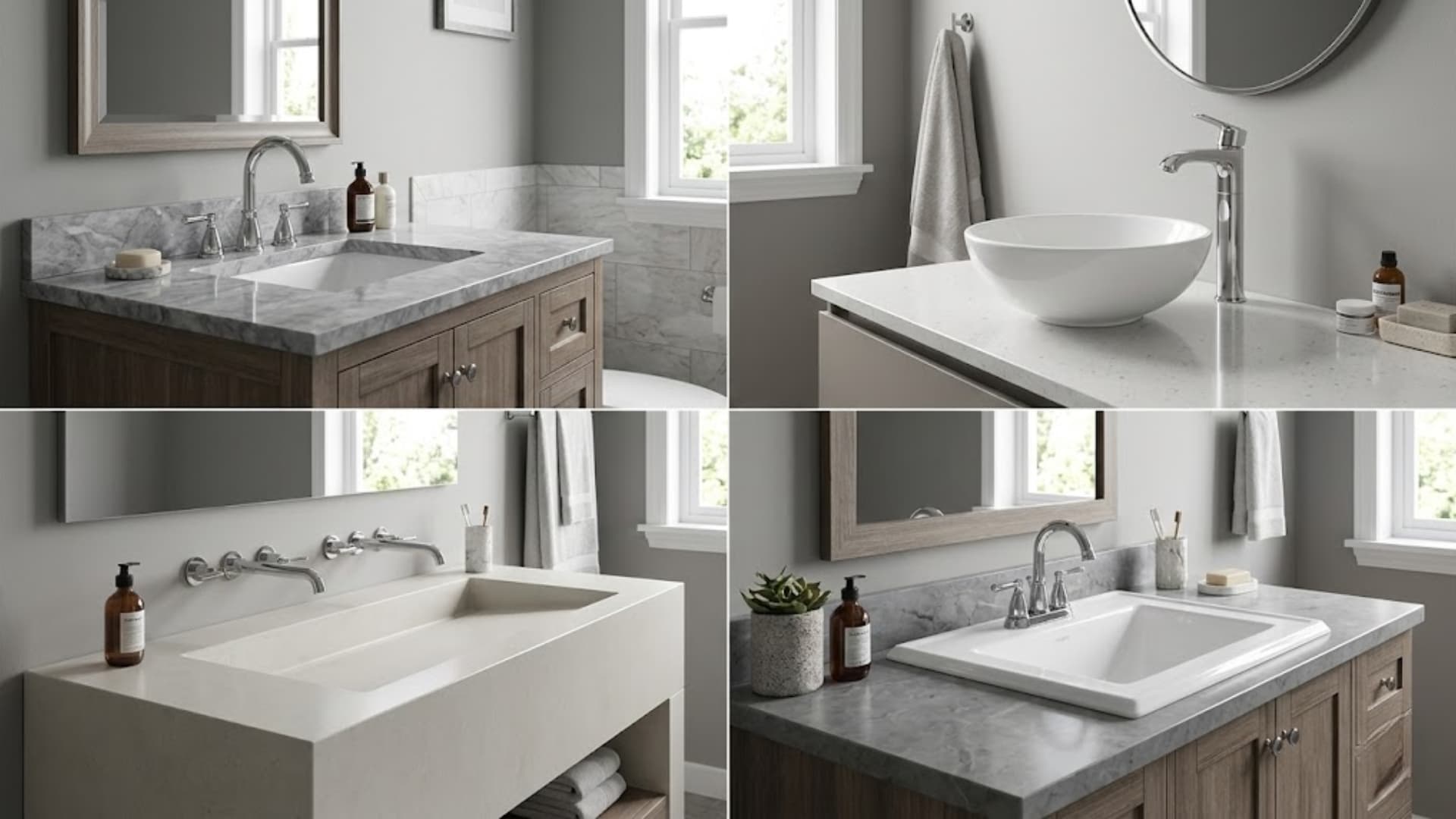
Not every sink fits the same way. The type of sink you choose directly changes how much depth you need to use it comfortably.
An undermount sink sits below the countertop and works well with a standard 21-inch vanity. A vessel sink sits on top, adds height, and does not need extra depth, but requires a faucet spout that reaches the bowl without you leaning forward.
A trough sink is built into the countertop as one unit and needs at least 21 inches to sit properly with usable counter space on both sides.
A drop-in sink works fine at 21 inches, too, but make sure it does not sit so far forward that it cuts into your counter space behind the faucet.
The rule is simple. The more the sink extends toward the front of the counter, the more depth you need to keep things functional.
Sink type narrows down your depth options. But the type of bathroom you are working with narrows them down even further.
Vanity Depth by Bathroom Type
Every bathroom has different demands. The depth that works in a master bath will feel out of place in a powder room. Here is a straight breakdown by bathroom type so you can match the right depth without second-guessing.
| Bathroom Type | Recommended Depth | Why? |
|---|---|---|
| Powder Room / Half Bath | 12 to 16 inches | Very limited floor space. A shallow vanity keeps the room open and walkable. |
| Kids’ Bathroom | 18 to 20 inches | Slightly shallower than standard keeps the sink at a comfortable reach for younger users. |
| Guest Bathroom | 20 to 21 inches | Standard depth works well. Storage needs are moderate, and the layout is typically average-sized. |
| Single Bathroom (Primary) | 21 inches | Full standard depth suits one user with daily storage needs and a regular bathroom layout. |
| Master Bathroom | 21 to 24 inches | More floor space allows for deeper vanities with greater storage and a larger countertop surface. |
| Double Vanity Setup | 21 to 24 inches | Two sinks need enough depth for comfortable individual use with at least 36 inches between faucet centers. |
One thing to keep in mind: the bathroom type gives you a starting range. Your actual clearance measurements from the earlier steps will confirm whether you stay at the low or high end of that range.
Now that you know which depth fits your space and bathroom type, there are a few common mistakes that still trip people up at the final step.
Mistakes to Avoid When Choosing Vanity Depth
Most depth mistakes happen at the very end of the decision process. Everything looks right until it is not. Here are the ones that catch people off guard.
- Forgetting the countertop overhang: The countertop overhangs the cabinet by about one inch at the front. A 21-inch cabinet can measure closer to 22 inches at the surface level. Use the countertop measurement when checking clearance, not the cabinet number.
- Ignoring plumbing location: Your drain and supply lines are fixed to a specific point on the wall. A vanity depth that does not align with the pipes means rerouting the pipes. Measure from the wall to your plumbing before committing to any depth.
- Choosing depth based on looks alone: A deeper vanity looks premium in photos. But a 24-inch vanity with only 28 inches of front clearance leaves you 4 inches of usable space. Always let your measurements lead, not the finish.
- Not accounting for drawer pull-out space: Deep vanities mean deep drawers that need room to open fully. In a tight layout, those drawers will either hit the opposite wall or stay permanently half-open.
- Assuming all same-depth vanities fit the same way: Cabinet depth, countertop depth, and sink projection are three different numbers. Always check all three before you buy.
Getting these details right before purchase saves you from an expensive lesson after.
Conclusion
Bathroom vanity depth is one of those decisions that feels small until you get it wrong. The right depth keeps your bathroom open, your plumbing aligned, and your daily routine comfortable.
The wrong one creates problems that no amount of styling can fix.
Choose a vanity depth that fits your bathroom layout, sink style, and clearance needs. A well-fitted vanity will always feel more practical and comfortable than one chosen only for appearance.
Still figuring out which depth works for your bathroom?
Use the breakdown in this guide, grab your tape measure, and start with the painter’s tape test. It takes five minutes and saves you from a decision you cannot undo.
Frequently Asked Questions
Can I Install a Deeper Vanity Without Moving Plumbing?
Only if your drain and supply lines fall within the new vanity’s footprint. If the depth pushes past those points, rerouting is unavoidable.
Does Vanity Depth Affect Resale Value?
Not directly. But a poorly sized vanity makes a bathroom feel cramped, which affects how buyers perceive the space during a walkthrough.
What Is the Shallowest Depth That Fits a Functional Sink?
Most sinks need at least 16 inches to sit properly. Below that, your sink options become very limited and may require a wall-mounted faucet.
Can a Floating Vanity Be Installed at Any Depth?
The height is adjustable, but the depth still depends on the cabinet size you choose. The open floor underneath makes any depth feel less bulky.