
Succulents don’t usually die from neglect. They die from too much water.
You water your plant when the leaves look a little tired. You add a splash on a hot afternoon. A few weeks later, the whole thing collapses in slow motion. The roots are gone. You feel terrible.
Sound familiar? You’re not alone. Overwatering is the top killer of houseplant succulents, and it usually comes from caring too much rather than too little. The fix isn’t a special tool or expensive soil. It’s a small shift in how you think about your plant’s water needs.
This guide breaks down the right method and the real numbers behind it. You’ll learn the small fixes that turn a struggling plant into a thriving one.
Let’s get into it.
How to Water Succulents in 30 Seconds
Indoor succulents typically need water every 14 to 21 days.Outdoor potted succulents need it every 7 to 14 days during their growing season.
But the calendar lies. Always check the soil first. Here is the method in plain words:
- Wait until the soil is fully dry from top to bottom.
- Pour water slowly until it runs out of the drainage hole.
- Empty the saucer so roots don’t sit in water.
- Wait until the soil dries out fully again before the next round.
Quick decision flow:
- Is the soil dry to the bottom of the pot?
If no, wait. - Are the lower leaves slightly soft or wrinkled?
If yes, water. - Are the leaves still firm and plump?
If yes, wait a few more days.
That’s it. The rest of this guide explains the why and the how.
What Does “Soak and Dry” Actually Mean?
Succulents come from places with rare but heavy rainfall. Think desert flash floods. The plant gets a deep drink, then nothing for weeks.
Your watering should copy that pattern.
When you soak the soil, water reaches every root. The plant takes what it needs and stores it in those plump leaves. As the soil dries, the roots stretch out hunting for more moisture. That builds a strong root system.
Light, frequent sips do the opposite. The roots stay shallow. The plant stays weak. One missed watering can kill it.
Skip the spray bottle: Skip the spray bottle. Misting wets the leaves but barely touches the roots, and it is one of the most common watering mistakes. Save the spray bottle for one job, for only propagating leaves.
How Often to Water Succulents
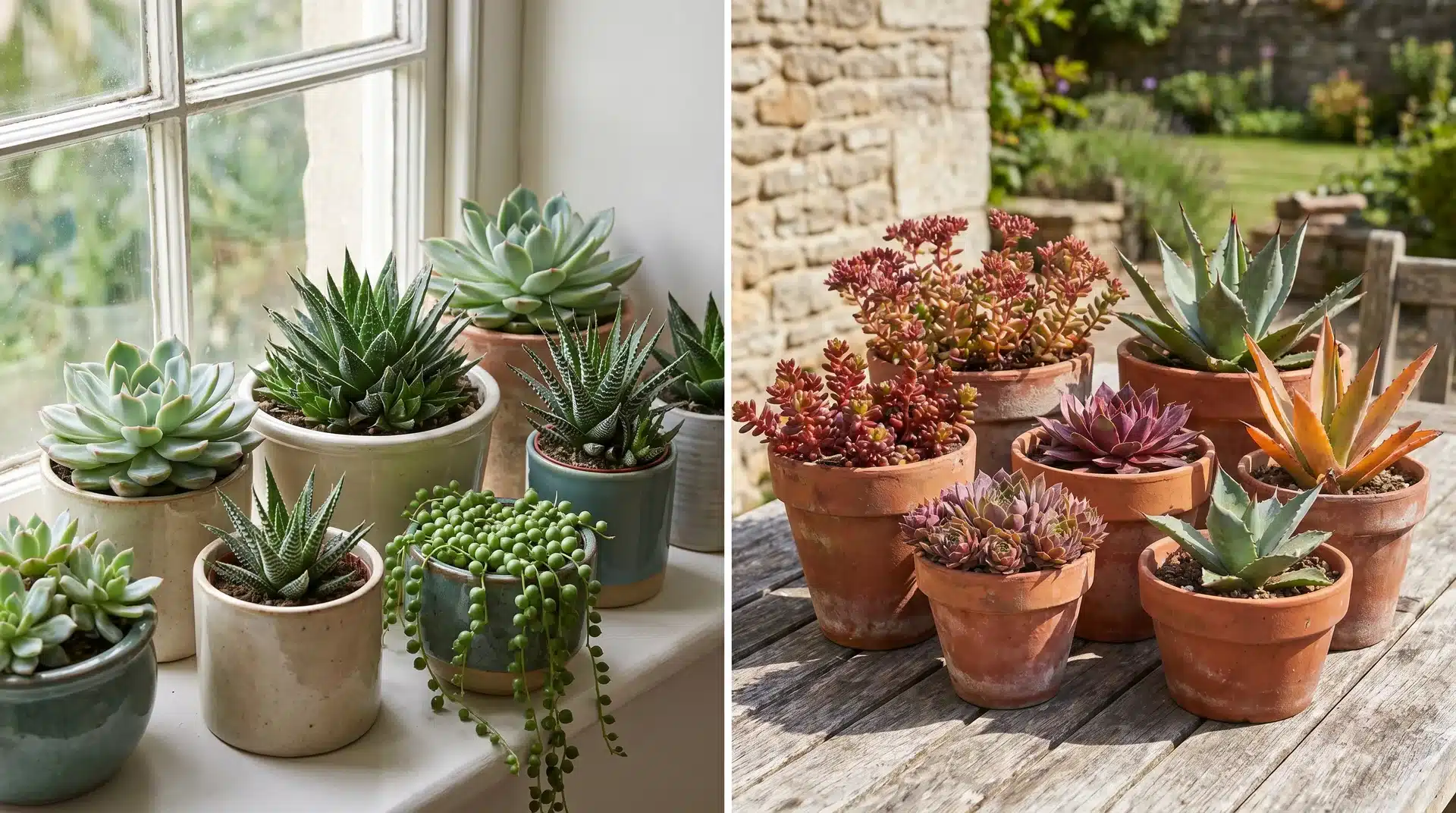
Watering frequency depends on three things: where the plant lives, the season, and the pot.
Use these baselines, then adjust based on the plant.
Indoor Succulents
Baseline: every 14 to 21 days
| Water more often when | Water less often when |
|---|---|
| Heating or AC is running | Light is low |
| You use terracotta pots | You use plastic or glazed pots |
| The air feels dry | The room stays humid |
Outdoor Potted Succulents
Baseline: every 7 to 14 days in spring and summer
Cut back to once every 3 to 4 weeks in winter.
| Water more often when | Water less often when |
|---|---|
| It’s hot, dry, or windy | After heavy rain |
| Pots sit in full sun | Pots sit in the shade |
In-Ground Garden Succulents
Baseline: rainfall alone, most of the time
Established garden succulents only need extra water during heat waves or long dry spells.
Pro Tip: Plant rot-prone types like barrel cactus on a slope or raised bed. Gravity helps the soil drain faster.
The “Every X Days” Trap
A fixed schedule fails because six things change how fast the soil dries:
| Factor | Dries faster when | Dries slower when |
|---|---|---|
| Soil mix | Gritty, well-draining | Dense, organic-heavy |
| Pot size | Small (under 4”) | Large (8” +) |
| Pot material | Unglazed terracotta | Plastic or glazed |
| Humidity | Dry climate or room | Humid air |
| Season | Spring and summer | Winter |
| Plant age | Young, with new roots | Mature, established |
Trust the soil over the calendar.
How Much Water Does Each Plant Need?
Real numbers help here. Use these as starting amounts for each soak:
- Small pots (under 4 inches): 2 to 4 ounces (60 to 120 ml)
- Medium pots (4 to 8 inches): 4 to 6 ounces (120 to 180 ml)
- Large pots (8 inches or more): 6 to 10 ounces (180 to 300 ml)
Outdoor pots need more. Bump those amounts up by half during hot weather.
The simplest rule for any pot with a drainage hole: pour until water runs out the bottom. That’s your real signal that the soil is fully soaked.
For pots with no drainage, use about half the volume of soil in water. We’ll cover that next.
Step-by-Step: How to Water Succulents the Right Way
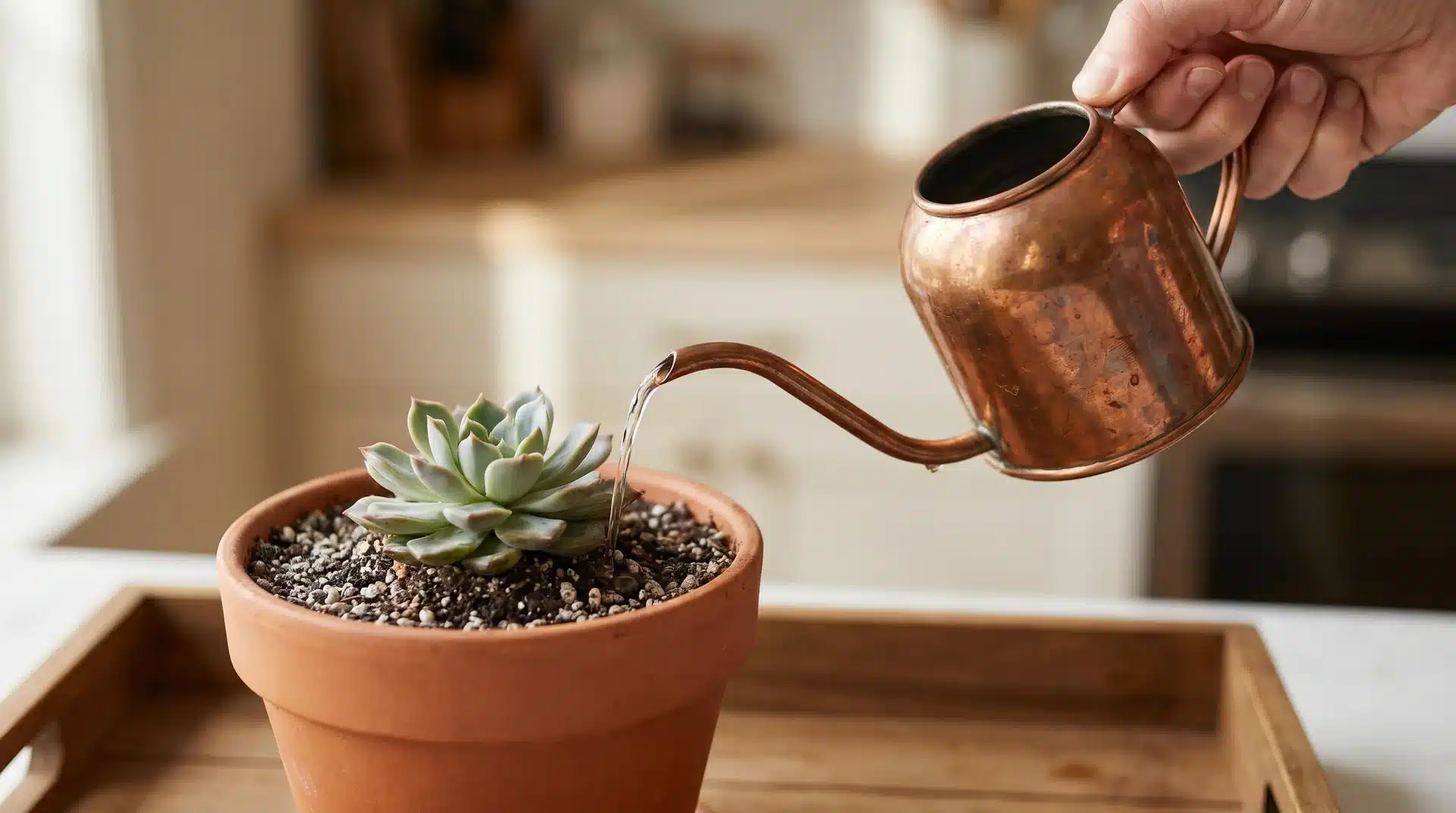
Follow these steps every single time:
- Check the soil: Stick your finger 1 to 2 inches in. If it feels even a little damp, wait.
- Pick the right tool: A narrow-spout watering can or squeeze bottle gives you control.
- Aim at the soil, not the leaves: Water sitting on top of leaves can cause rot.
- Pour slowly: Let the soil absorb it. Don’t blast the surface.
- Stop when water runs out of the drainage hole: This indicates that the soil is fully saturated.
- Drain the saucer: Roots sitting in standing water will rot fast.
- Set the pot in good light and airflow: The soil should dry out within 2 to 3 days.
Wait until the next full dry-out before you water again.
Top Watering vs. Bottom Watering: Which Is Better?
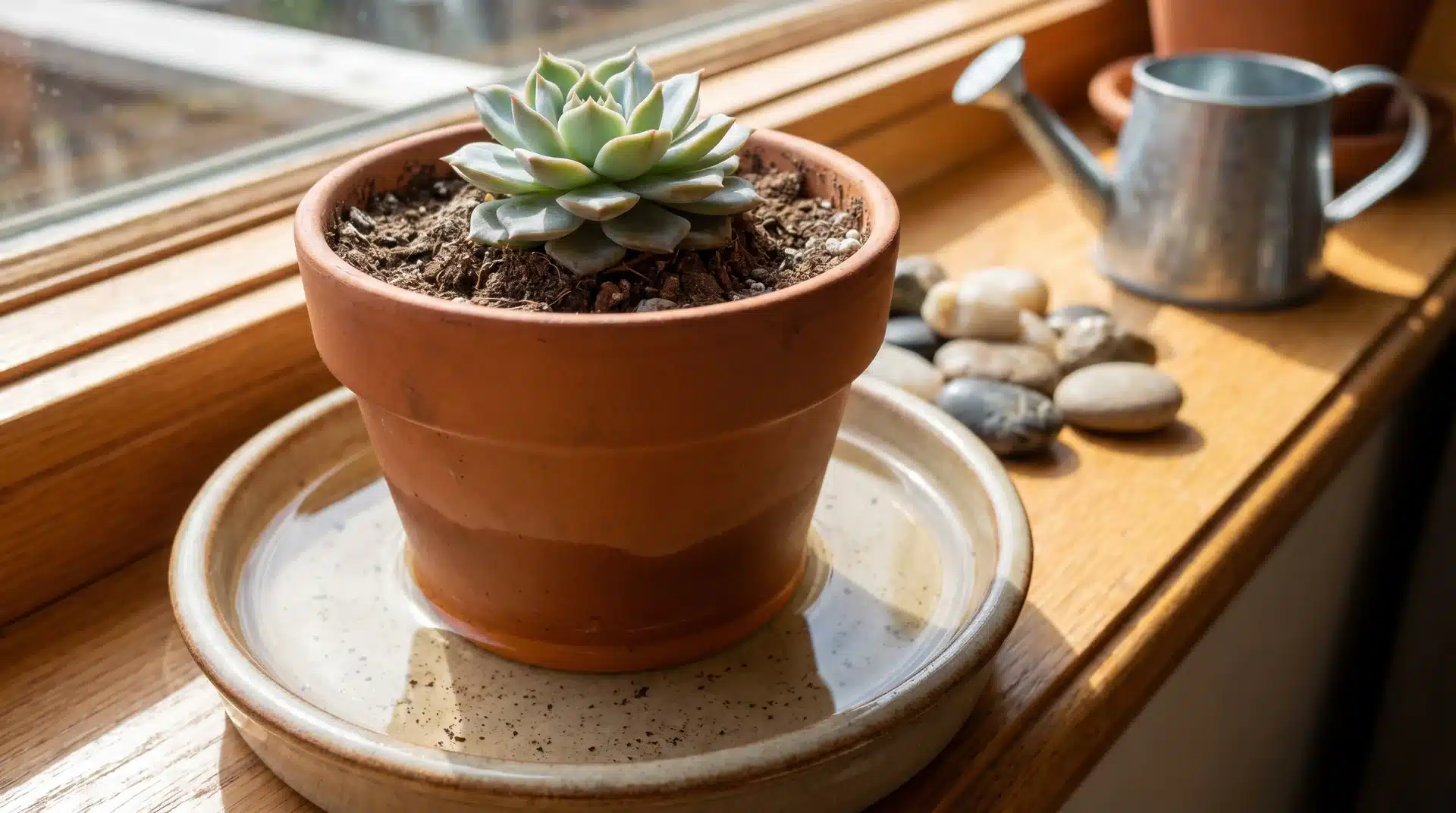
Top watering is faster and easier. It also flushes built-up minerals out of the soil. Use it for most succulents.
Bottom watering means setting the pot in a tray of water for 15 to 30 minutes. The soil pulls water up through the drainage hole. This works well for:
- Fuzzy-leaved succulents that hate wet leaves
- Tight rosettes like Echeveria, where water can pool in the crown
- Pots with packed or hardened soil that doesn’t soak in from the top
Stop after 30 minutes either way. Letting the pot sit longer leads to overwatering.
| How to Water Succulents Without Drainage Holes?
Pots without drainage holes are tricky but doable. The keys are soil choice, water amount, and patience. Use a chunky, gritty mix: About two-thirds is rock (pumice, perlite, coarse sand) and one-third is organic matter. This lets air move through the soil, helping it dry faster. Measure the water: Use roughly half the soil volume. If the pot holds 1 cup of soil, pour about half a cup of water. Tilt and drain if you overpour: Hold the plant in place with one hand. Tip the pot sideways over a sink. Excess water will run off. Skip the pebble layer myth: Adding gravel or charcoal at the bottom does not “create drainage.” Water still pools above it. A chunky soil mix does much more good. |
What Kind of Water Should You Use for Succulents?
Water quality affects succulents more than you might expect.
Tap water is fine for most succulents. Hard tap water can cause trouble over time. The minerals build up in the soil and the plant.
The signs are yellowing leaves, a white crust on the soil surface, or slowed growth.
Best to worst water sources:
- Rainwater: Naturally acidic and full of light minerals. The gold standard.
- Distilled or filtered water: Clean and safe for any succulent.
- Tap water at the right pH: Fine if your local water isn’t too hard.
- Hard tap water without treatment: Works short-term but causes buildup.
Succulents prefer slightly acidic water with a pH of 5.5 to 6.5. If your water is hard or alkaline, add 1 to 2 tablespoons of white vinegar per gallon. Citric acid granules also work as a gentler option.
Use room-temperature water. Cold water can shock the roots, especially in summer.
When to Adjust: Seasons, Heat Waves, and Dormancy
Succulents follow seasonal rhythms. Your watering should too.
Spring and fall are the active growing months for most types. Stick to your normal cycle.
Summer splits the group. Echeveria, Sedum, and Aloe keep growing and need regular water. But Aeoniums and some Sempervivums go summer dormant. They want very little water during the hot months.
Winter slows almost everything down. Cut watering to once every 3 to 6 weeks indoors. Cold soil plus wet roots equals fast root rot.
Heat waves call for extra care. Water early in the morning or just before sunset. Never water during midday heat. A sunbaked hose holds scalding water that can cook the roots.
Pro Tip: If a heat wave hits, move potted succulents into shade. A bedsheet thrown over outdoor beds works as a quick shade cloth in a pinch.
Signs You’re Watering Wrong (and How to Fix It)
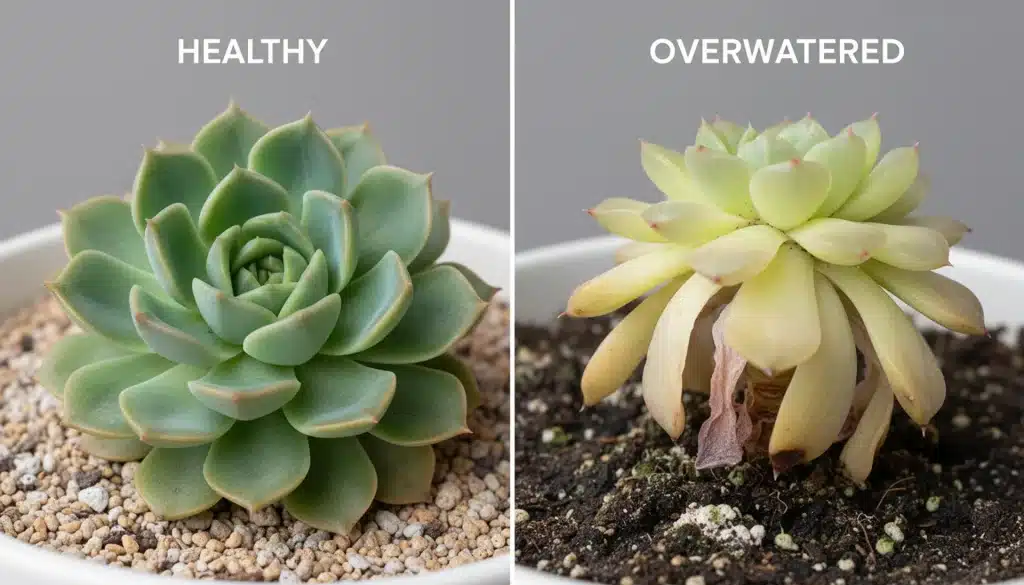
Your succulent will tell you what’s going on. Learn to read the leaves.
Quick Symptom Check
| Overwatered | Underwatered |
|---|---|
| Mushy, see-through, or yellow leaves | Wrinkled, soft leaves |
| Black spots near the stem base | Deflated, less plump look |
| Leaves fall at the slightest touch | Brown crispy leaf tips |
| Soil smells musty or sour | Lower leaves are drying and falling |
Note: A few dry lower leaves are normal. Widespread shriveling is not.
How to Rescue an Overwatered Succulent
Act fast. Here is the process:
- Stop watering right away. Don’t try to “balance it out.”
- Take the plant out of its pot.
- Look at the roots. Healthy roots are white or light tan and firm.
- Trim away any black, soft, or smelly roots with clean scissors.
- Lay the plant on a paper towel and let it dry for 24 to 48 hours.
- Repot in fresh, dry, gritty soil.
- Wait a full week before the first watering.
If the base of the stem is rotted, save the top. Cut above the rot. Let the cut callus over for 3 to 5 days. Then plant it in dry soil to allow it to grow new roots.
How to Rescue an Underwatered Succulent
Soak the soil thoroughly once. Then resume your normal cycle.
Don’t water more often to “catch up.” That sends a thirsty plant into shock and causes rot.
Special Watering Situations
Some setups don’t follow the standard rules. Here’s how to handle the four most common ones without killing your plant.
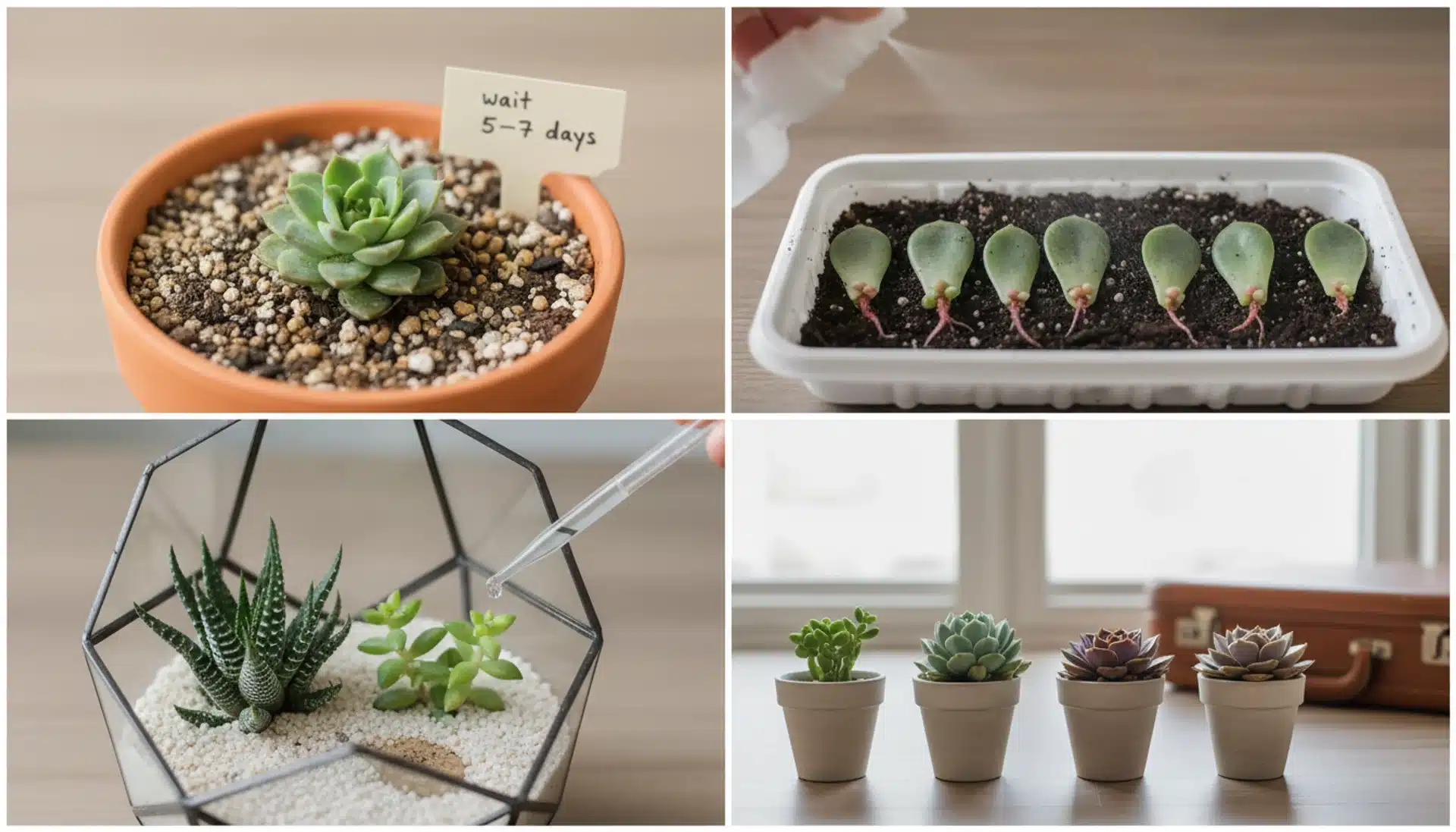
1. Newly bought or just-repotted succulents
Wait 5 to 7 days before the first watering. Damaged roots need time to heal. Watering right away pushes water into wounds, which can cause rot.
2. Watering leaves and cuttings during propagation
This is the only time to use a spray bottle. Mist the soil daily to keep the top damp. The leaves will absorb water from the air around them.
Once the new roots are an inch long and the babies have a few small leaves, switch to the soak-and-dry method.
3. Terrariums and closed glass containers
Use a pipette or eyedropper. Add water near the base of each plant. Stop the moment you see moisture at the bottom of the glass. Less is always more here.
4. Going on vacation
Healthy succulents handle 2 to 4 weeks alone with no problem. Soak deeply the day before you leave. Move pots out of direct sun to slow evaporation. Skip any “self-watering” gadgets; they keep the soil too wet.
Watering Differences by Succulent Type
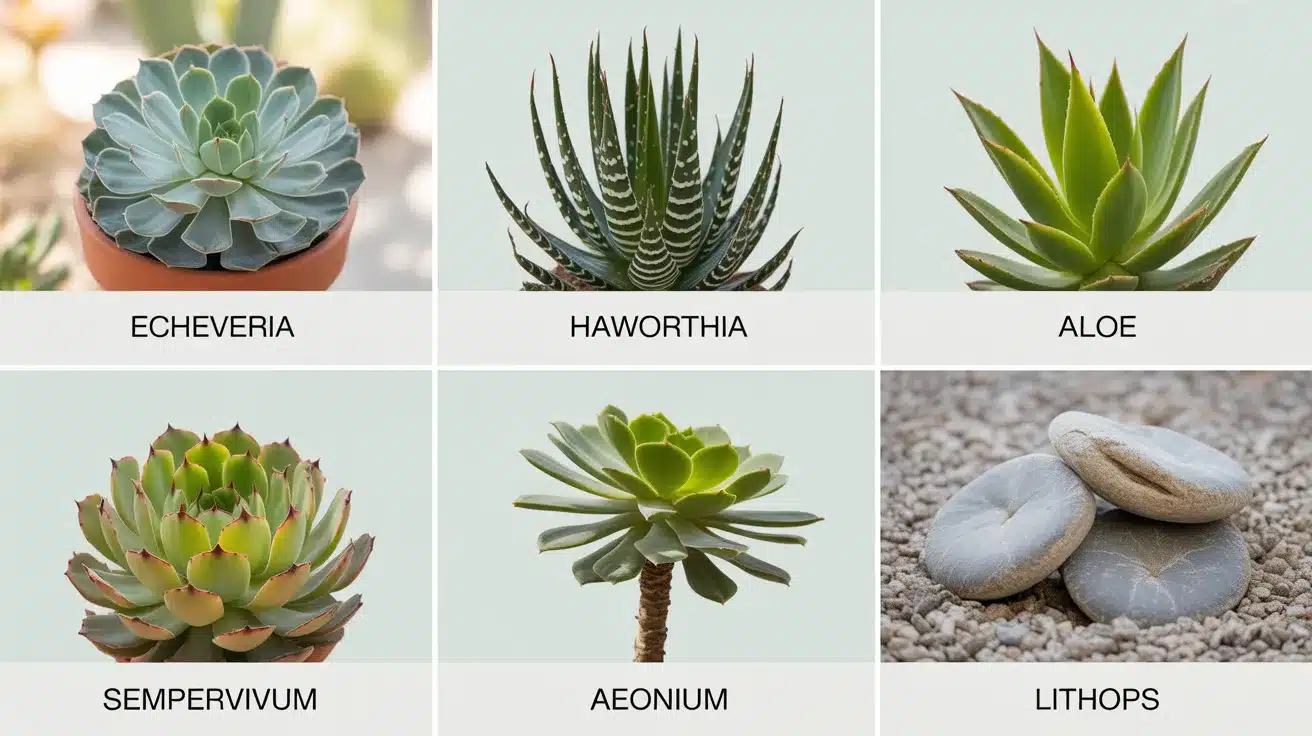
Not all succulents drink the same way. Here is a quick breakdown by type.
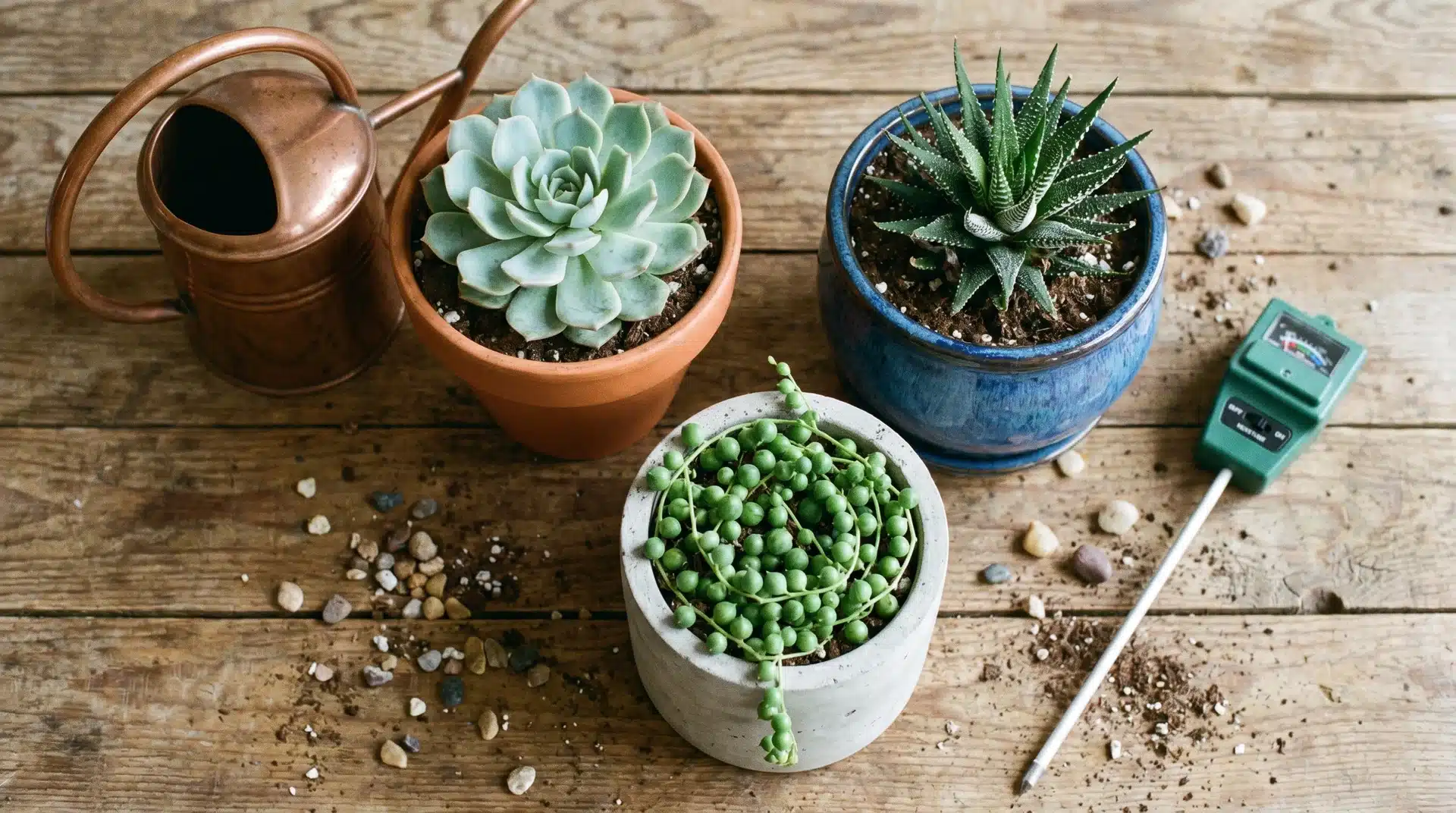
- Echeveria, Graptopetalum, Pachyphytum: Standard soak-and-dry. Keep water out of the rosette center.
- Haworthia, Gasteria: Slightly more shade-tolerant, water a bit more often.
- Aloe: Very forgiving. Standard cycle works well.
- Sedum and Sempervivum (hardy types): Outdoor favorites. Almost no water in winter.
- Aeonium: Summer dormant. Cut water way back from June through September.
- Lithops and other mimicry plants: Extremely picky. Water only during their growth phase. None at all when dormant.
- Christmas cactus, Rhipsalis, holiday cacti: Tropical types. Never let the soil go bone dry.
When in doubt, look up your specific plant. A Lithops on the same schedule as an Echeveria will die fast.
Conclusion
Watering is the single biggest skill in succulent care. Get it right, and everything else: light, soil, and repotting fall into place. Get it wrong, and even the healthiest plant won’t last a season.
The good news? The fix is mostly mental. Once you start reading the plant instead of the clock, the whole thing clicks.
So pick the plant on your shelf that worries you most and put these steps to work this week. Then come back for the trickier cases: the no-drainage pot, the leggy Aeonium, the wrinkled Echeveria.
Once watering and early plant care clicks, dial in your soil mix next. Then learn to propagate from a leaf. Those two steps turn one plant into a small collection.
Happy gardening!
Frequently Asked Questions
How to Tell if A Succulent is Happy?
A happy succulent has firm, plump leaves with rich color, holds its shape well, and shows steady new growth at the center or tips.
What Eats Succulents at Night?
Slugs, snails, earwigs, and mealybugs feed on succulents at night. Outdoors, deer, rabbits, squirrels, and rodents may also chew the leaves, especially during dry spells.
Why Do You Put Cinnamon on Succulents?
Cinnamon works as a natural fungicide. Sprinkle it on cuttings or pruned wounds to dry them out, prevent rot, and stop fungal infections from setting in.
Can You Water Succulents with Ice Cubes?
No. Ice cubes deliver too little water, too slowly, and the cold can shock the roots. Use room-temperature water and the soak-and-dry method instead.
Do Succulents Need a Moisture Meter?
Not usually. The finger test (stick a finger 1 to 2 inches into the soil) works for most pots. A moisture meter helps if you have large or deep containers where the finger test can’t reach.