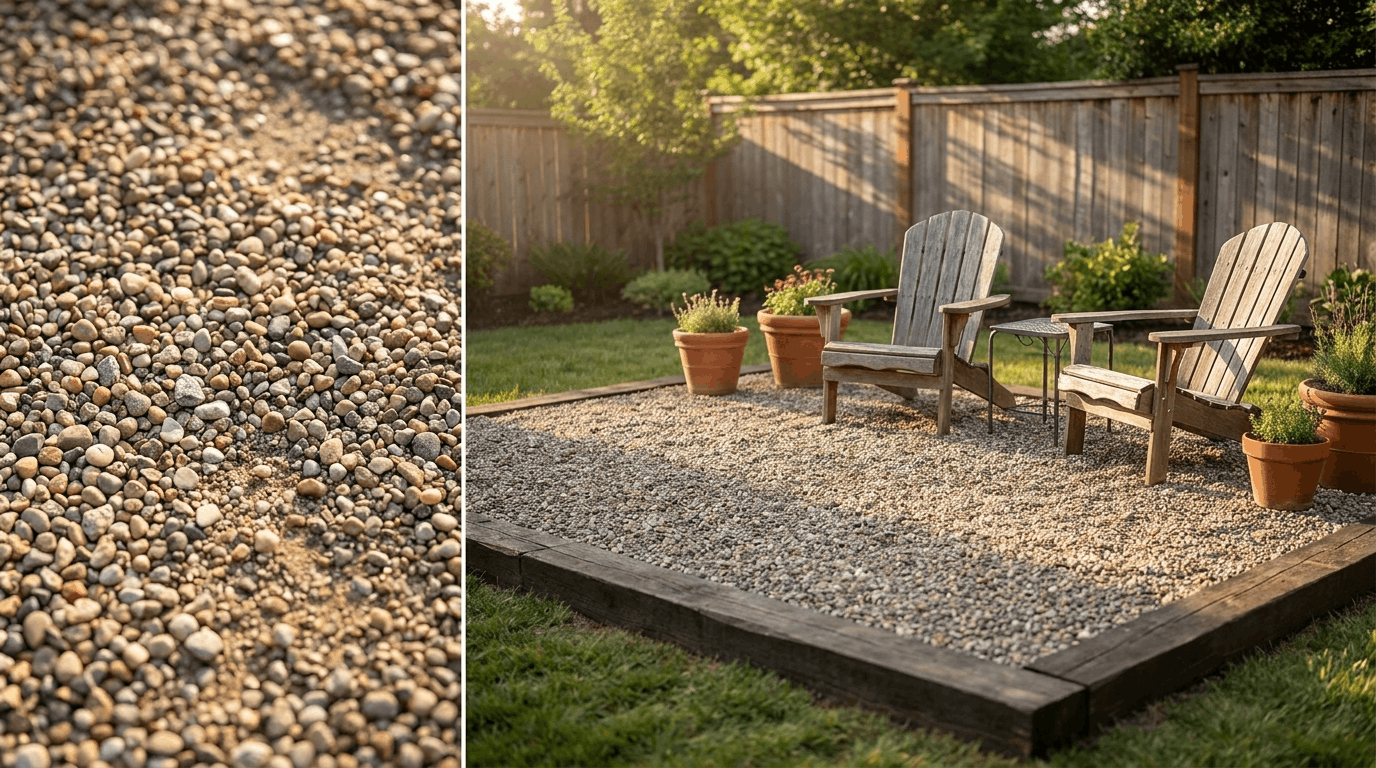

Pouring a concrete patio costs $6 to $10 per square foot before labor. Natural stone pavers push even higher. A gravel patio runs $1 to $3 per square foot in materials.
You can install the whole thing yourself over a weekend.
The worry most people have is this: will it look cheap? That’s a fair question.
The gap between one that looks like a construction site and one that looks intentional is not about money. It comes down to gravel choice, solid edging, and a bit of planning before the first stone goes down.
These ideas cover every situation: tight budgets, small backyards, fire pit zones, and cleaner modern designs. There is something here for a 50-square-foot side yard and a 500-square-foot entertaining space.
What Makes a Gravel Patio Work
A gravel patio is exactly what it sounds like: loose stone used as the surface.
No mortar, no concrete, no curing time. The prep work underneath is what determines whether it holds up or slowly falls apart.
Three things matter before the gravel goes down:
- Landscape fabric first. It blocks weed growth without stopping water from draining through.
- Edging next: metal strips, timber sleepers, or stone. Without it, gravel migrates into the lawn within a season.
- Gravel depth of 2 to 3 inches. Go thinner, and the fabric shows through. Go deeper, and walking on it gets difficult.
Get those three right, and the patio will look good for years with minimal attention.
Choosing the Best Gravel for Your Patio
The type of gravel changes how the patio looks, how it feels underfoot, and how much maintenance it needs.
|
Gravel Type |
Best For |
Feel Underfoot |
Key Note |
|
Pea gravel |
Casual, cottage, high-traffic patios |
Smooth and comfortable |
Shifts easily. Solid edging is non-negotiable |
|
Crushed stone |
Modern or structured layouts |
Angular and firm |
Packs tightly and stays put better than pea gravel |
|
Decomposed granite |
Mediterranean and desert styles |
Fine-grained, almost packed |
Hardens slightly when wet. Looks very finished |
|
River rock |
Accent borders only |
Large and uneven |
Hard to walk on regularly. Use it as a border detail |
For patio use, aim for a stone around 20mm (roughly ¾ inch). Smaller than that, and it scatters with every footstep. Larger and it’s uncomfortable under bare feet.
One thing most people skip: color affects heat. Lighter gravel reflects the sun in exposed yards. Darker stone absorbs it. A charcoal granite looks sharp in a shaded corner.
In a full-sun south-facing yard, it can feel like standing on a griddle by mid-July.
Sort These Out Before You Start
Before laying gravel for your patio, proper preparation is key. Taking a few extra steps now prevents uneven surfaces, sinking furniture, and other common issues later.
- Check Drainage First: Inspect the area for pooling water or heavy clay soil. Lay a crushed stone base under the fabric if needed, or your patio will become muddy and uneven over time.
- Plan for Furniture Early: Decide on furniture placement before spreading gravel. Wide-leg chairs and benches sit stably; narrow legs sink. For dining setups, place flat paver pads under tables and chairs to prevent sinking.
- Match Gravel to Sun Exposure: Choose gravel based on sunlight. Light-colored gravel stays cooler in sunny areas; dark stone absorbs heat in shaded spots. Avoid using photos taken under different lighting for reference.
- Install Edging Before Gravel: Place edging before spreading stone. Trying to add edging afterward around loose gravel is difficult. Pre-installing makes it easier to contain gravel and achieve clean, defined borders.
Following these steps ensures a stable, comfortable, and visually appealing patio.
Proper planning saves effort, prevents future headaches, and makes your outdoor space enjoyable for years.
17 Gravel Patio Ideas to Try in Your Backyard
Here are 17 ideas organized by type: budget builds, small spaces, fire pit setups, and modern layouts. Pick by what your yard needs.
Budget-Friendly Gravel Patio Ideas
These cost-effective gravel patios maximize style without breaking the bank, offering practical solutions for small spaces and simple installations.
1. Classic Pea Gravel with Metal Edging
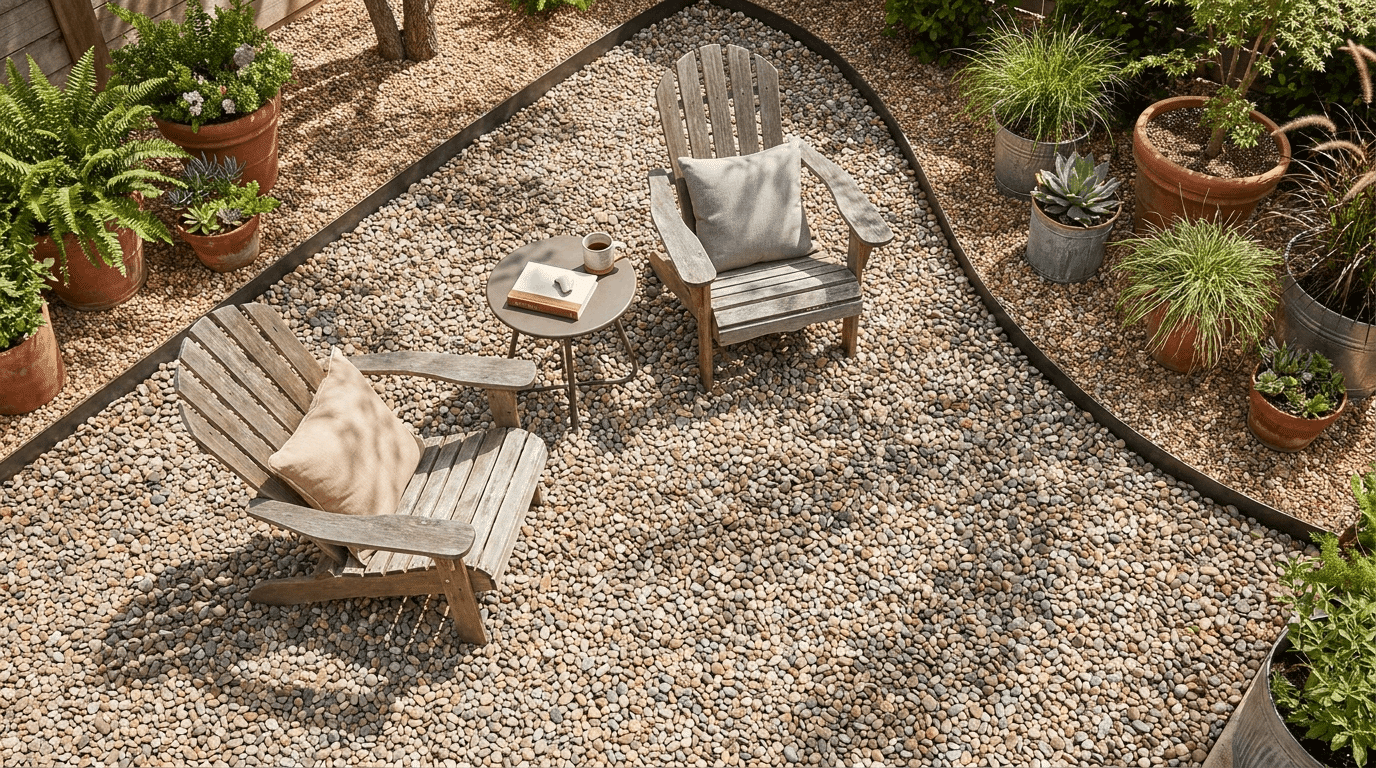
This is the simplest version of a gravel patio. Pea gravel in a clean rectangular or circular layout, held in by steel edging strips. The edging costs around $2 per linear foot. It keeps everything tidy without any ongoing effort.
Add two Adirondack chairs, a small side table, and a couple of potted plants along the perimeter. It looks purposeful without coming across as a budget project.
2. Gravel with Cobblestone Border
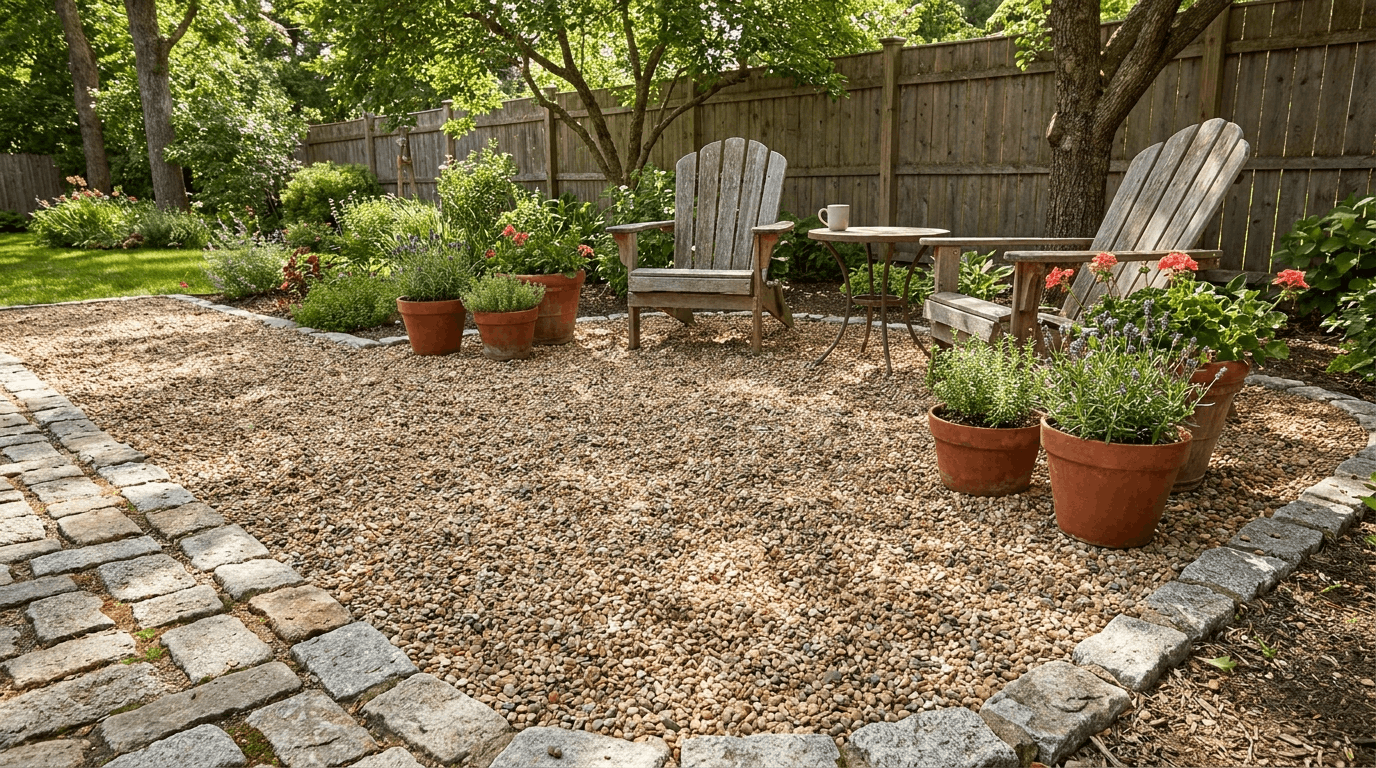
Salvaged cobblestones or secondhand paving stones create a border at very low cost. They hold gravel in place and add visual weight to the perimeter. They look like they have been there for a long time.
Check Facebook Marketplace and local salvage yards. Old cobblestones come up frequently when people redo driveways. They are often free or close to it.
3. Timber Sleeper Edge Patio
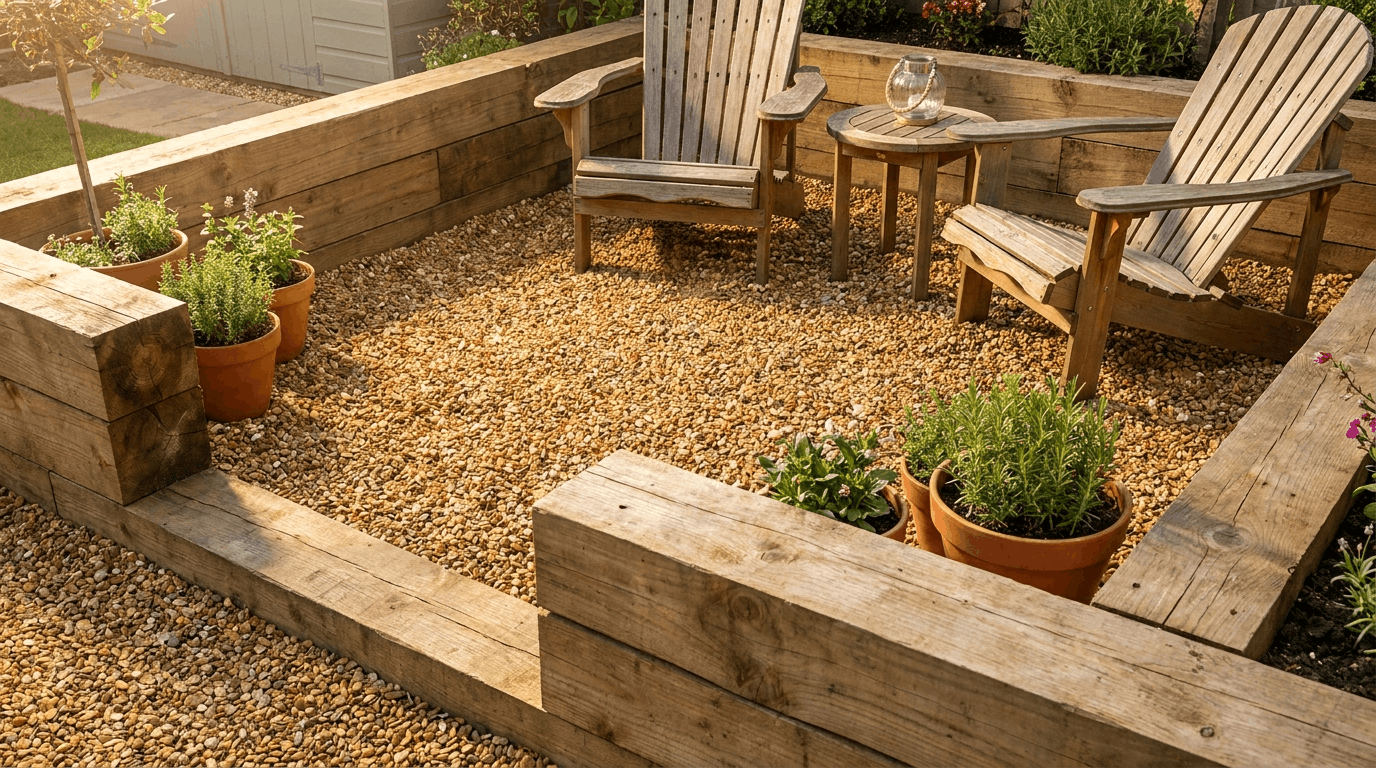
Treated timber sleepers create a warm, natural border that works with almost any backyard style. Basic sleepers run $10 to $20 each.
Double them up for a slightly raised effect. Fill the interior with pea gravel, and you have a clearly defined outdoor room for well under $200 in materials.
Small Backyard Gravel Patio Ideas
Small yards have specific constraints: tight space, awkward corners, shade from fences or trees. These four ideas are built around those realities.
4. Gravel and Stepping Stone Combo
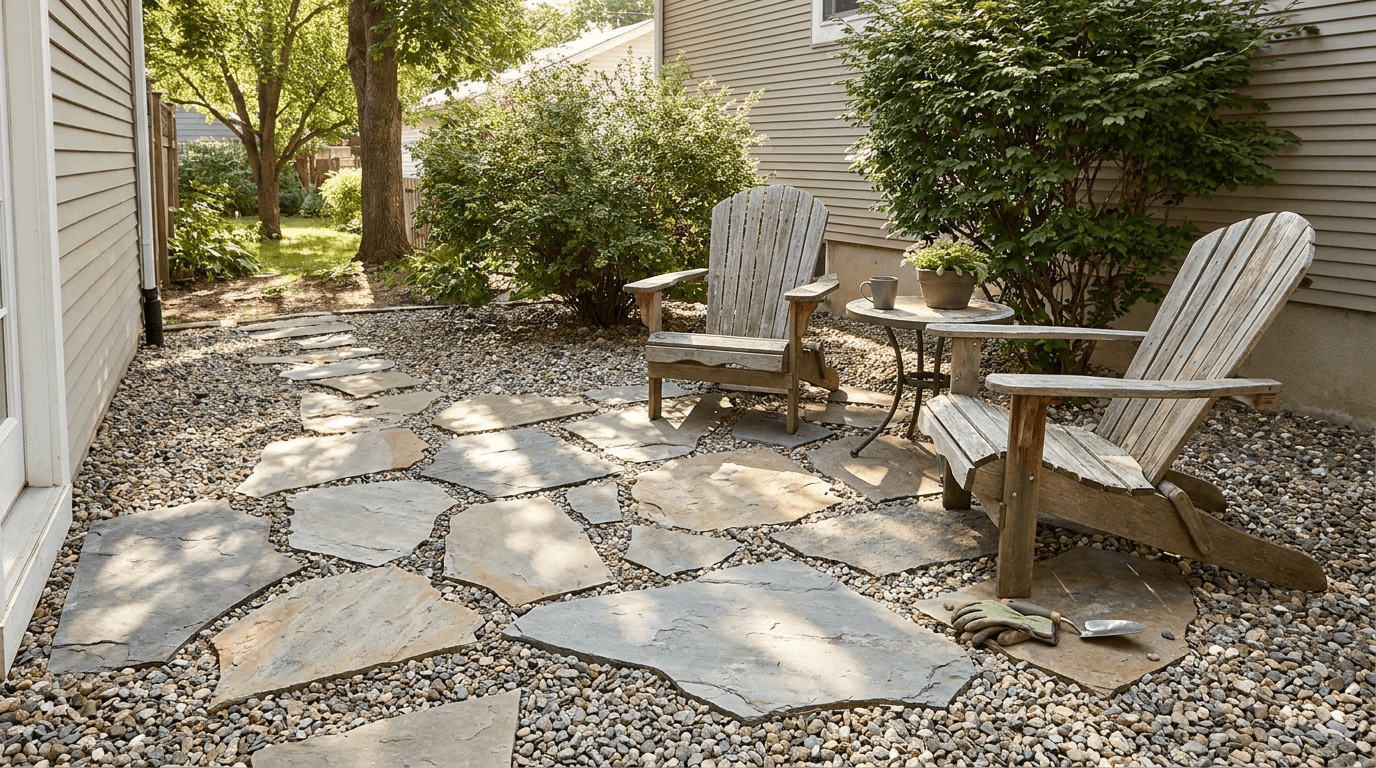
Lay large flagstones in a loose, informal pattern across a gravel base. The stones handle foot traffic. The gravel fills the gaps and handles drainage.
This works well in narrow side yards where a full-slab surface would feel too heavy. It is also one of the more forgiving DIY projects because you can adjust stone positions freely as you go.
5. Corner Patio Nook
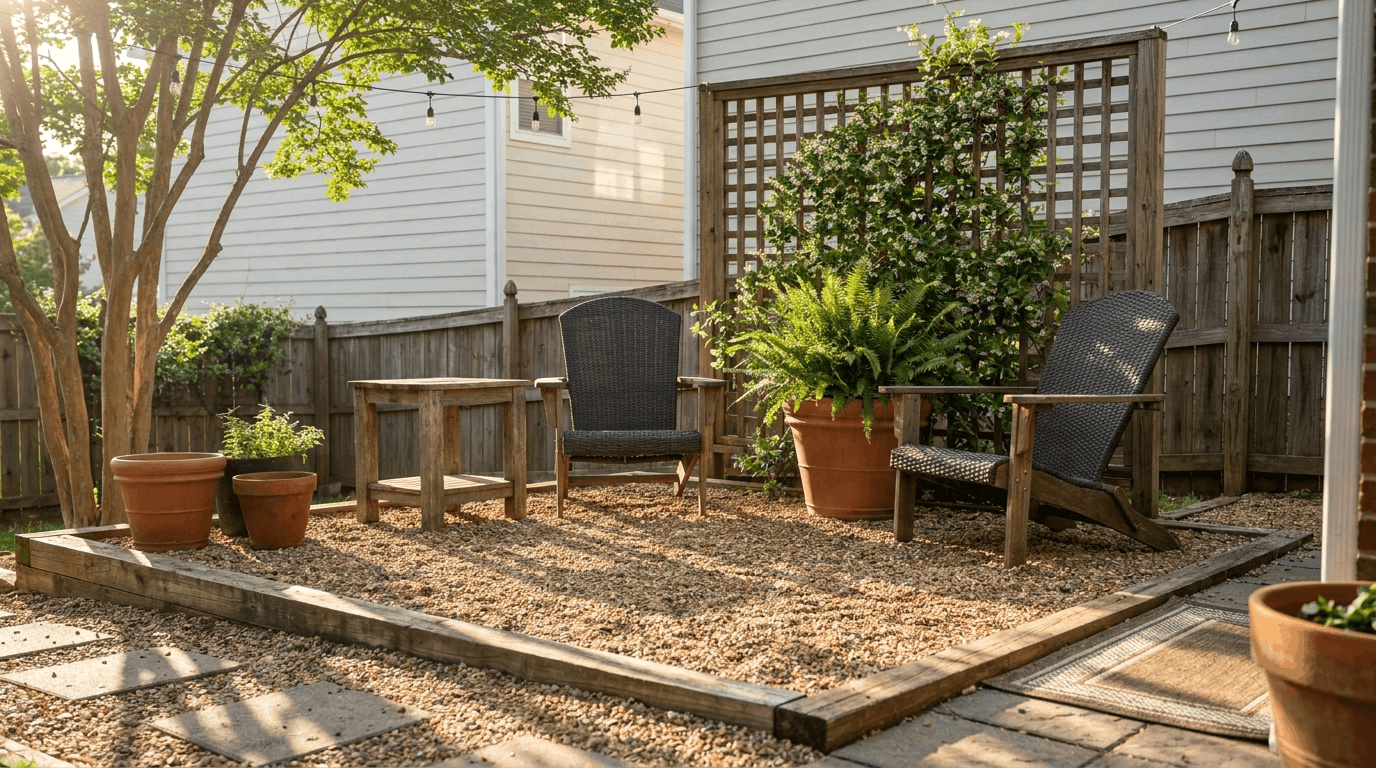
Pick one corner of the yard. Define it with edging. Fill it with gravel, add two chairs and a small table, and the job is done. This idea is consistently underestimated.
A single corner gravel nook changes how a small yard feels by giving the space a clear purpose. One tall planter or a simple trellis anchors the corner and keeps it from feeling like an afterthought.
6. Sunken Gravel Patio
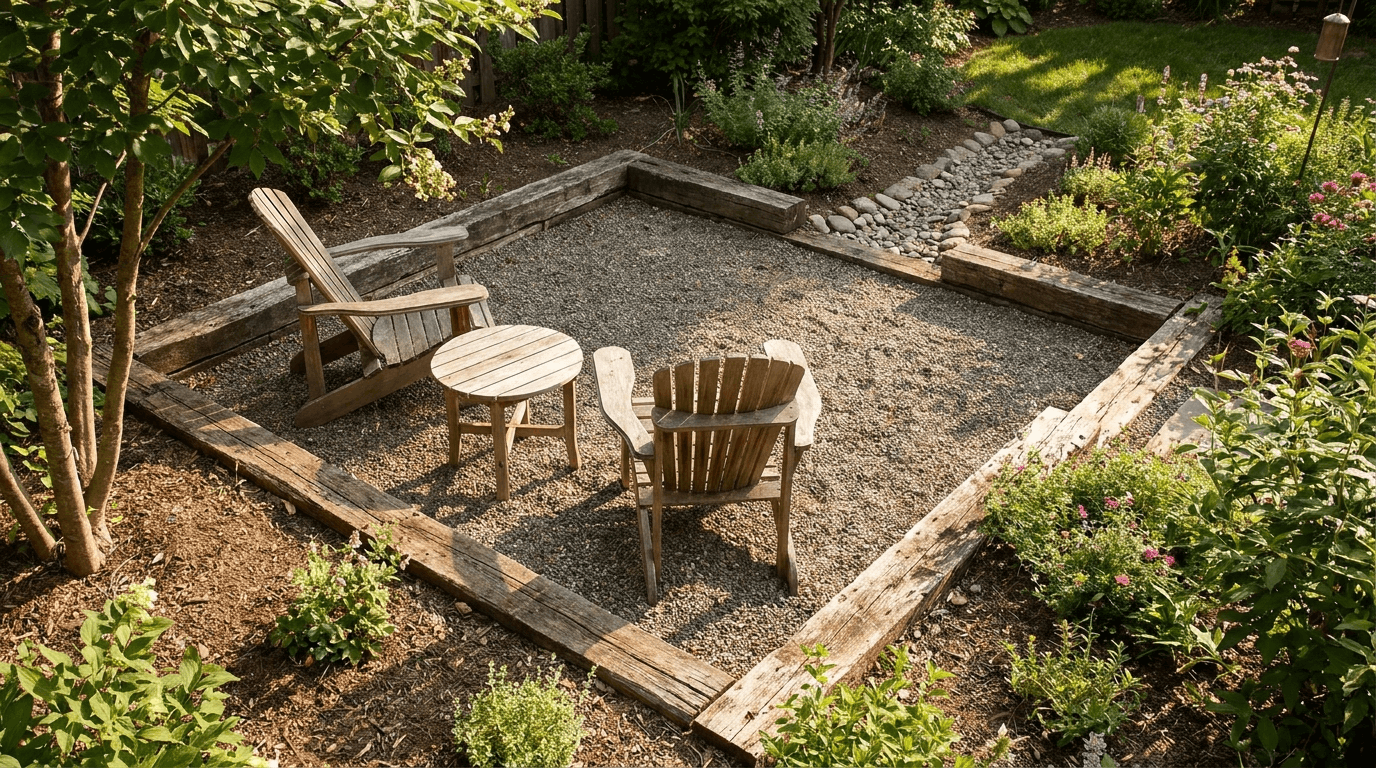
Excavate 4 to 6 inches. Edge with low retaining timbers or concrete blocks. Fill with gravel.
The slight drop creates an enclosed feeling that a surface-level patio rarely matches. It also handles drainage well. The surrounding soil channels water toward the gravel rather than away from it.
7. Gravel Under a Tree Canopy
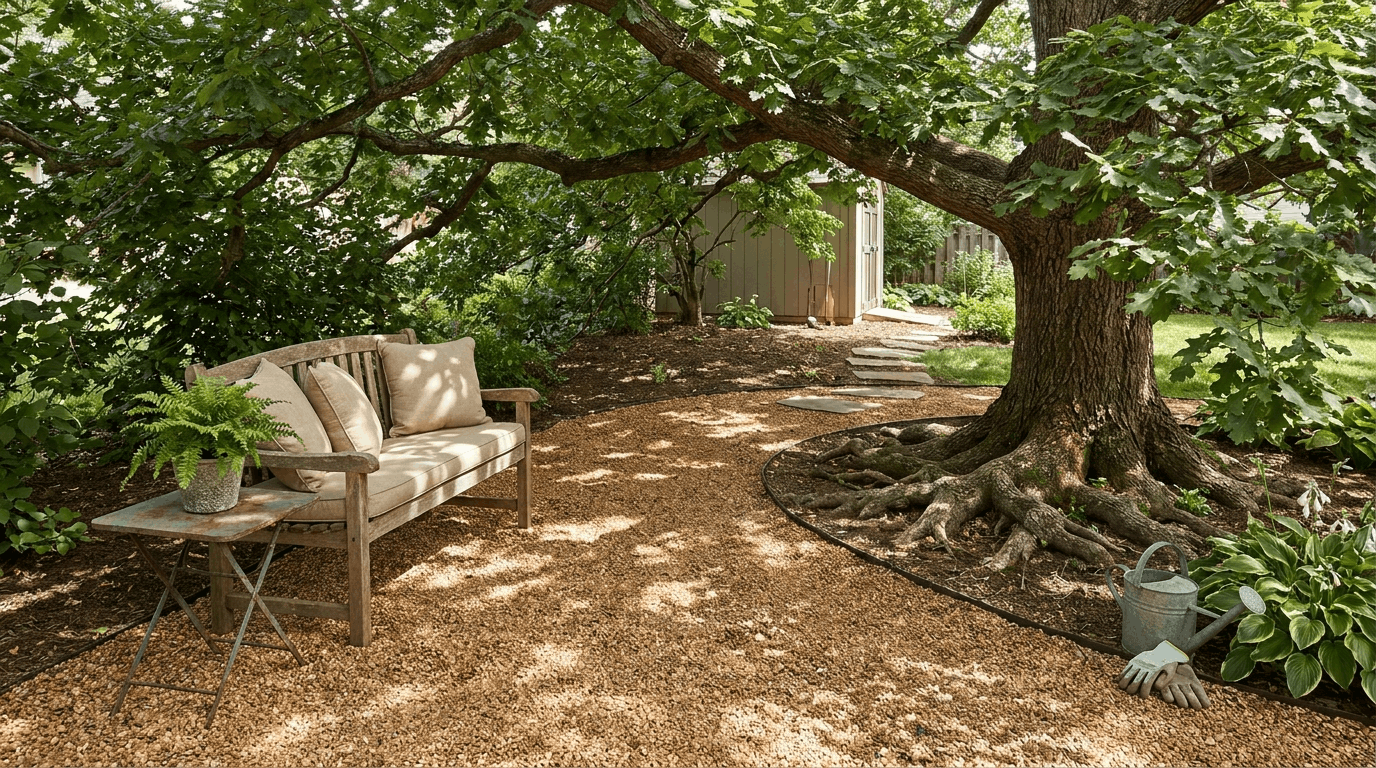
Grass rarely survives under a mature tree. The shade is too deep and the roots too competitive. Replace patchy, struggling grass with pea gravel and a bench or two.
Roots are not a problem for gravel the way they are for concrete or pavers. The surface adjusts around them without cracking. It also looks intentional, as if the tree and the seating area were always meant to share the space.
Gravel Patio Ideas with a Fire Pit
Gravel is one of the most practical surfaces for a fire pit area. It handles embers safely, drains rain overnight, and costs very little to install.
8. Circular Pea Gravel Fire Pit Zone
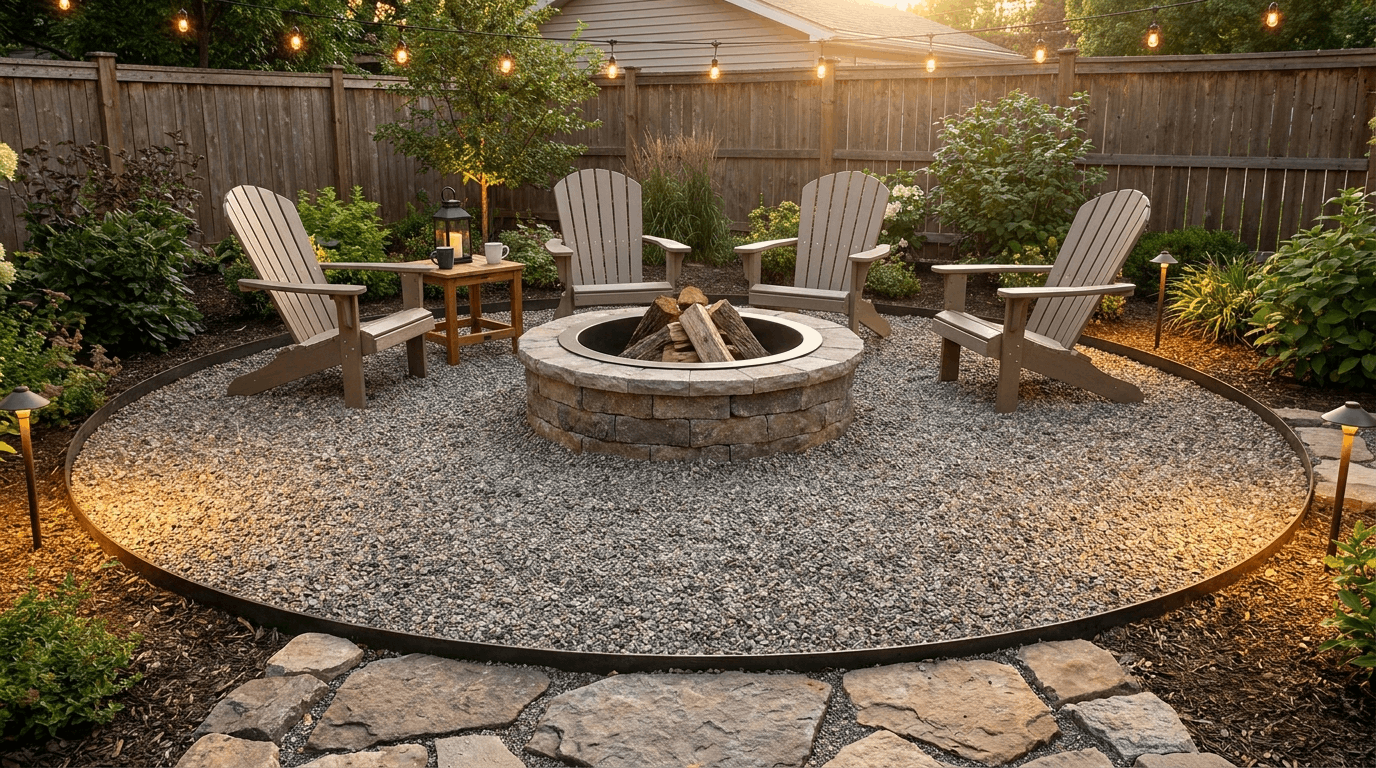
Rake gravel into a defined circle around a fire pit. Edge the circle with a steel ring, laid bricks, or natural stone. The shape marks the fire zone clearly and prevents the whole area from looking random.
Pea gravel is a practical choice here. It won’t catch fire if embers land on it, and it keeps the area from turning muddy between uses.
9. Gravel Patio with Gas Fire Pit Table
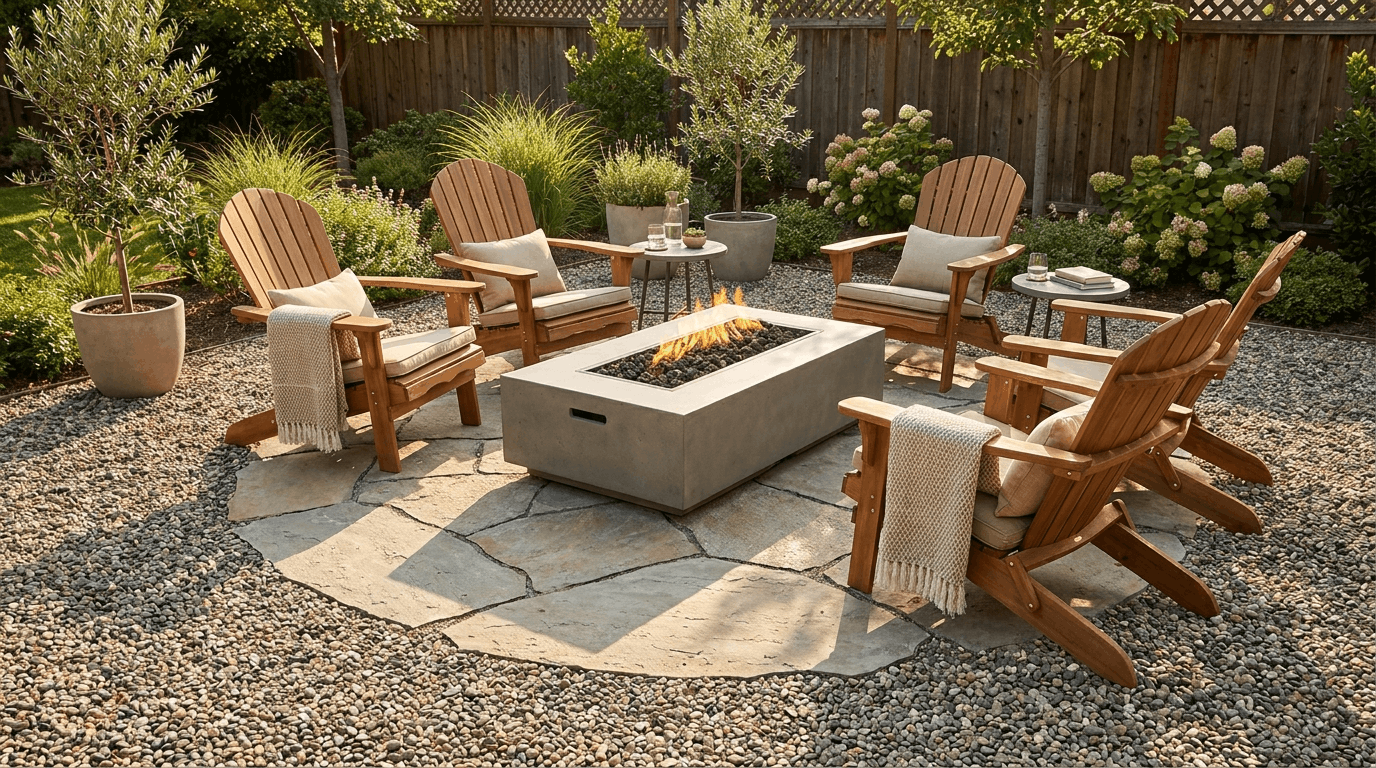
Gas fire pit tables need a stable base. Lay a flat stone or concrete paver pad directly under the table. Extend gravel outward for the seating zone.
This setup works well for people who want fire without smoke or the hassle of hauling wood. The paver pad keeps the table from shifting. Gravel keeps the overall cost down compared to paving the entire area.
10. Crushed Stone Fire Pit with Log Storage
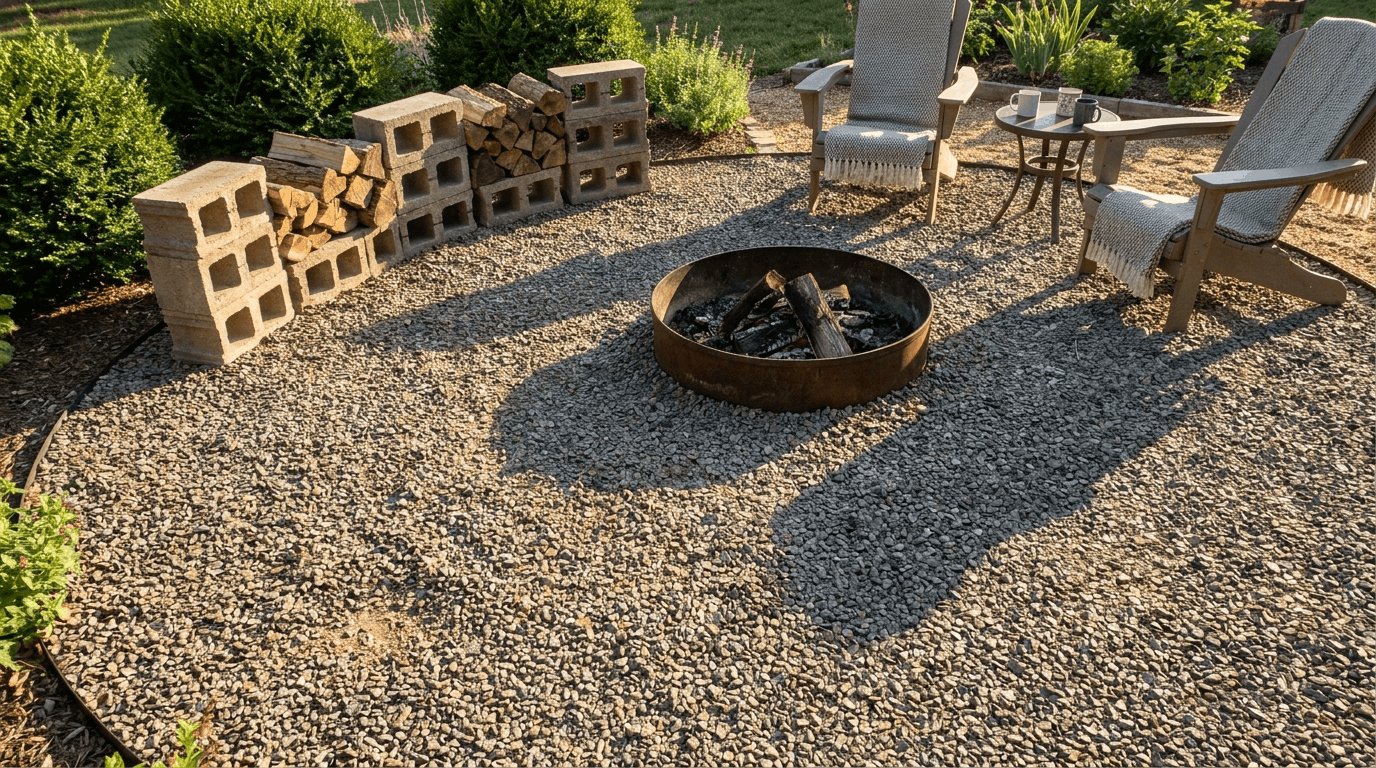
Crushed stone compacts firmly underfoot. It’s more stable than pea gravel for a heavily used fire area. Pair it with a simple cinder block log store built into one side.
Stack cinder blocks two or three high. The hollow cells hold firewood. The total material cost for the storage unit is around $20. It looks tidy and eliminates the scattered log pile problem.
11. Gravel Fire Pit Patio with String Lights
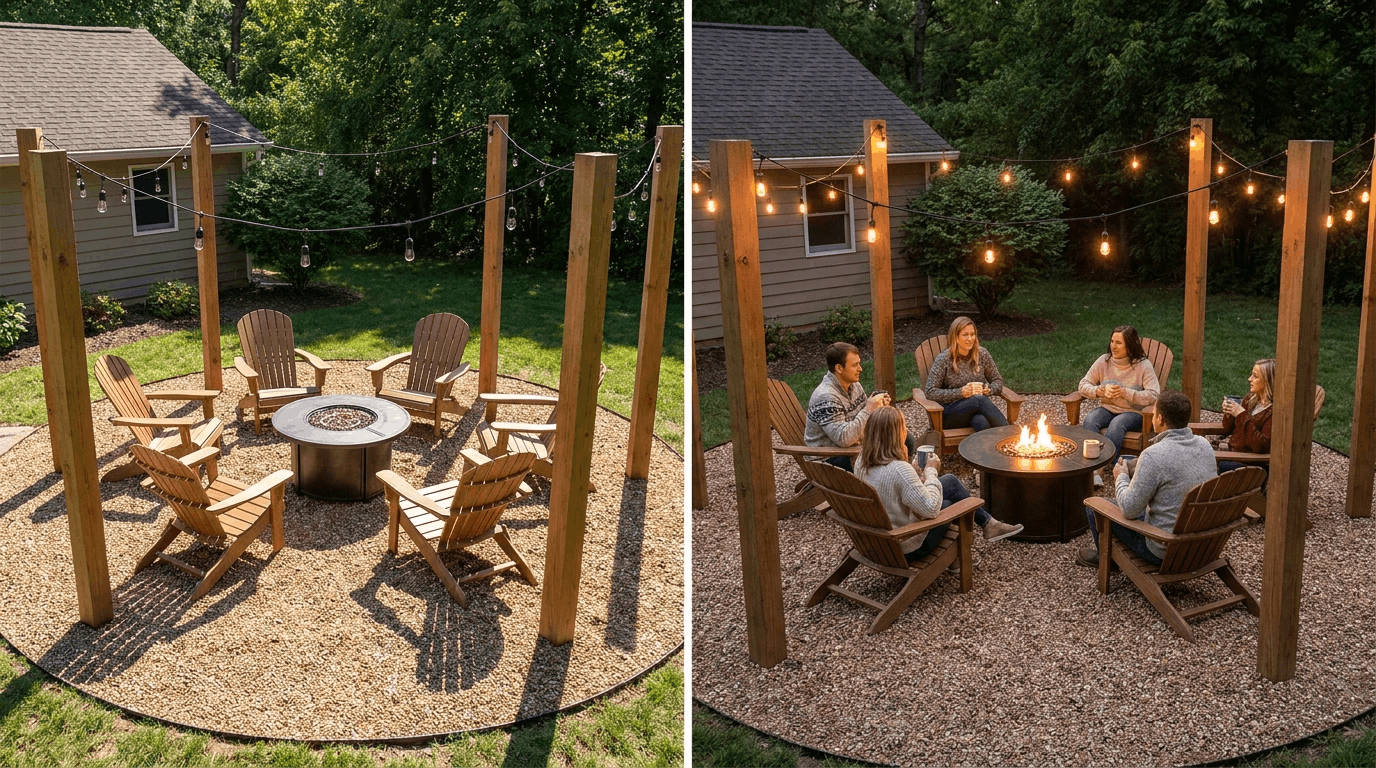
Wooden posts set around the perimeter hold string lights above the seating area. Solar-powered options keep the running cost at zero.
Plan for this at the build stage, not after. Sink the posts when you set the edging. Digging post holes into finished gravel is possible but annoying.
Modern Gravel Patio Ideas
These designs lean toward clean lines, restrained color, and materials that look sharp with minimal fuss. Most work with a range of home styles.
12. Minimalist White Gravel Layout
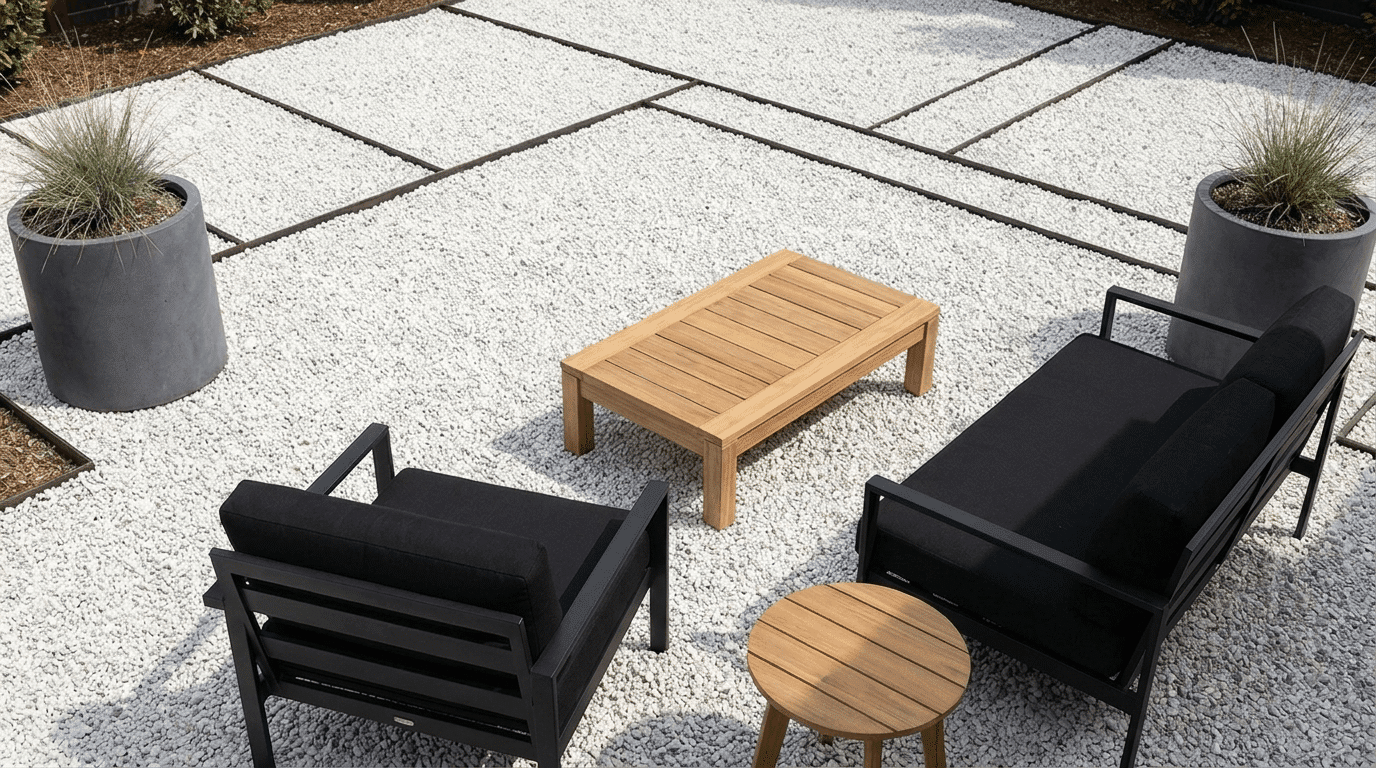
Polar white or light grey gravel in a clean geometric shape. No clutter. Low-profile furniture in black powder-coated steel or natural wood.
The texture of the gravel does the design work here. Keep the perimeter crisp with metal edging. Two statement pots work better than six scattered ones.
13. Gravel and Paver Grid
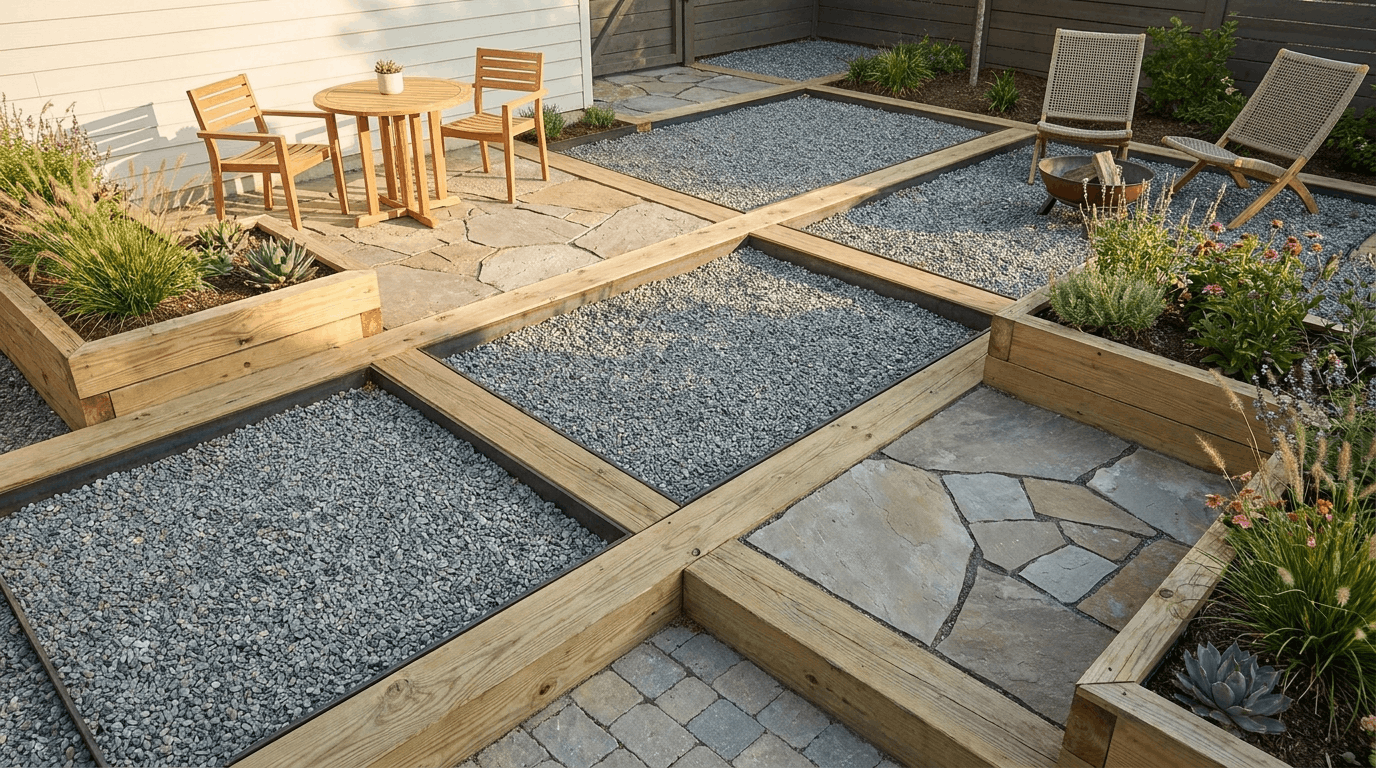
Build a framework from pressure-treated timber or steel edging strips, divided into a grid of squares. Alternate gravel-filled sections with flat stone sections or small planting beds.
The structure gives a clean, considered look that suits modern architecture well. It also works as a phased project.
Fill some squares now and add plants or stone to others as the budget allows.
14. Desert Modern with Decomposed Granite
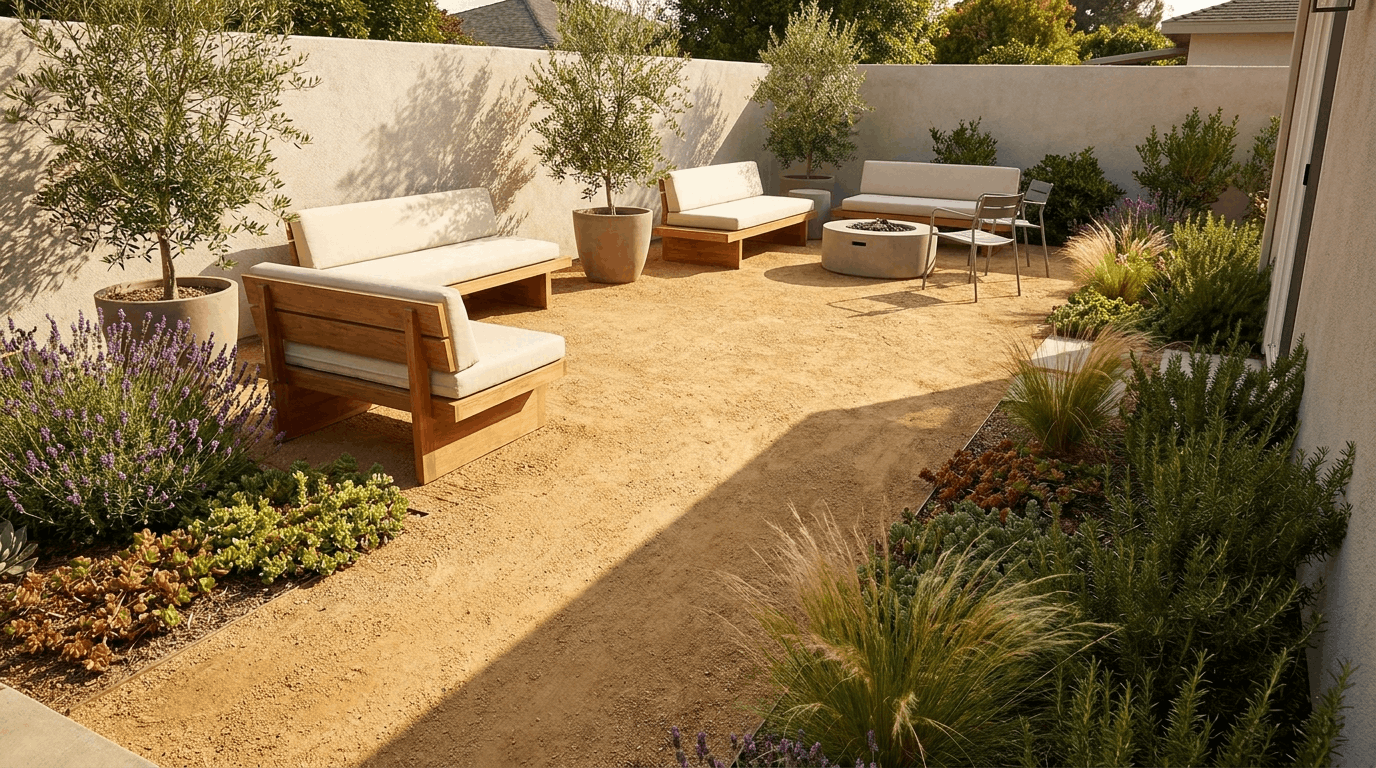
Decomposed granite compresses to a near-solid surface once it settles. Pair it with drought-tolerant plants, including lavender, sedum, ornamental grasses, or rosemary, along the edges.
This setup requires very little maintenance once the plants are established. The DG surface stays firm enough for furniture and looks finished rather than rough.
If reducing maintenance is the main goal, pairing the patio with a considered garden layout makes a real difference.
15. Asian-Inspired Raked Gravel Space
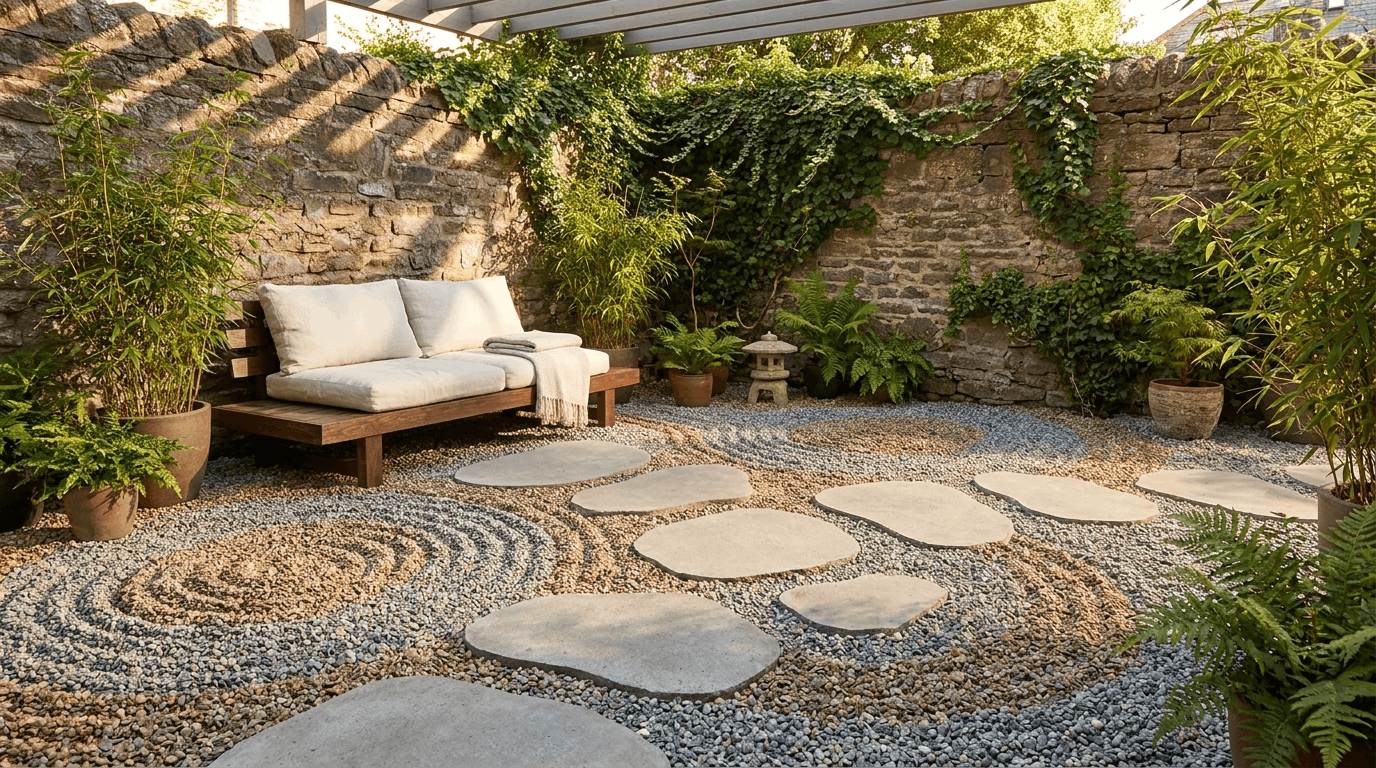
A multicolor gravel mix with flat concrete stepping stones and a low cushioned bench.
The ranking pattern changes the visual texture of the surface. It takes five minutes to do and looks completely different from a plain gravel area.
This style works well in an enclosed backyard or walled garden where the space already has a contained, settled feeling.
16. Gravel with Pergola Overhead
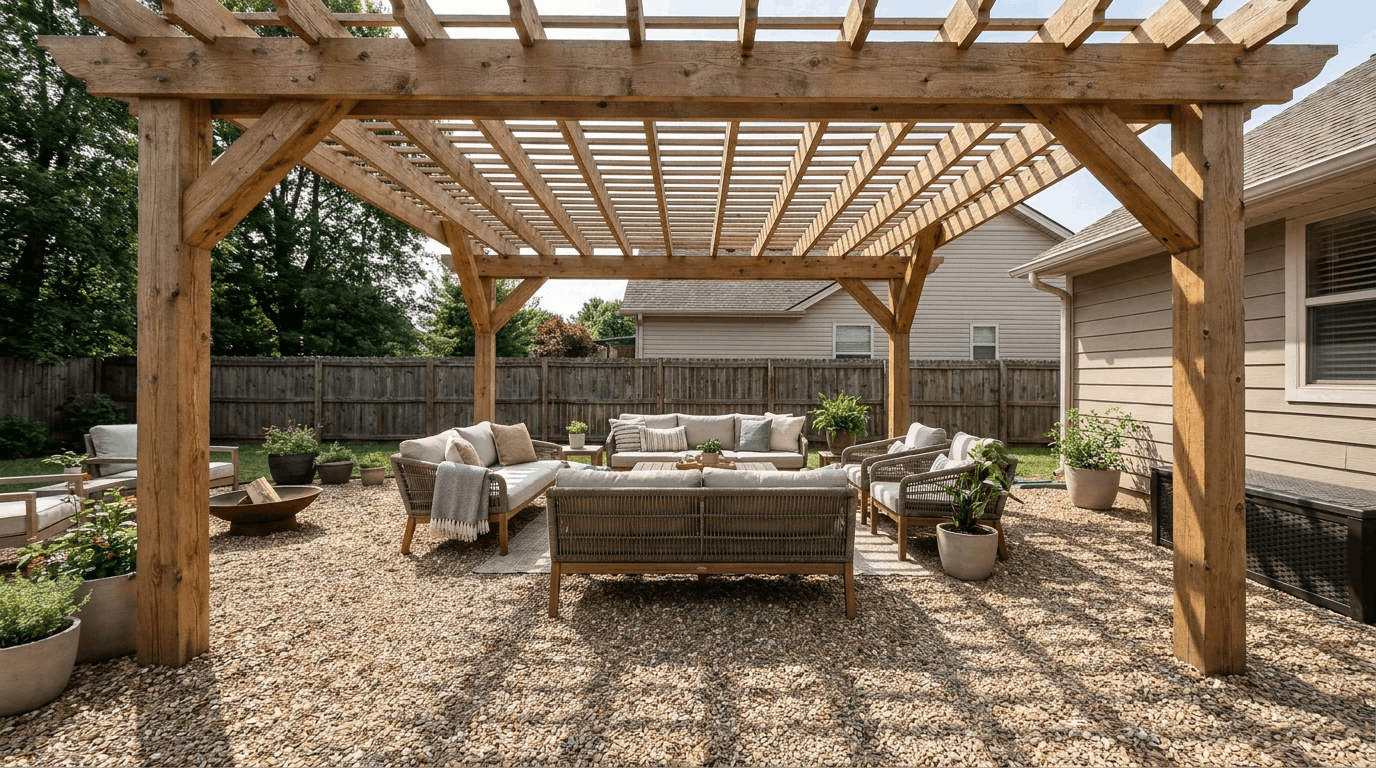
Lay gravel under a simple timber pergola frame. The pergola adds shade without committing to a permanent structure. Most designs bolt together without needing concrete footings.
A defined overhead frame with a loose gravel floor creates an outdoor room without the need for a full extension. Most pergola kits bolt together without concrete footings.
17. Gravel and Raised Bed Courtyard
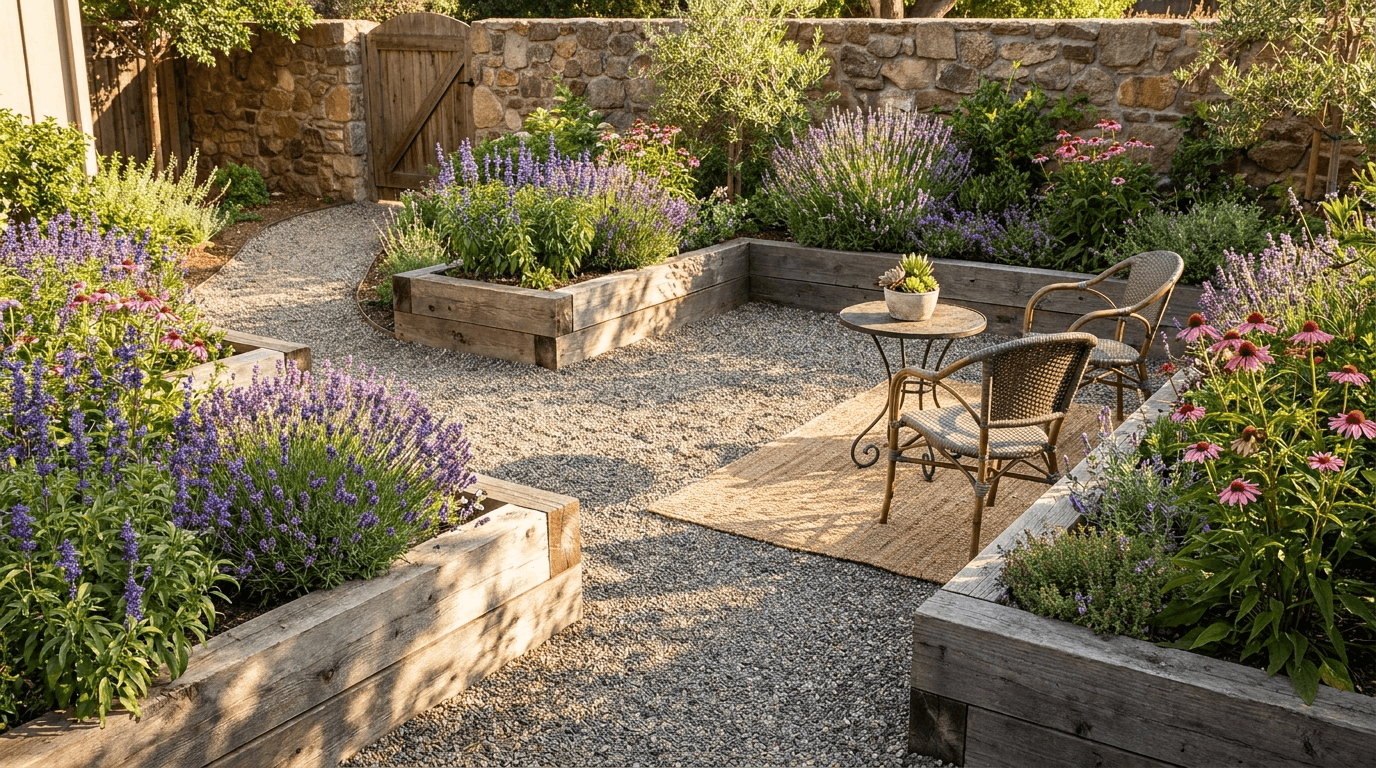
Surround a central gravel area with timber raised beds. Plant drought-tolerant perennials, such as lavender, salvia, and echinacea, so the borders stay interesting with minimal watering.
The raised beds define the space better than edging alone. They add height and greenery without encroaching on the patio itself. This works well in a walled or enclosed backyard.
It suits spaces where the goal is a garden room rather than just a hard surface.
Maintaining a Gravel Patio Through the Seasons
Gravel patios are genuinely low-maintenance. Not zero maintenance. Here is what comes up:
- Spring: Add a fresh top layer if the surface looks thin or patchy. Winter shifts more gravel than most people expect.
- Summer: Rake before hosting. Foot traffic builds uneven patches over time, and a quick rake takes about three minutes.
- Fall: Clear fallen leaves before they mat down. Wet leaves stain light-colored gravel and break down into a layer that weeds grow through easily.
- Winter: Use a rubber or plastic shovel for snow removal. A metal-edged shovel scatters gravel. This is a small thing that makes a real difference.
Keep a bag of the original gravel in a dry spot. Topping up is much easier when the size and color match exactly.
To maintain a patio garden, regularly trimming shrubs and controlling weeds are key techniques often recommended in low-maintenance gravel garden ideas.
Conclusion
A gravel patio costs a fraction of a concrete patio, goes down on a weekend, and stays manageable with a few hours of care each year.
These gravel patio ideas here cover every budget and backyard type. A simple corner nook with two chairs. A full courtyard with raised beds and a pergola overhead. Everything in between.
If there’s one step worth getting right above everything else, it’s the edging. That’s what separates a patio that still looks sharp three years later from one that spreads halfway across the lawn by August.
Which of these setups best fits your space? Drop a comment below, especially if you’re tackling one as a weekend project.
Frequently Asked Questions
Can You Put Furniture Directly on A Gravel Patio?
Yes. Wide-leg or flat-base furniture sits stably. Narrow bistro legs sink in and wobble. A flat paver pad under a dining table solves the problem in about 30 minutes.
Does Gravel Drain Better than Concrete?
Yes. Gravel is permeable, so rainwater soaks through rather than pooling on the surface or running off the edges. This is one of the reasons it works well in yards that already have standing water issues.
How Do You Stop Gravel from Spreading Into the Lawn?
Solid edging is installed before the gravel goes down. Metal, timber, and stone all work. Setting it firmly beforehand is the only reliable way to keep the surface contained.
How Long Does a Gravel Patio Last?
Gravel itself doesn’t wear out. The main tasks over time are topping up displaced stone, controlling weeds, and replacing edging if it shifts. Most gravel patios stay in good shape for 10 or more years with basic seasonal care.