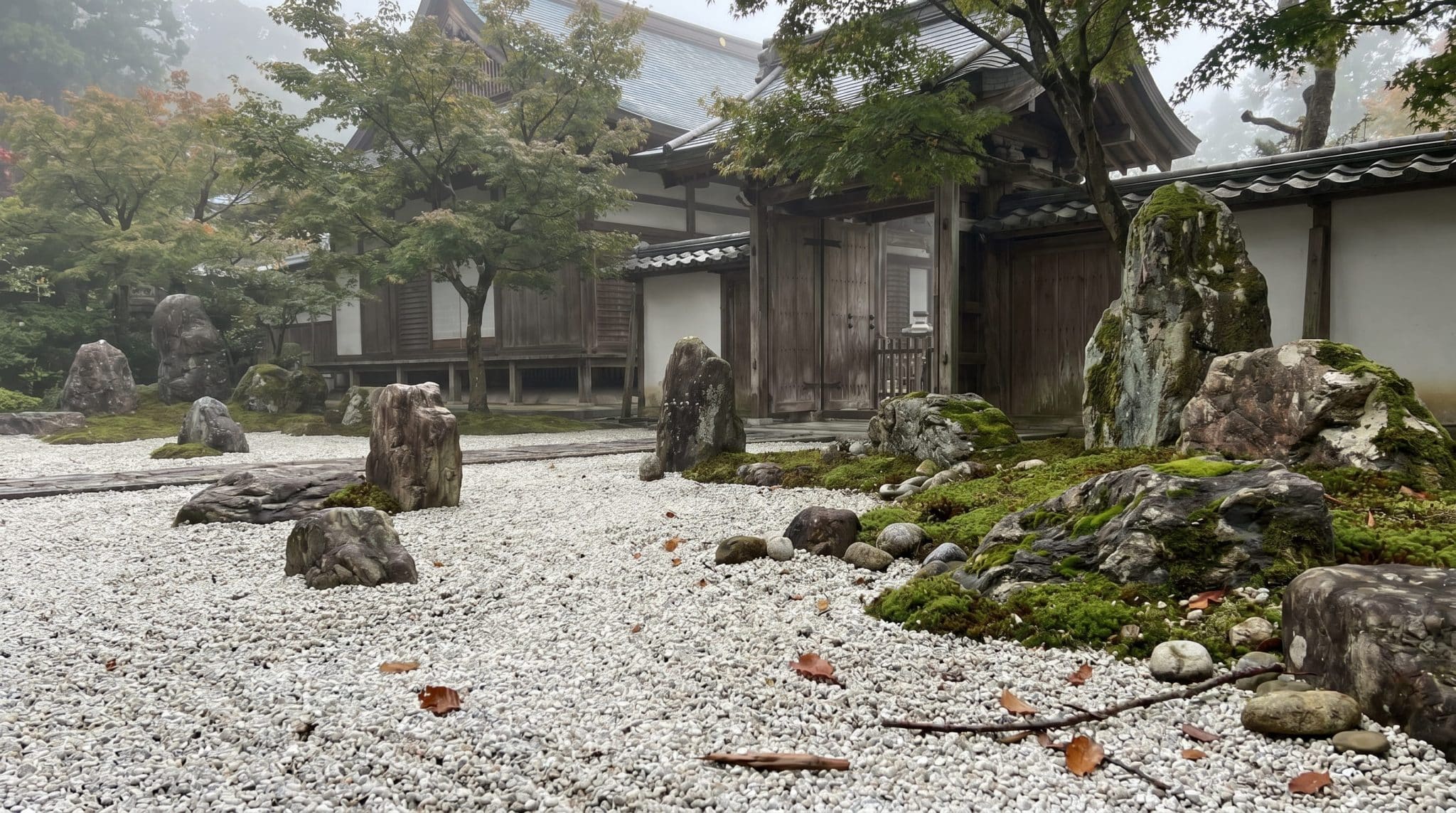

There is something strange about staring at rocks and sand. No flowers. No water. Just silence.
Yet millions of people travel to Kyoto every year to sit in front of a Japanese rock garden for hours. Why?
Because these gardens do something that most spaces cannot.
They force your mind to slow down. Built by Zen monks over 600 years ago, a Japanese rock garden strips nature down to its bare bones.
Stones become mountains. Raked gravel becomes ocean waves. You’ll learn how these gardens began, what they mean, and how to build one yourself.
What Is a Japanese Rock Garden?
A Japanese rock garden, also called a karesansui or dry landscape garden, uses rocks, gravel, and sand instead of water.
Japanese monks have crafted these peaceful gardens over centuries as a place for meditation. The design is beautifully simple, yet filled with deep meaning.
Every stone has been carefully placed to serve a purpose, inviting visitors to reflect and find tranquility.
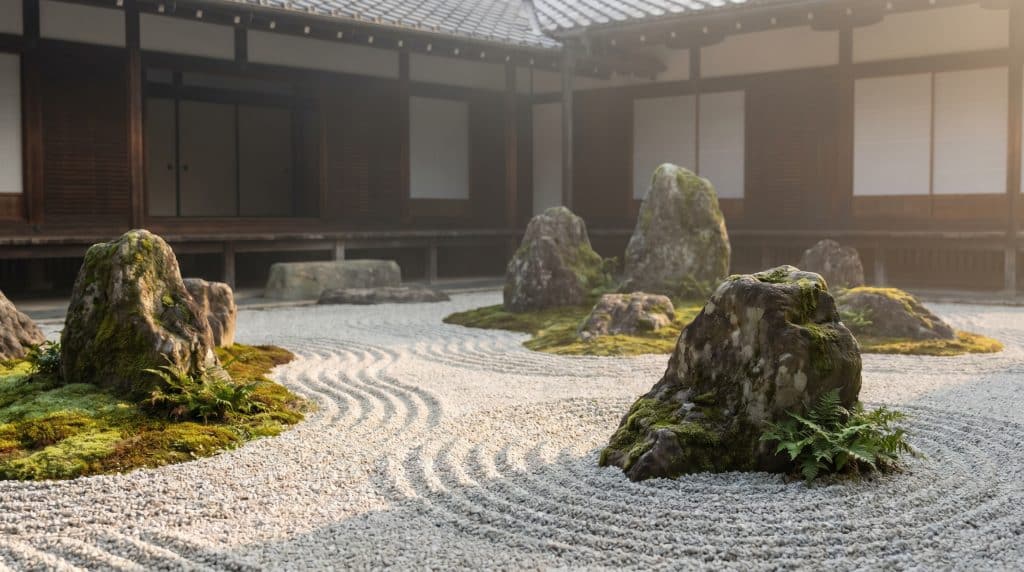
Raked gravel patterns stand for water ripples. These gardens bring calm and focus to anyone who sits near them.
Cultural Significance of Japanese Rock Gardens
For hundreds of years, Japanese rock gardens have held deep cultural meaning. They are not just pretty spaces.
These gardens reflect how the Japanese see nature, silence, and the human mind. Temples across Kyoto still maintain gardens dating back to the 14th and 15th centuries.
Visitors from around the world sit quietly beside them. The stones speak without words.
Roots in Zen Buddhism and Meditation Practices
In the 1300s, a Zen monk named Muso Soseki built gardens at several Kyoto temples. He believed nature could teach stillness.
His gardens had no fountains or ponds: just rocks and raked gravel. Monks would sit for hours, watching the patterns in the sand.
The act of raking itself became a form of meditation. Each stroke brought the mind back to the present moment. A Japanese rock garden was not built solely for beauty. It was built for inner quiet.
Influence of Shinto and Japanese Aesthetics
Long before Zen Buddhism reached Japan, Shinto beliefs shaped how people treated nature. Rocks were considered sacred.
Some large stones were believed to house spirits called “kami.” Families would place stones in their yards to honor these spirits.
When Zen ideas arrived from China, they blended with Shinto traditions. The result was a garden style that respected both spiritual paths.
A single Japanese rock garden could hold Shinto reverence for stones and Zen focus on emptiness at the same time.
History of Japanese Rock Gardens
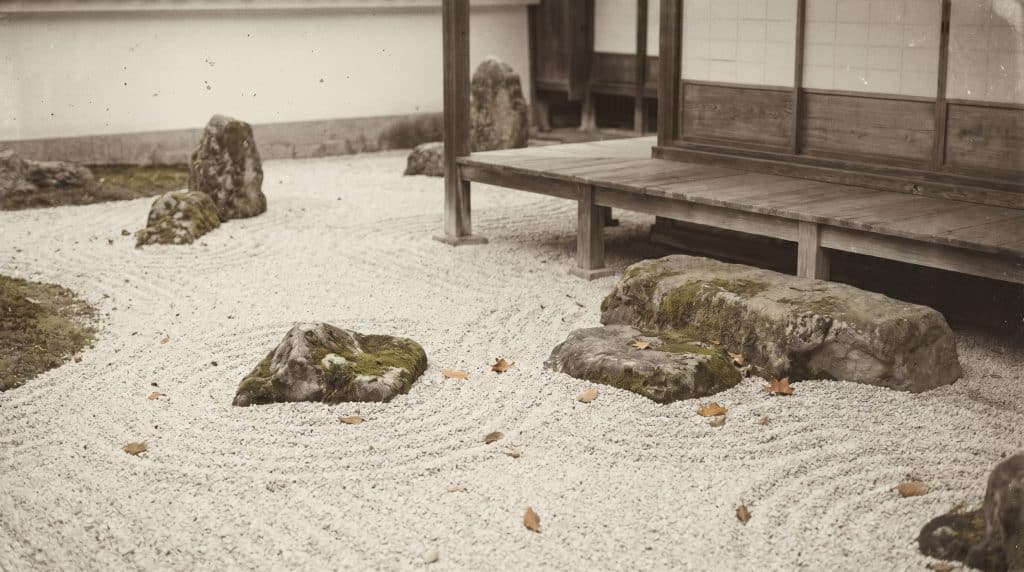
While every Japanese rock garden has its own story, a few key periods shaped how these peaceful landscapes evolved. The table below highlights the major milestones in their history.
| Period | Key Development |
|---|---|
| Heian Period (794–1185) | Large landscape gardens with ponds and islands became popular among nobles, inspired by Chinese garden design. |
| Kamakura Period (1185–1333) | Zen Buddhism grew in influence, encouraging simpler gardens focused on meditation and spiritual reflection. |
| Muromachi Period (1336–1573) | The first true Japanese rock gardens (karesansui) appeared at Zen temples, using rocks, gravel, and moss instead of water. |
| Late 1400s | Famous gardens like Ryoan-ji and Daisen-in were created, establishing timeless design principles still admired today. |
| Modern Day | Japanese rock gardens continue to inspire landscape designers worldwide, blending tradition with contemporary outdoor spaces. |
Design Principles and Symbolism
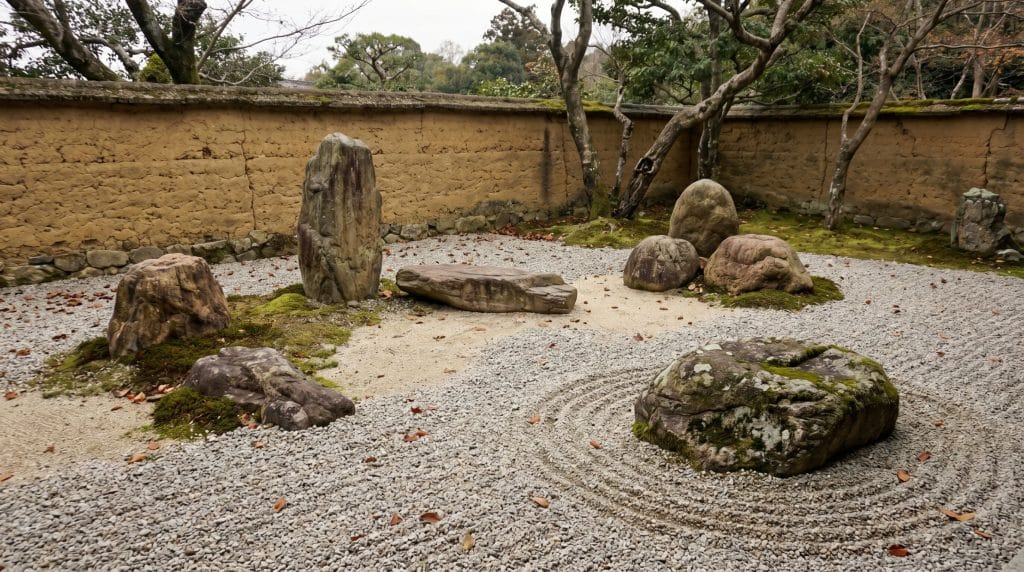
Nothing in a Japanese rock garden is random. Every rock, every line in the sand carries meaning.
Designers follow strict rules passed down through generations, rooted in wabi-sabi, the Japanese appreciation for imperfection and natural simplicity.
The goal is to show nature at its purest. Even the space between stones has a purpose. Less is always more in this style of garden design.
The Role of Rocks, Gravel, and Sand in Symbolism
Each material in a Japanese rock garden tells a story without words. The same placement rules carry over if you’re pulling rock landscaping ideas into other parts of your yard. Here is what they stand for:
- Rocks symbolize the permanent, solid elements of nature, such as mountains and cliffs.
- White gravel represents water. Raked into straight lines, it suggests a calm river. Raked into circles, it suggests ripples around a stone.
- Sand works the same way as gravel but creates a softer, finer texture.
- Moss around the base of rocks suggests age and the slow passage of time.
- Space is just as important as the objects. It represents openness and clarity of mind.
What Do Rocks Represent in a Japanese Rock Garden?
Rocks carry the heaviest symbolic weight in any Japanese rock garden. Here is what different placements mean:
| Rock Placement | Symbolic Meaning |
|---|---|
| Tall, upright stones | Represent mountains, strength, or spiritual figures such as Buddha. |
| Flat stones | Symbolize the earth, calm water, or stability. |
| Groups of three stones | Often reflect the Buddhist trinity and a sense of balance. |
| Single large rock | Represents an island surrounded by the sea of raked gravel. |
| Leaning stones | Suggest movement, resembling waterfalls or flowing natural energy. |
| Odd-numbered arrangements | Sets of 3, 5, or 7 reflect nature’s imperfect yet harmonious balance. |
Famous Japanese Rock Gardens to Visit
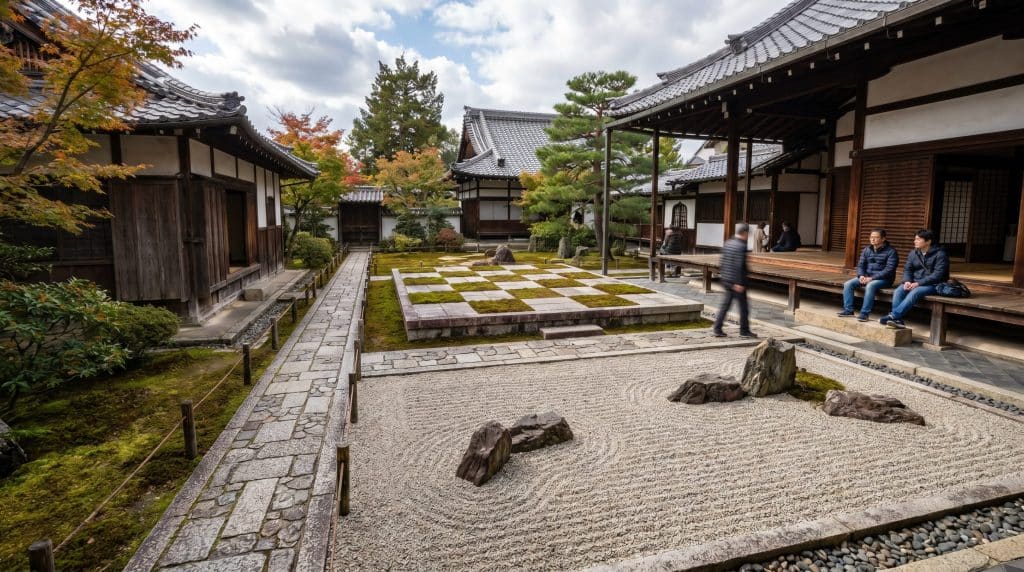
Japan hosts some of the oldest and most respected rock gardens, mostly on the grounds of Kyoto’s temples.
Each garden has its unique character; some are wide and open, others narrow and tucked between buildings.
If you plan a trip to Japan, these Japanese rock garden sites deserve a spot on your list.
- Ryoan-ji Temple, Kyoto: This is the most recognized Japanese rock garden on the planet. Fifteen stones rest on a bed of white gravel. No matter where you sit, you can only see fourteen at once. The garden was built around 1499 and still draws visitors daily.
- Daisen-in, Daitoku-ji Temple, Kyoto: This small garden packs big meaning into a tight space. Upright stones suggest mountains. White gravel flows like a river between them. It was built in 1509 and remains one of the finest examples of the karesansui style.
- Zuiho-in, Daitoku-ji Temple, Kyoto: Designed in 1961 by Mirei Shigemori, this garden blends traditional elements with modern ideas. The gravel patterns are bold and sharp. It proves that Japanese rock garden design is still alive and growing.
- Tofuku-ji Temple, Kyoto: Mirei Shigemori also redesigned this temple’s gardens in 1939. The south garden uses large stones and raked sand. The north garden features a checkerboard pattern of moss and stone.
Travel Tips for Visiting Japanese Rock Gardens
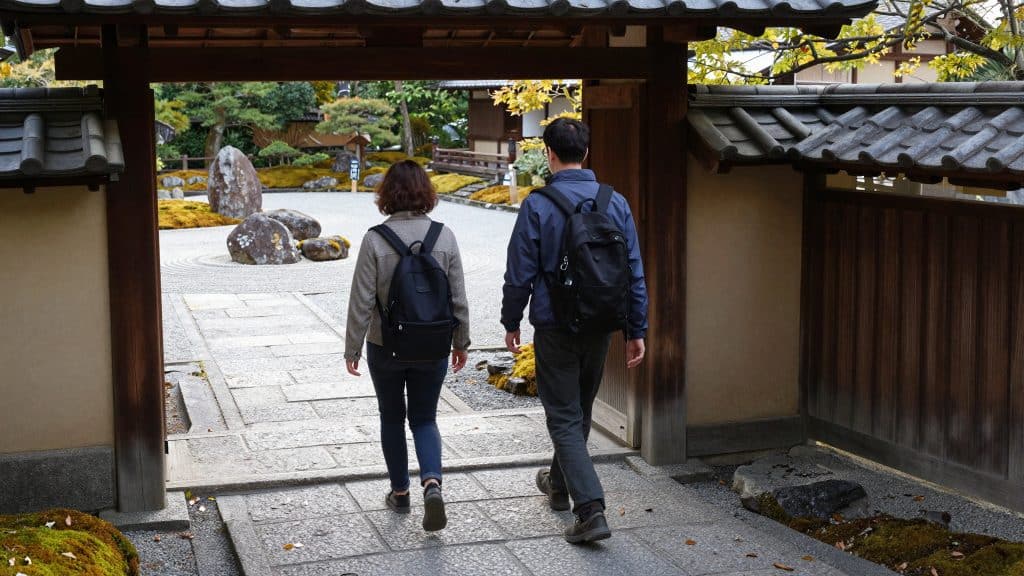
Seeing a Japanese rock garden in person feels very different from seeing it in photos. The silence and texture of the space create a stronger impact. A little planning goes a long way.
- Visit early in the morning: Most temple gardens open between 8:00 and 9:00 AM, and fewer visitors means more quiet time with the garden.
- Avoid peak seasons: Cherry blossom weeks and autumn leaf months bring huge crowds, so try weekdays in January or February instead.
- Never step on the gravel: Raked areas are for viewing only, so sit on the wooden platforms provided.
- Spend at least 15 minutes sitting: Most visitors leave within 5 minutes, but the real experience comes from slowing down and quietly watching the stones.
- Carry cash: Many temples charge a small entry fee of 300-500 yen, and card payments are not always accepted.
How to Create Your Own Japanese Rock Garden
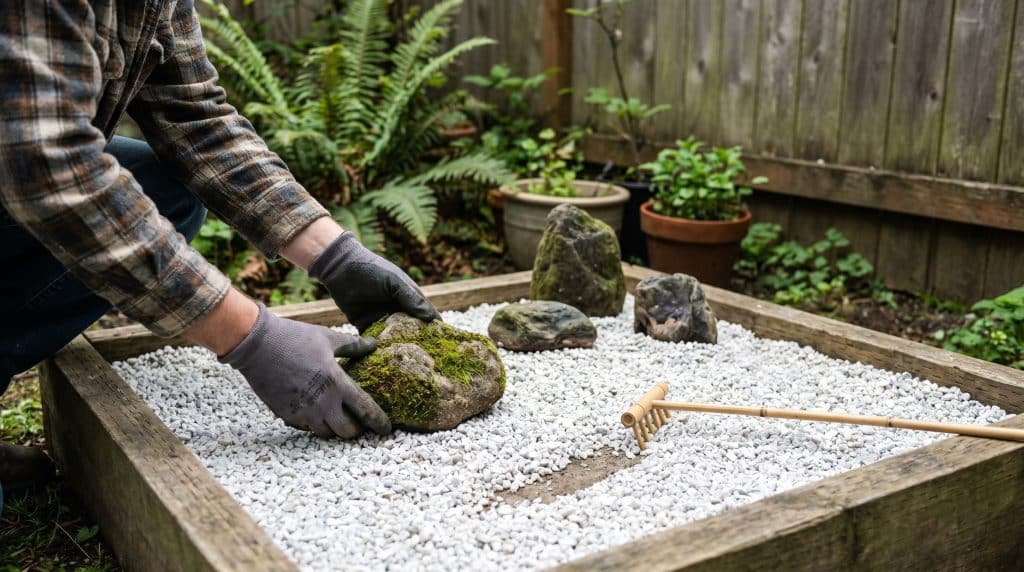
You do not need a big yard or a trip to Japan. A Japanese rock garden can fit in a small backyard corner or even a tabletop tray.
The key is simplicity. Use fewer items, not more. Focus on placement and spacing. With the right materials and a calm mindset, you can build one over a single weekend.
Choosing the Right Location and Scale
Pick a flat, quiet spot in your yard or home. A shaded corner works well. Avoid areas with heavy foot traffic or falling leaves. Measure the space you have.
A backyard Japanese rock garden can be as small as 4 by 6 feet. For indoor versions, a shallow wooden tray works fine. Make sure the area drains well. Standing water will ruin the gravel surface over time.
Essential Materials and Tools
You don’t need expensive materials to create a Japanese rock garden. A handful of natural elements and simple tools are enough to build a peaceful, low-maintenance space.
| Material | Purpose |
|---|---|
| Rocks | Create the main focal points and symbolize mountains, islands, or natural elements. |
| Gravel or Sand | Represents flowing water and provides a surface for raked patterns. |
| Rake | Forms traditional ripple designs that add texture and a meditative feel. |
| Landscape Fabric | Prevents weeds from growing beneath the gravel. |
| Border Material | Frames the garden neatly using wood, bamboo, or flat stones. |
Steps to Build Your Japanese Rock Garden
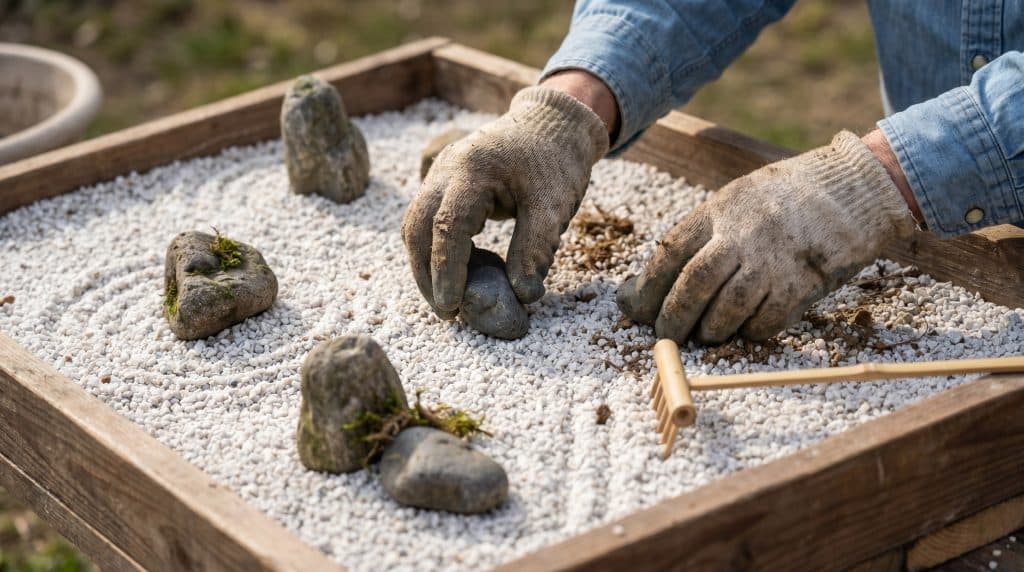
Building a Japanese rock garden takes patience, but the results are worth every effort. Follow these steps carefully, and you will have a peaceful, well-laid garden in no time.
Step 1: Clear the Area
Start by clearing the ground completely. Remove all grass, weeds, roots, and debris from the surface. Dig down a few inches to pull out any hidden roots that could grow back later.
A clean, level base makes every step after this easier and helps your garden last much longer without unwanted growth pushing through.
Step 2: Lay Landscape Fabric
Roll landscape fabric flat across the cleared ground, covering the entire area you plan to use. Overlap the edges by a few inches so weeds cannot push through the seams.
Secure the fabric with garden staples every few feet. This barrier keeps the space clean and saves you from constant weeding down the road.
Step 3: Place Your Rocks
Choose rocks in odd numbers, like 3 or 5, since odd groupings feel more natural and balanced to the eye. Set the largest rock first, then arrange the smaller ones around it.
Step back often to check the layout from different angles. Adjust positions until the arrangement feels calm and unforced.
Step 4: Pour Gravel or Sand
Pour gravel or sand around the rocks until it reaches a depth of 2 to 3 inches. Spread it evenly with a flat rake or board, working close to the base of each rock.
This depth gives you enough material to carve clean, lasting patterns without exposing the fabric underneath.
Step 5: Rake Your Patterns
Use a small rake to draw straight lines, waves, or circles through the gravel. Straight lines suggest calm water, while circles around rocks mimic ripples.
Work slowly and keep pressure even so the lines stay consistent. Refresh the patterns every so often, since wind and rain will naturally disturb them over time.
Step 6: Add Moss for a Natural Touch
Tuck small patches of moss around the base of your rocks to soften their edges. Moss adds a natural, aged look that mimics gardens grown over many years.
Keep it lightly watered, especially in dry weather, so it stays green and continues to spread slowly along the stone edges.
Japanese Rock Gardens in Modern Culture
The influence of the Japanese rock garden has spread far beyond temple walls. Today, you can spot its style in office lobbies, hotel courtyards, and living rooms across the world.
The core idea of simplicity and calm appeals to people everywhere. Modern designers borrow from this tradition in both large and small ways.
Influence on Western Landscapes and Interior Decor
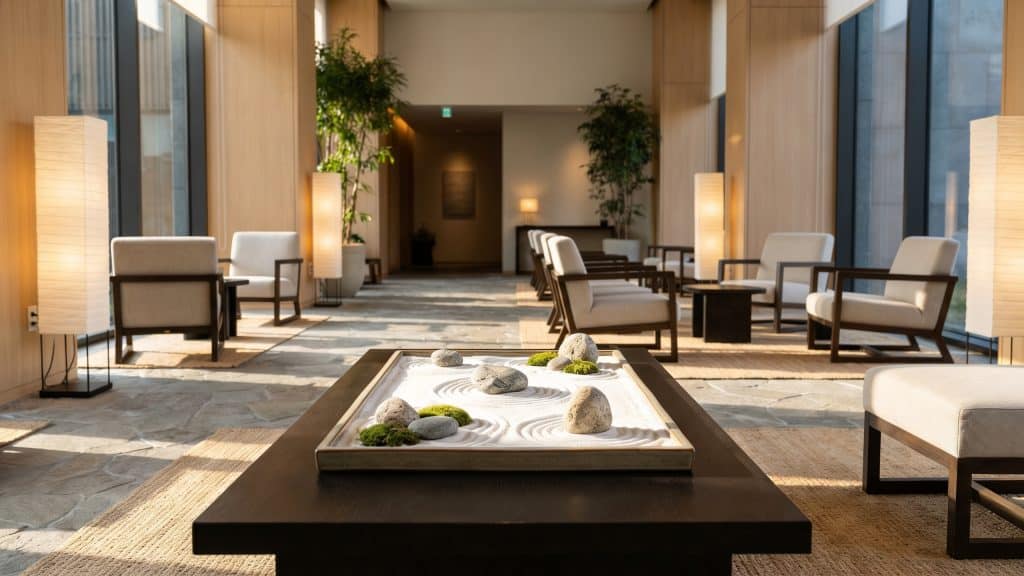
Western landscape designers began borrowing from Japanese rock garden styles in the mid-1900s. Public parks in the United States and Europe now feature dry gravel sections with placed stones.
Hotels and spas use raked sand areas to create a sense of peace in their space.
In homes, people use natural stone, gravel trays, and minimal plant arrangements inspired by Japanese-style gardens. The look is clean, quiet, and clutter-free.
Miniature Desktop Zen Gardens
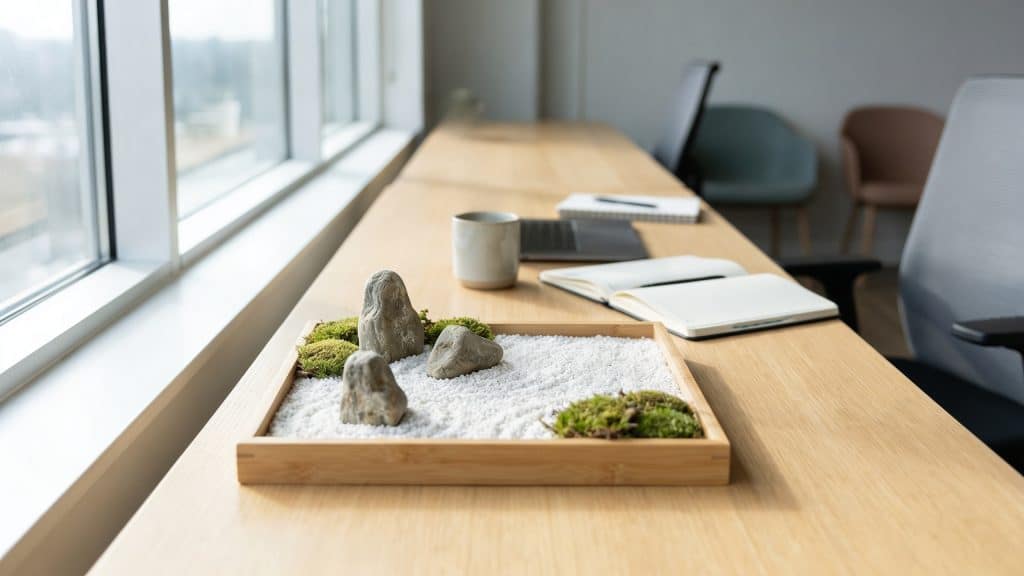
Small tabletop zen gardens have become popular worldwide. These kits usually include a wooden tray, fine sand, a tiny rake, and a few small stones.
Office workers keep them on their desks as stress-relief tools. The act of raking patterns into the sand mirrors what monks have done for centuries.
You can find these mini Japanese rock garden sets online or at home decor stores. They cost between $10 and $50. Simple, affordable, and effective for a quick mental break during a busy day.
Conclusion
A Japanese rock garden is more than stones on gravel. It is a practice of patience, balance, and quiet thought.
For centuries, monks used these spaces to clear their minds, one raked line at a time.
That same quiet still works today. You do not need a temple or a trip to Japan, or even a full weekend.
A small corner of your yard or a tray on your desk can hold the same peace. Start small. Place a few stones. Rake some lines. See how it feels.
Frequently Asked Questions
What Is the Best Gravel for A Japanese Rock Garden?
White or light grey crushed granite gravel with a grain size of 2 to 5mm works best for raking clean patterns.
What Are the Five Elements of A Japanese Garden?
The five elements are rock, water, plants, ornaments, and borrowed scenery from the surrounding landscape.
How Often Should You Rake a Japanese Rock Garden?
Rake every one to two weeks to keep gravel lines crisp and stop weeds from taking hold. Temple monks often rake daily as part of meditation.