

Your property value drops 10-20% when your lease hits the final years. Most owners don’t realize until it’s too late.
Here’s the reality: as your lease term shrinks, buyers pull out, lenders reject applications, and landlords increase their demands. You’re watching equity evaporate while extension costs climb.
A lease extension attorney (or real estate lawyer) stops this decline.
They handle the legal complexity, negotiate favorable terms, and prevent the expensive mistakes that cost property owners thousands. Without one?
You’re walking into negotiations blind, facing inflated costs, restrictive clauses, and weakened leverage.
The difference between acting now versus waiting six months could mean paying $5,000-$15,000 more. Landlords know desperate owners pay premium prices.
Before hiring the right attorney, understand exactly what they do and how they protect your investment throughout the extension process.
What Does a Lease Extension Solicitor Do?
A lease extension solicitor is a legal professional who specializes in extending residential or commercial lease agreements. Their expertise becomes crucial as your lease gets shorter and your property’s value begins to decline.
Core Responsibilities
- Serve formal lease extension or renewal notices to landlords following state-required procedures and deadlines.
- Negotiate extension costs or updated lease terms, including rent adjustments or market-based valuations, and handle pricing disputes.
- Manage mediation, arbitration, or court filings when negotiations fail or disagreements escalate.
- Review and draft updated lease agreements or extension addenda to ensure your long-term rights are protected.
- Identify and resolve legal complications, such as unresponsive landlords, unclear ownership records, or title issues, to ensure compliance with applicable state lease laws.
Without a solicitor, you risk missing legal deadlines, agreeing to terms that reduce future resale value, or paying significantly more than necessary.
Knowing their role is just the first step; let’s determine the ideal time to hire a lease extension attorney.
When to Reach Out to a Solicitor for a Lease Extension?
The short answer is early, ideally before you commit to anything. Knowing when to involve a solicitor can save you time, money, and stress throughout the process.
| Scenario | What the Solicitor Will Do (U.S.-oriented) |
|---|---|
| Early Stage (Before Signing Anything) | Review your current lease, explain your rights, estimate likely costs, outline your negotiation options, and help you choose between informal or formal extension routes. |
| Rent Increase Disputes | Negotiate proposed increases, challenge unreasonable terms, and ensure updated rent aligns with state regulations and market standards. |
| Valuation Disputes | Challenge landlord’s pricing, provide independent assessments, and negotiate fair extension costs using comparable market data. |
| Restrictive Clauses in New Lease | Identify problematic terms, negotiate changes, and ensure updated clauses won’t limit resale, refinancing, or long-term property use. |
| Complex Ownership Structures | Handle absentee or unresponsive landlords, multiple property owners, company-owned properties, or unclear title issues. |
| Mediation or Court Proceedings | Prepare filings, represent you in negotiations or hearings, present valuation evidence, and secure fair terms. |
| Legal Compliance & Protection | Ensure compliance with state landlord–tenant laws, verify proper execution of documents, and prevent costly mistakes. |
Consulting a solicitor early prevents weakened negotiating positions and missed deadlines that many leaseholders inadvertently experience.
Knowing when to hire a solicitor is one thing, but how do you identify the right professional for your needs?
What Makes a Good Lease Extension Solicitor?
In this section, we’ll dive into the essential qualities that make a lease extension solicitor stand out.
Whether you’re looking for someone with specialized knowledge or someone who can communicate complex terms clearly, we’ll walk you through what to look for to ensure you choose the right expert for the job.
1. Experience in Lease and Property Law: Look for attorneys specializing in lease extensions who routinely handle valuation disputes and state landlord-tenant law. Ask how many cases they complete annually and whether they stay current with legal changes.
2. Clear Communication Skills: Your attorney must explain complex pricing methods and legal terms without jargon, provide regular updates, respond quickly to questions, and offer personalized strategies for your specific situation.
3. Strong Reputation and Recognition: Choose professionals with consistent positive reviews on independent platforms, strong recommendations from real estate agents and past clients, and credentials such as state bar membership or ABA certification.
Once you know which qualities matter most, the next step is to discover where to find these qualified professionals.
How to Extend Your Lease? Step-by-Step Process

With the right attorney identified, knowing the complete lease extension process helps you prepare for each critical stage ahead.Step 1: Review Your Current Lease Agreement
Examine your existing lease terms, remaining duration, rent obligations, renewal clauses, and any extension provisions already written into your current agreement to understand your rights.
Step 2: Notify Your Landlord Formally
Submit a written extension request following state-required procedures and timelines, clearly stating your desired lease length, proposed terms, and willingness to negotiate mutually beneficial conditions.
Step 3: Negotiate Extension Terms
Discuss and negotiate the extension period, updated rent amounts, maintenance responsibilities, property improvements, and any modifications to existing lease conditions directly with your landlord or property manager.
Step 4: Obtain Property Valuation
Commission an independent property assessment from certified appraisers to ensure fair pricing, especially if your landlord disputes extension costs or proposes significant rent increases beyond market rates.
Step 5: Draft Extension Agreement
Work closely with your attorney to prepare legally binding extension documents that accurately reflect all negotiated terms, protect your long-term interests, and comply with state regulations.
Step 6: Review Legal Documentation
Carefully examine all paperwork for problematic clauses, hidden fees, unfavorable terms, or unclear language before signing anything that legally commits you to the extension agreement long-term.
Step 7: Execute and Record Extension
Sign the finalized agreement, pay all required fees and deposits, and ensure the extension is recorded correctly with local authorities and property registries to establish legal validity.
Completing these steps with professional legal guidance ensures your lease extension protects your investment and avoids costly future complications.
US Real Estate Law Firms to Consider
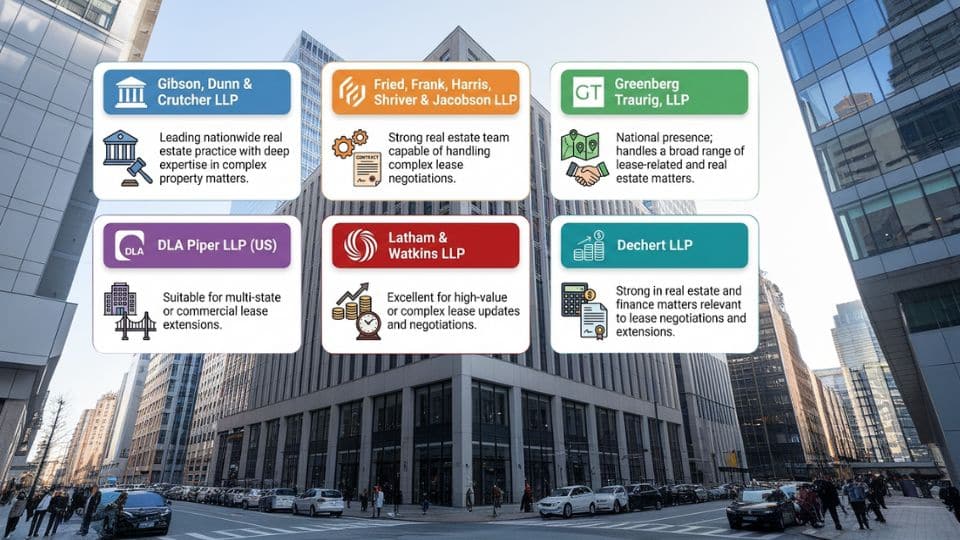
If you’re dealing with lease extensions in the United States, these top-ranked firms offer expertise in real estate law:
- Gibson, Dunn & Crutcher LLP: Leading nationwide real estate practice with deep expertise in complex property matters.
- Fried, Frank, Harris, Shriver & Jacobson LLP: Strong real estate team capable of handling complex lease negotiations.
- Greenberg Traurig, LLP: National presence; handles a broad range of lease-related and real estate matters.
- DLA Piper LLP (US): Suitable for multi-state or commercial lease extensions.
- Latham & Watkins LLP: Excellent for high-value or complex lease updates and negotiations.
- Dechert LLP: Strong in real estate and finance matters relevant to lease negotiations and extensions.
These reputable firms provide the specialized expertise needed to navigate complex lease extension negotiations and protect your interests.
Cost Considerations for Lease Extension Solicitors
knowing the financial investment helps you budget appropriately and appreciate the value professional representation provides:
| Cost Type | Range (USD) | Details |
|---|---|---|
| Typical Fee Range | $1,500–$3,500 | Depends on complexity and negotiation scope |
| Simple Informal Extensions | Lower end | Less complex updates and shorter negotiations |
| Formal Extension Processes | Higher end | May involve mediation, valuation disputes, or extended negotiation |
| Fee Structures | Fixed or Hourly | Hourly rates often range from $250–$500+ |
| Investment Protection | Can save thousands | Prevents overpaying, protects long-term property value |
Professional representation ensures legal compliance, strengthens your negotiating position, and provides confidence that everything is executed correctly.
Lease Challenges Attorneys Solve

Lease extensions often involve complex legal and financial challenges that require expert guidance.
1. Premium Calculation Disputes: Challenge inflated landlord estimates, obtain independent valuations, and negotiate fair extension costs.
2. Complicated Lease Terms: Identify problematic clauses, negotiate adjustments, and ensure updated lease language supports long-term flexibility.
3. Legal Pitfalls: Spot unfair escalation clauses, prevent missed deadlines, and identify restrictions that could affect resale or refinance options.
Beyond knowing these challenges, recognizing specific pitfalls helps you protect your investment and negotiate from a stronger position.
5 Common Pitfalls to Avoid When Extending Your Lease
Many property owners make costly mistakes during lease extensions that experienced attorneys help prevent through careful review and negotiation.
- Missing Critical Deadlines: Failure to submit extension requests within state-required timeframes can forfeit your extension rights entirely
- Accepting First Offers: Landlords often start with inflated terms; immediate acceptance without negotiation costs thousands in overpayment
- Ignoring Hidden Fees: Watch for undisclosed costs like administrative fees, processing charges, or mandatory property improvement requirements
- Overlooking Escalation Clauses: Automatic rent increase provisions can dramatically raise costs over time without clear percentage caps
- Professional Review: DIY extensions often miss restrictive covenants that limit subletting, renovations, or future sale options
Avoiding these costly mistakes often saves thousands in lost property value, making professional legal representation a worthwhile investment you should budget for.
Conclusion
Extending your lease is one of the most essential property decisions you’ll make, and choosing the right solicitor can save you thousands while protecting your investment.
Look for specialists with proven experience, strong communication skills, and good reputations. Use verified directories, seek recommendations, and compare several solicitors before deciding.
Don’t wait until your lease becomes too short; acting early protects your property value and keeps extension costs manageable.
Start researching qualified lease extension solicitors in your area today and schedule consultations. The right legal expert will guide you with confidence and secure terms that benefit you for years ahead.
Contact at least three lease extension attorneys this week for consultations. Your property’s value depends on it. Every year you delay costs you money.