
Spring arrives, and foragers everywhere feel that familiar itch. You scan the meadows and woodlands, hoping to spot something edible after winter’s long wait.
But many mushroom hunters miss one of the season’s best finds because they don’t know what to look for.
What if you could master identifying a prized spring mushroom that’s been feeding families for centuries? St. George’s Mushroom offers rich, earthy flavors and appears reliably each year in the same spots.
This guide will show you exactly how to find, identify, and cook this spring treasure safely. You’ll learn the key features that separate it from dangerous look-alikes, plus find the best places to search.
Start your foraging season right, let’s explore this centuries-old culinary gem.
What is St. George’s Mushroom?
St. George’s Mushroom, or Calocybe gambosa, is a prized edible mushroom that kicks off the foraging season in spring.
Its name comes from Greek: “calos” (pretty) and “cubos” (head) for its lovely cap, plus “gambosa” for its chunky stem base.
Around the world, it’s called Marzolino in Italy (March mushroom), Maipilz in Germany (May mushroom), or Vårmousseron in Denmark.
Known since the 1700s, it’s a favorite for its rich flavor and early appearance.
How to Identify St. George’s Mushroom
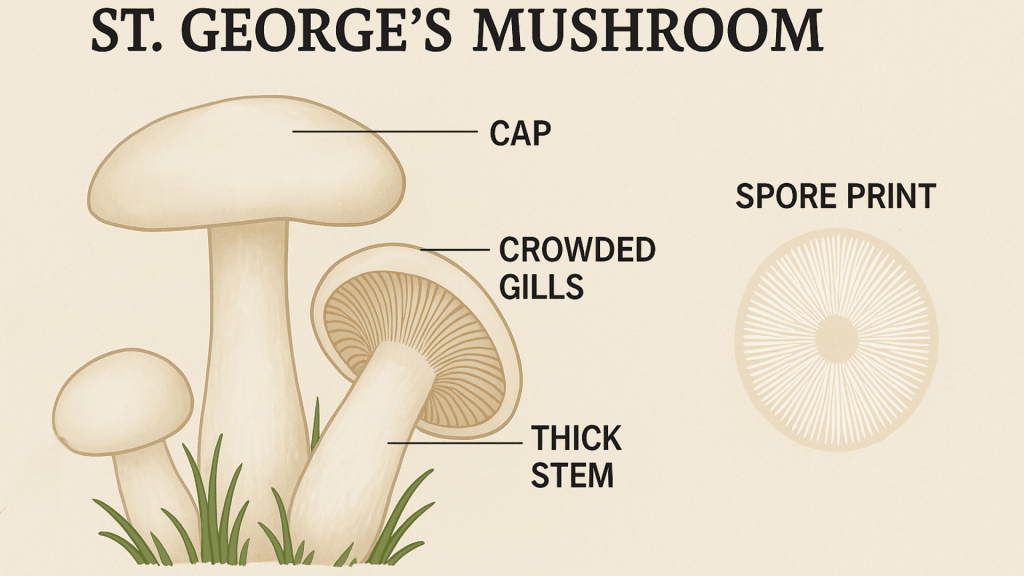
Spotting St. George’s Mushroom is straightforward if you know what to look for, but you’ve got to be careful, as some toxic mushrooms look similar. Here’s the rundown:
-
Cap: 5–15 cm wide, starting domed and flattening out. It’s smooth, sometimes cracking with age, and ranges from creamy white to light brown or yellowish.
-
Gills: Crowded, white to pale cream, slightly notched where they meet the stem.
-
Stem: 3–8 cm tall, thick, often bulbous at the base, and white to yellowish. No ring.
-
Spore Print: White to pinkish-white (place the cap on paper overnight to check).
-
Smell and Taste: Smells like wet flour or cucumber; tastes floury raw but turns savory when cooked.
Look-Alike Dangers
Some poisonous mushrooms can trick you. Compare carefully:
|
Feature |
St. George’s Mushroom |
||
|---|---|---|---|
|
Smell |
Mealy or cucumber-like |
Fruity or pungent |
Rancid |
|
Gills |
White/cream, crowded, notched |
Pale pink, bruise red |
Pinkish, not crowded |
|
Spore Print |
White to pinkish-white |
Brownish |
Pink |
|
Season |
Spring (April–June) |
Late spring/early summer |
Spring/summer |
Pro Tip: Always double-check the smell and spore print. If you’re unsure, consult a field guide or a local mycologist to avoid toxic look-alikes like the Deadly Fibrecap or Livid Pinkgill.
Characteristics of St. George’s Mushroom
This mushroom has some standout traits. Its flesh is white, thick, and soft, perfect for cooking.
But watch out: older ones can attract maggots, so slice them open to check. It often grows in fairy rings, those cool circles in the grass that can be centuries old.
St. George’s Mushroom might team up with trees like hazel, beech, or oak, sharing nutrients in a mycorrhizal relationship.
Sometimes, it just feeds off dead grass.
When cooked, its floury raw taste transforms into a rich, mushroomy flavor.
In places like Spain’s Basque Country and medieval Italy, it’s been a culinary star for ages, even fetching high prices back in the day.
Where to Find St. George’s Mushroom: Habitat and Distribution
St. George’s Mushroom loves grassy spots and specific soils. Here’s where to look:
-
Favorite Spots: Pastures, lawns, roadsides, or under hedges and trees in woodlands.
-
Soil Preference: Chalky or lime-rich soils, though it can handle slightly acidic ones.
-
Growth Style: Often in fairy rings (darker, lusher grass circles) or scattered clumps.
-
Locations: Common across Europe (UK, Ireland, Germany, Italy, Scandinavia) and parts of North America.
When to Look
-
UK/Ireland: April to June, peaking around St. George’s Day.
-
Mediterranean (e.g., Italy): As early as March.
-
Cooler Regions (e.g., Germany, Scandinavia): May to July.
Foraging Tip: Once you find a patch, note the spot it’ll likely show up there next year. Avoid picking near busy roads, as mushrooms can soak up pollutants.
Cultural and Historical Significance

St. George’s Mushroom isn’t just food; it’s got cultural clout.
In medieval Italy, it was a luxury item, served at fancy banquets in places like Tuscany.
Today, it’s a big deal in Northern Spain, especially in the Basque Country, where it’s celebrated in spring festivals or sold at high prices in markets.
In the UK, its appearance signals the start of foraging season, bringing excitement to mushroom hunters.
Its fairy rings even inspired folklore about magical circles in the grass.
Foraging Safely: Tips for Beginners
Foraging is a blast, but safety comes first. Here’s how to do it right:
-
Pick Young Mushrooms: They’re tastier and less likely to have maggots. Cut lengthwise to check.
-
Gear Up: Use a knife for clean cuts and a basket to keep mushrooms fresh.
-
Use a Guide: Carry a field guide or app to confirm your find.
-
Test It: Do a spore print (white to pinkish-white for St. George’s) and sniff for that mealy smell.
-
Avoid Risky Areas: Skip spots near roads or polluted sites.
If you’re new, watch foraging videos online or join a local group. It’s the best way to learn the ropes and avoid mistakes.
Cooking with St. George’s Mushroom
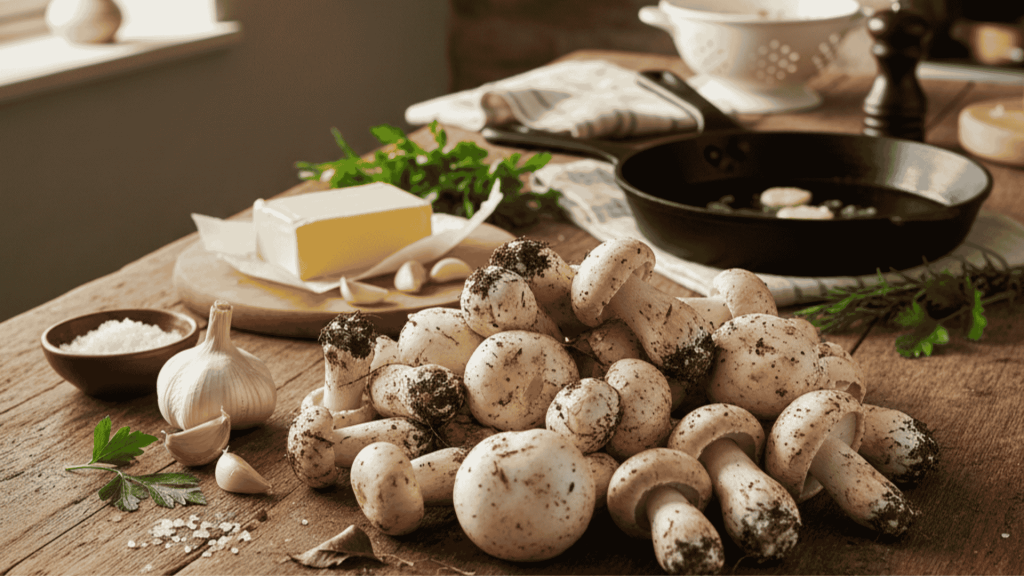
This mushroom is a kitchen superstar. It can be watery, so sauté it in butter to bring out its earthy flavor. In Northern Spain, they love it in omelettes or with snails. In Italy, it’s a go-to for risotto. Here are some ideas:
-
Sautéed Side: Fry with garlic and butter for a quick dish.
-
Creamy Sauce: Cook in butter, add cream, and serve over steak or pasta.
-
Risotto: Mix with Parmesan and arborio rice for a cozy meal.
-
Omelette: Toss with eggs and bacon for breakfast.
|
Simple Recipe For a quick sauce, sauté 200g sliced St. George’s Mushrooms in 2 tbsp butter for 5 minutes. Add 1/2 cup cream, a pinch of salt, and pepper. Simmer until thick. Serve over chicken or noodles. This mushroom’s rich history, tied to medieval feasts in Italy, makes it feel extra special. |
Conservation and Responsible Foraging
St. George’s Mushroom is common and listed as Least Concern by the IUCN, so it’s not in danger.
But don’t overpick those fairy rings, they can live for hundreds of years!
Take only what you need and leave some behind.
Want to help it spread? Drop old mushrooms in grassy spots to scatter spores. It’s a small way to keep the cycle going.
Conclusion
St. George’s Mushroom opens doors to a rewarding spring tradition that connects you with nature and history.
From its mealy scent to its distinctive fairy ring growth, you now have the tools to identify this prized find safely.
Remember to check spore prints, avoid dangerous look-alikes, and always forage responsibly.
Why does this matter? Mastering one reliable spring mushroom builds confidence for your entire foraging experience.
You’re not just finding food, you’re joining centuries of tradition that stretches from medieval Italian banquets to modern Basque festivals.
This knowledge changes simple walks into treasure hunts. Each spring brings fresh opportunities to connect with the land and enjoy flavors that have delighted people for generations.
Your first successful harvest will mark the beginning of many seasons filled with natural abundance.