

In my years renovating and styling bedrooms, the base under the mattress is where I always start, not the mattress itself.
A divan bed solves the biggest problems I see in small rooms: no support, no storage, and cramped floor space.
It’s a solid, upholstered box base that supports your mattress and often houses drawers or an ottoman lift.
This blog walks through what a divan bed is, how it’s built, and how it compares to a standard bed frame or ottoman bed.
What Is a Divan Bed?
A divan bed is a type of bed that uses a solid, upholstered box base instead of a traditional bed frame with legs and side rails.
The base sits directly on the floor or on small castor wheels, providing sturdy support for the mattress.
Many divan beds also include built-in storage drawers or ottoman-style compartments, making them a practical choice for smaller bedrooms. A headboard can also be attached if desired.
The word “divan” comes from Turkish and originally referred to a low platform used for seating or sleeping.
Today, it describes a bed with a rectangular, padded base covered in fabric that sits close to the floor.
A divan bed, unlike traditional bed frames with exposed legs and slats, has a compact, enclosed design that saves space and offers extra storage.
It serves as a sturdy upholstered box that supports your mattress and keeps your bedroom organized.
Why Divan Beds Are So Common in the UK
Divan beds have been a standard choice in British homes for decades. The main reasons:
- Small bedroom sizes: UK homes often have compact rooms. A low-profile divan keeps the space feeling open.
- Built-in storage: UK housing often lacks large wardrobes. Drawer divans solve this problem.
- Even mattress support: The flat base suits heavy pocket-sprung and memory-foam mattresses.
- Good value: Divan beds are widely available at mid-range prices and offer solid build quality.
In the US, interest has grown as apartment living becomes more common and buyers look for beds that combine storage with a clean, modern look.
How a Divan Bed Is Constructed
Divan beds feature a sturdy internal framework that provides strong mattress support and optional built-in storage, making them both practical and space-efficient.
Divan Bed Base Structure Explained
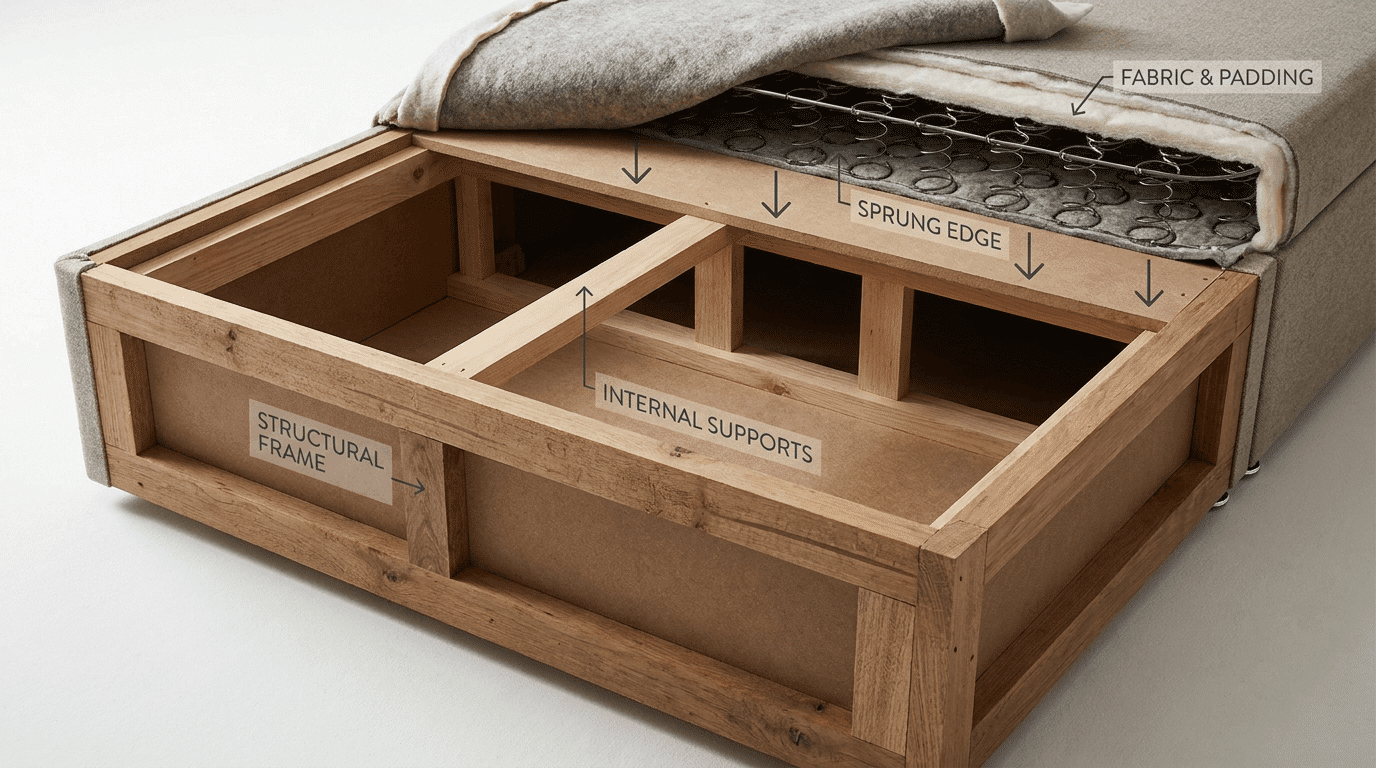
The base is a rectangular wooden box frame built from timber panels and internal supports. Inside, the construction varies:
- Platform top: A solid, flat board. Best for memory foam mattresses.
- Sprung edge: Small pocket springs run across the top surface, adding cushioning at the edges.
Most king and super king bases split into two halves for easier delivery and setup.
Materials Used in Divan Bed Frames
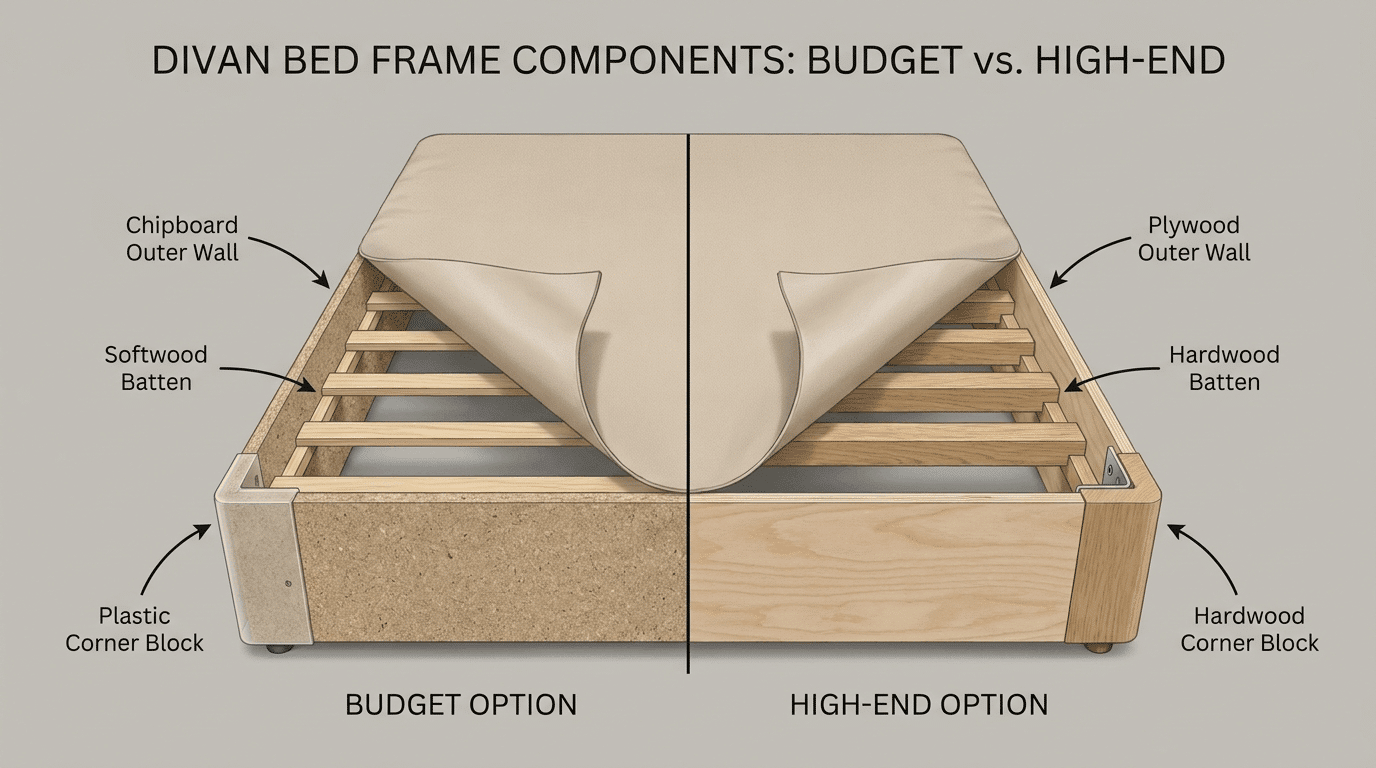
Divan bed frames are made from a range of materials that affect their strength, durability, appearance, and overall feel.
The right material choice can influence how long your bed lasts and how well it suits your bedroom style.
- Chipboard or MDF panels: Used for outer walls. Cost-effective and smooth for upholstery.
- Solid timber battens: Used as cross-supports to carry weight.
- Corner blocks: Keep the box shape rigid over time.
Higher-end models use hardwood internally. Budget versions rely on lighter chipboard, which affects long-term durability.
How the Mattress Sits on a Divan Base
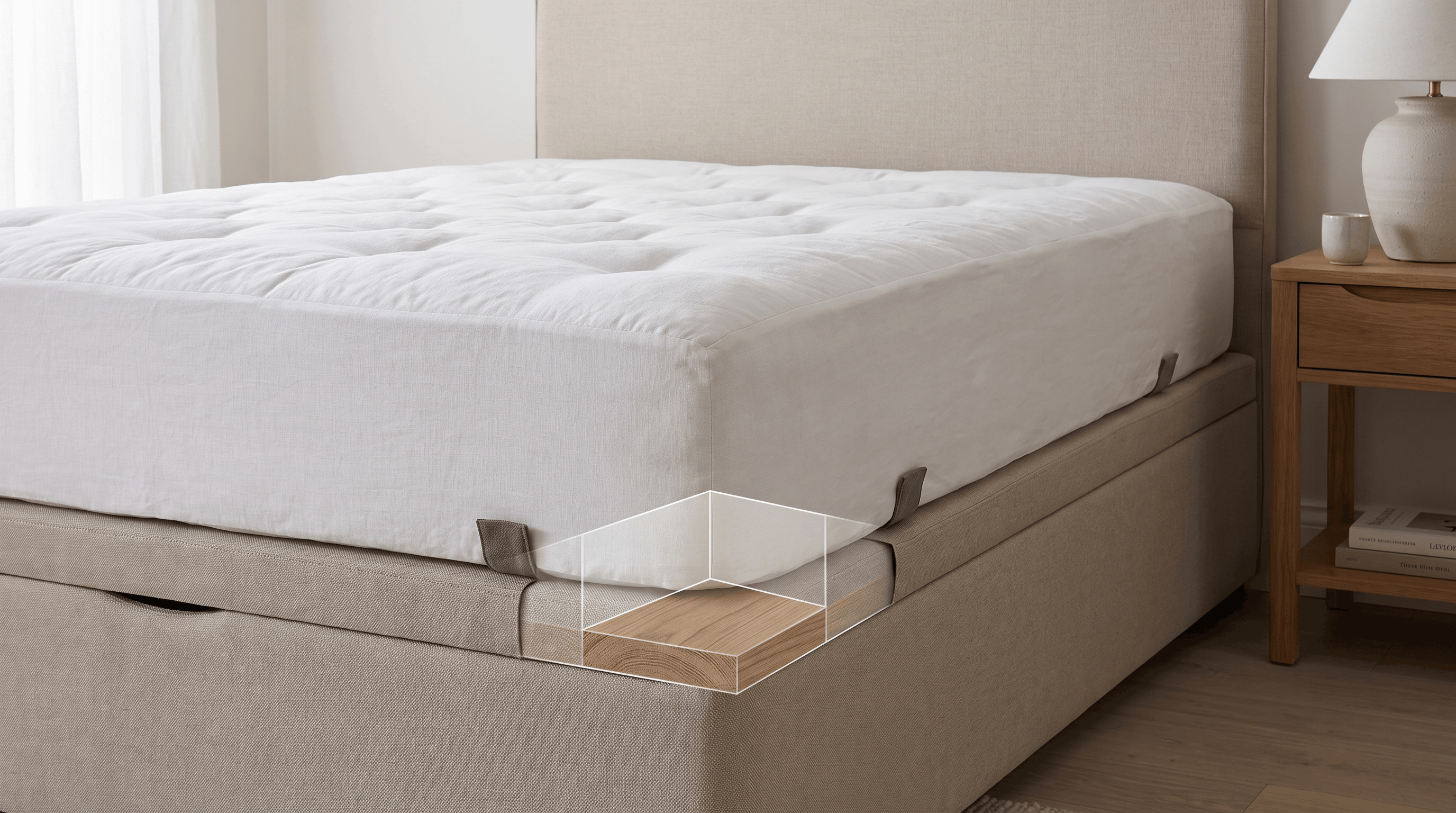
A mattress sits directly on top of a divan base, creating a sturdy and supportive sleeping surface. Unlike slatted frames, there is no large gap between the mattress and base, which helps provide a firmer feel.
The type of divan top can also affect comfort.
- A platform top: It offers solid, even support and works well with memory foam and heavier mattresses.
- A sprung-edge divan: It has springs in the base, providing extra cushioning and a slightly softer feel.
Most mattresses are designed to work with divan bases, but it is important to check the manufacturer’s recommendations to ensure proper support and mattress longevity.
Key Features of a Divan Bed
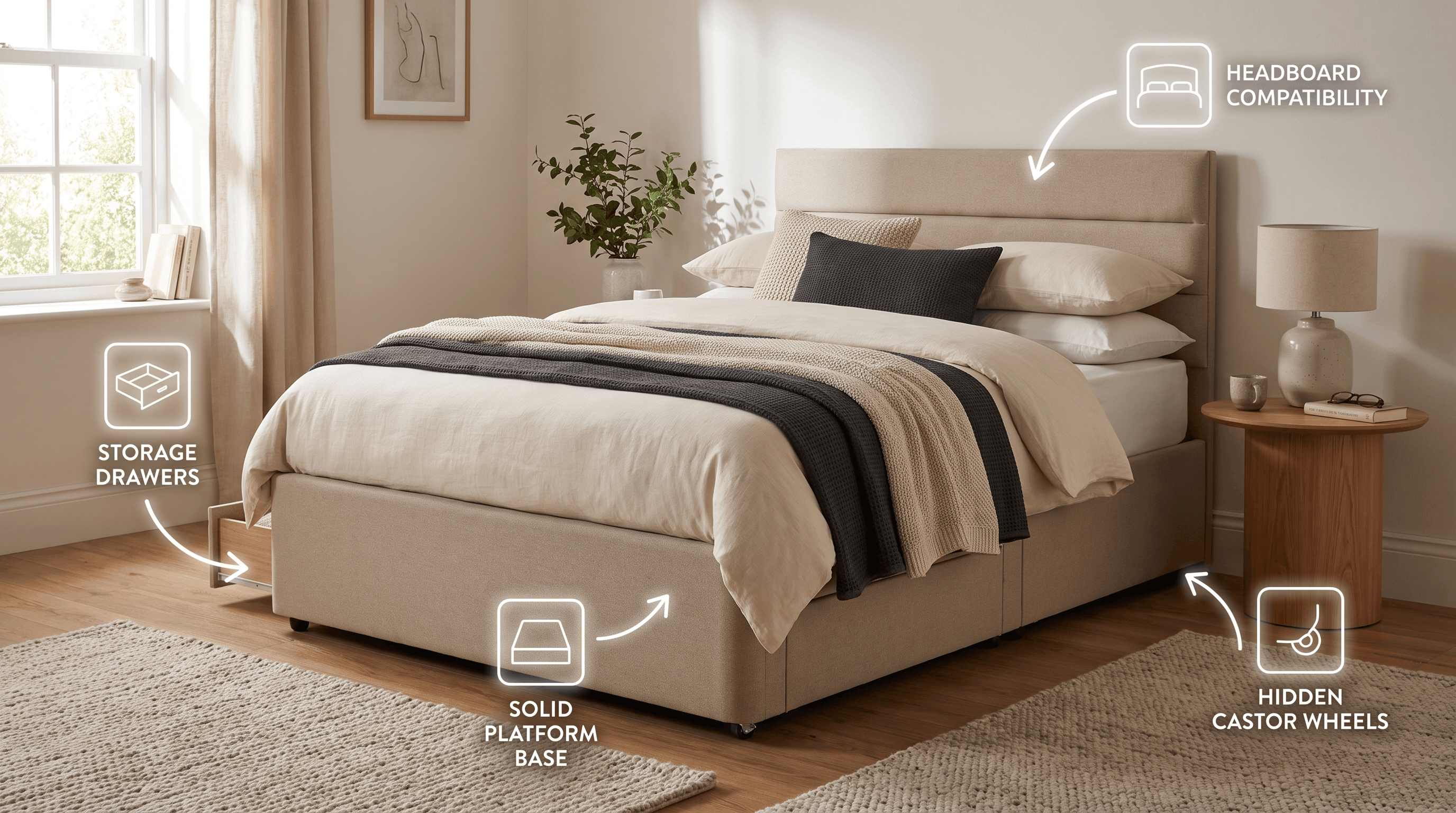
Divan beds are known for their strong build quality, practical storage options, and compatibility with most mattress types, making them a versatile choice for modern bedrooms.
1. Solid Platform Base vs Slatted Bases
The base you choose affects mattress support and comfort. Platform tops feel firmer, while slatted bases offer more airflow and flexibility.
| Feature | Platform Top | Slatted |
|---|---|---|
| Support | Firm | Flexible |
| Airflow | Low | Better |
| Best For | Memory foam | Hybrid, spring |
| Feel | Firmer | Softer |
2. Storage Options in Divan Beds (Drawers vs Lift-Up)
A divan bed can do more than support your mattress. Many models include built-in storage to help keep bedrooms tidy without taking up extra floor space. The two most common options are drawers and lift-up (ottoman) storage.
- Drawer storage: Drawers pull out from the side or foot of the bed, making them ideal for everyday items. They require enough clearance around the bed to open easily.
- Ottoman lift-up: The mattress platform lifts using gas-assisted hinges to reveal the full storage area underneath. It suits bulky items but needs space at the foot for access.
3. Headboard Compatibility
Divan bases usually include strut slots at the back to fit standard headboards, including padded, wooden, and winged designs.
Many are sold separately from headboards, allowing you to choose a style that matches your bedroom.
If you would rather build a custom look than buy a ready-made one, you can put together your own headboard in an afternoon with basic tools.
4. Mobility and Castor Wheels
Most divan bases come with castor wheels that make moving and repositioning the bed easier. Some models use fixed glide feet, offering better stability but making the base harder to move.
5. Size Variations (Single to Super King)
Bed sizes vary from space-saving singles to roomy super kings, with each size offering different levels of comfort, sleeping space, and suitability for different bedroom layouts.
| Size | Dimensions (UK) |
|---|---|
| Single | 90 cm × 190 cm |
| Double | 135 cm × 190 cm |
| King | 150 cm × 200 cm |
| Super King | 180 cm × 200 cm |
Types of Divan Beds
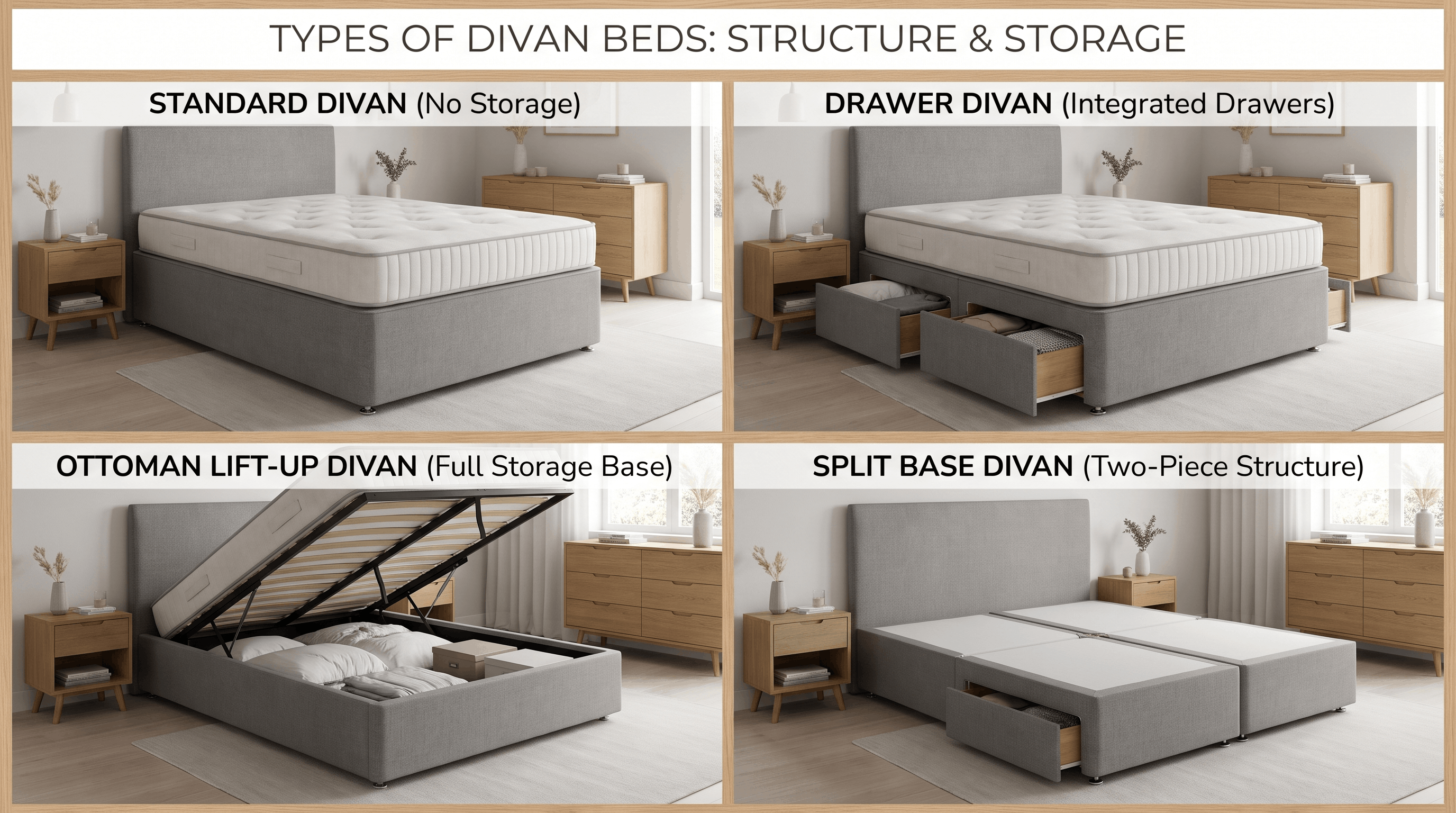
Divan beds come in several styles designed to suit different storage needs, comfort preferences, and bedroom sizes.
- Standard Divan Bed: A plain box base with no storage. Good for guest rooms or buyers who do not need underbed storage.
- Divan Bed with Drawers: The most popular type in the UK. Available with 2 or 4 drawers on the sides, or end drawers for tight rooms.
- Ottoman Divan Bed: The full base lifts on gas pistons. Large storage capacity. Heavier and more expensive than drawer models.
- Split Base Divan Beds: King and super-king divans split into two halves. Easier to carry upstairs. Each half can have different storage types.
- Platform Top vs Sprung Edge Divans: Platform top is firmer and lower cost. Sprung edge adds softness at the edges and works well with pocket-sprung mattresses.
Divan Bed vs Other Bed Types
A divan bed, a bed frame, and an ottoman bed each change how your bedroom looks, stores, and feels. The best choice depends on your storage needs, comfort, and style preferences.
| Feature | Divan Bed | Bed Frame (Slatted) | Ottoman Bed |
|---|---|---|---|
| Design | Upholstered box base | Frame with slats and legs | Lift-up storage base |
| Storage | Drawers or lift-up | Usually none | Full under-bed storage |
| Support | Firm, even support | Better airflow | Depends on the base type |
| Noise | Quiet | May squeak | Quiet with maintenance |
| Price | Mid-range | Budget to premium | Usually most expensive |
| Mobility | Heavy | Light | Heaviest |
Ottoman beds themselves come in two builds worth knowing about: a divan-style ottoman, which is fully enclosed and keeps dust out better, and a frame-style ottoman, which is lighter and easier to reposition but leaves the underside more exposed.
Who Should Buy a Divan Bed?
Divan beds are best suited for people who want a balance of comfort, storage, and a clean bedroom layout, but they’re not the right fit for every sleeping style or space setup.
1. Best for Small Bedrooms: Divan beds suit small rooms, offering built-in storage that minimizes furniture and maximizes space. Ideal for tiny box rooms, they make the most of limited floor area.
2. Best for Storage Needs: If storage is a priority, divan beds offer a practical solution. For example, a 4-drawer king-size divan can store bedding, clothes, or seasonal items without taking up any additional floor space.
3. Best for Minimalist Interiors: Divan beds, with their low-profile, upholstered design and no visible frame or legs, fit well in minimalist and modern bedrooms. Pair with a matching wall color to make the room appear larger.
Not ideal for everyone, especially:
- People who move home frequently and need lightweight furniture
- Hot sleepers who prefer maximum mattress airflow and ventilation
- Those who prefer decorative, exposed-frame bed designs with a more open aesthetic
Pros and Cons of Divan Beds
A divan bed offers a great balance of comfort, storage, and practicality, making it a popular choice for many homes. However, like any bed type, it also has a few drawbacks. Comparing the main pros and cons can help you decide if it fits your space and lifestyle.
| Pros | Cons |
|---|---|
| Built-in storage | Limited mattress airflow |
| Strong, even support | Heavy to move |
| Quiet, sturdy design | Fabric may wear |
| Space-saving profile | Drawers need clearance |
| Easy split-base delivery | Less decorative |
Common Problems with Divan Beds
Divan beds are practical and durable, but their solid structure and upholstered design can lead to a few common issues over time that buyers should be aware of.
- Limited Airflow Under Mattress: The solid platform traps heat and moisture. Rotate your mattress every 3 months and use a breathable mattress protector.
- Fabric Wear and Tear Over Time: Corners and edges wear first. Choose tightly woven fabric over velvet or chenille for better long-term durability.
- Heavy Structure and Moving Difficulty: A king ottoman divan can be very heavy. Moving one requires at least two people and careful handling to avoid tearing the fabric.
Maintenance Tips for Divan Beds
A divan base holds up well with basic care, but skipping small upkeep tasks can cause the fabric, drawers, and casters to wear out faster than they should.
- Vacuum Monthly: Use an upholstery attachment on the fabric to lift dust before it settles in.
- Spot Clean Fast: Treat stains right away with a damp cloth and a mild cleaner.
- Rotate the Mattress: Turn it every 3 months to prevent uneven wear.
- Clear the Drawers: Keep them free of debris and wax wooden runners if they start to stick.
- Check the Castors: Inspect wheels regularly and replace any that crack to protect the base corners.
- Keep It Dry: Moisture weakens the chipboard and MDF inside the base. If mildew appears on a wooden base or headboard, treat it the same way you would mold on wooden furniture, catching it early to protect the frame.
Divan Bed Buying Mistakes to Avoid
Many buyers focus only on appearance or price, but overlooking key functional details can lead to discomfort, limited usability, or a shorter bed lifespan.
- Ignoring Storage Needs: Built-in storage is cheaper to buy upfront than to add later. If there is any chance you will need it, choose it now.
- Choosing the Wrong Mattress Type: Memory foam on a sprung edge base creates an inconsistent surface. Always match the mattress type to the base before buying.
- Overlooking Room Measurements: Drawer divans need full side clearance. Ottoman bases need foot clearance. Measure before ordering.
- Buying Low-Quality Base Construction: Cheap divans look the same on the outside. The difference is inside. Check for solid timber frames and quality drawer runners before committing.
Conclusion
A divan bed offers solid mattress support, smart built-in storage, and a clean, low-profile design all in one piece of furniture.
It suits small bedrooms, people who need storage, and those who prefer a neat, minimal look. It is less ideal for hot sleepers, frequent movers, or those who want a decorative frame.
Choose the right base type, match it to your mattress, measure your room carefully, and buy the best quality your budget allows. A well-chosen divan bed will give you years of quiet, consistent, supportive sleep.
What type of divan bed are you considering? Drop your questions in the comments below.
Frequently Asked Questions
Is a Divan Bed Better Than a Bed Frame?
For storage, support, and quiet use, yes. For airflow and decorative style, a frame may suit you better. Match the type to your room and needs.
Do Divan Beds Need a Headboard?
No. Divan beds work fine without one. Most bases have strut slots ready for a headboard if you choose to add one later.
Are Divan Beds Good for Your Back?
The flat, even base consistently supports the mattress, which helps maintain spinal alignment. The choice of mattress still matters most, but a solid divan base ensures it performs as intended.
Can You Use Any Mattress on a Divan Bed?
Most types work well. Memory foam and latex suit platform tops. Pocket-sprung works on both the platform and the sprung edge. Check the mattress manufacturer’s base recommendations before buying.
Why are Divan Beds More Popular in the UK?
UK bedrooms tend to be smaller and often lack built-in wardrobe space. A divan solves both problems: it sits low, so the room feels larger, and it stores items inside the base. That combination made it a natural fit for British homes.