Planning a garden room for your property, but worried about legal compliance?
Most UK homeowners are confused about whether their garden room project requires planning permission or qualifies under Permitted Development Rights.
The rules around garden room height, size, and placement can feel overwhelming. Getting it wrong can mean costly delays, fines, or the forced removal of your new structure. But here’s the good news.
When you follow the correct regulations from the start, your garden room project proceeds smoothly without unnecessary planning applications. This means less stress, lower costs, and faster completion.
Whether you want a home office, gym, or studio space, knowing these requirements will protect your investment and keep everything legal.
What is a Garden Room?
Garden rooms are outbuildings used for purposes related to the main house. They serve as home offices, gyms, studios, or hobby spaces. The key is that they support the main property rather than function independently.
Garden rooms are not living accommodation. They cannot include sleeping or cooking facilities without planning permission. This distinction matters because it affects whether you need approval.
Most garden rooms fall under Permitted Development Rights. This means you can build them without applying for permission. But only if you meet specific conditions set by UK planning regulations.
These structures typically feature insulation, electricity, and proper foundations. Modern designs often include large windows or bi-fold doors to let in natural light. The versatility makes them popular for remote working and personal wellness spaces.
Permitted Development Rights for Garden Rooms
Permitted Development Rights are rules that allow you to build certain types of garden rooms without needing planning permission. These rights are automatically granted to most houses in the UK.
They can save you a lot of time and money by bypassing the formal approval process, but there are some strict guidelines to follow.
If you’re building a garden room, you can avoid applying for planning permission, as long as it meets specific size, height, and placement criteria.
However, it’s important to know that these PD Rights don’t apply to flats or maisonettes. So, if you live in one of these, you’ll need to apply for planning permission, no matter the size or type of your garden room.
Tip: Always double-check with your local planning authority to make sure PD Rights apply to your specific property before you start building.
Garden Room Height and Size Rules
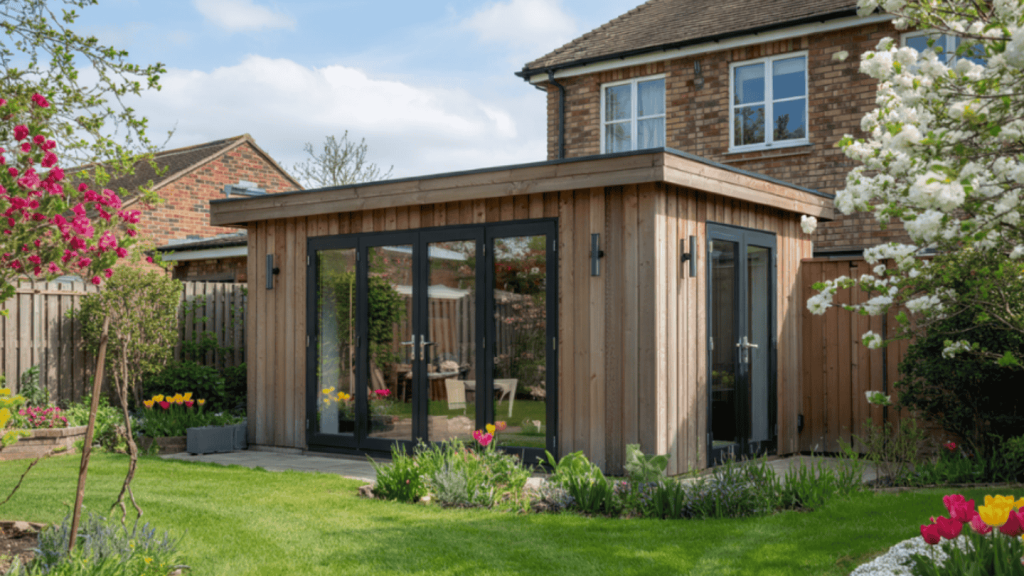
When planning your garden room, size and height are the two most important factors to consider.
These measurements play a critical role in determining whether your project falls under Permitted Development Rights (PD Rights) or whether you’ll need to apply for full planning permission.
1. Building Height
Your garden room must be single-story, meaning it cannot have multiple levels or a loft. The maximum height allowed for your garden room depends on its distance from the property boundary. Here’s how it breaks down:
| Distance from Boundary | Maximum Height Allowed | Roof Type |
|---|---|---|
| Within 2 meters of the boundary | 2.5 meters | Applies to any roof type |
| More than 2 meters from the boundary | 4 meters | For dual-pitched roofs (traditional peaked roof) |
| More than 2 meters from the boundary | 3 meters | For flat roofs or monopitch roofs |
These height limits are in place to ensure your garden room fits within the environment and doesn’t impact your property or the surrounding area.
2. Eaves Height
For any garden room with a pitched roof, the eaves (the part of the roof that overhangs the walls) must not exceed 2.5 meters. This restriction ensures that your structure doesn’t impact your neighbor’s view or access to light and keeps the building in line with surrounding structures.
3. Size Limit
Your garden room must not exceed 30 square meters in floor area. This is the maximum size for a garden room to qualify for PD Rights without needing planning permission.
Additionally, it’s important to note that the total outbuilding area across your entire garden, including sheds, greenhouses, and other structures, must not exceed 50% of the total garden space.
This calculation includes the footprint of your home and all other outbuildings on the property. If your existing structures and the new garden room together exceed this 50% limit, you’ll need to apply for planning permission.
4. Placement
The placement of your garden room is just as important as its size and height. For a garden room to fall under PD Rights, it must be positioned behind or to the side of the main house.
This means that it cannot be placed in front of the principal elevation of the house (the main front-facing side of your property).
Pro Tip: If you plan to place your garden room to the side or rear of your property, ensure that it’s not too close to the street or public area. Structures placed in front of the house automatically require planning permission, regardless of size.
When Do You Need Planning Permission?
While most garden rooms qualify for PD Rights, there are situations where you will need planning permission:
- Commercial Use: If you plan to use your garden room for business with regular client visits, you will need planning permission.
- Adding Plumbing or a Toilet: If you plan to install a toilet, it will turn your garden room into a self-contained living space, which requires full planning permission.
- Exceeding Size or Height Limits: Going over the size or height limits for PD Rights will automatically require a planning application.
Important Tip: Adding a toilet or kitchen can be a common trap. Even if you initially plan for an office or gym, adding plumbing later may require a change in classification from an outbuilding to a living space, which could trigger the need for formal approval.
Special Considerations for Certain Garden Rooms
Certain property types and locations have additional restrictions that override standard Permitted Development Rights. Check these special considerations before assuming your garden room qualifies for automatic approval.
1. Houses Only: Planning regulations apply only to houses. Flats, maisonettes, apartments, or converted properties don’t have Permitted Development Rights for garden rooms regardless of size or purpose.
2. Listed Buildings: Listed buildings require full planning permission AND listed building consent for any garden room. Size and purpose don’t matter; the listing status removes all Permitted Development Rights completely.
3. National Parks, AONBs, World Heritage Sites: Garden rooms up to 10 meters by 10 meters may be built without permission only if placed more than 20 meters from the house. Closer distances require full planning permission.
4. Conservation Areas: Garden rooms cannot be placed to the side of properties without permission. Rear gardens usually allow Permitted Development builds if other conditions are met.
5. Article 4 Directions: Some areas have special restrictions that remove Permitted Development Rights entirely. You’ll need planning permission for work that usually wouldn’t require it. Your council can confirm whether this applies to your property.
These exceptional circumstances can prevent costly mistakes and project delays.
Garden Room with Toilet Requirements
Installing a toilet in your garden room fundamentally changes its classification under UK planning law. What starts as a simple office or gym can become self-contained accommodation once plumbing is added.
Planning authorities view toilets as creating a separate use from the main house, which moves your project outside Permitted Development Rights.
Building regulations also kick in, requiring compliance with drainage, plumbing, and electrical safety standards.
- Installing a toilet converts your garden room into habitable accommodation and requires full planning permission.
- A sink alone may be acceptable, but a full bathroom requires permission.
- Drainage pipes must connect to sewage systems with gradients between 1:40 and 1:80.
- Use certified electricians for Part P compliance and electrical installation certificates.
Adding plumbing and toilet facilities transforms your garden room from a simple outbuilding into regulated accommodation that requires proper approvals.
Garden Room Boundary Rules
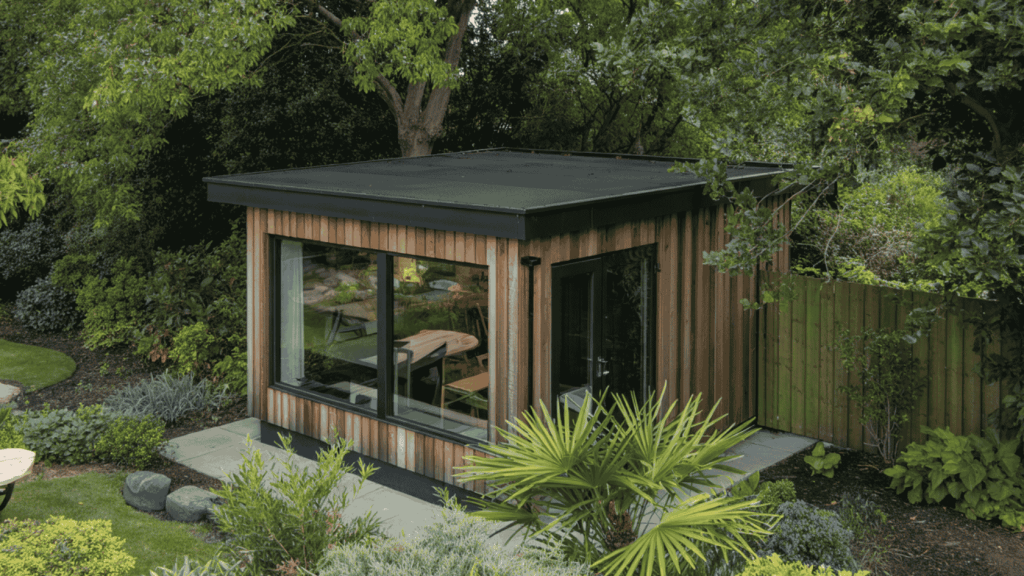
Property boundaries directly affect the allowable height and positioning of your garden room. These restrictions ensure your build complies with both planning permission and building regulations requirements.
Positioning Requirements for Medium-Sized Buildings
Buildings between 15 and 30 square meters require careful boundary placement. They must be set back at least 1 meter from any boundary to avoid building regulations approval.
This rule doesn’t apply if you use non-combustible materials for construction. Measure distances accurately from all property boundaries, including fences, walls, and hedges.
Informing Your Neighbors
You’re not legally required to inform neighbors about your garden room plans before starting work. However, this simple courtesy helps maintain good relationships and prevents potential disputes.
A brief conversation or written notice shows respect for those sharing your boundary. Most neighbors appreciate advance notification even when it’s not mandatory.
Check boundary measurements carefully before finalizing your garden room design and placement.
Local Planning Permission Rules for Garden Rooms
Local councils may have special conditions or restrictions that override national guidelines. Each authority interprets planning rules slightly differently, so always verify the requirements for your specific location.
| What You Need to Know | Action to Take |
|---|---|
| Local variations exist across the UK. What qualifies under Permitted Development in one area might require full planning permission in another. | Check with your local planning office or the Planning Portal to confirm specific local rules before starting your project. |
| Some councils have stricter interpretations of height limits or coverage percentages. Others may have additional environmental or design standards. | Contact planning officers early in your planning process to avoid surprises or costly redesigns. |
| Planning officers can identify potential issues and suggest modifications that keep your project compliant. | When making inquiries, provide complete details about your garden room’s size, location, and intended use. |
Getting clear guidance upfront saves time, money, and frustration later in your build process.
Garden Room Planning Mistakes to Avoid
Many garden room projects face delays or require costly modifications because homeowners overlook key requirements during the planning stage.
1. Failing to measure boundaries accurately before starting construction leads to height limit violations and potential enforcement action from your local council.
2. Assuming all garden rooms automatically qualify under Permitted Development without checking property type, listed status, or local Article 4 Directions.
3. Starting work before confirming compliance with your local planning authority results in unapproved structures that may need removal or retrospective permission.
4. Adding toilets or plumbing after initial approval without realizing that this changes the classification from incidental use to habitable accommodation requiring new permissions.
5. Ignoring the 50% garden coverage rule by not calculating the total outbuilding area, including existing sheds, greenhouses, and previous extensions.
Avoid these common errors by thoroughly researching requirements, consulting your local planning office, and using certified professionals for all regulated work.
Conclusion
Building a garden room without garden room planning permission is achievable when you follow the Permitted Development Rights correctly.
Stay within the garden room height limits, respect size restrictions, and use your structure only for incidental purposes. The moment you add toilets or create a self-contained living space, everything changes, and formal approval becomes mandatory.
Before starting construction, verify your property type and check for conservation area restrictions or Article 4 Directions. Contact your local planning authority to confirm requirements specific to your location.
Use qualified professionals for electrical and plumbing work to ensure compliance with building regulations. Measure boundaries carefully and calculate total garden coverage, including all existing structures.
Get your planning right from the start and enjoy your new garden room with complete peace of mind.