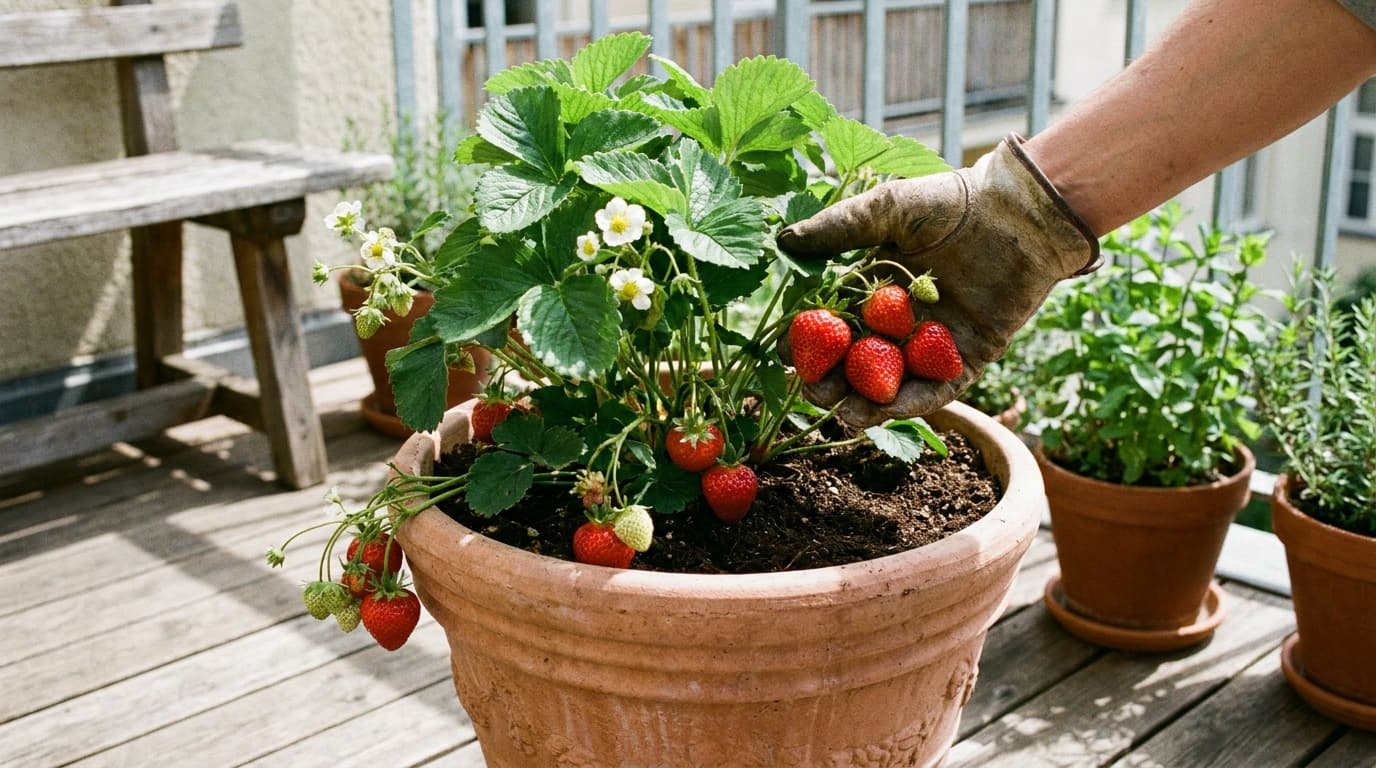
I started growing strawberries on a patio, not a proper garden. Just a stretch of concrete, a railing, and a few hours of afternoon sun.
Within one season I had more berries than I knew what to do with, and I still plant a few pots every spring for that reason alone.
If you’re wondering how to grow strawberries without a big yard, the short answer is: you don’t need one.
Their roots stay shallow, so they’re happy in containers, raised beds, hanging baskets, or a strip of balcony railing. What actually decides whether they fruit well is sunlight, drainage, and a bit of routine care, not square footage.
Below is everything I’ve picked up growing strawberries this way, along with a quick look at the types you’ll come across and a timeline for what to expect once you plant.
Quick Facts About Growing Strawberries
- Most of the root system sits within the top 6 to 12 inches of soil, which is why pots and raised beds work so well.
- With a bit of winter mulch, the same plants can keep fruiting for three to four years before they need replacing.
- Flowers still need pollen moved between their parts, usually by bees or wind, before fruit will set.
- A healthy, established plant can produce close to a quart of fruit in its first strong fruiting season.
- Once a flower is pollinated, it takes roughly four weeks for the fruit to ripen.
- Strawberries do best in soil with a pH between 5.5 and 6.8, and 6 to 8 hours of direct sun a day.
Types of Strawberries at a Glance
Before you pick a variety, it helps to know the three basic types you’ll find at a nursery or in a seed catalog. Everything else, including which one suits a small space, comes down to this.
| Type | Harvest Pattern | Runners | Best For |
|---|---|---|---|
| June-Bearing | One large harvest, 2-3 weeks in early summer | Many | Freezing, jam, big batches at once |
| Ever-Bearing | 2-3 smaller harvests, spring through fall | Few | Containers, balconies |
| Day-Neutral | Steady fruiting most of the season | Very few | Longest harvest window, tight spaces |
Further down, in the variety section, I’ll get into which of these actually makes sense once you’ve decided how much room you’ve got to work with.
Can You Grow Strawberries in Small Spaces?
Yes, and it’s not even a stretch. That shallow root system means strawberries don’t need a deep bed to settle into, which makes containers, hanging baskets, and vertical towers realistic options rather than compromises.
In climates where winters aren’t too harsh, strawberries also come back on their own as perennials, so you’re not starting from scratch every spring.
I’ve grown them on balconies, tucked into a sunny windowsill box, and along a fence line that got nothing but reflected heat off a wall.
If you’re still working out what your own patch could look like, there are some genuinely clever small garden layouts worth flicking through before you commit to a spot.
The real limit isn’t space at all. It’s whether the spot gets enough light, drains well, gets fed occasionally, and has decent airflow around the leaves.
Match the variety and setup to what your space can actually offer, and the plant does the rest.
How to Grow Strawberries in Containers
Container growing is the easiest route to a steady harvest if you’re working with limited ground space.
1. Choose the Right Container
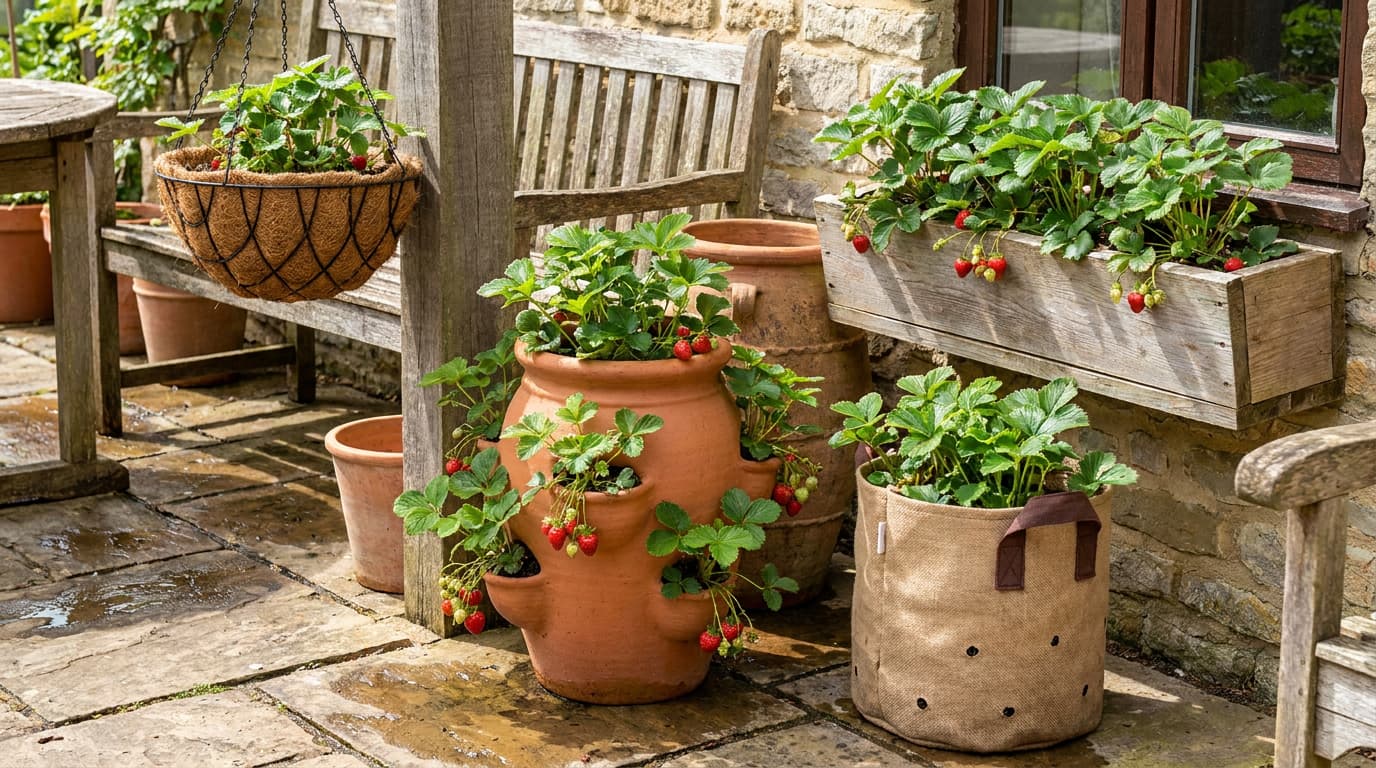
Look for something at least 8 to 12 inches deep with drainage holes at the bottom. Wider pots let you fit more plants side by side.
It’s roughly the same pot-sizing logic gardeners use for container tomatoes, just on a smaller scale. Strawberry pots, hanging baskets, grow bags, window boxes, and vertical planters all work.
2. Best Soil Mix for Container Strawberries
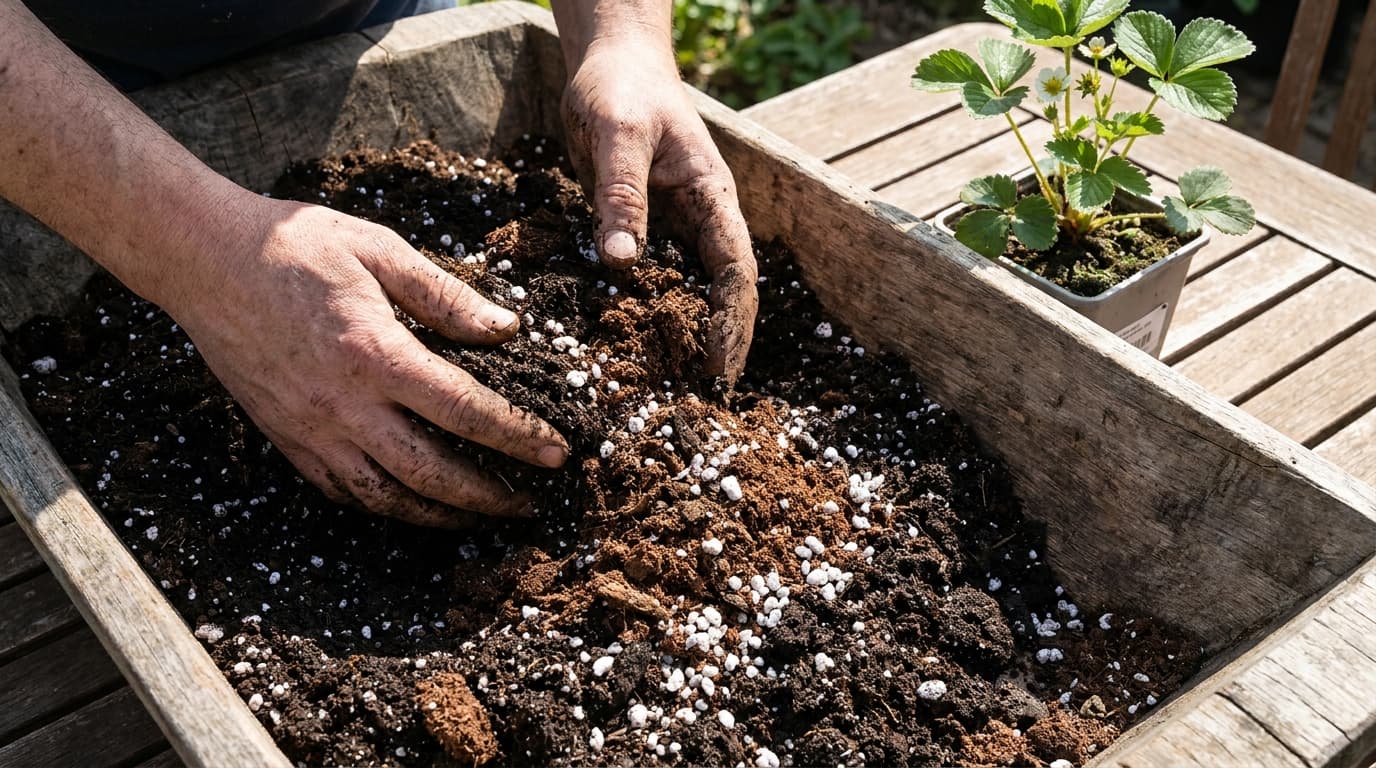
Strawberries want loose soil that drains fast. Heavy garden soil holds too much water in a pot and leads to root trouble. A mix of quality potting soil, compost, and perlite gives the roots what they need without staying soggy.
3. Plant Strawberries in Pots
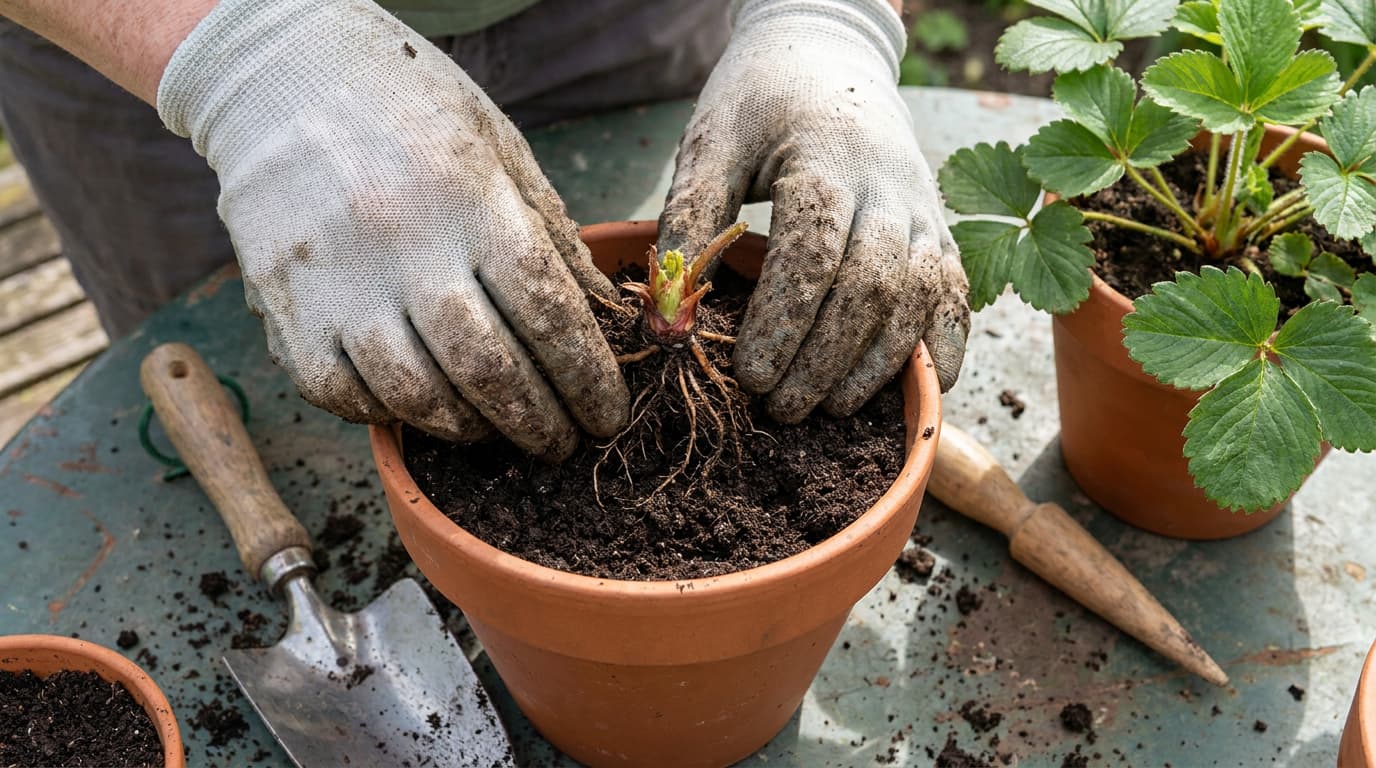
Set the crown level with the soil surface and spread the roots down and out instead of bunching them. Bury the crown and it will rot, so leave it exposed to air and light. Give plants enough room between them for leaves to breathe.
4. Container Placement
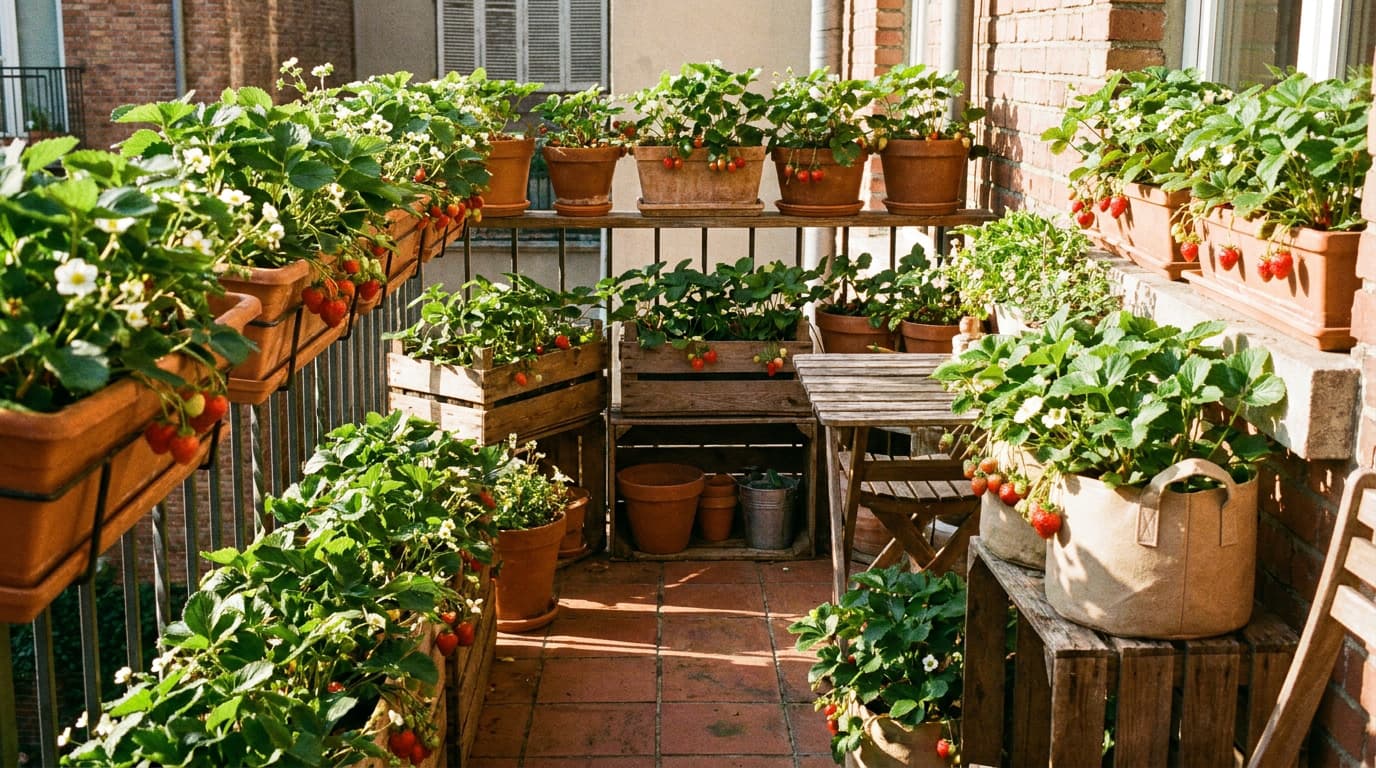
Aim for 6 to 8 hours of sun a day. If you notice one side of the plant lagging, rotate the pot occasionally so all of it gets even light.
Keep containers away from sudden temperature swings, especially in early spring or late fall when a cold snap can catch young growth off guard.
When to Plant Strawberries for the Best Growth
Timing depends on where you live and which type of strawberry you’re planting.
- Cool climates: Plant in early spring once the soil is workable, so roots have time to settle before summer heat.
- Mild climates: Fall planting works well. Cooler temperatures favor root growth, and plants are established before the next season starts.
- Warm climates: Plant during the cooler months and skip the peak of summer, which stresses young plants before they can take hold.
When to Plant Strawberries from Different Starting Methods
Timing also shifts depending on how you’re starting your plants.
| Starting Type | Best Planting Time |
|---|---|
| Bare-root strawberries | Early spring or fall |
| Nursery plants | Spring or early fall |
| Strawberry seeds | Start several weeks indoors before planting season |
| Strawberry runners | Late summer to early fall |
Whichever method you pick, giving roots time to settle before extreme weather hits pays off in stronger growth later on.
If you’re filling out a raised bed for the season, strawberries also pair well with other spring crops worth getting in the ground around the same time.
And if you’re planting in soil rather than a fresh bag of potting mix, avoid a spot where tomatoes, potatoes, or sod grew recently. They can leave behind soil diseases that strawberries are especially prone to picking up.
How to Prepare the Soil Before Planting Strawberries
Strawberries are particular about a few things, and getting the soil right before planting saves you from fixing problems later. Roots are sensitive to poor drainage and the wrong pH.
1. Soil Requirements
Aim for slightly acidic soil, somewhere between 5.5 and 6.8 pH. That range helps roots take up nutrients more easily.
The soil should hold organic matter and drain well, since strawberries don’t tolerate standing water and soggy soil invites root rot.
2. Improve Soil Quality
Work in compost, aged manure, or another organic amendment before planting. These boost nutrients and help soil hold moisture without staying waterlogged.
A natural fertilizer worked into the top several inches gives roots easy access to what they need. It’s also worth clearing the bed properly first.
If you’re not sure what you’re pulling out, it helps to know which weeds you’re dealing with before they compete with young plants for nutrients.
3. Raised Beds for Small Gardens
Raised beds drain better than in-ground plots, which strawberries appreciate. They’re also easier to maintain since you’re not stepping on the soil to reach plants.
Roots tend to develop more evenly, weeds are easier to manage in a contained space, and the soil warms up faster in spring for an earlier start.
Strawberry Plant Care After Planting
Once your plants are in the ground or in their pots, the real work of growing a good crop begins. Good aftercare is the difference between a handful of small berries and a full, steady harvest.
1. Pinching the First Flowers
It feels counterintuitive to remove the very flowers you’re growing strawberries for, but pinching off blooms for the first few weeks after planting lets the plant put its energy into roots and leaves instead.
That early investment pays back with stronger, more consistent fruiting once the plant is established.
2. Watering Strawberries
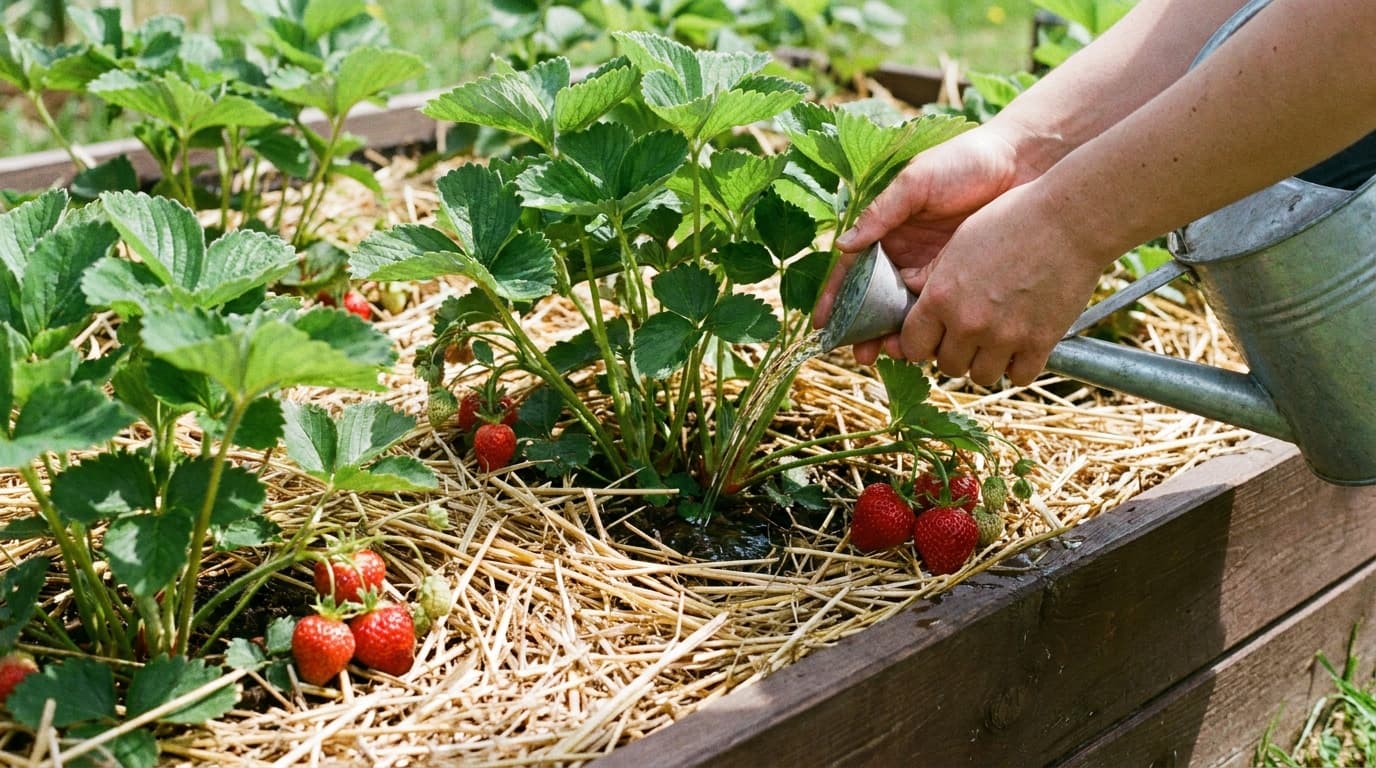
Keep the soil consistently moist without letting it get soggy. Containers dry out faster than garden beds, so check them more often. Water at the soil level rather than soaking the leaves, since wet foliage raises the risk of disease.
3. Helping with Pollination
Outdoors, bees and wind usually handle pollination without any help from you. Indoors, on a screened porch, or on a balcony with little pollinator traffic, flowers can bloom and drop without ever setting fruit.
A soft artist’s brush or cotton swab, run gently across open blossoms every couple of days, moves enough pollen around to make a real difference.
4. Feeding Strawberry Plants
Use a balanced fertilizer during active growth periods, and go easy on nitrogen. Too much pushes the plant toward leaves at the expense of fruit, which is the opposite of what you want.
5. Mulching Around Plants
A layer of mulch lifts ripening berries off bare soil, keeping them clean, while also holding moisture, reducing weeds, and buffering roots against temperature swings. Straw, compost, and pine needles all work.
6. Removing Strawberry Runners
Runners are the long stems that form new plants, and they pull energy away from fruit production. Remove them if you want to focus on this season’s harvest, or let a few root in if you’re looking to expand your patch.
7. Protecting Fruit
Birds, slugs, and insects all go after ripening strawberries. Netting keeps birds off, and if you want something more permanent, building a simple fruit cage is a weekend project that pays for itself the first season.
Keeping the growing area clean cuts down on slugs, and making sure fruit doesn’t sit against wet soil helps prevent both rot and insect damage.
Common Problems When Growing Strawberries in Small Spaces
I’ve run into just about every issue on this list at some point, usually in my first year with a new container or a new spot. None of it means you’ve done anything wrong. Here’s what’s actually going on and what worked for me.
- Plants not producing fruit: I’ve had a pot sit there all summer looking healthy, just no berries. In my case it was almost always one of three things: not enough sun, too much nitrogen from feeding a bit too generously, or a plant that simply hadn’t matured yet. Moving the container to a sunnier spot and easing off the fertilizer usually turns things around by the next season.
- Small or misshapen strawberries: This one caught me off guard the first time, since I assumed it was a watering problem. It can be, but poor pollination is just as likely, especially for anything growing under an overhang or on a screened porch. Watering on a consistent schedule and giving sheltered plants a gentle hand-pollination pass usually fixes both size and shape.
- Yellow leaves: Nine times out of ten when I’ve seen this, I’d been watering out of habit rather than checking the soil first. It’s almost always overwatering, poor drainage, or the plant running low on nutrients. Easing off the watering can and double-checking that the container actually drains usually sorts it out within a week or two.
- Moldy strawberries: Gray mold got into a hanging basket of mine one wet spring, and it spread fast once it took hold. It tends to show up where plants are crowded together with poor airflow, or where the fruit sits against damp foliage. Spacing plants out a bit more and watering the soil instead of the leaves has kept it from coming back.
- Aphids and small pests on the leaves: A basic soap spray has handled most of what’s shown up on mine. If you’d rather skip anything store-bought, a homemade garlic and mint pest spray works just as well and costs almost nothing to make.
The Strawberry Growing Timeline
Here’s roughly how a strawberry plant’s first year unfolds, from planting to your first real harvest.
Set the crown level with the soil, spread the roots out, and water thoroughly. Nothing to see yet, but the roots are already getting to work.
Pinch off any flowers that appear. It feels wrong, but it pushes the plant to build roots and leaves before it worries about fruit.
Leaves fill out, runners may start to appear, and the plant puts on visible size. A light feed and a layer of mulch help here.
White blossoms open. Outdoors, bees and wind take care of pollination. Sheltered plants may need a gentle hand with a soft brush.
Green berries swell and slowly blush. This is when consistent watering matters most, since it shapes the size of the fruit.
June-bearing types give one flush over 2-3 weeks. Ever-bearing and day-neutral types trickle out smaller harvests through summer and into fall.
Trim back old leaves, thin crowded plants, and work in fresh compost. This resets the patch for a stronger year ahead.
Growth slows and the plant rests. A layer of mulch protects the crown through the cold, ready to start the cycle again in spring, usually with a bigger harvest than the year before.
Wrapping Up
Growing strawberries in a small space really does come down to a handful of choices.
Pick a variety suited to your climate and container size, give the plants enough sun, drainage, and airflow, and stay ahead of the usual issues: buried crowns, too much nitrogen, overcrowding, and flowers that never get pollinated.
With the right container, a decent soil mix, and a bit of seasonal attention, you can grow strawberries successfully on a balcony, a patio, or a small backyard corner, and keep that same patch going for years.
A little planning turns a tight space into a steady supply of fresh, homegrown strawberries, which is more than I expected from a stretch of concrete and a railing.
Frequently Asked Questions
How many strawberries does one plant produce?
A healthy plant can give you a quart of fruit in its first strong fruiting season, and several small harvests a week once established. Exact numbers depend on the variety and how much sun it gets.
Do strawberry plants come back every year?
Yes. Strawberries are perennials in most climates. With mulch for winter protection and a bit of upkeep, the same plants can keep fruiting for three to four years before they need replacing.
Do you need to remove the flowers the first year?
Pinching off blooms for the first few weeks after planting is worth doing. It pushes the plant to build roots and leaves first, so you get bigger, more reliable harvests once it’s established.
Do strawberries need bees to pollinate them?
Strawberries are self-fertile, but they still need something moving pollen between the flower parts, usually bees or wind. Container plants on a balcony or windowsill sometimes need a hand: brush open blossoms gently with a soft artist’s brush every few days.
Can you grow strawberries from seed?
You can, but it takes longer to reach fruiting than starting from runners or nursery plants. Start seeds indoors several weeks before your planting window if you go this route.
How deep do strawberry roots grow?
Most of the root system stays within the top 6 to 12 inches of soil. That shallow habit is exactly why containers and raised beds work so well for them.