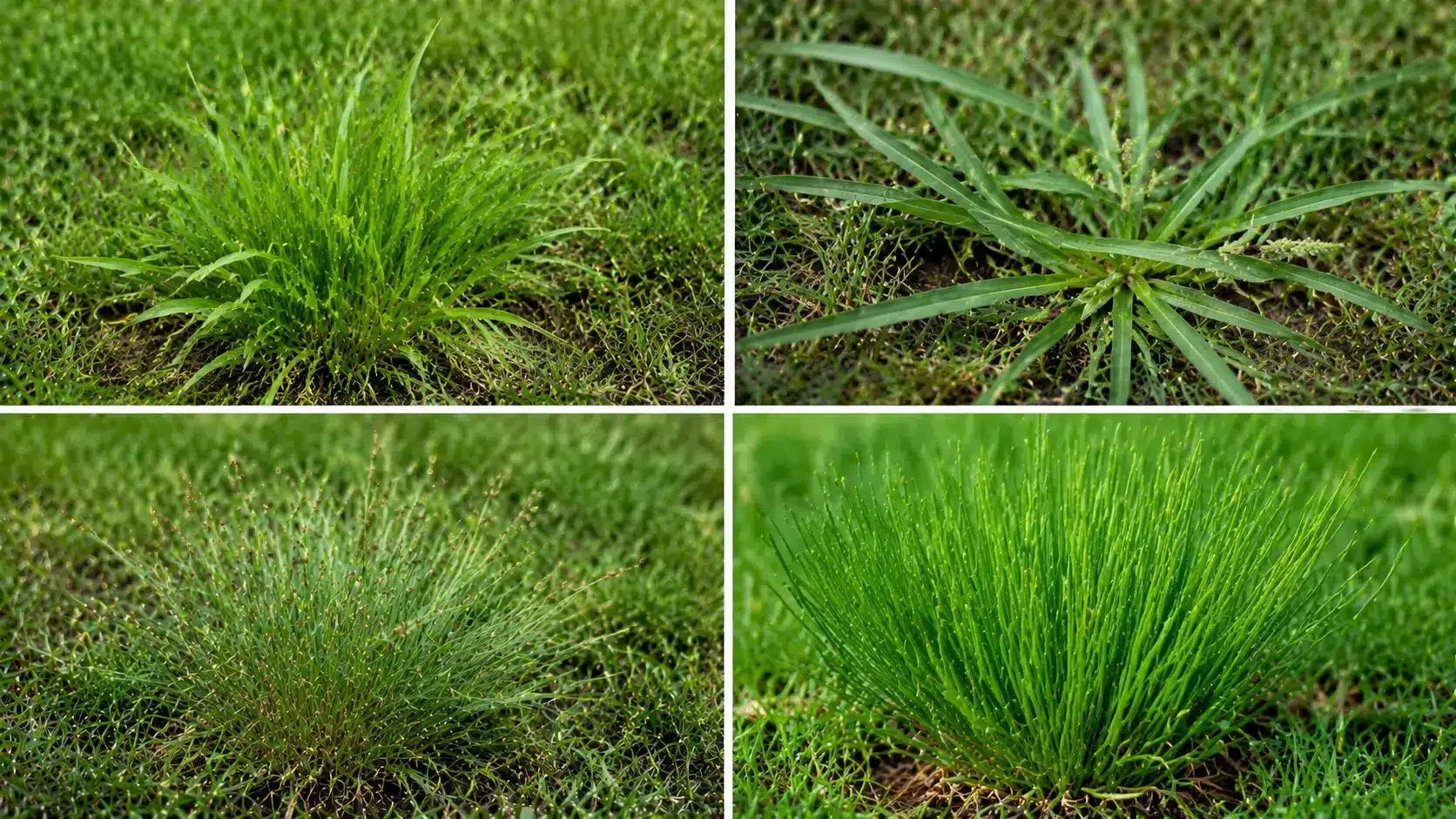

Grass-like weeds are the ones I get asked about most, probably because they’re the hardest to catch early.
You mow, water, and feed the lawn, yet a few blades never quite match the rest.
One patch grows faster, another feels coarse underfoot. Chances are you’re looking at one of the many weeds that look like grass.
These plants hide in plain sight since they share turf’s slim, upright shape until they seed or spread. Every grassy impostor gives itself away.
Stem shape, leaf feel, color, and seed heads tell you exactly what you’re dealing with.
Why Do Weeds That Look Like Grass Hide So Easily?
Your lawn grass and most grassy weeds belong to the same broad plant group, the monocots.
They emerge as a single narrow leaf and grow in the same thin, vertical form. That shared shape is exactly why weeds that look like grass slip past a quick glance.
Mowing makes it harder still. Cutting holds every plant at the same height and strips off the flowers and seed heads that would normally give a weed away.
So the plant sits there, green and grassy, blending in until it starts to spread or pushes up a seed stalk between mowings.
Spotting the difference early is what saves you work later. A single plant is a two-minute job. A colony is a lost weekend.
How to Tell Weeds That Look Like Grass From Your Lawn
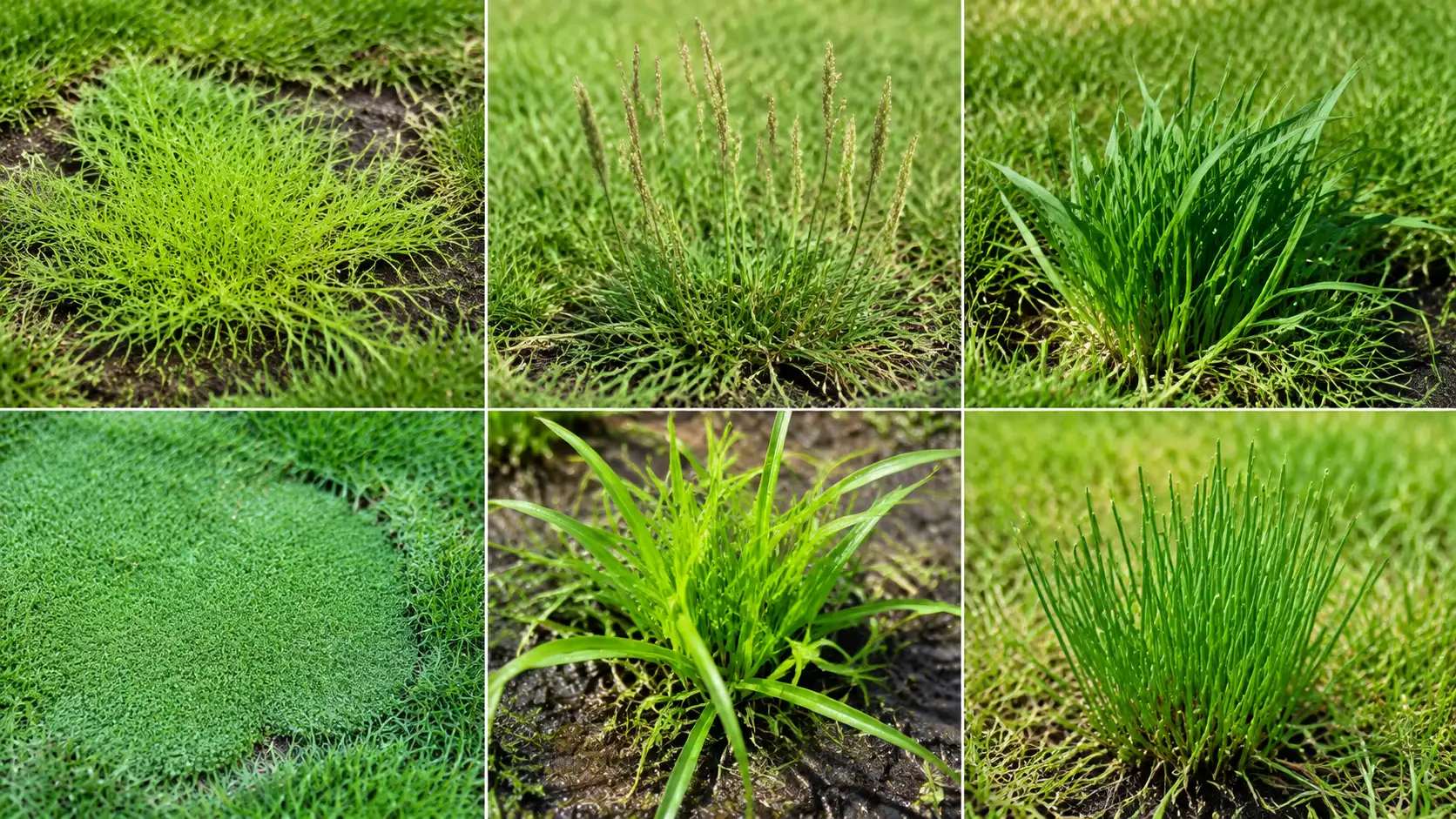
Get down to eye level with a single plant and check a few features. Specialists lean on one old memory trick: sedges have edges, rushes are round, and grasses have knees, meaning the swollen nodes spaced along the stem.
- Start with stem shape: Roll a stem between your fingers. A flat or hollow round stem points to a grass, while a firm, three-sided stem you can feel the corners on is a sedge.
- Then read the leaf texture: Turf feels soft and fine, while many grassy weeds feel coarse, slick, or stiff by comparison.
- Color is your next clue: A patch that reads lighter, darker, or blue-green against uniform turf is almost always an intruder.
- Growth speed seals it: Grassy weeds tend to outrun the lawn, so a clump standing tall a few days after mowing is a strong sign. Odd seed heads, from fingers to spikes to bottlebrush shapes, finish the case.
The Three Types of Grass-Like Weeds
Some grassy weeds turn up in nearly every yard. These are just one slice of the full lineup of common garden weeds, but the grass-like ones hide the best..
True Grasses
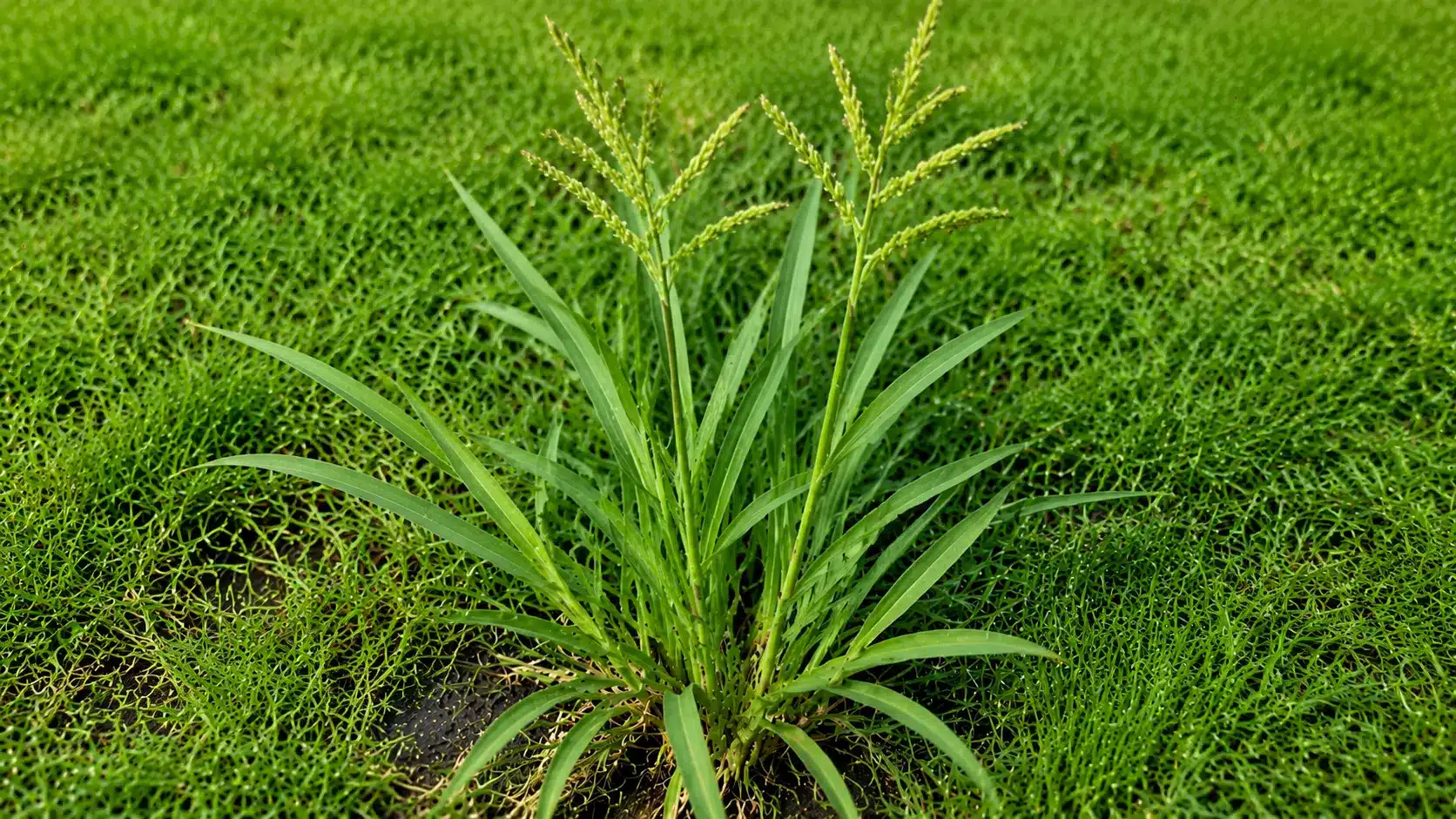
True grasses have hollow, rounded stems and leaves that run up the stem in two rows. Crabgrass, dallisgrass, and annual bluegrass live here.
They’re very similar to grasses; in fact, they’re actually grasses, just not the ones you might have planted.
Sedges
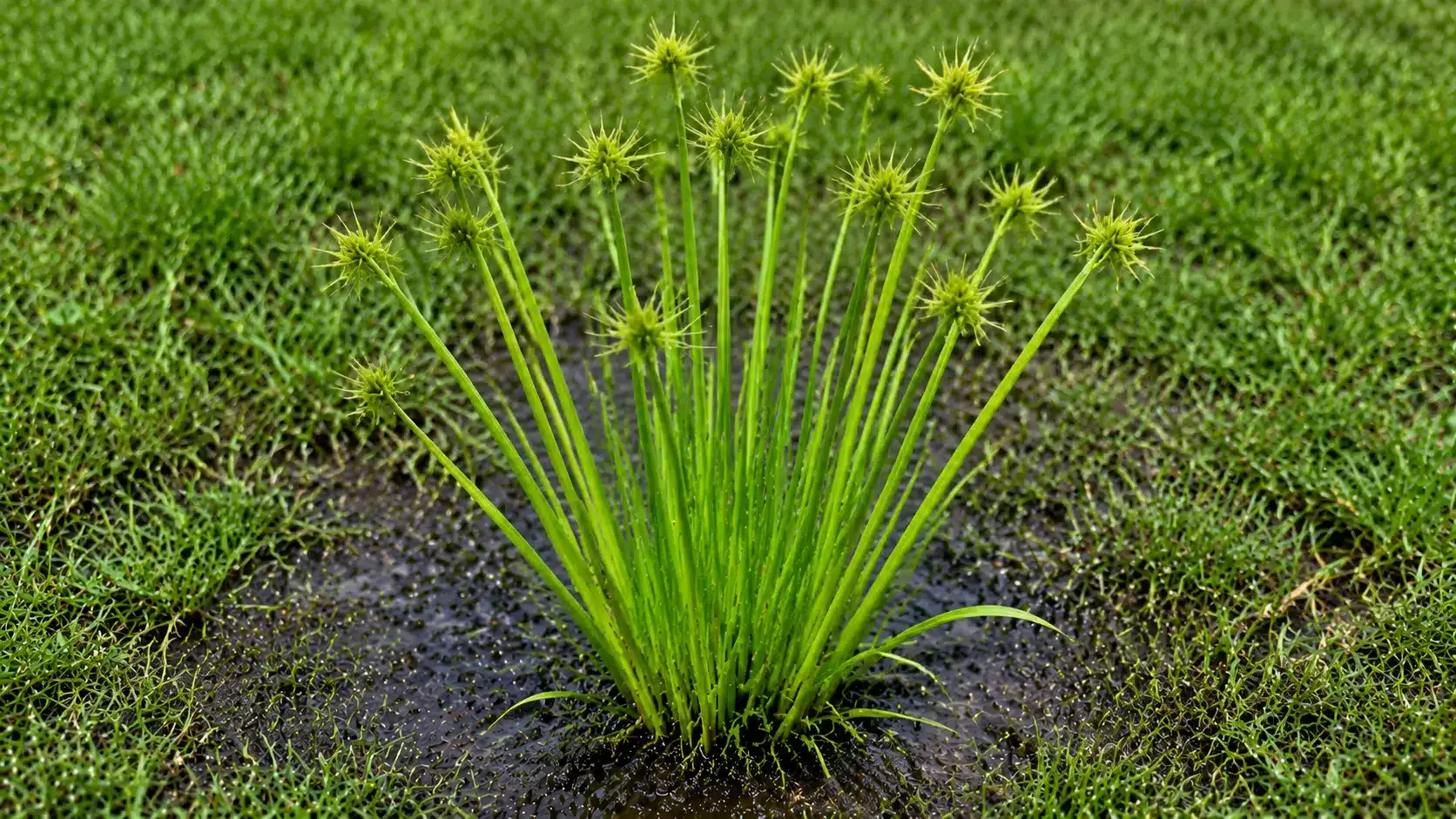
Sedges look grassy but are not grasses at all. Their stems are solid and triangular, and leaves grow in three directions instead of two.
Yellow nutsedge and green kyllinga are commonly the troublemakers, and they tend to show up in soggy ground.
Rushes and Bulb Weeds
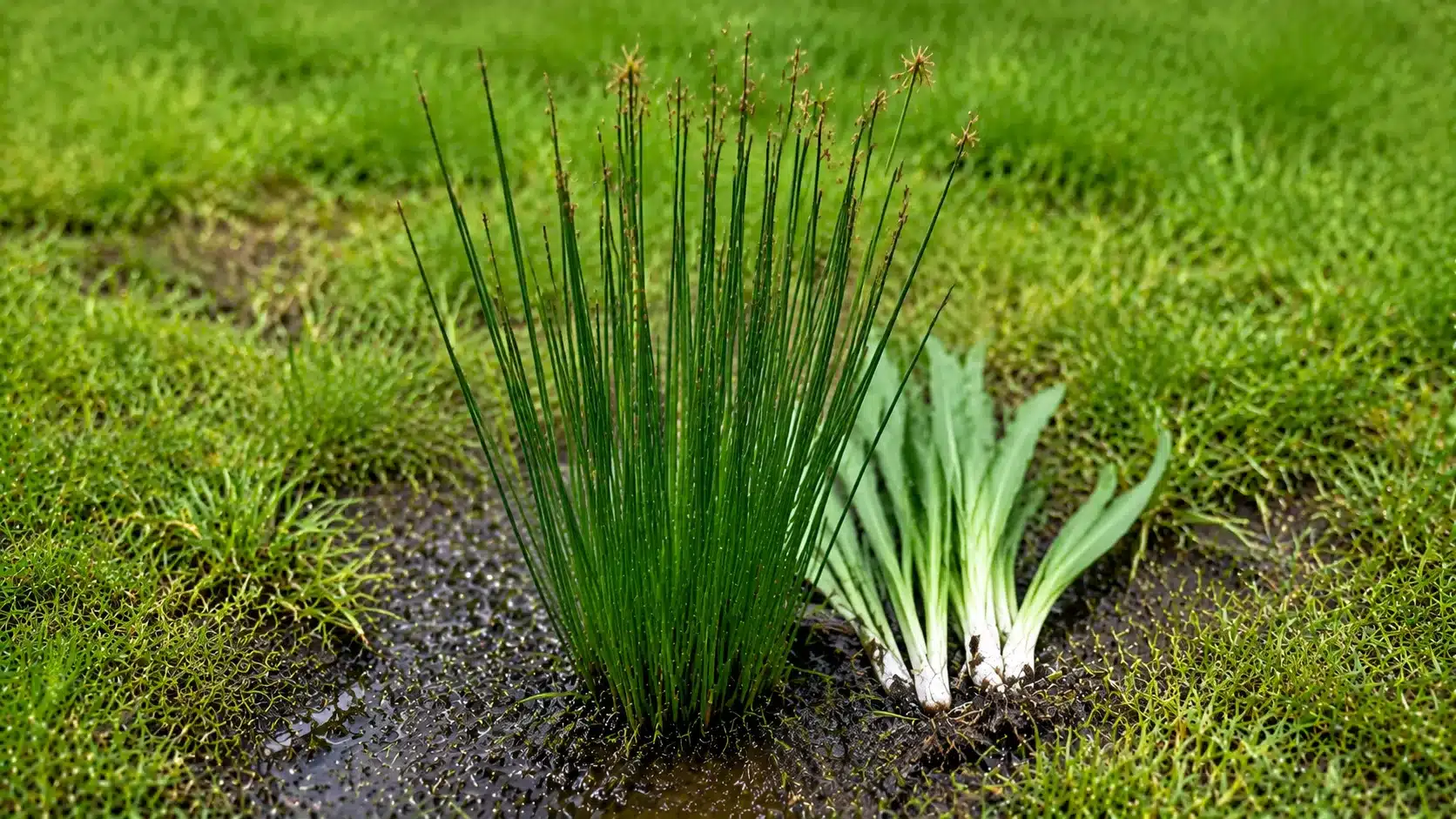
Rushes have round, solid stems and show up in wet, poorly drained spots, like path rush.
Some bulb weeds, such as wild garlic, begin to grow with delicate, grass-like shoots that can easily trick the eye. These tiny sprouts are often quite charming and may catch you by surprise!
Weeds That Look Like Grass and How to Identify Them
Here are common lawn weeds that you’ll find useful to recognize by sight, each with a distinctive feature that makes it easy to identify.
1. Annual Bluegrass (Poa annua)
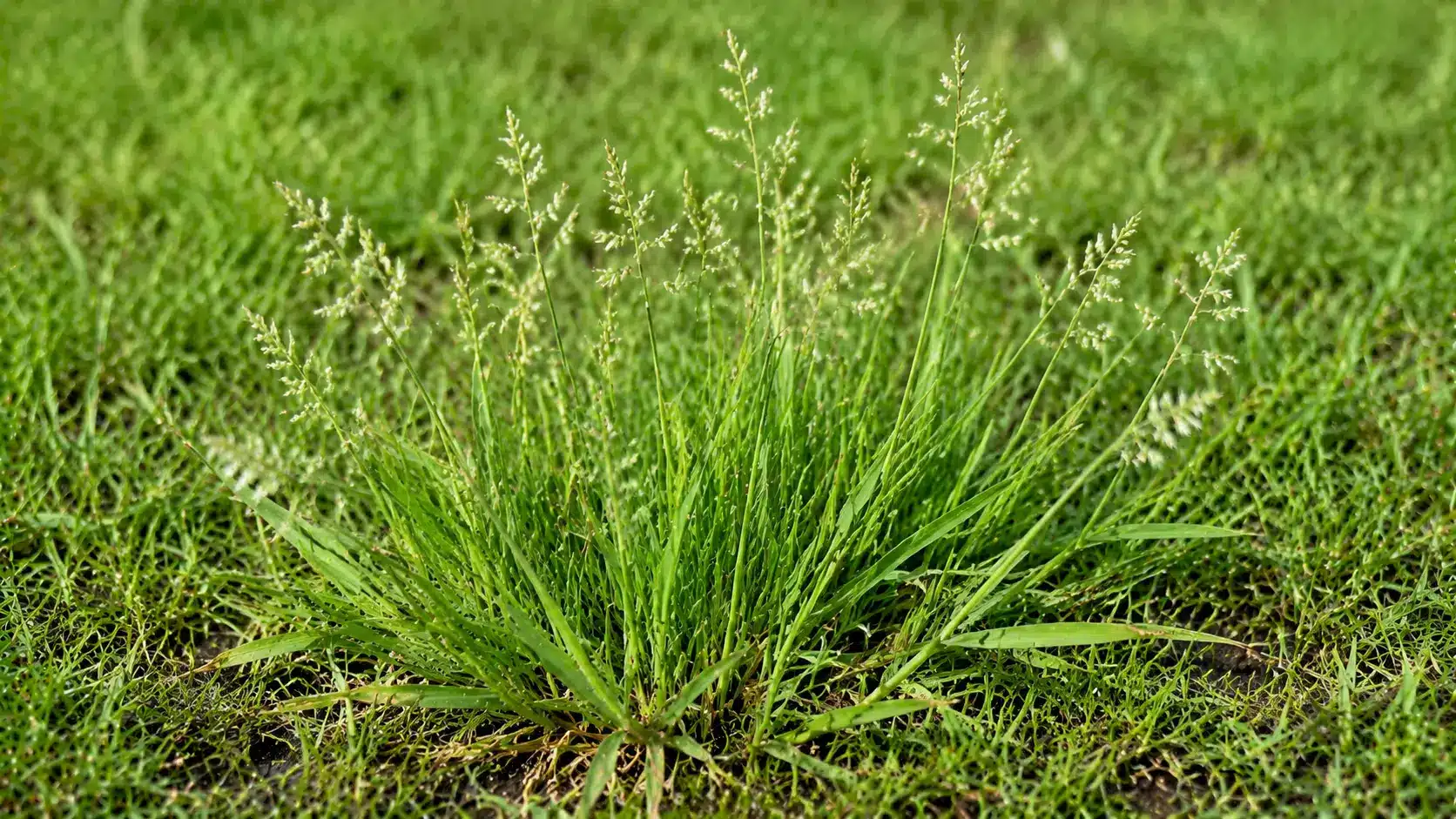
A light, lime-green clump with fine, boat-tipped blades that thrives in cool, moist, compacted spots.
Identify it by:
- Frothy white seed heads even under low mowing
- Fine blades ending in distinctive boat-shaped tips
- Fades quickly once summer heat sets in
2. Crabgrass
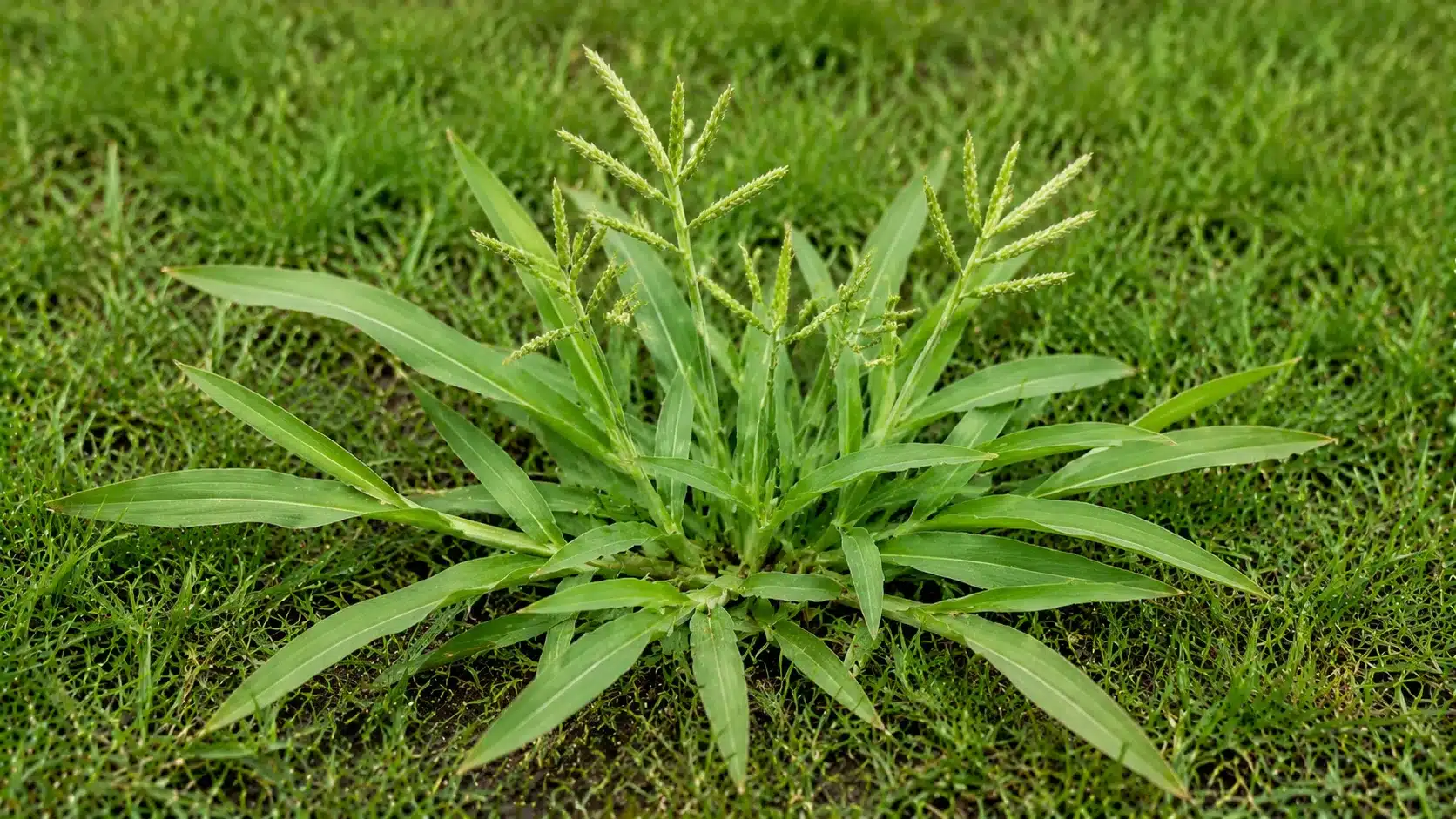
A low, spreading clump with wide, light-green blades that splay outward like a crab, thriving in hot weather and thin turf.
Identify it by:
- Wide, light-green blades splaying from a center point
- Finger-shaped seed heads give it away fast
- Thrives in hot weather along thin turf edges
3. Dallisgrass
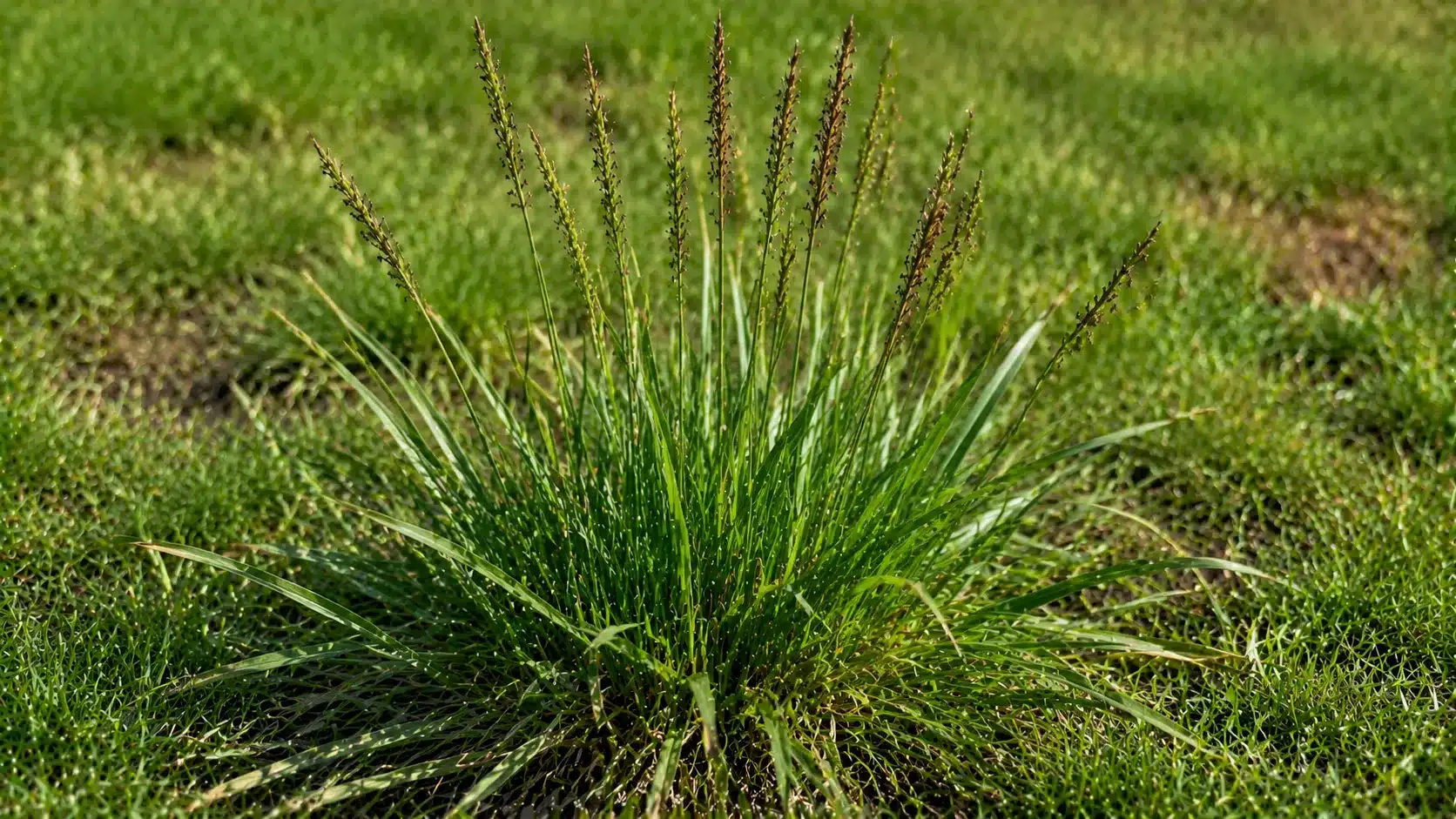
A coarse, fast-growing clump that shoots tall seed stalks just days after mowing, favoring warm, poorly drained lawns.
Identify it by:
- Dark seeds lined along drooping seed spikelets
- Distinctive ring-like growth pattern spreading steadily outward
- Favors warm, moist, poorly drained turf areas
4. Tall Fescue
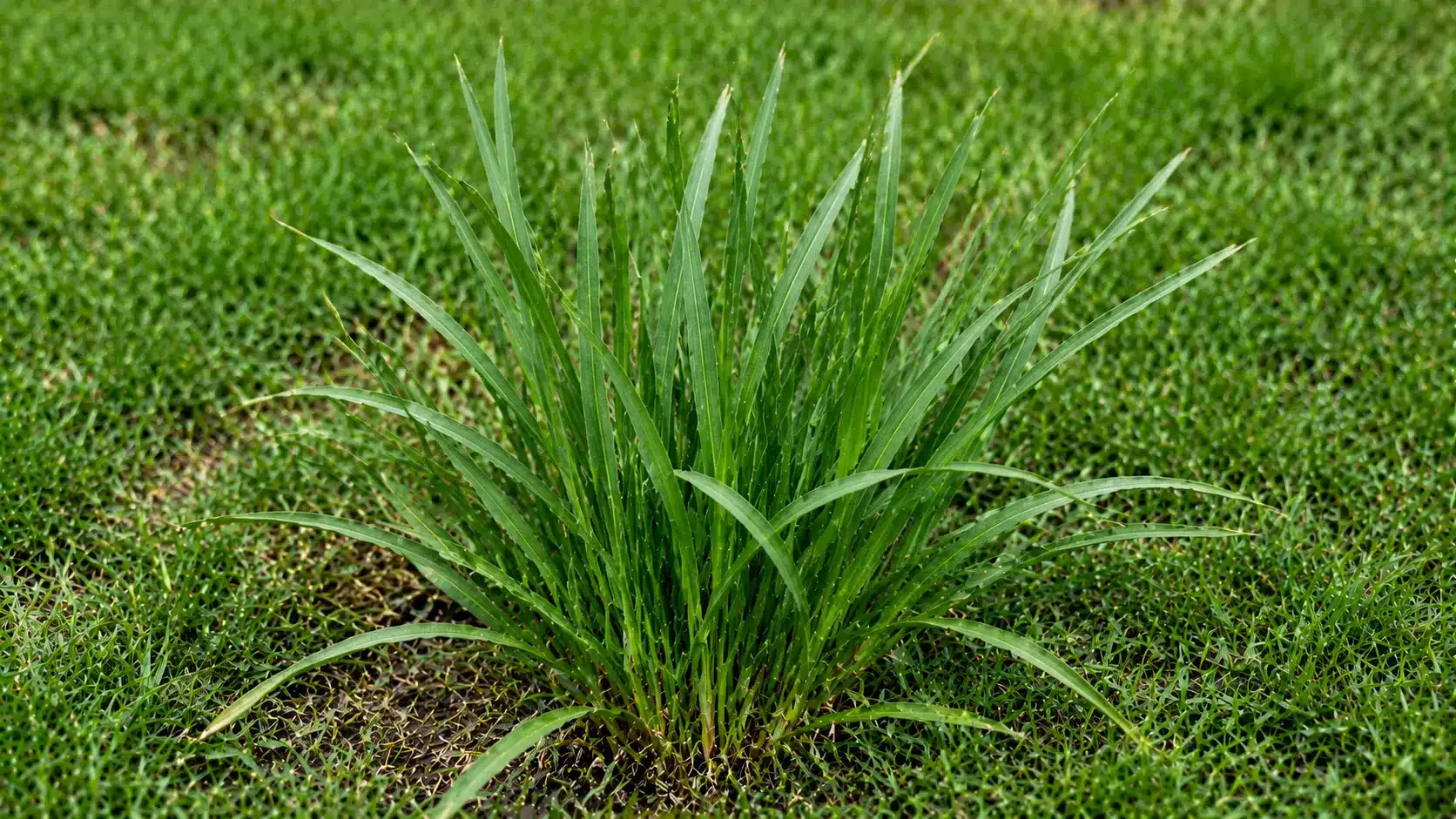
Wide, dark, rough-edged blades growing in stubborn clumps that never blend into fine turf.
Identify it by:
- Sandpaper-rough blade edges when rubbed between fingers
- Grows in coarse, stubborn clumps nearly year-round
- Appears across both sunny and shaded patches
5. Creeping Bentgrass
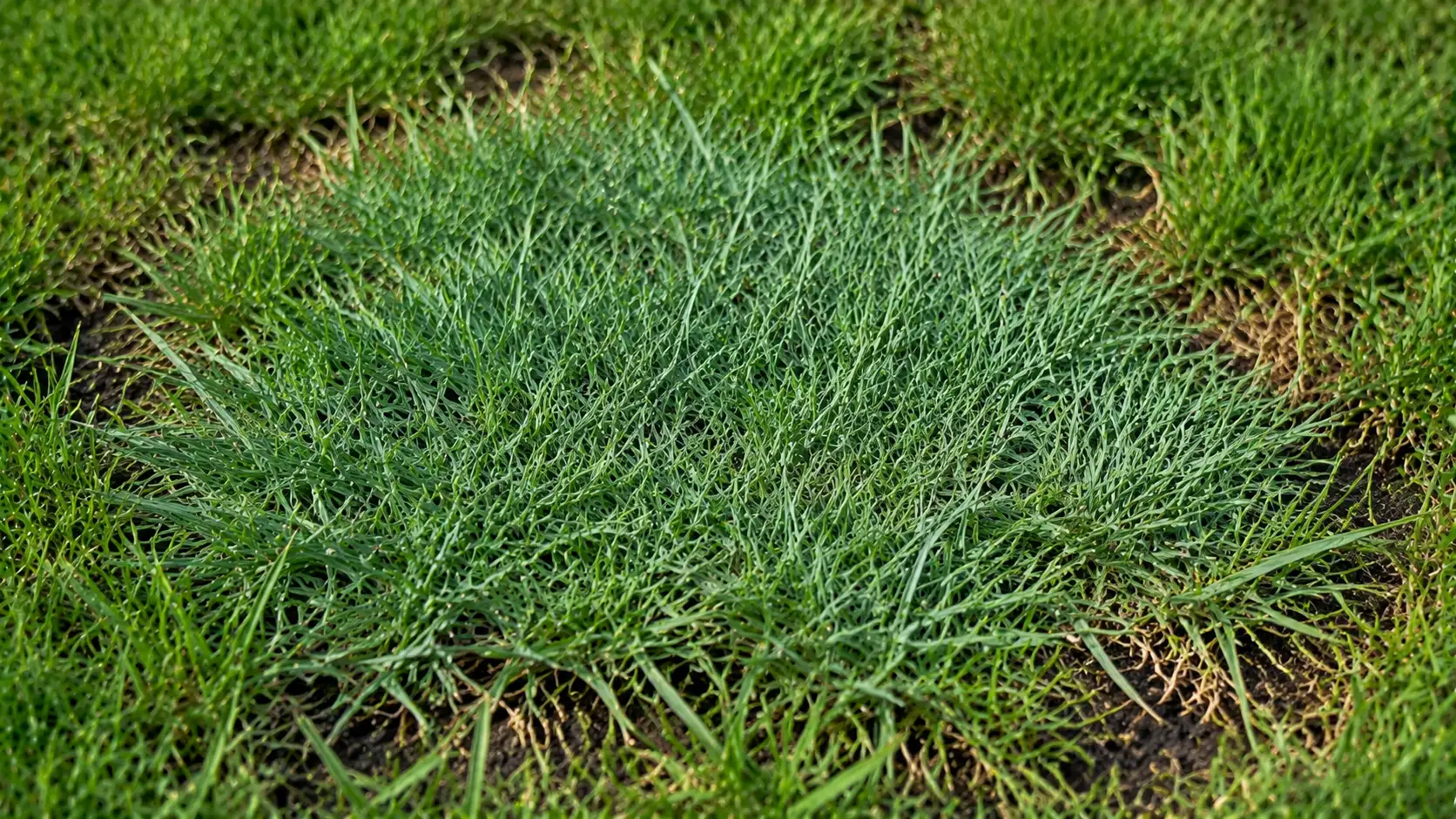
Very fine, blue-green blades forming dense mats that creep sideways, resembling a stray putting green patch.
Identify it by:
- Fine, blue-green blades forming dense creeping mats
- Puffy, discolored circles standing out from turf
- Prefers cool, damp, and shady growing conditions
6. Johnsongrass
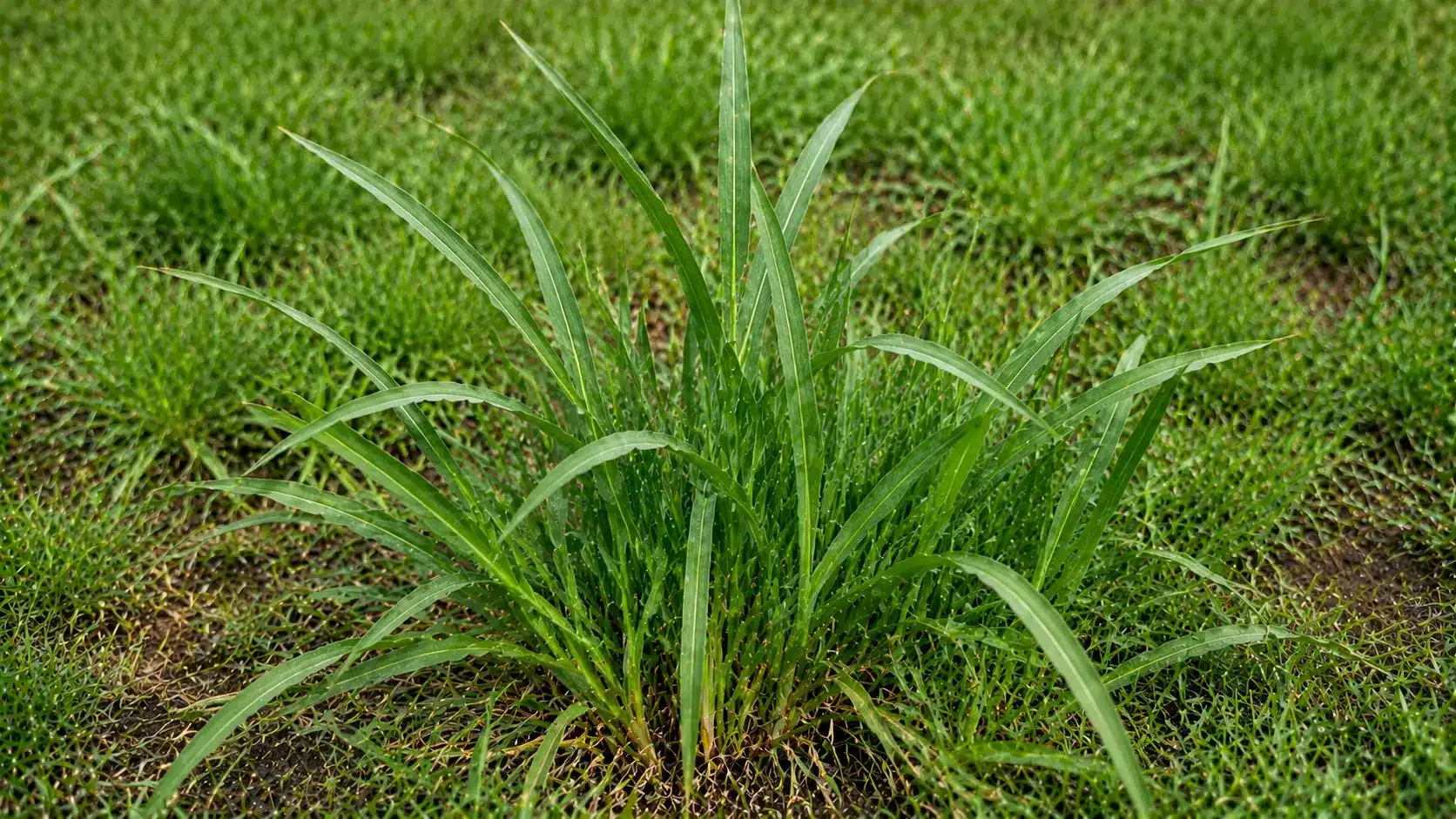
A tall, aggressive grass with a pale midrib running down each wide blade, spreading through stout underground rhizomes.
Identify it by:
- Pale midrib running down the center blade
- Stout rhizomes uncovered when you dig deep
- Shows up along edges, ditches, and borders
7. Yellow Nutsedge
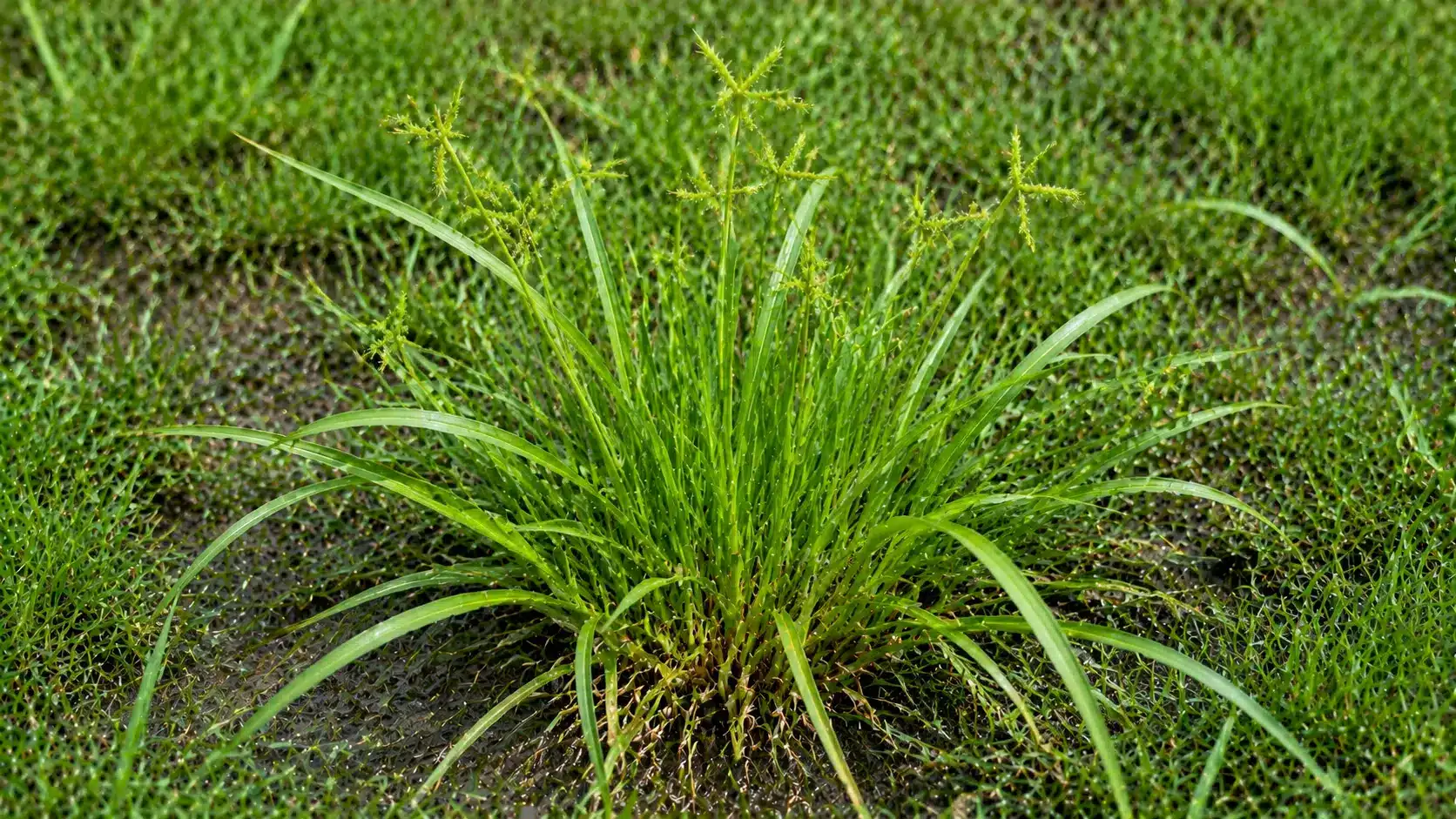
Glossy, yellow-green blades growing faster than the lawn, with a stiff triangular stem that signals wet soil.
Identify it by:
- Stiff, triangular stem you can feel rolling
- Grows noticeably faster than surrounding lawn grass
- Signals wet or poorly drained soil conditions
8. Green Kyllinga
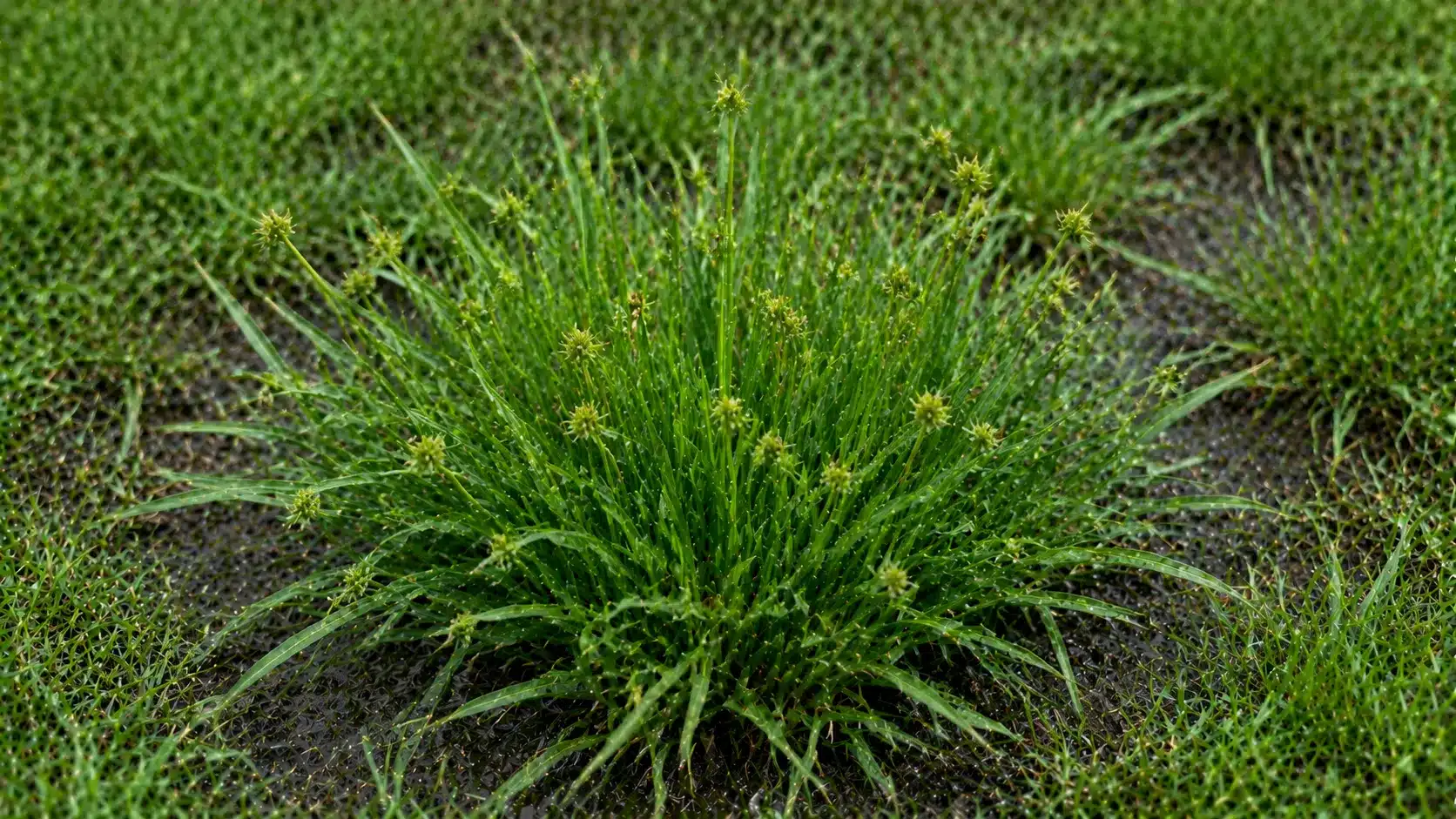
A low, dense, dark-green sedge that forms tight mats and holds up under close mowing.
Identify it by:
- Round, greenish seed heads on triangular stems
- Tight, dark-green mats that survive close mowing
- Thrives in constantly moist, waterlogged growing spots
9. Wild Garlic
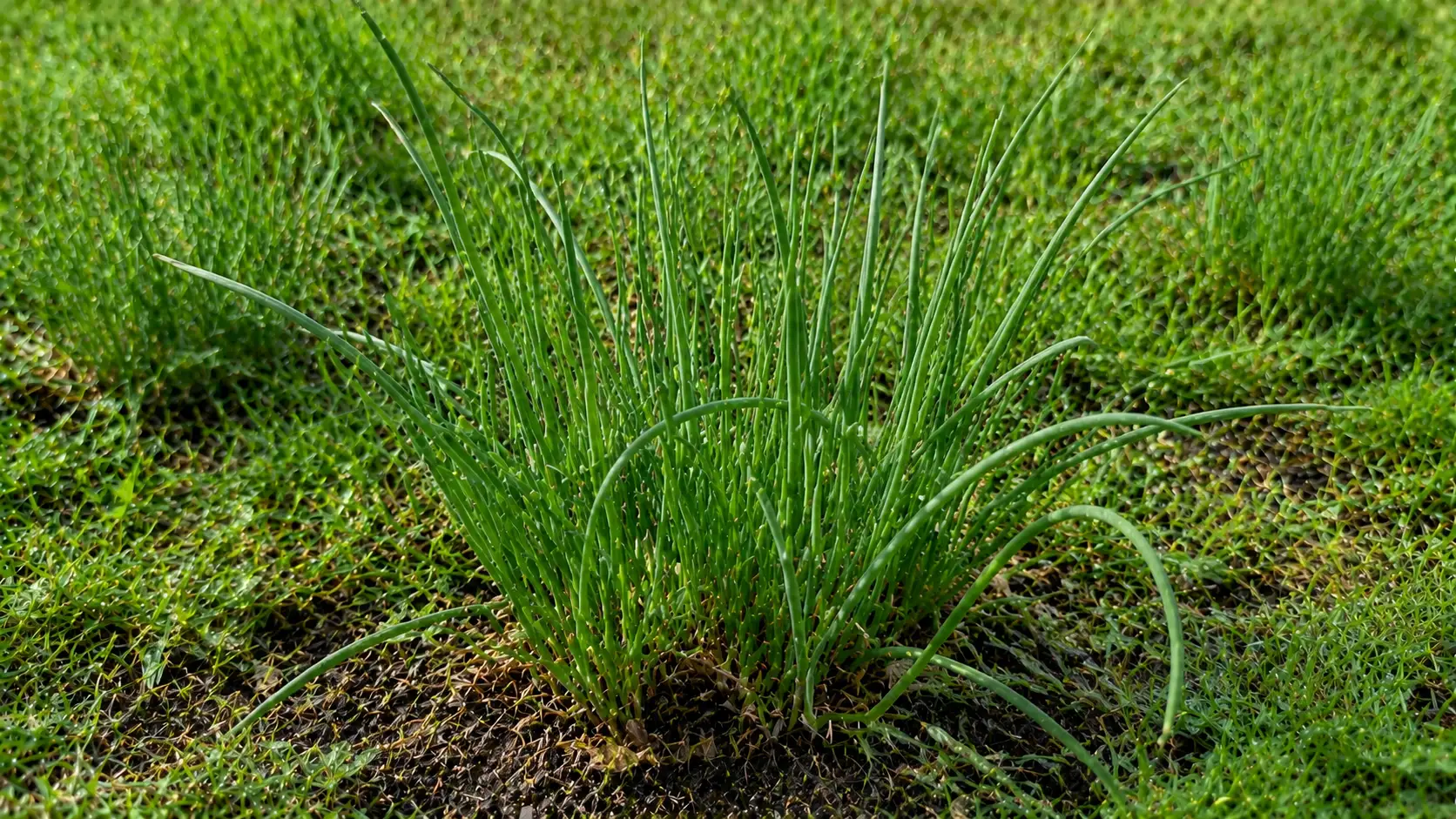
Thin, hollow, round shoots that stand taller than the lawn early each spring.
Identify it by:
- Hollow, round shoots standing above the lawn
- Strong garlic smell when a shoot’s crushed
- Grows from underground bulbs in lawns, beds
10. Wild Onion
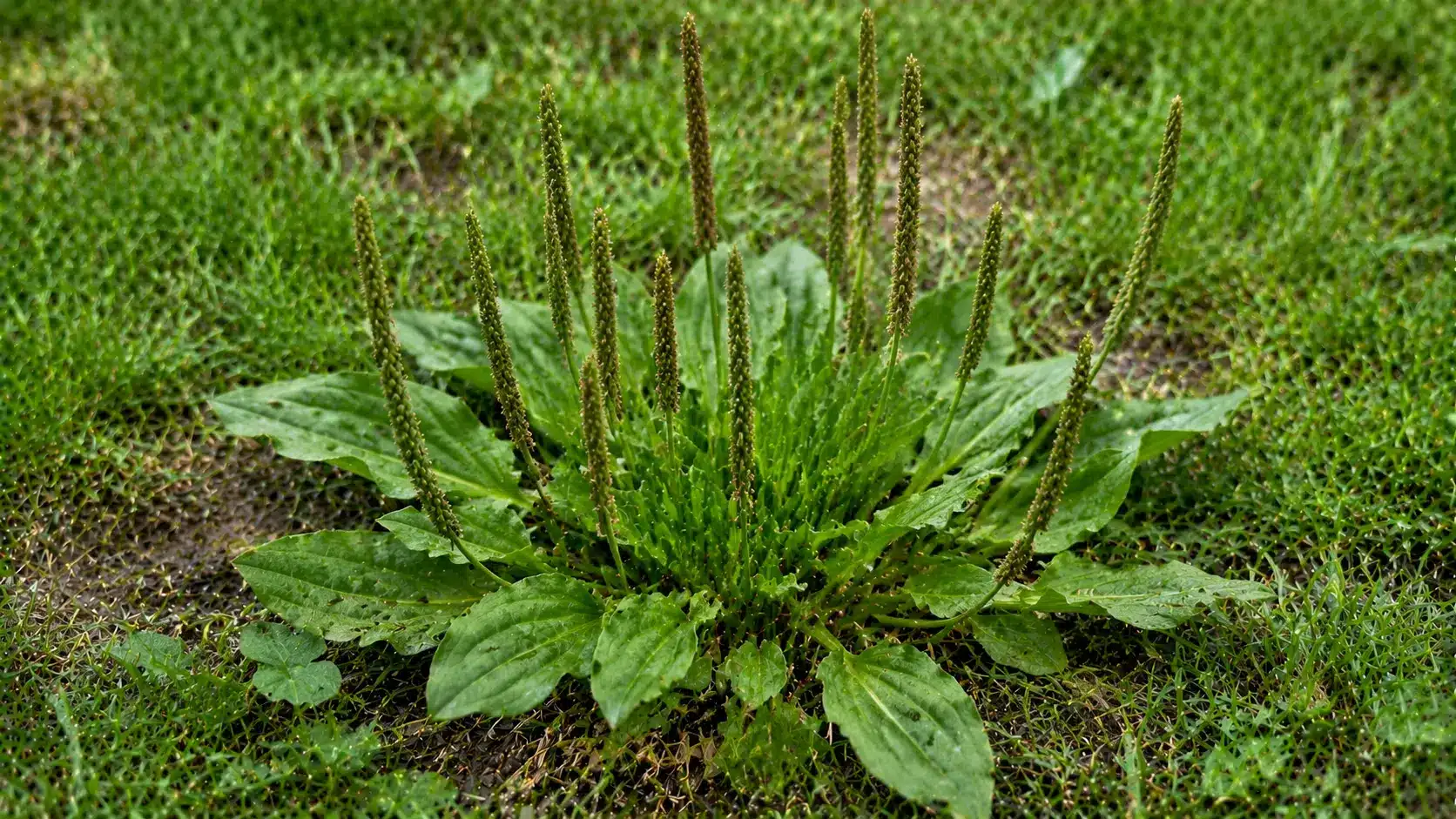
Nearly identical to wild garlic, but with flat, solid leaves instead of hollow, round ones.
Identify it by:
- Flat, solid leaves instead of hollow shoots
- Onion smell released the moment it’s cut
- Emerges from bulbs during cool spring weather
Cool-Season vs Warm-Season Grass-Like Weeds
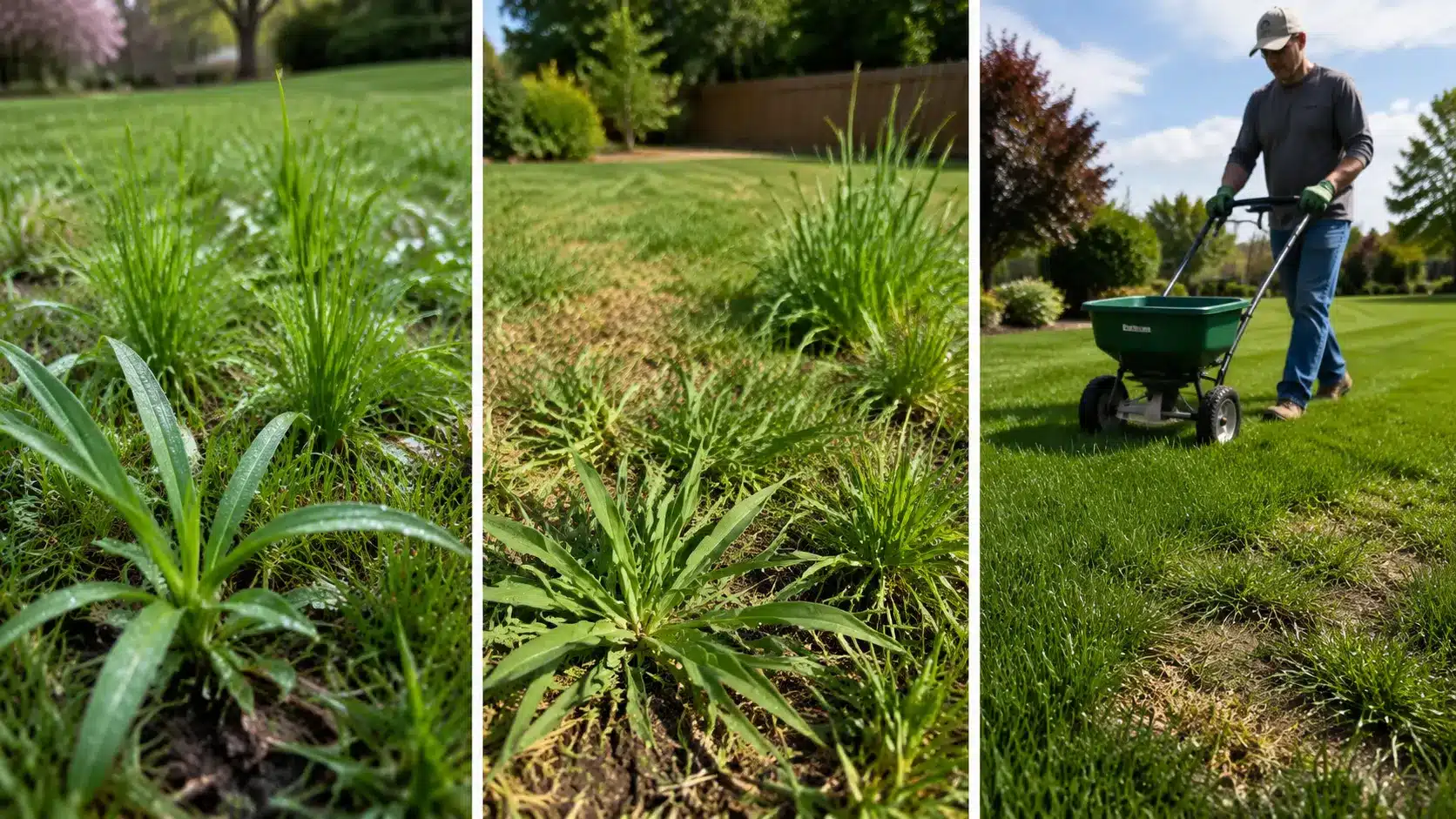
Grass-like weeds appear in different seasons, so knowing when they grow helps you plan scouting, prevention, and treatment more effectively.
| Weed Type | Active Season | Common Examples | Best Prevention Time |
|---|---|---|---|
| Cool-season | Fall and spring | Annual bluegrass, annual ryegrass, wild garlic | Late summer or early fall |
| Warm-season | Late spring and summer | Crabgrass, dallisgrass, bermudagrass, yellow nutsedge | Early spring |
How to Prevent Grass-Like Weeds From Returning
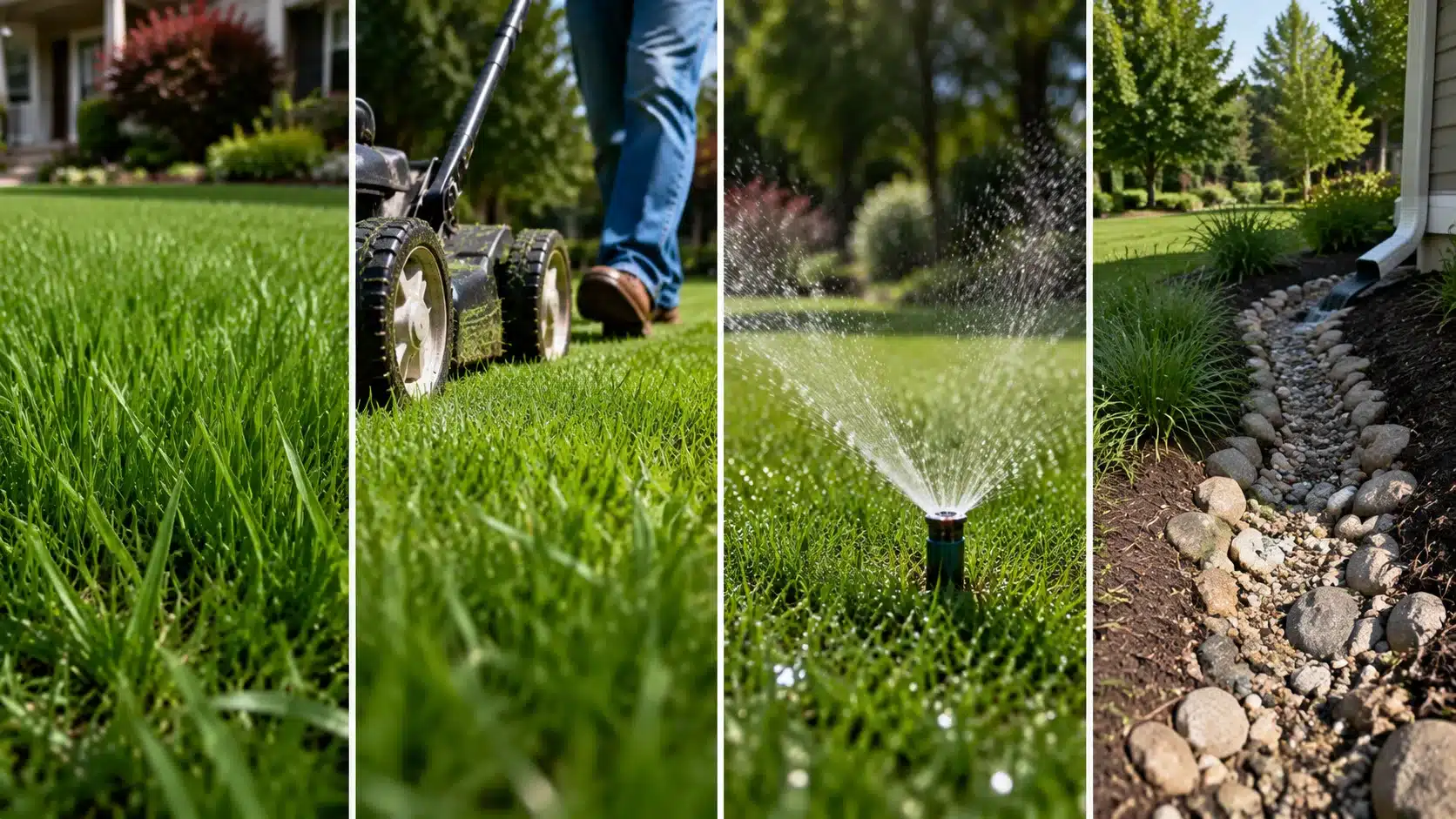
Clearing the weeds is only half the job. The lawn you leave behind decides whether these common lawn weeds come back.
- A thick, dense stand of turf is the strongest defense, since healthy grass leaves no bare soil for a new weed to claim. Overseed thin or worn areas each fall so no gap sits open long enough to invite trouble.
- Mowing height matters more than most people think. Cutting too short weakens the lawn and hands sunlight to low grassy weeds, so keep the mower on the high side for your grass type.
- Watering habits count too. Deep, infrequent soaking builds strong roots, while daily light sprinkling keeps the surface wet and rolls out the welcome mat for nutsedge and other moisture lovers.
- Fix any spot where water pools, because good drainage removes the exact conditions sedges and rushes need.
Frequently Asked Questions
Why Won’t Weed Killer Kill Grassy Weeds?
Most common weed killers target broadleaf plants and spare grasses. Because grassy weeds and your lawn are related, these products leave them untouched. You need a selective grass herbicide or a pre-emergent instead.
Are Weeds that Look Like Grass Harmful to Pets or Kids?
Most are not toxic, but wild garlic and onion can irritate grazing animals in large amounts. Let treated areas dry before pets or kids go back on the lawn.
Can I Compost Weeds that Look Like Grass?
Avoid composting sedges, rhizome grasses, or bulb weeds unless your pile gets hot enough to kill seeds and roots. Bag them instead if unsure.
Do Weeds that Look Like Grass Spread from Lawn to Lawn?
Yes. Seeds travel by wind, mowers, and shoes, and rhizomes or tubers can hitch a ride in soil, sod, or shared tools.
Wrapping It Up
A weed that looks like grass can hide in healthy turf until it spreads or leaves uneven patches. A triangular stem, odd color, faster growth, or a strange seed head usually gives it away.
Not every green blade calls for the same treatment.
Naming whether you have a true grass, sedge, rush, or bulb weed points you to the right fix.
Catch weeds that look like grass early, treat them right, so you’re not fighting the same patch again. It’s the same approach I use on my lawn, and it’s saved me plenty of weekends