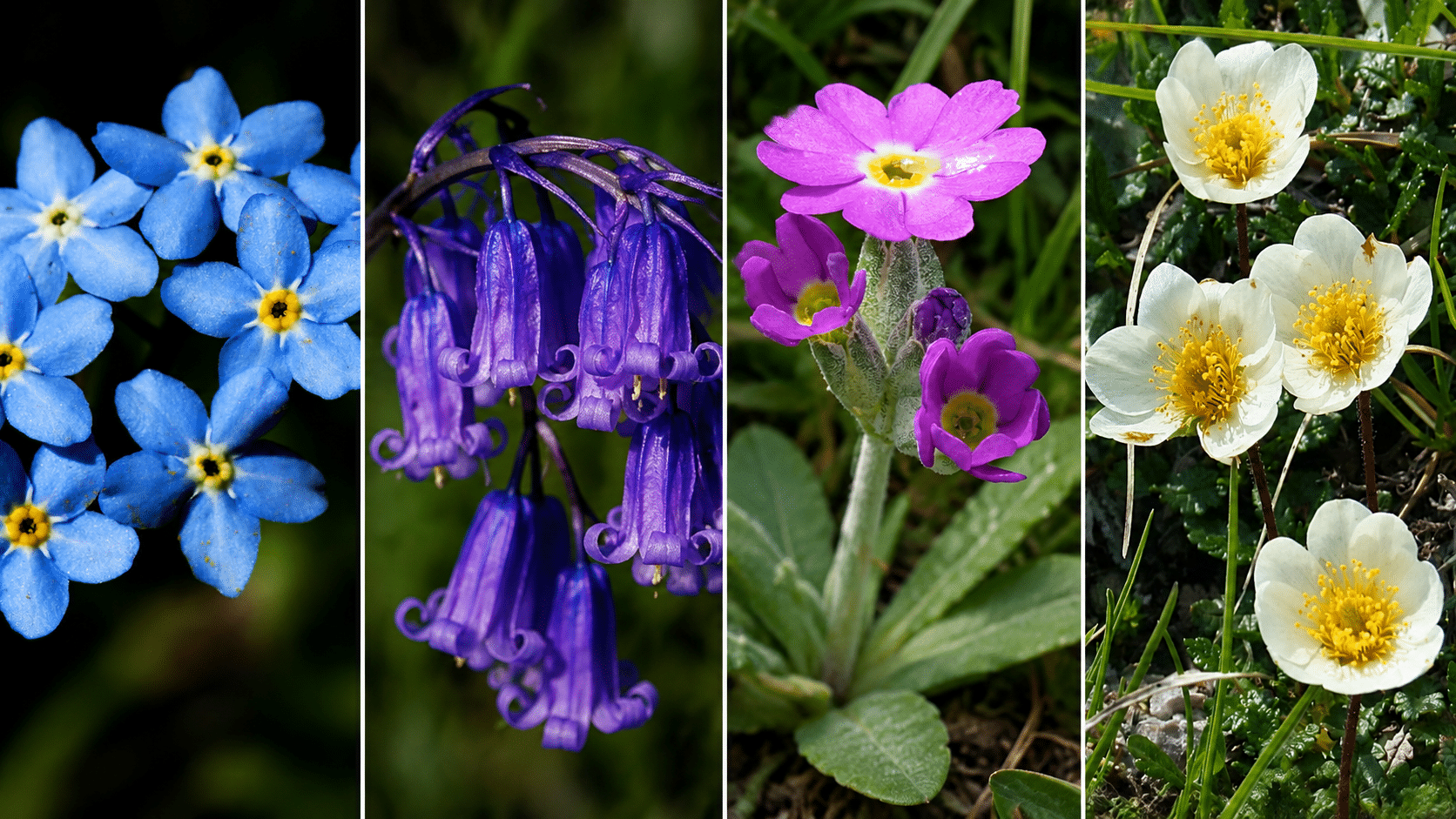
The first time I stood on a Scottish moor, purple heather rolling out in every direction, it stopped me in my tracks.
There was a thistle right at my feet, which reminded me of an old story: legend says a barefoot Norse raider once stepped on one during a night raid, and his yelp woke the sleeping Scots in time to fight back.
That’s supposedly why it became Scotland’s national flower. Every plant there seems to carry its own story.
Here’s where to find Scottish flowers, and how to spot them safely.
What Makes Scottish Flowers So Unique?
Scotland’s flowers are shaped directly by its geography. Cool temperatures, high rainfall, and acidic soils work together to favor plants found almost nowhere else on Earth.
Here’s what sets Scottish wildflowers apart:
- Cool, wet climate: Scotland gets some of the highest rainfall in Europe. Plants here are built for damp, cold growing seasons.
- Acidic soils and peat: Much of the Highland landscape sits on deep peat, the same kind of acidic ground that acid-loving garden plants like blueberries and azaleas need to thrive. This low-nutrient environment supports specialist species. Bog cotton and sundew are good examples.
- Long summer daylight: Scotland sits at a high latitude. Summer days can stretch to 18 hours. That extends blooming windows for many native species.
- Native vs. introduced species: True native species evolved in Scotland over thousands of years. Many plants in Scottish gardens were brought in from elsewhere. The difference matters for local wildlife.
Distinction Between Native and Non-Native Scottish Flowers
Scotland is home to a rich variety of flowering plants, some of which have grown naturally for thousands of years, while others were introduced from different parts of the world.
Understanding the distinction between native and non-native Scottish flowers helps highlight their roles in supporting local wildlife, preserving biodiversity, and maintaining healthy ecosystems.
| Feature | Native Scottish Flowers | Introduced (Non-native) Flowers |
|---|---|---|
| Examples | Common heather, common bluebell, primrose, oxeye daisy | Rhododendron, Spanish bluebell, montbretia |
| Habitat | Moors, woodlands, coasts, and uplands | Gardens, roadsides, and disturbed ground |
| Pollinators | Strong ties to native bees, moths, and butterflies | Some nectar, but weaker support for native species |
| Conservation | Protected through habitat conservation efforts | Some are managed to stop them spreading (e.g. rhododendron) |
Scotland’s Most Iconic Wildflowers
Here are the native species I hear about most from gardeners and hikers exploring Scotland for the first time.
1. Scottish Bluebell (Campanula rotundifolia)

This is Scotland’s true bluebell, also called the harebell in England. It grows in dry grasslands, dunes, and rocky slopes.
The flowers are small, nodding, and pale violet-blue. They bloom from July through September.
Its delicate stems add a softer, later-season note to the landscape, often flowering when many spring species are already fading.
Don’t confuse it with the English bluebell (Hyacinthoides non-scripta). They look similar but are completely different species.
2. Common Bluebell (Hyacinthoides non-scripta)

The common bluebell carpets the floors of Scottish woodlands in late April and May.
It has a strong, sweet scent. The blooms hang in dense, one-sided clusters. It’s one of Scotland’s best-known spring sights.
Bluebell woods are often at their best before the tree canopy fully closes in spring, when light still reaches the woodland floor.
The species spreads slowly and can form large colonies over time, creating one of Scotland’s most familiar seasonal displays.
3. Common Heather (Calluna vulgaris)
.webp)
Common heather is the most widespread plant on Scottish moorlands. It produces tiny purple-pink flowers from July to September.
Heather is closely tied to Scotland’s upland character and is often one of the first plants people associate with the landscape.
Its long flowering period helps support wildlife across late summer, when many other nectar sources are already fading.
It’s also the plant responsible for Scotland’s famous heather honey.
4. Scotch Thistle (Onopordum acanthium)
.webp)
The thistle is Scotland’s national emblem. It has been the country’s symbol since at least the 15th century.
It grows in disturbed soils and along roadsides. The plant can reach five feet tall. It has bright purple blooms and sharp, spiny leaves.
Its bold shape makes it easy to spot even from a distance, especially in rough ground and roadside verges.
The flower also carries strong cultural weight, so it is often used as a visual shorthand for Scottish identity.
5. Primrose (Primula vulgaris)

Primroses are among the first flowers to appear each year. They bloom from February to May along woodland edges and shaded banks.
The flowers are pale yellow. They prefer damp soil with partial shade. Primroses are often among the earliest signs that spring is settling in, especially in sheltered places.
They can also appear in shaded hedgerows and banks where the soil stays consistently moist.
6. Foxglove (Digitalis purpurea)

Foxgloves are tall and hard to miss. They grow in open woodland, roadsides, and disturbed ground. Their purple-pink tubular flowers bloom in June and July.
Foxgloves are strongly associated with woodland edges and clearings, where their tall stems can reach above surrounding plants.
Their tubular flowers are well adapted to larger pollinators, which helps make them stand out in midsummer.
They’re a key food source for bumblebees.
Note: Every part of the foxglove plant is toxic. Do not eat any part of it.
7. Meadowsweet (Filipendula ulmaria)

Meadowsweet grows in wet meadows, riverbanks, and boggy ground. It has creamy white flower clusters and a strong, sweet scent.
It blooms from June to September. Historically, it was used as a strewing herb and in traditional herbal practice.
Its sweet scent becomes especially noticeable on warm days, particularly near water or in damp grassland.
The plant has long been linked to traditional herbal use, which gives it cultural interest as well as ecological value.
8. Bog Cotton (Eriophorum angustifolium)

Bog cotton produces white, cotton-wool seed heads in late spring. It grows in wet peatlands.
Finding it means you’re standing on a deep bog. The fluffy heads are seed dispersal structures, not actual cotton fibers.
The white tufts are often most striking when the wind catches them across open peatland.
9. Grass-of-Parnassus (Parnassia palustris)
.webp)
This small wetland plant is easy to overlook. It has white, star-shaped flowers with pale green veins. It blooms from July to October.
It only grows in wet, calcium-rich ground. Finding it tells you a lot about the soil underneath.
This is one of those plants that rewards a closer look, since its fine veining and starry form are easy to miss at first glance.
It is often associated with high-quality wetland conditions, making it especially interesting to careful walkers and naturalists.
10. Tormentil (Potentilla erecta)

Tormentil is a low-growing heathland plant with small, four-petaled yellow flowers. It blooms from May through September.
You’ll find it across moorlands, grasslands, and the edges of bogs. It’s one of the most common small flowers in all of Scotland.
It may be small, but it is one of the most resilient wildflowers in Scottish uplands and open grassland.
Its presence across so many habitats makes it a useful plant for understanding how varied Scotland’s landscapes really are.
11. Devil’s-Bit Scabious (Succisa pratensis)
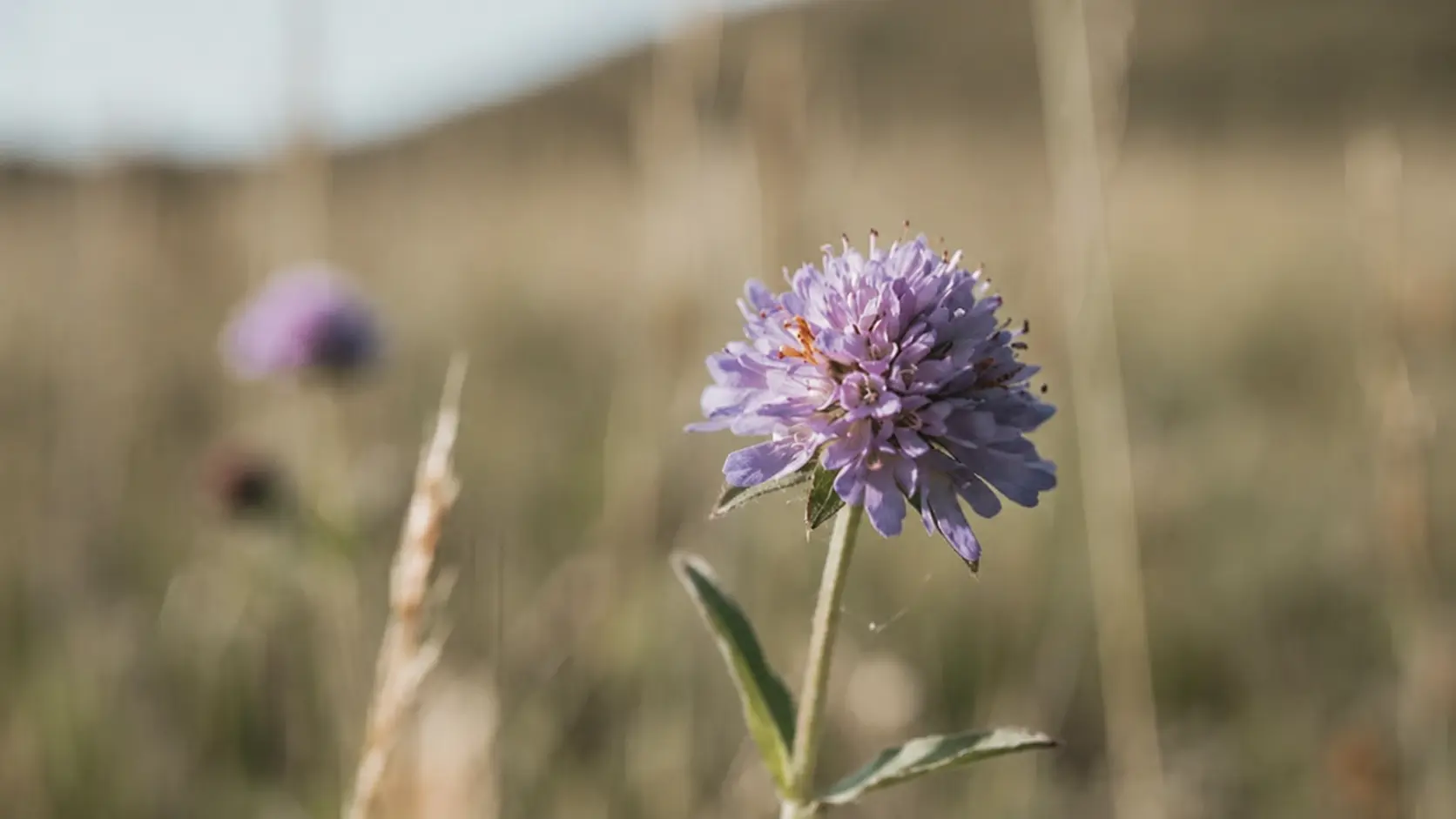
Devil’s-bit scabious is a late-summer wildflower with rounded, lilac-purple flower heads that look like small pom‑poms.
It grows in damp meadows, marshy grassland, and along riverbanks across much of Scotland.
It is especially important in later summer, when many other meadow flowers have already finished blooming.
The flowers are also valuable for bumblebees and butterflies towards the end of the season, when other nectar sources are fading.
12. Scottish Primrose (Primula scotica)
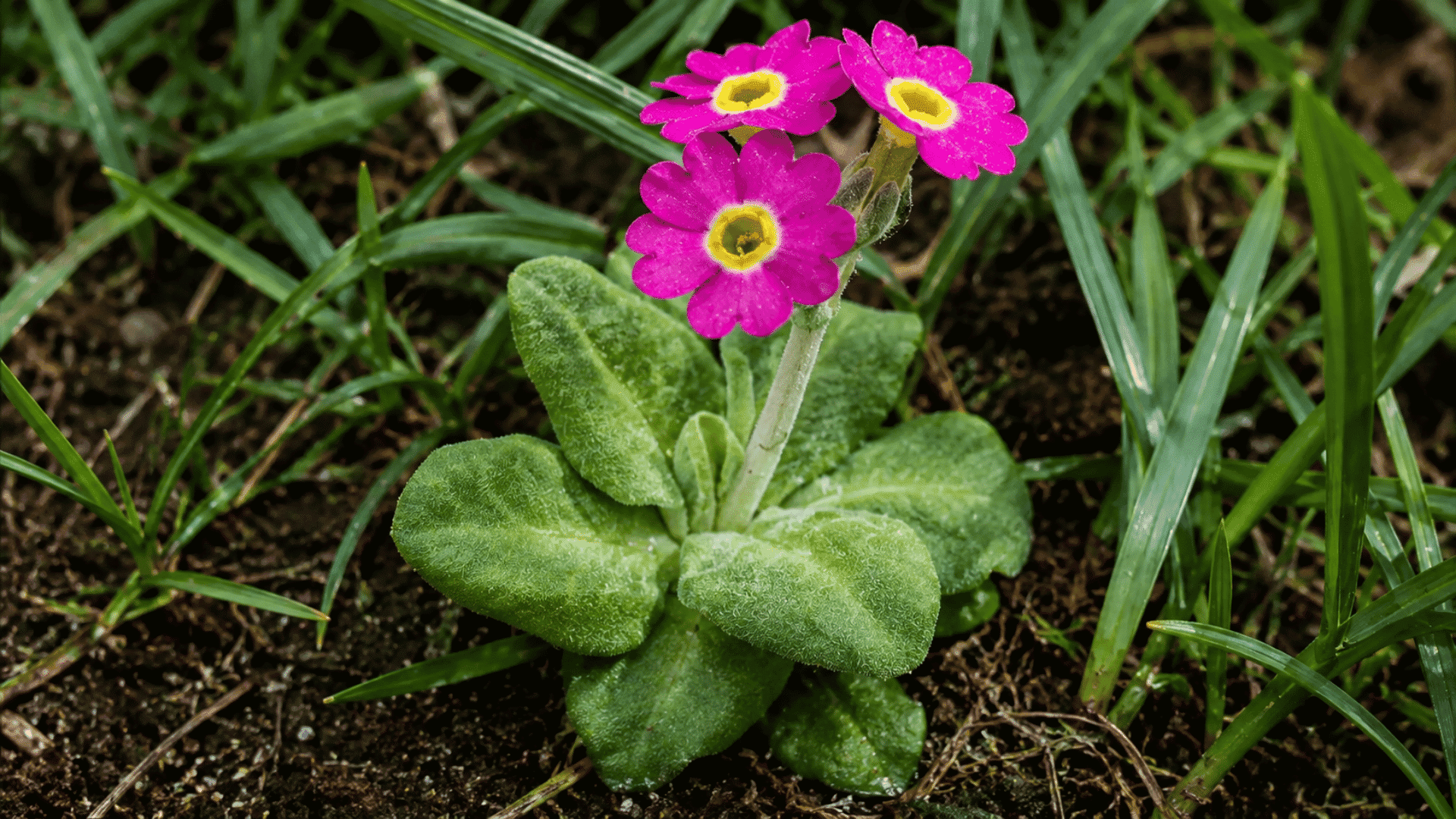
This is Scotland’s only truly endemic wildflower, meaning it grows nowhere else on Earth. It’s tiny, about the size of a thumbnail, with deep purple petals and a yellow center.
It blooms twice: once in May and again in July and August. You’ll only find it wild in Caithness, Sutherland, and Orkney, growing on short, grazed coastal grassland.
It’s listed as nationally scarce on Scotland’s Biodiversity List, mostly because of changes in grazing patterns and coastal development.
13. Scots Burnet Rose (Rosa spinosissima)
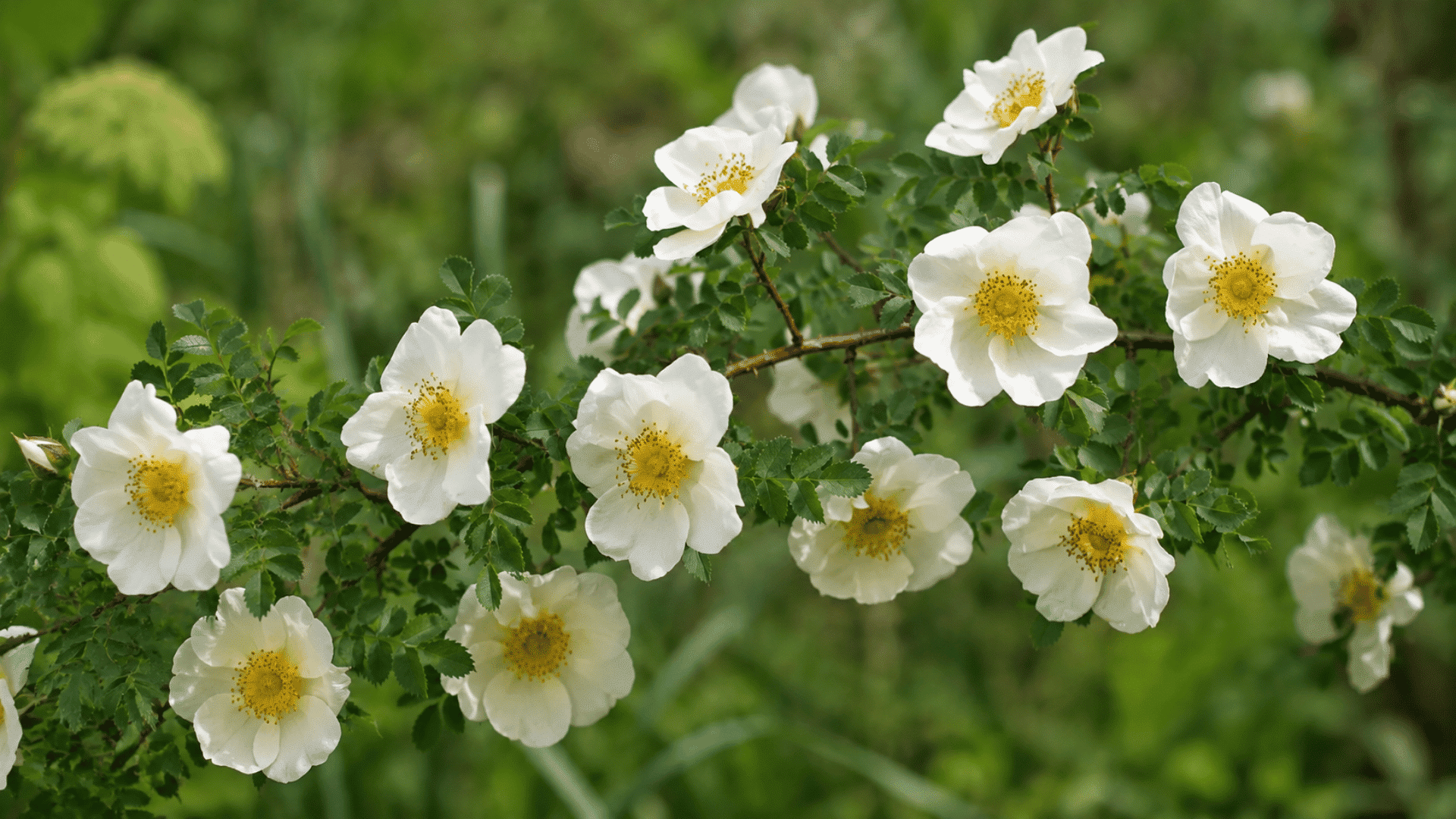
This thorny, low-growing native shrub is sometimes called the “little white rose of Scotland.” It forms dense thickets on sandy coastal dunes and rocky ground.
It flowers in June, with creamy white blooms and a golden center, then produces unusual dark purple-black hips in autumn instead of the usual red or orange.
Legend ties it to the Jacobite rising of 1745, when Bonnie Prince Charlie is said to have worn one in his cap, giving rise to the white cockade.
Where Do Scottish Wildflowers Actually Grow?
You’ll find Scottish flowers across four main habitats, and each one supports its own set of native species.
| Habitat | Where | What Grows There |
|---|---|---|
| Ancient woodlands | Old-growth forest floors, mostly in the west | Bluebells (Apr–May), primroses, wood anemone, wild garlic |
| Moorlands & heathlands | Open uplands across the Highlands | Heather, tormentil, cross-leaved heath, bell heather |
| Coastal machair | Hebrides coastline only | Clover, bird’s-foot trefoil, yellow rattle, marsh orchids |
| Mountain & upland zones | Above 600 meters | Mountain avens, purple saxifrage, moss campion |
How Can You Identify Scottish Wildflowers?
Identifying Scottish wildflowers becomes much easier when you focus on a few visible clues. Habitat, flowering season, leaf shape, and plant height can quickly help you narrow down the species.
- Start with the habitat: Note whether the ground is dry, boggy, coastal, woodland, or mountainous. Many Scottish wildflowers grow only in specific habitats.
- Check the flowering season: Most wildflowers bloom between May and August. Matching the flower’s colour with the time of year can reduce the number of possible species.
- Look at the leaf shape: Foxglove leaves are large, soft, and slightly hairy, while tormentil has small, toothed leaves arranged in groups of three to five.
- Notice the plant height and stem: Foxgloves grow tall, tormentil stays close to the ground, and bog cotton holds its fluffy flower heads above the grass. Stem shape, such as single, branching, or mat-forming, also helps separate similar-looking plants.
When and Where to See Scottish Flowers
Scotland’s wildflower season runs from February through September, and where you go changes with the month. Here’s a combined breakdown:
| Month | What’s Blooming | Where to See It |
|---|---|---|
| February–March | Primrose, snowdrop | Lowland woodland reserves |
| April–May | Bluebells, wood anemone, wild garlic | Lowland woodland reserves, Isle of Skye |
| June–July | Foxglove, meadowsweet, Scots burnet rose | Isle of Skye, Hebrides coastline |
| July–September | Heather, bog cotton, tormentil | Scottish Highlands, Cairngorms National Park |
Late April to early June is the best overall window: bluebells peak then, before heather takes over in August, when the moorlands look their best.
Wrapping It Up
Scottish flowers reward patience. Bluebell woods peak for barely three weeks, and blue heath might only bloom once a decade.
That short window is part of what makes them worth seeking out.
Next time you’re walking a moor or a machair, look down before you look at the view. Bring a notebook, snap a photo, and leave every plant exactly where you found it.
Which Scottish flower is on your list to spot first? Tell me in the comments which one you are eager to find.
Frequently Asked Questions
What Is the Rarest Wildflower in Scotland?
Blue heath (Phyllodoce caerulea) is one of Scotland’s rarest native plants, found in only a handful of high-altitude spots in the Cairngorms where snow lingers late into spring.
Can I Pick Wildflowers in Scotland?
No, uprooting any wild plant in the UK without the landowner’s permission is illegal under the Wildlife and Countryside Act 1981, and some rare species carry extra legal protection.
Are Any Scottish Wildflowers Edible?
Some are, like wild pansy and primrose petals, but others such as foxglove are highly toxic. Never eat a wild plant without positive identification first.
What Should I Do if I Find a Protected Wildflower?
Photograph it, note the exact location and date, and report the sighting to NatureScot or your local biological records center, without disturbing the plant.