I’ve watched a peace lily flop sideways in its pot, heart in my throat, only for it to perk right back up an hour after watering.
That’s when I understood why this plant earns so much loyalty.
It’s almost theatrical about what it needs, and once you learn its language, caring for a peace lily stops feeling like guesswork.
This blog covers light, water, soil, feeding, repotting, getting it to rebloom, and the troubleshooting parts most plant care sites skip, like winter care and growing one in a vase of water.
Peace Lily Plant Profile
|
Botanical name |
Spathiphyllum |
|---|---|
|
Family |
Araceae (aroid, related to monsteras) |
|
Native range |
Central and South American rainforest floors |
|
Mature size |
25 cm (‘Petite’) up to 1.2 m (‘Sensation’) |
|
Light |
Bright, indirect; tolerates low light but won’t flower there |
|
Water |
Every 5-10 days, when the top 1-2 inches of soil are dry |
|
Temperature |
16-27°C, no cold drafts |
|
Bloom color |
White, aging to green then brown |
|
Toxicity |
Mildly toxic to cats, dogs, and children; not deadly |
What Kind of Plant Is a Peace Lily?
Peace lilies aren’t true lilies at all. They’re aroids, the same family as monsteras and calla lilies, which is part of why they behave so differently from the bulb lilies that worry pet owners.
Their rainforest origin is basically your care cheat sheet. In the wild, they grow on shaded forest floors where dappled light filters through a canopy above and the soil never fully dries out.
Mimic that: indirect light, steady moisture, warmth, and humidity, and the plant rewards you. Deviate too far, and it lets you know.
Varieties differ more than people expect. ‘Petite’ stays compact enough for a shelf, while ‘Sensation,’ the kind you see in office lobbies, dwarfs most houseplants.
Check the mature size before you buy so it doesn’t outgrow its spot.
How to Look After a Peace Lily: Care Basics
Peace lilies are easygoing plants, but they still need the right balance of light, water, temperature, and feeding to truly thrive.
This same balance keeps other low-fuss houseplants like the Chinese Money Plant thriving too.
When these conditions are met, they produce lush green leaves and regular white blooms. The key is consistency, not overcare.
1. Light
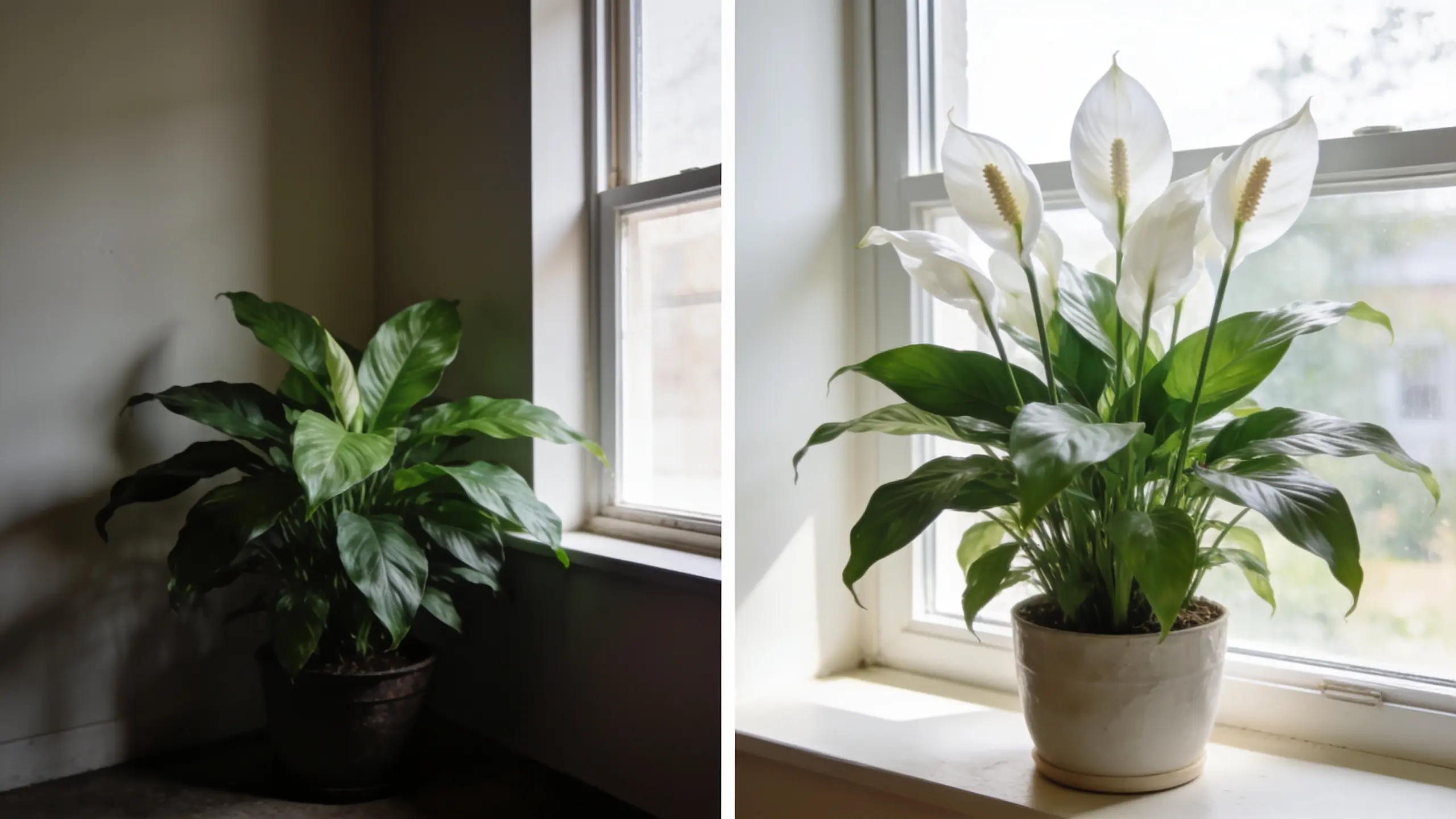
Peace lilies can survive in low light, but they won’t flower well there. For blooms, place them in bright, indirect light, ideally near an east-facing window.
Avoid direct sun as it scorches leaves. In winter, move them closer to windows or use a grow light if natural light is limited. Wipe leaves monthly to remove dust and improve photosynthesis.
2. Water
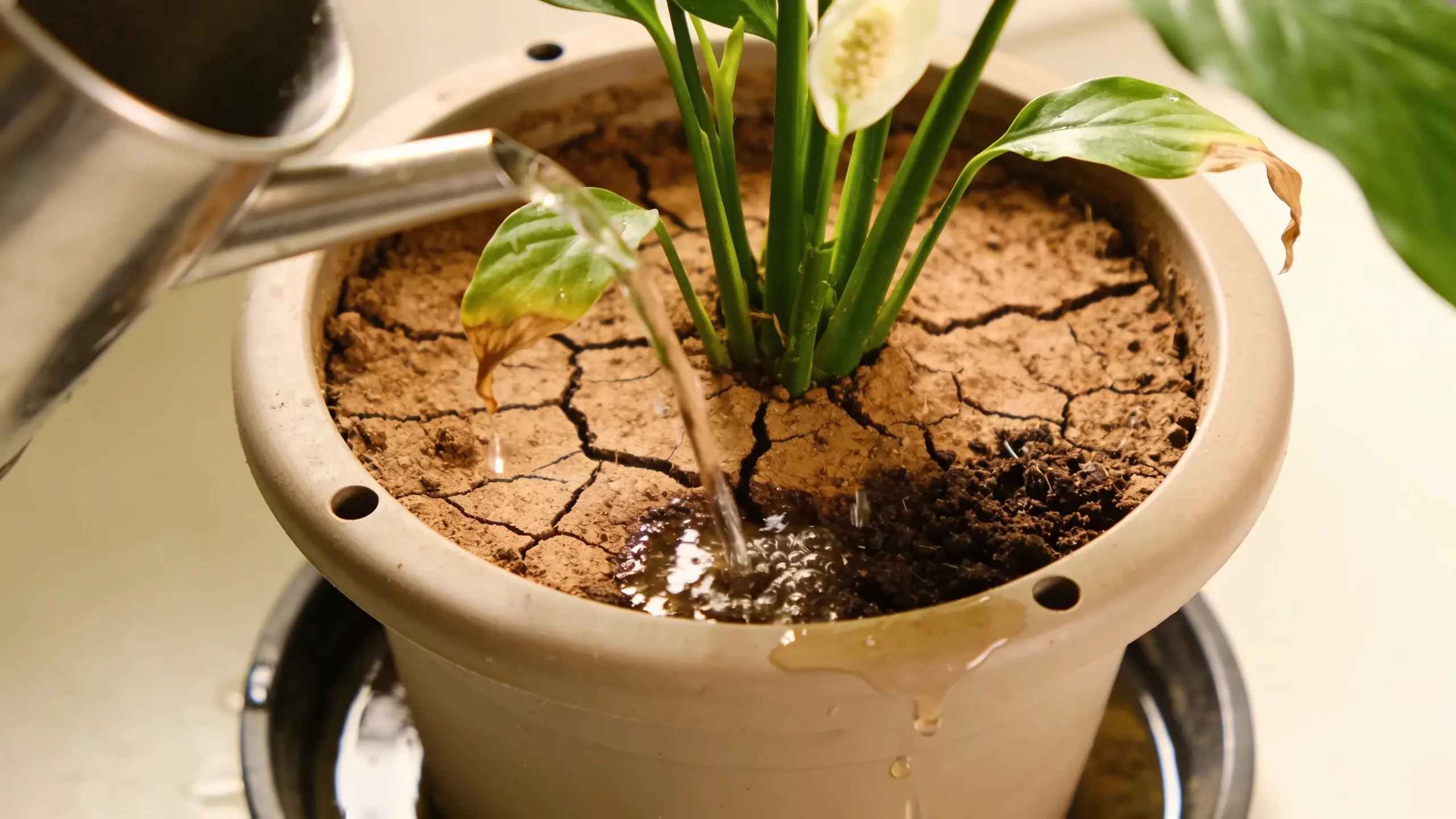
Water only when the top 1–2 inches of soil are dry. This may be every 5 days in summer and 10 days in winter.
Use filtered, rainwater, or dechlorinated water at room temperature. Bottom watering works well, but always drain excess water to avoid root rot. Drooping leaves usually signal thirst, not damage.
3. Temperature and Humidity
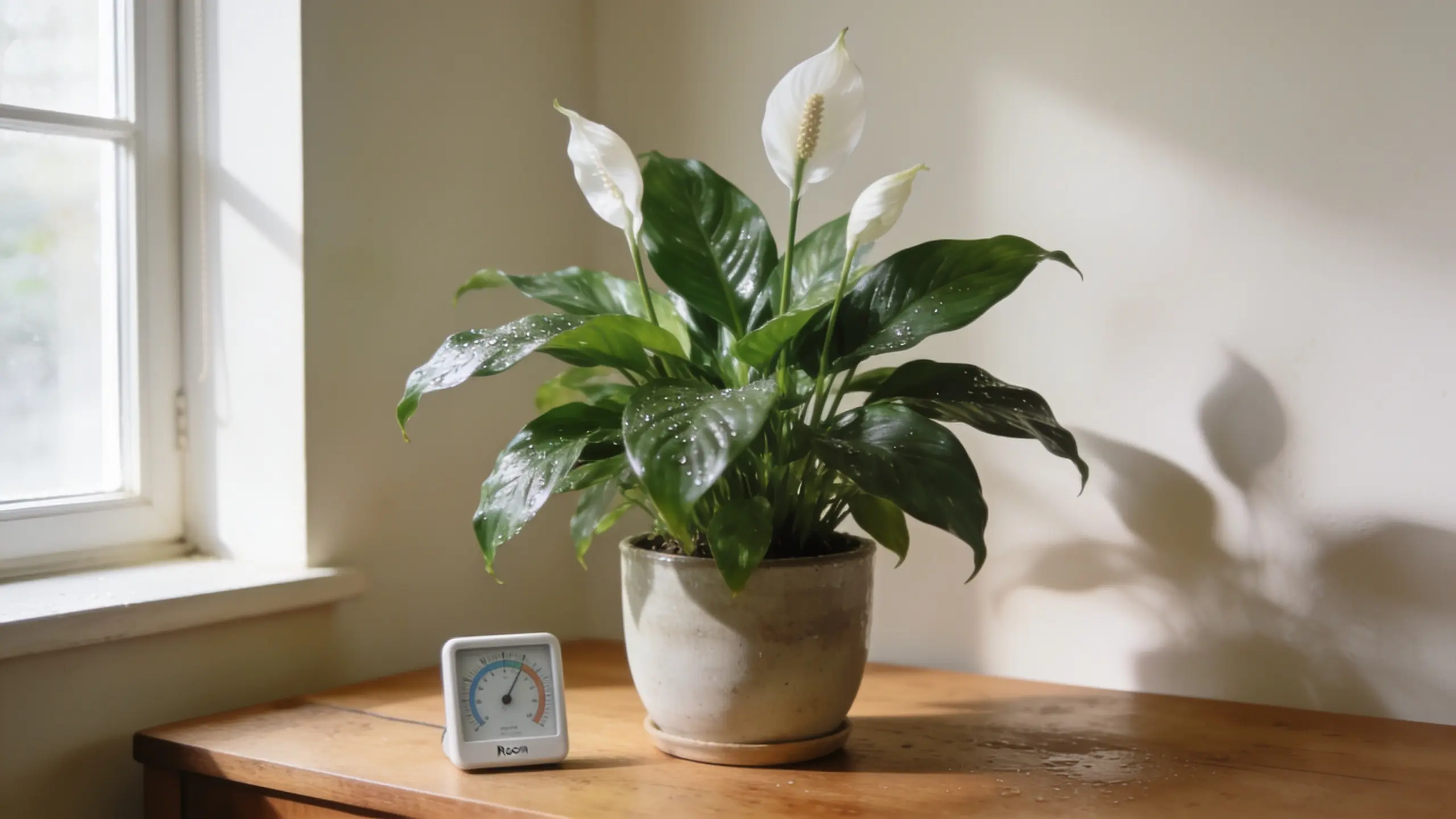
Keep temperatures between 16–27°C and avoid cold drafts or radiator heat. Peace lilies prefer moderate humidity.
Increase it by using a pebble tray, grouping plants, or placing them in humid rooms like kitchens or bathrooms. Misting is less effective than these methods.
4. Soil, Pot, and Potting Mix
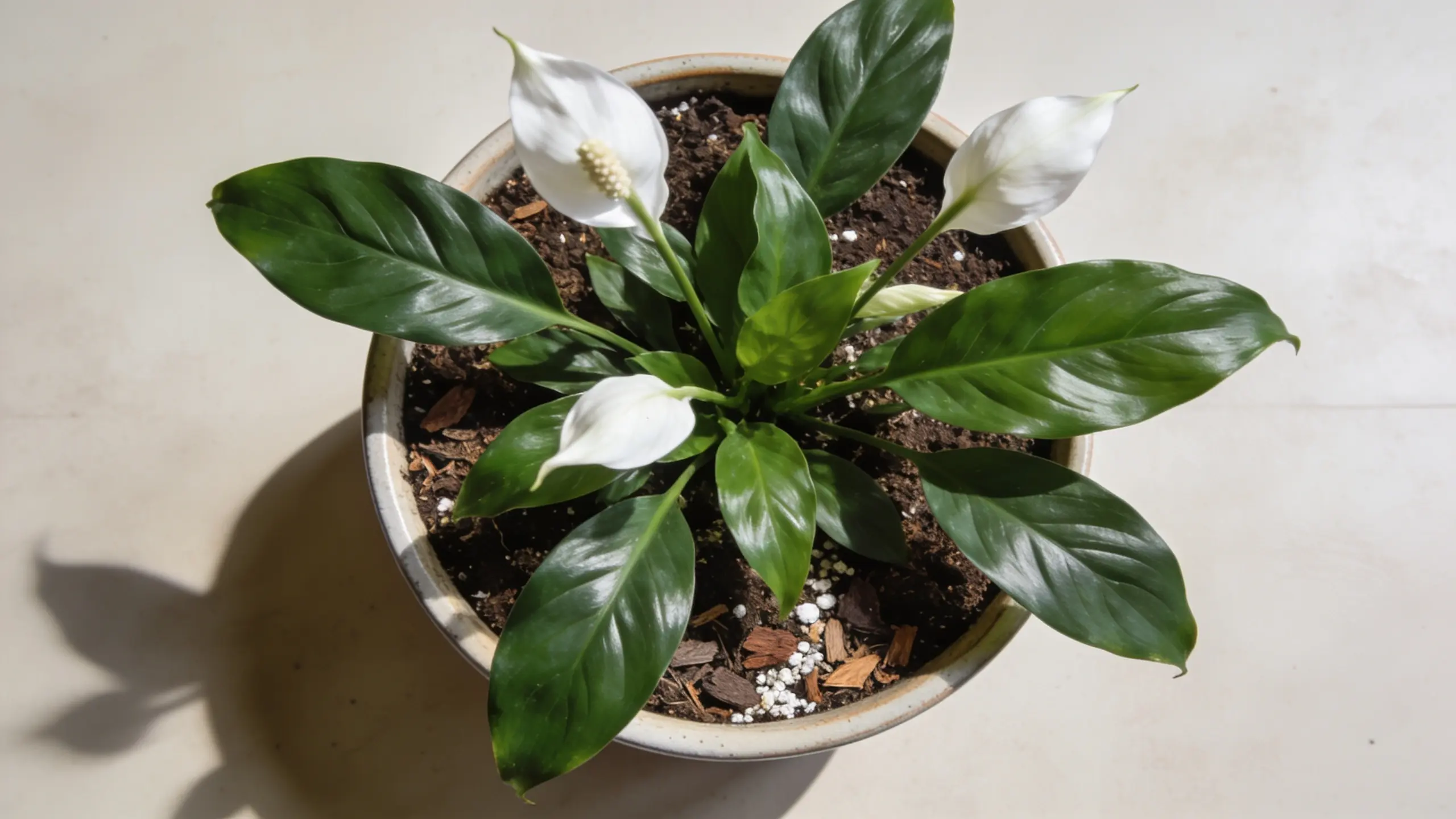
Use a peat-free houseplant compost that retains moisture but drains well. Avoid cactus mixes. Terracotta pots help prevent overwatering, while plastic pots hold more moisture.
Always ensure proper drainage holes to keep roots healthy and prevent rot.
5. Feeding Without Overdoing It
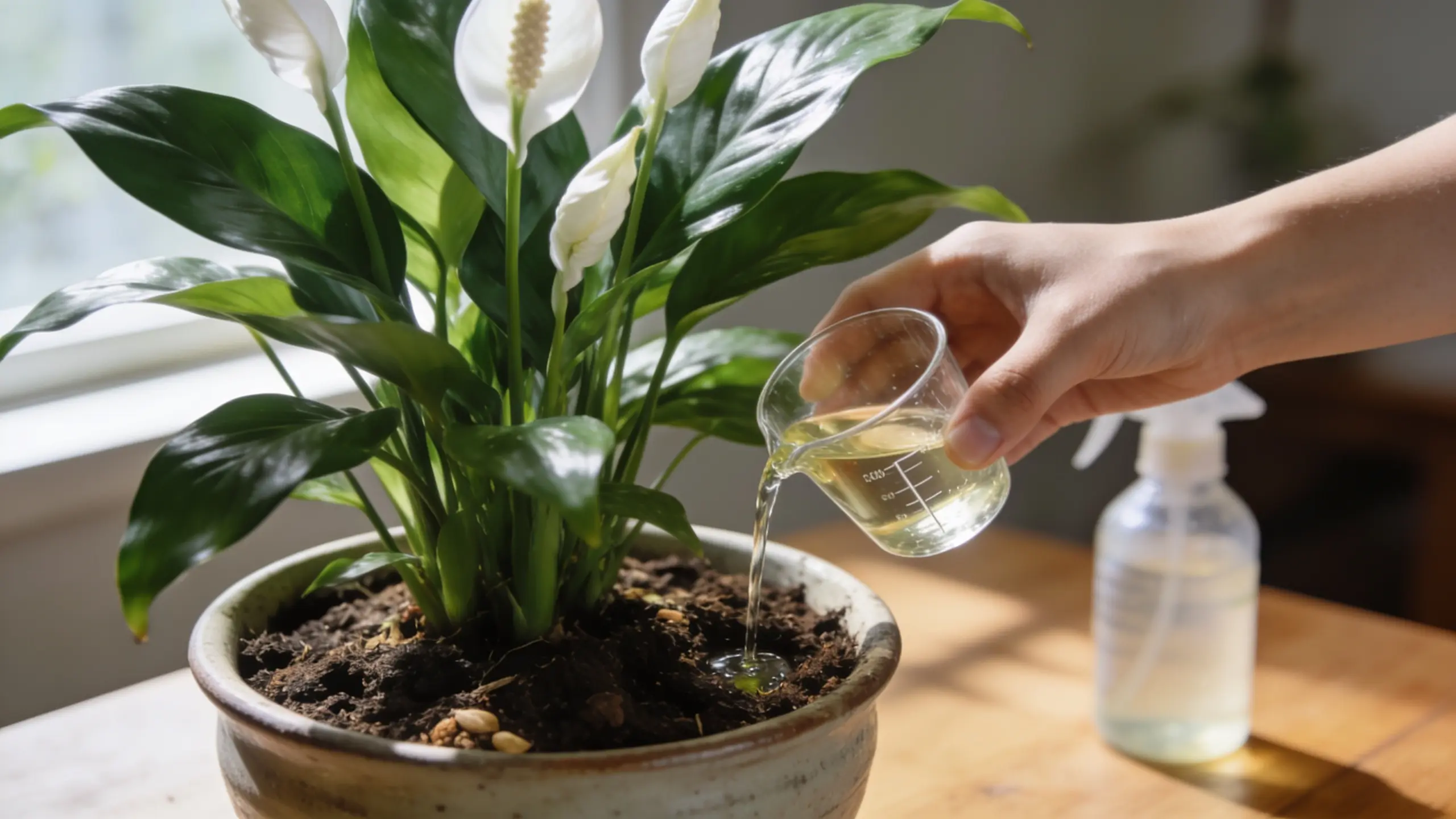
Feed lightly during spring and summer, about every 6 weeks, with a balanced liquid fertilizer. Avoid overfeeding, as it causes brown tips.
Too much nitrogen reduces flowering. The right fertilizer dose matters more than the brand itself. After repotting, wait at least 6 months before feeding again, since fresh compost already provides nutrients.
Peace Lily Care Through the Seasons
Peace lilies need slightly different care as light, temperature, and growth patterns change throughout the year. Adjusting their water, feeding, and placement each season helps keep them healthy and blooming.
|
Season |
What to Do |
|---|---|
|
Spring |
Resume fertilizing and check roots when repotting. Best time to divide for more plants, similar to propagating houseplants from cuttings. |
|
Summer |
Water more often as soil dries faster. Watch for spider mites: tiny specks on the undersides of leaves. |
|
Autumn/Winter |
Ease back on watering since soil stays moist longer. Move closer to a window, stop fertilizing, and add a grow light if natural light is poor. |
How to Get a Peace Lily to Flower Again
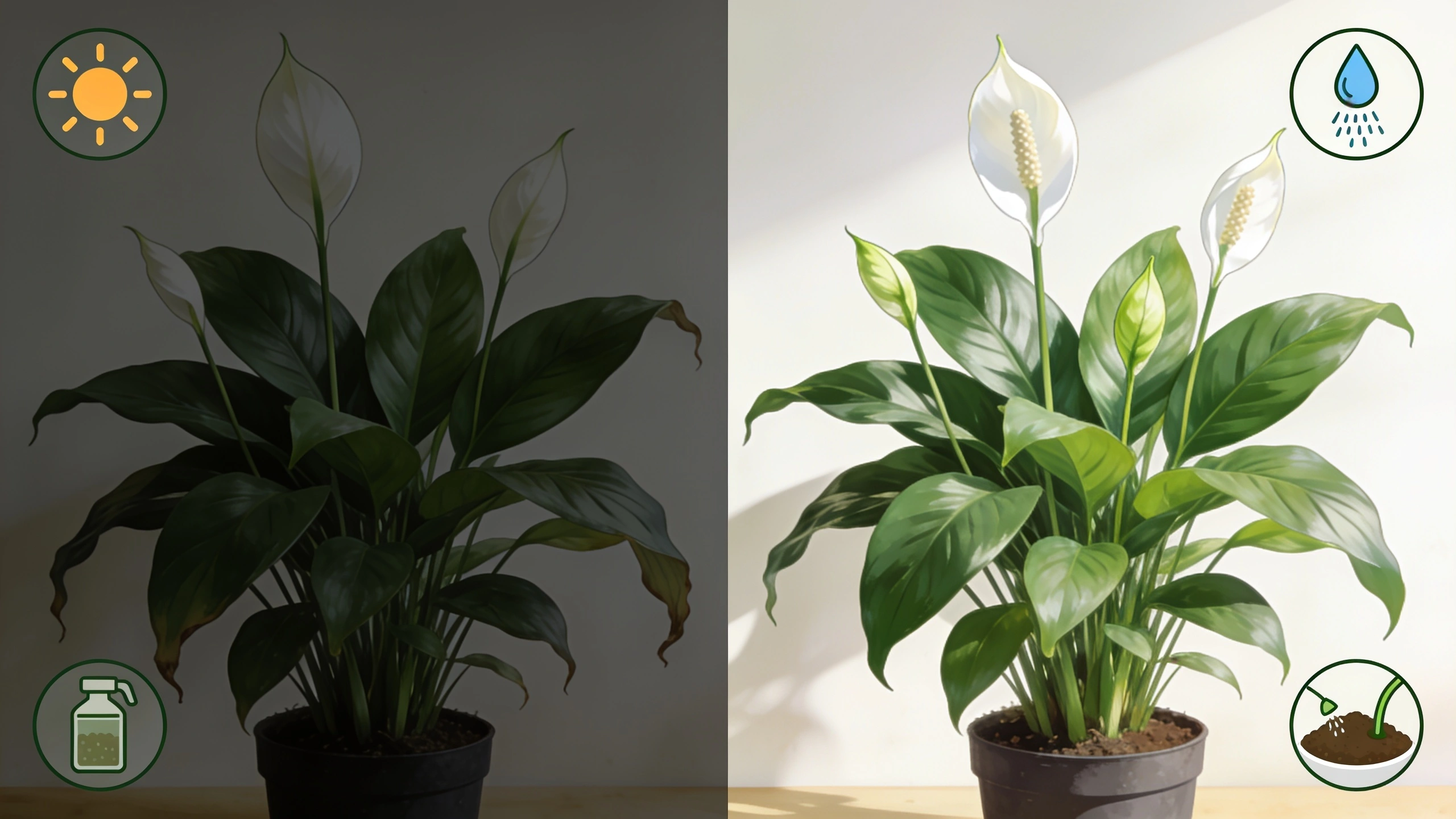
Getting repeat blooms out of a peace lily is the question that trips most people up, partly because the plant you bought from a nursery may have been treated with hormones to force early flowering.
That first flush can be hard to replicate.
Here’s what actually works:
- More light, specifically bright indirect light for a few hours each day
- A switch to a phosphorus-rich fertilizer in early spring
- Slightly cooler nights (around 15°C) for a few weeks in late winter can sometimes trigger a new flush
- Keep the plant slightly pot-bound; root crowding seems to encourage blooming
Deadhead spent flowers by cutting the stem down at the base. New flowers start green, turn white, then naturally age back to green and eventually brown.
That brown transition is not a sign of illness; it’s just the end of the flower’s cycle.
Repotting a Peace Lily
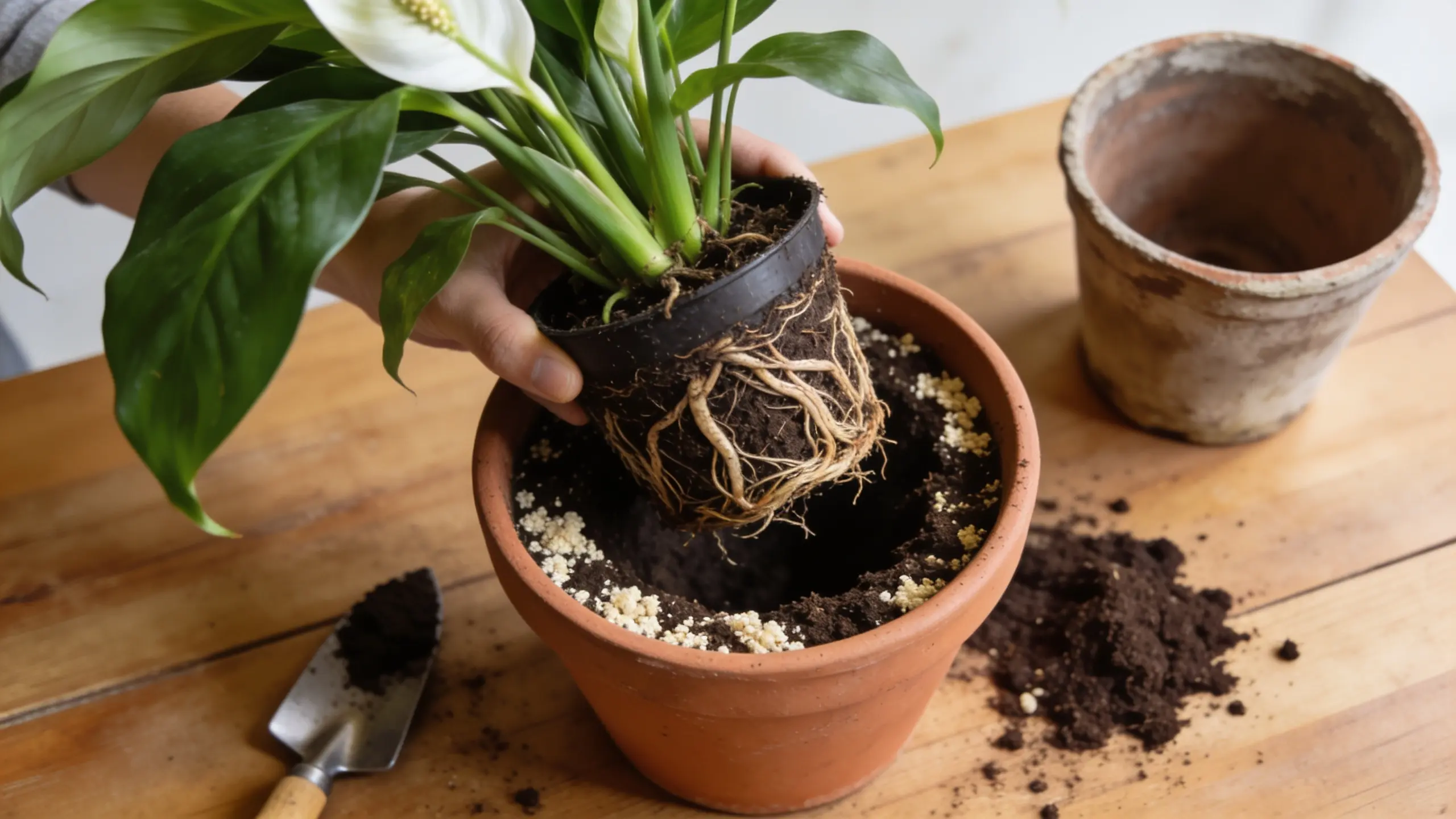
Peace lilies prefer to be slightly root-bound, so repotting is only necessary when roots crowd the pot, growth stops, or the plant wilts soon after watering.
- Water Before Repotting: Water the peace lily about 12 hours beforehand to keep the root ball moist and easier to remove.
- Choose a Slightly Larger Pot: Select a pot with drainage holes that is only 2–5 cm wider than the current container.
- Remove and Check the Roots: Carefully lift out the plant, loosen tightly circling roots, and trim away any soft, dark, or damaged sections.
- Add Fresh Compost: Place the plant at its original depth in fresh houseplant compost, fill around the roots, and water thoroughly.
- Allow the Plant to Recover: Keep it in bright, indirect light and avoid fertilizer for about six months while the roots settle. Late winter or early spring is the best time to repot.
Are Peace Lilies Safe for Pets and Children?
Peace lilies are mildly toxic to cats, dogs, and children, but not deadly. Unlike true lilies, which cause kidney failure in cats, a peace lily only stings and irritates.
All parts hold tiny calcium oxalate crystals called raphides. Chewing releases them into soft mouth tissue, so pain starts within minutes.
Even sap on skin causes a milder sting, like a cat licking its paw or a child rubbing an eye after touching a leaf. Keep the plant out of reach of pets and kids.
What Happens After Touching or Eating a Peace Lily?
The ASPCA lists these signs in cats and dogs after contact with or ingestion of a Peace Lily. Symptoms can vary depending on how much of the plant is consumed and may include irritation, discomfort, and digestive issues.
- Pawing at the face or mouth
- Heavy drooling and lip smacking
- Vomiting or loose stools
- Backing away from food and water
- Swollen lips, tongue, or throat in worse cases
In children, the pattern looks similar. Expect burning in the mouth, red or puffy lips, drooling, and a lot of crying. Swelling bad enough to affect swallowing or breathing is rare, but it is a real emergency.
If a bite happens, work through this order:
- Move the plant away and gently clear any chewed pieces from the mouth.
- Rinse the mouth with cool water. Milk, yogurt, or plain wet food helps wash the crystals down.
- Wipe sap off paws, fur, and hands with a damp cloth.
- Do not force vomiting. The crystals scrape everything again as they come back up.
- Call for advice. ASPCA Animal Poison Control is 888-426-4435. For kids, US Poison Control is 1-800-222-1222.
Most cases settle within a day with nothing more than fresh water and a soft meal.
Common Problems With a Peace Lily
Peace lilies can develop a few common problems when their light, watering, or growing conditions are not quite right. Recognizing the signs early makes them easier to fix.
- Drooping leaves: Check the soil first. If dry, water it; it usually recovers within hours. If wet, it may be root rot: trim damaged roots, repot in fresh soil, and reduce watering. Yuccas can have the same problem, and the fix is the same.
- Brown leaf tips: Common causes are fluoride in tap water, low humidity, or overfeeding. Switch to filtered water and review fertilizer use.
- Yellow leaves: Usually overwatering; occasional yellowing of older leaves is normal as the plant replaces them.
- No flowers: Not enough light. Move the plant closer to bright, indirect light and give it a few weeks.
- Green flowers: Too much nitrogen in fertilizer; cut back feeding to restore white blooms.
- Pests: Scale (brown bumps), mealybugs (white fuzz), and fungus gnats (tiny flies). Use neem oil for scale and mealybugs, and let the soil dry out more for gnats.
Final Thoughts
Learning how to look after a peace lily comes down to reading the plant and adjusting as you go. It’s one of the few houseplants that will droop to tell you it’s thirsty, then perk back up soon after a drink.
Get the watering roughly right, give it decent indirect light, and keep it away from drafts and harsh sun, and you’ve covered the foundation.
The deeper stuff- coaxing blooms, adjusting by season, growing it in water- comes with practice. Tried any of these tips?
Tell me how your peace lily is doing in the comments.
Frequently Asked Questions
Are Coffee Grounds Good for Peace Lilies?
Coffee grounds work in very small amounts as a mild organic boost. Don’t add them in bulk, since they can make soil too acidic and overly moist.
Can I Use Miracle-Gro on Lilies?
Yes, but use it lightly. Dilute to half or quarter strength, since peace lilies are sensitive to strong fertilizers, and apply only during spring and summer.
Will Baking Soda Help My Peace Lily?
Not really. Baking soda isn’qt beneficial for peace lilies and can disrupt soil balance if used regularly. Focus on proper watering, light, and gentle feeding instead.
Can a Peace Lily Live in Water Long-Term?
Yes. With filtered water changed every couple of weeks and light feeding, a peace lily can live in water for years, though it grows more slowly than in soil.