The same bottle of plant food can save your plant or kill it. The only difference is how much you pour.
Most folks I meet splash some in, hope for the best, and watch their leaves yellow a week later. Sound familiar? After 12 years of helping home gardeners, I can tell you the trick is not the brand on the bag. It is the dose.
Knowing how to dose fertilizer for plants correctly is the single biggest difference between a thriving garden and a dead one.
This guide will give you exact numbers for pots, garden beds, and houseplants. You will also learn how often to feed your plants, how to spot one that has had too much food, and how to fix it when things go wrong.
No more guessing. No vague advice. Just real measurements you can use today.
What Does Dosing Fertilizer Actually Mean?
Dosing means matching the right amount of plant food to the right plant at the right time. That is it.
When you guess, two things could go wrong:
- Too little food: Slow growth, pale leaves, weak stems
- Too much food: Burned roots, brown leaf tips, salt crust on the soil
The dose depends on three things only:
- The plant you are feeding
- The pot or plot size
- The fertilizer type (liquid, pelleted, or slow-release)
Get those three right, and you are 90% of the way there.
How to Dose Fertilizer for Plants in 7 Simple Steps
Feeding plants the right way is not complicated once you have a system. My experience in helping home gardeners has helped me break the whole process down into seven steps you can follow in order.
Each one builds on the last. Skip a step, and you risk burned roots, yellow leaves, or wasted money on the wrong product.
Here is the path we will walk through together:
Step 1: Read the N-P-K Numbers on The Bag
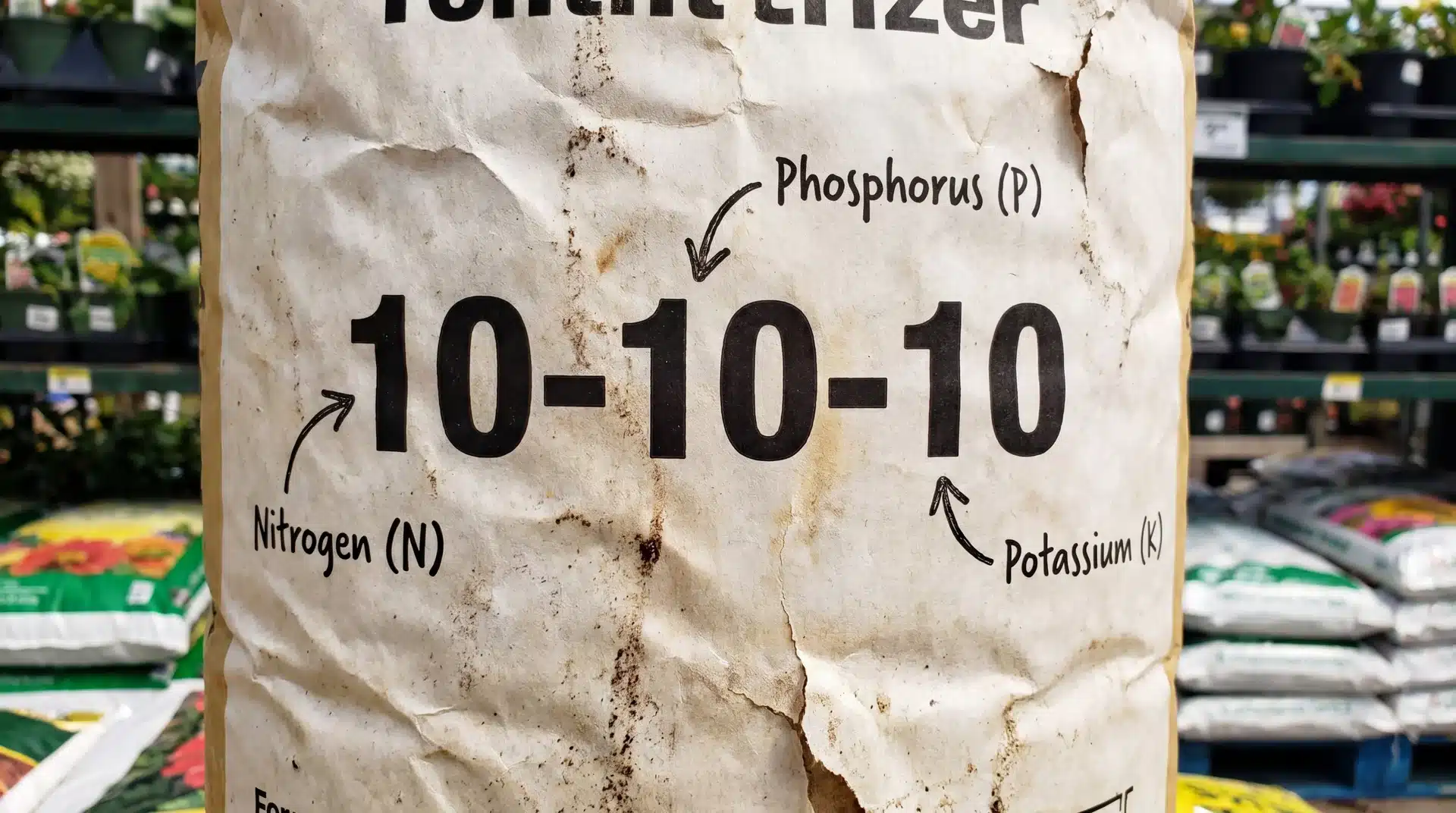
Every fertilizer bag has three numbers, like10-10-10 or 20-20-20. These tell you what is inside.
| Letter | Stands For | What It Does |
|---|---|---|
| N | Nitrogen | Green leaves, fast growth |
| P | Phosphorus | Strong roots, more flowers and fruit |
| K | Potassium | Plant health, disease-fighting |
A bag of 10-10-10 has 10% of each nutrient by weight. The rest is filler. A 100-pound bag of 10-10-10 holds 10 pounds of nitrogen, 10 pounds of phosphorus, and 10 pounds of potassium. A 20-20-20 bag has double the punch in the same weight.
Plants also need smaller amounts of calcium, magnesium, iron, and zinc to stay healthy.
Most balanced fertilizers include traces of these, but if your plant shows yellowing between the leaf veins while the veins stay green, it is likely short on iron or magnesium. A soil test will tell you for sure.
Use these match-ups when you stand in the garden aisle:
- Leafy plants and lawns: high-nitrogen blends like 25-6-4
- Flowers and fruit: high-phosphorus blends like 15-30-15
- Tomato food: balanced or potassium-heavy like 17-18-28
My tip: For most home plants, a balanced 10-10-10 works fine. You do not need a separate bottle for every plant.
One thing to watch out for: never use lawn fertilizer on vegetable or flower beds. Lawn blends carry too much nitrogen and often contain weed killers that will damage or kill your garden plants.
Step 2: Test Your Soil Before You Dose (If You Can)
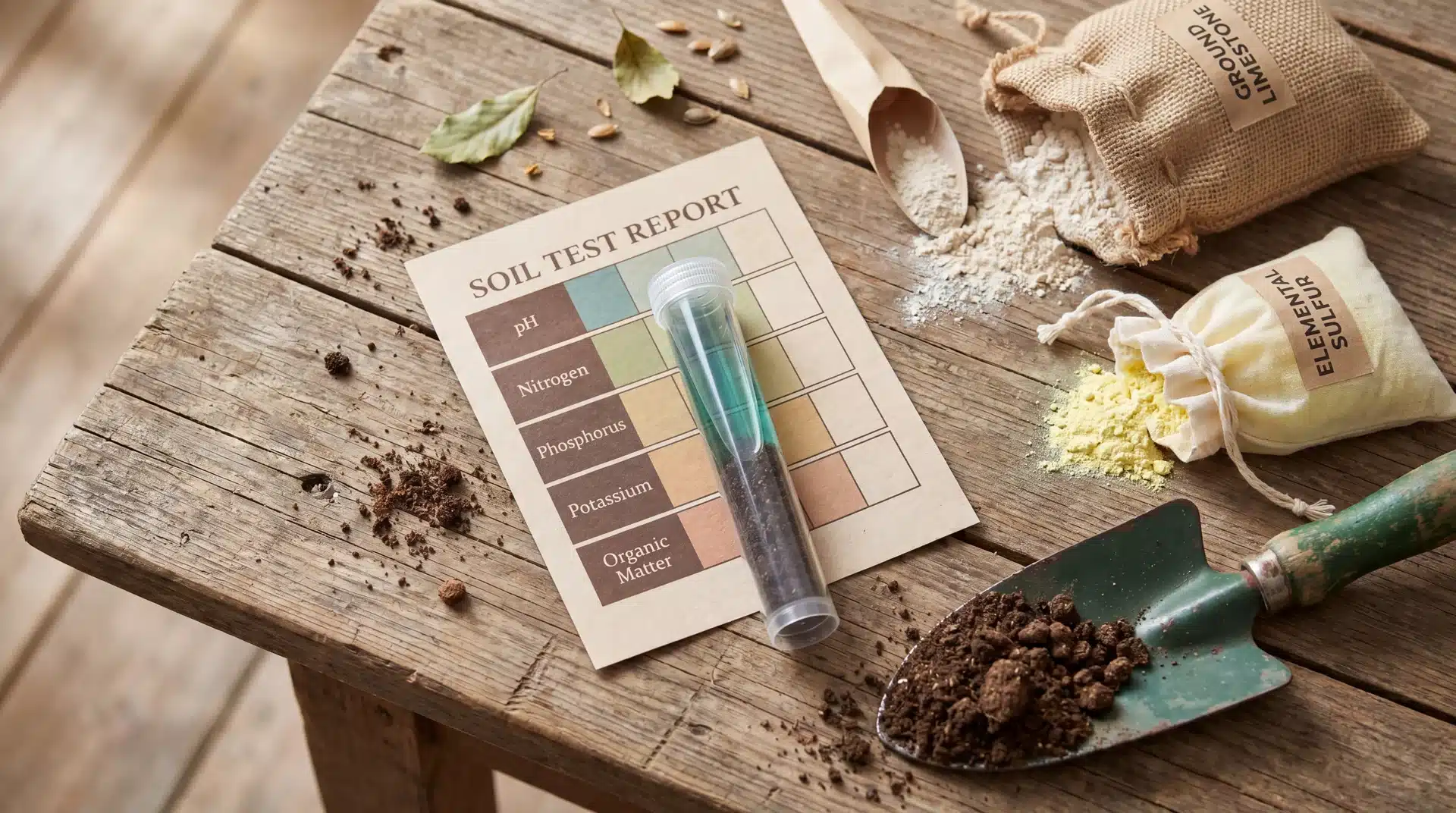
A soil test will tell you exactly what your garden needs. Most county extension offices in the US run them for under $25.
A basic soil report gives you four things:
- pH level: Most fruits and vegetables grow best between 5.5 and 7.0. Lawns like 5.5 to 6.0. Blueberries want 4.2 to 5.2.
- Nitrogen, phosphorus, and potassium readings: These show what is missing.
- Organic matter percentage: Soils with 5% to 10% organic matter hold nutrients better.
- Lime requirement: Indicates whether you need to raise the pH.
If your pH is below 5.5, add ground limestone at 5 pounds per 100 sq ft. If it is above 7.5, add elemental sulfur. Retest after three to six months.
No-test backup plan: If you skip the lab, use a balanced 10-10-10 at half-strength for the first feed. Watch the plant for two weeks. If it greens up, you guessed right. If nothing changes, bump up to full strength next time.
Step 3: How Much Fertilizer to Use?
Here is the part nobody else gives you straight. I pulled these numbers from extension service guides and tested them in my own greenhouse for years:
Fertilizer Dose Chart:
| Plant Type | Fertilizer | Amount | How Often |
|---|---|---|---|
| Garden bed (general) | 10-10-10 pelleted | 1 to 2 lbs per 100 sq ft | Spring and again in 2 to 3 months |
| Vegetable transplants | Water-soluble (10-52-17) | 2 tbsp per 1 gallon water | 1 cup per plant at planting |
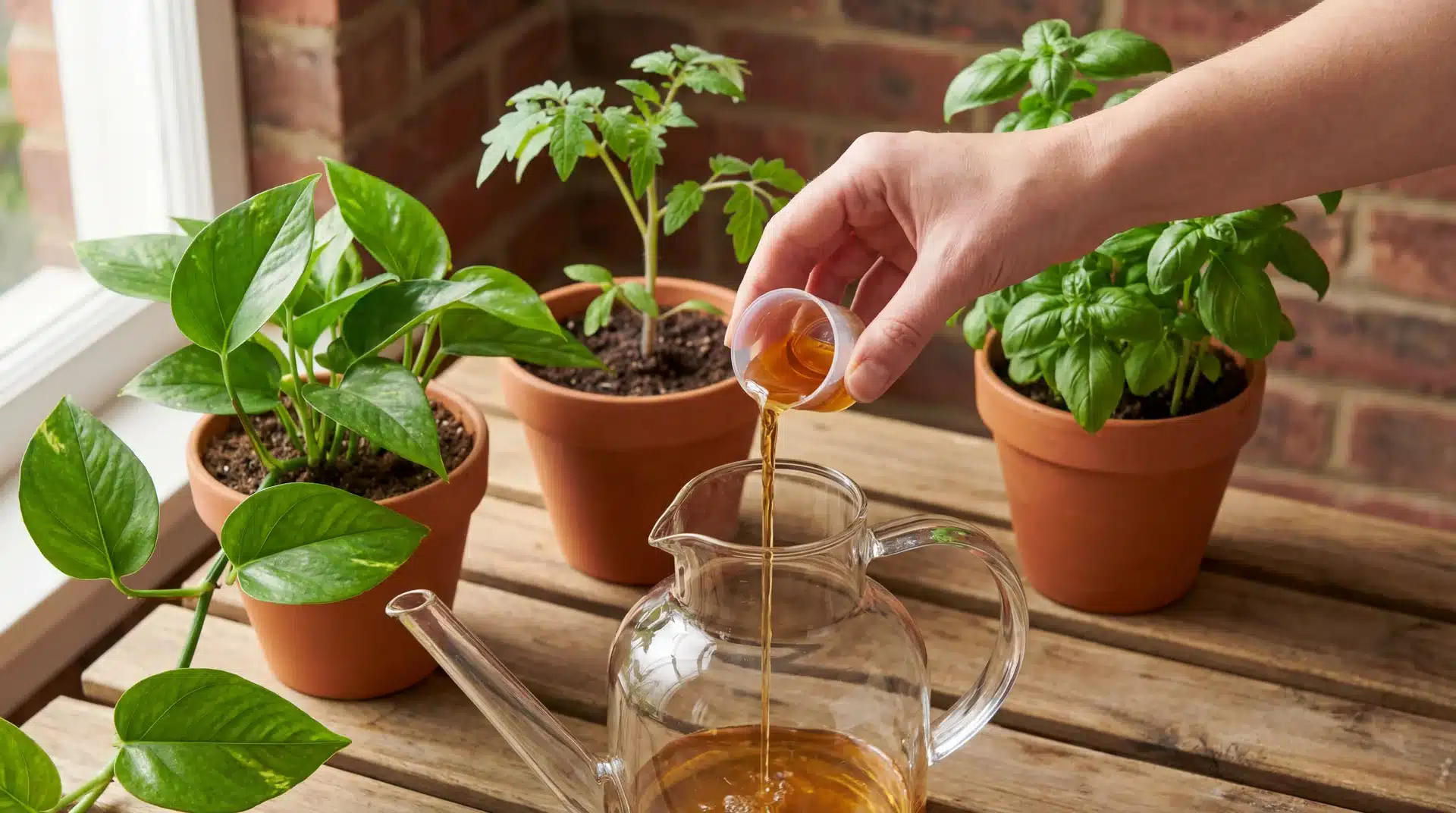
| Potted plants | Liquid water-soluble | 1 to 2 tsp per 1 gallon water | Every other watering |
| 5-gallon bucket mix | Water-soluble | 5 to 10 tsp | Each watering |
| Houseplants | Balanced liquid (10-10-10) | ¼ to ½ label strength | Every 2 to 4 weeks (spring/summer) |
| Trees and shrubs | Balanced pelleted | 3 lbs nitrogen per 1,000 sq ft | Once in spring |
| Perennials | Balanced pelleted | 1 lb nitrogen per 1,000 sq ft | Once in spring |
| Roses | Soluble fertilizer | Light dose, label rate | Every 7 days during bloom |
| Seedlings | Liquid | 1/8 to 1/4 strength | Every 1 to 2 weeks |
If you grow in raised beds, the dosing changes slightly. Raised beds drain faster than in-ground plots, which means nutrients wash out sooner.
Use the same 1 to 2 pounds of 10-10-10 per 100 sq ft, but plan on feeding every 6 to 8 weeks instead of waiting the full 2 to 3 months. Beds filled with store-bought soil mix may already contain slow-release fertilizer, so check the bag before you add more.
Pot Diameter to Water Amount:
When you mix liquid fertilizer in water, here is how much to pour per pot:
- 10-inch pot: ½ gallon
- 12-inch pot: ½ to ¾ gallon
- 14-inch pot: 1 gallon
- 16 to 18-inch pot: up to 2 gallons
Example for a 300 sq ft garden:
A garden 30 feet long and 10 feet wide is 300 sq ft. At 1 to 2 pounds of 10-10-10 per 100 sq ft, you need 3 to 6 pounds total. Spread it in spring, mix it into the top 3 to 4 inches of soil, and water well.
Pro tip from my greenhouse: I always go half-strength on the first feed of the season. You can always add more later. You cannot unburn a root.
Step 4: How Often Should You Feed Your Plants?
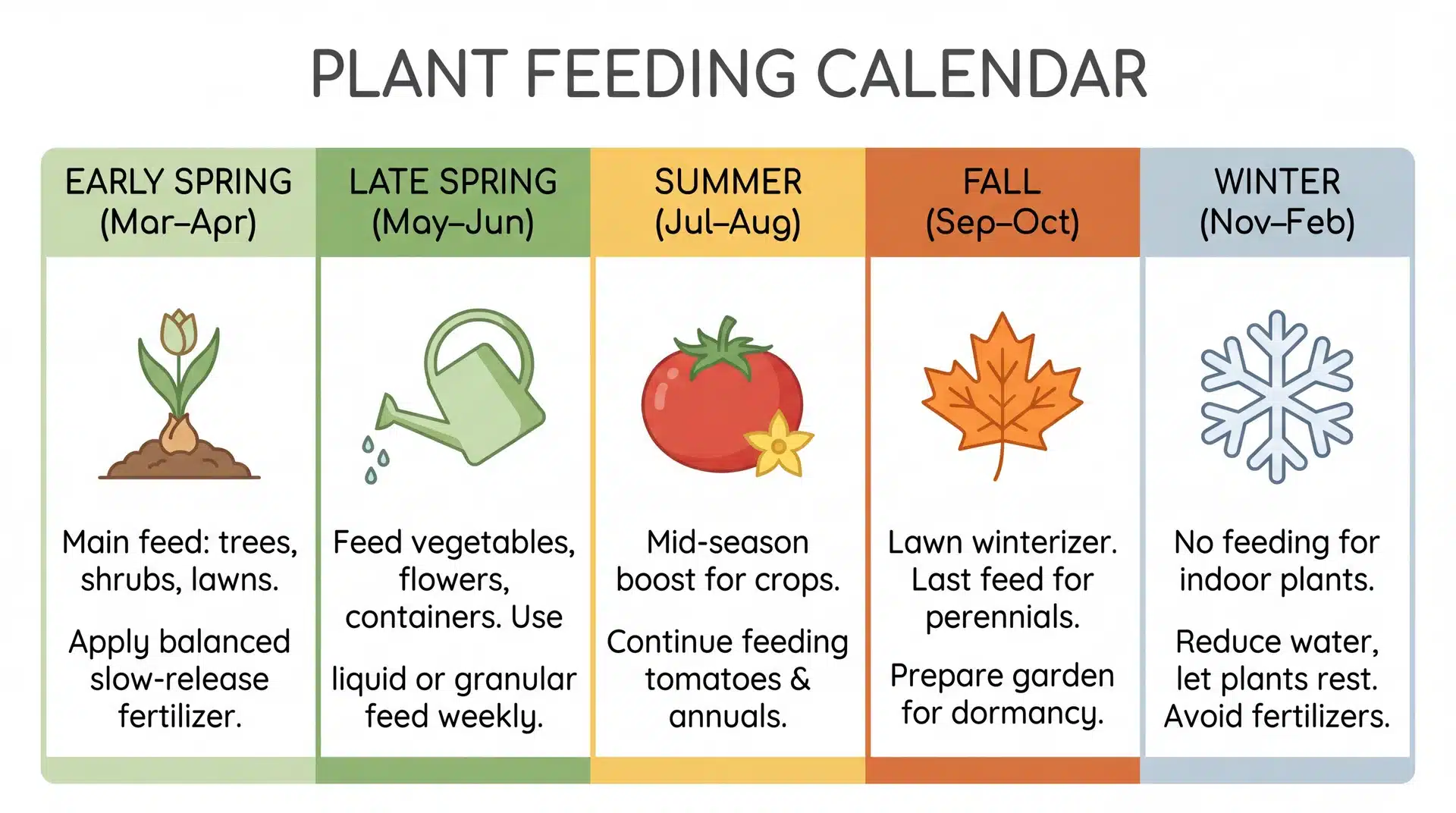
The simple rule: feed when plants are growing, stop when they rest.
Here is my year-round feeding calendar:
- Early spring (March to April): Main feed for almost everything. Trees, shrubs, perennials, lawns, and vegetables before planting.
- Late spring (May to June): Side-dress vegetables 4 to 6 weeks after planting. Start liquid feeding for pots and houseplants.
- Summer (July to August): Light top-up for heavy feeders like tomatoes, roses, and annuals. Switch tomatoes to a low-nitrogen blend once flowers appear.
- Fall (September to October): “Late and light” feed for trees and shrubs. Skip lawn feeding in hot zones.
- Winter (November to February): No feeding for indoor plants. Most go dormant.
A few special cases worth knowing:
- Roses: “Weekly, weakly.” A small dose every 7 days during bloom season.
- Vegetables: Side-dress 4 to 6 weeks after planting, again when fruit sets.
- Tomatoes: Switch to a low-nitrogen feed once flowers appear, and remove side shoots to push even more energy into fruit. More flowers, fewer leaves.
Note: Never feed a plant that is wilted from drought, pests, or transplant shock. Fix the underlying problem first.
Step 5: Pelleted, Liquid, or Slow-Release? Pick the Right One
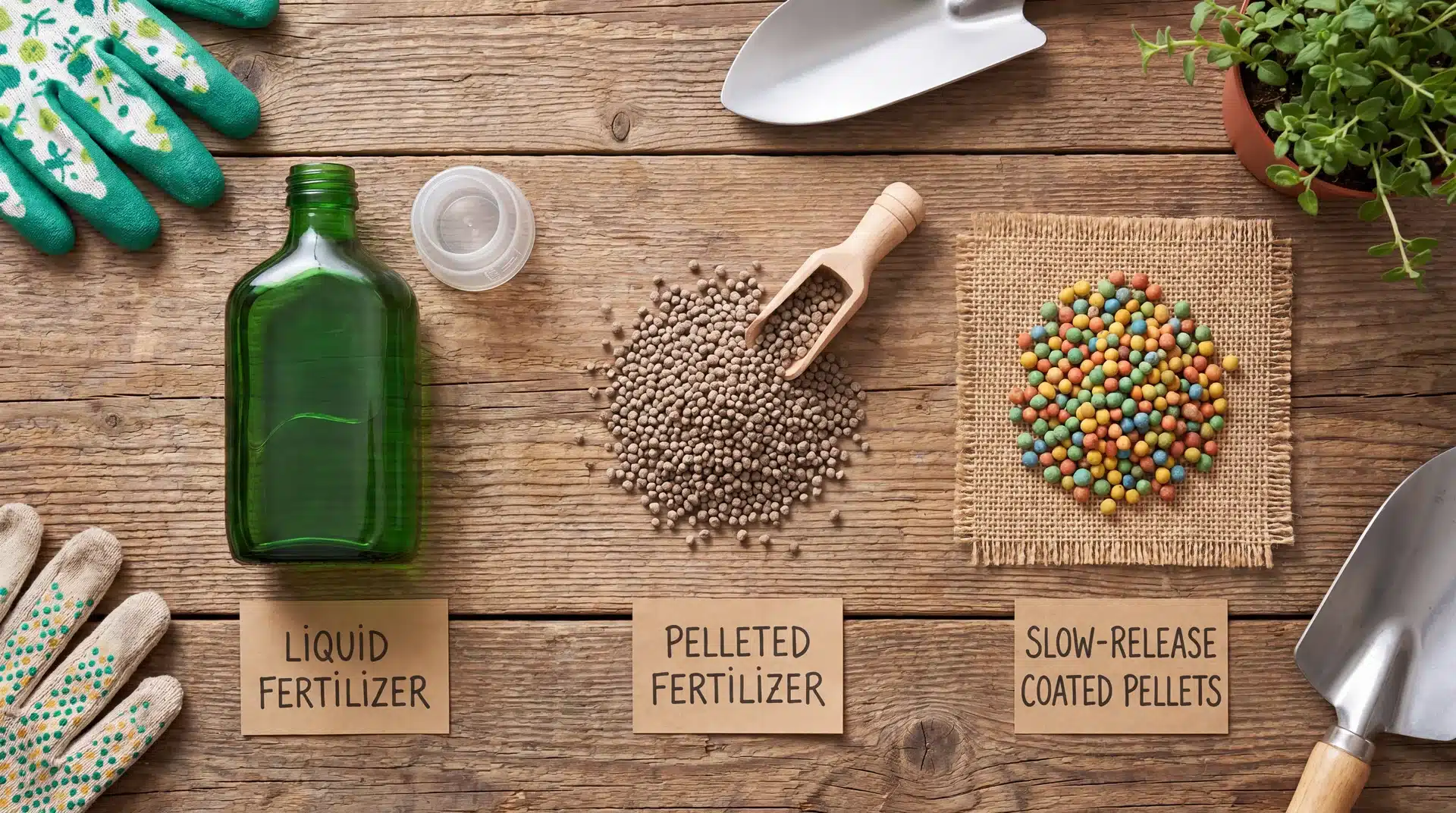
Not all fertilizers work the same way. Here is a quick comparison.
| Type | Speed | Lasts | Best For |
|---|---|---|---|
| Liquid (water-soluble) | Fast (days) | 1 to 2 weeks | Pots, houseplants, quick fixes |
| Pelleted | Slow (1 to 2 weeks) | 4 to 8 weeks | Garden beds, lawns, and shrubs |
| Slow-release pellets | Very slow | 3 to 6 months | Busy gardeners, mixed pots |
Four Ways to Apply Fertilizer
- Broadcast: Spread pelleted feed across a lawn or new bed. Use a hand spreader.
- Top-dress: Sprinkle pellets around the base of a single plant. Reach out to the drip line.
- Base watering: Mix the liquid food into water and pour it into the soil. Best for pots.
- Foliar spray: Mist a diluted liquid onto leaves. Use this only for fast iron or zinc fixes.
Three rules I never break:
- Never feed on a windy or rainy day. The food blows away or washes off.
- Always knock pellets off the leaves. They burn.
- Water the soil before you feed it if it is dry. Dry soil plus food equals burned roots.
Step 6: Special Cases for Indoor Plants, Seedlings, and Vegetables
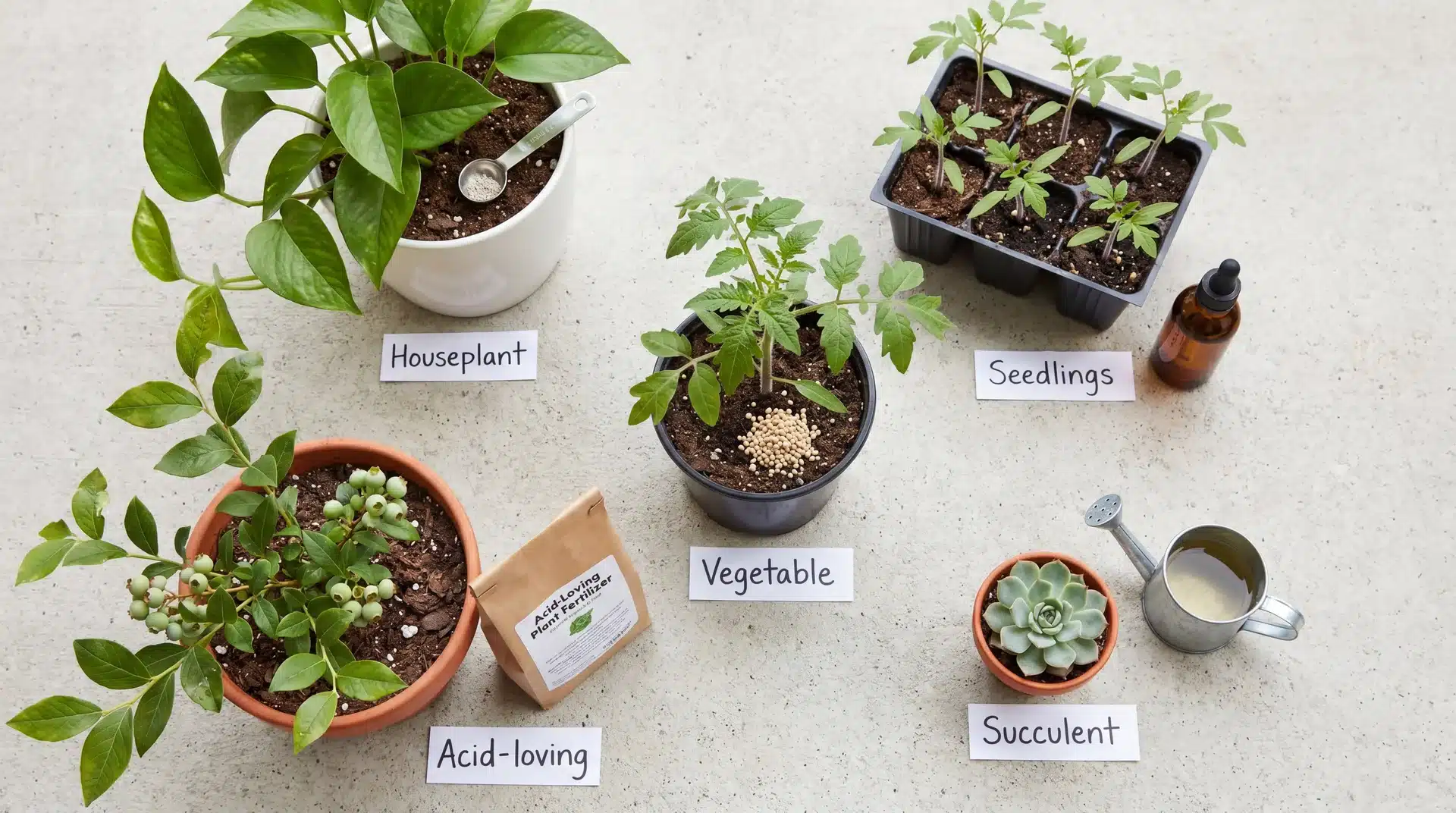
Most blogs split these across three articles. I will give them to you in one place.
Indoor Houseplants:
- Cut the label dose in half. Always.
- Feed once a month from March through September.
- Stop feeding in October. Restart when you see new growth.
- Flush the pot with plain water every 2 to 3 months to clear salt buildup.
Seedlings and Young Plants:
- Wait until you see two sets of true leaves. Not the first baby leaves.
- Use 1/8 to 1/4 strength only.
- Feed once every 1 to 2 weeks until you transplant them.
- Small plants are very sensitive. A weak dose beats a strong one every time.
Heavy-Feeding Vegetables:
Tomatoes, peppers, corn, and squash all want extra food. Feed them at:
- Planting time
- 4 to 6 weeks after planting
- When the first flowers or fruit appear
Acid-Loving Plants:
Blueberries, azaleas, hydrangeas, camellias, and rhododendrons want a low pH (4.2 to 5.2). Use a fertilizer made for acid-loving plants. A regular 10-10-10 will not work for these.
Cacti and succulents:
Skip feeding most of the year. Use a 1/4 strength balanced liquid once in spring and once in midsummer. That is enough.
Step 7: How to Spot Over-Fertilized Plants and Fix Them?
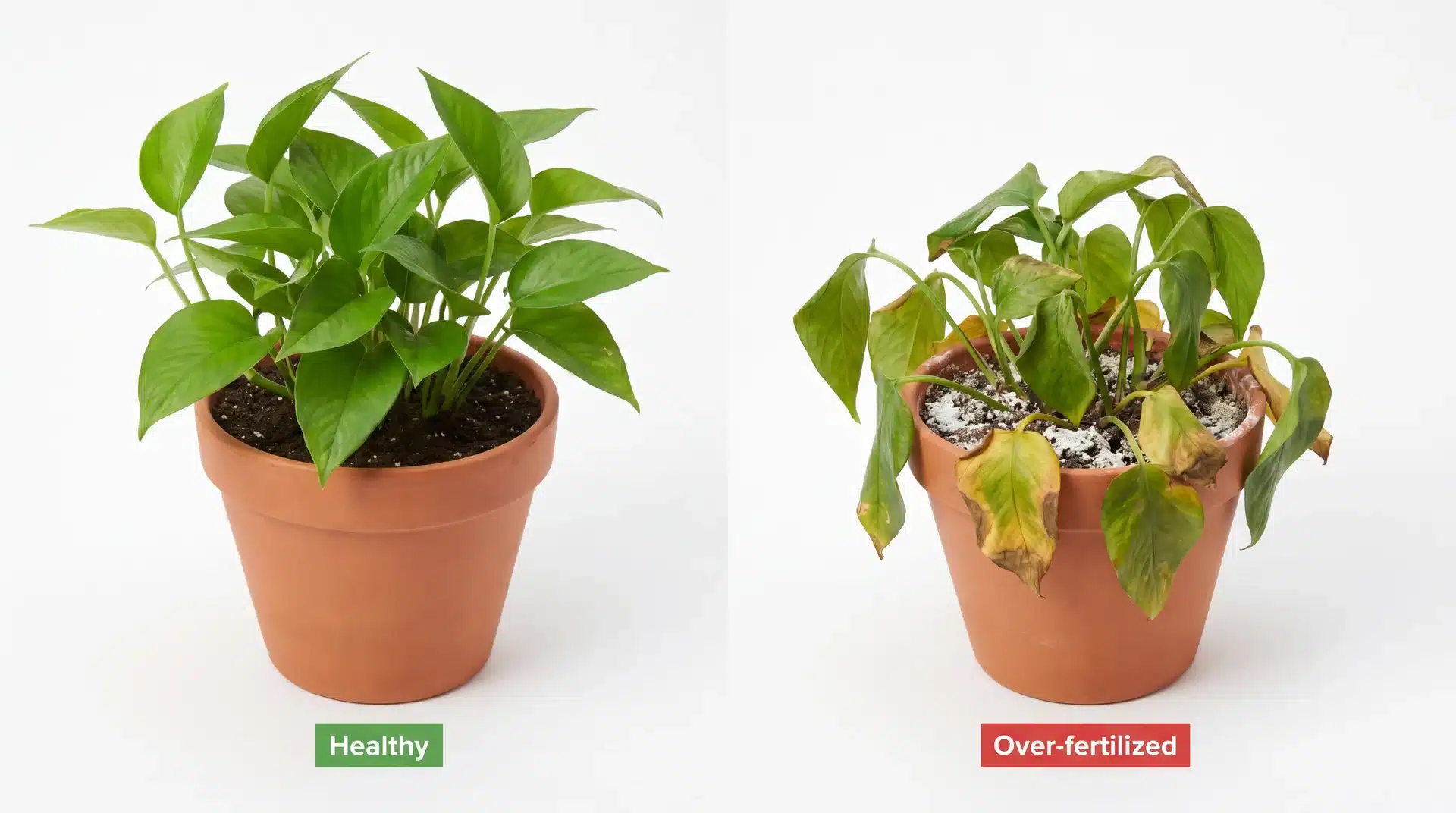
This is the section nobody writes about. Most guides warn you not to overfeed, but never tell you what an overfed plant looks like.
Six Warning Signs of Too Much Fertilizer
- Lower leaves turn yellow
- Leaf tips and edges go brown and crispy
- A white crust forms on the soil surface
- Leaves wilt even after watering
- Roots look black or rotten when you check them
- Growth slows or stops completely
If you see two or more of these, you have a salt problem. The fertilizer salts have built up, pulling water out of the roots rather than feeding them. Gardeners call this fertilizer burn.
|
How to Flush an Over-Fed Plant?
|
Pro Tips from My Greenhouse
After attempting several trial and errors in growing rare succulents, here is what I wish someone had told me on day one:
- Half-strength is the safe bet: You can always add more next time.
- Water first, feed second: Always wet the soil before you pour liquid food.
- Skip the wind and rain: Pellets will not stay where you want them.
- Do not feed sick plants: Fix the watering or light first. Food is not medicine.
- Use a real measuring spoon: Eyeballing leads to overdoses.
- Read the bag once, save it forever: Take a photo of the label so you do not lose it.
Conclusion
Here is what I want you to take away. The dose makes the difference, not the brand on the bag. Start with half the label amount. Watch your plant for a week. If it looks happy, you are doing it right.
If the lower leaves go yellow or the tips brown, flush the soil and stop feeding for a month. Most plants want food once every two to four weeks during spring and summer. They want a break in winter.
Read the N-P-K, measure with a real spoon, and water before you feed. That is the whole game.
Frequently Asked Questions
Can I Use Coffee Grounds or Banana Peels as Fertilizer?
Yes, but slowly. Coffee grounds add nitrogen, and banana peels add potassium. Compost them first or sprinkle thinly on top. Fresh peels can attract pests and mold.
Will Fertilizer Hurt My Pets or Kids if They Touch It?
Yes, most fertilizers are toxic if eaten. Keep bags sealed and stored high. Wash your hands after handling. Wait 24 hours before letting pets or kids on freshly fed lawns.
Can I Store Mixed Liquid Fertilizer for Later Use?
No. Mixed liquid fertilizer loses strength within 24 hours and can promote bacterial growth. Mix only what you will use that day. Store dry fertilizer in a sealed container.
Is Organic Fertilizer Better than Synthetic for Home Plants?
Both work. Organic feeds release slowly and improve the soil over time. Synthetic feeds act fast and give exact amounts. Many home gardeners use organic for beds and synthetic for pots.
Does Rain Wash Away My Fertilizer?
Heavy rain within 24 hours of feeding can wash pelleted feed away, especially on slopes. Light rain helps water it in. Avoid feeding during heavy storms.
Can I Mix Two Different Fertilizers Together?
You can, but only if both are water-soluble and you cut each dose in half. Mixing two full-strength products doubles the salt load and risks burning roots. When in doubt, stick with one balanced fertilizer.
Should I Fertilize in the Morning or Evening?
Morning is better. The plant has all day to absorb nutrients before temperatures drop. Feeding in the evening can leave wet foliage overnight, which invites fungal problems.