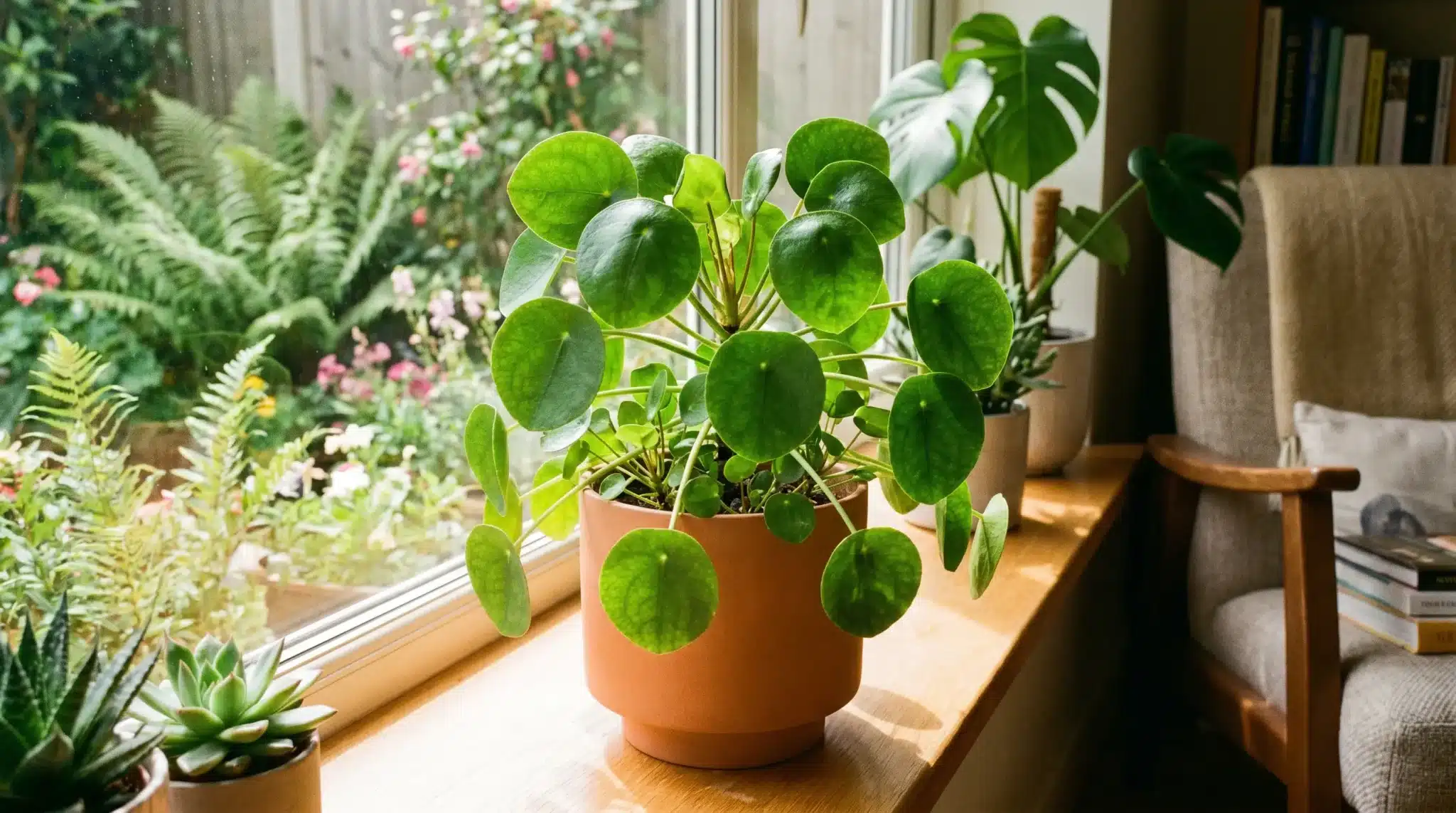

The Chinese Money Plant, or Pilea peperomioides, is one of those rare houseplants that truly deserves its popularity.
Chinese Money Plant’s round, coin-shaped leaves rise on upright stems, giving it a clean, architectural look without feeling fussy, and it’s forgiving enough for beginners.
Whether you’ve just welcomed one into your home or have had yours for a while and noticed a few leaf issues, you can learn how to care for it properly.
From finding the right light and watering routine to choosing soil, propagating new plants, and troubleshooting drooping or yellowing leaves, these tips will help your Pilea thrive indoors.
Chinese Money Plant Quick-Reference Care Card
| Care Factor | Ideal Range | Warning Sign If Wrong |
|---|---|---|
| Light | Bright, indirect | Leggy growth (too dark); scorched leaves (too bright) |
| Watering | Every 7 days (summer); 10–14 days (winter) | Yellow leaves (overwatering); droopy leaves (underwatering) |
| Soil pH | 6.0–6.5 (slightly acidic) | Nutrient lockout; stunted growth |
| Temperature | 13°C–30°C (55°F–86°F) | Wilting; leaf drop below 10°C |
| Humidity | Average room humidity | Crispy leaf edges (too dry) |
| Toxicity | Non-toxic to cats, dogs, and humans | N/A |
| Growth rate | Can double in size per year | Slow growth signals a light or feeding problem |
Caring for Your Chinese Money Plant
Proper care keeps your Pilea peperomioides healthy, thriving, and producing those signature round leaves. Focus on light, water, soil, temperature, and occasional fertilizing or repotting to help it flourish indoors.
1. Light: How Much and Where to Put It
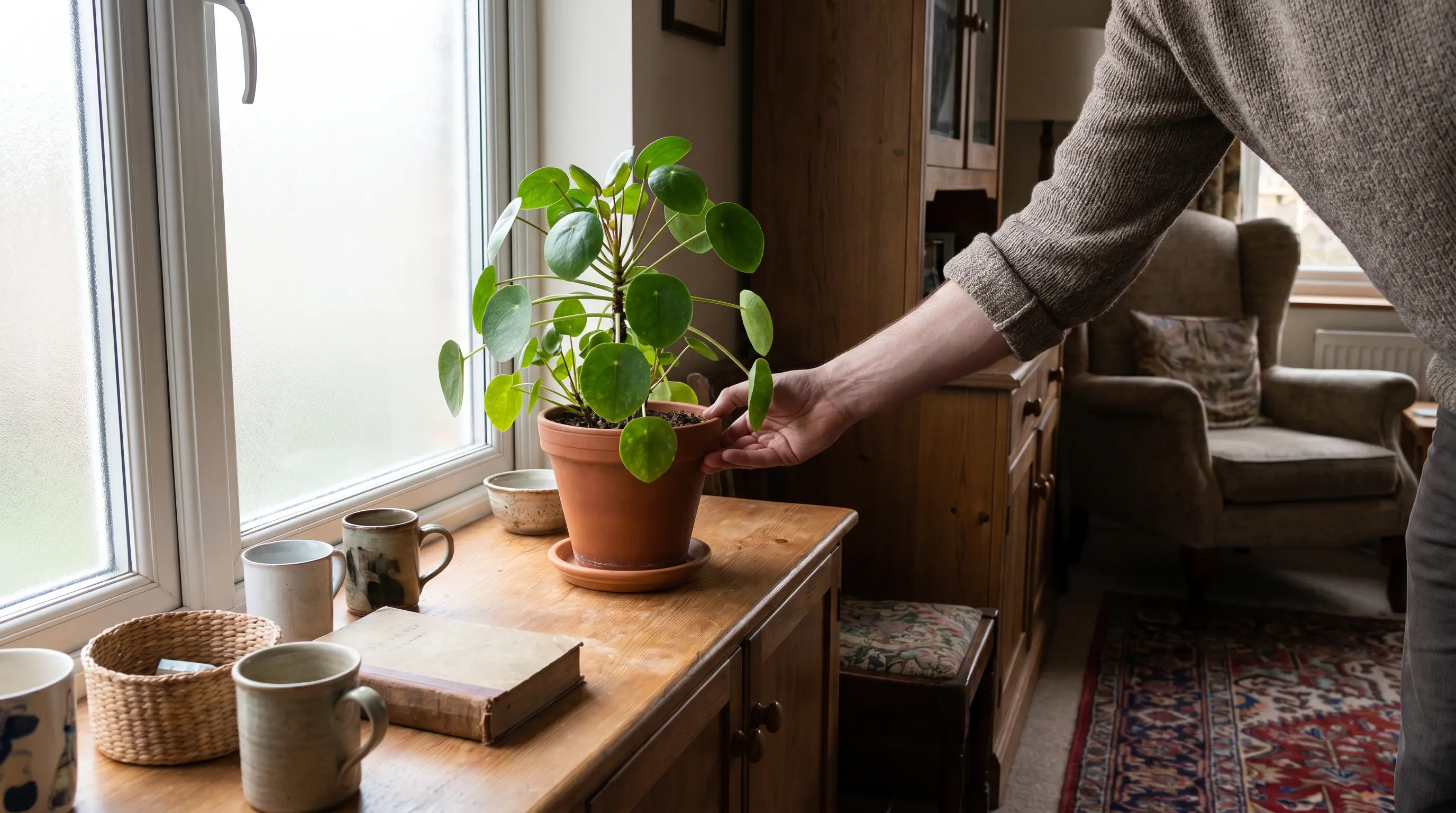
The Chinese Money Plant prefers bright, indirect light, like that of its native forest understory. A north- or east-facing windowsill works well. Rotate the pot weekly to prevent leaning.
Low light? Use a grow light 30–40 cm above for 12 hours daily. Pale or stretched stems indicate insufficient light.
2. Watering: Getting the Frequency Right
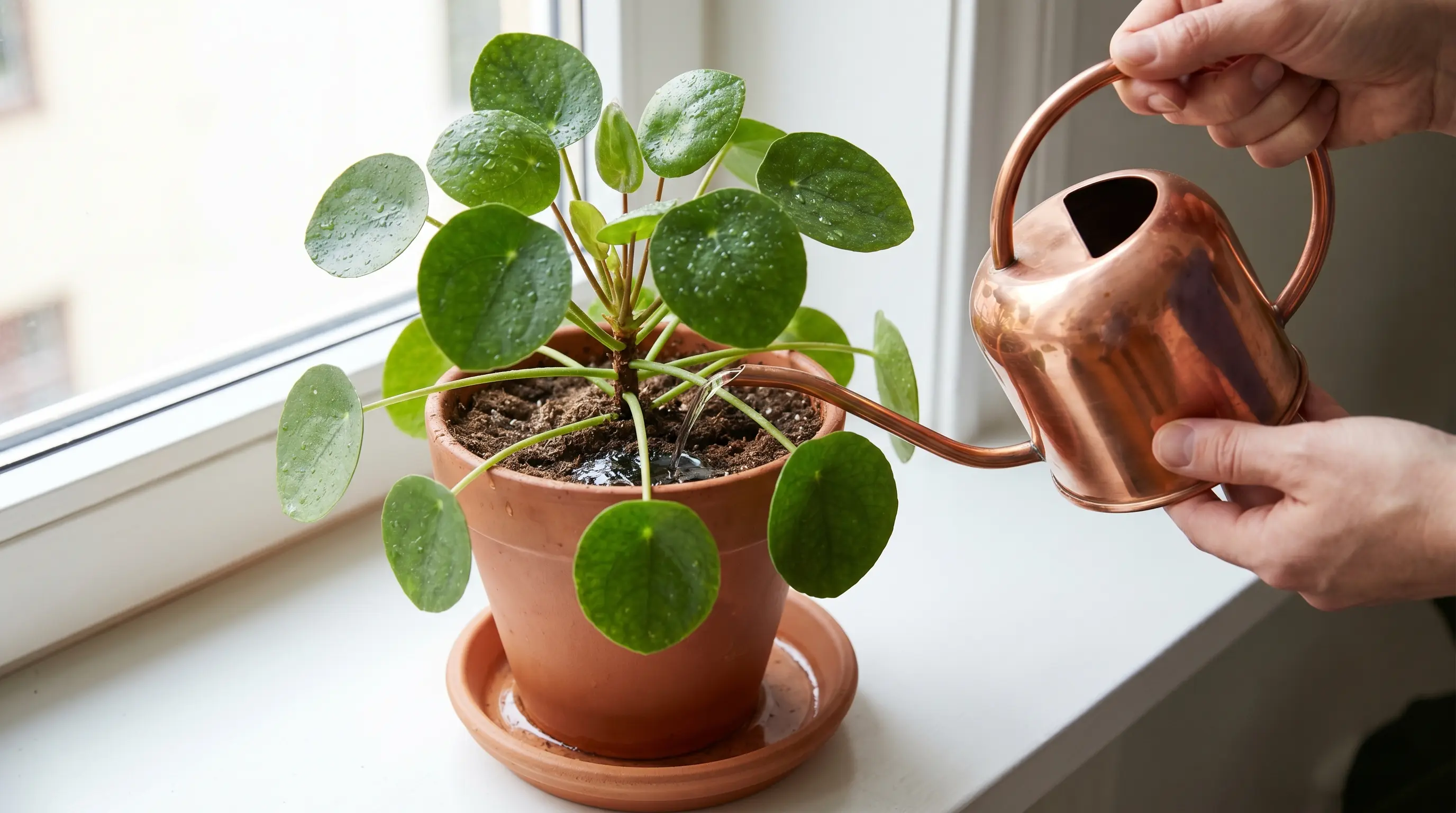
Water when the top 2.5 cm of soil is dry. Typically, water weekly in spring/summer and every 10–14 days in autumn/winter. Tap water? Let it sit overnight to reduce chlorine. Always drain excess water to prevent root rot.
Overwatering vs. Underwatering
- Yellow leaves, soft stems → Overwatering
- Droopy leaves, dry soil → Underwatering
- Leaves curling upward → Too much light or underwatering
- Leaves curling downward → Overwatering or low light
- Brown, crispy edges → Low humidity or underwatering
3. Soil, Pot, and Drainage
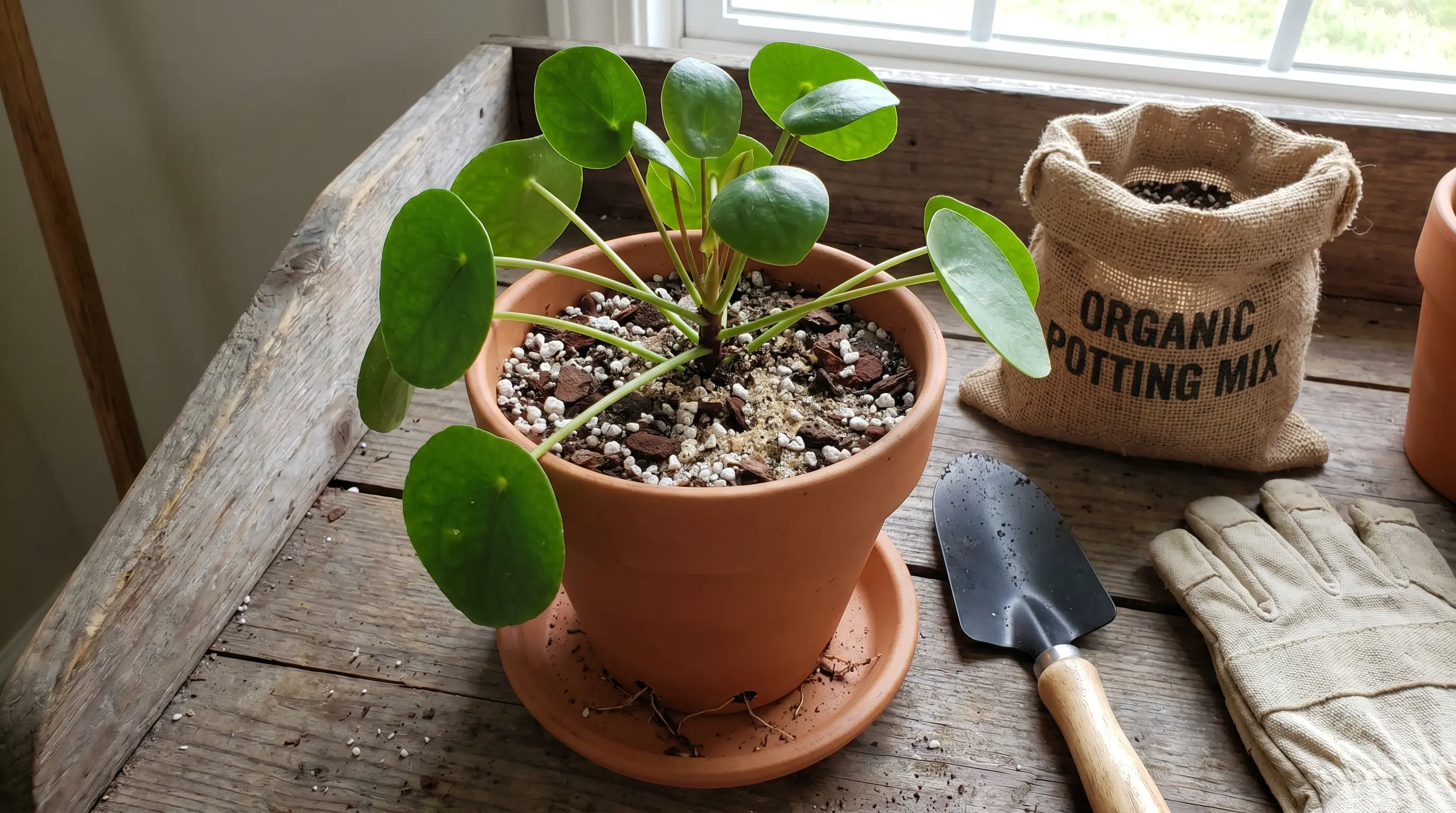
Use well-draining soil; mix standard potting soil with 30% perlite or sand. A slightly acidic pH of 6.0–6.5 is ideal.
Terracotta pots help prevent overwatering; plastic retains moisture longer. Choose pots that are only 2–3 cm larger than the root ball, and always ensure they have drainage holes.
4. Temperature and Humidity
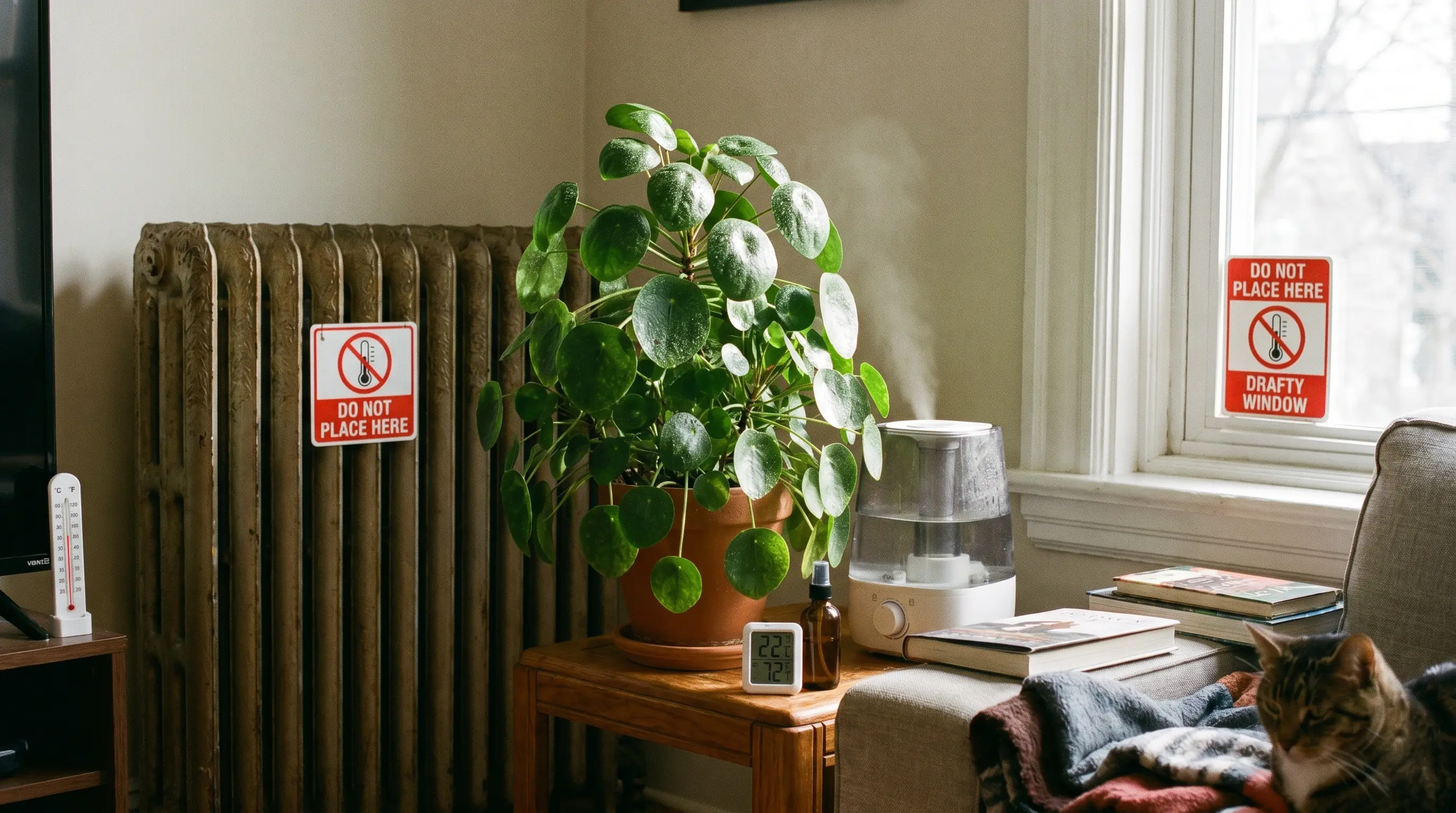
Keep between 13–30°C (55–86°F). Avoid cold drafts or direct heat sources like radiators. Average household humidity is fine; mist leaves once or twice a week if the air is very dry.
5. Fertilizing
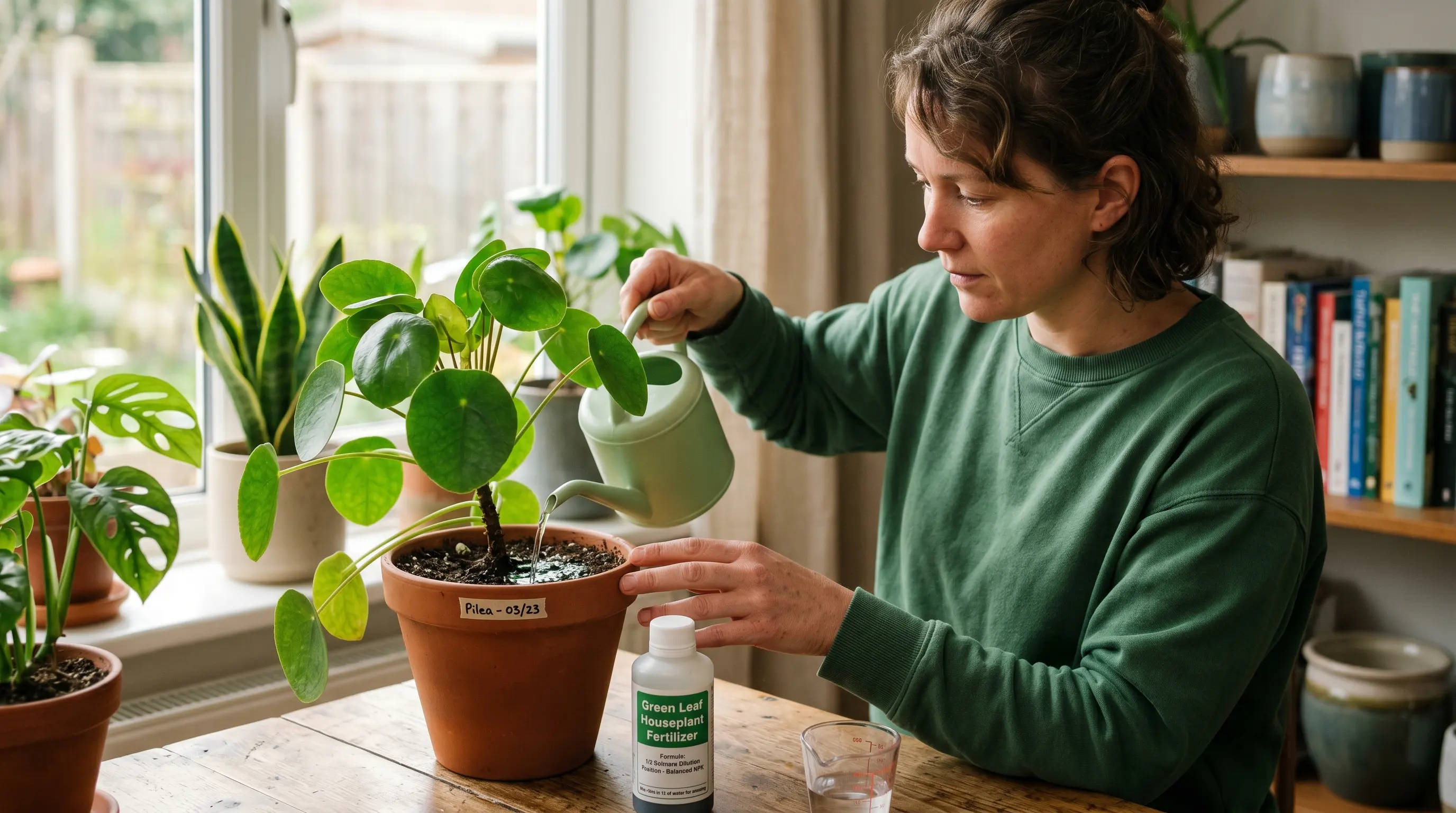
Feed once a month in spring and summer with half-strength balanced liquid fertilizer. Stop in autumn and winter. Water before fertilizing to prevent root burn.
How to Propagate a Chinese Money Plant
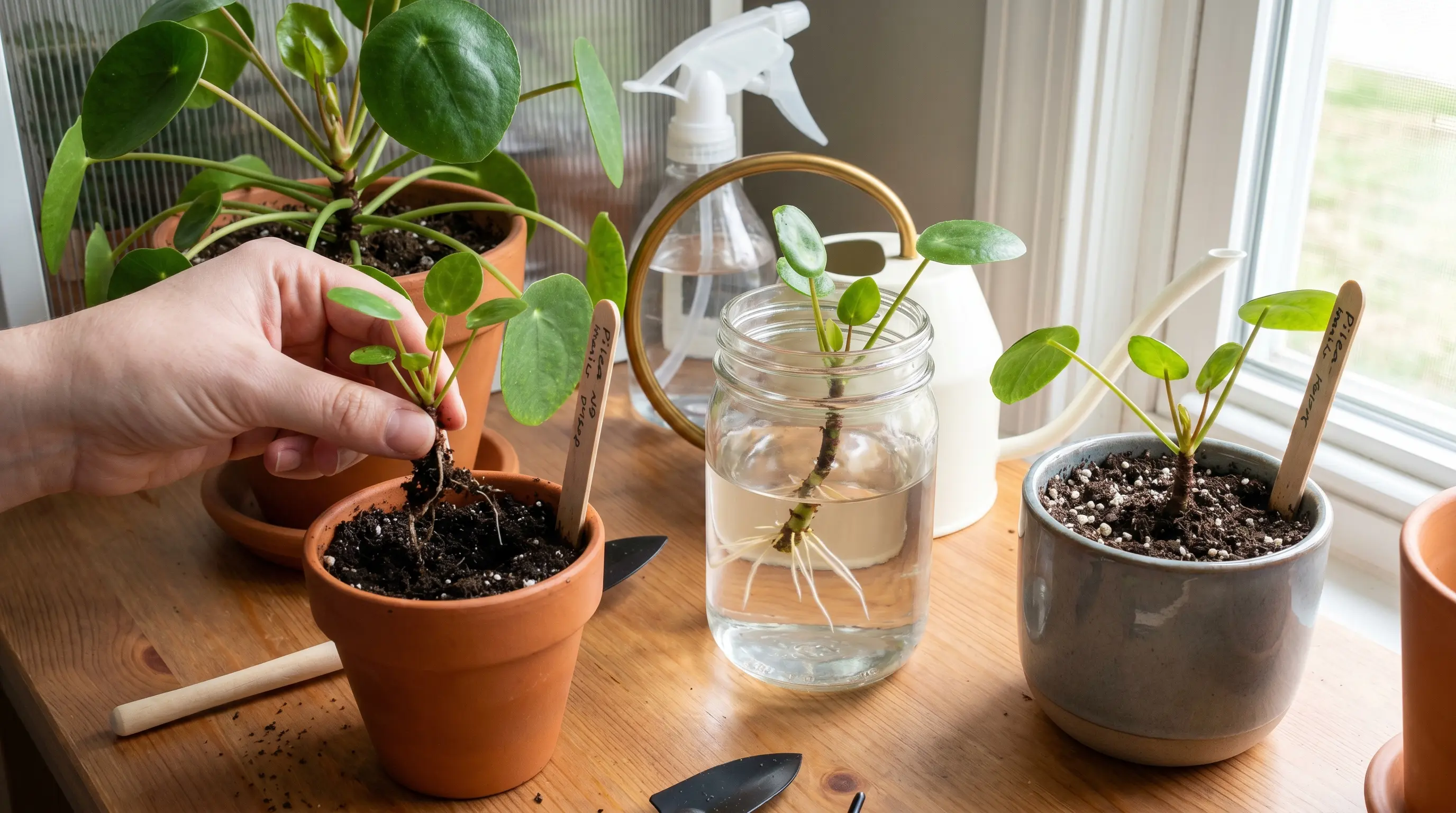
The Japanese money plant, another name the plant goes by in some regions, earns its “friendship plant” nickname because it regularly produces offshoots (pups) that you can remove and pass on to friends.
Here are three ways to propagate.
Method 1: Separating Pups from the Base.
The easiest method. Healthy plants regularly push small offshoots up from the soil around the base.
Once a pup has a few leaves and some visible roots, remove it from the pot, gently separate it from the mother plant, and pot it in its own container with fresh soil. Care for it exactly as you would the parent plant.
Method 2: Stem Cuttings in Water.
Cut a stem cleanly at the base with a sharp, clean knife. Place the cut end in a glass of clean water, submerging only the stem, not the leaves.
Change the water every few days. Roots typically appear within two to four weeks. Once roots are 2–3 cm long, transfer to soil.
Method 3: Direct Soil Propagation
If you have a stem cutting with a small root nub already forming, you can skip the water stage and plant it directly into moist, well-draining soil.
Keep the soil lightly moist (not wet) and place the pot in bright indirect light. New leaf growth signals successful rooting.
Always use clean tools when propagating. Dirty blades transfer pathogens between plants more often than most growers realize.
Common Problems with Chinese Money Plant
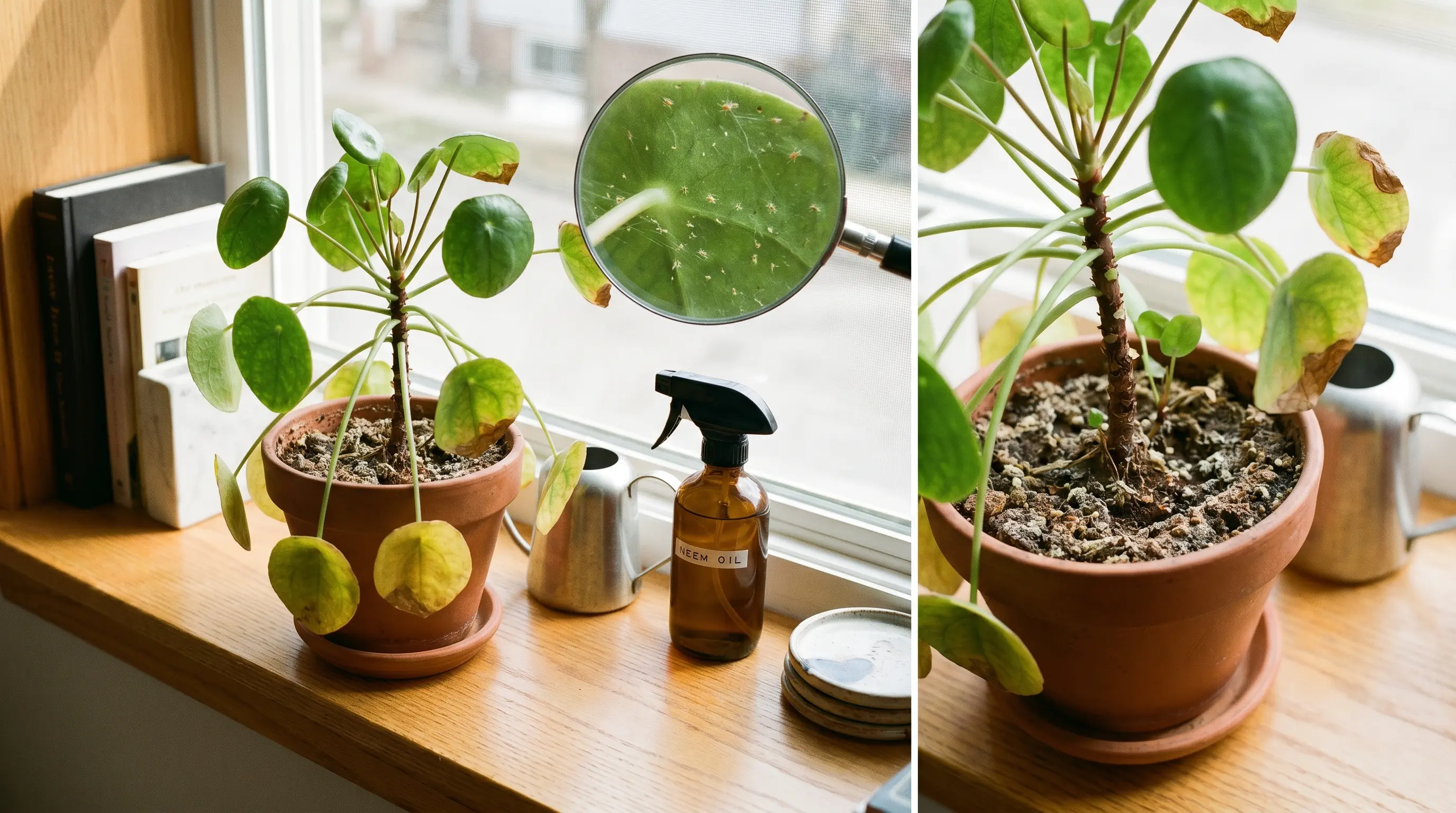
Monitor leaf color, texture, and growth for signs of stress, watering, or light issues. Pests and minor problems are rare, and early care usually restores the plant quickly.
1. Yellow Leaves on Chinese Money Plant
Yellow leaves are the most searched symptom, and they have several causes. The key is to narrow it down:
- Multiple leaves yellowing at once, soft stems: overwatering. Let the soil dry out fully before watering again. Check if the roots smell musty. If so, root rot has started, and you’ll need to repot into fresh dry soil after trimming the damaged roots.
- A few lower leaves are yellowing gradually: normal aging. The plant sheds older leaves as it produces new growth. Remove them and monitor.
- Yellowing with pale patches across the whole leaf: insufficient light. Move closer to a bright window.
- Yellowing with dark green veins still visible: likely a nutrient deficiency. Resume a regular feeding schedule.
2. White spots on leaves
Hard, chalky white spots are usually mineral deposits from tap water. They’re cosmetic, not harmful. Wipe leaves with a damp cloth to remove them, and consider switching to filtered or overnight-rested tap water.
3. Pests
Spider mites appear in very dry conditions; you’ll notice faint webbing and small yellow dots on leaves. Increase humidity and wipe the leaves down with a damp cloth.
For heavier infestations, a diluted neem oil spray works well. Fungus gnats breed in consistently soggy soil; letting the soil dry properly between waterings is both the fix and the prevention.
Conclusion
The chinese money plant rewards simple, consistent care more than anything else.
Get the light right, bright and indirect; let the soil dry between waterings; use free-draining soil in a pot that actually fits the roots; and rotate it weekly so the stem stays upright.
Feed it through the growing season, leave it alone in winter, and it will grow steadily year after year. When problems show up, the plant tells you clearly:
Yellow leaves point to watering issues, leggy growth points to light, and crispy edges point to humidity or heat.
Read the signals early, and the fixes are straightforward. And when pups appear around the base, they will pot them up and pass them on. That’s exactly how this plant earned its best nickname.
Frequently Asked Questions
Are Chinese Money Plants Hard to Care For?
No, Chinese Money Plants are easy to care for. They thrive in bright, indirect light, need occasional watering, and are forgiving for beginners.
Where Not to Put a Money Tree?
Avoid placing a Chinese Money Plant in direct sunlight, near cold drafts, next to radiators, or in overly humid or poorly ventilated spots, as these conditions can damage leaves and stunt growth.
What’s the Hardest Houseplant to Keep Alive?
Some of the hardest houseplants to keep alive include fiddle leaf figs, alocasia (elephant ear), and calatheas, as they are highly sensitive to light, humidity, and watering conditions.