You water it every few days. The leaves start yellowing from the base up. The trunk softens.
That is classic root rot, and it happens because yuccas get treated like tropical plants. They are not. These are desert-born plants that want neglect, not attention.
Getting yucca plant care right is not about watering less and hoping for the best. It takes the right light, well-draining soil, and knowing which variety suits your space. It also means knowing what to do when things go wrong. Yellow leaves, brown tips, leggy growth, and pests are all fixable once you understand the cause.
This post covers how to choose the right yucca, where to place it indoors, and how to water it by season. It also covers feeding, repotting, and fixing the most common problems with indoor yucca plants. Outdoor care is included too.
Quick note: Yucca (pronounced yuh-kuh) and Yuca (pronounced yoo-ka) are different plants. Yuca is the root vegetable also known as cassava. Yucca is the ornamental plant with sword-shaped leaves. Worth knowing before you go searching for care advice.
Yucca Plant Care at a Glance
Here is a quick reference before getting into the details:
| Care Factor | What Yucca Needs |
|---|---|
| Light | Bright direct sun; south-facing window indoors |
| Watering | When 50–75% of the soil is dry, less in winter |
| Soil | Well-draining cactus or succulent mix |
| pH | 6.0 to 7.5 |
| Temperature | 60°F to 85°F (15°C to 29°C) |
| Humidity | Low; no misting needed |
| Fertilizer | Half-strength balanced feed, spring and summer only |
| Repotting | Every 2–3 years, one pot size up |
| Pet safety | Toxic to cats and dogs |
Which Yucca Should You Actually Grow?
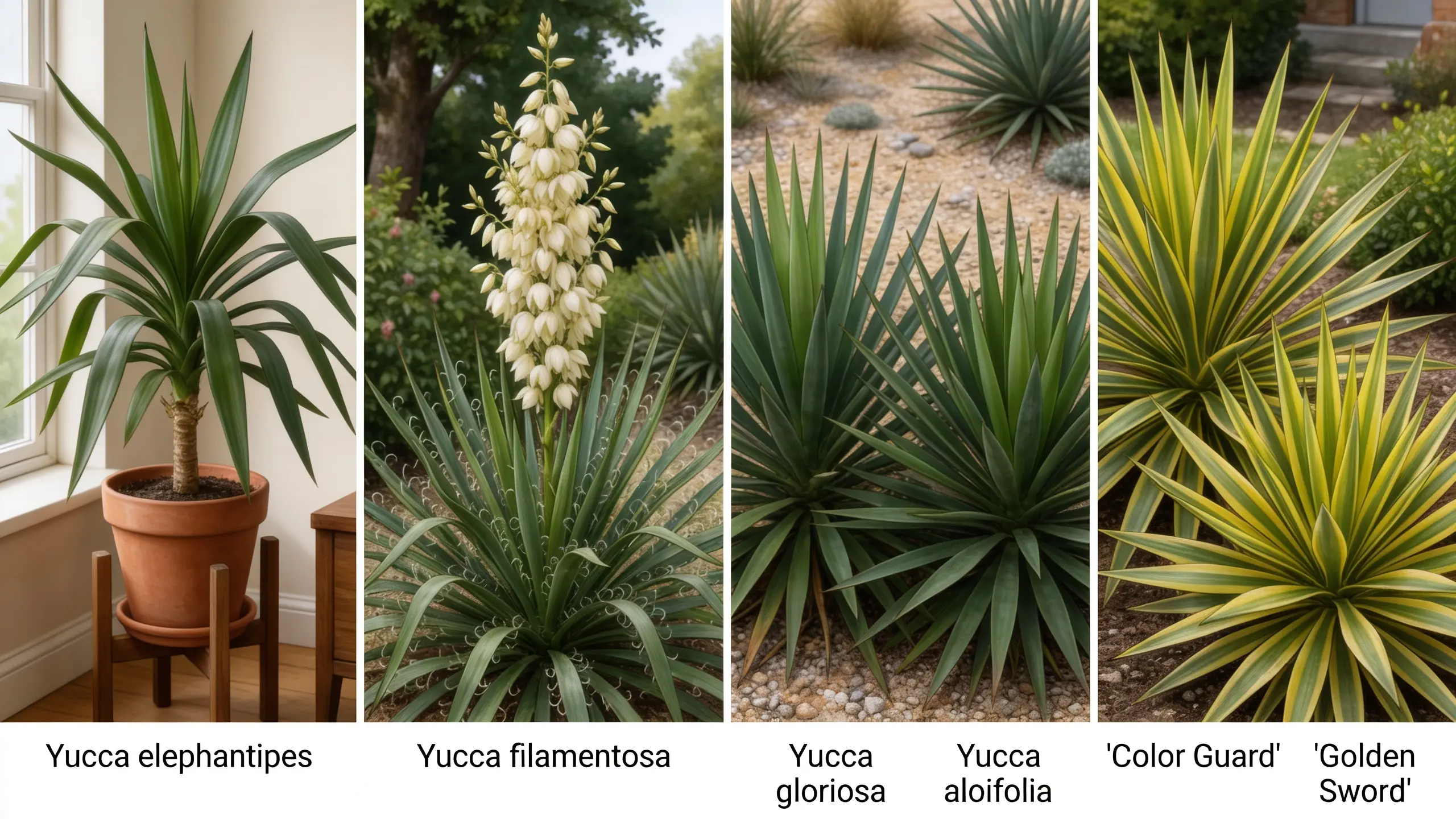
There are around 40–50 recognized yucca species, native to the arid regions of North and Central America. Not all of them are suited to indoor life.
Knowing your variety helps you set up the right conditions before the plant even comes home:
- Yucca elephantipes (Spineless Yucca): The best choice for indoors. Soft, spine-free leaves. It grows well in bright rooms and handles typical home temperatures and humidity without complaint.
- Yucca filamentosa (Adam’s Needle): Cold-hardy outdoors in USDA zones 4–10. Its leaves have curling white threads, and it produces tall flower spikes in summer.
- Yucca gloriosa and Y. aloifolia: Larger outdoor types with rigid, sharp-tipped leaves. These need space and careful handling.
- Variegated forms (Color Guard, Golden Sword): Gold-and-green striped leaves for year-round color. Care follows the same rules as Y. filamentosa.
How Much Light Does a Yucca Plant Need?
Yuccas come from places where the sun is constant and strong. That shapes everything about how they grow.
- Outdoors: Full sun is best. Aim for at least six hours of direct sunlight daily. In very hot climates, a little afternoon shade can stop leaves from scorching. Low light is a far bigger problem than too much sun.
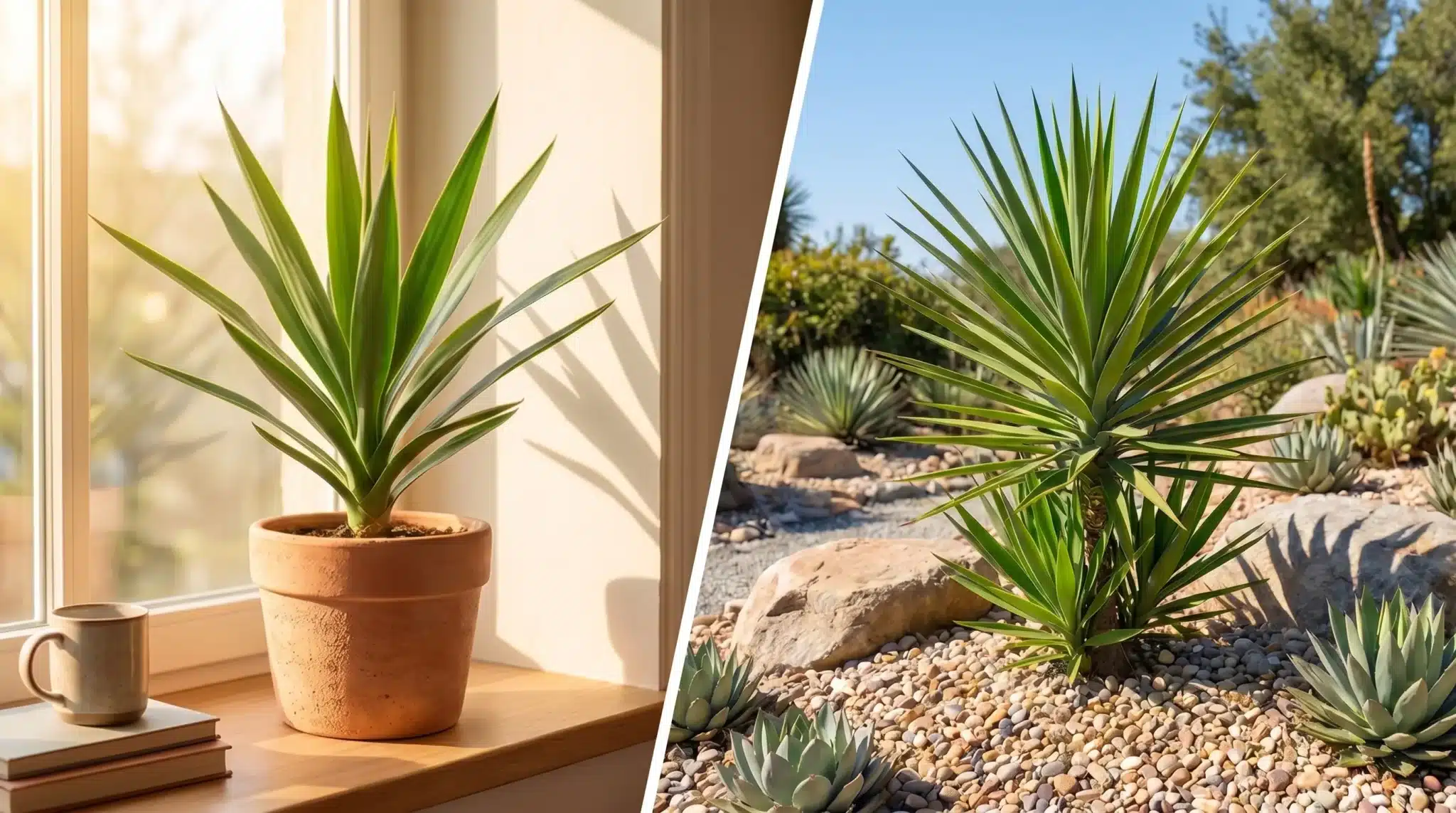
- Indoors: Place your plant as close to a south-facing window as possible. East- or west-facing windows work if they receive several hours of direct light each day.
If your yucca starts producing long, stretched stems with sparse, pale leaves, it is reaching for more light. Move it to a brighter spot before the growth weakens any further.
You can also supplement natural light with a grow light during the darker winter months. Position it about 12 inches above the plant and run it for 12–14 hours a day.
How to Water a Yucca Plant (Without Killing It)
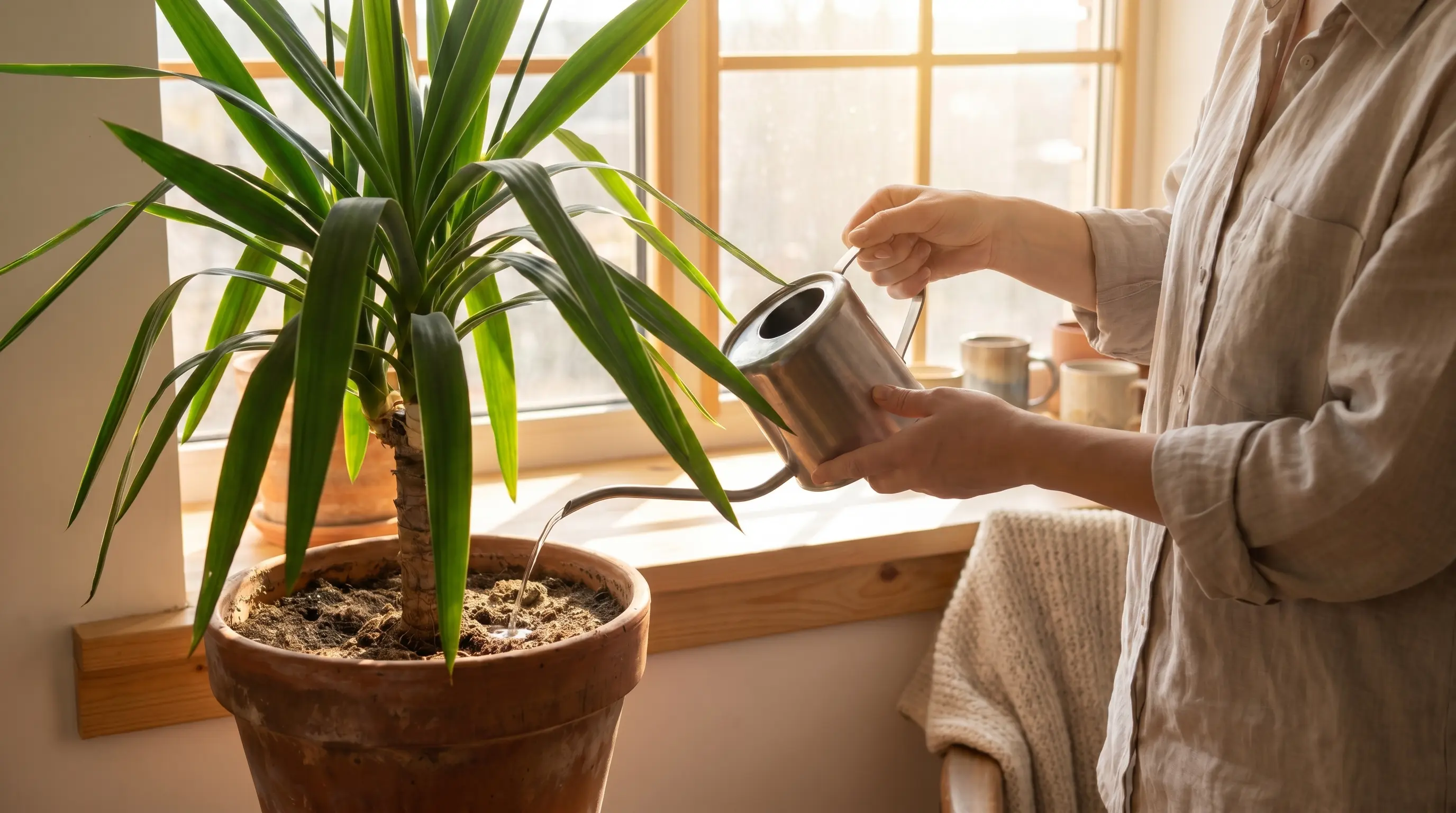
Overwatering is the most common cause of yucca death. The roots sit in wet soil, oxygen gets cut off, and rot sets in fast.
The rule is simple: wait until at least 50–75% of the soil is completely dry before watering again. Do not water on a fixed calendar. Check the soil first.
By season:
- Spring and summer (growing season): Water deeply roughly once every two weeks. Let the top half of the soil dry out completely between sessions.
- Autumn: Start pulling back. Water less frequently as growth slows.
- Winter: Water roughly once a month, sometimes less. The plant is dormant and does not need much.
Practical rules to follow:
- Stick a finger 2–3 inches into the soil to check for moisture. Do not guess.
- Always use a pot with drainage holes. Water sitting at the bottom will rot the roots.
- Empty the saucer after each watering. Roots that sit in pooled water will rot quickly.
- Terracotta pots dry out faster than plastic and are often a better fit for yuccas.
Signs of overwatering: Soft, brown base of the trunk. Mushy roots. Yellow leaves are starting from the bottom of the plant and spreading upward.
Signs of underwatering: Dry, crispy leaf tips. Leaves look dull or slightly gray. The soil has pulled away from the edges of the pot.
Fixing root rot early: Remove the plant from its pot. Cut away any black or mushy roots with sterilized shears. Repot in fresh, dry cactus mix. A yucca caught early can recover. If rot has spread up the trunk, cut above the damaged section. Let the cutting callous for a few days, then repot it separately.
Best Soil and Pot for Yucca Plant Care
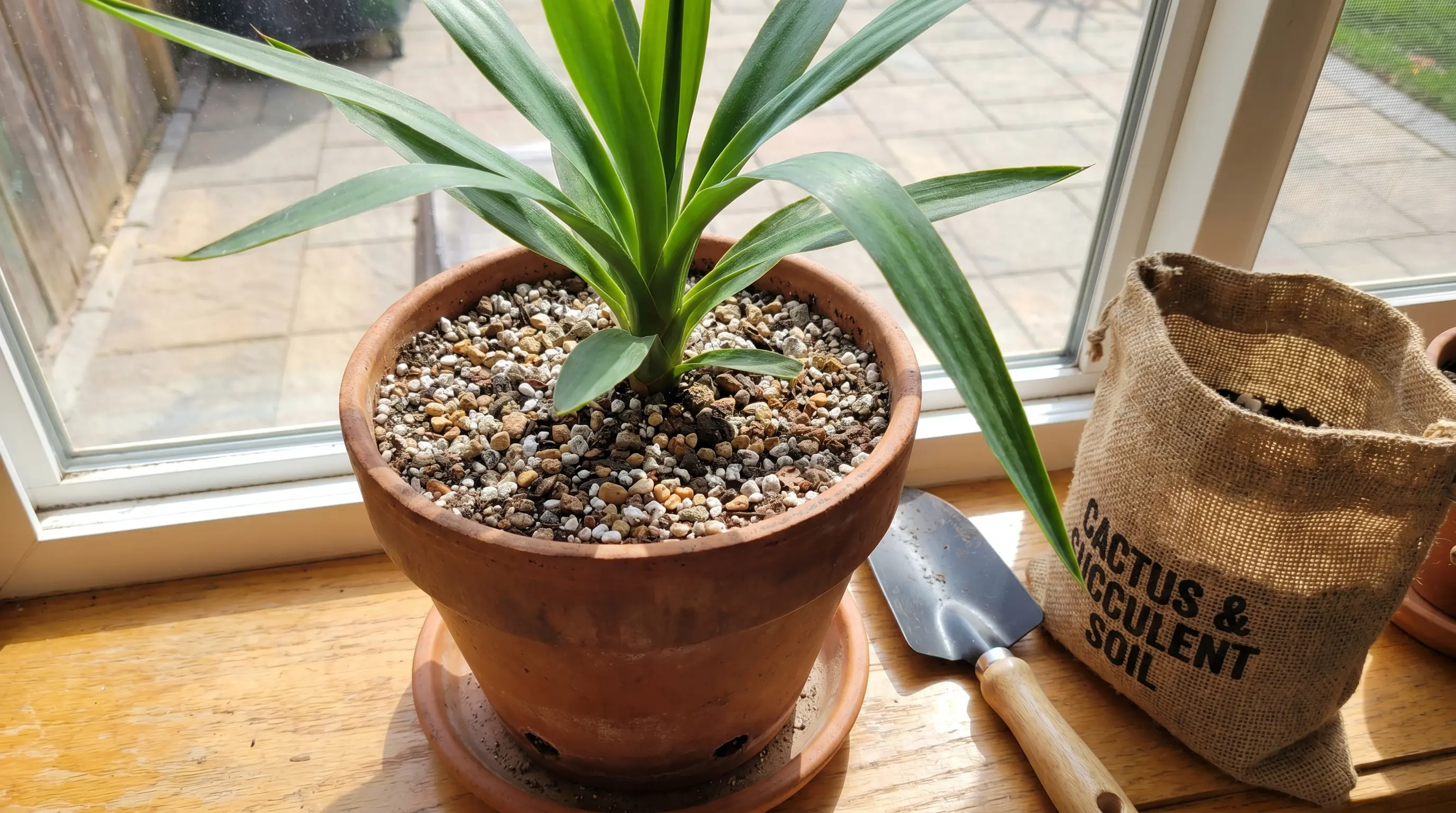
Well-draining soil is non-negotiable. Use a cactus and succulent mix. If you only have general-purpose potting compost, mix in perlite or coarse sand at roughly a 1:1 ratio. This opens up the structure and stops water from sitting around the roots.
The ideal soil pH sits between 6.0 and 7.5. Yuccas grow naturally in some of the least fertile soil on earth. Overly rich compost creates more problems than it solves. Avoid moisture-retention mixes entirely.
For the pot, choose something heavy. Yuccas become top-heavy as they grow, and a lightweight plastic pot will tip. Drainage holes are mandatory. An unglazed terracotta pot allows excess moisture to evaporate through the walls, which further lowers the risk of standing water.
Temperature and Humidity
Yuccas are comfortable between 60°F and 85°F (15°C to 29°C). This covers most indoor environments without any special adjustments.
Keep them away from cold drafts, air conditioning vents, and heating units that blow directly onto the leaves. Sudden temperature swings stress the plant more than a consistently cool or warm room.
Yuccas do not need humidity. Do not mist them. They prefer dry, well-ventilated conditions. This makes them a practical fit for rooms that tend to run dry in winter when heating is on. No humidifier needed.
Outdoor varieties like Yucca filamentosa can handle hard winters in USDA zones 4–10 once established. The first winter after planting is the most vulnerable period.
How to Fertilize a Yucca
Yuccas are light feeders. Over-fertilizing causes leaf tip burn and root damage.
Use a balanced fertilizer such as a 20-20-20 formula diluted to half strength. Feed once every 3–4 months during spring and summer only. Stop entirely in autumn and winter when the plant is dormant.
Always water the plant before feeding. Applying fertilizer to dry soil can burn the roots.
Repotting and Pruning
Repotting: Repot every 2–3 years. Move up when roots push out of the drainage holes or when the soil starts draining poorly. Go up only one or two pot sizes at a time. A pot that is too large holds more soil than the roots can dry out. This creates the same risk of overwatering as before.
For large, mature yuccas that are hard to repot, remove the top 2 inches of old soil. Replace with a fresh cactus mix. This refreshes the growing medium without the full repotting process.
Pruning: Remove lower leaves only when they are completely dry. Cut close to the trunk with sterilized shears. Do not damage the central crown, which produces the flower stalk.
If an indoor yucca outgrows its space, cut the trunk at the height you want. The base will resprout in time. The top cutting can be used to start a new plant. Wear gloves and eye protection when you do this, as the sap can irritate skin.
Indoor Yucca Plant Problems and How to Fix Them
Indoor yucca plant problems almost always trace back to water or light. Here is a quick reference:
| Symptom | Most Likely Cause | Fix |
|---|---|---|
| Yellow leaves | Overwatering or low light | Cut watering; move to a brighter spot |
| Brown, crispy tips | Underwatering or dry air | Water more consistently; check drainage |
| Soft, brown trunk base | Root rot from overwatering | Remove rotten roots; repot in dry soil |
| Long, stretched growth | Not enough light | Move to a south-facing window |
| Dark spots on leaves | Fungal leaf spot | Improve airflow; reduce humidity |
| Drooping leaves | Overwatering or root damage | Check roots; let soil dry completely |
Note on lower leaf yellowing: A ring of yellowing at the very base of the plant is natural. Old leaves die off as the plant matures, giving it a palm-like trunk. You can pull them off gently or cut them close to the trunk. It only becomes a problem when yellowing spreads upward through the whole plant.
Yucca Plant Pests
Weakened plants attract pests. The most common ones you will see on a yucca plant indoors are spider mites, mealybugs, and scale insects.
- Spider mites: Look for fine webbing between or under leaves. Wipe leaves with a damp cloth. Treat with insecticidal soap, repeating every 5–7 days until gone.
- Mealybugs: White, cotton-like clusters at the joints where leaves meet the trunk. Remove with a cotton swab dipped in rubbing alcohol.
- Scale insects: Small brown bumps stuck to leaves or the trunk. Scrape off manually, then treat with neem oil.
- Fungus gnats: Tiny flies hovering near the soil. A sign the pot is staying too wet between waterings. Let the soil dry out more fully before the next watering.
|
Is Yucca Toxic to Pets? Pet Safety Warning: Yucca plants contain saponins. These compounds are toxic to cats and dogs if ingested. Symptoms include drooling, vomiting, and, at higher levels, more serious effects. The ASPCA lists yucca as toxic to cats, dogs, and horses. Keep the plant out of reach of pets, or choose a different plant altogether. Contact a vet immediately if you suspect ingestion. |
Caring for Your Yucca Plant Outdoors
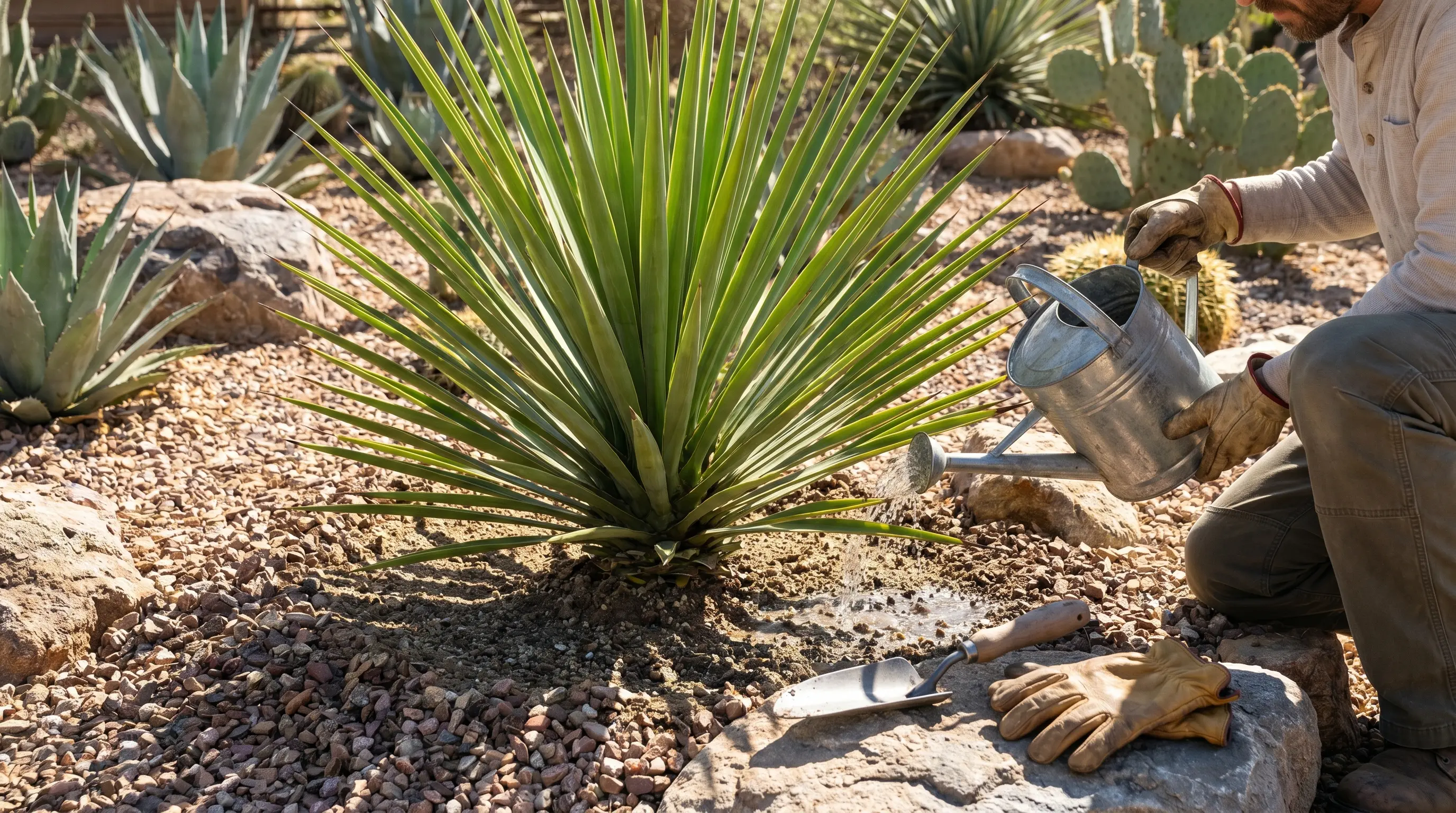
Outdoor yucca plant care follows the same core rules, with a few practical differences.
Once established (usually after the first full growing season), outdoor yuccas need very little supplemental watering. Natural rainfall handles most of their needs across USDA zones 3–13.
The first winter after planting is the vulnerable period. Protect newly planted yuccas from hard frost until they are fully established. After that, most varieties handle cold seasons without any extra care.
Before planting in a permanent spot, check the root behavior of your specific variety. Some yucca species develop deep, spreading root systems over time. Planting near a path, wall, or foundation without checking first can cause problems years later that are difficult to reverse.
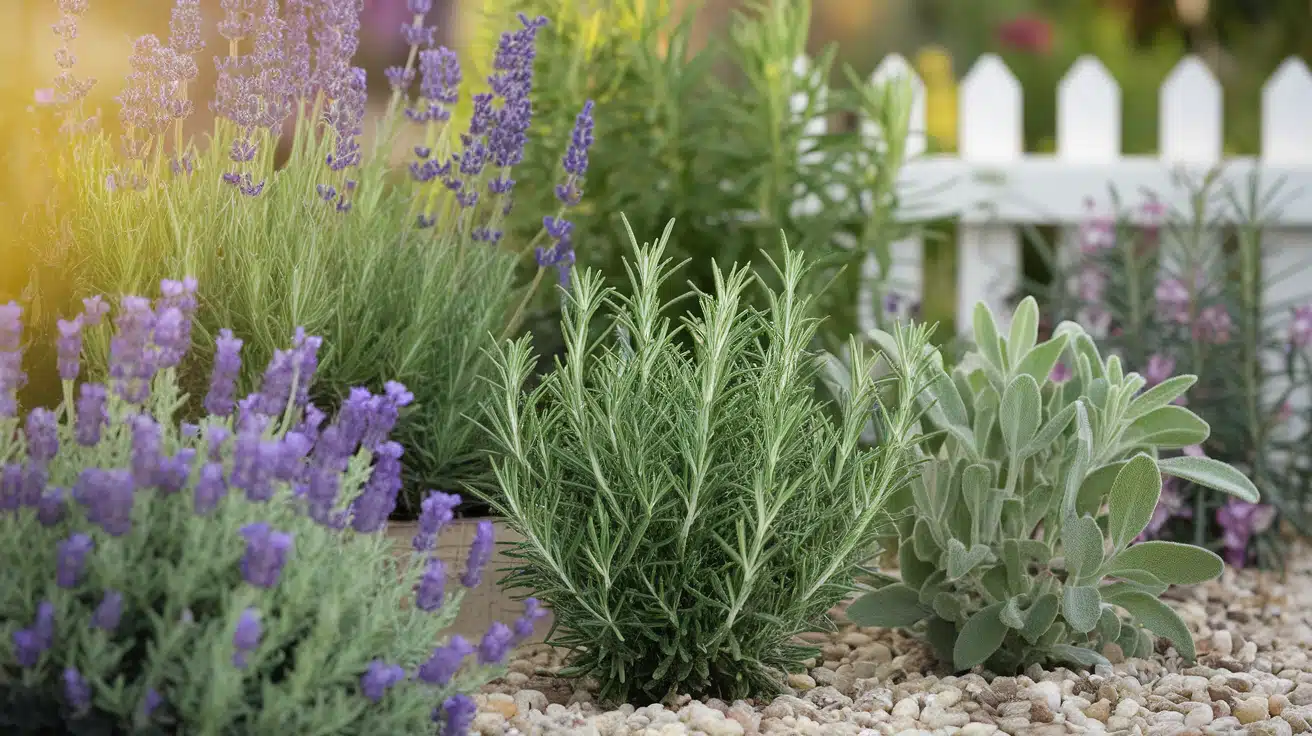
Plant yuccas toward the back or sides of beds, away from walking paths. The leaves on most varieties are sharp. Brushing against them causes cuts. Yucca filamentosa is common in mixed dry borders and pairs well with agave, coneflowers, ornamental grasses, and salvia. These share similar water requirements and work well together in dry garden beds.
Garden-grown yuccas also provide real wildlife value in their native range, supporting pollinators and birds. Indoor varieties do not offer this, but they hold their decorative appeal for many years with minimal effort.
Conclusion
Good yucca plant care comes down to one principle: give these plants the conditions they come from.
Bright light, well-draining soil, infrequent water, and warm dry air are all they need. The most common indoor yucca plant problems start when a yucca gets treated like a plant that needs regular watering. Yellow leaves and root rot follow fast.
Get the light right, check the soil before every watering, and use a pot with drainage holes. Do that consistently, and your yucca will grow reliably for years with very little input from you.
If you have a specific variety, a problem you’re trying to solve, or a care question I haven’t covered, feel free to leave a comment below.
Frequently Asked Questions
What is the Lifespan of a Yucca Plant?
A Yucca plant can live for 10–15 years indoors with proper care, and some outdoor varieties can thrive for several decades in suitable conditions.
Do Yucca Plants Like Big Pots?
Yucca plants prefer slightly snug pots rather than oversized ones. A pot that is too large can retain excess moisture, increasing the risk of root rot.
How Many Years Does It Take for a Yucca to Bloom?
Yucca plants typically take 3–5 years to bloom indoors, while outdoor varieties may flower within 2–4 years under ideal conditions.