
I have been working with home gardeners for over a decade, and the question I hear most about gooseberries is not about pests or pruning.
It is simply, “Why is mine not producing?” In most cases, the answer comes back to one or two small things done wrong early on.
A gooseberry bush is not a difficult plant to grow. It is cold-hardy, self-fertile, and productive for up to fifteen years once established.
A single healthy bush can yield five to ten pounds of fruit every season.
But like any fruit shrub, it rewards the gardeners who understand what it actually needs. From site preparation to harvest, here are the practical instructions most growing guides leave out.
Plant Profile
Before you plant a gooseberry bush, it helps to know the basics. Here’s what to expect from this thorny, fruit-packed shrub.
| Attribute | Details |
|---|---|
| Type | Deciduous, thorny shrub, genus Ribes |
| Size | 3-6 feet tall and wide (some varieties larger) |
| Fruit color | Green, yellow, pink, red, to nearly black by variety |
| Lifespan | Produces fruit for 15+ years once established |
| US status | Import ban lifted in most states |
| UK status | Never restricted, widely grown and sold across the UK |
Choosing the Right Gooseberry Variety
Gooseberry bushes come in a range of colors and flavors, so picking the right one depends on your climate and how you plan to use the fruit.
- Pixwell: Medium pink berries, good for pies and fresh eating
- Invicta: Larger greenish-yellow, mildew-resistant, vigorous grower
- Hinnonmaki Red: Tart-sweet flavor, thick spines, upright and easy to harvest
- Careless (Spineless): Nearly thornless canes, mild-tart green berries, much easier to pick without gloves
Pro tip: If you are growing in a humid climate, always prioritize mildew-resistant cultivars. European varieties tend to produce larger, sweeter berries but are more vulnerable to powdery mildew in wet summers.
Preparing the Site Before You Plant
Getting the planting site ready is an important step that often gets ignored. A suitable location with proper light and healthy soil gives gooseberry bushes a stronger start and supports better growth and fruit production over time.
- Choose the Right Amount of Sunlight: Gooseberries grow well in full sun to partial shade. Aim for at least six hours of direct sunlight daily for better fruit yields. In warmer climates, morning sun with afternoon shade can reduce leaf scorch and lower water needs.
- Avoid Frost Pockets: Gooseberry bushes flower early in spring, so planting them in low areas where cold air collects can expose blooms to late frost damage and reduce the harvest.
- Prepare Well-Draining Soil: Gooseberries prefer soil with a pH between 6.0 and 7.0. Before planting, mix in well-rotted compost or aged manure about twelve inches deep to improve soil structure, drainage, and moisture retention.
- Test and Adjust Soil pH: A simple soil test can show if changes are needed. Use garden lime to increase pH or sulfur to lower it, then allow time for the amendment to mix into the soil before planting.
How to Plant a Gooseberry Bush
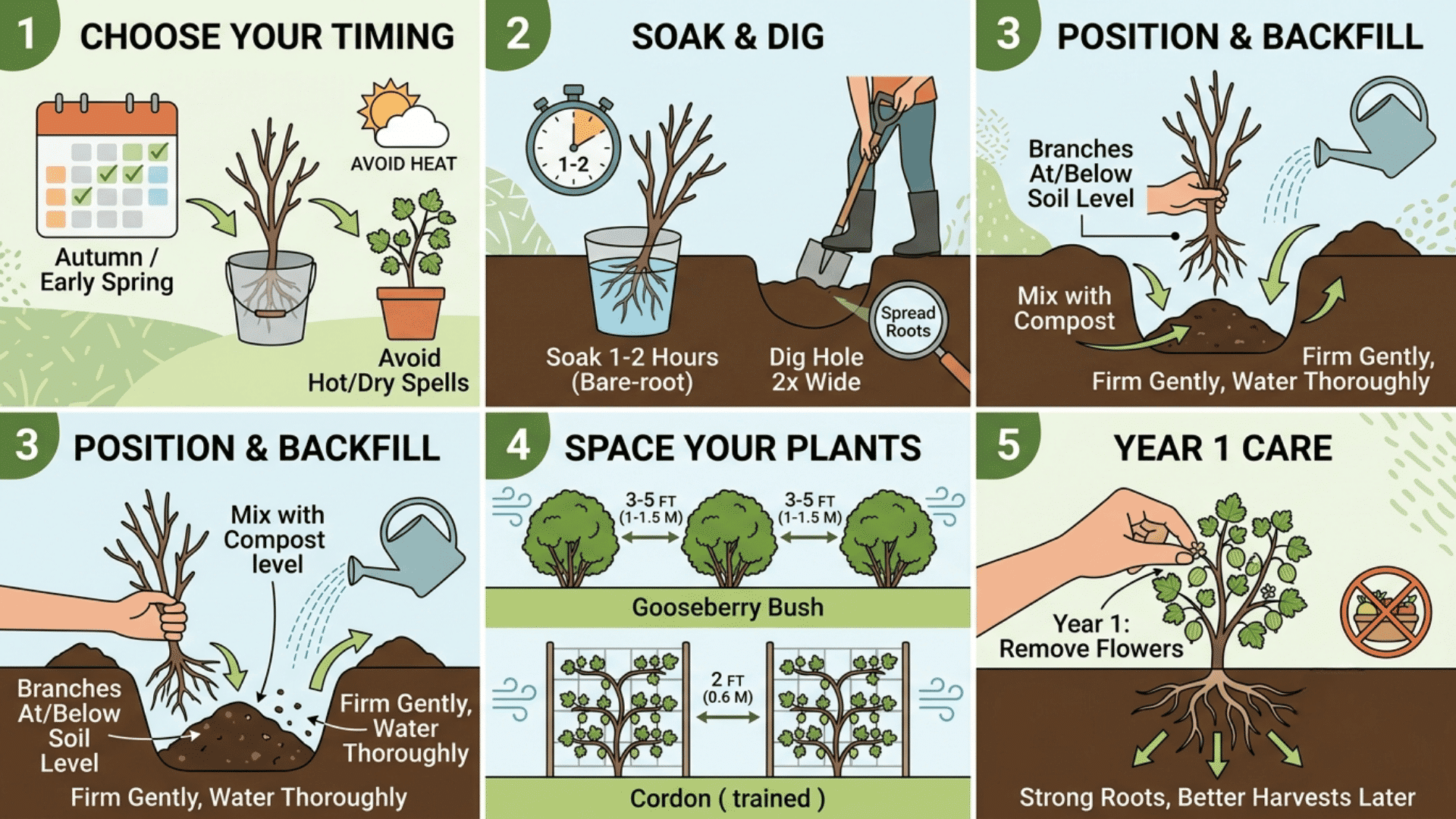
Timing and technique at the planting stage directly affect how quickly the bush establishes and how soon it produces.
Step 1: Choose Your Timing
Plant bare-root gooseberries in autumn or very early spring, before new growth begins. Potted plants can go in during spring or early summer, as long as you avoid hot, dry spells.
Getting this right lets the roots settle in before the plant has to support new growth. Bare-root plants need this cool, dormant window most, since heat adds stress right when they’re recovering.
Step 2: Soak and Dig
Soak bare-root plants in a bucket of water for one to two hours before planting. This fully rehydrates the roots so they don’t dry out once they’re in the ground.
Dig a hole twice as wide as the root ball and just slightly deeper than the nursery depth. A wide hole lets roots spread out instead of circling, which helps the plant settle in faster.
Step 3: Position and Backfill
Mix the soil you dug out with an equal part of well-rotted compost. Create a small mound at the bottom of the hole and spread the roots over it naturally.
Position the plant so its lowest branches sit at or just below soil level, which encourages a bushy, well-anchored shape.
Backfill with the amended soil, firming gently, then water thoroughly until fully saturated.
Step 4: Space Your Plants
Plant multiple gooseberry bushes three to five feet apart to give each one room to grow without crowding.
If you’re training bushes as cordons against a wall or fence, two feet between plants is enough since the growth stays narrow and upright.
Good spacing matters most once bushes mature, since crowded canes trap moisture and make mildew and pests harder to manage.
Step 5: Care in Year One
In the first year, remove any flowers that form on the bush. This feels wasteful, but it forces the plant to put its energy into root development instead of fruit production.
A gooseberry bush that skips fruiting once builds a stronger root system, which pays off with bigger harvests starting in year two. The wait is worth it.
Feeding, Watering, and Mulching
Once the gooseberry bush is in the ground, a consistent care routine keeps it productive and healthy. These three tasks are the backbone of annual maintenance.
Watering
Young plants need approximately one inch of water per week.
Water the base of the plant in the morning to reduce the risk of fungal disease. Avoid wetting the foliage, particularly in warm, humid weather when mildew pressure is higher.
Established bushes are moderately drought-tolerant but need consistent moisture during fruit development.
Check soil moisture two to three inches deep and water when it feels dry at that level.
Feeding
Apply a balanced fertilizer, such as a 10-10-10 formula or sulfate of potash, in early spring before new growth starts.
For established bushes, roughly a quarter cup per plant in year one, building to half a cup per plant by year three.
Organic alternatives like fish emulsion or composted manure work well and also improve soil structure over time.
Mulching
Apply a three- to four-inch layer of organic mulch, such as wood chips, bark, or well-rotted compost, around each bush in spring and again in autumn.
Spread it out to the drip line, but keep it a few inches clear of the main stem. A thick layer also keeps common garden weeds from competing with young canes for water and nutrients. Mulch suppresses weeds, retains soil moisture, and slowly feeds the soil as it breaks down.
In autumn, it also acts as a layer of insulation for the root zone.
When to Pick Gooseberries
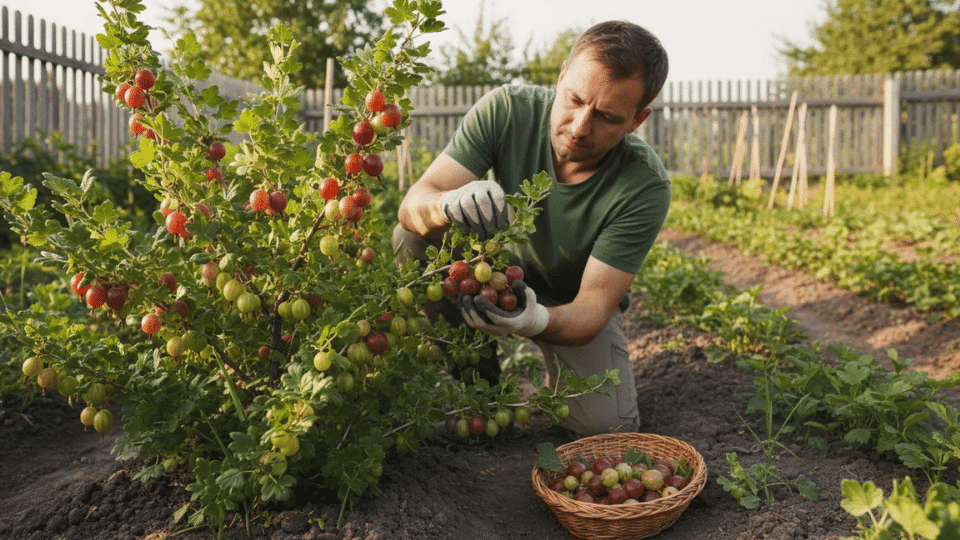
Knowing when to pick gooseberries is where many home growers either rush or hesitate too long.
The harvest window is actually more flexible than most people realize, and the best approach depends on how you plan to use the fruit.
Reading the Signs Your Berries Are Ready
Most varieties begin ripening between late June and early August, depending on your climate and the cultivar you have chosen.
The harvest period typically stretches over four to six weeks because berries do not ripen all at once.
Signs to look for:
- Color: Berries deepen from pale green toward gold, red, or deep purple depending on the variety. Green-fruited varieties do not change color, so rely on size and texture instead.
- Texture: A ripe berry yields slightly when squeezed gently. It should not feel hard or bounce back.
- Release: A ripe berry separates from the stem with a light twist. If you have to pull, leave it another few days.
- Taste test: For green varieties especially, tasting is the most reliable guide. A ripe berry is less tart and has a fuller, sweeter flavor.
The Two-Stage Harvest Approach
Pick roughly half of the crop slightly underripe in late June or early July for cooking, jam-making, and preserves.
Underripe gooseberries have higher pectin content, which helps jams and jellies set better, and their tartness works beautifully in savory sauces.
Removing berries at this stage also reduces competition on the remaining fruit, allowing the berries left behind to swell to a larger size.
Come back two to three weeks later for the fully ripe crop, which is sweet enough to eat straight from the bush.
After picking:
- Refrigerate gooseberries immediately in shallow containers for better airflow.
- Fresh berries keep for one to two weeks in the fridge.
- Freeze on a tray before bagging for long-term storage.
- Berries that fall from the bush on their own are overripe. Compost them rather than harvest.
Net your gooseberry bushes as soon as the fruit starts to form. Birds locate ripening berries fast. A simple net draped over the plant or a purpose-built fruit cage protects the entire crop with minimal effort.
Common Problems and How to Handle Them
Even a well-managed gooseberry bush can run into a few seasonal issues.
Identifying them early makes a significant difference in the damage they cause.
| Problem | Symptoms | Action |
|---|---|---|
| Powdery Mildew | White powdery coating on leaves and new shoots, stunted growth | Prune for open airflow, remove affected shoots, and choose mildew-resistant varieties |
| Gooseberry Sawfly | Leaves stripped from mid-spring, small green-and-black larvae visible | Check the undersides of leaves from early spring, remove larvae by hand, and use biological controls |
| Leaf Spot | Brown spots on leaves followed by yellowing and early leaf drop | Rake and dispose of fallen leaves in autumn, and apply copper fungicide if severe |
| Aphids | Sticky residue, distorted or curling leaves, reduced vigor | Treat at the first sign with insecticidal soap or diluted neem spray |
| Spotted Wing Drosophila | Larvae visible inside ripening fruit | Keep foliage open, clear dropped fruit daily, and harvest promptly when ripe |
The most reliable protection against all of these is good cultural practice.
Watering at the base rather than overhead, mulching to reduce soil splash onto foliage, and clearing debris in autumn eliminate most problems before they become serious.
Conclusion
A well-sited, well-pruned gooseberry bush rewards you with harvests for up to two decades.
The key is front-loading effort in year one: prep the soil, plant at the right depth, remove flowers early, and start a pruning routine before it gets away from you.
After that, care turns seasonal and simple: pick on time, harvest in two stages, and guard the crop from birds and mildew.
I’ve worked with home gardeners for years, and the gooseberry bush remains one of the plants I recommend confidently. Start with one, and it pays for itself for years.
Frequently Asked Questions
How Long Does It Take for a Gooseberry Bush to Bear Fruit?
Gooseberry bushes typically produce a light harvest in their second year and reach full, abundant fruiting within 3 to 5 years.
Do Gooseberries Grow Back Every Year?
Yes, genuine gooseberries are hardy perennial plants that happily grow back year after year.
What Should You Not Plant Next to Gooseberries?
Avoid planting gooseberries near tomatoes, potatoes, and other nightshades, as they can share fungal blights.
What Is the Difference Between a Gooseberry and a Currant?
Gooseberry canes have spines and bear berries singly or in small groups. Currant canes are spineless and carry berries in long clusters