I’ve watched enough gardeners get this wrong to know that when to plant bulbs matters more than almost anything else in the garden.
Plant too early and some bulbs sprout before winter hits, burning energy they need for spring growth.
Plant too late and roots never get the chance to settle in, so blooms come up weak and thin. Here’s the part that makes this easier than it sounds.
It really comes down to one split: spring bloomers go in the ground during fall, summer bloomers wait until spring.
Your climate and local frost dates shift the exact dates, but that split holds almost everywhere.
When Is the Best Time to Plant Bulbs?
Most spring bloomers, including tulips, daffodils, and crocus, go into the ground in fall. Summer bloomers like dahlias and gladiolus wait for spring planting, once the soil has warmed and frost danger has passed.
The reasoning is biological.
- Fall-planted bulbs need a stretch of cold weather to trigger their spring bloom cycle, a process called vernalization.
- Spring-planted bulbs need the opposite: warm soil that won’t rot a tender bulb before it can establish.
Nicole Flowers-Kimmerle, a horticulture educator with the University of Illinois Extension, notes spring bloomers need 10 to 13 weeks of cold plus fall root time.
| Bulb Type | Planting Season | Examples |
|---|---|---|
| Spring-flowering bulbs | Fall | Tulips, daffodils, crocus |
| Summer-flowering bulbs | Spring | Dahlias, gladiolus, lilies |
| Tender bulbs | After last frost | Cannas, caladiums |
Can You Plant Bulbs Too Early or Too Late?
For the best results, aim to plant when the soil is cool but still workable, giving bulbs enough time to establish roots before winter.
- Planting too early: Warm soil may trigger premature shoots that frost can damage, leaving the bulb with less stored energy for spring growth.
- Planting too late: Bulbs have less time to establish roots, which may result in smaller first-season blooms, though planting before the ground freezes can still be successful.
For the best results, aim to plant when the soil is cool but still workable, giving bulbs enough time to establish roots before winter.
Plant Bulbs Based on Your First Frost Date
A frost date is a far more reliable marker than a fixed month on the calendar, since first frost can swing by weeks from one year to the next.
- Count backward six to eight weeks from your area’s expected first frost, and that’s your planting window.
- Local extension offices and frost date calculators pull from historical weather records for your specific area, which beats guessing based on a generic regional average.
Pro Tip: If your first frost typically lands in mid-November, plant spring bulbs from late September through October.
Plant Bulbs in Summer
Tender bulbs never develop the cold tolerance hardy bulbs like daffodils do, so a hard freeze will kill them outright.
Summer bloomers such as dahlias and gladiolus need that warmth, so plant them only after frost danger has fully passed.
You don’t have to rush the whole job into one weekend, though.
Lindsey Kerr, a consumer horticulture educator with Michigan State University Extension, points out that most fall- and summer-planted bulbs can go in anytime from late August right up until the ground is close to freezing.
Best Bulbs to Plant in Fall (and What Works in Spring Instead)
Tulips depend on a stretch of winter chill to trigger blooming, so skipping fall planting usually means a disappointing first year unless the bulbs are pre-chilled first.
| Bulb | Best Planting Season | Bloom Time |
|---|---|---|
| Tulips | Fall (spring only if pre-chilled) | Spring |
| Daffodils | Fall (not recommended in spring) | Early spring |
| Crocus | Fall | Late winter/early spring |
| Hyacinths | Fall | Spring |
| Dahlias | Spring | Summer |
| Gladiolus | Spring | Summer |
Pre-chilled bulbs, kept in a refrigerator for several weeks before planting, can work around a missed fall window in warmer climates where a natural winter chill never happens.
Daffodils rarely bloom well without a true fall planting. Dahlias and gladiolus go the other way: they do best in spring, since neither one survives a hard freeze once it’s in the ground.
How to Plant Bulbs Step by Step
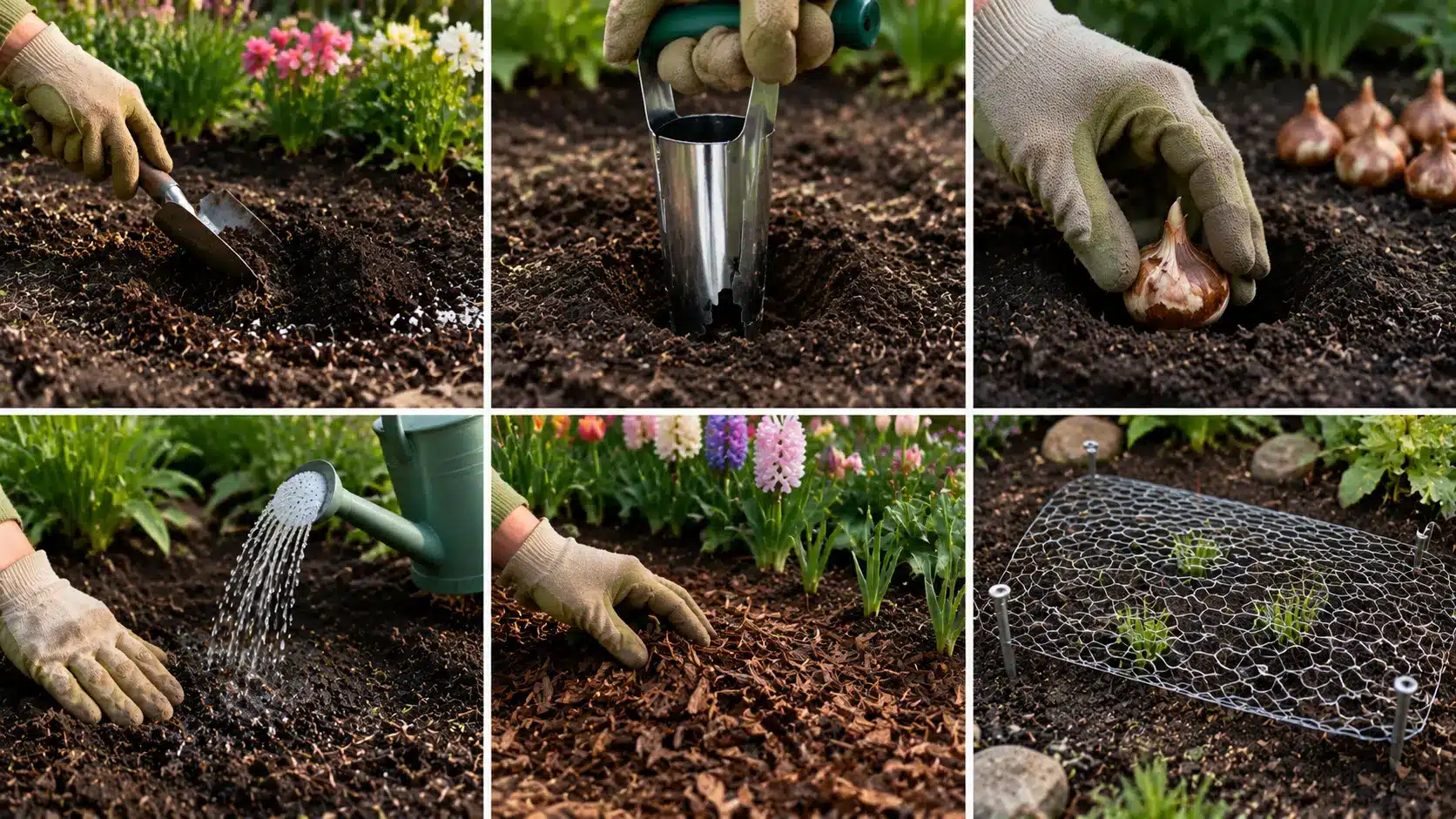
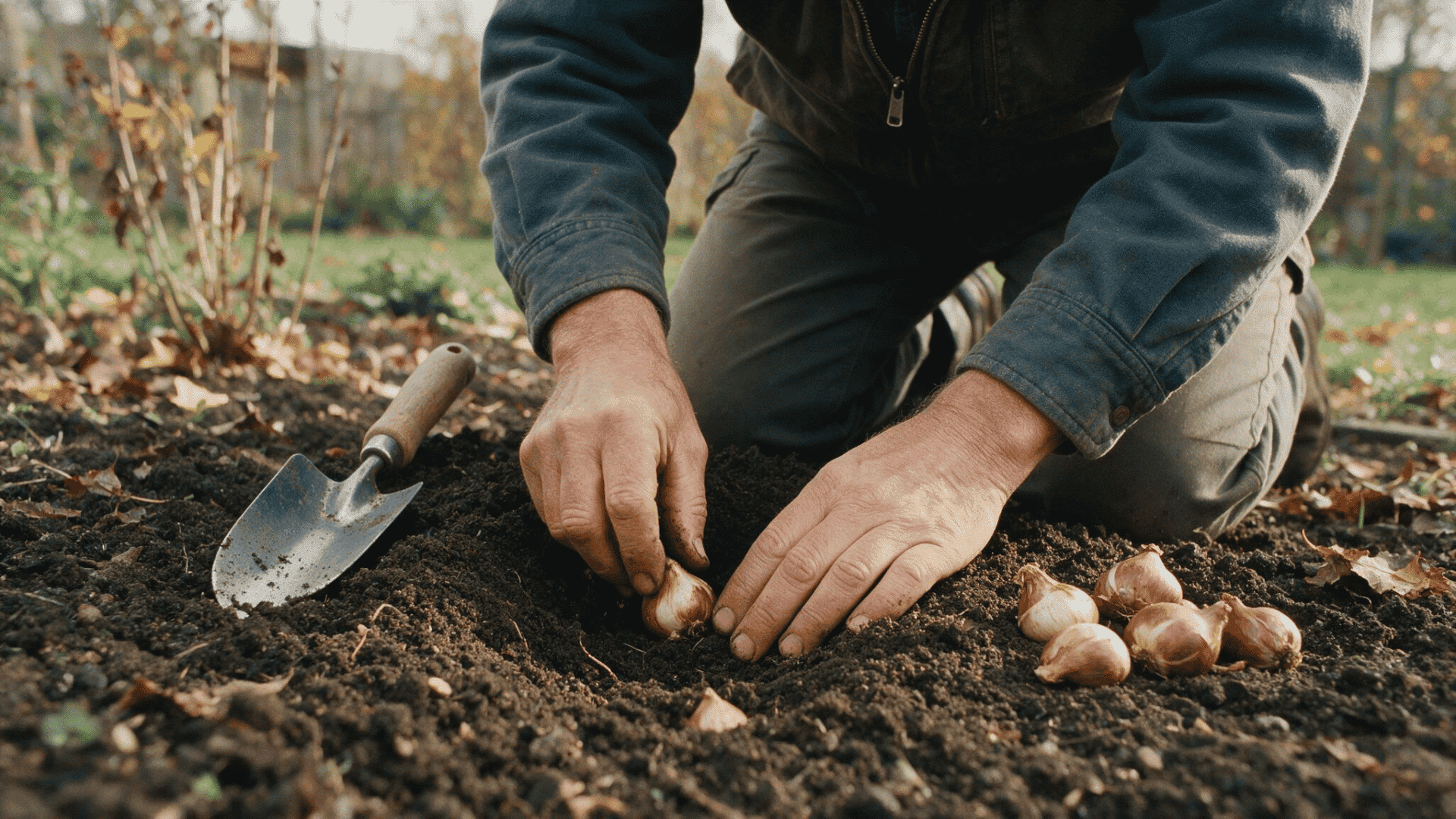
Once you’ve got the right bulb and the right window, the actual planting process is pretty forgiving. A few basics make the difference between a strong bloom and a disappointing one.
- Prep the soil first. Loosen the area to about 8 inches deep and work in compost if your soil is heavy or compacted.
- Dig to the right depth. Follow the two-and-a-half-to-three-times rule covered earlier. A bulb planter or auger makes quick work of individual holes.
- Set the bulb pointy end up. The pointed tip is where the shoot emerges; if you can’t tell which end is which, plant it on its side.
- Cover and water. Fill the hole, gently firm the soil, then water well right after planting to settle everything in.
- Add mulch if needed. A light layer helps regulate soil temperature through winter, especially after a late planting.
- Protect from digging critters. Chicken wire, hardware cloth, or a wire bulb cage keeps squirrels and chipmunks from digging up fresh plantings.
What to Look for When Buying Bulbs
Good timing only pays off if you’re starting with a healthy bulb in the first place. A few quick checks at the garden center or when a mail order shipment arrives can save you a season of disappointment.
- Firmness. A healthy bulb feels solid and heavy for its size. Skip anything that feels soft, spongy, or lightweight.
- No mold or damage. Look over the outer skin for soft brown patches, mold, or visible cuts. Minor papery flaking is normal and not a concern.
- Minimal sprouting. Bulbs sitting on the shelf too long may already show pale shoots or root growth. A little is fine, but heavy sprouting means the bulb has already used up stored energy it needed for next spring. Lilies are the exception, since they’re often sold with visible fleshy roots attached.
- Buy close to planting time. Bulbs are living tissue, not shelf-stable seeds. Picking them up the same season you plan to plant gives you the best shot at a strong bloom, rather than letting them sit around and dry out.
- Size matters. Larger, plumper bulbs of the same variety generally produce bigger, more reliable blooms than smaller ones, even though they cost a bit more.
Bulb Planting Mistakes That Affect Blooming
A few recurring errors account for most disappointing bulb displays, and nearly all of them are easy to avoid once you know what to watch for.
- Planting at the wrong depth. Iowa State University Extension and Outreach recommends planting bulbs at a depth equal to three to four times their diameter, which typically works out to 6 to 8 inches for tulips and daffodils, and 3 to 4 inches for crocuses and grape hyacinths.
- Ignoring soil drainage. Standing water around bulbs leads to rot faster than almost any other single mistake.
- Forgetting sunlight needs. Most flowering bulbs perform best with several hours of direct sun. Planting under deciduous trees still works well for early bloomers, since they finish flowering before the leaf canopy fills in.
- Planting diseased or damaged bulbs. Soft spots, mold, or mushy texture are all signs a bulb won’t grow. Check bulbs before planting and skip anything that looks off.
- Cutting leaves too early. Foliage keeps photosynthesizing after the flowers fade, storing energy in the bulb for next year’s bloom. Let it die back naturally instead of trimming it right after flowering ends.
What to Do After Planting Bulbs
Once bulbs are in the ground, a bit of aftercare goes a long way toward a strong spring show.
- Water thoroughly right after planting
- Add a layer of mulch in colder climates for extra insulation
- Use fencing or repellents if squirrels or deer are a known problem in your yard
- Avoid overwatering during dormancy
- Let foliage die back naturally after blooming ends, rather than cutting it early.
Getting the timing right on the front end is what makes all this aftercare pay off. A bulb planted at the correct depth, in well-drained soil, during its proper season, needs surprisingly little from you after that first watering.
Digging and Storing Bulbs for Next Season
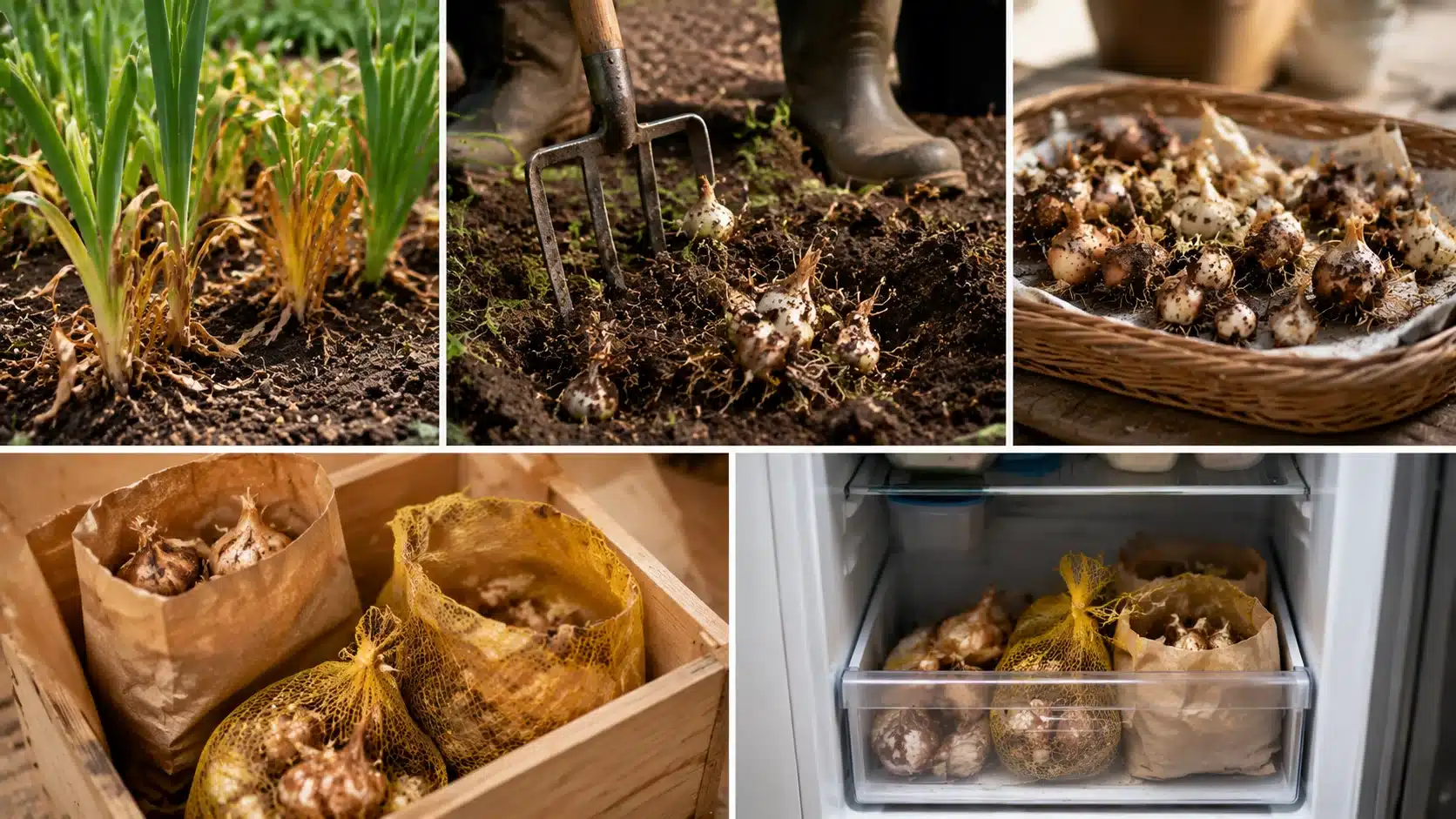
Hardy spring bulbs can usually stay in the ground and will often multiply on their own. Tender summer bulbs and spring bulbs that need a yearly chill in warmer zones need to come out instead.
- When to dig. Wait until foliage fully dies back and turns yellow or brown.
- How to lift them. Cut stems back to a couple of inches above the soil, loosen the ground with a garden fork, then pull bulbs out and shake off loose soil.
- Curing. Dry bulbs on newspaper in a cool, shaded, ventilated spot for a few days before storing.
- Storage. Use a mesh bag, paper sack, or vented box, never plastic, and keep it somewhere that stays 50°F to 60°F.
- Check monthly. Toss any bulb showing soft spots or mold before it spreads.
Warmer-climate gardeners can move stored bulbs to the refrigerator for pre-chilling closer to the next planting date.
How to Know When Soil Is Ready for Planting Bulbs
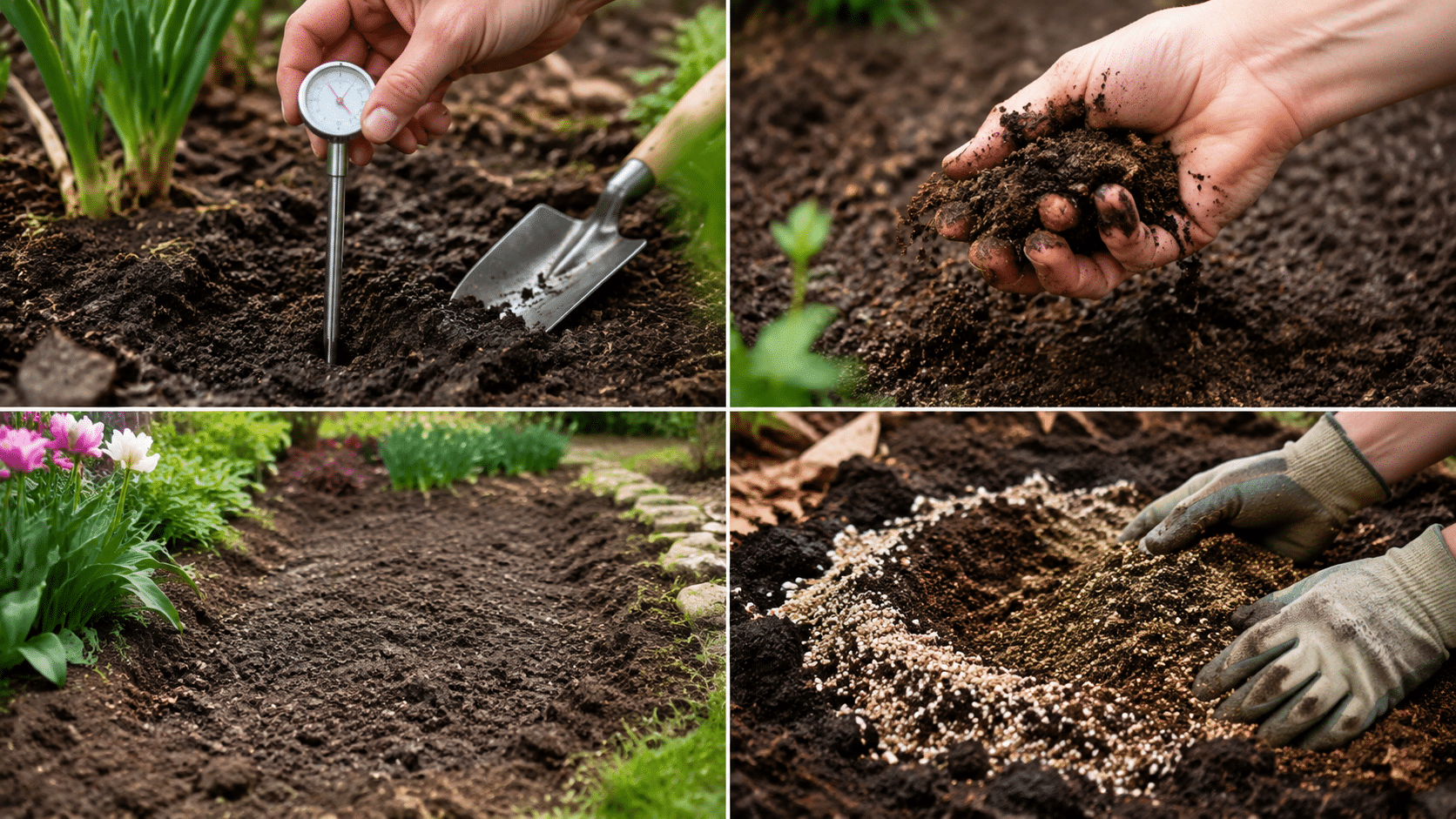
Calendar dates only tell part of the story. The University of Missouri Extension recommends checking the soil directly, planting once it reaches about 55°F, which usually happens after nighttime air temperatures have held around 50°F for roughly two weeks.
A basic soil thermometer, pushed about six inches deep, takes the guesswork out of this step entirely.
Beyond temperature, look for a few practical signs:
- Soil is workable and not frozen or waterlogged
- The bed drains well after rain
- No standing water pools in the planting area
Bulbs prefer loose, well-draining soil above almost everything else. Heavy clay soil common in some regions benefits from working in compost and coarse sand or grit before planting.
Frequently Asked Questions
When Is the Best Month to Plant Bulbs?
Most spring-flowering bulbs go into the ground between September and November, depending on your climate and local frost timing.
Can I Plant Bulbs After the First Frost?
Yes, as long as the soil is still workable and hasn’t frozen solid. Planting after frost can still work, though roots have less time to establish, which may reduce bloom size the first spring.
How Long Before Winter Should Bulbs Be Planted?
Aim for about six to eight weeks before the ground typically freezes in your area. This gives roots enough time to establish before winter dormancy sets in fully.
Do All Bulbs Need to Be Planted in Fall?
No. Tender, summer-flowering bulbs like dahlias and gladiolus are planted in spring instead, after the danger of frost has passed and the soil has warmed.
Can You Leave Bulbs in the Ground All Year?
Many hardy bulbs, including tulips and daffodils, can stay in the ground year-round in most climates. Tender bulbs usually need to be dug up and stored indoors before winter in colder zones.
Wrapping It Up
When to plant bulbs really comes down to two things: knowing whether your bulb blooms in spring or summer, and working backward from your local frost date.
Get those two right, and most of the other advice here is just fine-tuning.
Keep a soil thermometer handy, check your zone’s typical window each fall, and don’t stress over planting a little late.
If you take one thing from this, let it be this: knowing when to plant bulbs beats guessing every time, and a bulb in the ground a few weeks late still beats one sitting in a bag come spring.