
Signing a mortgage deed used to mean printing paperwork, booking a witness, and waiting for the post.
Nationwide electronic mortgage signatures now let eligible borrowers complete this step online using a secure Qualified Electronic Signature (QES).
Nationwide is the first major UK lender to offer digital mortgage deed signing, a big shift in how conveyancing works.
The change cuts delays from printing, signing, and returning paperwork. Digital signing only works if your solicitor or conveyancer supports QES.
Here is how it works, who can use it, and what it means for buyers and remortgage customers.
What Are Nationwide Electronic Mortgage Signatures?
Nationwide electronic mortgage signatures allow eligible borrowers to complete mortgage deed signing digitally rather than with printed documents.
However, not every electronic signature offers the same level of security or legal protection. A basic electronic signature could simply involve typing a name or clicking an approval box.
A Qualified Electronic Signature (QES) goes further by using identity checks and a digital certificate to verify the person signing; as set out in HM Land Registry’s Practice Guide 8 on the execution of deeds; a QES has the same legal standing as a handwritten signature.
A mortgage deed is the document that gives the lender security over a property. Previously, borrowers had to sign a paper copy in the presence of a witness, which could delay the conveyancing process.
With HM Land Registry accepting QES for mortgage deeds from August 2025, as confirmed in its own guidance, Nationwide introduced digital signing for eligible customers.
The option is available for home purchases and remortgages when the borrower’s solicitor or conveyancer supports the required system.
Are Nationwide Electronic Mortgage Signatures Legally Valid?
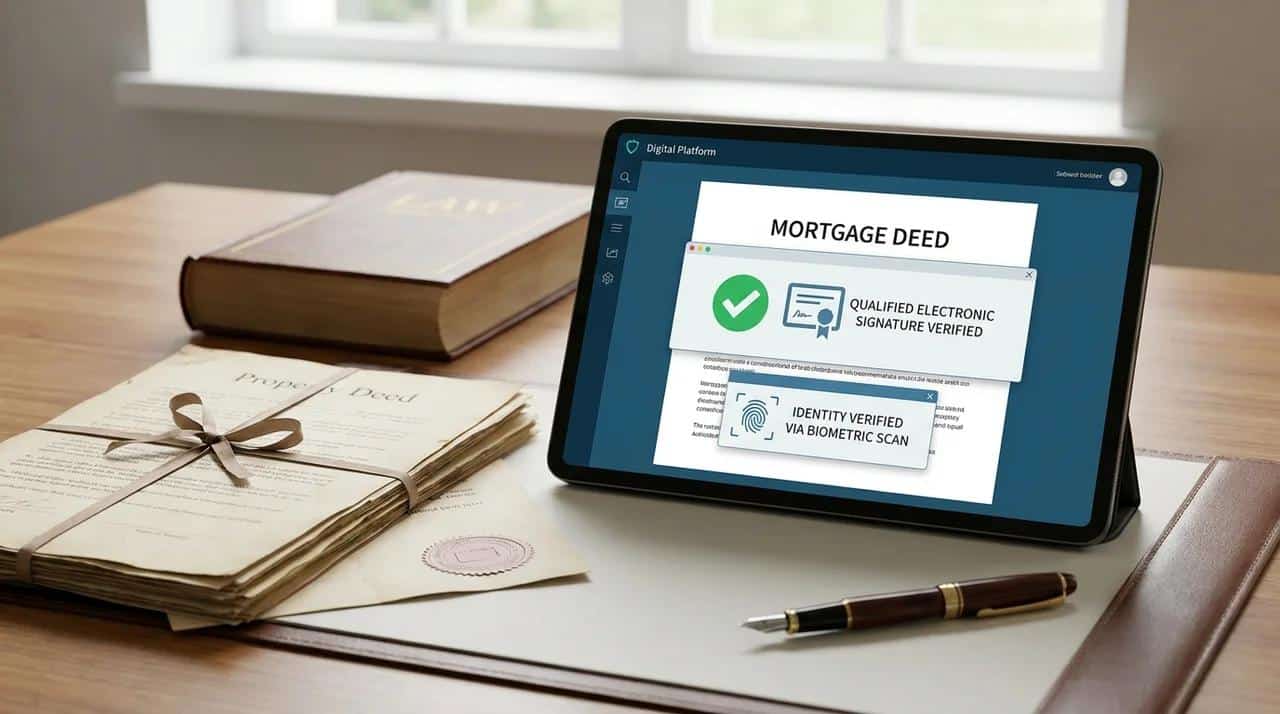
Yes, when it’s a Qualified Electronic Signature. Section 91 of the Land Registration Act 2002 gives it the same legal standing as a handwritten, witnessed signature.
Not all electronic signatures offer the same level of legal protection. The level of security depends on how the signer’s identity is verified.
Types of electronic signatures:
| Type | Description |
|---|---|
| Electronic Signature | Basic approval, such as typing a name or clicking a box. Offers limited identity verification. |
| Advanced Electronic Signature | Linked to the signer and can detect document changes after signing. Provides stronger security. |
| Qualified Electronic Signature (QES) | Highest-security option, using verified identity checks and a digital certificate. |
HM Land Registry’s acceptance of QES for mortgage deeds enabled lenders such as Nationwide to introduce digital signing.
A QES creates a secure record connected to the signer, making any later changes traceable. Borrowers should still speak with their conveyancer for advice based on their own transaction.
Why Has Nationwide Introduced Digital Mortgage Deeds?
The UK property process has traditionally relied on printed documents and manual signatures, which can cause delays in transactions.
Nationwide’s move to digital mortgage deed signing aims to simplify this step and streamline the process.
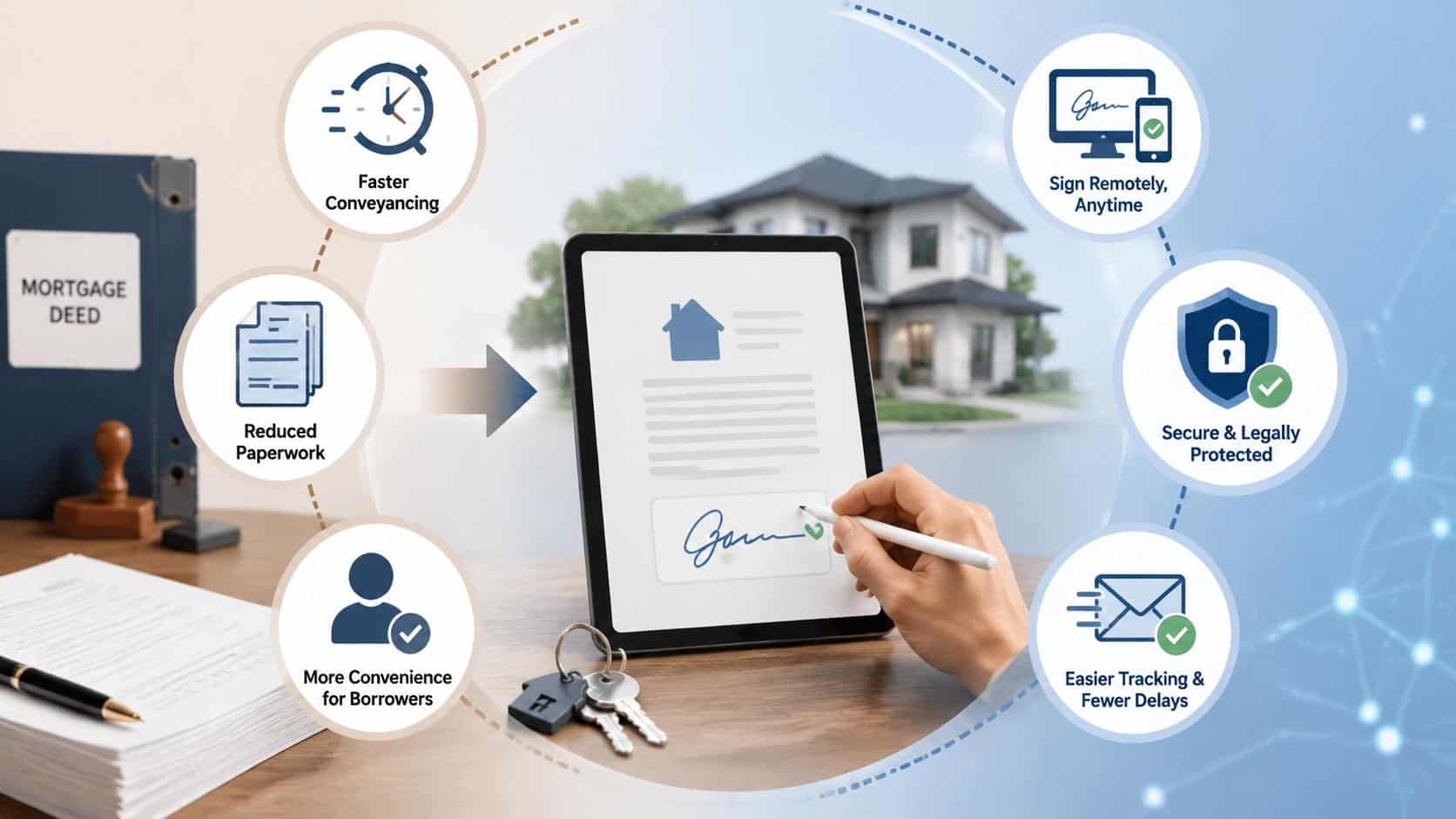
- Faster conveyancing: Digital signing speeds up eligible mortgage transactions by removing printing, witnessing, and postal delays, allowing borrowers to complete documents online and reduce waiting times.
- Reduced paperwork: Electronic documents simplify handling for lenders and conveyancers by removing physical postage, improving tracking, and reducing unnecessary communication between parties.
- More convenience for borrowers: QES allows eligible borrowers to sign remotely without arranging an in-person witness, making the process easier for those with busy schedules.
This change is part of a wider move toward a more digital property process, making key steps easier to complete while maintaining legal security.
Who Can Use Nationwide Digital Signing?

Nationwide’s digital mortgage deed signing is not available to every borrower by default.
It depends on whether the transaction meets Nationwide’s requirements and whether the solicitor or conveyancer supports Qualified Electronic Signatures (QES).
It’s most relevant at the final signing stage of buying a home, once your solicitor has worked through the usual conveyancing checks.
It may be available for:
- New Nationwide mortgage customers buying a property
- Existing Nationwide customers remortgaging
Your conveyancer must have the systems needed to support QES.
If they cannot offer digital signing, you will need to complete the mortgage deed using the traditional paper process. It is best to confirm eligibility early to avoid delays.
How Digital Signing Affects Borrowers?
Nationwide’s electronic mortgage signatures simplify the deed signing stage by replacing paper documents and in-person witnessing with a secure online process.
| Traditional Signing | Electronic Signing |
|---|---|
| Paper mortgage deed | Digital mortgage deed |
| Physical witness required | QES removes the witness requirement |
| Postal delays | Online submission |
| More manual handling | Easier document management |
For borrowers, this means less paperwork and no need to arrange a witness or visit a solicitor’s office just to sign the deed.
The process can be completed online after identity verification, which may help reduce delays. However, digital signing only affects the mortgage deed stage.
Digital signing only affects the deed stage. Searches, surveys, and approvals still follow their normal timelines, so a house viewing checklist still matters before exchange.
What Does This Mean for Conveyancers?

Nationwide’s digital mortgage deed signing also changes how solicitors and conveyancing firms manage the signing process.
To offer this option, firms need compatible Qualified Electronic Signature (QES) systems and updated digital workflows.
Conveyancers must be able to manage electronic deeds, track digital records, and work through approved platforms.
They also run identity checks, adding a step to due diligence that still covers items like ground rent and leasehold fees.
The move reduces administrative work by removing the need to print, post, and store physical mortgage deeds. This can help lower the risk of paperwork delays or missing documents.
The digital signing process was developed through collaboration among Nationwide, HM Land Registry, Your Conveyancer, and Veyco, requiring coordination across various stages of the conveyancing process.
How Does the Nationwide Signature Process Work
The Nationwide electronic mortgage signature process follows a few straightforward steps, from confirming eligibility to completing the deed signing online.
Step 1: Check if Your Conveyancer Supports QES

Digital mortgage deed signing is only available through solicitors or conveyancing firms that support Qualified Electronic Signatures.
Before starting the process, check with your conveyancer to confirm they have the necessary systems in place. If they do not offer QES, you will need to complete the traditional paper signing process.
Step 2: Complete Identity Verification

Before signing the mortgage deed, your identity must be verified through a secure digital process.
These checks confirm that the person applying the signature is the correct individual. This verification step is a key part of what makes a QES legally valid.
Step 3: Review and Sign the Mortgage Deed

Once verification is complete, you receive the mortgage deed electronically. Review the document carefully before signing.
When ready, you apply your Qualified Electronic Signature through the approved platform without printing any paperwork.
Step 4: Submission and Completion
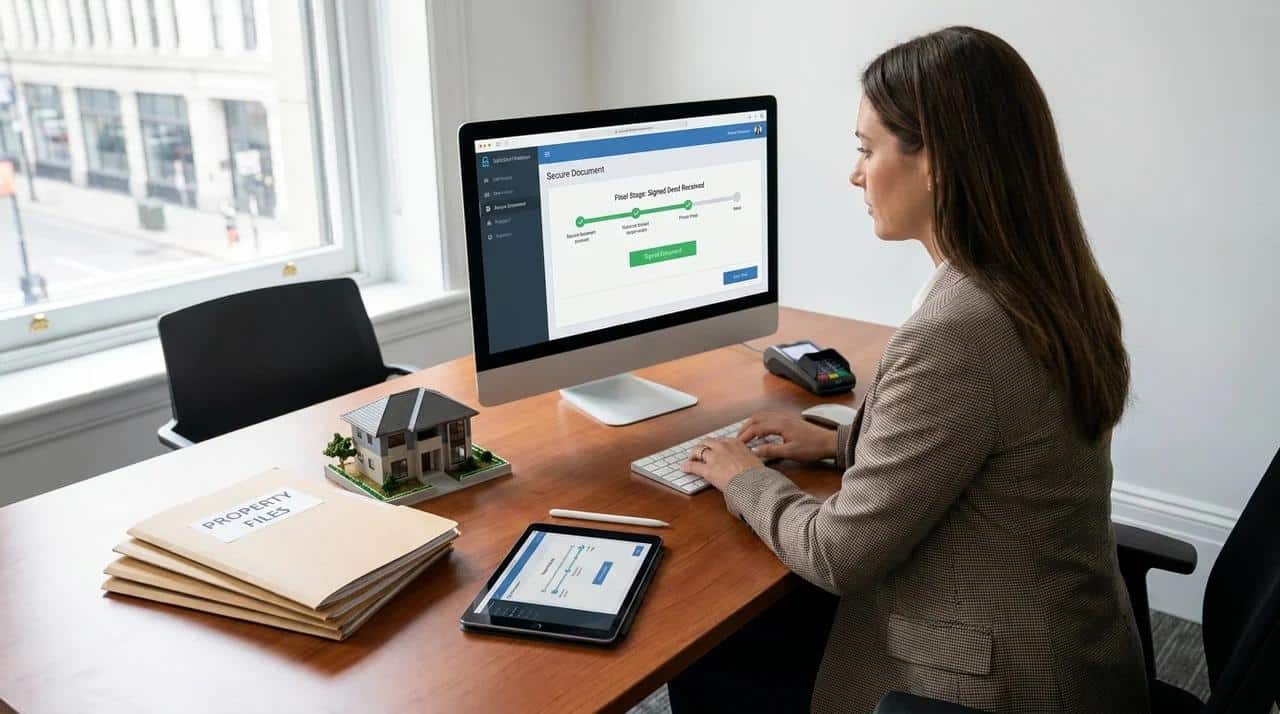
After signing, the deed is sent back digitally through the conveyancer’s system. They continue with the remaining completion steps as usual, without waiting for physical documents to arrive.
If QES is unavailable or unsuitable for your transaction, Nationwide still allows mortgage deeds to be signed using the traditional paper method.
Will Other Lenders Go Digital?
No other major UK lender has publicly confirmed plans to offer digital mortgage deed signing at this stage. That said, Nationwide’s position as the first to do so puts the topic firmly on the industry’s radar.
Digital conveyancing has been developing gradually across the UK market. HM Land Registry’s acceptance of QES for mortgage deeds removed a significant legal barrier.
That decision affects all lenders, not just Nationwide. As QES technology becomes more widely available among conveyancing firms, the case for other lenders to follow becomes stronger.
Whether adoption accelerates depends on how smoothly Nationwide’s rollout performs and how quickly conveyancers upgrade their systems.
Borrowers should check directly with their lender for the most current information on digital signing availability.
Final Thoughts
Nationwide electronic mortgage signatures mark a real step toward modern UK conveyancing.
QES lets eligible borrowers finish a key legal step online, without a witness, paper, or postal delays that used to slow things down.
Signing gets easier, paperwork drops, and one frustrating stage disappears from the process.
Conveyancer support still matters, and the rest of the legal process still takes its normal course. As more firms add compatible tools, digital deed signing could become common across UK property deals.
Checking early with your conveyancer confirms whether this digital signing option genuinely fits your move.
Frequently Asked Questions
How long does the digital signing process take?
Most borrowers complete digital signing in under 30 minutes. Paper deeds can take several days. Digital signing cuts the wait down to the same day.
Can I still opt for a paper mortgage deed?
Yes, in some cases you may still be able to use a paper mortgage deed, depending on your solicitor and whether electronic signing is supported for your transaction.
Do I need to meet my solicitor in person for QES?
No. QES is completed online, with secure identity checks and digital verification replacing the need for in-person solicitor meetings or physical signing appointments.