
Weeds usually tell you what’s going on with the soil, if you’re paying attention.
Even a lawn you mow, feed, and water on schedule will sprout the odd weed. That’s not a sign you did something wrong. It’s a sign the grass left a small opening, and a weed took it.
I’ve come to think of common lawn weeds less as enemies and more as messengers.
The type that shows up tells you what the soil or the turf is missing, whether that’s nutrients, drainage, or simple thickness.
The weed that keeps coming back is usually pointing at one specific fault, like compaction or low nitrogen.
What Makes a Plant a Lawn Weed?
A lawn weed is any plant growing in your turf that you did not plant and do not want. These are the turf-dwelling members of the wider group of garden weeds, and not every one is equally troublesome.
There is a difference between a stray plant and an invasive one. A single dandelion is easy to dig and forget.
An aggressive spreader like ground ivy or nutsedge keeps coming back because it colonizes the ground faster than grass can close over it.
What all lawn weeds have in common is that they compete with your grass, sunlight, nutrients, and space.
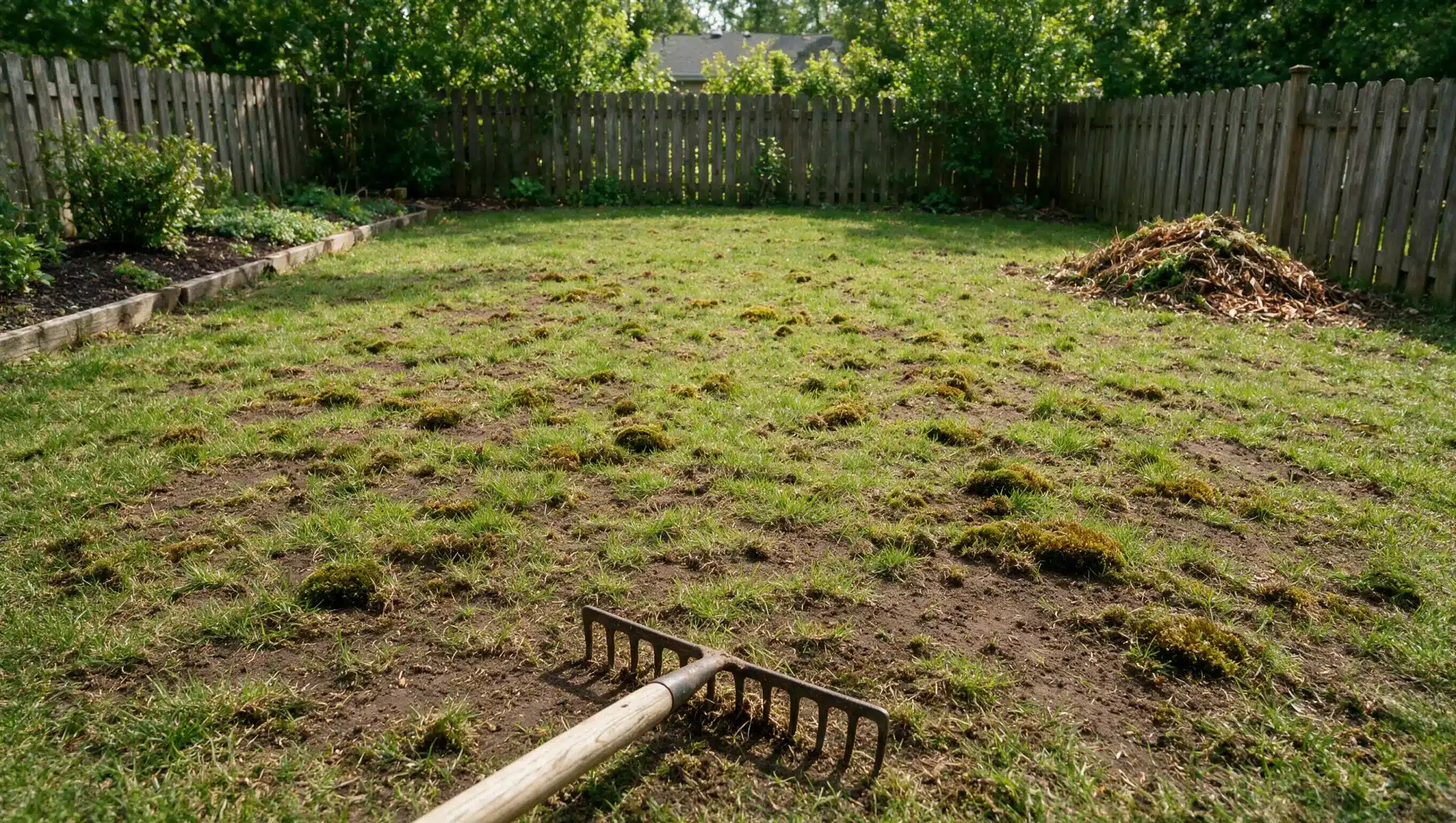
If left uncontrolled, aggressive weeds can weaken and thin the lawn, creating bare patches where even more weeds can take root.
Why Do Common Lawn Weeds Appear?
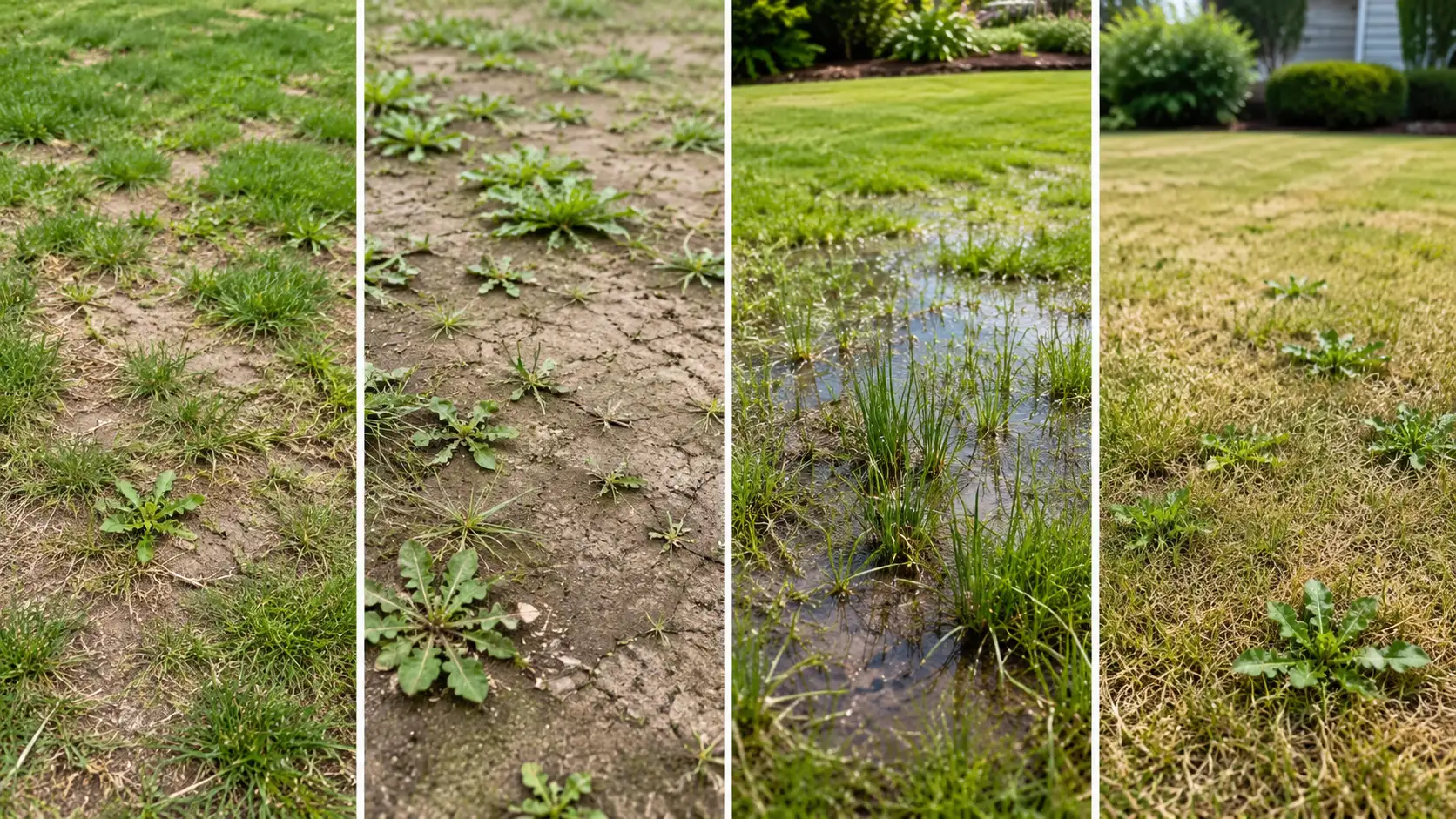
Weeds are opportunists, so they show up wherever the lawn is weakest. Fix the weakness, and you remove the invitation. Most common lawn weeds trace back to one of these openings:
- Thin or damaged turf: Sparse grass leaves gaps that weed seeds fill first.
- Compacted soil: Hard ground blocks grass roots but suits tough weeds like plantain.
- Poor drainage: Soggy, waterlogged spots favor sedges and other moisture lovers.
- Incorrect mowing height: Cutting too short stresses the grass and exposes low weeds to sunlight.
- Overwatering or underwatering: Both weaken the lawn and tip the balance toward weeds.
- Soil nutrient imbalance: Underfed grass cannot outgrow a well-adapted weed.
- Bare patches: Spots thinned by heat, drought, or heavy foot traffic are open real estate that common lawn weeds claim first.
Spot which of these openings your lawn has, and you already know where the weeds are coming from, which is the first step to closing the door on them for good.
How to Identify Common Lawn Weeds
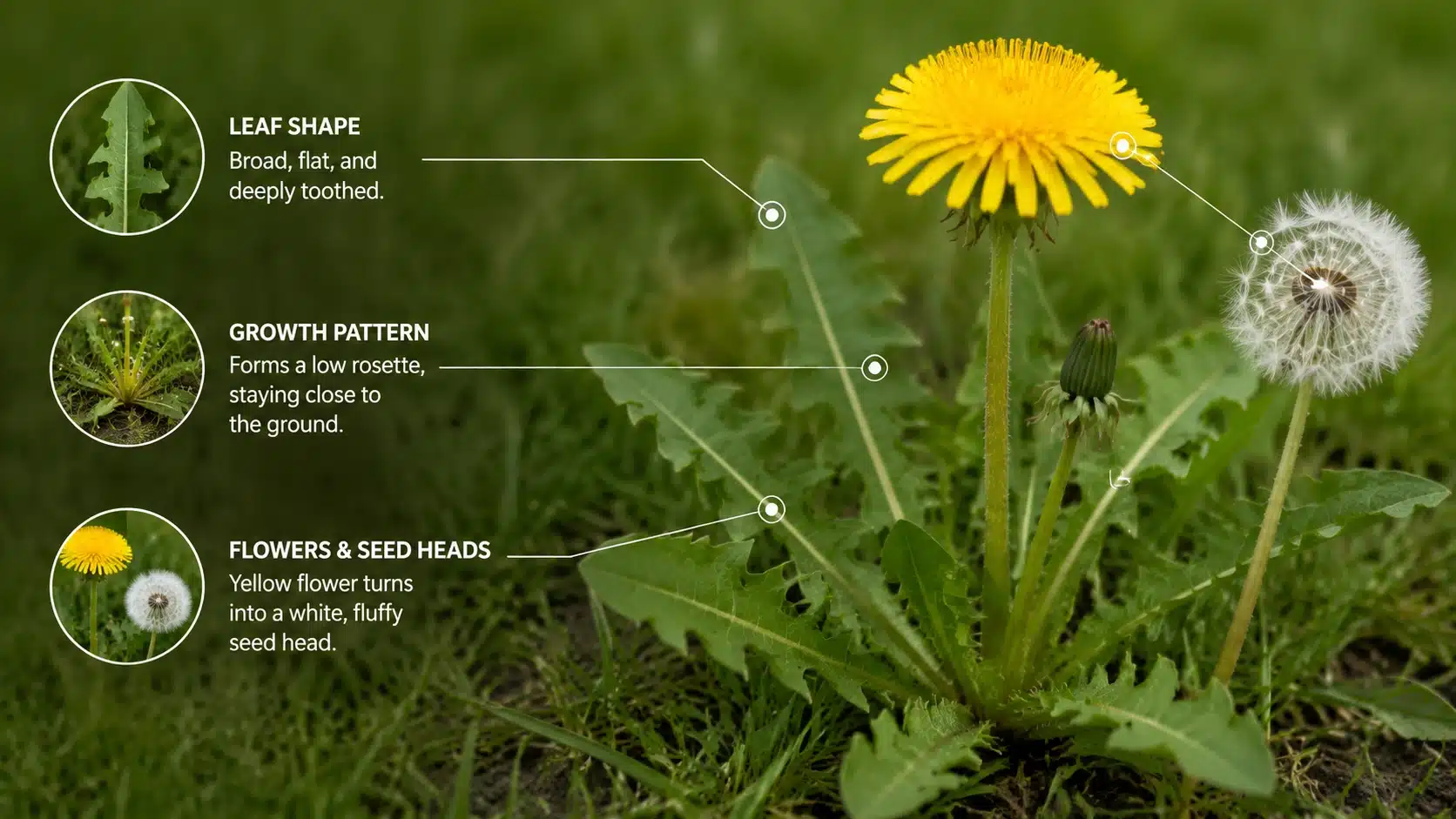
You do not need a botany degree to name most lawn weeds. A few quick observations narrow it down fast.
Grass-like weeds with narrow blades are their own puzzle, so here the focus is on the broadleaf and flowering types you most often meet.
Run through four quick checks and most weeds give themselves up.
| What to Check | What It Tells You |
|---|---|
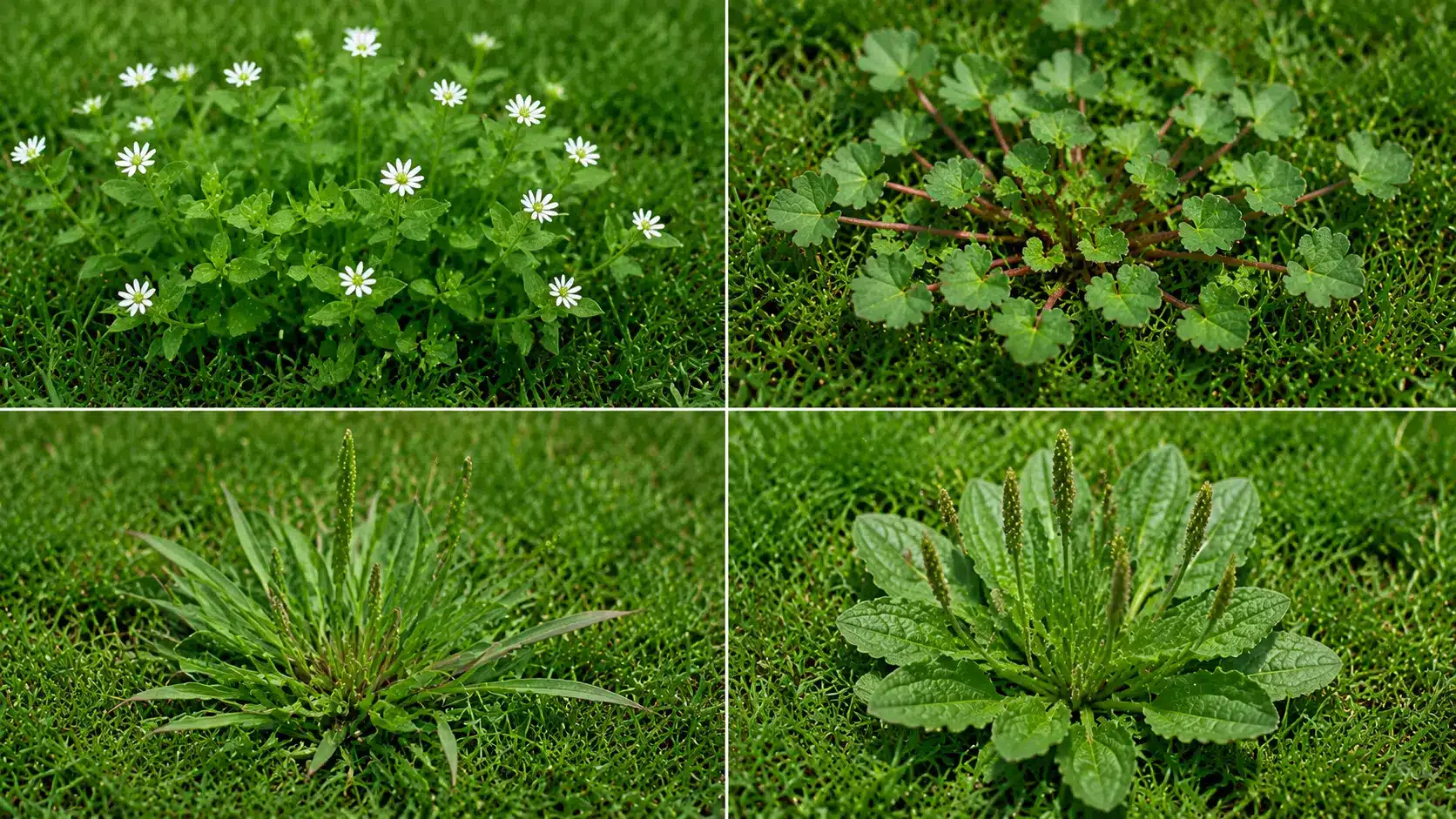
| Leaf shape | Broad, flat leaves point to a broadleaf weed like dandelion or plantain, while narrow blades suggest a grassy type. Smooth and hairy surfaces help distinguish lookalikes such as chickweed. |
| Growth pattern | Spreading runners that root as they travel signal ground ivy, while others form upright clumps or flat mats that slip under the mower blade. |
| Flowers and seed heads | Yellow blooms often indicate dandelion or woodsorrel, white blooms suggest clover or chickweed, and small seed clusters on a spike point to plantain. |
| When they appear | Cool-season weeds like chickweed and henbit green up in spring and fall, while summer brings heat lovers like prostrate spurge. |
Catching a weed before it flowers and seeds saves you a much bigger job later, and knowing it preferred season tells you when to scout and when to treat.
Types of Lawn Weeds and How to Recognize Them
Here are the broadleaf weeds most likely to show up in a home lawn, with what the look like, the reason they arrived, and the best way to clear them.
1. Dandelion
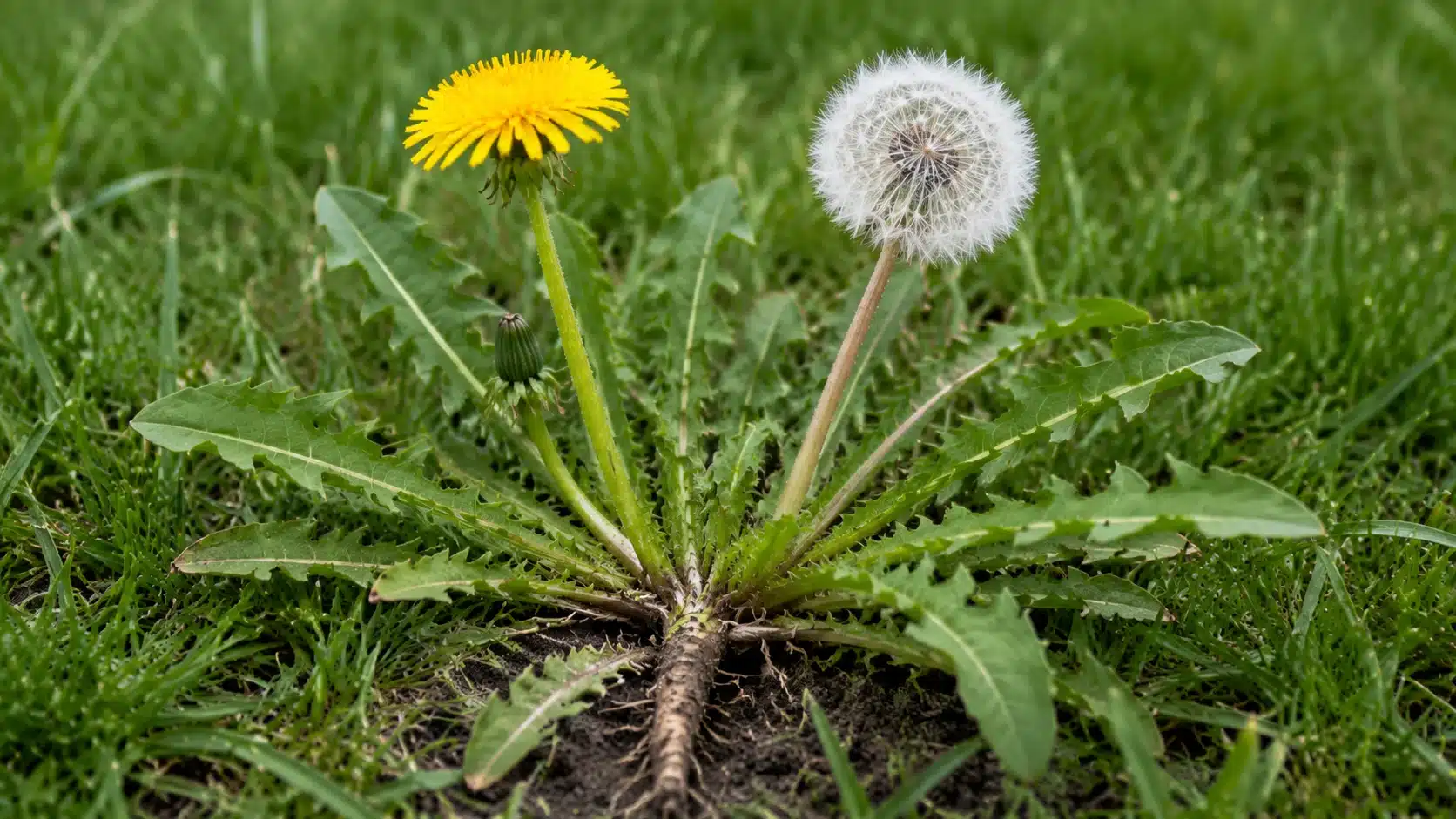
Bright yellow flowers, puffball seed heads, and a thick taproot that snaps if you rush the pull. It moves into thin, low-calcium turf.
Dig the whole root with a weeding fork, or spot-treat with a selective broadleaf product in fall.
Recognize it by:
- Bright yellow flowers that turn into white puffball seed heads
- Jagged, deeply toothed leaves in a flat rosette
- A thick taproot that snaps if you rush the pull
2. White Clover
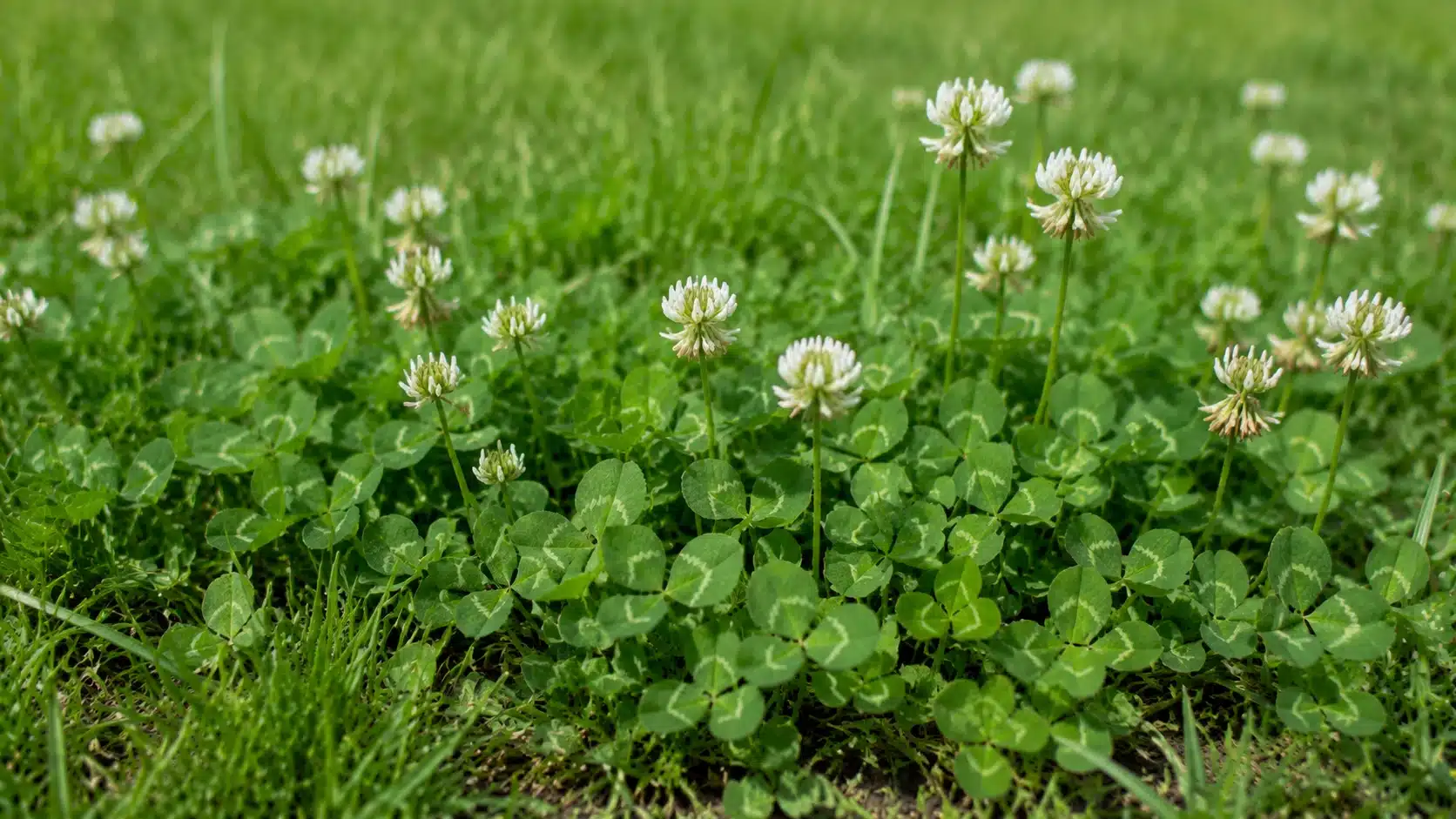
Low, creeping mats of three-part leaves and small white blooms that draw bees. It signals low soil nitrogen, since clover makes its own.
Feed the lawn to close the gap, then dig or spot-treat any patches you would rather not keep.
Recognize it by:
- Three-part leaves, often with a pale crescent marking
- Small white blooms that draw bees
- Low, creeping mats that spread outward
3. Broadleaf Plantain
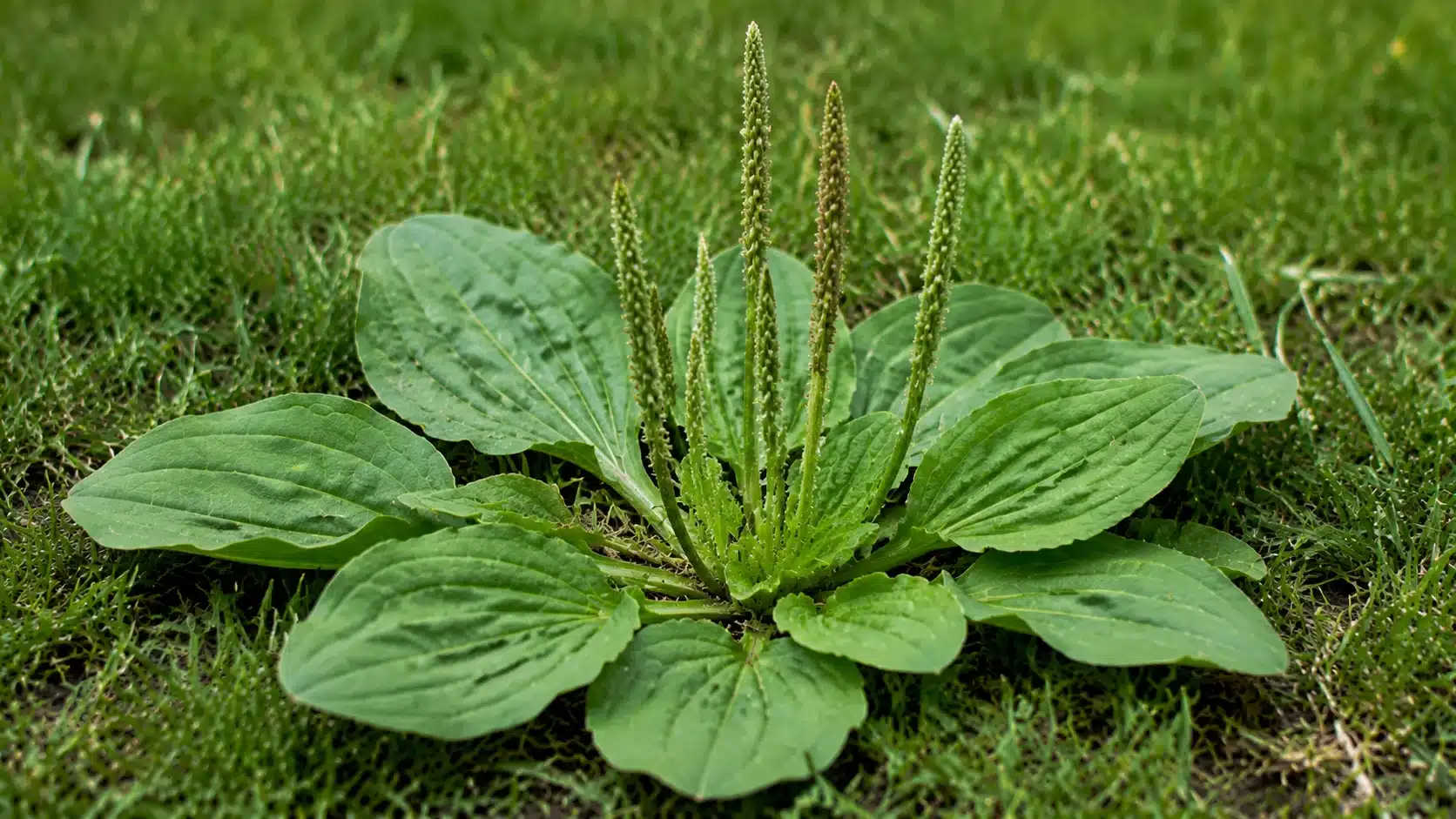
Flat rosettes of ribbed, oval leaves with narrow seed spikes hug the ground in areas with packed, well-trodden soil.
It prefers compacted soil. To eliminate it, first aerate the soil, then either hand-pull or spot-treat, making sure to remove the taproot completely.
Recognize it by:
- Flat rosettes of ribbed, oval leaves
- Narrow seed spikes standing above the leaves
- Ground-hugging growth in packed, well-trodden soil
4. Creeping Charlie (Ground Ivy)
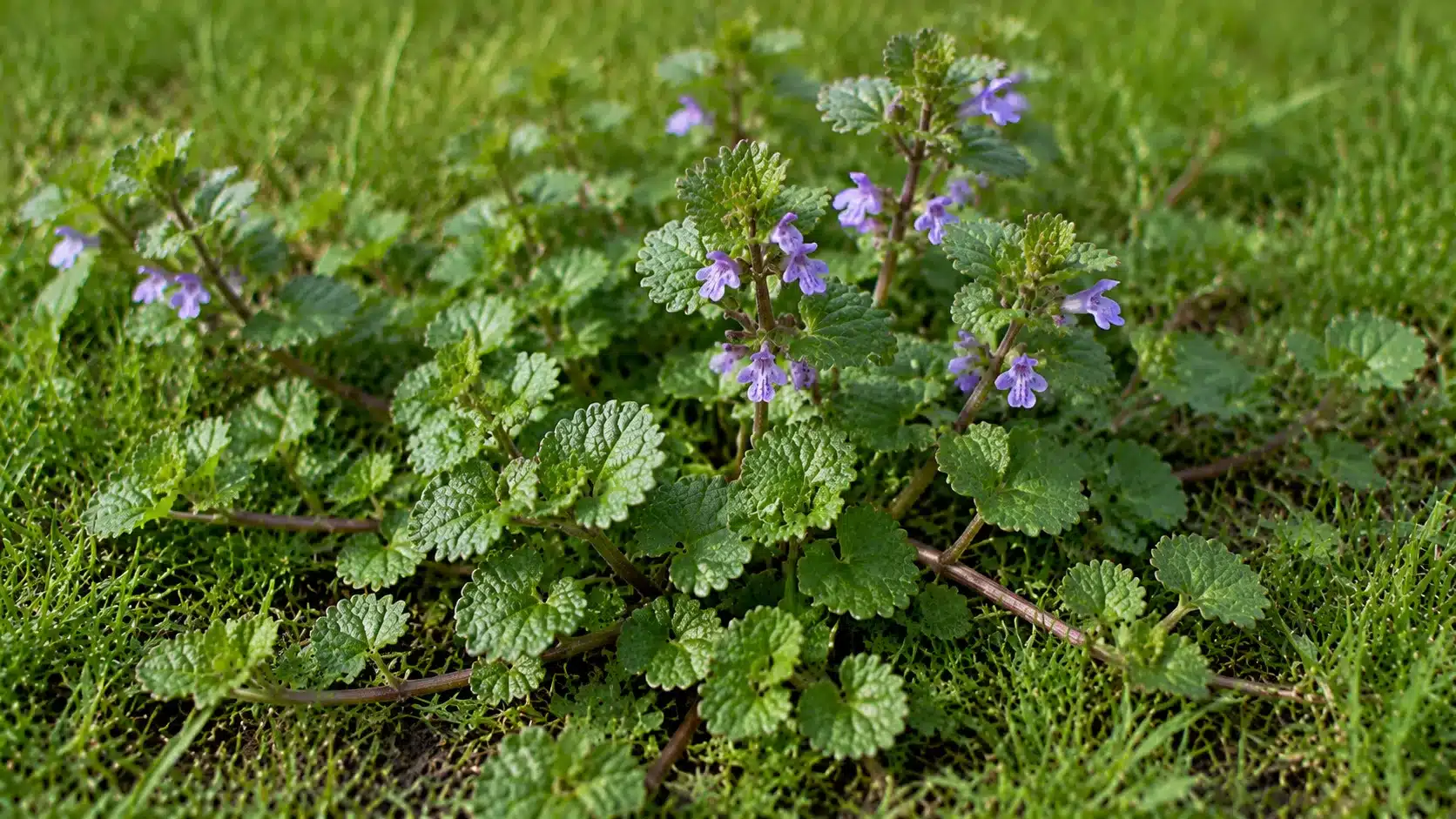
A low runner with round, scalloped leaves, square stems, and a minty smell when crushed. Damp shade is its favorite.
Rake up the runners, improve light and drainage, and use a fall broadleaf treatment on stubborn stands.
Recognize it by:
- Round, scalloped leaves on square stems
- A minty smell when the leaves are crushed
- Runners that root as they spread through damp shade
5. Chickweed
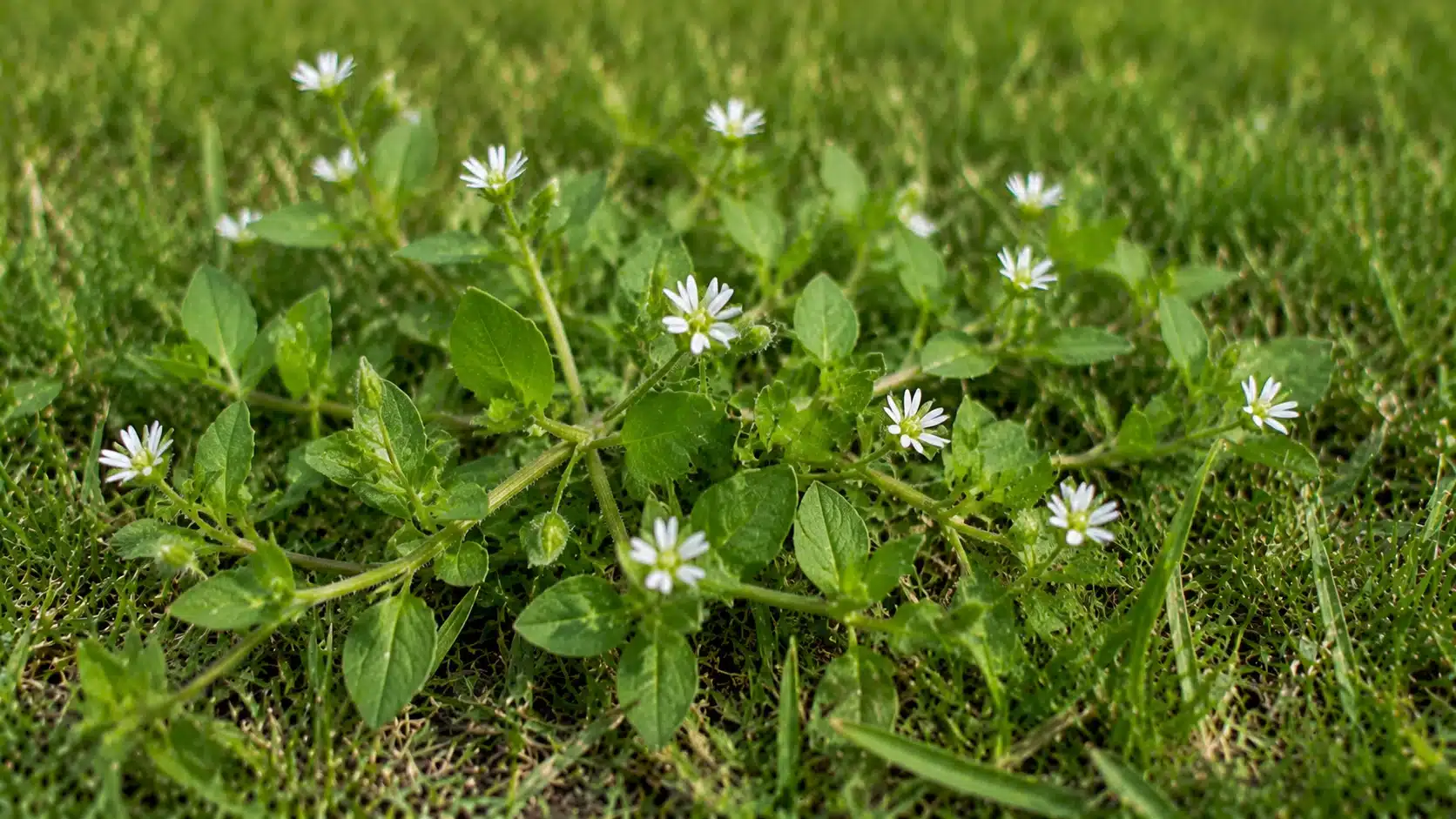
A sprawling, cool-season weed with small oval leaves and tiny white star-shaped flowers. It fills thin or bare patches in cool, moist weather.
Pull it early before it seeds, and thicken the turf so it has nowhere to spread.
Recognize it by:
- Small oval leaves on sprawling, low stems
- Tiny white star-shaped flowers
- Dense growth in cool, moist, thin patches
6. Henbit
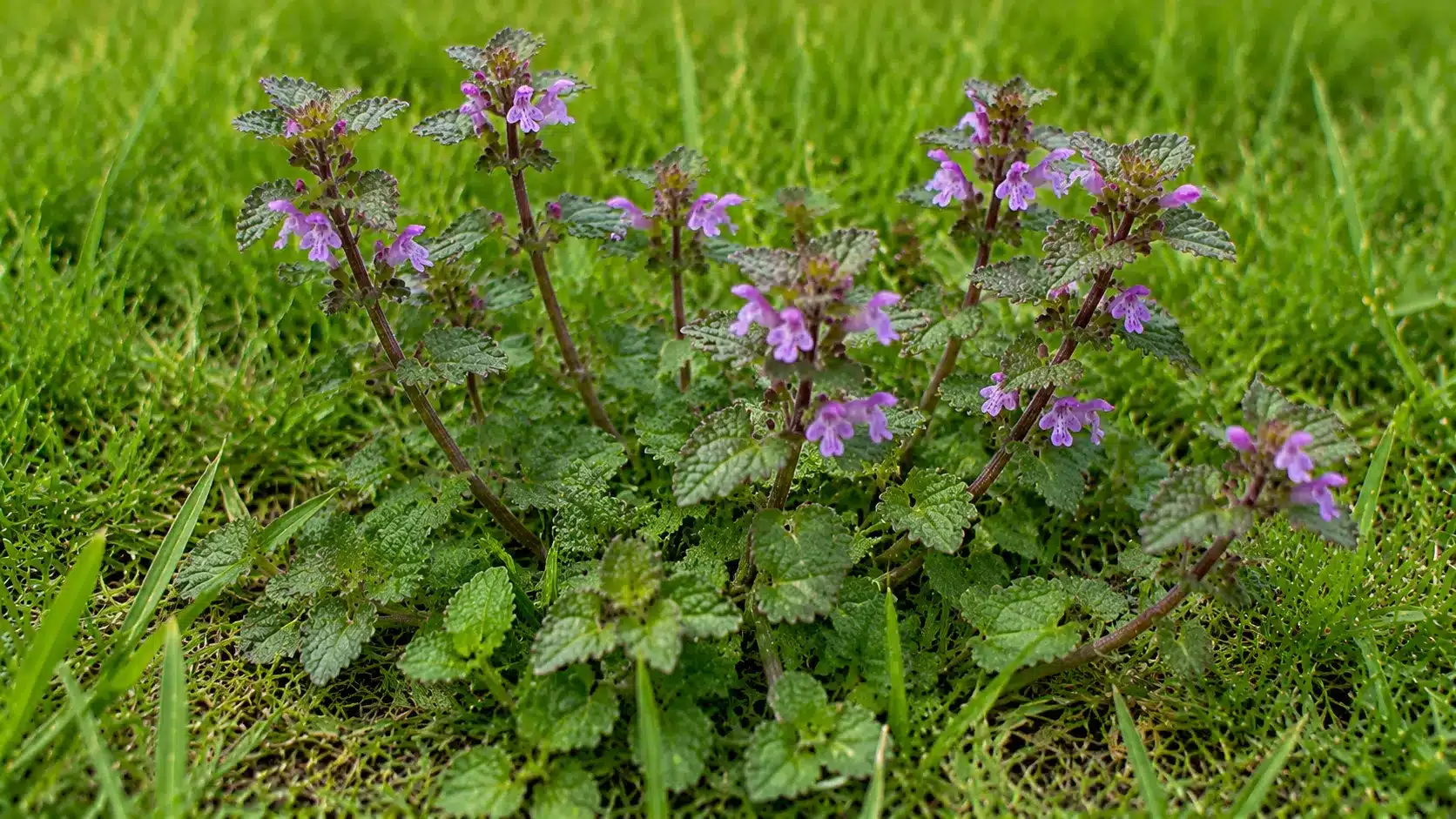
Square stems, rounded scalloped leaves, and small purple flowers through late winter and early spring. It favors thin, open turf.
Pull or hoe young plants, and a fall pre-emergent stops the next flush before it starts.
Recognize it by:
- Square stems with rounded, scalloped leaves
- Small purple flowers in late winter and early spring
- Upright clumps in thin, open turf
7. Prostrate Spurge
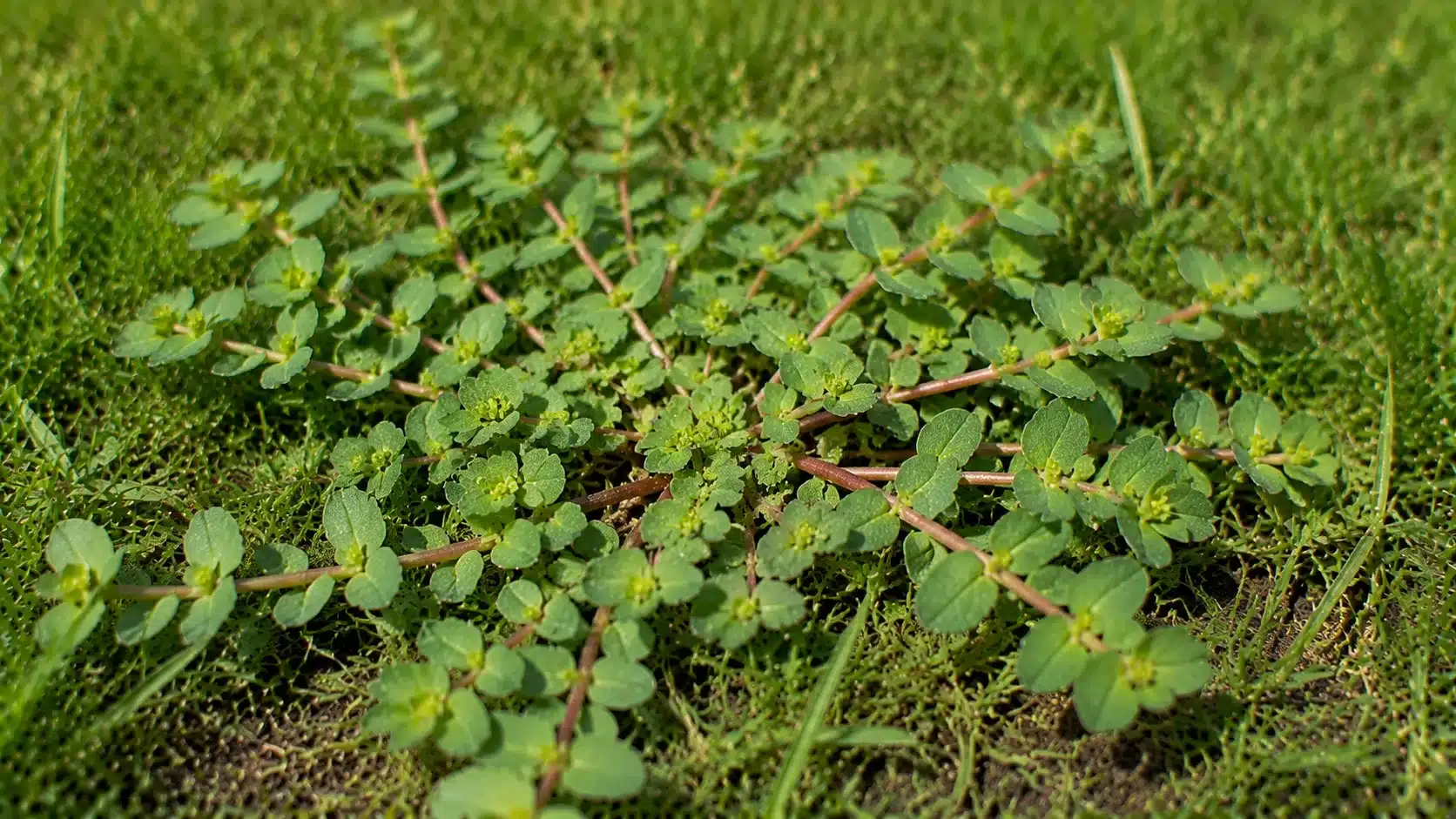
A flat, fast-growing mat with tiny oval leaves and a milky sap, spreading through hot, dry, bare spots in summer.
Wear gloves and pull it before it seeds, then close the gaps with steady watering and overseeding.
Recognize it by:
- A flat, fast-growing mat with tiny oval leaves
- Milky sap when a stem is broken
- Spread through hot, dry, bare spots in summer
8. Wild Violet
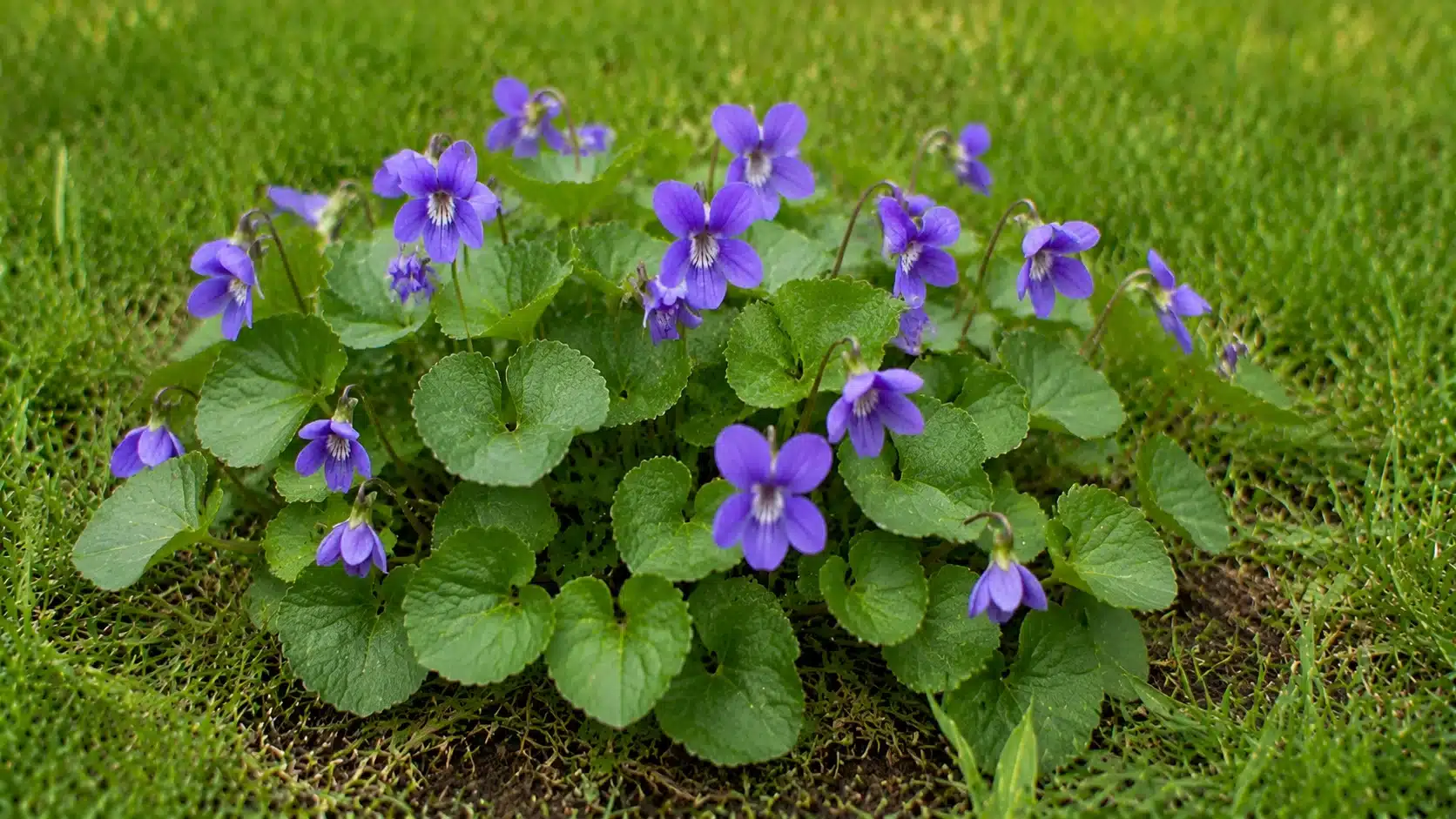
Heart-shaped leaves and purple or white flowers on a low, waxy plant that shrugs off mowing and spreads by runners and seed.
Its waxy leaves resist sprays, so repeat fall broadleaf treatments and digging are usually the fix.
Recognize it by:
- Heart-shaped leaves on a low, waxy plant
- Purple or white flowers close to the ground
- Spread by both runners and seed
What Your Lawn Weeds Are Telling You
The weed that keeps returning often indicates a particular problem, such as soil compaction or low nitrogen levels.
| Weed | Possible Lawn Problem | The Fix |
|---|---|---|
| Clover | Low nitrogen | Improve fertility |
| Plantain | Compacted soil | Aerate |
| Crabgrass | Thin turf | Overseed |
| Moss | Shade and moisture | Improve drainage and light |
| Nutsedge | Wet soil | Correct drainage |
Treat the weed and skip the cause, and the same weed returns because the opening that let it in is still open. Fix the condition, and the grass will take back the space on its own.
How to Remove Common Lawn Weeds
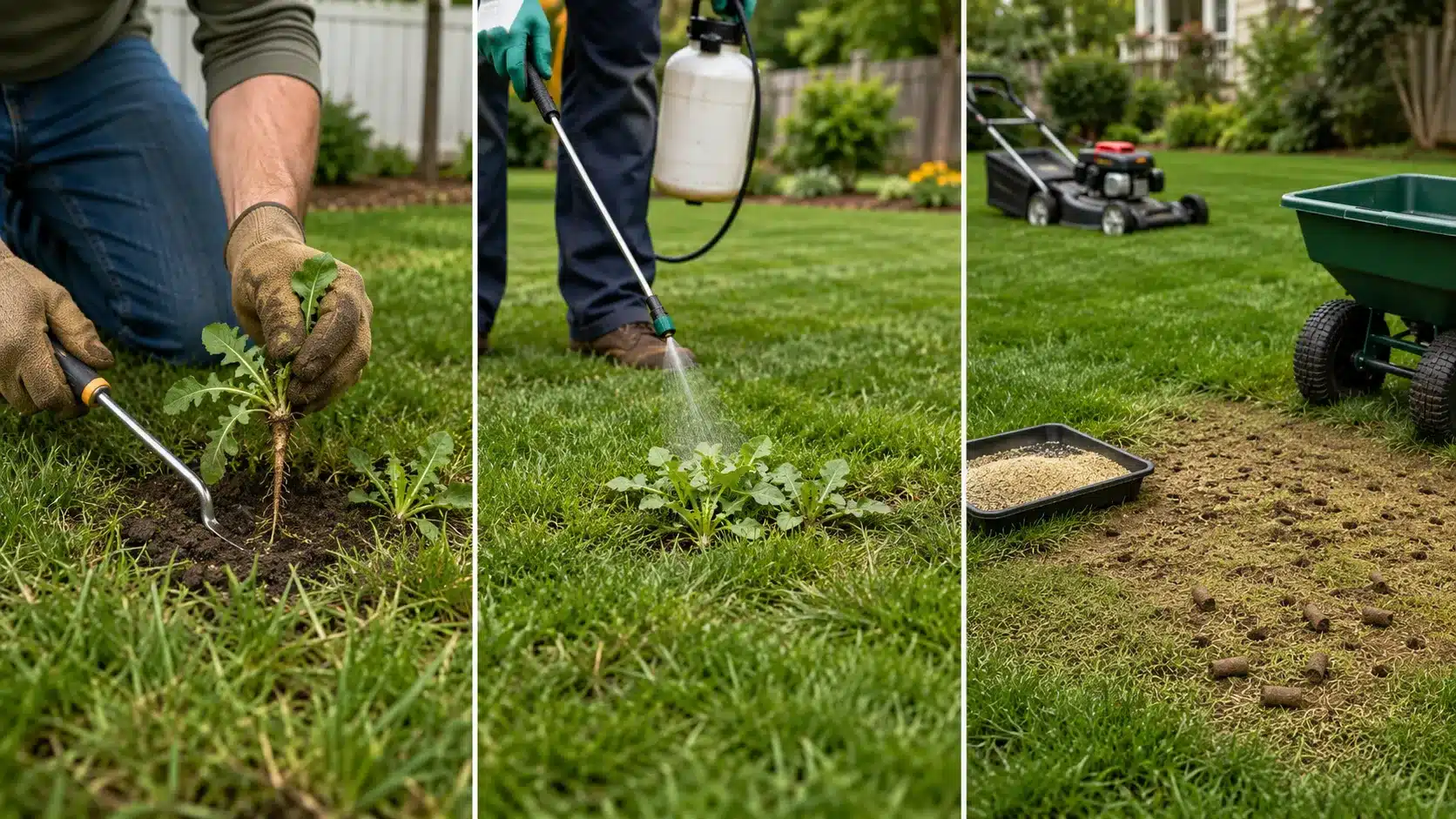
Removal works best when the method matches the weed and the reason it arrived. Here is the order that saves the most effort.
1. Manual Weed Removal
Pulling weeds by hand works best on small patches and young plants with a single root. It’s the cleanest method when you want to protect the grass around it.
- Hand pulling is the cleanest option for small numbers and for young plants.
- It works best on weeds with a single taproot, such as dandelions and plantains, especially when the soil is damp.
- The most important rule is to remove the whole root, since anything left behind resprouts.
2. Using Herbicides
The right herbicide depends on the weed you’re fighting and where it’s growing. Picking the wrong type is the main reason treatments fail.
- For larger infestations, match the product to the weed.
- Selective herbicides target one group, such as broadleaf weeds, while sparing your grass, and non-selective products kill everything they touch, so they suit spot use on paths rather than open turf.
- Using the wrong type is the top reason a treatment fails: a broadleaf spray does nothing to a grassy weed, and the reverse is just as true.
3. Improving Lawn Conditions
A healthy, thick lawn crowds out weeds before they take hold. Small steps like aerating and feeding on schedule make the biggest difference over time.
- Overseed thin areas, aerate compacted ground, improve the soil with a test and the right feed, and mow at the correct height.
- Do this and the lawn itself becomes the control, crowding out common lawn weeds before they establish.
When is the Best Time to Treat Lawn Weeds?
Timing depends on the weed: apply pre-emergents before the soil warms in spring, and treat broadleaf perennials in fall while they’re storing energy in their roots.
| Season | Best Weed Control Approach |
|---|---|
| Spring | Apply a pre-emergent before soil warms to prevent crabgrass and remove leftover winter weeds while the soil is moist. |
| Summer | Pull or spot-treat actively growing weeds and avoid stressing grass by mowing too short during hot weather. |
| Fall | Apply selective herbicides to broadleaf weeds, as they absorb treatment more effectively while storing energy in their roots. |
How to Prevent Common Lawn Weeds Long-Term
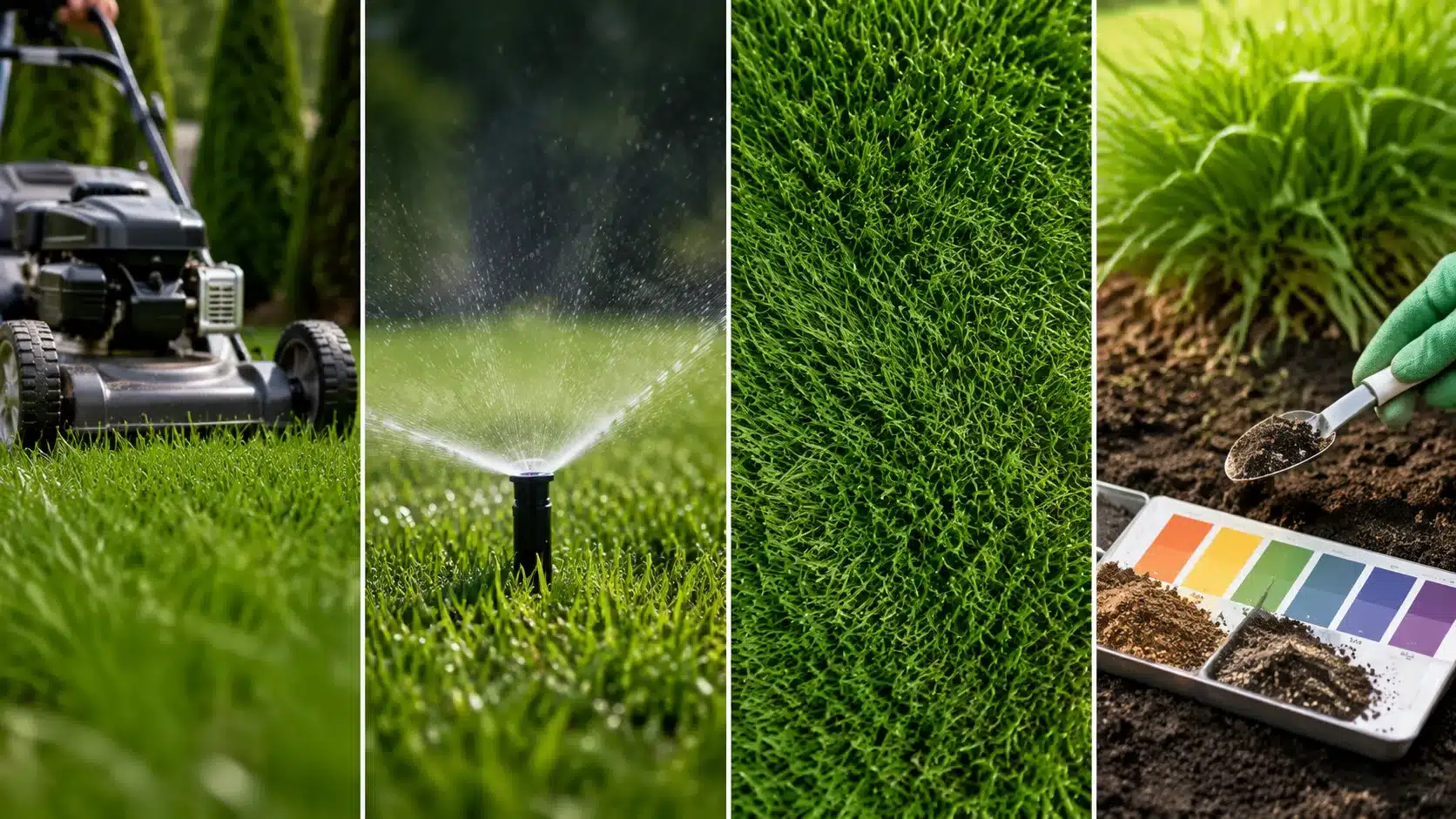
A thick, healthy lawn is the strongest and cheapest form of weed control. These habits keep common lawn weeds from getting a foothold in the first place.
- Maintain Proper Mowing Height: Cutting too short weakens grass and lets sunlight reach low weeds. Keep the mower on the high side for your grass type so the turf shades the soil and stays strong.
- Water Correctly: Deep, infrequent watering builds long roots that reach moisture below the surface. Frequent shallow sprinkling keeps the top wet and favors weeds.
- Keep Grass Thick: Density is everything. Overseed each fall and repair bare spots quickly, so no gap sits open long enough to invite a weed to settle in.
- Improve Soil Health: Test the soil every year or two and correct the pH and nutrient levels based on the results. Balanced fertility gives your grass the edge it needs to outcompete the weeds around it.
Are Some Lawn Weeds Actually Helpful?
Not every weed is worth fighting. A few common lawn weeds actually earn their place, giving something back to the yard.
- White clover: Pulls nitrogen from the air and shares it with the grass, which is why it was once a standard part of lawn seed mixes.
- Dandelion: Its early yellow flowers are one of the first nectar sources for bees each spring.
- Wild violet: Feeds pollinators and holds ground in shade where turf tends to thin.
- Self-heal: Draws bees and butterflies while shrugging off regular mowing.
The choice is yours. If a weed is crowding your grass or flagging a real problem, clear it and fix the cause. If it is quietly filling a hard spot and helping more than it hurts, leaving it be is a fair, low-effort call.
Lawn Weed Mistakes That Backfire
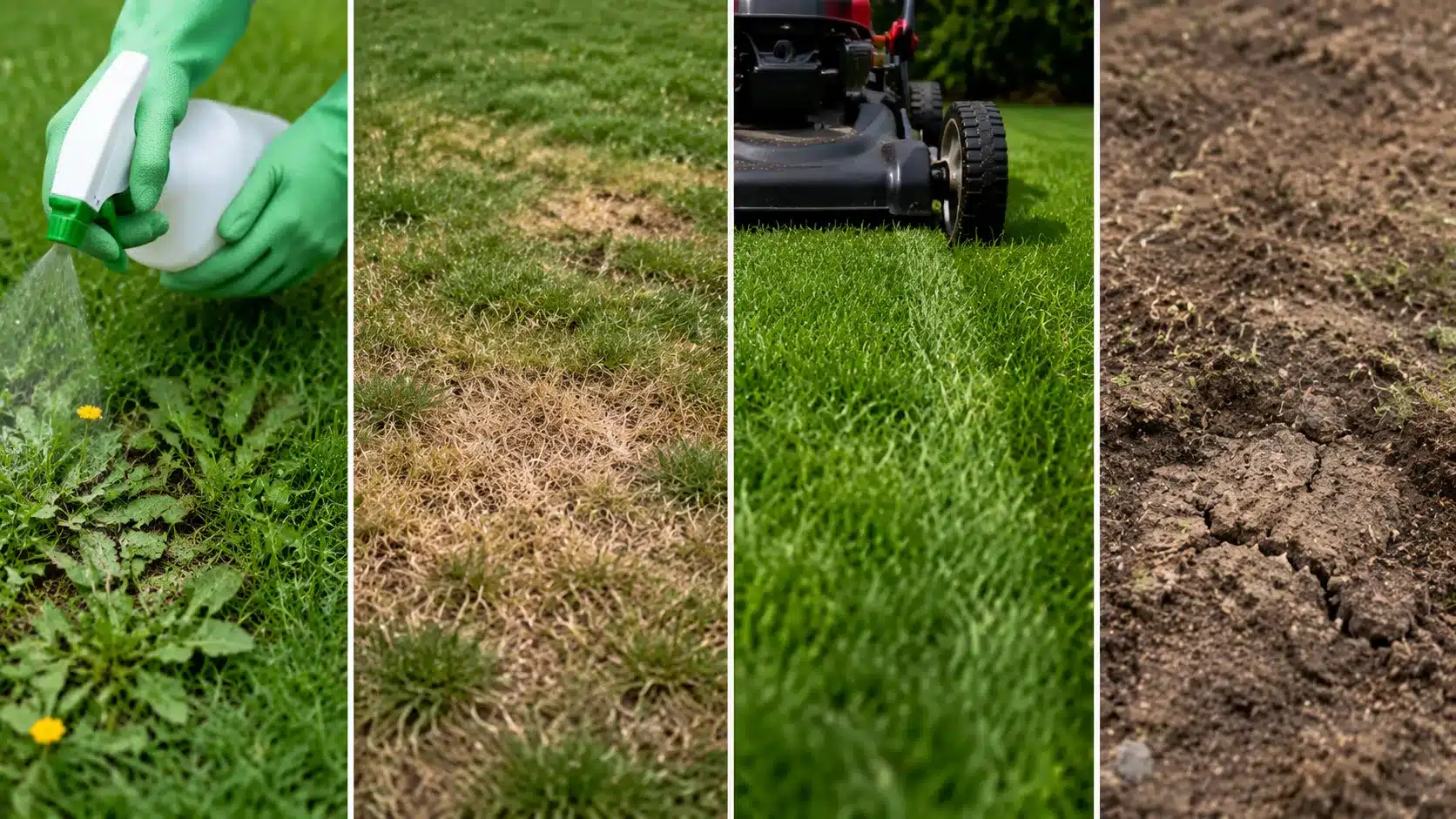
There are a few simple habits that can help prevent weeds from coming back, no matter how often you deal with them.
- Spraying before identifying: The wrong diagnosis leads to the wrong product and a wasted application.
- Using the wrong herbicide: A broadleaf spray will not touch a grassy weed, and a grass product harms broadleaf turf plants.
- Mowing too short: Scalping stresses the grass and opens the canopy to low-growing common lawn weeds.
- Ignoring soil problems: Compaction, poor drainage, and low fertility invite weeds straight back after removal.
- Removing weeds without repairing bare areas: Every gap you leave is an open seedbed for the next invader.
Frequently Asked Questions
How Long Does It Take For Weed Killer To Work?
Most selective herbicides show wilting within a day or two, but full kill takes one to two weeks. Slow-acting perennials like ground ivy may need a second round.
Is It Safe For Kids And Pets On The Lawn After Weed Treatment?
Not immediately. Wait until the area dries completely, usually a few hours, and check the product label for the exact reentry time.
Why Do Weeds Show Up In Patches Instead Of Across The Whole Lawn?
Weeds cluster where conditions favor them, like a shaded corner or a compacted path. Even soil and light across your yard mean fewer patches for weeds to claim.
Wrapping It Up
Common lawn weeds are less a random nuisance than a readout of your lawn’s health.
A patch of clover, a run of nutsedge, a crust of knotweed along the path, each one names a problem you can correct.
Get the ID right, and the rest gets easier. A thick, well-fed lawn does most of the defending on its own.
I walk my own yard every week just to see what’s turning up, and once you can name a weed, it stops feeling like a losing battle.
Drop the one that keeps coming back on you in the comments.