A few common slip-ups are behind most weak or missing daffodil bulb blooms, and I’ve seen them trip up even experienced gardeners more than once.
Planting too shallow, choosing soil that holds too much water, or watering too heavily right after planting are the biggest culprits I run into.
Cutting foliage too soon or planting bulbs poorly can delay blooms for a season.
They’re easier to avoid than you’d think once you know what to look for; here’s what I always watch for before I even pick up a trowel.
What You’ll Need
Gather your tools and materials before you start digging. An auger bit saves time when planting 50 or more bulbs at once.
| Tools | Materials |
|---|---|
| Garden trowel, bulb planter, or auger drill bit | Firm, healthy bulbs (discard any that feel soft or mushy) |
| Gardening gloves | Compost or organic matter |
| Hand rake | Mulch such as shredded bark or pine needles |
| Watering can or garden hose | Balanced bulb fertilizer (optional) |
When to Plant Daffodil Bulbs
Timing depends on your climate, but the goal is the same everywhere: get bulbs in the ground while soil is still workable, before it freezes solid.
- Zones 3-5: September to early October
- Zones 6-7: October to November
- Zones 8-9: November to December
- Soil temp cue: Plant once the soil at 6 inches drops to 60°F
Warmer regions may need to pre-chill bulbs in the fridge for 6-8 weeks before planting to mimic the cold period they’d naturally get elsewhere
General rule: Two to four weeks before the ground freezes; late planting still works but weakens blooms
What Conditions Do Daffodil Bulbs Need for Planting?
Daffodil bulbs grow best when planted in cool, well-draining soil with plenty of sunlight and enough space for strong root growth.
Choose the Right Planting Location
Plant daffodils in a spot that receives full sun to partial shade, ideally with six hours of direct sunlight daily.
Choose an open area with good air circulation and avoid low spots where water collects, as excess moisture can cause bulbs to rot before they establish.
Prepare the Soil for Healthy Root Growth
Before planting, loosen the soil to a depth of 8 to 12 inches to support root growth. Mix in compost or organic matter to improve drainage and nutrients.
Daffodils grow best in slightly acidic to neutral soil that drains well and prevents bulb rot.
| Soil Factor | Ideal Condition |
|---|---|
| Soil Type | Loose, well-draining soil |
| pH Level | Slightly acidic to neutral |
| Drainage | Moist but not waterlogged |
| Organic Matter | Compost-enriched soil |
Choosing the Suitable Time to Plant Daffodil Bulbs
Fall is the ideal time to plant daffodil bulbs, usually two to four weeks before the first hard frost. This allows roots to develop before winter and provides the cold period needed for spring blooms.
Cooler climates naturally provide enough chilling, while warmer regions may require pre-chilling bulbs. Late planting is still possible, but bulbs may produce weaker or delayed blooms.
How to Plant Daffodil Bulbs for Beautiful Spring Blooms?
Follow these simple planting steps to give daffodil bulbs the right start, from choosing healthy bulbs to proper depth, spacing, and watering.
Step 1: Inspect and Prepare the Bulbs

Pick bulbs that feel firm when you press them. Avoid any that feel soft, look moldy, or show visible damage.
Firm bulbs have the stored energy needed to grow strong roots. Soft or damaged bulbs often fail to sprout at all.
Keep bulbs in a cool, dry spot until you’re ready to plant. Damp storage can cause mold before the bulbs even reach the ground.
Step 2: Dig the Correct Planting Depth
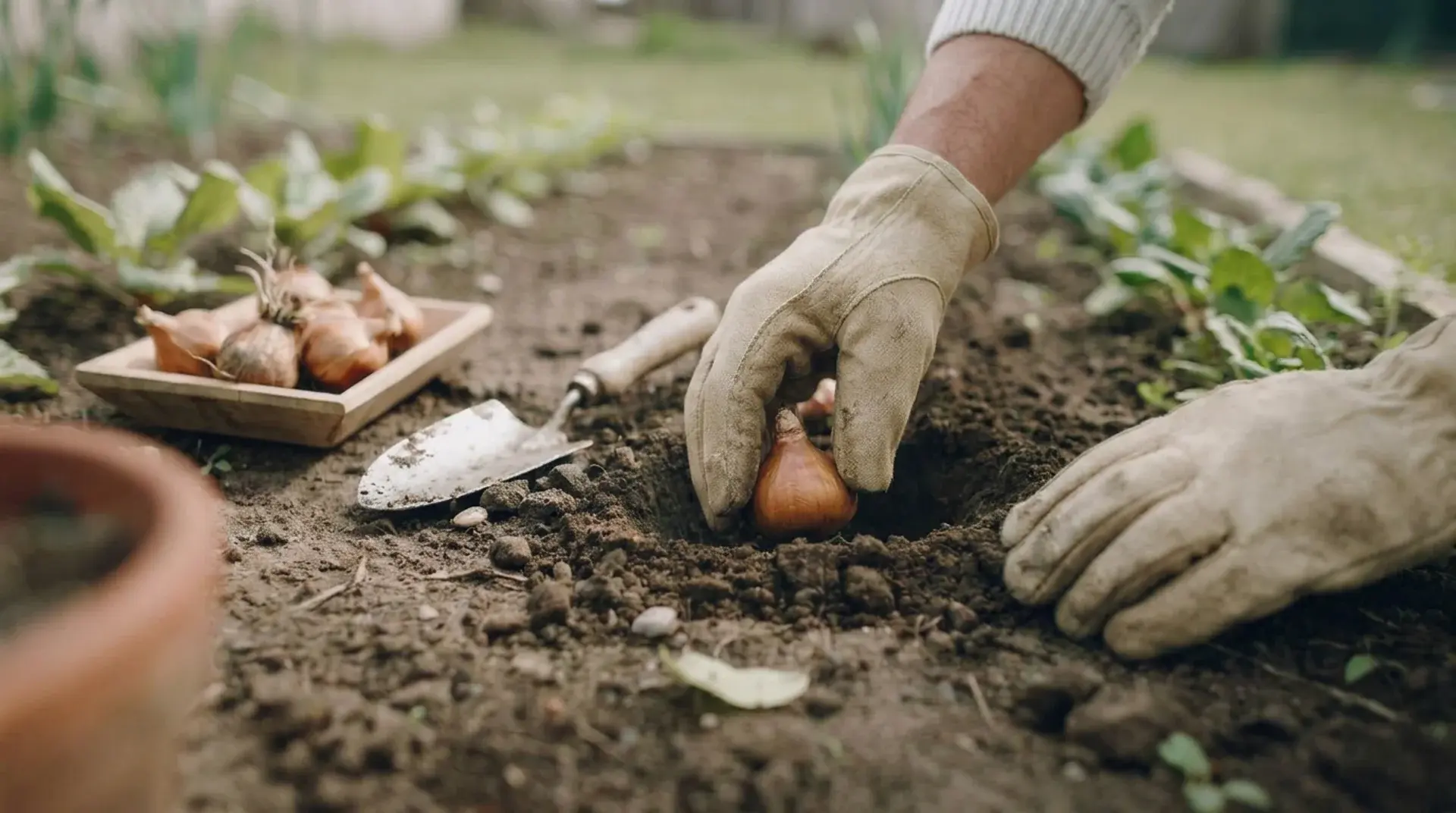
A simple rule works well here. Plant bulbs two to three times as deep as they are tall.
For most standard bulbs, plant 4 to 6 inches deep, measuring from the base. Larger bulbs may need up to 8 inches in light, sandy soil, and the same rule applies when planting tubers like dahlias.
Planting too shallow leaves bulbs exposed to temperature swings. Planting too deep can delay or weaken spring sprouting.
Getting the depth right sets the stage for everything that follows.
Step 3: Place Bulbs in the Right Position
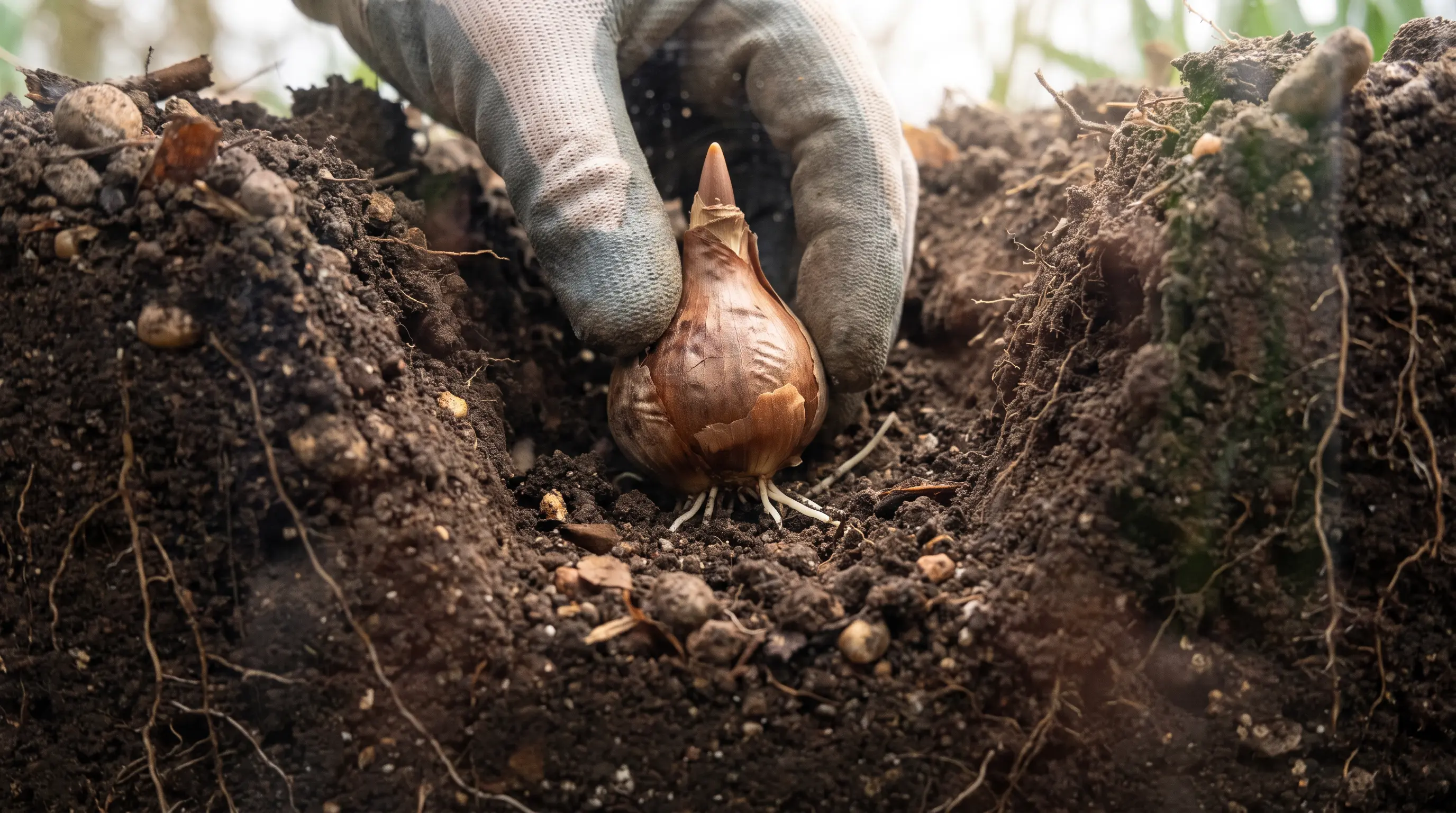
Set each bulb with the pointed tip facing up. The flat, wider side with root marks should face down into the soil.
This orientation lets the stem grow upward, and the roots grow downward without extra effort from the plant.
Backfill the hole gently. Avoid pressing down hard, since compacted soil above the bulb can slow shoot growth in spring.
Step 4: Space Bulbs Properly
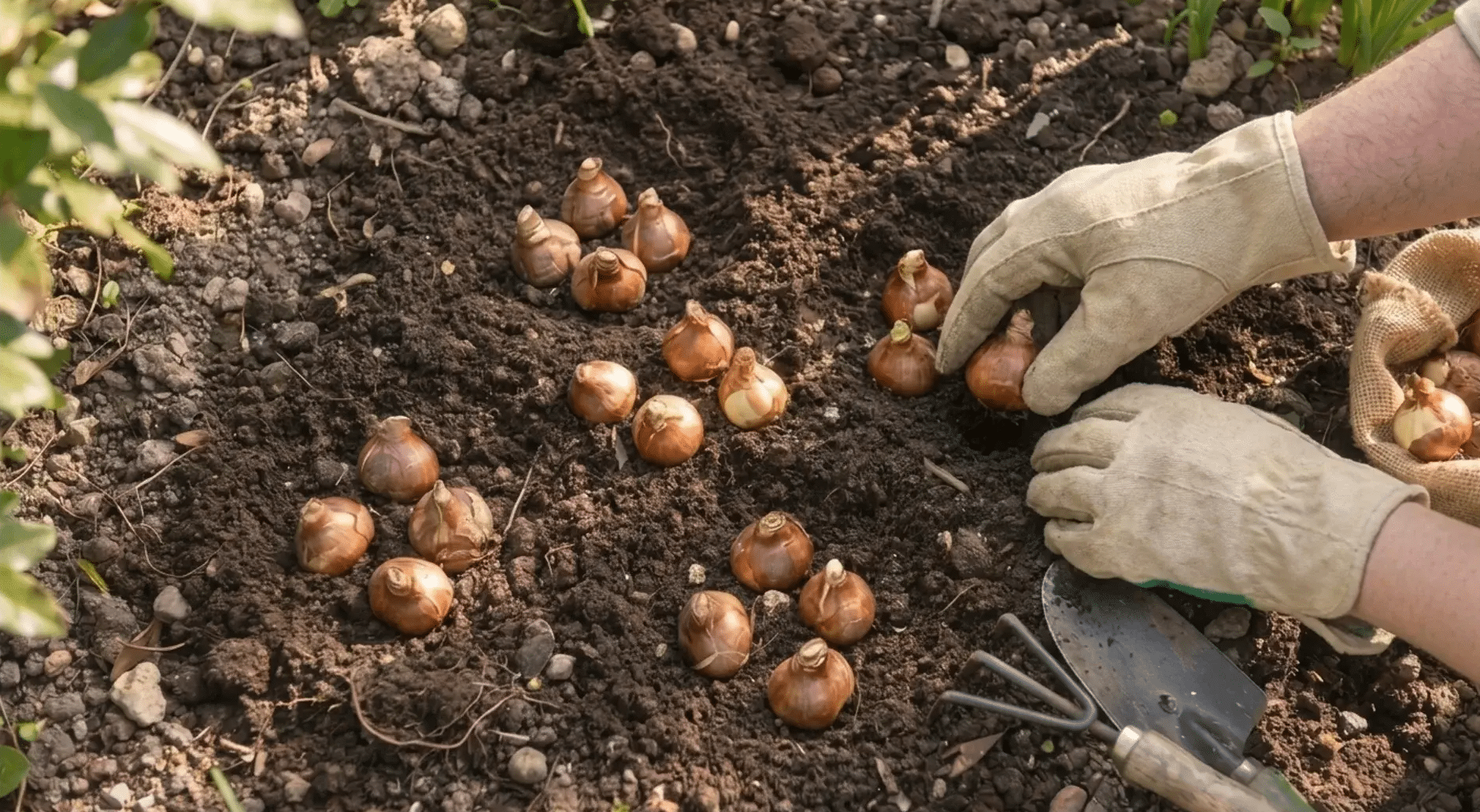
Standard bulbs are well spaced 3 to 6 inches apart. Closer spacing creates a fuller, denser look right away.
Wider spacing gives bulbs more room to multiply on their own over the years. This means less frequent digging and dividing down the road.
For a natural look, plant bulbs in loose clusters rather than in straight rows. This mimics how daffodils tend to grow in the wild.
Step 5: Water After Planting
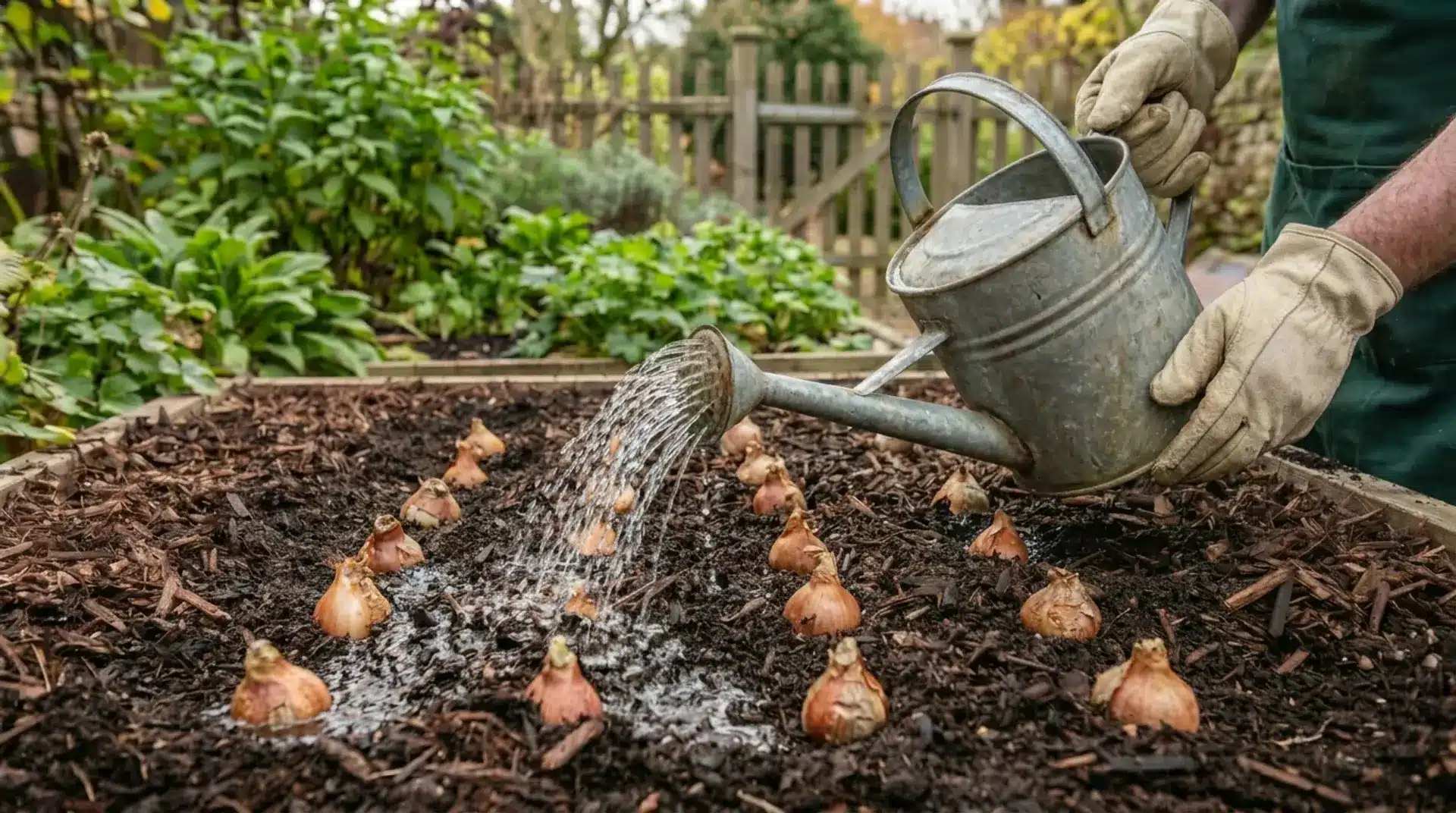
Water the area thoroughly right after planting. This helps settle the soil around each bulb and remove air pockets.
Keep the soil lightly moist in the weeks that follow, especially if fall rainfall is light. Soil should never feel soggy or waterlogged.
Cut back on watering once temperatures drop and the ground begins to cool for winter.
How Do You Care for Daffodil Bulbs After Planting?
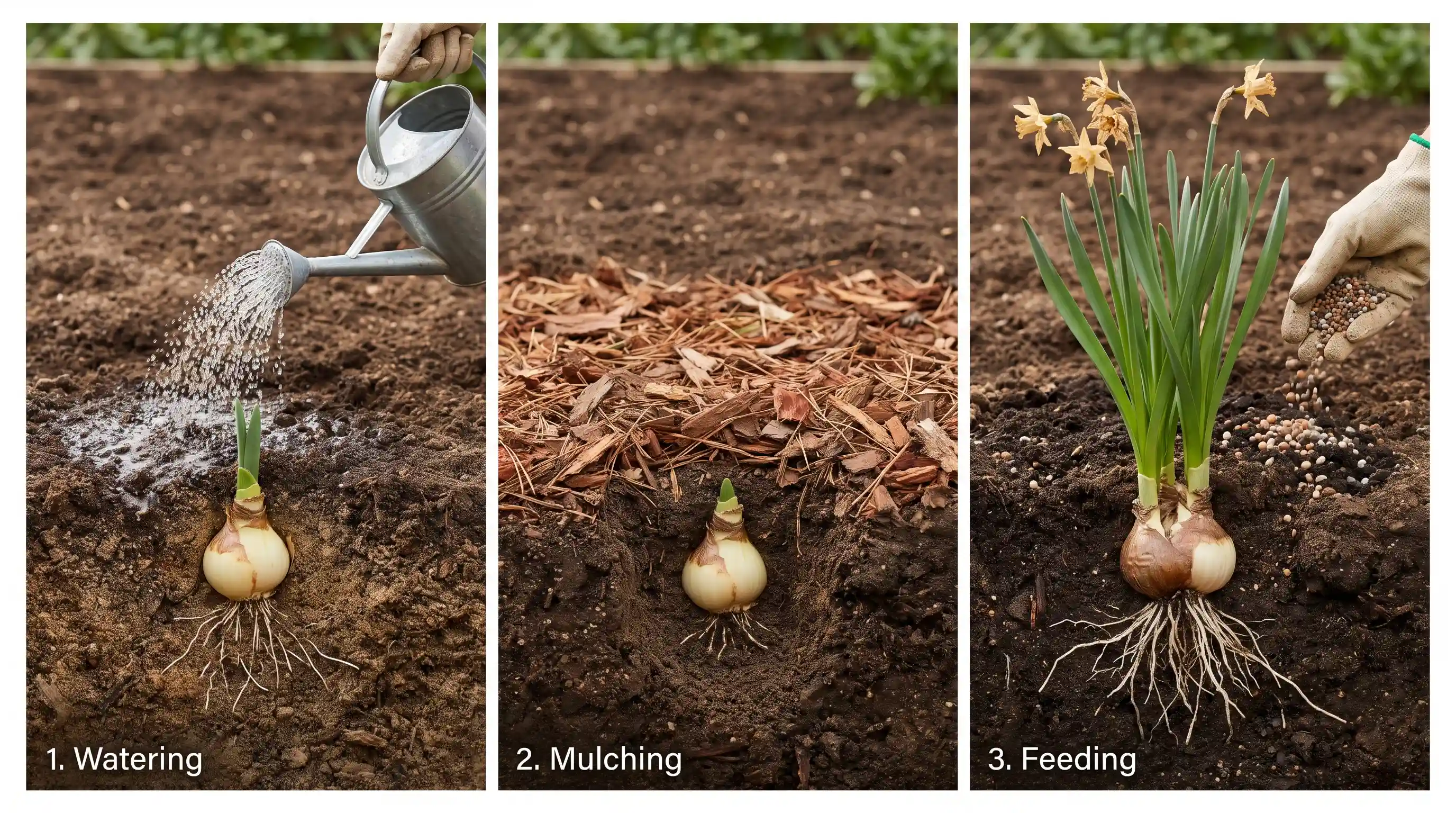
Proper care after planting helps daffodil bulbs establish strong roots, survive winter, and produce healthier blooms in the following spring.
- Watering and Moisture Needs: Water daffodil bulbs regularly while roots develop, especially during dry fall weather. Keep soil lightly moist but avoid excess water, as soggy conditions can cause bulb rot.
- Mulching and Winter Protection: Apply a thin mulch layer to protect bulbs, retain moisture, and stay ahead of common garden weeds. Avoid heavy mulch that blocks drainage or spring growth.
- Feeding Daffodils for Better Blooms: Daffodil bulbs need little fertilizer during their first bloom. Apply balanced fertilizer or compost after flowering to support energy storage and encourage stronger blooms next year.
How Long Does it Take for Daffodil Bulbs to Bloom?
Here’s your timeline for when to expect flowers, based on when you plant and which variety you choose.
| Bloom Stage | Timeframe |
|---|---|
| Planting to shoots | 3–5 months (fall to late winter) |
| Shoots to flower | 2–4 weeks |
| Early varieties (e.g., ‘February Gold’) | Late Feb–March |
| Late varieties (e.g., ‘Pheasant’s Eye’) | April–May |
| Full bloom potential | Year 2+ |
Newly planted bulbs, like leggy seedlings, need a season to establish, so year-one blooms may be lighter.
Mistakes to Avoid When Planting Daffodil Bulbs
A few common slip-ups are behind most weak or missing blooms, and they’re easier to avoid than you’d think; here’s what to watch for.
- Planting Bulbs Too Shallow: Shallow planting exposes bulbs to temperature changes and can affect root development, leading to weaker growth and fewer blooms.
- Using Poorly Draining Soil: Heavy, waterlogged soil can cause bulbs to rot before they establish. Daffodils grow best in loose soil with good drainage.
- Overwatering After Planting: Too much moisture around newly planted bulbs increases the risk of rot. Keep soil lightly moist but avoid soggy conditions.
- Cutting Foliage Too Early: Removing leaves too soon cuts off next year’s blooms, the same reason timing matters when pruning hydrangeas.
- Planting Damaged Bulbs or Wrong Locations: Healthy leaves but no flowers usually points to planting depth, overcrowding, or poor growing conditions, known as blind daffodils.
Final Thoughts
Getting daffodil bulbs to bloom well comes down to a few basics. Plant at the right depth, space them out properly, and choose fall as your planting window.
Well-draining, well-prepared soil rounds out everything your daffodil bulbs need to root in strong.
Once they settle into the ground, they ask for very little. A bit of water, a light layer of mulch, and some patience go a long way; I’ve found that’s really all it takes.
Ready to add a burst of spring color to your yard? Grab a few daffodil bulbs, pick your spot, and get planting this fall.
Frequently Asked Questions
Can daffodil bulbs grow and bloom again every year?
Yes, they’re perennial. Let foliage die back naturally, and divide crowded clumps once blooms start looking smaller.
Can you plant daffodil bulbs in spring?
Fall is best for the cold period bulbs need. Spring planting works too, but expect delayed or weaker blooms.
Do daffodil bulbs need to be dug up every year?
No, daffodils can remain in the ground year-round, where they often multiply naturally without needing to be dug up each season.
How long can daffodil bulbs sit before planting?
Keep it in a cool, dry, and airy place, and try to plant it within a few weeks to help preserve its energy reserves.
Can you plant daffodil bulbs in containers?
Yes, use a pot with drainage holes, plant at the same depth as in-ground, and protect from hard freezes.