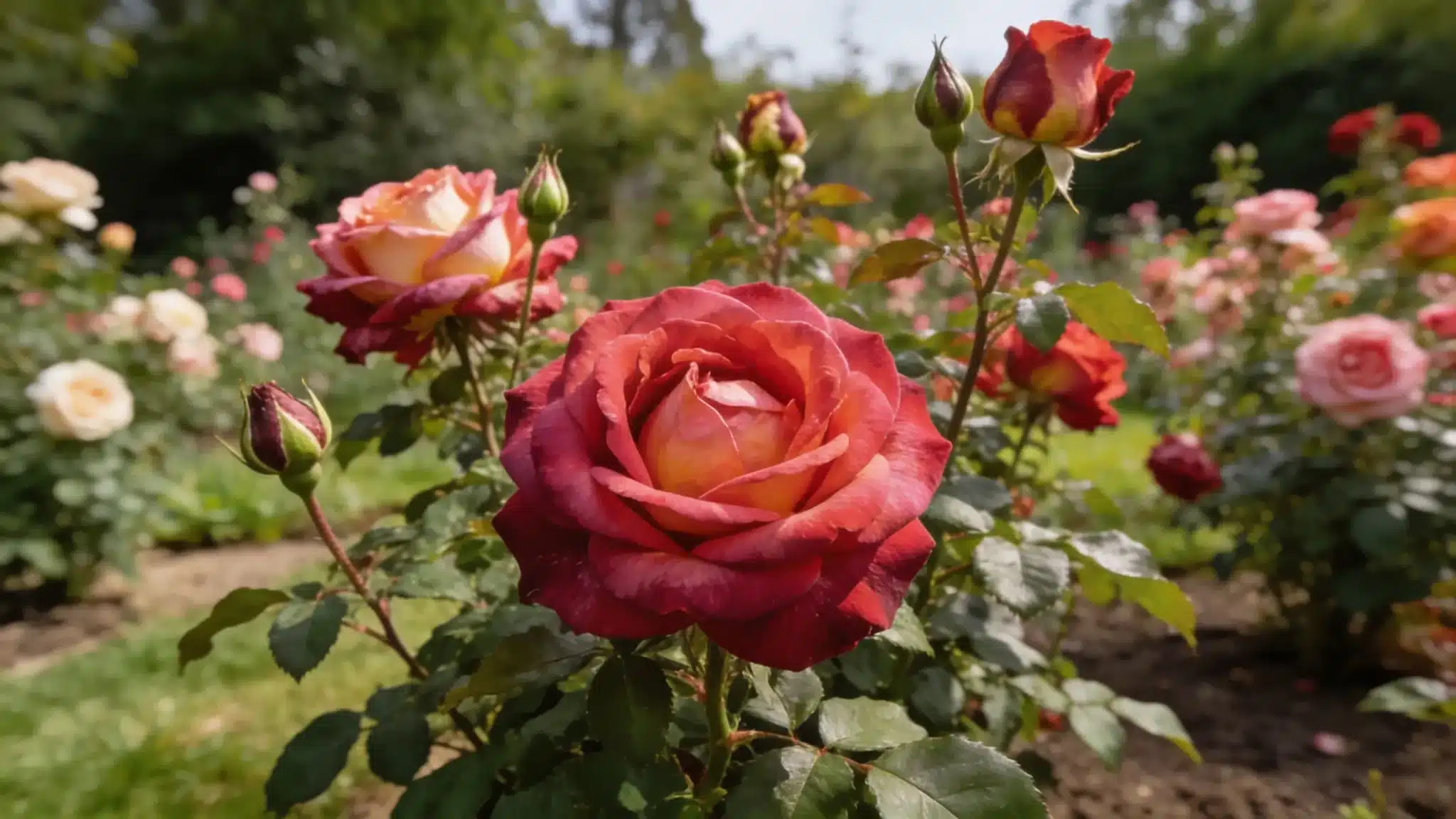

When do roses bloom? Most gardens see their first flush six to eight weeks after spring growth starts, though the exact timing shifts with your climate, your variety, and how well you cared for the plant over winter.
I’ve gardened across several climate zones over fourteen years, and this guide reflects what’s actually worked in my own beds.
Get the timing and care habits right, and you can have roses from May through the first hard frost.
When Roses Bloom in Most Regions of the U.S.
For most of the US, roses push out their first blooms in late May or June, roughly six to eight weeks after spring growth begins.
That timing shifts with your location. Warm southern states see blooms in April, while gardeners in Minnesota or Vermont might wait until late June.
June is when roses tend to peak across most regions. It’s the month most associated with the visual payoff: full, fragrant flushes of color across the garden.
Many repeat bloomers put out a second, smaller flush around September as temperatures cool.
When Do Roses Bloom by USDA Zone?
Geography matters more than most gardeners realize. Here’s a rough bloom window by zone:
| USDA Zone | States (examples) | First Bloom | Season End |
|---|---|---|---|
| 3–4 | Minnesota, Vermont | Late June | September |
| 5–6 | Ohio, Missouri, Virginia | Mid-May | October |
| 7–8 | Texas, Pacific Northwest | Late April | October–November |
| 9–10 | Southern California, Florida | March–April | Near year-round |
| 11 | Hawaii | Year-round possible | N/A |
In Southern California, the rose season often starts in March. In equatorial climates, commercial growers produce roses year-round for exactly this reason: the plants never fully go dormant.
If you don’t know your zone, the USDA Plant Hardiness Zone Map lets you enter your ZIP code for an exact result.
Rose Bloom Timings by Types
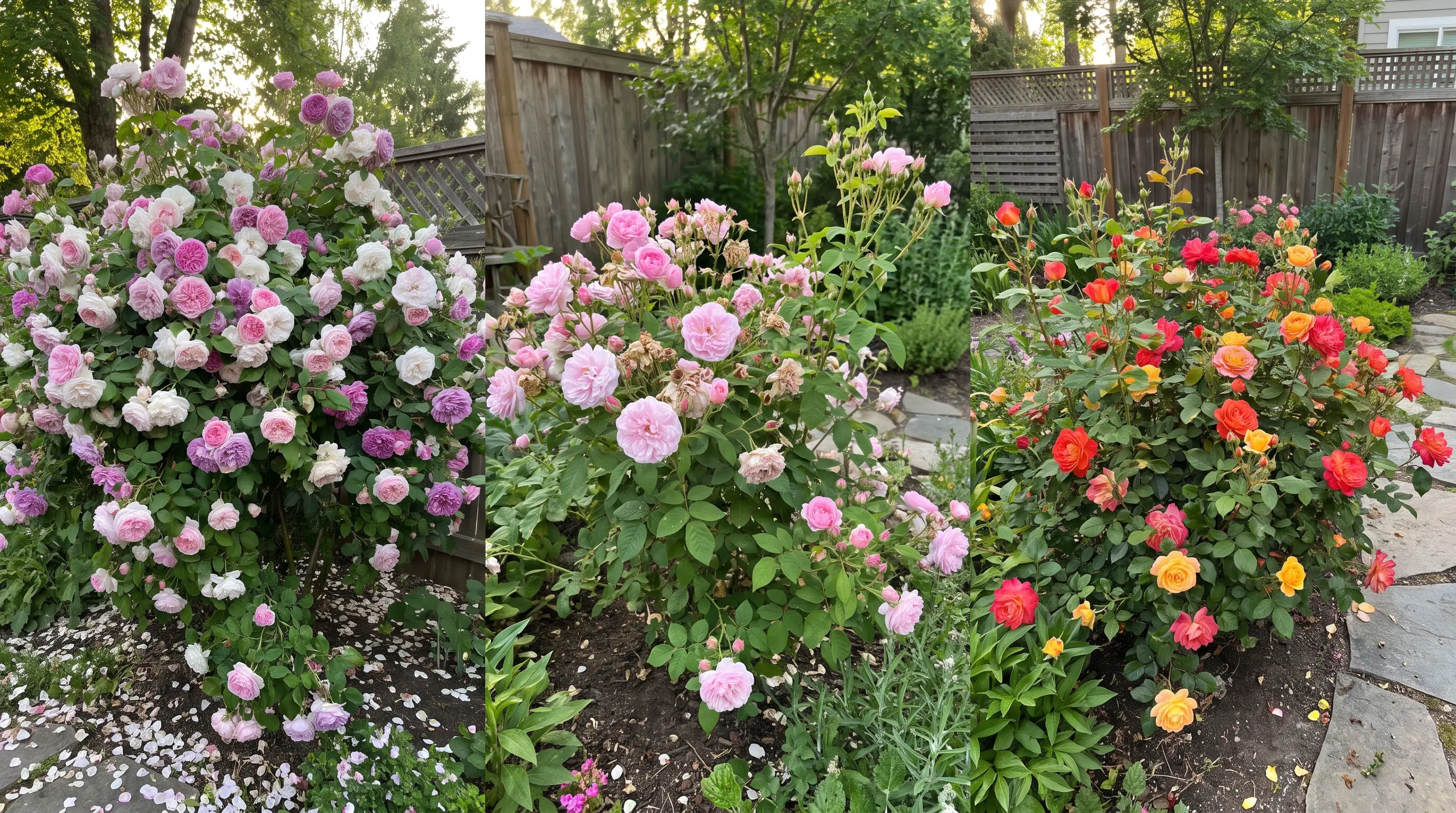
Not all roses follow the same schedule, and knowing your variety changes everything. Some bloom once, while others produce flowers in repeated cycles.
Climate, sunlight, and care can also affect when and how long roses stay in bloom.
1. Once-Blooming Roses
This group includes old garden roses like albas, gallicas, and centifolias. They flower once in late spring or early summer, then that’s it for the year.
One spectacular flush, often producing far more flowers per plant than repeat-bloomers do in their entire season, then back to green.
If you have one of these and you missed the window, you’re waiting until next year.
2. Twice-Blooming Roses
This small category includes Damask roses (Rosa damascena), a beautiful variety that originally comes from the Middle East.
They typically bloom in late summer or fall in addition to their spring flush. Rare, but worth knowing they exist.
3. Repeat-Blooming Roses
These are the most modern roses. Hybrid teas, floribundas, grandifloras, climbing roses, and shrub roses all cycle through blooms every six to eight weeks throughout the season.
They deadhead regularly and keep going until the first frost, showing their dedication and commitment.
Repeat-Bloomer Cycle Lengths
Cycle length varies noticeably by type, so knowing which roses you’re growing helps you predict the next flush.
| Type | Bloom Pattern | Cycle Length |
|---|---|---|
| Hybrid teas | Peak in early summer on long, upright stems; rebloom through fall with proper care | Depends on the cultivar; ‘Peace’ cycles every 3 to 5 weeks |
| Floribundas | Bloom in clusters from late spring until the first frost; consistent and low-fuss | 4 to 8 weeks, depending on conditions |
| Grandifloras | Elegant, long-stemmed clusters | 5 to 7 weeks |
| Climbing roses | Sporadic flushes through the season; trained on a trellis or fence, they double as a living privacy screen | Reliable repeat bloomer |
| Knock Out roses | Self-cleaning, meaning spent blooms drop on their own; no deadheading required | Continuous, spring through hard frost |
The Five Stages of a Rose Bloom
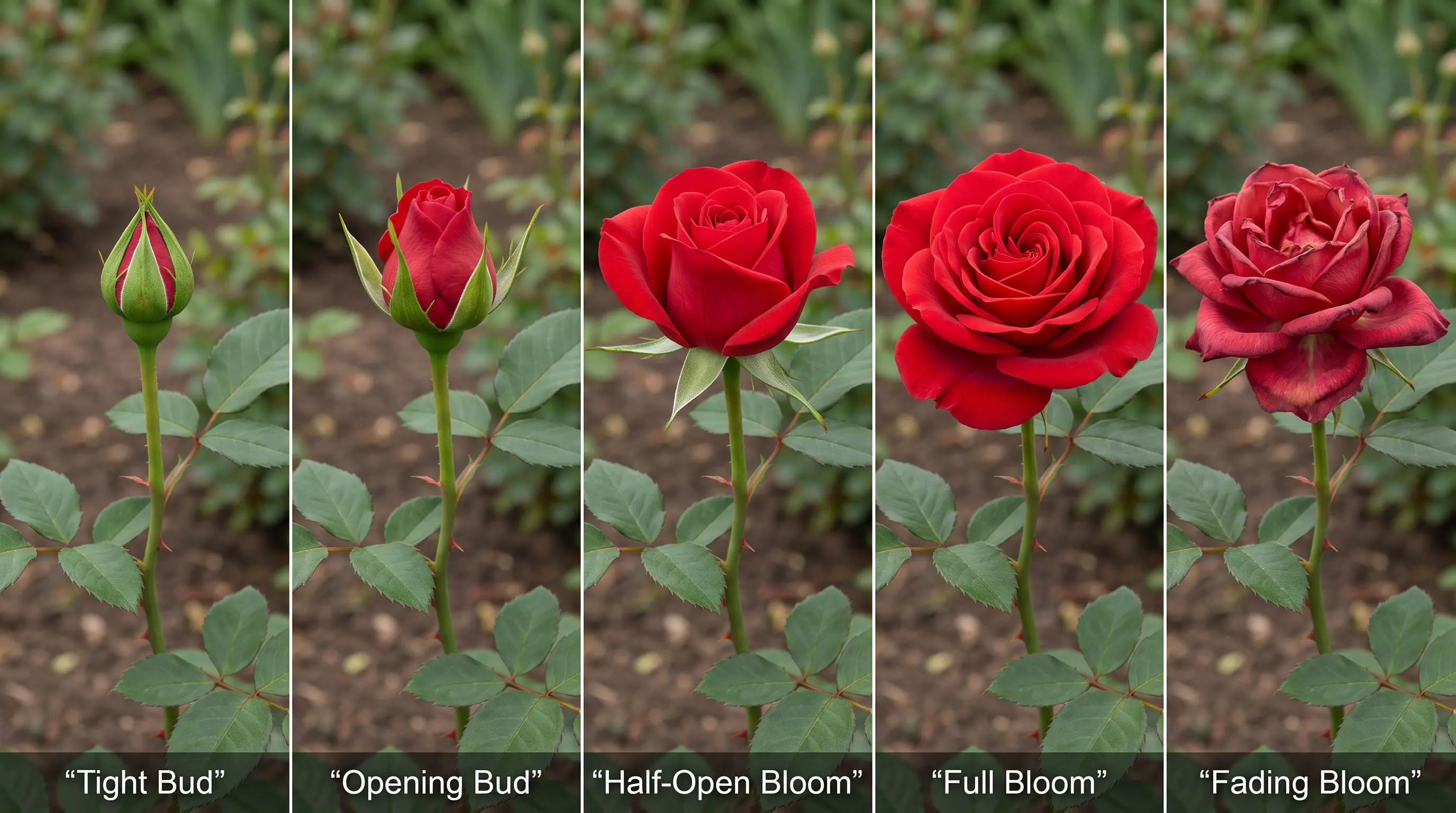
Knowing how your rose is progressing at each stage can really help you make the best choices in caring for it.
It’s like getting to know your plant better so you can give it exactly what it needs when it needs it!
Step 1: Bud
A small green bud forms at the stem tip, gradually growing and revealing its color as the flower prepares to open.
Step 2: Opening
The outer petals begin unfolding, gradually revealing the delicate inner petals as the rose opens into its natural shape.
Step 3: Full Bloom
All petals are fully open, displaying peak color and fragrance, making this the ideal stage for cutting roses for indoor arrangements.
Step 4: Fading
Four to seven days after full bloom, the petals begin to lose their bright color, firmness, and smooth texture.
Step 5: Petal Drop and Hip Formation
The petals fall, and a rose hip begins forming. Deadhead the spent flower to encourage another blooming cycle.
How to Keep Roses Blooming Longer
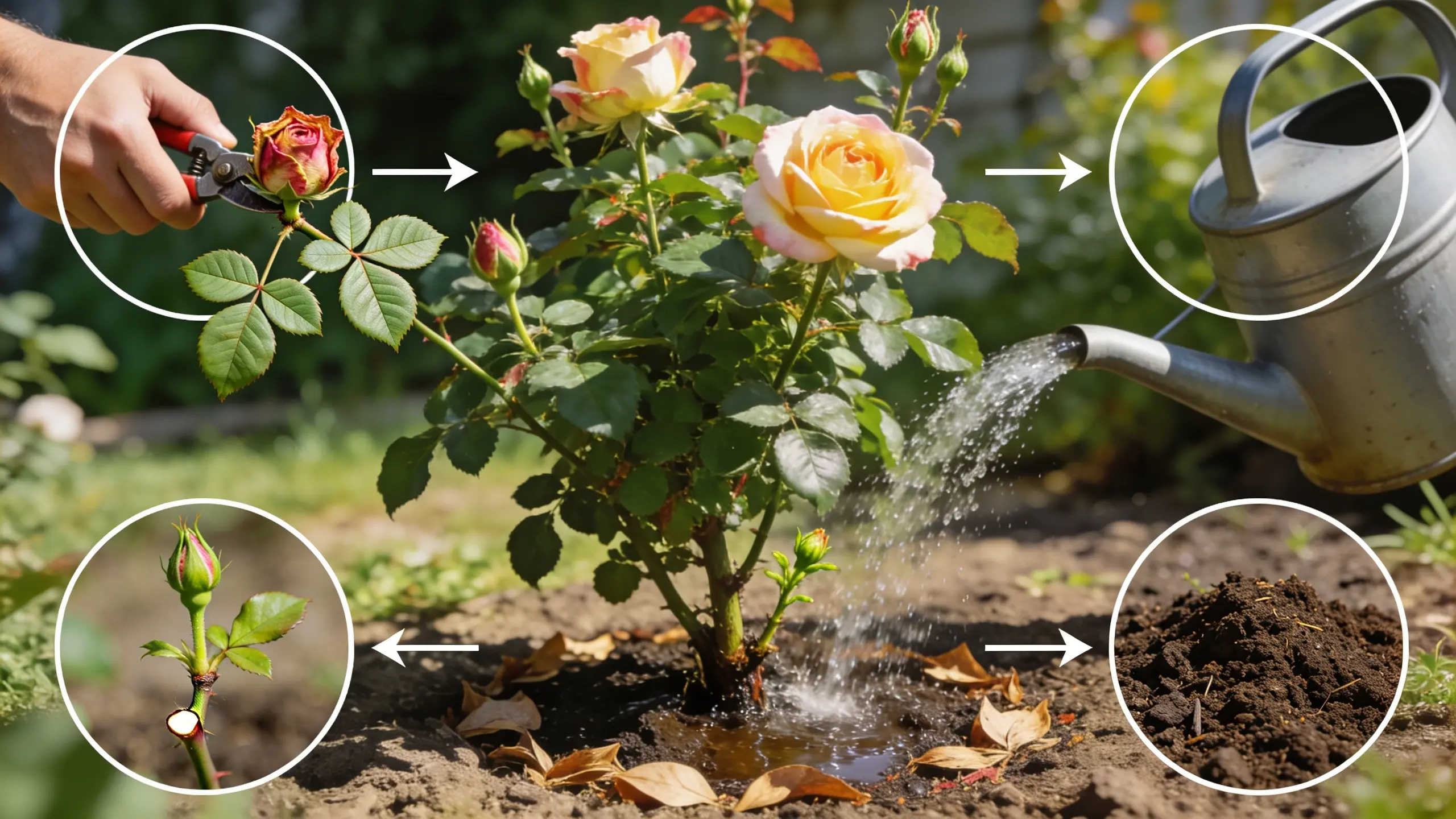
This is where most gardening guides fall short. Knowing when roses bloom is one thing; knowing how to extend that window is another.
1. Deadhead Correctly
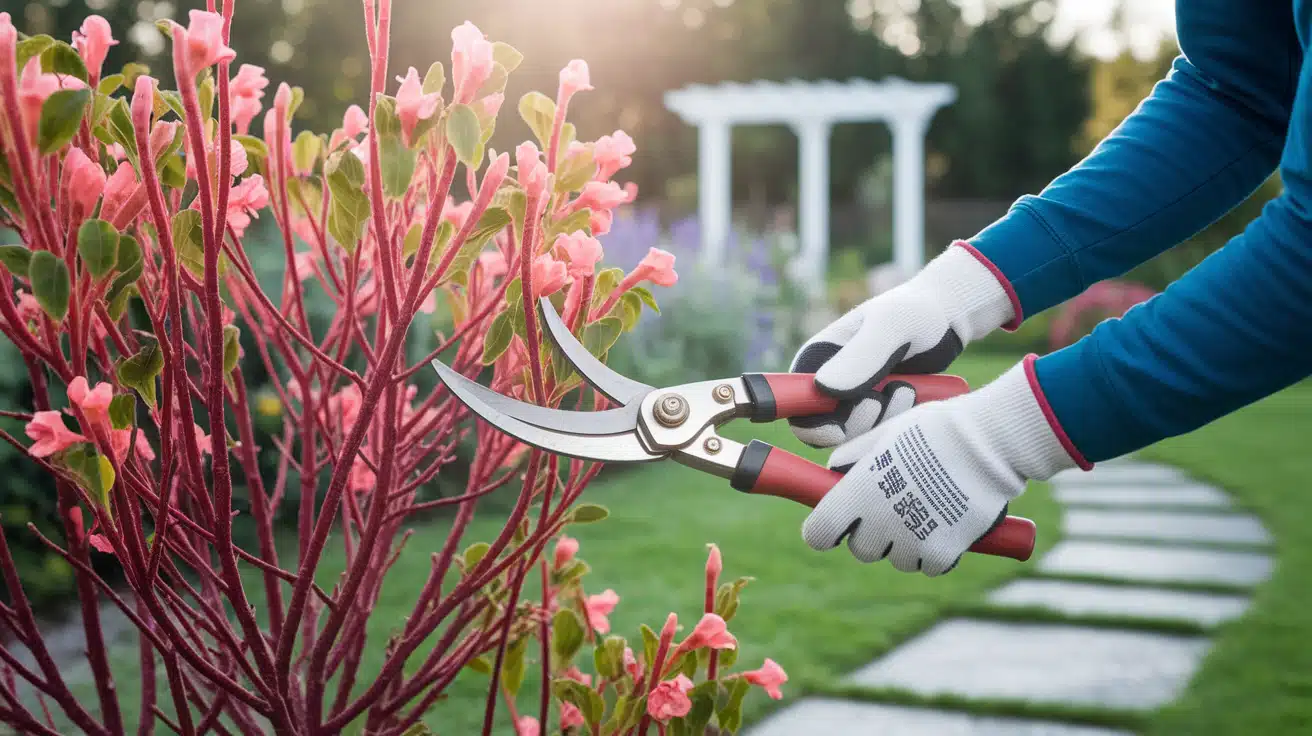
Deadhead to a five-leaflet junction, not a three-leaflet one; three-leaflet cuts grow stems but no flowers.
Cut at a gentle 45-degree angle, about a quarter inch above the node for best results.
This doesn’t apply to every shrub: plants that bloom on old wood, like hydrangeas, lose next year’s flowers if pruned at the wrong time.
2. Water Deeply, Not Often
Established roses do best with two deep waterings per week instead of shallow daily watering, which helps roots grow deeper and resist heat and drought.
Always water at the base, not overhead, since wet foliage encourages black spot and powdery mildew, reducing bloom performance.
3. Feed After Every Flush
Roses are heavy feeders. After each bloom cycle, use a balanced NPK fertilizer to support the next flush.
Organic options like fish emulsion, blood and bone, or compost tea also work well. The same rest-and-refeed rhythm keeps other heavy bloomers, like dahlias, flowering hard right up until frost.
At the start of the season, Epsom salts can give a magnesium boost. Stop feeding about six weeks before frost to avoid tender new growth that cold weather will damage.
4. Get the Sunlight Right
Six hours of direct sun per day is the minimum. Below that, you’ll get long, leggy stems reaching for light, with very few buds.
Morning sun matters, especially when it dries the foliage quickly, reducing disease pressure. In hot southern states, some afternoon shade actually helps preserve blooms longer once they open.
Planning for Blooms in Different Seasons
Rather than picking one rose variety, many experienced gardeners mix types to stagger blooms across the full season:
- Spring anchor: A once-blooming old garden rose for a spectacular May–June flush. ‘Ispahan’ (damask) and ‘Empress Josephine’ are well-regarded for fragrance and flower count.
- Summer backbone: Repeat-blooming floribundas or hybrid teas carry the season from June through September. ‘Sunsprite’ (yellow floribunda) is disease-resistant and nearly constant in bloom.
- Late-season color: Butterfly rose and certain shrub varieties peak in fall, bridging the gap before frost, and into the witch hazel and hellebores that carry color once the last rose has faded.
With this kind of planning, you rarely go more than a week or two without something in bloom from May through October.
Final Thoughts
When do roses bloom? It depends on the variety, your climate zone, and how consistently you care for the plant, but most gardens see peak color in June, with flowers running from late April through the first frost given the right mix of varieties.
In my own garden, the habits that keep blooms coming are simple: deep watering, feeding after each flush, deadheading to a five-leaflet node, and six hours of direct sun.
They’re just easy to skip. Start with one this week, deadhead your roses correctly, and watch the difference in your next flush.
Frequently Asked Questions
Why isn’t my new rose bush blooming yet?
New roses often skip blooms for their first 10 to 12 weeks while establishing roots. Removing early buds on purpose redirects that energy underground.
Why does my rose bush have leaves but no flowers?
Too much nitrogen fertilizer is the usual cause. It pushes leafy growth at the expense of buds, so switch to a bloom-formula feed with less nitrogen.
Do climbing roses bloom their first year?
Rarely, and that’s normal. Climbers typically follow a “sleep, creep, leap” pattern, with the real bloom show arriving in year two or three.
Why did my rose start blooming a different color?
The grafted top likely died, and the hardy rootstock took over. Rootstock growth often looks thornier and blooms a different color than the original variety.