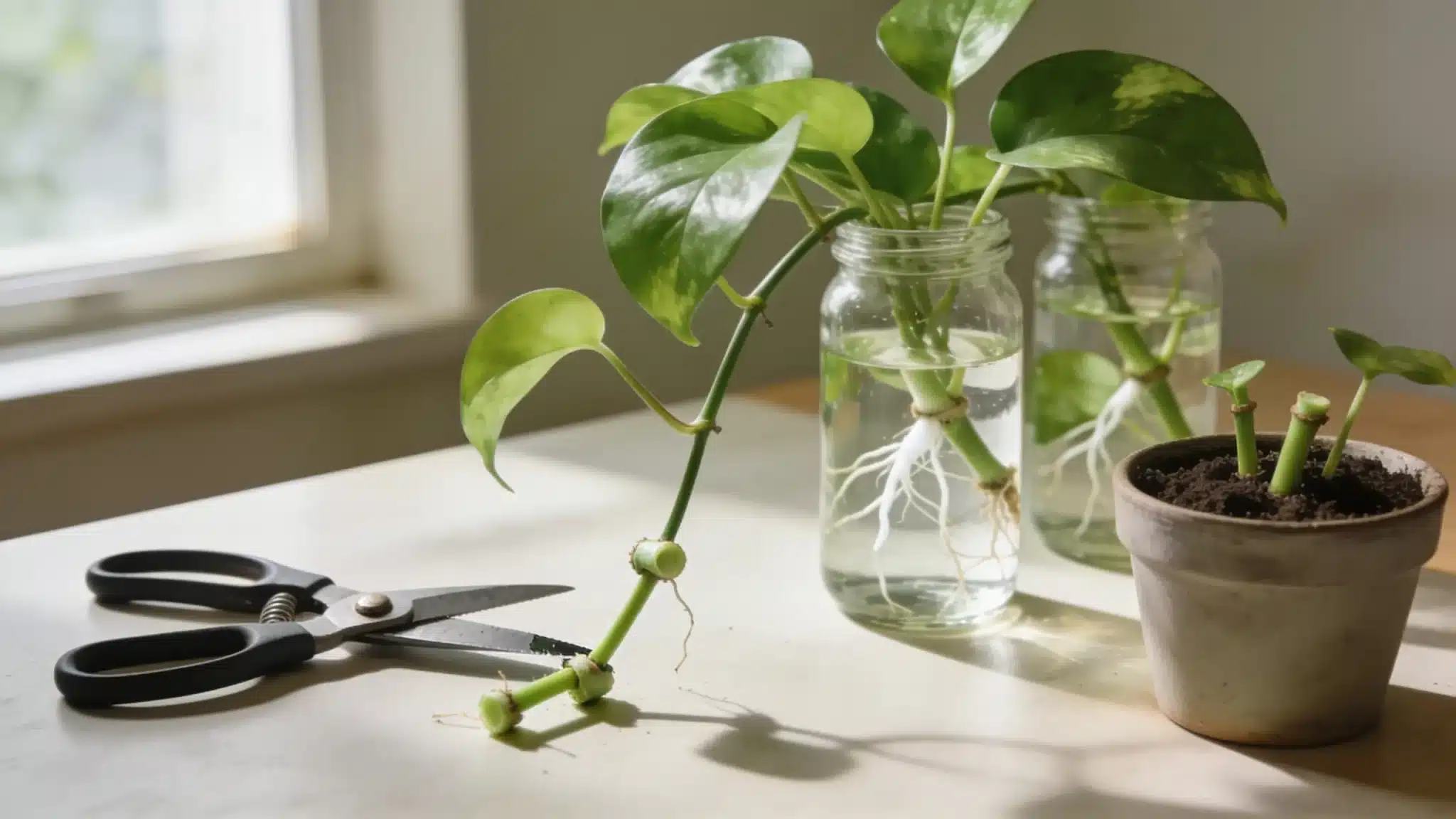

I’ve turned one $15 pothos into more than a dozen plants using this exact process, and pothos propagation really is that simple.
If your pothos is trailing, you can easily multiply it into several new plants.
It’s basically cutting a healthy vine into single-node sections and letting each node grow new roots in water, soil, sphagnum moss, or LECA.
Water propagation lets you watch roots develop within a few weeks in bright, warm conditions.
Once roots reach about half an inch to an inch, they’re ready to be potted up and grown into fuller plants.
What You’ll Need for Pothos Propagation
Before you start, gather a few simple tools to make the process smooth and successful. A healthy pothos cutting with at least one node is essential, as this is where new roots will form.
| Tool or Material | Purpose |
|---|---|
| Clean scissors or pruning shears | Makes clean, disease-free cuts. |
| Healthy pothos cutting | Provides a strong stem for rooting. |
| Glass jar or container | Holds water and shows root growth. |
| Small pot and potting mix | Supports soil propagation and planting. |
| Fresh water | Keeps developing roots healthy. |
| Sphagnum moss, optional | Holds moisture while allowing airflow. |
| LECA, optional | Supports roots without excess water. |
| Rooting hormone, optional | May help roots develop faster. |
How to Propagate Pothos in Water Step-by-Step
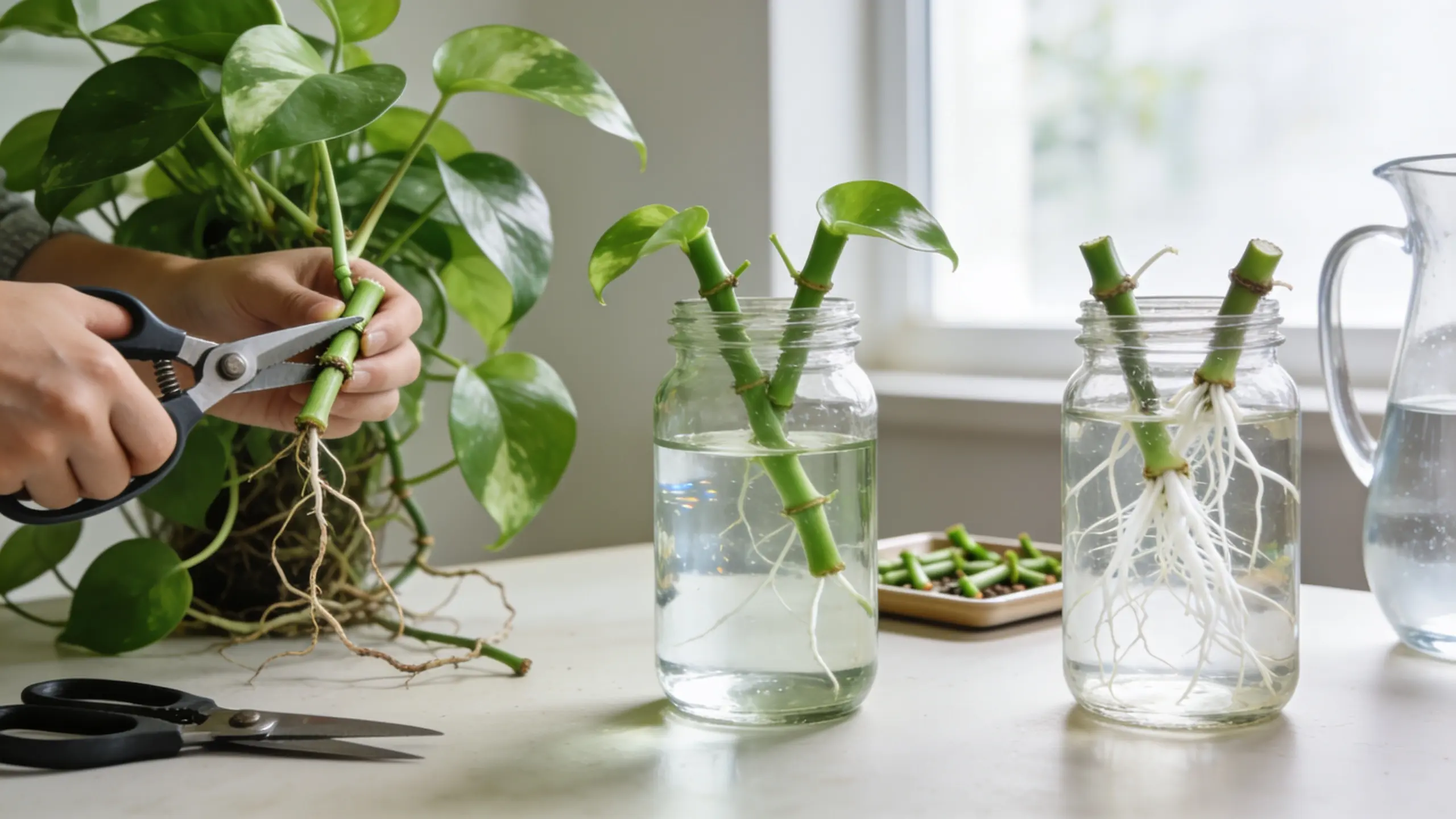
This method shows how to efficiently turn one pothos vine into many plants using single-node cuttings.
Each cutting becomes its own vine, and when planted together, they create a much fuller plant.
Step 1. Cut a Healthy Long Vine
Start by cutting a long, healthy vine from your pothos plant. Choose a vine with several leaves and visible nodes so you have enough material for multiple cuttings. ‘
Use clean, sharp scissors or pruning shears to make a neat cut and avoid damaging the plant tissue. Look for vines with strong growth, healthy green leaves, and no signs of yellowing or disease.
Step 2. Identify Nodes and Aerial Roots
Look closely at the vine and locate the nodes where the leaf and petiole meet the stem. These small points are essential because they contain the cells needed for new root growth.
You may notice tiny aerial roots or bumps around the nodes, which are a good sign that the cutting can develop strong roots.
Select sections with healthy, firm nodes to give each cutting the best chance of successful propagation.
Step 3. Make Single-Node Cuttings
Cut just below each node so that each piece contains one leaf and one node.
These individual sections have the potential to develop into new plants because the node contains the growth point needed for root formation.
Use clean, sharp scissors or pruning shears to make smooth cuts, and avoid crushing the stem. Carefully preparing each cutting helps promote healthy root growth during propagation.
Step 4. Continue Cutting Along the Vine
Repeat the process along the entire vine until you divide all healthy sections into individual cuttings.
Make sure each piece includes at least one node and a healthy leaf to give it the best chance of producing new roots.
This method helps you get the maximum number of cuttings from a single stem while making the most of your pothos plant.
Step 5. Decide How Many Cuttings Per Pot
Use the rule of at least one cutting per inch of pot diameter when deciding how many pieces to plant together. For example, a 4-inch pot should have around 4 cuttings to create a fuller, bushier pothos plant.
Adding several cuttings helps the pot fill out faster and creates a thicker appearance as each cutting grows new leaves and vines.
Step 6. Place Cuttings in Water
Place the node areas into water using a clean jar or propagation container. Make sure the nodes and any visible aerial roots are fully submerged, as these areas will produce the new roots.
Keep the leaves above the waterline to prevent rot. Position the cuttings in bright, indirect light, and refresh the water regularly to keep the growing environment clean.
Step 7. Keep in Bright Indirect Light
Place the containers near a bright window, such as an east-facing window, where the cuttings can receive gentle indirect light.
Avoid dark corners, as pothos cuttings need sufficient light and warmth to support healthy root development.
Without enough light, new growth can also turn thin and leggy instead of full.
Keep them out of harsh direct sunlight, which can stress the cuttings, and maintain a stable environment while new roots form.
Step 8. Transfer into Soil
Once the cuttings have developed a healthy root system, plant them into a well-draining potting mix. A combination of quality potting soil and perlite works well because it provides nutrients while improving airflow around the roots.
Place the rooted cuttings together in the pot for a fuller pothos plant, then water thoroughly and keep the soil lightly moist as the new growth becomes established.
How to Propagate Pothos in Soil
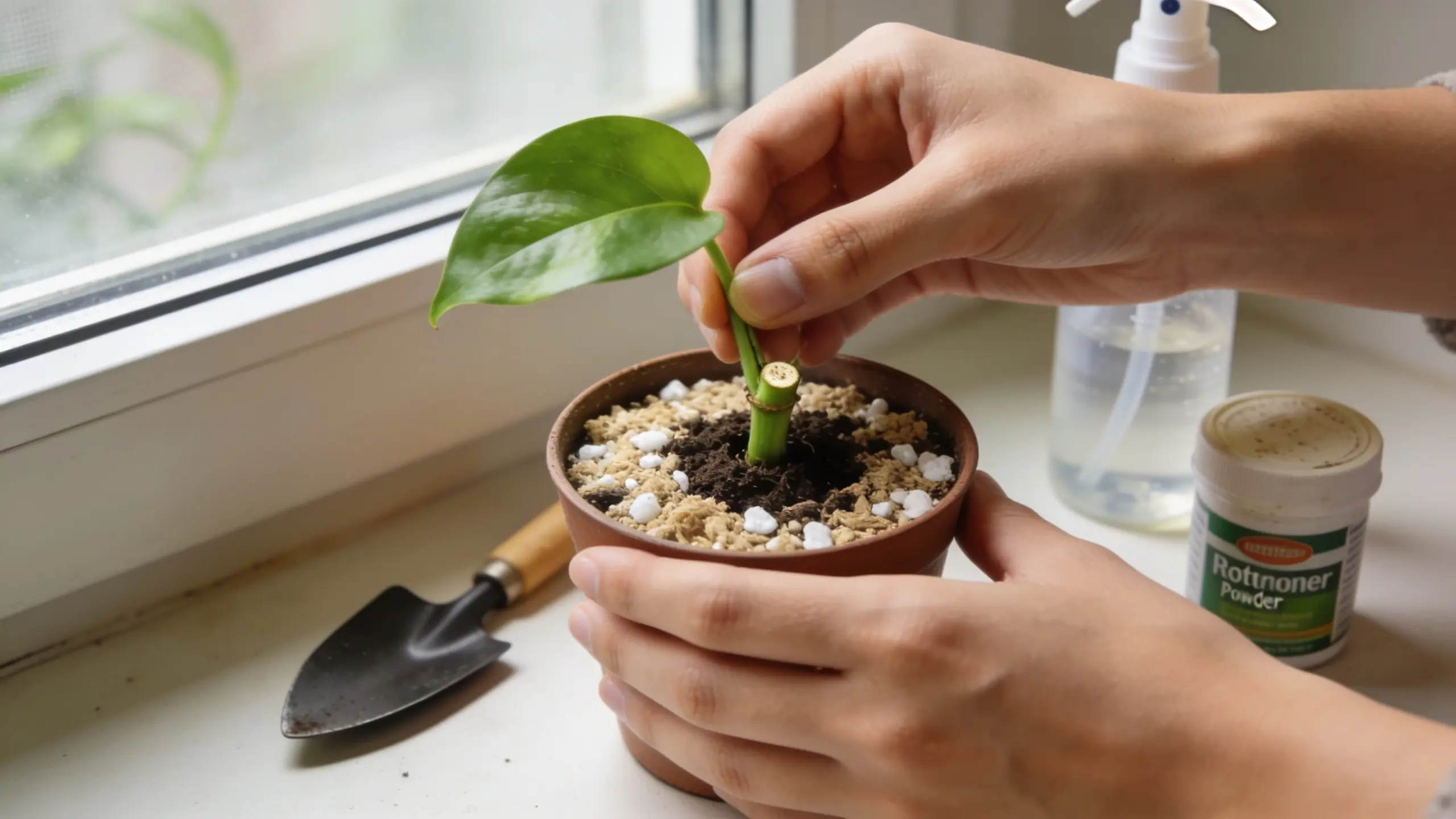
To skip the extra water-to-soil transfer, place the pothos cutting directly into a light, well-draining potting mix and keep it evenly moist while roots develop.
- Use a small pot with well-draining potting mix. Adding perlite helps improve aeration.
- Make a hole using a pencil, then insert the cutting so the node sits just below the soil surface.
- Water lightly after planting to settle the mix around the cutting.
- Cover with a clear plastic bag or humidity dome for 1 to 2 weeks to maintain moisture and encourage rooting.
That humidity dome step makes a bigger difference than people expect, especially in dry climates. It keeps moisture around the cutting while roots form and reduces leaf wilting.
Timeline: First signs of rooting in 2–3 weeks. New leaf growth the clearest confirmation that the propagation worked around weeks 5–8.
How to Propagate Pothos in Sphagnum Moss
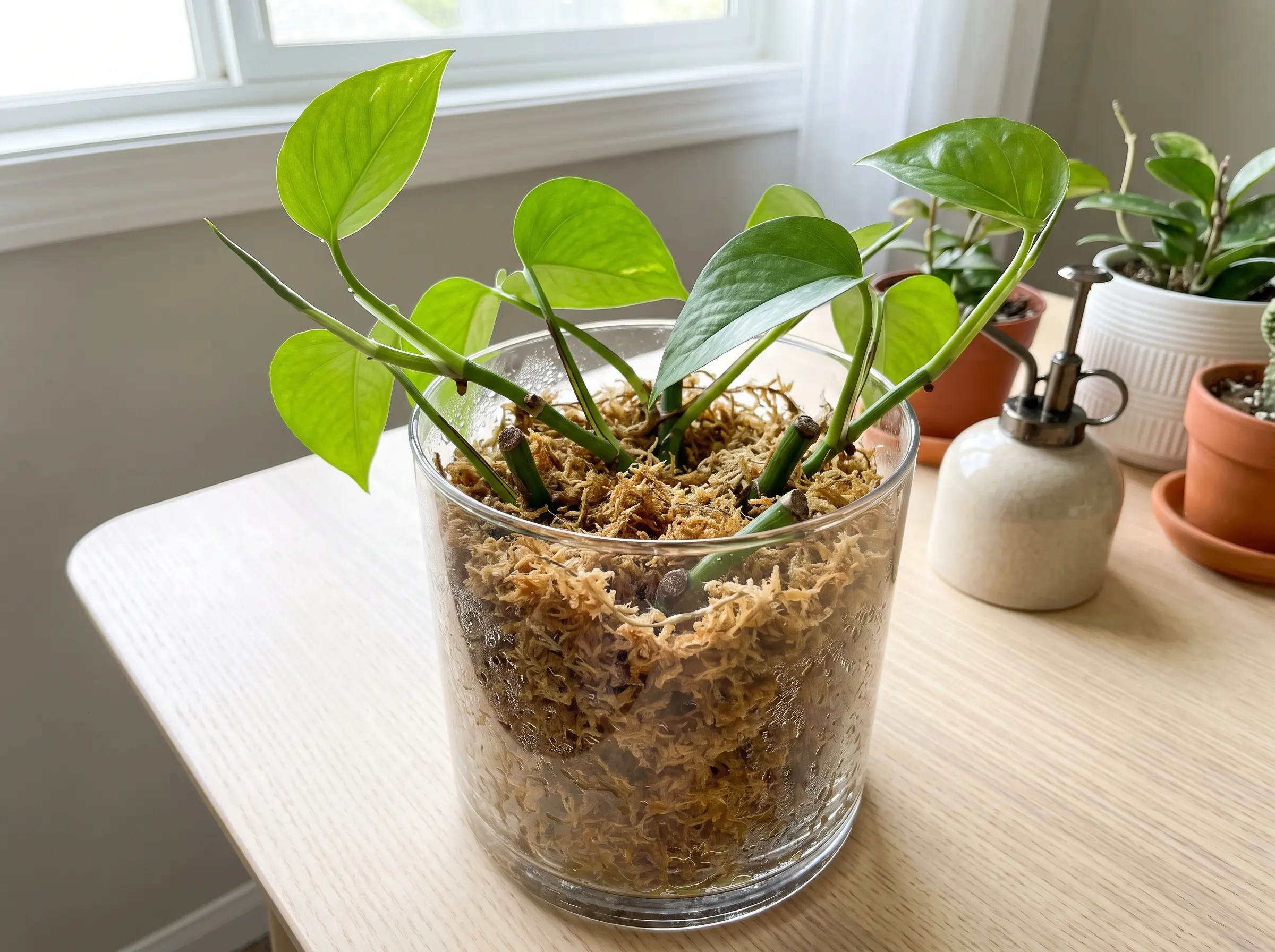
Sphagnum moss doesn’t get enough attention in most pothos propagation guides. It retains moisture well, stays airy around the node, and produces strong roots. It’s also the method used commercially for batch propagation.
- Soak dry sphagnum moss in water, then squeeze out the excess.
- Fill a clear container with damp moss.
- Press the node firmly into the moss.
- Mist if it starts to dry out.
Want to propagate multiple cuttings at once? Lay them flat in a tray lined with damp moss, press each node in, cover loosely, and check every few days.
Timeline: Roots visible in 2–4 weeks. Pot up when roots reach 1–2 inches.
How to Propagate Pothos in LECA
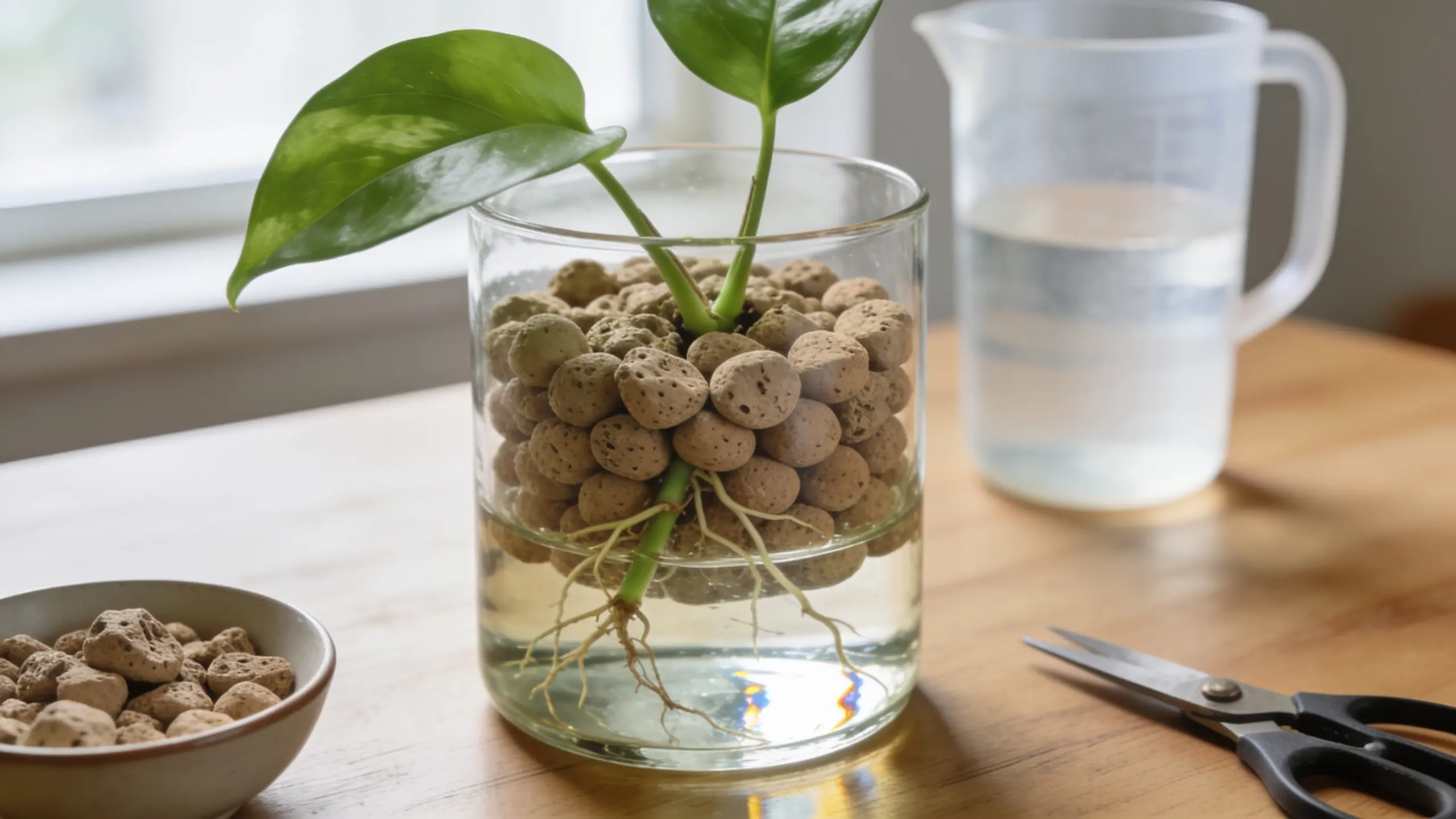
LECA is lightweight expanded clay aggregate, a semi-hydroponic medium worth knowing about if you’re interested in growing pothos long-term without soil.
- Rinse LECA thoroughly to remove dust.
- Fill a clear container about 1/3 full.
- Insert the cutting with the node buried in the LECA.
- Add water to roughly 1/4 of the container height below the node, not above it. LECA wicks water upward through capillary action.
- Top up water as needed; rinse LECA every few weeks.
Timeline: 3–5 weeks for roots. Cold temperatures below 65°F (18°C) noticeably slow rooting with this method.
Pothos Propagation Methods Comparison
Pothos can be propagated in water, soil, sphagnum moss, or LECA. Each method differs in speed, care needs, and how easily you can monitor root growth.
| Method | Difficulty | Root Timeline | Transplant to Soil? |
|---|---|---|---|
| Water | Easy | 4–6 weeks | Yes |
| Soil | Easy | 5–8 weeks | No |
| Sphagnum moss | Medium | 3–5 weeks | Yes |
| LECA | Medium | 3–5 weeks | Optional |
Wrapping It Up
Pothos propagation is one of the easiest, most rewarding things I do with my houseplants. Once you understand how nodes work, the whole process becomes nearly effortless.
Cut just below a node, keep it warm and bright, and resist pulling the cutting out to check progress.
I’ve turned a single $15 plant into more than a dozen this way. Ready to try it? Snip a vine off your own pothos today and drop a cutting in water. You’ll have new roots within weeks.
Frequently Asked Questions
Is October Too Late to Take Pothos Cuttings?
Pothos roots happily grow all year indoors, as long as they enjoy warm temperatures and plenty of bright, indirect light.
What Is the Fastest Way to Propagate Pothos?
Water propagation is fastest. Fresh single-node cuttings root in bright, indirect light within a couple of weeks.
Do You Need Rooting Hormone for Pothos Cuttings?
No, pothos roots quite easily whether you’re using water or soil, though a bit of hormone can help speed up the rooting process just a little.
Can You Propagate a Pothos Leaf Without a Node?
No, a single leaf won’t root on its own. Every cutting needs at least one node to encourage new roots to grow.
Is Pothos Sap Harmful to Touch During Propagation?
Mildly, for some people. Wash your hands after handling cuttings, and keep them away from pets and kids.