You’ve spent months growing your onions, watering them, waiting. Now you’re standing in the garden staring at those green tops, not sure if they’re ready.
I’ve pulled onions too early before and ended up with small, weak bulbs. Wait too long, and you risk losing half the crop to rot.
Here’s the best part: onions tell you when to harvest them.
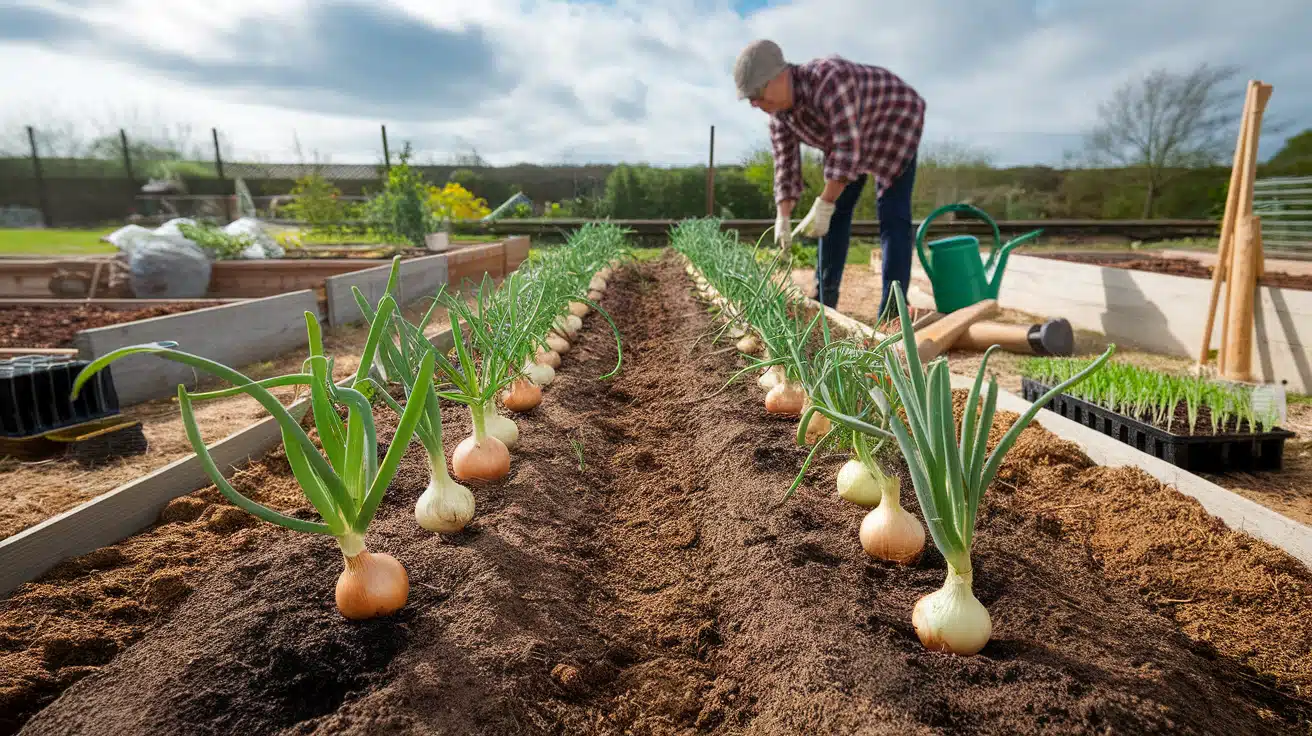
Check a handful of signs: falling tops, a soft neck, solid bulbs, and skin that’s turned dry and papery- and you’ll pull bulbs that keep for months instead of going soft in weeks.
How to Know When Onions Are Ready to Harvest
If you’re looking for a quick answer, onions are ready to harvest when most of the tops have naturally fallen over, the necks feel soft, and the bulbs have developed dry, papery skins.
Before pulling your crop, look for these signs:
- 50–80% of the tops have fallen naturally
- The neck above the bulb feels soft instead of firm
- Bulbs are full-sized and feel solid
- Outer skins have started drying
- Watering has been stopped for 7–14 days
- Dry weather is expected for harvesting and curing
Looking at multiple signs at once can give you much clearer insights than just focusing on a single indicator.
Onion Growth Stages From Seed to Full Maturity
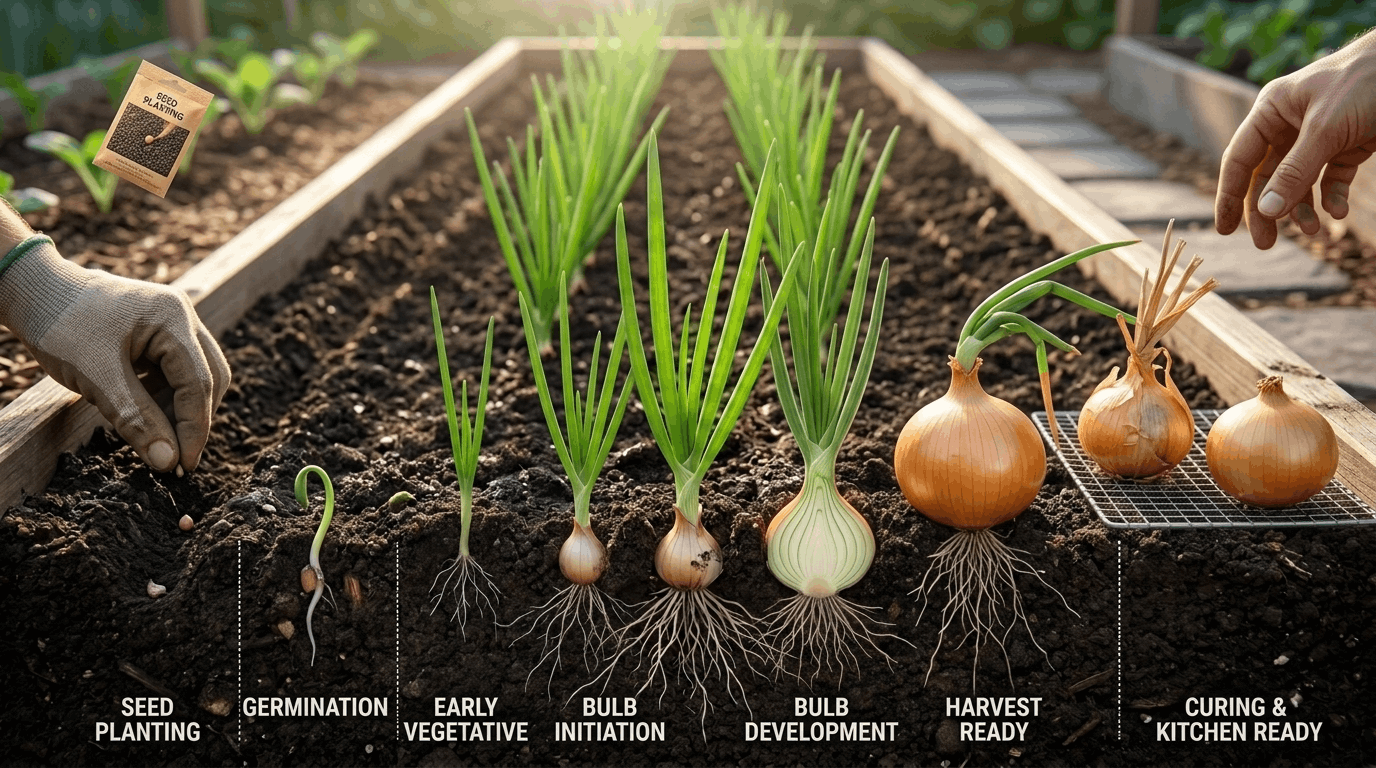
Before you can know when to harvest onions, you need to understand what the plant does to get there. Each stage changes what the plant needs and what you should watch for.
1. Early Growth: Leaf Development Phase
When a seed, set, or transplant goes into the ground, the plant has one job: grow leaves.
This is the vegetative phase. The plant puts all its energy into producing green tops. Roots spread downward. Leaves push upward, getting longer and thicker each week.
Each healthy leaf forms a bulb ring, so damaged leaves mean smaller bulbs.
I’ve found that strong early leaf growth is what separates a small bulb from a full one at harvest time, and it starts with getting the early site prep and planting stage right.
During this phase, the plant needs:
- Consistent moisture, about 1 inch of water per week
- Full sun for at least 6 to 8 hours daily
- Steady nitrogen to keep leaf growth moving
You are not growing a bulb yet. You are growing the parts that will become the bulb. This is why early care matters so much.
2. Bulb Swelling Stage
At a certain point, the plant stops producing new leaves and begins forming the bulb. The trigger is day length, not temperature, not fertilizer, not the plant’s age.
Once daylight reaches the required length, leaf growth stops and bulb formation begins, making the right regional variety essential.
If your variety never receives the day length it needs, bulb formation will not happen, no matter how healthy the tops look.
During this stage:
- Stop heavy nitrogen feeding, as it delays bulb formation
- Keep soil consistently moist to prevent cracking and splitting
- The bulb will start to push slightly above the soil surface as it expands
This stage typically lasts 4 to 6 weeks. A plant that builds strong leaves during the vegetative phase will produce the biggest bulbs here.
3. Maturity Phase
When the bulb reaches full size, the plant stops taking water and nutrients. Stop watering 7–14 days before harvest to allow proper curing and prevent rot in storage.
As onions mature, the neck softens and weakens as the plant seals the bulb.
When the tops naturally fall over, it’s a gentle sign that the onion is close to harvest and ready for curing.
When Is the Best Time to Harvest Onions?
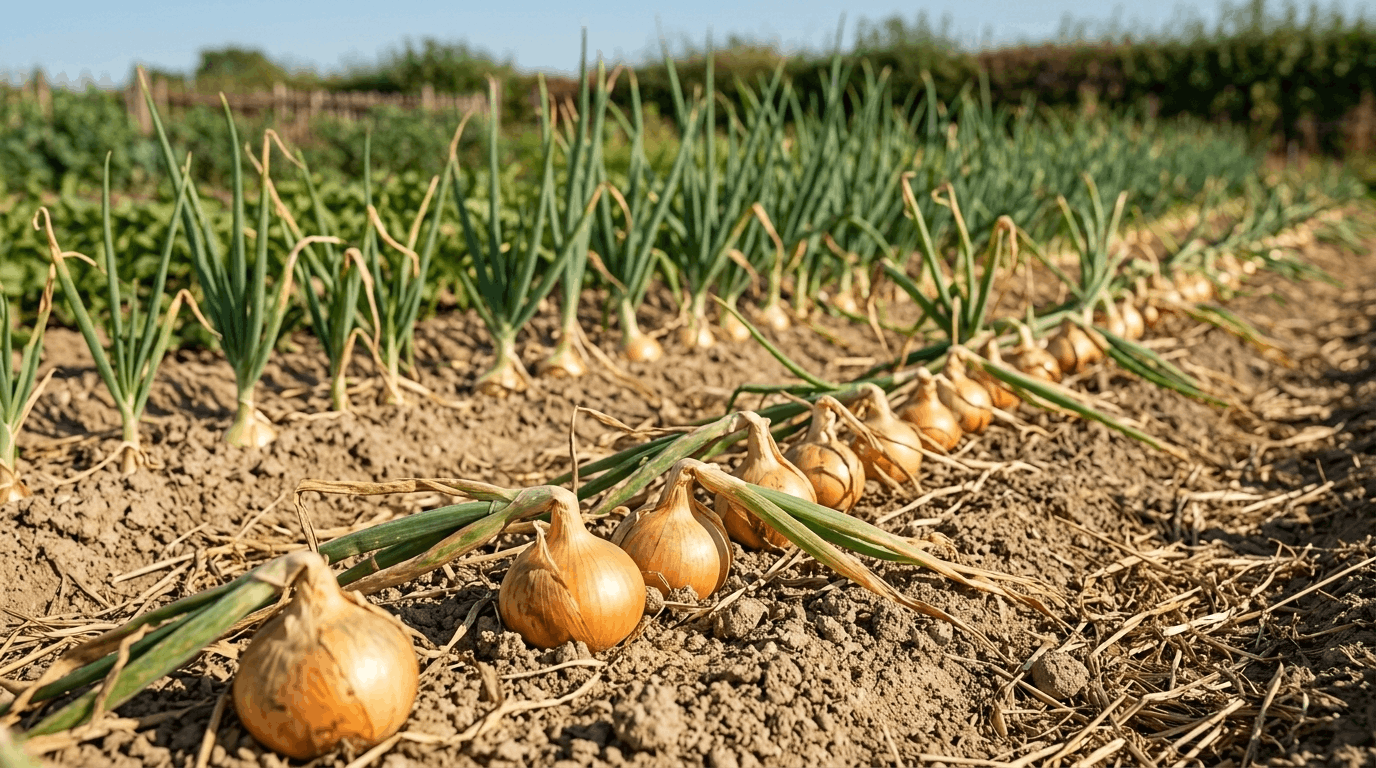
Most onions are ready to harvest 90 to 150 days after planting, depending on the variety and how they were started:
- From seed: 100 to 150 days
- From transplants: 80 to 100 days
- From sets: 70 to 90 days
Use the days-to-maturity figure on your seed packet as a cue to start watching closely, not as a firm deadline to pull. Weather, soil, and sunlight will shift the timeline in either direction.
1. By Onion Type
Bloom timing varies by onion type, as each responds differently to daylight length and growing conditions.
- Short-Day Onions: Best suited for warm southern regions below the 35th parallel, these onions bulb early and are typically harvested from May to June. Their high water content limits storage to 1–3 months.
- Long-Day Onions: Ideal for northern regions above the 40th parallel, where longer summer days support growth. Harvest occurs from July to August, with storage lasting 6–12 months after curing.
- Intermediate-Day Onions: Best for mid-latitude regions between those two extremes. Harvest falls in early to mid-summer. Storage life is typically 3 to 6 months.
2. By Region
Choose planting and harvest times based on your climate and the onion’s daylight needs for proper bulb development.
| Climate | Planting Time | Harvest Time | Best Type | Key Note |
|---|---|---|---|---|
| Cooler | Early spring | Mid-to-late summer | Long-day | Choose fast-maturing varieties for short seasons. Sets or transplants often perform better. |
| Warmer | Fall or early winter | Late spring | Short-day | Short-day onions bulb with fewer daylight hours, making them better suited to southern regions. |
How to Tell When Onions Are Ready to Harvest
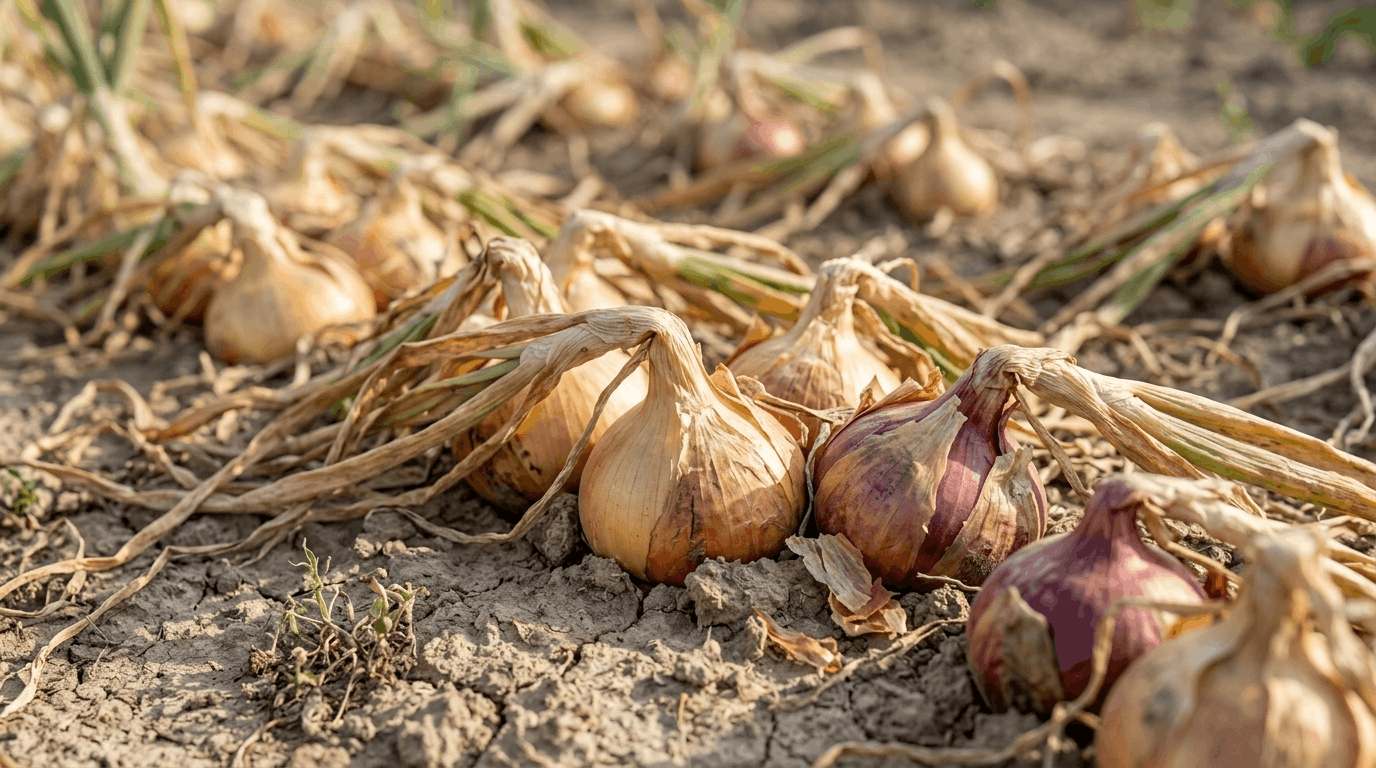
These five checks go beyond the basics and reveal some details that the tops alone might miss, helping you get a clearer picture.
- Yellowing and Drying Leaves: Yellowing leaves show the onion is finishing growth and transferring energy into the bulb. Healthy maturity starts with gradual fading from green to yellow and brown.
- Shoulder Exposure: As bulbs finish sizing, they push up out of the soil on their own, and the rounded “shoulder” of the bulb sits visibly above the surface instead of staying buried.
- The Snap Test: If the tops haven’t fallen on their own, gently bend one stem. A stem that snaps cleanly instead of folding usually means the plant is ready even without full lodging.
- The Pinch Test: Gently squeeze the onion neck to check readiness. Soft, flattened necks indicate maturity, while firm necks need more time. Thick necks should be used fresh.
- The Sample Pull: Dig up one bulb from the row and cut it in half. Tightly packed rings with no green center mean the rest of the row is likely ready too.
- Once these signs appear, harvest your onions carefully and allow them to cure properly. Correct timing and curing help improve flavor, reduce spoilage, and extend storage life.
Quick Tip: Wait until at least half of your onion tops have fallen naturally before harvesting. Pulling too early usually results in smaller bulbs with a shorter storage life.
What Happens If You Harvest Too Early or Too Late
The harvest window, once 80% of the tops have fallen, is roughly 1 to 2 weeks. Waiting much longer increases the chances of storage problems.
| Harvest Too Early | Harvest Too Late |
|---|---|
| Small bulbs | Split bulbs |
| Thin outer skin | Re-sprouting |
| Poor curing | Rot |
| Short storage life | Frost damage |
| Less developed flavor | Reduced storage quality |
Best Conditions for Harvesting Onions
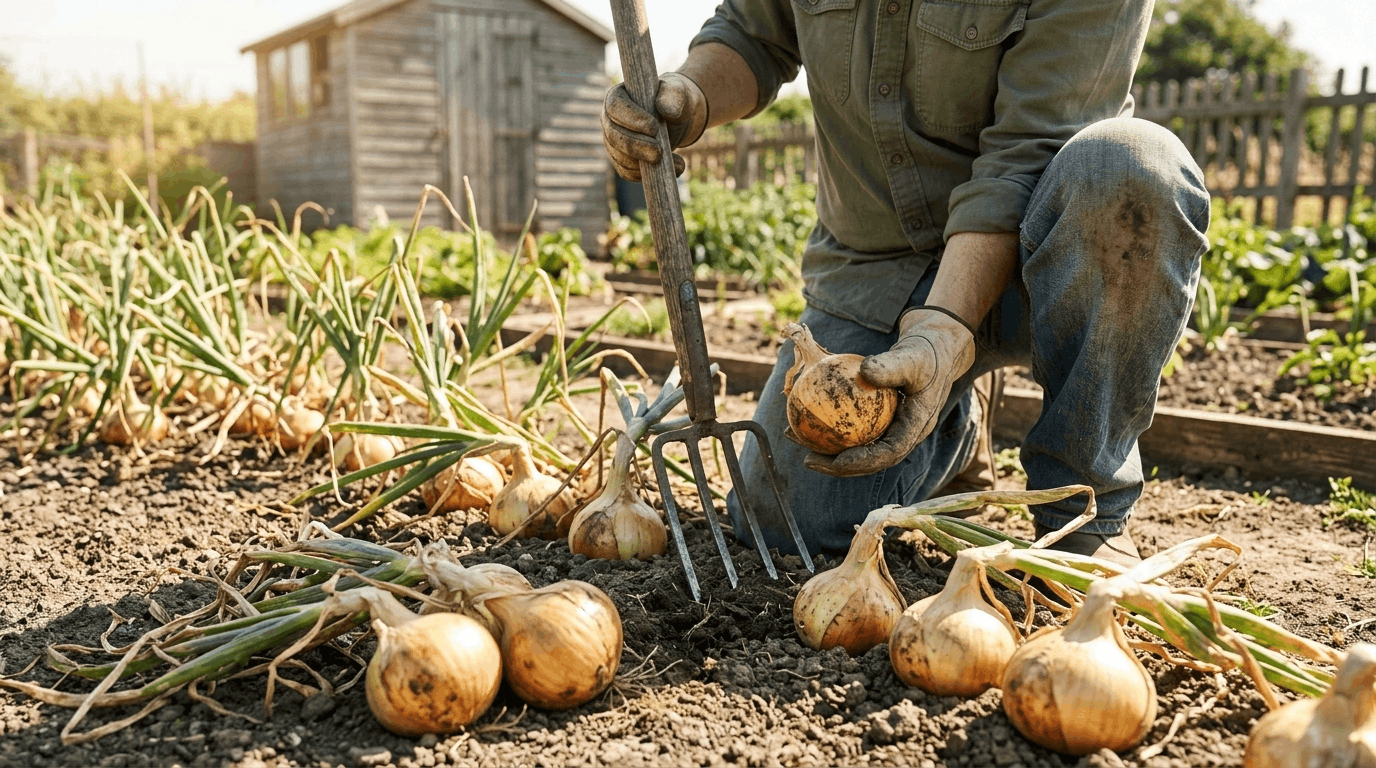
Harvest onions under the right conditions to reduce damage, support proper curing, and improve their storage life.
- Choose a dry, sunny day when the foliage and soil are no longer wet.
- Stop watering 7–14 days before harvest, so the outer skins can begin drying.
- Harvest before several days of heavy rain, then cure the bulbs under cover.
- Loosen compacted soil with a garden fork and lift bulbs gently without pulling the tops.
- Harvest in the morning and avoid leaving bulbs under intense afternoon sunlight.
How Do You Cure Onions After Harvest?
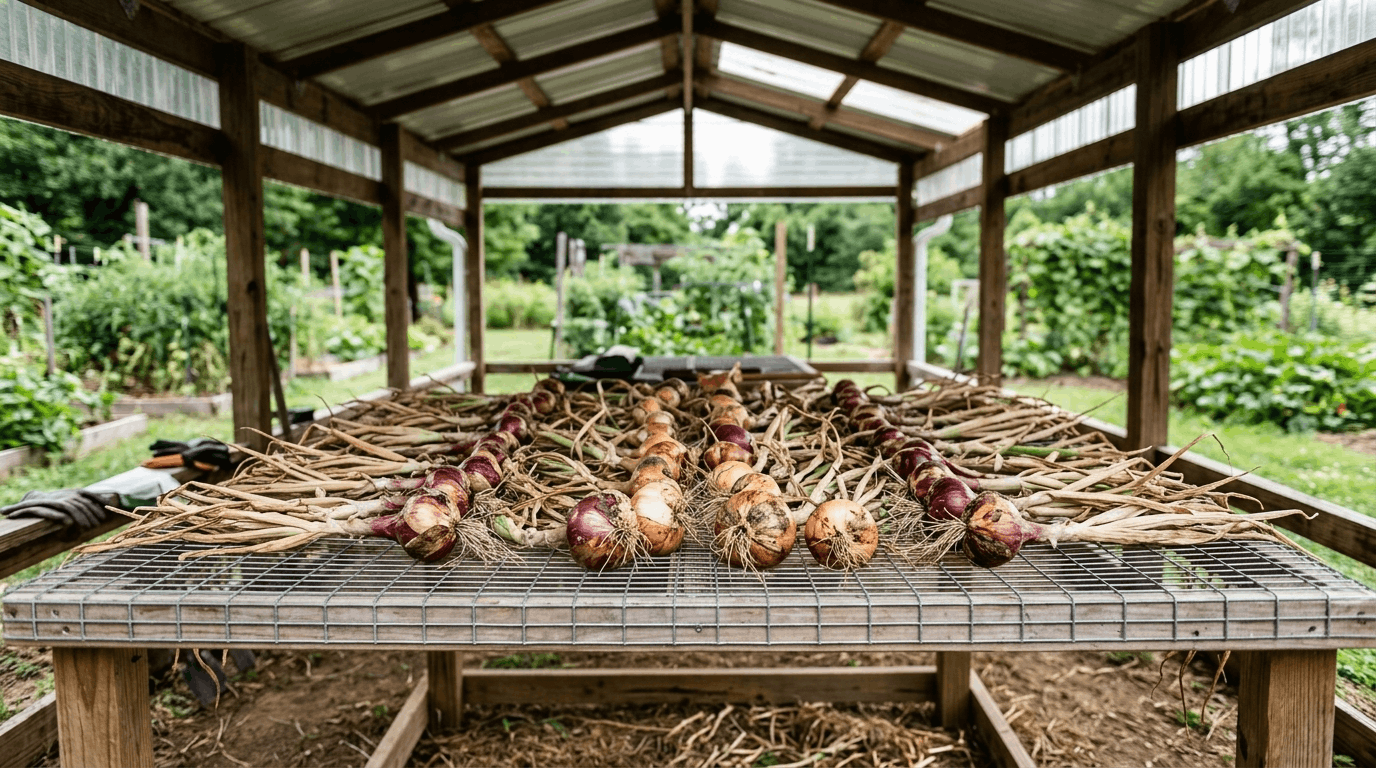
Curing seals the onion’s skin and neck, helping prevent rot and extend its storage life for several months.
Step 1: Clean the Bulbs
Gently brush away loose soil without washing them. Keep the roots and tops attached throughout curing.
Step 2: Arrange the Onions
Arrange the bulbs in a single layer on wire racks, mesh shelves, or screens, leaving enough space between them for proper airflow.
Step 3: Provide Proper Conditions
Place the onions in a dry, well-ventilated space and maintain a temperature between 75 and 90°F (24–32°C).
Step 4: Cure for 2–4 Weeks
Allow skins, necks, roots, and tops ample time to dry thoroughly before storing. Patience now ensures they are perfectly dry and ready when needed.
Step 5: Trim the Onions
Cut off the roots, then trim the dry tops to 1–2 inches above each fully cured bulb before storing.
Note: Curing is complete when the outer skins feel dry and papery, the necks are tight, the roots and tops are brittle, and no green or moist tissue remains.
Indoor vs. Outdoor Curing
Select a curing method that suits the local weather and airflow conditions. This helps you get the best results while keeping things comfortable and efficient.
| Method | Best For | How to Cure |
|---|---|---|
| Outdoor | Warm, dry weather | Leave onions on dry soil for 2–3 days, protect them from sunscald, then move them into shade. |
| Indoor | Rainy or humid weather | Spread onions on racks in a dry, ventilated shelter. Use a fan if airflow is limited. |
How Long Do Onions Last After Harvest
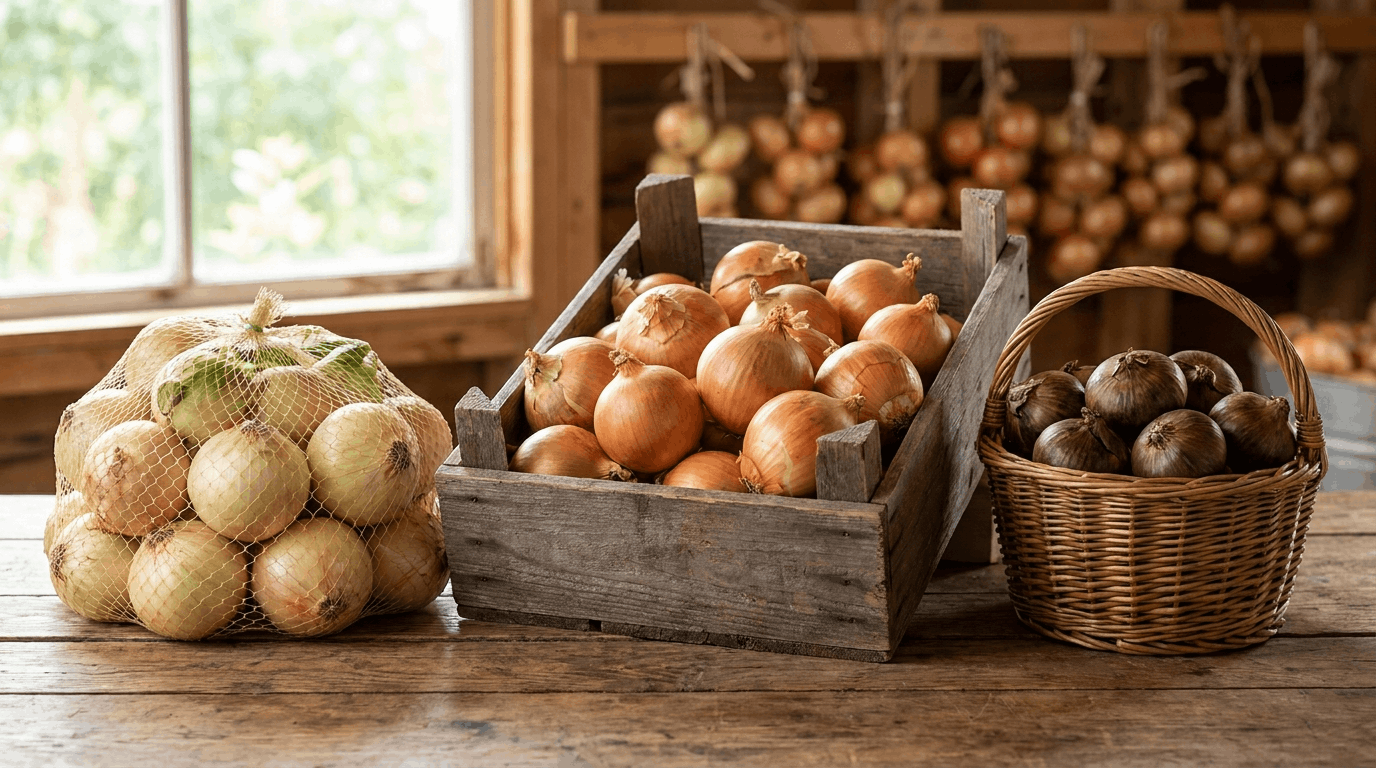
Understanding onion storage life helps you know how long they stay usable after harvest and what conditions affect their freshness.
A quick look at how different onion types vary in how long they stay fresh after harvest.
1. Sweet and Mild Onions (1–3 months)
These onions have a high water content and lower sulfur levels, which makes them naturally sweeter but also less stable in storage.
Because of their delicate structure, they begin to soften and spoil more quickly after curing.
They are best enjoyed soon after harvest in fresh dishes like salads, sandwiches, or light cooking where their sweetness stands out.
2. Intermediate Varieties (3–6 months)
Intermediate onions balance flavor and storage ability. When properly cured in a ventilated space, they can last several months without significant quality loss.
They are diverse enough for both fresh use and medium-term storage, making them a popular choice for home gardeners.
3. Pungent Storage Onions (6–12 months)
These onions have higher sulfur content and lower moisture levels, which gives them a stronger, sharper flavor and excellent storage potential.
When cured correctly, they form tight, protective outer skins that help prevent moisture loss and rot. These are the best choice for long-term storage through fall and winter.
Simple rule to remember: Use sweet onions first, intermediate varieties next, and save storage onions for the longest use.
Common Mistakes When Harvesting Onions
Avoiding common harvesting and storage mistakes helps protect onions from moisture, sun damage, and rot while extending their storage life.
- Leaving Onions on Wet Ground: Damp soil can reintroduce moisture and cause decay, so move harvested onions to a dry, ventilated area.
- Storing Onions in Plastic Bags: Plastic traps moisture and restricts airflow. Use mesh bags, baskets, crates, or hanging nets instead.
- Leaving Bulbs in Direct Sun Too Long: Prolonged sunlight may cause sunscald, so transfer onions to shade within a few hours.
- Harvesting the Whole Bed at Once: Bulbs mature at different rates, so harvest each onion only when its top falls and shows maturity.
- Trimming Tops Too Short or Too Soon: Wait until the tops are completely dry, then trim them 1–2 inches above each bulb.
Wrapping It Up
Knowing when to harvest onions comes down to reading the plant, not the calendar. Watch for tops falling naturally, a soft neck, firm bulbs, and papery skin. Rushing it costs both flavor and storage life.
Pull during a dry spell, then cure in a warm, airy spot until the skins tighten and necks feel dry. Then store somewhere cool, dark, and well-ventilated, away from damp.
It’s a small bit of patience, but it’s the difference between onions that last the winter and the ones that don’t. I check my own crop this way every year.
Frequently Asked Questions
When Is the Best Time of Year to Harvest Onions?
The best time of year depends on the variety and your location. Short-day onions are usually harvested in late spring to early summer, while long-day onions are typically ready in mid to late summer.
Can You Eat Onions Immediately After Harvest?
Yes. Freshly harvested onions are safe to eat right away. However, curing them first improves their storage life and helps develop a protective outer skin.
How Long Does It Take to Cure Onions?
Most onions take 2-4 weeks to cure in a warm, dry, well-ventilated location. The bulbs are ready for storage once the necks are dry and the outer skins become papery.