
Your offer just got accepted. Somewhere between celebrating and panicking, someone asks who your conveyancer is, and you nod, as you know.
Most people only learn about conveyancing once the property process begins.
Skip this step and problems like unclear ownership, restrictive covenants, or delayed funds won’t show up as warnings.
They show up as expensive delays or legal disputes. Here’s what a conveyancer actually does, and why your purchase depends on getting this right.
Who is a Conveyancer?
A conveyancer manages the legal work required to transfer property ownership safely from one person to another.
A conveyancer checks ownership, identifies claims against the property, manages contracts, and ensures the money and legal title change hands correctly.
This turns an agreed property deal into a legally binding transaction.
Types of Conveyancing Professionals
Different regulated legal professionals can complete conveyancing work for buyers and sellers.
| Professional | Role |
|---|---|
| Licensed Conveyancer | Specializes mainly in property law and conveyancing transactions. |
| Solicitor | Handles conveyancing alongside other areas of legal practice. |
| Chartered Legal Executive | Has specialist legal training that may include property work. |
Note: Hiring a conveyancer is not legally required, but mortgage lenders usually insist on one. Even cash buyers face serious risks without professional legal protection.
What a Conveyancer Does From Day One
The bulk of the work happens between your offer being accepted and the point where contracts are exchanged. You probably have no idea how much is going on during that stretch.
- Title check: Your conveyancer confirms the seller has the legal right to sell. They trace ownership back up to 40 years, look for old restrictions on the land, and flag any access rights or covenants attached to the property.
- Property searches: These are checks sent to local authorities and other bodies. They reveal flood risk, contaminated land, planning restrictions, and the property’s connection to water and drainage.
- Contract review: The seller’s conveyancer sends a draft contract. Your conveyancer reads it, raises any questions, and makes sure the terms are fair before you sign anything.
- Mortgage handling: Your conveyancer works with your lender to review the mortgage offer and make sure funds are ready for completion day.
- Completion and registration: On completion day, your conveyancer oversees the transfer of funds and confirms the deal is complete. After that, they register you as the new owner at the Land Registry.
Until this final step is complete, you are not officially registered as the property’s legal owner.
Conveyancer vs Solicitor: Which Do You Need?

Here’s a clear comparison between a licensed conveyancer and a solicitor to help you choose the right option for your property purchase.
| Factor | Licensed Conveyancer | Solicitor |
|---|---|---|
| Area of expertise | Specializes only in property law and conveyancing | Trained across multiple areas of law, including conveyancing |
| Focus | Handles property transactions full-time | Conveyancing is just one part of wider legal work |
| Experience in property work | Typically handles hundreds of property transactions regularly | May handle fewer property cases depending on practice |
| Suitability for standard purchase | Ideal for most first-time buyers and routine home purchases | Also capable of handling standard purchases |
| Complexity handling | Best for straightforward transactions | Better for complex legal situations |
| When to choose | Standard property purchase or sale | Boundary disputes, divorce transfers, inheritance, and complex leasehold issues |
| Cost | Often, more competitive fees | Fees may be higher due to broader legal services |
| Efficiency | Usually faster and more process-focused | May be less streamlined for routine conveyancing |
| Key advantage | Deep, focused property expertise | Broader legal knowledge for complicated cases |
For most home purchases, a licensed conveyancer offers focused expertise and competitive fees, but if your transaction involves legal complexity, a solicitor’s broader knowledge is worth the extra cost.
What to Have Ready Before You Instruct a Conveyancer

Most property delays happen because buyers aren’t prepared when the process begins. Have these ready to keep things moving smoothly:
Proof of ID and funds
Prepare a valid photo ID, proof of your current address, and clear financial documents showing where your deposit money came from.
Mortgage agreement in principle
This shows you’re a serious buyer and helps your conveyancer start quickly once your mortgage offer arrives.
Gifted deposit letter (if needed)
If a family member is contributing to your deposit, ask them for a signed letter confirming the money is a gift and does not need to be repaid.
Conveyancer’s details
Keep your solicitor’s or conveyancer’s contact details ready so you can share them immediately after your offer is accepted.
Clear chain details
Keep your solicitor’s or conveyancer’s contact details ready so you can share them immediately after your offer is accepted with the seller’s estate agent.
Leasehold or shared ownership questions
Flag these early, so your conveyancer can check leases, service charges, and other requirements before they delay the transaction.
Pro Tip: Being prepared before day one can help your purchase move faster and prevent unnecessary delays.
How Much Does a Conveyancer Cost?
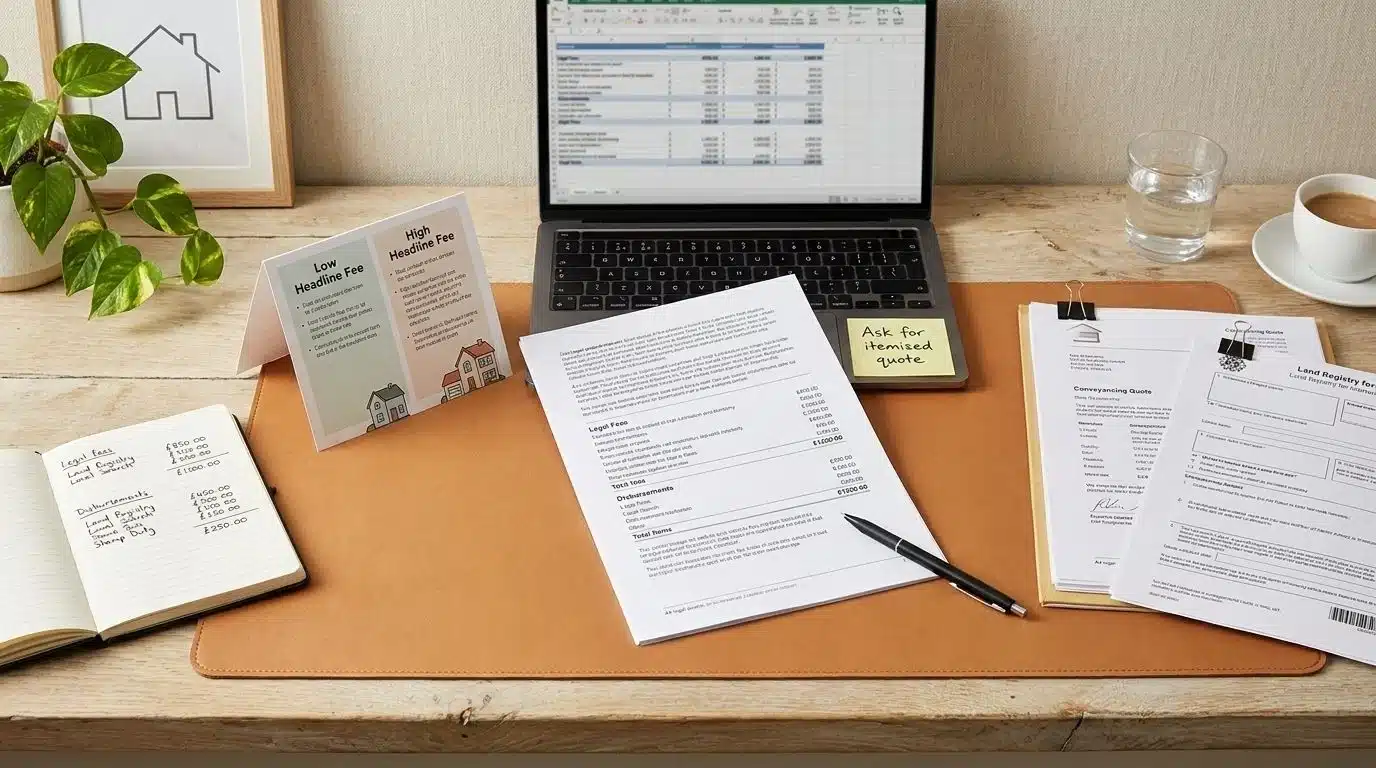
Conveyancing costs vary based on the property, transaction complexity, and required searches. Understanding these fees early helps you budget accurately and avoid surprises.
| Situation | Cost / Explanation |
|---|---|
| Standard freehold purchase (UK) | £1,000–£2,000 depending on property value and location |
| Leasehold property | Adds £200–£400 extra due to additional legal work |
| Buying & selling simultaneously | Around £2,300+ total because two separate legal processes are involved |
| No sale, no fee policy | You don’t pay legal fees if the transaction falls through before completion. |
| Important note on no sale, no fee | Disbursements may still be payable even if the deal doesn’t complete; always check what is included |
A firm with a low headline fee and high disbursements can end up costing more than a firm with a higher legal fee. Always ask for an itemized quote that shows both.
How to Choose a Conveyancer Worth Hiring

The right conveyancer can keep your property transaction organized and moving smoothly. Compare their experience, fees, communication, and service before choosing.
Ask these questions before instructing anyone:
- Who will personally handle my file? Some firms quote under a senior name but hand the work to someone junior. You want the name of the person actually running your case.
- Are you on my mortgage lender’s panel? If they are not, your lender may appoint a second firm, which slows everything down.
- Do you offer no sale, no fee? Know the answer before the deal is at risk.
- What is your average Timeline for a case like mine? This gives you a benchmark to measure against.
A fixed, itemized quote and a named file handler from day one are both good signs. Vague pricing, no named contact, and pressure to sign up before your questions are answered are not.
Wrapping It Up
Buying a home is stressful enough without the legal side blindsiding you.
A good conveyancer handles the parts you never see but would absolutely feel if they went wrong: title problems, delayed funds, a chain that collapses three days before completion.
You now know what to look for, what to ask, and what to watch out for.
Don’t just take the name your estate agent hands you. Compare quotes, ask the right questions, check the panel, and get an itemized fee breakdown before you commit.
Find a trusted conveyancer, and everything else becomes simpler.
Frequently Asked Questions
How Long Does Conveyancing Usually Take?
A standard transaction takes between 4 and 12 weeks from offer accepted to completion. The timeline depends on chain complexity and local legal requirements.
Why Can’t I Do It Myself?
You can act for yourself, but property transfers involve complex contracts and large sums. A single legal or filing mistake can risk your purchase or lead to serious financial penalties later.
Can the Same Conveyancer Act for Both Buyer and Seller?
Usually no. Conflict-of-interest rules mean each side normally needs separate representation, though some firms use separate teams if strict criteria are met.
Can I Switch Conveyancers Partway Through?
Yes, at any point before exchange of contracts. Switching later can cause delays since your new conveyancer must review searches and paperwork from scratch.