
Most people wait until the mildew is obvious before they clean a shower curtain. By then the soap scum has usually been building for weeks.
Knowing how to clean a shower curtain properly means matching your method to what it’s made from. Fabric, vinyl and plastic all need different care.
Wash a fabric curtain like delicate laundry. Treat vinyl more like a raincoat that just needs a gentle scrub.
Cleaning depends on the curtain material and buildup. This guide covers washing, mould removal, and habits that prevent musty smells.
Why Shower Curtains Get Dirty So Fast
Constant exposure to water, soap residue, and humid air causes dirt, mineral deposits, and mildew to build up quickly.
- Soap residue: Soap combines with water minerals, creating a thin film on the curtain.
- Trapped moisture: Water settles in curtain folds and keeps them damp.
- Poor airflow: Limited ventilation slows drying and encourages mildew.
- Hard water: Minerals remain on the surface after water evaporates.
- Warm conditions: Bathroom heat creates an ideal environment for mould growth.
How Often Should You Wash a Shower Curtain?
Plastic and vinyl liners need washing about once a month, more often if your bathroom has poor ventilation.
Fabric curtains are usually just a decorative layer over the liner, so they can go longer between washes, generally once every couple of months.
Check the care label first: some fabrics need cooler water or a delicate cycle regardless of how dirty they look.
The same logic applies to keeping worktops free of built-up grime, a little often beats a big scrub once a year. If you notice black spots, a musty smell or visible soap scum, that’s your cue to wash sooner rather than later.
What You’ll Need
Gather these basic supplies before cleaning. Check the curtain’s care label to avoid damaging its material.
|
Item |
Purpose |
|---|---|
|
Towels |
Scrub and balance the wash |
|
Mild detergent |
Machine or hand washing |
|
Baking soda |
Removes stains and odours |
|
White vinegar |
Helps prevent mould |
|
Bleach |
For white or clear vinyl |
|
Cloth or soft brush |
Hand washing and spot cleaning |
How to Clean a Shower Curtain at Home?
The right cleaning method depends on your curtain’s material. Follow these simple steps to remove stains, soap scum, and mould safely.
1. Machine Washing
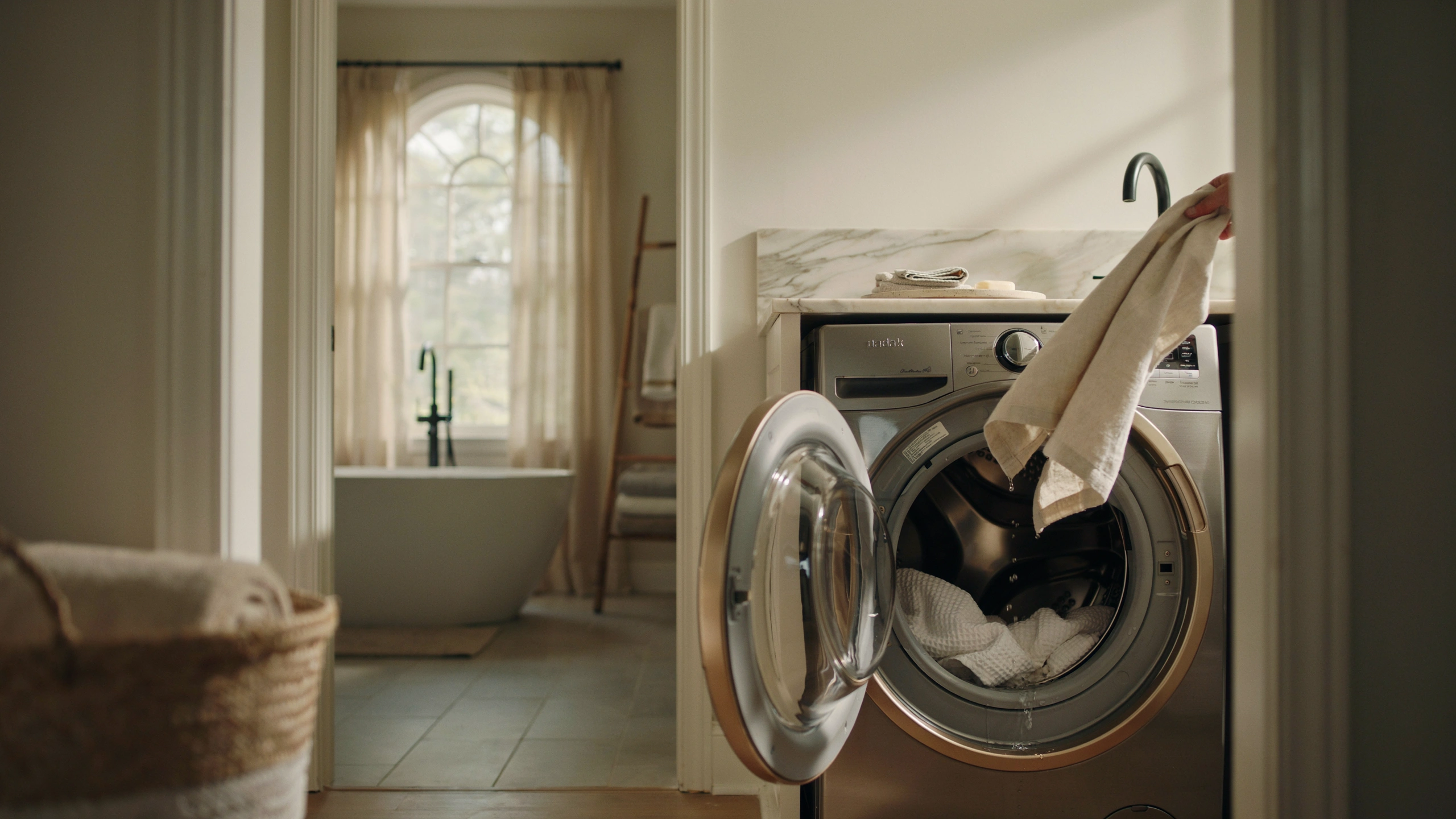
Machine washing a shower curtain is simple once you match the settings to the material. Take the curtain off the rod and remove the rings before it goes anywhere near the machine.
- For fabric curtains, use a gentle cycle with warm water and a mild detergent, and add one or two towels to help scrub away grime.
- For vinyl or plastic, stick to a gentle cycle with cool or warm water only, never hot, and keep the spin speed low so the curtain doesn’t crease or tear.
Adding half a cup of baking soda to the detergent lifts soap scum without extra scrubbing. Skip the tumble dryer for anything plastic; heat will warp it.
2. Hand Washing

For delicate fabrics, or a curtain you’d rather not risk in the machine, hand washing works just as well. Fill the bathtub with warm water and dampen the curtain.
Sprinkle on baking soda, or add a teaspoon of dish soap, and scrub with a soft cloth, sponge or brush, focusing on the bottom edge where mould tends to gather. Rinse thoroughly and repeat on any stubborn patches.
If you enjoy sewing your own fabric window treatments, the same natural fibres respond well to this kind of gentle hand washing too.
Hand washing is also the gentler option if you want to avoid the microplastic shedding that machine washing plastic curtains can cause.
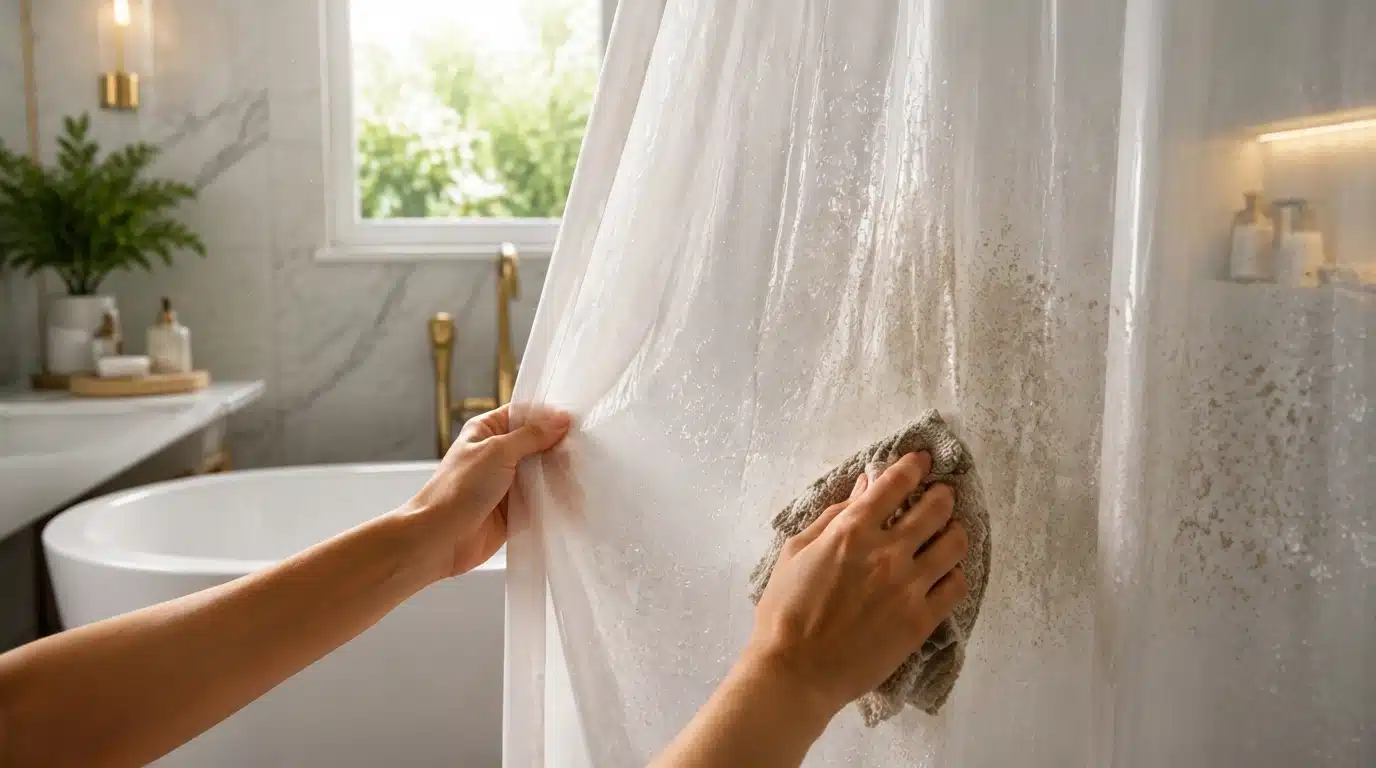
3. Spot Cleaning
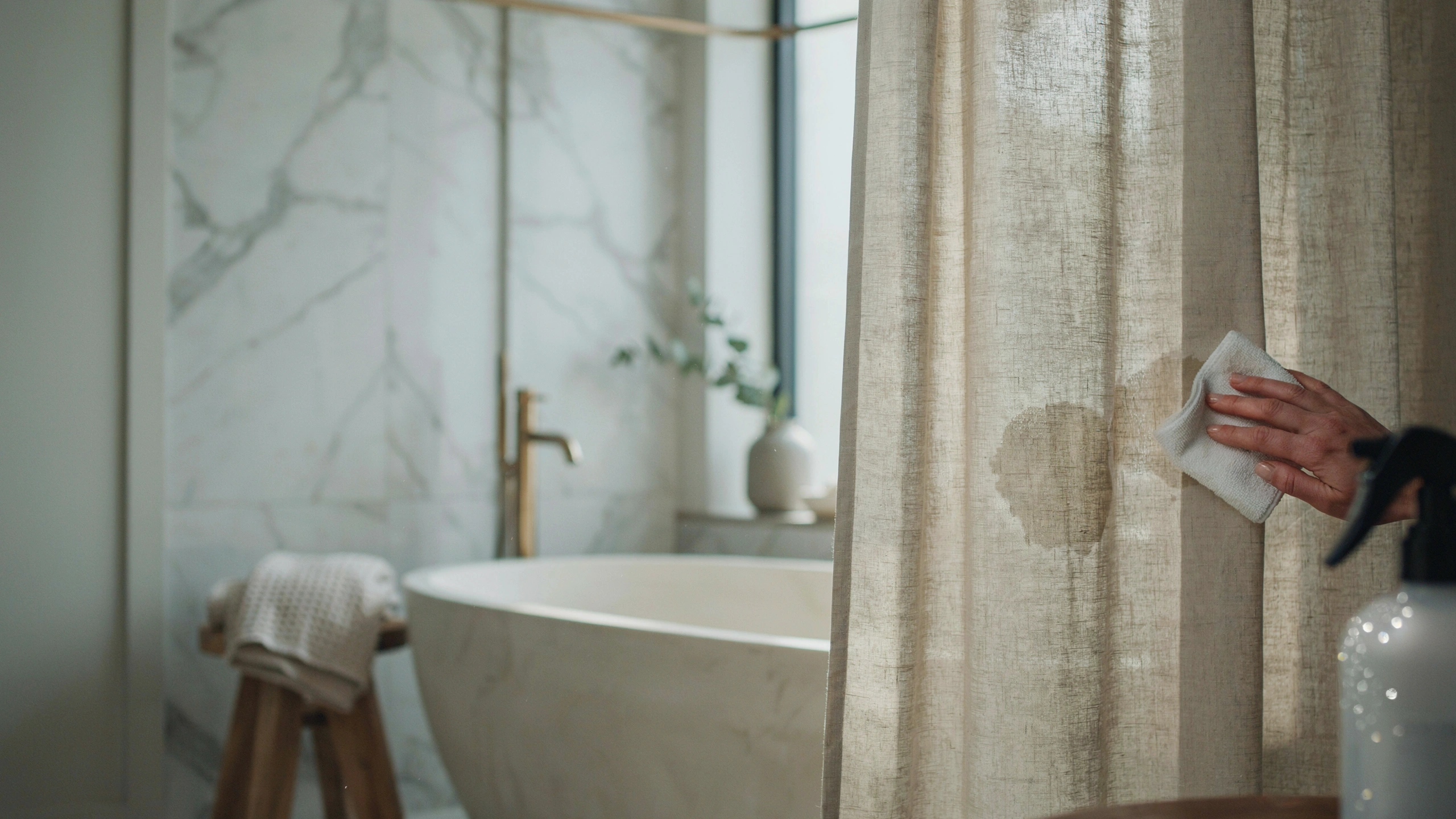
Spot cleaning is a targeted approach used when stains are still small and have not spread across the surface. It helps prevent small issues from turning into larger buildups.
This method is useful for early mildew marks or isolated soap spots that appear between deeper cleaning cycles.
- Mix and apply: combine equal parts water and white vinegar, apply directly to the stain and let it sit a few minutes
- Wipe and rinse: gently wipe with a soft cloth or sponge, then rinse the area lightly
- For mildew: use diluted hydrogen peroxide, or Dettol mould & mildew spray for tougher spots
- Dry fully: let the section air dry completely before rehanging
4. Using Vinegar and Baking Soda
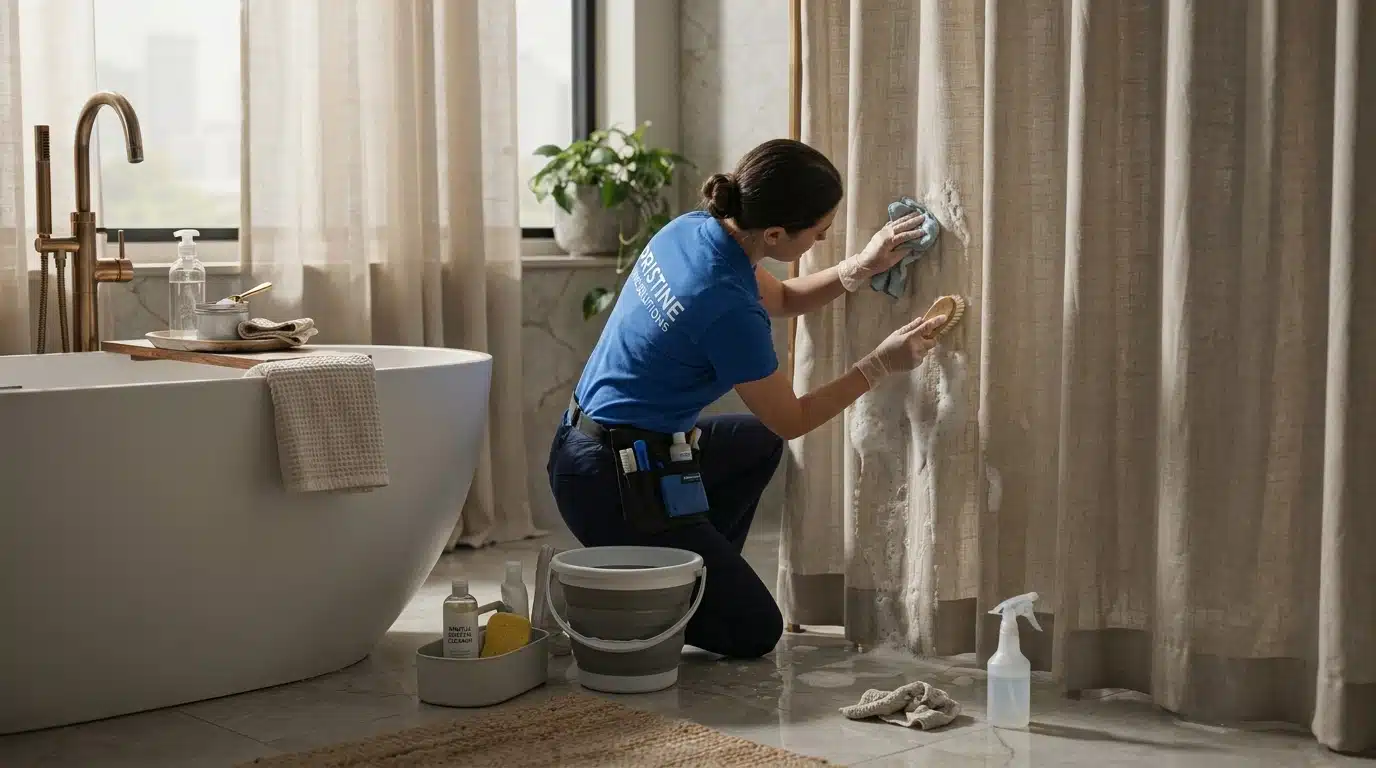
This gentle method works best for routine cleaning, light odours, soap film, and minor mineral buildup.
Use white vinegar to loosen residue, then apply baking soda as a soft paste to lift surface stains without harsh scrubbing.
Treat only affected spots or cover the entire curtain when buildup is widespread. Leave the solution for a few minutes before rinsing thoroughly with clean water.
Check the folds and lower edge carefully, and remove every trace of residue before rehanging the curtain to dry fully in place.
5. Hard Water Stain Removal
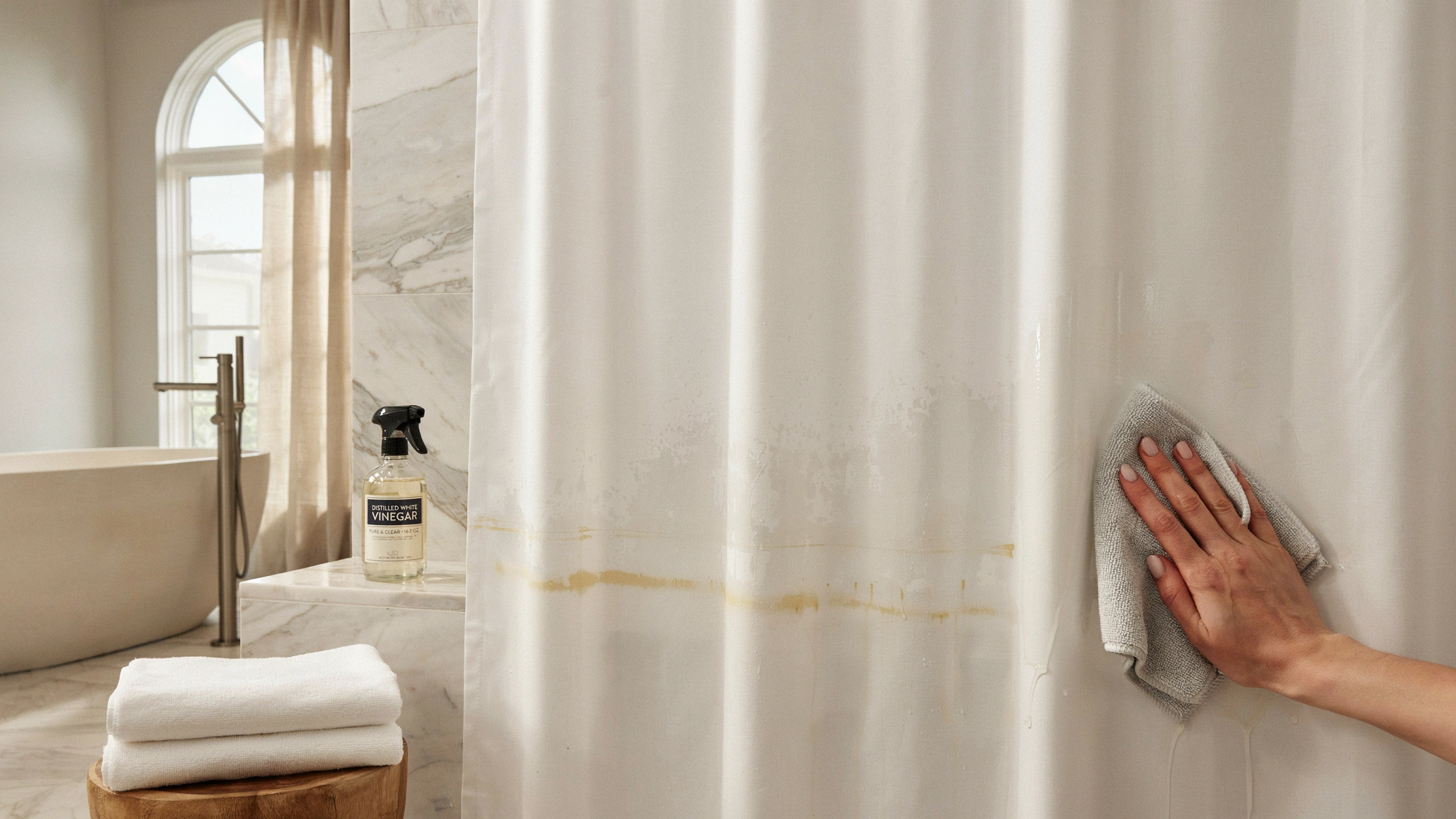
Hard water stains form when minerals remain after water evaporates. Gentle treatment helps dissolve these deposits without damaging the curtain.
- Apply vinegar: Pour undiluted white vinegar directly onto the stains.
- Let it sit: Allow time for the mineral buildup to loosen.
- Wipe gently: Use a soft cloth instead of scrubbing aggressively.
- Treat stubborn deposits: Apply cream of tartar paste or Viakal limescale remover.
- Repeat if needed: Use another light treatment rather than applying force.
6. Using Bleach
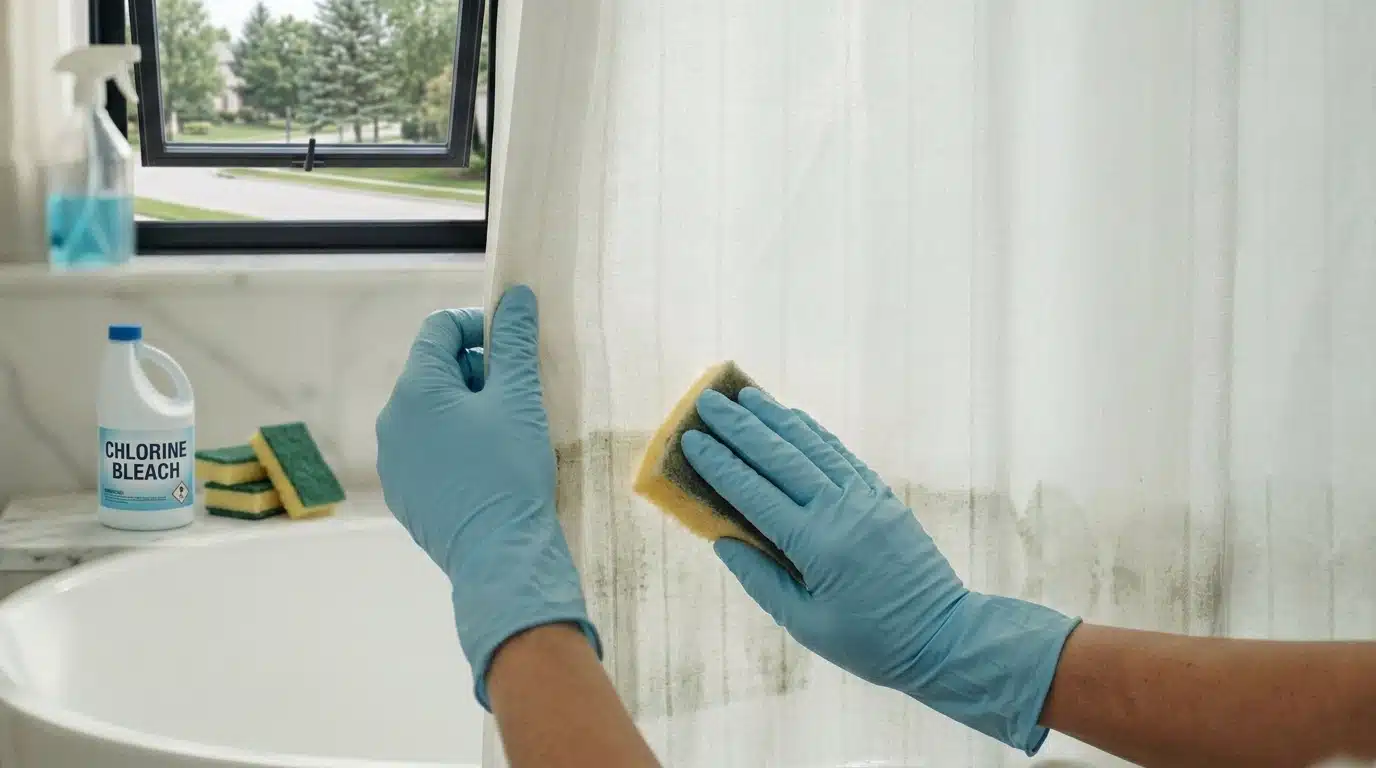
Bleach should only be used for stubborn, deep-set mould when gentler methods fail. Always check the care label and handle it carefully.
- Dilute properly: Mix bleach with water according to the product instructions.
- Check compatibility: Use only on bleach-safe materials, such as some white or clear vinyl curtains.
- Test first: Apply to a small, hidden area before treating visible stains.
- Limit contact: Do not leave bleach on the curtain for too long.
- Rinse thoroughly: Remove all bleach residue and avoid frequent use on fabric curtains.
Routine Maintenance to Prevent Shower Curtain Buildup
Keeping a shower curtain clean is not only about deep cleaning when stains appear. A simple maintenance routine between washes helps control soap residue, slow mildew growth, and reduce the frequency of heavy cleaning.
When done consistently, these small actions prevent buildup from settling into the material in the first place.
- Use a diluted vinegar solution or mild soap mix
- Wipe the curtain surface gently with a soft cloth after showers or once a week
- Focus especially on folds, corners, and the lower section where moisture collects
- Keep the curtain fully spread out after use to help it dry evenly
- Maintain a light weekly wipe instead of waiting for visible buildup
- This routine helps reduce soap film and early mildew growth
- It also extends the time between full deep cleaning cycles
How Different Materials React in Real Use
Different shower curtain materials respond differently to moisture and cleaning. Knowing the surface helps prevent fading, weakening, or unnecessary damage.
|
Material |
Water and Soap Response |
Cleaning Effort |
Durability |
Changes Over Time |
|---|---|---|---|---|
|
Fabric |
Absorbs into fibres |
Moderate |
High with proper care |
Texture may change gradually |
|
Vinyl |
Buildup stays on surface |
Easy |
Moderate |
Surface wear develops slowly |
|
Plastic |
Mostly repels moisture |
Easy but delicate |
Lower |
May weaken with repeated cleaning |
|
PEVA |
Resists most moisture |
Gentle cleaning needed |
Moderate |
Surface changes slowly and evenly |
Identify Stains Before Cleaning
Before cleaning a shower curtain, look closely at what you’re dealing with. The wrong method can push a stain deeper instead of lifting it, so identifying it correctly matters more than reaching for a stronger cleaner.
- Mildew: black, grey or green spots in folds or along the lower edge, often with a musty smell
- Soap scum: a chalky white or grey film that spreads across large areas rather than forming spots
- Hard water damage: a cloudy film near the waterline that turns opaque and rough over time, sometimes stiffening fabric
- Beyond saving: heavy yellowing, deep-set mildew, lingering odour or brittle, warped material means it’s time to replace, not clean
Mistakes That Shorten Shower Curtain Life
Shower curtain damage usually does not result from a single big mistake.
It builds up slowly through everyday habits that seem harmless but gradually affect the material, making it harder to clean and shorter-lived.
|
Mistake |
Why It Causes Damage |
Better Approach |
|---|---|---|
|
Too much detergent |
Leaves residue that attracts soap scum |
Use a small amount of mild detergent |
|
Leaving it bunched |
Traps moisture and encourages mildew |
Spread fully after each shower |
|
Hot water on vinyl/plastic |
Warps and weakens material |
Use cold or lukewarm water |
|
Machine drying |
Causes melting or shrinking |
Always air dry |
|
Harsh scrubbing |
Creates scratches that hold dirt |
Use a soft cloth or sponge |
|
Long bleach soaking |
Weakens fibers and causes fading |
Limit exposure time carefully |
Final Thoughts
A shower curtain does not really need constant attention. It responds more to the environment it is in than anything else.
Once you start noticing how soap residue, water minerals and everyday humidity interact with the surface, the routine becomes less about effort and more about awareness.
The aim is not to keep it flawless, but to gently stay ahead of buildup so it never reaches a point where it feels overwhelming.
Keeping it open after a shower, letting air move through the space, and addressing small signs early is usually enough. Over time, these simple habits do far more than any occasional deep cleaning ever could.
Frequently Asked Questions
Can I Use Bleach on a Colored Fabric Shower Curtain?
Bleach will strip color from most fabric curtains and weaken the fibers over time. Use hydrogen peroxide or a color-safe antifungal laundry product instead.
How Long Does it Take for a Shower Curtain to Air Dry After Washing?
Most curtains dry fully within two to four hours when hung on the rod in a ventilated bathroom. Fabric takes longer than vinyl or plastic.
Why Does My Shower Curtain Still Smell Musty After Washing?
Mildew spores embedded in the fabric were not fully eliminated. Rewash with a cup of white vinegar in the rinse cycle, or soak in a diluted hydrogen peroxide solution for 30 minutes before washing.
Do Shower Curtain Liners Need to be Cleaned as Often as the Curtain Itself?
Liners have more direct contact with water and soap than decorative curtains, so they typically need cleaning more frequently, roughly every two to three weeks.