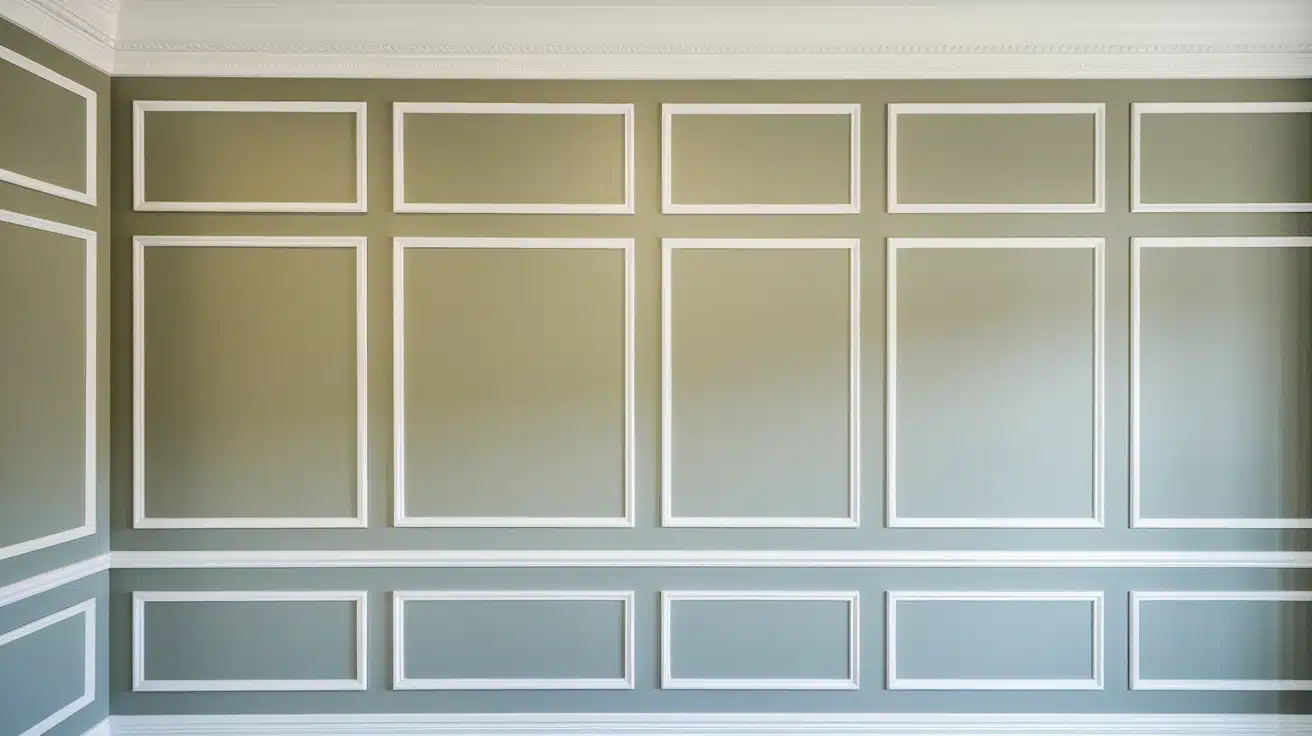
I have watched a set of curtains go up and look wrong within about ten seconds. Too short. Too narrow. Sitting on the glass instead of framing it.
The problem was never the window, but the numbers used to measure it.
Measuring for curtains is more about understanding the right fit than just the window size. It comes down to where the rod sits, how far it spans, and how far the fabric drops from it.
Custom panels also cannot be returned, so there is no second attempt.
Why Accurate Curtain Measurements Make a Difference
Curtain measurements involve more than the window itself. Accurate numbers help the panels hang properly and prevent costly ordering mistakes.
- Rod position: Where the rod sits affects the curtain’s starting point and overall appearance.
- Rod width: The full span determines how much fabric is needed for proper coverage.
- Curtain drop: The distance from the rod controls where the fabric ends.
- Custom orders: Made-to-measure curtains are often non-returnable, so one wrong measurement can be costly.
How to Measure Curtains for the Perfect Fit
Accurate measurements help curtains hang neatly and provide proper coverage. Measure the window carefully before choosing the curtain size.
Step 1: Measure Your Curtain Width from the Rod

Measure your rod end to end, skipping the finials. Those decorative caps aren’t part of your base width. No rod yet? Mark the position four to six inches above the frame, higher if you have wall to spare.
Then measure the frame side to side and add 6 to 12 inches on each side, so panels stack clear of the glass.
A 36-inch window looks lovely with a curtain span of 48 to 60 inches, which helps create a beautiful fullness and better light coverage.
Step 2: Choose the Right Curtain Fullness Ratio
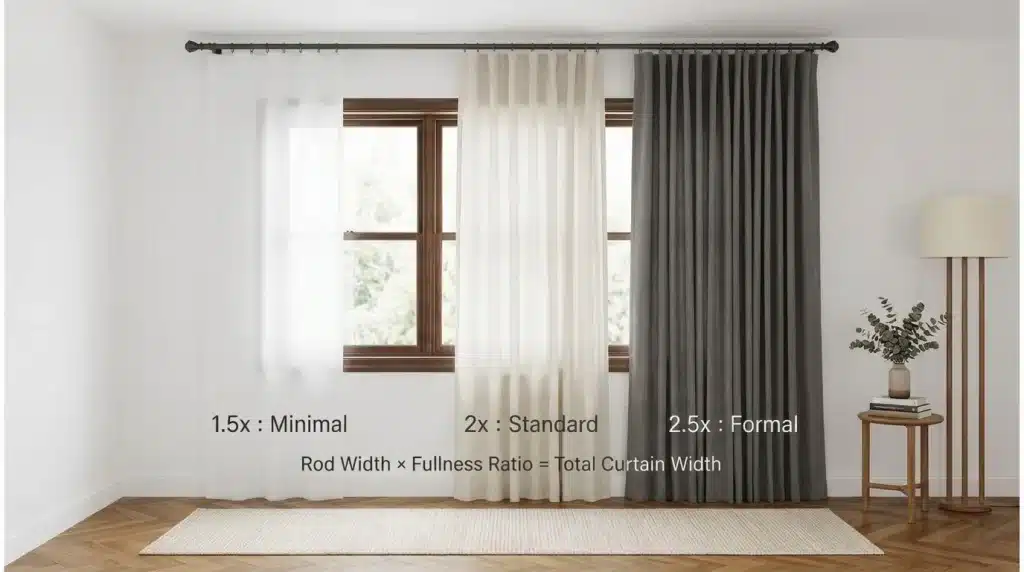
Curtains need extra fabric for fullness, so multiply the rod width by the ratio below.
Formula: Rod Width × Fullness Ratio = Total Curtain Width
|
Fullness Ratio |
What it Looks Like |
Best For |
|---|---|---|
|
1.5x |
Flat, minimal folds |
Sheers, modern rooms |
|
2x |
Full, standard look |
Most living rooms, bedrooms |
|
2.5x |
Rich, deep folds |
Lined drapes, formal rooms, blackout panels |
Divide your total curtain width by 2 to get each panel’s width for a two-panel set.
Skip this step if you are ordering pencil-pleat or pinch-pleat curtains. Fullness is already built into these headings. Just order to match your rod width.
Step 3: Pick the Right Length Style
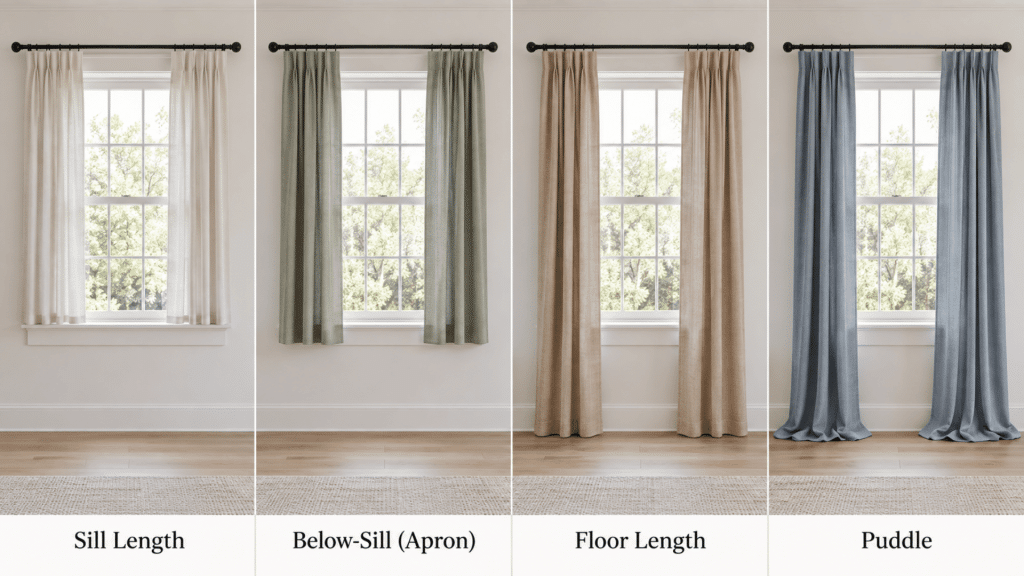
Pick the length before you measure the drop. Each style needs a different adjustment.
|
Length Style |
Drop Adjustment |
Best For |
|---|---|---|
|
Sill length |
Rod to sill, minus ½ inch |
Kitchens, bathrooms, and radiators below the window |
|
Below-sill (apron) |
Rod to 4–6 inches past the sill |
Casual rooms, children’s bedrooms |
|
Floor length |
Rod to floor, minus ½ to 1 inch |
Living rooms, bedrooms |
|
Puddle |
Rod to floor, plus 2 to 6 inches |
Formal, low-traffic rooms |
Floor length is the most common choice. It looks clean and works in almost every room.
Step 4: Choose the Correct Curtain Length
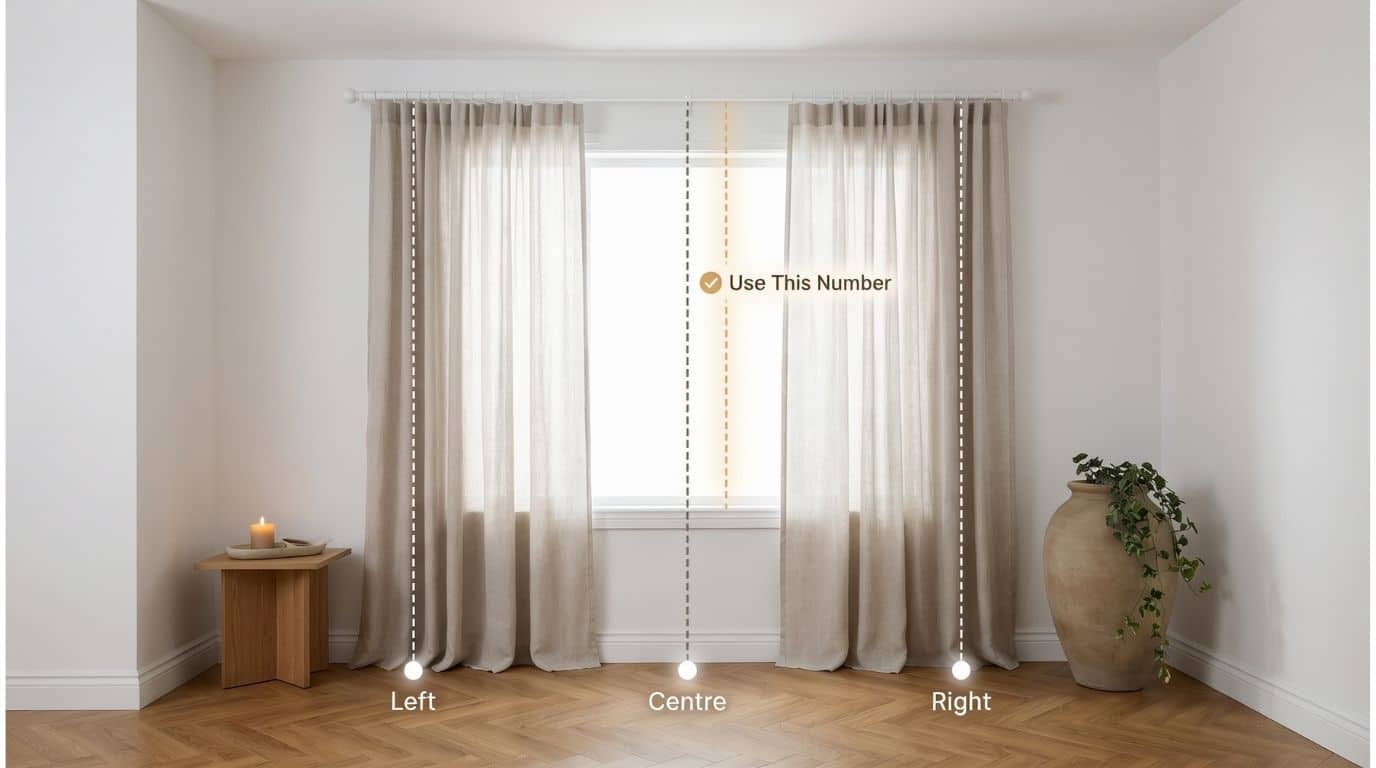
Measure from the rod down to your hem point using the adjustment from Step 3. Always measure from the rod, not the window frame or the wall.
The rod is where the curtain actually hangs, so it’s the only honest starting point. Getting the right curtain hanging height matters just as much as the length itself.
Measure from the rod in three places, as uneven floors can affect how the curtains hang.
Even a half-inch difference shows on a long curtain, so use the shortest of the three measurements as your final drop.
Step 5: Adjust for Your Curtain Heading Type
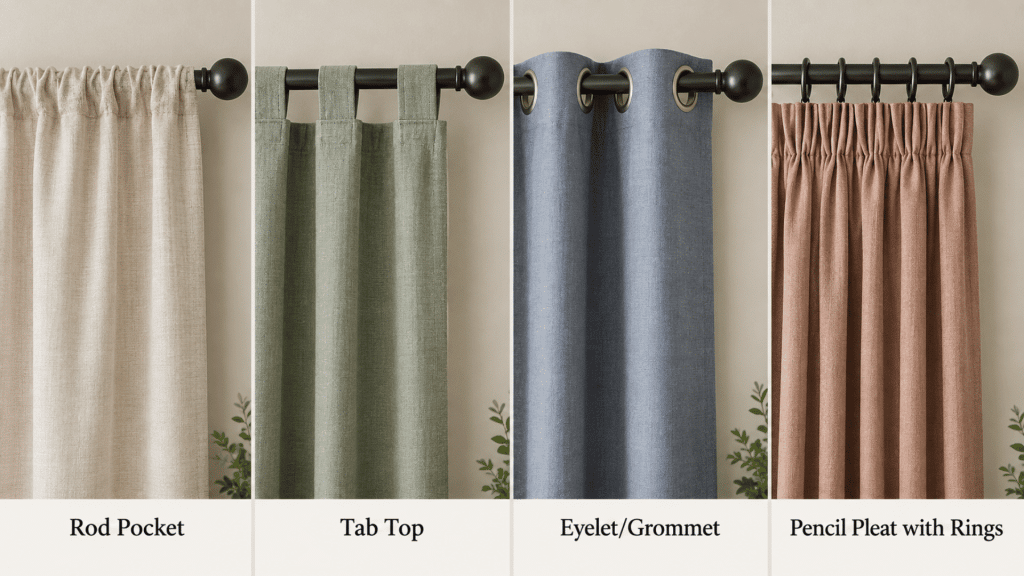
Each heading hangs from a different point, which shifts your drop by 1 to 2 inches. That gap is invisible on paper and obvious once the curtains are up.
Rings sit lowest, so a ring set measures shorter than a rod pocket on the same pole.
|
Heading Style |
Where to Measure |
Adjustment |
|---|---|---|
|
Rod pocket |
Top of the rod |
None |
|
Tab top |
Top of the rod |
None |
|
Eyelet or grommet |
Center of the rod |
Add 1–2 inches |
|
Pencil pleat with rings |
Bottom of the ring eye |
Measure from the ring, not the rod |
Check the manufacturer’s spec for your heading style before ordering. This step gets skipped more than any other and is the most common reason a drop comes out wrong.
Step 6: Write it All Down Before You Shop
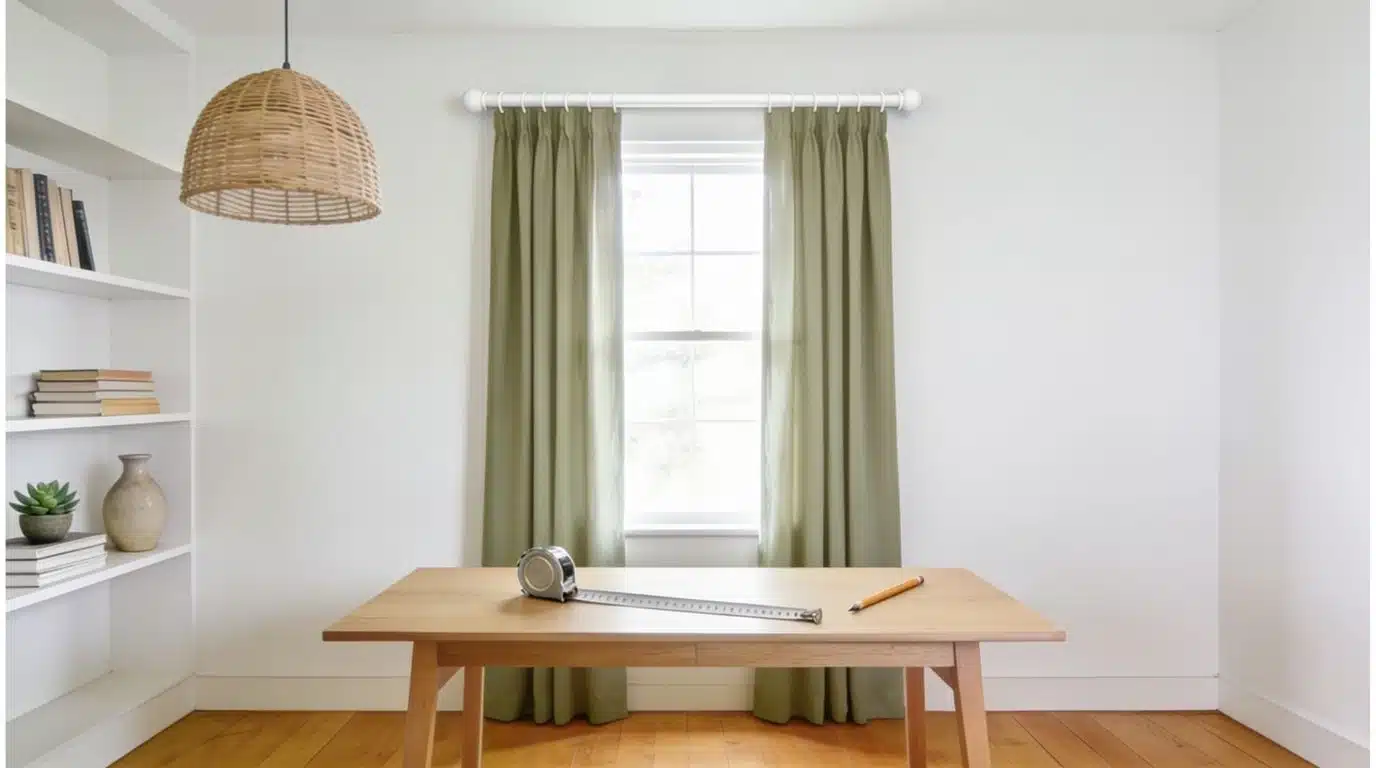
Measure every window separately, even identical-looking ones. Windows in the same room often differ by a quarter to half an inch.
|
What to Record |
Example |
|---|---|
|
Rod width (excluding finials) |
60 inches |
|
Total curtain width |
120 inches (2x fullness) |
|
Each panel width |
60 inches (2 panels) |
|
Drop |
95 inches |
|
Number of panels |
2 |
Note: Ready-made drops come in fixed lengths: 63, 84, 96, 108, and 120 inches. A 95-inch drop means buying the 96 and hemming half an inch, not the 84 and hoping.
How to Measure Curtains for Unique Windows and Doors
Most windows follow the same measuring rules, but some shapes and situations need a slightly different approach before you order.
1. Bay Windows
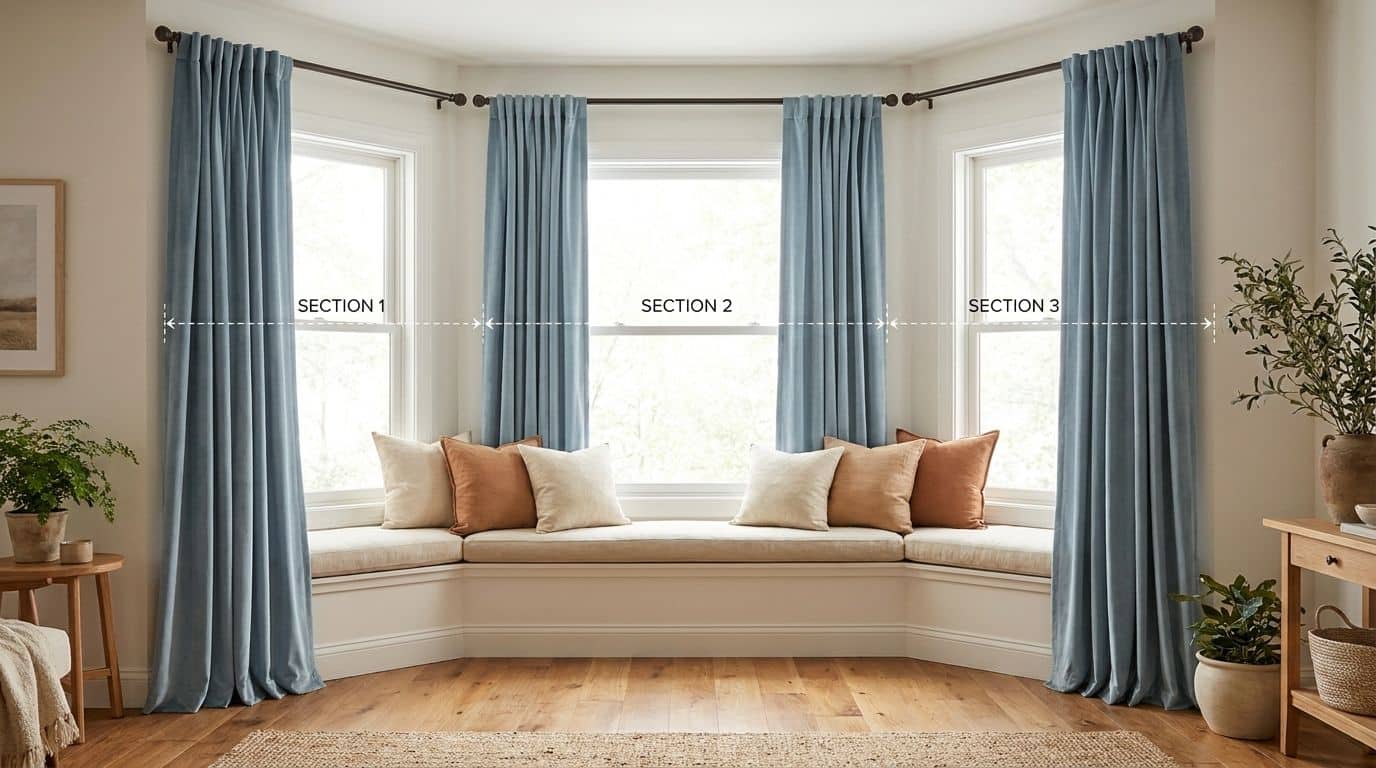
A bay window has several flat sections joined at angles, as do bow windows and other angled window styles. Measure each section from angle to angle, never the whole bay in one sweep.
Add 8 to 12 inches to the first and last sections so panels stack clear of the glass when open.
Eyelet headings fail here because the rings cannot pass the corner brackets. Use pencil pleat or pinch pleat, both of which run on bay poles and flexible tracks.
2. Sliding Doors and French Doors
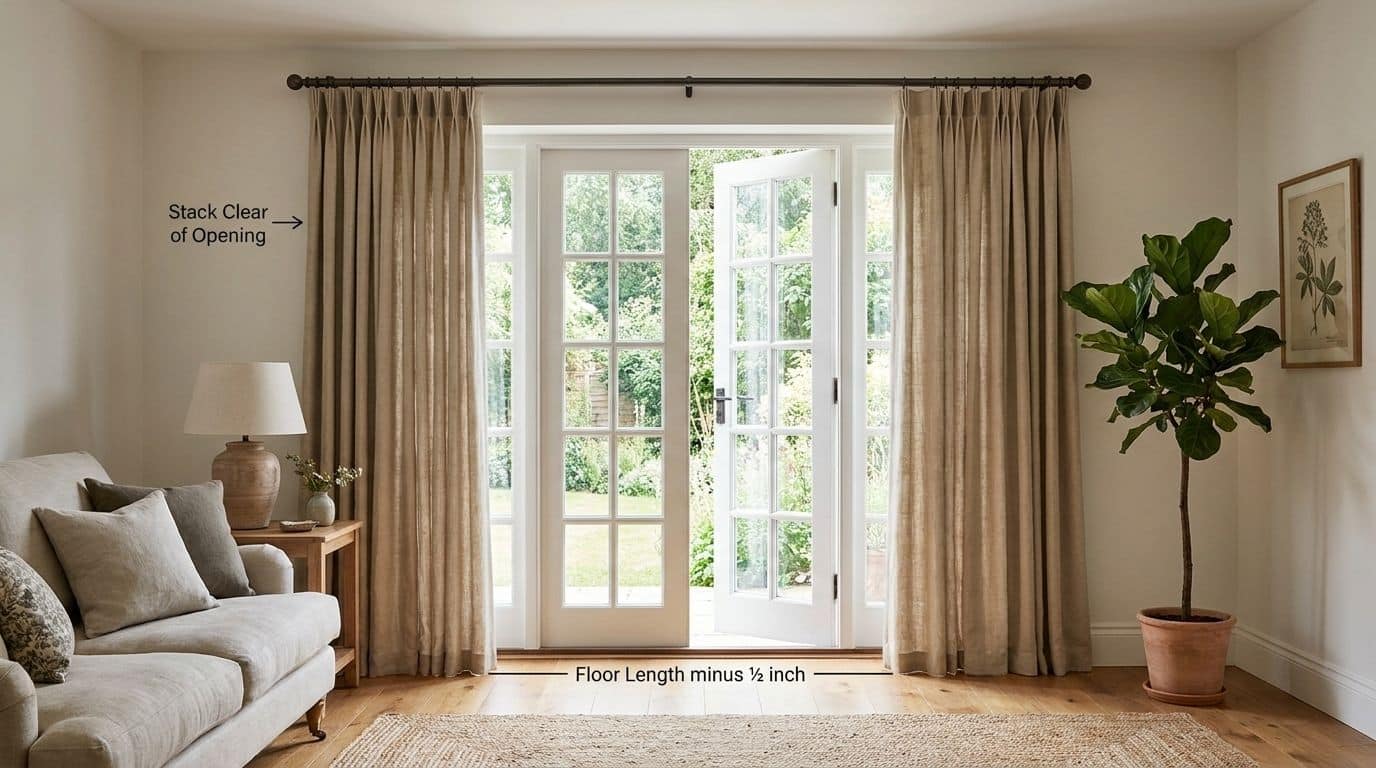
Add at least 12 inches on each side past the door frame, so panels stack fully clear of the opening and the door still works.
Check which way it moves first, since sliding and French door types stack in opposite directions and the panel needs to sit clear of the handle.
Use floor length minus half an inch. Puddle length fails on a door used daily, where the hem gets dragged and stood on.
3. Floor-to-Ceiling Windows
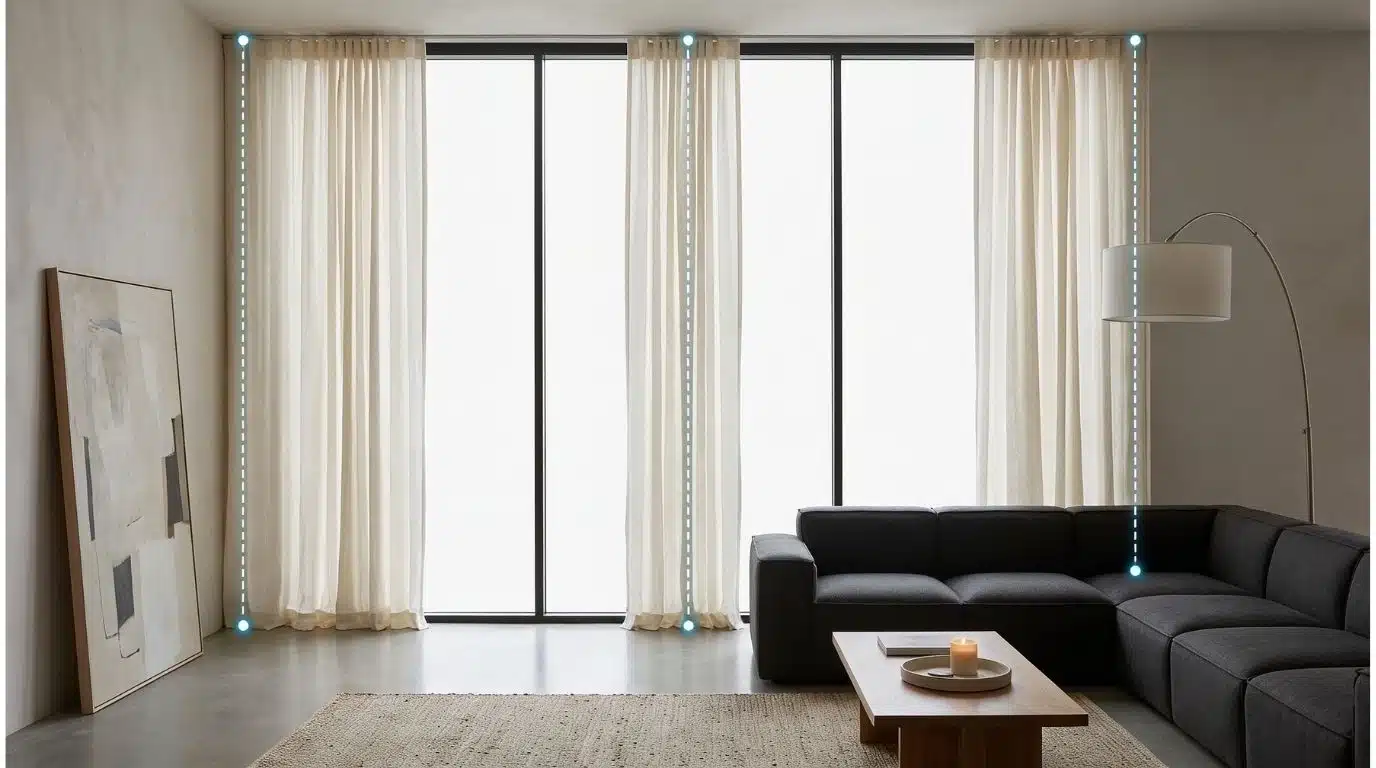
Mark the rod position near the ceiling, then measure straight down to the floor. Mark it in pencil and stand back before you drill. Run the 3-point measurement from Step 4 here.
A half-inch floor variation barely shows on a 63-inch drop but is obvious on a 108-inch drop.
A short panel on tall glass is impossible to hide, so order long and hem down. Full-height glass is also where layered soft furnishings in a conservatory earn their keep.
Curtain Measuring Mistakes That Ruin the Fit
Getting your curtain measurements wrong is one of the easiest ways to end up with panels that look off, hang awkwardly, or need to be returned.
- Use a metal tape, not fabric: Fabric tape stretches and can introduce up to 1 inch of error into your measurements. I keep a 25-foot metal tape because anything shorter sags halfway up a tall window.
- Measure from the rod, not the window frame: Starting from the frame makes your drop come out shorter than it should be.
- Measure between finials, not across the full rod: Including the finials prevents your panels from sliding past the end caps.
- Measure each window separately: each window can vary, so a single measurement used across all of them will be wrong.
- Check your heading type before ordering: Skipping this step leaves your drop 1 to 2 inches off, depending on the heading style.
- Write everything down before you shop: Carrying numbers in your head is how the wrong measurement gets into the order.
Final Thoughts
Measuring for curtains comes down to six steps, four decisions, and no guesswork.
Begin with the rod, calculate the required fullness, then choose your preferred curtain length before measuring the drop.
Adjust for the heading before you order. I keep every number in my phone, window by window, and read them back once before I buy anything.
Do that, and the panels hang right the first time. Which number caught you out last time? Tell us in the comments.
Frequently Asked Questions
What if My Ideal Size Isn’t Available Off the Rack?
Buy the next size up and hem it. Curtains can be shortened, never lengthened. Rounding down leaves a gap you cannot fix.
How Wide Should Curtains Be Compared to the Rod?
Total panel width should be 1.5 to 2.5 times your rod width. Measure against the rod, not the window, since the rod is wider.
Should Curtains Touch the Floor?
Floor-length curtains generally create the most polished look. Ideally, they should hover half an inch above the floor or lightly touch it for a tailored appearance.
Can I Hang Curtains Inside the Window Frame?
Yes, with a tension rod. First, check that the recess is deep enough for the rod, then measure the recess width and drop rather than the wall.
Do Curtains Shrink After Washing?
Cotton and linen panels can lose 1 to 2 percent of their length in the first wash. Order slightly long, or wash before hemming.