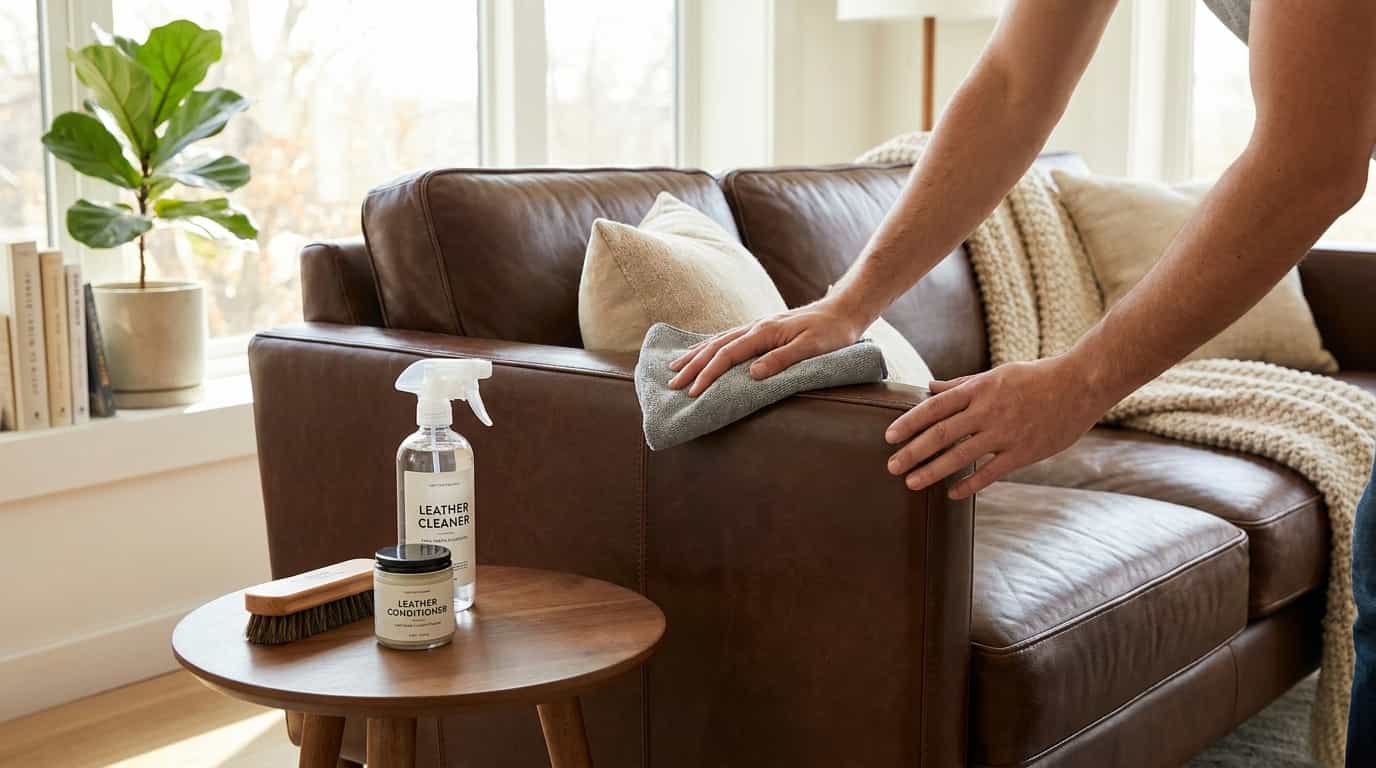

Got a leather couch? It looks great and feels comfortable, but it also picks up dust, spills, and oily fingerprints quickly; that grime builds up before you even notice it.
So how do you fix that? If you want to know how to clean a leather couch the right way, you’re in the right place. A little routine goes a long way, kind of like the care you’d put into cleaning granite worktops.
Skip random cleaners; they can dry out leather or leave rough patches.
Here’s what actually works and makes a noticeable difference when you apply it consistently in the right way.
How Do You Identify Your Couch Leather Type Before Cleaning?
Before cleaning, identify your couch’s leather type first. Each material reacts differently to moisture, cleaners, and conditioning products.
- Full-Grain Leather: Made from the natural top layer of hide, it has visible grain and markings and develops a rich patina over time.
- Top-Grain Leather: Sanded and finished for a smoother appearance, with a protective coating that helps resist stains and scuffs.
- Bonded Leather: Made from leather scraps and fibers bonded with polyurethane. It can crack or peel easily, so avoid harsh products and excess moisture.
- Faux Leather: A synthetic material such as PU or vinyl that handles moisture better than genuine leather.
What You Need to Clean a Leather Couch
Before you start cleaning, gather a few basic supplies that are gentle enough for leather and easy to use at home.
| Category | Items |
|---|---|
| Cleaning Tools | Microfiber cloth, soft brush, vacuum attachment |
| Cleaning Products | pH-balanced leather cleaner, distilled water |
| Conditioning | Leather conditioner for your couch type |
| Finishing | Dry towel for buffing |
| Avoid | Bleach, ammonia, baby wipes, abrasive scrubbers, excess water, direct heat |
| Before Cleaning | Test products on a hidden area first |
How to Clean a Leather Couch Step-by-Step
Cleaning a leather couch requires a gentle approach to remove dirt, oils, and stains without drying out or damaging the material.
Follow these steps to safely clean the surface, treat problem areas, and restore the leather’s natural look.
Step 1: Remove Dust and Loose Debris
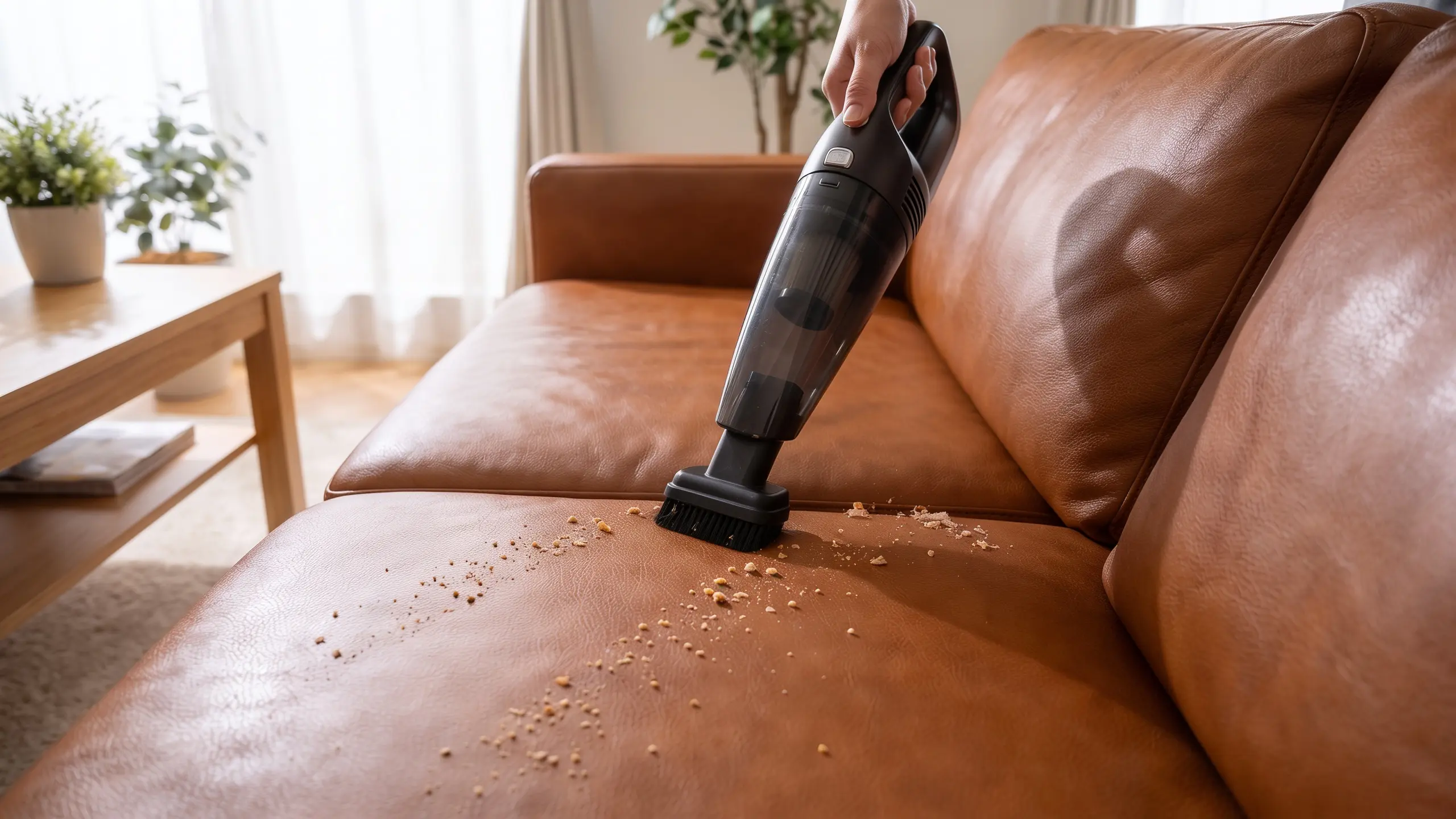
Start by vacuuming your couch with a soft brush attachment to lift dust, crumbs, and pet hair from the surface.
Pay close attention to seams, folds, and the space between cushions, since debris collects there fastest. Skipping this step can trap grit against the leather while wiping, causing fine scratches.
A dry microfiber cloth also works well if you don’t have a vacuum handy. This first pass takes only a few minutes but makes every later step more effective.
Step 2: Wipe With a Damp Cloth
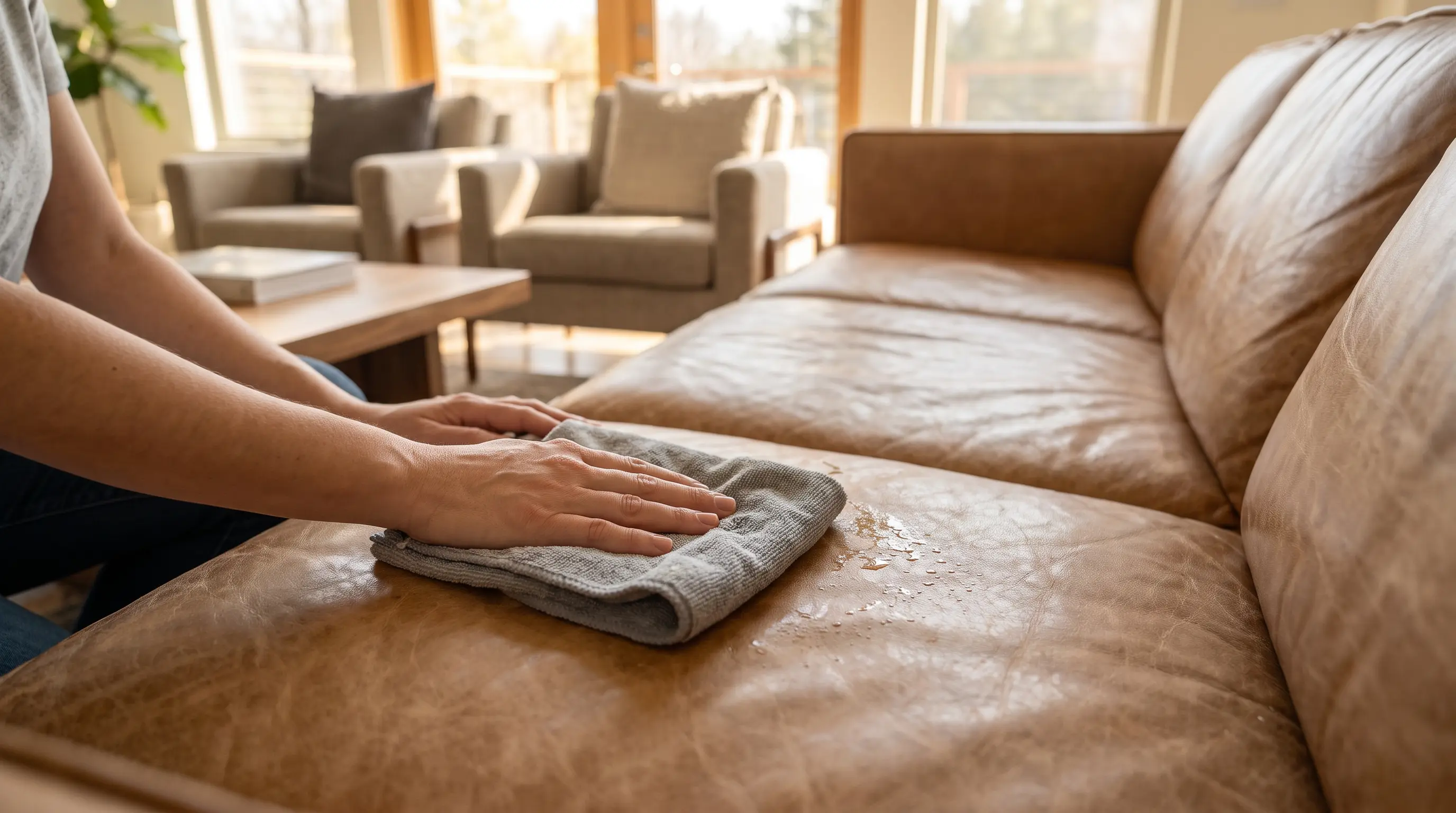
Dampen a microfiber cloth with distilled water and wring it out until it’s barely moist. Wipe the entire surface in gentle, circular motions to lift surface grime before applying any cleaner.
Avoid soaking the cloth, since standing water can seep into the stitching and cause discoloration. This step removes light dust and oils that vacuuming alone can’t catch.
Let the surface air dry for a few minutes before moving to the next step.
Step 3: Apply a pH-Balanced Leather Cleaner
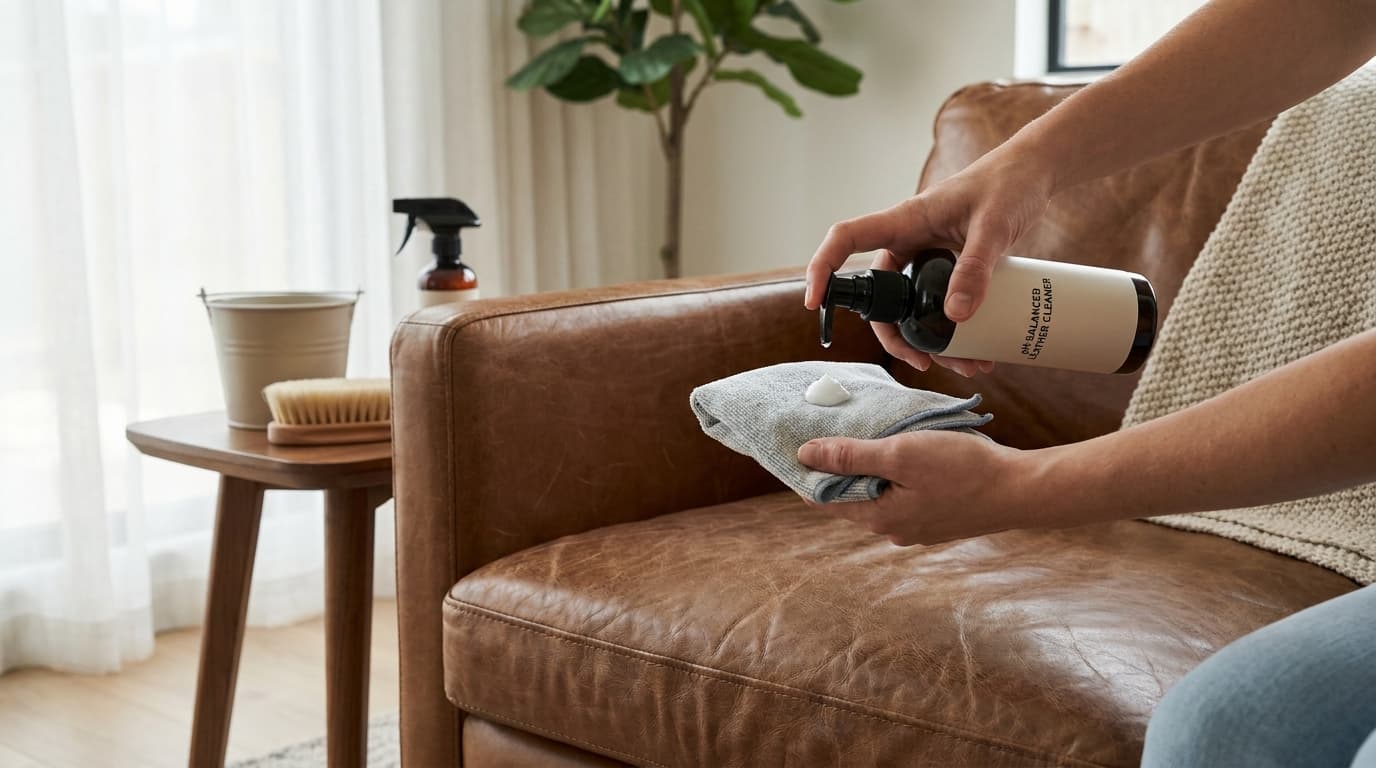
Choose a cleaner made specifically for your leather type and apply a small amount to a clean cloth, not directly onto the couch.
Gently rub the cloth over one section at a time, working in small circles rather than long strokes. This targeted approach prevents over-saturating any single area.
Always test the cleaner on a hidden spot first to confirm it won’t alter the color or texture. Most cleaners need a few minutes to lift dirt before you wipe it away.
Step 4: Wipe Away Residue
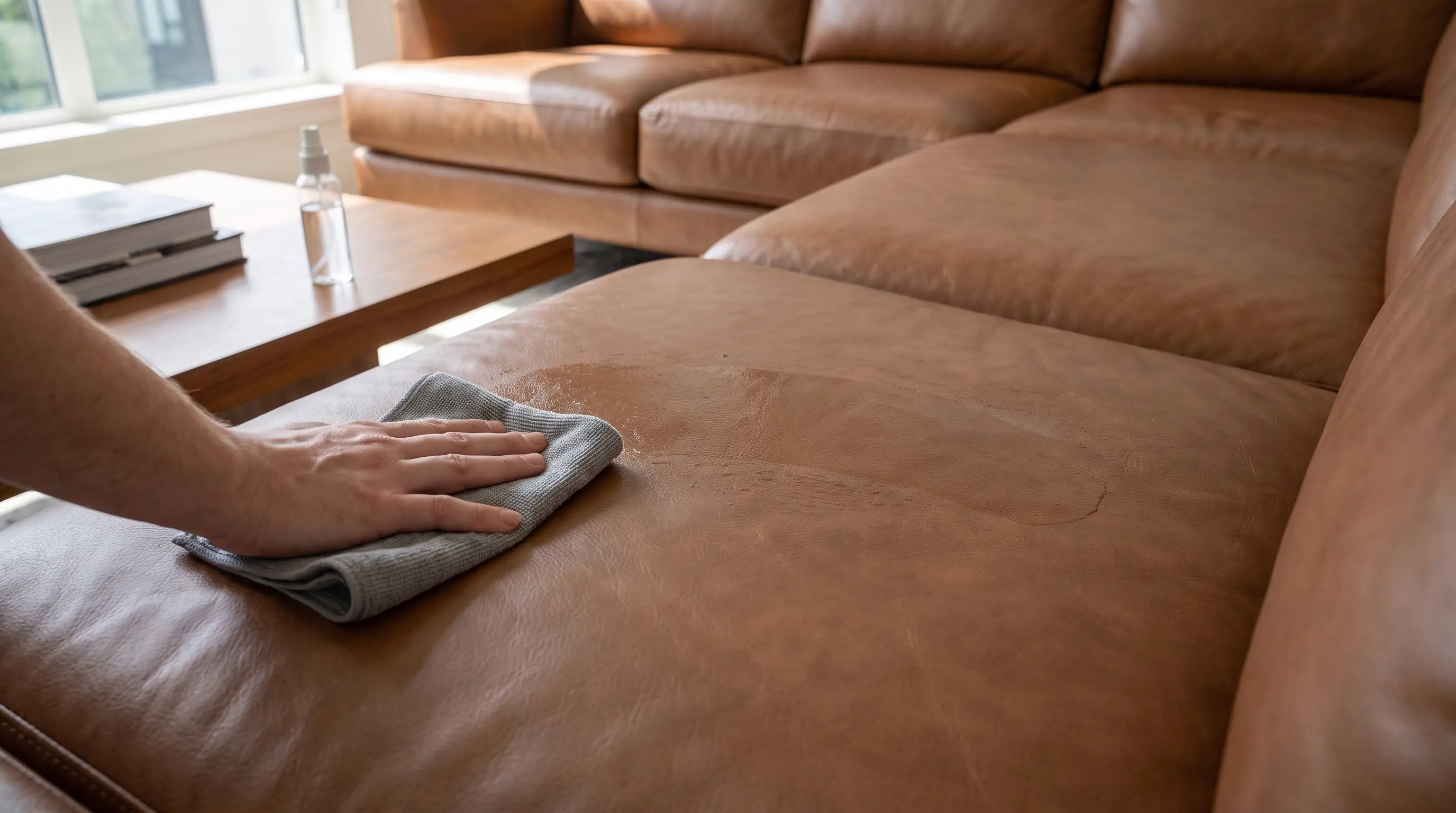
Use a fresh, dry section of your cloth to wipe off any leftover cleaner and loosened dirt. Work in the same gentle, circular motion you used during application to avoid streaking.
Check corners and tufted areas closely, since cleaner tends to pool there. Buffing lightly at this stage also helps restore some shine to the surface.
Leaving residue behind can attract more dust later, so this step matters more than people expect.
Step 5: Condition and Buff the Leather
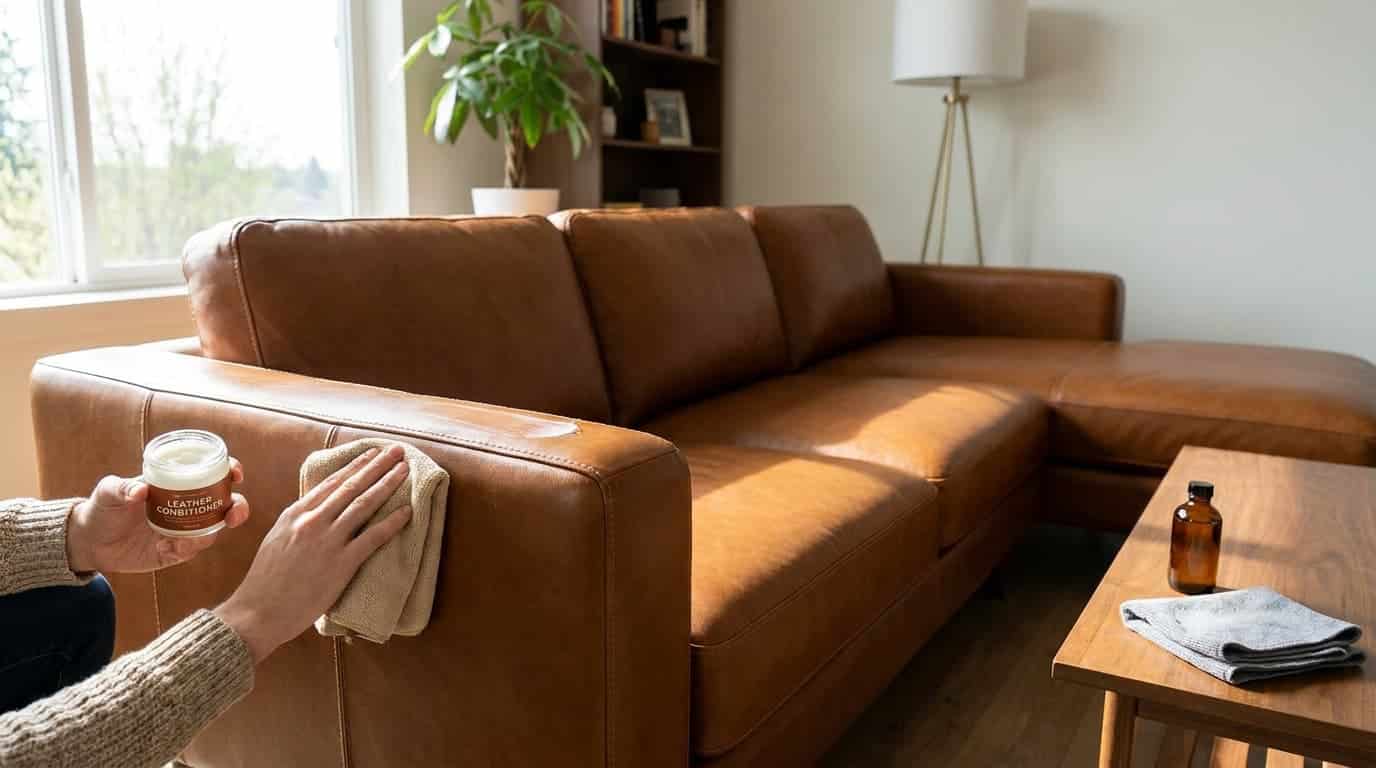
Apply a leather conditioner suited to your couch type using a clean cloth, working it in with light, even pressure.
Conditioning replaces natural oils lost during cleaning and helps prevent cracking or stiffness. Let the conditioner sit for the time listed on the product label, usually fifteen to twenty minutes.
Buff the surface with a dry cloth afterward to remove any excess and bring back a soft sheen. Repeating this step every few months keeps your couch looking cared for year-round.
How To Clean Different Parts of a Leather Couch?
Different parts of a leather couch collect dirt in different ways. Cleaning each area properly helps prevent wear and keeps the leather looking fresh.
| Couch Part | How to Clean |
|---|---|
| Cushions | Wipe gently and clean seams carefully. |
| Armrests | Use a damp cloth and condition regularly. |
| Tufted Areas | Use a soft brush for tight spaces. |
| Frame & Legs | Use a cleaner suited to the material. |
| Underneath | Vacuum every few weeks to remove dust. |
How to Spot Clean Fresh Stains on a Leather Couch
Spot cleaning handles small spills and marks before they turn into lasting stains, and it works differently from a full cleaning session.
Step 1: Blot Fresh Spills Immediately
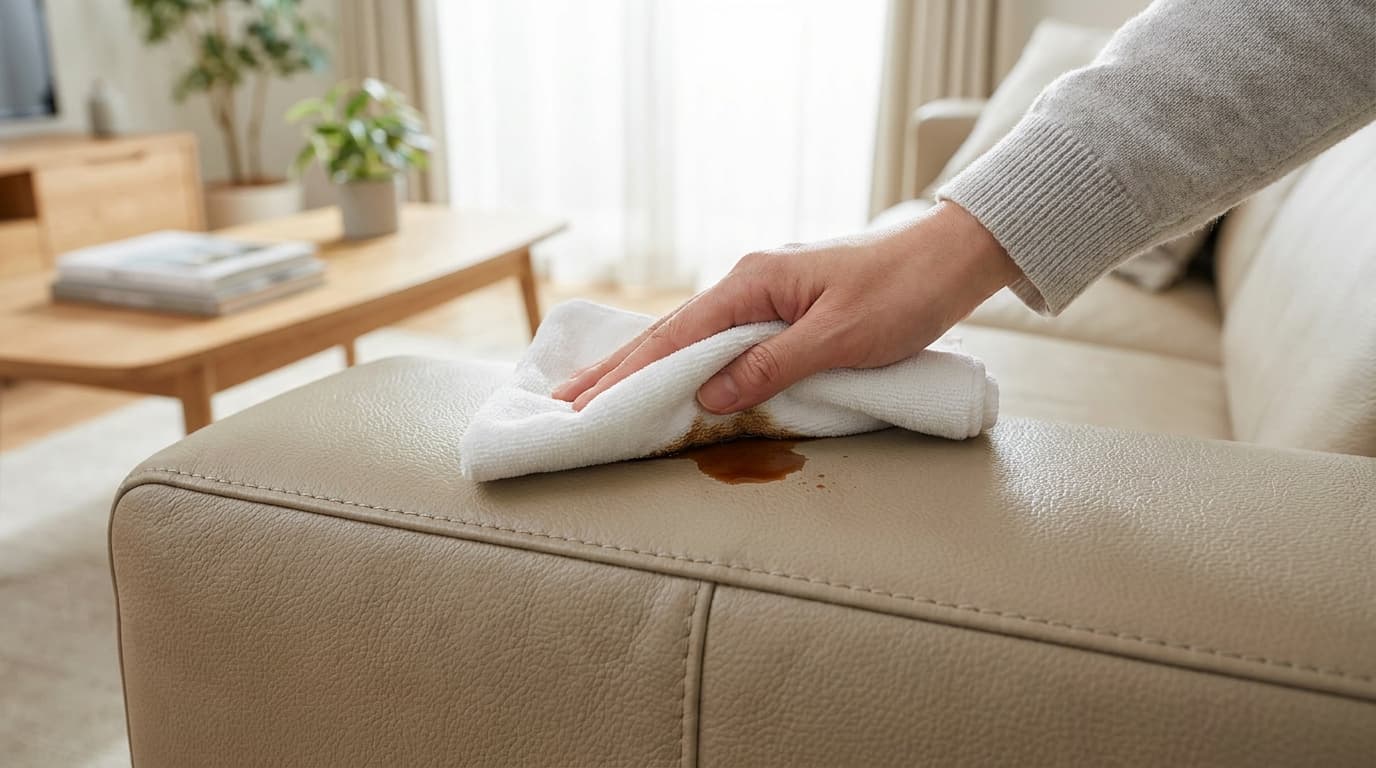
The moment a spill happens, grab a clean, dry cloth and blot it gently rather than wiping. Wiping spreads the liquid across a wider area and can push it deeper into the leather.
Press down lightly and lift straight up, repeating with a fresh section of cloth each time. Speed matters here, since leather absorbs liquid faster than most people realize.
Acting within the first few minutes often prevents a stain from setting at all.
Step 2: Identify the Type of Stain and Treat
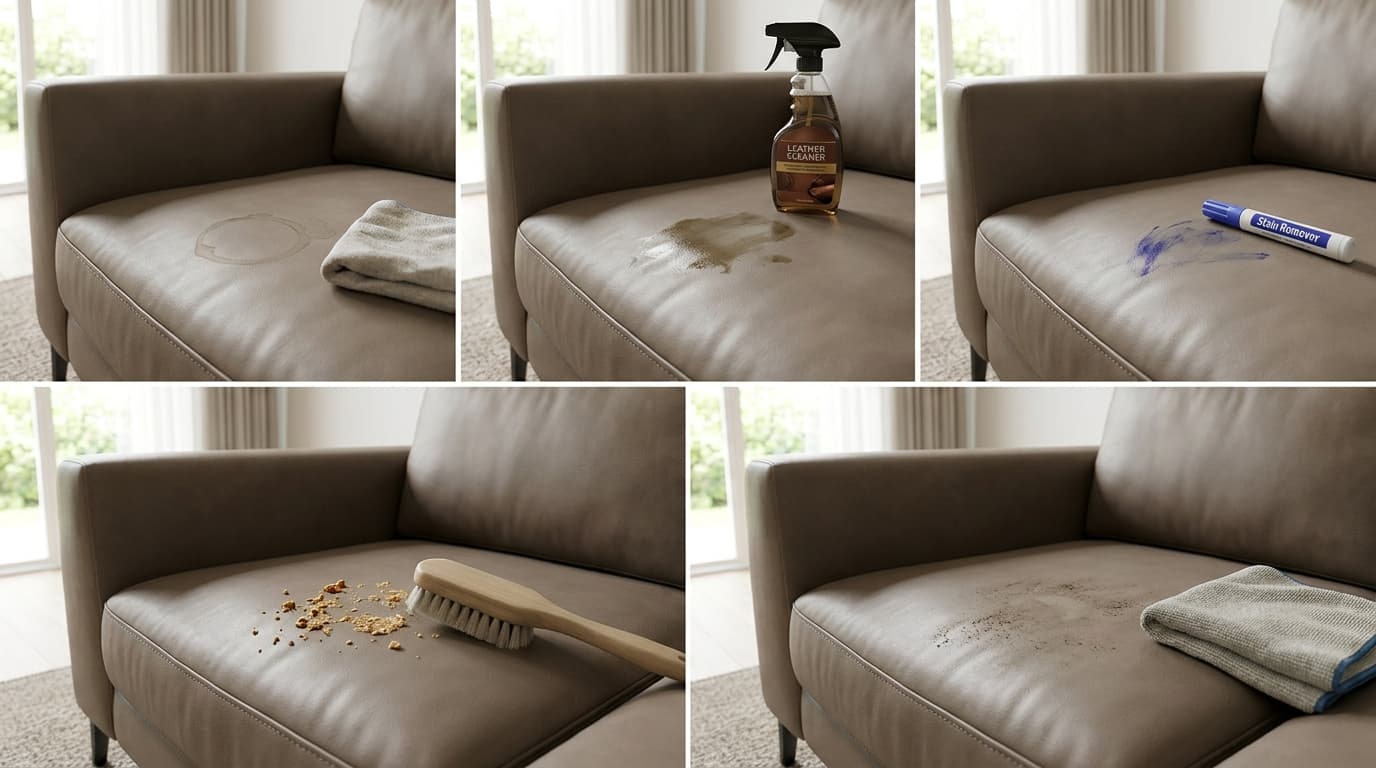
Different stains need different treatments, so take a moment to figure out what caused the mark. Water-based stains like juice or coffee usually lift with mild soap and water.
| Stain Type | Spot Cleaning Method |
|---|---|
| Water-based spills | Blot with a damp microfiber cloth and dry naturally |
| Oil or grease | Absorb excess oil and use a leather-safe cleaner |
| Ink marks | Use a leather-specific stain remover |
| Food stains | Remove residue gently before cleaning |
| Dirt marks | Wipe with mild leather cleaner |
Choosing the right treatment for the stain helps prevent it from getting any worse.
Step 3: Condition the Spot After Cleaning
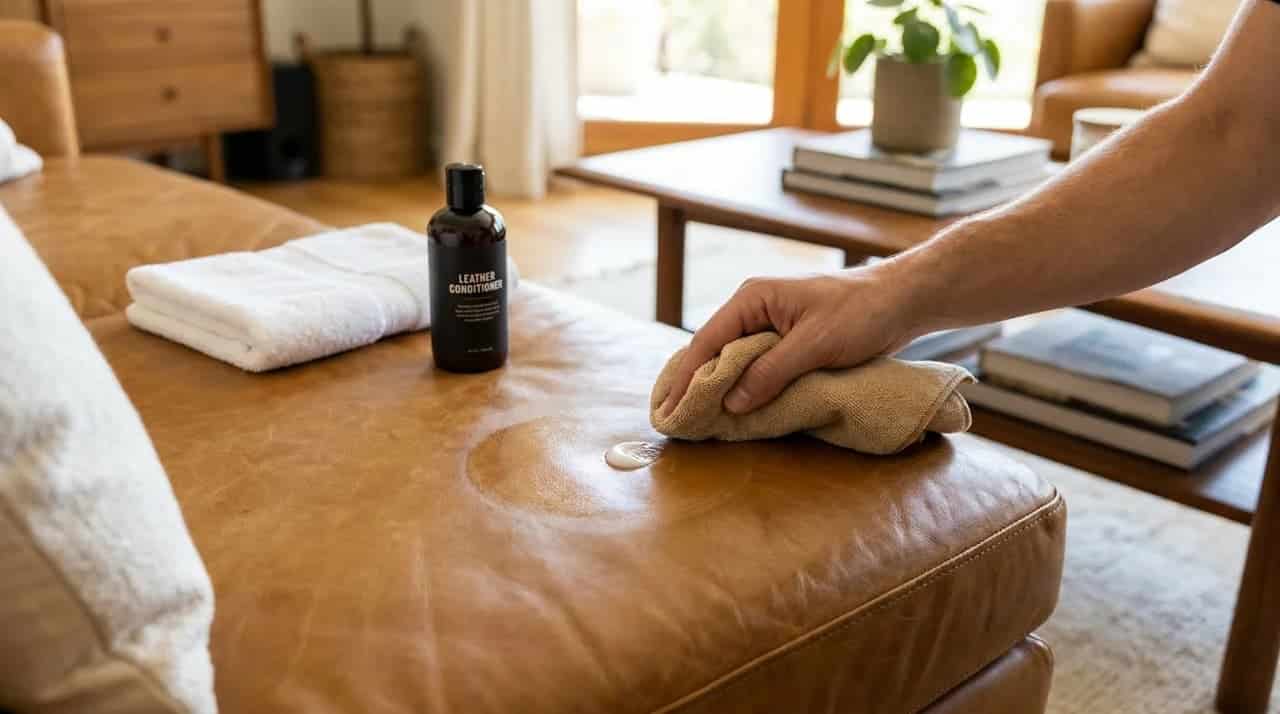
Once the stain lifts, dab a small amount of leather conditioner onto the treated area with a clean cloth.
This step restores moisture that the cleaning process removes and helps the spot blend back into the surrounding leather.
Skipping conditioner can leave a dry or lighter patch that stands out against the rest of the couch. Let the conditioner absorb fully before sitting on or touching that area again.
A well-conditioned spot often becomes impossible to spot within a day or two.
DIY vs. Store-Bought Cleaner: Which Should You Actually Use
DIY cleaners are affordable and customizable, while store-bought options offer convenience and consistent results. The right choice depends on your brushes, budget, and cleaning routine.
| Factor | DIY (vinegar and water) | Store-Bought Cleaner |
|---|---|---|
| Cost | Pennies, using what’s already in your kitchen | Around $10 to $20 a bottle, lasts many cleans |
| Effort | Mix it yourself and test it first | Ready to use straight from the bottle |
| Safety | Acidity can strip finish and dry out leather | Formulated to be pH-balanced for leather |
How to Prevent Long-Term Leather Couch Damage
A clean couch still wears down without the right environment. A few daily habits keep leather from drying out, fading, or scratching.
- Keep it out of direct sun and heat: Sunlight and radiators dry out leather and fade its color faster than everyday use.
- Hold humidity between 40 and 50 percent: Too dry and leather cracks; too damp, and it can grow mold or mildew.
- Add felt pads under sharp objects: Keys, buckles, and pet claws are the most common causes of leather scratches.
- Buff light scratches with a soft cloth: Gentle circular rubbing often blends small surface marks back into the grain.
- Use a color-matched leather balm for deeper marks: This fills in scuffs that buffing alone can’t fix.
When to Call a Professional
Some problems go past what a cloth and cleaner can fix. If a stain has soaked in for weeks or months, home methods often spread it further, so call a pro.
The same goes for mold, since scrubbing it yourself can push spores deeper into the leather. Once the surface starts cracking or peeling, no cleaner can fix it.
Only a re-finishing service can. If you have aniline leather with a stubborn issue, be extra careful. It has no coating, so one wrong move can damage it for good.
Wrapping It Up
Knowing how to clean a leather couch the right way can mean the difference between a couch that lasts for years and one that fades too soon.
The right supplies, a clear sense of your leather type, and a steady routine protect your investment, the same way it pays off when maintaining an outdoor deck or keeping artificial grass looking fresh.
Dust weekly, condition every few months, and treat spills right away.
Ready to give your couch the care it deserves? Grab a microfiber cloth and a pH-balanced cleaner, and start today.
Frequently Asked Questions
Can You Use Homemade Cleaners on a Leather Couch?
Most homemade cleaners are too harsh for leather, so use a cleaner specifically designed for your couch type.
How Do You Remove Ink Stains from a Leather Couch?
Gently dab the stain with a cotton ball soaked in rubbing alcohol, and once it lifts, take a moment to care for the spot afterward.
Can You Use Baby Wipes or Disinfecting Wipes on a Leather Couch?
No, their chemicals break down leather’s protective coating and can leave it cracked or sticky over time.
Can You Steam Clean a Leather Couch?
It’s important to be careful, as heat and moisture can sometimes dry out or shrink genuine leather. Take your time and handle it gently to keep your leather looking its best.