
Looking at your deck and wondering where to start with all that built-up grime?
A clean deck not only looks better but also lasts longer, saving you money on costly replacements.
Whether you have wood, composite, or PVC decking, regular cleaning prevents rot, mold, and structural damage that can make your outdoor space unsafe.
This guide covers everything from recognizing your deck’s build to selecting cleaning methods that deliver the best results.
You’ll learn the essential steps for proper deck cleaning, plus maintenance tips to keep your outdoor space looking fresh year-round.
With the right approach, you can restore your deck’s appearance and protect your investment for years to come.
Why Cleaning Your Deck Matters?
Regular deck cleaning protects your investment and keeps your outdoor space safe for family gatherings.
Without proper maintenance, decks suffer from premature wear that leads to expensive repairs or full replacement.
Dirt and moisture create the perfect breeding ground for mold and mildew.
These organisms eat away at wood fibers and cause composite materials to break down. Left unchecked, this damage weakens your deck’s structure.
Key benefits of regular deck maintenance
- Prevents costly repairs by stopping rot and structural damage early.
- Increases safety by removing slippery algae and mold growth.
- Protects home value with well-maintained outdoor living spaces.
- Extends deck lifespan by up to 10 years with proper care.
- Preserves appearance by preventing permanent stains and discoloration.
- Reduces splinter risk through smooth, clean surface maintenance.
Knowing Your Deck’s Surface Type

Different deck materials need different cleaning approaches. Using the wrong method can damage surfaces or void warranties.
Check your deck’s edges or underside to identify the material before selecting cleaning products. Look for grain patterns, color, and texture clues.
| Deck Type | Key Features | Cleaning Needs |
|---|---|---|
| Pressure-Treated Wood | Greenish tint, visible grain, affordable | Gentle cleaners, annual sealing required |
| Cedar/Redwood | Natural reddish color, weather-resistant | Mild soap solutions, brighteners for color |
| Composite | A mix of wood fibers and plastic | Specialized composite cleaners, no sealing |
| PVC/Vinyl | 100% synthetic, fade-resistant | Simple soap and water, avoid harsh chemicals |
| Hardwood (Ipe/Teak) | Dense, exotic wood, naturally oily | Oil-based cleaners, special hardwood treatments |
Each material ages differently and shows wear in unique ways. Wood grays naturally from sun exposure, while composite may develop surface mold without proper cleaning.
Matching your deck’s characteristics with the right cleaner ensures thorough results without risking surface wear or fading. When in doubt, test any cleaner on a hidden area first.
Signs Your Deck Needs a Deep Clean
Your deck sends clear signals when regular sweeping isn’t enough anymore. Watch for visual cues and physical changes that indicate a severe buildup.
These warning signs mean it’s time for a thorough deck cleaning to prevent permanent damage.
- Green or black patches: Mold and mildew are spreading across deck boards and railings.
- Slippery surfaces: Dangerous algae growth makes walking hazardous, even in dry weather.
- Dirt-filled grooves: Visible grime buildup trapped in gaps between boards and corners.
- Color differences: Noticeably faded areas compared to spots under furniture or covers.
- Water absorption: Wood soaking up water instead of beading on the surface.
- Stubborn stains: Food spills, grease marks, or rust that won’t budge with sweeping.
- Musty odors: Persistent smell of decay or mildew coming from the deck area.
Step-By-Step Process to Clean Your Deck
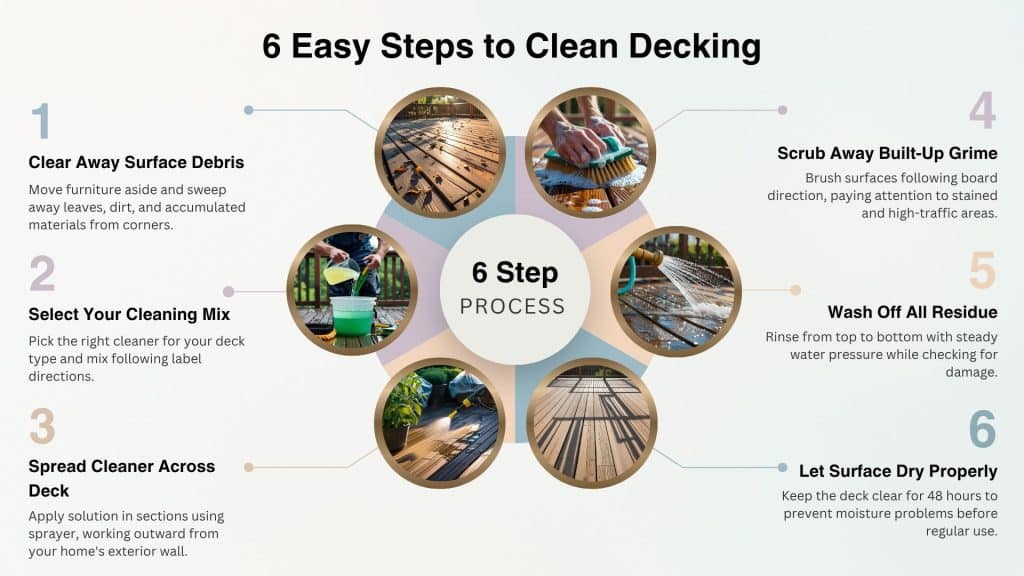
Follow these six essential steps for effective deck cleaning that protects your investment. Each step builds on the previous one for professional results.
Essential Tools and Supplies You’ll Need
Gather all necessary equipment before starting your deck cleaning project. Having everything ready saves time and ensures smooth completion.
| Tools | Supplies |
|---|---|
| Stiff-bristled brush | Deck cleaner (appropriate for your material) |
| Push broom or leaf blower | Rubber gloves |
| Garden hose with nozzle | Safety goggles |
| Bucket or pump sprayer | Plastic sheeting for plants |
| Scrub mop (optional) | Old towels or rags |
| Power washer (optional) | Trash bags for debris |
Step 1: Remove Loose Dirt, Leaves, and Debris
Start by clearing all furniture, planters, and grills from your deck surface. Use a broom or leaf blower to remove loose materials from the entire area.
Pay special attention to gaps between boards where debris collects. Clear drainage areas and corners where leaves tend to accumulate and trap moisture.
Step 2: Choose and Prepare the Right Cleaning Solution
Select a cleaner designed for your specific deck material to avoid damage. Mix the solution according to package directions in a large bucket or sprayer.
For eco-friendly options, combine one cup of vinegar with a gallon of water. Always wear gloves and protect nearby plants with plastic sheeting before applying cleaners.
Step 3: Apply the Cleaning Solution Evenly
Work in sections to prevent the solution from drying before scrubbing begins. Use a pump sprayer or watering can for even coverage across all surfaces.
Start from the house and work outward to avoid stepping on treated areas. Let the solution sit for the recommended time, usually 10-15 minutes for best results.
Step 4: Scrub the Deck Surface Thoroughly
Use a stiff-bristled brush to work the cleaner into the wood grain or textured surface. Work in the natural direction of the boards to keep the surface intact.
Focus extra effort on stained areas and high-traffic zones that show more wear. Clean railings, stairs, and vertical surfaces using the same thorough technique.
Step 5: Rinse and Inspect the Deck
Rinse thoroughly with a garden hose, starting from the highest point and working down. Use steady water pressure to remove all cleaning solution without damaging the surface.
Check for missed spots, remaining stains, or areas needing repair while surfaces are wet. Mark any damaged boards or loose fasteners for fixing after the deck dries.
Step 6: Allow the Deck to Dry Completely
Wait at least 48 hours before replacing furniture or applying any sealers or stains. Proper drying prevents trapped moisture that leads to mold growth and wood rot.
Use this drying time to plan any necessary repairs or maintenance identified during cleaning. Schedule annual deck cleaning to maintain your outdoor space in top condition.
Deck Maintenance Schedule by Frequency
Stay on top of deck care with this simple frequency-based maintenance guide. Regular attention prevents major problems and keeps your outdoor space looking its best year-round.
| Daily Tasks | Weekly Tasks | Monthly Tasks | Seasonal Tasks |
|---|---|---|---|
| Clean spills immediately | Sweep the entire deck surface | Move furniture around | Deep clean thoroughly |
| Check for safety hazards | Rinse high-traffic areas | Check all fasteners | Apply fresh sealant |
| Remove standing water | Clear drain holes | Inspect for damage | Trim nearby vegetation |
| Put away loose items | Brush textured surfaces | Clean under the furniture | Clean gutters above deck |
The reality is simple: skipping the routine means you’ll spend entire weekends fixing problems that could have been prevented with just a few minutes of regular care.
Consistent small efforts beat occasional big cleanups every time. A few minutes daily saves hours of repair work later.
Final Thoughts
A clean deck creates a welcoming outdoor space while protecting your investment from costly damage.
By following these six simple steps and maintaining a regular cleaning schedule, you’ll extend your deck’s lifespan and keep it looking its best.
Always start by assessing your deck’s finish, picking suitable products, and ensuring a complete rinse for long-lasting protection.
A quick weekly clean keeps your deck safe and spotless. Whether you have wood, composite, or PVC decking, proper deck cleaning techniques make all the difference.
Your efforts today mean years of safe, beautiful outdoor living tomorrow.
Have you tried these cleaning methods on your deck? What challenges do you face with deck maintenance? Share your thoughts and questions below!