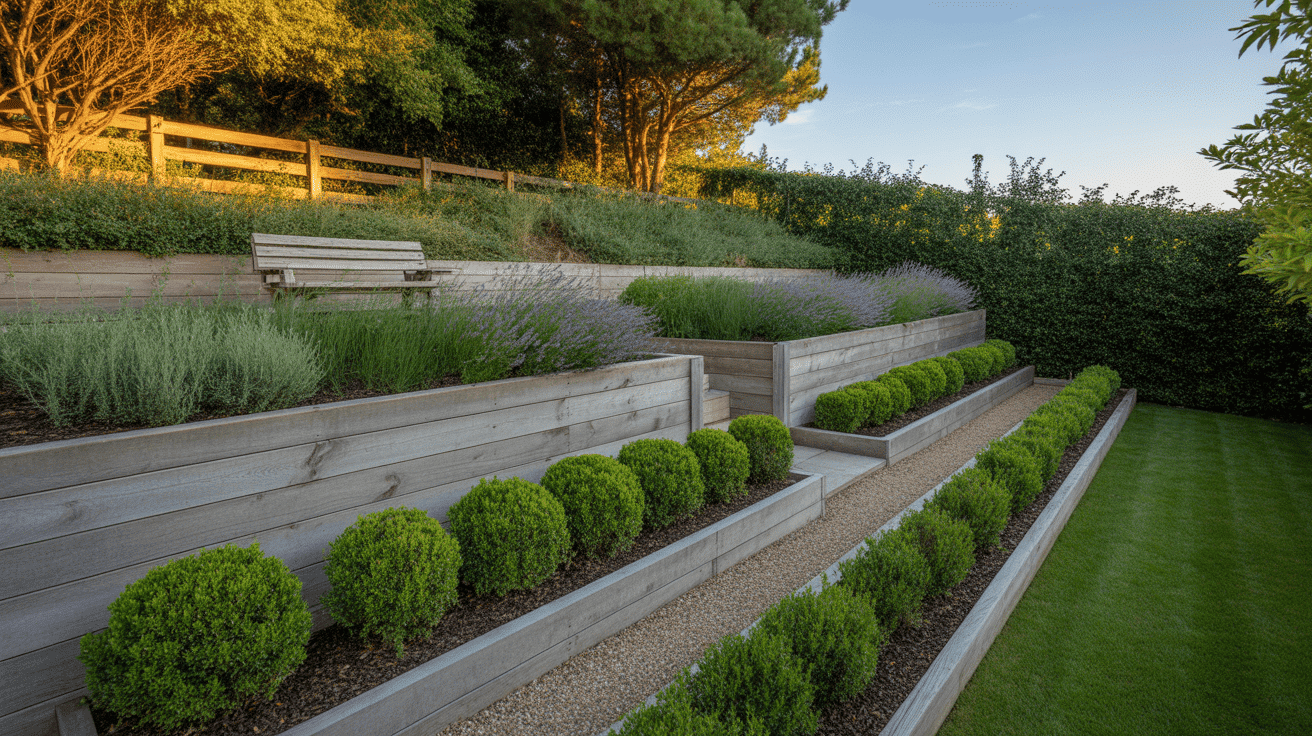

Looking at a steep, unusable slope in your backyard and wondering if it could ever become something beautiful?
Many homeowners feel frustrated when they see their slanted outdoor space. Water runs downhill, causing erosion problems in any sloped yard.
Kids cannot play safely on uneven ground. The area feels wasted and adds no value to your home, especially on a hillside.
But here’s what most people don’t realize. Your challenging slope can become your garden’s most stunning feature.
With smart design choices, that problem area transforms into terraced garden rooms, safe play spaces, and eye-catching landscape elements.
Smart planning turns a sloping garden before and after stories into success stories with thoughtful landscaping.
The right approach solves slope issues while creating beautiful outdoor spaces. Your slanted yard holds potential for stunning transformations that flat gardens simply cannot match.
What Makes Sloping Gardens Different?
Sloped yards present challenges that flat gardens don’t face. Water runs downhill quickly, causing soil erosion. Kids can’t play safely on steep ground. Many homeowners avoid these areas completely.
But slopes also offer design opportunities that flat spaces cannot match. Smart planning turns problems into stunning features. Even a sloped garden can feel spacious with the right layout.
Most sloping gardens face these common challenges:
- Water runoff and soil erosion after storms
- Safety concerns on steep, uneven areas
- Difficult access for maintenance and mowing
- Limited flat space for outdoor activities
Sloping Garden Before and After
Creative design can turn problem slopes into garden highlights. Each sloping garden before and after story shows how challenging spaces become beautiful, functional areas.
1. Terraced Garden with Retaining Walls
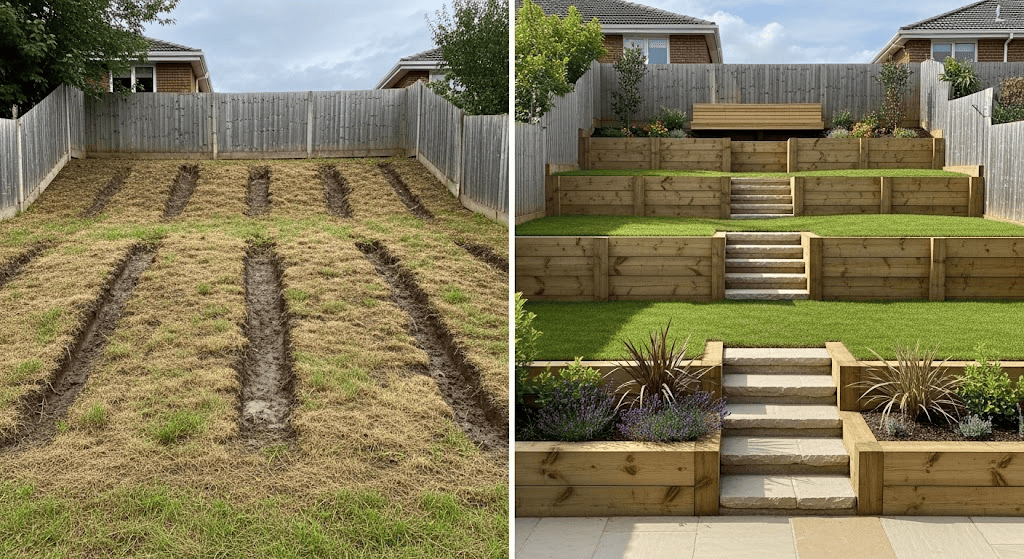
A steep, unusable slope covered in patchy grass becomes multiple terraced garden rooms.
WoodBlocX-style retaining walls hold each level in place while built-in seating provides gathering spots. Stone steps connect each terrace safely.
The flat areas work perfectly for entertaining while children play safely on level ground. Plants thrive in well-drained terraced beds as water moves slowly through the system instead of rushing downhill.
Project timeline:
- Excavation and site preparation: 1 week
- Retaining wall installation: 2-3 weeks
- Steps and seating construction: 1 week
- Planting and finishing touches: 1 week
Cost range: This project typically costs between $8,000 and $15,000 depending on wall height and materials chosen.
2. Budget-Friendly Sloping Garden Makeover
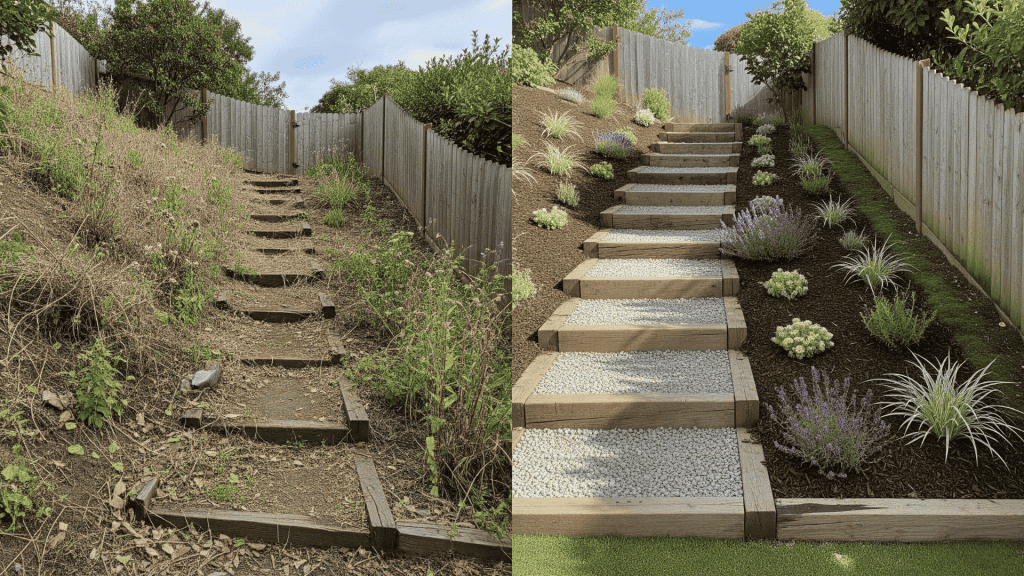
An overgrown slope with no clear pathway changes into an organised, welcoming space. Perfect for a small sloped backyard.
Simple gravel steps create a safe passage up and down, making it one of the most practical, cheap garden path ideas UK homeowners can try on a slope. Native plants require minimal watering, while reclaimed wood edging defines planted areas.
This garden leveling before and after example shows that results don’t require huge budgets. Smart material choices keep costs low while DIY installation saves on labour expenses.
Project timeline:
- Site clearing and preparation: 3-4 days
- Gravel pathway installation: 1 week
- Wood edging and plant installation: 1 week
Cost range: This makeover costs between $800 and $2,500 using recycled materials and DIY labor.
3. Contemporary Minimalist Slope Redesign
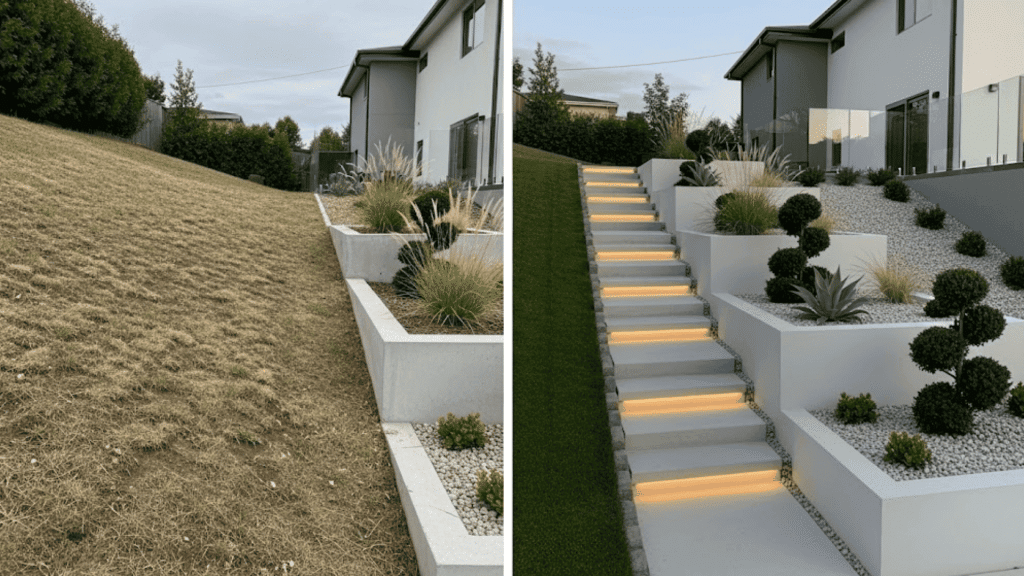
A steep incline with no structure becomes a modern landscape feature. Clean lines and built-in planters create contemporary appeal. This low-profile landscaping keeps visual clutter to a minimum.
LED path lighting provides safety while low-maintenance plants reduce upkeep needs. The space now complements the home’s contemporary style with year-round visual appeal.
Project timeline:
- Site preparation and grading: 1 week
- Built-in planter construction: 1-2 weeks
- Electrical work and lighting installation: 1 week
- Plant installation and final details: 3-4 days
Cost range: This contemporary redesign ranges from $5,000 to $10,000 including professional electrical work and modern materials.
4. Family-Friendly Garden Slope
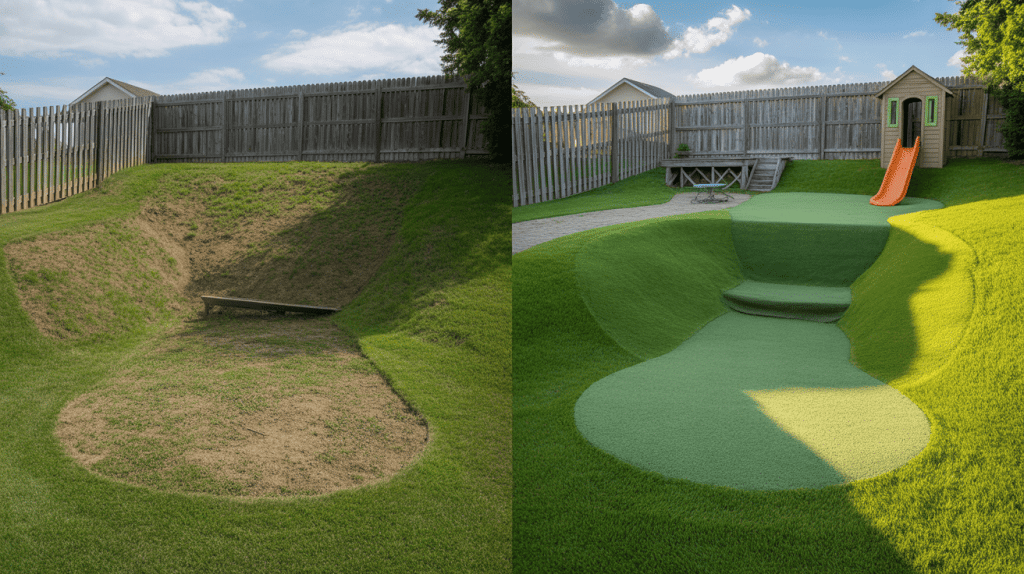
An uneven, unsafe space where children couldn’t play transforms into tiered play areas with safe, level surfaces. Soft artificial turf cushions any falls, while accessible pathways connect different zones.
Built-in storage holds outdoor toys. This modification shows how a sloping garden before and after design can prioritise family needs.
Safety concerns disappear with proper planning, as children now love spending time outdoors.
Project timeline:
- Ground leveling and preparation: 1 week
- Artificial turf installation: 1 week
- Pathway and storage construction: 3-4 days
Cost range: Family-friendly slopes cost between $3,000 and $7,000 for quality artificial turf and safety installations.
5. Wildlife-Friendly Sloping Garden
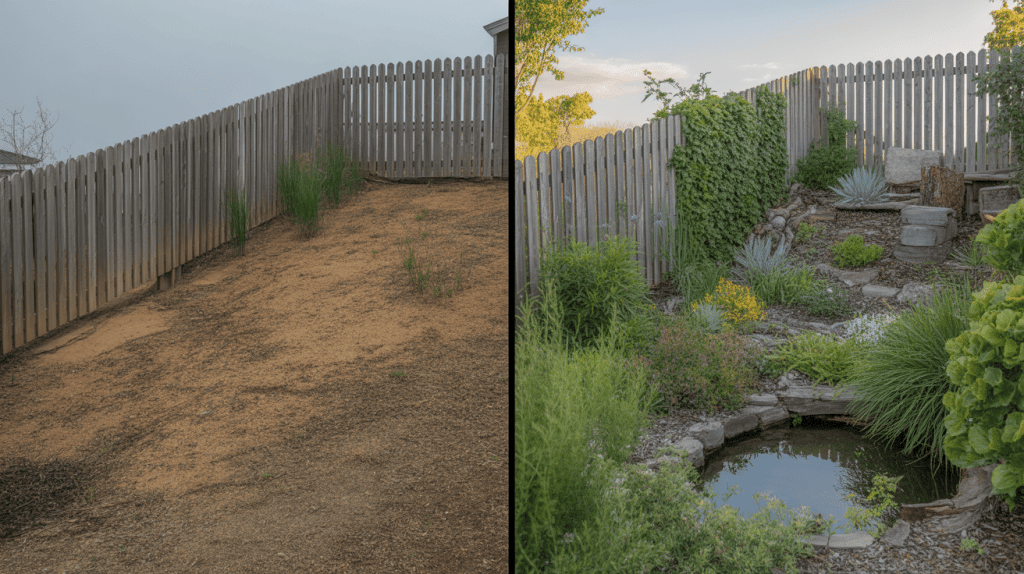
A barren slope that supported little biodiversity becomes a thriving ecosystem. Layered native planting attracts local wildlife while log piles provide habitat for insects.
A small pond collects rainwater naturally. The space now buzzes with life year-round. Native plants require less water and maintenance, while natural materials blend with the landscape.
Wildlife viewing becomes a daily pleasure for the family.
Project timeline:
- Site preparation and pond excavation: 1 week
- Pond liner and water feature installation: 3-4 days
- Native plant installation: 1 week
- Habitat creation and finishing: 1 week
Cost range: Wildlife-friendly projects cost between $2,000 and $6,000 for pond liner, native plants, and natural materials.
Smart Sloping Garden Design Strategies
Several proven techniques can transform your sloped or uneven space into a functional garden. Each approach offers different benefits and works better for specific situations.
1. Building Retaining Walls
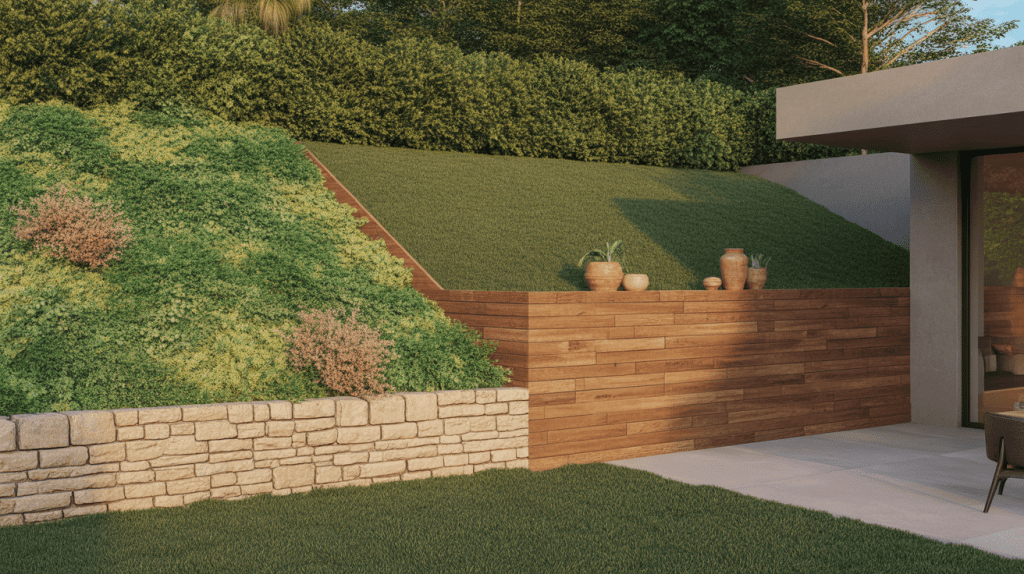
Retaining walls create level areas from sloped ground while preventing soil erosion. Stone walls provide natural beauty and durability, but cost more and need skilled installation.
Timber walls offer warmth and flexibility at lower costs, working well for DIY projects. Concrete walls provide maximum strength for steep slopes and suit modern home styles. Many designers pair walls with planting to soften edges.
2. Creating Multi-Level Spaces
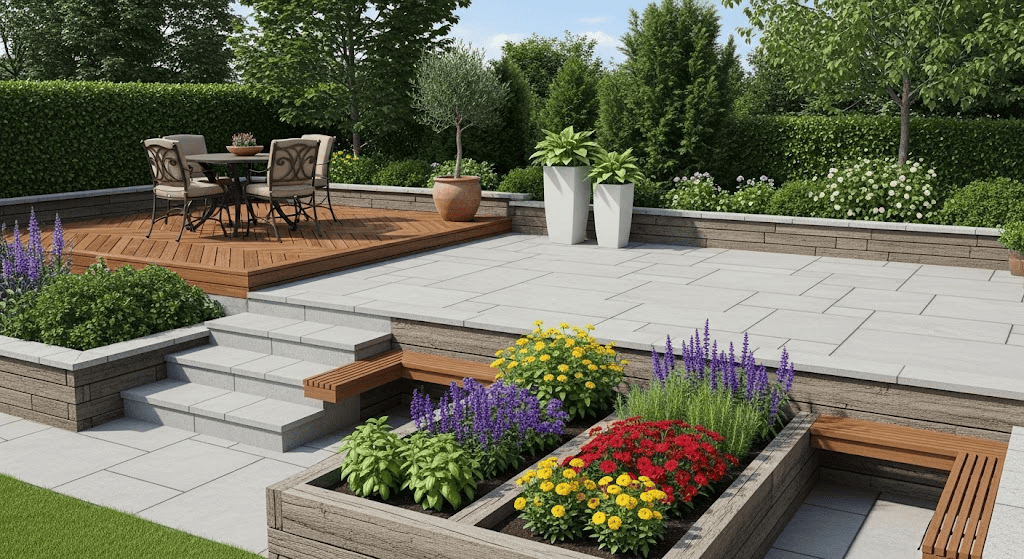
Breaking slopes into multiple levels creates usable outdoor rooms for different family activities.
Decking solutions provide level surfaces quickly and work well for entertaining areas. Paved patios create permanent, low-maintenance surfaces near the house.
Raised garden beds add planting space while improving soil drainage and can include built-in seating.
3. Planting Strategies for Slopes
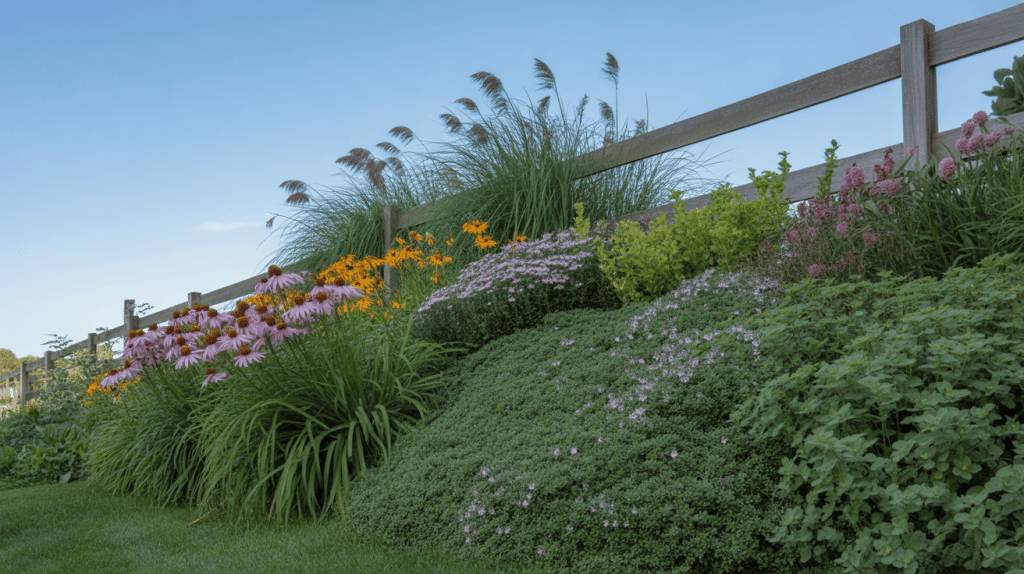
Plants prevent erosion while creating beautiful displays.
Erosion control plants develop strong root systems that hold soil in place. Ornamental grasses and ground covers spread quickly for protection.
Layered planting creates depth with tall plants at the back, medium plants in the middle areas, and low plants at the front.
Drought-tolerant species reduce maintenance needs and survive with less water than traditional lawn grass.
Tips for a Successful Garden Levelling
Planning makes the difference between success and frustration. These proven strategies help ensure your project meets your goals.
- Start with a detailed design plan: Measure your slope accurately and mark utility lines before digging
- Manage water flow and drainage properly: Install drainage systems behind retaining walls and direct water to appropriate outlets
- Plan for lighting and accessibility needs: Include path lighting for safety, and consider handrails on steep steps
- Work in phases if budget is limited: Complete one section fully before starting the next to spread costs over time
- Consider professional help for complex elements: Structural walls need proper engineering, and electrical work requires licensed contractors, and landscape designers can coordinate the overall plan
- Plan for long-term maintenance: Choose plants suited to your climate and install irrigation systems if needed
Following these tips helps avoid common mistakes that cost time and money later. Your sloping garden before and after results will exceed expectations with proper planning and execution.
Final Thoughts
Sloping gardens present unique opportunities that reward thoughtful planning and creative vision. Your challenging slope can become your property’s most valuable outdoor asset with the right approach.
Smart planning turns drainage problems into water management solutions while creating functional outdoor rooms.
Each sloping garden before and after the project proves that steep spaces offer visual appeal that flat gardens cannot match.
Successful slope projects prioritize proper drainage, choose appropriate plants, and work with natural contours.
Your frustrating hillside holds potential to become your outdoor space’s most striking feature. With careful planning, that slanted yard changes into beautiful areas that add significant value to your home.
Have a sloping garden before and after story? Share it with us in the comments.
Browse more easy ways to style and refresh your space.
Frequently Asked Questions
How to Correct a Sloping Garden?
Use retaining walls to create level terraces, install proper drainage systems, plant ground cover for erosion control, or build decking over steep areas.
What is the Maximum Slope for a Garden?
Most gardens work on slopes up to 30 degrees. Steeper slopes need retaining walls or terracing for safety and soil stability.
Can I Regrade My Yard Myself?
Small areas, yes, but steep slopes or large projects need professional help. Check local permits and call utility marking services before digging. When in doubt, consult garden professionals.